Author: swatibalani@gmail.com

  • 🌍 PG&E’s Bankruptcy 2019: A Wake-Up Call for Indian CEOs

    🌍 PG&E’s Bankruptcy 2019: A Wake-Up Call for Indian CEOs


    When Climate Became a Boardroom Risk

    In November 2018, California watched in horror as a spark from a power line ignited one of the deadliest wildfires in U.S. history — the Camp Fire.
    Within hours, the town of Paradise was gone.
    Within months, Pacific Gas & Electric (PG&E), California’s largest power utility, filed for bankruptcy.

    Not because of poor management or falling demand.
    But because of climate risk.

    The fire cost 85 lives and $16.5 billion in damages. PG&E faced $25.5 billion in liabilities, 84 counts of manslaughter, and a collapsed reputation.
    Its failure wasn’t about natural disaster — it was about unpreparedness.

    The world took note.
    Investors, regulators, and insurers began asking:

    If one of America’s biggest utilities can fall to climate risk, who’s next?


    India’s Wake-Up Call: Where Climate Risk Hits Harder

    Now imagine that same story — in India.
    Except the stakes are higher.
    The difference? We don’t need to imagine. It’s already happening.

    India is among the five most climate-vulnerable countries in the world, according to the Global Climate Risk Index.
    We have 7,500 km of coastline, 40% of districts exposed to cyclones, floods, and droughts — and over 60% of GDP dependent on climate-sensitive sectors like agriculture, energy, and manufacturing.

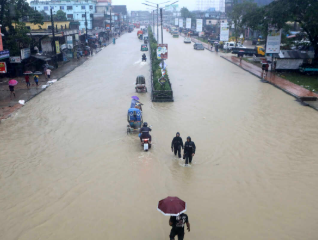
    Cyclone Fani

    PG&E - Lessons for India
    Climate Change

    PG&E Lessons for India - Cyclone
    Global Warming - Forest burning

    Climate Change

    Let’s revisit the last few years:

    • 2015 Chennai Floods: ₹20,000 crore in damages, auto and IT parks underwater.
    • 2019 Cyclone Fani: 800 factories shut, $4.2 billion in losses.
    • 2021 Coal Crisis: Power plants stalled as extreme rain disrupted coal transport.
    • 2022 Heatwave: Power demand jumped 10%, leading to industrial shutdowns in six states.
    • 2023 Himachal Floods: Hydropower plants and tourism assets lost overnight.

    Each event tells the same story: business interruption, asset loss, and profit erosion — all because climate was treated as a “future problem”.


    The Silent Balance Sheet Killer

    Climate risk doesn’t always announce itself with flames or floods.
    It creeps in quietly — through insurance costs, supply chain disruptions, and credit downgrades.

    • Insurers are raising premiums or withdrawing coverage in high-risk zones.
    • Banks are pricing transition risk — loans to carbon-intensive industries now cost up to 125 bps more.
    • Investors are divesting from high-carbon sectors — cement, steel, coal, and even logistics.
    • SEBI and RBI are mandating climate risk disclosures and ESG-linked lending criteria.

    For corporates, this isn’t just an environmental concern.
    It’s a financial survival issue.


    Why Indian Boardrooms Can’t Wait

    Many Indian CEOs still believe climate adaptation is the government’s job.
    But as PG&E showed the world — it’s the board’s fiduciary duty.

    The Companies Act (India) already mandates directors to safeguard long-term stakeholder value. Ignoring material risks — including climate — is no longer defensible.

    In fact, SEBI’s BRSR Core framework (effective FY 2023–24) and the upcoming carbon trading mechanism under the Energy Conservation Act 2022 are rewriting corporate accountability.
    If boards don’t integrate climate resilience into governance, they will face regulatory, investor, and reputational fallout.

    Let’s be clear:
    This isn’t about CSR.
    This is about risk-adjusted profitability and enterprise value protection.


    What PG&E Taught the World

    PG&E’s downfall was the first case where physical climate risk triggered corporate bankruptcy.
    Its lessons are brutally simple — and highly relevant for Indian companies today:

    ⚠️ What Went Wrong

    PG&E’s story is every board’s wake-up call.

    Failure💬 What Happened
    Risk assessmentUsed historical weather data — not future climate projections
    Investment decisionsDeferred grid upgrades to save cost
    GovernanceBoard lacked climate expertise
    Stakeholder trustWeak coordination with regulators & communities

    Climate risk wasn’t managed like a business risk — and it cost them everything.


    💡 The Turnaround

    After bankruptcy, PG&E finally acted:
    ⚡ ₹40 billion plan to climate-proof the grid
    🌲 Cleared 1,800 miles of vegetation each year
    🛰️ Installed 1,300+ weather stations for predictive monitoring
    🔌 Introduced proactive power shut-offs during high-risk heat events
    🧭 Added directors with climate expertise

    They moved from reaction to prediction — using real-time weather intelligence to make operational calls.

    After bankruptcy, PG&E invested $40 billion to climate-proof its grid, installed 1,300 weather stations, and mandated climate oversight at board level.
    It learned the hard way what others still resist: climate adaptation is not a cost — it’s insurance for survival.


    India’s Corporate Blind Spot

    A McKinsey report warns that India could lose 2–4% of GDP annually by 2050 due to climate impacts — the equivalent of wiping out the entire profits of India’s top 50 listed companies.

    Yet, most corporates remain reactive.
    Few have mapped their physical risk exposure across supply chains.
    Even fewer have set science-based targets (SBTi) for decarbonization or stress-tested their business models for climate disruption.

    What’s worse, many still treat sustainability reports as glossy marketing PDFs — not strategic documents.
    That mindset must end.


    The Domino Effect: Supply Chains, Finance, and Talent

    Climate risk doesn’t stay confined to one company — it spreads through value chains.

    1. Supply Chains:
      When floods hit Chennai in 2015, it wasn’t just Ford or Hyundai that suffered.
      Over 200 component suppliers went bankrupt, creating ripple effects across India’s auto sector.
    2. Finance:
      Lenders now classify cement, steel, and power projects as “high transition risk.”
      Access to low-cost capital increasingly depends on credible ESG scores and green taxonomy compliance.
    3. Talent & Reputation:
      The next generation of employees and consumers are climate-conscious.
      Companies that ignore climate risk won’t just lose investors — they’ll lose talent and trust.

    The Policy Shockwave Has Already Begun

    If global policy changes like the EU Carbon Border Adjustment Mechanism (CBAM) feel distant, think again.
    India’s exporters — from steel to cement — are already paying the price.
    CBAM charges between €25–80 per tonne based on embedded carbon content, erasing cost advantages overnight.

    This is just the beginning.
    As global trade becomes climate-regulated, carbon inefficiency = competitiveness loss.

    Indian companies that invest in low-carbon technology, CCUS (carbon capture), and green hydrogen today will dominate export markets tomorrow.
    Those who wait will watch their margins burn.


    The Cost of Inaction vs. The Dividend of Leadership

    A few Indian corporates have seen the writing on the wall:

    • UltraTech Cement is investing ₹10,000 crore in alternative fuels and CCUS.
    • Mahindra Group aims for carbon neutrality by 2040, embedding climate goals into product strategy.
    • Tata Power turned a coal-heavy portfolio into a clean energy leader — increasing renewables from 30% to 65% of capacity in under a decade.
    • Infosys achieved carbon neutrality in 2020 and cut energy costs by 55%.

    Their results prove the point: climate leadership pays — in valuation, cost of capital, and market access.

    Meanwhile, laggards will soon face investor exits, regulatory penalties, and customer backlash.


    The Boardroom Call to Action

    India’s corporate future depends on whether its boardrooms can act before the climate forces them to.
    Here’s what must change — now:

    Action AreaImmediate Steps for Boards
    GovernanceForm a Board Climate & Sustainability Committee with at least one director having climate expertise
    Risk ManagementIntegrate climate scenarios into Enterprise Risk Management (ERM) and capital planning
    InvestmentPrioritize decarbonization projects using ROI + resilience metrics
    DisclosureAdopt TCFD-aligned reporting and third-party assurance of climate data
    InnovationInvest in R&D for low-carbon materials, energy efficiency, and circular products
    CultureLink executive compensation to emission reduction and ESG KPIs

    The time for pilot projects and press releases is over.
    Climate risk must sit on the board agenda, not in the CSR report.


    From Compliance to Competitiveness

    There’s a saying in sustainability circles:

    “You can’t manage what you don’t measure, and you can’t lead what you don’t believe.”

    Indian corporations have the talent, technology, and scale to lead Asia’s low-carbon transition — but only if they act decisively.

    The future will reward the climate-prepared, not the climate-aware.

    This decade will separate the ones who build resilient value chains from those who build excuses.
    Those who see regulation as a catalyst, not a constraint.
    And those who understand that in a world of escalating risks, resilience is the new ROI.


    Final Reflection: From Risk to Resolve

    Climate change is no longer a headline. It’s a headline risk.
    It’s rewriting the rules of finance, operations, and reputation faster than any policy or technology ever has.

    India’s corporate sector stands at a historic crossroads:
    Lead the transition — or be led by crisis.

    Because when the next flood, fire, or heatwave hits,
    the question won’t be “Was this predictable?”
    It will be —

    “Why didn’t we act when we still could?”

    Read more blogs on sustainability here.

    PG&E Reference.

  • 💔 From the Great Resignation to Silent Layoffs — The Lost “S” in ESG

    💔 From the Great Resignation to Silent Layoffs — The Lost “S” in ESG

    Nisha had always dreamed of working in a big tech firm.
    An experienced engineer with stars in her eyes, she joined her dream company in 2020 — right in the middle of Covid-19. She worked hard, despite suffering from the Covid in 2nd wave, met all release deadlines. She kept work above her health, her personal life. She faced several challenges of networking at new workplace, but kept her focus on work, on company welfare, on customer satisfaction, on productivity.
    Then came 2021 – the time of Great Resignation. Everywhere she looked, people were quitting, demanding flexibility, purpose, and dignity.
    She thought she was lucky — her company promised an “employee-first” culture and proudly displayed its ESG score on every wall.

    But soon, she saw the truth behind the slogans.

    Her manager micromanaged every move.
    Her ideas were dismissed in meetings.
    When she worked late, there was no concern for safety or well-being — instead an anger in 1-1s with the manager for raising such concerns for women safety.
    The smiles on HR posters didn’t match the whispers in the corridors.

    Resignation - Office Culture - Priya's Story

    Three years later, Nisha faced what many now call a “passive layoff.”
    No pink slip. No meeting. Just weeks of being excluded, ignored, and overburdened.

    Her one-on-ones turned hostile — filled with rude remarks and unwarranted criticism. Every time she spoke up with genuine suggestions to improve processes and serve customers better, she was labeled outspoken in a culture that rewarded silence and “Yes-Men.”

    The constant negativity took a toll on her mental and physical health. Eventually, realizing her well-being mattered more than any job, Nisha made the hardest decision — she resigned voluntarily.

    Her exit wasn’t about any personal reason. It was about dignity.

    When Nisha decided to quit, her reason was simple — “Lack of dignity from my manager.”
    But she never wrote that.
    She wrote: “Personal reasons.”

    Because in most companies, truth is dangerous.
    💬 HR calls it “unprofessional.”
    👔 Managers take it “personally.”
    🧱 And honesty quietly gets filtered out in the system.

    So people leave with fake smiles and polite reasons —
    while cultures rot from within.

    If an employee can’t safely say why they’re leaving,
    such company’s ESG reports, engagement scores, and “people-first” slogans mean nothing.

    🩵 The “S” in ESG isn’t about glossy policies — it’s about giving people the dignity to speak the truth without fear.


    🚨 The Great Resignation Wasn’t About Jobs — It Was About Respect

    Between 2021 and 2022, over 47 million Americans quit their jobs — the highest in history.
    India’s IT sector too saw attrition rates soar to 25–30%.
    At first, CEOs blamed it on restlessness or lack of loyalty.
    But deeper studies by McKinsey, Microsoft, and PwC revealed the real cause —
    toxic culture, poor leadership, and a loss of human connection.

    Employees weren’t running from work — they were running toward respect.

    The “S” in ESG — Social — was supposed to stand for this very humanity.
    For equity, empathy, inclusion, and dignity.
    But while companies raced to publish ESG reports, few paused to ask:

    “How are our people really feeling?”


    🤖 2024–2025: The Silent Layoff Era

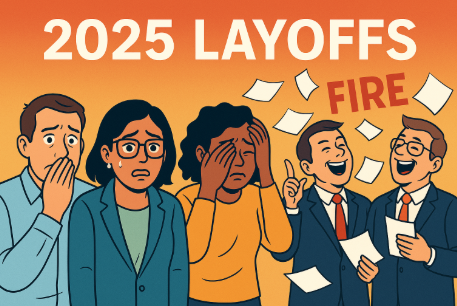
    2025 Layoffs

    Fast forward to 2024–25.
    AI, automation, and cost cuts swept across industries.
    Tech giants announced mass layoffs — over 250,000 jobs lost globally in just two years.
    But behind the headlines was a more invisible wave — passive layoffs.

    No memos. No severance. No headlines.
    Just people slowly pushed out.

    They’re labeled as “underperformers,” or
    “not adaptable,” or “not culture fit.”
    But often, it’s politics — managers protecting favorites, networks protecting old colleagues.

    A passive layoff is a resignation engineered by management, not chosen by the employee.
    It’s the silent cruelty that never shows up in ESG metrics —
    and yet, it bleeds through every workplace where empathy has died.


    💬 The Forgotten “S” in ESG

    When companies talk about ESG, the focus usually lands on the “E” — the environment.
    Carbon neutrality. Recycling drives. EV fleets.

    The “G” — governance — gets some spotlight too, thanks to investors and auditors.

    But the “S”? It’s the forgotten sibling.
    Measured by HR policies and DEI dashboards, but not by real human experience.

    The Social factor isn’t about charity donations or Women’s Day hashtags.
    It’s about the daily heartbeat of the workplace.

    • The tone of a manager’s voice in a 1:1.
    • The courage to speak up without fear.
    • The empathy shown when someone is struggling.
    • The integrity to not play politics with people’s livelihoods.

    These are the true ESG indicators — invisible, but powerful.


    💔 Why Ignoring the “S” Costs Businesses Dearly

    When empathy leaves, talent follows.
    And when talent leaves, business suffers.

    💸 According to Gallup, companies with high employee disengagement lose $8.8 trillion globally in productivity each year.
    💼 Replacing an employee costs 1.5–2x their annual salary.
    📉 High attrition directly correlates with lower innovation and slower recovery during downturns.

    A company may save short-term costs through layoffs, but it loses the trust that fuels long-term resilience.
    You can automate code — but not creativity.
    You can replace heads — but not hearts.


    😔 The Hypocrisy Within

    It’s not just layoffs.
    It’s the hypocrisy of leaders who talk “sustainability” while practicing selective empathy.

    They speak of “mental health” but shame employees who need breaks.
    They celebrate “diversity” but ignore women forced to travel home late after night shifts.
    They post about “employee well-being” while HR sends robotic “Thanks for your service” mails at midnight.

    And during 1:1 meetings — the moments that define culture —
    many managers trade empathy for ego.
    Rude tones. Condescending remarks. Dismissive feedback.
    Those meetings don’t end with improvement — they end with emotional scars.


    🌱 Redefining the “S” — From Policy to Practice

    The real Social in ESG begins when leadership redefines success:
    Not as how much profit is made, but how it is made.

    Here’s how the “S” can become real again:

    1. 💬 Empathetic Leadership: Train managers to lead conversations, not control them. Emotional intelligence should be a KPI.
    2. 🧭 Psychological Safety: Let people speak without fear. Innovation only thrives in trust.
    3. 👩‍💻 Respectful Work Culture: End toxic micromanagement and politics. Encourage collaboration, not competition.
    4. 🌇 Women’s Dignity: Prioritize safety and flexibility, not just diversity numbers.
    5. 🔍 Transparent HR Practices: Passive layoffs are a silent scandal. Audit how exits truly happen.

    Because no ESG report can be credible if its culture fails the human test.


    ⚠️ A Call for Corporate Introspection

    Companies love to showcase solar panels and CSR drives.
    But sustainability without empathy is just greenwashing in disguise.

    If we can track carbon footprints,
    why can’t we track the emotional footprint of leadership?

    If we can measure profits quarterly,
    why not measure employee trust too?

    The real sustainability revolution will begin not in boardrooms,
    but in 1:1 meetings where leaders choose kindness over control.


    💡 Final Thought

    The Great Resignation was a rebellion.
    The Silent Layoffs are a warning.

    If companies still fail to listen,
    the next wave won’t be resignations —
    it will be reputation collapses.

    Because the future of ESG isn’t about how much we save the planet,
    but how much we save our people.

    🌍 The real “S” in ESG stands for Soul.
    And the day organizations lose that — they lose everything else that matters.

    Read blogs on sustainability here.

    Reference –

    World Economic Forum article: “The Great Resignation continues. Why are US workers continuing to quit their jobs?” — reports that millions of people quit their jobs, citing feeling disrespected among reasons. weforum.org

  • 💔 From the Great Resignation to Silent Layoffs — The Lost “S” in ESG

    💔 From the Great Resignation to Silent Layoffs — The Lost “S” in ESG

    Nisha had always dreamed of working in a big tech firm.
    An experienced engineer with stars in her eyes, she joined her dream company in 2020 — right in the middle of Covid-19. She worked hard, despite suffering from the Covid in 2nd wave, met all release deadlines. She kept work above her health, her personal life. She faced several challenges of networking at new workplace, but kept her focus on work, on company welfare, on customer satisfaction, on productivity.
    Then came 2021 – the time of Great Resignation. Everywhere she looked, people were quitting, demanding flexibility, purpose, and dignity.
    She thought she was lucky — her company promised an “employee-first” culture and proudly displayed its ESG score on every wall.

    But soon, she saw the truth behind the slogans.

    Her manager micromanaged every move.
    Her ideas were dismissed in meetings.
    When she worked late, there was no concern for safety or well-being — instead an anger in 1-1s with the manager for raising such concerns for women safety.
    The smiles on HR posters didn’t match the whispers in the corridors.

    Resignation - Office Culture - Priya's Story

    Three years later, Nisha faced what many now call a “passive layoff.”
    No pink slip. No meeting. Just weeks of being excluded, ignored, and overburdened.

    Her one-on-ones turned hostile — filled with rude remarks and unwarranted criticism. Every time she spoke up with genuine suggestions to improve processes and serve customers better, she was labeled outspoken in a culture that rewarded silence and “Yes-Men.”

    The constant negativity took a toll on her mental and physical health. Eventually, realizing her well-being mattered more than any job, Nisha made the hardest decision — she resigned voluntarily.

    Her exit wasn’t about any personal reason. It was about dignity.

    When Nisha decided to quit, her reason was simple — “Lack of dignity from my manager.”
    But she never wrote that.
    She wrote: “Personal reasons.”

    Because in most companies, truth is dangerous.
    💬 HR calls it “unprofessional.”
    👔 Managers take it “personally.”
    🧱 And honesty quietly gets filtered out in the system.

    So people leave with fake smiles and polite reasons —
    while cultures rot from within.

    If an employee can’t safely say why they’re leaving,
    such company’s ESG reports, engagement scores, and “people-first” slogans mean nothing.

    🩵 The “S” in ESG isn’t about glossy policies — it’s about giving people the dignity to speak the truth without fear.


    🚨 The Great Resignation Wasn’t About Jobs — It Was About Respect

    Between 2021 and 2022, over 47 million Americans quit their jobs — the highest in history.
    India’s IT sector too saw attrition rates soar to 25–30%.
    At first, CEOs blamed it on restlessness or lack of loyalty.
    But deeper studies by McKinsey, Microsoft, and PwC revealed the real cause —
    toxic culture, poor leadership, and a loss of human connection.

    Employees weren’t running from work — they were running toward respect.

    The “S” in ESG — Social — was supposed to stand for this very humanity.
    For equity, empathy, inclusion, and dignity.
    But while companies raced to publish ESG reports, few paused to ask:

    “How are our people really feeling?”


    🤖 2024–2025: The Silent Layoff Era

    2025 Layoffs

    Fast forward to 2024–25.
    AI, automation, and cost cuts swept across industries.
    Tech giants announced mass layoffs — over 250,000 jobs lost globally in just two years.
    But behind the headlines was a more invisible wave — passive layoffs.

    No memos. No severance. No headlines.
    Just people slowly pushed out.

    They’re labeled as “underperformers,” or
    “not adaptable,” or “not culture fit.”
    But often, it’s politics — managers protecting favorites, networks protecting old colleagues.

    A passive layoff is a resignation engineered by management, not chosen by the employee.
    It’s the silent cruelty that never shows up in ESG metrics —
    and yet, it bleeds through every workplace where empathy has died.


    💬 The Forgotten “S” in ESG

    When companies talk about ESG, the focus usually lands on the “E” — the environment.
    Carbon neutrality. Recycling drives. EV fleets.

    The “G” — governance — gets some spotlight too, thanks to investors and auditors.

    But the “S”? It’s the forgotten sibling.
    Measured by HR policies and DEI dashboards, but not by real human experience.

    The Social factor isn’t about charity donations or Women’s Day hashtags.
    It’s about the daily heartbeat of the workplace.

    • The tone of a manager’s voice in a 1:1.
    • The courage to speak up without fear.
    • The empathy shown when someone is struggling.
    • The integrity to not play politics with people’s livelihoods.

    These are the true ESG indicators — invisible, but powerful.


    💔 Why Ignoring the “S” Costs Businesses Dearly

    When empathy leaves, talent follows.
    And when talent leaves, business suffers.

    💸 According to Gallup, companies with high employee disengagement lose $8.8 trillion globally in productivity each year.
    💼 Replacing an employee costs 1.5–2x their annual salary.
    📉 High attrition directly correlates with lower innovation and slower recovery during downturns.

    A company may save short-term costs through layoffs, but it loses the trust that fuels long-term resilience.
    You can automate code — but not creativity.
    You can replace heads — but not hearts.


    😔 The Hypocrisy Within

    It’s not just layoffs.
    It’s the hypocrisy of leaders who talk “sustainability” while practicing selective empathy.

    They speak of “mental health” but shame employees who need breaks.
    They celebrate “diversity” but ignore women forced to travel home late after night shifts.
    They post about “employee well-being” while HR sends robotic “Thanks for your service” mails at midnight.

    And during 1:1 meetings — the moments that define culture —
    many managers trade empathy for ego.
    Rude tones. Condescending remarks. Dismissive feedback.
    Those meetings don’t end with improvement — they end with emotional scars.


    🌱 Redefining the “S” — From Policy to Practice

    The real Social in ESG begins when leadership redefines success:
    Not as how much profit is made, but how it is made.

    Here’s how the “S” can become real again:

    1. 💬 Empathetic Leadership: Train managers to lead conversations, not control them. Emotional intelligence should be a KPI.
    2. 🧭 Psychological Safety: Let people speak without fear. Innovation only thrives in trust.
    3. 👩‍💻 Respectful Work Culture: End toxic micromanagement and politics. Encourage collaboration, not competition.
    4. 🌇 Women’s Dignity: Prioritize safety and flexibility, not just diversity numbers.
    5. 🔍 Transparent HR Practices: Passive layoffs are a silent scandal. Audit how exits truly happen.

    Because no ESG report can be credible if its culture fails the human test.


    ⚠️ A Call for Corporate Introspection

    Companies love to showcase solar panels and CSR drives.
    But sustainability without empathy is just greenwashing in disguise.

    If we can track carbon footprints,
    why can’t we track the emotional footprint of leadership?

    If we can measure profits quarterly,
    why not measure employee trust too?

    The real sustainability revolution will begin not in boardrooms,
    but in 1:1 meetings where leaders choose kindness over control.


    💡 Final Thought

    The Great Resignation was a rebellion.
    The Silent Layoffs are a warning.

    If companies still fail to listen,
    the next wave won’t be resignations —
    it will be reputation collapses.

    Because the future of ESG isn’t about how much we save the planet,
    but how much we save our people.

    🌍 The real “S” in ESG stands for Soul.
    And the day organizations lose that — they lose everything else that matters.

    Read blogs on sustainability here.

    Reference –

    World Economic Forum article: “The Great Resignation continues. Why are US workers continuing to quit their jobs?” — reports that millions of people quit their jobs, citing feeling disrespected among reasons. weforum.org

  • 💔 From the Great Resignation to Silent Layoffs — The Lost “S” in ESG

    💔 From the Great Resignation to Silent Layoffs — The Lost “S” in ESG

    Nisha had always dreamed of working in a big tech firm.
    An experienced engineer with stars in her eyes, she joined her dream company in 2020 — right in the middle of Covid-19. She worked hard, despite suffering from the Covid in 2nd wave, met all release deadlines. She kept work above her health, her personal life. She faced several challenges of networking at new workplace, but kept her focus on work, on company welfare, on customer satisfaction, on productivity.
    Then came 2021 – the time of Great Resignation. Everywhere she looked, people were quitting, demanding flexibility, purpose, and dignity.
    She thought she was lucky — her company promised an “employee-first” culture and proudly displayed its ESG score on every wall.

    But soon, she saw the truth behind the slogans.

    Her manager micromanaged every move.
    Her ideas were dismissed in meetings.
    When she worked late, there was no concern for safety or well-being — instead an anger in 1-1s with the manager for raising such concerns for women safety.
    The smiles on HR posters didn’t match the whispers in the corridors.

    Resignation - Office Culture - Priya's Story

    Three years later, Nisha faced what many now call a “passive layoff.”
    No pink slip. No meeting. Just weeks of being excluded, ignored, and overburdened.

    Her one-on-ones turned hostile — filled with rude remarks and unwarranted criticism. Every time she spoke up with genuine suggestions to improve processes and serve customers better, she was labeled outspoken in a culture that rewarded silence and “Yes-Men.”

    The constant negativity took a toll on her mental and physical health. Eventually, realizing her well-being mattered more than any job, Nisha made the hardest decision — she resigned voluntarily.

    Her exit wasn’t about any personal reason. It was about dignity.

    When Nisha decided to quit, her reason was simple — “Lack of dignity from my manager.”
    But she never wrote that.
    She wrote: “Personal reasons.”

    Because in most companies, truth is dangerous.
    💬 HR calls it “unprofessional.”
    👔 Managers take it “personally.”
    🧱 And honesty quietly gets filtered out in the system.

    So people leave with fake smiles and polite reasons —
    while cultures rot from within.

    If an employee can’t safely say why they’re leaving,
    such company’s ESG reports, engagement scores, and “people-first” slogans mean nothing.

    🩵 The “S” in ESG isn’t about glossy policies — it’s about giving people the dignity to speak the truth without fear.


    🚨 The Great Resignation Wasn’t About Jobs — It Was About Respect

    Between 2021 and 2022, over 47 million Americans quit their jobs — the highest in history.
    India’s IT sector too saw attrition rates soar to 25–30%.
    At first, CEOs blamed it on restlessness or lack of loyalty.
    But deeper studies by McKinsey, Microsoft, and PwC revealed the real cause —
    toxic culture, poor leadership, and a loss of human connection.

    Employees weren’t running from work — they were running toward respect.

    The “S” in ESG — Social — was supposed to stand for this very humanity.
    For equity, empathy, inclusion, and dignity.
    But while companies raced to publish ESG reports, few paused to ask:

    “How are our people really feeling?”


    🤖 2024–2025: The Silent Layoff Era

    2025 Layoffs

    Fast forward to 2024–25.
    AI, automation, and cost cuts swept across industries.
    Tech giants announced mass layoffs — over 250,000 jobs lost globally in just two years.
    But behind the headlines was a more invisible wave — passive layoffs.

    No memos. No severance. No headlines.
    Just people slowly pushed out.

    They’re labeled as “underperformers,” or
    “not adaptable,” or “not culture fit.”
    But often, it’s politics — managers protecting favorites, networks protecting old colleagues.

    A passive layoff is a resignation engineered by management, not chosen by the employee.
    It’s the silent cruelty that never shows up in ESG metrics —
    and yet, it bleeds through every workplace where empathy has died.


    💬 The Forgotten “S” in ESG

    When companies talk about ESG, the focus usually lands on the “E” — the environment.
    Carbon neutrality. Recycling drives. EV fleets.

    The “G” — governance — gets some spotlight too, thanks to investors and auditors.

    But the “S”? It’s the forgotten sibling.
    Measured by HR policies and DEI dashboards, but not by real human experience.

    The Social factor isn’t about charity donations or Women’s Day hashtags.
    It’s about the daily heartbeat of the workplace.

    • The tone of a manager’s voice in a 1:1.
    • The courage to speak up without fear.
    • The empathy shown when someone is struggling.
    • The integrity to not play politics with people’s livelihoods.

    These are the true ESG indicators — invisible, but powerful.


    💔 Why Ignoring the “S” Costs Businesses Dearly

    When empathy leaves, talent follows.
    And when talent leaves, business suffers.

    💸 According to Gallup, companies with high employee disengagement lose $8.8 trillion globally in productivity each year.
    💼 Replacing an employee costs 1.5–2x their annual salary.
    📉 High attrition directly correlates with lower innovation and slower recovery during downturns.

    A company may save short-term costs through layoffs, but it loses the trust that fuels long-term resilience.
    You can automate code — but not creativity.
    You can replace heads — but not hearts.


    😔 The Hypocrisy Within

    It’s not just layoffs.
    It’s the hypocrisy of leaders who talk “sustainability” while practicing selective empathy.

    They speak of “mental health” but shame employees who need breaks.
    They celebrate “diversity” but ignore women forced to travel home late after night shifts.
    They post about “employee well-being” while HR sends robotic “Thanks for your service” mails at midnight.

    And during 1:1 meetings — the moments that define culture —
    many managers trade empathy for ego.
    Rude tones. Condescending remarks. Dismissive feedback.
    Those meetings don’t end with improvement — they end with emotional scars.


    🌱 Redefining the “S” — From Policy to Practice

    The real Social in ESG begins when leadership redefines success:
    Not as how much profit is made, but how it is made.

    Here’s how the “S” can become real again:

    1. 💬 Empathetic Leadership: Train managers to lead conversations, not control them. Emotional intelligence should be a KPI.
    2. 🧭 Psychological Safety: Let people speak without fear. Innovation only thrives in trust.
    3. 👩‍💻 Respectful Work Culture: End toxic micromanagement and politics. Encourage collaboration, not competition.
    4. 🌇 Women’s Dignity: Prioritize safety and flexibility, not just diversity numbers.
    5. 🔍 Transparent HR Practices: Passive layoffs are a silent scandal. Audit how exits truly happen.

    Because no ESG report can be credible if its culture fails the human test.


    ⚠️ A Call for Corporate Introspection

    Companies love to showcase solar panels and CSR drives.
    But sustainability without empathy is just greenwashing in disguise.

    If we can track carbon footprints,
    why can’t we track the emotional footprint of leadership?

    If we can measure profits quarterly,
    why not measure employee trust too?

    The real sustainability revolution will begin not in boardrooms,
    but in 1:1 meetings where leaders choose kindness over control.


    💡 Final Thought

    The Great Resignation was a rebellion.
    The Silent Layoffs are a warning.

    If companies still fail to listen,
    the next wave won’t be resignations —
    it will be reputation collapses.

    Because the future of ESG isn’t about how much we save the planet,
    but how much we save our people.

    🌍 The real “S” in ESG stands for Soul.
    And the day organizations lose that — they lose everything else that matters.

    Read blogs on sustainability here.

    Reference –

    World Economic Forum article: “The Great Resignation continues. Why are US workers continuing to quit their jobs?” — reports that millions of people quit their jobs, citing feeling disrespected among reasons. weforum.org

  • 💔 From the Great Resignation to Silent Layoffs — The Lost “S” in ESG

    💔 From the Great Resignation to Silent Layoffs — The Lost “S” in ESG

    Nisha had always dreamed of working in a big tech firm.
    An experienced engineer with stars in her eyes, she joined her dream company in 2020 — right in the middle of Covid-19. She worked hard, despite suffering from the Covid in 2nd wave, met all release deadlines. She kept work above her health, her personal life. She faced several challenges of networking at new workplace, but kept her focus on work, on company welfare, on customer satisfaction, on productivity.
    Then came 2021 – the time of Great Resignation. Everywhere she looked, people were quitting, demanding flexibility, purpose, and dignity.
    She thought she was lucky — her company promised an “employee-first” culture and proudly displayed its ESG score on every wall.

    But soon, she saw the truth behind the slogans.

    Her manager micromanaged every move.
    Her ideas were dismissed in meetings.
    When she worked late, there was no concern for safety or well-being — instead an anger in 1-1s with the manager for raising such concerns for women safety.
    The smiles on HR posters didn’t match the whispers in the corridors.

    Resignation - Office Culture - Priya's Story

    Three years later, Nisha faced what many now call a “passive layoff.”
    No pink slip. No meeting. Just weeks of being excluded, ignored, and overburdened.

    Her one-on-ones turned hostile — filled with rude remarks and unwarranted criticism. Every time she spoke up with genuine suggestions to improve processes and serve customers better, she was labeled outspoken in a culture that rewarded silence and “Yes-Men.”

    The constant negativity took a toll on her mental and physical health. Eventually, realizing her well-being mattered more than any job, Nisha made the hardest decision — she resigned voluntarily.

    Her exit wasn’t about any personal reason. It was about dignity.

    When Nisha decided to quit, her reason was simple — “Lack of dignity from my manager.”
    But she never wrote that.
    She wrote: “Personal reasons.”

    Because in most companies, truth is dangerous.
    💬 HR calls it “unprofessional.”
    👔 Managers take it “personally.”
    🧱 And honesty quietly gets filtered out in the system.

    So people leave with fake smiles and polite reasons —
    while cultures rot from within.

    If an employee can’t safely say why they’re leaving,
    such company’s ESG reports, engagement scores, and “people-first” slogans mean nothing.

    🩵 The “S” in ESG isn’t about glossy policies — it’s about giving people the dignity to speak the truth without fear.


    🚨 The Great Resignation Wasn’t About Jobs — It Was About Respect

    Between 2021 and 2022, over 47 million Americans quit their jobs — the highest in history.
    India’s IT sector too saw attrition rates soar to 25–30%.
    At first, CEOs blamed it on restlessness or lack of loyalty.
    But deeper studies by McKinsey, Microsoft, and PwC revealed the real cause —
    toxic culture, poor leadership, and a loss of human connection.

    Employees weren’t running from work — they were running toward respect.

    The “S” in ESG — Social — was supposed to stand for this very humanity.
    For equity, empathy, inclusion, and dignity.
    But while companies raced to publish ESG reports, few paused to ask:

    “How are our people really feeling?”


    🤖 2024–2025: The Silent Layoff Era

    2025 Layoffs

    Fast forward to 2024–25.
    AI, automation, and cost cuts swept across industries.
    Tech giants announced mass layoffs — over 250,000 jobs lost globally in just two years.
    But behind the headlines was a more invisible wave — passive layoffs.

    No memos. No severance. No headlines.
    Just people slowly pushed out.

    They’re labeled as “underperformers,” or
    “not adaptable,” or “not culture fit.”
    But often, it’s politics — managers protecting favorites, networks protecting old colleagues.

    A passive layoff is a resignation engineered by management, not chosen by the employee.
    It’s the silent cruelty that never shows up in ESG metrics —
    and yet, it bleeds through every workplace where empathy has died.


    💬 The Forgotten “S” in ESG

    When companies talk about ESG, the focus usually lands on the “E” — the environment.
    Carbon neutrality. Recycling drives. EV fleets.

    The “G” — governance — gets some spotlight too, thanks to investors and auditors.

    But the “S”? It’s the forgotten sibling.
    Measured by HR policies and DEI dashboards, but not by real human experience.

    The Social factor isn’t about charity donations or Women’s Day hashtags.
    It’s about the daily heartbeat of the workplace.

    • The tone of a manager’s voice in a 1:1.
    • The courage to speak up without fear.
    • The empathy shown when someone is struggling.
    • The integrity to not play politics with people’s livelihoods.

    These are the true ESG indicators — invisible, but powerful.


    💔 Why Ignoring the “S” Costs Businesses Dearly

    When empathy leaves, talent follows.
    And when talent leaves, business suffers.

    💸 According to Gallup, companies with high employee disengagement lose $8.8 trillion globally in productivity each year.
    💼 Replacing an employee costs 1.5–2x their annual salary.
    📉 High attrition directly correlates with lower innovation and slower recovery during downturns.

    A company may save short-term costs through layoffs, but it loses the trust that fuels long-term resilience.
    You can automate code — but not creativity.
    You can replace heads — but not hearts.


    😔 The Hypocrisy Within

    It’s not just layoffs.
    It’s the hypocrisy of leaders who talk “sustainability” while practicing selective empathy.

    They speak of “mental health” but shame employees who need breaks.
    They celebrate “diversity” but ignore women forced to travel home late after night shifts.
    They post about “employee well-being” while HR sends robotic “Thanks for your service” mails at midnight.

    And during 1:1 meetings — the moments that define culture —
    many managers trade empathy for ego.
    Rude tones. Condescending remarks. Dismissive feedback.
    Those meetings don’t end with improvement — they end with emotional scars.


    🌱 Redefining the “S” — From Policy to Practice

    The real Social in ESG begins when leadership redefines success:
    Not as how much profit is made, but how it is made.

    Here’s how the “S” can become real again:

    1. 💬 Empathetic Leadership: Train managers to lead conversations, not control them. Emotional intelligence should be a KPI.
    2. 🧭 Psychological Safety: Let people speak without fear. Innovation only thrives in trust.
    3. 👩‍💻 Respectful Work Culture: End toxic micromanagement and politics. Encourage collaboration, not competition.
    4. 🌇 Women’s Dignity: Prioritize safety and flexibility, not just diversity numbers.
    5. 🔍 Transparent HR Practices: Passive layoffs are a silent scandal. Audit how exits truly happen.

    Because no ESG report can be credible if its culture fails the human test.


    ⚠️ A Call for Corporate Introspection

    Companies love to showcase solar panels and CSR drives.
    But sustainability without empathy is just greenwashing in disguise.

    If we can track carbon footprints,
    why can’t we track the emotional footprint of leadership?

    If we can measure profits quarterly,
    why not measure employee trust too?

    The real sustainability revolution will begin not in boardrooms,
    but in 1:1 meetings where leaders choose kindness over control.


    💡 Final Thought

    The Great Resignation was a rebellion.
    The Silent Layoffs are a warning.

    If companies still fail to listen,
    the next wave won’t be resignations —
    it will be reputation collapses.

    Because the future of ESG isn’t about how much we save the planet,
    but how much we save our people.

    🌍 The real “S” in ESG stands for Soul.
    And the day organizations lose that — they lose everything else that matters.

    Read blogs on sustainability here.

    Reference –

    World Economic Forum article: “The Great Resignation continues. Why are US workers continuing to quit their jobs?” — reports that millions of people quit their jobs, citing feeling disrespected among reasons. weforum.org

  • 💔 From the Great Resignation to Silent Layoffs — The Lost “S” in ESG

    💔 From the Great Resignation to Silent Layoffs — The Lost “S” in ESG

    Nisha had always dreamed of working in a big tech firm.
    An experienced engineer with stars in her eyes, she joined her dream company in 2020 — right in the middle of Covid-19. She worked hard, despite suffering from the Covid in 2nd wave, met all release deadlines. She kept work above her health, her personal life. She faced several challenges of networking at new workplace, but kept her focus on work, on company welfare, on customer satisfaction, on productivity.
    Then came 2021 – the time of Great Resignation. Everywhere she looked, people were quitting, demanding flexibility, purpose, and dignity.
    She thought she was lucky — her company promised an “employee-first” culture and proudly displayed its ESG score on every wall.

    But soon, she saw the truth behind the slogans.

    Her manager micromanaged every move.
    Her ideas were dismissed in meetings.
    When she worked late, there was no concern for safety or well-being — instead an anger in 1-1s with the manager for raising such concerns for women safety.
    The smiles on HR posters didn’t match the whispers in the corridors.

    Resignation - Office Culture - Priya's Story

    Three years later, Nisha faced what many now call a “passive layoff.”
    No pink slip. No meeting. Just weeks of being excluded, ignored, and overburdened.

    Her one-on-ones turned hostile — filled with rude remarks and unwarranted criticism. Every time she spoke up with genuine suggestions to improve processes and serve customers better, she was labeled outspoken in a culture that rewarded silence and “Yes-Men.”

    The constant negativity took a toll on her mental and physical health. Eventually, realizing her well-being mattered more than any job, Nisha made the hardest decision — she resigned voluntarily.

    Her exit wasn’t about any personal reason. It was about dignity.

    When Nisha decided to quit, her reason was simple — “Lack of dignity from my manager.”
    But she never wrote that.
    She wrote: “Personal reasons.”

    Because in most companies, truth is dangerous.
    💬 HR calls it “unprofessional.”
    👔 Managers take it “personally.”
    🧱 And honesty quietly gets filtered out in the system.

    So people leave with fake smiles and polite reasons —
    while cultures rot from within.

    If an employee can’t safely say why they’re leaving,
    such company’s ESG reports, engagement scores, and “people-first” slogans mean nothing.

    🩵 The “S” in ESG isn’t about glossy policies — it’s about giving people the dignity to speak the truth without fear.


    🚨 The Great Resignation Wasn’t About Jobs — It Was About Respect

    Between 2021 and 2022, over 47 million Americans quit their jobs — the highest in history.
    India’s IT sector too saw attrition rates soar to 25–30%.
    At first, CEOs blamed it on restlessness or lack of loyalty.
    But deeper studies by McKinsey, Microsoft, and PwC revealed the real cause —
    toxic culture, poor leadership, and a loss of human connection.

    Employees weren’t running from work — they were running toward respect.

    The “S” in ESG — Social — was supposed to stand for this very humanity.
    For equity, empathy, inclusion, and dignity.
    But while companies raced to publish ESG reports, few paused to ask:

    “How are our people really feeling?”


    🤖 2024–2025: The Silent Layoff Era

    2025 Layoffs

    Fast forward to 2024–25.
    AI, automation, and cost cuts swept across industries.
    Tech giants announced mass layoffs — over 250,000 jobs lost globally in just two years.
    But behind the headlines was a more invisible wave — passive layoffs.

    No memos. No severance. No headlines.
    Just people slowly pushed out.

    They’re labeled as “underperformers,” or
    “not adaptable,” or “not culture fit.”
    But often, it’s politics — managers protecting favorites, networks protecting old colleagues.

    A passive layoff is a resignation engineered by management, not chosen by the employee.
    It’s the silent cruelty that never shows up in ESG metrics —
    and yet, it bleeds through every workplace where empathy has died.


    💬 The Forgotten “S” in ESG

    When companies talk about ESG, the focus usually lands on the “E” — the environment.
    Carbon neutrality. Recycling drives. EV fleets.

    The “G” — governance — gets some spotlight too, thanks to investors and auditors.

    But the “S”? It’s the forgotten sibling.
    Measured by HR policies and DEI dashboards, but not by real human experience.

    The Social factor isn’t about charity donations or Women’s Day hashtags.
    It’s about the daily heartbeat of the workplace.

    • The tone of a manager’s voice in a 1:1.
    • The courage to speak up without fear.
    • The empathy shown when someone is struggling.
    • The integrity to not play politics with people’s livelihoods.

    These are the true ESG indicators — invisible, but powerful.


    💔 Why Ignoring the “S” Costs Businesses Dearly

    When empathy leaves, talent follows.
    And when talent leaves, business suffers.

    💸 According to Gallup, companies with high employee disengagement lose $8.8 trillion globally in productivity each year.
    💼 Replacing an employee costs 1.5–2x their annual salary.
    📉 High attrition directly correlates with lower innovation and slower recovery during downturns.

    A company may save short-term costs through layoffs, but it loses the trust that fuels long-term resilience.
    You can automate code — but not creativity.
    You can replace heads — but not hearts.


    😔 The Hypocrisy Within

    It’s not just layoffs.
    It’s the hypocrisy of leaders who talk “sustainability” while practicing selective empathy.

    They speak of “mental health” but shame employees who need breaks.
    They celebrate “diversity” but ignore women forced to travel home late after night shifts.
    They post about “employee well-being” while HR sends robotic “Thanks for your service” mails at midnight.

    And during 1:1 meetings — the moments that define culture —
    many managers trade empathy for ego.
    Rude tones. Condescending remarks. Dismissive feedback.
    Those meetings don’t end with improvement — they end with emotional scars.


    🌱 Redefining the “S” — From Policy to Practice

    The real Social in ESG begins when leadership redefines success:
    Not as how much profit is made, but how it is made.

    Here’s how the “S” can become real again:

    1. 💬 Empathetic Leadership: Train managers to lead conversations, not control them. Emotional intelligence should be a KPI.
    2. 🧭 Psychological Safety: Let people speak without fear. Innovation only thrives in trust.
    3. 👩‍💻 Respectful Work Culture: End toxic micromanagement and politics. Encourage collaboration, not competition.
    4. 🌇 Women’s Dignity: Prioritize safety and flexibility, not just diversity numbers.
    5. 🔍 Transparent HR Practices: Passive layoffs are a silent scandal. Audit how exits truly happen.

    Because no ESG report can be credible if its culture fails the human test.


    ⚠️ A Call for Corporate Introspection

    Companies love to showcase solar panels and CSR drives.
    But sustainability without empathy is just greenwashing in disguise.

    If we can track carbon footprints,
    why can’t we track the emotional footprint of leadership?

    If we can measure profits quarterly,
    why not measure employee trust too?

    The real sustainability revolution will begin not in boardrooms,
    but in 1:1 meetings where leaders choose kindness over control.


    💡 Final Thought

    The Great Resignation was a rebellion.
    The Silent Layoffs are a warning.

    If companies still fail to listen,
    the next wave won’t be resignations —
    it will be reputation collapses.

    Because the future of ESG isn’t about how much we save the planet,
    but how much we save our people.

    🌍 The real “S” in ESG stands for Soul.
    And the day organizations lose that — they lose everything else that matters.

    Read blogs on sustainability here.

    Reference –

    World Economic Forum article: “The Great Resignation continues. Why are US workers continuing to quit their jobs?” — reports that millions of people quit their jobs, citing feeling disrespected among reasons. weforum.org

  • Beyond Greenwashing: 6 Real ESG Brand Stories That Inspire Trust

    Beyond Greenwashing: 6 Real ESG Brand Stories That Inspire Trust


    🌍 Real ESG Brands: Where Purpose Becomes Practice

    ✨ Beyond the Buzzwords

    In a world flooded with marketing claims of sustainability, some brands stand out as rare beacons: companies that aren’t just talking the talk, but walking the walk. These are the ones who turn promised values into concrete action — lowering emissions, improving working conditions, prioritizing transparency and governance.

    A few brands didn’t just promise — they proved.
    They made ESG (Environmental, Social, Governance) not a checkbox, but a culture.
    This is their story.

    Let’s explore a few inspiring examples of brands / companies that seem to deliver — and what we can learn from them.


    🏔️ 1. Patagonia — the Company that gave its Heart to the Earth

    It started with a jacket.
    Not a flashy one. Not limited edition.
    Just a rugged, weathered jacket that had seen mountains, storms, and stories.

    The kind of jacket you repair instead of replace.
    The kind of jacket that lasts — because it was made by a brand that believes the planet shouldn’t pay for our fashion.

    That brand was Patagonia.

    And behind it stood a man who never wanted to be a businessman — Yvon Chouinard, a climber, surfer, and reluctant entrepreneur who built a billion-dollar empire almost by accident.
    While others were chasing profits, he was chasing purpose.
    He didn’t want to sell more. He wanted to sell better.

    Patagonia’s ESG story began decades earlier:

    • Pioneered the use of recycled polyester and organic cotton.
    • Encouraged customers to repair, not replace through its Worn Wear program.
    • Transparent about supply chains and labor conditions.

    Then came the moment that redefined corporate history.

    In 2022, Chouinard stunned the world by giving away his entire company — not to family, not to investors, but to the Earth itself. 🌎

    “Instead of extracting value from nature and turning it into wealth, we are using the wealth Patagonia creates to protect the source of all wealth.”
    Yvon Chouinard

    He transferred ownership of Patagonia to two entities:

    • Patagonia Purpose Trust — to protect the company’s mission and values.
    • Holdfast Collective — a nonprofit that uses 100% of profits (roughly $100 million each year) to fight the climate crisis.

    No IPO. No billionaire legacy. Just a company reborn as a planet protector.

    “Earth is our only shareholder.” — Yvon Chouinard

    Patagonia didn’t just redefine ESG; it humanized capitalism.


    🧭 How Patagonia Built ESG Into Its DNA

    Patagonia didn’t adopt ESG because it was trendy.
    It practiced sustainability decades before it became a buzzword.

    Here’s how it turned values into action 👇

    1. 🌿 Environmental: Repair, Reuse, Regenerate

    Patagonia’s environmental philosophy is simple: buy less, waste less, repair more.

    • The “Worn Wear” program repairs over 100,000 items annually, encouraging customers to fix rather than replace.
    • Their materials — from recycled polyester to organic cotton — are chosen to minimize environmental damage.
    • They’ve donated 1% of sales since 1985 to environmental causes through the 1% for the Planet initiative.
    • The company was an early adopter of carbon-neutral operations, investing heavily in renewable energy and sustainable logistics.

    Patagonia didn’t just talk about saving the planet — it built its business model around it.


    2. 👩‍🌾 Social: Fair Wages, Real Voices

    Patagonia’s social impact extends beyond its products.
    The company audits every layer of its supply chain — ensuring fair trade certification, safe working conditions, and living wages for factory workers.

    It doesn’t hide imperfections.
    If there’s an issue, they publish it, fix it, and learn from it.
    That’s transparency in action, not PR.

    They also empower local communities through environmental activism — supporting thousands of grassroots organizations globally.


    3. 🧾 Governance: Earth as Shareholder

    Patagonia’s most radical innovation isn’t its fabric — it’s its governance.
    By giving away ownership to a trust and a nonprofit, Chouinard built a corporate structure where:

    • No single person profits from excess.
    • No investor pressures the company for unsustainable growth.
    • Every decision must align with the mission: to save our home planet.

    This structure is what ESG governance should look like — values embedded at the top, not tacked on at the end.


    💬 The Patagonia Paradox: Growth by Saying “Don’t Buy This Jacket”

    Patagonia Jacket

    In 2011, Patagonia ran a bold ad on Black Friday that read:

    “Don’t buy this jacket.”

    The message? Consume consciously. Buy only what you need.

    Ironically, sales soared — not because people ignored the message, but because they trusted it.
    It was proof that authenticity builds brand equity faster than advertising ever could.

    Patagonia didn’t lose customers by being honest.
    It earned believers. 💚


    The Legacy: ESG as a Conscience, Not a Checklist

    In a world overflowing with greenwashing — where brands print sustainability on labels but not in ledgers — Patagonia stands as a living contrast.

    It proves that:

    • ESG can be a business model, not a marketing plan.
    • Purpose can fuel profit without guilt.
    • Transparency can be stronger than advertising.

    Yvon Chouinard’s act of giving away his company wasn’t a goodbye — it was a gift to the future.
    He showed the world that true wealth is measured in impact, not income.


    🌎 Final Thought: The Earth Is Watching

    Patagonia isn’t just selling clothes — it’s selling consciousness.
    It asks every company one question that echoes louder each year:

    “What if business existed to serve life, not the other way around?”

    Because one day, the glossy ESG reports will fade —
    but the planet will remember who really showed up. 🌿

    Patagonia website.


    🌱 2. Ben & Jerry’s — The Ice Cream with a Conscience

    While most food giants chase profit, Ben & Jerry’s churns something richer — purpose.
    Their ESG principles are baked into every scoop:

    • Advocating for LGBTQ+ rights, racial justice, and climate action.
    • Sourcing Fairtrade-certified ingredients.
    • Setting internal carbon pricing to measure emissions impact.

    In 2020, when other companies stayed silent on social justice, Ben & Jerry’s publicly called for ending white supremacy — showing S in ESG means standing up, not staying safe.


    3. Tesla — The Disruptor Driving Climate Innovation

    Despite its controversies, Tesla undeniably transformed the E (Environmental) pillar of ESG.
    It forced the auto industry to accelerate toward electrification:

    • In 2021 alone, Tesla vehicles helped avoid over 8 million metric tons of CO₂.
    • Its Gigafactories focus on renewable energy and battery recycling.
    • Open-sourced EV patents to encourage global innovation.

    Tesla proves that ESG impact can come from disruption, not perfection.


    🌾 4. Unilever — The Corporate Giant Turning Green Inside Out

    Under former CEO Paul Polman, Unilever became a benchmark for ESG governance.
    It launched the Sustainable Living Plan — integrating purpose into every brand, not as CSR, but as business DNA.

    • Dove’s Real Beauty campaign promoted body positivity.
    • Lifebuoy’s hygiene programs reached 1 billion+ people globally.
    • 100% of Unilever’s electricity now comes from renewable sources.

    Even investors started rewarding integrity — proof that doing good can be good business.


    🧃 5. Natura & Co — The Brazilian Beauty Pioneer

    Parent company of The Body Shop, Aesop, and Avon, Natura is the first publicly traded B Corp in the world.

    • Sources from Amazonian communities with fair wages and biodiversity protection.
    • Carbon neutral across its operations since 2007.
    • Empowers local women entrepreneurs in over 100 countries.

    Natura’s mission blends social equity and environmental stewardship — showing ESG can scale without selling out.


    🔍 6. Interface — Flooring That Heals the Planet

    You wouldn’t expect a carpet manufacturer to lead in sustainability — but Interface did.
    Founder Ray Anderson had an epiphany in the 1990s after reading The Ecology of Commerce.

    Since then, Interface has:

    • Cut greenhouse gas emissions by 96%.
    • Achieved carbon-negative flooring products.
    • Inspired an entire industry to rethink manufacturing.

    They call their mission “Climate Take Back” — to restore, not just sustain.


    💡 The Pattern: ESG Isn’t a PR Campaign — It’s a Promise

    These brands share three common traits:

    1. Transparency — They show impact, not ads.
    2. Accountability — They align profits with purpose.
    3. Consistency — They sustain their ESG actions even when the spotlight fades.

    True ESG isn’t about appearing “green.”
    It’s about being grounded — in ethics, empathy, and evidence.


    💬 Final Thought: From Labels to Legacy

    Consumers today have power — the power to reward truth and punish pretense.
    When you choose a brand, you choose the kind of future you want to fund.

    So next time you shop, don’t just ask:

    “Is it sustainable?”
    Ask:
    “Can I trust them?”

    Because trust is the rarest — and most valuable — ESG currency of all. 🌎

    Call to Action

    The world doesn’t need perfect companies —
    it needs honest ones.
    Be the leader, the investor, the consumer who demands more than promises.
    Because every choice we make — what we buy, where we work, what we fund —
    shapes the planet we leave behind. 🌍

    👉 It’s time to move from greenwashing to genuine change.
    Choose authenticity. Choose accountability. Choose impact.

    Read more blogs on sustainability here.

  • Beyond Greenwashing: 6 Real ESG Brand Stories That Inspire Trust

    Beyond Greenwashing: 6 Real ESG Brand Stories That Inspire Trust


    🌍 Real ESG Brands: Where Purpose Becomes Practice

    ✨ Beyond the Buzzwords

    In a world flooded with marketing claims of sustainability, some brands stand out as rare beacons: companies that aren’t just talking the talk, but walking the walk. These are the ones who turn promised values into concrete action — lowering emissions, improving working conditions, prioritizing transparency and governance.

    A few brands didn’t just promise — they proved.
    They made ESG (Environmental, Social, Governance) not a checkbox, but a culture.
    This is their story.

    Let’s explore a few inspiring examples of brands / companies that seem to deliver — and what we can learn from them.


    🏔️ 1. Patagonia — the Company that gave its Heart to the Earth

    It started with a jacket.
    Not a flashy one. Not limited edition.
    Just a rugged, weathered jacket that had seen mountains, storms, and stories.

    The kind of jacket you repair instead of replace.
    The kind of jacket that lasts — because it was made by a brand that believes the planet shouldn’t pay for our fashion.

    That brand was Patagonia.

    And behind it stood a man who never wanted to be a businessman — Yvon Chouinard, a climber, surfer, and reluctant entrepreneur who built a billion-dollar empire almost by accident.
    While others were chasing profits, he was chasing purpose.
    He didn’t want to sell more. He wanted to sell better.

    Patagonia’s ESG story began decades earlier:

    • Pioneered the use of recycled polyester and organic cotton.
    • Encouraged customers to repair, not replace through its Worn Wear program.
    • Transparent about supply chains and labor conditions.

    Then came the moment that redefined corporate history.

    In 2022, Chouinard stunned the world by giving away his entire company — not to family, not to investors, but to the Earth itself. 🌎

    “Instead of extracting value from nature and turning it into wealth, we are using the wealth Patagonia creates to protect the source of all wealth.”
    Yvon Chouinard

    He transferred ownership of Patagonia to two entities:

    • Patagonia Purpose Trust — to protect the company’s mission and values.
    • Holdfast Collective — a nonprofit that uses 100% of profits (roughly $100 million each year) to fight the climate crisis.

    No IPO. No billionaire legacy. Just a company reborn as a planet protector.

    “Earth is our only shareholder.” — Yvon Chouinard

    Patagonia didn’t just redefine ESG; it humanized capitalism.


    🧭 How Patagonia Built ESG Into Its DNA

    Patagonia didn’t adopt ESG because it was trendy.
    It practiced sustainability decades before it became a buzzword.

    Here’s how it turned values into action 👇

    1. 🌿 Environmental: Repair, Reuse, Regenerate

    Patagonia’s environmental philosophy is simple: buy less, waste less, repair more.

    • The “Worn Wear” program repairs over 100,000 items annually, encouraging customers to fix rather than replace.
    • Their materials — from recycled polyester to organic cotton — are chosen to minimize environmental damage.
    • They’ve donated 1% of sales since 1985 to environmental causes through the 1% for the Planet initiative.
    • The company was an early adopter of carbon-neutral operations, investing heavily in renewable energy and sustainable logistics.

    Patagonia didn’t just talk about saving the planet — it built its business model around it.


    2. 👩‍🌾 Social: Fair Wages, Real Voices

    Patagonia’s social impact extends beyond its products.
    The company audits every layer of its supply chain — ensuring fair trade certification, safe working conditions, and living wages for factory workers.

    It doesn’t hide imperfections.
    If there’s an issue, they publish it, fix it, and learn from it.
    That’s transparency in action, not PR.

    They also empower local communities through environmental activism — supporting thousands of grassroots organizations globally.


    3. 🧾 Governance: Earth as Shareholder

    Patagonia’s most radical innovation isn’t its fabric — it’s its governance.
    By giving away ownership to a trust and a nonprofit, Chouinard built a corporate structure where:

    • No single person profits from excess.
    • No investor pressures the company for unsustainable growth.
    • Every decision must align with the mission: to save our home planet.

    This structure is what ESG governance should look like — values embedded at the top, not tacked on at the end.


    💬 The Patagonia Paradox: Growth by Saying “Don’t Buy This Jacket”

    Patagonia Jacket

    In 2011, Patagonia ran a bold ad on Black Friday that read:

    “Don’t buy this jacket.”

    The message? Consume consciously. Buy only what you need.

    Ironically, sales soared — not because people ignored the message, but because they trusted it.
    It was proof that authenticity builds brand equity faster than advertising ever could.

    Patagonia didn’t lose customers by being honest.
    It earned believers. 💚


    The Legacy: ESG as a Conscience, Not a Checklist

    In a world overflowing with greenwashing — where brands print sustainability on labels but not in ledgers — Patagonia stands as a living contrast.

    It proves that:

    • ESG can be a business model, not a marketing plan.
    • Purpose can fuel profit without guilt.
    • Transparency can be stronger than advertising.

    Yvon Chouinard’s act of giving away his company wasn’t a goodbye — it was a gift to the future.
    He showed the world that true wealth is measured in impact, not income.


    🌎 Final Thought: The Earth Is Watching

    Patagonia isn’t just selling clothes — it’s selling consciousness.
    It asks every company one question that echoes louder each year:

    “What if business existed to serve life, not the other way around?”

    Because one day, the glossy ESG reports will fade —
    but the planet will remember who really showed up. 🌿

    Patagonia website.


    🌱 2. Ben & Jerry’s — The Ice Cream with a Conscience

    While most food giants chase profit, Ben & Jerry’s churns something richer — purpose.
    Their ESG principles are baked into every scoop:

    • Advocating for LGBTQ+ rights, racial justice, and climate action.
    • Sourcing Fairtrade-certified ingredients.
    • Setting internal carbon pricing to measure emissions impact.

    In 2020, when other companies stayed silent on social justice, Ben & Jerry’s publicly called for ending white supremacy — showing S in ESG means standing up, not staying safe.


    3. Tesla — The Disruptor Driving Climate Innovation

    Despite its controversies, Tesla undeniably transformed the E (Environmental) pillar of ESG.
    It forced the auto industry to accelerate toward electrification:

    • In 2021 alone, Tesla vehicles helped avoid over 8 million metric tons of CO₂.
    • Its Gigafactories focus on renewable energy and battery recycling.
    • Open-sourced EV patents to encourage global innovation.

    Tesla proves that ESG impact can come from disruption, not perfection.


    🌾 4. Unilever — The Corporate Giant Turning Green Inside Out

    Under former CEO Paul Polman, Unilever became a benchmark for ESG governance.
    It launched the Sustainable Living Plan — integrating purpose into every brand, not as CSR, but as business DNA.

    • Dove’s Real Beauty campaign promoted body positivity.
    • Lifebuoy’s hygiene programs reached 1 billion+ people globally.
    • 100% of Unilever’s electricity now comes from renewable sources.

    Even investors started rewarding integrity — proof that doing good can be good business.


    🧃 5. Natura & Co — The Brazilian Beauty Pioneer

    Parent company of The Body Shop, Aesop, and Avon, Natura is the first publicly traded B Corp in the world.

    • Sources from Amazonian communities with fair wages and biodiversity protection.
    • Carbon neutral across its operations since 2007.
    • Empowers local women entrepreneurs in over 100 countries.

    Natura’s mission blends social equity and environmental stewardship — showing ESG can scale without selling out.


    🔍 6. Interface — Flooring That Heals the Planet

    You wouldn’t expect a carpet manufacturer to lead in sustainability — but Interface did.
    Founder Ray Anderson had an epiphany in the 1990s after reading The Ecology of Commerce.

    Since then, Interface has:

    • Cut greenhouse gas emissions by 96%.
    • Achieved carbon-negative flooring products.
    • Inspired an entire industry to rethink manufacturing.

    They call their mission “Climate Take Back” — to restore, not just sustain.


    💡 The Pattern: ESG Isn’t a PR Campaign — It’s a Promise

    These brands share three common traits:

    1. Transparency — They show impact, not ads.
    2. Accountability — They align profits with purpose.
    3. Consistency — They sustain their ESG actions even when the spotlight fades.

    True ESG isn’t about appearing “green.”
    It’s about being grounded — in ethics, empathy, and evidence.


    💬 Final Thought: From Labels to Legacy

    Consumers today have power — the power to reward truth and punish pretense.
    When you choose a brand, you choose the kind of future you want to fund.

    So next time you shop, don’t just ask:

    “Is it sustainable?”
    Ask:
    “Can I trust them?”

    Because trust is the rarest — and most valuable — ESG currency of all. 🌎

    Call to Action

    The world doesn’t need perfect companies —
    it needs honest ones.
    Be the leader, the investor, the consumer who demands more than promises.
    Because every choice we make — what we buy, where we work, what we fund —
    shapes the planet we leave behind. 🌍

    👉 It’s time to move from greenwashing to genuine change.
    Choose authenticity. Choose accountability. Choose impact.

    Read more blogs on sustainability here.

  • Greenwashing Exposed: ESG Scandals That Shook Trust

    Greenwashing Exposed: ESG Scandals That Shook Trust


    🛍️ The Story Begins at the Store

    Greenwashing

    It’s a bright Saturday morning.
    Riya walks into a mall, reusable tote in hand — proud of her small steps toward sustainable living.

    She heads to a counter labeled “Natural. Safe. Conscious.”
    The bottles gleam in soft green, stamped with words like eco-friendly, non-toxic, earth-safe.
    The brand ambassador smiles from the poster — a familiar influencer she trusts.

    Riya feels good — not just about buying skincare, but about doing the right thing for the planet.

    Weeks later, as she scrolls social media, her heart sinks.
    Headlines flash:

    “Popular ‘natural’ brands accused of greenwashing — misleading eco claims.”

    The same products she bought to help the Earth might have been just another marketing act.

    Her purchase, once a symbol of conscience, suddenly feels like complicity.

    Greenwashing

    🌿 The Mirage of Green

    This is not Riya’s story alone. It’s ours — the story of millions who want to make ethical choices, only to discover that the green glow was an illusion.

    Welcome to the world of greenwashing — where corporations talk green but act grey.


    💧 What Is Greenwashing?

    Greenwashing

    Greenwashing is when companies deceptively market themselves as sustainable — using eco-language, green packaging, and selective facts to appear ethical.

    It’s like putting a recycled sticker on a toxic product.
    Or planting one tree to hide a forest of emissions.

    The harm isn’t just environmental — it’s moral. It erodes trust in every brand that’s truly trying to do good.

    And it’s at the heart of today’s ESG implementation crisis.


    🧴 Case 1: Mamaearth — When “Natural” Meets Marketing

    India’s beloved personal care brand, Mamaearth, built its empire on the promise of “toxin-free, natural, and sustainable” products.
    Its message resonated with young parents and conscious millennials.

    But in 2023 and 2024, the brand faced waves of consumer backlash and expert criticism.
    Investigations by content creators and consumer rights forums revealed that:

    • Some products contained chemicals not fully disclosed on labels.
    • The term “natural” had no consistent regulatory definition, creating space for ambiguity.
    • Their green packaging and tree-planting campaigns were seen by some as marketing-driven rather than measurable ESG efforts.

    To be clear — Mamaearth hasn’t been found guilty of legal wrongdoing. But the trust question lingered.
    Was the “clean beauty” movement being used as a shield for aggressive marketing?

    Lesson: In ESG, perception without proof is a time bomb. Consumers now demand evidence, not adjectives.


    🧵 Case 2: H&M — The “Conscious” Illusion

    When H&M launched its “Conscious Collection,” it promised fashion that cared.
    The fabrics looked soft, the messaging felt sincere — recycled polyester, organic cotton, made for a better planet.

    Then came 2023.
    A lawsuit alleged greenwashing — that H&M exaggerated sustainability claims.
    Investigators found that some garments marked as “eco-friendly” had higher environmental impact than regular items.

    The result? H&M’s sustainability story unraveled.

    Lesson: You can’t stitch trust with recycled slogans.
    Sustainability isn’t a collection; it’s a culture.


    👕 Case 3: Shein — The Price of Speed

    Shein became the global poster child for ultra-fast fashion — cheap, trendy, and addictive.
    But behind the viral videos were disturbing realities.

    In 2024, Shein disclosed two child labour cases in supplier factories.
    Reports described 18-hour shifts, unsafe working conditions, and severe underpayment.

    The company’s ESG claims about “ethical sourcing” couldn’t survive the exposure.

    Lesson: No supply chain built on exploitation can ever be sustainable.
    The “S” in ESG — Social — is the soul of the movement.


    🚗 Case 4: Toyota — When Governance Slipped

    Toyota, revered for quality and ethics, faced its own ESG reckoning in 2024.
    Japanese regulators discovered testing irregularities and flawed certification data in certain models.

    The issue wasn’t about cars — it was about integrity.
    Investor confidence fell. The chairman faced reduced shareholder support.
    Governance, the very pillar of ESG, had cracked.

    Lesson: The “G” in ESG is not about structure — it’s about spirit.


    ⚖️ Anatomy of an ESG Implementation Crisis

    CauseWhat Went WrongImpact
    OverpromisingGrand sustainability pledges without verificationLoss of credibility
    Opaque supply chainsLayers of subcontracting and outsourcingEthical violations
    Weak governanceBoards unaware of ESG risksRegulatory backlash
    Token transparencyReports that highlight only positivesInvestor mistrust
    Marketing over missionESG treated as PRConsumer disillusionment

    🔍 The Forensic Angle — Unmasking Greenwashing

    Today’s auditors and ESG analysts are the new detectives.
    They compare what companies say with what they do — line by line, claim by claim.

    Early red flags include:

    • Mismatch between sustainability reports and third-party certifications.
    • Inflated claims like “100% natural” or “fully eco-friendly” with no data trail.
    • Recycled PR templates reused across brands with identical slogans.

    Just as forensic accounting caught financial frauds like Wirecard and IL&FS, forensic ESG can catch greenwashing before it becomes a global embarrassment.


    🌏 The Way Forward — From Pledges to Proof

    If ESG is to mean something, not just sound good, companies must:

    1. Verify every sustainability claim through independent audits.
    2. Define “natural” and “sustainable” with measurable standards.
    3. Disclose fully — including negative metrics and improvement areas.
    4. Integrate ESG at the board level, not just the marketing desk.
    5. Be transparent with consumers — honesty now earns more loyalty than perfection.

    💔 Epilogue — Riya’s Second Purchase

    Months later, Riya shops again — this time not for words, but for truth.
    She flips the label, checks the brand’s sourcing policy, and searches for real audits instead of glossy campaigns.
    Her purchase costs more, but her conscience costs nothing.

    Because sustainability isn’t about looking green —
    it’s about being honest when no one’s watching.

    Let’s demand less eco-language and more ethical action.
    Because when ESG fails, it’s not just business that suffers — it’s the planet that pays. 🌿

    Read more blogs on sustainability here.

    🔗 Reference links

  • 🧭 When Boards Spoke Up: Real Stories of Directors Who Saved Companies

    🧭 When Boards Spoke Up: Real Stories of Directors Who Saved Companies


    💔 Effective Governance vs Cosmetic

    Some companies hang glossy values on their walls — “Integrity. Transparency. Accountability.”
    But when crisis strikes, those words fade into wallpaper.

    Real governance isn’t about fancy committees or famous board members.
    It’s about the quiet courage to ask hard questions — even when the answers cost power, comfort, or careers.

    Effective governance protects truth.
    Cosmetic governance protects image.

    One builds trust that lasts decades.
    The other builds empires that collapse overnight.


    💥 Silence Is Not Governance

    Corporate boards are supposed to be the conscience of companies — the gatekeepers of integrity.
    But too often, they act like spectators, not sentinels.

    History has shown that fraud rarely happens overnight — it happens when directors stop asking questions.
    And yet, there are times when boards did speak up — challenged powerful CEOs, questioned questionable decisions, and changed the course of corporate history.

    These are the rare but powerful stories of effective governance in action.


    ⚖️ 1. Infosys: The Board That Chose Integrity Over Image

    In 2017, whispers of impropriety in Infosys’s $200 million Panaya acquisition grew louder. The CEO, Vishal Sikka, was seen as the visionary bringing Silicon Valley flair — but questions around governance and executive pay wouldn’t die down.

    Instead of dismissing whistleblower complaints as noise, Infosys’s board investigated, commissioned external audits, and engaged with founder N.R. Narayana Murthy’s concerns.

    When trust became fragile, Sikka resigned — and the board invited Nandan Nilekani back to rebuild confidence.

    👉 Result: The company regained investor faith and reinforced its position as a governance icon.
    Lesson: Real boards choose transparency over convenience.


    🏛️ 2. Tata Sons: The Boardroom Earthquake That Protected Legacy

    In 2016, the Tata Group — a 150-year-old symbol of Indian integrity — witnessed a boardroom storm.
    The board of Tata Sons voted to remove its own Chairman, Cyrus Mistry, citing misalignment with Tata values and strategy.

    It was unprecedented — an Indian board removing its top leader.
    While controversial, the move sent a message: even at the highest level, no one is above accountability.

    Subsequently, under N. Chandrasekaran, Tata Sons formalized governance charters and strengthened oversight committees.

    👉 Result: The Tata Group stabilized and grew stronger post-crisis.
    Lesson: Governance isn’t comfort — it’s courage.


    🏦 3. Axis Bank: The Board That Acted Before a Crisis

    When the Reserve Bank of India raised concerns about rising NPAs and loan disclosures in 2018, the Axis Bank board didn’t wait for headlines.

    They chose not to renew the term of then-CEO Shikha Sharma, despite her long tenure and reputation.
    Instead, they brought in Amitabh Chaudhry from HDFC Life, known for conservative risk management and transparent leadership.

    👉 Result: Axis Bank avoided a potential governance storm and rebuilt market confidence.
    Lesson: Good boards prevent crises before they explode.


    🚗 4. Uber: When Investors and Board Took on the Founder

    In 2017, Uber’s aggressive culture had turned toxic — sexual harassment scandals, data breaches, and legal violations piled up.
    The board and major investors faced a hard choice: protect the powerful founder Travis Kalanick, or protect the company’s soul.

    They chose the latter.

    Kalanick was forced to resign, and Dara Khosrowshahi was brought in to rebuild Uber’s ethics and culture from scratch.

    👉 Result: The company went public two years later, with a renewed brand and culture.
    Lesson: True governance means ending founder worship when ethics are at stake.


    🌍 5. Credit Suisse: Action Came, But Too Late

    Credit Suisse’s series of missteps — Archegos, Greensill, data leaks — exposed repeated governance lapses.
    The board did intervene, removing CEO Thomas Gottstein and restructuring oversight committees.

    But the reforms came too late. By 2023, Credit Suisse was absorbed by UBS after a loss of market trust.

    👉 Lesson: Governance delayed is governance denied.


    🔍 The Common Thread: When Boards Found Their Voice

    Across all these stories, one pattern stands out:
    Boards that acted early, independently, and transparently protected value.
    Boards that waited or stayed silent — lost everything.

    TraitEffective Boards
    Courage to QuestionAsked uncomfortable questions, even to founders or CEOs
    Timely ActionActed before regulators or crises forced them
    TransparencyDisclosed findings openly
    Leadership ChangeDidn’t hesitate to remove top management
    Long-Term ViewPrioritized integrity over quarterly optics

    💬 Conclusion: Governance Is a Verb, Not a Noun

    It’s easy to write policies.
    It’s hard to speak truth to power.

    Effective governance lives in the moments of resistance — when directors say, “No, this isn’t right.”
    The companies that survive crises are not the ones with the biggest profits —
    but the ones whose boards have the backbone to act before it’s too late.


    🔔 Call to Action

    If you’re on a board, investor, or policymaker — ask yourself:

    “Is my governance real, or just cosmetic?”

    Because when boards stay silent, markets eventually speak.


    Read more blogs on corporate governance here.

    🌐 External Reference

    Here are some good public links for the governance examples we discussed:

    ExampleLink(s) with details / coverage
    Infosys (CEO resigned after board / founder conflict)• “Infosys CEO resigns after long-running feud with founders” — Reuters.Reuters
    • “The backstory to Infosys CEO Vishal Sikka’s resignation”
    Tata Sons (board removed chairman Cyrus Mistry)• “Tata Sons seeks to oust ex-chairman from boards of Tata group companies” — Reuters.Reuters
    • “Revisiting feud between Ratan Tata, Cyrus Mistry: Why it happened” — NDTV.www.ndtv.com
    Axis Bank (board / management change)• “India’s Axis Bank re-appoints Amitabh Chaudhry MD, CEO” — Reuters.Reuters
    • “Axis Bank MD & CEO Amitabh Chaudhry: AI is the next frontier” — Business Standard.Business Standard
    Uber (board / investors forced CEO Travis Kalanick out)• “Uber CEO Travis Kalanick resigns following months of chaos” — The Guardian.The Guardian
    • “Why Uber investors revolted against Travis Kalanick” — CBS News.CBS News