Author: swatibalani@gmail.com

  • ✅ Effective Corporate Governance: The Backbone of Long-Term Success

    ✅ Effective Corporate Governance: The Backbone of Long-Term Success

    Table of Contents


    🏛️ What Is Effective Corporate Governance?

    Effective corporate governance refers to the system of rules, practices, and processes by which a company is directed and controlled — in a way that is transparent, accountable, and ethical. It balances the interests of a company’s many stakeholders, including shareholders, management, customers, suppliers, financiers, government and the community.

    It’s not just about compliance — it’s about building trust, enhancing performance, and ensuring long-term sustainability.


    🌍 Why Effective Corporate Governance Matters

    In today’s fast-paced, reputation-sensitive world, businesses are judged not only on profits but how they make those profits.
    Poor governance can lead to financial scandals, shareholder mistrust, legal troubles, and even collapse. On the flip side, strong governance enhances brand value, attracts responsible investors, and drives sustainable growth.


    Real-World Impact: Trust Builder vs. Trust Breakers

    In the world of business, trust isn’t just a virtue — it’s a currency. It takes decades to build and just moments to destroy. One honest decision can build a legacy; one blind eye to ethics can bankrupt billions.

    Imagine two boardrooms.

    In one, values guide the vision — integrity fuels innovation. In the other, glowing spreadsheets mask deception, and pressure to perform trumps the truth.
    The results? One company becomes a household name for generations. Another collapses overnight, leaving investors, employees, and reputations in ruins.

    This is the story of Tata Group, Volkswagen, and Wirecard — three giants, three governance paths, and three very different outcomes.
    Let’s explore how effective corporate governance can make or break the future of even the most powerful corporations.


    Tata Group: The Gold Standard in Ethical Governance

    Country: India
    Founded: 1868
    Sector: Conglomerate – Steel, IT, Automotive, Chemicals, etc.

    Governance Strengths:

    • Deeply rooted ethical legacy from founder Jamsetji Tata.
    • Independent directors across companies like TCS, Tata Steel, Tata Motors.
    • Values-driven decision-making — prioritizing long-term stakeholder value over short-term profits.
    • Transparent succession planning and professional management.
    • Known for walking away from deals that are ethically questionable (e.g., exiting businesses not aligned with sustainability).

    Impact:

    • High public trust, even among regulators and investors.
    • Tata Sons’ leadership transition (e.g., from Ratan Tata to N. Chandrasekaran) handled with transparency despite early boardroom tensions.
    • TCS is India’s most valuable company — reflecting investor confidence rooted in sound governance.

    Lesson: Governance rooted in values creates brands that outlive generations.


    Wirecard: A Catastrophic Governance Failure

    Country: Germany
    Founded: 1999 (Collapsed in 2020)
    Sector: Financial Technology (Payments)

    Governance Failures:

    • Over €1.9 billion “missing” from accounts — the largest accounting scandal in post-war Germany.
    • Weak board oversight, especially from the supervisory board.
    • Ignored repeated whistleblower and media reports (e.g., from the Financial Times).
    • External audit (EY) failed to catch fraud for years.
    • CEO Markus Braun arrested; COO Jan Marsalek fled the country.

    Impact:

    • Stock fell from €100+ to nearly zero in days. Investors/shareholders lost lifetime savings.
    • Wirecard was removed from Germany’s DAX index.
    • Shattered trust in German regulatory systems (BaFin) and auditing integrity.

    Lesson: A rising stock price isn’t proof of integrity. Governance is tested in truth — not in numbers.


    ⚠️ Volkswagen: Strong Governance on Paper, Weak in Practice

    Country: Germany
    Founded: 1937
    Sector: Automotive

    Governance Issues:

    • The infamous Dieselgate scandal (2015): VW installed software to cheat emissions tests.
    • The board claimed ignorance, but compliance systems failed to prevent or detect fraudulent engineering practices.
    • Lack of ethical accountability in decision-making — pressure to meet market share goals overrode integrity.
    • Over-centralized control, limited whistleblower freedom.

    Impact:

    • Paid over $30 billion in fines, legal settlements, and vehicle buybacks.
    • CEO resigned; executives prosecuted in the US and Germany.
    • Brand reputation damaged, especially in eco-conscious markets like the US.

    Lesson: Even global giants fall hard when corporate values take a back seat to profit pressure.


    🧾 Comparison Table: Governance in Action

    ElementTata GroupVolkswagenWirecard
    Governance CultureEthical, values-drivenStrong in form, weak in spiritFraud-prone, opaque
    Board OversightActive, independentFormal, but failed in crisisLax and complicit
    TransparencyHighSelective, especially during crisisFabricated financials
    Whistleblower HandlingTaken seriouslyIgnored/covered upSuppressed and threatened
    Public Trust OutcomeHigh and enduringDamaged, slowly recoveringCompletely destroyed
    Legal & Financial FalloutMinimal$30+ billion in penaltiesBankruptcy, jail time
    Shareholder ImpactSteady value creationVolatile stock recoveryComplete wealth erosion

    Summary:

    • Tata Group is a model of governance with conscience, proving that trust and profit can grow together.
    • Volkswagen shows how ignoring ethical red flags — even with formal governance systems — leads to long-term damage.
    • Wirecard is a case study in how unchecked ambition, opaque leadership, and audit failures can destroy billions.

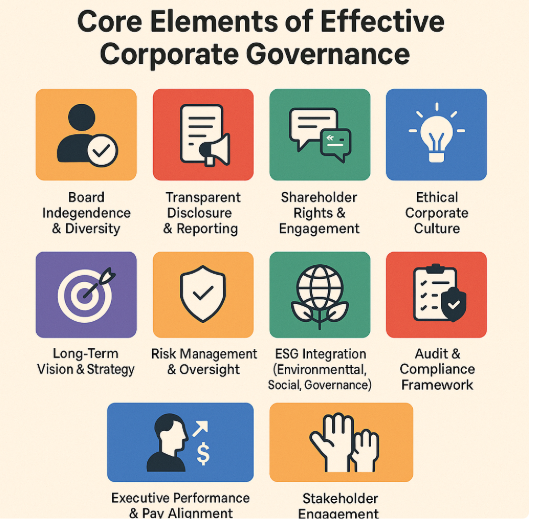
    10 Core Elements of Effective Corporate Governance

    With Real-World Examples & Leadership Lessons


    1. ✅ Long-Term Vision & Strategy

    Schneider Electric has demonstrated long-term growth through a forward-looking strategy that combines AI-driven energy optimization with strong ESG commitments. By focusing on sustainable automation and digital transformation, the company is leading the charge toward a low-carbon future.

    Lesson:
    Embedding AI and ESG into long-term strategy fuels innovation, future-proofs operations, and builds lasting value for all stakeholders.


    2. 🔍 Transparent Disclosure & Reporting

    Example: Tata Group
    Known for ethical reporting and open stakeholder communication.
    Lesson: Trust is built with transparency, not polished PR.


    3. 🧭 Board Independence & Diversity

    Example: Apple Inc. (USA)
    Apple ensures independent directors outnumber insiders on its board, enhancing governance objectivity.
    Lesson: A balanced board helps challenge decisions constructively and reduces CEO overreach.

    Example: Unilever
    A diverse, independent board brings broader perspectives and stronger checks on management.
    Lesson: Balanced leadership leads to balanced decisions.


    4. ⚖️ Shareholder Rights & Fairness

    Example: Procter & Gamble (USA)
    P&G treats all shareholders equitably and provides a strong framework for proxy voting and minority rights.
    Lesson: Treating every shareholder with fairness attracts long-term investors.


    5. 🤝 Ethical Culture & Values

    Example: Salesforce (USA)
    Salesforce fosters a values-driven culture of trust, equality, and responsibility — integrated into daily operations.
    Lesson: Ethical behavior must start at the top and be part of everyday business.


    6. 🌱 ESG Integration

    Example: Patagonia (USA)
    Patagonia integrates sustainability across its products, supply chains, and philanthropy, proving profit can align with purpose.
    Lesson: ESG isn’t a cost—it’s a competitive advantage and risk management tool.


    7. 💼 Executive Performance & Pay Alignment

    Example: Adobe Inc.
    Links executive compensation to innovation, ESG, customer metrics.
    Lesson: Fair pay drives focused leadership.


    8. 🚨 Risk Management & Oversight

    Example: Johnson Controls International (JCI)
    Best-in-class risk planning, including ESG and supply chain risks.
    Lesson: Real resilience is built before the storm.


    9. 📣 Stakeholder Engagement

    Example: IKEA
    Considers customers, employees, suppliers, and the environment in all decisions.
    Lesson: When everyone matters, loyalty and trust follow.


    Example: Sony Group (Japan)
    Sony has maintained a reputation for legal integrity and internal compliance across decades and jurisdictions.
    Lesson: Compliance must be built into the system—not just followed under pressure.


    Final Thought

    A company’s greatest asset is trust — and that’s built not in one day, but every day, through good governance.


    📉 5 Companies That Collapsed Due to Ineffective Corporate Governance

    …and how shareholders lost lifetimes of savings💸


    1. Enron (USA)

    Industry: Energy | Collapse Year: 2001
    Key Governance Failure:

    • Hidden debt using shell companies and accounting loopholes
    • Conflicts of interest overlooked by the board
    • Complicit external auditing by Arthur Andersen

    Result:

    • Over $74 billion in market value erased
    • Thousands of shareholders — including employees — lost retirement savings
    • Sparked the Sarbanes-Oxley Act, overhauling U.S. corporate governance

    2. Lehman Brothers (USA)

    Industry: Investment Banking | Collapse Year: 2008
    Key Governance Failure:

    • Excessive risk in subprime lending
    • Poor oversight and no meaningful internal controls
    • Misused “Repo 105” accounting trick to mask debt

    Result:

    • Filed the largest bankruptcy in U.S. history ($600+ billion)
    • Millions of global investors impacted as markets crashed
    • Retail investors and pension funds lost life savings overnight

    3. Wirecard (Germany)

    Industry: FinTech | Collapse Year: 2020
    Key Governance Failure:

    • €1.9 billion in fake cash reported on books
    • Whistleblowers ignored for years
    • Auditors failed basic verifications

    Result:

    • Company became the first DAX-30 firm to go insolvent
    • Share price dropped from €100 to nearly €1, wiping out investors
    • Thousands of retail shareholders lost 90%–99% of their investments

    4. Satyam Computers (India)

    Industry: IT Services | Scandal Year: 2009
    Key Governance Failure:

    • Chairman confessed to falsifying profits worth $1.5 billion
    • Fake employee records and inflated invoices
    • Board had no true independence

    Result:

    • Share price crashed 80% in a single week
    • Investors lost billions in wealth, especially retail investors and mutual funds
    • Led to SEBI tightening listing and disclosure norms in India

    5. Evergrande Group (China)

    Industry: Real Estate | Crisis Year: 2021
    Key Governance Failure:

    • Debt-fueled expansion with no governance guardrails
    • Unclear asset valuations and hidden liabilities
    • Top-down decision making with no board challenge or transparency

    Result:

    • Over $300 billion in liabilities
    • Shareholders left holding worthless paper, including many middle-class Chinese citizens
    • Set off financial contagion fears across global markets

    🚫Top ESG Failure Examples (with Explanation)


    1. BP (British Petroleum) – Deepwater Horizon Oil Spill (2010)

    • E (Environmental): Massive oil spill in the Gulf of Mexico.
    • Impact: 11 workers died, marine life devastated, coastlines polluted.
    • Cost: $65+ billion in fines, cleanup, lawsuits.
    • Lesson: Ignoring safety & environmental warnings led to disaster.

    2. Volkswagen – Dieselgate Emissions Scandal (2015)

    • G (Governance): Installed software to cheat emissions tests.
    • Impact: ~11 million vehicles affected worldwide.
    • Cost: $30+ billion in fines, recalls, lawsuits.
    • Lesson: Lack of board oversight and unethical leadership.

    3. PG&E (Pacific Gas & Electric) – California Wildfires (2018–2020)

    • E & G: Failed to maintain power lines, leading to deadly fires.
    • Impact: 100+ deaths, destruction of towns, bankruptcy filing.
    • Cost: ~$30 billion in liabilities.
    • Lesson: Neglect of infrastructure & risk management is fatal.

    4. Facebook (Meta) – Cambridge Analytica Scandal (2018)

    • S (Social): Leaked personal data of 87 million users.
    • Impact: Global backlash over privacy, misinformation.
    • Cost: $5 billion FTC fine + trust erosion.
    • Lesson: Weak data governance affects democracy and user trust.

    5. Vale SA – Brumadinho Dam Disaster (Brazil, 2019)

    • E & G: Dam collapsed due to ignored warnings.
    • Impact: 270+ people died, toxic mud buried a town.
    • Cost: $7 billion+ in reparations, lawsuits.
    • Lesson: ESG negligence in mining sector = human & environmental catastrophe.

    6. Union Carbide (UCC) – Bhopal Gas Tragedy (India, 1984)

    • E & G: Lethal gas leak from poorly maintained plant.
    • Impact: 15,000+ deaths (officially 3,787), 5 lakh+ injured.
    • Legacy: Still a haunting ESG failure, with ongoing cleanup issues.

    7. Wells Fargo – Fake Accounts Scandal (2016)

    • G: Employees created 2 million+ fake accounts to meet targets.
    • Impact: Massive trust loss, CEO resigned, billions in fines.
    • Cost: $3 billion settlement.
    • Lesson: Toxic culture and unethical incentives destroy brands.

    8. Foxconn (Apple Supplier) – Labor Rights Violations

    • S (Social): Worker suicides, poor working conditions in China.
    • Impact: Exposed global supply chain exploitation.
    • Response: Apple faced intense global criticism.
    • Lesson: Even top companies must ensure ethical sourcing.

    🔥Bhopal Gas TragedyWorst Industrial Disaster In Human History

    On the night of December 2, 1984, Bhopal was shaken by one of the deadliest industrial disasters in history, as toxic methyl isocyanate gas leaked from a pesticide plant owned by Union Carbide India Limited (UCIL), a subsidiary of the US-based Union Carbide Corporation. Over 5,000 people died, and hundreds of thousands suffered lifelong health complications. The real tragedy, however, didn’t end with the sirens that night. Even today, contaminated groundwater, abandoned toxic waste, and unresolved medical needs plague survivors and their families.

    Investigations revealed gross negligence in safety protocols, poor risk management, and an alarming lack of corporate accountability. The disaster exposed how cost-cutting, poor ESG practices, and weak governance can permanently scar a community. The haunting legacy of Bhopal reminds us that corporate failure doesn’t just collapse stock prices — it devastates human lives across generations.


    📚 Legacy:

    The Bhopal gas tragedy fundamentally reshaped how the world views corporate responsibility, leading to:

    • Stricter global industrial safety standards
    • Rise of ESG frameworks in investment and regulation
    • Creation of disaster risk governance protocols in global business practices

    🧠 What These Failures Teach Us

    • ESG failures are not abstract — they result in real deaths, destroyed environments, lost investor wealth, and global reputational harm.
    • Prevention costs less than crisis management.

    🔊 Call to Action:

    Let’s Build Ethical Businesses Together

    👩‍💼 For Board Members & Executives

    Lead with integrity.
    Set the tone at the top. Review your governance policies regularly, and align them with ESG, ethics, and transparency.
    👉 “Would I trust this decision if I were an outsider?” – ask this daily.


    📈 For Investors & Shareholders

    Look beyond the balance sheet.
    Evaluate companies not just on earnings but on governance, risk management, and sustainability metrics.
    👉 Support shareholder resolutions that promote ethical leadership.


    👩‍💻 For Employees

    Be the voice of integrity.
    Know your rights, raise concerns, and uphold your company’s values. Whistleblowing protects more than profits—it saves reputations.
    👉 Your silence could cost more than your voice.


    🌍 For Customers & Communities

    Support transparent businesses.
    Choose brands that respect people, planet, and profit equally. Speak up when companies fall short.
    👉 Your buying power shapes corporate priorities.


    🏛️ For Policymakers & Regulators

    Strengthen enforcement and incentives.
    Promote policies that reward ethical governance and penalize greenwashing or manipulation.
    👉 Make integrity the easiest business decision.


    🧭 Together, We Create a Future Built on Trust

    Good governance isn’t just policy — it’s a shared responsibility.
    Let’s each play our part in creating transparent, fair, and future-ready organizations.


    Disclaimer:

    “This article references publicly reported events from credible sources. The intent is to share learnings from real-world corporate ESG outcomes, not to defame or harm reputations.”

    📚 Reference:

    Read about the principles of corporate governance here. Know about 17 Sustainability Development Goals here.

  • ✅ Effective Corporate Governance: The Backbone of Long-Term Success

    ✅ Effective Corporate Governance: The Backbone of Long-Term Success

    Table of Contents


    🏛️ What Is Effective Corporate Governance?

    Effective corporate governance refers to the system of rules, practices, and processes by which a company is directed and controlled — in a way that is transparent, accountable, and ethical. It balances the interests of a company’s many stakeholders, including shareholders, management, customers, suppliers, financiers, government and the community.

    It’s not just about compliance — it’s about building trust, enhancing performance, and ensuring long-term sustainability.


    🌍 Why Effective Corporate Governance Matters

    In today’s fast-paced, reputation-sensitive world, businesses are judged not only on profits but how they make those profits.
    Poor governance can lead to financial scandals, shareholder mistrust, legal troubles, and even collapse. On the flip side, strong governance enhances brand value, attracts responsible investors, and drives sustainable growth.


    Real-World Impact: Trust Builder vs. Trust Breakers

    In the world of business, trust isn’t just a virtue — it’s a currency. It takes decades to build and just moments to destroy. One honest decision can build a legacy; one blind eye to ethics can bankrupt billions.

    Imagine two boardrooms.

    In one, values guide the vision — integrity fuels innovation. In the other, glowing spreadsheets mask deception, and pressure to perform trumps the truth.
    The results? One company becomes a household name for generations. Another collapses overnight, leaving investors, employees, and reputations in ruins.

    This is the story of Tata Group, Volkswagen, and Wirecard — three giants, three governance paths, and three very different outcomes.
    Let’s explore how effective corporate governance can make or break the future of even the most powerful corporations.


    Tata Group: The Gold Standard in Ethical Governance

    Country: India
    Founded: 1868
    Sector: Conglomerate – Steel, IT, Automotive, Chemicals, etc.

    Governance Strengths:

    • Deeply rooted ethical legacy from founder Jamsetji Tata.
    • Independent directors across companies like TCS, Tata Steel, Tata Motors.
    • Values-driven decision-making — prioritizing long-term stakeholder value over short-term profits.
    • Transparent succession planning and professional management.
    • Known for walking away from deals that are ethically questionable (e.g., exiting businesses not aligned with sustainability).

    Impact:

    • High public trust, even among regulators and investors.
    • Tata Sons’ leadership transition (e.g., from Ratan Tata to N. Chandrasekaran) handled with transparency despite early boardroom tensions.
    • TCS is India’s most valuable company — reflecting investor confidence rooted in sound governance.

    Lesson: Governance rooted in values creates brands that outlive generations.


    Wirecard: A Catastrophic Governance Failure

    Country: Germany
    Founded: 1999 (Collapsed in 2020)
    Sector: Financial Technology (Payments)

    Governance Failures:

    • Over €1.9 billion “missing” from accounts — the largest accounting scandal in post-war Germany.
    • Weak board oversight, especially from the supervisory board.
    • Ignored repeated whistleblower and media reports (e.g., from the Financial Times).
    • External audit (EY) failed to catch fraud for years.
    • CEO Markus Braun arrested; COO Jan Marsalek fled the country.

    Impact:

    • Stock fell from €100+ to nearly zero in days. Investors/shareholders lost lifetime savings.
    • Wirecard was removed from Germany’s DAX index.
    • Shattered trust in German regulatory systems (BaFin) and auditing integrity.

    Lesson: A rising stock price isn’t proof of integrity. Governance is tested in truth — not in numbers.


    ⚠️ Volkswagen: Strong Governance on Paper, Weak in Practice

    Country: Germany
    Founded: 1937
    Sector: Automotive

    Governance Issues:

    • The infamous Dieselgate scandal (2015): VW installed software to cheat emissions tests.
    • The board claimed ignorance, but compliance systems failed to prevent or detect fraudulent engineering practices.
    • Lack of ethical accountability in decision-making — pressure to meet market share goals overrode integrity.
    • Over-centralized control, limited whistleblower freedom.

    Impact:

    • Paid over $30 billion in fines, legal settlements, and vehicle buybacks.
    • CEO resigned; executives prosecuted in the US and Germany.
    • Brand reputation damaged, especially in eco-conscious markets like the US.

    Lesson: Even global giants fall hard when corporate values take a back seat to profit pressure.


    🧾 Comparison Table: Governance in Action

    ElementTata GroupVolkswagenWirecard
    Governance CultureEthical, values-drivenStrong in form, weak in spiritFraud-prone, opaque
    Board OversightActive, independentFormal, but failed in crisisLax and complicit
    TransparencyHighSelective, especially during crisisFabricated financials
    Whistleblower HandlingTaken seriouslyIgnored/covered upSuppressed and threatened
    Public Trust OutcomeHigh and enduringDamaged, slowly recoveringCompletely destroyed
    Legal & Financial FalloutMinimal$30+ billion in penaltiesBankruptcy, jail time
    Shareholder ImpactSteady value creationVolatile stock recoveryComplete wealth erosion

    Summary:

    • Tata Group is a model of governance with conscience, proving that trust and profit can grow together.
    • Volkswagen shows how ignoring ethical red flags — even with formal governance systems — leads to long-term damage.
    • Wirecard is a case study in how unchecked ambition, opaque leadership, and audit failures can destroy billions.

    10 Core Elements of Effective Corporate Governance

    With Real-World Examples & Leadership Lessons


    1. ✅ Long-Term Vision & Strategy

    Schneider Electric has demonstrated long-term growth through a forward-looking strategy that combines AI-driven energy optimization with strong ESG commitments. By focusing on sustainable automation and digital transformation, the company is leading the charge toward a low-carbon future.

    Lesson:
    Embedding AI and ESG into long-term strategy fuels innovation, future-proofs operations, and builds lasting value for all stakeholders.


    2. 🔍 Transparent Disclosure & Reporting

    Example: Tata Group
    Known for ethical reporting and open stakeholder communication.
    Lesson: Trust is built with transparency, not polished PR.


    3. 🧭 Board Independence & Diversity

    Example: Apple Inc. (USA)
    Apple ensures independent directors outnumber insiders on its board, enhancing governance objectivity.
    Lesson: A balanced board helps challenge decisions constructively and reduces CEO overreach.

    Example: Unilever
    A diverse, independent board brings broader perspectives and stronger checks on management.
    Lesson: Balanced leadership leads to balanced decisions.


    4. ⚖️ Shareholder Rights & Fairness

    Example: Procter & Gamble (USA)
    P&G treats all shareholders equitably and provides a strong framework for proxy voting and minority rights.
    Lesson: Treating every shareholder with fairness attracts long-term investors.


    5. 🤝 Ethical Culture & Values

    Example: Salesforce (USA)
    Salesforce fosters a values-driven culture of trust, equality, and responsibility — integrated into daily operations.
    Lesson: Ethical behavior must start at the top and be part of everyday business.


    6. 🌱 ESG Integration

    Example: Patagonia (USA)
    Patagonia integrates sustainability across its products, supply chains, and philanthropy, proving profit can align with purpose.
    Lesson: ESG isn’t a cost—it’s a competitive advantage and risk management tool.


    7. 💼 Executive Performance & Pay Alignment

    Example: Adobe Inc.
    Links executive compensation to innovation, ESG, customer metrics.
    Lesson: Fair pay drives focused leadership.


    8. 🚨 Risk Management & Oversight

    Example: Johnson Controls International (JCI)
    Best-in-class risk planning, including ESG and supply chain risks.
    Lesson: Real resilience is built before the storm.


    9. 📣 Stakeholder Engagement

    Example: IKEA
    Considers customers, employees, suppliers, and the environment in all decisions.
    Lesson: When everyone matters, loyalty and trust follow.


    Example: Sony Group (Japan)
    Sony has maintained a reputation for legal integrity and internal compliance across decades and jurisdictions.
    Lesson: Compliance must be built into the system—not just followed under pressure.


    Final Thought

    A company’s greatest asset is trust — and that’s built not in one day, but every day, through good governance.


    📉 5 Companies That Collapsed Due to Ineffective Corporate Governance

    …and how shareholders lost lifetimes of savings💸


    1. Enron (USA)

    Industry: Energy | Collapse Year: 2001
    Key Governance Failure:

    • Hidden debt using shell companies and accounting loopholes
    • Conflicts of interest overlooked by the board
    • Complicit external auditing by Arthur Andersen

    Result:

    • Over $74 billion in market value erased
    • Thousands of shareholders — including employees — lost retirement savings
    • Sparked the Sarbanes-Oxley Act, overhauling U.S. corporate governance

    2. Lehman Brothers (USA)

    Industry: Investment Banking | Collapse Year: 2008
    Key Governance Failure:

    • Excessive risk in subprime lending
    • Poor oversight and no meaningful internal controls
    • Misused “Repo 105” accounting trick to mask debt

    Result:

    • Filed the largest bankruptcy in U.S. history ($600+ billion)
    • Millions of global investors impacted as markets crashed
    • Retail investors and pension funds lost life savings overnight

    3. Wirecard (Germany)

    Industry: FinTech | Collapse Year: 2020
    Key Governance Failure:

    • €1.9 billion in fake cash reported on books
    • Whistleblowers ignored for years
    • Auditors failed basic verifications

    Result:

    • Company became the first DAX-30 firm to go insolvent
    • Share price dropped from €100 to nearly €1, wiping out investors
    • Thousands of retail shareholders lost 90%–99% of their investments

    4. Satyam Computers (India)

    Industry: IT Services | Scandal Year: 2009
    Key Governance Failure:

    • Chairman confessed to falsifying profits worth $1.5 billion
    • Fake employee records and inflated invoices
    • Board had no true independence

    Result:

    • Share price crashed 80% in a single week
    • Investors lost billions in wealth, especially retail investors and mutual funds
    • Led to SEBI tightening listing and disclosure norms in India

    5. Evergrande Group (China)

    Industry: Real Estate | Crisis Year: 2021
    Key Governance Failure:

    • Debt-fueled expansion with no governance guardrails
    • Unclear asset valuations and hidden liabilities
    • Top-down decision making with no board challenge or transparency

    Result:

    • Over $300 billion in liabilities
    • Shareholders left holding worthless paper, including many middle-class Chinese citizens
    • Set off financial contagion fears across global markets

    🚫Top ESG Failure Examples (with Explanation)


    1. BP (British Petroleum) – Deepwater Horizon Oil Spill (2010)

    • E (Environmental): Massive oil spill in the Gulf of Mexico.
    • Impact: 11 workers died, marine life devastated, coastlines polluted.
    • Cost: $65+ billion in fines, cleanup, lawsuits.
    • Lesson: Ignoring safety & environmental warnings led to disaster.

    2. Volkswagen – Dieselgate Emissions Scandal (2015)

    • G (Governance): Installed software to cheat emissions tests.
    • Impact: ~11 million vehicles affected worldwide.
    • Cost: $30+ billion in fines, recalls, lawsuits.
    • Lesson: Lack of board oversight and unethical leadership.

    3. PG&E (Pacific Gas & Electric) – California Wildfires (2018–2020)

    • E & G: Failed to maintain power lines, leading to deadly fires.
    • Impact: 100+ deaths, destruction of towns, bankruptcy filing.
    • Cost: ~$30 billion in liabilities.
    • Lesson: Neglect of infrastructure & risk management is fatal.

    4. Facebook (Meta) – Cambridge Analytica Scandal (2018)

    • S (Social): Leaked personal data of 87 million users.
    • Impact: Global backlash over privacy, misinformation.
    • Cost: $5 billion FTC fine + trust erosion.
    • Lesson: Weak data governance affects democracy and user trust.

    5. Vale SA – Brumadinho Dam Disaster (Brazil, 2019)

    • E & G: Dam collapsed due to ignored warnings.
    • Impact: 270+ people died, toxic mud buried a town.
    • Cost: $7 billion+ in reparations, lawsuits.
    • Lesson: ESG negligence in mining sector = human & environmental catastrophe.

    6. Union Carbide (UCC) – Bhopal Gas Tragedy (India, 1984)

    • E & G: Lethal gas leak from poorly maintained plant.
    • Impact: 15,000+ deaths (officially 3,787), 5 lakh+ injured.
    • Legacy: Still a haunting ESG failure, with ongoing cleanup issues.

    7. Wells Fargo – Fake Accounts Scandal (2016)

    • G: Employees created 2 million+ fake accounts to meet targets.
    • Impact: Massive trust loss, CEO resigned, billions in fines.
    • Cost: $3 billion settlement.
    • Lesson: Toxic culture and unethical incentives destroy brands.

    8. Foxconn (Apple Supplier) – Labor Rights Violations

    • S (Social): Worker suicides, poor working conditions in China.
    • Impact: Exposed global supply chain exploitation.
    • Response: Apple faced intense global criticism.
    • Lesson: Even top companies must ensure ethical sourcing.

    🔥Bhopal Gas TragedyWorst Industrial Disaster In Human History

    On the night of December 2, 1984, Bhopal was shaken by one of the deadliest industrial disasters in history, as toxic methyl isocyanate gas leaked from a pesticide plant owned by Union Carbide India Limited (UCIL), a subsidiary of the US-based Union Carbide Corporation. Over 5,000 people died, and hundreds of thousands suffered lifelong health complications. The real tragedy, however, didn’t end with the sirens that night. Even today, contaminated groundwater, abandoned toxic waste, and unresolved medical needs plague survivors and their families.

    Investigations revealed gross negligence in safety protocols, poor risk management, and an alarming lack of corporate accountability. The disaster exposed how cost-cutting, poor ESG practices, and weak governance can permanently scar a community. The haunting legacy of Bhopal reminds us that corporate failure doesn’t just collapse stock prices — it devastates human lives across generations.


    📚 Legacy:

    The Bhopal gas tragedy fundamentally reshaped how the world views corporate responsibility, leading to:

    • Stricter global industrial safety standards
    • Rise of ESG frameworks in investment and regulation
    • Creation of disaster risk governance protocols in global business practices

    🧠 What These Failures Teach Us

    • ESG failures are not abstract — they result in real deaths, destroyed environments, lost investor wealth, and global reputational harm.
    • Prevention costs less than crisis management.

    🔊 Call to Action:

    Let’s Build Ethical Businesses Together

    👩‍💼 For Board Members & Executives

    Lead with integrity.
    Set the tone at the top. Review your governance policies regularly, and align them with ESG, ethics, and transparency.
    👉 “Would I trust this decision if I were an outsider?” – ask this daily.


    📈 For Investors & Shareholders

    Look beyond the balance sheet.
    Evaluate companies not just on earnings but on governance, risk management, and sustainability metrics.
    👉 Support shareholder resolutions that promote ethical leadership.


    👩‍💻 For Employees

    Be the voice of integrity.
    Know your rights, raise concerns, and uphold your company’s values. Whistleblowing protects more than profits—it saves reputations.
    👉 Your silence could cost more than your voice.


    🌍 For Customers & Communities

    Support transparent businesses.
    Choose brands that respect people, planet, and profit equally. Speak up when companies fall short.
    👉 Your buying power shapes corporate priorities.


    🏛️ For Policymakers & Regulators

    Strengthen enforcement and incentives.
    Promote policies that reward ethical governance and penalize greenwashing or manipulation.
    👉 Make integrity the easiest business decision.


    🧭 Together, We Create a Future Built on Trust

    Good governance isn’t just policy — it’s a shared responsibility.
    Let’s each play our part in creating transparent, fair, and future-ready organizations.


    Disclaimer:

    “This article references publicly reported events from credible sources. The intent is to share learnings from real-world corporate ESG outcomes, not to defame or harm reputations.”

    📚 Reference:

    Read about the principles of corporate governance here. Know about 17 Sustainability Development Goals here.

  • Corporate Governance Best Practices🎯That Build Trust & Success

    Corporate Governance Best Practices🎯That Build Trust & Success


    🏛️ What Do We Mean by Corporate Governance Best Practices?

    Corporate governance isn’t just a boardroom formality. It’s the invisible framework of ethics, checks, and accountability that guides how a company makes decisions, treats its stakeholders, and handles crises. Best practices in governance are those proven methods, principles, and safeguards that ensure a company operates with transparency, fairness, and long-term vision.


    ⚠️ Why Do We Need These Best Practices?

    Because when governance fails, everything else can fall apart — trust, brand, profits, and people.

    🔻 The Cost of Ignoring Governance:

    Take the dramatic fall of Theranos, a health-tech startup once valued at over $9 billion. Despite red flags, its board lacked medical expertise, and oversight was minimal. Bold claims went unchecked until investigations revealed the tech didn’t work. The result? Investor losses, lawsuits, a founder’s conviction, and public disillusionment.


    The Reward of Doing It Right:

    Now contrast that with Unilever, a global company that ties executive pay to sustainability and social impact metrics. With transparent reporting, stakeholder inclusion, and long-term ESG strategies, Unilever has consistently earned investor trust while championing ethical growth.


    🌍 In Short:

    Best practices in corporate governance protect organizations from disaster — and guide them toward responsible, resilient success.

    They aren’t just about legal compliance. They’re about creating a culture where decisions are made with integrity, insight, and accountability.

    In this blog, we’ll explore the 8 proven best practices and how some of the world’s most respected companies use them to grow ethically — and sustainably.


    Best Practices in Corporate Governance (With Real Stories)

    1️⃣ Establish an Independent and Diverse Board

    Corporate Governance Best Practices

    Why it matters:
    An independent board challenges management, brings diverse perspectives, and prevents power from being concentrated in a few hands.

    ✅ Real Example: IBM (USA)
    IBM has one of the most independent boards globally, with most directors unaffiliated with the company. It includes members from various industries (finance, academia, public service), ensuring fresh ideas and challenging viewpoints.

    🧠 Lesson:
    Diversity and independence in the boardroom make better oversight possible, especially in rapidly evolving tech and global markets.


    2️⃣ Foster a Strong Ethical Culture and Code of Conduct

    Why it matters:
    A culture of integrity ensures all employees — from interns to the CEO — act with transparency and accountability.

    ✅ Real Example: Johnson & Johnson (USA)
    Known for the Tylenol crisis of 1982, J&J recalled over 31 million bottles when some were found tampered with, putting consumer safety first — even though the incident wasn’t their fault. Their values, outlined in their “Credo,” guided every decision.

    🧠 Lesson:
    Strong ethical frameworks help companies make brave, reputation-saving decisions under pressure.


    3️⃣ Ensure Transparent Financial Reporting and Disclosures

    Financial Reporting

    Why it matters:
    Open financial communication builds trust with investors, regulators, and the public — and prevents scandals.

    ✅ Real Example: Infosys (India)
    Despite facing multiple whistleblower complaints, Infosys continues to maintain investor confidence through detailed disclosures, transparent investigations, and prompt board actions. They even publish board meeting insights and ESG performance openly.

    🧠 Lesson:
    Even when faced with internal concerns, transparency can strengthen public trust and resilience.


    4️⃣ Whistleblower Protection and Internal Reporting Systems

    Why it matters:
    A safe space for employees to report misconduct internally prevents reputational damage and legal trouble later.

    ✅ Real Example: Intel (USA)
    Intel has a strong anonymous whistleblower policy and publishes annual data on ethics-related investigations. Their open-door culture helped them prevent several operational mishaps in R&D through early internal reporting.

    🧠 Lesson:
    Encouraging employees to speak up internally reduces long-term risks.


    5️⃣ Risk Management and Internal Controls

    Why it matters:
    Proactive risk management helps companies avoid financial frauds, cybersecurity breaches, and environmental violations.

    ✅ Real Example: JP Morgan Chase – Leading with Enterprise Risk Management (ERM)

    JP Morgan Chase sets a gold standard in risk management with its robust enterprise risk framework, real-time oversight, and proactive culture post-2008 crisis. It stands out in the banking sector for navigating volatility while avoiding major governance failures.

    🧠 Lesson:
    Strong risk oversight saves brands from long-term damage and supports ethical supply chains.


    6️⃣ Stakeholder Inclusiveness in Decision-Making

    Why it matters:
    When companies consider employee, community, and environmental interests — not just shareholders — they build broader and more loyal support.

    ✅ Real Example: Unilever (UK–Netherlands)
    Under former CEO Paul Polman, Unilever embedded sustainability into its strategy. Initiatives like “Sustainable Living Plan” and shareholder dialogues showed how companies can grow profits while meeting social goals.

    🧠 Lesson:
    Profitability and stakeholder well-being are not opposites — they reinforce each other.


    7️⃣ Executive Accountability and Performance Evaluation

    Why it matters:
    Reviewing CEO and executive actions ensures decisions align with company values and long-term goals.

    ✅ Real Example: Apple (USA)
    Apple ties executive bonuses to clear performance metrics: revenue, market share, and ESG goals. After poor stock performance in 2022, Tim Cook voluntarily took a pay cut — a rare act of leadership humility.

    🧠 Lesson:
    When leadership is accountable, investors and employees feel aligned and secure.


    8️⃣ ESG Integration and Long-Term Sustainability Goals

    Save the Planet - Sustainable Development Goals

    Why it matters:
    Strong governance today includes environmental and social responsibility alongside financial performance.

    ✅ Real Example: Patagonia (USA)
    Founder Yvon Chouinard legally transferred 100% of company ownership to a trust focused on environmental causes. The company’s decisions now prioritize climate action without sacrificing ethical governance.

    🧠 Lesson:
    Corporate governance isn’t just about numbers — it’s about leaving a responsible legacy.


    📌 Summary: Best Practices Checklist

    Best PracticeCompany ExampleKey Impact
    Independent BoardIBMBalanced decisions, no bias
    Ethical LeadershipJohnson & JohnsonConsumer trust during crisis
    Transparent DisclosuresInfosysMaintains investor confidence
    Whistleblower SupportIntelEarly issue resolution
    Risk ManagementJP Morgan ChaseAvoids reputational damage
    Stakeholder EngagementUnileverProfit with purpose
    Executive AccountabilityApplePerformance-based rewards
    ESG & SustainabilityPatagoniaEthical legacy, climate action

    🧠 Final Takeaway:

    “Great governance isn’t a one-time policy — it’s a daily habit. It’s not just a boardroom issue — it’s a leadership commitment.”


    🧭 What Are Business Ethics & Corporate Governance?

    • Business Ethics refers to the moral principles and standards that guide behavior in the world of business — what is right, fair, and just beyond legal compliance.
    • Corporate Governance is the framework of rules, relationships, systems, and processes within and by which authority is exercised and controlled in corporations.

    Together, they ensure that companies:

    • Do what is right, not just what is profitable
    • Serve stakeholders (not just shareholders)
    • Stay accountable, transparent, and sustainable

    🧩 How They Work Together:

    1. Ethical Foundations Strengthen Governance

    • If leadership embraces integrity, then governance structures are applied in spirit, not just letter.
    • Example: A company with strong ethics will not manipulate financial reports, even if loopholes exist.

    2. Governance Enforces Ethical Conduct

    • Good corporate governance creates formal channels — like whistleblower policies, audit committees, and independent directors — to catch or prevent unethical behavior.
    • Example: If an employee flags unethical sourcing, governance mechanisms ensure the concern is addressed fairly.

    3. Ethical Boards → Ethical Companies

    • Boards are expected to set the tone at the top. Ethical boards ensure:
      • Fair CEO pay
      • Honest financial disclosure
      • Respect for environmental and social responsibilities

    📖 Real-Life Example: The TATA Group

    • Ethical Leadership: Ratan Tata emphasized values like honesty, humility, and service to society.
    • Governance Structure: Tata Trusts, independent boards, and shareholder accountability reinforce ethical decision-making.
    • Impact: The group consistently avoids major scams, has strong employee loyalty, and is trusted by investors globally.

    🚫 When Ethics & Governance Are Misaligned

    Example: Enron (USA)

    • Had a board and committees — but ethics were ignored.
    • Executives manipulated accounts for personal profit.
    • Poor governance failed to check fraud.
    • Led to bankruptcy and massive shareholder loss.

    ✨ In Summary:

    Corporate governance is the framework;
    Business ethics is the soul.


    Call to Action:

    Take the Lead in Ethical Governance!

    Strong corporate governance isn’t optional — it’s your competitive edge.
    Audit your organization’s governance today and start building a culture of transparency, trust, and long-term success.

    📢 Share this post to inspire better leadership

    When ethics guide the intentions and governance enforces the execution, businesses become trustworthy, sustainable, and respected.

    Read 8 principles of corporate governance here. Learn about 17 Sustainability Goals here.

    External References: OECD Principles of Corporate Governance

  • Corporate Governance Best Practices🎯That Build Trust & Success

    Corporate Governance Best Practices🎯That Build Trust & Success


    🏛️ What Do We Mean by Corporate Governance Best Practices?

    Corporate governance isn’t just a boardroom formality. It’s the invisible framework of ethics, checks, and accountability that guides how a company makes decisions, treats its stakeholders, and handles crises. Best practices in governance are those proven methods, principles, and safeguards that ensure a company operates with transparency, fairness, and long-term vision.


    ⚠️ Why Do We Need These Best Practices?

    Because when governance fails, everything else can fall apart — trust, brand, profits, and people.

    🔻 The Cost of Ignoring Governance:

    Take the dramatic fall of Theranos, a health-tech startup once valued at over $9 billion. Despite red flags, its board lacked medical expertise, and oversight was minimal. Bold claims went unchecked until investigations revealed the tech didn’t work. The result? Investor losses, lawsuits, a founder’s conviction, and public disillusionment.


    The Reward of Doing It Right:

    Now contrast that with Unilever, a global company that ties executive pay to sustainability and social impact metrics. With transparent reporting, stakeholder inclusion, and long-term ESG strategies, Unilever has consistently earned investor trust while championing ethical growth.


    🌍 In Short:

    Best practices in corporate governance protect organizations from disaster — and guide them toward responsible, resilient success.

    They aren’t just about legal compliance. They’re about creating a culture where decisions are made with integrity, insight, and accountability.

    In this blog, we’ll explore the 8 proven best practices and how some of the world’s most respected companies use them to grow ethically — and sustainably.


    Best Practices in Corporate Governance (With Real Stories)

    1️⃣ Establish an Independent and Diverse Board

    Corporate Governance Best Practices

    Why it matters:
    An independent board challenges management, brings diverse perspectives, and prevents power from being concentrated in a few hands.

    ✅ Real Example: IBM (USA)
    IBM has one of the most independent boards globally, with most directors unaffiliated with the company. It includes members from various industries (finance, academia, public service), ensuring fresh ideas and challenging viewpoints.

    🧠 Lesson:
    Diversity and independence in the boardroom make better oversight possible, especially in rapidly evolving tech and global markets.


    2️⃣ Foster a Strong Ethical Culture and Code of Conduct

    Why it matters:
    A culture of integrity ensures all employees — from interns to the CEO — act with transparency and accountability.

    ✅ Real Example: Johnson & Johnson (USA)
    Known for the Tylenol crisis of 1982, J&J recalled over 31 million bottles when some were found tampered with, putting consumer safety first — even though the incident wasn’t their fault. Their values, outlined in their “Credo,” guided every decision.

    🧠 Lesson:
    Strong ethical frameworks help companies make brave, reputation-saving decisions under pressure.


    3️⃣ Ensure Transparent Financial Reporting and Disclosures

    Financial Reporting

    Why it matters:
    Open financial communication builds trust with investors, regulators, and the public — and prevents scandals.

    ✅ Real Example: Infosys (India)
    Despite facing multiple whistleblower complaints, Infosys continues to maintain investor confidence through detailed disclosures, transparent investigations, and prompt board actions. They even publish board meeting insights and ESG performance openly.

    🧠 Lesson:
    Even when faced with internal concerns, transparency can strengthen public trust and resilience.


    4️⃣ Whistleblower Protection and Internal Reporting Systems

    Why it matters:
    A safe space for employees to report misconduct internally prevents reputational damage and legal trouble later.

    ✅ Real Example: Intel (USA)
    Intel has a strong anonymous whistleblower policy and publishes annual data on ethics-related investigations. Their open-door culture helped them prevent several operational mishaps in R&D through early internal reporting.

    🧠 Lesson:
    Encouraging employees to speak up internally reduces long-term risks.


    5️⃣ Risk Management and Internal Controls

    Why it matters:
    Proactive risk management helps companies avoid financial frauds, cybersecurity breaches, and environmental violations.

    ✅ Real Example: JP Morgan Chase – Leading with Enterprise Risk Management (ERM)

    JP Morgan Chase sets a gold standard in risk management with its robust enterprise risk framework, real-time oversight, and proactive culture post-2008 crisis. It stands out in the banking sector for navigating volatility while avoiding major governance failures.

    🧠 Lesson:
    Strong risk oversight saves brands from long-term damage and supports ethical supply chains.


    6️⃣ Stakeholder Inclusiveness in Decision-Making

    Why it matters:
    When companies consider employee, community, and environmental interests — not just shareholders — they build broader and more loyal support.

    ✅ Real Example: Unilever (UK–Netherlands)
    Under former CEO Paul Polman, Unilever embedded sustainability into its strategy. Initiatives like “Sustainable Living Plan” and shareholder dialogues showed how companies can grow profits while meeting social goals.

    🧠 Lesson:
    Profitability and stakeholder well-being are not opposites — they reinforce each other.


    7️⃣ Executive Accountability and Performance Evaluation

    Why it matters:
    Reviewing CEO and executive actions ensures decisions align with company values and long-term goals.

    ✅ Real Example: Apple (USA)
    Apple ties executive bonuses to clear performance metrics: revenue, market share, and ESG goals. After poor stock performance in 2022, Tim Cook voluntarily took a pay cut — a rare act of leadership humility.

    🧠 Lesson:
    When leadership is accountable, investors and employees feel aligned and secure.


    8️⃣ ESG Integration and Long-Term Sustainability Goals

    Save the Planet - Sustainable Development Goals

    Why it matters:
    Strong governance today includes environmental and social responsibility alongside financial performance.

    ✅ Real Example: Patagonia (USA)
    Founder Yvon Chouinard legally transferred 100% of company ownership to a trust focused on environmental causes. The company’s decisions now prioritize climate action without sacrificing ethical governance.

    🧠 Lesson:
    Corporate governance isn’t just about numbers — it’s about leaving a responsible legacy.


    📌 Summary: Best Practices Checklist

    Best PracticeCompany ExampleKey Impact
    Independent BoardIBMBalanced decisions, no bias
    Ethical LeadershipJohnson & JohnsonConsumer trust during crisis
    Transparent DisclosuresInfosysMaintains investor confidence
    Whistleblower SupportIntelEarly issue resolution
    Risk ManagementJP Morgan ChaseAvoids reputational damage
    Stakeholder EngagementUnileverProfit with purpose
    Executive AccountabilityApplePerformance-based rewards
    ESG & SustainabilityPatagoniaEthical legacy, climate action

    🧠 Final Takeaway:

    “Great governance isn’t a one-time policy — it’s a daily habit. It’s not just a boardroom issue — it’s a leadership commitment.”


    🧭 What Are Business Ethics & Corporate Governance?

    • Business Ethics refers to the moral principles and standards that guide behavior in the world of business — what is right, fair, and just beyond legal compliance.
    • Corporate Governance is the framework of rules, relationships, systems, and processes within and by which authority is exercised and controlled in corporations.

    Together, they ensure that companies:

    • Do what is right, not just what is profitable
    • Serve stakeholders (not just shareholders)
    • Stay accountable, transparent, and sustainable

    🧩 How They Work Together:

    1. Ethical Foundations Strengthen Governance

    • If leadership embraces integrity, then governance structures are applied in spirit, not just letter.
    • Example: A company with strong ethics will not manipulate financial reports, even if loopholes exist.

    2. Governance Enforces Ethical Conduct

    • Good corporate governance creates formal channels — like whistleblower policies, audit committees, and independent directors — to catch or prevent unethical behavior.
    • Example: If an employee flags unethical sourcing, governance mechanisms ensure the concern is addressed fairly.

    3. Ethical Boards → Ethical Companies

    • Boards are expected to set the tone at the top. Ethical boards ensure:
      • Fair CEO pay
      • Honest financial disclosure
      • Respect for environmental and social responsibilities

    📖 Real-Life Example: The TATA Group

    • Ethical Leadership: Ratan Tata emphasized values like honesty, humility, and service to society.
    • Governance Structure: Tata Trusts, independent boards, and shareholder accountability reinforce ethical decision-making.
    • Impact: The group consistently avoids major scams, has strong employee loyalty, and is trusted by investors globally.

    🚫 When Ethics & Governance Are Misaligned

    Example: Enron (USA)

    • Had a board and committees — but ethics were ignored.
    • Executives manipulated accounts for personal profit.
    • Poor governance failed to check fraud.
    • Led to bankruptcy and massive shareholder loss.

    ✨ In Summary:

    Corporate governance is the framework;
    Business ethics is the soul.


    Call to Action:

    Take the Lead in Ethical Governance!

    Strong corporate governance isn’t optional — it’s your competitive edge.
    Audit your organization’s governance today and start building a culture of transparency, trust, and long-term success.

    📢 Share this post to inspire better leadership

    When ethics guide the intentions and governance enforces the execution, businesses become trustworthy, sustainable, and respected.

    Read 8 principles of corporate governance here. Learn about 17 Sustainability Goals here.

    External References: OECD Principles of Corporate Governance

  • 🏛️ Corporate Governance Principles: The 8 Pillars That Build Trust & Sustainability

    🏛️ Corporate Governance Principles: The 8 Pillars That Build Trust & Sustainability


    🧭 Introduction: What Is Corporate Governance & Why It Matters

    Imagine investing your hard-earned money in a company. You trust that the leaders will use it wisely, report honestly, and make decisions that ensure growth without crossing ethical lines. This trust is not built overnight — it’s the result of strong corporate governance.

    Corporate governance is the framework that ensures accountability, transparency, fairness, and ethical leadership in an organization. It is not just about ticking compliance boxes — it’s about how companies earn and retain public trust in the long term.

    ⚠️ Real-World Example: Enron – When Share Prices Soared on Lies and Collapsed in Ashes

    Enron's Rise to Failure due to lack of Corporate Governance Principles

    In the late 1990s, Enron was America’s crown jewel.

    Lauded as an innovative energy giant, its stock soared to nearly $90, and it was hailed as a Wall Street success story. Investors poured in. Employees bought stock options. Financial media couldn’t stop praising its rapid growth and visionary leadership.

    But it was all a house of cards.

    Behind the glowing balance sheets were fabricated profits, hidden debts, and unethical accounting tricks. The board of directors turned a blind eye. Auditors from Arthur Andersen signed off on manipulated reports. Executives reaped millions in bonuses while concealing the company’s true health.

    Then, the truth broke.

    Enron filed for bankruptcy in 2001 — the largest corporate failure in U.S. history at the time. Over $60 billion in shareholder value was wiped out. Thousands of employees lost their retirement savings. Trust in corporate America was shattered.


    💡 What really failed?

    Not the business potential.
    Not the economy.
    But the very foundation of corporate governance — accountability, transparency, ethical oversight, and independent checks.


    🚀 In This Blog:

    You’ll uncover the 8 powerful principles of corporate governance that companies must follow to build trust, protect investors, and ensure long-term success — without shortcuts or scandals.


    Corporate Governance Principles

    Let’s dive deep into the eight core principles of corporate governance, and how they show up in the real world.

    🔑 1. Accountability: The Backbone of Responsible Leadership

    Corporate governance starts with accountability. The board of directors, CEOs, and managers must be accountable for their decisions — not just to shareholders, but to regulators, employees, and the public.

    Real-World Example:

    HDFC Bank is known for its clear role definitions and strict performance reporting. When leadership transitions took place (from Aditya Puri to Sashidhar Jagdishan), the process was transparent, stable, and accountable to stakeholders.

    Key Practices:

    • Defined roles for board members
    • Performance monitoring
    • Internal audits and reporting mechanisms

    👁️ 2. Transparency: Letting the Truth Shine Through

    Transparency means companies share relevant, timely, and accurate information. It minimizes information asymmetry and allows all stakeholders to make informed decisions.

    Real-World Example:

    Tata Steel goes beyond legal disclosure by publishing detailed sustainability reports, ESG risks, and operational data — creating confidence in investors and regulators.

    Key Practices:

    • Open financial reporting
    • Transparent risk disclosures
    • Equal information access for all shareholders

    ⚖️ 3. Fairness: Equal Treatment for All Stakeholders

    Whether you own 1 share or 1 lakh shares — you deserve the same respect and rights. Fairness ensures equal access, protection of minority interests, and non-biased decision-making.

    Real-World Example:

    Nestlé India offers all investors — large and small — equal opportunity to participate in annual meetings and access reports. No backroom deals, no selective disclosures.

    Key Practices:

    • Protection of minority shareholders
    • Avoidance of insider favoritism
    • Equal voting and dividend rights

    🛡️ 4. Responsibility: Ethical Business Is Smart Business

    Responsibility means acting with integrity and legal compliance. But it also means doing the right thing even when the law is silent — showing moral responsibility to people, planet, and purpose.

    Real-World Example:

    Mahindra Group embeds responsibility in its DNA — from fair labor practices to rural education programs. Their focus is not just on “how much profit,” but “how the profit is made.”

    Key Practices:

    • Strong code of conduct
    • Legal and ethical compliance
    • Internal ethics training and audits

    🧑‍⚖️ 5. Independence: The Power of Objective Oversight

    Independent directors help prevent conflicts of interest and ensure unbiased governance. They bring fresh perspectives and check internal power dynamics.

    Real-World Example:

    Infosys, despite past controversies, maintains a strong structure of independent audit and risk committees to oversee executive decisions without bias.

    Key Practices:

    • Independent audit, remuneration, and nomination committees
    • Separation of CEO and Chair roles (where possible)
    • Conflict of interest policies

    🎯 6. Strategic Leadership: Governance with a Vision

    The board is not just a watchdog — it’s a guide. Strategic governance means directing the company’s vision, mission, risk appetite, and values.

    Real-World Example:

    Under Ratan Tata, the Tata Group expanded globally while retaining its ethical, stakeholder-first values — blending vision with vigilance.

    Key Practices:

    • Long-term strategy planning
    • Performance review of CEO and leadership
    • Risk management and scenario planning

    🌱 7. Sustainability & ESG: Beyond Profits

    Modern governance integrates Environmental, Social, and Governance (ESG) factors into boardroom decisions. It ensures long-term value creation for people and planet — not just shareholders.

    Real-World Example:

    Unilever ties executive compensation to ESG targets. They publish an integrated report showing carbon footprint, gender diversity, and ethical sourcing results.

    Key Practices:

    • ESG targets in strategy and pay
    • Climate risk disclosures
    • Inclusive and ethical supply chains

    🧩 8. Stakeholder Engagement: Governance for Everyone

    Good governance involves more than shareholders. It considers employees, customers, suppliers, communities, and even future generations.

    Real-World Example:

    ITC’s e-Choupal program empowers rural farmers with market access, while also strengthening ITC’s procurement. This win-win approach reflects inclusive governance.

    Key Practices:

    • Active stakeholder dialogue
    • Grievance redressal mechanisms
    • CSR and community outreach

    📊 Summary Table: 8 Corporate Governance Principles

    🏷️ Principle💡 Focus Area✅ Key Outcome
    AccountabilityRoles, Reporting, AuditsResponsible leadership
    TransparencyDisclosures, HonestyInvestor confidence
    FairnessEqual RightsProtection of minority stakeholders
    ResponsibilityEthics, LawSocial legitimacy, risk control
    IndependenceUnbiased OversightBalanced decision-making
    Strategic LeadershipVision & ExecutionSustainable business growth
    Sustainability & ESGLong-term Planet & People ImpactTrust and brand reputation
    Stakeholder EngagementInclusive GovernanceLoyalty and social license to operate

    Ethical vs Broken Governance

    Ethical GovernanceBroken Governance
    Transparency in reporting and decisions 🧾Hidden deals, opaque disclosures 🤐
    Accountability from top leadership 🎯Blame-shifting and denial ⛔
    Inclusive stakeholder engagement 🤝Self-serving decisions for select few 🙄
    Strong, independent boards 🧠Conflict-ridden, rubber-stamp boards ⚠️
    Long-term vision with values 🌱Short-term greed for profits 💰

    Lessons every business leader must learn:

    10 Essential Lessons from Corporate Governance Principles that every Business Leader Must Learn from the principles of corporate governance — drawn from real-world stories of success and failure:

    💡 1. Trust is Earned Through Transparency

    Your stakeholders — employees, customers, investors — watch how you act, not just what you promise.
    📌 Lesson: Be open with your books, your challenges, and your plans. Secrecy breeds suspicion.


    🧭 2. Ethical Leadership Isn’t Optional

    The tone at the top determines the behavior at every level.
    📌 Lesson: Uphold integrity in all actions — even when it’s hard. People will follow the example you set.


    ⚖️ 3. Fairness Is a Strategic Advantage

    Discrimination, favoritism, and unequal treatment damage internal culture and external image.
    📌 Lesson: Build equity into governance, hiring, promotions, and shareholder rights.


    🧠 4. An Independent Board is Your Best Defense

    A board that challenges leadership constructively can prevent disasters.
    📌 Lesson: Surround yourself with diverse, empowered directors — not “yes men.”


    📉 5. Soaring Share Price Can Be a Mirage

    Enron, Theranos, Yes Bank — all rose fast. And all crashed harder.
    📌 Lesson: Don’t mistake hype for health. Solid governance matters more than stock spikes.


    🧩 6. Accountability Must Start at the Top

    When leaders pass the blame, trust collapses.
    📌 Lesson: Own outcomes. Apologize when needed. Fix mistakes swiftly.


    📊 7. Risk Management is Daily, Not Yearly

    Ignoring small risks creates giant disasters.
    📌 Lesson: Regularly audit operations, culture, and finances. Prevention is cheaper than crisis response.


    🌱 8. Purpose Beyond Profit Drives Longevity

    Companies with purpose outperform in trust, talent, and customer loyalty.
    📌 Lesson: Balance profit with planet and people — the triple bottom line.


    🤝 9. Listen to All Stakeholders

    Employees, customers, regulators — not just investors — have a say in your success.
    📌 Lesson: Create channels for dialogue and feedback from all key groups.


    🔄 10. Governance is Not a One-Time Setup

    Markets, laws, expectations evolve — so must your governance.
    📌 Lesson: Regularly review and refresh your governance practices.


    📌 Final Thought:

    “Corporate governance is not about compliance. It’s about character, conscience, and continuity.


    🔔 Conclusion: Governance Is the Soul of Business

    In an age of public scrutiny, data leaks, greenwashing, and activist investors — governance is more than a legal obligation. It’s how companies build legacy, loyalty, and leadership.

    “Corporate governance is not just about preventing failure. It’s about enabling success — the right way.”


    📣 Call to Action:

    Are you an entrepreneur, student, investor, or board member?

    ✅ Start asking the hard questions:

    • Is your business transparent?
    • Are you protecting stakeholder interests?
    • Are ethics as important as profits?

    Because governance is not a checkbox — it’s a compass.

    Read about United Nations 17 Sustainability Development Goals here.

    Reference: OECD Principles of Corporate Governance

  • 🏛️ Corporate Governance Principles: The 8 Pillars That Build Trust & Sustainability

    🏛️ Corporate Governance Principles: The 8 Pillars That Build Trust & Sustainability


    🧭 Introduction: What Is Corporate Governance & Why It Matters

    Imagine investing your hard-earned money in a company. You trust that the leaders will use it wisely, report honestly, and make decisions that ensure growth without crossing ethical lines. This trust is not built overnight — it’s the result of strong corporate governance.

    Corporate governance is the framework that ensures accountability, transparency, fairness, and ethical leadership in an organization. It is not just about ticking compliance boxes — it’s about how companies earn and retain public trust in the long term.

    ⚠️ Real-World Example: Enron – When Share Prices Soared on Lies and Collapsed in Ashes

    Enron's Rise to Failure due to lack of Corporate Governance Principles

    In the late 1990s, Enron was America’s crown jewel.

    Lauded as an innovative energy giant, its stock soared to nearly $90, and it was hailed as a Wall Street success story. Investors poured in. Employees bought stock options. Financial media couldn’t stop praising its rapid growth and visionary leadership.

    But it was all a house of cards.

    Behind the glowing balance sheets were fabricated profits, hidden debts, and unethical accounting tricks. The board of directors turned a blind eye. Auditors from Arthur Andersen signed off on manipulated reports. Executives reaped millions in bonuses while concealing the company’s true health.

    Then, the truth broke.

    Enron filed for bankruptcy in 2001 — the largest corporate failure in U.S. history at the time. Over $60 billion in shareholder value was wiped out. Thousands of employees lost their retirement savings. Trust in corporate America was shattered.


    💡 What really failed?

    Not the business potential.
    Not the economy.
    But the very foundation of corporate governance — accountability, transparency, ethical oversight, and independent checks.


    🚀 In This Blog:

    You’ll uncover the 8 powerful principles of corporate governance that companies must follow to build trust, protect investors, and ensure long-term success — without shortcuts or scandals.


    Corporate Governance Principles

    Let’s dive deep into the eight core principles of corporate governance, and how they show up in the real world.

    🔑 1. Accountability: The Backbone of Responsible Leadership

    Corporate governance starts with accountability. The board of directors, CEOs, and managers must be accountable for their decisions — not just to shareholders, but to regulators, employees, and the public.

    Real-World Example:

    HDFC Bank is known for its clear role definitions and strict performance reporting. When leadership transitions took place (from Aditya Puri to Sashidhar Jagdishan), the process was transparent, stable, and accountable to stakeholders.

    Key Practices:

    • Defined roles for board members
    • Performance monitoring
    • Internal audits and reporting mechanisms

    👁️ 2. Transparency: Letting the Truth Shine Through

    Transparency means companies share relevant, timely, and accurate information. It minimizes information asymmetry and allows all stakeholders to make informed decisions.

    Real-World Example:

    Tata Steel goes beyond legal disclosure by publishing detailed sustainability reports, ESG risks, and operational data — creating confidence in investors and regulators.

    Key Practices:

    • Open financial reporting
    • Transparent risk disclosures
    • Equal information access for all shareholders

    ⚖️ 3. Fairness: Equal Treatment for All Stakeholders

    Whether you own 1 share or 1 lakh shares — you deserve the same respect and rights. Fairness ensures equal access, protection of minority interests, and non-biased decision-making.

    Real-World Example:

    Nestlé India offers all investors — large and small — equal opportunity to participate in annual meetings and access reports. No backroom deals, no selective disclosures.

    Key Practices:

    • Protection of minority shareholders
    • Avoidance of insider favoritism
    • Equal voting and dividend rights

    🛡️ 4. Responsibility: Ethical Business Is Smart Business

    Responsibility means acting with integrity and legal compliance. But it also means doing the right thing even when the law is silent — showing moral responsibility to people, planet, and purpose.

    Real-World Example:

    Mahindra Group embeds responsibility in its DNA — from fair labor practices to rural education programs. Their focus is not just on “how much profit,” but “how the profit is made.”

    Key Practices:

    • Strong code of conduct
    • Legal and ethical compliance
    • Internal ethics training and audits

    🧑‍⚖️ 5. Independence: The Power of Objective Oversight

    Independent directors help prevent conflicts of interest and ensure unbiased governance. They bring fresh perspectives and check internal power dynamics.

    Real-World Example:

    Infosys, despite past controversies, maintains a strong structure of independent audit and risk committees to oversee executive decisions without bias.

    Key Practices:

    • Independent audit, remuneration, and nomination committees
    • Separation of CEO and Chair roles (where possible)
    • Conflict of interest policies

    🎯 6. Strategic Leadership: Governance with a Vision

    The board is not just a watchdog — it’s a guide. Strategic governance means directing the company’s vision, mission, risk appetite, and values.

    Real-World Example:

    Under Ratan Tata, the Tata Group expanded globally while retaining its ethical, stakeholder-first values — blending vision with vigilance.

    Key Practices:

    • Long-term strategy planning
    • Performance review of CEO and leadership
    • Risk management and scenario planning

    🌱 7. Sustainability & ESG: Beyond Profits

    Modern governance integrates Environmental, Social, and Governance (ESG) factors into boardroom decisions. It ensures long-term value creation for people and planet — not just shareholders.

    Real-World Example:

    Unilever ties executive compensation to ESG targets. They publish an integrated report showing carbon footprint, gender diversity, and ethical sourcing results.

    Key Practices:

    • ESG targets in strategy and pay
    • Climate risk disclosures
    • Inclusive and ethical supply chains

    🧩 8. Stakeholder Engagement: Governance for Everyone

    Good governance involves more than shareholders. It considers employees, customers, suppliers, communities, and even future generations.

    Real-World Example:

    ITC’s e-Choupal program empowers rural farmers with market access, while also strengthening ITC’s procurement. This win-win approach reflects inclusive governance.

    Key Practices:

    • Active stakeholder dialogue
    • Grievance redressal mechanisms
    • CSR and community outreach

    📊 Summary Table: 8 Corporate Governance Principles

    🏷️ Principle💡 Focus Area✅ Key Outcome
    AccountabilityRoles, Reporting, AuditsResponsible leadership
    TransparencyDisclosures, HonestyInvestor confidence
    FairnessEqual RightsProtection of minority stakeholders
    ResponsibilityEthics, LawSocial legitimacy, risk control
    IndependenceUnbiased OversightBalanced decision-making
    Strategic LeadershipVision & ExecutionSustainable business growth
    Sustainability & ESGLong-term Planet & People ImpactTrust and brand reputation
    Stakeholder EngagementInclusive GovernanceLoyalty and social license to operate

    Ethical vs Broken Governance

    Ethical GovernanceBroken Governance
    Transparency in reporting and decisions 🧾Hidden deals, opaque disclosures 🤐
    Accountability from top leadership 🎯Blame-shifting and denial ⛔
    Inclusive stakeholder engagement 🤝Self-serving decisions for select few 🙄
    Strong, independent boards 🧠Conflict-ridden, rubber-stamp boards ⚠️
    Long-term vision with values 🌱Short-term greed for profits 💰

    Lessons every business leader must learn:

    10 Essential Lessons from Corporate Governance Principles that every Business Leader Must Learn from the principles of corporate governance — drawn from real-world stories of success and failure:

    💡 1. Trust is Earned Through Transparency

    Your stakeholders — employees, customers, investors — watch how you act, not just what you promise.
    📌 Lesson: Be open with your books, your challenges, and your plans. Secrecy breeds suspicion.


    🧭 2. Ethical Leadership Isn’t Optional

    The tone at the top determines the behavior at every level.
    📌 Lesson: Uphold integrity in all actions — even when it’s hard. People will follow the example you set.


    ⚖️ 3. Fairness Is a Strategic Advantage

    Discrimination, favoritism, and unequal treatment damage internal culture and external image.
    📌 Lesson: Build equity into governance, hiring, promotions, and shareholder rights.


    🧠 4. An Independent Board is Your Best Defense

    A board that challenges leadership constructively can prevent disasters.
    📌 Lesson: Surround yourself with diverse, empowered directors — not “yes men.”


    📉 5. Soaring Share Price Can Be a Mirage

    Enron, Theranos, Yes Bank — all rose fast. And all crashed harder.
    📌 Lesson: Don’t mistake hype for health. Solid governance matters more than stock spikes.


    🧩 6. Accountability Must Start at the Top

    When leaders pass the blame, trust collapses.
    📌 Lesson: Own outcomes. Apologize when needed. Fix mistakes swiftly.


    📊 7. Risk Management is Daily, Not Yearly

    Ignoring small risks creates giant disasters.
    📌 Lesson: Regularly audit operations, culture, and finances. Prevention is cheaper than crisis response.


    🌱 8. Purpose Beyond Profit Drives Longevity

    Companies with purpose outperform in trust, talent, and customer loyalty.
    📌 Lesson: Balance profit with planet and people — the triple bottom line.


    🤝 9. Listen to All Stakeholders

    Employees, customers, regulators — not just investors — have a say in your success.
    📌 Lesson: Create channels for dialogue and feedback from all key groups.


    🔄 10. Governance is Not a One-Time Setup

    Markets, laws, expectations evolve — so must your governance.
    📌 Lesson: Regularly review and refresh your governance practices.


    📌 Final Thought:

    “Corporate governance is not about compliance. It’s about character, conscience, and continuity.


    🔔 Conclusion: Governance Is the Soul of Business

    In an age of public scrutiny, data leaks, greenwashing, and activist investors — governance is more than a legal obligation. It’s how companies build legacy, loyalty, and leadership.

    “Corporate governance is not just about preventing failure. It’s about enabling success — the right way.”


    📣 Call to Action:

    Are you an entrepreneur, student, investor, or board member?

    ✅ Start asking the hard questions:

    • Is your business transparent?
    • Are you protecting stakeholder interests?
    • Are ethics as important as profits?

    Because governance is not a checkbox — it’s a compass.

    Read about United Nations 17 Sustainability Development Goals here.

    Reference: OECD Principles of Corporate Governance

  • 🏛️ Corporate Governance Principles: The 8 Pillars That Build Trust & Sustainability

    🏛️ Corporate Governance Principles: The 8 Pillars That Build Trust & Sustainability


    🧭 Introduction: What Is Corporate Governance & Why It Matters

    Imagine investing your hard-earned money in a company. You trust that the leaders will use it wisely, report honestly, and make decisions that ensure growth without crossing ethical lines. This trust is not built overnight — it’s the result of strong corporate governance.

    Corporate governance is the framework that ensures accountability, transparency, fairness, and ethical leadership in an organization. It is not just about ticking compliance boxes — it’s about how companies earn and retain public trust in the long term.

    ⚠️ Real-World Example: Enron – When Share Prices Soared on Lies and Collapsed in Ashes

    Enron's Rise to Failure due to lack of Corporate Governance Principles

    In the late 1990s, Enron was America’s crown jewel.

    Lauded as an innovative energy giant, its stock soared to nearly $90, and it was hailed as a Wall Street success story. Investors poured in. Employees bought stock options. Financial media couldn’t stop praising its rapid growth and visionary leadership.

    But it was all a house of cards.

    Behind the glowing balance sheets were fabricated profits, hidden debts, and unethical accounting tricks. The board of directors turned a blind eye. Auditors from Arthur Andersen signed off on manipulated reports. Executives reaped millions in bonuses while concealing the company’s true health.

    Then, the truth broke.

    Enron filed for bankruptcy in 2001 — the largest corporate failure in U.S. history at the time. Over $60 billion in shareholder value was wiped out. Thousands of employees lost their retirement savings. Trust in corporate America was shattered.


    💡 What really failed?

    Not the business potential.
    Not the economy.
    But the very foundation of corporate governance — accountability, transparency, ethical oversight, and independent checks.


    🚀 In This Blog:

    You’ll uncover the 8 powerful principles of corporate governance that companies must follow to build trust, protect investors, and ensure long-term success — without shortcuts or scandals.


    Corporate Governance Principles

    Let’s dive deep into the eight core principles of corporate governance, and how they show up in the real world.

    🔑 1. Accountability: The Backbone of Responsible Leadership

    Corporate governance starts with accountability. The board of directors, CEOs, and managers must be accountable for their decisions — not just to shareholders, but to regulators, employees, and the public.

    Real-World Example:

    HDFC Bank is known for its clear role definitions and strict performance reporting. When leadership transitions took place (from Aditya Puri to Sashidhar Jagdishan), the process was transparent, stable, and accountable to stakeholders.

    Key Practices:

    • Defined roles for board members
    • Performance monitoring
    • Internal audits and reporting mechanisms

    👁️ 2. Transparency: Letting the Truth Shine Through

    Transparency means companies share relevant, timely, and accurate information. It minimizes information asymmetry and allows all stakeholders to make informed decisions.

    Real-World Example:

    Tata Steel goes beyond legal disclosure by publishing detailed sustainability reports, ESG risks, and operational data — creating confidence in investors and regulators.

    Key Practices:

    • Open financial reporting
    • Transparent risk disclosures
    • Equal information access for all shareholders

    ⚖️ 3. Fairness: Equal Treatment for All Stakeholders

    Whether you own 1 share or 1 lakh shares — you deserve the same respect and rights. Fairness ensures equal access, protection of minority interests, and non-biased decision-making.

    Real-World Example:

    Nestlé India offers all investors — large and small — equal opportunity to participate in annual meetings and access reports. No backroom deals, no selective disclosures.

    Key Practices:

    • Protection of minority shareholders
    • Avoidance of insider favoritism
    • Equal voting and dividend rights

    🛡️ 4. Responsibility: Ethical Business Is Smart Business

    Responsibility means acting with integrity and legal compliance. But it also means doing the right thing even when the law is silent — showing moral responsibility to people, planet, and purpose.

    Real-World Example:

    Mahindra Group embeds responsibility in its DNA — from fair labor practices to rural education programs. Their focus is not just on “how much profit,” but “how the profit is made.”

    Key Practices:

    • Strong code of conduct
    • Legal and ethical compliance
    • Internal ethics training and audits

    🧑‍⚖️ 5. Independence: The Power of Objective Oversight

    Independent directors help prevent conflicts of interest and ensure unbiased governance. They bring fresh perspectives and check internal power dynamics.

    Real-World Example:

    Infosys, despite past controversies, maintains a strong structure of independent audit and risk committees to oversee executive decisions without bias.

    Key Practices:

    • Independent audit, remuneration, and nomination committees
    • Separation of CEO and Chair roles (where possible)
    • Conflict of interest policies

    🎯 6. Strategic Leadership: Governance with a Vision

    The board is not just a watchdog — it’s a guide. Strategic governance means directing the company’s vision, mission, risk appetite, and values.

    Real-World Example:

    Under Ratan Tata, the Tata Group expanded globally while retaining its ethical, stakeholder-first values — blending vision with vigilance.

    Key Practices:

    • Long-term strategy planning
    • Performance review of CEO and leadership
    • Risk management and scenario planning

    🌱 7. Sustainability & ESG: Beyond Profits

    Modern governance integrates Environmental, Social, and Governance (ESG) factors into boardroom decisions. It ensures long-term value creation for people and planet — not just shareholders.

    Real-World Example:

    Unilever ties executive compensation to ESG targets. They publish an integrated report showing carbon footprint, gender diversity, and ethical sourcing results.

    Key Practices:

    • ESG targets in strategy and pay
    • Climate risk disclosures
    • Inclusive and ethical supply chains

    🧩 8. Stakeholder Engagement: Governance for Everyone

    Good governance involves more than shareholders. It considers employees, customers, suppliers, communities, and even future generations.

    Real-World Example:

    ITC’s e-Choupal program empowers rural farmers with market access, while also strengthening ITC’s procurement. This win-win approach reflects inclusive governance.

    Key Practices:

    • Active stakeholder dialogue
    • Grievance redressal mechanisms
    • CSR and community outreach

    📊 Summary Table: 8 Corporate Governance Principles

    🏷️ Principle💡 Focus Area✅ Key Outcome
    AccountabilityRoles, Reporting, AuditsResponsible leadership
    TransparencyDisclosures, HonestyInvestor confidence
    FairnessEqual RightsProtection of minority stakeholders
    ResponsibilityEthics, LawSocial legitimacy, risk control
    IndependenceUnbiased OversightBalanced decision-making
    Strategic LeadershipVision & ExecutionSustainable business growth
    Sustainability & ESGLong-term Planet & People ImpactTrust and brand reputation
    Stakeholder EngagementInclusive GovernanceLoyalty and social license to operate

    Ethical vs Broken Governance

    Ethical GovernanceBroken Governance
    Transparency in reporting and decisions 🧾Hidden deals, opaque disclosures 🤐
    Accountability from top leadership 🎯Blame-shifting and denial ⛔
    Inclusive stakeholder engagement 🤝Self-serving decisions for select few 🙄
    Strong, independent boards 🧠Conflict-ridden, rubber-stamp boards ⚠️
    Long-term vision with values 🌱Short-term greed for profits 💰

    Lessons every business leader must learn:

    10 Essential Lessons from Corporate Governance Principles that every Business Leader Must Learn from the principles of corporate governance — drawn from real-world stories of success and failure:

    💡 1. Trust is Earned Through Transparency

    Your stakeholders — employees, customers, investors — watch how you act, not just what you promise.
    📌 Lesson: Be open with your books, your challenges, and your plans. Secrecy breeds suspicion.


    🧭 2. Ethical Leadership Isn’t Optional

    The tone at the top determines the behavior at every level.
    📌 Lesson: Uphold integrity in all actions — even when it’s hard. People will follow the example you set.


    ⚖️ 3. Fairness Is a Strategic Advantage

    Discrimination, favoritism, and unequal treatment damage internal culture and external image.
    📌 Lesson: Build equity into governance, hiring, promotions, and shareholder rights.


    🧠 4. An Independent Board is Your Best Defense

    A board that challenges leadership constructively can prevent disasters.
    📌 Lesson: Surround yourself with diverse, empowered directors — not “yes men.”


    📉 5. Soaring Share Price Can Be a Mirage

    Enron, Theranos, Yes Bank — all rose fast. And all crashed harder.
    📌 Lesson: Don’t mistake hype for health. Solid governance matters more than stock spikes.


    🧩 6. Accountability Must Start at the Top

    When leaders pass the blame, trust collapses.
    📌 Lesson: Own outcomes. Apologize when needed. Fix mistakes swiftly.


    📊 7. Risk Management is Daily, Not Yearly

    Ignoring small risks creates giant disasters.
    📌 Lesson: Regularly audit operations, culture, and finances. Prevention is cheaper than crisis response.


    🌱 8. Purpose Beyond Profit Drives Longevity

    Companies with purpose outperform in trust, talent, and customer loyalty.
    📌 Lesson: Balance profit with planet and people — the triple bottom line.


    🤝 9. Listen to All Stakeholders

    Employees, customers, regulators — not just investors — have a say in your success.
    📌 Lesson: Create channels for dialogue and feedback from all key groups.


    🔄 10. Governance is Not a One-Time Setup

    Markets, laws, expectations evolve — so must your governance.
    📌 Lesson: Regularly review and refresh your governance practices.


    📌 Final Thought:

    “Corporate governance is not about compliance. It’s about character, conscience, and continuity.


    🔔 Conclusion: Governance Is the Soul of Business

    In an age of public scrutiny, data leaks, greenwashing, and activist investors — governance is more than a legal obligation. It’s how companies build legacy, loyalty, and leadership.

    “Corporate governance is not just about preventing failure. It’s about enabling success — the right way.”


    📣 Call to Action:

    Are you an entrepreneur, student, investor, or board member?

    ✅ Start asking the hard questions:

    • Is your business transparent?
    • Are you protecting stakeholder interests?
    • Are ethics as important as profits?

    Because governance is not a checkbox — it’s a compass.

    Read about United Nations 17 Sustainability Development Goals here.
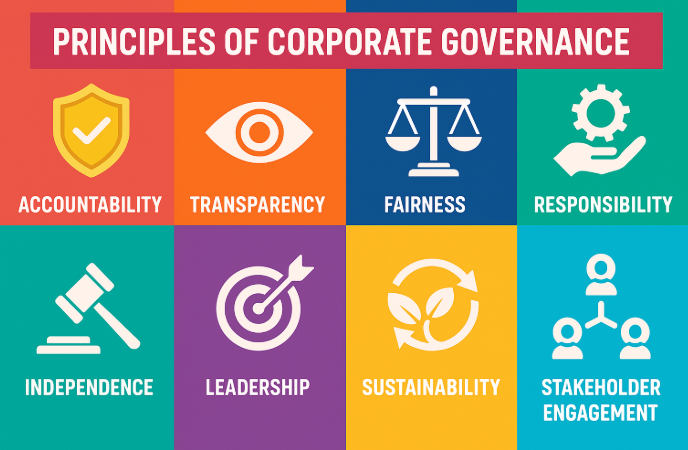
    Reference: OECD Principles of Corporate Governance

  • 🏛️ Corporate Governance Principles: The 8 Pillars That Build Trust & Sustainability

    🏛️ Corporate Governance Principles: The 8 Pillars That Build Trust & Sustainability


    🧭 Introduction: What Is Corporate Governance & Why It Matters

    Imagine investing your hard-earned money in a company. You trust that the leaders will use it wisely, report honestly, and make decisions that ensure growth without crossing ethical lines. This trust is not built overnight — it’s the result of strong corporate governance.

    Corporate governance is the framework that ensures accountability, transparency, fairness, and ethical leadership in an organization. It is not just about ticking compliance boxes — it’s about how companies earn and retain public trust in the long term.

    ⚠️ Real-World Example: Enron – When Share Prices Soared on Lies and Collapsed in Ashes

    Enron's Rise to Failure due to lack of Corporate Governance Principles

    In the late 1990s, Enron was America’s crown jewel.

    Lauded as an innovative energy giant, its stock soared to nearly $90, and it was hailed as a Wall Street success story. Investors poured in. Employees bought stock options. Financial media couldn’t stop praising its rapid growth and visionary leadership.

    But it was all a house of cards.

    Behind the glowing balance sheets were fabricated profits, hidden debts, and unethical accounting tricks. The board of directors turned a blind eye. Auditors from Arthur Andersen signed off on manipulated reports. Executives reaped millions in bonuses while concealing the company’s true health.

    Then, the truth broke.

    Enron filed for bankruptcy in 2001 — the largest corporate failure in U.S. history at the time. Over $60 billion in shareholder value was wiped out. Thousands of employees lost their retirement savings. Trust in corporate America was shattered.


    💡 What really failed?

    Not the business potential.
    Not the economy.
    But the very foundation of corporate governance — accountability, transparency, ethical oversight, and independent checks.


    🚀 In This Blog:

    You’ll uncover the 8 powerful principles of corporate governance that companies must follow to build trust, protect investors, and ensure long-term success — without shortcuts or scandals.


    Corporate Governance Principles

    Let’s dive deep into the eight core principles of corporate governance, and how they show up in the real world.

    🔑 1. Accountability: The Backbone of Responsible Leadership

    Corporate governance starts with accountability. The board of directors, CEOs, and managers must be accountable for their decisions — not just to shareholders, but to regulators, employees, and the public.

    Real-World Example:

    HDFC Bank is known for its clear role definitions and strict performance reporting. When leadership transitions took place (from Aditya Puri to Sashidhar Jagdishan), the process was transparent, stable, and accountable to stakeholders.

    Key Practices:

    • Defined roles for board members
    • Performance monitoring
    • Internal audits and reporting mechanisms

    👁️ 2. Transparency: Letting the Truth Shine Through

    Transparency means companies share relevant, timely, and accurate information. It minimizes information asymmetry and allows all stakeholders to make informed decisions.

    Real-World Example:

    Tata Steel goes beyond legal disclosure by publishing detailed sustainability reports, ESG risks, and operational data — creating confidence in investors and regulators.

    Key Practices:

    • Open financial reporting
    • Transparent risk disclosures
    • Equal information access for all shareholders

    ⚖️ 3. Fairness: Equal Treatment for All Stakeholders

    Whether you own 1 share or 1 lakh shares — you deserve the same respect and rights. Fairness ensures equal access, protection of minority interests, and non-biased decision-making.

    Real-World Example:

    Nestlé India offers all investors — large and small — equal opportunity to participate in annual meetings and access reports. No backroom deals, no selective disclosures.

    Key Practices:

    • Protection of minority shareholders
    • Avoidance of insider favoritism
    • Equal voting and dividend rights

    🛡️ 4. Responsibility: Ethical Business Is Smart Business

    Responsibility means acting with integrity and legal compliance. But it also means doing the right thing even when the law is silent — showing moral responsibility to people, planet, and purpose.

    Real-World Example:

    Mahindra Group embeds responsibility in its DNA — from fair labor practices to rural education programs. Their focus is not just on “how much profit,” but “how the profit is made.”

    Key Practices:

    • Strong code of conduct
    • Legal and ethical compliance
    • Internal ethics training and audits

    🧑‍⚖️ 5. Independence: The Power of Objective Oversight

    Independent directors help prevent conflicts of interest and ensure unbiased governance. They bring fresh perspectives and check internal power dynamics.

    Real-World Example:

    Infosys, despite past controversies, maintains a strong structure of independent audit and risk committees to oversee executive decisions without bias.

    Key Practices:

    • Independent audit, remuneration, and nomination committees
    • Separation of CEO and Chair roles (where possible)
    • Conflict of interest policies

    🎯 6. Strategic Leadership: Governance with a Vision

    The board is not just a watchdog — it’s a guide. Strategic governance means directing the company’s vision, mission, risk appetite, and values.

    Real-World Example:

    Under Ratan Tata, the Tata Group expanded globally while retaining its ethical, stakeholder-first values — blending vision with vigilance.

    Key Practices:

    • Long-term strategy planning
    • Performance review of CEO and leadership
    • Risk management and scenario planning

    🌱 7. Sustainability & ESG: Beyond Profits

    Modern governance integrates Environmental, Social, and Governance (ESG) factors into boardroom decisions. It ensures long-term value creation for people and planet — not just shareholders.

    Real-World Example:

    Unilever ties executive compensation to ESG targets. They publish an integrated report showing carbon footprint, gender diversity, and ethical sourcing results.

    Key Practices:

    • ESG targets in strategy and pay
    • Climate risk disclosures
    • Inclusive and ethical supply chains

    🧩 8. Stakeholder Engagement: Governance for Everyone

    Good governance involves more than shareholders. It considers employees, customers, suppliers, communities, and even future generations.

    Real-World Example:

    ITC’s e-Choupal program empowers rural farmers with market access, while also strengthening ITC’s procurement. This win-win approach reflects inclusive governance.

    Key Practices:

    • Active stakeholder dialogue
    • Grievance redressal mechanisms
    • CSR and community outreach

    📊 Summary Table: 8 Corporate Governance Principles

    🏷️ Principle💡 Focus Area✅ Key Outcome
    AccountabilityRoles, Reporting, AuditsResponsible leadership
    TransparencyDisclosures, HonestyInvestor confidence
    FairnessEqual RightsProtection of minority stakeholders
    ResponsibilityEthics, LawSocial legitimacy, risk control
    IndependenceUnbiased OversightBalanced decision-making
    Strategic LeadershipVision & ExecutionSustainable business growth
    Sustainability & ESGLong-term Planet & People ImpactTrust and brand reputation
    Stakeholder EngagementInclusive GovernanceLoyalty and social license to operate

    Ethical vs Broken Governance

    Ethical GovernanceBroken Governance
    Transparency in reporting and decisions 🧾Hidden deals, opaque disclosures 🤐
    Accountability from top leadership 🎯Blame-shifting and denial ⛔
    Inclusive stakeholder engagement 🤝Self-serving decisions for select few 🙄
    Strong, independent boards 🧠Conflict-ridden, rubber-stamp boards ⚠️
    Long-term vision with values 🌱Short-term greed for profits 💰

    Lessons every business leader must learn:

    10 Essential Lessons from Corporate Governance Principles that every Business Leader Must Learn from the principles of corporate governance — drawn from real-world stories of success and failure:

    💡 1. Trust is Earned Through Transparency

    Your stakeholders — employees, customers, investors — watch how you act, not just what you promise.
    📌 Lesson: Be open with your books, your challenges, and your plans. Secrecy breeds suspicion.


    🧭 2. Ethical Leadership Isn’t Optional

    The tone at the top determines the behavior at every level.
    📌 Lesson: Uphold integrity in all actions — even when it’s hard. People will follow the example you set.


    ⚖️ 3. Fairness Is a Strategic Advantage

    Discrimination, favoritism, and unequal treatment damage internal culture and external image.
    📌 Lesson: Build equity into governance, hiring, promotions, and shareholder rights.


    🧠 4. An Independent Board is Your Best Defense

    A board that challenges leadership constructively can prevent disasters.
    📌 Lesson: Surround yourself with diverse, empowered directors — not “yes men.”


    📉 5. Soaring Share Price Can Be a Mirage

    Enron, Theranos, Yes Bank — all rose fast. And all crashed harder.
    📌 Lesson: Don’t mistake hype for health. Solid governance matters more than stock spikes.


    🧩 6. Accountability Must Start at the Top

    When leaders pass the blame, trust collapses.
    📌 Lesson: Own outcomes. Apologize when needed. Fix mistakes swiftly.


    📊 7. Risk Management is Daily, Not Yearly

    Ignoring small risks creates giant disasters.
    📌 Lesson: Regularly audit operations, culture, and finances. Prevention is cheaper than crisis response.


    🌱 8. Purpose Beyond Profit Drives Longevity

    Companies with purpose outperform in trust, talent, and customer loyalty.
    📌 Lesson: Balance profit with planet and people — the triple bottom line.


    🤝 9. Listen to All Stakeholders

    Employees, customers, regulators — not just investors — have a say in your success.
    📌 Lesson: Create channels for dialogue and feedback from all key groups.


    🔄 10. Governance is Not a One-Time Setup

    Markets, laws, expectations evolve — so must your governance.
    📌 Lesson: Regularly review and refresh your governance practices.


    📌 Final Thought:

    “Corporate governance is not about compliance. It’s about character, conscience, and continuity.


    🔔 Conclusion: Governance Is the Soul of Business

    In an age of public scrutiny, data leaks, greenwashing, and activist investors — governance is more than a legal obligation. It’s how companies build legacy, loyalty, and leadership.

    “Corporate governance is not just about preventing failure. It’s about enabling success — the right way.”


    📣 Call to Action:

    Are you an entrepreneur, student, investor, or board member?

    ✅ Start asking the hard questions:

    • Is your business transparent?
    • Are you protecting stakeholder interests?
    • Are ethics as important as profits?

    Because governance is not a checkbox — it’s a compass.

    Read about United Nations 17 Sustainability Development Goals here.
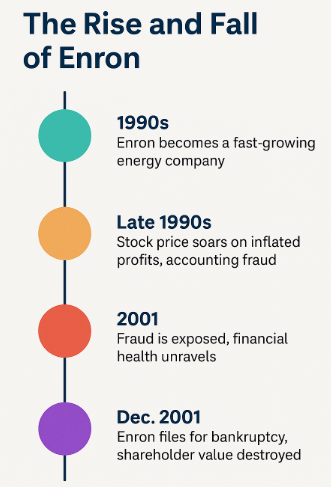
    Reference: OECD Principles of Corporate Governance

  • 🏛️ Corporate Governance Principles: The 8 Pillars That Build Trust & Sustainability

    🏛️ Corporate Governance Principles: The 8 Pillars That Build Trust & Sustainability


    🧭 Introduction: What Is Corporate Governance & Why It Matters

    Imagine investing your hard-earned money in a company. You trust that the leaders will use it wisely, report honestly, and make decisions that ensure growth without crossing ethical lines. This trust is not built overnight — it’s the result of strong corporate governance.

    Corporate governance is the framework that ensures accountability, transparency, fairness, and ethical leadership in an organization. It is not just about ticking compliance boxes — it’s about how companies earn and retain public trust in the long term.

    ⚠️ Real-World Example: Enron – When Share Prices Soared on Lies and Collapsed in Ashes

    Enron's Rise to Failure due to lack of Corporate Governance Principles

    In the late 1990s, Enron was America’s crown jewel.

    Lauded as an innovative energy giant, its stock soared to nearly $90, and it was hailed as a Wall Street success story. Investors poured in. Employees bought stock options. Financial media couldn’t stop praising its rapid growth and visionary leadership.

    But it was all a house of cards.

    Behind the glowing balance sheets were fabricated profits, hidden debts, and unethical accounting tricks. The board of directors turned a blind eye. Auditors from Arthur Andersen signed off on manipulated reports. Executives reaped millions in bonuses while concealing the company’s true health.

    Then, the truth broke.

    Enron filed for bankruptcy in 2001 — the largest corporate failure in U.S. history at the time. Over $60 billion in shareholder value was wiped out. Thousands of employees lost their retirement savings. Trust in corporate America was shattered.


    💡 What really failed?

    Not the business potential.
    Not the economy.
    But the very foundation of corporate governance — accountability, transparency, ethical oversight, and independent checks.


    🚀 In This Blog:

    You’ll uncover the 8 powerful principles of corporate governance that companies must follow to build trust, protect investors, and ensure long-term success — without shortcuts or scandals.


    Corporate Governance Principles

    Let’s dive deep into the eight core principles of corporate governance, and how they show up in the real world.

    🔑 1. Accountability: The Backbone of Responsible Leadership

    Corporate governance starts with accountability. The board of directors, CEOs, and managers must be accountable for their decisions — not just to shareholders, but to regulators, employees, and the public.

    Real-World Example:

    HDFC Bank is known for its clear role definitions and strict performance reporting. When leadership transitions took place (from Aditya Puri to Sashidhar Jagdishan), the process was transparent, stable, and accountable to stakeholders.

    Key Practices:

    • Defined roles for board members
    • Performance monitoring
    • Internal audits and reporting mechanisms

    👁️ 2. Transparency: Letting the Truth Shine Through

    Transparency means companies share relevant, timely, and accurate information. It minimizes information asymmetry and allows all stakeholders to make informed decisions.

    Real-World Example:

    Tata Steel goes beyond legal disclosure by publishing detailed sustainability reports, ESG risks, and operational data — creating confidence in investors and regulators.

    Key Practices:

    • Open financial reporting
    • Transparent risk disclosures
    • Equal information access for all shareholders

    ⚖️ 3. Fairness: Equal Treatment for All Stakeholders

    Whether you own 1 share or 1 lakh shares — you deserve the same respect and rights. Fairness ensures equal access, protection of minority interests, and non-biased decision-making.

    Real-World Example:

    Nestlé India offers all investors — large and small — equal opportunity to participate in annual meetings and access reports. No backroom deals, no selective disclosures.

    Key Practices:

    • Protection of minority shareholders
    • Avoidance of insider favoritism
    • Equal voting and dividend rights

    🛡️ 4. Responsibility: Ethical Business Is Smart Business

    Responsibility means acting with integrity and legal compliance. But it also means doing the right thing even when the law is silent — showing moral responsibility to people, planet, and purpose.

    Real-World Example:

    Mahindra Group embeds responsibility in its DNA — from fair labor practices to rural education programs. Their focus is not just on “how much profit,” but “how the profit is made.”

    Key Practices:

    • Strong code of conduct
    • Legal and ethical compliance
    • Internal ethics training and audits

    🧑‍⚖️ 5. Independence: The Power of Objective Oversight

    Independent directors help prevent conflicts of interest and ensure unbiased governance. They bring fresh perspectives and check internal power dynamics.

    Real-World Example:

    Infosys, despite past controversies, maintains a strong structure of independent audit and risk committees to oversee executive decisions without bias.

    Key Practices:

    • Independent audit, remuneration, and nomination committees
    • Separation of CEO and Chair roles (where possible)
    • Conflict of interest policies

    🎯 6. Strategic Leadership: Governance with a Vision

    The board is not just a watchdog — it’s a guide. Strategic governance means directing the company’s vision, mission, risk appetite, and values.

    Real-World Example:

    Under Ratan Tata, the Tata Group expanded globally while retaining its ethical, stakeholder-first values — blending vision with vigilance.

    Key Practices:

    • Long-term strategy planning
    • Performance review of CEO and leadership
    • Risk management and scenario planning

    🌱 7. Sustainability & ESG: Beyond Profits

    Modern governance integrates Environmental, Social, and Governance (ESG) factors into boardroom decisions. It ensures long-term value creation for people and planet — not just shareholders.

    Real-World Example:

    Unilever ties executive compensation to ESG targets. They publish an integrated report showing carbon footprint, gender diversity, and ethical sourcing results.

    Key Practices:

    • ESG targets in strategy and pay
    • Climate risk disclosures
    • Inclusive and ethical supply chains

    🧩 8. Stakeholder Engagement: Governance for Everyone

    Good governance involves more than shareholders. It considers employees, customers, suppliers, communities, and even future generations.

    Real-World Example:

    ITC’s e-Choupal program empowers rural farmers with market access, while also strengthening ITC’s procurement. This win-win approach reflects inclusive governance.

    Key Practices:

    • Active stakeholder dialogue
    • Grievance redressal mechanisms
    • CSR and community outreach

    📊 Summary Table: 8 Corporate Governance Principles

    🏷️ Principle💡 Focus Area✅ Key Outcome
    AccountabilityRoles, Reporting, AuditsResponsible leadership
    TransparencyDisclosures, HonestyInvestor confidence
    FairnessEqual RightsProtection of minority stakeholders
    ResponsibilityEthics, LawSocial legitimacy, risk control
    IndependenceUnbiased OversightBalanced decision-making
    Strategic LeadershipVision & ExecutionSustainable business growth
    Sustainability & ESGLong-term Planet & People ImpactTrust and brand reputation
    Stakeholder EngagementInclusive GovernanceLoyalty and social license to operate

    Ethical vs Broken Governance

    Ethical GovernanceBroken Governance
    Transparency in reporting and decisions 🧾Hidden deals, opaque disclosures 🤐
    Accountability from top leadership 🎯Blame-shifting and denial ⛔
    Inclusive stakeholder engagement 🤝Self-serving decisions for select few 🙄
    Strong, independent boards 🧠Conflict-ridden, rubber-stamp boards ⚠️
    Long-term vision with values 🌱Short-term greed for profits 💰

    Lessons every business leader must learn:

    10 Essential Lessons from Corporate Governance Principles that every Business Leader Must Learn from the principles of corporate governance — drawn from real-world stories of success and failure:

    💡 1. Trust is Earned Through Transparency

    Your stakeholders — employees, customers, investors — watch how you act, not just what you promise.
    📌 Lesson: Be open with your books, your challenges, and your plans. Secrecy breeds suspicion.


    🧭 2. Ethical Leadership Isn’t Optional

    The tone at the top determines the behavior at every level.
    📌 Lesson: Uphold integrity in all actions — even when it’s hard. People will follow the example you set.


    ⚖️ 3. Fairness Is a Strategic Advantage

    Discrimination, favoritism, and unequal treatment damage internal culture and external image.
    📌 Lesson: Build equity into governance, hiring, promotions, and shareholder rights.


    🧠 4. An Independent Board is Your Best Defense

    A board that challenges leadership constructively can prevent disasters.
    📌 Lesson: Surround yourself with diverse, empowered directors — not “yes men.”


    📉 5. Soaring Share Price Can Be a Mirage

    Enron, Theranos, Yes Bank — all rose fast. And all crashed harder.
    📌 Lesson: Don’t mistake hype for health. Solid governance matters more than stock spikes.


    🧩 6. Accountability Must Start at the Top

    When leaders pass the blame, trust collapses.
    📌 Lesson: Own outcomes. Apologize when needed. Fix mistakes swiftly.


    📊 7. Risk Management is Daily, Not Yearly

    Ignoring small risks creates giant disasters.
    📌 Lesson: Regularly audit operations, culture, and finances. Prevention is cheaper than crisis response.


    🌱 8. Purpose Beyond Profit Drives Longevity

    Companies with purpose outperform in trust, talent, and customer loyalty.
    📌 Lesson: Balance profit with planet and people — the triple bottom line.


    🤝 9. Listen to All Stakeholders

    Employees, customers, regulators — not just investors — have a say in your success.
    📌 Lesson: Create channels for dialogue and feedback from all key groups.


    🔄 10. Governance is Not a One-Time Setup

    Markets, laws, expectations evolve — so must your governance.
    📌 Lesson: Regularly review and refresh your governance practices.


    📌 Final Thought:

    “Corporate governance is not about compliance. It’s about character, conscience, and continuity.


    🔔 Conclusion: Governance Is the Soul of Business

    In an age of public scrutiny, data leaks, greenwashing, and activist investors — governance is more than a legal obligation. It’s how companies build legacy, loyalty, and leadership.

    “Corporate governance is not just about preventing failure. It’s about enabling success — the right way.”


    📣 Call to Action:

    Are you an entrepreneur, student, investor, or board member?

    ✅ Start asking the hard questions:

    • Is your business transparent?
    • Are you protecting stakeholder interests?
    • Are ethics as important as profits?

    Because governance is not a checkbox — it’s a compass.

    Read about United Nations 17 Sustainability Development Goals here.
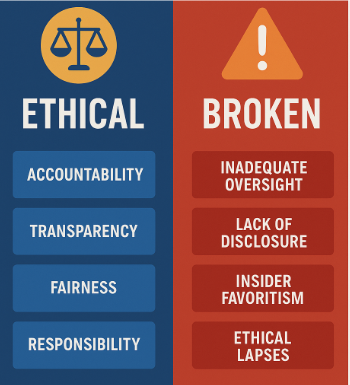
    Reference: OECD Principles of Corporate Governance

  • 7 Mighty Mountains, 1 Iron-Willed Woman: Arunima Sinha’s Unstoppable Climb to Glory

    7 Mighty Mountains, 1 Iron-Willed Woman: Arunima Sinha’s Unstoppable Climb to Glory

    There are stories that speak to the mind—and then there are stories like Arunima Sinha’s, that speak to the soul.

    In a country where countless women fight silent battles every day, Arunima’s journey doesn’t just inspire—it ignites. It reminds us that no wound is deep enough to bury a dream, and no fall is final unless we choose not to rise.

    Table of Contents


    The Fall That Changed Everything

    Arunima Sinha thrown out of train

    In 2011, Arunima Sinha, a national-level volleyball player, boarded a train bound for Delhi, never knowing that within minutes, her life would hang between life and death. She was pushed out by thieves for resisting a robbery attempt. The train crushed her leg. She lay bleeding on the tracks all night, helpless, broken—but not defeated.

    That night, under the stars and surrounded by silence and pain, Arunima made a decision that changed her life—and countless others’. She would climb Mount Everest.

    Think about that for a moment.

    A woman, just 24, with one leg amputated, still bandaged and reeling from trauma, declared her dream to scale the world’s highest peak. Many called her mad. But what they didn’t realize was that madness is often just unshakable belief in a world too scared to try.

    Arunima Sinha in hospital

    🏔️ Mountains Climbed by Arunima Sinha

    Mount Everest

    Arunima Sinha’s mountaineering journey is one of unmatched courage, endurance, and grit. After losing her left leg in a brutal train accident, instead of falling into despair, she set an extraordinary goal — to climb Mount Everest and inspire others with disabilities to dream big. She not only achieved that but went on to conquer six more of the highest peaks in the world, becoming a global symbol of perseverance.


    Seven Summits Completed by Arunima Sinha

    Arunima Sinha not just climbed Mount Everest, but successfully climbed mountains on all seven continents — completing the prestigious “Seven Summits Challenge”.

    The Seven Summits refer to the highest mountain on each of the seven continents, and conquering all of them is considered one of the most elite achievements in mountaineering.

    Arunima Sinha

    1. Mount Everest (Asia) – 8,848 m

    Date: 21 May 2013

    • She became the first female amputee in the world to climb Mount Everest.
    • Completed after 52 days of expedition through treacherous icefalls, blizzards, and oxygen-starved altitudes.
    • Trained under Bachendri Pal, India’s first woman Everest summiteer.

    2. Mount Kilimanjaro (Africa) – 5,895 m

    Date: May 2014

    • Located in Tanzania, Africa’s tallest mountain.
    • Climbing it with a prosthetic leg required tremendous balance and stamina on rocky terrain.

    3. Mount Elbrus (Europe) – 5,642 m

    Date: July 2014

    • The highest peak in Europe, located in Russia.
    • Known for its harsh winds and subzero temperatures.

    4. Mount Kosciuszko (Australia) – 2,228 m

    Date: April 2015

    • Though smaller in height, the challenge was navigating terrain with a prosthetic on unfamiliar trails.

    5. Mount Aconcagua (South America) – 6,961 m

    Date: December 2015

    • Argentina’s highest peak and the highest outside of Asia.
    • Extremely difficult due to high altitudes and rough winds.

    6. Mount Carstensz Pyramid (Oceania) – 4,884 m

    Date: 2016

    • Located in Papua province of Indonesia, it involves vertical rock climbing and heavy rainfall.

    7. Mount Vinson (Antarctica) – 4,892 m

    Date: 2019

    • The final summit of her “Seven Summits Challenge”.
    • Harshest weather conditions — icy winds, -30°C temperatures, and complete isolation.

    Significance:

    • She is among the very few amputees in the world to complete the Seven Summits.
    • First female amputee globally to achieve this feat.
    • Represents India in the rare league of mountaineers to conquer all seven.

    🌟 How Challenging It Was – And Why She Never Gave Up

    🩺 Physical Struggles

    • Arunima had a steel rod inserted in her right leg and a prosthetic left leg.
    • Extreme cold made the prosthetic painful; it would bruise and cut her skin, sometimes causing bleeding.
    • Carrying a 20+ kg backpack, oxygen cylinders, ropes, and gear over glaciers and rocky ridges added pressure on her single natural leg.

    🧠 Mental & Emotional Battles

    • Facing mockery, disbelief, and discouragement from people who thought she was chasing the impossible.
    • Battling post-traumatic stress from the train accident, and the emotional pain of societal rejection.
    • At many points, especially during Everest, she considered turning back — but reminded herself of the millions of disabled people watching her as a beacon of hope.

    💬 Her Words That Inspire

    “I wasn’t climbing a mountain. I was climbing every moment that told me I couldn’t.”

    “I wanted to prove that being physically challenged does not mean being mentally weak.”


    🔥 The Inner Fire That Drove Her

    • A promise to herself that she would not let her life end in pity or silence.
    • Her vision to inspire and uplift every person with disability, trauma, or loss.
    • She saw the mountain not as a summit to win, but a stage to prove that pain can be transformed into power.
    Arunima Sinha

    Climbing More Than Mountains

    In May 2013, Arunima Sinha became the first female amputee to scale Mount Everest. But the summit wasn’t just a personal victory. It was a message. A roar from the rooftop of the world:
    “I may have lost a leg, but I have found my voice.”

    And with that voice, she began empowering others—especially women.

    Arunima Sinha

    She wasn’t interested in just becoming a symbol. She wanted to build something that lasts. And so, she founded the Arunima Foundation and later, the Shaheed Chandra Shekhar Azad Divyang Khel Academy, where underprivileged and differently-abled youth—are trained in sports, given prosthetics, education, and something much more precious: self-belief.

    Where others saw pity, Arunima saw potential.


    From Survivor to Sisterhood

    In dusty villages and narrow alleyways, where girls are told to shrink, behave, and blend in, Arunima walks in with crutches and medals, with a story stitched in steel. She tells them:

    “You are not weak. The world just hasn’t seen your strength yet.”

    To girls who’ve been told their bodies are broken, she teaches movement.
    To women who’ve been silenced, she gives the microphone.
    To daughters who were told they’re a burden, she says: You are the fire.

    Her journey isn’t just her own anymore—it belongs to every woman who dares to rise.


    An Everest in Every Woman

    Arunima doesn’t measure achievement in applause or awards. For her, success is the girl in a wheelchair who smiles for the first time. The teenage amputee who now dreams of playing for India. The mother who walks into the foundation’s gates ashamed and walks out with her head held high.

    She empowers through empathy.
    She uplifts through action.
    She leads by simply living her truth—loud, proud, and unafraid.


    Arunima Sinha’s Personal Life and Family Support

    Arunima Sinha was born on 20 July 1989 in Ambedkar Nagar, Uttar Pradesh, into a modest middle-class family. Her father was an engineer in the Indian Army, and her mother, Gyan Bala, a health supervisor. Arunima lost her father at the age of three, and her mother single-handedly raised her and her siblings with strength and values.

    During her darkest hour of train accident, her family stood like a rock beside her—especially her mother, who played a pivotal role in emotionally supporting her during her long recovery and rehabilitation.

    Arunima is not married and does not have children. She has chosen to dedicate her life to social work, motivational speaking, and training women and differently-abled people. Her journey is an embodiment of inner strength, self-reliance, and determination.

    Key Support Systems:

    • Mother Gyan Bala: Her constant support and motivation.
    • Brother Omprakash: Helped her during treatment and travels post-accident.
    • Family support: Played a key role in her mental recovery.
    • Mentorship by Bachendri Pal: India’s first woman to scale Mount Everest, who inspired and guided Arunima through mountaineering training.

    Today, Arunima runs the “Arunima Foundation”, works toward uplifting the differently-abled, and is an inspiration to millions for rising stronger after unimaginable trauma.


    Arunima Sinha’s Social Work & Arunima Foundation: A Legacy of Empowerment

    After becoming the world’s first female amputee to scale Mount Everest in 2013, Arunima Sinha didn’t stop at personal victory—she turned her pain into purpose. Deeply moved by the suffering of others like her, she resolved to uplift and empower differently-abled individuals, underprivileged children, and women who are battling societal and physical limitations.


    🌟 Arunima Foundation: Vision & Mission

    Founded in 2015, the Arunima Foundation (also referred to as Dr. Arunima Sinha Foundation) is a registered charitable trust with the core belief that disability is not inability, and everyone deserves dignity, opportunity, and hope.

    🧭 Mission:

    “To transform lives by providing physical, emotional, educational, and vocational support to the disabled, underprivileged, and disaster-affected, especially women and children.”

    🎯 Vision:

    To create a society where the disabled are self-reliant, skilled, respected, and included in mainstream development.


    💠 Key Initiatives & Impact Areas

    Arunima Foundation

    1. 🧍‍♀️ Empowering the Differently-Abled

    • The foundation trains physically challenged individuals in sports, self-defense, yoga, and survival skills.
    • Provides prosthetics, mobility aids, and emotional support for accident survivors, particularly amputees.
    • Regular counseling sessions for trauma victims—especially those with suicidal thoughts post-accident.

    2. 🎓 Education & Skilling for Underprivileged

    • Arunima’s foundation provides free education, books, uniforms, and digital literacy to children from poor backgrounds, especially in rural and tribal areas.
    • Vocational training for disabled youth and women in tailoring, computer skills, and crafts to enable financial independence.

    3. 🛠️ Skill Centres & Residential Training Programs

    • Plans to build a residential sports academy for the disabled, with facilities for mountaineering, athletics, and adventure sports.
    • Offers life-skills training and confidence-building modules for acid attack survivors, rape victims, and widows.

    4. 🌱 Women Empowerment

    • Special focus on training widows and domestic violence survivors in self-defense and entrepreneurship.
    • Women are mentored in public speaking, leadership, and motivation, using Arunima’s story as a model.

    5. 🚑 Disaster Relief & Community Aid

    • During natural disasters and the COVID-19 pandemic, the foundation organized food drives, medical kits, and support for frontline workers.
    • Also distributes wheelchairs, hearing aids, artificial limbs, and other assistive devices in collaboration with hospitals and NGOs.

    🤝 Collaborations & Support

    • Collaborates with Bachendri Pal’s Tata Adventure Foundation, sports councils, and disability rights organizations.
    • Supported by corporates, public donors, and social workers, the foundation continues to grow through goodwill and Arunima’s unbreakable reputation.

    🧗‍♀️ Beyond Philanthropy – Inspiration in Action

    • Arunima often visits schools, jails, cancer wards, and rehab centers to give motivational talks.
    • She believes “you don’t need two legs to stand tall, just courage.”
    • Her speeches are now part of empowerment seminars, TEDx, UN events, and school syllabi.

    📌 Current Goals of the Foundation:

    • Build a fully equipped residential facility and sports training center for the disabled.
    • Expand rural outreach to help one lakh+ physically challenged individuals in the next 5 years.
    • Develop an online portal for career counseling and free tele-counseling for trauma victims.

    🏅 Major Awards & Honors of Arunima Sinha

    Arunima Sinha Awards

    🇮🇳 1. Padma Shri (2015)

    • India’s fourth-highest civilian award.
    • Conferred by the Government of India for her extraordinary achievement in sports and her contribution to inspiring persons with disabilities.
    • Given by then President Pranab Mukherjee at the Rashtrapati Bhavan.

    🗻 2. Tenzing Norgay National Adventure Award (2015)

    • India’s highest recognition in the field of adventure sports.
    • Given by the Ministry of Youth Affairs and Sports for her feat of scaling Mount Everest as an amputee.
    • Acknowledged her endurance, courage, and mountaineering skill.

    💬 3. Honorary Doctorate by University of Strathclyde, Glasgow (2018)

    • Conferred with an Honorary Doctor of Laws (LL.D.).
    • For her pioneering achievements and role in inspiring millions worldwide.

    🌍 4. Listed Among ‘100 Most Inspirational Women’ by BBC (2014)

    • Selected in BBC’s 100 Women List, honoring women making significant impact globally.
    • Celebrated for breaking stereotypes and leading social change after disability.

    🕊️ 5. UN Women Empowerment Icon (Recognized at International Platforms)

    • Invited by United Nations, and various international forums.
    • Recognized for her advocacy on women’s empowerment, disability rights, and mental strength.

    🏅 6. Arjuna Award – Nomination & Recommendation

    • While not confirmed as a recipient, her name was officially recommended for the Arjuna Award for her contribution to Indian sports as a differently-abled athlete.

    📚 Other Honours and Recognitions

    • National Role Model Award (2016) – By the Ministry of Social Justice and Empowerment.
    • CNN-IBN Indian of the Year Special Achievement Award (2013).
    • Rotary International Vocational Excellence Award – For social service and leadership.
    • Women of Substance Award – Honoring her story of resilience and transformation.
    • Limca Book of Records – For being the first female amputee in the world to scale Mount Everest.
    • Youth Icon Awards – By several universities and youth groups across India.
    • Recognized by PM Narendra Modi – Featured in his “Mann Ki Baat” as a symbol of women’s strength.

    🧗‍♀️ A Living Legend

    Arunima’s achievements are now part of school textbooks in some Indian states. She’s invited to universities, TEDx talks, Army academies, and rehabilitation centers as a speaker who changes lives with her story.


    🌟 Legacy of Arunima Sinha

    Arunima Sinha’s legacy goes far beyond climbing mountains — she elevated the spirit of millions. From a national athlete to a train accident survivor, and then becoming the first female amputee to scale Mount Everest, she redefined what it means to be unstoppable. Her courage lit a path for disabled individuals, women, and trauma survivors to reclaim their strength. Through her foundation, she continues to empower the marginalised, proving that a setback is a setup for a greater comeback.

    She leaves behind not just footprints on snowy peaks, but a trail of hope, healing, and heroism.


    Call to Action

    🔹 Support Arunima Foundation – Donate, volunteer, or partner to help empower the disabled and underprivileged.
    🔹 Share Her Story – Spread awareness and inspire others by sharing her journey on social media or blogs.
    🔹 Invite Her to Speak – Host Arunima for motivational talks in schools, corporates, and institutions.
    🔹 Be Inspired – Take that first step toward your own summit. Let Arunima’s legacy ignite your purpose.

    💬 “If Arunima can conquer Everest with one leg, what’s stopping you from climbing your own?”

    Watch the video on Arunima Sinha’s story in Hindi here. Read more brave stories on women empowerment here.