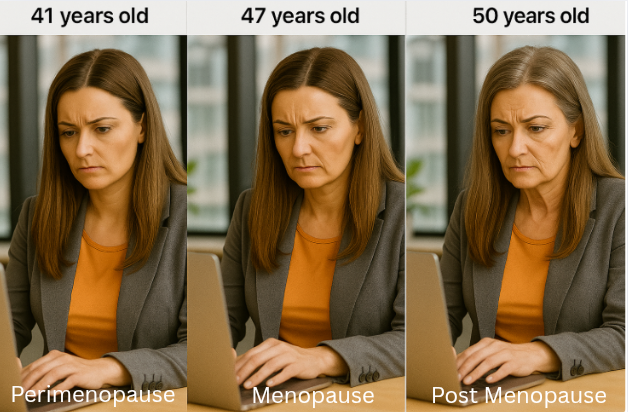
One day, you wake up and realize something has changed.
You are still you — responsible, caring, capable — but your body doesn’t respond the way it used to. Sleep feels lighter. Energy feels fragile. Emotions feel closer to the surface. Small stresses feel heavier. Weight shifts despite unchanged habits. Your eyes burn after screen time. Your joints ache when you get up in the morning. Anxiety appears without invitation.
And the most painful part?
No one warned you this would happen.
You start wondering: “Is this stress?” “Is this aging?” “Why can everyone else manage but I can’t?”
What you are experiencing may have a name — perimenopause.
Not a disease. Not a weakness. A transition.
What Is Perimenopause?
Perimenopause means “around menopause.” It is the long, often confusing phase before menopause, when the ovaries slowly begin to change how they produce hormones.
Menopause is diagnosed only after 12 months without periods. But perimenopause can begin 7–10 years before that, sometimes as early as the mid‑30s, most commonly in the late 30s or 40s.
This is where many women feel lost.
Periods may still be regular. Life looks normal on the outside. But internally, hormones begin behaving unpredictably — not declining gently, but fluctuating sharply.
Estrogen rises high one month and crashes the next. Progesterone, the calming hormone, quietly drops earlier. The nervous system struggles to keep up.
Your body starts speaking a new language — one you were never taught.
Why Perimenopause Feels So Overwhelming
Perimenopause does not arrive in isolation.
It often overlaps with:
Peak career responsibilities
Parenting teenagers
Caring for aging parents
Emotional and financial pressure
Years of neglecting your own needs
Women are expected to carry on — emotionally steady, endlessly capable, always giving.
So when perimenopause disrupts this image, women don’t ask for help.
They blame themselves.
And that self‑blame hurts more than the symptoms themselves.
The Symptoms: More Than Just Hot Flashes
Perimenopause symptoms are diverse because estrogen receptors exist throughout the body — brain, eyes, skin, joints, gut, heart, bladder.
Emotional & Mental Symptoms
Anxiety or panic attacks (often first time in life)
Mood swings
Irritability or sudden anger
Emotional numbness or sadness
Reduced stress tolerance
Sleep & Energy Issues
Difficulty falling asleep
Early morning waking
Night sweats
Non‑restorative sleep
Constant fatigue
Cognitive Changes
Brain fog
Forgetfulness
Difficulty concentrating
Reduced multitasking ability
Physical Changes
Weight gain (especially around the abdomen)
Joint and muscle pain
Headaches or migraines
Palpitations
Hair thinning and hair fall
Dry skin and pigmentation
Eye, Gut & Intimate Health
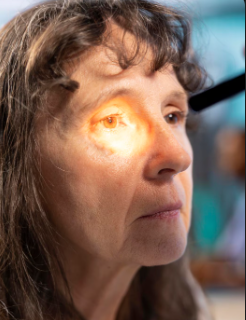
Dry, burning eyes
Difficulty with near vision
Bloating or constipation
Vaginal dryness
Reduced libido
Every symptom feels personal — but none are imaginary.
The Science Behind the Chaos (In Simple Words)
Estrogen: The Master Regulator
Estrogen supports:
Brain chemistry (serotonin, dopamine)
Sleep and mood
Eye lubrication and vision
Skin collagen
Joint lubrication
Bone density
Heart and blood vessel health
In perimenopause, estrogen does not simply decline — it fluctuates.
These fluctuations confuse the brain and nervous system, creating emotional and physical instability.
Progesterone: The Lost Calmer
Progesterone supports:
Deep sleep
Anxiety control
Emotional balance
It often declines earlier than estrogen because ovulation becomes irregular.
This is why many women experience anxiety and insomnia before periods change.
Stress Hormones Join the Story
As ovarian hormones fluctuate, the adrenal glands compensate.
Chronic stress amplifies symptoms dramatically — worsening sleep, weight gain, mood swings, and fatigue.
Why Every Organ Feels Different
Estrogen is present everywhere — so when it fluctuates, every system responds.
Brain & Nervous System
Mood swings, anxiety, brain fog
Eyes
Reduced tear production causes dryness and burning
This is whole‑body transition, not random breakdown.
The Emotional Cost of Not Knowing
When women don’t understand perimenopause:
They hate their bodies
They suppress symptoms
They push through exhaustion
They accept suffering as normal
Awareness changes everything.
When women understand why, they stop blaming themselves.
Lifestyle & Self‑Care: Supporting a Changing Body
Perimenopause is not the phase to fight your body.
It is the phase to support it differently.
Diet for Perimenopause: Nourishment Over Restriction
Why Diet Matters More Now
Insulin sensitivity reduces
Muscle loss begins
Bone density starts declining
Insulin sensitivity reduces means your body’s cells respond less effectively to insulin, making it harder to control blood sugar and increasing the risk of weight gain and energy crashes.
Key Principles
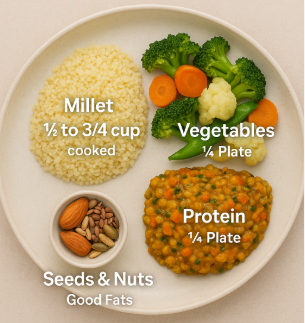
Protein at every meal (20–30 g)
Healthy fats for hormone support
Fiber for gut and estrogen balance
Reduce sugar, caffeine, alcohol
Food is not about control anymore — it is about stability.
Exercise for Perimenopause: Strength Without Stress
Strength Training (2–3 times/week)
Protects bones, muscles, metabolism
Includes:
Squats, lunges, push‑ups
Resistance band exercises
Light weights
Walking (Daily)
Lowers cortisol
Improves mood and insulin sensitivity
Yoga, Stretching & Mobility
Reduces stiffness
Calms nervous system
Avoid extreme cardio and overtraining — they worsen symptoms.
Lifestyle That Heals Hormones
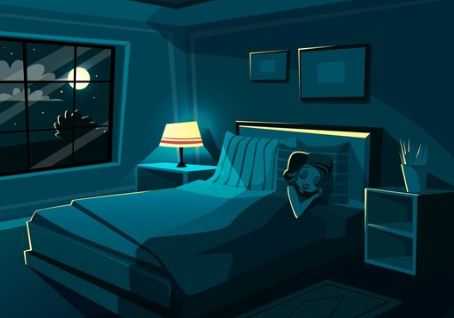
Sleep Is Non‑Negotiable
Fixed routine
Cool, dark bedroom
No screens before bed
Stress Regulation
Breathwork
Meditation
Nature exposure
Emotional Boundaries
Say no without guilt
Ask for help
Reduce people‑pleasing
Rest is medicine in this phase.
Medical Support Is Not Failure
Options may include:
Hormonal therapy (when appropriate)
Vaginal estrogen for dryness
Non‑hormonal symptom support
Quality of life matters.
A Message to Every Woman Reading This
If you feel different — you are not imagining it.
If you feel overwhelmed — your body is communicating, not betraying you.
If you feel lost — this is transition, not decline.
Perimenopause is the roller coaster ride of hormones.
But with awareness, self‑care, and compassion, you don’t have to ride it blindfolded.
You deserve understanding. You deserve support. You deserve kindness — especially from yourself.
Far away, inside every person, there exists a magical city—Brain-City. This city never sleeps, never shuts down, and never takes a holiday. Its citizens, buildings, and messengers work together every second to keep life going.
🧠 The Human Brain: The City Within Us
Hidden inside our skull lies the most fascinating organ in existence—the brain, a living universe of thoughts, emotions, and control. It is often called the “command center” of the body, but it’s much more than that. Imagine it as a bustling city—with mayors making decisions, post offices sorting messages, fire alarms sounding warnings, artists painting dreams, and power plants keeping everything alive.
Every feeling you experience, every decision you make, every memory you cherish, and even the way you breathe or sleep is orchestrated by this extraordinary city of neurons, hormones, and signals. From the frontal lobe that plans your future, to the amygdala that sparks your fears, to the hypothalamus that balances hunger, sleep, and hormones, each part plays its own unique role in keeping you alive and human.
In this blog, we’ll step inside Brain-City, exploring its neighborhoods, messengers, and the daily drama that keeps life moving—told in a way that feels like a story rather than a science lecture.
🌍 The Two Sides of the City: Left vs Right Brain
The brain has two hemispheres, like two halves of a city divided by a river, but connected by a big bridge called the corpus callosum.
Left Brain City → logical side: accountants, planners, scientists, language experts. It loves numbers, analysis, words, order, and details.
Right Brain City → artistic side: painters, musicians, dreamers, storytellers. It handles creativity, imagination, music, art, emotions, and big-picture thinking.
💡 They constantly send messages across the “bridge,” so logic and creativity work together.
🏛️ The City Districts (Brain Parts)
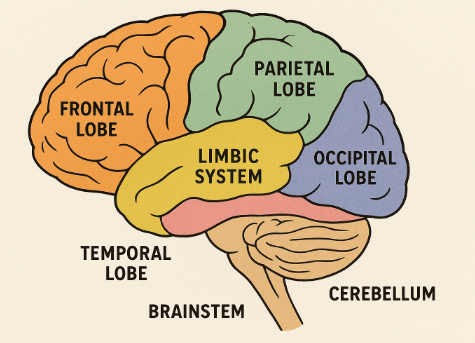
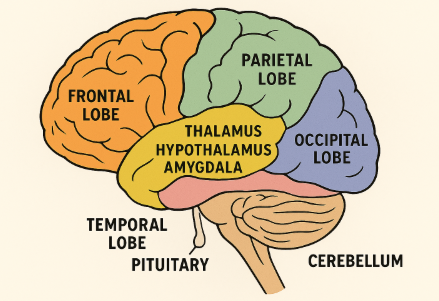
1. The Downtown (Frontal Lobe) This is where the “Mayor’s office” is. It makes decisions, plans the future, controls emotions, and manages speech. When you decide whether to study or scroll Instagram, this office is debating 🗣️.
2. The Map District (Parietal Lobe) This area is like the city’s survey department—tracking touch, space, temperature, and pain. If you close your eyes and still touch your nose, thank this district.
3. The Arts District (Temporal Lobe) This place is filled with music halls, libraries, and memory museums. It helps you recognize songs, remember your grandmother’s face, and understand language. 🎶📚
4. The Cinema Hall (Occipital Lobe) All the movies of your life are projected here—it’s in charge of vision. Every time you see a flower or a rainbow, the occipital lobe lights up like a theater screen 🎥🌈.
⚙️ The Operations Hub
5. Cerebellum (Quality Control Office) It makes sure movements are smooth and balanced. It’s like the city’s traffic controller—coordinating dance moves, cycling, or even walking without wobbling 🚲💃.
6. Brainstem (Power Plant) Hidden underground, it powers basic life support: heartbeat, breathing, swallowing. It’s always working, like electricity running in the background ⚡.
❤️ The Emotional Center
7. Limbic System (Heart of the City) This is where feelings live.
Amygdala → the fire alarm 🚨, triggering fear or anger.
Hippocampus → the historian 📜, storing memories and lessons.
Hypothalamus → the thermostat & hunger controller 🌡️🍔, balancing hormones, thirst, and sleep.
Thalamus → the post office 📮, routing all sensory messages to the right address.
8. Basal Ganglia (Habit Street) The place of routines and habits—it decides if you bite your nails, go for a morning jog, or binge-watch Netflix 📺.
📡 The City’s Communication System
Imagine the brain-city has billions of citizens called neurons.
Each neuron is like a person with a phone 📞.
They don’t shout across the street; instead, they send tiny electrical sparks (like text messages) down their “wires” (axons).
At the end, the message hops across a tiny gap (synapse) using neurotransmitters—these are like WhatsApp emojis that carry the tone of the message.
👉 Dopamine is like a “reward sticker” 🎁, 👉 Serotonin is the “happy emoji” 😊, 👉 Acetylcholine is a “memory note” 📝, 👉 GABA is the “calm-down signal” 😌.
This way, billions of conversations keep the city alive every second.
💌 The Hormone Postal Service
Now, hormones are like official letters sent by the city government. Instead of texting quickly like neurons, they send slower, longer-lasting memos through the bloodstream.
The Hypothalamus (city’s Chief Minister) works with the Pituitary Gland (Postmaster General) to control the whole endocrine postal system:
Adrenaline (from adrenal glands) → emergency siren 🚨 when danger comes (fight, flight, freeze).
Cortisol → stress mail 📨, keeps energy ready in tough times.
Dopamine → reward coupon 🎟️, makes you repeat what feels good.
Serotonin → mood postcard 🌞, tells you if you feel calm or sad.
Melatonin → sleep invitation 🌙, sent out when night falls.
Oxytocin → love letter 💌, bonds you to friends, family, pets.
All these messages go to the Thalamus Post Office, which sorts and delivers them to the right districts.
🌅 Morning in Brain-City
The day begins when the Chief Minister Hypothalamus whispers to the Postmaster Pituitary: “Send out a Cortisol Letter! Wake everyone up!” The pituitary quickly dispatches hormones through the city’s bloodstream. As the letters arrive, workers across the city stretch, yawn, and prepare for the new day.
The Mayor Frontal Lobe calls a meeting: “Today’s plan—finish that assignment, call a friend, maybe hit the gym.” The Right Brain Artists smile, sketching ideas and dreams, while the Left Brain Accountants double-check details and deadlines.
☕ The Coffee Break
As you sip your morning coffee, the Reward Officer Dopamine rushes in with colorful stickers: “Good job! You earned this energy!” The city feels cheerful, thanks to a little help from Serotonin the Mood Manager, who keeps things bright and balanced.
⚡ The Sudden Alarm
But suddenly—BANG! A loud noise echoes. The Amygdala Fire Alarm screams: “Danger!” 🚨 At once, the Adrenaline Police flood the streets, making the heart beat faster, lungs breathe quicker, and muscles prepare to run. The Cerebellum Traffic Controller reroutes movement, keeping balance. The Brainstem Power Plant works overtime, ensuring heartbeat and breathing don’t fail under pressure.
Fortunately, the sound was just a book falling. The Mayor Frontal Lobe sighs: “False alarm, back to work.”
📮 The City Post Office
Throughout the day, the Thalamus Post Office never rests.
Letters from the Eye Gates become movies in the Occipital Cinema Hall.
Sound messages from the Ear Gates play in the Temporal Music Hall.
Touch reports from the Skin Gate are filed in the Parietal Survey Office.
Delicious smells and tastes arrive at the Nose Station and Taste Bureau, often sparking childhood memories stored by the Hippocampus Historian.
Every sense is carefully routed, sorted, and delivered—no letter ever gets lost.
🤗 Evening Glow
Later, you meet a friend. The Oxytocin Love Letters spread across Brain-City, warming every corner. The Right Brain Artists sing songs of joy, while the Left Brain Accountants write neat records of the memory.
As the sun sets, the Hypothalamus Chief Minister sends out new orders: “Release Melatonin Invitations. Tell everyone it’s time for rest.” Slowly, the lights of Brain-City dim. Neurons whisper softly, signals slow, and the great city drifts into peaceful sleep. 🌙✨
🌟 Moral of the Story
Brain-City is alive within you. Its mayors, postmasters, alarms, historians, artists, and messengers never stop working—keeping you safe, balanced, creative, and alive. Every thought, hug, tear, laugh, and dream is the result of this bustling, wondrous city.
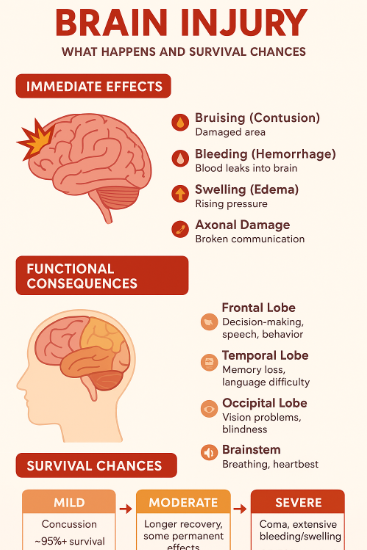
🧠 What Happens in a Brain Injury?
Think of the brain as Brain-City we talked about earlier. When injury strikes (from trauma, stroke, or lack of oxygen), some of the “districts” can’t do their jobs properly.
Immediate Effects
Bruising (Contusion) → like a part of the city getting damaged; neurons in that area may die.
Bleeding (Hemorrhage) → blood leaks into areas where it doesn’t belong, pressing on tissues.
Swelling (Edema) → Brain swells inside the skull (which is a hard box), so pressure rises dangerously.
Axonal Damage → the “phone wires” between neurons snap, cutting communication.
Functional Consequences
Frontal lobe hit → decision-making, speech, behavior issues.
Temporal lobe hit → memory loss, difficulty understanding language.
Occipital lobe hit → vision problems or blindness.
Cerebellum hit → loss of balance/coordination.
Brainstem hit → breathing, heartbeat, survival functions threatened.
📊 General Stats (approximate, can vary by study)
Mild brain injury (concussion): ~95%+ survival, though some get post-concussion symptoms.
Moderate brain injury: survival 60–80%, but many face disabilities.
Severe brain injury: survival can be 25–50% depending on rapid care; often long-term dependence.
Coma > 6 months: very low chance of full recovery, though exceptions exist.
❤️ Survival Chances
Survival isn’t one-size-fits-all—it depends on:
Severity
Mild (Concussion) → Most people recover fully.
Moderate → Longer recovery, some permanent effects possible.
Severe (coma, extensive bleeding/swelling) → Higher risk of disability or death.
Location
Injury to the brainstem is most dangerous (since it controls breathing, heartbeat).
Injury in “higher” brain areas (like frontal/temporal lobes) can be survived, but may cause long-term changes in personality, memory, or motor skills.
Time to Treatment
The “Golden Hour” matters: faster surgery, oxygen supply, and pressure control = higher survival.
Age & Health
Younger, healthier people generally heal better. Older age or pre-existing conditions can reduce survival chances.
🌱 Recovery Possibilities
The brain is amazingly plastic (it rewires itself). With rehab (physiotherapy, speech therapy, occupational therapy), people can regain skills—even if slowly. Sometimes other brain regions take over lost functions.
👉 So in short: brain injury doesn’t always mean the end, but survival and recovery depend on how bad, where, and how quickly it’s treated.
Far away, inside every person, there exists a magical city—Brain-City. This city never sleeps, never shuts down, and never takes a holiday. Its citizens, buildings, and messengers work together every second to keep life going.
🧠 The Human Brain: The City Within Us
Hidden inside our skull lies the most fascinating organ in existence—the brain, a living universe of thoughts, emotions, and control. It is often called the “command center” of the body, but it’s much more than that. Imagine it as a bustling city—with mayors making decisions, post offices sorting messages, fire alarms sounding warnings, artists painting dreams, and power plants keeping everything alive.
Every feeling you experience, every decision you make, every memory you cherish, and even the way you breathe or sleep is orchestrated by this extraordinary city of neurons, hormones, and signals. From the frontal lobe that plans your future, to the amygdala that sparks your fears, to the hypothalamus that balances hunger, sleep, and hormones, each part plays its own unique role in keeping you alive and human.
In this blog, we’ll step inside Brain-City, exploring its neighborhoods, messengers, and the daily drama that keeps life moving—told in a way that feels like a story rather than a science lecture.
🌍 The Two Sides of the City: Left vs Right Brain
The brain has two hemispheres, like two halves of a city divided by a river, but connected by a big bridge called the corpus callosum.
Left Brain City → logical side: accountants, planners, scientists, language experts. It loves numbers, analysis, words, order, and details.
Right Brain City → artistic side: painters, musicians, dreamers, storytellers. It handles creativity, imagination, music, art, emotions, and big-picture thinking.
💡 They constantly send messages across the “bridge,” so logic and creativity work together.
🏛️ The City Districts (Brain Parts)
1. The Downtown (Frontal Lobe) This is where the “Mayor’s office” is. It makes decisions, plans the future, controls emotions, and manages speech. When you decide whether to study or scroll Instagram, this office is debating 🗣️.
2. The Map District (Parietal Lobe) This area is like the city’s survey department—tracking touch, space, temperature, and pain. If you close your eyes and still touch your nose, thank this district.
3. The Arts District (Temporal Lobe) This place is filled with music halls, libraries, and memory museums. It helps you recognize songs, remember your grandmother’s face, and understand language. 🎶📚
4. The Cinema Hall (Occipital Lobe) All the movies of your life are projected here—it’s in charge of vision. Every time you see a flower or a rainbow, the occipital lobe lights up like a theater screen 🎥🌈.
⚙️ The Operations Hub
5. Cerebellum (Quality Control Office) It makes sure movements are smooth and balanced. It’s like the city’s traffic controller—coordinating dance moves, cycling, or even walking without wobbling 🚲💃.
6. Brainstem (Power Plant) Hidden underground, it powers basic life support: heartbeat, breathing, swallowing. It’s always working, like electricity running in the background ⚡.
❤️ The Emotional Center
7. Limbic System (Heart of the City) This is where feelings live.
Amygdala → the fire alarm 🚨, triggering fear or anger.
Hippocampus → the historian 📜, storing memories and lessons.
Hypothalamus → the thermostat & hunger controller 🌡️🍔, balancing hormones, thirst, and sleep.
Thalamus → the post office 📮, routing all sensory messages to the right address.
8. Basal Ganglia (Habit Street) The place of routines and habits—it decides if you bite your nails, go for a morning jog, or binge-watch Netflix 📺.
📡 The City’s Communication System
Imagine the brain-city has billions of citizens called neurons.
Each neuron is like a person with a phone 📞.
They don’t shout across the street; instead, they send tiny electrical sparks (like text messages) down their “wires” (axons).
At the end, the message hops across a tiny gap (synapse) using neurotransmitters—these are like WhatsApp emojis that carry the tone of the message.
👉 Dopamine is like a “reward sticker” 🎁, 👉 Serotonin is the “happy emoji” 😊, 👉 Acetylcholine is a “memory note” 📝, 👉 GABA is the “calm-down signal” 😌.
This way, billions of conversations keep the city alive every second.
💌 The Hormone Postal Service
Now, hormones are like official letters sent by the city government. Instead of texting quickly like neurons, they send slower, longer-lasting memos through the bloodstream.
The Hypothalamus (city’s Chief Minister) works with the Pituitary Gland (Postmaster General) to control the whole endocrine postal system:
Adrenaline (from adrenal glands) → emergency siren 🚨 when danger comes (fight, flight, freeze).
Cortisol → stress mail 📨, keeps energy ready in tough times.
Dopamine → reward coupon 🎟️, makes you repeat what feels good.
Serotonin → mood postcard 🌞, tells you if you feel calm or sad.
Melatonin → sleep invitation 🌙, sent out when night falls.
Oxytocin → love letter 💌, bonds you to friends, family, pets.
All these messages go to the Thalamus Post Office, which sorts and delivers them to the right districts.
🌅 Morning in Brain-City
The day begins when the Chief Minister Hypothalamus whispers to the Postmaster Pituitary: “Send out a Cortisol Letter! Wake everyone up!” The pituitary quickly dispatches hormones through the city’s bloodstream. As the letters arrive, workers across the city stretch, yawn, and prepare for the new day.
The Mayor Frontal Lobe calls a meeting: “Today’s plan—finish that assignment, call a friend, maybe hit the gym.” The Right Brain Artists smile, sketching ideas and dreams, while the Left Brain Accountants double-check details and deadlines.
☕ The Coffee Break
As you sip your morning coffee, the Reward Officer Dopamine rushes in with colorful stickers: “Good job! You earned this energy!” The city feels cheerful, thanks to a little help from Serotonin the Mood Manager, who keeps things bright and balanced.
⚡ The Sudden Alarm
But suddenly—BANG! A loud noise echoes. The Amygdala Fire Alarm screams: “Danger!” 🚨 At once, the Adrenaline Police flood the streets, making the heart beat faster, lungs breathe quicker, and muscles prepare to run. The Cerebellum Traffic Controller reroutes movement, keeping balance. The Brainstem Power Plant works overtime, ensuring heartbeat and breathing don’t fail under pressure.
Fortunately, the sound was just a book falling. The Mayor Frontal Lobe sighs: “False alarm, back to work.”
📮 The City Post Office
Throughout the day, the Thalamus Post Office never rests.
Letters from the Eye Gates become movies in the Occipital Cinema Hall.
Sound messages from the Ear Gates play in the Temporal Music Hall.
Touch reports from the Skin Gate are filed in the Parietal Survey Office.
Delicious smells and tastes arrive at the Nose Station and Taste Bureau, often sparking childhood memories stored by the Hippocampus Historian.
Every sense is carefully routed, sorted, and delivered—no letter ever gets lost.
🤗 Evening Glow
Later, you meet a friend. The Oxytocin Love Letters spread across Brain-City, warming every corner. The Right Brain Artists sing songs of joy, while the Left Brain Accountants write neat records of the memory.
As the sun sets, the Hypothalamus Chief Minister sends out new orders: “Release Melatonin Invitations. Tell everyone it’s time for rest.” Slowly, the lights of Brain-City dim. Neurons whisper softly, signals slow, and the great city drifts into peaceful sleep. 🌙✨
🌟 Moral of the Story
Brain-City is alive within you. Its mayors, postmasters, alarms, historians, artists, and messengers never stop working—keeping you safe, balanced, creative, and alive. Every thought, hug, tear, laugh, and dream is the result of this bustling, wondrous city.
🧠 What Happens in a Brain Injury?
Think of the brain as Brain-City we talked about earlier. When injury strikes (from trauma, stroke, or lack of oxygen), some of the “districts” can’t do their jobs properly.
Immediate Effects
Bruising (Contusion) → like a part of the city getting damaged; neurons in that area may die.
Bleeding (Hemorrhage) → blood leaks into areas where it doesn’t belong, pressing on tissues.
Swelling (Edema) → Brain swells inside the skull (which is a hard box), so pressure rises dangerously.
Axonal Damage → the “phone wires” between neurons snap, cutting communication.
Functional Consequences
Frontal lobe hit → decision-making, speech, behavior issues.
Temporal lobe hit → memory loss, difficulty understanding language.
Occipital lobe hit → vision problems or blindness.
Cerebellum hit → loss of balance/coordination.
Brainstem hit → breathing, heartbeat, survival functions threatened.
📊 General Stats (approximate, can vary by study)
Mild brain injury (concussion): ~95%+ survival, though some get post-concussion symptoms.
Moderate brain injury: survival 60–80%, but many face disabilities.
Severe brain injury: survival can be 25–50% depending on rapid care; often long-term dependence.
Coma > 6 months: very low chance of full recovery, though exceptions exist.
❤️ Survival Chances
Survival isn’t one-size-fits-all—it depends on:
Severity
Mild (Concussion) → Most people recover fully.
Moderate → Longer recovery, some permanent effects possible.
Severe (coma, extensive bleeding/swelling) → Higher risk of disability or death.
Location
Injury to the brainstem is most dangerous (since it controls breathing, heartbeat).
Injury in “higher” brain areas (like frontal/temporal lobes) can be survived, but may cause long-term changes in personality, memory, or motor skills.
Time to Treatment
The “Golden Hour” matters: faster surgery, oxygen supply, and pressure control = higher survival.
Age & Health
Younger, healthier people generally heal better. Older age or pre-existing conditions can reduce survival chances.
🌱 Recovery Possibilities
The brain is amazingly plastic (it rewires itself). With rehab (physiotherapy, speech therapy, occupational therapy), people can regain skills—even if slowly. Sometimes other brain regions take over lost functions.
👉 So in short: brain injury doesn’t always mean the end, but survival and recovery depend on how bad, where, and how quickly it’s treated.
Why Women Suffer More & How You Can Manage It Naturally
🔍 What is a Migraine?
A migraine is more than just a headache. It’s a complex neurological condition that affects the brain and causes intense, throbbing pain, usually on one side of the head. It often comes with nausea, vomiting, sensitivity to light and sound, and can last from a few hours to several days.
More than 1 in 7 people worldwide suffer from migraines. It is the third most prevalent illness in the world—and significantly more common in women.
⚠️ Migraine Symptoms You Shouldn’t Ignore
Migraine symptoms vary from person to person but usually follow these phases:
Soak feet in warm water + salt. It draws blood away from the head.
OR apply a paste of mustard powder + water to soles of feet for 15 mins (traditional remedy).
9. Neck & Shoulder Massage
Ask someone to gently press around the base of the skull, neck, and shoulders.
Use oil infused with peppermint, eucalyptus, or camphor.
🛌 Sleep or Rest – Don’t Force Productivity
10. Try to Sleep or Deep Rest
Darkness and stillness calm brain inflammation.
Use an eye mask and noise-canceling earplugs if needed.
Avoid any phone, screen, or loud conversation.
❌ Avoid These During a Migraine Attack
🚫 Action
Why to Avoid
Bright light, loud sound
Worsens pain and nausea
Strong smells or perfumes
Can intensify migraine
Heavy food, caffeine (if not regular user)
Can trigger more nausea
Head massage during severe throbbing
Increases pain due to blood flow
Excess talking or thinking
Activates the brain too much
✅ After the Migraine Attack (Recovery Phase)
11. Eat Light, Grounding Foods
Have warm khichdi, moong dal soup, or mashed sweet potatoes or sabudana.
Avoid oily, spicy, fermented or cold foods.
12. Rest & Reflect
Sleep, if not done already.
Make an entry in your Migraine Tracker Journal:
What triggered it?
Weather? Stress? Food?
What helped?
💡 Emergency Alert: When to Call a Doctor or Go to Hospital
Call a doctor immediately if:
First-time migraine with severe pain or visual problems
Pain is sudden like a thunderclap
You experience loss of consciousness, confusion, or slurred speech
Stiff neck, high fever, or seizures
🧘 Summary Table: Migraine Relief Actions
Action
Purpose
Dark room & cold compress
Block triggers, numb nerves
Bhramari breathing
Calm nervous system
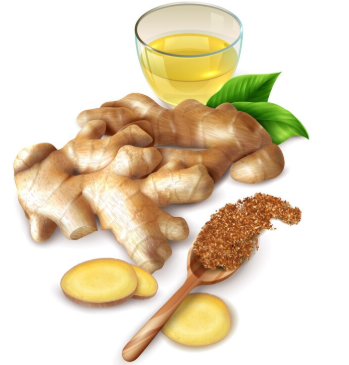
Ginger tea or lavender oil
Ease nausea & pain
Feet in warm salt water
Pull blood flow away from head
Hydration & rest
Restore electrolyte balance and heal brain
💥 Common Migraine Triggers
Understanding what triggers your migraine is key to prevention. Triggers vary widely, but here are the most common ones:
🍫 Dietary Triggers
Aged cheese, chocolate, processed meat (nitrates)
Caffeine (or caffeine withdrawal)
Alcohol, especially red wine
Citrus fruits (for some individuals)
MSG, aspartame, fermented or pickled foods
🧠 Emotional Triggers
Stress or anxiety
Suppressed emotions
Emotional trauma or overwhelm
🌦 Environmental & Lifestyle Triggers
Bright lights or loud sounds
Sudden changes in weather or barometric pressure
Skipped meals or dehydration
Excess screen time or poor posture
Strong smells (perfumes, smoke)
💤 Sleep-Related Triggers
Too much or too little sleep
Irregular sleep patterns
Sleep apnea or insomnia
👩⚕️ Why Are Migraines More Common in Women?
Migraine affects three times more women than men. The main reason: hormonal fluctuations.
🩸 Hormonal Triggers in Women
Estrogen drops before menstruation can trigger migraines.
Migraines often worsen during periods, pregnancy, or perimenopause.
Use of oral contraceptives or hormone therapy can also influence frequency and intensity.
Bonus Fact: Many women experience fewer migraines after menopause due to hormonal stabilization.
Is Migraine a Disease?
Migraine is not “just a headache” — it’s a neurological condition that affects only certain people due to their unique brain wiring, body chemistry, and inherited sensitivity.
Brain overreaction itself is not a disease, but in people with migraine, their brain is more sensitive and reactive than average—especially to certain triggers like light, sound, stress, or food. This is due to differences in brain wiring, chemistry, and genetics.
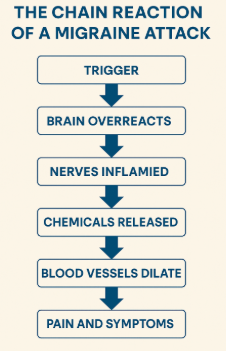
Migraine Chain Reaction
A migraine starts when something triggers the brain to overreact—like stress, lack of sleep, or certain foods. This overreaction sends a wave of abnormal electrical activity through the brain, irritating nerves and causing them to release chemicals. These chemicals cause inflammation and make the blood vessels in the brain swell. As a result, you feel a throbbing headache, often on one side, along with nausea, light and sound sensitivity, and tiredness. It’s like a chain reaction
🌿 How to Prevent Migraines Naturally
✅ Daily Lifestyle Habits
Follow a consistent sleep-wake cycle
Eat regular, balanced meals every 3–4 hours
Stay hydrated (at least 2.5–3 liters/day)
Limit screen time, use blue-light filters
Manage stress with yoga, mindfulness, or journaling
🧘 Yoga & Breathing
Anulom Vilom (alternate nostril breathing)
Bhramari (humming bee breath)
Gentle yoga stretches for neck, spine, and shoulders
Feverfew or Butterbur (herbal extracts – use with caution)
3. Alternative Therapies
Acupressure or acupuncture
Ayurveda (nasya therapy, shirodhara)
Biofeedback and CBT (for chronic cases)
📝 Migraine Diary: Your Best Ally
Track daily:
Sleep patterns
Food intake
Stress levels
Menstrual cycle
Environmental changes
👉 This helps identify and eliminate triggers, customize your prevention plan, and communicate better with your doctor.
🚨 When to See a Doctor
Headaches last longer than 72 hours
Worsening frequency or severity
Unusual aura or neurological symptoms
You need painkillers more than twice a week
🧘♀️ Empowerment Note for Women
You’re not imagining it. Hormonal migraines are real, biological, and treatable. Learning to listen to your body, align with your cycle, and balance your nervous system can transform your health.
Remember: You’re not weak—you’re wired differently.
📣 Final Thoughts: Can Migraines Be Cured?
While migraines may not be permanently “cured” for everyone, many people have successfully reversed or dramatically reduced them through:
Natural lifestyle shifts
Nutrition therapy
Stress reduction and mind-body alignment
Identifying root causes (hormonal imbalance, gut health, etc.)
📌 Call to Action
💬 Share this blog with someone struggling in silence. 📓 Start your Migraine Trigger Tracker today. 🧘♀️ Try a 7-day migraine prevention plan with holistic health. ✨ Subscribe to our newsletter for monthly healing tips.
🙋♀️ Frequently Asked Questions (FAQ)
❓1. What is a migraine? Is it just a headache?
No. A migraine is a neurological condition, not just a headache. It causes intense, throbbing pain (often on one side), along with nausea, vomiting, light/sound sensitivity, and fatigue. It can last from a few hours to several days and may include visual disturbances (aura) in some people.
❓2. Can acidity or gas cause migraine?
Yes. Acidity and poor digestion can trigger migraines in many people. When the stomach produces excess acid or becomes bloated, it can irritate the gut-brain axis, leading to nervous system overstimulation. This internal inflammation can activate the brain’s pain pathways. To prevent it, eat on time, avoid spicy/fried foods, stay hydrated, and support digestion with herbs like cumin, fennel, or ginger.
❓3. Why do migraines affect women more than men?
Migraines are 3x more common in women due to hormonal fluctuations, especially changes in estrogen around menstruation, pregnancy, and menopause. Hormones influence brain chemicals like serotonin and CGRP, both of which are closely tied to migraine onset.
❓4. How can I naturally prevent migraines?
Stick to regular sleep, eat balanced meals every 3–4 hours, stay hydrated, and manage stress with yoga, breathwork, or journaling. Avoid common triggers like caffeine, aged cheese, and artificial sweeteners. Gentle yoga, Anulom Vilom, and magnesium-rich foods like spinach and pumpkin seeds also help.
❓5. What should I do during a migraine attack?
Immediately move to a dark, quiet space. Use a cold compress on your head or neck, sip ginger or peppermint tea, and begin slow breathing like Bhramari. Take any prescribed medicine early in the attack. Avoid screens, loud sounds, and strong smells, and try to sleep once pain reduces.
❓6. Can migraine be cured completely?
Migraine doesn’t have a permanent medical “cure” yet, but many people can dramatically reduce or even eliminate attacks with the right mix of lifestyle changes, stress management, hormonal balance, and trigger avoidance. Some find lasting relief through Ayurveda, yoga, acupuncture, or long-term dietary changes. A holistic, personalized approach often leads to freedom from frequent or severe migraines.
❓7. Can stress really trigger a migraine?
Yes. Emotional stress can cause chemical changes in the brain, tighten neck and scalp muscles, and disturb sleep or digestion—all of which are known migraine triggers. Managing stress is one of the most effective long-term prevention tools.
❓8. Should I keep a migraine diary?
Definitely. Tracking your food, sleep, stress, screen time, and symptoms helps identify personal triggers. This empowers you to prevent future attacks and helps doctors tailor your treatment more effectively.
Why Women Suffer More & How You Can Manage It Naturally
🔍 What is a Migraine?
A migraine is more than just a headache. It’s a complex neurological condition that affects the brain and causes intense, throbbing pain, usually on one side of the head. It often comes with nausea, vomiting, sensitivity to light and sound, and can last from a few hours to several days.
More than 1 in 7 people worldwide suffer from migraines. It is the third most prevalent illness in the world—and significantly more common in women.
⚠️ Migraine Symptoms You Shouldn’t Ignore
Migraine symptoms vary from person to person but usually follow these phases:
Soak feet in warm water + salt. It draws blood away from the head.
OR apply a paste of mustard powder + water to soles of feet for 15 mins (traditional remedy).
9. Neck & Shoulder Massage
Ask someone to gently press around the base of the skull, neck, and shoulders.
Use oil infused with peppermint, eucalyptus, or camphor.
🛌 Sleep or Rest – Don’t Force Productivity
10. Try to Sleep or Deep Rest
Darkness and stillness calm brain inflammation.
Use an eye mask and noise-canceling earplugs if needed.
Avoid any phone, screen, or loud conversation.
❌ Avoid These During a Migraine Attack
🚫 Action
Why to Avoid
Bright light, loud sound
Worsens pain and nausea
Strong smells or perfumes
Can intensify migraine
Heavy food, caffeine (if not regular user)
Can trigger more nausea
Head massage during severe throbbing
Increases pain due to blood flow
Excess talking or thinking
Activates the brain too much
✅ After the Migraine Attack (Recovery Phase)
11. Eat Light, Grounding Foods
Have warm khichdi, moong dal soup, or mashed sweet potatoes or sabudana.
Avoid oily, spicy, fermented or cold foods.
12. Rest & Reflect
Sleep, if not done already.
Make an entry in your Migraine Tracker Journal:
What triggered it?
Weather? Stress? Food?
What helped?
💡 Emergency Alert: When to Call a Doctor or Go to Hospital
Call a doctor immediately if:
First-time migraine with severe pain or visual problems
Pain is sudden like a thunderclap
You experience loss of consciousness, confusion, or slurred speech
Stiff neck, high fever, or seizures
🧘 Summary Table: Migraine Relief Actions
Action
Purpose
Dark room & cold compress
Block triggers, numb nerves
Bhramari breathing
Calm nervous system
Ginger tea or lavender oil
Ease nausea & pain
Feet in warm salt water
Pull blood flow away from head
Hydration & rest
Restore electrolyte balance and heal brain
💥 Common Migraine Triggers
Understanding what triggers your migraine is key to prevention. Triggers vary widely, but here are the most common ones:
🍫 Dietary Triggers
Aged cheese, chocolate, processed meat (nitrates)
Caffeine (or caffeine withdrawal)
Alcohol, especially red wine
Citrus fruits (for some individuals)
MSG, aspartame, fermented or pickled foods
🧠 Emotional Triggers
Stress or anxiety
Suppressed emotions
Emotional trauma or overwhelm
🌦 Environmental & Lifestyle Triggers
Bright lights or loud sounds
Sudden changes in weather or barometric pressure
Skipped meals or dehydration
Excess screen time or poor posture
Strong smells (perfumes, smoke)
💤 Sleep-Related Triggers
Too much or too little sleep
Irregular sleep patterns
Sleep apnea or insomnia
👩⚕️ Why Are Migraines More Common in Women?
Migraine affects three times more women than men. The main reason: hormonal fluctuations.
🩸 Hormonal Triggers in Women
Estrogen drops before menstruation can trigger migraines.
Migraines often worsen during periods, pregnancy, or perimenopause.
Use of oral contraceptives or hormone therapy can also influence frequency and intensity.
Bonus Fact: Many women experience fewer migraines after menopause due to hormonal stabilization.
Is Migraine a Disease?
Migraine is not “just a headache” — it’s a neurological condition that affects only certain people due to their unique brain wiring, body chemistry, and inherited sensitivity.
Brain overreaction itself is not a disease, but in people with migraine, their brain is more sensitive and reactive than average—especially to certain triggers like light, sound, stress, or food. This is due to differences in brain wiring, chemistry, and genetics.
Migraine Chain Reaction
A migraine starts when something triggers the brain to overreact—like stress, lack of sleep, or certain foods. This overreaction sends a wave of abnormal electrical activity through the brain, irritating nerves and causing them to release chemicals. These chemicals cause inflammation and make the blood vessels in the brain swell. As a result, you feel a throbbing headache, often on one side, along with nausea, light and sound sensitivity, and tiredness. It’s like a chain reaction
🌿 How to Prevent Migraines Naturally
✅ Daily Lifestyle Habits
Follow a consistent sleep-wake cycle
Eat regular, balanced meals every 3–4 hours
Stay hydrated (at least 2.5–3 liters/day)
Limit screen time, use blue-light filters
Manage stress with yoga, mindfulness, or journaling
🧘 Yoga & Breathing
Anulom Vilom (alternate nostril breathing)
Bhramari (humming bee breath)
Gentle yoga stretches for neck, spine, and shoulders
Feverfew or Butterbur (herbal extracts – use with caution)
3. Alternative Therapies
Acupressure or acupuncture
Ayurveda (nasya therapy, shirodhara)
Biofeedback and CBT (for chronic cases)
📝 Migraine Diary: Your Best Ally
Track daily:
Sleep patterns
Food intake
Stress levels
Menstrual cycle
Environmental changes
👉 This helps identify and eliminate triggers, customize your prevention plan, and communicate better with your doctor.
🚨 When to See a Doctor
Headaches last longer than 72 hours
Worsening frequency or severity
Unusual aura or neurological symptoms
You need painkillers more than twice a week
🧘♀️ Empowerment Note for Women
You’re not imagining it. Hormonal migraines are real, biological, and treatable. Learning to listen to your body, align with your cycle, and balance your nervous system can transform your health.
Remember: You’re not weak—you’re wired differently.
📣 Final Thoughts: Can Migraines Be Cured?
While migraines may not be permanently “cured” for everyone, many people have successfully reversed or dramatically reduced them through:
Natural lifestyle shifts
Nutrition therapy
Stress reduction and mind-body alignment
Identifying root causes (hormonal imbalance, gut health, etc.)
📌 Call to Action
💬 Share this blog with someone struggling in silence. 📓 Start your Migraine Trigger Tracker today. 🧘♀️ Try a 7-day migraine prevention plan with holistic health. ✨ Subscribe to our newsletter for monthly healing tips.
🙋♀️ Frequently Asked Questions (FAQ)
❓1. What is a migraine? Is it just a headache?
No. A migraine is a neurological condition, not just a headache. It causes intense, throbbing pain (often on one side), along with nausea, vomiting, light/sound sensitivity, and fatigue. It can last from a few hours to several days and may include visual disturbances (aura) in some people.
❓2. Can acidity or gas cause migraine?
Yes. Acidity and poor digestion can trigger migraines in many people. When the stomach produces excess acid or becomes bloated, it can irritate the gut-brain axis, leading to nervous system overstimulation. This internal inflammation can activate the brain’s pain pathways. To prevent it, eat on time, avoid spicy/fried foods, stay hydrated, and support digestion with herbs like cumin, fennel, or ginger.
❓3. Why do migraines affect women more than men?
Migraines are 3x more common in women due to hormonal fluctuations, especially changes in estrogen around menstruation, pregnancy, and menopause. Hormones influence brain chemicals like serotonin and CGRP, both of which are closely tied to migraine onset.
❓4. How can I naturally prevent migraines?
Stick to regular sleep, eat balanced meals every 3–4 hours, stay hydrated, and manage stress with yoga, breathwork, or journaling. Avoid common triggers like caffeine, aged cheese, and artificial sweeteners. Gentle yoga, Anulom Vilom, and magnesium-rich foods like spinach and pumpkin seeds also help.
❓5. What should I do during a migraine attack?
Immediately move to a dark, quiet space. Use a cold compress on your head or neck, sip ginger or peppermint tea, and begin slow breathing like Bhramari. Take any prescribed medicine early in the attack. Avoid screens, loud sounds, and strong smells, and try to sleep once pain reduces.
❓6. Can migraine be cured completely?
Migraine doesn’t have a permanent medical “cure” yet, but many people can dramatically reduce or even eliminate attacks with the right mix of lifestyle changes, stress management, hormonal balance, and trigger avoidance. Some find lasting relief through Ayurveda, yoga, acupuncture, or long-term dietary changes. A holistic, personalized approach often leads to freedom from frequent or severe migraines.
❓7. Can stress really trigger a migraine?
Yes. Emotional stress can cause chemical changes in the brain, tighten neck and scalp muscles, and disturb sleep or digestion—all of which are known migraine triggers. Managing stress is one of the most effective long-term prevention tools.
❓8. Should I keep a migraine diary?
Definitely. Tracking your food, sleep, stress, screen time, and symptoms helps identify personal triggers. This empowers you to prevent future attacks and helps doctors tailor your treatment more effectively.
Siya was the strong one. A dedicated project head in a busy IT firm, a mother of teenagers, the supportive daughter-in-law, the friend who never cancelled plans. She carried her world on steady shoulders… until her world began to shift, slowly and silently.
It started at 41. Her periods became unpredictable—sometimes missing for two months, then coming back with a vengeance. She began feeling tired all the time. Her sleep, once peaceful, now broke in the middle of the night, soaked in sweat.
At first, she thought it was work stress, or maybe age catching up. But at 43, the mood swings became intense—laughing one moment, snapping the next. She felt foggy, forgetful, and emotionally fragile.
“What’s happening to me?” she wondered. Still, she didn’t talk. She buried it under the weight of deadlines, family responsibilities, and her own high expectations.
🌘 Siya’s Journey –Perimenopause (Ages 41–45)
This phase was confusing for Siya. Her periods fluctuated, emotions ran wild, and anxiety crept in. Siya didn’t know it was perimenopause—the beginning of her body’s hormonal shift.
“I didn’t even know it had started… until I felt like I was no longer ‘me’.” – Siya
She struggled with:
Irregular periods and heavy bleeding
Bloating and digestive issues
Mood swings and unexplained sadness
Breast tenderness, brain fog, and aching joints
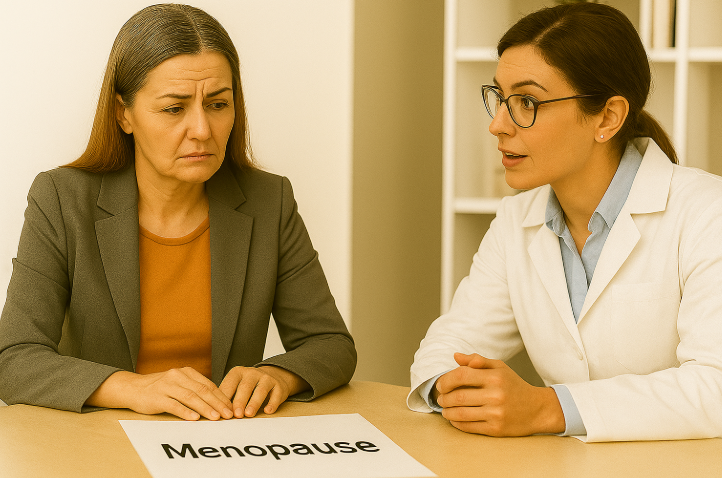
She blamed herself, her work, her relationships—never realizing it was a biological transition until she went to the doctor for regular health check up and discovered that her perimenopause phase has already started and the next is menopause. The doctor explained her about menopause.
🧬 What is Menopause? A Scientific & Soulful Understanding
Menopause is a natural biological process that marks the end of a woman’s menstrual cycles and fertility. Scientifically, it is defined as the point when a woman has gone 12 consecutive months without a menstrual period, not caused by pregnancy or any illness.
This transition doesn’t happen overnight. It unfolds gradually through three phases—each with its own emotional and physical landscape. And just like Siya’s journey, every woman’s experience is deeply personal.
🌙 Why Does Menopause Happen?
Menopause is not a flaw in a woman’s body. It is not a failure. It is nature’s way of gently closing one chapter — the reproductive phase — and opening a new one filled with inner clarity, self-reflection, and soulful strength.
🧬 The Science Behind It
Menopause happens when a woman’s ovaries gradually stop producing two key hormones:
Estrogen: which regulates menstruation, bone health, skin, and mood
Progesterone: which prepares the uterus for pregnancy and balances emotions
This hormonal decline typically begins in your early 40s (called perimenopause) and ends with menopause — marked by 12 months without a menstrual period.
Ovaries no longer release eggs, and the body’s natural reproductive rhythm gently comes to a pause.
🌿 Siya’s Healing Path — Natural and Gentle
Siya didn’t find healing in pills. She found it in nature, ritual, rest, and self-love.
Siya began searching for answers when medications only masked her symptoms but didn’t heal her from within. Through heartfelt conversations with elder women and deep reading on holistic wellness, she discovered the power of natural remedies—millets, herbs, rest, and self-care rituals—that helped her reconnect with her body gently and wisely.
🌘 Siya’s Remedies forPerimenopause (Ages 41–45)
She struggled with:
Irregular periods and heavy bleeding
Bloating and digestive issues
Mood swings and unexplained sadness
Breast tenderness, brain fog, and aching joints
🌿 Siya’s Remedies for Perimenopause:
Focus: Balancing fluctuating hormones, reducing PMS-like symptoms, and supporting mood
Shatavari tea: balances hormones and soothes mood
Ashwagandha: reduces anxiety and supports adrenal fatigue
Seed Cycle – Flaxseeds + pumpkin seeds(2 weeks) & sesame + sunflower seeds (next 2 weeks) to balance hormones reference.
All Millets in rotation – rich in nutrients, check benefits.
Leafy Greens: Spinach, Moringa, Amaranth – iron & calcium boost
🧘 Practice yoga: Surya Namaskar, Yin yoga, or gentle stretches
💃 Dance freely – move the emotions stored in your body
🏋️♀️ Add strength training (light weights) to protect your bones
😌 3. Calm Your Nervous System
🌅 Meditate 10–15 mins daily (focus on breath or chant OM)
🕯️ Create a relaxing evening routine with dim lighting and soft music
💧 Take warm baths or foot soaks with Epsom salts
🛌 Sleep before 10:30 PM and avoid screens 1 hour before bed
📖 4. Nourish Your Emotional Health
📓 Journal your emotions — let your feelings have a voice
❤️ Talk to someone: a friend, therapist, or support group
🎨 Engage in creativity — painting, writing, gardening, or music
🌙 Practice saying “No” without guilt and set gentle boundaries
🩺 5. Track & Check In With Your Body
🩻 Get regular health checkups (bone density, thyroid, vitamin D, heart health)
🧬 Consider natural supplements with guidance (Calcium, Vitamin D, Omega-3)
🌺 6. Create a Sacred Self-Care Ritual
✨ Apply warm oil (Abhyanga) before bath — use sesame or brahmi oil
☀️ Get daily morning sunlight
🌸 Keep fresh flowers or calming scents (lavender, rose) around you
🔔 Light a diya or candle in the evening for peace
💖 7. Affirm Your Inner Power
🪞 Say loving affirmations daily: “My body is wise. I trust its rhythm.” “I allow rest, softness, and strength to coexist within me.”
🌼 Bonus: Daily Gentle Reminder
“This is your second spring, not your end. You are not fading—you are flowering into a new kind of grace.”
🌒 Postmenopause (Now 49 and Evolving)
Now at 49, Siya is slowly learning to befriend her body again. The symptoms are lighter, but the lessons are deeper.
“The storm passed. I found stillness. My body slowed down… and so did my soul.” – Siya
Hormone levels stabilize at low levels. While symptoms reduce, long-term health risks such as osteoporosis, heart disease, and memory decline need attention.
Focus: Strengthening bones, supporting memory, and reducing inflammation
🧠 Common Symptoms:
Less frequent hot flashes
Vaginal dryness may persist
Bone thinning, joint stiffness
Emotional sensitivity
Metabolic changes
🌿 Siya’s Remedies for Postmenopause:
Moringa and amla juice: for bone health and vitamin C
Soaked almonds + dates: boost energy and support strength
She also learned to say “No” without guilt. To rest when tired. To honour her emotions—not dismiss them.
Here’s a consolidated list of things she avoided during menopause, combining diet, lifestyle, emotional habits, and environmental triggers — to help reduce symptoms and support holistic well-being:
🚫 Avoid During Menopause
🍽️ Food & Drink to Avoid
Caffeine – triggers hot flashes, anxiety, and sleep issues
Refined sugar – causes mood swings, weight gain, inflammation
Processed & fried foods – increase cholesterol, bloating, and inflammation
Spicy foods – can worsen hot flashes and digestive problems
Alcohol – disrupts sleep and hormonal balance
Carbonated/sugary drinks – reduce calcium and weaken bones
Red and processed meats – increase heart and inflammation risk
Excess soy or non-fermented soy – may cause bloating in some women
🧘♀️ Lifestyle Habits to Avoid
Suppressing emotions – leads to anxiety, sadness, emotional imbalance
Overworking & ignoring rest – worsens fatigue and hormonal stress
Skipping exercise or being sedentary – increases risk of weight gain, bone loss, and mood swings
Lack of sleep or irregular sleep – disrupts hormone regulation and increases irritability
Constant digital stimulation (phone/laptop) – elevates stress and affects sleep
Staying indoors too long – disconnects from natural healing and lowers vitamin D
Ignoring regular health check-ups – risks missing signs of heart, bone, or thyroid issues
🧠 Mental & Emotional Triggers to Avoid
Negative self-talk or body shaming – lowers confidence and increases mental stress
Toxic relationships or emotional stress – aggravate mood swings and hormone imbalance
Holding guilt or shame – creates internal tension and slows healing
Ignoring your own needs – leads to burnout and emotional depletion
💊 Medical Missteps to Avoid
Self-medicating with hormones or supplements – without guidance, may worsen imbalance
Relying only on pills without lifestyle support – treats symptoms, not root cause
🧡 Siya’s Message to Every Woman:A Loving Perspective on Menopause
Menopause is not a disease. It’s not something to “fix” or “fight.” It’s a rite of passage, a biological and spiritual transformation where a woman moves from productivity… to power. From bleeding for others… to blooming for herself.
Siya realized this when she stopped seeing menopause as an enemy and started treating it as a sacred messenger. A call to rest. To listen. To renew.
🧘♀️ Emotional Healing During Menopause
More than physical, menopause is an emotional awakening.
“You are not broken. You are becoming.” It is a time to turn inward, to release years of holding others, and begin holding yourself with the same care.
Embrace this time to:
Reflect on your journey
Set healthy boundaries
Let go of guilt or regret
Reconnect with creativity, spirituality, and stillness
⚠️ Health Risks After Menopause (Postmenopause)
While menopause is natural, the drop in estrogen brings certain long-term health vulnerabilities. Understanding them helps us prepare — not fear.
1. 🦴 Bone Loss & Osteoporosis
Why it happens: Estrogen helps maintain bone density. Its decline makes bones fragile. Risks: Higher chances of fractures, back pain, and posture issues. Precaution:
Include calcium-rich foods: ragi, sesame seeds, almonds, moringa
Add vitamin D: 15-20 min sunlight + supplements if needed
Do weight-bearing exercises: walking, yoga, light strength training
2. ❤️ Heart Disease Risk Increases
Why it happens: Estrogen protects your heart and blood vessels. Risks: High blood pressure, cholesterol imbalance, and clogged arteries. Precaution:
Eat omega-3 rich foods: flaxseeds, walnuts, amla
Avoid processed, fried, and sugary foods
Practice pranayama and mindfulness daily
Get routine blood pressure and cholesterol checks
3. 🧠 Cognitive Decline & Memory Fog
Why it happens: Hormonal changes affect brain function and neurotransmitters. Risks: Forgetfulness, difficulty concentrating, early signs of dementia Precaution:
Add Brahmi, Ashwagandha & almonds to your daily diet
Challenge your brain: learn something new, play memory games
Sleep 7–8 hours, deeply and regularly
4. 🌸 Vaginal Dryness & Low Libido
Why it happens: Estrogen maintains vaginal moisture and elasticity Risks: Discomfort during intimacy, emotional distance, infections Precaution:
Use natural oils like coconut or sesame oil for lubrication
Include Shatavari in your routine for hormone support
Open, loving communication with your partner helps ease emotional tension
5. 🌙 Mood Disorders & Sleep Disturbance
Why it happens: Hormonal imbalance affects serotonin and melatonin production Risks: Anxiety, sadness, irritability, insomnia Precaution:
Evening chamomile or nutmeg milk to promote restful sleep
Gentle yoga and journaling to soothe inner turbulence
Spend time in nature, away from screens and deadlines
💖 Call to Action for Families
Support the Women Who Support You
If there’s a woman in your life who’s 40 or beyond — your mother, wife, sister, or friend of office colleague — pause and check in. This phase is not “just hormonal,” it’s deeply personal. Listen without judgment, offer a helping hand, and make her feel seen. Share in her healing journey, whether it’s attending a doctor’s visit, encouraging rest, or simply asking, “How are you really feeling today?”
👉 Because when you stand by her through menopause, you’re not just supporting her health — you’re honoring her strength.
💫 Call to Action for Women
Menopause is not a disease to be feared — it’s a doorway into deep feminine wisdom, intuition, and inner power. With the right care, you don’t have to suffer through it. You can move through it gracefully, naturally, and with full awareness — just like Siya did.
Your menopause is not a breakdown. It is your breakthrough. 🌷 And just like Siya, you too can rise from within.
Menopause: A New Chapter Worth Celebrating—Despite the Challenges?
In many parts of the Western world, menopause is increasingly being embraced as a milestone worth celebrating—a symbol of a woman’s liberation from monthly cycles, birth control worries, and societal expectations tied to youth and fertility. Some women throw “menopause parties” with close friends, engage in self-care retreats, or mark the transition with rituals that honor their body’s journey. It’s a conscious shift from shame or silence to pride and empowerment. And yes, it is worth celebrating—because it reframes menopause not as an end, but as a new beginning marked by wisdom, freedom, and self-ownership.
Yes, even with the health risks that may arise post-menopause—like bone density loss, heart disease, or hormonal changes—it is still worth celebrating. This phase signifies a powerful transition into a wiser, more self-aware stage of life. Celebration doesn’t mean ignoring the challenges; it means embracing them with strength, support, and informed choices. Acknowledging the body’s transformation with pride can be the first step toward better health, mental peace, and renewed purpose.
💫 Ready to Support Your Own Menopause Journey?
🌸 Discover healing herbal teas & millet recipes 🌸 Learn natural ways to ease hormonal shifts 🌸 Join a sisterhood that understands
Siya was the strong one. A dedicated project head in a busy IT firm, a mother of teenagers, the supportive daughter-in-law, the friend who never cancelled plans. She carried her world on steady shoulders… until her world began to shift, slowly and silently.
It started at 41. Her periods became unpredictable—sometimes missing for two months, then coming back with a vengeance. She began feeling tired all the time. Her sleep, once peaceful, now broke in the middle of the night, soaked in sweat.
At first, she thought it was work stress, or maybe age catching up. But at 43, the mood swings became intense—laughing one moment, snapping the next. She felt foggy, forgetful, and emotionally fragile.
“What’s happening to me?” she wondered. Still, she didn’t talk. She buried it under the weight of deadlines, family responsibilities, and her own high expectations.
🌘 Siya’s Journey –Perimenopause (Ages 41–45)
This phase was confusing for Siya. Her periods fluctuated, emotions ran wild, and anxiety crept in. Siya didn’t know it was perimenopause—the beginning of her body’s hormonal shift.
“I didn’t even know it had started… until I felt like I was no longer ‘me’.” – Siya
She struggled with:
Irregular periods and heavy bleeding
Bloating and digestive issues
Mood swings and unexplained sadness
Breast tenderness, brain fog, and aching joints
She blamed herself, her work, her relationships—never realizing it was a biological transition until she went to the doctor for regular health check up and discovered that her perimenopause phase has already started and the next is menopause. The doctor explained her about menopause.
🧬 What is Menopause? A Scientific & Soulful Understanding
Menopause is a natural biological process that marks the end of a woman’s menstrual cycles and fertility. Scientifically, it is defined as the point when a woman has gone 12 consecutive months without a menstrual period, not caused by pregnancy or any illness.
This transition doesn’t happen overnight. It unfolds gradually through three phases—each with its own emotional and physical landscape. And just like Siya’s journey, every woman’s experience is deeply personal.
🌙 Why Does Menopause Happen?
Menopause is not a flaw in a woman’s body. It is not a failure. It is nature’s way of gently closing one chapter — the reproductive phase — and opening a new one filled with inner clarity, self-reflection, and soulful strength.
🧬 The Science Behind It
Menopause happens when a woman’s ovaries gradually stop producing two key hormones:
Estrogen: which regulates menstruation, bone health, skin, and mood
Progesterone: which prepares the uterus for pregnancy and balances emotions
This hormonal decline typically begins in your early 40s (called perimenopause) and ends with menopause — marked by 12 months without a menstrual period.
Ovaries no longer release eggs, and the body’s natural reproductive rhythm gently comes to a pause.
🌿 Siya’s Healing Path — Natural and Gentle
Siya didn’t find healing in pills. She found it in nature, ritual, rest, and self-love.
Siya began searching for answers when medications only masked her symptoms but didn’t heal her from within. Through heartfelt conversations with elder women and deep reading on holistic wellness, she discovered the power of natural remedies—millets, herbs, rest, and self-care rituals—that helped her reconnect with her body gently and wisely.
🌘 Siya’s Remedies forPerimenopause (Ages 41–45)
She struggled with:
Irregular periods and heavy bleeding
Bloating and digestive issues
Mood swings and unexplained sadness
Breast tenderness, brain fog, and aching joints
🌿 Siya’s Remedies for Perimenopause:
Focus: Balancing fluctuating hormones, reducing PMS-like symptoms, and supporting mood
Shatavari tea: balances hormones and soothes mood
Ashwagandha: reduces anxiety and supports adrenal fatigue
Seed Cycle – Flaxseeds + pumpkin seeds(2 weeks) & sesame + sunflower seeds (next 2 weeks) to balance hormones reference.
All Millets in rotation – rich in nutrients, check benefits.
Leafy Greens: Spinach, Moringa, Amaranth – iron & calcium boost
🧘 Practice yoga: Surya Namaskar, Yin yoga, or gentle stretches
💃 Dance freely – move the emotions stored in your body
🏋️♀️ Add strength training (light weights) to protect your bones
😌 3. Calm Your Nervous System
🌅 Meditate 10–15 mins daily (focus on breath or chant OM)
🕯️ Create a relaxing evening routine with dim lighting and soft music
💧 Take warm baths or foot soaks with Epsom salts
🛌 Sleep before 10:30 PM and avoid screens 1 hour before bed
📖 4. Nourish Your Emotional Health
📓 Journal your emotions — let your feelings have a voice
❤️ Talk to someone: a friend, therapist, or support group
🎨 Engage in creativity — painting, writing, gardening, or music
🌙 Practice saying “No” without guilt and set gentle boundaries
🩺 5. Track & Check In With Your Body
🩻 Get regular health checkups (bone density, thyroid, vitamin D, heart health)
🧬 Consider natural supplements with guidance (Calcium, Vitamin D, Omega-3)
🌺 6. Create a Sacred Self-Care Ritual
✨ Apply warm oil (Abhyanga) before bath — use sesame or brahmi oil
☀️ Get daily morning sunlight
🌸 Keep fresh flowers or calming scents (lavender, rose) around you
🔔 Light a diya or candle in the evening for peace
💖 7. Affirm Your Inner Power
🪞 Say loving affirmations daily: “My body is wise. I trust its rhythm.” “I allow rest, softness, and strength to coexist within me.”
🌼 Bonus: Daily Gentle Reminder
“This is your second spring, not your end. You are not fading—you are flowering into a new kind of grace.”
🌒 Postmenopause (Now 49 and Evolving)
Now at 49, Siya is slowly learning to befriend her body again. The symptoms are lighter, but the lessons are deeper.
“The storm passed. I found stillness. My body slowed down… and so did my soul.” – Siya
Hormone levels stabilize at low levels. While symptoms reduce, long-term health risks such as osteoporosis, heart disease, and memory decline need attention.
Focus: Strengthening bones, supporting memory, and reducing inflammation
🧠 Common Symptoms:
Less frequent hot flashes
Vaginal dryness may persist
Bone thinning, joint stiffness
Emotional sensitivity
Metabolic changes
🌿 Siya’s Remedies for Postmenopause:
Moringa and amla juice: for bone health and vitamin C
Soaked almonds + dates: boost energy and support strength
She also learned to say “No” without guilt. To rest when tired. To honour her emotions—not dismiss them.
Here’s a consolidated list of things she avoided during menopause, combining diet, lifestyle, emotional habits, and environmental triggers — to help reduce symptoms and support holistic well-being:
🚫 Avoid During Menopause
🍽️ Food & Drink to Avoid
Caffeine – triggers hot flashes, anxiety, and sleep issues
Refined sugar – causes mood swings, weight gain, inflammation
Processed & fried foods – increase cholesterol, bloating, and inflammation
Spicy foods – can worsen hot flashes and digestive problems
Alcohol – disrupts sleep and hormonal balance
Carbonated/sugary drinks – reduce calcium and weaken bones
Red and processed meats – increase heart and inflammation risk
Excess soy or non-fermented soy – may cause bloating in some women
🧘♀️ Lifestyle Habits to Avoid
Suppressing emotions – leads to anxiety, sadness, emotional imbalance
Overworking & ignoring rest – worsens fatigue and hormonal stress
Skipping exercise or being sedentary – increases risk of weight gain, bone loss, and mood swings
Lack of sleep or irregular sleep – disrupts hormone regulation and increases irritability
Constant digital stimulation (phone/laptop) – elevates stress and affects sleep
Staying indoors too long – disconnects from natural healing and lowers vitamin D
Ignoring regular health check-ups – risks missing signs of heart, bone, or thyroid issues
🧠 Mental & Emotional Triggers to Avoid
Negative self-talk or body shaming – lowers confidence and increases mental stress
Toxic relationships or emotional stress – aggravate mood swings and hormone imbalance
Holding guilt or shame – creates internal tension and slows healing
Ignoring your own needs – leads to burnout and emotional depletion
💊 Medical Missteps to Avoid
Self-medicating with hormones or supplements – without guidance, may worsen imbalance
Relying only on pills without lifestyle support – treats symptoms, not root cause
🧡 Siya’s Message to Every Woman:A Loving Perspective on Menopause
Menopause is not a disease. It’s not something to “fix” or “fight.” It’s a rite of passage, a biological and spiritual transformation where a woman moves from productivity… to power. From bleeding for others… to blooming for herself.
Siya realized this when she stopped seeing menopause as an enemy and started treating it as a sacred messenger. A call to rest. To listen. To renew.
🧘♀️ Emotional Healing During Menopause
More than physical, menopause is an emotional awakening.
“You are not broken. You are becoming.” It is a time to turn inward, to release years of holding others, and begin holding yourself with the same care.
Embrace this time to:
Reflect on your journey
Set healthy boundaries
Let go of guilt or regret
Reconnect with creativity, spirituality, and stillness
⚠️ Health Risks After Menopause (Postmenopause)
While menopause is natural, the drop in estrogen brings certain long-term health vulnerabilities. Understanding them helps us prepare — not fear.
1. 🦴 Bone Loss & Osteoporosis
Why it happens: Estrogen helps maintain bone density. Its decline makes bones fragile. Risks: Higher chances of fractures, back pain, and posture issues. Precaution:
Include calcium-rich foods: ragi, sesame seeds, almonds, moringa
Add vitamin D: 15-20 min sunlight + supplements if needed
Do weight-bearing exercises: walking, yoga, light strength training
2. ❤️ Heart Disease Risk Increases
Why it happens: Estrogen protects your heart and blood vessels. Risks: High blood pressure, cholesterol imbalance, and clogged arteries. Precaution:
Eat omega-3 rich foods: flaxseeds, walnuts, amla
Avoid processed, fried, and sugary foods
Practice pranayama and mindfulness daily
Get routine blood pressure and cholesterol checks
3. 🧠 Cognitive Decline & Memory Fog
Why it happens: Hormonal changes affect brain function and neurotransmitters. Risks: Forgetfulness, difficulty concentrating, early signs of dementia Precaution:
Add Brahmi, Ashwagandha & almonds to your daily diet
Challenge your brain: learn something new, play memory games
Sleep 7–8 hours, deeply and regularly
4. 🌸 Vaginal Dryness & Low Libido
Why it happens: Estrogen maintains vaginal moisture and elasticity Risks: Discomfort during intimacy, emotional distance, infections Precaution:
Use natural oils like coconut or sesame oil for lubrication
Include Shatavari in your routine for hormone support
Open, loving communication with your partner helps ease emotional tension
5. 🌙 Mood Disorders & Sleep Disturbance
Why it happens: Hormonal imbalance affects serotonin and melatonin production Risks: Anxiety, sadness, irritability, insomnia Precaution:
Evening chamomile or nutmeg milk to promote restful sleep
Gentle yoga and journaling to soothe inner turbulence
Spend time in nature, away from screens and deadlines
💖 Call to Action for Families
Support the Women Who Support You
If there’s a woman in your life who’s 40 or beyond — your mother, wife, sister, or friend of office colleague — pause and check in. This phase is not “just hormonal,” it’s deeply personal. Listen without judgment, offer a helping hand, and make her feel seen. Share in her healing journey, whether it’s attending a doctor’s visit, encouraging rest, or simply asking, “How are you really feeling today?”
👉 Because when you stand by her through menopause, you’re not just supporting her health — you’re honoring her strength.
💫 Call to Action for Women
Menopause is not a disease to be feared — it’s a doorway into deep feminine wisdom, intuition, and inner power. With the right care, you don’t have to suffer through it. You can move through it gracefully, naturally, and with full awareness — just like Siya did.
Your menopause is not a breakdown. It is your breakthrough. 🌷 And just like Siya, you too can rise from within.
Menopause: A New Chapter Worth Celebrating—Despite the Challenges?
In many parts of the Western world, menopause is increasingly being embraced as a milestone worth celebrating—a symbol of a woman’s liberation from monthly cycles, birth control worries, and societal expectations tied to youth and fertility. Some women throw “menopause parties” with close friends, engage in self-care retreats, or mark the transition with rituals that honor their body’s journey. It’s a conscious shift from shame or silence to pride and empowerment. And yes, it is worth celebrating—because it reframes menopause not as an end, but as a new beginning marked by wisdom, freedom, and self-ownership.
Yes, even with the health risks that may arise post-menopause—like bone density loss, heart disease, or hormonal changes—it is still worth celebrating. This phase signifies a powerful transition into a wiser, more self-aware stage of life. Celebration doesn’t mean ignoring the challenges; it means embracing them with strength, support, and informed choices. Acknowledging the body’s transformation with pride can be the first step toward better health, mental peace, and renewed purpose.
💫 Ready to Support Your Own Menopause Journey?
🌸 Discover healing herbal teas & millet recipes 🌸 Learn natural ways to ease hormonal shifts 🌸 Join a sisterhood that understands
She Woke Up in Pain, But Still Got Dressed for Work…
It was 6:00 AM. A soft drizzle tapped against the window as Ananya lay curled up, her hand pressed gently against her lower belly. The cramps had started again — sharp, nagging, and familiar. She had barely slept. Her head throbbed, and her body ached like it was asking for rest… but the world outside didn’t wait for pain.
She was on her third day of her period, and her calendar was already packed. Team meetings, client calls, a long commute through traffic. She looked at her wardrobe, knowing she needed to wear something comfortable, yet formal. She didn’t have time to lie down with a hot water bottle or sip herbal tea in peace.
So, like she always did, she pushed through.
She got dressed, tied her hair back, popped a pill to dull the pain, and carried her laptop and a bottle of water like armor.
But inside, her body was screaming: “Slow down. I’m doing something powerful. Please, support me.”
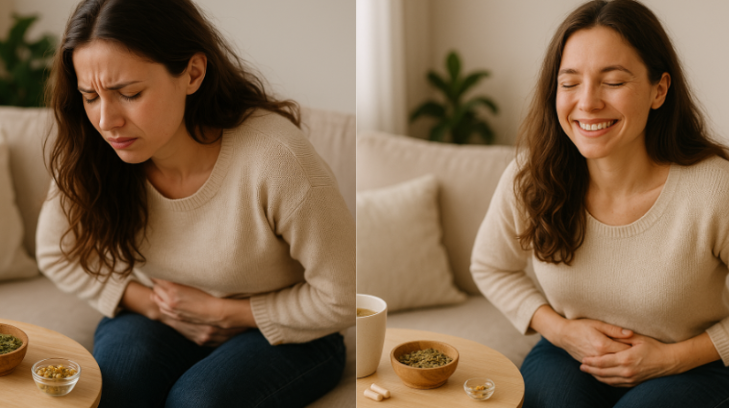
💬 How many of us have ignored the whispers of our body in order to meet the expectations of the world? What if we could create a world where periods are not suffered through, but supported — gently, naturally, and with love?
This post is for every woman who has ever shown up while her body was asking her to pause. You deserve more than just surviving your cycle — you deserve to thrive through it.
Let’s explore how food, herbs, and simple rituals can become your allies — not just in easing pain, but in honoring your feminine rhythm.
🌿 Natural Remedies & Self-Care for Period Days
From Pain to Peace:
That first day was hard. But what if we allowed ourselves to soften, instead of pushing harder?
Nature offers quiet, nurturing support — not just to manage the physical pain, but to help us reconnect with our bodies with kindness. You don’t need to “power through” every period. You can nurture through it instead.
Here’s how…
🩸 How toStop Period Pain Immediately (Quick Relief Methods)
🫖 1. Sip on Herbal Teas That Ease Cramps
Let your tea become your medicine.
Ginger + Tulsi Tea: Reduces inflammation and relaxes the uterus
Fennel Tea: Soothes bloating and cramps
Cinnamon Tea: Improves blood flow and eases pain
Chamomile Tea: Calms the nervous system and helps you rest
Tip: Sip warm tea every 3–4 hours during the first two days of your period.
🛀 2. Apply Warmth Where It Hurts
A hot water bag or warm castor oil compress on the lower abdomen works like a gentle hug for your womb.
Increases circulation
Relaxes uterine muscles
Lowers the intensity of cramps
Pair this with soft music or simply silence, and give yourself 15–20 minutes of stillness.
🥣 3. Eat Warm, Nourishing Foods
Cold, raw foods can increase cramping and slow digestion. Your body needs comfort food — warm, soft, and healing.
Ragi porridge with jaggery & ghee (rich in iron and calcium)
Khichdi with moong dal and veggies (easy to digest, grounding)
Steamed sweet potato with cinnamon (magnesium + fiber)
Beetroot curry with red rice (restores iron levels)
Avoid: Caffeine, dairy, processed sugar, and fried foods during your period.
🧘♀️ 4. Gentle Movement & Breathwork
While rest is essential, a little mindful movement helps blood flow and eases pelvic congestion.
Try:
Child’s Pose (Balasana)
Supine Twist
Reclined Butterfly Pose
Anulom Vilom (alternate nostril breathing)
Bhramari (humming bee breath for emotional calm)
Just 10–15 minutes can make a difference.
💖 5. Emotional Self-Care is Real Self-Care
Your period is not just a physical detox — it’s emotional too. Hormonal shifts can bring old feelings to the surface. Don’t ignore them. Honor them.
Ways to release:
Journal how you feel — without judgment
Light a candle and do nothing for 10 minutes
Cry if you need to
Speak to your body gently: “Thank you for carrying me.”
You are not “too sensitive.” You are deeply in tune. And that is your power.
🌕 Your Period is a Portal — Not a Problem
The world may not pause for your cycle. But you can choose to soften. To rest. To nourish. When we begin to treat our period not as an inconvenience but as sacred — something begins to shift.
You deserve more than just surviving your cycle. You deserve to feel held, balanced, and whole.
Chronic stress → cortisol imbalance → worsens period pain.
Practice daily pranayama or meditation
Do relaxing activities like journaling, nature walks, art
Say no to overcommitting — protect your energy during your cycle
✅ 5. Regulate the Menstrual Cycle with Ayurveda
Natural remedies that help:
Shatavari: balances hormones
Ashoka: reduces excessive bleeding and pain
Lodhra: regulates cycles and soothes uterus (Always use under guidance of Ayurvedic practitioner)
✨ True Healing Takes Time — But It’s Possible
Many women who shift their lifestyle, diet, and mindset have healed painful periods within 3–6 months. It’s not about masking the pain — it’s about listening to it, and gently restoring balance.
💖 Final Words:
You don’t have to dread your period. You don’t have to suffer in silence. You deserve a cycle that flows with ease, not agony.
Here is your 3-Month “Period Pain Healing Plan” — a complete, step-by-step natural guide to reduce and potentially eliminate menstrual pain by addressing root causes like inflammation, hormonal imbalance, poor gut health, and stress.
🌸 3-Month Period Pain Healing Plan
Naturally Reduce Cramps, Balance Hormones & Feel Empowered in Your Cycle
💬 “When you work with your cycle, not against it — healing begins.”
🌿 Month 1:Calm the Inflammation & Cleanse Gently
✅ Focus Areas:
Reduce period pain triggers (inflammation, constipation)
Luteal phase (Day 17–28): Slow down, prep for period
📝 Monthly Progress Tracker:
Area
Month 1
Month 2
Month 3
Pain level (1–10)
Cycle length & flow
Mood changes
Digestion & Bloating
Energy levels
Sleep quality
✨ Call To Action:
Healing period pain is not about masking symptoms — it’s about restoring balance. Be patient with your body. With consistency, compassion, and nature’s support, your cycle can become your source of strength, not suffering.
🌸 You Deserve a Pain-Free Period. No more silently suffering through cramps and exhaustion. Your body is wise, powerful, and ready to heal — all it needs is your care, your patience, and a little natural support.
✨ Start your healing journey today. Try just one remedy. Brew one healing tea. Rest without guilt. You are not alone — and this pain doesn’t have to be permanent.
I still remember the morning I woke up feeling heavy—not just in my body, but in my mind and soul. My face looked puffy, my energy was gone, and my gut felt like it was constantly at war with itself. I wasn’t sick… but I wasn’t well either. Something inside me was tired. Worn out from all the late nights, the sugar highs, the stress, the screens, and the silent pressure to keep going.
And then it hit me: my body wasn’t angry—it was exhausted. It wasn’t breaking down, it was begging to be heard.
That was the day I decided to pause. To listen. To strip everything back and let my body reset. Not with extreme fasts or harsh diets—but with gentle, healing foods, fresh juices, warm herbal waters, deep breaths, and sleep that felt like surrender. In just a few days, I began to feel it: the fog lifted, my skin glowed, my gut softened, and most of all—I felt lighter inside.
This isn’t just a detox plan. It’s an invitation to return to yourself.
🌿 What is a Full Body Detox?
A full body detox is a process where you give your body a break from processed foods, toxins, and stressors—while nourishing it with natural, healing foods and habits that support the liver, kidneys, digestive system, skin, and lymphatic system.
In simple terms: it’s like pressing the reset button on your health.
Detox doesn’t mean starvation or drinking only juices. A proper detox uses wholesome foods, herbs, hydration, breathwork, and rest to gently remove toxic buildup and rejuvenate your organs from within.
🌟 Why is Detox Important?
Modern life brings an overload of toxins—from pesticides in food to chemicals in water, pollutants in air, and even stress-induced toxins in our own body.
If not eliminated properly, these toxins can lead to:
Fatigue
Skin issues
Digestive troubles
Weight gain
Brain fog
Hormonal imbalance
Low immunity
Your body wants to heal — but it needs space and support. A detox helps clear that space so your organs can do their job efficiently.
🌿 The Right Way to Detox: A Gentle, Natural Approach to Whole-Body Cleansing
Detoxing isn’t about harsh fasts, skipping meals, or drinking only juices. The right way to detox is all about supporting your body’s natural detoxification systems—mainly the liver, kidneys, gut, lungs, skin, and lymphatic system—with the right foods, habits, and rest.
Here’s a clear guide:
✅ 1. Begin With Purpose, Not Pressure
Start your detox with a clear intention: “I want to feel lighter, improve digestion, or reset my energy.”
Avoid forcing your body through extreme measures.
✅ 2. Eat Whole, Natural Foods
Focus on fresh fruits, vegetables, sprouts, millets, and light soups.
Avoid processed food, deep-fried items, packaged snacks, white sugar, and refined flours.
Eat light and seasonal. Food should be easy to digest.
✅ 3. Hydrate Deeply
Drink 2.5 to 3 litres of water daily. Add:
Lemon-cumin water in the morning
Herbal teas like tulsi, ginger, fennel, or turmeric
Coconut water or warm jeera-ajwain water
✅ 4. Support Liver & Gut with Herbs
Use natural detox herbs like:
Triphala – for colon cleansing
Milk thistle or dandelion – liver support
Turmeric, coriander, cumin – daily cooking aids
Light ghee in khichdi also helps heal the gut lining.
✅ 5. Practice Gentle Movement
Light yoga, walking, or stretching helps circulation and lymph flow.
Avoid heavy workouts during detox. Your body needs energy to heal.
✅ 6. Rest and Sleep Well
Sleep by 10 PM to allow your liver to detox overnight (10 PM to 2 AM is prime liver time).
Don’t overwork your mind—cut screen time, avoid overstimulation.
✅ 7. Add Breathwork & Emotional Detox
Daily deep breathing (Anulom-Vilom, Bhramari) calms stress and improves oxygenation.
Journaling, meditation, or even crying (emotional release) is part of detox too.
✅ 8. Respect Your Body’s Pace
Start with 1-Day Detox, then try 3 or 7 days if comfortable.
Watch how your body responds—don’t push if tired or dizzy.
Listen to your hunger: Eat when you’re hungry, not when the clock says so.
❌ What NOT To Do:
Skip meals or starve
Rely only on fruit juices or smoothies
Use laxatives or harsh powders
Ignore signs of fatigue or dizziness
Follow crash diets from the internet without guidance
🧡 In Essence:
The right detox is rooted in nourishment, mindfulness, and simplicity. It’s not about punishment — it’s about pausing, listening, and loving your body back into balance.
⏳ When Should You Detox?
Listen to the Seasons and the Signs
Nature already tells us when to reset — and so does your body.
Ideal times to detox:
At the turn of seasons (especially from winter to spring, and summer to autumn)
After festivals or heavy eating weeks
When you feel unusually heavy, tired, or moody
After antibiotics or medications
After high stress or emotional burnout
🌿 “Nature Already Tells Us When to Reset — and So Does Your Body”
There is a quiet wisdom in nature — a rhythm we’ve forgotten but still feel in our bones.
The trees don’t bloom all year. The rivers don’t rush without pause. Even the moon takes time to rest in darkness. And just like them, you, too, are meant to ebb and flow. To let go. To begin again.
Detoxing isn’t just a physical process. It’s a sacred act of alignment — with the earth, with the seasons, and with the silent signals your body sends you every day.
🔁 How Often Should You Detox?
You don’t need extreme cleanses. What you need is gentle, regular resets.
Mini detox: 1 day a week — with fruits, herbal teas, and clean eating
Seasonal detox: 3–5 days every 3–4 months
Deep detox: 7–10 days once a year under guidance (especially if you have chronic conditions)
🕐 1-Day vs 3-Day vs 7-Day Detox: What’s the Difference?
✅ 1-Day Detox Plan — Gentle Reset
Ideal for: Beginners, after a junk food binge, or post-party recovery. Goal: Reduce inflammation, support digestion, and feel lighter by evening.
Typical Day Includes:
Warm water with lemon or cumin in the morning
Fruit-only breakfast (papaya, pomegranate, or watermelon)
Light steamed veggies/soup for lunch
Herbal teas and coconut water
Salads or broth or light millet khichdi/Ambali for dinner
Gentle yoga & early sleep
💡 Think of it like giving your system a breather.
✅ 3-Day Detox Plan — Deeper Cleanse
Ideal for: Fatigue, mild bloating, skin dullness, or sluggish digestion. Goal: Support liver, kidneys, and colon to flush out stored toxins.
Includes:
Morning detox drinks (jeera, ajwain, or fenugreek water)
Raw fruits & veggies, green smoothies, light cooked meals
No caffeine, sugar, dairy, or gluten
Oil-free food
Gentle stretching or pranayama
Herbal teas (turmeric, tulsi, ginger)
💡 Your body begins to feel cleaner, lighter, and more energized.
✅ 7-Day Detox Plan — Transformational Detox
Ideal for: Chronic fatigue, weight gain, gut issues, poor skin/hair health, or after medication. Goal: Reset digestion, balance metabolism, reduce inflammation, and rejuvenate organs.
Plan Highlights:
Anti-inflammatory, whole-food based diet
Millet-based meals (as per Dr. Khader Vali or Ayurveda)
Your body is whispering — slow down, nourish, and heal. Even one day of intentional detox can remind your body how powerful it really is.
💧 What is Detox Water?
Detox water is simply water infused with natural ingredients like fruits, herbs, or vegetables that help flush out toxins, hydrate the body, and support digestion and metabolism.
It’s also called infused water or flavored water, and it’s a gentle, tasty way to improve your daily hydration while giving your body a mini wellness boost.
🌟 Why Use Detox Water?
Your body already has natural detox systems (liver, kidneys, skin, etc.), but detox water:
Encourages you to drink more water
Helps reduce bloating and constipation
Provides vitamins, antioxidants, and enzymes from fresh ingredients
May support weight loss and clearer skin
Can help with cravings and low energy during detox periods
🥒 Common Detox Water Ingredients & Their Benefits:
Ingredient
Benefit
Lemon
Boosts liver detox, rich in vitamin C, aids digestion
Cucumber
Hydrating, anti-inflammatory, cooling
Mint leaves
Refreshing, eases bloating and gas
Ginger slices
Aids digestion, reduces nausea, warms the body
Cinnamon sticks
Regulates blood sugar, improves metabolism
Apple slices
Rich in antioxidants and fiber
Basil or Tulsi
Supports immunity and detox, anti-stress
🍹 Simple Detox Water Recipes:
Lemon + Mint + Cucumber Water Soothing and hydrating for hot days
Apple + Cinnamon Detox Water Great for metabolism and fat-burning
Ginger + Lemon Water Ideal for morning digestion and immunity
Tulsi + Fennel Water Cools the body, supports gut health
✅ How to Make Detox Water:
Add sliced fruits/herbs to a glass or copper jar
Fill with filtered water (preferably warm or room temp)
Let it infuse for 2–4 hours, or overnight in the fridge
Sip it throughout the day
⚠️ Tips:
Always use fresh, organic ingredients
Drink within 24 hours
Don’t skip meals — detox water is a support, not a substitute
Rotate ingredients daily to avoid sensitivity
💬 In Summary:
Detox water is a simple, natural way to upgrade your water intake with flavor, nutrients, and wellness benefits. It’s not a magic solution—but it’s a beautiful companion to a healthy, mindful lifestyle.
🥤 What is Detox Juice?
Detox juice is a fresh, nutrient-rich drink made from raw vegetables, fruits, and herbs that helps your body gently flush out toxins, reduce inflammation, and nourish your cells.
Unlike sugary packaged juices, real detox juice is alive—vibrant with enzymes, fiber (if not strained), antioxidants, and hydration.
It’s not just a drink. It’s liquid healing.
🌟 Why Choose Detox Juices?
Boosts energy and focus
Aids digestion and gut cleansing
Supports skin glow and immunity
Fights bloat and sugar cravings
Gives your organs a break from heavy digestion
🍹 3 Powerful & Healing Detox Juice Recipes
🥬 1. Green Goddess Juice
Perfect for Liver Cleanse & Energy Reset
Ingredients:
1 cup spinach or kale leaves
1 cucumber
1 green apple
½ lemon (with peel if organic)
½ inch fresh ginger
4-5 mint leaves
1 glass water or coconut water
How to make: Blend or juice everything together. Drink slowly on an empty stomach.
💚 Feel the lightness flow through you.
🍍 2. Tropical Gut Cleanser Juice
Anti-bloat, Digestion-boosting, Soothing for the tummy
Ingredients:
2 slices pineapple
½ cucumber
1 inch aloe vera gel (fresh from leaf)
A few basil or tulsi leaves
½ tsp fennel seeds (soaked overnight)
1 glass cold water
How to make: Blend all and strain if needed. Serve chilled.
🌿 It feels like a tropical spa inside your body.
🧡 3. Glowing Skin Citrus Juice
Rich in vitamin C, purifies blood, and brightens complexion
Ingredients:
1 orange
1 carrot
½ beetroot
½ inch turmeric root or ½ tsp turmeric powder
A pinch of black pepper
1 glass water
How to make: Juice or blend and enjoy first thing in the morning or mid-afternoon.
✨ It’s like sunshine in a glass—for your skin and soul.
💡 Pro Tips for Detox Juices:
Use organic produce if possible
Drink fresh, within 30 minutes
Don’t mix with heavy meals — best on an empty stomach or as a meal substitute
Add chia seeds or flax for fiber if not juicing
💬 In Essence:
Detox juices are nature’s elixirs—vibrant, healing, and deeply nourishing. When your body is overwhelmed, just one glass can be a whisper of wellness saying, “I’ve got you.”
🌿 3-Day Full Body Detox Diet Plan
Let go of the toxic weight — in your body, mind, and heart.
✨ What You’ll Experience:
Reduced bloating and fatigue
Improved digestion
Glowing skin and lightness
Mental clarity and emotional calm
A feeling of coming back to yourself 💫
🗓️ DAY 1: Cleanse Gently – Flush & Hydrate
🌞 Morning Ritual
Warm Detox Water: Jeera (cumin) + lemon + pinch of pink salt
5–10 mins of deep breathing (Anulom Vilom or belly breathing)
🥤 Breakfast Juice
Green Glow Juice: Cucumber + spinach + green apple + lemon + mint
💧 Mid-Morning Detox Water
Mint + cucumber + lemon in copper or glass bottle
Sip throughout the morning
🍲 Lunch
Moong dal khichdimillet (no oil, with cumin, ginger, turmeric)
Steamed bottle gourd or carrots on the side
🍹 Afternoon Juice
Pineapple + Ginger + Fennel Juice – cools and soothes the gut
🌙 Dinner
Light veggie soup (carrot, lauki, beetroot)
Herbal tea (tulsi or ginger)
🗓️ DAY 2: Deep Detox – Inner Cleanse
🌞 Morning
Warm ajwain (carom seed) water
Gentle stretching or yoga for 15 mins
🥤 Breakfast Juice
Beetroot + Apple + Lemon + Mint – liver-friendly and energizing
💧 Mid-Morning Detox Water
Tulsi leaves + fennel seeds + cucumber in water bottle
🍲 Lunch
Steamed vegetables (carrot, zucchini, spinach)
1 small bowl millet khichdi or vegetable daliya
🍹 Afternoon Juice
Orange + Carrot + Turmeric – anti-inflammatory and immune-boosting
🌙 Dinner
Bottle gourd soup with crushed cumin and coriander
Warm water or cinnamon tea
🗓️ DAY 3: Rejuvenate – Mind & Body Reset
🌞 Morning
Warm water with lemon + a pinch of turmeric
5 mins gratitude journaling
🥤 Breakfast Juice
Ash gourd + Mint + Lemon Juice – clears gut and brain fog
💧 Mid-Morning Detox Water
Cinnamon stick + apple slice + clove water infusion
🍲 Lunch
Quinoa or little millet with sautéed veggies
Moong dal soup (optional)
🍹 Afternoon Juice
Pomegranate + Tulsi + Ginger Juice – blood purifier and refreshing
🌙 Dinner
Steamed vegetable broth
Herbal tea (chamomile or lemongrass) before sleep
💡 Important Detox Tips:
No caffeine, sugar, dairy, or processed foods
Chew mindfully, eat slowly
Take short walks, avoid overexertion
Keep your phone away during meals
Sleep by 10 PM — let the liver detox overnight
💬 A gentle reminder:
“This isn’t just a food plan. It’s a ritual of self-love. A time to breathe. A time to let go. A time to come back home — to your body, your breath, and your light.”
Call to Action
🌿 Are you ready to reset, not just your body—but your life? Your body is whispering… asking for a break, a breath, a chance to heal. Whether you choose a 1-day refresh or a 7-day deep cleanse, every sip of detox water, every nourishing juice, is a step toward clarity, lightness, and vibrant health.
✨ Don’t wait for the “perfect time.” Start now. Begin with one gentle choice today—and feel the shift from within.
Your healing starts with one decision. Say yes to your body. Say yes to yourself. 💚
Learn – How to detox your liver in 3 days here. Some external reference link.
Why Your Liver Deserves Your Love – And Why a Detox Might Save More Than Your Health
We often chase glowing skin, better sleep, energy, and immunity — but forget the silent warrior behind it all: your liver.
This humble organ never complains. It works 24/7, filtering toxins from everything you eat, breathe, and apply to your skin. Every sip of tea, every bite of food, every medicine, every chemical in the air — your liver processes it, stores what’s needed, and bravely discards the rest. And in this modern world, it’s overloaded like never before.
💔 When Your Liver Cries in Silence
You may not feel it instantly, but the signs are all around:
Constant fatigue, even after rest
Bloating or indigestion
Unexplained weight gain or sluggish metabolism
Hormonal imbalances, painful periods
Skin breakouts or dullness
Brain fog and mood swings
These are not just random problems — they’re whispers from your liver, telling you it’s overwhelmed, overworked, and exhausted.
💚 Why Liver Detox Is Not a Trend — It’s a Gentle Act of Self-Care
Liver detox is not about starving yourself or sipping fancy juices. It’s about giving your body a break from the chaos — from fried foods, refined sugars, alcohol, stress, and pollution — so it can return to balance.
It’s about nourishment. Rest. Lightness. Emotional release. When you detox, you’re saying:
“Dear body, I see you. I thank you. I’m ready to heal with you.”
⏳ When Should You Detox?
Listen to the Seasons and the Signs
Nature already tells us when to reset — and so does your body.
Ideal times to detox:
At the turn of seasons (especially from winter to spring, and summer to autumn)
After festivals or heavy eating weeks
When you feel unusually heavy, tired, or moody
After antibiotics or medications
After high stress or emotional burnout
🌿 “Nature Already Tells Us When to Reset — and So Does Your Body”
There is a quiet wisdom in nature — a rhythm we’ve forgotten but still feel in our bones.
The trees don’t bloom all year. The rivers don’t rush without pause. Even the moon takes time to rest in darkness. And just like them, you, too, are meant to ebb and flow. To let go. To begin again.
Detoxing isn’t just a physical process. It’s a sacred act of alignment — with the earth, with the seasons, and with the silent signals your body sends you every day.
🍁 Ideal Times to Detox
Nature’s Gentle Reminders –
🌸 Seasonal Transitions
When winter turns to spring or summer fades into fall, your body naturally feels the need to reset. These shifts are powerful cleansing moments in nature — shedding the old to welcome the new.
Spring asks you to awaken and purify. Autumn invites you to let go and calm down.
Detox during these changes allows your body to adapt with strength and grace.
🌙 Lunar Cycles – Especially Ekadashi (11th Day)
In Ayurveda and yogic tradition, Ekadashi is a day of spiritual and physical cleansing. It aligns with the moon’s rhythm, where your body’s ability to detox is naturally heightened.
Fasting or light detoxing on Ekadashi clears not just toxins — but also thoughts.
🌞 After Periods of Excess
Festivals, weddings, emotional eating, vacations — full of joy, but also of heavy foods, erratic sleep, and indulgence. Your body stores the burden, silently.
A simple detox after these moments is like saying, “Thank you, body, for carrying me. Now, let me care for you.”
💼 After Stress or Emotional Burnout
Your liver doesn’t just store toxins — it stores anger, grief, resentment, and stress. When emotions build up unspoken, your body begins to ache in unseen ways.
Detoxing helps release what you’ve been holding in — the words you didn’t say, the tears you didn’t cry, the exhaustion you pushed through.
🌀 When You Feel “Off” Without Knowing Why
That feeling of being out of sync — tired after waking, irritable for no reason, skin acting up, digestion sluggish, or simply not feeling like yourself — is often your body’s gentle cry:
“I need space. I need stillness. I need you to listen.”
🔁 How Often Should You Detox?
You don’t need extreme cleanses. What you need is gentle, regular resets.
Mini detox: 1 day a week — with fruits, herbal teas, and clean eating
Seasonal detox: 3–5 days every 3–4 months
Deep detox: 7–10 days once a year under guidance (especially if you have chronic conditions)
The Liver Loves…
Bitter greens like methi, coriander, and kale
Beets, turmeric, amla, and garlic
Herbal teas like dandelion, tulsi, licorice
Deep sleep, slow breaths, and emotional peace
Warm water with lemon, first thing in the morning
Movement — walking, yoga, stretching
Letting go of anger and stress (stored in the liver)
TheLiver Detox Drink
Here are 3 effective liver detox drinks that naturally cleanse, heal, and rejuvenate your liver. Each is rich in antioxidants, anti-inflammatory herbs, and hydrating elements to help your body flush out toxins and restore energy.
🥤 1.Beetroot-Lemon-Ginger Liver Cleanser
Ingredients:
½ beetroot (peeled and chopped)
1 tbsp fresh lemon juice
½ inch fresh ginger
1 cup filtered water or coconut water
A few mint or coriander leaves
Pinch of rock salt
Benefits:
Beetroot supports bile flow and flushes fat from the liver.
Lemon alkalizes and boosts liver enzymes.
Ginger helps inflammation and improves digestion.
When to drink: Morning, on an empty stomach.
🍋 2.Warm Lemon-Turmeric Elixir
Ingredients:
1 glass warm water
Juice of ½ lemon
¼ tsp turmeric powder (or fresh turmeric)
Pinch of black pepper (for turmeric absorption)
Optional: ½ tsp raw honey (after it cools slightly)
Benefits:
Lemon activates the liver’s detox enzymes.
Turmeric reduces inflammation and supports cell repair.
Black pepper enhances turmeric’s absorption and detox effect.
When to drink: First thing in the morning or before bedtime.
🌿 3. Coriander-Mint Detox Water
Ingredients:
10 coriander leaves
10 mint leaves
1 cup warm water
Juice of ¼ lemon
A small piece of grated ginger
Instructions: Blend and strain (optional). Sip slowly.
Benefits:
Coriander and mint cool the liver and help remove heavy metals.
Lemon and ginger support digestion and detoxification.
When to drink: Mid-morning or between meals.
💚 Final Tip:
These drinks are most powerful when paired with clean eating, deep breathing, and rest. Even one of these daily can bring lightness to your body and peace to your liver.
“Let every sip be a reminder: your body wants to heal — all it needs is your love.” 🌿
How to Detox Your Liver in 3 Days
A Healing Journey for Your Body and Soul
Sometimes, your body whispers before it screams. A feeling of fatigue, bloating, skin breakouts, or brain fog — all quiet signals from your liver crying for help. This beautiful organ works tirelessly, filtering toxins, breaking down fats, and supporting your immunity. But just like you, your liver needs rest, nourishment, and love.
Here’s how to lovingly reset and detox your liver in just 3 days — not as a harsh punishment, but as a gentle act of healing and renewal.
🌿 3-Day Liver Detox Diet Plan
Each day includes: ✅ Liver detox drinks ✅ Easy-to-digest meals ✅ Herbal teas and hydrating rituals ✅ Gentle emotional detox
Beetroot-Lemon-Ginger Detox Drink again (small serving)
Lunch:
Steamed broccoli, carrots, and bottle gourd
Foxtail millet or brown rice with moong dal
Evening:
Coriander-Mint Detox Water
Clear vegetable broth or pumpkin stew
Before Bed:
Chamomile or tulsi tea
Castor oil pack on the liver area (optional)
🌺 Day 3 – Heal & Renew
Morning:
Warm water + lemon + ginger
Beetroot Detox Drink (or rotate with coriander-mint)
Breakfast:
Pomegranate and kiwi bowl
5 soaked almonds + sunflower seeds
Mid-Morning:
Lemon-Turmeric Elixir
10-minute walk or light yoga
Lunch:
Bajra roti + steamed lauki or ridge gourd
Fresh coriander chutney
Evening:
Coriander-Mint Detox Water
A small bowl of soup or moong dal with drumstick
Before Bed:
Licorice tea or fennel water
Gentle music and emotional journaling
✨ Important Tips:
Eat mindfully, chew slowly.
Avoid dairy, sugar, caffeine, and fried foods.
Sleep early to support natural detox during the night.
Deep breathing or meditation accelerates emotional cleansing.
“In just 3 days, your liver can breathe again. Your body will feel lighter. Your heart will feel clearer. Begin this gentle journey — because healing doesn’t have to be hard, just intentional.” 💚🌿
🌞 Final Thoughts
Your liver is not a machine. It’s a sacred filter — physical and emotional. A 3-day detox isn’t about deprivation; it’s about devotion. When you feed your body with simplicity and love, when you give your mind rest and silence, your liver begins to glow again — just like you.
So take these three days not as a challenge, but as an embrace. Heal slowly. Heal kindly. And remember, every cell is listening when you say, “I choose to feel alive again.”
💚✨
Detoxing Your Body vs. Detoxing Your Liver – A Heartfelt Understanding
In today’s noisy world of wellness, we often hear the word “detox” tossed around like a trend — juice cleanses, fasting, powders, miracle teas. But beneath all that hype lies a deeper, more beautiful truth: Detoxing isn’t a shortcut to weight loss. It’s a sacred reset for your body and soul.
And to truly honor it, we must understand the difference between detoxing the whole body and detoxing the liver — because both are powerful, but each has a different purpose.
🌿 Liver Detox – Healing the Master Filter
Your liver is the most hardworking, selfless organ. Every second, it filters your blood, removes toxins, breaks down fats, balances hormones, and stores essential nutrients. When it’s overloaded, everything in your body slows down — digestion, immunity, mood, even skin glow.
Liver detox is about:
Supporting liver cells to repair and regenerate
Flushing out toxins like alcohol, medications, processed food residues
Reducing inflammation and fat build-up in the liver
Helping hormonal and metabolic balance return
How to detox your liver:
Warm water with lemon and turmeric
Beetroot, carrot, amla, and greens
Herbal teas like dandelion, tulsi, licorice
Avoiding heavy, greasy, and processed foods
Emotional healing – releasing anger, stress, and resentment
It’s like whispering to your liver, “You’ve done enough. Let me help you now.”
🌸 Full Body Detox – A Deeper Reset
While the liver is the primary detox organ, your whole body stores toxins — in fat cells, skin, digestive tract, kidneys, even the lymphatic system. Full body detox is a system-wide cleansing to lighten the entire load.
Body detox focuses on:
Flushing out waste from your gut and kidneys
Sweating out toxins through skin
Rebooting the lymphatic and immune system
Resetting digestion, energy, and emotional wellbeing
How to detox the whole body:
Eat whole, plant-based, alkaline foods for a few days
Drink plenty of warm water and herbal infusions
Practice dry brushing, salt baths, and deep sweating (sauna, walks, yoga)
Fasting or fruit-only days
Meditation, breathwork, and emotional release
A full body detox says, “Let every cell feel light again. Let my being return to balance.”
💚 The Key Difference
Liver detox is targeted — like cleaning the main filter in your system.
Body detox is holistic — like giving your entire house a fresh sweep, open windows, and deep breath of air.
One cannot replace the other. In fact, a liver detox is often the first step to a deeper full body reset.
✨Final Reflection
You are not just a body of organs and systems. You are energy, emotion, and experience stored in cells.
To detox is to return to your essence — slowly, kindly, lovingly.
So when your heart feels heavy, your skin dull, your mind cluttered — know that it’s not just about a supplement or diet. It’s a call to cleanse. To come home. To renew.
Start with your liver — and the rest will follow. You don’t need perfection. Just intention. Just love. 🌿💫
How to Detox Your Body in 3 Days – A Journey Back to Yourself
Sometimes, life gets heavy. Not just in our hearts, but in our bodies too. The food we eat in a rush, the stress we carry, the chemicals we can’t see — they build up silently inside us, until one day we feel foggy, bloated, tired, and disconnected from who we truly are.
That’s when your body whispers: “I need a reset. I need to breathe again.” And that’s where a 3-day body detox begins — not as punishment, but as a tender act of self-love.
🌿 Day 1 – Let Go
Morning Ritual: Start your day with a large glass of warm water, lemon juice, and a pinch of rock salt. This awakens your digestive fire and begins the cleansing.
Breakfast: Keep it light and raw — a bowl of seasonal fruits like papaya, pomegranate, and kiwi. Add soaked almonds or walnuts for gentle nourishment.
Midday Cleanse: Drink a glass of homemade green juice (coriander, mint, cucumber, amla). Follow it up with a simple meal — maybe a khichdi made with moong dal and lauki, or a millet salad with steamed veggies and lemon.
Evening Reset: Sip warm jeera-ajwain-fennel water or tulsi tea. Eat lightly — a bowl of vegetable soup or steamed sabzi with bajra roti.
Emotional Detox: Take 10 minutes to write in a journal — what are you ready to release? Let your words carry your burdens away.
🍃 Day 2 – Cleanse with Care
Early Start: Drink warm water with a teaspoon of triphala powder or flaxseed powder. This helps eliminate old waste and clears the intestines.
Breakfast: Have a smoothie made from beetroot, carrot, ginger, and a few drops of lemon. These root veggies flush the liver and clear your skin.
Lunch: Steam cruciferous veggies (broccoli, cabbage) with garlic and turmeric. Add brown rice or foxtail millet on the side. Chew slowly. Eat with full awareness.
Evening Support: Sip chamomile or rose petal tea. Avoid screens. Light a candle. Let your body soften into stillness.
Self-Care Moment: Try dry brushing your skin before bath. It stimulates lymph flow and removes dead skin — a physical and emotional shedding.
🌸 Day 3 – Reconnect and Renew
Morning Nourishment: Warm lemon water with a dash of cinnamon. Breathe in deeply. Give thanks for your body’s wisdom.
Breakfast: Enjoy fruit again — maybe guava, pear, or grapes. Add some sunflower seeds or soaked raisins for energy and vitality.
Lunch: Cook a light stew with pumpkin, carrots, spinach, and lentils. Add cumin, turmeric, and a few curry leaves. This deeply nourishes while keeping the system light.
Evening Peace: Have warm turmeric-almond milk or licorice tea. Take a slow walk in nature, even if it’s just on your terrace. Let the air kiss your skin. Let silence hold you.
Night Ritual: Lie down with one hand on your heart and one on your belly. Say softly,
“I am healing. I am whole. I am home.”
💫 A Gentle Reminder
This 3-day detox isn’t a magic cure — it’s a return. To simplicity. To stillness. To the sacred space within you that knows how to heal.
You don’t need to be perfect. You just need to begin.
And when you do — when your mind clears, your skin glows, your energy rises — you’ll remember what it feels like to be fully alive again. ✨🌿
“Healing is not a destination. It’s a soft, loving return to your body’s truth.”
7-Day Detox vs 3-Day Detox
Choosing the Rhythm Your Body Needs
In the journey of healing, no two paths are alike. Some souls need a deep, week-long cleanse to unravel layers of exhaustion. Others may simply need a short pause — just a few days to breathe, reset, and gently step back into balance.
Whether it’s a 3-day detox or a 7-day plan, the purpose remains the same: To slow down. To listen. To cleanse not just the body, but also the mind and emotions we carry too long.
Here’s a tender comparison to help you understand which detox your body is calling for.
🌿 3-Day Detox Plan – A Gentle Reset
Like a weekend getaway for your body. Perfect when you feel:
Bloated and heavy
Mentally foggy or moody
Sluggish or tired without reason
Like your habits are slipping and you need a soft nudge back to clean eating
What it gives you:
Quick restoration of energy
Digestive reset
Clearer skin and lighter mood
A mental and emotional breath of fresh air
Typical Focus:
Warm water with lemon, herbal teas
Fruits in the morning, light cooked meals in the day
Detox juices and simple soups
Gentle yoga, journaling, and early sleep
Emotional Message:
“Let’s take a breath. You’ve been doing too much. Rest now.”
Best For: People who can’t commit to a full week or need quick relief from stress and junk overload.
🍃 7-Day Detox Plan – A Deep Healing Dive
This is not just a detox. It’s a commitment to yourself. Perfect when you feel:
Chronically tired, anxious, or inflamed
Battling hormonal imbalances, irregular digestion, or frequent illness
Emotionally drained or burned out
Addicted to sugar, caffeine, or processed foods
What it gives you:
Stronger immunity and gut health
Reduced inflammation and pain
Clearer thinking and emotional stability
Deep liver and lymphatic detox
A true shift in food cravings and mindset
Typical Focus:
Gradual removal of irritants: dairy, sugar, gluten, caffeine
Inclusion of bitter greens, herbs, fermented foods
“Let’s clean the slate. You deserve to feel whole again — deeply, truly, fully.”
Best For: Anyone who’s ready for more than surface-level cleansing — who wants to rewire food habits, emotional patterns, and give the body real time to heal.
✨ So, Which One Do You Choose?
It’s not about longer being better. It’s about listening. Some seasons ask for softness. Others ask for strength.
If you’re overwhelmed and unsure — begin with 3 days. If you’re ready to shift from surviving to thriving — go for 7 days.
Both are acts of self-love. Both are sacred gifts you give to your body.
💚 Final Words from the Heart
Your body remembers how to heal — it just needs a chance. Whether it’s 3 days or 7, this isn’t just a diet. It’s a reunion. With your peace. With your energy. With your true self.
So light a candle. Pour your herbal tea. And whisper to your body:
“I’m here now. I’m ready to heal.” 🌿🌙
🌿 Call to Action
If your body feels heavy… if your mind feels clouded… if your soul is whispering “I need a reset” — listen.
Give yourself 3 gentle days. Not to punish. Not to perfect. But to pause. To heal. To remember what it feels like to be light, clear, and alive again.
✨ Start your 3-Day Liver Detox today — not just for your health, but for your peace. You deserve to feel whole. You deserve to come home to yourself.
👉 Breathe in. Begin now. Your healing journey is waiting. 💚
Learn about full body detox here. Some External references – link.