Category: Sustainability

  • ESG Stories of Turbulence, Turnaround & Outcome – 10 Inspiring  Real World Examples

    ESG Stories of Turbulence, Turnaround & Outcome – 10 Inspiring Real World Examples


    ESG Stories

    How India’s Largest Companies Turn ESG Chaos Into Competitive Power.

    If you think ESG is just reporting checklists, think again. For India’s corporate giants, ESG has become a battlefield—where reputation can crumble in a day, but trust, value and resilience are rebuilt over years. These stories of turbulence and turnaround prove one truth:

    ESG is not about compliance. ESG is about survival. And transformation.

    Below are India’s most compelling journeys—companies that stumbled, struggled, and then used ESG to rise stronger than before.


    1. ITC — From Tobacco Anxiety to Sustainability Leadership

    There was a time when ITC was defined by one uncomfortable reality: its core business was tobacco. Investors were skeptical. Social perception was negative. Global ESG ratings consistently flagged the company.

    But over the last decade, ITC proved what a purpose-driven pivot looks like.

    The Turbulence

    • Accused of being “over-dependent on cigarettes.”
    • Investors questioning long-term value.
    • Limited recognition for its massive agri & sustainability initiatives.

    The Turnaround

    ITC built a multi-decade ESG transformation that silently changed everything:

    • 100% solid waste recycling in multiple factories.
    • India’s first major FMCG with plastic-neutral status.
    • Watershed development covering millions of acres.
    • Renewable energy powering manufacturing clusters.

    Their ESG roadmap created a new identity:

    “From a tobacco company to India’s most sustainable conglomerate.”

    Outcome

    • Stronger global investor profile.
    • Higher resilience due to diversified green businesses.
    • Surpassed peers in ESG scores & sustainability indices.

    2. Vedanta — From Crisis Headlines to Responsible Mining

    No company in India has faced ESG turbulence like Vedanta.

    The Turbulence

    • Protests related to the Tuticorin plant.
    • Environmental and community criticisms.
    • Intense media scrutiny and investor concern.

    For some companies, such pressure destroys morale.
    For Vedanta, it became a mirror—and a catalyst.

    The Turnaround

    Vedanta rebuilt its ESG foundation:

    • Net-zero commitment by 2050 (Scope 1 & 2).
    • One of India’s largest ESG-linked financing programs.
    • Robust community welfare, women empowerment, health & livelihood initiatives.
    • Tailings dam safety upgrades aligned with global best practices.

    Outcome

    • Re-entry into global investment portfolios.
    • Continuous upgrade in ESG ratings.
    • Strengthened social license to operate.

    Vedanta’s story shows:

    ESG doesn’t erase history. ESG rewrites the future.


    3. Tata Steel — The Benchmark for Responsible Steelmaking

    Tata Steel is the classic case study in ESG excellence.

    The Turbulence

    • Global steel volatility.
    • Heavy emissions footprint.
    • High expectations as India’s most iconic industrial brand.

    The Turnaround

    While others debated carbon cost, Tata Steel moved with bold intent:

    • Hydrogen-based steel pilots.
    • Circular economy: recycling scrap into high-grade steel.
    • Top global safety standards.
    • Industry-leading community development in Jamshedpur & Kalinganagar.

    Outcome

    • Consistently in the Global Top 10 for steel ESG rankings.
    • Preferred by global supply chains with net-zero commitments.
    • Massive operational efficiency gains through energy transition.

    Tata Steel demonstrates:

    ESG leadership is not charity—it’s competitive advantage.


    4. Hindustan Unilever (HUL) — When Purpose Became a Profit Engine

    If any Indian corporate made ESG mainstream, it’s HUL.

    The Turbulence

    • Packaging waste criticism.
    • High water usage for FMCG manufacturing.
    • Pressure to shift to circularity.

    The Turnaround

    HUL built a fully integrated sustainability model:

    • Plastic take-back & recycling at national scale.
    • Water-positive factories in multiple locations.
    • Inclusive sourcing and rural empowerment through Shakti Ammas.
    • Aggressive Scope 1 & 2 decarbonization roadmap.

    Outcome

    • Massive brand trust uplift.
    • Lead position in global ESG benchmarks.
    • Growth driven by sustainable products.

    HUL proves:

    Consumers reward brands that protect both people & the planet.


    5. Mahindra Group — India’s Climate Leadership Pioneer

    Mahindra didn’t wait for global pressure—they moved early.

    The Turbulence

    • Auto sector emissions scrutiny.
    • Investor pressure post global EV disruptions.
    • Need to transform a 70-year-old brand.

    The Turnaround

    Mahindra executed India’s first true climate leadership model:

    • First Indian company with a science-based target (SBTi).
    • Early investment in electric mobility (Mahindra Electric).
    • Carbon pricing at internal corporate level (₹1,500 per ton).
    • Large-scale renewable energy adoption.

    Outcome

    • Attracted sustainability-linked loans.
    • Became a favorite for ESG funds.
    • Reinforced reputation as India’s most future-ready conglomerate.

    This is what vision before compulsion looks like.


    6. Bharat Forge — The Green Reinvention of a Heavy Engineering Giant

    Bharat Forge faced a classic challenge:
    “How does a heavy engineering company become ESG-positive?”

    The Turbulence

    • Steel-intensive, carbon-heavy processes.
    • High energy consumption.
    • Global OEMs pushing for green supply chains.

    The Turnaround

    Bharat Forge redesigned its identity:

    • Shift to electric vehicle components (axles, chassis, lightweight systems).
    • Investment in renewable energy across plants.
    • Focus on green forging technologies that reduce energy use.
    • Strong governance & transparency improvements.

    Outcome

    • Preferred supplier for global EV OEMs.
    • Higher operational efficiency with lower carbon cost.
    • Strong ESG visibility with investors.

    Bharat Forge shows how traditional industries can leapfrog into clean tech.


    7. L&T — From Compliance to Value Creation

    L&T’s ESG acceleration is a masterclass.

    The Turbulence

    • Massive construction footprint.
    • Energy & emissions heavy EPC projects.
    • Complex supply chain & contractor ecosystem.

    The Turnaround

    L&T embraced ESG across the value chain:

    • Green buildings & clean energy infra across India.
    • Renewable EPC leadership.
    • Strong BRSR & integrated reporting practices.
    • Large investment in skilling, safety & worker welfare.

    Outcome

    • Among the top infrastructure companies in global ESG rankings.
    • Strong ability to win climate-resilient projects worldwide.
    • Re-rating by long-term ESG investors.

    8. Infosys — When Carbon Neutral Became a Culture

    Infosys is one of India’s earliest ESG champions.

    The Turbulence

    • Rising carbon footprint from global operations.
    • High energy consumption due to data centers & campuses.
    • Investor push for transparency in supply chain.

    The Turnaround

    Infosys executed one of the most respected ESG transitions:

    • Carbon neutral since 2020.
    • One of the world’s most energy-efficient campuses.
    • Shift to 100% renewables.
    • Deep digital skilling for communities.

    Outcome

    • Global admiration as an ESG-first IT company.
    • Consistently high ESG scores.
    • Competitive advantage in green digital transformation projects.

    Infosys didn’t follow ESG—it shaped ESG.


    9. JSW Steel — Turning a Carbon-Heavy Sector Into a Green Watchpoint

    JSW Steel is proof that even the hardest-to-abate sectors can rewrite their story.

    The Turbulence

    • Steel production labelled as high-carbon.
    • Investor & NGO scrutiny.
    • Pressure from global buyers demanding green steel.

    The Turnaround

    JSW accelerated a clean transition:

    • Massive renewable energy integration.
    • Carbon capture pilot projects.
    • Waste-heat recovery systems across plants.
    • Social programs for education, skill-building & health.

    Outcome

    • Improved ESG ratings across CRISIL, MSCI, Sustainalytics.
    • Strong acceptance in international green supply chains.
    • Operational cost savings and brand uplift.

    10. HDFC Bank — Governance, Trust & Community Leadership

    In banking, ESG is all about trust.

    The Turbulence

    • Regulatory scrutiny at various points.
    • Need to build stronger disclosures.
    • Climate-risk expectations from global investors.

    The Turnaround

    HDFC Bank expanded its ESG impact:

    • One of India’s largest CSR footprints.
    • Rural empowerment & microfinance access.
    • Strong focus on governance, transparency & risk culture.
    • Sustainable finance frameworks for green loans & bonds.

    Outcome

    • Among the most trusted banking ESG profiles in Asia.
    • Positive global investor sentiment.
    • Strong alignment with RBI’s emerging climate guidelines.

    🌱 The Invisible Thread Behind Every Turnaround: The ESG Roadmap

    Across ITC, Vedanta, Tata Steel, HUL, Mahindra, L&T, Infosys, JSW Steel & HDFC Bank—one theme appears again and again:

    ESG roadmaps aren’t documents. They are decisions.
    Not reporting frameworks, but transformation frameworks.

    A consistent pattern repeats:

    1. Phase 1 – Foundation: Materiality, baseline, governance.
    2. Phase 2 – Data & Technology: Systems, automation, real-time metrics.
    3. Phase 3 – Strategy: Targets, pathway, business alignment.
    4. Phase 4 – Reporting & Assurance: BRSR, GRI, ISSB, third-party checks.
    5. Phase 5 – Continuous Improvement: Innovation, green finance, future-proofing.

    Every company above followed these steps—some slowly, some aggressively—but all emerged stronger.


    💡 The Real Lesson: ESG Is Not a Cost. ESG Is a Catalyst.

    These stories teach us:

    • ESG protects companies during crises.
    • ESG attracts global capital—ESG-linked bonds, sustainability loans, green investors.
    • ESG builds brand trust.
    • ESG drives operational savings & innovation.
    • ESG secures long-term competitiveness.

    India’s corporate transformation is not happening on spreadsheets.
    It’s happening in boardrooms, factories, fields, communities, and supply chains—every day.


    🔥 Final Thought

    If these giants can change their trajectory with ESG, so can any company—big or small.

    ESG is no longer about being good. It is about staying relevant.
    It is about resilience.
    It is about leadership.


    🗣Call to Action

    Transform Turbulence Into Opportunity

    Every organisation faces turbulence — only a few turn it into competitive advantage.
    If you’re ready to turn ESG risks into growth and resilience, we’re here to guide you.
    👉 Contact us today to begin your sustainability transformation.

    Read more blogs on sustainability here.

    Some references –

    Tata Steel ESG Indicators & Net-Zero Goals — Tata Steel Annual Report ESG Goals tatasteel.com

  • ESG Stories of Turbulence, Turnaround & Outcome – 10 Inspiring  Real World Examples

    ESG Stories of Turbulence, Turnaround & Outcome – 10 Inspiring Real World Examples


    ESG Stories

    How India’s Largest Companies Turn ESG Chaos Into Competitive Power.

    If you think ESG is just reporting checklists, think again. For India’s corporate giants, ESG has become a battlefield—where reputation can crumble in a day, but trust, value and resilience are rebuilt over years. These stories of turbulence and turnaround prove one truth:

    ESG is not about compliance. ESG is about survival. And transformation.

    Below are India’s most compelling journeys—companies that stumbled, struggled, and then used ESG to rise stronger than before.


    1. ITC — From Tobacco Anxiety to Sustainability Leadership

    There was a time when ITC was defined by one uncomfortable reality: its core business was tobacco. Investors were skeptical. Social perception was negative. Global ESG ratings consistently flagged the company.

    But over the last decade, ITC proved what a purpose-driven pivot looks like.

    The Turbulence

    • Accused of being “over-dependent on cigarettes.”
    • Investors questioning long-term value.
    • Limited recognition for its massive agri & sustainability initiatives.

    The Turnaround

    ITC built a multi-decade ESG transformation that silently changed everything:

    • 100% solid waste recycling in multiple factories.
    • India’s first major FMCG with plastic-neutral status.
    • Watershed development covering millions of acres.
    • Renewable energy powering manufacturing clusters.

    Their ESG roadmap created a new identity:

    “From a tobacco company to India’s most sustainable conglomerate.”

    Outcome

    • Stronger global investor profile.
    • Higher resilience due to diversified green businesses.
    • Surpassed peers in ESG scores & sustainability indices.

    2. Vedanta — From Crisis Headlines to Responsible Mining

    No company in India has faced ESG turbulence like Vedanta.

    The Turbulence

    • Protests related to the Tuticorin plant.
    • Environmental and community criticisms.
    • Intense media scrutiny and investor concern.

    For some companies, such pressure destroys morale.
    For Vedanta, it became a mirror—and a catalyst.

    The Turnaround

    Vedanta rebuilt its ESG foundation:

    • Net-zero commitment by 2050 (Scope 1 & 2).
    • One of India’s largest ESG-linked financing programs.
    • Robust community welfare, women empowerment, health & livelihood initiatives.
    • Tailings dam safety upgrades aligned with global best practices.

    Outcome

    • Re-entry into global investment portfolios.
    • Continuous upgrade in ESG ratings.
    • Strengthened social license to operate.

    Vedanta’s story shows:

    ESG doesn’t erase history. ESG rewrites the future.


    3. Tata Steel — The Benchmark for Responsible Steelmaking

    Tata Steel is the classic case study in ESG excellence.

    The Turbulence

    • Global steel volatility.
    • Heavy emissions footprint.
    • High expectations as India’s most iconic industrial brand.

    The Turnaround

    While others debated carbon cost, Tata Steel moved with bold intent:

    • Hydrogen-based steel pilots.
    • Circular economy: recycling scrap into high-grade steel.
    • Top global safety standards.
    • Industry-leading community development in Jamshedpur & Kalinganagar.

    Outcome

    • Consistently in the Global Top 10 for steel ESG rankings.
    • Preferred by global supply chains with net-zero commitments.
    • Massive operational efficiency gains through energy transition.

    Tata Steel demonstrates:

    ESG leadership is not charity—it’s competitive advantage.


    4. Hindustan Unilever (HUL) — When Purpose Became a Profit Engine

    If any Indian corporate made ESG mainstream, it’s HUL.

    The Turbulence

    • Packaging waste criticism.
    • High water usage for FMCG manufacturing.
    • Pressure to shift to circularity.

    The Turnaround

    HUL built a fully integrated sustainability model:

    • Plastic take-back & recycling at national scale.
    • Water-positive factories in multiple locations.
    • Inclusive sourcing and rural empowerment through Shakti Ammas.
    • Aggressive Scope 1 & 2 decarbonization roadmap.

    Outcome

    • Massive brand trust uplift.
    • Lead position in global ESG benchmarks.
    • Growth driven by sustainable products.

    HUL proves:

    Consumers reward brands that protect both people & the planet.


    5. Mahindra Group — India’s Climate Leadership Pioneer

    Mahindra didn’t wait for global pressure—they moved early.

    The Turbulence

    • Auto sector emissions scrutiny.
    • Investor pressure post global EV disruptions.
    • Need to transform a 70-year-old brand.

    The Turnaround

    Mahindra executed India’s first true climate leadership model:

    • First Indian company with a science-based target (SBTi).
    • Early investment in electric mobility (Mahindra Electric).
    • Carbon pricing at internal corporate level (₹1,500 per ton).
    • Large-scale renewable energy adoption.

    Outcome

    • Attracted sustainability-linked loans.
    • Became a favorite for ESG funds.
    • Reinforced reputation as India’s most future-ready conglomerate.

    This is what vision before compulsion looks like.


    6. Bharat Forge — The Green Reinvention of a Heavy Engineering Giant

    Bharat Forge faced a classic challenge:
    “How does a heavy engineering company become ESG-positive?”

    The Turbulence

    • Steel-intensive, carbon-heavy processes.
    • High energy consumption.
    • Global OEMs pushing for green supply chains.

    The Turnaround

    Bharat Forge redesigned its identity:

    • Shift to electric vehicle components (axles, chassis, lightweight systems).
    • Investment in renewable energy across plants.
    • Focus on green forging technologies that reduce energy use.
    • Strong governance & transparency improvements.

    Outcome

    • Preferred supplier for global EV OEMs.
    • Higher operational efficiency with lower carbon cost.
    • Strong ESG visibility with investors.

    Bharat Forge shows how traditional industries can leapfrog into clean tech.


    7. L&T — From Compliance to Value Creation

    L&T’s ESG acceleration is a masterclass.

    The Turbulence

    • Massive construction footprint.
    • Energy & emissions heavy EPC projects.
    • Complex supply chain & contractor ecosystem.

    The Turnaround

    L&T embraced ESG across the value chain:

    • Green buildings & clean energy infra across India.
    • Renewable EPC leadership.
    • Strong BRSR & integrated reporting practices.
    • Large investment in skilling, safety & worker welfare.

    Outcome

    • Among the top infrastructure companies in global ESG rankings.
    • Strong ability to win climate-resilient projects worldwide.
    • Re-rating by long-term ESG investors.

    8. Infosys — When Carbon Neutral Became a Culture

    Infosys is one of India’s earliest ESG champions.

    The Turbulence

    • Rising carbon footprint from global operations.
    • High energy consumption due to data centers & campuses.
    • Investor push for transparency in supply chain.

    The Turnaround

    Infosys executed one of the most respected ESG transitions:

    • Carbon neutral since 2020.
    • One of the world’s most energy-efficient campuses.
    • Shift to 100% renewables.
    • Deep digital skilling for communities.

    Outcome

    • Global admiration as an ESG-first IT company.
    • Consistently high ESG scores.
    • Competitive advantage in green digital transformation projects.

    Infosys didn’t follow ESG—it shaped ESG.


    9. JSW Steel — Turning a Carbon-Heavy Sector Into a Green Watchpoint

    JSW Steel is proof that even the hardest-to-abate sectors can rewrite their story.

    The Turbulence

    • Steel production labelled as high-carbon.
    • Investor & NGO scrutiny.
    • Pressure from global buyers demanding green steel.

    The Turnaround

    JSW accelerated a clean transition:

    • Massive renewable energy integration.
    • Carbon capture pilot projects.
    • Waste-heat recovery systems across plants.
    • Social programs for education, skill-building & health.

    Outcome

    • Improved ESG ratings across CRISIL, MSCI, Sustainalytics.
    • Strong acceptance in international green supply chains.
    • Operational cost savings and brand uplift.

    10. HDFC Bank — Governance, Trust & Community Leadership

    In banking, ESG is all about trust.

    The Turbulence

    • Regulatory scrutiny at various points.
    • Need to build stronger disclosures.
    • Climate-risk expectations from global investors.

    The Turnaround

    HDFC Bank expanded its ESG impact:

    • One of India’s largest CSR footprints.
    • Rural empowerment & microfinance access.
    • Strong focus on governance, transparency & risk culture.
    • Sustainable finance frameworks for green loans & bonds.

    Outcome

    • Among the most trusted banking ESG profiles in Asia.
    • Positive global investor sentiment.
    • Strong alignment with RBI’s emerging climate guidelines.

    🌱 The Invisible Thread Behind Every Turnaround: The ESG Roadmap

    Across ITC, Vedanta, Tata Steel, HUL, Mahindra, L&T, Infosys, JSW Steel & HDFC Bank—one theme appears again and again:

    ESG roadmaps aren’t documents. They are decisions.
    Not reporting frameworks, but transformation frameworks.

    A consistent pattern repeats:

    1. Phase 1 – Foundation: Materiality, baseline, governance.
    2. Phase 2 – Data & Technology: Systems, automation, real-time metrics.
    3. Phase 3 – Strategy: Targets, pathway, business alignment.
    4. Phase 4 – Reporting & Assurance: BRSR, GRI, ISSB, third-party checks.
    5. Phase 5 – Continuous Improvement: Innovation, green finance, future-proofing.

    Every company above followed these steps—some slowly, some aggressively—but all emerged stronger.


    💡 The Real Lesson: ESG Is Not a Cost. ESG Is a Catalyst.

    These stories teach us:

    • ESG protects companies during crises.
    • ESG attracts global capital—ESG-linked bonds, sustainability loans, green investors.
    • ESG builds brand trust.
    • ESG drives operational savings & innovation.
    • ESG secures long-term competitiveness.

    India’s corporate transformation is not happening on spreadsheets.
    It’s happening in boardrooms, factories, fields, communities, and supply chains—every day.


    🔥 Final Thought

    If these giants can change their trajectory with ESG, so can any company—big or small.

    ESG is no longer about being good. It is about staying relevant.
    It is about resilience.
    It is about leadership.


    🗣Call to Action

    Transform Turbulence Into Opportunity

    Every organisation faces turbulence — only a few turn it into competitive advantage.
    If you’re ready to turn ESG risks into growth and resilience, we’re here to guide you.
    👉 Contact us today to begin your sustainability transformation.

    Read more blogs on sustainability here.

    Some references –

    Tata Steel ESG Indicators & Net-Zero Goals — Tata Steel Annual Report ESG Goals tatasteel.com
  • ESG Stories of Turbulence, Turnaround & Outcome – 10 Inspiring  Real World Examples

    ESG Stories of Turbulence, Turnaround & Outcome – 10 Inspiring Real World Examples


    ESG Stories

    How India’s Largest Companies Turn ESG Chaos Into Competitive Power.

    If you think ESG is just reporting checklists, think again. For India’s corporate giants, ESG has become a battlefield—where reputation can crumble in a day, but trust, value and resilience are rebuilt over years. These stories of turbulence and turnaround prove one truth:

    ESG is not about compliance. ESG is about survival. And transformation.

    Below are India’s most compelling journeys—companies that stumbled, struggled, and then used ESG to rise stronger than before.


    1. ITC — From Tobacco Anxiety to Sustainability Leadership

    There was a time when ITC was defined by one uncomfortable reality: its core business was tobacco. Investors were skeptical. Social perception was negative. Global ESG ratings consistently flagged the company.

    But over the last decade, ITC proved what a purpose-driven pivot looks like.

    The Turbulence

    • Accused of being “over-dependent on cigarettes.”
    • Investors questioning long-term value.
    • Limited recognition for its massive agri & sustainability initiatives.

    The Turnaround

    ITC built a multi-decade ESG transformation that silently changed everything:

    • 100% solid waste recycling in multiple factories.
    • India’s first major FMCG with plastic-neutral status.
    • Watershed development covering millions of acres.
    • Renewable energy powering manufacturing clusters.

    Their ESG roadmap created a new identity:

    “From a tobacco company to India’s most sustainable conglomerate.”

    Outcome

    • Stronger global investor profile.
    • Higher resilience due to diversified green businesses.
    • Surpassed peers in ESG scores & sustainability indices.

    2. Vedanta — From Crisis Headlines to Responsible Mining

    No company in India has faced ESG turbulence like Vedanta.

    The Turbulence

    • Protests related to the Tuticorin plant.
    • Environmental and community criticisms.
    • Intense media scrutiny and investor concern.

    For some companies, such pressure destroys morale.
    For Vedanta, it became a mirror—and a catalyst.

    The Turnaround

    Vedanta rebuilt its ESG foundation:

    • Net-zero commitment by 2050 (Scope 1 & 2).
    • One of India’s largest ESG-linked financing programs.
    • Robust community welfare, women empowerment, health & livelihood initiatives.
    • Tailings dam safety upgrades aligned with global best practices.

    Outcome

    • Re-entry into global investment portfolios.
    • Continuous upgrade in ESG ratings.
    • Strengthened social license to operate.

    Vedanta’s story shows:

    ESG doesn’t erase history. ESG rewrites the future.


    3. Tata Steel — The Benchmark for Responsible Steelmaking

    Tata Steel is the classic case study in ESG excellence.

    The Turbulence

    • Global steel volatility.
    • Heavy emissions footprint.
    • High expectations as India’s most iconic industrial brand.

    The Turnaround

    While others debated carbon cost, Tata Steel moved with bold intent:

    • Hydrogen-based steel pilots.
    • Circular economy: recycling scrap into high-grade steel.
    • Top global safety standards.
    • Industry-leading community development in Jamshedpur & Kalinganagar.

    Outcome

    • Consistently in the Global Top 10 for steel ESG rankings.
    • Preferred by global supply chains with net-zero commitments.
    • Massive operational efficiency gains through energy transition.

    Tata Steel demonstrates:

    ESG leadership is not charity—it’s competitive advantage.


    4. Hindustan Unilever (HUL) — When Purpose Became a Profit Engine

    If any Indian corporate made ESG mainstream, it’s HUL.

    The Turbulence

    • Packaging waste criticism.
    • High water usage for FMCG manufacturing.
    • Pressure to shift to circularity.

    The Turnaround

    HUL built a fully integrated sustainability model:

    • Plastic take-back & recycling at national scale.
    • Water-positive factories in multiple locations.
    • Inclusive sourcing and rural empowerment through Shakti Ammas.
    • Aggressive Scope 1 & 2 decarbonization roadmap.

    Outcome

    • Massive brand trust uplift.
    • Lead position in global ESG benchmarks.
    • Growth driven by sustainable products.

    HUL proves:

    Consumers reward brands that protect both people & the planet.


    5. Mahindra Group — India’s Climate Leadership Pioneer

    Mahindra didn’t wait for global pressure—they moved early.

    The Turbulence

    • Auto sector emissions scrutiny.
    • Investor pressure post global EV disruptions.
    • Need to transform a 70-year-old brand.

    The Turnaround

    Mahindra executed India’s first true climate leadership model:

    • First Indian company with a science-based target (SBTi).
    • Early investment in electric mobility (Mahindra Electric).
    • Carbon pricing at internal corporate level (₹1,500 per ton).
    • Large-scale renewable energy adoption.

    Outcome

    • Attracted sustainability-linked loans.
    • Became a favorite for ESG funds.
    • Reinforced reputation as India’s most future-ready conglomerate.

    This is what vision before compulsion looks like.


    6. Bharat Forge — The Green Reinvention of a Heavy Engineering Giant

    Bharat Forge faced a classic challenge:
    “How does a heavy engineering company become ESG-positive?”

    The Turbulence

    • Steel-intensive, carbon-heavy processes.
    • High energy consumption.
    • Global OEMs pushing for green supply chains.

    The Turnaround

    Bharat Forge redesigned its identity:

    • Shift to electric vehicle components (axles, chassis, lightweight systems).
    • Investment in renewable energy across plants.
    • Focus on green forging technologies that reduce energy use.
    • Strong governance & transparency improvements.

    Outcome

    • Preferred supplier for global EV OEMs.
    • Higher operational efficiency with lower carbon cost.
    • Strong ESG visibility with investors.

    Bharat Forge shows how traditional industries can leapfrog into clean tech.


    7. L&T — From Compliance to Value Creation

    L&T’s ESG acceleration is a masterclass.

    The Turbulence

    • Massive construction footprint.
    • Energy & emissions heavy EPC projects.
    • Complex supply chain & contractor ecosystem.

    The Turnaround

    L&T embraced ESG across the value chain:

    • Green buildings & clean energy infra across India.
    • Renewable EPC leadership.
    • Strong BRSR & integrated reporting practices.
    • Large investment in skilling, safety & worker welfare.

    Outcome

    • Among the top infrastructure companies in global ESG rankings.
    • Strong ability to win climate-resilient projects worldwide.
    • Re-rating by long-term ESG investors.

    8. Infosys — When Carbon Neutral Became a Culture

    Infosys is one of India’s earliest ESG champions.

    The Turbulence

    • Rising carbon footprint from global operations.
    • High energy consumption due to data centers & campuses.
    • Investor push for transparency in supply chain.

    The Turnaround

    Infosys executed one of the most respected ESG transitions:

    • Carbon neutral since 2020.
    • One of the world’s most energy-efficient campuses.
    • Shift to 100% renewables.
    • Deep digital skilling for communities.

    Outcome

    • Global admiration as an ESG-first IT company.
    • Consistently high ESG scores.
    • Competitive advantage in green digital transformation projects.

    Infosys didn’t follow ESG—it shaped ESG.


    9. JSW Steel — Turning a Carbon-Heavy Sector Into a Green Watchpoint

    JSW Steel is proof that even the hardest-to-abate sectors can rewrite their story.

    The Turbulence

    • Steel production labelled as high-carbon.
    • Investor & NGO scrutiny.
    • Pressure from global buyers demanding green steel.

    The Turnaround

    JSW accelerated a clean transition:

    • Massive renewable energy integration.
    • Carbon capture pilot projects.
    • Waste-heat recovery systems across plants.
    • Social programs for education, skill-building & health.

    Outcome

    • Improved ESG ratings across CRISIL, MSCI, Sustainalytics.
    • Strong acceptance in international green supply chains.
    • Operational cost savings and brand uplift.

    10. HDFC Bank — Governance, Trust & Community Leadership

    In banking, ESG is all about trust.

    The Turbulence

    • Regulatory scrutiny at various points.
    • Need to build stronger disclosures.
    • Climate-risk expectations from global investors.

    The Turnaround

    HDFC Bank expanded its ESG impact:

    • One of India’s largest CSR footprints.
    • Rural empowerment & microfinance access.
    • Strong focus on governance, transparency & risk culture.
    • Sustainable finance frameworks for green loans & bonds.

    Outcome

    • Among the most trusted banking ESG profiles in Asia.
    • Positive global investor sentiment.
    • Strong alignment with RBI’s emerging climate guidelines.

    🌱 The Invisible Thread Behind Every Turnaround: The ESG Roadmap

    Across ITC, Vedanta, Tata Steel, HUL, Mahindra, L&T, Infosys, JSW Steel & HDFC Bank—one theme appears again and again:

    ESG roadmaps aren’t documents. They are decisions.
    Not reporting frameworks, but transformation frameworks.

    A consistent pattern repeats:

    1. Phase 1 – Foundation: Materiality, baseline, governance.
    2. Phase 2 – Data & Technology: Systems, automation, real-time metrics.
    3. Phase 3 – Strategy: Targets, pathway, business alignment.
    4. Phase 4 – Reporting & Assurance: BRSR, GRI, ISSB, third-party checks.
    5. Phase 5 – Continuous Improvement: Innovation, green finance, future-proofing.

    Every company above followed these steps—some slowly, some aggressively—but all emerged stronger.


    💡 The Real Lesson: ESG Is Not a Cost. ESG Is a Catalyst.

    These stories teach us:

    • ESG protects companies during crises.
    • ESG attracts global capital—ESG-linked bonds, sustainability loans, green investors.
    • ESG builds brand trust.
    • ESG drives operational savings & innovation.
    • ESG secures long-term competitiveness.

    India’s corporate transformation is not happening on spreadsheets.
    It’s happening in boardrooms, factories, fields, communities, and supply chains—every day.


    🔥 Final Thought

    If these giants can change their trajectory with ESG, so can any company—big or small.

    ESG is no longer about being good. It is about staying relevant.
    It is about resilience.
    It is about leadership.


    🗣Call to Action

    Transform Turbulence Into Opportunity

    Every organisation faces turbulence — only a few turn it into competitive advantage.
    If you’re ready to turn ESG risks into growth and resilience, we’re here to guide you.
    👉 Contact us today to begin your sustainability transformation.

    Read more blogs on sustainability here.

    Some references –

    Tata Steel ESG Indicators & Net-Zero Goals — Tata Steel Annual Report ESG Goals tatasteel.com
  • **The Definitive ESG Roadmap for Indian Companies

    **The Definitive ESG Roadmap for Indian Companies

    BRSR, BRSR Core & Global Alignment**


    ESG Roadmap Options for Indian Companies

    In 2025, ESG is no longer about “sustainability reporting.”
    It is about access to cheaper capital, stronger supply chains, and long-term resilience.

    Here’s the opportunity:

    👉 Companies with strong ESG data qualify faster for ESG-linked loans at lower interest rates
    👉 BRSR Core–ready organisations earn investor trust and attract ESG-linked bonds
    👉 Transparent governance accelerates global customer approvals
    👉 Integrated ESG systems reduce operational costs by 5–12%
    👉 High-quality disclosures boost brand credibility and market valuation

    India’s corporate ESG landscape is transforming rapidly. With SEBI mandating BRSR, phasing in BRSR Core assurance, and global investors demanding ISSB/TCFD/GRI alignment, the question for companies is no longer “Should we do ESG?” but:

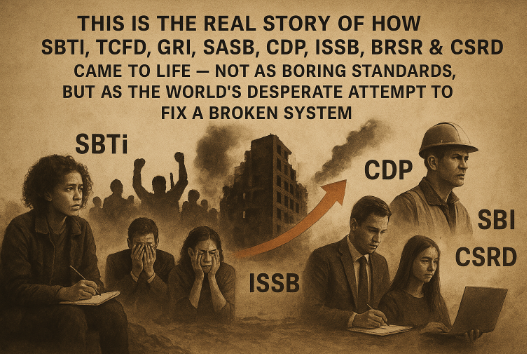
    “Which roadmap should we follow — Minimal, Mid-Level, or Full ESG Transformation?”

    This blog begins with the three ESG roadmaps for Indian companies, followed by a complete deep-dive into implementation guidelines, frameworks, timelines, challenges, and best practices.

    Companies in India fall into three maturity categories. Depending on your current capabilities and urgency, you can pick one of three transformation paths.

    ESG Roadmap -  Options

    ROADMAP A: Minimal Compliance (6–9 Months)

    For companies focused only on meeting SEBI’s minimum BRSR requirement

    Objectives:

    • Avoid regulatory non-compliance
    • Implement basic ESG data collection
    • Prepare for eventual BRSR Core requirements without full investment yet

    Key Focus Areas:

    • Basic BRSR disclosures (narrative + quantitative)
    • Assign ESG data owners per metric
    • Create simple monthly ESG MIS
    • Identify gaps for BRSR Core, ISSB, TCFD (future needs)

    Deliverables:

    • BRSR report
    • High-level sustainability policy
    • ESG governance structure
    • Initial materiality assessment

    Who chooses this?
    Small/mid-sized companies or large companies just starting ESG capability-building.


    ROADMAP B: Mid-Level ESG Implementation (12–18 Months)

    For companies ready to go beyond compliance & build assurance-grade systems

    Objectives:

    • BRSR + BRSR Core readiness
    • Internal controls that auditors can validate
    • Partial future-proofing for ISSB/TCFD
    • Strengthen supplier value chain data

    Key Focus Areas:

    • Internal ESG control framework (evidence trails, monthly reconciliations)
    • Audit-ready BRSR Core KPI processes
    • Supplier ESG scorecard implementation
    • Climate baseline (Scope 1,2, and starting 3)

    Deliverables:

    • BRSR (comprehensive)
    • BRSR Core KPI readiness (49 metrics)
    • ESG data platform / SSOT
    • Limited assurance preparation

    Who chooses this?
    Companies preparing to meet investor expectations & regulatory assurance requirements in FY 2025–27.


    ROADMAP C: Full ESG Transformation (18–36 Months)

    For companies aiming to reach global standards and integrate ESG into business strategy

    Objectives:

    • Full BRSR + assured BRSR Core
    • Global frameworks alignment (ISSB S1/S2, GRI, TCFD)
    • Integrate ESG into enterprise risk management & financial reporting
    • Climate strategy, SBTi targets, and digital ESG systems
    • Enterprise-wide sustainability culture

    Key Focus Areas:

    • ESG strategy linked to business growth
    • Decarbonization pathways
    • Scope 1–3 value chain emissions
    • AI/IoT-powered environmental data
    • Integrated reporting
    • Supplier decarbonization plans

    Deliverables:

    • ISSB-compliant sustainability disclosures
    • TCFD-aligned climate risk reporting
    • GRI-based Sustainability Report
    • Full BRSR Core assurance
    • ESG-linked remuneration
    • Industry-leading sustainability performance

    Who chooses this?
    Large conglomerates, high-visibility brands, exporters, global-capital-dependent companies.


    The ESG Transformation Journey for Indian Companies

    After choosing the roadmap, companies must understand the detailed phases of implementation.

    PHASE 1 — Foundation (3–6 Months)

    Building the governance, policies & scope of ESG transformation

    The Foundation phase establishes the organisational base required for an effective ESG journey. Companies begin by setting up governance structures such as an ESG Committee, defining roles, responsibilities, and cross-functional ownership. This is followed by conducting a double materiality assessment to identify ESG topics that matter most to both the business and its stakeholders. A detailed gap assessment highlights compliance requirements under frameworks like BRSR, GRI, SASB, and ISSB. In this phase, organisations also create core sustainability policies—covering areas such as human rights, diversity, ethics, safety, and supplier responsibility. By the end, the company has clarity on priorities, risks, and its ESG vision, which sets the stage for data and strategy work in the subsequent phases.

    Key Activities

    1. Board-Level ESG Mandate
      • Create a Sustainability Committee or embed ESG into Audit/Risk Committees.
      • Define oversight responsibilities.
    2. ESG Steering Committee
      • Leadership from Finance, HR, EHS, Supply Chain, CSR, IT, Operations, Legal.
    3. Materiality Assessment
      • Double materiality approach (impact + financial).
      • Stakeholder interviews/surveys (employees, investors, regulators, customers, communities).
    4. Gap Assessment
      • Assess current data maturity vs:
        • BRSR (mandatory)
        • BRSR Core (assured KPIs)
        • ISSB
        • TCFD
        • GRI
    5. ESG Roadmap Definition
      • Quick wins
      • Year 1 compliance
      • Year 2 assurance
      • Year 3 global alignment

    PHASE 2 — Data & Technology (6–12 Months)

    Fixing data fragmentation — the biggest challenge for Indian companies

    Common Problems in Indian Companies

    • Information scattered across Excel, SAP, emails, PDFs
    • No owner per KPI
    • Non-standard units & inconsistent measurement
    • No audit evidence trail
    • Vendor/supplier data missing

    Solutions

    1. Assign ESG Data Owners per KPI

    Examples:

    • GHG → EHS & Facilities
    • Health & Safety → HR + EHS
    • Community → CSR
    • Governance → Company Secretary
    • Value Chain ESG → Procurement
    • Compliance → Legal
    • Controls, audit trail → Finance

    2. Single Source of Truth (SSOT) Setup

    • ESG platforms integrating SAP/S4HANA, HRMS, Energy Meters, Vendor Portals
    • Master Data Management (MDM)
    • Version-controlled evidence documents

    3. Monthly Data Reconciliation

    Proven best practice:

    • Bharat Forge reduced ESG data variance from 18% → <2% with monthly reconciliation.

    4. ESG Evidence Repository

    For every KPI, store:

    • Meters logs
    • Bills & invoices
    • Weight slips
    • Emission factor references
    • Compliance certificates

    5. Control Framework

    Mandatory for BRSR Core assurance:

    • Maker-checker
    • Review logs
    • Document retention policy
    • Internal audit sampling

    In this phase, companies build the digital and data backbone that ESG requires. The process begins with mapping all ESG-relevant data sources—such as ERP systems, HRMS, supply chain tools, and operational logs—and identifying gaps, data owners, and controls. Standardised KPIs are designed in alignment with major reporting frameworks, enabling consistent measurement. Technology tools like SAP Sustainability Control Tower, Microsoft Sustainability Manager, or Enablon are implemented to automate data capture, ensure accuracy, and create real-time dashboards. This phase transforms ESG measurement from manual and spreadsheet-driven to an intelligent, scalable system that is audit-ready and capable of supporting investor-grade reporting.


    PHASE 3 — ESG Strategy (3–6 Months)

    Turning compliance into business strategy

    Once data stabilizes, the company develops forward-looking targets.

    ESG Strategy must come after the Data & Technology phase because strategy needs real numbers, not assumptions. For example, a company may believe its biggest issue is electricity use and set a target to cut energy by 30%. But once Phase 2 data is digitised and reconciled, it may discover that 75% of emissions actually come from suppliers (Scope 3), not its own plants. This completely changes the strategy—from energy projects to supplier engagement, low-carbon materials, and logistics optimisation. Without accurate data first, the company would set the wrong targets and fail audits later.

    Strategic Components

    1. Climate Strategy

    • Scope 1–2–3 emissions baseline
    • SBTi-aligned targets
    • Renewable energy roadmap
    • TCFD scenario modelling:
      • Carbon tax risks
      • Physical climate hazards
      • Transition risk pathways

    2. Social Strategy

    • Workforce diversity
    • Upskilling plans
    • Worker wellbeing initiatives
    • Community impact plan

    3. Governance Enhancements

    • Whistleblower processes
    • Board independence & ESG skills
    • Anti-corruption controls
    • CEO/CXO scorecards linked to ESG

    4. Supplier ESG Program

    • Map top 100 suppliers
    • Tiering approach: High-risk → deeper assessments
    • Supplier code of conduct
    • ESG compliance scorecard
    • Value chain data model (needed for BRSR Core)

    The ESG Strategy phase translates data insights and material topics into a structured strategic plan. Companies set measurable targets such as net-zero commitments, energy transition pathways, water positivity, waste reduction, or diversity goals. Scenario analysis, often aligned to TCFD, helps identify climate risks and business impacts. Based on this, organisations create a 3–5 year ESG roadmap outlining initiatives across operations, supply chains, products, and communities. Financial planning is a critical component—evaluating capex, ROI, cost savings, and ESG-linked financing options. This phase ensures ESG moves beyond compliance and becomes a driver of competitive advantage, efficiency, and long-term value creation.


    PHASE 4 — Reporting & Assurance (6–12 Months)

    The most demanding phase: public disclosures, audits & controls

    1. BRSR (Comprehensive)

    • Hundreds of metrics
    • Qualitative + quantitative disclosures
    • Governance + policies + value chain inputs

    2. BRSR Core (49 KPIs)

    These are the most material, high-impact, audit-focused metrics across:

    • Emissions
    • Water use
    • Energy efficiency
    • Workforce wellbeing
    • Supply chain standards
    • Responsible sourcing
    • Governance integrity

    Assurance Timeline (SEBI Mandate)

    • FY 2023–24 → Top 150
    • FY 2024–25 → Top 250
    • FY 2025–26 → Top 500
    • FY 2026–27 → Top 1000

    3. Internal Controls & Audit Readiness

    • Documented SOPs
    • Control testing
    • Quarterly internal audits
    • Management assertions
    • Evidence trail for each KPI

    4. Global Framework Alignment

    • ISSB S1/S2 for investor-grade reporting
    • TCFD for climate governance & risk
    • GRI for stakeholder impact

    This phase focuses on converting ESG performance into transparent, credible, and compliant disclosures. Companies prepare sustainability reports aligned to BRSR, BRSR Core, GRI, SASB, or ISSB standards. Reporting requires robust internal validation, reconciliation with financial data, and clear narrative building around achievements and challenges. Independent assurance partners—such as Big 4 firms—verify emissions data, controls, and processes to ensure reliability and investor trust. Strong assurance not only reduces risks of greenwashing but also enhances the organisation’s ESG ratings, access to global markets, and stakeholder confidence.


    PHASE 5 — Continuous Improvement (Year 2–3 Onwards)

    ESG becomes an operating system, not a report

    Leading Indian companies evolve into “ESG-centric enterprises”.

    Key Advancements

    • Integrate ESG with ERM
    • ESG-linked bonuses for CEO/CXOs
    • AI-driven Scope 3 calculations
    • Industry benchmarking dashboards
    • Supplier transition programs
    • Integrated Reporting (IR)

    The Continuous Improvement phase shifts ESG from a project to a long-term performance engine. Companies benchmark against peers, track year-on-year progress, and integrate ESG into business functions such as procurement, risk management, product design, and leadership KPIs. Innovation becomes central—driving circular economy projects, low-carbon technologies, supplier partnerships, and climate resilience strategies. ESG audits, periodic reassessments, and updated targets ensure momentum and accountability. Over time, ESG becomes deeply embedded in culture and operations, strengthening competitiveness, brand value, and long-term sustainability outcomes.


    Integrating BRSR/BRSR Core with Global Frameworks

    As India moves toward a more transparent, accountable sustainability regime, BRSR and BRSR Core have become mandatory foundations. But for companies operating in global supply chains, seeking international capital, or aiming to meet investor expectations, these Indian requirements alone are not enough. Integrating them with global frameworks—GRI, SASB, ISSB, TCFD, CDP—is now essential for both compliance and competitiveness.

    PurposeFrameworkWhy it matters
    Indian regulatory complianceBRSR + BRSR CoreMandatory for top 1000; assurance critical
    Global investor accessISSB S1/S2Finance-grade disclosures
    Climate risk governanceTCFDRequired in global markets
    Stakeholder transparencyGRI StandardsImpact-oriented reporting
    Integrated ReportingIR FrameworkValue creation approach

    Best practice:
    Use BRSR for India, ISSB for investors, GRI for stakeholders, and TCFD for climate risk.


    Indian ESG Challenges & How to Solve Them

    1. Fragmented Data

    Fix: Integrated ESG platform + clear data owners + standard formats.

    2. No Audit Trail

    Fix: Monthly reconciliations, evidence repository, control logs.

    3. Supplier Data Gaps

    Fix: Supplier code of conduct, ESG scorecards, value-chain KPIs.

    4. Complex Metrics

    Especially in GHG Scope 3.
    Fix: Start with 5 major categories → expand gradually.

    5. Board Awareness Gaps

    Fix: Board training, ESG risk dashboards, committee oversight.

    6. Limited Resources

    Fix: Create 200–500 “ESG Champions” across plants & functions.


    What Indian Boardrooms Must Ask

    Governance

    • Who owns ESG? Is accountability clear?

    Data Integrity

    • Are ESG metrics audit-ready?
    • Are controls equivalent to financial reporting?

    Risk

    • What climate, regulatory, and supply chain risks do we face?

    Competitiveness

    • Are we ahead or behind peers?
    • What is the ROI of ESG initiatives?

    Future Readiness

    • How prepared are we for ISSB?
    • Is our value chain decarbonization plan realistic?

    ESG Is Now a Business Competitiveness Imperative

    Indian companies are now expected to meet domestic compliance (BRSR), audited KPIs (BRSR Core) and global investor expectations (ISSB, GRI, TCFD).

    The companies who adopt Roadmap C will lead markets.
    Those who settle for Roadmap A risk being left behind as ESG becomes the next frontier of competitiveness.

    Your ESG journey is not just about reporting.
    It is about building a future-proof business model that attracts capital, talent, customers, and long-term growth.


    Call to Action: Your ESG Transformation Starts Today

    ESG is no longer a reporting exercise — it’s a competitive advantage.
    Whether your organisation chooses Minimal Compliance, Mid-Level ESG, or a Full Transformation, the real differentiator is starting early and building the right systems.

    If your leadership team is asking:

    • “Where do we begin with BRSR and BRSR Core?”
    • “Which roadmap suits our company’s scale and maturity?”
    • “How do we reduce compliance risk and move toward real value creation?”
    • “How do we design ESG data architecture that actually works?”

    Then it’s time to act — not wait.

    👉 Book an ESG Roadmap Consultation

    Get a customised, phase-wise ESG implementation blueprint tailored for your industry, size, and SEBI expectations.

    👉 Request a BRSR/BRSR Core Readiness Assessment

    Identify gaps, high-risk areas, and priority KPIs before the next reporting cycle.

    👉 Download the ESG Roadmap Template

    A practical, board-ready guide to help your leadership teams make informed decisions.


    ESG will reshape Indian business in the next three years.
    The question is — will your company lead the change or be forced to catch up?

    Let’s build your transformation story.
    Start today.

    Read more blogs on sustainability here.

    Reference SEBI Circular March 2025.

  • **The Definitive ESG Roadmap for Indian Companies

    **The Definitive ESG Roadmap for Indian Companies

    BRSR, BRSR Core & Global Alignment**


    ESG Roadmap Options for Indian Companies

    In 2025, ESG is no longer about “sustainability reporting.”
    It is about access to cheaper capital, stronger supply chains, and long-term resilience.

    Here’s the opportunity:

    👉 Companies with strong ESG data qualify faster for ESG-linked loans at lower interest rates
    👉 BRSR Core–ready organisations earn investor trust and attract ESG-linked bonds
    👉 Transparent governance accelerates global customer approvals
    👉 Integrated ESG systems reduce operational costs by 5–12%
    👉 High-quality disclosures boost brand credibility and market valuation

    India’s corporate ESG landscape is transforming rapidly. With SEBI mandating BRSR, phasing in BRSR Core assurance, and global investors demanding ISSB/TCFD/GRI alignment, the question for companies is no longer “Should we do ESG?” but:

    “Which roadmap should we follow — Minimal, Mid-Level, or Full ESG Transformation?”

    This blog begins with the three ESG roadmaps for Indian companies, followed by a complete deep-dive into implementation guidelines, frameworks, timelines, challenges, and best practices.

    Companies in India fall into three maturity categories. Depending on your current capabilities and urgency, you can pick one of three transformation paths.

    ESG Roadmap -  Options

    ROADMAP A: Minimal Compliance (6–9 Months)

    For companies focused only on meeting SEBI’s minimum BRSR requirement

    Objectives:

    • Avoid regulatory non-compliance
    • Implement basic ESG data collection
    • Prepare for eventual BRSR Core requirements without full investment yet

    Key Focus Areas:

    • Basic BRSR disclosures (narrative + quantitative)
    • Assign ESG data owners per metric
    • Create simple monthly ESG MIS
    • Identify gaps for BRSR Core, ISSB, TCFD (future needs)

    Deliverables:

    • BRSR report
    • High-level sustainability policy
    • ESG governance structure
    • Initial materiality assessment

    Who chooses this?
    Small/mid-sized companies or large companies just starting ESG capability-building.


    ROADMAP B: Mid-Level ESG Implementation (12–18 Months)

    For companies ready to go beyond compliance & build assurance-grade systems

    Objectives:

    • BRSR + BRSR Core readiness
    • Internal controls that auditors can validate
    • Partial future-proofing for ISSB/TCFD
    • Strengthen supplier value chain data

    Key Focus Areas:

    • Internal ESG control framework (evidence trails, monthly reconciliations)
    • Audit-ready BRSR Core KPI processes
    • Supplier ESG scorecard implementation
    • Climate baseline (Scope 1,2, and starting 3)

    Deliverables:

    • BRSR (comprehensive)
    • BRSR Core KPI readiness (49 metrics)
    • ESG data platform / SSOT
    • Limited assurance preparation

    Who chooses this?
    Companies preparing to meet investor expectations & regulatory assurance requirements in FY 2025–27.


    ROADMAP C: Full ESG Transformation (18–36 Months)

    For companies aiming to reach global standards and integrate ESG into business strategy

    Objectives:

    • Full BRSR + assured BRSR Core
    • Global frameworks alignment (ISSB S1/S2, GRI, TCFD)
    • Integrate ESG into enterprise risk management & financial reporting
    • Climate strategy, SBTi targets, and digital ESG systems
    • Enterprise-wide sustainability culture

    Key Focus Areas:

    • ESG strategy linked to business growth
    • Decarbonization pathways
    • Scope 1–3 value chain emissions
    • AI/IoT-powered environmental data
    • Integrated reporting
    • Supplier decarbonization plans

    Deliverables:

    • ISSB-compliant sustainability disclosures
    • TCFD-aligned climate risk reporting
    • GRI-based Sustainability Report
    • Full BRSR Core assurance
    • ESG-linked remuneration
    • Industry-leading sustainability performance

    Who chooses this?
    Large conglomerates, high-visibility brands, exporters, global-capital-dependent companies.


    The ESG Transformation Journey for Indian Companies

    After choosing the roadmap, companies must understand the detailed phases of implementation.

    PHASE 1 — Foundation (3–6 Months)

    Building the governance, policies & scope of ESG transformation

    The Foundation phase establishes the organisational base required for an effective ESG journey. Companies begin by setting up governance structures such as an ESG Committee, defining roles, responsibilities, and cross-functional ownership. This is followed by conducting a double materiality assessment to identify ESG topics that matter most to both the business and its stakeholders. A detailed gap assessment highlights compliance requirements under frameworks like BRSR, GRI, SASB, and ISSB. In this phase, organisations also create core sustainability policies—covering areas such as human rights, diversity, ethics, safety, and supplier responsibility. By the end, the company has clarity on priorities, risks, and its ESG vision, which sets the stage for data and strategy work in the subsequent phases.

    Key Activities

    1. Board-Level ESG Mandate
      • Create a Sustainability Committee or embed ESG into Audit/Risk Committees.
      • Define oversight responsibilities.
    2. ESG Steering Committee
      • Leadership from Finance, HR, EHS, Supply Chain, CSR, IT, Operations, Legal.
    3. Materiality Assessment
      • Double materiality approach (impact + financial).
      • Stakeholder interviews/surveys (employees, investors, regulators, customers, communities).
    4. Gap Assessment
      • Assess current data maturity vs:
        • BRSR (mandatory)
        • BRSR Core (assured KPIs)
        • ISSB
        • TCFD
        • GRI
    5. ESG Roadmap Definition
      • Quick wins
      • Year 1 compliance
      • Year 2 assurance
      • Year 3 global alignment

    PHASE 2 — Data & Technology (6–12 Months)

    Fixing data fragmentation — the biggest challenge for Indian companies

    Common Problems in Indian Companies

    • Information scattered across Excel, SAP, emails, PDFs
    • No owner per KPI
    • Non-standard units & inconsistent measurement
    • No audit evidence trail
    • Vendor/supplier data missing

    Solutions

    1. Assign ESG Data Owners per KPI

    Examples:

    • GHG → EHS & Facilities
    • Health & Safety → HR + EHS
    • Community → CSR
    • Governance → Company Secretary
    • Value Chain ESG → Procurement
    • Compliance → Legal
    • Controls, audit trail → Finance

    2. Single Source of Truth (SSOT) Setup

    • ESG platforms integrating SAP/S4HANA, HRMS, Energy Meters, Vendor Portals
    • Master Data Management (MDM)
    • Version-controlled evidence documents

    3. Monthly Data Reconciliation

    Proven best practice:

    • Bharat Forge reduced ESG data variance from 18% → <2% with monthly reconciliation.

    4. ESG Evidence Repository

    For every KPI, store:

    • Meters logs
    • Bills & invoices
    • Weight slips
    • Emission factor references
    • Compliance certificates

    5. Control Framework

    Mandatory for BRSR Core assurance:

    • Maker-checker
    • Review logs
    • Document retention policy
    • Internal audit sampling

    In this phase, companies build the digital and data backbone that ESG requires. The process begins with mapping all ESG-relevant data sources—such as ERP systems, HRMS, supply chain tools, and operational logs—and identifying gaps, data owners, and controls. Standardised KPIs are designed in alignment with major reporting frameworks, enabling consistent measurement. Technology tools like SAP Sustainability Control Tower, Microsoft Sustainability Manager, or Enablon are implemented to automate data capture, ensure accuracy, and create real-time dashboards. This phase transforms ESG measurement from manual and spreadsheet-driven to an intelligent, scalable system that is audit-ready and capable of supporting investor-grade reporting.


    PHASE 3 — ESG Strategy (3–6 Months)

    Turning compliance into business strategy

    Once data stabilizes, the company develops forward-looking targets.

    ESG Strategy must come after the Data & Technology phase because strategy needs real numbers, not assumptions. For example, a company may believe its biggest issue is electricity use and set a target to cut energy by 30%. But once Phase 2 data is digitised and reconciled, it may discover that 75% of emissions actually come from suppliers (Scope 3), not its own plants. This completely changes the strategy—from energy projects to supplier engagement, low-carbon materials, and logistics optimisation. Without accurate data first, the company would set the wrong targets and fail audits later.

    Strategic Components

    1. Climate Strategy

    • Scope 1–2–3 emissions baseline
    • SBTi-aligned targets
    • Renewable energy roadmap
    • TCFD scenario modelling:
      • Carbon tax risks
      • Physical climate hazards
      • Transition risk pathways

    2. Social Strategy

    • Workforce diversity
    • Upskilling plans
    • Worker wellbeing initiatives
    • Community impact plan

    3. Governance Enhancements

    • Whistleblower processes
    • Board independence & ESG skills
    • Anti-corruption controls
    • CEO/CXO scorecards linked to ESG

    4. Supplier ESG Program

    • Map top 100 suppliers
    • Tiering approach: High-risk → deeper assessments
    • Supplier code of conduct
    • ESG compliance scorecard
    • Value chain data model (needed for BRSR Core)

    The ESG Strategy phase translates data insights and material topics into a structured strategic plan. Companies set measurable targets such as net-zero commitments, energy transition pathways, water positivity, waste reduction, or diversity goals. Scenario analysis, often aligned to TCFD, helps identify climate risks and business impacts. Based on this, organisations create a 3–5 year ESG roadmap outlining initiatives across operations, supply chains, products, and communities. Financial planning is a critical component—evaluating capex, ROI, cost savings, and ESG-linked financing options. This phase ensures ESG moves beyond compliance and becomes a driver of competitive advantage, efficiency, and long-term value creation.


    PHASE 4 — Reporting & Assurance (6–12 Months)

    The most demanding phase: public disclosures, audits & controls

    1. BRSR (Comprehensive)

    • Hundreds of metrics
    • Qualitative + quantitative disclosures
    • Governance + policies + value chain inputs

    2. BRSR Core (49 KPIs)

    These are the most material, high-impact, audit-focused metrics across:

    • Emissions
    • Water use
    • Energy efficiency
    • Workforce wellbeing
    • Supply chain standards
    • Responsible sourcing
    • Governance integrity

    Assurance Timeline (SEBI Mandate)

    • FY 2023–24 → Top 150
    • FY 2024–25 → Top 250
    • FY 2025–26 → Top 500
    • FY 2026–27 → Top 1000

    3. Internal Controls & Audit Readiness

    • Documented SOPs
    • Control testing
    • Quarterly internal audits
    • Management assertions
    • Evidence trail for each KPI

    4. Global Framework Alignment

    • ISSB S1/S2 for investor-grade reporting
    • TCFD for climate governance & risk
    • GRI for stakeholder impact

    This phase focuses on converting ESG performance into transparent, credible, and compliant disclosures. Companies prepare sustainability reports aligned to BRSR, BRSR Core, GRI, SASB, or ISSB standards. Reporting requires robust internal validation, reconciliation with financial data, and clear narrative building around achievements and challenges. Independent assurance partners—such as Big 4 firms—verify emissions data, controls, and processes to ensure reliability and investor trust. Strong assurance not only reduces risks of greenwashing but also enhances the organisation’s ESG ratings, access to global markets, and stakeholder confidence.


    PHASE 5 — Continuous Improvement (Year 2–3 Onwards)

    ESG becomes an operating system, not a report

    Leading Indian companies evolve into “ESG-centric enterprises”.

    Key Advancements

    • Integrate ESG with ERM
    • ESG-linked bonuses for CEO/CXOs
    • AI-driven Scope 3 calculations
    • Industry benchmarking dashboards
    • Supplier transition programs
    • Integrated Reporting (IR)

    The Continuous Improvement phase shifts ESG from a project to a long-term performance engine. Companies benchmark against peers, track year-on-year progress, and integrate ESG into business functions such as procurement, risk management, product design, and leadership KPIs. Innovation becomes central—driving circular economy projects, low-carbon technologies, supplier partnerships, and climate resilience strategies. ESG audits, periodic reassessments, and updated targets ensure momentum and accountability. Over time, ESG becomes deeply embedded in culture and operations, strengthening competitiveness, brand value, and long-term sustainability outcomes.


    Integrating BRSR/BRSR Core with Global Frameworks

    As India moves toward a more transparent, accountable sustainability regime, BRSR and BRSR Core have become mandatory foundations. But for companies operating in global supply chains, seeking international capital, or aiming to meet investor expectations, these Indian requirements alone are not enough. Integrating them with global frameworks—GRI, SASB, ISSB, TCFD, CDP—is now essential for both compliance and competitiveness.

    PurposeFrameworkWhy it matters
    Indian regulatory complianceBRSR + BRSR CoreMandatory for top 1000; assurance critical
    Global investor accessISSB S1/S2Finance-grade disclosures
    Climate risk governanceTCFDRequired in global markets
    Stakeholder transparencyGRI StandardsImpact-oriented reporting
    Integrated ReportingIR FrameworkValue creation approach

    Best practice:
    Use BRSR for India, ISSB for investors, GRI for stakeholders, and TCFD for climate risk.


    Indian ESG Challenges & How to Solve Them

    1. Fragmented Data

    Fix: Integrated ESG platform + clear data owners + standard formats.

    2. No Audit Trail

    Fix: Monthly reconciliations, evidence repository, control logs.

    3. Supplier Data Gaps

    Fix: Supplier code of conduct, ESG scorecards, value-chain KPIs.

    4. Complex Metrics

    Especially in GHG Scope 3.
    Fix: Start with 5 major categories → expand gradually.

    5. Board Awareness Gaps

    Fix: Board training, ESG risk dashboards, committee oversight.

    6. Limited Resources

    Fix: Create 200–500 “ESG Champions” across plants & functions.


    What Indian Boardrooms Must Ask

    Governance

    • Who owns ESG? Is accountability clear?

    Data Integrity

    • Are ESG metrics audit-ready?
    • Are controls equivalent to financial reporting?

    Risk

    • What climate, regulatory, and supply chain risks do we face?

    Competitiveness

    • Are we ahead or behind peers?
    • What is the ROI of ESG initiatives?

    Future Readiness

    • How prepared are we for ISSB?
    • Is our value chain decarbonization plan realistic?

    ESG Is Now a Business Competitiveness Imperative

    Indian companies are now expected to meet domestic compliance (BRSR), audited KPIs (BRSR Core) and global investor expectations (ISSB, GRI, TCFD).

    The companies who adopt Roadmap C will lead markets.
    Those who settle for Roadmap A risk being left behind as ESG becomes the next frontier of competitiveness.

    Your ESG journey is not just about reporting.
    It is about building a future-proof business model that attracts capital, talent, customers, and long-term growth.


    Call to Action: Your ESG Transformation Starts Today

    ESG is no longer a reporting exercise — it’s a competitive advantage.
    Whether your organisation chooses Minimal Compliance, Mid-Level ESG, or a Full Transformation, the real differentiator is starting early and building the right systems.

    If your leadership team is asking:

    • “Where do we begin with BRSR and BRSR Core?”
    • “Which roadmap suits our company’s scale and maturity?”
    • “How do we reduce compliance risk and move toward real value creation?”
    • “How do we design ESG data architecture that actually works?”

    Then it’s time to act — not wait.

    👉 Book an ESG Roadmap Consultation

    Get a customised, phase-wise ESG implementation blueprint tailored for your industry, size, and SEBI expectations.

    👉 Request a BRSR/BRSR Core Readiness Assessment

    Identify gaps, high-risk areas, and priority KPIs before the next reporting cycle.

    👉 Download the ESG Roadmap Template

    A practical, board-ready guide to help your leadership teams make informed decisions.


    ESG will reshape Indian business in the next three years.
    The question is — will your company lead the change or be forced to catch up?

    Let’s build your transformation story.
    Start today.

    Read more blogs on sustainability here.

    Reference SEBI Circular March 2025.

  • **The Definitive ESG Roadmap for Indian Companies

    **The Definitive ESG Roadmap for Indian Companies

    BRSR, BRSR Core & Global Alignment**


    ESG Roadmap Options for Indian Companies

    In 2025, ESG is no longer about “sustainability reporting.”
    It is about access to cheaper capital, stronger supply chains, and long-term resilience.

    Here’s the opportunity:

    👉 Companies with strong ESG data qualify faster for ESG-linked loans at lower interest rates
    👉 BRSR Core–ready organisations earn investor trust and attract ESG-linked bonds
    👉 Transparent governance accelerates global customer approvals
    👉 Integrated ESG systems reduce operational costs by 5–12%
    👉 High-quality disclosures boost brand credibility and market valuation

    India’s corporate ESG landscape is transforming rapidly. With SEBI mandating BRSR, phasing in BRSR Core assurance, and global investors demanding ISSB/TCFD/GRI alignment, the question for companies is no longer “Should we do ESG?” but:

    “Which roadmap should we follow — Minimal, Mid-Level, or Full ESG Transformation?”

    This blog begins with the three ESG roadmaps for Indian companies, followed by a complete deep-dive into implementation guidelines, frameworks, timelines, challenges, and best practices.

    Companies in India fall into three maturity categories. Depending on your current capabilities and urgency, you can pick one of three transformation paths.

    ESG Roadmap -  Options

    ROADMAP A: Minimal Compliance (6–9 Months)

    For companies focused only on meeting SEBI’s minimum BRSR requirement

    Objectives:

    • Avoid regulatory non-compliance
    • Implement basic ESG data collection
    • Prepare for eventual BRSR Core requirements without full investment yet

    Key Focus Areas:

    • Basic BRSR disclosures (narrative + quantitative)
    • Assign ESG data owners per metric
    • Create simple monthly ESG MIS
    • Identify gaps for BRSR Core, ISSB, TCFD (future needs)

    Deliverables:

    • BRSR report
    • High-level sustainability policy
    • ESG governance structure
    • Initial materiality assessment

    Who chooses this?
    Small/mid-sized companies or large companies just starting ESG capability-building.


    ROADMAP B: Mid-Level ESG Implementation (12–18 Months)

    For companies ready to go beyond compliance & build assurance-grade systems

    Objectives:

    • BRSR + BRSR Core readiness
    • Internal controls that auditors can validate
    • Partial future-proofing for ISSB/TCFD
    • Strengthen supplier value chain data

    Key Focus Areas:

    • Internal ESG control framework (evidence trails, monthly reconciliations)
    • Audit-ready BRSR Core KPI processes
    • Supplier ESG scorecard implementation
    • Climate baseline (Scope 1,2, and starting 3)

    Deliverables:

    • BRSR (comprehensive)
    • BRSR Core KPI readiness (49 metrics)
    • ESG data platform / SSOT
    • Limited assurance preparation

    Who chooses this?
    Companies preparing to meet investor expectations & regulatory assurance requirements in FY 2025–27.


    ROADMAP C: Full ESG Transformation (18–36 Months)

    For companies aiming to reach global standards and integrate ESG into business strategy

    Objectives:

    • Full BRSR + assured BRSR Core
    • Global frameworks alignment (ISSB S1/S2, GRI, TCFD)
    • Integrate ESG into enterprise risk management & financial reporting
    • Climate strategy, SBTi targets, and digital ESG systems
    • Enterprise-wide sustainability culture

    Key Focus Areas:

    • ESG strategy linked to business growth
    • Decarbonization pathways
    • Scope 1–3 value chain emissions
    • AI/IoT-powered environmental data
    • Integrated reporting
    • Supplier decarbonization plans

    Deliverables:

    • ISSB-compliant sustainability disclosures
    • TCFD-aligned climate risk reporting
    • GRI-based Sustainability Report
    • Full BRSR Core assurance
    • ESG-linked remuneration
    • Industry-leading sustainability performance

    Who chooses this?
    Large conglomerates, high-visibility brands, exporters, global-capital-dependent companies.


    The ESG Transformation Journey for Indian Companies

    After choosing the roadmap, companies must understand the detailed phases of implementation.

    PHASE 1 — Foundation (3–6 Months)

    Building the governance, policies & scope of ESG transformation

    The Foundation phase establishes the organisational base required for an effective ESG journey. Companies begin by setting up governance structures such as an ESG Committee, defining roles, responsibilities, and cross-functional ownership. This is followed by conducting a double materiality assessment to identify ESG topics that matter most to both the business and its stakeholders. A detailed gap assessment highlights compliance requirements under frameworks like BRSR, GRI, SASB, and ISSB. In this phase, organisations also create core sustainability policies—covering areas such as human rights, diversity, ethics, safety, and supplier responsibility. By the end, the company has clarity on priorities, risks, and its ESG vision, which sets the stage for data and strategy work in the subsequent phases.

    Key Activities

    1. Board-Level ESG Mandate
      • Create a Sustainability Committee or embed ESG into Audit/Risk Committees.
      • Define oversight responsibilities.
    2. ESG Steering Committee
      • Leadership from Finance, HR, EHS, Supply Chain, CSR, IT, Operations, Legal.
    3. Materiality Assessment
      • Double materiality approach (impact + financial).
      • Stakeholder interviews/surveys (employees, investors, regulators, customers, communities).
    4. Gap Assessment
      • Assess current data maturity vs:
        • BRSR (mandatory)
        • BRSR Core (assured KPIs)
        • ISSB
        • TCFD
        • GRI
    5. ESG Roadmap Definition
      • Quick wins
      • Year 1 compliance
      • Year 2 assurance
      • Year 3 global alignment

    PHASE 2 — Data & Technology (6–12 Months)

    Fixing data fragmentation — the biggest challenge for Indian companies

    Common Problems in Indian Companies

    • Information scattered across Excel, SAP, emails, PDFs
    • No owner per KPI
    • Non-standard units & inconsistent measurement
    • No audit evidence trail
    • Vendor/supplier data missing

    Solutions

    1. Assign ESG Data Owners per KPI

    Examples:

    • GHG → EHS & Facilities
    • Health & Safety → HR + EHS
    • Community → CSR
    • Governance → Company Secretary
    • Value Chain ESG → Procurement
    • Compliance → Legal
    • Controls, audit trail → Finance

    2. Single Source of Truth (SSOT) Setup

    • ESG platforms integrating SAP/S4HANA, HRMS, Energy Meters, Vendor Portals
    • Master Data Management (MDM)
    • Version-controlled evidence documents

    3. Monthly Data Reconciliation

    Proven best practice:

    • Bharat Forge reduced ESG data variance from 18% → <2% with monthly reconciliation.

    4. ESG Evidence Repository

    For every KPI, store:

    • Meters logs
    • Bills & invoices
    • Weight slips
    • Emission factor references
    • Compliance certificates

    5. Control Framework

    Mandatory for BRSR Core assurance:

    • Maker-checker
    • Review logs
    • Document retention policy
    • Internal audit sampling

    In this phase, companies build the digital and data backbone that ESG requires. The process begins with mapping all ESG-relevant data sources—such as ERP systems, HRMS, supply chain tools, and operational logs—and identifying gaps, data owners, and controls. Standardised KPIs are designed in alignment with major reporting frameworks, enabling consistent measurement. Technology tools like SAP Sustainability Control Tower, Microsoft Sustainability Manager, or Enablon are implemented to automate data capture, ensure accuracy, and create real-time dashboards. This phase transforms ESG measurement from manual and spreadsheet-driven to an intelligent, scalable system that is audit-ready and capable of supporting investor-grade reporting.


    PHASE 3 — ESG Strategy (3–6 Months)

    Turning compliance into business strategy

    Once data stabilizes, the company develops forward-looking targets.

    ESG Strategy must come after the Data & Technology phase because strategy needs real numbers, not assumptions. For example, a company may believe its biggest issue is electricity use and set a target to cut energy by 30%. But once Phase 2 data is digitised and reconciled, it may discover that 75% of emissions actually come from suppliers (Scope 3), not its own plants. This completely changes the strategy—from energy projects to supplier engagement, low-carbon materials, and logistics optimisation. Without accurate data first, the company would set the wrong targets and fail audits later.

    Strategic Components

    1. Climate Strategy

    • Scope 1–2–3 emissions baseline
    • SBTi-aligned targets
    • Renewable energy roadmap
    • TCFD scenario modelling:
      • Carbon tax risks
      • Physical climate hazards
      • Transition risk pathways

    2. Social Strategy

    • Workforce diversity
    • Upskilling plans
    • Worker wellbeing initiatives
    • Community impact plan

    3. Governance Enhancements

    • Whistleblower processes
    • Board independence & ESG skills
    • Anti-corruption controls
    • CEO/CXO scorecards linked to ESG

    4. Supplier ESG Program

    • Map top 100 suppliers
    • Tiering approach: High-risk → deeper assessments
    • Supplier code of conduct
    • ESG compliance scorecard
    • Value chain data model (needed for BRSR Core)

    The ESG Strategy phase translates data insights and material topics into a structured strategic plan. Companies set measurable targets such as net-zero commitments, energy transition pathways, water positivity, waste reduction, or diversity goals. Scenario analysis, often aligned to TCFD, helps identify climate risks and business impacts. Based on this, organisations create a 3–5 year ESG roadmap outlining initiatives across operations, supply chains, products, and communities. Financial planning is a critical component—evaluating capex, ROI, cost savings, and ESG-linked financing options. This phase ensures ESG moves beyond compliance and becomes a driver of competitive advantage, efficiency, and long-term value creation.


    PHASE 4 — Reporting & Assurance (6–12 Months)

    The most demanding phase: public disclosures, audits & controls

    1. BRSR (Comprehensive)

    • Hundreds of metrics
    • Qualitative + quantitative disclosures
    • Governance + policies + value chain inputs

    2. BRSR Core (49 KPIs)

    These are the most material, high-impact, audit-focused metrics across:

    • Emissions
    • Water use
    • Energy efficiency
    • Workforce wellbeing
    • Supply chain standards
    • Responsible sourcing
    • Governance integrity

    Assurance Timeline (SEBI Mandate)

    • FY 2023–24 → Top 150
    • FY 2024–25 → Top 250
    • FY 2025–26 → Top 500
    • FY 2026–27 → Top 1000

    3. Internal Controls & Audit Readiness

    • Documented SOPs
    • Control testing
    • Quarterly internal audits
    • Management assertions
    • Evidence trail for each KPI

    4. Global Framework Alignment

    • ISSB S1/S2 for investor-grade reporting
    • TCFD for climate governance & risk
    • GRI for stakeholder impact

    This phase focuses on converting ESG performance into transparent, credible, and compliant disclosures. Companies prepare sustainability reports aligned to BRSR, BRSR Core, GRI, SASB, or ISSB standards. Reporting requires robust internal validation, reconciliation with financial data, and clear narrative building around achievements and challenges. Independent assurance partners—such as Big 4 firms—verify emissions data, controls, and processes to ensure reliability and investor trust. Strong assurance not only reduces risks of greenwashing but also enhances the organisation’s ESG ratings, access to global markets, and stakeholder confidence.


    PHASE 5 — Continuous Improvement (Year 2–3 Onwards)

    ESG becomes an operating system, not a report

    Leading Indian companies evolve into “ESG-centric enterprises”.

    Key Advancements

    • Integrate ESG with ERM
    • ESG-linked bonuses for CEO/CXOs
    • AI-driven Scope 3 calculations
    • Industry benchmarking dashboards
    • Supplier transition programs
    • Integrated Reporting (IR)

    The Continuous Improvement phase shifts ESG from a project to a long-term performance engine. Companies benchmark against peers, track year-on-year progress, and integrate ESG into business functions such as procurement, risk management, product design, and leadership KPIs. Innovation becomes central—driving circular economy projects, low-carbon technologies, supplier partnerships, and climate resilience strategies. ESG audits, periodic reassessments, and updated targets ensure momentum and accountability. Over time, ESG becomes deeply embedded in culture and operations, strengthening competitiveness, brand value, and long-term sustainability outcomes.


    Integrating BRSR/BRSR Core with Global Frameworks

    As India moves toward a more transparent, accountable sustainability regime, BRSR and BRSR Core have become mandatory foundations. But for companies operating in global supply chains, seeking international capital, or aiming to meet investor expectations, these Indian requirements alone are not enough. Integrating them with global frameworks—GRI, SASB, ISSB, TCFD, CDP—is now essential for both compliance and competitiveness.

    PurposeFrameworkWhy it matters
    Indian regulatory complianceBRSR + BRSR CoreMandatory for top 1000; assurance critical
    Global investor accessISSB S1/S2Finance-grade disclosures
    Climate risk governanceTCFDRequired in global markets
    Stakeholder transparencyGRI StandardsImpact-oriented reporting
    Integrated ReportingIR FrameworkValue creation approach

    Best practice:
    Use BRSR for India, ISSB for investors, GRI for stakeholders, and TCFD for climate risk.


    Indian ESG Challenges & How to Solve Them

    1. Fragmented Data

    Fix: Integrated ESG platform + clear data owners + standard formats.

    2. No Audit Trail

    Fix: Monthly reconciliations, evidence repository, control logs.

    3. Supplier Data Gaps

    Fix: Supplier code of conduct, ESG scorecards, value-chain KPIs.

    4. Complex Metrics

    Especially in GHG Scope 3.
    Fix: Start with 5 major categories → expand gradually.

    5. Board Awareness Gaps

    Fix: Board training, ESG risk dashboards, committee oversight.

    6. Limited Resources

    Fix: Create 200–500 “ESG Champions” across plants & functions.


    What Indian Boardrooms Must Ask

    Governance

    • Who owns ESG? Is accountability clear?

    Data Integrity

    • Are ESG metrics audit-ready?
    • Are controls equivalent to financial reporting?

    Risk

    • What climate, regulatory, and supply chain risks do we face?

    Competitiveness

    • Are we ahead or behind peers?
    • What is the ROI of ESG initiatives?

    Future Readiness

    • How prepared are we for ISSB?
    • Is our value chain decarbonization plan realistic?

    ESG Is Now a Business Competitiveness Imperative

    Indian companies are now expected to meet domestic compliance (BRSR), audited KPIs (BRSR Core) and global investor expectations (ISSB, GRI, TCFD).

    The companies who adopt Roadmap C will lead markets.
    Those who settle for Roadmap A risk being left behind as ESG becomes the next frontier of competitiveness.

    Your ESG journey is not just about reporting.
    It is about building a future-proof business model that attracts capital, talent, customers, and long-term growth.


    Call to Action: Your ESG Transformation Starts Today

    ESG is no longer a reporting exercise — it’s a competitive advantage.
    Whether your organisation chooses Minimal Compliance, Mid-Level ESG, or a Full Transformation, the real differentiator is starting early and building the right systems.

    If your leadership team is asking:

    • “Where do we begin with BRSR and BRSR Core?”
    • “Which roadmap suits our company’s scale and maturity?”
    • “How do we reduce compliance risk and move toward real value creation?”
    • “How do we design ESG data architecture that actually works?”

    Then it’s time to act — not wait.

    👉 Book an ESG Roadmap Consultation

    Get a customised, phase-wise ESG implementation blueprint tailored for your industry, size, and SEBI expectations.

    👉 Request a BRSR/BRSR Core Readiness Assessment

    Identify gaps, high-risk areas, and priority KPIs before the next reporting cycle.

    👉 Download the ESG Roadmap Template

    A practical, board-ready guide to help your leadership teams make informed decisions.


    ESG will reshape Indian business in the next three years.
    The question is — will your company lead the change or be forced to catch up?

    Let’s build your transformation story.
    Start today.

    Read more blogs on sustainability here.

    Reference SEBI Circular March 2025.

  • **The Definitive ESG Roadmap for Indian Companies

    **The Definitive ESG Roadmap for Indian Companies

    BRSR, BRSR Core & Global Alignment**


    ESG Roadmap Options for Indian Companies

    In 2025, ESG is no longer about “sustainability reporting.”
    It is about access to cheaper capital, stronger supply chains, and long-term resilience.

    Here’s the opportunity:

    👉 Companies with strong ESG data qualify faster for ESG-linked loans at lower interest rates
    👉 BRSR Core–ready organisations earn investor trust and attract ESG-linked bonds
    👉 Transparent governance accelerates global customer approvals
    👉 Integrated ESG systems reduce operational costs by 5–12%
    👉 High-quality disclosures boost brand credibility and market valuation

    India’s corporate ESG landscape is transforming rapidly. With SEBI mandating BRSR, phasing in BRSR Core assurance, and global investors demanding ISSB/TCFD/GRI alignment, the question for companies is no longer “Should we do ESG?” but:

    “Which roadmap should we follow — Minimal, Mid-Level, or Full ESG Transformation?”

    This blog begins with the three ESG roadmaps for Indian companies, followed by a complete deep-dive into implementation guidelines, frameworks, timelines, challenges, and best practices.

    Companies in India fall into three maturity categories. Depending on your current capabilities and urgency, you can pick one of three transformation paths.

    ESG Roadmap -  Options

    ROADMAP A: Minimal Compliance (6–9 Months)

    For companies focused only on meeting SEBI’s minimum BRSR requirement

    Objectives:

    • Avoid regulatory non-compliance
    • Implement basic ESG data collection
    • Prepare for eventual BRSR Core requirements without full investment yet

    Key Focus Areas:

    • Basic BRSR disclosures (narrative + quantitative)
    • Assign ESG data owners per metric
    • Create simple monthly ESG MIS
    • Identify gaps for BRSR Core, ISSB, TCFD (future needs)

    Deliverables:

    • BRSR report
    • High-level sustainability policy
    • ESG governance structure
    • Initial materiality assessment

    Who chooses this?
    Small/mid-sized companies or large companies just starting ESG capability-building.


    ROADMAP B: Mid-Level ESG Implementation (12–18 Months)

    For companies ready to go beyond compliance & build assurance-grade systems

    Objectives:

    • BRSR + BRSR Core readiness
    • Internal controls that auditors can validate
    • Partial future-proofing for ISSB/TCFD
    • Strengthen supplier value chain data

    Key Focus Areas:

    • Internal ESG control framework (evidence trails, monthly reconciliations)
    • Audit-ready BRSR Core KPI processes
    • Supplier ESG scorecard implementation
    • Climate baseline (Scope 1,2, and starting 3)

    Deliverables:

    • BRSR (comprehensive)
    • BRSR Core KPI readiness (49 metrics)
    • ESG data platform / SSOT
    • Limited assurance preparation

    Who chooses this?
    Companies preparing to meet investor expectations & regulatory assurance requirements in FY 2025–27.


    ROADMAP C: Full ESG Transformation (18–36 Months)

    For companies aiming to reach global standards and integrate ESG into business strategy

    Objectives:

    • Full BRSR + assured BRSR Core
    • Global frameworks alignment (ISSB S1/S2, GRI, TCFD)
    • Integrate ESG into enterprise risk management & financial reporting
    • Climate strategy, SBTi targets, and digital ESG systems
    • Enterprise-wide sustainability culture

    Key Focus Areas:

    • ESG strategy linked to business growth
    • Decarbonization pathways
    • Scope 1–3 value chain emissions
    • AI/IoT-powered environmental data
    • Integrated reporting
    • Supplier decarbonization plans

    Deliverables:

    • ISSB-compliant sustainability disclosures
    • TCFD-aligned climate risk reporting
    • GRI-based Sustainability Report
    • Full BRSR Core assurance
    • ESG-linked remuneration
    • Industry-leading sustainability performance

    Who chooses this?
    Large conglomerates, high-visibility brands, exporters, global-capital-dependent companies.


    The ESG Transformation Journey for Indian Companies

    After choosing the roadmap, companies must understand the detailed phases of implementation.

    PHASE 1 — Foundation (3–6 Months)

    Building the governance, policies & scope of ESG transformation

    The Foundation phase establishes the organisational base required for an effective ESG journey. Companies begin by setting up governance structures such as an ESG Committee, defining roles, responsibilities, and cross-functional ownership. This is followed by conducting a double materiality assessment to identify ESG topics that matter most to both the business and its stakeholders. A detailed gap assessment highlights compliance requirements under frameworks like BRSR, GRI, SASB, and ISSB. In this phase, organisations also create core sustainability policies—covering areas such as human rights, diversity, ethics, safety, and supplier responsibility. By the end, the company has clarity on priorities, risks, and its ESG vision, which sets the stage for data and strategy work in the subsequent phases.

    Key Activities

    1. Board-Level ESG Mandate
      • Create a Sustainability Committee or embed ESG into Audit/Risk Committees.
      • Define oversight responsibilities.
    2. ESG Steering Committee
      • Leadership from Finance, HR, EHS, Supply Chain, CSR, IT, Operations, Legal.
    3. Materiality Assessment
      • Double materiality approach (impact + financial).
      • Stakeholder interviews/surveys (employees, investors, regulators, customers, communities).
    4. Gap Assessment
      • Assess current data maturity vs:
        • BRSR (mandatory)
        • BRSR Core (assured KPIs)
        • ISSB
        • TCFD
        • GRI
    5. ESG Roadmap Definition
      • Quick wins
      • Year 1 compliance
      • Year 2 assurance
      • Year 3 global alignment

    PHASE 2 — Data & Technology (6–12 Months)

    Fixing data fragmentation — the biggest challenge for Indian companies

    Common Problems in Indian Companies

    • Information scattered across Excel, SAP, emails, PDFs
    • No owner per KPI
    • Non-standard units & inconsistent measurement
    • No audit evidence trail
    • Vendor/supplier data missing

    Solutions

    1. Assign ESG Data Owners per KPI

    Examples:

    • GHG → EHS & Facilities
    • Health & Safety → HR + EHS
    • Community → CSR
    • Governance → Company Secretary
    • Value Chain ESG → Procurement
    • Compliance → Legal
    • Controls, audit trail → Finance

    2. Single Source of Truth (SSOT) Setup

    • ESG platforms integrating SAP/S4HANA, HRMS, Energy Meters, Vendor Portals
    • Master Data Management (MDM)
    • Version-controlled evidence documents

    3. Monthly Data Reconciliation

    Proven best practice:

    • Bharat Forge reduced ESG data variance from 18% → <2% with monthly reconciliation.

    4. ESG Evidence Repository

    For every KPI, store:

    • Meters logs
    • Bills & invoices
    • Weight slips
    • Emission factor references
    • Compliance certificates

    5. Control Framework

    Mandatory for BRSR Core assurance:

    • Maker-checker
    • Review logs
    • Document retention policy
    • Internal audit sampling

    In this phase, companies build the digital and data backbone that ESG requires. The process begins with mapping all ESG-relevant data sources—such as ERP systems, HRMS, supply chain tools, and operational logs—and identifying gaps, data owners, and controls. Standardised KPIs are designed in alignment with major reporting frameworks, enabling consistent measurement. Technology tools like SAP Sustainability Control Tower, Microsoft Sustainability Manager, or Enablon are implemented to automate data capture, ensure accuracy, and create real-time dashboards. This phase transforms ESG measurement from manual and spreadsheet-driven to an intelligent, scalable system that is audit-ready and capable of supporting investor-grade reporting.


    PHASE 3 — ESG Strategy (3–6 Months)

    Turning compliance into business strategy

    Once data stabilizes, the company develops forward-looking targets.

    ESG Strategy must come after the Data & Technology phase because strategy needs real numbers, not assumptions. For example, a company may believe its biggest issue is electricity use and set a target to cut energy by 30%. But once Phase 2 data is digitised and reconciled, it may discover that 75% of emissions actually come from suppliers (Scope 3), not its own plants. This completely changes the strategy—from energy projects to supplier engagement, low-carbon materials, and logistics optimisation. Without accurate data first, the company would set the wrong targets and fail audits later.

    Strategic Components

    1. Climate Strategy

    • Scope 1–2–3 emissions baseline
    • SBTi-aligned targets
    • Renewable energy roadmap
    • TCFD scenario modelling:
      • Carbon tax risks
      • Physical climate hazards
      • Transition risk pathways

    2. Social Strategy

    • Workforce diversity
    • Upskilling plans
    • Worker wellbeing initiatives
    • Community impact plan

    3. Governance Enhancements

    • Whistleblower processes
    • Board independence & ESG skills
    • Anti-corruption controls
    • CEO/CXO scorecards linked to ESG

    4. Supplier ESG Program

    • Map top 100 suppliers
    • Tiering approach: High-risk → deeper assessments
    • Supplier code of conduct
    • ESG compliance scorecard
    • Value chain data model (needed for BRSR Core)

    The ESG Strategy phase translates data insights and material topics into a structured strategic plan. Companies set measurable targets such as net-zero commitments, energy transition pathways, water positivity, waste reduction, or diversity goals. Scenario analysis, often aligned to TCFD, helps identify climate risks and business impacts. Based on this, organisations create a 3–5 year ESG roadmap outlining initiatives across operations, supply chains, products, and communities. Financial planning is a critical component—evaluating capex, ROI, cost savings, and ESG-linked financing options. This phase ensures ESG moves beyond compliance and becomes a driver of competitive advantage, efficiency, and long-term value creation.


    PHASE 4 — Reporting & Assurance (6–12 Months)

    The most demanding phase: public disclosures, audits & controls

    1. BRSR (Comprehensive)

    • Hundreds of metrics
    • Qualitative + quantitative disclosures
    • Governance + policies + value chain inputs

    2. BRSR Core (49 KPIs)

    These are the most material, high-impact, audit-focused metrics across:

    • Emissions
    • Water use
    • Energy efficiency
    • Workforce wellbeing
    • Supply chain standards
    • Responsible sourcing
    • Governance integrity

    Assurance Timeline (SEBI Mandate)

    • FY 2023–24 → Top 150
    • FY 2024–25 → Top 250
    • FY 2025–26 → Top 500
    • FY 2026–27 → Top 1000

    3. Internal Controls & Audit Readiness

    • Documented SOPs
    • Control testing
    • Quarterly internal audits
    • Management assertions
    • Evidence trail for each KPI

    4. Global Framework Alignment

    • ISSB S1/S2 for investor-grade reporting
    • TCFD for climate governance & risk
    • GRI for stakeholder impact

    This phase focuses on converting ESG performance into transparent, credible, and compliant disclosures. Companies prepare sustainability reports aligned to BRSR, BRSR Core, GRI, SASB, or ISSB standards. Reporting requires robust internal validation, reconciliation with financial data, and clear narrative building around achievements and challenges. Independent assurance partners—such as Big 4 firms—verify emissions data, controls, and processes to ensure reliability and investor trust. Strong assurance not only reduces risks of greenwashing but also enhances the organisation’s ESG ratings, access to global markets, and stakeholder confidence.


    PHASE 5 — Continuous Improvement (Year 2–3 Onwards)

    ESG becomes an operating system, not a report

    Leading Indian companies evolve into “ESG-centric enterprises”.

    Key Advancements

    • Integrate ESG with ERM
    • ESG-linked bonuses for CEO/CXOs
    • AI-driven Scope 3 calculations
    • Industry benchmarking dashboards
    • Supplier transition programs
    • Integrated Reporting (IR)

    The Continuous Improvement phase shifts ESG from a project to a long-term performance engine. Companies benchmark against peers, track year-on-year progress, and integrate ESG into business functions such as procurement, risk management, product design, and leadership KPIs. Innovation becomes central—driving circular economy projects, low-carbon technologies, supplier partnerships, and climate resilience strategies. ESG audits, periodic reassessments, and updated targets ensure momentum and accountability. Over time, ESG becomes deeply embedded in culture and operations, strengthening competitiveness, brand value, and long-term sustainability outcomes.


    Integrating BRSR/BRSR Core with Global Frameworks

    As India moves toward a more transparent, accountable sustainability regime, BRSR and BRSR Core have become mandatory foundations. But for companies operating in global supply chains, seeking international capital, or aiming to meet investor expectations, these Indian requirements alone are not enough. Integrating them with global frameworks—GRI, SASB, ISSB, TCFD, CDP—is now essential for both compliance and competitiveness.

    PurposeFrameworkWhy it matters
    Indian regulatory complianceBRSR + BRSR CoreMandatory for top 1000; assurance critical
    Global investor accessISSB S1/S2Finance-grade disclosures
    Climate risk governanceTCFDRequired in global markets
    Stakeholder transparencyGRI StandardsImpact-oriented reporting
    Integrated ReportingIR FrameworkValue creation approach

    Best practice:
    Use BRSR for India, ISSB for investors, GRI for stakeholders, and TCFD for climate risk.


    Indian ESG Challenges & How to Solve Them

    1. Fragmented Data

    Fix: Integrated ESG platform + clear data owners + standard formats.

    2. No Audit Trail

    Fix: Monthly reconciliations, evidence repository, control logs.

    3. Supplier Data Gaps

    Fix: Supplier code of conduct, ESG scorecards, value-chain KPIs.

    4. Complex Metrics

    Especially in GHG Scope 3.
    Fix: Start with 5 major categories → expand gradually.

    5. Board Awareness Gaps

    Fix: Board training, ESG risk dashboards, committee oversight.

    6. Limited Resources

    Fix: Create 200–500 “ESG Champions” across plants & functions.


    What Indian Boardrooms Must Ask

    Governance

    • Who owns ESG? Is accountability clear?

    Data Integrity

    • Are ESG metrics audit-ready?
    • Are controls equivalent to financial reporting?

    Risk

    • What climate, regulatory, and supply chain risks do we face?

    Competitiveness

    • Are we ahead or behind peers?
    • What is the ROI of ESG initiatives?

    Future Readiness

    • How prepared are we for ISSB?
    • Is our value chain decarbonization plan realistic?

    ESG Is Now a Business Competitiveness Imperative

    Indian companies are now expected to meet domestic compliance (BRSR), audited KPIs (BRSR Core) and global investor expectations (ISSB, GRI, TCFD).

    The companies who adopt Roadmap C will lead markets.
    Those who settle for Roadmap A risk being left behind as ESG becomes the next frontier of competitiveness.

    Your ESG journey is not just about reporting.
    It is about building a future-proof business model that attracts capital, talent, customers, and long-term growth.


    Call to Action: Your ESG Transformation Starts Today

    ESG is no longer a reporting exercise — it’s a competitive advantage.
    Whether your organisation chooses Minimal Compliance, Mid-Level ESG, or a Full Transformation, the real differentiator is starting early and building the right systems.

    If your leadership team is asking:

    • “Where do we begin with BRSR and BRSR Core?”
    • “Which roadmap suits our company’s scale and maturity?”
    • “How do we reduce compliance risk and move toward real value creation?”
    • “How do we design ESG data architecture that actually works?”

    Then it’s time to act — not wait.

    👉 Book an ESG Roadmap Consultation

    Get a customised, phase-wise ESG implementation blueprint tailored for your industry, size, and SEBI expectations.

    👉 Request a BRSR/BRSR Core Readiness Assessment

    Identify gaps, high-risk areas, and priority KPIs before the next reporting cycle.

    👉 Download the ESG Roadmap Template

    A practical, board-ready guide to help your leadership teams make informed decisions.


    ESG will reshape Indian business in the next three years.
    The question is — will your company lead the change or be forced to catch up?

    Let’s build your transformation story.
    Start today.

    Read more blogs on sustainability here.

    Reference SEBI Circular March 2025.

  • **The Definitive ESG Roadmap for Indian Companies

    **The Definitive ESG Roadmap for Indian Companies

    BRSR, BRSR Core & Global Alignment**


    ESG Roadmap Options for Indian Companies

    In 2025, ESG is no longer about “sustainability reporting.”
    It is about access to cheaper capital, stronger supply chains, and long-term resilience.

    Here’s the opportunity:

    👉 Companies with strong ESG data qualify faster for ESG-linked loans at lower interest rates
    👉 BRSR Core–ready organisations earn investor trust and attract ESG-linked bonds
    👉 Transparent governance accelerates global customer approvals
    👉 Integrated ESG systems reduce operational costs by 5–12%
    👉 High-quality disclosures boost brand credibility and market valuation

    India’s corporate ESG landscape is transforming rapidly. With SEBI mandating BRSR, phasing in BRSR Core assurance, and global investors demanding ISSB/TCFD/GRI alignment, the question for companies is no longer “Should we do ESG?” but:

    “Which roadmap should we follow — Minimal, Mid-Level, or Full ESG Transformation?”

    This blog begins with the three ESG roadmaps for Indian companies, followed by a complete deep-dive into implementation guidelines, frameworks, timelines, challenges, and best practices.

    Companies in India fall into three maturity categories. Depending on your current capabilities and urgency, you can pick one of three transformation paths.

    ESG Roadmap -  Options

    ROADMAP A: Minimal Compliance (6–9 Months)

    For companies focused only on meeting SEBI’s minimum BRSR requirement

    Objectives:

    • Avoid regulatory non-compliance
    • Implement basic ESG data collection
    • Prepare for eventual BRSR Core requirements without full investment yet

    Key Focus Areas:

    • Basic BRSR disclosures (narrative + quantitative)
    • Assign ESG data owners per metric
    • Create simple monthly ESG MIS
    • Identify gaps for BRSR Core, ISSB, TCFD (future needs)

    Deliverables:

    • BRSR report
    • High-level sustainability policy
    • ESG governance structure
    • Initial materiality assessment

    Who chooses this?
    Small/mid-sized companies or large companies just starting ESG capability-building.


    ROADMAP B: Mid-Level ESG Implementation (12–18 Months)

    For companies ready to go beyond compliance & build assurance-grade systems

    Objectives:

    • BRSR + BRSR Core readiness
    • Internal controls that auditors can validate
    • Partial future-proofing for ISSB/TCFD
    • Strengthen supplier value chain data

    Key Focus Areas:

    • Internal ESG control framework (evidence trails, monthly reconciliations)
    • Audit-ready BRSR Core KPI processes
    • Supplier ESG scorecard implementation
    • Climate baseline (Scope 1,2, and starting 3)

    Deliverables:

    • BRSR (comprehensive)
    • BRSR Core KPI readiness (49 metrics)
    • ESG data platform / SSOT
    • Limited assurance preparation

    Who chooses this?
    Companies preparing to meet investor expectations & regulatory assurance requirements in FY 2025–27.


    ROADMAP C: Full ESG Transformation (18–36 Months)

    For companies aiming to reach global standards and integrate ESG into business strategy

    Objectives:

    • Full BRSR + assured BRSR Core
    • Global frameworks alignment (ISSB S1/S2, GRI, TCFD)
    • Integrate ESG into enterprise risk management & financial reporting
    • Climate strategy, SBTi targets, and digital ESG systems
    • Enterprise-wide sustainability culture

    Key Focus Areas:

    • ESG strategy linked to business growth
    • Decarbonization pathways
    • Scope 1–3 value chain emissions
    • AI/IoT-powered environmental data
    • Integrated reporting
    • Supplier decarbonization plans

    Deliverables:

    • ISSB-compliant sustainability disclosures
    • TCFD-aligned climate risk reporting
    • GRI-based Sustainability Report
    • Full BRSR Core assurance
    • ESG-linked remuneration
    • Industry-leading sustainability performance

    Who chooses this?
    Large conglomerates, high-visibility brands, exporters, global-capital-dependent companies.


    The ESG Transformation Journey for Indian Companies

    After choosing the roadmap, companies must understand the detailed phases of implementation.

    PHASE 1 — Foundation (3–6 Months)

    Building the governance, policies & scope of ESG transformation

    The Foundation phase establishes the organisational base required for an effective ESG journey. Companies begin by setting up governance structures such as an ESG Committee, defining roles, responsibilities, and cross-functional ownership. This is followed by conducting a double materiality assessment to identify ESG topics that matter most to both the business and its stakeholders. A detailed gap assessment highlights compliance requirements under frameworks like BRSR, GRI, SASB, and ISSB. In this phase, organisations also create core sustainability policies—covering areas such as human rights, diversity, ethics, safety, and supplier responsibility. By the end, the company has clarity on priorities, risks, and its ESG vision, which sets the stage for data and strategy work in the subsequent phases.

    Key Activities

    1. Board-Level ESG Mandate
      • Create a Sustainability Committee or embed ESG into Audit/Risk Committees.
      • Define oversight responsibilities.
    2. ESG Steering Committee
      • Leadership from Finance, HR, EHS, Supply Chain, CSR, IT, Operations, Legal.
    3. Materiality Assessment
      • Double materiality approach (impact + financial).
      • Stakeholder interviews/surveys (employees, investors, regulators, customers, communities).
    4. Gap Assessment
      • Assess current data maturity vs:
        • BRSR (mandatory)
        • BRSR Core (assured KPIs)
        • ISSB
        • TCFD
        • GRI
    5. ESG Roadmap Definition
      • Quick wins
      • Year 1 compliance
      • Year 2 assurance
      • Year 3 global alignment

    PHASE 2 — Data & Technology (6–12 Months)

    Fixing data fragmentation — the biggest challenge for Indian companies

    Common Problems in Indian Companies

    • Information scattered across Excel, SAP, emails, PDFs
    • No owner per KPI
    • Non-standard units & inconsistent measurement
    • No audit evidence trail
    • Vendor/supplier data missing

    Solutions

    1. Assign ESG Data Owners per KPI

    Examples:

    • GHG → EHS & Facilities
    • Health & Safety → HR + EHS
    • Community → CSR
    • Governance → Company Secretary
    • Value Chain ESG → Procurement
    • Compliance → Legal
    • Controls, audit trail → Finance

    2. Single Source of Truth (SSOT) Setup

    • ESG platforms integrating SAP/S4HANA, HRMS, Energy Meters, Vendor Portals
    • Master Data Management (MDM)
    • Version-controlled evidence documents

    3. Monthly Data Reconciliation

    Proven best practice:

    • Bharat Forge reduced ESG data variance from 18% → <2% with monthly reconciliation.

    4. ESG Evidence Repository

    For every KPI, store:

    • Meters logs
    • Bills & invoices
    • Weight slips
    • Emission factor references
    • Compliance certificates

    5. Control Framework

    Mandatory for BRSR Core assurance:

    • Maker-checker
    • Review logs
    • Document retention policy
    • Internal audit sampling

    In this phase, companies build the digital and data backbone that ESG requires. The process begins with mapping all ESG-relevant data sources—such as ERP systems, HRMS, supply chain tools, and operational logs—and identifying gaps, data owners, and controls. Standardised KPIs are designed in alignment with major reporting frameworks, enabling consistent measurement. Technology tools like SAP Sustainability Control Tower, Microsoft Sustainability Manager, or Enablon are implemented to automate data capture, ensure accuracy, and create real-time dashboards. This phase transforms ESG measurement from manual and spreadsheet-driven to an intelligent, scalable system that is audit-ready and capable of supporting investor-grade reporting.


    PHASE 3 — ESG Strategy (3–6 Months)

    Turning compliance into business strategy

    Once data stabilizes, the company develops forward-looking targets.

    ESG Strategy must come after the Data & Technology phase because strategy needs real numbers, not assumptions. For example, a company may believe its biggest issue is electricity use and set a target to cut energy by 30%. But once Phase 2 data is digitised and reconciled, it may discover that 75% of emissions actually come from suppliers (Scope 3), not its own plants. This completely changes the strategy—from energy projects to supplier engagement, low-carbon materials, and logistics optimisation. Without accurate data first, the company would set the wrong targets and fail audits later.

    Strategic Components

    1. Climate Strategy

    • Scope 1–2–3 emissions baseline
    • SBTi-aligned targets
    • Renewable energy roadmap
    • TCFD scenario modelling:
      • Carbon tax risks
      • Physical climate hazards
      • Transition risk pathways

    2. Social Strategy

    • Workforce diversity
    • Upskilling plans
    • Worker wellbeing initiatives
    • Community impact plan

    3. Governance Enhancements

    • Whistleblower processes
    • Board independence & ESG skills
    • Anti-corruption controls
    • CEO/CXO scorecards linked to ESG

    4. Supplier ESG Program

    • Map top 100 suppliers
    • Tiering approach: High-risk → deeper assessments
    • Supplier code of conduct
    • ESG compliance scorecard
    • Value chain data model (needed for BRSR Core)

    The ESG Strategy phase translates data insights and material topics into a structured strategic plan. Companies set measurable targets such as net-zero commitments, energy transition pathways, water positivity, waste reduction, or diversity goals. Scenario analysis, often aligned to TCFD, helps identify climate risks and business impacts. Based on this, organisations create a 3–5 year ESG roadmap outlining initiatives across operations, supply chains, products, and communities. Financial planning is a critical component—evaluating capex, ROI, cost savings, and ESG-linked financing options. This phase ensures ESG moves beyond compliance and becomes a driver of competitive advantage, efficiency, and long-term value creation.


    PHASE 4 — Reporting & Assurance (6–12 Months)

    The most demanding phase: public disclosures, audits & controls

    1. BRSR (Comprehensive)

    • Hundreds of metrics
    • Qualitative + quantitative disclosures
    • Governance + policies + value chain inputs

    2. BRSR Core (49 KPIs)

    These are the most material, high-impact, audit-focused metrics across:

    • Emissions
    • Water use
    • Energy efficiency
    • Workforce wellbeing
    • Supply chain standards
    • Responsible sourcing
    • Governance integrity

    Assurance Timeline (SEBI Mandate)

    • FY 2023–24 → Top 150
    • FY 2024–25 → Top 250
    • FY 2025–26 → Top 500
    • FY 2026–27 → Top 1000

    3. Internal Controls & Audit Readiness

    • Documented SOPs
    • Control testing
    • Quarterly internal audits
    • Management assertions
    • Evidence trail for each KPI

    4. Global Framework Alignment

    • ISSB S1/S2 for investor-grade reporting
    • TCFD for climate governance & risk
    • GRI for stakeholder impact

    This phase focuses on converting ESG performance into transparent, credible, and compliant disclosures. Companies prepare sustainability reports aligned to BRSR, BRSR Core, GRI, SASB, or ISSB standards. Reporting requires robust internal validation, reconciliation with financial data, and clear narrative building around achievements and challenges. Independent assurance partners—such as Big 4 firms—verify emissions data, controls, and processes to ensure reliability and investor trust. Strong assurance not only reduces risks of greenwashing but also enhances the organisation’s ESG ratings, access to global markets, and stakeholder confidence.


    PHASE 5 — Continuous Improvement (Year 2–3 Onwards)

    ESG becomes an operating system, not a report

    Leading Indian companies evolve into “ESG-centric enterprises”.

    Key Advancements

    • Integrate ESG with ERM
    • ESG-linked bonuses for CEO/CXOs
    • AI-driven Scope 3 calculations
    • Industry benchmarking dashboards
    • Supplier transition programs
    • Integrated Reporting (IR)

    The Continuous Improvement phase shifts ESG from a project to a long-term performance engine. Companies benchmark against peers, track year-on-year progress, and integrate ESG into business functions such as procurement, risk management, product design, and leadership KPIs. Innovation becomes central—driving circular economy projects, low-carbon technologies, supplier partnerships, and climate resilience strategies. ESG audits, periodic reassessments, and updated targets ensure momentum and accountability. Over time, ESG becomes deeply embedded in culture and operations, strengthening competitiveness, brand value, and long-term sustainability outcomes.


    Integrating BRSR/BRSR Core with Global Frameworks

    As India moves toward a more transparent, accountable sustainability regime, BRSR and BRSR Core have become mandatory foundations. But for companies operating in global supply chains, seeking international capital, or aiming to meet investor expectations, these Indian requirements alone are not enough. Integrating them with global frameworks—GRI, SASB, ISSB, TCFD, CDP—is now essential for both compliance and competitiveness.

    PurposeFrameworkWhy it matters
    Indian regulatory complianceBRSR + BRSR CoreMandatory for top 1000; assurance critical
    Global investor accessISSB S1/S2Finance-grade disclosures
    Climate risk governanceTCFDRequired in global markets
    Stakeholder transparencyGRI StandardsImpact-oriented reporting
    Integrated ReportingIR FrameworkValue creation approach

    Best practice:
    Use BRSR for India, ISSB for investors, GRI for stakeholders, and TCFD for climate risk.


    Indian ESG Challenges & How to Solve Them

    1. Fragmented Data

    Fix: Integrated ESG platform + clear data owners + standard formats.

    2. No Audit Trail

    Fix: Monthly reconciliations, evidence repository, control logs.

    3. Supplier Data Gaps

    Fix: Supplier code of conduct, ESG scorecards, value-chain KPIs.

    4. Complex Metrics

    Especially in GHG Scope 3.
    Fix: Start with 5 major categories → expand gradually.

    5. Board Awareness Gaps

    Fix: Board training, ESG risk dashboards, committee oversight.

    6. Limited Resources

    Fix: Create 200–500 “ESG Champions” across plants & functions.


    What Indian Boardrooms Must Ask

    Governance

    • Who owns ESG? Is accountability clear?

    Data Integrity

    • Are ESG metrics audit-ready?
    • Are controls equivalent to financial reporting?

    Risk

    • What climate, regulatory, and supply chain risks do we face?

    Competitiveness

    • Are we ahead or behind peers?
    • What is the ROI of ESG initiatives?

    Future Readiness

    • How prepared are we for ISSB?
    • Is our value chain decarbonization plan realistic?

    ESG Is Now a Business Competitiveness Imperative

    Indian companies are now expected to meet domestic compliance (BRSR), audited KPIs (BRSR Core) and global investor expectations (ISSB, GRI, TCFD).

    The companies who adopt Roadmap C will lead markets.
    Those who settle for Roadmap A risk being left behind as ESG becomes the next frontier of competitiveness.

    Your ESG journey is not just about reporting.
    It is about building a future-proof business model that attracts capital, talent, customers, and long-term growth.


    Call to Action: Your ESG Transformation Starts Today

    ESG is no longer a reporting exercise — it’s a competitive advantage.
    Whether your organisation chooses Minimal Compliance, Mid-Level ESG, or a Full Transformation, the real differentiator is starting early and building the right systems.

    If your leadership team is asking:

    • “Where do we begin with BRSR and BRSR Core?”
    • “Which roadmap suits our company’s scale and maturity?”
    • “How do we reduce compliance risk and move toward real value creation?”
    • “How do we design ESG data architecture that actually works?”

    Then it’s time to act — not wait.

    👉 Book an ESG Roadmap Consultation

    Get a customised, phase-wise ESG implementation blueprint tailored for your industry, size, and SEBI expectations.

    👉 Request a BRSR/BRSR Core Readiness Assessment

    Identify gaps, high-risk areas, and priority KPIs before the next reporting cycle.

    👉 Download the ESG Roadmap Template

    A practical, board-ready guide to help your leadership teams make informed decisions.


    ESG will reshape Indian business in the next three years.
    The question is — will your company lead the change or be forced to catch up?

    Let’s build your transformation story.
    Start today.

    Read more blogs on sustainability here.

    Reference SEBI Circular March 2025.

  • 🌍 **The Untold Story of ESG Evolution

    🌍 **The Untold Story of ESG Evolution

    How SBTi, TCFD, GRI, SASB & ISSB Evolved From Chaos to Clarity**

    If ESG frameworks were characters in a movie, this would be the blockbuster:
    full of disasters, revolutions, heroes, conflicts, mergers, and defining moments.

    This is the real story of how SBTi, TCFD, GRI, SASB, CDP, ISSB, BRSR & CSRD came to life — not as boring standards, but as the world’s desperate attempt to fix a broken system.

    Grab a coffee.
    You’re entering the ESG multiverse.


    🌑 CHAPTER 1 — Before ESG: The World That Looked Away (1960s–1990s)

    There was a time when companies only cared about two things:
    profits and quarterly results.

    No one asked:

    • How much waste do you dump?
    • How unsafe are your factories?
    • How toxic is your supply chain?

    It was a world where growth was worshipped and consequences ignored.

    Then the world started sending warnings — slowly, painfully.

    Rivers changed color.
    Cities drowned in smog.
    Workers died in preventable accidents.

    But the biggest wake-up call was yet to come.


    🌊 CHAPTER 2 — 1989: The ESG Evolution

    The year was 1989.
    The Alaskan sea was calm, quiet.

    Then the tanker Exxon Valdez hit a reef.

    In hours, 11 million gallons of oil darkened the ocean.
    Birds suffocated.
    Communities choked.
    An entire ecosystem collapsed.

    The world watched in horror.

    And for the first time, people asked:

    “Why don’t companies report the damage they cause?”

    Silence.
    No standards.
    No sustainability reporting.
    Nothing.

    This tragedy planted the seeds of ESG reporting.


    🌱 CHAPTER 3 — 1997: The Birth of GRI, The First Framework of Hope

    A small team in Boston, backed by the UN and environmental groups, had a wild idea:

    “What if companies publicly report their environmental and social impact?”

    It felt impossible.
    Corporations would never agree.
    No one had ever done it.

    But they tried anyway.

    In 1997, they launched:

    🌍 GRI — Global Reporting Initiative

    The world’s first real ESG standard.

    It introduced bold ideas:

    • Report your emissions
    • Report your waste
    • Report how you treat workers
    • Report your governance
    • Report your social impact

    GRI became the first global language of sustainability.

    For the first time…
    the world saw what companies were hiding.


    🔥 CHAPTER 4 — 2000: CDP Sparks a Transparency Revolution

    The early 2000s brought another shift.

    Climate change suddenly became an investor concern.
    Pension funds, banks, and insurers asked:

    “If climate risks affect business, how do we know which companies are exposed?”

    There was no data.

    So in 2000, CDP sent a simple questionnaire asking companies:

    “How much carbon do you emit?”

    No rules.
    No obligations.

    Yet companies responded.

    CDP’s annual scores (A to D-) became a global pressure system.
    Boards cared.
    Investors cared.
    Media cared.

    This was the moment ESG became competitive.

    CDP = Carbon Disclosure Project
    A global environmental disclosure system where companies report climate, water, and forests impact.


    🏦 CHAPTER 5 — 2011: SASB — Wall Street Wants Its Own ESG Language

    Even after GRI and CDP, investors weren’t satisfied.

    They said:

    “Not all ESG issues matter financially.
    Give us only what impacts valuation.”

    So in 2011, SASB was born.

    It wasn’t built by activists.
    It was built by analysts.

    SASB introduced:

    • Financial materiality
    • Industry-specific standards (77 industries)
    • ESG KPIs linked directly to business performance

    Airlines had different KPIs than banks.
    Tech had different KPIs than mining.

    SASB gave ESG a Wall Street dictionary.

    Now ESG wasn’t just about impact — it was about value.

    SASB = Sustainability Accounting Standards Board
    Industry-specific sustainability disclosure standards focused on financially material ESG issues.
    (Now consolidated into ISSB)


    🌡️ CHAPTER 6 — 2015–2017: TCFD — Climate Walks Into the Boardroom

    Then came a dramatic twist. The story of TCFD doesn’t begin in sustainability.
    It begins in fear — the fear that climate change could crash the financial system just like the 2008 economic meltdown.

    In 2015, the Financial Stability Board (FSB) — the global guardian of financial stability — created a task force.

    Not a sustainability group.
    Not an environmental body.
    But a finance-driven task force.

    Its mission was bold:

    “Tell us how climate change can destabilize the global economy — and how companies should report it.”

    Thus, the Task Force on Climate-related Financial Disclosures (TCFD) was born..

    This wasn’t another sustainability report.
    This was risk management.

    TCFD introduced four simple but revolutionary pillars:

    1️⃣ Governance – Who is responsible for climate oversight?
    2️⃣ Strategy – How will climate impact the business model?
    3️⃣ Risk Management – What climate risks could harm the company?
    4️⃣ Metrics & Targets – How are you measuring progress?

    For the first time, climate risk entered the boardroom.

    TCFD released its landmark recommendations — simple, principle-based, and designed for global use.

    Companies were encouraged to disclose:
    ✔ Physical risks (storms, floods, heatwaves)
    ✔ Transition risks (policies, shifting markets, carbon pricing)
    ✔ Opportunities (energy savings, new markets)
    ✔ Forward-looking scenarios (what happens if the world warms by 2°C or 4°C?)

    For investors, this was a breakthrough.
    For companies, a wake-up call.

    This pushed climate into the C-suite.

    Boards could no longer ignore climate.

    Slow Start… Then a Surge (2018–2020)

    At first, adoption was slow.
    Companies said: “This seems too complicated.”

    But as climate disasters surged globally — wildfires, floods, extreme heat — investors got louder:

    💼 “We cannot price climate risk if companies don’t disclose it.”

    BlackRock, State Street, banks, insurers, stock exchanges — all began endorsing TCFD.

    By 2020, TCFD had become the gold standard for climate disclosure.

    Regulations Arrive (2021–2022)

    Countries started adopting TCFD into law.

    🌏 UK — first to mandate TCFD reporting
    🇯🇵 Japan — mass adoption across financial institutions
    🇳🇿 New Zealand — mandatory for large companies
    🇨🇦 Canada — mandatory for banks and insurers
    🇸🇬 Singapore — stock exchange requires TCFD-aligned reporting

    TCFD had moved from “nice to have” to “mandatory compliance.”


    🌍 CHAPTER 7 — 2015–2020: SBTi & the Rise of Net-Zero Commitments

    But something was still missing.

    Transparency is good.
    But transparency without action is hollow.

    So four organizations joined forces:

    • WWF
    • CDP
    • WRI
    • UN Global Compact

    They launched:

    🌱 SBTi — Science Based Targets initiative

    This was not disclosure.
    This was action.

    SBTi forced companies to:

    • Calculate full emissions (Scope 1, 2, 3)
    • Align targets to 1.5°C
    • Set net-zero pathways
    • Get validation from climate scientists

    SBTi became the global credibility stamp.

    Not just:
    “We commit.”

    But:
    “We commit based on science.”


    🌪️ CHAPTER 8 — 2020: ESG Chaos — Too Many Standards

    By 2020, companies were drowning in frameworks.

    A typical sustainability team had to handle:

    • GRI
    • SASB
    • CDP
    • TCFD
    • SBTi
    • Integrated Reporting
    • Local government rules
    • SDGs
    • Ratings like MSCI, Sustainalytics

    Companies screamed:

    “Give us ONE global ESG standard!”
    “We can’t handle 200 questionnaires!”

    Investors agreed.
    Regulators agreed.

    The world was ready for a merger.


    🌐 CHAPTER 9 — 2021–2023: The Great Convergence — Birth of ISSB

    Then, in a historic moment at COP26, the IFRS Foundation announced:

    “We will unify global sustainability reporting.”

    They created:

    🌎 ISSB — International Sustainability Standards Board

    ISSB became the global baseline, merging:

    • SASB
    • TCFD
    • Integrated Reporting Framework
    • CDSB
    • VRF

    They launched two global standards:

    • IFRS S1 — General Sustainability
    • IFRS S2 — Climate Disclosure (built on TCFD)

    ISSB adopted TCFD’s four pillars entirely and embedded them into its new global standards, IFRS S1 and IFRS S2.

    This meant:
    TCFD became the foundation of the world’s new sustainability reporting system.

    For the first time in history:
    Sustainability reporting stood beside financial reporting.

    This was not evolution.
    This was revolution.

    2024 Onward — TCFD Officially Handed Over

    By late 2023–2024, ISSB announced:

    ✔ IFRS S1 + S2 supersede TCFD
    ✔ Countries adopting ISSB automatically fulfill TCFD
    ✔ TCFD will be phased out as a standalone framework

    But TCFD didn’t die.
    It evolved — and lives inside ISSB.

    🌱 In Simple Words: How TCFD Evolved

    • 2015: Born from financial crisis concerns
    • 2017: Issued world’s first climate-risk reporting blueprint
    • 2018–2020: Became the global voluntary standard
    • 2021–2022: Adopted into regulations worldwide
    • 2023–2024: Absorbed into ISSB as the global sustainability baseline

    TCFD started as a framework.
    It ended as the foundation of the world’s first global sustainability reporting standard.

    ESG Evolution

    🇮🇳 CHAPTER 10 — 2021–2024: India Writes Its Own ESG Chapter — BRSR

    India watched the chaos and clarity unfold.

    It decided to build something unique:
    robust like GRI,
    investor-friendly like SASB,
    climate-aligned like TCFD.

    SEBI launched:

    🇮🇳 BRSR — Business Responsibility & Sustainability Report

    Mandatory for top 1000 listed companies.

    BRSR blended:

    • GRI
    • SDGs
    • NVG Principles
    • SASB
    • TCFD

    By 2023, BRSR Core introduced assured KPIs.
    India stepped onto the global ESG stage with confidence.


    🇪🇺 CHAPTER 11 — Europe Goes Bold — CSRD & ESRS

    Meanwhile, Europe did something unprecedented.

    It launched the most ambitious ESG law ever:

    🇪🇺 CSRD — Corporate Sustainability Reporting Directive

    With ESRS standards that demanded:

    • Double materiality
    • Value chain transparency
    • Mandatory assurance
    • Massive data depth

    CSRD wasn’t reporting.
    It was transformation.

    Europe didn’t just set the bar.
    It built a new one.


    🌈 FINAL CHAPTER — The World Today

    📊 Comparison Table: ESG Frameworks vs Standards vs Platforms

    Framework / StandardTypeFocus AreaMandatory?Best For
    SBTiTarget-settingGHG reductionNoNet-zero targets
    TCFDFrameworkClimate riskBecoming mandatory globallyClimate risk reporting
    CDPDisclosure platformEnvironmentVoluntaryClimate scoring
    GRIReporting standardsFull ESG, stakeholder impactVoluntary; basis for manySustainability teams
    SASBStandardsFinancial material ESGNo (now merged)Investors
    ISSB (IFRS S1/S2)StandardsClimate + financial material ESGBecoming mandatoryInvestors & regulators
    BRSR (India)Mandatory reportingFull ESGYes for top 1000Indian companies
    CSRDMandatory reportingFull ESG (double materiality)Yes (EU)EU companies & subsidiaries

    🎯 How They Fit Together (Simple Mapping)

    If you need:

    • Climate targets → Use SBTi
    • Climate risk disclosures → Use TCFD / IFRS S2
    • Full ESG impact reporting → Use GRI / BRSR / CSRD
    • Investor-grade ESG reporting → Use SASB / ISSB
    • Submit disclosures & get a score → Use CDP

    ESG Has a Clear Map

    After decades of chaos, the ESG city finally has a roadmap.

    What began as scattered ideas after a tragic oil spill is today a global movement shaping:

    • how companies operate,
    • how investors invest,
    • and how the world fights climate change.

    This journey was not perfect.
    But it was necessary.

    And now we all stand at the next chapter —
    where ESG is no longer a side report

    …it is the story of how businesses impact the world,
    and how the world impacts business.


    🌍 Call to Action: Your Sustainability Journey Starts Now

    The story of ESG frameworks isn’t just history — it’s a mirror.
    A reminder that every crisis changed us. Every wake-up call pushed humanity to do better.
    But the next chapter is unwritten… and it’s waiting for leaders like you.

    If TCFD could rise from the ashes of the financial crisis,
    If SBTi could ignite a global movement for science-based accountability,
    If GRI, CDP, SASB, ISSB could reshape transparency itself…

    Then imagine what your organization can spark today.

    👉 Don’t wait for the next crisis to define your sustainability strategy.
    👉 Become the company that adapts before it is forced to.
    👉 Turn ESG from compliance into competitive advantage.

    Start now. Audit your ESG maturity.
    Choose the right frameworks.
    Align with global standards.
    And write the chapter where your company becomes a sustainability leader.

    📩 Need help mapping ESG frameworks for your business?
    Message me — let’s co-create your future-ready ESG roadmap.

    Because the world doesn’t just need better reporting.
    It needs courageous organizations who choose to lead. 🌱✨

    Read blogs on sustainability here.

    Reference – KPMG Report

  • 🌍 **The Untold Story of ESG Evolution

    🌍 **The Untold Story of ESG Evolution

    How SBTi, TCFD, GRI, SASB & ISSB Evolved From Chaos to Clarity**

    If ESG frameworks were characters in a movie, this would be the blockbuster:
    full of disasters, revolutions, heroes, conflicts, mergers, and defining moments.

    This is the real story of how SBTi, TCFD, GRI, SASB, CDP, ISSB, BRSR & CSRD came to life — not as boring standards, but as the world’s desperate attempt to fix a broken system.

    Grab a coffee.
    You’re entering the ESG multiverse.


    🌑 CHAPTER 1 — Before ESG: The World That Looked Away (1960s–1990s)

    There was a time when companies only cared about two things:
    profits and quarterly results.

    No one asked:

    • How much waste do you dump?
    • How unsafe are your factories?
    • How toxic is your supply chain?

    It was a world where growth was worshipped and consequences ignored.

    Then the world started sending warnings — slowly, painfully.

    Rivers changed color.
    Cities drowned in smog.
    Workers died in preventable accidents.

    But the biggest wake-up call was yet to come.


    🌊 CHAPTER 2 — 1989: The ESG Evolution

    The year was 1989.
    The Alaskan sea was calm, quiet.

    Then the tanker Exxon Valdez hit a reef.

    In hours, 11 million gallons of oil darkened the ocean.
    Birds suffocated.
    Communities choked.
    An entire ecosystem collapsed.

    The world watched in horror.

    And for the first time, people asked:

    “Why don’t companies report the damage they cause?”

    Silence.
    No standards.
    No sustainability reporting.
    Nothing.

    This tragedy planted the seeds of ESG reporting.


    🌱 CHAPTER 3 — 1997: The Birth of GRI, The First Framework of Hope

    A small team in Boston, backed by the UN and environmental groups, had a wild idea:

    “What if companies publicly report their environmental and social impact?”

    It felt impossible.
    Corporations would never agree.
    No one had ever done it.

    But they tried anyway.

    In 1997, they launched:

    🌍 GRI — Global Reporting Initiative

    The world’s first real ESG standard.

    It introduced bold ideas:

    • Report your emissions
    • Report your waste
    • Report how you treat workers
    • Report your governance
    • Report your social impact

    GRI became the first global language of sustainability.

    For the first time…
    the world saw what companies were hiding.


    🔥 CHAPTER 4 — 2000: CDP Sparks a Transparency Revolution

    The early 2000s brought another shift.

    Climate change suddenly became an investor concern.
    Pension funds, banks, and insurers asked:

    “If climate risks affect business, how do we know which companies are exposed?”

    There was no data.

    So in 2000, CDP sent a simple questionnaire asking companies:

    “How much carbon do you emit?”

    No rules.
    No obligations.

    Yet companies responded.

    CDP’s annual scores (A to D-) became a global pressure system.
    Boards cared.
    Investors cared.
    Media cared.

    This was the moment ESG became competitive.

    CDP = Carbon Disclosure Project
    A global environmental disclosure system where companies report climate, water, and forests impact.


    🏦 CHAPTER 5 — 2011: SASB — Wall Street Wants Its Own ESG Language

    Even after GRI and CDP, investors weren’t satisfied.

    They said:

    “Not all ESG issues matter financially.
    Give us only what impacts valuation.”

    So in 2011, SASB was born.

    It wasn’t built by activists.
    It was built by analysts.

    SASB introduced:

    • Financial materiality
    • Industry-specific standards (77 industries)
    • ESG KPIs linked directly to business performance

    Airlines had different KPIs than banks.
    Tech had different KPIs than mining.

    SASB gave ESG a Wall Street dictionary.

    Now ESG wasn’t just about impact — it was about value.

    SASB = Sustainability Accounting Standards Board
    Industry-specific sustainability disclosure standards focused on financially material ESG issues.
    (Now consolidated into ISSB)


    🌡️ CHAPTER 6 — 2015–2017: TCFD — Climate Walks Into the Boardroom

    Then came a dramatic twist. The story of TCFD doesn’t begin in sustainability.
    It begins in fear — the fear that climate change could crash the financial system just like the 2008 economic meltdown.

    In 2015, the Financial Stability Board (FSB) — the global guardian of financial stability — created a task force.

    Not a sustainability group.
    Not an environmental body.
    But a finance-driven task force.

    Its mission was bold:

    “Tell us how climate change can destabilize the global economy — and how companies should report it.”

    Thus, the Task Force on Climate-related Financial Disclosures (TCFD) was born..

    This wasn’t another sustainability report.
    This was risk management.

    TCFD introduced four simple but revolutionary pillars:

    1️⃣ Governance – Who is responsible for climate oversight?
    2️⃣ Strategy – How will climate impact the business model?
    3️⃣ Risk Management – What climate risks could harm the company?
    4️⃣ Metrics & Targets – How are you measuring progress?

    For the first time, climate risk entered the boardroom.

    TCFD released its landmark recommendations — simple, principle-based, and designed for global use.

    Companies were encouraged to disclose:
    ✔ Physical risks (storms, floods, heatwaves)
    ✔ Transition risks (policies, shifting markets, carbon pricing)
    ✔ Opportunities (energy savings, new markets)
    ✔ Forward-looking scenarios (what happens if the world warms by 2°C or 4°C?)

    For investors, this was a breakthrough.
    For companies, a wake-up call.

    This pushed climate into the C-suite.

    Boards could no longer ignore climate.

    Slow Start… Then a Surge (2018–2020)

    At first, adoption was slow.
    Companies said: “This seems too complicated.”

    But as climate disasters surged globally — wildfires, floods, extreme heat — investors got louder:

    💼 “We cannot price climate risk if companies don’t disclose it.”

    BlackRock, State Street, banks, insurers, stock exchanges — all began endorsing TCFD.

    By 2020, TCFD had become the gold standard for climate disclosure.

    Regulations Arrive (2021–2022)

    Countries started adopting TCFD into law.

    🌏 UK — first to mandate TCFD reporting
    🇯🇵 Japan — mass adoption across financial institutions
    🇳🇿 New Zealand — mandatory for large companies
    🇨🇦 Canada — mandatory for banks and insurers
    🇸🇬 Singapore — stock exchange requires TCFD-aligned reporting

    TCFD had moved from “nice to have” to “mandatory compliance.”


    🌍 CHAPTER 7 — 2015–2020: SBTi & the Rise of Net-Zero Commitments

    But something was still missing.

    Transparency is good.
    But transparency without action is hollow.

    So four organizations joined forces:

    • WWF
    • CDP
    • WRI
    • UN Global Compact

    They launched:

    🌱 SBTi — Science Based Targets initiative

    This was not disclosure.
    This was action.

    SBTi forced companies to:

    • Calculate full emissions (Scope 1, 2, 3)
    • Align targets to 1.5°C
    • Set net-zero pathways
    • Get validation from climate scientists

    SBTi became the global credibility stamp.

    Not just:
    “We commit.”

    But:
    “We commit based on science.”


    🌪️ CHAPTER 8 — 2020: ESG Chaos — Too Many Standards

    By 2020, companies were drowning in frameworks.

    A typical sustainability team had to handle:

    • GRI
    • SASB
    • CDP
    • TCFD
    • SBTi
    • Integrated Reporting
    • Local government rules
    • SDGs
    • Ratings like MSCI, Sustainalytics

    Companies screamed:

    “Give us ONE global ESG standard!”
    “We can’t handle 200 questionnaires!”

    Investors agreed.
    Regulators agreed.

    The world was ready for a merger.


    🌐 CHAPTER 9 — 2021–2023: The Great Convergence — Birth of ISSB

    Then, in a historic moment at COP26, the IFRS Foundation announced:

    “We will unify global sustainability reporting.”

    They created:

    🌎 ISSB — International Sustainability Standards Board

    ISSB became the global baseline, merging:

    • SASB
    • TCFD
    • Integrated Reporting Framework
    • CDSB
    • VRF

    They launched two global standards:

    • IFRS S1 — General Sustainability
    • IFRS S2 — Climate Disclosure (built on TCFD)

    ISSB adopted TCFD’s four pillars entirely and embedded them into its new global standards, IFRS S1 and IFRS S2.

    This meant:
    TCFD became the foundation of the world’s new sustainability reporting system.

    For the first time in history:
    Sustainability reporting stood beside financial reporting.

    This was not evolution.
    This was revolution.

    2024 Onward — TCFD Officially Handed Over

    By late 2023–2024, ISSB announced:

    ✔ IFRS S1 + S2 supersede TCFD
    ✔ Countries adopting ISSB automatically fulfill TCFD
    ✔ TCFD will be phased out as a standalone framework

    But TCFD didn’t die.
    It evolved — and lives inside ISSB.

    🌱 In Simple Words: How TCFD Evolved

    • 2015: Born from financial crisis concerns
    • 2017: Issued world’s first climate-risk reporting blueprint
    • 2018–2020: Became the global voluntary standard
    • 2021–2022: Adopted into regulations worldwide
    • 2023–2024: Absorbed into ISSB as the global sustainability baseline

    TCFD started as a framework.
    It ended as the foundation of the world’s first global sustainability reporting standard.

    ESG Evolution

    🇮🇳 CHAPTER 10 — 2021–2024: India Writes Its Own ESG Chapter — BRSR

    India watched the chaos and clarity unfold.

    It decided to build something unique:
    robust like GRI,
    investor-friendly like SASB,
    climate-aligned like TCFD.

    SEBI launched:

    🇮🇳 BRSR — Business Responsibility & Sustainability Report

    Mandatory for top 1000 listed companies.

    BRSR blended:

    • GRI
    • SDGs
    • NVG Principles
    • SASB
    • TCFD

    By 2023, BRSR Core introduced assured KPIs.
    India stepped onto the global ESG stage with confidence.


    🇪🇺 CHAPTER 11 — Europe Goes Bold — CSRD & ESRS

    Meanwhile, Europe did something unprecedented.

    It launched the most ambitious ESG law ever:

    🇪🇺 CSRD — Corporate Sustainability Reporting Directive

    With ESRS standards that demanded:

    • Double materiality
    • Value chain transparency
    • Mandatory assurance
    • Massive data depth

    CSRD wasn’t reporting.
    It was transformation.

    Europe didn’t just set the bar.
    It built a new one.


    🌈 FINAL CHAPTER — The World Today

    📊 Comparison Table: ESG Frameworks vs Standards vs Platforms

    Framework / StandardTypeFocus AreaMandatory?Best For
    SBTiTarget-settingGHG reductionNoNet-zero targets
    TCFDFrameworkClimate riskBecoming mandatory globallyClimate risk reporting
    CDPDisclosure platformEnvironmentVoluntaryClimate scoring
    GRIReporting standardsFull ESG, stakeholder impactVoluntary; basis for manySustainability teams
    SASBStandardsFinancial material ESGNo (now merged)Investors
    ISSB (IFRS S1/S2)StandardsClimate + financial material ESGBecoming mandatoryInvestors & regulators
    BRSR (India)Mandatory reportingFull ESGYes for top 1000Indian companies
    CSRDMandatory reportingFull ESG (double materiality)Yes (EU)EU companies & subsidiaries

    🎯 How They Fit Together (Simple Mapping)

    If you need:

    • Climate targets → Use SBTi
    • Climate risk disclosures → Use TCFD / IFRS S2
    • Full ESG impact reporting → Use GRI / BRSR / CSRD
    • Investor-grade ESG reporting → Use SASB / ISSB
    • Submit disclosures & get a score → Use CDP

    ESG Has a Clear Map

    After decades of chaos, the ESG city finally has a roadmap.

    What began as scattered ideas after a tragic oil spill is today a global movement shaping:

    • how companies operate,
    • how investors invest,
    • and how the world fights climate change.

    This journey was not perfect.
    But it was necessary.

    And now we all stand at the next chapter —
    where ESG is no longer a side report

    …it is the story of how businesses impact the world,
    and how the world impacts business.


    🌍 Call to Action: Your Sustainability Journey Starts Now

    The story of ESG frameworks isn’t just history — it’s a mirror.
    A reminder that every crisis changed us. Every wake-up call pushed humanity to do better.
    But the next chapter is unwritten… and it’s waiting for leaders like you.

    If TCFD could rise from the ashes of the financial crisis,
    If SBTi could ignite a global movement for science-based accountability,
    If GRI, CDP, SASB, ISSB could reshape transparency itself…

    Then imagine what your organization can spark today.

    👉 Don’t wait for the next crisis to define your sustainability strategy.
    👉 Become the company that adapts before it is forced to.
    👉 Turn ESG from compliance into competitive advantage.

    Start now. Audit your ESG maturity.
    Choose the right frameworks.
    Align with global standards.
    And write the chapter where your company becomes a sustainability leader.

    📩 Need help mapping ESG frameworks for your business?
    Message me — let’s co-create your future-ready ESG roadmap.

    Because the world doesn’t just need better reporting.
    It needs courageous organizations who choose to lead. 🌱✨

    Read blogs on sustainability here.

    Reference – KPMG Report