Category: Sustainability

  • GRI vs BRSR: Understanding the Practical Differences and When to Use Each Strategically

    GRI vs BRSR: Understanding the Practical Differences and When to Use Each Strategically


    🌍 The Rise of ESG Reporting Frameworks

    As sustainability becomes a boardroom priority, companies are navigating a growing maze of ESG reporting frameworks. Two names frequently surface — Global Reporting Initiative (GRI) and Business Responsibility and Sustainability Report (BRSR).

    While both aim to enhance transparency and accountability, they serve distinct purposes and audiences. Understanding their practical differences — and knowing when to use each strategically — can help companies turn compliance into a value-creation opportunity.


    🔍 GRI vs BRSR in Brief

    FrameworkDeveloped byScopeApplicability
    GRI (Global Reporting Initiative)Independent international organizationGlobalVoluntary for most companies worldwide
    BRSR (Business Responsibility and Sustainability Report)SEBI, IndiaIndia-specificMandatory for top 1,000 listed Indian companies (by market cap)

    ⚙️ Key Practical Differences

    AspectGRI StandardsBRSR Framework
    PurposeDesigned for global stakeholder communication on sustainability performance.Designed for regulatory compliance and corporate accountability in India.
    Focus AreasBroad ESG focus — covers material issues from emissions to human rights, aligned with UN SDGs.Rooted in India’s National Guidelines on Responsible Business Conduct (NGRBC) — focuses on 9 principles of responsible business.
    MaterialityImpact materiality — focuses on environment, society – stakeholder interest.Regulatory materiality — emphasizes compliance and responsibility rather than global stakeholder prioritization.
    Disclosure TypeHighly detailed narrative and quantitative disclosures, allowing flexibility in reporting scope.Structured, standardized questionnaire format (BRSR Core has defined metrics).
    AssuranceVoluntary but increasingly expected by global investors.BRSR Core mandates limited assurance on key performance indicators.
    AudienceGlobal investors, rating agencies, sustainability analysts, NGOs.Indian regulators, domestic investors, and policymakers.
    InteroperabilityCan be aligned with frameworks like SASB, TCFD, and CDP.Partially aligned with GRI and TCFD, but primarily regulatory in nature.

    🎯 When to Use Each Strategically

    1. BRSR: For Compliance and National ESG Positioning

    Use BRSR if your company is:

    • Listed on Indian stock exchanges (mandatory for top 1,000 companies).
    • Primarily serving Indian investors or regulators.
    • Looking to benchmark performance locally against peers.
    • Beginning its ESG journey and needs a structured starting point.

    Strategic Value:
    BRSR builds foundational ESG discipline and ensures compliance with SEBI norms — the first step toward investor confidence and responsible governance.


    2. GRI: For Global Visibility and Investor Engagement

    Use GRI if your company is:

    • Targeting international markets or global supply chains.
    • Seeking foreign investment or ESG-linked financing.
    • Aiming to showcase impact and transparency to global stakeholders.
    • Already mature in ESG practices and ready for narrative-driven disclosures.

    Strategic Value:
    GRI enhances global credibility and aligns your disclosures with international expectations — often unlocking access to ESG indices and sustainability-linked funding.


    3. Combined Approach: The Smart Strategy

    Leading Indian companies like L&T, Tata Steel, and Infosys now use both.
    They comply through BRSR and communicate through GRI, creating a dual advantage:

    • BRSR ensures regulatory confidence in India.
    • GRI builds reputation and investor trust abroad.

    Tip: Use your BRSR Core data as the base, and layer GRI-aligned narrative reporting on top — saving effort and ensuring consistency.


    🔗 Example: How a Dual Framework Adds Value

    ObjectiveBest FitStrategic Outcome
    Regulatory complianceBRSR CoreSatisfies SEBI and Indian ESG requirements
    Global investor communicationGRIEnhances ESG ratings and international perception
    Supply chain transparencyGRIAligns with global buyer requirements
    Benchmarking & data consistencyBRSRProvides standardized metrics for comparison
    ESG-linked financeGRI + BRSRBuilds confidence among lenders and investors

    💡 The Bottom Line

    BRSR is the “license to operate”,
    GRI is the “license to grow.”

    BRSR ensures compliance and builds a responsible foundation.
    GRI communicates sustainability leadership and unlocks global capital and brand value.

    The most forward-looking companies are not choosing between the two — they’re integrating both into a unified ESG storytelling strategy.


    🌐 The Emerging ISSB Framework — The Next Step in ESG Evolution

    As companies mature in their ESG journey, the next evolution is already underway: the ISSB (International Sustainability Standards Board).
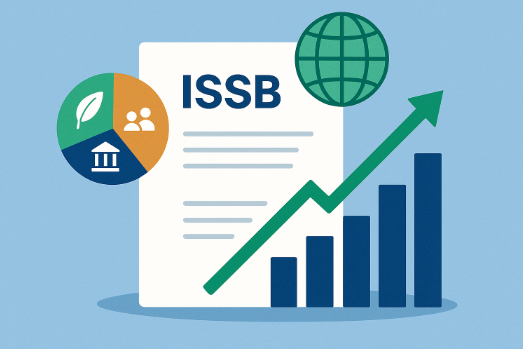
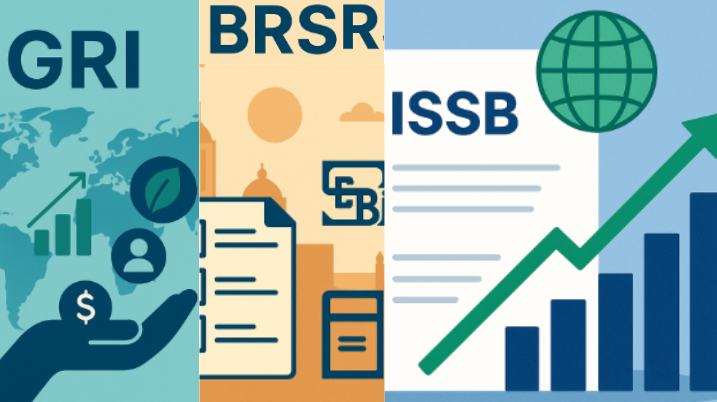
    GRI vs BRSR vs ISSB

    ISSB aims to create a global baseline for sustainability disclosures, focusing on financial materiality — how ESG risks and opportunities affect enterprise value. It complements GRI’s impact lens and BRSR’s compliance lens, offering a bridge between regulatory reporting and investor-grade sustainability data.

    Forward-looking companies are beginning to align their BRSR and GRI data with ISSB standards (IFRS S1 and S2), ensuring consistency, credibility, and comparability in both domestic and international markets.

    In short:

    • BRSR ensures compliance
    • GRI builds credibility
    • ISSB enables global confidence

    While GRI and ISSB both deal with sustainability reporting, they serve very different purposes and audiences:

    AspectGRIISSB
    PurposeTo report how the company impacts the economy, environment, and society (impact materiality).To report how sustainability issues affect the company’s enterprise value (financial materiality).
    AudienceAll stakeholders — investors, employees, communities, regulators.Primarily investors, analysts, and financial markets.
    Link to FinanceSeparate sustainability report.Integrated with financial statements under IFRS.
    NatureQualitative and narrative — broad ESG coverage.Quantitative and disclosure-based — focus on value relevance.
    Governance BodyGlobal Reporting Initiative (independent, NGO).IFRS Foundation (same body that issues IFRS accounting standards).

    🌍 Is ISSB Mandatory?

    As of 2025, the ISSB (International Sustainability Standards Board) is not yet mandatory globally.
    However, it is being adopted or integrated by several countries and stock exchanges as the global baseline for sustainability-related financial disclosures.

    ✅ Current Status:

    • Voluntary globally, but regulators are moving toward adoption.
    • Countries like the UK, Singapore, Canada, Japan, and Australia have already announced plans to align national ESG reporting with ISSB standards.
    • India (SEBI) has also indicated that future updates to BRSR Core may harmonize with ISSB, to improve international comparability.

    In short — ISSB is not mandatory yet, but it’s becoming the direction of travel for global ESG disclosure.


    🇮🇳 If a Company Already Has BRSR — Does It Need GRI and ISSB?

    Short answer:
    ➡️ BRSR alone = Compliance.
    ➡️ BRSR + GRI = Global credibility.
    ➡️ BRSR + ISSB = Investor relevance.

    So, while BRSR is mandatory, GRI and ISSB are strategic upgrades — not legally required (yet), but increasingly important for investor confidence, global recognition, and ESG-linked financing.


    ⚙️ 1. Why BRSR Alone Isn’t Enough

    BRSR (Business Responsibility and Sustainability Report) is India’s regulatory baseline — mandatory for the top 1,000 listed companies.
    It ensures disclosure on social, environmental, and governance practices under SEBI’s NGRBC framework.

    But:

    • BRSR is designed for domestic compliance, not for international comparability.
    • Its data structure is standardized, not narrative or impact-focused.
    • Global investors and rating agencies often cannot directly map BRSR data to global benchmarks (like CDP, MSCI, or Sustainalytics).

    So while BRSR shows you are compliant, it doesn’t yet show you are competitive globally.


    🌍 2. Why Add GRI (Global Reporting Initiative)

    GRI helps you tell your sustainability story beyond compliance.

    PurposeReason to Adopt
    Broaden your stakeholder reachGRI is recognized by 150+ countries and aligns with UN SDGs.
    Build credibility with global supply chainsMany multinational buyers require GRI-aligned reporting.
    Benchmark globallyInvestors and ESG analysts use GRI metrics to compare across regions.
    Complement BRSRMuch of BRSR data can directly feed into GRI disclosures.

    Think of GRI as the “international passport” for your ESG data.
    It converts your local compliance (BRSR) into a global language of sustainability.


    💰 3. Why Prepare for ISSB (International Sustainability Standards Board)

    ISSB is the future of ESG-financial integration.

    While not mandatory yet, it’s fast becoming the global baseline for investor-grade sustainability disclosures.
    ISSB (IFRS S1 & S2) focuses on financial materiality — i.e., how climate and sustainability issues affect enterprise value.

    Why It MattersFor Indian Companies
    Aligns with global capital marketsForeign investors and lenders are beginning to request ISSB-aligned data.
    Builds investor confidenceIntegrates ESG risks with financial statements.
    Future-readySEBI is expected to gradually harmonize BRSR Core with ISSB standards.

    If your company seeks global investors, sustainability-linked loans, or ESG ratings, aligning with ISSB early builds trust and reduces future reporting friction.


    ⚙️ In Summary

    FrameworkFocusMandatory?Best For
    BRSRCompliance & accountability (India)✅ Mandatory for top 1,000 listed firmsIndian-listed companies
    GRIStakeholder impact & transparency❌ VoluntaryGlobal ESG communication
    ISSBFinancial materiality & investor relevance🚧 Emerging (soon-to-be baseline)Multinationals, investor-driven firms

    Call to Action

    Take the Next Step in Your ESG Journey
    Don’t stop at compliance — transform it into competitive advantage.
    Start with BRSR to meet India’s mandate, expand through GRI to build global credibility, and prepare for ISSB to speak the language of investors.

    It’s time to align your disclosures with the future of sustainable finance — where transparency drives trust and trust attracts capital.

    Read more blogs on sustainability here.

    1. Introduction to ISSB and the IFRS Sustainability Disclosure Standards: IFRS Foundation
    2. Overview of IFRS S1 (general sustainability disclosures) and IFRS S2 (climate-related disclosures), effective from 2024: Grant Thornton International Ltd.
    3. SEBI mandates BRSR for the top 1,000 listed companies from FY 2022-23 onwards: ICAI
  • GRI vs BRSR: Understanding the Practical Differences and When to Use Each Strategically

    GRI vs BRSR: Understanding the Practical Differences and When to Use Each Strategically


    🌍 The Rise of ESG Reporting Frameworks

    As sustainability becomes a boardroom priority, companies are navigating a growing maze of ESG reporting frameworks. Two names frequently surface — Global Reporting Initiative (GRI) and Business Responsibility and Sustainability Report (BRSR).

    While both aim to enhance transparency and accountability, they serve distinct purposes and audiences. Understanding their practical differences — and knowing when to use each strategically — can help companies turn compliance into a value-creation opportunity.


    🔍 GRI vs BRSR in Brief

    FrameworkDeveloped byScopeApplicability
    GRI (Global Reporting Initiative)Independent international organizationGlobalVoluntary for most companies worldwide
    BRSR (Business Responsibility and Sustainability Report)SEBI, IndiaIndia-specificMandatory for top 1,000 listed Indian companies (by market cap)

    ⚙️ Key Practical Differences

    AspectGRI StandardsBRSR Framework
    PurposeDesigned for global stakeholder communication on sustainability performance.Designed for regulatory compliance and corporate accountability in India.
    Focus AreasBroad ESG focus — covers material issues from emissions to human rights, aligned with UN SDGs.Rooted in India’s National Guidelines on Responsible Business Conduct (NGRBC) — focuses on 9 principles of responsible business.
    MaterialityImpact materiality — focuses on environment, society – stakeholder interest.Regulatory materiality — emphasizes compliance and responsibility rather than global stakeholder prioritization.
    Disclosure TypeHighly detailed narrative and quantitative disclosures, allowing flexibility in reporting scope.Structured, standardized questionnaire format (BRSR Core has defined metrics).
    AssuranceVoluntary but increasingly expected by global investors.BRSR Core mandates limited assurance on key performance indicators.
    AudienceGlobal investors, rating agencies, sustainability analysts, NGOs.Indian regulators, domestic investors, and policymakers.
    InteroperabilityCan be aligned with frameworks like SASB, TCFD, and CDP.Partially aligned with GRI and TCFD, but primarily regulatory in nature.

    🎯 When to Use Each Strategically

    1. BRSR: For Compliance and National ESG Positioning

    Use BRSR if your company is:

    • Listed on Indian stock exchanges (mandatory for top 1,000 companies).
    • Primarily serving Indian investors or regulators.
    • Looking to benchmark performance locally against peers.
    • Beginning its ESG journey and needs a structured starting point.

    Strategic Value:
    BRSR builds foundational ESG discipline and ensures compliance with SEBI norms — the first step toward investor confidence and responsible governance.


    2. GRI: For Global Visibility and Investor Engagement

    Use GRI if your company is:

    • Targeting international markets or global supply chains.
    • Seeking foreign investment or ESG-linked financing.
    • Aiming to showcase impact and transparency to global stakeholders.
    • Already mature in ESG practices and ready for narrative-driven disclosures.

    Strategic Value:
    GRI enhances global credibility and aligns your disclosures with international expectations — often unlocking access to ESG indices and sustainability-linked funding.


    3. Combined Approach: The Smart Strategy

    Leading Indian companies like L&T, Tata Steel, and Infosys now use both.
    They comply through BRSR and communicate through GRI, creating a dual advantage:

    • BRSR ensures regulatory confidence in India.
    • GRI builds reputation and investor trust abroad.

    Tip: Use your BRSR Core data as the base, and layer GRI-aligned narrative reporting on top — saving effort and ensuring consistency.


    🔗 Example: How a Dual Framework Adds Value

    ObjectiveBest FitStrategic Outcome
    Regulatory complianceBRSR CoreSatisfies SEBI and Indian ESG requirements
    Global investor communicationGRIEnhances ESG ratings and international perception
    Supply chain transparencyGRIAligns with global buyer requirements
    Benchmarking & data consistencyBRSRProvides standardized metrics for comparison
    ESG-linked financeGRI + BRSRBuilds confidence among lenders and investors

    💡 The Bottom Line

    BRSR is the “license to operate”,
    GRI is the “license to grow.”

    BRSR ensures compliance and builds a responsible foundation.
    GRI communicates sustainability leadership and unlocks global capital and brand value.

    The most forward-looking companies are not choosing between the two — they’re integrating both into a unified ESG storytelling strategy.


    🌐 The Emerging ISSB Framework — The Next Step in ESG Evolution

    As companies mature in their ESG journey, the next evolution is already underway: the ISSB (International Sustainability Standards Board).

    GRI vs BRSR vs ISSB

    ISSB aims to create a global baseline for sustainability disclosures, focusing on financial materiality — how ESG risks and opportunities affect enterprise value. It complements GRI’s impact lens and BRSR’s compliance lens, offering a bridge between regulatory reporting and investor-grade sustainability data.

    Forward-looking companies are beginning to align their BRSR and GRI data with ISSB standards (IFRS S1 and S2), ensuring consistency, credibility, and comparability in both domestic and international markets.

    In short:

    • BRSR ensures compliance
    • GRI builds credibility
    • ISSB enables global confidence

    While GRI and ISSB both deal with sustainability reporting, they serve very different purposes and audiences:

    AspectGRIISSB
    PurposeTo report how the company impacts the economy, environment, and society (impact materiality).To report how sustainability issues affect the company’s enterprise value (financial materiality).
    AudienceAll stakeholders — investors, employees, communities, regulators.Primarily investors, analysts, and financial markets.
    Link to FinanceSeparate sustainability report.Integrated with financial statements under IFRS.
    NatureQualitative and narrative — broad ESG coverage.Quantitative and disclosure-based — focus on value relevance.
    Governance BodyGlobal Reporting Initiative (independent, NGO).IFRS Foundation (same body that issues IFRS accounting standards).

    🌍 Is ISSB Mandatory?

    As of 2025, the ISSB (International Sustainability Standards Board) is not yet mandatory globally.
    However, it is being adopted or integrated by several countries and stock exchanges as the global baseline for sustainability-related financial disclosures.

    ✅ Current Status:

    • Voluntary globally, but regulators are moving toward adoption.
    • Countries like the UK, Singapore, Canada, Japan, and Australia have already announced plans to align national ESG reporting with ISSB standards.
    • India (SEBI) has also indicated that future updates to BRSR Core may harmonize with ISSB, to improve international comparability.

    In short — ISSB is not mandatory yet, but it’s becoming the direction of travel for global ESG disclosure.


    🇮🇳 If a Company Already Has BRSR — Does It Need GRI and ISSB?

    Short answer:
    ➡️ BRSR alone = Compliance.
    ➡️ BRSR + GRI = Global credibility.
    ➡️ BRSR + ISSB = Investor relevance.

    So, while BRSR is mandatory, GRI and ISSB are strategic upgrades — not legally required (yet), but increasingly important for investor confidence, global recognition, and ESG-linked financing.


    ⚙️ 1. Why BRSR Alone Isn’t Enough

    BRSR (Business Responsibility and Sustainability Report) is India’s regulatory baseline — mandatory for the top 1,000 listed companies.
    It ensures disclosure on social, environmental, and governance practices under SEBI’s NGRBC framework.

    But:

    • BRSR is designed for domestic compliance, not for international comparability.
    • Its data structure is standardized, not narrative or impact-focused.
    • Global investors and rating agencies often cannot directly map BRSR data to global benchmarks (like CDP, MSCI, or Sustainalytics).

    So while BRSR shows you are compliant, it doesn’t yet show you are competitive globally.


    🌍 2. Why Add GRI (Global Reporting Initiative)

    GRI helps you tell your sustainability story beyond compliance.

    PurposeReason to Adopt
    Broaden your stakeholder reachGRI is recognized by 150+ countries and aligns with UN SDGs.
    Build credibility with global supply chainsMany multinational buyers require GRI-aligned reporting.
    Benchmark globallyInvestors and ESG analysts use GRI metrics to compare across regions.
    Complement BRSRMuch of BRSR data can directly feed into GRI disclosures.

    Think of GRI as the “international passport” for your ESG data.
    It converts your local compliance (BRSR) into a global language of sustainability.


    💰 3. Why Prepare for ISSB (International Sustainability Standards Board)

    ISSB is the future of ESG-financial integration.

    While not mandatory yet, it’s fast becoming the global baseline for investor-grade sustainability disclosures.
    ISSB (IFRS S1 & S2) focuses on financial materiality — i.e., how climate and sustainability issues affect enterprise value.

    Why It MattersFor Indian Companies
    Aligns with global capital marketsForeign investors and lenders are beginning to request ISSB-aligned data.
    Builds investor confidenceIntegrates ESG risks with financial statements.
    Future-readySEBI is expected to gradually harmonize BRSR Core with ISSB standards.

    If your company seeks global investors, sustainability-linked loans, or ESG ratings, aligning with ISSB early builds trust and reduces future reporting friction.


    ⚙️ In Summary

    FrameworkFocusMandatory?Best For
    BRSRCompliance & accountability (India)✅ Mandatory for top 1,000 listed firmsIndian-listed companies
    GRIStakeholder impact & transparency❌ VoluntaryGlobal ESG communication
    ISSBFinancial materiality & investor relevance🚧 Emerging (soon-to-be baseline)Multinationals, investor-driven firms

    Call to Action

    Take the Next Step in Your ESG Journey
    Don’t stop at compliance — transform it into competitive advantage.
    Start with BRSR to meet India’s mandate, expand through GRI to build global credibility, and prepare for ISSB to speak the language of investors.

    It’s time to align your disclosures with the future of sustainable finance — where transparency drives trust and trust attracts capital.

    Read more blogs on sustainability here.

    1. Introduction to ISSB and the IFRS Sustainability Disclosure Standards: IFRS Foundation
    2. Overview of IFRS S1 (general sustainability disclosures) and IFRS S2 (climate-related disclosures), effective from 2024: Grant Thornton International Ltd.
    3. SEBI mandates BRSR for the top 1,000 listed companies from FY 2022-23 onwards: ICAI
  • GRI vs BRSR: Understanding the Practical Differences and When to Use Each Strategically

    GRI vs BRSR: Understanding the Practical Differences and When to Use Each Strategically


    🌍 The Rise of ESG Reporting Frameworks

    As sustainability becomes a boardroom priority, companies are navigating a growing maze of ESG reporting frameworks. Two names frequently surface — Global Reporting Initiative (GRI) and Business Responsibility and Sustainability Report (BRSR).

    While both aim to enhance transparency and accountability, they serve distinct purposes and audiences. Understanding their practical differences — and knowing when to use each strategically — can help companies turn compliance into a value-creation opportunity.


    🔍 GRI vs BRSR in Brief

    FrameworkDeveloped byScopeApplicability
    GRI (Global Reporting Initiative)Independent international organizationGlobalVoluntary for most companies worldwide
    BRSR (Business Responsibility and Sustainability Report)SEBI, IndiaIndia-specificMandatory for top 1,000 listed Indian companies (by market cap)

    ⚙️ Key Practical Differences

    AspectGRI StandardsBRSR Framework
    PurposeDesigned for global stakeholder communication on sustainability performance.Designed for regulatory compliance and corporate accountability in India.
    Focus AreasBroad ESG focus — covers material issues from emissions to human rights, aligned with UN SDGs.Rooted in India’s National Guidelines on Responsible Business Conduct (NGRBC) — focuses on 9 principles of responsible business.
    MaterialityImpact materiality — focuses on environment, society – stakeholder interest.Regulatory materiality — emphasizes compliance and responsibility rather than global stakeholder prioritization.
    Disclosure TypeHighly detailed narrative and quantitative disclosures, allowing flexibility in reporting scope.Structured, standardized questionnaire format (BRSR Core has defined metrics).
    AssuranceVoluntary but increasingly expected by global investors.BRSR Core mandates limited assurance on key performance indicators.
    AudienceGlobal investors, rating agencies, sustainability analysts, NGOs.Indian regulators, domestic investors, and policymakers.
    InteroperabilityCan be aligned with frameworks like SASB, TCFD, and CDP.Partially aligned with GRI and TCFD, but primarily regulatory in nature.

    🎯 When to Use Each Strategically

    1. BRSR: For Compliance and National ESG Positioning

    Use BRSR if your company is:

    • Listed on Indian stock exchanges (mandatory for top 1,000 companies).
    • Primarily serving Indian investors or regulators.
    • Looking to benchmark performance locally against peers.
    • Beginning its ESG journey and needs a structured starting point.

    Strategic Value:
    BRSR builds foundational ESG discipline and ensures compliance with SEBI norms — the first step toward investor confidence and responsible governance.


    2. GRI: For Global Visibility and Investor Engagement

    Use GRI if your company is:

    • Targeting international markets or global supply chains.
    • Seeking foreign investment or ESG-linked financing.
    • Aiming to showcase impact and transparency to global stakeholders.
    • Already mature in ESG practices and ready for narrative-driven disclosures.

    Strategic Value:
    GRI enhances global credibility and aligns your disclosures with international expectations — often unlocking access to ESG indices and sustainability-linked funding.


    3. Combined Approach: The Smart Strategy

    Leading Indian companies like L&T, Tata Steel, and Infosys now use both.
    They comply through BRSR and communicate through GRI, creating a dual advantage:

    • BRSR ensures regulatory confidence in India.
    • GRI builds reputation and investor trust abroad.

    Tip: Use your BRSR Core data as the base, and layer GRI-aligned narrative reporting on top — saving effort and ensuring consistency.


    🔗 Example: How a Dual Framework Adds Value

    ObjectiveBest FitStrategic Outcome
    Regulatory complianceBRSR CoreSatisfies SEBI and Indian ESG requirements
    Global investor communicationGRIEnhances ESG ratings and international perception
    Supply chain transparencyGRIAligns with global buyer requirements
    Benchmarking & data consistencyBRSRProvides standardized metrics for comparison
    ESG-linked financeGRI + BRSRBuilds confidence among lenders and investors

    💡 The Bottom Line

    BRSR is the “license to operate”,
    GRI is the “license to grow.”

    BRSR ensures compliance and builds a responsible foundation.
    GRI communicates sustainability leadership and unlocks global capital and brand value.

    The most forward-looking companies are not choosing between the two — they’re integrating both into a unified ESG storytelling strategy.


    🌐 The Emerging ISSB Framework — The Next Step in ESG Evolution

    As companies mature in their ESG journey, the next evolution is already underway: the ISSB (International Sustainability Standards Board).

    GRI vs BRSR vs ISSB

    ISSB aims to create a global baseline for sustainability disclosures, focusing on financial materiality — how ESG risks and opportunities affect enterprise value. It complements GRI’s impact lens and BRSR’s compliance lens, offering a bridge between regulatory reporting and investor-grade sustainability data.

    Forward-looking companies are beginning to align their BRSR and GRI data with ISSB standards (IFRS S1 and S2), ensuring consistency, credibility, and comparability in both domestic and international markets.

    In short:

    • BRSR ensures compliance
    • GRI builds credibility
    • ISSB enables global confidence

    While GRI and ISSB both deal with sustainability reporting, they serve very different purposes and audiences:

    AspectGRIISSB
    PurposeTo report how the company impacts the economy, environment, and society (impact materiality).To report how sustainability issues affect the company’s enterprise value (financial materiality).
    AudienceAll stakeholders — investors, employees, communities, regulators.Primarily investors, analysts, and financial markets.
    Link to FinanceSeparate sustainability report.Integrated with financial statements under IFRS.
    NatureQualitative and narrative — broad ESG coverage.Quantitative and disclosure-based — focus on value relevance.
    Governance BodyGlobal Reporting Initiative (independent, NGO).IFRS Foundation (same body that issues IFRS accounting standards).

    🌍 Is ISSB Mandatory?

    As of 2025, the ISSB (International Sustainability Standards Board) is not yet mandatory globally.
    However, it is being adopted or integrated by several countries and stock exchanges as the global baseline for sustainability-related financial disclosures.

    ✅ Current Status:

    • Voluntary globally, but regulators are moving toward adoption.
    • Countries like the UK, Singapore, Canada, Japan, and Australia have already announced plans to align national ESG reporting with ISSB standards.
    • India (SEBI) has also indicated that future updates to BRSR Core may harmonize with ISSB, to improve international comparability.

    In short — ISSB is not mandatory yet, but it’s becoming the direction of travel for global ESG disclosure.


    🇮🇳 If a Company Already Has BRSR — Does It Need GRI and ISSB?

    Short answer:
    ➡️ BRSR alone = Compliance.
    ➡️ BRSR + GRI = Global credibility.
    ➡️ BRSR + ISSB = Investor relevance.

    So, while BRSR is mandatory, GRI and ISSB are strategic upgrades — not legally required (yet), but increasingly important for investor confidence, global recognition, and ESG-linked financing.


    ⚙️ 1. Why BRSR Alone Isn’t Enough

    BRSR (Business Responsibility and Sustainability Report) is India’s regulatory baseline — mandatory for the top 1,000 listed companies.
    It ensures disclosure on social, environmental, and governance practices under SEBI’s NGRBC framework.

    But:

    • BRSR is designed for domestic compliance, not for international comparability.
    • Its data structure is standardized, not narrative or impact-focused.
    • Global investors and rating agencies often cannot directly map BRSR data to global benchmarks (like CDP, MSCI, or Sustainalytics).

    So while BRSR shows you are compliant, it doesn’t yet show you are competitive globally.


    🌍 2. Why Add GRI (Global Reporting Initiative)

    GRI helps you tell your sustainability story beyond compliance.

    PurposeReason to Adopt
    Broaden your stakeholder reachGRI is recognized by 150+ countries and aligns with UN SDGs.
    Build credibility with global supply chainsMany multinational buyers require GRI-aligned reporting.
    Benchmark globallyInvestors and ESG analysts use GRI metrics to compare across regions.
    Complement BRSRMuch of BRSR data can directly feed into GRI disclosures.

    Think of GRI as the “international passport” for your ESG data.
    It converts your local compliance (BRSR) into a global language of sustainability.


    💰 3. Why Prepare for ISSB (International Sustainability Standards Board)

    ISSB is the future of ESG-financial integration.

    While not mandatory yet, it’s fast becoming the global baseline for investor-grade sustainability disclosures.
    ISSB (IFRS S1 & S2) focuses on financial materiality — i.e., how climate and sustainability issues affect enterprise value.

    Why It MattersFor Indian Companies
    Aligns with global capital marketsForeign investors and lenders are beginning to request ISSB-aligned data.
    Builds investor confidenceIntegrates ESG risks with financial statements.
    Future-readySEBI is expected to gradually harmonize BRSR Core with ISSB standards.

    If your company seeks global investors, sustainability-linked loans, or ESG ratings, aligning with ISSB early builds trust and reduces future reporting friction.


    ⚙️ In Summary

    FrameworkFocusMandatory?Best For
    BRSRCompliance & accountability (India)✅ Mandatory for top 1,000 listed firmsIndian-listed companies
    GRIStakeholder impact & transparency❌ VoluntaryGlobal ESG communication
    ISSBFinancial materiality & investor relevance🚧 Emerging (soon-to-be baseline)Multinationals, investor-driven firms

    Call to Action

    Take the Next Step in Your ESG Journey
    Don’t stop at compliance — transform it into competitive advantage.
    Start with BRSR to meet India’s mandate, expand through GRI to build global credibility, and prepare for ISSB to speak the language of investors.

    It’s time to align your disclosures with the future of sustainable finance — where transparency drives trust and trust attracts capital.

    Read more blogs on sustainability here.

    1. Introduction to ISSB and the IFRS Sustainability Disclosure Standards: IFRS Foundation
    2. Overview of IFRS S1 (general sustainability disclosures) and IFRS S2 (climate-related disclosures), effective from 2024: Grant Thornton International Ltd.
    3. SEBI mandates BRSR for the top 1,000 listed companies from FY 2022-23 onwards: ICAI
  • 🏗️ L&T’s ESG Transformation: How Compliance Became Competitive Advantage

    🏗️ L&T’s ESG Transformation: How Compliance Became Competitive Advantage


    🌍 When ESG Compliance Became an Opportunity

    In 2023, as Indian companies scrambled to meet SEBI’s new BRSR Core assurance requirements, many saw it as yet another compliance hurdle.
    Spreadsheets, audits, and data reconciliations became a corporate headache.

    But one company — Larsen & Toubro (L&T) — saw something others didn’t.
    They saw a strategic opportunity hidden in the fine print of ESG compliance.

    What began as a regulatory necessity turned into one of India’s most compelling stories of how ESG can drive growth, trust, and profitability.


    🧭 The Backdrop: SEBI’s BRSR Core Disruption

    In July 2023, SEBI mandated that India’s top 250 listed companies must obtain limited assurance for 49 Key Performance Indicators (KPIs) under the BRSR Core framework.

    This meant ESG data had to be:

    • Accurate
    • Verifiable
    • Auditable

    For the first time, ESG numbers carried the same weight as financial data.

    For L&T — a 85-year-old engineering powerhouse operating across construction, manufacturing, and energy — this was no small task.
    Data was scattered across hundreds of project sites, 47 business units, and multiple legacy systems.

    Each vertical — cement, infrastructure, hydrocarbon, heavy engineering — reported ESG metrics differently.
    When the first assurance trial was conducted, auditors found 18% variance between internal data and published sustainability reports.

    L&T faced a choice:
    Patch the system to pass the audit — or rebuild ESG from the ground up.

    They chose the latter.
    And that decision changed everything.


    ⚙️ Phase 1: Diagnosing the ESG Data Problem

    The first step was brutal honesty.
    An internal ESG data review revealed key issues:

    • 47 spreadsheets used for energy and emissions tracking — no common format.
    • Inconsistent emission factors across divisions.
    • Safety metrics reported manually with no central validation.
    • Supplier ESG data incomplete or unverifiable.

    In short, ESG data wasn’t investment-grade.

    🧩 L&T’s realization:

    “If data isn’t trusted, sustainability can’t be strategic.”

    So, the company launched Project E³ — short for Empowered ESG & Efficiency.
    Its mandate: make ESG data as reliable, integrated, and insightful as financial data.


    🔧 Phase 2: Building the ESG Control Tower

    L&T approached ESG like an engineering challenge — with precision and process discipline.

    Key initiatives:

    1. Digital Integration:
      • Implemented the SAP Sustainability Control Tower, connecting 18 legacy systems.
      • Real-time data pipelines from HR, energy, procurement, and environment management.
    2. Data Governance Framework:
      • Defined ownership for every KPI — each had a Data Owner, Reviewer, and Assurance Gatekeeper.
      • Created Standard Operating Procedures (SOPs) for all 49 BRSR KPIs (measurement units, frequency, boundaries).
    3. Automation & Analytics:
      • Automated data validation and anomaly detection using ML models.
      • Installed smart meters and IoT sensors at manufacturing units to capture real-time energy data.
    4. Blockchain for Assurance:
      • Piloted blockchain-based ESG records for water and waste data to ensure immutability.
    5. Human Capital:
      • Trained 350 ESG Data Champions across India — ensuring ownership and accuracy at the source.

    📊 Phase 3: Assurance That Builds Trust

    By mid-2023, L&T had something few Indian firms could claim:
    An assurance-ready ESG data ecosystem.

    Assurance Model:

    • Internal pre-assurance every quarter by the internal audit team.
    • External limited assurance annually by SEBI-registered ESG auditors.
    • Continuous data validation dashboards for management oversight.

    L&T’s CFO called it their “dual control tower” — one for finance, one for sustainability.

    “We treat ESG data with the same rigor as our balance sheet,”
    said the Group Controller during an internal town hall.


    💰 Phase 4: Turning Compliance Into Value

    Once ESG data became reliable, L&T unlocked its hidden value.

    🔹 1. Financial Impact

    • The company issued a ₹12,000 crore sustainability-linked bond, one of the largest in India.
    • Interest rate reductions (coupon step-downs) were tied to verified ESG KPIs —
      particularly energy efficiency and diversity targets.
    • Because of verified BRSR Core compliance, the bond attracted top-tier ESG funds.

    Result: Lower cost of capital and stronger investor confidence.


    🔹 2. Operational Efficiency

    With real-time ESG analytics, L&T identified:

    • 5% of plants consuming 20% more energy than benchmark.
    • High emission hotspots in specific product lines.
    • Duplicate supplier entries inflating Scope 3 emissions.

    Fixing these inefficiencies led to ₹145 crore in energy savings in one year.


    🔹 3. Risk Reduction

    Before BRSR Core, ESG data inconsistencies were a reputational risk.
    Now, with verified ESG systems:

    • L&T avoided greenwashing allegations.
    • Reduced audit exceptions to near zero.
    • Strengthened board confidence and stakeholder trust.

    🔹 4. Market Reputation

    L&T’s transparency led to:

    • Inclusion in S&P Global Sustainability Index.
    • Higher ESG ratings (MSCI ESG: upgraded from BBB to A).
    • Recognition by SEBI as a “first-mover on ESG assurance.”

    🏢 How L&T Embedded ESG Into Culture

    Technology was only half the story — mindset was the other.

    L&T linked ESG KPIs to leadership scorecards, ensuring sustainability performance affected bonuses.
    Every site manager had to report monthly on:

    • Energy intensity
    • Safety performance
    • Diversity and welfare initiatives

    Employees no longer saw ESG as “extra work” — it became part of how performance was measured.

    “When sustainability enters performance metrics, it becomes part of DNA,”
    noted L&T’s HR Head.


    🌱 ESG as an Engineering Mindset

    L&T’s engineers approached ESG the same way they approach construction:

    • Design systems that scale.
    • Build for precision and durability.
    • Measure everything.

    Their motto became:

    “If we can measure it, we can improve it — and if it’s assured, it’s trusted.”

    That engineering discipline turned ESG from compliance paperwork into a data-driven growth enabler.


    🧠 Lessons for Indian Companies

    LessonMeaningImpact
    1. Compliance is a foundation, not a finish line.Use mandatory ESG reporting as a launchpad for better business insights.Turn obligation into opportunity.
    2. Data is the new ESG currency.Investors trust what’s verified, not what’s promised.Access cheaper capital and new funds.
    3. Integrate, don’t isolate.ESG must be part of finance, HR, procurement, and operations.Break silos and enhance accuracy.
    4. Train people, not just systems.Cultural buy-in drives sustainability success.Builds ownership and pride.
    5. Link ESG to rewards.Tie metrics to leadership bonuses and reviews.Sustains momentum.

    💬 CFO’s Perspective

    L&T’s CFO summarized the transformation perfectly:

    “We didn’t invest in ESG because regulators forced us to.
    We did it because verified sustainability data reduces cost, improves efficiency, and builds investor trust.
    That’s not compliance — that’s competitive advantage.”


    📈 The ROI of Responsibility

    • 💸 Investment: ₹38 crore in ESG systems & training
    • ⚙️ Savings: ₹145 crore in one year through efficiency
    • 📊 ROI: 10.6× over five years
    • 🏦 Capital Access: ₹12,000 crore sustainability-linked bond
    • 🌿 Impact: 18% carbon intensity reduction in core operations

    In a world where investors, regulators, and customers all demand transparency, L&T didn’t just comply — it led.


    🌟 Conclusion: The ESG Opportunity

    L&T’s story is more than corporate transformation — it’s a blueprint for India’s ESG future.
    It proves that when companies stop seeing sustainability as a burden and start seeing it as a business strategy, everything changes.

    ESG isn’t about ticking boxes — it’s about unlocking better data, deeper trust, and smarter decisions.

    L&T’s journey shows that the future of compliance is opportunity.
    And the future of opportunity — is sustainable. 🌱

    Read blogs on Sustainability here.


    📚 References

    • SEBI Circular on BRSR Core (2023): link
    • L&T Sustainability Report FY2023: link
    • PwC India (2024): BRSR Core – Pathway to Assurance
    • KPMG India (2023): ESG Assurance Maturity in India

    L&T’s sustainability / integrated reporting overview:
    🔗 https://www.larsentoubro.com/corporate/sustainability/overview/ Larsen & Toubro

    L&T integrated annual / non-financial & ESG performance reports (archived + current):
    🔗 https://www.lntsustainability.com/integrated-report lntsustainability.com+1

    Business Responsibility & Sustainability report (includes ESG targets, performance, challenges, commitments):
    🔗 https://investors.larsentoubro.com/pdf/2024/Business%20Responsibility%20and%20Sustainability%20Reporting.pdf L&T Investors

    Press release: first listed ESG bond issuance under new SEBI ESG / sustainability-linked bond framework:
    🔗 https://www.larsentoubro.com/pressreleases/2025-06-06-following-sebi-s-esg-bond-framework-lt-announces-indias-first-listed-esg-bond-deal-in-partnership-with-hsbc/ Larsen & Toubro

    Press release: sustainability-linked trade facility / financing tied to KPIs (GHG emissions, water, etc.) with external assurance:
    🔗 https://www.larsentoubro.com/pressreleases/2025-09-29-lt-secures-usd-700-mn-sustainability-linked-trade-facility-with-standard-chartered/

  • 🏗️ L&T’s ESG Transformation: How Compliance Became Competitive Advantage

    🏗️ L&T’s ESG Transformation: How Compliance Became Competitive Advantage


    🌍 When ESG Compliance Became an Opportunity

    In 2023, as Indian companies scrambled to meet SEBI’s new BRSR Core assurance requirements, many saw it as yet another compliance hurdle.
    Spreadsheets, audits, and data reconciliations became a corporate headache.

    But one company — Larsen & Toubro (L&T) — saw something others didn’t.
    They saw a strategic opportunity hidden in the fine print of ESG compliance.

    What began as a regulatory necessity turned into one of India’s most compelling stories of how ESG can drive growth, trust, and profitability.


    🧭 The Backdrop: SEBI’s BRSR Core Disruption

    In July 2023, SEBI mandated that India’s top 250 listed companies must obtain limited assurance for 49 Key Performance Indicators (KPIs) under the BRSR Core framework.

    This meant ESG data had to be:

    • Accurate
    • Verifiable
    • Auditable

    For the first time, ESG numbers carried the same weight as financial data.

    For L&T — a 85-year-old engineering powerhouse operating across construction, manufacturing, and energy — this was no small task.
    Data was scattered across hundreds of project sites, 47 business units, and multiple legacy systems.

    Each vertical — cement, infrastructure, hydrocarbon, heavy engineering — reported ESG metrics differently.
    When the first assurance trial was conducted, auditors found 18% variance between internal data and published sustainability reports.

    L&T faced a choice:
    Patch the system to pass the audit — or rebuild ESG from the ground up.

    They chose the latter.
    And that decision changed everything.


    ⚙️ Phase 1: Diagnosing the ESG Data Problem

    The first step was brutal honesty.
    An internal ESG data review revealed key issues:

    • 47 spreadsheets used for energy and emissions tracking — no common format.
    • Inconsistent emission factors across divisions.
    • Safety metrics reported manually with no central validation.
    • Supplier ESG data incomplete or unverifiable.

    In short, ESG data wasn’t investment-grade.

    🧩 L&T’s realization:

    “If data isn’t trusted, sustainability can’t be strategic.”

    So, the company launched Project E³ — short for Empowered ESG & Efficiency.
    Its mandate: make ESG data as reliable, integrated, and insightful as financial data.


    🔧 Phase 2: Building the ESG Control Tower

    L&T approached ESG like an engineering challenge — with precision and process discipline.

    Key initiatives:

    1. Digital Integration:
      • Implemented the SAP Sustainability Control Tower, connecting 18 legacy systems.
      • Real-time data pipelines from HR, energy, procurement, and environment management.
    2. Data Governance Framework:
      • Defined ownership for every KPI — each had a Data Owner, Reviewer, and Assurance Gatekeeper.
      • Created Standard Operating Procedures (SOPs) for all 49 BRSR KPIs (measurement units, frequency, boundaries).
    3. Automation & Analytics:
      • Automated data validation and anomaly detection using ML models.
      • Installed smart meters and IoT sensors at manufacturing units to capture real-time energy data.
    4. Blockchain for Assurance:
      • Piloted blockchain-based ESG records for water and waste data to ensure immutability.
    5. Human Capital:
      • Trained 350 ESG Data Champions across India — ensuring ownership and accuracy at the source.

    📊 Phase 3: Assurance That Builds Trust

    By mid-2023, L&T had something few Indian firms could claim:
    An assurance-ready ESG data ecosystem.

    Assurance Model:

    • Internal pre-assurance every quarter by the internal audit team.
    • External limited assurance annually by SEBI-registered ESG auditors.
    • Continuous data validation dashboards for management oversight.

    L&T’s CFO called it their “dual control tower” — one for finance, one for sustainability.

    “We treat ESG data with the same rigor as our balance sheet,”
    said the Group Controller during an internal town hall.


    💰 Phase 4: Turning Compliance Into Value

    Once ESG data became reliable, L&T unlocked its hidden value.

    🔹 1. Financial Impact

    • The company issued a ₹12,000 crore sustainability-linked bond, one of the largest in India.
    • Interest rate reductions (coupon step-downs) were tied to verified ESG KPIs —
      particularly energy efficiency and diversity targets.
    • Because of verified BRSR Core compliance, the bond attracted top-tier ESG funds.

    Result: Lower cost of capital and stronger investor confidence.


    🔹 2. Operational Efficiency

    With real-time ESG analytics, L&T identified:

    • 5% of plants consuming 20% more energy than benchmark.
    • High emission hotspots in specific product lines.
    • Duplicate supplier entries inflating Scope 3 emissions.

    Fixing these inefficiencies led to ₹145 crore in energy savings in one year.


    🔹 3. Risk Reduction

    Before BRSR Core, ESG data inconsistencies were a reputational risk.
    Now, with verified ESG systems:

    • L&T avoided greenwashing allegations.
    • Reduced audit exceptions to near zero.
    • Strengthened board confidence and stakeholder trust.

    🔹 4. Market Reputation

    L&T’s transparency led to:

    • Inclusion in S&P Global Sustainability Index.
    • Higher ESG ratings (MSCI ESG: upgraded from BBB to A).
    • Recognition by SEBI as a “first-mover on ESG assurance.”

    🏢 How L&T Embedded ESG Into Culture

    Technology was only half the story — mindset was the other.

    L&T linked ESG KPIs to leadership scorecards, ensuring sustainability performance affected bonuses.
    Every site manager had to report monthly on:

    • Energy intensity
    • Safety performance
    • Diversity and welfare initiatives

    Employees no longer saw ESG as “extra work” — it became part of how performance was measured.

    “When sustainability enters performance metrics, it becomes part of DNA,”
    noted L&T’s HR Head.


    🌱 ESG as an Engineering Mindset

    L&T’s engineers approached ESG the same way they approach construction:

    • Design systems that scale.
    • Build for precision and durability.
    • Measure everything.

    Their motto became:

    “If we can measure it, we can improve it — and if it’s assured, it’s trusted.”

    That engineering discipline turned ESG from compliance paperwork into a data-driven growth enabler.


    🧠 Lessons for Indian Companies

    LessonMeaningImpact
    1. Compliance is a foundation, not a finish line.Use mandatory ESG reporting as a launchpad for better business insights.Turn obligation into opportunity.
    2. Data is the new ESG currency.Investors trust what’s verified, not what’s promised.Access cheaper capital and new funds.
    3. Integrate, don’t isolate.ESG must be part of finance, HR, procurement, and operations.Break silos and enhance accuracy.
    4. Train people, not just systems.Cultural buy-in drives sustainability success.Builds ownership and pride.
    5. Link ESG to rewards.Tie metrics to leadership bonuses and reviews.Sustains momentum.

    💬 CFO’s Perspective

    L&T’s CFO summarized the transformation perfectly:

    “We didn’t invest in ESG because regulators forced us to.
    We did it because verified sustainability data reduces cost, improves efficiency, and builds investor trust.
    That’s not compliance — that’s competitive advantage.”


    📈 The ROI of Responsibility

    • 💸 Investment: ₹38 crore in ESG systems & training
    • ⚙️ Savings: ₹145 crore in one year through efficiency
    • 📊 ROI: 10.6× over five years
    • 🏦 Capital Access: ₹12,000 crore sustainability-linked bond
    • 🌿 Impact: 18% carbon intensity reduction in core operations

    In a world where investors, regulators, and customers all demand transparency, L&T didn’t just comply — it led.


    🌟 Conclusion: The ESG Opportunity

    L&T’s story is more than corporate transformation — it’s a blueprint for India’s ESG future.
    It proves that when companies stop seeing sustainability as a burden and start seeing it as a business strategy, everything changes.

    ESG isn’t about ticking boxes — it’s about unlocking better data, deeper trust, and smarter decisions.

    L&T’s journey shows that the future of compliance is opportunity.
    And the future of opportunity — is sustainable. 🌱

    Read blogs on Sustainability here.


    📚 References

    • SEBI Circular on BRSR Core (2023): link
    • L&T Sustainability Report FY2023: link
    • PwC India (2024): BRSR Core – Pathway to Assurance
    • KPMG India (2023): ESG Assurance Maturity in India

    L&T’s sustainability / integrated reporting overview:
    🔗 https://www.larsentoubro.com/corporate/sustainability/overview/ Larsen & Toubro

    L&T integrated annual / non-financial & ESG performance reports (archived + current):
    🔗 https://www.lntsustainability.com/integrated-report lntsustainability.com+1

    Business Responsibility & Sustainability report (includes ESG targets, performance, challenges, commitments):
    🔗 https://investors.larsentoubro.com/pdf/2024/Business%20Responsibility%20and%20Sustainability%20Reporting.pdf L&T Investors

    Press release: first listed ESG bond issuance under new SEBI ESG / sustainability-linked bond framework:
    🔗 https://www.larsentoubro.com/pressreleases/2025-06-06-following-sebi-s-esg-bond-framework-lt-announces-indias-first-listed-esg-bond-deal-in-partnership-with-hsbc/ Larsen & Toubro

    Press release: sustainability-linked trade facility / financing tied to KPIs (GHG emissions, water, etc.) with external assurance:
    🔗 https://www.larsentoubro.com/pressreleases/2025-09-29-lt-secures-usd-700-mn-sustainability-linked-trade-facility-with-standard-chartered/

  • 🏗️ L&T’s ESG Transformation: How Compliance Became Competitive Advantage

    🏗️ L&T’s ESG Transformation: How Compliance Became Competitive Advantage


    🌍 When ESG Compliance Became an Opportunity

    In 2023, as Indian companies scrambled to meet SEBI’s new BRSR Core assurance requirements, many saw it as yet another compliance hurdle.
    Spreadsheets, audits, and data reconciliations became a corporate headache.

    But one company — Larsen & Toubro (L&T) — saw something others didn’t.
    They saw a strategic opportunity hidden in the fine print of ESG compliance.

    What began as a regulatory necessity turned into one of India’s most compelling stories of how ESG can drive growth, trust, and profitability.


    🧭 The Backdrop: SEBI’s BRSR Core Disruption

    In July 2023, SEBI mandated that India’s top 250 listed companies must obtain limited assurance for 49 Key Performance Indicators (KPIs) under the BRSR Core framework.

    This meant ESG data had to be:

    • Accurate
    • Verifiable
    • Auditable

    For the first time, ESG numbers carried the same weight as financial data.

    For L&T — a 85-year-old engineering powerhouse operating across construction, manufacturing, and energy — this was no small task.
    Data was scattered across hundreds of project sites, 47 business units, and multiple legacy systems.

    Each vertical — cement, infrastructure, hydrocarbon, heavy engineering — reported ESG metrics differently.
    When the first assurance trial was conducted, auditors found 18% variance between internal data and published sustainability reports.

    L&T faced a choice:
    Patch the system to pass the audit — or rebuild ESG from the ground up.

    They chose the latter.
    And that decision changed everything.


    ⚙️ Phase 1: Diagnosing the ESG Data Problem

    The first step was brutal honesty.
    An internal ESG data review revealed key issues:

    • 47 spreadsheets used for energy and emissions tracking — no common format.
    • Inconsistent emission factors across divisions.
    • Safety metrics reported manually with no central validation.
    • Supplier ESG data incomplete or unverifiable.

    In short, ESG data wasn’t investment-grade.

    🧩 L&T’s realization:

    “If data isn’t trusted, sustainability can’t be strategic.”

    So, the company launched Project E³ — short for Empowered ESG & Efficiency.
    Its mandate: make ESG data as reliable, integrated, and insightful as financial data.


    🔧 Phase 2: Building the ESG Control Tower

    L&T approached ESG like an engineering challenge — with precision and process discipline.

    Key initiatives:

    1. Digital Integration:
      • Implemented the SAP Sustainability Control Tower, connecting 18 legacy systems.
      • Real-time data pipelines from HR, energy, procurement, and environment management.
    2. Data Governance Framework:
      • Defined ownership for every KPI — each had a Data Owner, Reviewer, and Assurance Gatekeeper.
      • Created Standard Operating Procedures (SOPs) for all 49 BRSR KPIs (measurement units, frequency, boundaries).
    3. Automation & Analytics:
      • Automated data validation and anomaly detection using ML models.
      • Installed smart meters and IoT sensors at manufacturing units to capture real-time energy data.
    4. Blockchain for Assurance:
      • Piloted blockchain-based ESG records for water and waste data to ensure immutability.
    5. Human Capital:
      • Trained 350 ESG Data Champions across India — ensuring ownership and accuracy at the source.

    📊 Phase 3: Assurance That Builds Trust

    By mid-2023, L&T had something few Indian firms could claim:
    An assurance-ready ESG data ecosystem.

    Assurance Model:

    • Internal pre-assurance every quarter by the internal audit team.
    • External limited assurance annually by SEBI-registered ESG auditors.
    • Continuous data validation dashboards for management oversight.

    L&T’s CFO called it their “dual control tower” — one for finance, one for sustainability.

    “We treat ESG data with the same rigor as our balance sheet,”
    said the Group Controller during an internal town hall.


    💰 Phase 4: Turning Compliance Into Value

    Once ESG data became reliable, L&T unlocked its hidden value.

    🔹 1. Financial Impact

    • The company issued a ₹12,000 crore sustainability-linked bond, one of the largest in India.
    • Interest rate reductions (coupon step-downs) were tied to verified ESG KPIs —
      particularly energy efficiency and diversity targets.
    • Because of verified BRSR Core compliance, the bond attracted top-tier ESG funds.

    Result: Lower cost of capital and stronger investor confidence.


    🔹 2. Operational Efficiency

    With real-time ESG analytics, L&T identified:

    • 5% of plants consuming 20% more energy than benchmark.
    • High emission hotspots in specific product lines.
    • Duplicate supplier entries inflating Scope 3 emissions.

    Fixing these inefficiencies led to ₹145 crore in energy savings in one year.


    🔹 3. Risk Reduction

    Before BRSR Core, ESG data inconsistencies were a reputational risk.
    Now, with verified ESG systems:

    • L&T avoided greenwashing allegations.
    • Reduced audit exceptions to near zero.
    • Strengthened board confidence and stakeholder trust.

    🔹 4. Market Reputation

    L&T’s transparency led to:

    • Inclusion in S&P Global Sustainability Index.
    • Higher ESG ratings (MSCI ESG: upgraded from BBB to A).
    • Recognition by SEBI as a “first-mover on ESG assurance.”

    🏢 How L&T Embedded ESG Into Culture

    Technology was only half the story — mindset was the other.

    L&T linked ESG KPIs to leadership scorecards, ensuring sustainability performance affected bonuses.
    Every site manager had to report monthly on:

    • Energy intensity
    • Safety performance
    • Diversity and welfare initiatives

    Employees no longer saw ESG as “extra work” — it became part of how performance was measured.

    “When sustainability enters performance metrics, it becomes part of DNA,”
    noted L&T’s HR Head.


    🌱 ESG as an Engineering Mindset

    L&T’s engineers approached ESG the same way they approach construction:

    • Design systems that scale.
    • Build for precision and durability.
    • Measure everything.

    Their motto became:

    “If we can measure it, we can improve it — and if it’s assured, it’s trusted.”

    That engineering discipline turned ESG from compliance paperwork into a data-driven growth enabler.


    🧠 Lessons for Indian Companies

    LessonMeaningImpact
    1. Compliance is a foundation, not a finish line.Use mandatory ESG reporting as a launchpad for better business insights.Turn obligation into opportunity.
    2. Data is the new ESG currency.Investors trust what’s verified, not what’s promised.Access cheaper capital and new funds.
    3. Integrate, don’t isolate.ESG must be part of finance, HR, procurement, and operations.Break silos and enhance accuracy.
    4. Train people, not just systems.Cultural buy-in drives sustainability success.Builds ownership and pride.
    5. Link ESG to rewards.Tie metrics to leadership bonuses and reviews.Sustains momentum.

    💬 CFO’s Perspective

    L&T’s CFO summarized the transformation perfectly:

    “We didn’t invest in ESG because regulators forced us to.
    We did it because verified sustainability data reduces cost, improves efficiency, and builds investor trust.
    That’s not compliance — that’s competitive advantage.”


    📈 The ROI of Responsibility

    • 💸 Investment: ₹38 crore in ESG systems & training
    • ⚙️ Savings: ₹145 crore in one year through efficiency
    • 📊 ROI: 10.6× over five years
    • 🏦 Capital Access: ₹12,000 crore sustainability-linked bond
    • 🌿 Impact: 18% carbon intensity reduction in core operations

    In a world where investors, regulators, and customers all demand transparency, L&T didn’t just comply — it led.


    🌟 Conclusion: The ESG Opportunity

    L&T’s story is more than corporate transformation — it’s a blueprint for India’s ESG future.
    It proves that when companies stop seeing sustainability as a burden and start seeing it as a business strategy, everything changes.

    ESG isn’t about ticking boxes — it’s about unlocking better data, deeper trust, and smarter decisions.

    L&T’s journey shows that the future of compliance is opportunity.
    And the future of opportunity — is sustainable. 🌱

    Read blogs on Sustainability here.


    📚 References

    • SEBI Circular on BRSR Core (2023): link
    • L&T Sustainability Report FY2023: link
    • PwC India (2024): BRSR Core – Pathway to Assurance
    • KPMG India (2023): ESG Assurance Maturity in India

    L&T’s sustainability / integrated reporting overview:
    🔗 https://www.larsentoubro.com/corporate/sustainability/overview/ Larsen & Toubro

    L&T integrated annual / non-financial & ESG performance reports (archived + current):
    🔗 https://www.lntsustainability.com/integrated-report lntsustainability.com+1

    Business Responsibility & Sustainability report (includes ESG targets, performance, challenges, commitments):
    🔗 https://investors.larsentoubro.com/pdf/2024/Business%20Responsibility%20and%20Sustainability%20Reporting.pdf L&T Investors

    Press release: first listed ESG bond issuance under new SEBI ESG / sustainability-linked bond framework:
    🔗 https://www.larsentoubro.com/pressreleases/2025-06-06-following-sebi-s-esg-bond-framework-lt-announces-indias-first-listed-esg-bond-deal-in-partnership-with-hsbc/ Larsen & Toubro

    Press release: sustainability-linked trade facility / financing tied to KPIs (GHG emissions, water, etc.) with external assurance:
    🔗 https://www.larsentoubro.com/pressreleases/2025-09-29-lt-secures-usd-700-mn-sustainability-linked-trade-facility-with-standard-chartered/

  • 🏗️ L&T’s ESG Transformation: How Compliance Became Competitive Advantage

    🏗️ L&T’s ESG Transformation: How Compliance Became Competitive Advantage


    🌍 When ESG Compliance Became an Opportunity

    In 2023, as Indian companies scrambled to meet SEBI’s new BRSR Core assurance requirements, many saw it as yet another compliance hurdle.
    Spreadsheets, audits, and data reconciliations became a corporate headache.

    But one company — Larsen & Toubro (L&T) — saw something others didn’t.
    They saw a strategic opportunity hidden in the fine print of ESG compliance.

    What began as a regulatory necessity turned into one of India’s most compelling stories of how ESG can drive growth, trust, and profitability.


    🧭 The Backdrop: SEBI’s BRSR Core Disruption

    In July 2023, SEBI mandated that India’s top 250 listed companies must obtain limited assurance for 49 Key Performance Indicators (KPIs) under the BRSR Core framework.

    This meant ESG data had to be:

    • Accurate
    • Verifiable
    • Auditable

    For the first time, ESG numbers carried the same weight as financial data.

    For L&T — a 85-year-old engineering powerhouse operating across construction, manufacturing, and energy — this was no small task.
    Data was scattered across hundreds of project sites, 47 business units, and multiple legacy systems.

    Each vertical — cement, infrastructure, hydrocarbon, heavy engineering — reported ESG metrics differently.
    When the first assurance trial was conducted, auditors found 18% variance between internal data and published sustainability reports.

    L&T faced a choice:
    Patch the system to pass the audit — or rebuild ESG from the ground up.

    They chose the latter.
    And that decision changed everything.


    ⚙️ Phase 1: Diagnosing the ESG Data Problem

    The first step was brutal honesty.
    An internal ESG data review revealed key issues:

    • 47 spreadsheets used for energy and emissions tracking — no common format.
    • Inconsistent emission factors across divisions.
    • Safety metrics reported manually with no central validation.
    • Supplier ESG data incomplete or unverifiable.

    In short, ESG data wasn’t investment-grade.

    🧩 L&T’s realization:

    “If data isn’t trusted, sustainability can’t be strategic.”

    So, the company launched Project E³ — short for Empowered ESG & Efficiency.
    Its mandate: make ESG data as reliable, integrated, and insightful as financial data.


    🔧 Phase 2: Building the ESG Control Tower

    L&T approached ESG like an engineering challenge — with precision and process discipline.

    Key initiatives:

    1. Digital Integration:
      • Implemented the SAP Sustainability Control Tower, connecting 18 legacy systems.
      • Real-time data pipelines from HR, energy, procurement, and environment management.
    2. Data Governance Framework:
      • Defined ownership for every KPI — each had a Data Owner, Reviewer, and Assurance Gatekeeper.
      • Created Standard Operating Procedures (SOPs) for all 49 BRSR KPIs (measurement units, frequency, boundaries).
    3. Automation & Analytics:
      • Automated data validation and anomaly detection using ML models.
      • Installed smart meters and IoT sensors at manufacturing units to capture real-time energy data.
    4. Blockchain for Assurance:
      • Piloted blockchain-based ESG records for water and waste data to ensure immutability.
    5. Human Capital:
      • Trained 350 ESG Data Champions across India — ensuring ownership and accuracy at the source.

    📊 Phase 3: Assurance That Builds Trust

    By mid-2023, L&T had something few Indian firms could claim:
    An assurance-ready ESG data ecosystem.

    Assurance Model:

    • Internal pre-assurance every quarter by the internal audit team.
    • External limited assurance annually by SEBI-registered ESG auditors.
    • Continuous data validation dashboards for management oversight.

    L&T’s CFO called it their “dual control tower” — one for finance, one for sustainability.

    “We treat ESG data with the same rigor as our balance sheet,”
    said the Group Controller during an internal town hall.


    💰 Phase 4: Turning Compliance Into Value

    Once ESG data became reliable, L&T unlocked its hidden value.

    🔹 1. Financial Impact

    • The company issued a ₹12,000 crore sustainability-linked bond, one of the largest in India.
    • Interest rate reductions (coupon step-downs) were tied to verified ESG KPIs —
      particularly energy efficiency and diversity targets.
    • Because of verified BRSR Core compliance, the bond attracted top-tier ESG funds.

    Result: Lower cost of capital and stronger investor confidence.


    🔹 2. Operational Efficiency

    With real-time ESG analytics, L&T identified:

    • 5% of plants consuming 20% more energy than benchmark.
    • High emission hotspots in specific product lines.
    • Duplicate supplier entries inflating Scope 3 emissions.

    Fixing these inefficiencies led to ₹145 crore in energy savings in one year.


    🔹 3. Risk Reduction

    Before BRSR Core, ESG data inconsistencies were a reputational risk.
    Now, with verified ESG systems:

    • L&T avoided greenwashing allegations.
    • Reduced audit exceptions to near zero.
    • Strengthened board confidence and stakeholder trust.

    🔹 4. Market Reputation

    L&T’s transparency led to:

    • Inclusion in S&P Global Sustainability Index.
    • Higher ESG ratings (MSCI ESG: upgraded from BBB to A).
    • Recognition by SEBI as a “first-mover on ESG assurance.”

    🏢 How L&T Embedded ESG Into Culture

    Technology was only half the story — mindset was the other.

    L&T linked ESG KPIs to leadership scorecards, ensuring sustainability performance affected bonuses.
    Every site manager had to report monthly on:

    • Energy intensity
    • Safety performance
    • Diversity and welfare initiatives

    Employees no longer saw ESG as “extra work” — it became part of how performance was measured.

    “When sustainability enters performance metrics, it becomes part of DNA,”
    noted L&T’s HR Head.


    🌱 ESG as an Engineering Mindset

    L&T’s engineers approached ESG the same way they approach construction:

    • Design systems that scale.
    • Build for precision and durability.
    • Measure everything.

    Their motto became:

    “If we can measure it, we can improve it — and if it’s assured, it’s trusted.”

    That engineering discipline turned ESG from compliance paperwork into a data-driven growth enabler.


    🧠 Lessons for Indian Companies

    LessonMeaningImpact
    1. Compliance is a foundation, not a finish line.Use mandatory ESG reporting as a launchpad for better business insights.Turn obligation into opportunity.
    2. Data is the new ESG currency.Investors trust what’s verified, not what’s promised.Access cheaper capital and new funds.
    3. Integrate, don’t isolate.ESG must be part of finance, HR, procurement, and operations.Break silos and enhance accuracy.
    4. Train people, not just systems.Cultural buy-in drives sustainability success.Builds ownership and pride.
    5. Link ESG to rewards.Tie metrics to leadership bonuses and reviews.Sustains momentum.

    💬 CFO’s Perspective

    L&T’s CFO summarized the transformation perfectly:

    “We didn’t invest in ESG because regulators forced us to.
    We did it because verified sustainability data reduces cost, improves efficiency, and builds investor trust.
    That’s not compliance — that’s competitive advantage.”


    📈 The ROI of Responsibility

    • 💸 Investment: ₹38 crore in ESG systems & training
    • ⚙️ Savings: ₹145 crore in one year through efficiency
    • 📊 ROI: 10.6× over five years
    • 🏦 Capital Access: ₹12,000 crore sustainability-linked bond
    • 🌿 Impact: 18% carbon intensity reduction in core operations

    In a world where investors, regulators, and customers all demand transparency, L&T didn’t just comply — it led.


    🌟 Conclusion: The ESG Opportunity

    L&T’s story is more than corporate transformation — it’s a blueprint for India’s ESG future.
    It proves that when companies stop seeing sustainability as a burden and start seeing it as a business strategy, everything changes.

    ESG isn’t about ticking boxes — it’s about unlocking better data, deeper trust, and smarter decisions.

    L&T’s journey shows that the future of compliance is opportunity.
    And the future of opportunity — is sustainable. 🌱

    Read blogs on Sustainability here.


    📚 References

    • SEBI Circular on BRSR Core (2023): link
    • L&T Sustainability Report FY2023: link
    • PwC India (2024): BRSR Core – Pathway to Assurance
    • KPMG India (2023): ESG Assurance Maturity in India

    L&T’s sustainability / integrated reporting overview:
    🔗 https://www.larsentoubro.com/corporate/sustainability/overview/ Larsen & Toubro

    L&T integrated annual / non-financial & ESG performance reports (archived + current):
    🔗 https://www.lntsustainability.com/integrated-report lntsustainability.com+1

    Business Responsibility & Sustainability report (includes ESG targets, performance, challenges, commitments):
    🔗 https://investors.larsentoubro.com/pdf/2024/Business%20Responsibility%20and%20Sustainability%20Reporting.pdf L&T Investors

    Press release: first listed ESG bond issuance under new SEBI ESG / sustainability-linked bond framework:
    🔗 https://www.larsentoubro.com/pressreleases/2025-06-06-following-sebi-s-esg-bond-framework-lt-announces-indias-first-listed-esg-bond-deal-in-partnership-with-hsbc/ Larsen & Toubro

    Press release: sustainability-linked trade facility / financing tied to KPIs (GHG emissions, water, etc.) with external assurance:
    🔗 https://www.larsentoubro.com/pressreleases/2025-09-29-lt-secures-usd-700-mn-sustainability-linked-trade-facility-with-standard-chartered/

  • 🌍 BRSR Deep Dive: India’s ESG Reporting Framework

    🌍 BRSR Deep Dive: India’s ESG Reporting Framework

    In 2021, India took a historic step that quietly changed the DNA of corporate accountability.
    For years, sustainability reports in India were glossy, voluntary, and often inconsistent — filled with aspirations rather than auditable data.

    But when SEBI introduced the Business Responsibility and Sustainability Report (BRSR), the story changed.
    What was once a CSR narrative became a compliance obligation.
    What was once optional storytelling became data-driven, verifiable accountability.

    Let’s dive deep into what BRSR really means, how it works, and why it’s transforming India Inc. — from compliance to competitive advantage.


    🏛️ 1. The Origin: From BRR to BRSR

    🌱 A decade of evolution

    PhaseRegulationYearKey Focus
    BRR (Business Responsibility Report)SEBI mandated top 100 listed companies to report on CSR and ethics2012Voluntary, narrative-driven
    Expanded BRRExtended to top 500 companies2015More disclosures, but no standard metrics
    BRSR (Business Responsibility & Sustainability Report)SEBI Circular SEBI/HO/CFD/CMD-2/P/CIR/2021/5622021Quantitative, structured, aligned with GRI/TCFD
    BRSR CoreSEBI Circular SEBI/HO/CFD/CFD-SEC-2/P/CIR/2023/1222023Mandatory assurance for 49 KPIs

    The shift was radical:
    India went from “tell us your CSR stories” to “show us your sustainability data, prove it, and get it assured.”


    🧭 2. The Foundation: NGRBC Principles

    BRSR is built on the National Guidelines for Responsible Business Conduct (NGRBC) — a 9-principle framework that defines what “responsible business” means in the Indian context.

    PrincipleTheme
    P1Ethics, transparency, and accountability
    P2Sustainable goods and services
    P3Employee well-being
    P4Stakeholder engagement
    P5Human rights
    P6Environment protection
    P7Policy influence responsibly
    P8Inclusive growth and equitable development
    P9Customer value and transparency

    These nine principles serve as the moral and operational compass for Indian corporates — blending environmental, social, and governance (ESG) ethics with India’s development agenda.


    📊 3. Structure of BRSR

    The BRSR framework is divided into three sections:

    🧩 Section A: General Disclosures

    Covers company overview, products, operations, and financial footprint.
    ➡️ Why it matters: establishes organizational boundaries and value chain scope.

    ⚙️ Section B: Management & Process Disclosures

    Explains governance, policies, stakeholder engagement, grievance redressal, and ethics systems.
    ➡️ Why it matters: shows how sustainability is managed, not just what is measured.

    📈 Section C: Principle-wise Performance

    Detailed KPIs under each of the 9 principles — now quantitative, comparable, and assurable.
    ➡️ Why it matters: this is where ESG becomes measurable, auditable, and actionable.


    🧾 4. Enter BRSR Core: The Assurance Revolution

    In July 2023, SEBI introduced the BRSR Core, tightening the screws on reliability.
    For the first time, India’s ESG data had to be verified by external auditors — just like financial numbers.

    🔍 Key Features of BRSR Core:

    • 49 Key Performance Indicators (KPIs) selected from BRSR — most critical, quantifiable metrics.
    • Mandatory limited assurance by an independent third-party auditor.
    • BRSR reporting is now mandatory for India’s top 1,000 listed companies by market cap as of 2026-27.
    • Scope 3 emissions, supply chain, safety, and diversity metrics included.

    🎯 Objective:

    To ensure ESG disclosures are consistent, comparable, and credible across companies and sectors.

    BRSR Core ensures that what companies disclose in sustainability reports is:

    • Quantifiable
    • Standardized across sectors
    • Externally verified
    • Linked to India’s NGRBC principles

    🧱 5. The Structure of BRSR Core

    The 49 KPIs are grouped across the three ESG pillars — Environmental, Social, and Governance, aligned with the nine principles of the NGRBC.

    Let’s decode them 👇

    🌿 A. Environmental Indicators (15 KPIs)

    (Aligned with Principle 2: Sustainable Goods and Services, and Principle 6: Environment Protection)

    These metrics assess how companies use natural resources, manage emissions, and protect ecosystems.

    CategoryKPI FocusExample MetricWhy It Matters
    EnergyTotal energy consumption (renewable & non-renewable), intensity per ₹ revenueMWh/₹ croreShows energy efficiency & clean energy transition
    GHG EmissionsScope 1, 2, and 3 emissionstCO₂e/yearCore climate accountability metric
    Water UseWater withdrawal, recycling rate, intensitym³/unit outputMeasures water stewardship
    Waste ManagementHazardous & non-hazardous waste generated, recycledTonnes/yearReflects circular economy readiness
    Renewable EnergyShare of renewable energy in total mix%Indicates climate transition commitment
    Environmental Fines / PenaltiesMonetary value of environmental non-complianceLinks ESG to financial accountability

    🌍 Example:

    UltraTech Cement reports a 14% reduction in specific carbon emissions and 23% use of alternative fuels under BRSR Core, verified by third-party auditors — directly linking data quality to climate strategy credibility.


    👥 B. Social Indicators (24 KPIs)

    (Aligned with Principles 3–5 & 8–9: Employee Well-being, Human Rights, Inclusive Growth, and Customer Value)

    Social KPIs assess how responsibly a company treats its employees, communities, and customers.

    CategoryKPI FocusExample MetricWhy It Matters
    Diversity & InclusionWomen employees in workforce, leadership, board% women employeesShows gender equity progress
    Health & SafetyLost Time Injury Frequency Rate (LTIFR), fatalitiesCases per million hoursCritical for workforce well-being
    Training & DevelopmentAverage training hours per employeeHours/yearMeasures employee empowerment
    Wages & Benefits% of employees paid at or above minimum wage%Social equity and ethical practices
    Grievance RedressalNumber and resolution rate of employee grievances% resolvedMeasures workplace culture & governance
    Contract Labor Data% of contract workforce covered under benefits%Reflects fair treatment and compliance
    Community InvestmentCSR spend as % of profit, beneficiaries reached₹ crore, people impactedShows commitment to SDG-linked outcomes
    Human Rights & Supply ChainSuppliers screened for human rights and ESG criteria%Extends ESG accountability beyond corporate walls
    Customer Safety & PrivacyProduct recalls, data breachesCountProtects brand trust and consumer value

    💡 Example:

    Apollo Hospitals links energy efficiency with health outcomes: better climate control in operating theatres led to 23% fewer infections — a real example of ESG translating into impact.


    ⚖️ C. Governance Indicators (10 KPIs)

    (Aligned with Principles 1, 7 & 9: Ethics, Transparency, and Responsible Policy Influence)

    Governance KPIs evaluate integrity, oversight, and accountability at the board and leadership levels.

    CategoryKPI FocusExample MetricWhy It Matters
    Board Diversity% of independent & women directors%Strong proxy for ethical oversight
    ESG CommitteePresence & frequency of ESG committee meetingsCount/yearMeasures governance commitment
    CEO Pay RatioCEO pay vs. median employee payRatioIndicator of fairness and equity
    Whistle-blower MechanismComplaints received, resolved, and pending% resolvedTests corporate ethics in practice
    Policy Advocacy DisclosurePolitical contributions or lobbyingEnsures transparency in influence
    Tax TransparencyCountry-wise tax paid₹ croreEmerging global metric of fair play
    Cybersecurity IncidentsNumber of breaches, impactCountLinks governance with resilience
    ESG-linked CompensationShare of variable pay tied to ESG goals%Drives accountability through incentives

    🏢 Example:

    Vedanta added an independent ESG committee and started publishing live dashboards of safety incidents and emissions.
    Their transparency helped regain investor confidence, upgraded ESG ratings (BB → BBB), and attracted new ESG funds.


    Under BRSR Core, ESG data isn’t just “soft” disclosure anymore — it carries legal accountability.
    Boards and CFOs are now directly responsible for ESG assurance quality, just as they are for financial statements.

    • Companies Act, 2013: Directors must ensure a true and fair view of financial and non-financial disclosures.
    • SEBI (LODR) Regulations: Misreporting or omissions in BRSR can attract fines up to ₹1 crore.
    • RBI Guidelines: Banks and NBFCs must assess climate and ESG risks in lending decisions.

    In essence, bad ESG data = regulatory risk.
    Boards now need directors with ESG literacy and audit committees with sustainability oversight.


    🧠 7. How to Become BRSR-Ready: A Practical Roadmap

    StageKey ActionsTools / Enablers
    1. Gap AssessmentMap current ESG disclosures vs. BRSR Core KPIsInternal Audit, ESG Consultant
    2. Data ArchitectureBuild centralized ESG databaseSAP, IBM Envizi, ESG Data Warehouse
    3. Governance SetupDefine ownership for each KPIESG Committee, Data Owners
    4. Assurance PlanningEngage auditors earlyLimited assurance scope definition
    5. Integration with StrategyAlign ESG KPIs with business goalsBalanced Scorecard, SBTi targets
    6. Continuous MonitoringUse dashboards, analyticsPower BI / Tableau ESG dashboards
    7. Stakeholder CommunicationPublish integrated, GRI-mapped reportsInvestor Relations & Sustainability Teams

    📈 8. Challenges Companies Face

    ChallengeImpactHow to Overcome
    Data fragmentationInconsistent ESG metricsCreate one ESG data platform
    Lack of ESG-skilled auditorsDelayed assuranceBuild internal pre-assurance team
    Scope 3 complexityUnderreporting supply chain emissionsPhased data collection & estimation models
    Cultural resistanceESG seen as extra workLink ESG KPIs to leadership incentives

    🌟 9. Why BRSR Is India’s ESG Turning Point

    Unlike many global ESG frameworks that evolved from the West, BRSR is Indian by design and global in ambition.
    It aligns with:

    • GRI Standards (impact materiality)
    • TCFD (climate financial disclosure)
    • ISSB / IFRS S2 (sustainability reporting)

    And crucially, it brings ESG accountability under SEBI’s regulatory net — making it mandatory, standardized, and investor-grade.


    💬 10. The Bigger Picture: ESG as an Economic Strategy

    BRSR is not just compliance — it’s India’s entry ticket to the global sustainable capital market.
    Already, ESG-themed AUM in India has crossed ₹15,000 crore and growing.
    Global investors now assess Indian companies through the BRSR Core lens before investing.

    Companies that master ESG data today will access:

    • Cheaper capital (through green and sustainability-linked bonds)
    • Better valuations (ESG index inclusion)
    • Stronger trust (with regulators, customers, and employees)

    ❤️ Final Takeaway

    The BRSR isn’t about filling forms — it’s about building trust with data.

    It’s a wake-up call for Indian corporates to move from “compliance mode” to “competitive mode.”
    As companies like HDFC Bank, L&T, and Vedanta have shown — when ESG reporting is done right, it doesn’t slow you down; it accelerates you.

    The winners in India’s next decade of growth won’t be those who just meet SEBI’s requirements —
    They’ll be the ones who use ESG data to build smarter systems, attract better capital, and earn deeper trust.

    Read more blogs on sustainability here.

  • 🌍 BRSR Deep Dive: India’s ESG Reporting Framework

    🌍 BRSR Deep Dive: India’s ESG Reporting Framework

    In 2021, India took a historic step that quietly changed the DNA of corporate accountability.
    For years, sustainability reports in India were glossy, voluntary, and often inconsistent — filled with aspirations rather than auditable data.

    But when SEBI introduced the Business Responsibility and Sustainability Report (BRSR), the story changed.
    What was once a CSR narrative became a compliance obligation.
    What was once optional storytelling became data-driven, verifiable accountability.

    Let’s dive deep into what BRSR really means, how it works, and why it’s transforming India Inc. — from compliance to competitive advantage.


    🏛️ 1. The Origin: From BRR to BRSR

    🌱 A decade of evolution

    PhaseRegulationYearKey Focus
    BRR (Business Responsibility Report)SEBI mandated top 100 listed companies to report on CSR and ethics2012Voluntary, narrative-driven
    Expanded BRRExtended to top 500 companies2015More disclosures, but no standard metrics
    BRSR (Business Responsibility & Sustainability Report)SEBI Circular SEBI/HO/CFD/CMD-2/P/CIR/2021/5622021Quantitative, structured, aligned with GRI/TCFD
    BRSR CoreSEBI Circular SEBI/HO/CFD/CFD-SEC-2/P/CIR/2023/1222023Mandatory assurance for 49 KPIs

    The shift was radical:
    India went from “tell us your CSR stories” to “show us your sustainability data, prove it, and get it assured.”


    🧭 2. The Foundation: NGRBC Principles

    BRSR is built on the National Guidelines for Responsible Business Conduct (NGRBC) — a 9-principle framework that defines what “responsible business” means in the Indian context.

    PrincipleTheme
    P1Ethics, transparency, and accountability
    P2Sustainable goods and services
    P3Employee well-being
    P4Stakeholder engagement
    P5Human rights
    P6Environment protection
    P7Policy influence responsibly
    P8Inclusive growth and equitable development
    P9Customer value and transparency

    These nine principles serve as the moral and operational compass for Indian corporates — blending environmental, social, and governance (ESG) ethics with India’s development agenda.


    📊 3. Structure of BRSR

    The BRSR framework is divided into three sections:

    🧩 Section A: General Disclosures

    Covers company overview, products, operations, and financial footprint.
    ➡️ Why it matters: establishes organizational boundaries and value chain scope.

    ⚙️ Section B: Management & Process Disclosures

    Explains governance, policies, stakeholder engagement, grievance redressal, and ethics systems.
    ➡️ Why it matters: shows how sustainability is managed, not just what is measured.

    📈 Section C: Principle-wise Performance

    Detailed KPIs under each of the 9 principles — now quantitative, comparable, and assurable.
    ➡️ Why it matters: this is where ESG becomes measurable, auditable, and actionable.


    🧾 4. Enter BRSR Core: The Assurance Revolution

    In July 2023, SEBI introduced the BRSR Core, tightening the screws on reliability.
    For the first time, India’s ESG data had to be verified by external auditors — just like financial numbers.

    🔍 Key Features of BRSR Core:

    • 49 Key Performance Indicators (KPIs) selected from BRSR — most critical, quantifiable metrics.
    • Mandatory limited assurance by an independent third-party auditor.
    • BRSR reporting is now mandatory for India’s top 1,000 listed companies by market cap as of 2026-27.
    • Scope 3 emissions, supply chain, safety, and diversity metrics included.

    🎯 Objective:

    To ensure ESG disclosures are consistent, comparable, and credible across companies and sectors.

    BRSR Core ensures that what companies disclose in sustainability reports is:

    • Quantifiable
    • Standardized across sectors
    • Externally verified
    • Linked to India’s NGRBC principles

    🧱 5. The Structure of BRSR Core

    The 49 KPIs are grouped across the three ESG pillars — Environmental, Social, and Governance, aligned with the nine principles of the NGRBC.

    Let’s decode them 👇

    🌿 A. Environmental Indicators (15 KPIs)

    (Aligned with Principle 2: Sustainable Goods and Services, and Principle 6: Environment Protection)

    These metrics assess how companies use natural resources, manage emissions, and protect ecosystems.

    CategoryKPI FocusExample MetricWhy It Matters
    EnergyTotal energy consumption (renewable & non-renewable), intensity per ₹ revenueMWh/₹ croreShows energy efficiency & clean energy transition
    GHG EmissionsScope 1, 2, and 3 emissionstCO₂e/yearCore climate accountability metric
    Water UseWater withdrawal, recycling rate, intensitym³/unit outputMeasures water stewardship
    Waste ManagementHazardous & non-hazardous waste generated, recycledTonnes/yearReflects circular economy readiness
    Renewable EnergyShare of renewable energy in total mix%Indicates climate transition commitment
    Environmental Fines / PenaltiesMonetary value of environmental non-complianceLinks ESG to financial accountability

    🌍 Example:

    UltraTech Cement reports a 14% reduction in specific carbon emissions and 23% use of alternative fuels under BRSR Core, verified by third-party auditors — directly linking data quality to climate strategy credibility.


    👥 B. Social Indicators (24 KPIs)

    (Aligned with Principles 3–5 & 8–9: Employee Well-being, Human Rights, Inclusive Growth, and Customer Value)

    Social KPIs assess how responsibly a company treats its employees, communities, and customers.

    CategoryKPI FocusExample MetricWhy It Matters
    Diversity & InclusionWomen employees in workforce, leadership, board% women employeesShows gender equity progress
    Health & SafetyLost Time Injury Frequency Rate (LTIFR), fatalitiesCases per million hoursCritical for workforce well-being
    Training & DevelopmentAverage training hours per employeeHours/yearMeasures employee empowerment
    Wages & Benefits% of employees paid at or above minimum wage%Social equity and ethical practices
    Grievance RedressalNumber and resolution rate of employee grievances% resolvedMeasures workplace culture & governance
    Contract Labor Data% of contract workforce covered under benefits%Reflects fair treatment and compliance
    Community InvestmentCSR spend as % of profit, beneficiaries reached₹ crore, people impactedShows commitment to SDG-linked outcomes
    Human Rights & Supply ChainSuppliers screened for human rights and ESG criteria%Extends ESG accountability beyond corporate walls
    Customer Safety & PrivacyProduct recalls, data breachesCountProtects brand trust and consumer value

    💡 Example:

    Apollo Hospitals links energy efficiency with health outcomes: better climate control in operating theatres led to 23% fewer infections — a real example of ESG translating into impact.


    ⚖️ C. Governance Indicators (10 KPIs)

    (Aligned with Principles 1, 7 & 9: Ethics, Transparency, and Responsible Policy Influence)

    Governance KPIs evaluate integrity, oversight, and accountability at the board and leadership levels.

    CategoryKPI FocusExample MetricWhy It Matters
    Board Diversity% of independent & women directors%Strong proxy for ethical oversight
    ESG CommitteePresence & frequency of ESG committee meetingsCount/yearMeasures governance commitment
    CEO Pay RatioCEO pay vs. median employee payRatioIndicator of fairness and equity
    Whistle-blower MechanismComplaints received, resolved, and pending% resolvedTests corporate ethics in practice
    Policy Advocacy DisclosurePolitical contributions or lobbyingEnsures transparency in influence
    Tax TransparencyCountry-wise tax paid₹ croreEmerging global metric of fair play
    Cybersecurity IncidentsNumber of breaches, impactCountLinks governance with resilience
    ESG-linked CompensationShare of variable pay tied to ESG goals%Drives accountability through incentives

    🏢 Example:

    Vedanta added an independent ESG committee and started publishing live dashboards of safety incidents and emissions.
    Their transparency helped regain investor confidence, upgraded ESG ratings (BB → BBB), and attracted new ESG funds.


    Under BRSR Core, ESG data isn’t just “soft” disclosure anymore — it carries legal accountability.
    Boards and CFOs are now directly responsible for ESG assurance quality, just as they are for financial statements.

    • Companies Act, 2013: Directors must ensure a true and fair view of financial and non-financial disclosures.
    • SEBI (LODR) Regulations: Misreporting or omissions in BRSR can attract fines up to ₹1 crore.
    • RBI Guidelines: Banks and NBFCs must assess climate and ESG risks in lending decisions.

    In essence, bad ESG data = regulatory risk.
    Boards now need directors with ESG literacy and audit committees with sustainability oversight.


    🧠 7. How to Become BRSR-Ready: A Practical Roadmap

    StageKey ActionsTools / Enablers
    1. Gap AssessmentMap current ESG disclosures vs. BRSR Core KPIsInternal Audit, ESG Consultant
    2. Data ArchitectureBuild centralized ESG databaseSAP, IBM Envizi, ESG Data Warehouse
    3. Governance SetupDefine ownership for each KPIESG Committee, Data Owners
    4. Assurance PlanningEngage auditors earlyLimited assurance scope definition
    5. Integration with StrategyAlign ESG KPIs with business goalsBalanced Scorecard, SBTi targets
    6. Continuous MonitoringUse dashboards, analyticsPower BI / Tableau ESG dashboards
    7. Stakeholder CommunicationPublish integrated, GRI-mapped reportsInvestor Relations & Sustainability Teams

    📈 8. Challenges Companies Face

    ChallengeImpactHow to Overcome
    Data fragmentationInconsistent ESG metricsCreate one ESG data platform
    Lack of ESG-skilled auditorsDelayed assuranceBuild internal pre-assurance team
    Scope 3 complexityUnderreporting supply chain emissionsPhased data collection & estimation models
    Cultural resistanceESG seen as extra workLink ESG KPIs to leadership incentives

    🌟 9. Why BRSR Is India’s ESG Turning Point

    Unlike many global ESG frameworks that evolved from the West, BRSR is Indian by design and global in ambition.
    It aligns with:

    • GRI Standards (impact materiality)
    • TCFD (climate financial disclosure)
    • ISSB / IFRS S2 (sustainability reporting)

    And crucially, it brings ESG accountability under SEBI’s regulatory net — making it mandatory, standardized, and investor-grade.


    💬 10. The Bigger Picture: ESG as an Economic Strategy

    BRSR is not just compliance — it’s India’s entry ticket to the global sustainable capital market.
    Already, ESG-themed AUM in India has crossed ₹15,000 crore and growing.
    Global investors now assess Indian companies through the BRSR Core lens before investing.

    Companies that master ESG data today will access:

    • Cheaper capital (through green and sustainability-linked bonds)
    • Better valuations (ESG index inclusion)
    • Stronger trust (with regulators, customers, and employees)

    ❤️ Final Takeaway

    The BRSR isn’t about filling forms — it’s about building trust with data.

    It’s a wake-up call for Indian corporates to move from “compliance mode” to “competitive mode.”
    As companies like HDFC Bank, L&T, and Vedanta have shown — when ESG reporting is done right, it doesn’t slow you down; it accelerates you.

    The winners in India’s next decade of growth won’t be those who just meet SEBI’s requirements —
    They’ll be the ones who use ESG data to build smarter systems, attract better capital, and earn deeper trust.

    Read more blogs on sustainability here.

  • 🌍 BRSR Deep Dive: India’s ESG Reporting Framework

    🌍 BRSR Deep Dive: India’s ESG Reporting Framework

    In 2021, India took a historic step that quietly changed the DNA of corporate accountability.
    For years, sustainability reports in India were glossy, voluntary, and often inconsistent — filled with aspirations rather than auditable data.

    But when SEBI introduced the Business Responsibility and Sustainability Report (BRSR), the story changed.
    What was once a CSR narrative became a compliance obligation.
    What was once optional storytelling became data-driven, verifiable accountability.

    Let’s dive deep into what BRSR really means, how it works, and why it’s transforming India Inc. — from compliance to competitive advantage.


    🏛️ 1. The Origin: From BRR to BRSR

    🌱 A decade of evolution

    PhaseRegulationYearKey Focus
    BRR (Business Responsibility Report)SEBI mandated top 100 listed companies to report on CSR and ethics2012Voluntary, narrative-driven
    Expanded BRRExtended to top 500 companies2015More disclosures, but no standard metrics
    BRSR (Business Responsibility & Sustainability Report)SEBI Circular SEBI/HO/CFD/CMD-2/P/CIR/2021/5622021Quantitative, structured, aligned with GRI/TCFD
    BRSR CoreSEBI Circular SEBI/HO/CFD/CFD-SEC-2/P/CIR/2023/1222023Mandatory assurance for 49 KPIs

    The shift was radical:
    India went from “tell us your CSR stories” to “show us your sustainability data, prove it, and get it assured.”


    🧭 2. The Foundation: NGRBC Principles

    BRSR is built on the National Guidelines for Responsible Business Conduct (NGRBC) — a 9-principle framework that defines what “responsible business” means in the Indian context.

    PrincipleTheme
    P1Ethics, transparency, and accountability
    P2Sustainable goods and services
    P3Employee well-being
    P4Stakeholder engagement
    P5Human rights
    P6Environment protection
    P7Policy influence responsibly
    P8Inclusive growth and equitable development
    P9Customer value and transparency

    These nine principles serve as the moral and operational compass for Indian corporates — blending environmental, social, and governance (ESG) ethics with India’s development agenda.


    📊 3. Structure of BRSR

    The BRSR framework is divided into three sections:

    🧩 Section A: General Disclosures

    Covers company overview, products, operations, and financial footprint.
    ➡️ Why it matters: establishes organizational boundaries and value chain scope.

    ⚙️ Section B: Management & Process Disclosures

    Explains governance, policies, stakeholder engagement, grievance redressal, and ethics systems.
    ➡️ Why it matters: shows how sustainability is managed, not just what is measured.

    📈 Section C: Principle-wise Performance

    Detailed KPIs under each of the 9 principles — now quantitative, comparable, and assurable.
    ➡️ Why it matters: this is where ESG becomes measurable, auditable, and actionable.


    🧾 4. Enter BRSR Core: The Assurance Revolution

    In July 2023, SEBI introduced the BRSR Core, tightening the screws on reliability.
    For the first time, India’s ESG data had to be verified by external auditors — just like financial numbers.

    🔍 Key Features of BRSR Core:

    • 49 Key Performance Indicators (KPIs) selected from BRSR — most critical, quantifiable metrics.
    • Mandatory limited assurance by an independent third-party auditor.
    • BRSR reporting is now mandatory for India’s top 1,000 listed companies by market cap as of 2026-27.
    • Scope 3 emissions, supply chain, safety, and diversity metrics included.

    🎯 Objective:

    To ensure ESG disclosures are consistent, comparable, and credible across companies and sectors.

    BRSR Core ensures that what companies disclose in sustainability reports is:

    • Quantifiable
    • Standardized across sectors
    • Externally verified
    • Linked to India’s NGRBC principles

    🧱 5. The Structure of BRSR Core

    The 49 KPIs are grouped across the three ESG pillars — Environmental, Social, and Governance, aligned with the nine principles of the NGRBC.

    Let’s decode them 👇

    🌿 A. Environmental Indicators (15 KPIs)

    (Aligned with Principle 2: Sustainable Goods and Services, and Principle 6: Environment Protection)

    These metrics assess how companies use natural resources, manage emissions, and protect ecosystems.

    CategoryKPI FocusExample MetricWhy It Matters
    EnergyTotal energy consumption (renewable & non-renewable), intensity per ₹ revenueMWh/₹ croreShows energy efficiency & clean energy transition
    GHG EmissionsScope 1, 2, and 3 emissionstCO₂e/yearCore climate accountability metric
    Water UseWater withdrawal, recycling rate, intensitym³/unit outputMeasures water stewardship
    Waste ManagementHazardous & non-hazardous waste generated, recycledTonnes/yearReflects circular economy readiness
    Renewable EnergyShare of renewable energy in total mix%Indicates climate transition commitment
    Environmental Fines / PenaltiesMonetary value of environmental non-complianceLinks ESG to financial accountability

    🌍 Example:

    UltraTech Cement reports a 14% reduction in specific carbon emissions and 23% use of alternative fuels under BRSR Core, verified by third-party auditors — directly linking data quality to climate strategy credibility.


    👥 B. Social Indicators (24 KPIs)

    (Aligned with Principles 3–5 & 8–9: Employee Well-being, Human Rights, Inclusive Growth, and Customer Value)

    Social KPIs assess how responsibly a company treats its employees, communities, and customers.

    CategoryKPI FocusExample MetricWhy It Matters
    Diversity & InclusionWomen employees in workforce, leadership, board% women employeesShows gender equity progress
    Health & SafetyLost Time Injury Frequency Rate (LTIFR), fatalitiesCases per million hoursCritical for workforce well-being
    Training & DevelopmentAverage training hours per employeeHours/yearMeasures employee empowerment
    Wages & Benefits% of employees paid at or above minimum wage%Social equity and ethical practices
    Grievance RedressalNumber and resolution rate of employee grievances% resolvedMeasures workplace culture & governance
    Contract Labor Data% of contract workforce covered under benefits%Reflects fair treatment and compliance
    Community InvestmentCSR spend as % of profit, beneficiaries reached₹ crore, people impactedShows commitment to SDG-linked outcomes
    Human Rights & Supply ChainSuppliers screened for human rights and ESG criteria%Extends ESG accountability beyond corporate walls
    Customer Safety & PrivacyProduct recalls, data breachesCountProtects brand trust and consumer value

    💡 Example:

    Apollo Hospitals links energy efficiency with health outcomes: better climate control in operating theatres led to 23% fewer infections — a real example of ESG translating into impact.


    ⚖️ C. Governance Indicators (10 KPIs)

    (Aligned with Principles 1, 7 & 9: Ethics, Transparency, and Responsible Policy Influence)

    Governance KPIs evaluate integrity, oversight, and accountability at the board and leadership levels.

    CategoryKPI FocusExample MetricWhy It Matters
    Board Diversity% of independent & women directors%Strong proxy for ethical oversight
    ESG CommitteePresence & frequency of ESG committee meetingsCount/yearMeasures governance commitment
    CEO Pay RatioCEO pay vs. median employee payRatioIndicator of fairness and equity
    Whistle-blower MechanismComplaints received, resolved, and pending% resolvedTests corporate ethics in practice
    Policy Advocacy DisclosurePolitical contributions or lobbyingEnsures transparency in influence
    Tax TransparencyCountry-wise tax paid₹ croreEmerging global metric of fair play
    Cybersecurity IncidentsNumber of breaches, impactCountLinks governance with resilience
    ESG-linked CompensationShare of variable pay tied to ESG goals%Drives accountability through incentives

    🏢 Example:

    Vedanta added an independent ESG committee and started publishing live dashboards of safety incidents and emissions.
    Their transparency helped regain investor confidence, upgraded ESG ratings (BB → BBB), and attracted new ESG funds.


    Under BRSR Core, ESG data isn’t just “soft” disclosure anymore — it carries legal accountability.
    Boards and CFOs are now directly responsible for ESG assurance quality, just as they are for financial statements.

    • Companies Act, 2013: Directors must ensure a true and fair view of financial and non-financial disclosures.
    • SEBI (LODR) Regulations: Misreporting or omissions in BRSR can attract fines up to ₹1 crore.
    • RBI Guidelines: Banks and NBFCs must assess climate and ESG risks in lending decisions.

    In essence, bad ESG data = regulatory risk.
    Boards now need directors with ESG literacy and audit committees with sustainability oversight.


    🧠 7. How to Become BRSR-Ready: A Practical Roadmap

    StageKey ActionsTools / Enablers
    1. Gap AssessmentMap current ESG disclosures vs. BRSR Core KPIsInternal Audit, ESG Consultant
    2. Data ArchitectureBuild centralized ESG databaseSAP, IBM Envizi, ESG Data Warehouse
    3. Governance SetupDefine ownership for each KPIESG Committee, Data Owners
    4. Assurance PlanningEngage auditors earlyLimited assurance scope definition
    5. Integration with StrategyAlign ESG KPIs with business goalsBalanced Scorecard, SBTi targets
    6. Continuous MonitoringUse dashboards, analyticsPower BI / Tableau ESG dashboards
    7. Stakeholder CommunicationPublish integrated, GRI-mapped reportsInvestor Relations & Sustainability Teams

    📈 8. Challenges Companies Face

    ChallengeImpactHow to Overcome
    Data fragmentationInconsistent ESG metricsCreate one ESG data platform
    Lack of ESG-skilled auditorsDelayed assuranceBuild internal pre-assurance team
    Scope 3 complexityUnderreporting supply chain emissionsPhased data collection & estimation models
    Cultural resistanceESG seen as extra workLink ESG KPIs to leadership incentives

    🌟 9. Why BRSR Is India’s ESG Turning Point

    Unlike many global ESG frameworks that evolved from the West, BRSR is Indian by design and global in ambition.
    It aligns with:

    • GRI Standards (impact materiality)
    • TCFD (climate financial disclosure)
    • ISSB / IFRS S2 (sustainability reporting)

    And crucially, it brings ESG accountability under SEBI’s regulatory net — making it mandatory, standardized, and investor-grade.


    💬 10. The Bigger Picture: ESG as an Economic Strategy

    BRSR is not just compliance — it’s India’s entry ticket to the global sustainable capital market.
    Already, ESG-themed AUM in India has crossed ₹15,000 crore and growing.
    Global investors now assess Indian companies through the BRSR Core lens before investing.

    Companies that master ESG data today will access:

    • Cheaper capital (through green and sustainability-linked bonds)
    • Better valuations (ESG index inclusion)
    • Stronger trust (with regulators, customers, and employees)

    ❤️ Final Takeaway

    The BRSR isn’t about filling forms — it’s about building trust with data.

    It’s a wake-up call for Indian corporates to move from “compliance mode” to “competitive mode.”
    As companies like HDFC Bank, L&T, and Vedanta have shown — when ESG reporting is done right, it doesn’t slow you down; it accelerates you.

    The winners in India’s next decade of growth won’t be those who just meet SEBI’s requirements —
    They’ll be the ones who use ESG data to build smarter systems, attract better capital, and earn deeper trust.

    Read more blogs on sustainability here.