Blog

  • The Dark Secrets of Shell Companies: How Money Gets Washed Clean

    The Dark Secrets of Shell Companies: How Money Gets Washed Clean


    1. What is Money Laundering?

    Money laundering is the process of disguising illegally obtained money (from fraud, corruption, trafficking, tax evasion, bribery, etc.) so it appears legitimate.

    It usually involves three stages:

    1. Placement – Introducing illicit funds into the financial system (e.g., cash deposits, buying assets).
    2. Layering – Creating complex layers of transactions to hide the source (e.g., transfers between accounts, across borders, investments).
    3. Integration – Reintroducing “cleaned” money into the economy (e.g., real estate, luxury goods, business investments).

    2. What are Shell Companies?

    A shell company is a legal entity that exists only on paper, with no significant assets or active operations.

    • Legitimate use: Sometimes used for tax planning, mergers, or holding assets.
    • Illicit use: Criminals exploit shell companies to hide ownership, move money across borders, and launder funds.

    3. How Shell Companies Help in Money Laundering

    • Anonymous Ownership: Criminals register companies in jurisdictions with weak disclosure rules (tax havens, secrecy jurisdictions).
    • Layering: Funds are transferred through multiple shell companies to make tracing difficult.
    • Trade-Based Laundering: Fake invoices, over/under invoicing via shell firms.
    • Round-Tripping: Illicit money sent abroad via shells and reinvested back into the home country as “foreign investment.”
    • Tax Evasion: Profits are shifted to shell companies in low-tax countries.

    The Story of Raj Malhotra: Shell Companies

    The Beginning: A Fortune Too Dirty to Spend

    Raj Malhotra was not born rich. He grew up in a small Indian town but, by his thirties, he had become a man of immense “hidden wealth.”
    Not from innovation, not from hard work—his fortune came from rigged government contracts, inflated bills, and under-the-table deals.

    By 2010, Raj had ₹500 crore in black money sitting in safes, warehouses, and secret lockers.
    It was useless.
    If he spent it directly, questions would come: Where did the money come from? Why wasn’t it declared?

    Raj’s problem was not making money.
    His problem was making it look clean.


    The Fixer’s Advice

    One evening in a Dubai hotel, Raj met an old acquaintance—Sameer, a corporate lawyer who specialized in “offshore structuring.”

    “Raj,” Sameer said, sipping his drink,
    “Why hold onto dirty cash? Let me introduce you to the world of shell companies. Paper firms. No offices. No employees. Just names. With them, your money can travel the world and come back cleaner than ever.”

    Raj leaned in. “And no one will know?”

    Sameer smiled. “That’s the beauty. On paper, these companies are separate from you. In reality, they’re your laundromats.”


    Act 1: The Birth of Paper Firms

    Within weeks, Raj had a dozen companies registered in British Virgin Islands, Panama, and Hong Kong.
    Each had a fancy name: Emerald Holdings Ltd., Blue Ocean Trading FZE, Sunrise Gems Inc.

    But behind the paperwork, they were empty shells.

    • No factories.
    • No employees.
    • Just a PO box address and nominee directors who had never met Raj.
    • On paper: Raj is not the direct owner.
      • He uses nominee directors/shareholders (often locals or professional agents who lend their names).
      • His name might not appear anywhere in official filings.
    • In reality: Raj is the beneficial owner—he controls the company’s decisions, its bank accounts, and the flow of funds.

    👉 That’s why regulators worldwide now push for Beneficial Ownership Registries—to unmask who actually controls a company.

    Raj wired his black money through hawala channels, and suddenly these shells had “capital.”


    Act 2: The Magic of Layering

    Now came the real trick—layering.

    • Blue Ocean Trading “sold” gemstones to Sunrise Gems.
    • Emerald Holdings “loaned” money to a Dubai-based shell.
    • The Dubai firm then “invested” in a Singapore subsidiary.

    On paper, these were international business deals.
    In reality, it was Raj’s money chasing its own tail—crossing borders, changing currencies, and leaving behind a smoke screen.

    Why Raj’s Name Disappears:

    Here’s the key trick: Hawala money doesn’t show up as “Raj’s money” when it lands in Singapore.

    • Raj gives cash to a hawala broker in India.
    • The broker’s partner in Dubai/Singapore transfers equivalent funds into Sunrise Gems’ bank account.
    • To the Singapore bank, it looks like:
      • A trade payment from another company, OR
      • A loan from another offshore entity, OR
      • Capital infusion by its shareholder (but the shareholder might be another shell, not Raj).

    So the books of Sunrise Gems don’t say: “Loan from Raj Malhotra.”
    Instead, they say: “Loan from Blue Ocean Trading FZE (Dubai)” or “Invoice payment from Emerald Holdings Ltd (BVI).”

    By the time money reached his Swiss bank account, it looked like legitimate business revenue.


    Act 3: Integration — Clean Money Returns

    Re-Entry into India (Round-Tripping)

    • Now, Sunrise Gems Pte Ltd “invests” in Raj’s Indian company as Foreign Direct Investment (FDI).
    • Since FDI is encouraged, Indian regulators (like RBI and SEBI) see this as legal foreign capital inflow.
    • Banks record it officially as an inbound investment from Singapore.

    Six months later, Raj proudly walked into an Indian bank branch.
    He wired in $50 million—not as black money, but as foreign investment from his Singapore company.

    The same dirty cash he once hid in lockers now wore a respectable suit.
    It was officially recorded as FDI (Foreign Direct Investment).
    Raj used it to buy luxury real estate in Mumbai, invest in startups, and even fund political campaigns.

    His dirty wealth was now indistinguishable from honest money.


    The Illusion of Legitimacy

    To the world, Raj became a success story:

    • A “self-made investor.”
    • A man whose companies had “global operations.”
    • A tycoon who appeared in glossy magazines.

    But those who looked closer saw the cracks:

    • His firms had no employees.
    • Their addresses led to empty offices.
    • Transactions didn’t match real trade volumes.

    It was a mirage built on shells.


    The Fall

    Raj’s empire might have lasted forever—if not for a whistleblower.

    A disgruntled employee leaked documents to investigative journalists.
    Raj’s name surfaced in a global leak alongside others who used offshore shells to move billions.

    Forensic auditors traced his maze of transactions.

    • Fake invoices.
    • Circular transfers.
    • Round-tripping disguised as FDI.

    The illusion collapsed. Raj’s assets were frozen. His luxury homes were raided. And overnight, the tycoon became a fugitive.


    The Lesson of Raj Malhotra

    Raj’s story isn’t unique.
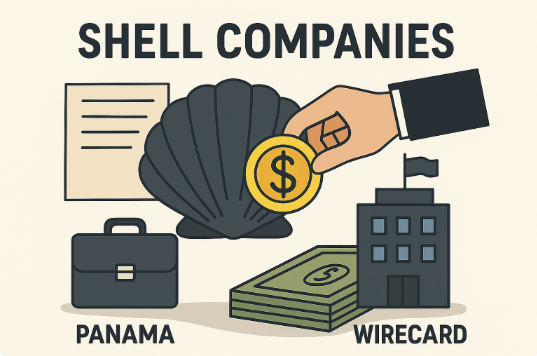
    It mirrors the Panama Papers, Wirecard’s collapse, and Nirav Modi’s scam.

    Shell companies are not evil in themselves—many are used legally.
    But in the wrong hands, they become the world’s most dangerous laundromats.

    They allow criminals to:

    • Hide true ownership.
    • Layer transactions across borders.
    • Bring back dirty money as clean investments.

    And until regulators, auditors, and banks dig beneath the paper façade, more men like Raj will rise, shine, and fall.

    Final Thought

    So the next time you read about a sudden billionaire, ask:

    👉 Is he really a visionary? Or just another Raj Malhotra playing the shell game?


    4. Real-World Examples

    • Panama Papers (2016) – Revealed how Mossack Fonseca set up shell companies for politicians, criminals, and celebrities to hide assets.
    • Wirecard (2020) – Used a network of shell companies in Asia and the Middle East to fake revenues.
    • Nirav Modi Scam (India, 2018) – Multiple shell companies were used to move money abroad through fraudulent LoUs (letters of undertaking).

    5. Red Flags for Shell Companies

    • No physical office or employees.
    • Complex ownership structure (layered through multiple jurisdictions).
    • Registered in offshore tax havens.
    • Frequent, high-value cross-border transfers without clear business purpose.
    • Discrepancies between financial statements and actual business operations.

    6. How Regulators & Forensic Experts Detect This

    • Beneficial Ownership Registries – Identifying the real individuals behind companies.
    • KYC (Know Your Customer) & AML (Anti-Money Laundering) rules – Banks required to report suspicious activity.
    • Forensic Accounting & Data Analytics – Network analysis of transactions to find hidden links.
    • International Cooperation – FATF (Financial Action Task Force) sets global AML standards.

    🗂️ Case Study: The Panama Papers & Shell Companies


    1. Introduction

    The Panama Papers were one of the largest financial data leaks in history, exposing how the world’s elite used shell companies to hide assets, evade taxes, and launder money. In April 2016, the International Consortium of Investigative Journalists (ICIJ) published findings based on 11.5 million documents leaked from Mossack Fonseca, a Panama-based law firm specializing in offshore structures.

    This scandal revealed systemic misuse of offshore shell entities by politicians, billionaires, criminals, and corporations across 200+ countries.


    2. Background

    • Mossack Fonseca: A Panamanian law firm founded in 1977, specialized in creating and managing offshore companies.
    • Offshore shell companies: Entities with little or no real business activity, often used for asset protection, secrecy, and—at times—illegal activities.
    • The Leak: ~2.6 terabytes of data (emails, contracts, PDFs, images, and database records) covering nearly 40 years (1977–2015).

    3. How Shell Companies Were Used

    The leak showed multiple tactics, including:

    1. Asset concealment – Wealthy individuals created offshore shells to hide ownership of yachts, mansions, and bank accounts.
    2. Tax evasion – Profits were shifted to tax havens with little or no taxation (Panama, British Virgin Islands, Seychelles, etc.).
    3. Money laundering – Criminal groups funneled illicit funds through layered shell entities to make them appear legitimate.
    4. Sanctions evasion – Companies linked to sanctioned countries (e.g., Iran, North Korea) used shells to access global banking.

    4. Key Revelations

    • Heads of State Implicated:
      • Sigmundur Davíð Gunnlaugsson, Iceland’s Prime Minister, resigned after his offshore dealings were revealed.
      • Associates of Vladimir Putin moved ~$2 billion through offshore networks.
      • Family of Xi Jinping (China’s president) linked to offshore holdings.
      • Relatives of Nawaz Sharif (Pakistan PM) used offshore shells to buy London luxury properties.
    • Corporates and Banks:
      • Global banks (HSBC, UBS, Deutsche Bank) helped clients set up offshore shells.
      • FIFA officials linked to bribery and corruption through offshore structures.
    • Criminal Networks:
      • Drug cartels, arms dealers, and corrupt politicians used Mossack Fonseca’s shells to mask dirty money.

    5. Impact & Consequences

    1. Political Fallout
      • Resignation of Iceland’s PM.
      • Pressure on political figures worldwide (Pakistan’s PM Sharif was disqualified by the Supreme Court).
    2. Legal & Regulatory Action
      • Mossack Fonseca shut down in 2018.
      • Multiple investigations opened globally, leading to arrests and asset seizures.
    3. Public Pressure & Reforms
      • Greater demand for transparency in offshore finance.
      • Push for Beneficial Ownership Registers (UK, EU).
      • OECD and FATF strengthened compliance standards.

    6. Ethical & Governance Issues

    • Transparency vs. Privacy: Offshore structures aren’t always illegal—sometimes used for asset protection—but secrecy enables misuse.
    • Accountability Gaps: Weak regulations allowed intermediaries (law firms, banks) to operate with little oversight.
    • Global Inequality: The leak highlighted how the ultra-rich could legally exploit loopholes, while ordinary citizens faced stricter taxation.

    7. Lessons Learned

    • Due Diligence Matters: Financial institutions need robust KYC/AML frameworks.
    • Technology in Detection: AI and forensic accounting tools can help detect unusual shell-company networks.
    • International Cooperation: Money laundering is cross-border; regulators must coordinate globally.
    • Corporate Governance: Boards and auditors must ensure transparency in related-party dealings and offshore investments.

    8. Conclusion

    The Panama Papers were a turning point in exposing how shell companies are abused. They forced governments, regulators, and institutions to rethink financial secrecy and demand transparency. While not all offshore companies are illegal, the scandal proved that without oversight, shell structures can be powerful tools for corruption, tax evasion, and laundering.


    9. External References

    Read our blogs on Corporate Governance here.

    External reference 4 Money Laundering Cases link. Panama Papers link.


    A shell company is just a legal entity with little or no operations or assets. It becomes shady only when used for fraud or laundering. Many shells exist for perfectly legitimate reasons:

    1. Holding Assets

    • Companies often use shells to hold intellectual property, real estate, or trademarks separately from the operating business.
    • Example: Google shifted its patents into a separate entity for better management and licensing.

    2. Mergers & Acquisitions (M&A)

    • In corporate deals, shells can act as special-purpose vehicles (SPVs) to complete acquisitions or spin-offs without disturbing the parent company’s operations.
    • Example: A big company buying a startup may first create a shell SPV to handle the transaction.

    3. Raising Capital (SPACs)

    • Special Purpose Acquisition Companies (SPACs) are shells listed on stock markets with no operations. They exist only to raise money and later merge with a real business.
    • This is 100% legal, regulated, and often used in Wall Street deals.

    4. Joint Ventures

    • Two companies from different countries may form a shell in a neutral jurisdiction to share profits and risks fairly.

    5. Tax & Estate Planning

    • Some shells are created in low-tax jurisdictions for legitimate tax optimization (not evasion).
    • Wealthy families sometimes use shells for succession planning, making inheritance smoother.

    Legitimate Shells – Allowed ✅

    • If a company is registered properly under the Registrar of Companies (RoC), maintains books, pays taxes, and discloses ownership, it can legally exist—even if it has no operations.
    • Example: A startup founder may incorporate a company to hold IP or raise funds later. Until then, it’s a shell but still legal.

    ⚠️ When It Crosses the Line

    A legal shell becomes illegal when it’s used to:

    • Hide the true owner (beneficial ownership)
    • Move illicit money (hawala, fake invoices, round-tripping)
    • Evade taxes beyond what’s allowed under law
    • Create fake revenues or inflate valuations

    Illegitimate Shells – Illegal ❌

    • When shells are used for money laundering, round-tripping (sending Indian black money abroad and bringing it back as FDI), or tax evasion, they break several laws:
      • Prevention of Money Laundering Act (PMLA)
      • Benami Transactions Act
      • Foreign Exchange Management Act (FEMA)
      • Income Tax Act

    ✅ So, Is It Legal?

    • Yes, registering and owning a shell company is legal in India, as long as it’s transparent, compliant, and not used for illegal purposes.
    • No, if it’s just a dummy vehicle for laundering, tax evasion, or hiding black money.

    🚨 Call to Action

    Shell companies aren’t always villains—they can be legal tools. But when misused, they become weapons that rob the economy, cheat investors, and fuel corruption.

    💡 As an entrepreneur, keep your company records clean and transparent.
    💡 As an investor, always check for red flags—unusual related-party transactions, zero revenues, or offshore entities without clear purpose.
    💡 As a citizen, demand stronger disclosure norms and support governance reforms.

    👉 The future of Indian business depends on trust and transparency. Let’s build companies that create value in the open, not hide in the shadows.


  • The Dark Secrets of Shell Companies: How Money Gets Washed Clean

    The Dark Secrets of Shell Companies: How Money Gets Washed Clean


    1. What is Money Laundering?

    Money laundering is the process of disguising illegally obtained money (from fraud, corruption, trafficking, tax evasion, bribery, etc.) so it appears legitimate.

    It usually involves three stages:

    1. Placement – Introducing illicit funds into the financial system (e.g., cash deposits, buying assets).
    2. Layering – Creating complex layers of transactions to hide the source (e.g., transfers between accounts, across borders, investments).
    3. Integration – Reintroducing “cleaned” money into the economy (e.g., real estate, luxury goods, business investments).

    2. What are Shell Companies?

    A shell company is a legal entity that exists only on paper, with no significant assets or active operations.

    • Legitimate use: Sometimes used for tax planning, mergers, or holding assets.
    • Illicit use: Criminals exploit shell companies to hide ownership, move money across borders, and launder funds.

    3. How Shell Companies Help in Money Laundering

    • Anonymous Ownership: Criminals register companies in jurisdictions with weak disclosure rules (tax havens, secrecy jurisdictions).
    • Layering: Funds are transferred through multiple shell companies to make tracing difficult.
    • Trade-Based Laundering: Fake invoices, over/under invoicing via shell firms.
    • Round-Tripping: Illicit money sent abroad via shells and reinvested back into the home country as “foreign investment.”
    • Tax Evasion: Profits are shifted to shell companies in low-tax countries.

    The Story of Raj Malhotra: Shell Companies

    The Beginning: A Fortune Too Dirty to Spend

    Raj Malhotra was not born rich. He grew up in a small Indian town but, by his thirties, he had become a man of immense “hidden wealth.”
    Not from innovation, not from hard work—his fortune came from rigged government contracts, inflated bills, and under-the-table deals.

    By 2010, Raj had ₹500 crore in black money sitting in safes, warehouses, and secret lockers.
    It was useless.
    If he spent it directly, questions would come: Where did the money come from? Why wasn’t it declared?

    Raj’s problem was not making money.
    His problem was making it look clean.


    The Fixer’s Advice

    One evening in a Dubai hotel, Raj met an old acquaintance—Sameer, a corporate lawyer who specialized in “offshore structuring.”

    “Raj,” Sameer said, sipping his drink,
    “Why hold onto dirty cash? Let me introduce you to the world of shell companies. Paper firms. No offices. No employees. Just names. With them, your money can travel the world and come back cleaner than ever.”

    Raj leaned in. “And no one will know?”

    Sameer smiled. “That’s the beauty. On paper, these companies are separate from you. In reality, they’re your laundromats.”


    Act 1: The Birth of Paper Firms

    Within weeks, Raj had a dozen companies registered in British Virgin Islands, Panama, and Hong Kong.
    Each had a fancy name: Emerald Holdings Ltd., Blue Ocean Trading FZE, Sunrise Gems Inc.

    But behind the paperwork, they were empty shells.

    • No factories.
    • No employees.
    • Just a PO box address and nominee directors who had never met Raj.
    • On paper: Raj is not the direct owner.
      • He uses nominee directors/shareholders (often locals or professional agents who lend their names).
      • His name might not appear anywhere in official filings.
    • In reality: Raj is the beneficial owner—he controls the company’s decisions, its bank accounts, and the flow of funds.

    👉 That’s why regulators worldwide now push for Beneficial Ownership Registries—to unmask who actually controls a company.

    Raj wired his black money through hawala channels, and suddenly these shells had “capital.”


    Act 2: The Magic of Layering

    Now came the real trick—layering.

    • Blue Ocean Trading “sold” gemstones to Sunrise Gems.
    • Emerald Holdings “loaned” money to a Dubai-based shell.
    • The Dubai firm then “invested” in a Singapore subsidiary.

    On paper, these were international business deals.
    In reality, it was Raj’s money chasing its own tail—crossing borders, changing currencies, and leaving behind a smoke screen.

    Why Raj’s Name Disappears:

    Here’s the key trick: Hawala money doesn’t show up as “Raj’s money” when it lands in Singapore.

    • Raj gives cash to a hawala broker in India.
    • The broker’s partner in Dubai/Singapore transfers equivalent funds into Sunrise Gems’ bank account.
    • To the Singapore bank, it looks like:
      • A trade payment from another company, OR
      • A loan from another offshore entity, OR
      • Capital infusion by its shareholder (but the shareholder might be another shell, not Raj).

    So the books of Sunrise Gems don’t say: “Loan from Raj Malhotra.”
    Instead, they say: “Loan from Blue Ocean Trading FZE (Dubai)” or “Invoice payment from Emerald Holdings Ltd (BVI).”

    By the time money reached his Swiss bank account, it looked like legitimate business revenue.


    Act 3: Integration — Clean Money Returns

    Re-Entry into India (Round-Tripping)

    • Now, Sunrise Gems Pte Ltd “invests” in Raj’s Indian company as Foreign Direct Investment (FDI).
    • Since FDI is encouraged, Indian regulators (like RBI and SEBI) see this as legal foreign capital inflow.
    • Banks record it officially as an inbound investment from Singapore.

    Six months later, Raj proudly walked into an Indian bank branch.
    He wired in $50 million—not as black money, but as foreign investment from his Singapore company.

    The same dirty cash he once hid in lockers now wore a respectable suit.
    It was officially recorded as FDI (Foreign Direct Investment).
    Raj used it to buy luxury real estate in Mumbai, invest in startups, and even fund political campaigns.

    His dirty wealth was now indistinguishable from honest money.


    The Illusion of Legitimacy

    To the world, Raj became a success story:

    • A “self-made investor.”
    • A man whose companies had “global operations.”
    • A tycoon who appeared in glossy magazines.

    But those who looked closer saw the cracks:

    • His firms had no employees.
    • Their addresses led to empty offices.
    • Transactions didn’t match real trade volumes.

    It was a mirage built on shells.


    The Fall

    Raj’s empire might have lasted forever—if not for a whistleblower.

    A disgruntled employee leaked documents to investigative journalists.
    Raj’s name surfaced in a global leak alongside others who used offshore shells to move billions.

    Forensic auditors traced his maze of transactions.

    • Fake invoices.
    • Circular transfers.
    • Round-tripping disguised as FDI.

    The illusion collapsed. Raj’s assets were frozen. His luxury homes were raided. And overnight, the tycoon became a fugitive.


    The Lesson of Raj Malhotra

    Raj’s story isn’t unique.
    It mirrors the Panama Papers, Wirecard’s collapse, and Nirav Modi’s scam.

    Shell companies are not evil in themselves—many are used legally.
    But in the wrong hands, they become the world’s most dangerous laundromats.

    They allow criminals to:

    • Hide true ownership.
    • Layer transactions across borders.
    • Bring back dirty money as clean investments.

    And until regulators, auditors, and banks dig beneath the paper façade, more men like Raj will rise, shine, and fall.

    Final Thought

    So the next time you read about a sudden billionaire, ask:

    👉 Is he really a visionary? Or just another Raj Malhotra playing the shell game?


    4. Real-World Examples

    • Panama Papers (2016) – Revealed how Mossack Fonseca set up shell companies for politicians, criminals, and celebrities to hide assets.
    • Wirecard (2020) – Used a network of shell companies in Asia and the Middle East to fake revenues.
    • Nirav Modi Scam (India, 2018) – Multiple shell companies were used to move money abroad through fraudulent LoUs (letters of undertaking).

    5. Red Flags for Shell Companies

    • No physical office or employees.
    • Complex ownership structure (layered through multiple jurisdictions).
    • Registered in offshore tax havens.
    • Frequent, high-value cross-border transfers without clear business purpose.
    • Discrepancies between financial statements and actual business operations.

    6. How Regulators & Forensic Experts Detect This

    • Beneficial Ownership Registries – Identifying the real individuals behind companies.
    • KYC (Know Your Customer) & AML (Anti-Money Laundering) rules – Banks required to report suspicious activity.
    • Forensic Accounting & Data Analytics – Network analysis of transactions to find hidden links.
    • International Cooperation – FATF (Financial Action Task Force) sets global AML standards.

    🗂️ Case Study: The Panama Papers & Shell Companies


    1. Introduction

    The Panama Papers were one of the largest financial data leaks in history, exposing how the world’s elite used shell companies to hide assets, evade taxes, and launder money. In April 2016, the International Consortium of Investigative Journalists (ICIJ) published findings based on 11.5 million documents leaked from Mossack Fonseca, a Panama-based law firm specializing in offshore structures.

    This scandal revealed systemic misuse of offshore shell entities by politicians, billionaires, criminals, and corporations across 200+ countries.


    2. Background

    • Mossack Fonseca: A Panamanian law firm founded in 1977, specialized in creating and managing offshore companies.
    • Offshore shell companies: Entities with little or no real business activity, often used for asset protection, secrecy, and—at times—illegal activities.
    • The Leak: ~2.6 terabytes of data (emails, contracts, PDFs, images, and database records) covering nearly 40 years (1977–2015).

    3. How Shell Companies Were Used

    The leak showed multiple tactics, including:

    1. Asset concealment – Wealthy individuals created offshore shells to hide ownership of yachts, mansions, and bank accounts.
    2. Tax evasion – Profits were shifted to tax havens with little or no taxation (Panama, British Virgin Islands, Seychelles, etc.).
    3. Money laundering – Criminal groups funneled illicit funds through layered shell entities to make them appear legitimate.
    4. Sanctions evasion – Companies linked to sanctioned countries (e.g., Iran, North Korea) used shells to access global banking.

    4. Key Revelations

    • Heads of State Implicated:
      • Sigmundur Davíð Gunnlaugsson, Iceland’s Prime Minister, resigned after his offshore dealings were revealed.
      • Associates of Vladimir Putin moved ~$2 billion through offshore networks.
      • Family of Xi Jinping (China’s president) linked to offshore holdings.
      • Relatives of Nawaz Sharif (Pakistan PM) used offshore shells to buy London luxury properties.
    • Corporates and Banks:
      • Global banks (HSBC, UBS, Deutsche Bank) helped clients set up offshore shells.
      • FIFA officials linked to bribery and corruption through offshore structures.
    • Criminal Networks:
      • Drug cartels, arms dealers, and corrupt politicians used Mossack Fonseca’s shells to mask dirty money.

    5. Impact & Consequences

    1. Political Fallout
      • Resignation of Iceland’s PM.
      • Pressure on political figures worldwide (Pakistan’s PM Sharif was disqualified by the Supreme Court).
    2. Legal & Regulatory Action
      • Mossack Fonseca shut down in 2018.
      • Multiple investigations opened globally, leading to arrests and asset seizures.
    3. Public Pressure & Reforms
      • Greater demand for transparency in offshore finance.
      • Push for Beneficial Ownership Registers (UK, EU).
      • OECD and FATF strengthened compliance standards.

    6. Ethical & Governance Issues

    • Transparency vs. Privacy: Offshore structures aren’t always illegal—sometimes used for asset protection—but secrecy enables misuse.
    • Accountability Gaps: Weak regulations allowed intermediaries (law firms, banks) to operate with little oversight.
    • Global Inequality: The leak highlighted how the ultra-rich could legally exploit loopholes, while ordinary citizens faced stricter taxation.

    7. Lessons Learned

    • Due Diligence Matters: Financial institutions need robust KYC/AML frameworks.
    • Technology in Detection: AI and forensic accounting tools can help detect unusual shell-company networks.
    • International Cooperation: Money laundering is cross-border; regulators must coordinate globally.
    • Corporate Governance: Boards and auditors must ensure transparency in related-party dealings and offshore investments.

    8. Conclusion

    The Panama Papers were a turning point in exposing how shell companies are abused. They forced governments, regulators, and institutions to rethink financial secrecy and demand transparency. While not all offshore companies are illegal, the scandal proved that without oversight, shell structures can be powerful tools for corruption, tax evasion, and laundering.


    9. External References

    Read our blogs on Corporate Governance here.

    External reference 4 Money Laundering Cases link. Panama Papers link.


    A shell company is just a legal entity with little or no operations or assets. It becomes shady only when used for fraud or laundering. Many shells exist for perfectly legitimate reasons:

    1. Holding Assets

    • Companies often use shells to hold intellectual property, real estate, or trademarks separately from the operating business.
    • Example: Google shifted its patents into a separate entity for better management and licensing.

    2. Mergers & Acquisitions (M&A)

    • In corporate deals, shells can act as special-purpose vehicles (SPVs) to complete acquisitions or spin-offs without disturbing the parent company’s operations.
    • Example: A big company buying a startup may first create a shell SPV to handle the transaction.

    3. Raising Capital (SPACs)

    • Special Purpose Acquisition Companies (SPACs) are shells listed on stock markets with no operations. They exist only to raise money and later merge with a real business.
    • This is 100% legal, regulated, and often used in Wall Street deals.

    4. Joint Ventures

    • Two companies from different countries may form a shell in a neutral jurisdiction to share profits and risks fairly.

    5. Tax & Estate Planning

    • Some shells are created in low-tax jurisdictions for legitimate tax optimization (not evasion).
    • Wealthy families sometimes use shells for succession planning, making inheritance smoother.

    Legitimate Shells – Allowed ✅

    • If a company is registered properly under the Registrar of Companies (RoC), maintains books, pays taxes, and discloses ownership, it can legally exist—even if it has no operations.
    • Example: A startup founder may incorporate a company to hold IP or raise funds later. Until then, it’s a shell but still legal.

    ⚠️ When It Crosses the Line

    A legal shell becomes illegal when it’s used to:

    • Hide the true owner (beneficial ownership)
    • Move illicit money (hawala, fake invoices, round-tripping)
    • Evade taxes beyond what’s allowed under law
    • Create fake revenues or inflate valuations

    Illegitimate Shells – Illegal ❌

    • When shells are used for money laundering, round-tripping (sending Indian black money abroad and bringing it back as FDI), or tax evasion, they break several laws:
      • Prevention of Money Laundering Act (PMLA)
      • Benami Transactions Act
      • Foreign Exchange Management Act (FEMA)
      • Income Tax Act

    ✅ So, Is It Legal?

    • Yes, registering and owning a shell company is legal in India, as long as it’s transparent, compliant, and not used for illegal purposes.
    • No, if it’s just a dummy vehicle for laundering, tax evasion, or hiding black money.

    🚨 Call to Action

    Shell companies aren’t always villains—they can be legal tools. But when misused, they become weapons that rob the economy, cheat investors, and fuel corruption.

    💡 As an entrepreneur, keep your company records clean and transparent.
    💡 As an investor, always check for red flags—unusual related-party transactions, zero revenues, or offshore entities without clear purpose.
    💡 As a citizen, demand stronger disclosure norms and support governance reforms.

    👉 The future of Indian business depends on trust and transparency. Let’s build companies that create value in the open, not hide in the shadows.

  • The Dark Secrets of Shell Companies: How Money Gets Washed Clean

    The Dark Secrets of Shell Companies: How Money Gets Washed Clean


    1. What is Money Laundering?

    Money laundering is the process of disguising illegally obtained money (from fraud, corruption, trafficking, tax evasion, bribery, etc.) so it appears legitimate.

    It usually involves three stages:

    1. Placement – Introducing illicit funds into the financial system (e.g., cash deposits, buying assets).
    2. Layering – Creating complex layers of transactions to hide the source (e.g., transfers between accounts, across borders, investments).
    3. Integration – Reintroducing “cleaned” money into the economy (e.g., real estate, luxury goods, business investments).

    2. What are Shell Companies?

    A shell company is a legal entity that exists only on paper, with no significant assets or active operations.

    • Legitimate use: Sometimes used for tax planning, mergers, or holding assets.
    • Illicit use: Criminals exploit shell companies to hide ownership, move money across borders, and launder funds.

    3. How Shell Companies Help in Money Laundering

    • Anonymous Ownership: Criminals register companies in jurisdictions with weak disclosure rules (tax havens, secrecy jurisdictions).
    • Layering: Funds are transferred through multiple shell companies to make tracing difficult.
    • Trade-Based Laundering: Fake invoices, over/under invoicing via shell firms.
    • Round-Tripping: Illicit money sent abroad via shells and reinvested back into the home country as “foreign investment.”
    • Tax Evasion: Profits are shifted to shell companies in low-tax countries.

    The Story of Raj Malhotra: Shell Companies

    The Beginning: A Fortune Too Dirty to Spend

    Raj Malhotra was not born rich. He grew up in a small Indian town but, by his thirties, he had become a man of immense “hidden wealth.”
    Not from innovation, not from hard work—his fortune came from rigged government contracts, inflated bills, and under-the-table deals.

    By 2010, Raj had ₹500 crore in black money sitting in safes, warehouses, and secret lockers.
    It was useless.
    If he spent it directly, questions would come: Where did the money come from? Why wasn’t it declared?

    Raj’s problem was not making money.
    His problem was making it look clean.


    The Fixer’s Advice

    One evening in a Dubai hotel, Raj met an old acquaintance—Sameer, a corporate lawyer who specialized in “offshore structuring.”

    “Raj,” Sameer said, sipping his drink,
    “Why hold onto dirty cash? Let me introduce you to the world of shell companies. Paper firms. No offices. No employees. Just names. With them, your money can travel the world and come back cleaner than ever.”

    Raj leaned in. “And no one will know?”

    Sameer smiled. “That’s the beauty. On paper, these companies are separate from you. In reality, they’re your laundromats.”


    Act 1: The Birth of Paper Firms

    Within weeks, Raj had a dozen companies registered in British Virgin Islands, Panama, and Hong Kong.
    Each had a fancy name: Emerald Holdings Ltd., Blue Ocean Trading FZE, Sunrise Gems Inc.

    But behind the paperwork, they were empty shells.

    • No factories.
    • No employees.
    • Just a PO box address and nominee directors who had never met Raj.
    • On paper: Raj is not the direct owner.
      • He uses nominee directors/shareholders (often locals or professional agents who lend their names).
      • His name might not appear anywhere in official filings.
    • In reality: Raj is the beneficial owner—he controls the company’s decisions, its bank accounts, and the flow of funds.

    👉 That’s why regulators worldwide now push for Beneficial Ownership Registries—to unmask who actually controls a company.

    Raj wired his black money through hawala channels, and suddenly these shells had “capital.”


    Act 2: The Magic of Layering

    Now came the real trick—layering.

    • Blue Ocean Trading “sold” gemstones to Sunrise Gems.
    • Emerald Holdings “loaned” money to a Dubai-based shell.
    • The Dubai firm then “invested” in a Singapore subsidiary.

    On paper, these were international business deals.
    In reality, it was Raj’s money chasing its own tail—crossing borders, changing currencies, and leaving behind a smoke screen.

    Why Raj’s Name Disappears:

    Here’s the key trick: Hawala money doesn’t show up as “Raj’s money” when it lands in Singapore.

    • Raj gives cash to a hawala broker in India.
    • The broker’s partner in Dubai/Singapore transfers equivalent funds into Sunrise Gems’ bank account.
    • To the Singapore bank, it looks like:
      • A trade payment from another company, OR
      • A loan from another offshore entity, OR
      • Capital infusion by its shareholder (but the shareholder might be another shell, not Raj).

    So the books of Sunrise Gems don’t say: “Loan from Raj Malhotra.”
    Instead, they say: “Loan from Blue Ocean Trading FZE (Dubai)” or “Invoice payment from Emerald Holdings Ltd (BVI).”

    By the time money reached his Swiss bank account, it looked like legitimate business revenue.


    Act 3: Integration — Clean Money Returns

    Re-Entry into India (Round-Tripping)

    • Now, Sunrise Gems Pte Ltd “invests” in Raj’s Indian company as Foreign Direct Investment (FDI).
    • Since FDI is encouraged, Indian regulators (like RBI and SEBI) see this as legal foreign capital inflow.
    • Banks record it officially as an inbound investment from Singapore.

    Six months later, Raj proudly walked into an Indian bank branch.
    He wired in $50 million—not as black money, but as foreign investment from his Singapore company.

    The same dirty cash he once hid in lockers now wore a respectable suit.
    It was officially recorded as FDI (Foreign Direct Investment).
    Raj used it to buy luxury real estate in Mumbai, invest in startups, and even fund political campaigns.

    His dirty wealth was now indistinguishable from honest money.


    The Illusion of Legitimacy

    To the world, Raj became a success story:

    • A “self-made investor.”
    • A man whose companies had “global operations.”
    • A tycoon who appeared in glossy magazines.

    But those who looked closer saw the cracks:

    • His firms had no employees.
    • Their addresses led to empty offices.
    • Transactions didn’t match real trade volumes.

    It was a mirage built on shells.


    The Fall

    Raj’s empire might have lasted forever—if not for a whistleblower.

    A disgruntled employee leaked documents to investigative journalists.
    Raj’s name surfaced in a global leak alongside others who used offshore shells to move billions.

    Forensic auditors traced his maze of transactions.

    • Fake invoices.
    • Circular transfers.
    • Round-tripping disguised as FDI.

    The illusion collapsed. Raj’s assets were frozen. His luxury homes were raided. And overnight, the tycoon became a fugitive.


    The Lesson of Raj Malhotra

    Raj’s story isn’t unique.
    It mirrors the Panama Papers, Wirecard’s collapse, and Nirav Modi’s scam.

    Shell companies are not evil in themselves—many are used legally.
    But in the wrong hands, they become the world’s most dangerous laundromats.

    They allow criminals to:

    • Hide true ownership.
    • Layer transactions across borders.
    • Bring back dirty money as clean investments.

    And until regulators, auditors, and banks dig beneath the paper façade, more men like Raj will rise, shine, and fall.

    Final Thought

    So the next time you read about a sudden billionaire, ask:

    👉 Is he really a visionary? Or just another Raj Malhotra playing the shell game?


    4. Real-World Examples

    • Panama Papers (2016) – Revealed how Mossack Fonseca set up shell companies for politicians, criminals, and celebrities to hide assets.
    • Wirecard (2020) – Used a network of shell companies in Asia and the Middle East to fake revenues.
    • Nirav Modi Scam (India, 2018) – Multiple shell companies were used to move money abroad through fraudulent LoUs (letters of undertaking).

    5. Red Flags for Shell Companies

    • No physical office or employees.
    • Complex ownership structure (layered through multiple jurisdictions).
    • Registered in offshore tax havens.
    • Frequent, high-value cross-border transfers without clear business purpose.
    • Discrepancies between financial statements and actual business operations.

    6. How Regulators & Forensic Experts Detect This

    • Beneficial Ownership Registries – Identifying the real individuals behind companies.
    • KYC (Know Your Customer) & AML (Anti-Money Laundering) rules – Banks required to report suspicious activity.
    • Forensic Accounting & Data Analytics – Network analysis of transactions to find hidden links.
    • International Cooperation – FATF (Financial Action Task Force) sets global AML standards.

    🗂️ Case Study: The Panama Papers & Shell Companies


    1. Introduction

    The Panama Papers were one of the largest financial data leaks in history, exposing how the world’s elite used shell companies to hide assets, evade taxes, and launder money. In April 2016, the International Consortium of Investigative Journalists (ICIJ) published findings based on 11.5 million documents leaked from Mossack Fonseca, a Panama-based law firm specializing in offshore structures.

    This scandal revealed systemic misuse of offshore shell entities by politicians, billionaires, criminals, and corporations across 200+ countries.


    2. Background

    • Mossack Fonseca: A Panamanian law firm founded in 1977, specialized in creating and managing offshore companies.
    • Offshore shell companies: Entities with little or no real business activity, often used for asset protection, secrecy, and—at times—illegal activities.
    • The Leak: ~2.6 terabytes of data (emails, contracts, PDFs, images, and database records) covering nearly 40 years (1977–2015).

    3. How Shell Companies Were Used

    The leak showed multiple tactics, including:

    1. Asset concealment – Wealthy individuals created offshore shells to hide ownership of yachts, mansions, and bank accounts.
    2. Tax evasion – Profits were shifted to tax havens with little or no taxation (Panama, British Virgin Islands, Seychelles, etc.).
    3. Money laundering – Criminal groups funneled illicit funds through layered shell entities to make them appear legitimate.
    4. Sanctions evasion – Companies linked to sanctioned countries (e.g., Iran, North Korea) used shells to access global banking.

    4. Key Revelations

    • Heads of State Implicated:
      • Sigmundur Davíð Gunnlaugsson, Iceland’s Prime Minister, resigned after his offshore dealings were revealed.
      • Associates of Vladimir Putin moved ~$2 billion through offshore networks.
      • Family of Xi Jinping (China’s president) linked to offshore holdings.
      • Relatives of Nawaz Sharif (Pakistan PM) used offshore shells to buy London luxury properties.
    • Corporates and Banks:
      • Global banks (HSBC, UBS, Deutsche Bank) helped clients set up offshore shells.
      • FIFA officials linked to bribery and corruption through offshore structures.
    • Criminal Networks:
      • Drug cartels, arms dealers, and corrupt politicians used Mossack Fonseca’s shells to mask dirty money.

    5. Impact & Consequences

    1. Political Fallout
      • Resignation of Iceland’s PM.
      • Pressure on political figures worldwide (Pakistan’s PM Sharif was disqualified by the Supreme Court).
    2. Legal & Regulatory Action
      • Mossack Fonseca shut down in 2018.
      • Multiple investigations opened globally, leading to arrests and asset seizures.
    3. Public Pressure & Reforms
      • Greater demand for transparency in offshore finance.
      • Push for Beneficial Ownership Registers (UK, EU).
      • OECD and FATF strengthened compliance standards.

    6. Ethical & Governance Issues

    • Transparency vs. Privacy: Offshore structures aren’t always illegal—sometimes used for asset protection—but secrecy enables misuse.
    • Accountability Gaps: Weak regulations allowed intermediaries (law firms, banks) to operate with little oversight.
    • Global Inequality: The leak highlighted how the ultra-rich could legally exploit loopholes, while ordinary citizens faced stricter taxation.

    7. Lessons Learned

    • Due Diligence Matters: Financial institutions need robust KYC/AML frameworks.
    • Technology in Detection: AI and forensic accounting tools can help detect unusual shell-company networks.
    • International Cooperation: Money laundering is cross-border; regulators must coordinate globally.
    • Corporate Governance: Boards and auditors must ensure transparency in related-party dealings and offshore investments.

    8. Conclusion

    The Panama Papers were a turning point in exposing how shell companies are abused. They forced governments, regulators, and institutions to rethink financial secrecy and demand transparency. While not all offshore companies are illegal, the scandal proved that without oversight, shell structures can be powerful tools for corruption, tax evasion, and laundering.


    9. External References

    Read our blogs on Corporate Governance here.

    External reference 4 Money Laundering Cases link. Panama Papers link.


    A shell company is just a legal entity with little or no operations or assets. It becomes shady only when used for fraud or laundering. Many shells exist for perfectly legitimate reasons:

    1. Holding Assets

    • Companies often use shells to hold intellectual property, real estate, or trademarks separately from the operating business.
    • Example: Google shifted its patents into a separate entity for better management and licensing.

    2. Mergers & Acquisitions (M&A)

    • In corporate deals, shells can act as special-purpose vehicles (SPVs) to complete acquisitions or spin-offs without disturbing the parent company’s operations.
    • Example: A big company buying a startup may first create a shell SPV to handle the transaction.

    3. Raising Capital (SPACs)

    • Special Purpose Acquisition Companies (SPACs) are shells listed on stock markets with no operations. They exist only to raise money and later merge with a real business.
    • This is 100% legal, regulated, and often used in Wall Street deals.

    4. Joint Ventures

    • Two companies from different countries may form a shell in a neutral jurisdiction to share profits and risks fairly.

    5. Tax & Estate Planning

    • Some shells are created in low-tax jurisdictions for legitimate tax optimization (not evasion).
    • Wealthy families sometimes use shells for succession planning, making inheritance smoother.

    Legitimate Shells – Allowed ✅

    • If a company is registered properly under the Registrar of Companies (RoC), maintains books, pays taxes, and discloses ownership, it can legally exist—even if it has no operations.
    • Example: A startup founder may incorporate a company to hold IP or raise funds later. Until then, it’s a shell but still legal.

    ⚠️ When It Crosses the Line

    A legal shell becomes illegal when it’s used to:

    • Hide the true owner (beneficial ownership)
    • Move illicit money (hawala, fake invoices, round-tripping)
    • Evade taxes beyond what’s allowed under law
    • Create fake revenues or inflate valuations

    Illegitimate Shells – Illegal ❌

    • When shells are used for money laundering, round-tripping (sending Indian black money abroad and bringing it back as FDI), or tax evasion, they break several laws:
      • Prevention of Money Laundering Act (PMLA)
      • Benami Transactions Act
      • Foreign Exchange Management Act (FEMA)
      • Income Tax Act

    ✅ So, Is It Legal?

    • Yes, registering and owning a shell company is legal in India, as long as it’s transparent, compliant, and not used for illegal purposes.
    • No, if it’s just a dummy vehicle for laundering, tax evasion, or hiding black money.

    🚨 Call to Action

    Shell companies aren’t always villains—they can be legal tools. But when misused, they become weapons that rob the economy, cheat investors, and fuel corruption.

    💡 As an entrepreneur, keep your company records clean and transparent.
    💡 As an investor, always check for red flags—unusual related-party transactions, zero revenues, or offshore entities without clear purpose.
    💡 As a citizen, demand stronger disclosure norms and support governance reforms.

    👉 The future of Indian business depends on trust and transparency. Let’s build companies that create value in the open, not hide in the shadows.
  • Healing From Trauma: 6 Soulful Steps, 10 Healing Practices

    Healing From Trauma: 6 Soulful Steps, 10 Healing Practices

    Life is a journey of constant change, filled with moments of joy and times of challenge. Just as the sun rises and sets, happiness and hardship follow each other in rhythm. It’s natural to wish for everything to be smooth, but expecting only good things can leave us unprepared for life’s inevitable trials. Embracing both the highs and lows allows us to grow stronger, wiser, and more resilient with each passing day. Just like birth, death is inevitable and unavoidable. It often brings shock and trauma, but we need to learn to cope & heal. We need to be mentally prepared for the worst in life. We will see what is trauma and how to heal from it.


    What is Trauma?

    Trauma is the deep wound we feel inside after a shocking or painful event, like the sudden loss of a loved one or a serious accident. It’s not just about what happened, but how our heart and mind struggle to make sense of it. The brain goes into alarm mode, the body feels restless or numb, and emotions swing between fear, sadness, and disbelief. In simple terms, trauma is the heavy impact left on our mind, body, and spirit when life changes in a way we weren’t ready for.

    Trauma

    Trauma

    When someone goes through a sudden shock or tragic loss, the brain’s survival system (amygdala) takes over. Its main job is survival, not reasoning, so it floods the body with stress hormones like adrenaline and cortisol. The logical part of the brain (prefrontal cortex) gets “switched off” or slowed down. That’s why in trauma people may:

    • feel confused, forget things, or keep asking “Why did this happen?”
    • act on emotions rather than reason
    • replay the event again and again instead of processing it rationally

    With time, as the nervous system calms and healing practices begin, the logical mind slowly comes back online. 🌿


    Trauma for Survivors

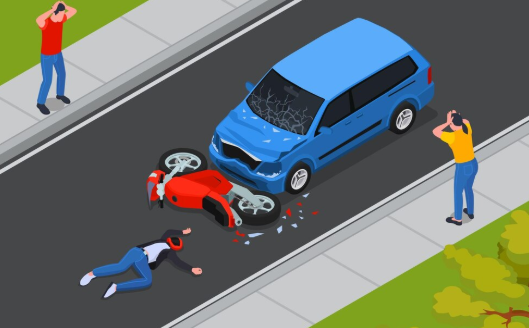
    The sudden, tragic loss of a loved one or an accident leaves families and friends shaken to the core. The images of the accident scene often overshadow every joyful memory, raising haunting questions: How much painful it would have been? Why did this happen?

    The truth is that while the accident itself may look unbearably painful, science and spiritual wisdom both assure us:

    The trauma that lingers in the hearts of survivors is far more painful than the final moment of the loved one.


    🌀 Understanding Trauma After Sudden Loss

    When death comes suddenly and violently, the mind struggles to process it. Instead of just grief, survivors often face:

    • Shock (numbness, disbelief, feeling “unreal”)
    • Intrusive images (accident replaying in the mind)
    • Avoidance (fear of roads, trucks, or anything that reminds them)
    • Guilt and anger (“why them?”, “if only…”)
    • Physical symptoms (insomnia, heart racing, stomach upset)

    This combination is not “just sadness”—it’s traumatic grief, which blends grief with PTSD-like reactions (Post-Traumatic Stress Disorder).


    💔 The Weight of Trauma for Survivors

    The human heart and mind replay the tragedy endlessly, making the accident itself secondary to the trauma memory. Survivors often:

    • Feel guilt (“why them?”)
    • Re-experience the accident scene when remembering the person
    • Fear roads or travel
    • Struggle to recall happy memories without the tragedy intruding

    This is why trauma can feel heavier than the death itself—it lingers, reshaping how survivors live, think, and love.

    The Nature of Trauma After Sudden Death

    When death is violent or unexpected, two things happen inside us:

    Trauma - Accident

    Trauma Imprint – The mind replays the accident or hospital scene again and again. Instead of remembering the person’s smile or presence, the first thought becomes their death.

    Existential Shock – The heart aches with questions: “Why them? Why this way? Why now?” Logic fails, because there is no neat reason.

    The trauma sits on top of the grief, blocking access to love-filled memories.

    The key difference between grief & trauma is:

    • Normal grief = sadness, longing, emptiness.
    • Traumatic grief/PTSD-like = the mind stuck in the accident scene and unable to move to the happier memories.

    👉 The good news: with time, support, and sometimes therapy, these symptoms usually soften. The brain learns it’s “safe” again, and memories of love slowly take the front seat over the accident replay.


    🧠 How the Brain Shuts Down in Accidental Cases

    Trauma - Brain Function

    1. The Brain Is the “Interpreter” of Pain
      • Pain isn’t actually in the body part—it’s in the brain.
      • Nerves send signals to the spinal cord → brain. Only if the brain interprets those signals do we “feel” pain.
    2. Catastrophic Head Injury Breaks the Circuit
      • In a massive injury (e.g., head run over by a truck), the very organ that interprets pain is destroyed or disabled instantly.
      • The brainstem, which controls consciousness, is damaged immediately → the person blacks out in milliseconds.
    3. Loss of Consciousness Protects from Suffering
      • Just like fainting or anesthesia: once consciousness is gone, awareness of pain is gone.
      • Even if the body shows reflex movements, the “person” is not there to experience them.
    4. Shock Mechanism
      • In less extreme injuries, the brain floods the body with endorphins (natural painkillers) and adrenaline, blunting pain perception.
      • In extreme trauma, there’s not even time for this—the system simply shuts down.

    🔑 Takeaway

    In sudden catastrophic trauma, the brain spares the person from suffering by switching off almost instantly. The accident looks unbearably painful to those who witness it, but medically and neurologically, the loved one is unconscious before pain can even register.


    🌿 Healing Trauma

    Healing does not mean forgetting—it means learning to carry the love without being crushed by the memory of the tragedy.

    • Spiritual Reassurance
      Hindu scriptures remind us that the soul is eternal, untouched by physical harm. Sudden death is seen as destiny, and the soul moves to its next journey instantly.
    • Medical Reassurance
      Understanding that the loved one lost consciousness immediately. “They did not register the pain”.It was not painful for them.

    Together, they tell us: your loved one is safe, beyond pain—and your path now is to heal, honor, and grow from their memory.


    Steps Towards Healing

    1. Acknowledge the Shock

    The first step is accepting that what you are feeling is not “just grief,” but also trauma. The images, the fear, the numbness—these are not signs of weakness, they are the nervous system’s way of responding to horror.

    2. Create Safety in Daily Life

    When life feels unsafe after a sudden death, routines can help:

    • Gentle walks, regular meals, prayer or meditation.
    • Limiting overexposure to triggering details (accident reports, news clippings).
    • Using grounding techniques when flashbacks hit (touch something solid, breathe deeply, name things you can see/hear/feel around you).

    3. Balance the Memory

    The accident may come first in your mind. To soften this:

    • Build a “memory bank” of photos, objects, or stories that remind you of their life.
    • Create rituals—like lighting a lamp and sharing one happy memory each week.
    • Consciously pair the accident memory with a life memory: “Yes, this happened… and yes, they were so much more than this.”

    4. Lean on Support

    Isolation deepens trauma. Talking about what happened with trusted people—family, friends, grief counselors—helps lighten the mind’s burden. Even sharing the hardest details aloud can make them feel less overwhelming.

    5. Spiritual Healing Practices

    In many traditions, especially in Hindu philosophy, sudden death is seen as part of destiny (prārabdha karma). The soul itself is untouched by physical trauma—it simply continues its journey.
    Families often find peace through:

    • Chanting mantras like the Mahāmṛtyuñjaya or Om Namah Shivaya.
    • Performing śraddha and remembrance rituals.
    • Doing acts of charity or service in the loved one’s name.

    These practices don’t erase grief, but they transform it into connection and purpose.

    6. Professional Help When Needed

    If trauma feels stuck—if flashbacks, nightmares, or fear of roads/places continue for months—therapies like EMDR (Eye Movement Desensitization and Reprocessing) or somatic experiencing can help the brain “re-file” the accident memory so it no longer dominates.


    10 Healing Practices:

    Trauma - Cry

    1. Allow Yourself to Grieve Fully

    Tears, anger, numbness—every emotion is natural. Suppressing grief deepens trauma. Even in the Mahabharata, warriors and sages openly wept. Giving yourself permission to feel is the first step toward healing.


    2. Perform Rituals for Closure

    Funeral rites, shraddha, or even a small personal prayer ceremony bring peace to the departed soul and to the family. Rituals provide structure when the mind feels shattered and rootless.


    3. Remember the Soul Is Eternal

    The body perishes, but the Atman never dies—it only changes form, like clothes. This teaching from the Bhagavad Gita helps shift focus from the accident to the eternal journey of the loved one.


    4. Balance Trauma Memories with Loving Ones

    Intrusive flashbacks of the accident (a PTSD-like response) are normal. When they come, gently redirect to a joyful memory—singing, laughing, a family moment. Over time, the brain learns to give more space to love than to shock.


    5. Transform Pain into Service (Seva, Daan)

    Doing good in their name—charity, helping the needy, planting a tree—turns grief into positive energy. It honors their life while easing your heart.


    6. Lean on Relationships & Community (Satsang)

    Talk about your loss with family, friends, or spiritual groups. Shared grief lightens the burden. Isolation worsens trauma; togetherness heals.

    Trauma - Community Healing / Satsang

    7. Anchor the Mind in Prayer, Mantra & Meditation

    Meditation

    Chanting, meditating, or listening to bhajans calms the restless mind. Modern therapy calls it mindfulness; scriptures call it bhakti. Both bring stability when waves of grief rise.


    8. Accept That Healing Takes Time

    Trauma doesn’t vanish in weeks. It eases slowly—like seasons changing. Some days are heavy, others lighter. With patience, the heart regains balance.


    9. Surrender the “Why” to Divine Will

    The mind asks: “Why did this happen to them?” But answers rarely come. Scriptures teach surrender—seeing destiny and divine plan beyond human logic. Healing deepens when focus shifts from why to how we live in their honor.


    10. Create a Daily Healing Routine

    Blend small practices each day:

    🌅 Morning (Start the Day with Grounding)

    • Prayer / Mantra: Chant Om Namah Shivaya or the Gayatri Mantra 11 times, or silently remember your loved one with folded hands.
    • Gratitude Journal (2–3 mins): Write one happy memory with them. Example: “Her smile when she sang at family gatherings.”
    • Breath / Meditation (5 mins): Sit quietly, breathe slowly, imagine sending love to their soul.
    Yoga & Meditation

    ☀️ Daytime (Keep Body & Mind Engaged)

    • Seva or Kindness: Help someone in need, donate food, feed birds, or water plants in their memory.
    • Movement: A short walk in sunlight or gentle yoga. It reduces stress and stabilizes emotions.
    • Connection: Share a story about them with a family member or friend—keep their life alive, not just their death.

    🌇 Evening (Reflection & Release)

    Diya

    • Lighting a Lamp / Candle: A symbolic act of light for their soul.
    • Memory Ritual: Look at one photo, not the accident but a happy one. Speak to them in your heart, as if updating them about your day.
    • Journaling / Prayer: Write down the toughest thought that came today, then close with a mantra or Shanti Path (peace prayer).

    🌙 Night (Rest the Mind)

    • Soothing Music / Bhajans: Soft devotional or instrumental music before sleep.
    • Affirmation: Whisper, “Your love is with me, I am healing, I am safe.”
    • Visualization: Picture your loved one’s soul surrounded by divine light, smiling and at peace.

    ✨ Over weeks, this routine gently retrains the brain: trauma memories soften, while love-filled memories take center stage. It also bridges the gap between science (routine, mindfulness) and scripture (soul, ritual, surrender).


    🌺 Closing Reflection

    The accident was sudden and brutal—but their pain ended instantly. It is the survivors who carry the heavy weight of trauma. Healing comes when we realize that while their body is gone, their joy, laughter, and love remain woven into us.

    Trauma is indeed more painful than the accident—but with time, faith, and gentle practices, the trauma softens into remembrance, and remembrance into love.

    Read how Arunima Sinha overcame her trauma here.


    Call to Action

    🌸 “Dear one, your grief is real and your pain is valid. Healing will not come in a day, but each breath, each prayer, each tear brings you closer to peace. Begin with one small act today—light a diya, write a memory, or sit in stillness. Your loved one’s soul is with you, and your healing is their peace. Take the first gentle step—towards light, towards life, towards yourself.”

    Read blogs on SoulsyncWellness here.


    External Reference

    • Bhagavad Gita 2.20 – The Soul Is Eternal
      This verse beautifully reassures us:
      “For the soul there is neither birth nor death at any time. He is unborn, eternal, undying… He is not slain when the body is slain.”
      This highlights that the essence of our loved one—their soul—continues beyond the physical accident. As It Is

  • Healing From Trauma: 6 Soulful Steps, 10 Healing Practices

    Healing From Trauma: 6 Soulful Steps, 10 Healing Practices

    Life is a journey of constant change, filled with moments of joy and times of challenge. Just as the sun rises and sets, happiness and hardship follow each other in rhythm. It’s natural to wish for everything to be smooth, but expecting only good things can leave us unprepared for life’s inevitable trials. Embracing both the highs and lows allows us to grow stronger, wiser, and more resilient with each passing day. Just like birth, death is inevitable and unavoidable. It often brings shock and trauma, but we need to learn to cope & heal. We need to be mentally prepared for the worst in life. We will see what is trauma and how to heal from it.


    What is Trauma?

    Trauma is the deep wound we feel inside after a shocking or painful event, like the sudden loss of a loved one or a serious accident. It’s not just about what happened, but how our heart and mind struggle to make sense of it. The brain goes into alarm mode, the body feels restless or numb, and emotions swing between fear, sadness, and disbelief. In simple terms, trauma is the heavy impact left on our mind, body, and spirit when life changes in a way we weren’t ready for.

    Trauma

    Trauma

    When someone goes through a sudden shock or tragic loss, the brain’s survival system (amygdala) takes over. Its main job is survival, not reasoning, so it floods the body with stress hormones like adrenaline and cortisol. The logical part of the brain (prefrontal cortex) gets “switched off” or slowed down. That’s why in trauma people may:

    • feel confused, forget things, or keep asking “Why did this happen?”
    • act on emotions rather than reason
    • replay the event again and again instead of processing it rationally

    With time, as the nervous system calms and healing practices begin, the logical mind slowly comes back online. 🌿


    Trauma for Survivors

    The sudden, tragic loss of a loved one or an accident leaves families and friends shaken to the core. The images of the accident scene often overshadow every joyful memory, raising haunting questions: How much painful it would have been? Why did this happen?

    The truth is that while the accident itself may look unbearably painful, science and spiritual wisdom both assure us:

    The trauma that lingers in the hearts of survivors is far more painful than the final moment of the loved one.


    🌀 Understanding Trauma After Sudden Loss

    When death comes suddenly and violently, the mind struggles to process it. Instead of just grief, survivors often face:

    • Shock (numbness, disbelief, feeling “unreal”)
    • Intrusive images (accident replaying in the mind)
    • Avoidance (fear of roads, trucks, or anything that reminds them)
    • Guilt and anger (“why them?”, “if only…”)
    • Physical symptoms (insomnia, heart racing, stomach upset)

    This combination is not “just sadness”—it’s traumatic grief, which blends grief with PTSD-like reactions (Post-Traumatic Stress Disorder).


    💔 The Weight of Trauma for Survivors

    The human heart and mind replay the tragedy endlessly, making the accident itself secondary to the trauma memory. Survivors often:

    • Feel guilt (“why them?”)
    • Re-experience the accident scene when remembering the person
    • Fear roads or travel
    • Struggle to recall happy memories without the tragedy intruding

    This is why trauma can feel heavier than the death itself—it lingers, reshaping how survivors live, think, and love.

    The Nature of Trauma After Sudden Death

    When death is violent or unexpected, two things happen inside us:

    Trauma - Accident

    Trauma Imprint – The mind replays the accident or hospital scene again and again. Instead of remembering the person’s smile or presence, the first thought becomes their death.

    Existential Shock – The heart aches with questions: “Why them? Why this way? Why now?” Logic fails, because there is no neat reason.

    The trauma sits on top of the grief, blocking access to love-filled memories.

    The key difference between grief & trauma is:

    • Normal grief = sadness, longing, emptiness.
    • Traumatic grief/PTSD-like = the mind stuck in the accident scene and unable to move to the happier memories.

    👉 The good news: with time, support, and sometimes therapy, these symptoms usually soften. The brain learns it’s “safe” again, and memories of love slowly take the front seat over the accident replay.


    🧠 How the Brain Shuts Down in Accidental Cases

    Trauma - Brain Function

    1. The Brain Is the “Interpreter” of Pain
      • Pain isn’t actually in the body part—it’s in the brain.
      • Nerves send signals to the spinal cord → brain. Only if the brain interprets those signals do we “feel” pain.
    2. Catastrophic Head Injury Breaks the Circuit
      • In a massive injury (e.g., head run over by a truck), the very organ that interprets pain is destroyed or disabled instantly.
      • The brainstem, which controls consciousness, is damaged immediately → the person blacks out in milliseconds.
    3. Loss of Consciousness Protects from Suffering
      • Just like fainting or anesthesia: once consciousness is gone, awareness of pain is gone.
      • Even if the body shows reflex movements, the “person” is not there to experience them.
    4. Shock Mechanism
      • In less extreme injuries, the brain floods the body with endorphins (natural painkillers) and adrenaline, blunting pain perception.
      • In extreme trauma, there’s not even time for this—the system simply shuts down.

    🔑 Takeaway

    In sudden catastrophic trauma, the brain spares the person from suffering by switching off almost instantly. The accident looks unbearably painful to those who witness it, but medically and neurologically, the loved one is unconscious before pain can even register.


    🌿 Healing Trauma

    Healing does not mean forgetting—it means learning to carry the love without being crushed by the memory of the tragedy.

    • Spiritual Reassurance
      Hindu scriptures remind us that the soul is eternal, untouched by physical harm. Sudden death is seen as destiny, and the soul moves to its next journey instantly.
    • Medical Reassurance
      Understanding that the loved one lost consciousness immediately. “They did not register the pain”.It was not painful for them.

    Together, they tell us: your loved one is safe, beyond pain—and your path now is to heal, honor, and grow from their memory.


    Steps Towards Healing

    1. Acknowledge the Shock

    The first step is accepting that what you are feeling is not “just grief,” but also trauma. The images, the fear, the numbness—these are not signs of weakness, they are the nervous system’s way of responding to horror.

    2. Create Safety in Daily Life

    When life feels unsafe after a sudden death, routines can help:

    • Gentle walks, regular meals, prayer or meditation.
    • Limiting overexposure to triggering details (accident reports, news clippings).
    • Using grounding techniques when flashbacks hit (touch something solid, breathe deeply, name things you can see/hear/feel around you).

    3. Balance the Memory

    The accident may come first in your mind. To soften this:

    • Build a “memory bank” of photos, objects, or stories that remind you of their life.
    • Create rituals—like lighting a lamp and sharing one happy memory each week.
    • Consciously pair the accident memory with a life memory: “Yes, this happened… and yes, they were so much more than this.”

    4. Lean on Support

    Isolation deepens trauma. Talking about what happened with trusted people—family, friends, grief counselors—helps lighten the mind’s burden. Even sharing the hardest details aloud can make them feel less overwhelming.

    5. Spiritual Healing Practices

    In many traditions, especially in Hindu philosophy, sudden death is seen as part of destiny (prārabdha karma). The soul itself is untouched by physical trauma—it simply continues its journey.
    Families often find peace through:

    • Chanting mantras like the Mahāmṛtyuñjaya or Om Namah Shivaya.
    • Performing śraddha and remembrance rituals.
    • Doing acts of charity or service in the loved one’s name.

    These practices don’t erase grief, but they transform it into connection and purpose.

    6. Professional Help When Needed

    If trauma feels stuck—if flashbacks, nightmares, or fear of roads/places continue for months—therapies like EMDR (Eye Movement Desensitization and Reprocessing) or somatic experiencing can help the brain “re-file” the accident memory so it no longer dominates.


    10 Healing Practices:

    Trauma - Cry

    1. Allow Yourself to Grieve Fully

    Tears, anger, numbness—every emotion is natural. Suppressing grief deepens trauma. Even in the Mahabharata, warriors and sages openly wept. Giving yourself permission to feel is the first step toward healing.


    2. Perform Rituals for Closure

    Funeral rites, shraddha, or even a small personal prayer ceremony bring peace to the departed soul and to the family. Rituals provide structure when the mind feels shattered and rootless.


    3. Remember the Soul Is Eternal

    The body perishes, but the Atman never dies—it only changes form, like clothes. This teaching from the Bhagavad Gita helps shift focus from the accident to the eternal journey of the loved one.


    4. Balance Trauma Memories with Loving Ones

    Intrusive flashbacks of the accident (a PTSD-like response) are normal. When they come, gently redirect to a joyful memory—singing, laughing, a family moment. Over time, the brain learns to give more space to love than to shock.


    5. Transform Pain into Service (Seva, Daan)

    Doing good in their name—charity, helping the needy, planting a tree—turns grief into positive energy. It honors their life while easing your heart.


    6. Lean on Relationships & Community (Satsang)

    Talk about your loss with family, friends, or spiritual groups. Shared grief lightens the burden. Isolation worsens trauma; togetherness heals.

    Trauma - Community Healing / Satsang

    7. Anchor the Mind in Prayer, Mantra & Meditation

    Meditation

    Chanting, meditating, or listening to bhajans calms the restless mind. Modern therapy calls it mindfulness; scriptures call it bhakti. Both bring stability when waves of grief rise.


    8. Accept That Healing Takes Time

    Trauma doesn’t vanish in weeks. It eases slowly—like seasons changing. Some days are heavy, others lighter. With patience, the heart regains balance.


    9. Surrender the “Why” to Divine Will

    The mind asks: “Why did this happen to them?” But answers rarely come. Scriptures teach surrender—seeing destiny and divine plan beyond human logic. Healing deepens when focus shifts from why to how we live in their honor.


    10. Create a Daily Healing Routine

    Blend small practices each day:

    🌅 Morning (Start the Day with Grounding)

    • Prayer / Mantra: Chant Om Namah Shivaya or the Gayatri Mantra 11 times, or silently remember your loved one with folded hands.
    • Gratitude Journal (2–3 mins): Write one happy memory with them. Example: “Her smile when she sang at family gatherings.”
    • Breath / Meditation (5 mins): Sit quietly, breathe slowly, imagine sending love to their soul.
    Yoga & Meditation

    ☀️ Daytime (Keep Body & Mind Engaged)

    • Seva or Kindness: Help someone in need, donate food, feed birds, or water plants in their memory.
    • Movement: A short walk in sunlight or gentle yoga. It reduces stress and stabilizes emotions.
    • Connection: Share a story about them with a family member or friend—keep their life alive, not just their death.

    🌇 Evening (Reflection & Release)

    Diya

    • Lighting a Lamp / Candle: A symbolic act of light for their soul.
    • Memory Ritual: Look at one photo, not the accident but a happy one. Speak to them in your heart, as if updating them about your day.
    • Journaling / Prayer: Write down the toughest thought that came today, then close with a mantra or Shanti Path (peace prayer).

    🌙 Night (Rest the Mind)

    • Soothing Music / Bhajans: Soft devotional or instrumental music before sleep.
    • Affirmation: Whisper, “Your love is with me, I am healing, I am safe.”
    • Visualization: Picture your loved one’s soul surrounded by divine light, smiling and at peace.

    ✨ Over weeks, this routine gently retrains the brain: trauma memories soften, while love-filled memories take center stage. It also bridges the gap between science (routine, mindfulness) and scripture (soul, ritual, surrender).


    🌺 Closing Reflection

    The accident was sudden and brutal—but their pain ended instantly. It is the survivors who carry the heavy weight of trauma. Healing comes when we realize that while their body is gone, their joy, laughter, and love remain woven into us.

    Trauma is indeed more painful than the accident—but with time, faith, and gentle practices, the trauma softens into remembrance, and remembrance into love.

    Read how Arunima Sinha overcame her trauma here.


    Call to Action

    🌸 “Dear one, your grief is real and your pain is valid. Healing will not come in a day, but each breath, each prayer, each tear brings you closer to peace. Begin with one small act today—light a diya, write a memory, or sit in stillness. Your loved one’s soul is with you, and your healing is their peace. Take the first gentle step—towards light, towards life, towards yourself.”

    Read blogs on SoulsyncWellness here.


    External Reference

    • Bhagavad Gita 2.20 – The Soul Is Eternal
      This verse beautifully reassures us:
      “For the soul there is neither birth nor death at any time. He is unborn, eternal, undying… He is not slain when the body is slain.”
      This highlights that the essence of our loved one—their soul—continues beyond the physical accident. As It Is

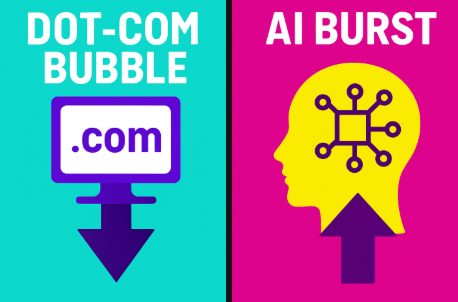
  • Dot-Com Bubble vs AI Burst: Hype Does Not Mean Value❗

    Dot-Com Bubble vs AI Burst: Hype Does Not Mean Value❗


    In 1999, a young graduate walked into his first job at a flashy dot-com startup. The office buzzed with energy—bean bags, stock tickers, and a CEO who promised they were “changing the world.” Within months, the company’s valuation soared into the hundreds of millions. Everyone felt unstoppable. But by 2001, the office was empty, the website offline, and dreams shattered. He had witnessed first-hand what it means when hype outpaces reality.

    Fast forward to 2025, and the same energy is in the air—only this time, it’s not about the internet, it’s about artificial intelligence. AI agents are promised as tireless employees, AI startups valued at billions before they even find customers, and companies rushing to rebrand themselves as “AI-powered.” But behind the glossy headlines, studies reveal a brutal truth: 95% of AI projects fail.

    The question now is—are we reliving the dot-com bubble all over again, or is this just the growing pain of a revolution destined to reshape our future?


    🌐 What Was the Dot-Com Bubble?

    The dot-com phase (1995–2000) was one of the most dramatic periods in tech history—a time when the internet exploded into mainstream awareness and investors rushed to fund any company with a “.com” at the end of its name.

    Fueled by optimism that the internet would transform every aspect of business and daily life, startups with little more than a website idea attracted millions in funding and soared to billion-dollar valuations overnight. Wall Street and venture capitalists believed the digital gold rush had begun, and growth mattered more than profit.

    • Hype: Investors poured billions into startups just because they had “.com” in their name, regardless of real profits or business models.
    • Easy money: Venture capital and IPOs fueled exponential valuations. Some firms with little more than a website raised hundreds of millions.
    • Crash (2000–2002): When it became clear many firms couldn’t generate sustainable revenue, the bubble burst. Tech stocks collapsed, wiping out $5 trillion in market value.
    • Survivors thrived: Despite the crash, companies like Amazon, Google, and eBay emerged stronger and eventually reshaped the digital economy.

    🤖 What Is the AI Burst?

    The AI burst refers to the explosive growth, hype, and investment wave that began after OpenAI released ChatGPT in November 2022.

    🚀 The Spark: ChatGPT’s Viral Moment

    • Within 5 days, ChatGPT crossed 1 million users, becoming the fastest-growing consumer app in history.
    • Suddenly, AI wasn’t just for researchers—it was in the hands of students, professionals, and businesses worldwide.

    🌍 The Chain Reaction

    1. Big Tech Frenzy
      • Microsoft invested $10B in OpenAI and embedded GPT into Office and Bing.
      • Google, caught off guard, launched Bard (later Gemini).
      • Meta, Anthropic, Amazon, and Apple all accelerated AI plans.
    2. Startup Explosion
      • Thousands of AI-first startups emerged, promising AI agents, copilots, and automation tools.
      • Valuations skyrocketed—even for companies without real revenue.
    3. Funding Tsunami
      • By 2025, global AI investment has already crossed hundreds of billions of dollars, mostly funneled into data centers, GPUs (Nvidia boom), and cloud infrastructure.
    4. Corporate Gold Rush
      • Enterprises rushed to “AI-wash” their strategy decks.
      • Surveys show 95% of executives claim to be “investing in AI”—but most projects fail to scale beyond pilots.

    5 Reasons Why 95% of AI Projects Fail

    🚨 The Shocking Reality:

    A recent MIT study found that 95% of generative AI projects fail to show measurable business impact.

    While AI looks revolutionary, despite billions in investment, most initiatives stall as most organizations don’t know how to implement it effectively.


    1. No Clear Business Need

    • Companies chase AI hype instead of solving a real problem.
    • 🚩 “Let’s add AI because competitors are doing it.”
    • Result: Expensive experiments with no measurable outcomes.

    2. Poor ROI Definition

    • Success isn’t defined in numbers (cost saved, revenue gained, risk reduced).
    • Without KPIs, projects lose funding fast.

    3. Lack of Integration

    • AI is built as a separate tool, not embedded in daily workflows.
    • Employees avoid using it → low adoption → wasted investment.

    4. Over-Automation Without Human Oversight

    • Companies expect AI to replace humans entirely.
    • When errors occur, no human guardrails → broken trust, compliance risks.

    5. No Governance or Scalability Plan

    • Bias, data privacy, security, or compliance ignored.
    • Even successful pilots can’t scale across departments → project dies.

    💡 The Lesson: AI projects fail when they are tech-first instead of business-first.
    The winners will be those that solve real needs, deliver ROI, integrate smoothly, keep humans in the loop, and scale responsibly.


    📉 How This Mirrors the Dot-Com Bubble

    1. Hype Over Substance

    • Dot-Com Era: Companies with just a website and no business model raised millions.
    • AI Era: Startups with little more than a demo or “agent” concept are valued at billions.

    2. Massive Failure Rates

    • Dot-Com: Nearly 80% of startups collapsed when profits failed to materialize.
    • AI: Today, 95% of AI projects fizzle out before creating real value.

    3. Infrastructure Overbuild

    • Dot-Com: Billions were poured into underutilized fiber optics and servers.
    • AI: Trillions are being spent on GPUs, data centers, and chips—without clear ROI beyond a few players.

    4. Winner-Takes-All Dynamics

    • Dot-Com Survivors: Amazon, Google, eBay rose from the ashes.
    • AI Survivors: Microsoft, Google, OpenAI, Nvidia are positioned to dominate while smaller startups vanish.

    Lessons From History

    1. Hype Doesn’t Equal Value — Technology revolutions always overpromise before reality sets in.
    2. Consolidation Is Inevitable — Just as only a few dot-coms survived, only a handful of AI leaders will thrive long-term.
    3. Focus on Real ROI — The winners won’t be those chasing headlines, but those delivering measurable business impact.

    🚀 5-Step Framework to Ensure AI Project Success (with Business Value)

    1. Start with Business Needs, Not Technology

    • ❌ Mistake: Adopting AI because “it’s the future.”
    • ✅ Solution: Every AI initiative must align with core business goals—growth, efficiency, customer experience, or risk management.
    • Business Value: Ensures relevance, adoption, and measurable outcomes.
    • Example: A retail chain uses AI to reduce inventory waste by 30%, directly boosting profits.

    2. Define ROI Before Deployment

    • ❌ Mistake: Fuzzy outcomes like “improving efficiency.”
    • ✅ Solution: Set clear success metrics (cost saved, revenue generated, time reduced).
    • Business Value: Focus on impact, not experiments.
    • Example: AI chatbot to handle 70% of Tier-1 queries → saves $2M annually in support costs.

    3. Integrate Into Workflows, Not as Add-Ons

    • ❌ Mistake: Isolated AI tools employees avoid.
    • ✅ Solution: Embed AI into day-to-day tools teams already use.
    • Business Value: Smooth adoption, higher productivity.
    • Example: AI sales coach inside CRM → improves win rates by 20%.

    4. Human + AI Collaboration (Not Replacement)

    • ❌ Mistake: Expecting AI to fully replace humans immediately.
    • ✅ Solution: Use AI as a copilot—AI assists, humans decide.
    • Business Value: Lower risk, higher trust, better outcomes.
    • Example: AI drafts contracts → legal team reviews → 40% faster deal closures.

    5. Governance & Scalability From Day 1

    • ❌ Mistake: Ignoring compliance, ethics, and long-term scalability.
    • ✅ Solution: Establish AI governance (bias checks, data rules, audit trails) and build for scale.
    • Business Value: Risk control, reputation protection, future growth.
    • Example: AI hiring tool audited for bias → ensures diversity + legal compliance.

    ⚡ Final Check: Will Your AI Project Succeed?

    If it…

    • Solves a real business need
    • Has clear ROI metrics
    • Fits into workflows
    • Works in human + AI partnership
    • Meets governance standards

    👉 Then it will survive the AI burst and deliver lasting value.


    ✅ Final Takeaway: The AI Burst and Beyond

    The AI burst feels a lot like the dot-com bubble—a frenzy of investment, inflated promises, and inevitable failures. History tells us that most projects will collapse, not because AI lacks potential, but because companies chase hype instead of value.

    The AI burst is not the end of AI—it’s the filter.
    Only the 5% of projects that deliver sustainable business value will survive and shape the future.e. If history repeats, we may see many AI startups vanish, while a handful of giants define the next era of technology.


    🚀 Call to Action: Navigating the AI Burst

    • For Investors 💰: Don’t chase hype. Back startups and enterprises that solve real business problems with measurable ROI, not just flashy demos.
    • For Business Leaders 🏢: Ask one question before any AI investment — “How does this serve my business need?” Build AI strategies that enhance customer value, cut costs, and drive growth.
    • For Startups 🚀: Survive the AI burst by focusing on niche, pain-killer solutions, not broad promises. The market doesn’t reward cool tech—it rewards results.
    • For Employees 👩‍💻👨‍💻: Treat AI as your copilot, not competitor. Learn how to work with it, not against it. Upskilling in AI-assisted workflows will make you future-proof.

    The AI burst will separate hype from value. Be on the side that builds lasting impact.

    Reference TOI news

    Check our blogs on Corporate Governance here.

  • How India Ranks #1 in Digital Transactions With UPI

    How India Ranks #1 in Digital Transactions With UPI


    📱 India’s Digital Payment Story: From Cash to a QR Code

    It’s 2016. You’re at a busy chai stall in Mumbai. The tea vendor pulls out a small cardboard with a black-and-white QR code. Instead of digging for coins, you take out your phone, scan, and—ping!—the payment is done in seconds.

    Fast-forward to today: the same story repeats in villages, metros, malls, and even abroad. From a ₹10 chai to a ₹10,000 shopping spree, Indians are paying with UPI (Unified Payments Interface)—a system that has turned the country into the world’s #1 digital payments market.

    But how did India make this leap when even the US and Europe still juggle cards, wallets, and fees? The secret lies in the technology and design of UPI.


    The Rise of UPI

    • Launched in 2016 by NPCI, UPI was designed as a seamless way to send and receive money instantly via mobile phones.
    • Zero MDR (Merchant Discount Rate) initially attracted millions of merchants to accept payments.
    • Today, UPI processes 15+ billion transactions monthly (2025 data expected to cross this mark).
    • It works across apps (PhonePe, Google Pay, Paytm, BHIM, WhatsApp Pay) – making it interoperable and universal.

    📅 Timeline of UPI

    • 2008 – NPCI formed.
    • 2010 – IMPS launched (precursor to UPI).
    • 2012 – Aadhaar-enabled payments, RuPay card launched.
    • April 2016 – UPI launched with 21 banks.
    • 2017 – BHIM app released; Google Tez (later GPay), PhonePe enter.
    • 2018 – QR acceptance explodes across small vendors.
    • 2019 – 1 billion monthly UPI transactions.
    • 2020 – COVID accelerates adoption; WhatsApp Pay enters.
    • 2021 – UPI crosses 4 billion monthly transactions.
    • 2022 – UPI Lite, Credit on UPI introduced; International expansion begins.
    • 2023 – UPI crosses 10 billion monthly transactions.
    • 2024 – UPI linked with Singapore PayNow, UAE, Mauritius, France.
    • 2025 – India becomes #1 digital transactions market globally, projected 15+ billion monthly UPI payments.

    📊 India – World’s Largest Digital Transactions Market

    • In 2023, India processed 46% of the world’s real-time digital payments (per ACI Worldwide report).
    • UPI clocked 100+ billion transactions in 2023 alone.
    • China follows but mostly via private wallets (WeChat/Alipay), not bank-led universal infrastructure.
    • US, UK lag in adoption due to lack of a single interoperable standard.

    👉 This means: India is not just leading, it’s setting the model for the world.


    Why UPI Clicked in India

    1. Simplicity – Just scan a QR code, enter PIN, and you’re done.
    2. Interoperability – One QR works across apps and banks.
    3. Trust & Government Push – RBI & NPCI ensured strong backend security.
    4. Financial Inclusion – Even small vendors and rural users got digital access.
    5. Cost Advantage – No charges for customers, minimal friction for merchants.

    Impact on Economy & Society

    • Cashless Push – Reduced dependence on cash, better transparency.
    • Boost to SMEs – Street vendors, kirana shops, cab drivers went digital overnight.
    • Women Empowerment – Easy money transfer helped women access financial independence.
    • Data-led Credit Access – Digital footprints enabling micro-credit and BNPL models.

    ⚙️ The Technology Behind UPI

    UPI is not “just an app”—it’s an open digital rail built by NPCI (National Payments Corporation of India). Think of it as an email system for money—free, instant, universal, and secure.

    Here’s how it works in simple terms:

    🔑 1. Virtual Payment Address (VPA) /UPI ID

    Instead of remembering account numbers or IFSC codes, UPI uses a simple ID like an email (yourname@bank). This acts as your digital identity.

    A UPI ID (also called Virtual Payment Address / VPA) is like an email address for money transfers. It’s a unique identifier that replaces the need to share sensitive bank details such as account number, IFSC code, or branch.

    🔄 2. Real-Time Fund Transfer

    When you pay, UPI connects directly to your bank account via the IMPS (Immediate Payment Service) infrastructure, ensuring 24×7, real-time settlement.

    🛡️ 3. Multi-Layer Security

    • Mobile number is linked to your bank account.
    • Device binding ensures payments only from your registered phone.
    • Two-factor authentication: UPI PIN + phone SIM validation.

    🔗 4. Interoperability Across Banks & Apps

    Unlike wallets (Paytm wallet, Venmo, WeChat Pay), UPI is bank-to-bank and app-agnostic. A QR code from SBI works if you use Google Pay, PhonePe, Paytm, or BHIM.

    ⚡ 5. API-Driven Innovation

    NPCI built UPI on open APIs, so fintech apps can plug in without building their own rails. This is why competition (GPay, PhonePe, Paytm, Amazon Pay) thrives on a common backbone.


    🌍 Why Other Countries Still Don’t Have Their Own UPI

    In 2016, when India quietly launched UPI, few imagined it would grow into the world’s most successful digital payments system. Today, rickshaw drivers in Delhi, street vendors in Chennai, and luxury malls in Mumbai all accept a simple QR code scan. India now processes billions of transactions every month, leaving even advanced economies like the US, UK, and Europe wondering: “Why can’t we build something like this?”

    The answer lies not just in technology, but in ecosystem, regulation, and vision. UPI was born from India’s unique blend of government-backed infrastructure (NPCI), interoperability across banks, and a push for financial inclusion. In contrast, most other countries are still fragmented—stuck between banks, card networks, and private payment apps competing for dominance.

    UPI is not just an app, it’s a shared digital public good—something the world’s most developed economies never truly prioritized. And that is why, even in 2025, India stands alone with a seamless, real-time, and universal digital payment system.

    Below we summarize key factors.


    1. Fragmented Banking Systems

    • In countries like the US or EU, each bank or card network has its own payment system.
    • UPI succeeded because NPCI created a common protocol connecting all Indian banks under one roof.
    • In contrast, banks in other countries compete instead of collaborating on a shared real-time platform.

    2. Strong Card Network Dominance

    • In developed countries, Visa, Mastercard, and PayPal dominate digital payments.
    • These companies earn fees from merchants and resist zero-cost models like UPI.
    • India skipped the “credit card era” and moved straight from cash → mobile → UPI, avoiding this bottleneck.

    3. Regulatory Challenges

    • India’s RBI and Government pushed banks to adopt UPI as mandatory infrastructure.
    • In the US or Europe, regulators cannot force private banks and card networks to join a single system.
    • This makes innovation slower and fragmented.

    4. Consumer Habits & Culture

    • In the West, credit cards are deeply ingrained with reward points and credit lines.
    • In India, most consumers prefer direct bank-to-bank transfers (no credit card culture for masses), making UPI natural.

    5. Government as a Driver

    • UPI was driven as a public good by NPCI (not-for-profit, promoted by RBI).
    • In other countries, payments are left to private companies who prioritize profit over inclusion.
    • India treated UPI as digital public infrastructure, similar to Aadhaar & JAM trinity.

    6. Interoperability by Design

    • UPI allows you to pay any bank/any app via the same QR code.
    • In the US/Europe, apps like Zelle, Venmo, PayPal, Apple Pay work only within their own closed ecosystems.
    • Lack of open standards prevents a UPI-like system from emerging.

    7. Scale & Mobile-first Economy

    • India’s massive smartphone + cheap data revolution (thanks to Jio) created the perfect environment.
    • Many countries don’t have the same scale of smartphone penetration or unified digital ID systems to power instant payments.

    In short:
    UPI worked because India had government will, regulatory push, public digital infrastructure, and a leapfrog effect skipping cards. Most countries are trapped in legacy payment ecosystems dominated by private networks.


    🌍 Can Foreign Tourists Use UPI in India?

    UPI - Foreigners

    ✈️ Story: Emma in Jaipur

    Emma, a tourist from London, is shopping in Jaipur’s bustling bazaars. She spots a scarf, the shopkeeper shows a UPI QR, and she wonders: “But I don’t have an Indian bank account!”

    Emma hesitates—she doesn’t have an Indian bank account. But here’s the twist: today, even foreign tourists can use UPI in India. She takes out her phone, opens a global fintech app that’s partnered with UPI, scans the QR, and within seconds, the payment goes through—directly from her international card, converted to INR on the spot.


    ✈️ How It Works for Foreigners

    Earlier, UPI was only linked to Indian bank accounts. But since February 2023, NPCI (with RBI’s approval) enabled UPI for international travelers on arrival in India.

    Here’s the flow:

    1. Tourists from select countries (e.g., UK, Singapore, UAE, USA) can set up a prepaid wallet/account with an Indian bank or partner fintech at airports or designated counters.
    2. That wallet gets linked to UPI, just like an Indian would do.
    3. Payments happen in Indian Rupees, debited from their wallet (funded by international debit/credit card or forex).
    4. Merchants get paid instantly in INR, while tourists enjoy the same UPI experience as locals.

    🌐 Does UPI Connect to Foreign Banks?

    • Directly: No, UPI doesn’t yet pull money straight from foreign bank accounts.
    • Indirectly: Yes, via partner apps, wallets, or card networks. For example:
      • Singapore’s PayNow is linked with UPI for cross-border transfers.
      • NPCI International is signing MoUs with countries like France, UAE, Bhutan, Mauritius, Sri Lanka for UPI acceptance.
      • Tourists can also fund Indian UPI-linked wallets through their international Visa/Mastercard.

    So Emma’s London bank isn’t plugged into UPI directly, but her international card → Indian UPI wallet bridge makes it seamless.


    📊 The Bigger Picture

    • In 2024–25, NPCI reported thousands of foreign tourists using UPI wallets during their India trips, especially in metros and tourist hubs.
    • India is pushing UPI as an international standard—with live acceptance already in Singapore, UAE, Mauritius, Nepal, Bhutan, and expanding into Europe.
    • The vision: whether you’re an Indian abroad or a tourist in India, one QR should just work.

    ✨ Why This Matters

    • For tourists: No need to carry wads of cash or constantly swipe cards with forex fees.
    • For merchants: Easy acceptance without extra hardware.
    • For India: A powerful branding tool—showcasing digital leadership to every traveler.

    In February 2023, India and Singapore connected UPI with PayNow, allowing instant, low-cost transfers between the two countries.

    • A Singapore tourist in India can link their PayNow account, send money via UPI, and merchants receive it in INR instantly.
    • Similarly, Indians in Singapore can pay merchants through UPI-linked transfers.

    This was a world-first in cross-border interoperability—positioning UPI as a global template.


    🕌 Real Example 2: UPI in UAE (Dubai & Abu Dhabi)

    In August 2023, NPCI International partnered with Mashreq’s NeoPay terminals in the UAE.

    • Indian travelers in Dubai can walk into a café, scan a UPI QR at the POS terminal, and pay directly in AED from their Indian bank account.
    • This eliminated the need for foreign cards and expensive forex charges.

    🗼 Real Example 3: UPI in France

    In 2023, NPCI International signed a deal with Lyra, a French payments company.

    • The partnership enables UPI acceptance in France, starting with iconic tourist hubs like the Eiffel Tower.
    • So soon, an Indian visiting Paris could pay for tickets or coffee using UPI directly.

    📊 The India Advantage

    • Domestic: Foreign tourists in India can now use UPI by setting up local wallets (launched at airports in 2023).
    • International: Indians abroad are already scanning UPI at partner merchants in Singapore, UAE, France, Mauritius, Bhutan, and Nepal.
    • Vision: UPI becomes a universal QR standard—whether you’re an Indian abroad or a tourist in India.

    ✨ So, Emma’s Jaipur shopping trip is just the beginning. In a few years, she might fly home and buy her morning coffee in London using the same UPI QR code—a payment story that started in India, but belongs to the world.


    General UPI Transaction Limits

    UPI in India has transaction limits set by NPCI (National Payments Corporation of India), and they vary depending on the bank, purpose, and merchant category. Here’s a clear breakdown (as of 2025):

    • Per Transaction: ₹1 lakh (₹100,000) is the usual cap for most banks.
    • Per Day: ₹1 lakh total across all UPI transactions.

    Special Categories with Higher Limits

    1. Capital Markets, IPOs, Insurance, Mutual Funds, NBFC loan repayments:
      👉 Limit increased to ₹2 lakh per transaction.
    2. UPI AutoPay for recurring payments (like OTT, bills, EMI, SIPs):
      👉 Limit is ₹15,000 per mandate (for most categories).
    3. Healthcare & Education (as per 2022 RBI circular):
      👉 UPI limit extended to ₹5 lakh per transaction.

    Merchant/Bank Specific Limits

    • Each bank or UPI app (Google Pay, PhonePe, Paytm, BHIM, etc.) can set lower internal limits.
    • Example: Some banks cap at ₹25,000–₹50,000 per day, depending on risk/security.
    • First 24 hours after adding a new payee, banks often impose stricter limits (like ₹5,000).

    In short:

    • ₹1 lakh per day for regular users.
    • ₹2–5 lakh for special use cases (IPOs, education, insurance, hospitals).
    • Bank/app-specific rules may further reduce the cap.

    Call to Action

    Have you tried UPI while traveling abroad or seen a foreigner pay in India with it? Share your story in the comments!

    Do you think UPI should be adopted globally? Tell us what country you’d like to see it in next!

    UPI is not just a payment system—it’s India’s digital revolution. Stay tuned as we decode more fintech success stories shaping the world.

    Subscribe to our Newsletter for more insights on how India is setting benchmarks in digital innovation.

    Read our blogs on Corporate Governance here.

    Here’s a well-regarded external reference that highlights the growing international acceptance and expansion of UPI, especially its integration with global platforms:

    • PayPal has announced the launch of a cross-border payments platform called PayPal World, linking UPI with major global systems like Tenpay Global (China), Mercado Pago (Latin America), and Venmo—significantly expanding UPI’s international reach. Reuters

  • How India Ranks #1 in Digital Transactions With UPI

    How India Ranks #1 in Digital Transactions With UPI


    📱 India’s Digital Payment Story: From Cash to a QR Code

    It’s 2016. You’re at a busy chai stall in Mumbai. The tea vendor pulls out a small cardboard with a black-and-white QR code. Instead of digging for coins, you take out your phone, scan, and—ping!—the payment is done in seconds.

    Fast-forward to today: the same story repeats in villages, metros, malls, and even abroad. From a ₹10 chai to a ₹10,000 shopping spree, Indians are paying with UPI (Unified Payments Interface)—a system that has turned the country into the world’s #1 digital payments market.

    But how did India make this leap when even the US and Europe still juggle cards, wallets, and fees? The secret lies in the technology and design of UPI.


    The Rise of UPI

    • Launched in 2016 by NPCI, UPI was designed as a seamless way to send and receive money instantly via mobile phones.
    • Zero MDR (Merchant Discount Rate) initially attracted millions of merchants to accept payments.
    • Today, UPI processes 15+ billion transactions monthly (2025 data expected to cross this mark).
    • It works across apps (PhonePe, Google Pay, Paytm, BHIM, WhatsApp Pay) – making it interoperable and universal.

    📅 Timeline of UPI

    • 2008 – NPCI formed.
    • 2010 – IMPS launched (precursor to UPI).
    • 2012 – Aadhaar-enabled payments, RuPay card launched.
    • April 2016 – UPI launched with 21 banks.
    • 2017 – BHIM app released; Google Tez (later GPay), PhonePe enter.
    • 2018 – QR acceptance explodes across small vendors.
    • 2019 – 1 billion monthly UPI transactions.
    • 2020 – COVID accelerates adoption; WhatsApp Pay enters.
    • 2021 – UPI crosses 4 billion monthly transactions.
    • 2022 – UPI Lite, Credit on UPI introduced; International expansion begins.
    • 2023 – UPI crosses 10 billion monthly transactions.
    • 2024 – UPI linked with Singapore PayNow, UAE, Mauritius, France.
    • 2025 – India becomes #1 digital transactions market globally, projected 15+ billion monthly UPI payments.

    📊 India – World’s Largest Digital Transactions Market

    • In 2023, India processed 46% of the world’s real-time digital payments (per ACI Worldwide report).
    • UPI clocked 100+ billion transactions in 2023 alone.
    • China follows but mostly via private wallets (WeChat/Alipay), not bank-led universal infrastructure.
    • US, UK lag in adoption due to lack of a single interoperable standard.

    👉 This means: India is not just leading, it’s setting the model for the world.


    Why UPI Clicked in India

    1. Simplicity – Just scan a QR code, enter PIN, and you’re done.
    2. Interoperability – One QR works across apps and banks.
    3. Trust & Government Push – RBI & NPCI ensured strong backend security.
    4. Financial Inclusion – Even small vendors and rural users got digital access.
    5. Cost Advantage – No charges for customers, minimal friction for merchants.

    Impact on Economy & Society

    • Cashless Push – Reduced dependence on cash, better transparency.
    • Boost to SMEs – Street vendors, kirana shops, cab drivers went digital overnight.
    • Women Empowerment – Easy money transfer helped women access financial independence.
    • Data-led Credit Access – Digital footprints enabling micro-credit and BNPL models.

    ⚙️ The Technology Behind UPI

    UPI is not “just an app”—it’s an open digital rail built by NPCI (National Payments Corporation of India). Think of it as an email system for money—free, instant, universal, and secure.

    Here’s how it works in simple terms:

    🔑 1. Virtual Payment Address (VPA) /UPI ID

    Instead of remembering account numbers or IFSC codes, UPI uses a simple ID like an email (yourname@bank). This acts as your digital identity.

    A UPI ID (also called Virtual Payment Address / VPA) is like an email address for money transfers. It’s a unique identifier that replaces the need to share sensitive bank details such as account number, IFSC code, or branch.

    🔄 2. Real-Time Fund Transfer

    When you pay, UPI connects directly to your bank account via the IMPS (Immediate Payment Service) infrastructure, ensuring 24×7, real-time settlement.

    🛡️ 3. Multi-Layer Security

    • Mobile number is linked to your bank account.
    • Device binding ensures payments only from your registered phone.
    • Two-factor authentication: UPI PIN + phone SIM validation.

    🔗 4. Interoperability Across Banks & Apps

    Unlike wallets (Paytm wallet, Venmo, WeChat Pay), UPI is bank-to-bank and app-agnostic. A QR code from SBI works if you use Google Pay, PhonePe, Paytm, or BHIM.

    ⚡ 5. API-Driven Innovation

    NPCI built UPI on open APIs, so fintech apps can plug in without building their own rails. This is why competition (GPay, PhonePe, Paytm, Amazon Pay) thrives on a common backbone.


    🌍 Why Other Countries Still Don’t Have Their Own UPI

    In 2016, when India quietly launched UPI, few imagined it would grow into the world’s most successful digital payments system. Today, rickshaw drivers in Delhi, street vendors in Chennai, and luxury malls in Mumbai all accept a simple QR code scan. India now processes billions of transactions every month, leaving even advanced economies like the US, UK, and Europe wondering: “Why can’t we build something like this?”

    The answer lies not just in technology, but in ecosystem, regulation, and vision. UPI was born from India’s unique blend of government-backed infrastructure (NPCI), interoperability across banks, and a push for financial inclusion. In contrast, most other countries are still fragmented—stuck between banks, card networks, and private payment apps competing for dominance.

    UPI is not just an app, it’s a shared digital public good—something the world’s most developed economies never truly prioritized. And that is why, even in 2025, India stands alone with a seamless, real-time, and universal digital payment system.

    Below we summarize key factors.


    1. Fragmented Banking Systems

    • In countries like the US or EU, each bank or card network has its own payment system.
    • UPI succeeded because NPCI created a common protocol connecting all Indian banks under one roof.
    • In contrast, banks in other countries compete instead of collaborating on a shared real-time platform.

    2. Strong Card Network Dominance

    • In developed countries, Visa, Mastercard, and PayPal dominate digital payments.
    • These companies earn fees from merchants and resist zero-cost models like UPI.
    • India skipped the “credit card era” and moved straight from cash → mobile → UPI, avoiding this bottleneck.

    3. Regulatory Challenges

    • India’s RBI and Government pushed banks to adopt UPI as mandatory infrastructure.
    • In the US or Europe, regulators cannot force private banks and card networks to join a single system.
    • This makes innovation slower and fragmented.

    4. Consumer Habits & Culture

    • In the West, credit cards are deeply ingrained with reward points and credit lines.
    • In India, most consumers prefer direct bank-to-bank transfers (no credit card culture for masses), making UPI natural.

    5. Government as a Driver

    • UPI was driven as a public good by NPCI (not-for-profit, promoted by RBI).
    • In other countries, payments are left to private companies who prioritize profit over inclusion.
    • India treated UPI as digital public infrastructure, similar to Aadhaar & JAM trinity.

    6. Interoperability by Design

    • UPI allows you to pay any bank/any app via the same QR code.
    • In the US/Europe, apps like Zelle, Venmo, PayPal, Apple Pay work only within their own closed ecosystems.
    • Lack of open standards prevents a UPI-like system from emerging.

    7. Scale & Mobile-first Economy

    • India’s massive smartphone + cheap data revolution (thanks to Jio) created the perfect environment.
    • Many countries don’t have the same scale of smartphone penetration or unified digital ID systems to power instant payments.

    In short:
    UPI worked because India had government will, regulatory push, public digital infrastructure, and a leapfrog effect skipping cards. Most countries are trapped in legacy payment ecosystems dominated by private networks.


    🌍 Can Foreign Tourists Use UPI in India?

    UPI - Foreigners

    ✈️ Story: Emma in Jaipur

    Emma, a tourist from London, is shopping in Jaipur’s bustling bazaars. She spots a scarf, the shopkeeper shows a UPI QR, and she wonders: “But I don’t have an Indian bank account!”

    Emma hesitates—she doesn’t have an Indian bank account. But here’s the twist: today, even foreign tourists can use UPI in India. She takes out her phone, opens a global fintech app that’s partnered with UPI, scans the QR, and within seconds, the payment goes through—directly from her international card, converted to INR on the spot.


    ✈️ How It Works for Foreigners

    Earlier, UPI was only linked to Indian bank accounts. But since February 2023, NPCI (with RBI’s approval) enabled UPI for international travelers on arrival in India.

    Here’s the flow:

    1. Tourists from select countries (e.g., UK, Singapore, UAE, USA) can set up a prepaid wallet/account with an Indian bank or partner fintech at airports or designated counters.
    2. That wallet gets linked to UPI, just like an Indian would do.
    3. Payments happen in Indian Rupees, debited from their wallet (funded by international debit/credit card or forex).
    4. Merchants get paid instantly in INR, while tourists enjoy the same UPI experience as locals.

    🌐 Does UPI Connect to Foreign Banks?

    • Directly: No, UPI doesn’t yet pull money straight from foreign bank accounts.
    • Indirectly: Yes, via partner apps, wallets, or card networks. For example:
      • Singapore’s PayNow is linked with UPI for cross-border transfers.
      • NPCI International is signing MoUs with countries like France, UAE, Bhutan, Mauritius, Sri Lanka for UPI acceptance.
      • Tourists can also fund Indian UPI-linked wallets through their international Visa/Mastercard.

    So Emma’s London bank isn’t plugged into UPI directly, but her international card → Indian UPI wallet bridge makes it seamless.


    📊 The Bigger Picture

    • In 2024–25, NPCI reported thousands of foreign tourists using UPI wallets during their India trips, especially in metros and tourist hubs.
    • India is pushing UPI as an international standard—with live acceptance already in Singapore, UAE, Mauritius, Nepal, Bhutan, and expanding into Europe.
    • The vision: whether you’re an Indian abroad or a tourist in India, one QR should just work.

    ✨ Why This Matters

    • For tourists: No need to carry wads of cash or constantly swipe cards with forex fees.
    • For merchants: Easy acceptance without extra hardware.
    • For India: A powerful branding tool—showcasing digital leadership to every traveler.

    In February 2023, India and Singapore connected UPI with PayNow, allowing instant, low-cost transfers between the two countries.

    • A Singapore tourist in India can link their PayNow account, send money via UPI, and merchants receive it in INR instantly.
    • Similarly, Indians in Singapore can pay merchants through UPI-linked transfers.

    This was a world-first in cross-border interoperability—positioning UPI as a global template.


    🕌 Real Example 2: UPI in UAE (Dubai & Abu Dhabi)

    In August 2023, NPCI International partnered with Mashreq’s NeoPay terminals in the UAE.

    • Indian travelers in Dubai can walk into a café, scan a UPI QR at the POS terminal, and pay directly in AED from their Indian bank account.
    • This eliminated the need for foreign cards and expensive forex charges.

    🗼 Real Example 3: UPI in France

    In 2023, NPCI International signed a deal with Lyra, a French payments company.

    • The partnership enables UPI acceptance in France, starting with iconic tourist hubs like the Eiffel Tower.
    • So soon, an Indian visiting Paris could pay for tickets or coffee using UPI directly.

    📊 The India Advantage

    • Domestic: Foreign tourists in India can now use UPI by setting up local wallets (launched at airports in 2023).
    • International: Indians abroad are already scanning UPI at partner merchants in Singapore, UAE, France, Mauritius, Bhutan, and Nepal.
    • Vision: UPI becomes a universal QR standard—whether you’re an Indian abroad or a tourist in India.

    ✨ So, Emma’s Jaipur shopping trip is just the beginning. In a few years, she might fly home and buy her morning coffee in London using the same UPI QR code—a payment story that started in India, but belongs to the world.


    General UPI Transaction Limits

    UPI in India has transaction limits set by NPCI (National Payments Corporation of India), and they vary depending on the bank, purpose, and merchant category. Here’s a clear breakdown (as of 2025):

    • Per Transaction: ₹1 lakh (₹100,000) is the usual cap for most banks.
    • Per Day: ₹1 lakh total across all UPI transactions.

    Special Categories with Higher Limits

    1. Capital Markets, IPOs, Insurance, Mutual Funds, NBFC loan repayments:
      👉 Limit increased to ₹2 lakh per transaction.
    2. UPI AutoPay for recurring payments (like OTT, bills, EMI, SIPs):
      👉 Limit is ₹15,000 per mandate (for most categories).
    3. Healthcare & Education (as per 2022 RBI circular):
      👉 UPI limit extended to ₹5 lakh per transaction.

    Merchant/Bank Specific Limits

    • Each bank or UPI app (Google Pay, PhonePe, Paytm, BHIM, etc.) can set lower internal limits.
    • Example: Some banks cap at ₹25,000–₹50,000 per day, depending on risk/security.
    • First 24 hours after adding a new payee, banks often impose stricter limits (like ₹5,000).

    In short:

    • ₹1 lakh per day for regular users.
    • ₹2–5 lakh for special use cases (IPOs, education, insurance, hospitals).
    • Bank/app-specific rules may further reduce the cap.

    Call to Action

    Have you tried UPI while traveling abroad or seen a foreigner pay in India with it? Share your story in the comments!

    Do you think UPI should be adopted globally? Tell us what country you’d like to see it in next!

    UPI is not just a payment system—it’s India’s digital revolution. Stay tuned as we decode more fintech success stories shaping the world.

    Subscribe to our Newsletter for more insights on how India is setting benchmarks in digital innovation.

    Read our blogs on Corporate Governance here.

    Here’s a well-regarded external reference that highlights the growing international acceptance and expansion of UPI, especially its integration with global platforms:

    • PayPal has announced the launch of a cross-border payments platform called PayPal World, linking UPI with major global systems like Tenpay Global (China), Mercado Pago (Latin America), and Venmo—significantly expanding UPI’s international reach. Reuters

  • 🚨 National Emergency: Nearly 500 Daily Road Deaths in India – Call for Stricter Hit-and-Run Justice!

    🚨 National Emergency: Nearly 500 Daily Road Deaths in India – Call for Stricter Hit-and-Run Justice!


    Road Deaths: India

    It’s National Emergency -nearly 500 road deaths every day, Indian roads turn into graveyards for innocent lives. The tragedy is not just in the sheer numbers, but in the way perpetrators of hit-and-run cases escape with minimal punishment. Under the current framework, even when a life is lost, truck or car drivers who flee often face only five years imprisonment under Section 304A IPC. With the much-needed Section 106(2) of the Bharatiya Nyaya Sanhita (BNS) on hold after protests, victims and their families continue to be denied justice. Policymakers must act—five years is not enough for killing someone and running away.


    The Alarming Numbers

    • In 2022, India recorded 47,806 hit-and-run cases, resulting in 50,815 deaths—an average of six deaths every hour.
    • In 2023, in cities like Mumbai, hit-and-run crashes accounted for 38% of all road fatalities.
    • Preliminary data for 2025 already suggests a worrying upward trend, with thousands of cases being logged in the first half of the year across major cities.

    This is not just a statistic—it means hundreds of families are destroyed every single day.


    Who Are the Victims?

    The majority of hit-and-run deaths involve:

    • Two-wheeler riders: Nearly 44–48% of all victims.
    • Pedestrians: Ranging between 19–54% in various cities.
    • Others: Occupants of cars, buses, or cycles.

    Why so many two-wheelers?

    Two-wheelers dominate Indian roads, making up over 75% of registered vehicles. They are:

    • Most exposed and vulnerable: no airbags, no protective metal body.
    • Often hit by trucks and speeding cars, especially on highways and ring roads.
    • Victims of blind spots, over-speeding, and poor road design.
    • At night, poor visibility and lack of protective gear worsen the risks.

    When trucks or SUVs hit them, the result is usually fatal. And too often, the driver flees the scene, leaving a crushed bike and a lifeless rider behind. Many victims are delivery boys, daily wage earners, students, and office commuters—ordinary Indians carrying the nation’s backbone on their shoulders.


    Why Section 106(2) Was Put on Hold

    Section 106(2) of the BNS proposed stricter punishment—up to 10 years imprisonment and heavy fines for hit-and-run deaths. However, protests by truckers and transport unions forced the government to pause its implementation, citing livelihood concerns.

    But what about the livelihoods already destroyed by these deaths? A driver’s income cannot be valued higher than a victim’s life. Even 10 years is far too little compared to a life taken. If someone deliberately runs away after killing, the punishment should extend to the death penalty. Anything less sends the message that lives in India are cheap.

    The Bharatiya Nyaya Sanhita (BNS), 2023 is India’s new criminal law that came into effect on 1 July 2024, replacing the old Indian Penal Code (IPC), 1860. It was introduced by the Government of India to remove colonial-era laws and make the justice system more modern, clear, and people-friendly. The BNS has 358 sections (compared to 511 in IPC), uses simple and gender-neutral language, and adds new crimes like terrorism, organised crime, cyber fraud, mob lynching, and sexual exploitation by deceit.

    It also removes outdated provisions like sedition and introduces reforms such as community service for minor offences, higher punishments for serious crimes, and recognition of digital evidence—aiming to deliver faster and fairer justice. However, Section 106(2), which prescribes up to 10 years’ jail and fine for drivers who cause a fatal accident and then flee without reporting, has been kept on hold after protests by truckers and transport unions, who feared harassment and misuse.


    📌 Example 1 – Hit-and-run punished under 106(2)

    • A car hits a pedestrian at night.
    • The driver flees without calling an ambulance or reporting to police.
    • Under 106(2), this is treated as a serious offence with up to 10 years jail.

    📌 Example 2 – Driver stays and helps (not punished under 106(2))

    • A truck hits a motorcyclist.
    • The driver immediately calls an ambulance, informs police, and stays at the spot.
    • Even if the person dies, this driver will not face 106(2) punishment, because he took responsibility.

    Takeaway for Citizens:

    • 106(2) is meant to save lives by ensuring victims get immediate help.
    • It punishes only those who run away without reporting, not responsible drivers who try to help.

    🌍 Global Comparison – How India Lags Behind

    • United States: Hit-and-run resulting in death can lead to up to 20 years imprisonment (state laws vary, e.g., California up to 15 years, Florida up to 30 years).
    • United Kingdom: Causing death by dangerous driving (and fleeing) can bring life imprisonment.
    • Australia: Drivers who leave accident victims without help face up to 14 years imprisonment, with higher sentences if death occurs.
    • Singapore: Punishment includes up to life imprisonment and caning for fatal hit-and-run cases.

    Compared to this, India’s 5-year maximum punishment is shockingly lenient. Even with the proposed 10 years, we remain far behind global standards.


    Summary Table: Daily Road Fatalities by Country

    CountryYearAnnual DeathsEstimated Deaths Per Day
    India2024 est~180,000~493
    United States2023~40,990~112
    United Kingdom2023~1,695~5
    Germany2023~2,839~8
    Australia2024~1,300~3.6
    New Zealand2023~343~1

    Key Takeaways

    • India’s daily road fatalities (~493) far exceed those in higher-income countries—especially stark when compared to places like the US and UK.
    • This underscores the urgent need for stronger road safety measures, infrastructure improvements, and enforcement in India.

    What Must Be Done

    1. Implement Section 106(2) immediately with no dilution.
    2. Enhance punishment: Minimum 10 years imprisonment for fatal hit-and-runs—but for deliberate escape after death, capital punishment must be considered.
    3. Mandatory black-box/GPS tracking for heavy vehicles to prevent escape.
    4. Victim compensation fund, contributed by insurance + transport sector.
    5. Better road design: Dedicated two-wheeler and pedestrian safety lanes.
    6. Public awareness campaigns: To make drivers fear consequences and respect lives.

    Final Word to Policymakers

    Every day of delay costs nearing 500 Indian lives. Behind each number is a grieving family—parents who lost their child, children who lost their father, wives who lost their husbands. The pain is unbearable, and yet justice is denied.

    Five years is not justice. Ten years is not justice. Even ten years is an insult when a life has been stolen.

    Policymakers must rise above pressure from unions and vested interests. The message must be clear: if you kill and run, you cannot hide—your punishment will be as heavy as the life you took, even up to death penalty.


    🚨 Major Reasons for Road Deaths in India

    1. Over-Speeding (Top Killer)

    • Contributes to 65–70% of all road accident deaths in India.
    • High speed reduces reaction time and makes crashes far more fatal.

    2. Dangerous / Rash Driving

    • Wrong-side driving, sudden lane cuts, overtaking from left side.
    • Truck and bus drivers rushing deadlines often cause head-on crashes.

    3. Drunk Driving & Drug Influence

    • Even though enforcement has improved, alcohol- and substance-related crashes still account for 5–8% of fatalities.

    4. Distracted Driving (Mobile Phones, Earphones, GPS use)

    • Around 1 in 10 accidents now linked to phone usage.
    • Looking at WhatsApp or social media while riding/driving is becoming a silent killer.

    5. Not Wearing Helmets / Seatbelts

    • 43% of two-wheeler deaths in 2022 were due to lack of helmets.
    • Nearly 50% of car occupant deaths were due to not using seatbelts (especially rear passengers).

    6. Hit-and-Run Cases

    • Almost 30% of all road deaths in India are hit-and-run cases.
    • Trucks, buses, and speeding cars are the most common offenders.

    7. Poor Road Engineering

    • Sharp curves, potholes, unscientific speed breakers, poor signage, and badly lit junctions.
    • Many “black spots” (accident hot spots) remain unfixed for years.

    8. Heavy Vehicle Issues

    • Overloaded trucks, untrained drivers, mechanical failures (brakes, tyres).
    • Trucks running at night on highways are a major cause of two-wheeler fatalities.

    9. Pedestrian & Cyclist Neglect

    • India is not pedestrian-friendly. Lack of footpaths, zebra crossings, and underpasses leads to high pedestrian deaths.
    • Pedestrians account for ~15% of road deaths in India.

    10. Emergency Care Delay

    • Golden Hour (first 1 hour after crash) is often wasted.
    • Lack of ambulances, trauma centers, and bystander fear (police harassment) increases preventable deaths.

    📊 Snapshot (India – 2023 Data)

    • Over-speeding deaths: ~71% of fatalities
    • Driving on wrong side: ~6%
    • Use of mobile phones: ~2%
    • Drunken driving: ~3%
    • Other causes (fatigue, weather, etc.): remaining percentage

    👉 In short: speeding, lack of protective gear, poor enforcement, and bad road design are the biggest killers.


    🚓 Role of Traffic Police in Road Safety

    The traffic police play a central role in preventing accidents, saving lives, and ensuring smooth flow of vehicles. In the context of rising road accident deaths (like in 2025), their role becomes even more critical. Here’s a structured view:

    1. Enforcement of Laws

    • Enforce helmet, seatbelt, speed-limit, and drunk-driving laws.
    • Book offenders for rash driving, overloading, or dangerous overtaking.
    • Curb wrong-side driving and red-light jumping.

    2. Accident Prevention

    • Regular patrols at accident-prone spots (black spots).
    • Deployment of checkpoints on highways and ring roads.
    • Use of speed guns, CCTV, and ANPR cameras to deter violations.

    3. Emergency Response

    • First responders at accident sites.
    • Coordinate with ambulances and hospitals for the “Golden Hour” response to save lives.
    • Manage crowds and prevent mob violence against drivers.

    4. Data Collection & Analysis

    • Maintain accident data (location, time, cause, vehicle type).
    • Identify accident-prone stretches for corrective measures.
    • Share findings with city planners, NHAI, and municipal bodies.

    5. Public Awareness & Education

    • Conduct road safety campaigns in schools, colleges, and workplaces.
    • Encourage helmet use, reflective jackets, and child safety seats.
    • Promote “Don’t Drink and Drive” and “Respect Pedestrians” culture.

    6. Coordination with Other Agencies

    • Work with transport department for vehicle fitness & licensing.
    • Help city planners redesign junctions, signals, and crossings.
    • Collaborate with NGOs for safety workshops and victim support.

    7. Technology & Smart Policing

    • Use AI-based surveillance to detect violations.
    • E-challan systems for transparency.
    • GPS tracking for patrol vehicles to cover blind spots.

    ⚠️ Challenges Traffic Police Face

    • Shortage of manpower (India has ~1 traffic cop per 10,000 vehicles in many cities).
    • Lack of modern equipment in smaller towns.
    • Corruption and public perception issues.
    • Poor road infrastructure making enforcement difficult.

    ✅ Way Forward

    • Increase penalties and ensure strict enforcement without exceptions.
    • Better training and welfare for traffic personnel.
    • Adoption of smart traffic management systems.
    • Public cooperation—without citizen discipline, even the best traffic police cannot prevent accidents.

    ✅ Helmets Save Lives? How Much?

    National Emergency - Road Deaths - Helmet Protects

    A good ISI/DOT-certified helmet absorbs impact and reduces the force transmitted to the skull and brain.

    It prevents skull fractures, brain hemorrhage, and facial injuries in many crashes.

    According to WHO, wearing a helmet reduces the risk of head injury by 70% and death by 40%.


    ⚠️ Why Fatalities Can Still Occur

    1. Very High-Speed Impact
      • If a two-wheeler crashes at extreme speeds or is hit by a heavy vehicle (truck/bus), the force may exceed what a helmet can protect against.
    2. Multiple Collisions / Run-over Cases
      • In some accidents, even after the rider falls, they may get run over by another vehicle (common on highways and ring roads).
    3. Neck & Spine Injuries
      • A helmet protects the head, but not the cervical spine. Severe whiplash or neck fracture can still be fatal.
    4. Improper / Loose Strapping
      • Many riders wear helmets without fastening the chin strap. In a crash, it flies off, giving zero protection.
    5. Substandard Helmets
      • Cheap, non-ISI helmets or half-caps (so-called “designer helmets”) crack easily and don’t protect the skull properly.
    6. Side Impacts
      • A helmet mainly protects the top and front; a hard side hit (for example, against a truck bumper) can still cause brain injury.

    📊 India-Specific Data

    • About 47,000 two-wheeler riders died in India in 2022 (MoRTH data).
    • 43% of them were not wearing helmets.
    • But even among helmeted riders, fatalities occur—usually in truck/bus crashes, very high speeds, or run-over accidents.

    National Emergency - Pillion - Not wearing helmet is risky

    Pillion (Back Seater) not wearing helmet is risky.

    Both Rider & Pillion should wear helmets!

    👉 Bottom line: Helmets are life-saving and must always be worn properly (full-face, ISI certified, strapped).
    But they aren’t foolproof—so speeding, drunk driving, and poor road design remain major risks even for helmeted riders.

    Read recent Sr Citizen fatal accident here. TOI references- Delhi data. 58% Sr Citizen hit-run-cases in Nagpur.


    🚛 Truck Design Risks That Cause Fatal Head Injuries

    Yes — in India, many trucks and lorries do have protruding parts or unsafe body structures that can cause fatal side-impact injuries, especially to two-wheelers and small cars:

    1. Protruding Iron Rods / Angle Irons
      • Often seen on illegally modified side walls of trucks.
      • These sharp edges act like blades when a bike or scooter brushes past → leading to severe head or chest injuries.
    2. Exposed Chassis & Axle Parts
      • Poorly maintained trucks sometimes have metal rods sticking out.
      • Even a small side swipe can throw a rider off balance into the truck’s rear tyres.
    3. Unprotected Side Underrun Areas
      • Unlike trucks in Europe/US, most Indian trucks lack side underrun protection bars (metal guards fitted to the sides to stop smaller vehicles from going underneath).
      • Without them, if a scooter or cycle hits the side, the rider can be dragged under the wheels → almost always fatal.
    4. Carrying Long Iron Rods / Pipes Without Rear Markings
      • Trucks carrying construction materials (iron rods, bamboo, poles) often have them sticking out several feet at the back or sides without red flags or lights.
      • At night, these are invisible and can pierce riders, causing instant death.
    5. Overloaded or Poorly Welded Side Panels
      • When overloaded, truck body sides sometimes bulge out, leaving sharp corners that can clip passing two-wheelers.

    🩸 Why Two-Wheeler Riders Are Most at Risk

    Head-level impact: The height of truck side panels often aligns with a biker’s head/shoulder, making head injuries common even if a helmet is worn.

    Close overtaking culture: On highways and ring roads (like Nagpur’s Ring Road), trucks unlawful overtaking from the left, brushing dangerously the bikers.

    Lack of side guards: In developed countries, side-guards are mandatory. In India, absence of these leads to “run-over” type fatalities.


    Policy Note:
    India does have a rule (CMVR 125C, Motor Vehicle Act) making side and rear underrun protection mandatory for trucks, but implementation is weak. Many older trucks and locally fabricated bodies skip it.


    🚨 Call to Action: Stopping India’s Silent Road Massacre

    1. Policymakers & Lawmakers

    • Enforce Section 106(2) of the Bharatiya Nyaya Sanhita (BNS): which mandates 7–10 years imprisonment for drivers who cause death in a hit-and-run without reporting the accident.
    • Question: Why is 106(2) currently on hold under industry pressure?human lives must come before truck lobby interests.
    • Amend 106(2) to make penalties harsher in fatal cases (life imprisonment or death penalty where gross negligence is proven).
    • Set up special road safety courts for fast-tracking hit-and-run cases.

    2. Traffic Police & Enforcement Agencies

    • Strictly implement Section 106(2) once activated — every hit-and-run must lead to a non-bailable offence.
    • Deploy checkpoints on highways and ring roads with instant accident-reporting protocols.
    • Strengthen AI-enabled CCTV and vehicle traceability systems so offenders cannot escape.

    3. Truck Owners & Transport Associations

    • Accept legal responsibility under 106(2) — companies must share liability, not just drivers.
    • Ensure no truck on the road has illegal protruding iron rods/angle irons that turn minor scrapes into instant deaths.
    • Train drivers that fleeing an accident only worsens punishment under 106(2).

    4. Media & Civil Society

    • Run campaigns explaining why Section 106(2) is critical to saving lives.
    • Ask hard questions: Why should victims’ families suffer lifelong pain while offenders walk free after just 5 years?
    • Keep spotlight on families devastated by hit-and-runs, linking their loss to weak enforcement of 106(2).

    5. Citizens & Road Users

    • Support full implementation of Section 106(2)—demand stricter justice for offenders.
    • Do not flee accident scenes — reporting is your duty and could save a life.
    • Pressure elected representatives: “Will you stand with grieving families or with the truck lobby blocking 106(2)?”
    • Ensure helmets are ISI-certified, properly strapped, not cosmetic half-caps.
    • Follow lane discipline, avoid speeding, and never drive against traffic — most two-wheeler crashes are with heavy vehicles like trucks and buses.
    National Emergency - Both Rider & Pillion wearing Helmets


    Wear helmets always — both rider and pillion.
    As per MoRTH data, over 70% of two-wheeler deaths in India are due to not wearing helmets.
    In 2022 alone, 46,000+ two-wheeler riders and pillion passengers died because of this negligence.


    👉 Final Appeal:
    India loses nearly 500 lives every single day in road crashes. Most are pedestrians, two-wheeler riders, and poor families who never get justice. Section 106(2) was designed to deter hit-and-runs—but it remains suspended.

    Every day of delay means dozens more families destroyed, children orphaned, women widowed, parents left alone.
    If the government is serious about valuing life, 106(2) must be enforced—and made even stricter.

    ⚖️ “A life lost cannot be replaced. Five years, ten years—even that feels less. If someone kills and flees, knowing they took a life—the law must weigh it as heavily as murder.”

  • 🚨 National Emergency: Nearly 500 Daily Road Deaths in India – Call for Stricter Hit-and-Run Justice!

    🚨 National Emergency: Nearly 500 Daily Road Deaths in India – Call for Stricter Hit-and-Run Justice!


    Road Deaths: India

    It’s National Emergency -nearly 500 road deaths every day, Indian roads turn into graveyards for innocent lives. The tragedy is not just in the sheer numbers, but in the way perpetrators of hit-and-run cases escape with minimal punishment. Under the current framework, even when a life is lost, truck or car drivers who flee often face only five years imprisonment under Section 304A IPC. With the much-needed Section 106(2) of the Bharatiya Nyaya Sanhita (BNS) on hold after protests, victims and their families continue to be denied justice. Policymakers must act—five years is not enough for killing someone and running away.


    The Alarming Numbers

    • In 2022, India recorded 47,806 hit-and-run cases, resulting in 50,815 deaths—an average of six deaths every hour.
    • In 2023, in cities like Mumbai, hit-and-run crashes accounted for 38% of all road fatalities.
    • Preliminary data for 2025 already suggests a worrying upward trend, with thousands of cases being logged in the first half of the year across major cities.

    This is not just a statistic—it means hundreds of families are destroyed every single day.


    Who Are the Victims?

    The majority of hit-and-run deaths involve:

    • Two-wheeler riders: Nearly 44–48% of all victims.
    • Pedestrians: Ranging between 19–54% in various cities.
    • Others: Occupants of cars, buses, or cycles.

    Why so many two-wheelers?

    Two-wheelers dominate Indian roads, making up over 75% of registered vehicles. They are:

    • Most exposed and vulnerable: no airbags, no protective metal body.
    • Often hit by trucks and speeding cars, especially on highways and ring roads.
    • Victims of blind spots, over-speeding, and poor road design.
    • At night, poor visibility and lack of protective gear worsen the risks.

    When trucks or SUVs hit them, the result is usually fatal. And too often, the driver flees the scene, leaving a crushed bike and a lifeless rider behind. Many victims are delivery boys, daily wage earners, students, and office commuters—ordinary Indians carrying the nation’s backbone on their shoulders.


    Why Section 106(2) Was Put on Hold

    Section 106(2) of the BNS proposed stricter punishment—up to 10 years imprisonment and heavy fines for hit-and-run deaths. However, protests by truckers and transport unions forced the government to pause its implementation, citing livelihood concerns.

    But what about the livelihoods already destroyed by these deaths? A driver’s income cannot be valued higher than a victim’s life. Even 10 years is far too little compared to a life taken. If someone deliberately runs away after killing, the punishment should extend to the death penalty. Anything less sends the message that lives in India are cheap.

    The Bharatiya Nyaya Sanhita (BNS), 2023 is India’s new criminal law that came into effect on 1 July 2024, replacing the old Indian Penal Code (IPC), 1860. It was introduced by the Government of India to remove colonial-era laws and make the justice system more modern, clear, and people-friendly. The BNS has 358 sections (compared to 511 in IPC), uses simple and gender-neutral language, and adds new crimes like terrorism, organised crime, cyber fraud, mob lynching, and sexual exploitation by deceit.

    It also removes outdated provisions like sedition and introduces reforms such as community service for minor offences, higher punishments for serious crimes, and recognition of digital evidence—aiming to deliver faster and fairer justice. However, Section 106(2), which prescribes up to 10 years’ jail and fine for drivers who cause a fatal accident and then flee without reporting, has been kept on hold after protests by truckers and transport unions, who feared harassment and misuse.


    📌 Example 1 – Hit-and-run punished under 106(2)

    • A car hits a pedestrian at night.
    • The driver flees without calling an ambulance or reporting to police.
    • Under 106(2), this is treated as a serious offence with up to 10 years jail.

    📌 Example 2 – Driver stays and helps (not punished under 106(2))

    • A truck hits a motorcyclist.
    • The driver immediately calls an ambulance, informs police, and stays at the spot.
    • Even if the person dies, this driver will not face 106(2) punishment, because he took responsibility.

    Takeaway for Citizens:

    • 106(2) is meant to save lives by ensuring victims get immediate help.
    • It punishes only those who run away without reporting, not responsible drivers who try to help.

    🌍 Global Comparison – How India Lags Behind

    • United States: Hit-and-run resulting in death can lead to up to 20 years imprisonment (state laws vary, e.g., California up to 15 years, Florida up to 30 years).
    • United Kingdom: Causing death by dangerous driving (and fleeing) can bring life imprisonment.
    • Australia: Drivers who leave accident victims without help face up to 14 years imprisonment, with higher sentences if death occurs.
    • Singapore: Punishment includes up to life imprisonment and caning for fatal hit-and-run cases.

    Compared to this, India’s 5-year maximum punishment is shockingly lenient. Even with the proposed 10 years, we remain far behind global standards.


    Summary Table: Daily Road Fatalities by Country

    CountryYearAnnual DeathsEstimated Deaths Per Day
    India2024 est~180,000~493
    United States2023~40,990~112
    United Kingdom2023~1,695~5
    Germany2023~2,839~8
    Australia2024~1,300~3.6
    New Zealand2023~343~1

    Key Takeaways

    • India’s daily road fatalities (~493) far exceed those in higher-income countries—especially stark when compared to places like the US and UK.
    • This underscores the urgent need for stronger road safety measures, infrastructure improvements, and enforcement in India.

    What Must Be Done

    1. Implement Section 106(2) immediately with no dilution.
    2. Enhance punishment: Minimum 10 years imprisonment for fatal hit-and-runs—but for deliberate escape after death, capital punishment must be considered.
    3. Mandatory black-box/GPS tracking for heavy vehicles to prevent escape.
    4. Victim compensation fund, contributed by insurance + transport sector.
    5. Better road design: Dedicated two-wheeler and pedestrian safety lanes.
    6. Public awareness campaigns: To make drivers fear consequences and respect lives.

    Final Word to Policymakers

    Every day of delay costs nearing 500 Indian lives. Behind each number is a grieving family—parents who lost their child, children who lost their father, wives who lost their husbands. The pain is unbearable, and yet justice is denied.

    Five years is not justice. Ten years is not justice. Even ten years is an insult when a life has been stolen.

    Policymakers must rise above pressure from unions and vested interests. The message must be clear: if you kill and run, you cannot hide—your punishment will be as heavy as the life you took, even up to death penalty.


    🚨 Major Reasons for Road Deaths in India

    1. Over-Speeding (Top Killer)

    • Contributes to 65–70% of all road accident deaths in India.
    • High speed reduces reaction time and makes crashes far more fatal.

    2. Dangerous / Rash Driving

    • Wrong-side driving, sudden lane cuts, overtaking from left side.
    • Truck and bus drivers rushing deadlines often cause head-on crashes.

    3. Drunk Driving & Drug Influence

    • Even though enforcement has improved, alcohol- and substance-related crashes still account for 5–8% of fatalities.

    4. Distracted Driving (Mobile Phones, Earphones, GPS use)

    • Around 1 in 10 accidents now linked to phone usage.
    • Looking at WhatsApp or social media while riding/driving is becoming a silent killer.

    5. Not Wearing Helmets / Seatbelts

    • 43% of two-wheeler deaths in 2022 were due to lack of helmets.
    • Nearly 50% of car occupant deaths were due to not using seatbelts (especially rear passengers).

    6. Hit-and-Run Cases

    • Almost 30% of all road deaths in India are hit-and-run cases.
    • Trucks, buses, and speeding cars are the most common offenders.

    7. Poor Road Engineering

    • Sharp curves, potholes, unscientific speed breakers, poor signage, and badly lit junctions.
    • Many “black spots” (accident hot spots) remain unfixed for years.

    8. Heavy Vehicle Issues

    • Overloaded trucks, untrained drivers, mechanical failures (brakes, tyres).
    • Trucks running at night on highways are a major cause of two-wheeler fatalities.

    9. Pedestrian & Cyclist Neglect

    • India is not pedestrian-friendly. Lack of footpaths, zebra crossings, and underpasses leads to high pedestrian deaths.
    • Pedestrians account for ~15% of road deaths in India.

    10. Emergency Care Delay

    • Golden Hour (first 1 hour after crash) is often wasted.
    • Lack of ambulances, trauma centers, and bystander fear (police harassment) increases preventable deaths.

    📊 Snapshot (India – 2023 Data)

    • Over-speeding deaths: ~71% of fatalities
    • Driving on wrong side: ~6%
    • Use of mobile phones: ~2%
    • Drunken driving: ~3%
    • Other causes (fatigue, weather, etc.): remaining percentage

    👉 In short: speeding, lack of protective gear, poor enforcement, and bad road design are the biggest killers.


    🚓 Role of Traffic Police in Road Safety

    The traffic police play a central role in preventing accidents, saving lives, and ensuring smooth flow of vehicles. In the context of rising road accident deaths (like in 2025), their role becomes even more critical. Here’s a structured view:

    1. Enforcement of Laws

    • Enforce helmet, seatbelt, speed-limit, and drunk-driving laws.
    • Book offenders for rash driving, overloading, or dangerous overtaking.
    • Curb wrong-side driving and red-light jumping.

    2. Accident Prevention

    • Regular patrols at accident-prone spots (black spots).
    • Deployment of checkpoints on highways and ring roads.
    • Use of speed guns, CCTV, and ANPR cameras to deter violations.

    3. Emergency Response

    • First responders at accident sites.
    • Coordinate with ambulances and hospitals for the “Golden Hour” response to save lives.
    • Manage crowds and prevent mob violence against drivers.

    4. Data Collection & Analysis

    • Maintain accident data (location, time, cause, vehicle type).
    • Identify accident-prone stretches for corrective measures.
    • Share findings with city planners, NHAI, and municipal bodies.

    5. Public Awareness & Education

    • Conduct road safety campaigns in schools, colleges, and workplaces.
    • Encourage helmet use, reflective jackets, and child safety seats.
    • Promote “Don’t Drink and Drive” and “Respect Pedestrians” culture.

    6. Coordination with Other Agencies

    • Work with transport department for vehicle fitness & licensing.
    • Help city planners redesign junctions, signals, and crossings.
    • Collaborate with NGOs for safety workshops and victim support.

    7. Technology & Smart Policing

    • Use AI-based surveillance to detect violations.
    • E-challan systems for transparency.
    • GPS tracking for patrol vehicles to cover blind spots.

    ⚠️ Challenges Traffic Police Face

    • Shortage of manpower (India has ~1 traffic cop per 10,000 vehicles in many cities).
    • Lack of modern equipment in smaller towns.
    • Corruption and public perception issues.
    • Poor road infrastructure making enforcement difficult.

    ✅ Way Forward

    • Increase penalties and ensure strict enforcement without exceptions.
    • Better training and welfare for traffic personnel.
    • Adoption of smart traffic management systems.
    • Public cooperation—without citizen discipline, even the best traffic police cannot prevent accidents.

    ✅ Helmets Save Lives? How Much?

    National Emergency - Road Deaths - Helmet Protects

    A good ISI/DOT-certified helmet absorbs impact and reduces the force transmitted to the skull and brain.

    It prevents skull fractures, brain hemorrhage, and facial injuries in many crashes.

    According to WHO, wearing a helmet reduces the risk of head injury by 70% and death by 40%.


    ⚠️ Why Fatalities Can Still Occur

    1. Very High-Speed Impact
      • If a two-wheeler crashes at extreme speeds or is hit by a heavy vehicle (truck/bus), the force may exceed what a helmet can protect against.
    2. Multiple Collisions / Run-over Cases
      • In some accidents, even after the rider falls, they may get run over by another vehicle (common on highways and ring roads).
    3. Neck & Spine Injuries
      • A helmet protects the head, but not the cervical spine. Severe whiplash or neck fracture can still be fatal.
    4. Improper / Loose Strapping
      • Many riders wear helmets without fastening the chin strap. In a crash, it flies off, giving zero protection.
    5. Substandard Helmets
      • Cheap, non-ISI helmets or half-caps (so-called “designer helmets”) crack easily and don’t protect the skull properly.
    6. Side Impacts
      • A helmet mainly protects the top and front; a hard side hit (for example, against a truck bumper) can still cause brain injury.

    📊 India-Specific Data

    • About 47,000 two-wheeler riders died in India in 2022 (MoRTH data).
    • 43% of them were not wearing helmets.
    • But even among helmeted riders, fatalities occur—usually in truck/bus crashes, very high speeds, or run-over accidents.

    National Emergency - Pillion - Not wearing helmet is risky

    Pillion (Back Seater) not wearing helmet is risky.

    Both Rider & Pillion should wear helmets!

    👉 Bottom line: Helmets are life-saving and must always be worn properly (full-face, ISI certified, strapped).
    But they aren’t foolproof—so speeding, drunk driving, and poor road design remain major risks even for helmeted riders.

    Read recent Sr Citizen fatal accident here. TOI references- Delhi data. 58% Sr Citizen hit-run-cases in Nagpur.


    🚛 Truck Design Risks That Cause Fatal Head Injuries

    Yes — in India, many trucks and lorries do have protruding parts or unsafe body structures that can cause fatal side-impact injuries, especially to two-wheelers and small cars:

    1. Protruding Iron Rods / Angle Irons
      • Often seen on illegally modified side walls of trucks.
      • These sharp edges act like blades when a bike or scooter brushes past → leading to severe head or chest injuries.
    2. Exposed Chassis & Axle Parts
      • Poorly maintained trucks sometimes have metal rods sticking out.
      • Even a small side swipe can throw a rider off balance into the truck’s rear tyres.
    3. Unprotected Side Underrun Areas
      • Unlike trucks in Europe/US, most Indian trucks lack side underrun protection bars (metal guards fitted to the sides to stop smaller vehicles from going underneath).
      • Without them, if a scooter or cycle hits the side, the rider can be dragged under the wheels → almost always fatal.
    4. Carrying Long Iron Rods / Pipes Without Rear Markings
      • Trucks carrying construction materials (iron rods, bamboo, poles) often have them sticking out several feet at the back or sides without red flags or lights.
      • At night, these are invisible and can pierce riders, causing instant death.
    5. Overloaded or Poorly Welded Side Panels
      • When overloaded, truck body sides sometimes bulge out, leaving sharp corners that can clip passing two-wheelers.

    🩸 Why Two-Wheeler Riders Are Most at Risk

    Head-level impact: The height of truck side panels often aligns with a biker’s head/shoulder, making head injuries common even if a helmet is worn.

    Close overtaking culture: On highways and ring roads (like Nagpur’s Ring Road), trucks unlawful overtaking from the left, brushing dangerously the bikers.

    Lack of side guards: In developed countries, side-guards are mandatory. In India, absence of these leads to “run-over” type fatalities.


    Policy Note:
    India does have a rule (CMVR 125C, Motor Vehicle Act) making side and rear underrun protection mandatory for trucks, but implementation is weak. Many older trucks and locally fabricated bodies skip it.


    🚨 Call to Action: Stopping India’s Silent Road Massacre

    1. Policymakers & Lawmakers

    • Enforce Section 106(2) of the Bharatiya Nyaya Sanhita (BNS): which mandates 7–10 years imprisonment for drivers who cause death in a hit-and-run without reporting the accident.
    • Question: Why is 106(2) currently on hold under industry pressure?human lives must come before truck lobby interests.
    • Amend 106(2) to make penalties harsher in fatal cases (life imprisonment or death penalty where gross negligence is proven).
    • Set up special road safety courts for fast-tracking hit-and-run cases.

    2. Traffic Police & Enforcement Agencies

    • Strictly implement Section 106(2) once activated — every hit-and-run must lead to a non-bailable offence.
    • Deploy checkpoints on highways and ring roads with instant accident-reporting protocols.
    • Strengthen AI-enabled CCTV and vehicle traceability systems so offenders cannot escape.

    3. Truck Owners & Transport Associations

    • Accept legal responsibility under 106(2) — companies must share liability, not just drivers.
    • Ensure no truck on the road has illegal protruding iron rods/angle irons that turn minor scrapes into instant deaths.
    • Train drivers that fleeing an accident only worsens punishment under 106(2).

    4. Media & Civil Society

    • Run campaigns explaining why Section 106(2) is critical to saving lives.
    • Ask hard questions: Why should victims’ families suffer lifelong pain while offenders walk free after just 5 years?
    • Keep spotlight on families devastated by hit-and-runs, linking their loss to weak enforcement of 106(2).

    5. Citizens & Road Users

    • Support full implementation of Section 106(2)—demand stricter justice for offenders.
    • Do not flee accident scenes — reporting is your duty and could save a life.
    • Pressure elected representatives: “Will you stand with grieving families or with the truck lobby blocking 106(2)?”
    • Ensure helmets are ISI-certified, properly strapped, not cosmetic half-caps.
    • Follow lane discipline, avoid speeding, and never drive against traffic — most two-wheeler crashes are with heavy vehicles like trucks and buses.
    National Emergency - Both Rider & Pillion wearing Helmets


    Wear helmets always — both rider and pillion.
    As per MoRTH data, over 70% of two-wheeler deaths in India are due to not wearing helmets.
    In 2022 alone, 46,000+ two-wheeler riders and pillion passengers died because of this negligence.


    👉 Final Appeal:
    India loses nearly 500 lives every single day in road crashes. Most are pedestrians, two-wheeler riders, and poor families who never get justice. Section 106(2) was designed to deter hit-and-runs—but it remains suspended.

    Every day of delay means dozens more families destroyed, children orphaned, women widowed, parents left alone.
    If the government is serious about valuing life, 106(2) must be enforced—and made even stricter.

    ⚖️ “A life lost cannot be replaced. Five years, ten years—even that feels less. If someone kills and flees, knowing they took a life—the law must weigh it as heavily as murder.”