
Author: swatibalani@gmail.com

  • Portfolio Diversification: How to Select the Right Sectors & Industries?

    Portfolio Diversification: How to Select the Right Sectors & Industries?


    What is Sector, Industry & Portfolio?

    Here’s a crisp 1-line definition for each:

    • Sector: A broad segment of the economy grouping companies with similar business activities (e.g., Healthcare, IT, Banking).
    • Industry: A more specific division within a sector focusing on a particular type of business (e.g., within Healthcare: Pharmaceuticals, Hospitals, Diagnostics).
    • Portfolio: A collection of financial investments—such as stocks, bonds, or mutual funds—held by an individual or institution.

    Ravi, a young investor, started his journey by putting almost all his savings into technology stocks. In the first year, his portfolio soared as IT companies reported record profits. But when global demand slowed and the IT sector corrected sharply, Ravi saw nearly half his portfolio’s value wiped out.

    Around the same time, his friend Meera had invested differently. Instead of focusing only on one sector, she spread her money across IT, banking, FMCG, and healthcare. When IT fell, her FMCG and pharma stocks held strong, while banking and infrastructure benefited from India’s growing economy. She also diversified her portfolio to include investments in gold, fixed deposits & real-estate. Her portfolio didn’t just protect her from big losses—it kept growing steadily.

    Portfolio Diversification

    The difference between Ravi and Meera highlights a powerful lesson: sector and industry diversification, portfolio diversification is what turns investing into wealth-building. It ensures that no single downturn can sink your portfolio, while giving you access to multiple growth opportunities across India’s economy.


    Why Sector and Industry Selection Matters in Investing

    Investing isn’t just about picking individual stocks—it’s about understanding the environment in which those companies operate. Different sectors and industries perform differently depending on economic cycles, government policies, technological trends, and global events. Choosing the right sector or industry can amplify returns and reduce risks, while investing blindly can expose you to unnecessary volatility.

    For example, consumer staples tend to perform steadily even during recessions, whereas sectors like IT or automobiles may skyrocket during economic booms but suffer during slowdowns. By analyzing sectors and industries first, investors can align their portfolios with market trends, diversify effectively, and position themselves for sustainable long-term growth.

    Here’s a comprehensive table of Indian sectors, industries, and sample leading companies for each.

    SectorIndustrySample Leading Companies
    Energy & UtilitiesOil & Gas (Exploration, Refining, Distribution)Reliance Industries, ONGC, Indian Oil Corporation
    Power Generation & TransmissionNTPC, Tata Power, Power Grid Corporation
    Renewable EnergyAdani Green, Suzlon, ReNew Power
    Financial ServicesBankingHDFC Bank, ICICI Bank, State Bank of India
    NBFCsBajaj Finance, Mahindra Finance, Muthoot Finance
    InsuranceHDFC Life, ICICI Lombard, SBI Life
    Asset Management / Mutual FundsHDFC AMC, ICICI Prudential AMC, SBI Mutual Fund
    FinTech / Digital PaymentsPaytm, Razorpay, PhonePe (subsidiary of Walmart)
    Information TechnologyIT Services & ConsultingTCS, Infosys, Wipro
    Software Products / SaaSZoho, Freshworks, Mindtree
    Hardware & IT InfrastructureHCL Technologies, L&T Technology Services
    Consumer Goods & FMCGFood & BeveragesNestle India, Britannia, Amul (co-op)
    Personal Care & HygieneHindustan Unilever, Dabur, Godrej Consumer Products
    Household ProductsAsian Paints, Pidilite Industries
    Luxury & Lifestyle ProductsTitan Company, Raymond
    Healthcare & PharmaceuticalsPharmaceuticalsSun Pharma, Dr. Reddy’s, Cipla
    Healthcare ServicesApollo Hospitals, Fortis Healthcare, Max Healthcare
    Medical Devices & DiagnosticsSiemens Healthineers, Transasia Bio-Medicals
    Wellness & NutraceuticalsHerbalife India, Patanjali
    Automobiles & TransportationAutomobile ManufacturingMaruti Suzuki, Tata Motors, Mahindra & Mahindra
    Electric Vehicles (EVs)Tata Motors EV, Mahindra EV, Ola Electric
    Auto Components & AncillariesMotherson Sumi, Bosch India, Bharat Forge
    Logistics & Transportation ServicesContainer Corporation of India (CONCOR), Blue Dart
    Infrastructure & ConstructionReal EstateDLF, Godrej Properties, Oberoi Realty
    Construction & EngineeringLarsen & Toubro, Shapoorji Pallonji
    Cement & Building MaterialsUltraTech Cement, ACC, Ambuja Cement
    Ports, Railways, Roads & HighwaysAdani Ports, IRCTC, KNR Constructions
    Metals, Mining & ChemicalsSteel & AluminiumTata Steel, JSW Steel, Hindalco Industries
    Cement & Non-Metallic MineralsUltraTech Cement, Ambuja Cement, JK Cement
    Industrial Chemicals & PetrochemicalsReliance Industries, Aarti Industries
    Mining & MineralsNMDC, Vedanta, Hindustan Zinc
    Telecommunications & MediaTelecom ServicesBharti Airtel, Jio (Reliance), Vodafone Idea
    Telecom EquipmentSterlite Technologies, Tejas Networks
    Media & EntertainmentZee Entertainment, PVR, Sun TV Network
    Agriculture & Agro-based IndustriesFarming & PlantationsITC (Agri-business), Kaveri Seeds
    Agrochemicals & FertilizersUPL, Coromandel International, Dhanuka Agritech
    Food Processing & PackagingNestle India, Godrej Agrovet
    Agri-Tech & Supply ChainNinjacart, AgroStar
    Retail & Consumer ServicesRetail Chains / E-commerceReliance Retail, Future Retail, Amazon India
    Hospitality & TourismIndian Hotels (Taj), Lemon Tree, ITC Hotels
    Education & Training ServicesNIIT, Aptech, BYJU’S
    Emerging / New Age SectorsElectric Vehicles & Battery ManufacturingTata Motors EV, Ola Electric, Exide Industries
    Renewable Energy & Clean TechAdani Green, ReNew Power, Suzlon
    AI & Data AnalyticsFractal Analytics, Mu Sigma, TCS AI Solutions
    Space & Defence TechnologyHAL, Bharat Dynamics, Godrej Aerospace
    FinTech & Digital PaymentsPaytm, Razorpay, PhonePe

    How to Select Sectors & Industries?

    Selecting the right sector and industry for investment in India involves a mix of macro analysis, market trends, government policies, and individual company fundamentals. Let’s break it down step by step:


    1. Start with Macro Factors

    Macro analysis helps you identify which sectors are likely to grow based on the overall economy.

    Key Macro Indicators:

    • GDP Growth: Sectors linked to infrastructure, consumer demand, or exports may benefit when GDP is strong.
    • Interest Rates: Low rates benefit capital-intensive sectors like real estate, automobiles, and infrastructure.
    • Inflation: High inflation may favor sectors like FMCG, commodities, and consumer staples.
    • Government Policy: Look at government push for sectors like renewable energy, EVs, digital economy, and Make in India initiatives.

    Example: India’s focus on renewable energy (solar, wind) and EVs has made these sectors attractive for investors.


    2. Identify High-Growth Industries

    • Consumer Staples: FMCG, food processing – steady growth, defensive during downturns.
    • Technology & IT Services: Exports-driven, benefits from global demand for IT.
    • Pharmaceuticals & Healthcare: Demographics and healthcare spending are growing.
    • Financial Services: Banks, NBFCs – benefit from rising credit demand and financial inclusion.
    • Infrastructure & Real Estate: Linked to government spending and urbanization.
    • Energy & Commodities: Oil & gas, metals – cyclical, tied to global prices.
    • Renewables & EV: Emerging growth driven by policy support.

    3. Use Economic & Market Signals

    • PE/Valuation Trends: Avoid sectors that are overvalued.
    • Sector Rotation: Some sectors perform better in different economic cycles (e.g., cyclical vs. defensive sectors).
    • Global Demand & Exports: IT, pharma, steel, and chemicals can benefit from international demand.
    • Interest & Inflation Sensitivity: Financials benefit from higher rates; utilities and real estate suffer.

    4. Check Policy & Regulatory Tailwinds

    India often supports certain industries through incentives:

    • Renewable energy: subsidies & tax benefits.
    • EVs: FAME scheme & state incentives.
    • Startups: government funding and tax benefits.
    • Defence & Make in India: local manufacturing is incentivized.

    5. Consider Risk & Investment Horizon

    • Defensive sectors: FMCG, healthcare – safer for long-term investors.
    • Cyclical sectors: Metals, automobiles, banking – higher returns but more volatile.
    • Emerging sectors: EVs, AI, renewables – high growth, high risk.

    6. Evaluate Industry-Specific Metrics

    Before investing, analyze:

    • Growth rates: revenue, profits.
    • Profit margins & ROE (Return on Equity).
    • Debt levels & leverage.
    • Competitive landscape: number of players, pricing power.
    • Regulatory risks & market size.

    7. Tools & Resources

    • NSE/BSE sector indices to track performance.
    • SEBI filings for industry trends.
    • Reports by CRISIL, ICRA, Nomura, and Morgan Stanley India.
    • News on government policy and budget announcements.

    Example Approach:

    1. Macro: India GDP growing → infrastructure & consumer discretionary look promising.
    2. Policy: Government pushing EVs & renewable energy → check these sectors.
    3. Industry Health: Low debt, strong revenue growth → shortlist companies in these industries.
    4. Investment Horizon: Long-term → focus on growth sectors (EVs, renewable, IT).

    Sector Category

    Here’s a practical table for investors that classifies sectors in India as fast-growing vs. defensive, along with sample leading companies. This helps you choose based on risk appetite and investment horizon.

    CategorySectorKey IndustriesSample Leading Companies
    Fast-Growing / High PotentialInformation TechnologyIT Services, Software, AI & AnalyticsTCS, Infosys, Wipro, Zoho, Fractal Analytics
    Renewable Energy & Clean TechSolar, Wind, BiomassAdani Green, ReNew Power, Suzlon
    Electric Vehicles & BatteriesEV Manufacturing, Battery ProductionTata Motors EV, Ola Electric, Exide Industries
    Pharmaceuticals & Healthcare InnovationBiologics, Medical Devices, DiagnosticsSun Pharma, Dr. Reddy’s, Apollo Hospitals
    Consumer Discretionary / LifestyleLuxury Goods, Apparel, RetailTitan, Raymond, Reliance Retail
    FinTech / Digital PaymentsDigital Wallets, Lending PlatformsPaytm, Razorpay, PhonePe
    Cyclical / Growth Sensitive to EconomyAutomobiles & Auto ComponentsPassenger Vehicles, Commercial Vehicles, Auto PartsMaruti Suzuki, Tata Motors, Motherson Sumi
    Metals, Mining & Industrial ChemicalsSteel, Aluminium, Cement, PetrochemicalsTata Steel, JSW Steel, Hindalco, UltraTech Cement
    Infrastructure & ConstructionReal Estate, Roads, Ports, ConstructionL&T, DLF, Adani Ports, Shapoorji Pallonji
    Energy & Utilities (Conventional)Oil & Gas, Thermal PowerReliance Industries, ONGC, NTPC
    Defensive / StableConsumer Staples & FMCGFood, Beverages, Household ProductsHUL, Britannia, Dabur, Godrej Consumer Products
    Financial Services (Banking & Insurance)Banks, NBFCs, Life & General InsuranceHDFC Bank, ICICI Bank, Bajaj Finance, HDFC Life
    Healthcare & Pharma (Essential Products)Generic Drugs, Hospital ServicesCipla, Apollo Hospitals, Fortis Healthcare
    Telecom & MediaTelecom Services, Streaming, EntertainmentBharti Airtel, Jio, Zee Entertainment

    Investor Insight:

    • Fast-Growing Sectors: Higher potential returns but higher risk; good for long-term growth investors.
    • Cyclical Sectors: Sensitive to economic cycles; better to time entry based on economic indicators.
    • Defensive Sectors: Stable returns even in downturns; suitable for risk-averse or dividend-focused investors.

    Portfolio Diversification

    Building a winning portfolio isn’t about chasing one hot stock—it’s about balance. Sector and industry diversification helps investors spread risk, capture growth across multiple themes, and stay resilient against market ups and downs. By mixing defensives like FMCG and pharma with growth drivers like IT, financials, and emerging sectors, you create a portfolio that can thrive in both booms and downturns.

    Here’s a structured industry/sector-based diversification strategy for investing in India. I’ll break it down step by step for clarity and practical use:


    1. Core Diversification Principle

    • Avoid putting all your money into one sector—different sectors react differently to economic cycles.
    • Spread investments across sectors with low correlation to each other.
    • Include a mix of growth, defensive, cyclical, and emerging sectors.

    2. Suggested Sector Allocation (Example for India)

    Sector TypePurposeSuggested % of PortfolioSample Leading Industries / Companies
    DefensiveStability in downturns20–25%FMCG: HUL, ITC, Nestle India; Healthcare: Sun Pharma, Dr. Reddy’s
    Growth / CyclicalCapitalize on economic booms25–30%Automobiles: Maruti, Tata Motors; IT: TCS, Infosys; Consumer Durables: Bajaj Electricals
    FinancialsCore of Indian market; dividend & growth15–20%Banks: HDFC Bank, ICICI Bank; NBFCs: Bajaj Finance
    Infrastructure & EnergyLong-term growth, Govt initiatives10–15%Reliance Industries, L&T, NTPC, Adani Ports
    Emerging / High PotentialHigh risk, high reward10–15%Renewable Energy: Adani Green; EV/Tech: Tata Elxsi, Greaves Cotton; Semiconductors: Tata Electronics, SMIT
    International / Global Exposure (via ETFs)Hedge India-specific risks5–10%Global ETFs, S&P 500 ETFs, Nasdaq ETFs

    3. Diversification Tips

    1. Blend cyclical & defensive sectors: Balances risk in recessions and growth phases.
    2. Include financials carefully: Banks & NBFCs are sensitive to interest rates & NPAs.
    3. Monitor government policies: Sectors like renewable energy, semiconductor, and defense can get sudden boosts from policy announcements.
    4. Consider market capitalization: Mix large-caps (stability) and mid/small-caps (growth potential).
    5. Rebalance periodically: Shift allocations based on economic cycles and sector performance.

    Why Sector Diversification is Important in a Portfolio

    1. Reduces Risk of Concentration
      If you put most of your money in one sector—say IT—your entire portfolio suffers if that sector underperforms. Diversification spreads the risk across multiple industries.
    2. Balances Economic Cycles
      Different sectors perform differently in economic ups and downs.
      • Defensive sectors (FMCG, Pharma) stay stable in slowdowns.
      • Cyclical sectors (Automobiles, Capital Goods) shine during growth phases.
        Balancing them smooths returns.
    3. Captures Growth Opportunities
      Some sectors, like renewable energy or semiconductors in India, are high-growth but risky. Adding them in moderation lets you benefit from future trends without overexposure.
    4. Protects Against Policy & Global Shocks
      Government regulations, commodity price swings, or global crises often hit specific sectors harder. A diversified portfolio cushions these shocks.
    5. Improves Long-Term Stability
      Over the long run, sector diversification ensures that your portfolio isn’t tied to the fate of a single industry, making compounding smoother and more reliable.

    In short: Sector diversification in India helps investors reduce risks, balance returns, and stay aligned with long-term economic growth, rather than being dependent on one industry’s fortunes.


    Portfolio Diversification: Equity vs Other Investments

    The ideal portfolio allocation between equity and other investments depends mainly on your age, risk tolerance, financial goals, and market conditions. Here’s a practical framework you can use:


    1. Thumb Rule (Age-Based)

    • Equity Allocation (%) ≈ 100 – Your Age
      Example: At age 30 → ~70% equity, 30% others.
      This balances growth (equity) with stability (debt/other assets).

    2. Suggested Allocation Framework for India

    Investor TypeEquityDebt / Fixed IncomeGoldReal Estate / REITsOthers (Cash, Alt Assets, Global ETFs)
    Conservative (low risk, capital protection)30–40%40–50%10–15%10–15%5%
    Balanced (moderate risk, steady growth)50–60%25–30%10%10–15%5%
    Aggressive (high risk, long-term wealth)70–80%10–15%5–10%10%5%

    3. Asset Class Rationale

    • Equity (Stocks/Mutual Funds/ETFs): Long-term growth, beats inflation, higher volatility.
    • Debt / Fixed Income (Bonds, FD, Debt Funds): Stability, steady returns, lowers portfolio risk.
    • Gold: Hedge against inflation & geopolitical risks; decorrelates from equities.
    • Real Estate / REITs: Tangible asset, rental yield, diversification.
    • Global Exposure: Reduces India-specific risk, captures global growth (US, Nasdaq ETFs).

    4. Rebalancing Tip

    Review portfolio every 6–12 months. If equity grows too much (say from 60% to 75%), shift some profits back into debt/gold to restore balance.

    👉 In short: Younger, aggressive investors can go heavy on equity (70–80%), while older or conservative investors should keep more in debt and gold (40–60%).


    👉 Explore more insights, tools, and strategies in our blogs to make informed investment decisions.

    Reference: NSE Industry Classification (India)
    Provides the structure of macro-economic sectors, sectors, industries, and basic industries.
    Link: Industry Classification — NSE India NSE India

  • Portfolio Diversification: How to Select the Right Sectors & Industries?

    Portfolio Diversification: How to Select the Right Sectors & Industries?


    What is Sector, Industry & Portfolio?

    Here’s a crisp 1-line definition for each:

    • Sector: A broad segment of the economy grouping companies with similar business activities (e.g., Healthcare, IT, Banking).
    • Industry: A more specific division within a sector focusing on a particular type of business (e.g., within Healthcare: Pharmaceuticals, Hospitals, Diagnostics).
    • Portfolio: A collection of financial investments—such as stocks, bonds, or mutual funds—held by an individual or institution.

    Ravi, a young investor, started his journey by putting almost all his savings into technology stocks. In the first year, his portfolio soared as IT companies reported record profits. But when global demand slowed and the IT sector corrected sharply, Ravi saw nearly half his portfolio’s value wiped out.

    Around the same time, his friend Meera had invested differently. Instead of focusing only on one sector, she spread her money across IT, banking, FMCG, and healthcare. When IT fell, her FMCG and pharma stocks held strong, while banking and infrastructure benefited from India’s growing economy. She also diversified her portfolio to include investments in gold, fixed deposits & real-estate. Her portfolio didn’t just protect her from big losses—it kept growing steadily.

    Portfolio Diversification

    The difference between Ravi and Meera highlights a powerful lesson: sector and industry diversification, portfolio diversification is what turns investing into wealth-building. It ensures that no single downturn can sink your portfolio, while giving you access to multiple growth opportunities across India’s economy.


    Why Sector and Industry Selection Matters in Investing

    Investing isn’t just about picking individual stocks—it’s about understanding the environment in which those companies operate. Different sectors and industries perform differently depending on economic cycles, government policies, technological trends, and global events. Choosing the right sector or industry can amplify returns and reduce risks, while investing blindly can expose you to unnecessary volatility.

    For example, consumer staples tend to perform steadily even during recessions, whereas sectors like IT or automobiles may skyrocket during economic booms but suffer during slowdowns. By analyzing sectors and industries first, investors can align their portfolios with market trends, diversify effectively, and position themselves for sustainable long-term growth.

    Here’s a comprehensive table of Indian sectors, industries, and sample leading companies for each.

    SectorIndustrySample Leading Companies
    Energy & UtilitiesOil & Gas (Exploration, Refining, Distribution)Reliance Industries, ONGC, Indian Oil Corporation
    Power Generation & TransmissionNTPC, Tata Power, Power Grid Corporation
    Renewable EnergyAdani Green, Suzlon, ReNew Power
    Financial ServicesBankingHDFC Bank, ICICI Bank, State Bank of India
    NBFCsBajaj Finance, Mahindra Finance, Muthoot Finance
    InsuranceHDFC Life, ICICI Lombard, SBI Life
    Asset Management / Mutual FundsHDFC AMC, ICICI Prudential AMC, SBI Mutual Fund
    FinTech / Digital PaymentsPaytm, Razorpay, PhonePe (subsidiary of Walmart)
    Information TechnologyIT Services & ConsultingTCS, Infosys, Wipro
    Software Products / SaaSZoho, Freshworks, Mindtree
    Hardware & IT InfrastructureHCL Technologies, L&T Technology Services
    Consumer Goods & FMCGFood & BeveragesNestle India, Britannia, Amul (co-op)
    Personal Care & HygieneHindustan Unilever, Dabur, Godrej Consumer Products
    Household ProductsAsian Paints, Pidilite Industries
    Luxury & Lifestyle ProductsTitan Company, Raymond
    Healthcare & PharmaceuticalsPharmaceuticalsSun Pharma, Dr. Reddy’s, Cipla
    Healthcare ServicesApollo Hospitals, Fortis Healthcare, Max Healthcare
    Medical Devices & DiagnosticsSiemens Healthineers, Transasia Bio-Medicals
    Wellness & NutraceuticalsHerbalife India, Patanjali
    Automobiles & TransportationAutomobile ManufacturingMaruti Suzuki, Tata Motors, Mahindra & Mahindra
    Electric Vehicles (EVs)Tata Motors EV, Mahindra EV, Ola Electric
    Auto Components & AncillariesMotherson Sumi, Bosch India, Bharat Forge
    Logistics & Transportation ServicesContainer Corporation of India (CONCOR), Blue Dart
    Infrastructure & ConstructionReal EstateDLF, Godrej Properties, Oberoi Realty
    Construction & EngineeringLarsen & Toubro, Shapoorji Pallonji
    Cement & Building MaterialsUltraTech Cement, ACC, Ambuja Cement
    Ports, Railways, Roads & HighwaysAdani Ports, IRCTC, KNR Constructions
    Metals, Mining & ChemicalsSteel & AluminiumTata Steel, JSW Steel, Hindalco Industries
    Cement & Non-Metallic MineralsUltraTech Cement, Ambuja Cement, JK Cement
    Industrial Chemicals & PetrochemicalsReliance Industries, Aarti Industries
    Mining & MineralsNMDC, Vedanta, Hindustan Zinc
    Telecommunications & MediaTelecom ServicesBharti Airtel, Jio (Reliance), Vodafone Idea
    Telecom EquipmentSterlite Technologies, Tejas Networks
    Media & EntertainmentZee Entertainment, PVR, Sun TV Network
    Agriculture & Agro-based IndustriesFarming & PlantationsITC (Agri-business), Kaveri Seeds
    Agrochemicals & FertilizersUPL, Coromandel International, Dhanuka Agritech
    Food Processing & PackagingNestle India, Godrej Agrovet
    Agri-Tech & Supply ChainNinjacart, AgroStar
    Retail & Consumer ServicesRetail Chains / E-commerceReliance Retail, Future Retail, Amazon India
    Hospitality & TourismIndian Hotels (Taj), Lemon Tree, ITC Hotels
    Education & Training ServicesNIIT, Aptech, BYJU’S
    Emerging / New Age SectorsElectric Vehicles & Battery ManufacturingTata Motors EV, Ola Electric, Exide Industries
    Renewable Energy & Clean TechAdani Green, ReNew Power, Suzlon
    AI & Data AnalyticsFractal Analytics, Mu Sigma, TCS AI Solutions
    Space & Defence TechnologyHAL, Bharat Dynamics, Godrej Aerospace
    FinTech & Digital PaymentsPaytm, Razorpay, PhonePe

    How to Select Sectors & Industries?

    Selecting the right sector and industry for investment in India involves a mix of macro analysis, market trends, government policies, and individual company fundamentals. Let’s break it down step by step:


    1. Start with Macro Factors

    Macro analysis helps you identify which sectors are likely to grow based on the overall economy.

    Key Macro Indicators:

    • GDP Growth: Sectors linked to infrastructure, consumer demand, or exports may benefit when GDP is strong.
    • Interest Rates: Low rates benefit capital-intensive sectors like real estate, automobiles, and infrastructure.
    • Inflation: High inflation may favor sectors like FMCG, commodities, and consumer staples.
    • Government Policy: Look at government push for sectors like renewable energy, EVs, digital economy, and Make in India initiatives.

    Example: India’s focus on renewable energy (solar, wind) and EVs has made these sectors attractive for investors.


    2. Identify High-Growth Industries

    • Consumer Staples: FMCG, food processing – steady growth, defensive during downturns.
    • Technology & IT Services: Exports-driven, benefits from global demand for IT.
    • Pharmaceuticals & Healthcare: Demographics and healthcare spending are growing.
    • Financial Services: Banks, NBFCs – benefit from rising credit demand and financial inclusion.
    • Infrastructure & Real Estate: Linked to government spending and urbanization.
    • Energy & Commodities: Oil & gas, metals – cyclical, tied to global prices.
    • Renewables & EV: Emerging growth driven by policy support.

    3. Use Economic & Market Signals

    • PE/Valuation Trends: Avoid sectors that are overvalued.
    • Sector Rotation: Some sectors perform better in different economic cycles (e.g., cyclical vs. defensive sectors).
    • Global Demand & Exports: IT, pharma, steel, and chemicals can benefit from international demand.
    • Interest & Inflation Sensitivity: Financials benefit from higher rates; utilities and real estate suffer.

    4. Check Policy & Regulatory Tailwinds

    India often supports certain industries through incentives:

    • Renewable energy: subsidies & tax benefits.
    • EVs: FAME scheme & state incentives.
    • Startups: government funding and tax benefits.
    • Defence & Make in India: local manufacturing is incentivized.

    5. Consider Risk & Investment Horizon

    • Defensive sectors: FMCG, healthcare – safer for long-term investors.
    • Cyclical sectors: Metals, automobiles, banking – higher returns but more volatile.
    • Emerging sectors: EVs, AI, renewables – high growth, high risk.

    6. Evaluate Industry-Specific Metrics

    Before investing, analyze:

    • Growth rates: revenue, profits.
    • Profit margins & ROE (Return on Equity).
    • Debt levels & leverage.
    • Competitive landscape: number of players, pricing power.
    • Regulatory risks & market size.

    7. Tools & Resources

    • NSE/BSE sector indices to track performance.
    • SEBI filings for industry trends.
    • Reports by CRISIL, ICRA, Nomura, and Morgan Stanley India.
    • News on government policy and budget announcements.

    Example Approach:

    1. Macro: India GDP growing → infrastructure & consumer discretionary look promising.
    2. Policy: Government pushing EVs & renewable energy → check these sectors.
    3. Industry Health: Low debt, strong revenue growth → shortlist companies in these industries.
    4. Investment Horizon: Long-term → focus on growth sectors (EVs, renewable, IT).

    Sector Category

    Here’s a practical table for investors that classifies sectors in India as fast-growing vs. defensive, along with sample leading companies. This helps you choose based on risk appetite and investment horizon.

    CategorySectorKey IndustriesSample Leading Companies
    Fast-Growing / High PotentialInformation TechnologyIT Services, Software, AI & AnalyticsTCS, Infosys, Wipro, Zoho, Fractal Analytics
    Renewable Energy & Clean TechSolar, Wind, BiomassAdani Green, ReNew Power, Suzlon
    Electric Vehicles & BatteriesEV Manufacturing, Battery ProductionTata Motors EV, Ola Electric, Exide Industries
    Pharmaceuticals & Healthcare InnovationBiologics, Medical Devices, DiagnosticsSun Pharma, Dr. Reddy’s, Apollo Hospitals
    Consumer Discretionary / LifestyleLuxury Goods, Apparel, RetailTitan, Raymond, Reliance Retail
    FinTech / Digital PaymentsDigital Wallets, Lending PlatformsPaytm, Razorpay, PhonePe
    Cyclical / Growth Sensitive to EconomyAutomobiles & Auto ComponentsPassenger Vehicles, Commercial Vehicles, Auto PartsMaruti Suzuki, Tata Motors, Motherson Sumi
    Metals, Mining & Industrial ChemicalsSteel, Aluminium, Cement, PetrochemicalsTata Steel, JSW Steel, Hindalco, UltraTech Cement
    Infrastructure & ConstructionReal Estate, Roads, Ports, ConstructionL&T, DLF, Adani Ports, Shapoorji Pallonji
    Energy & Utilities (Conventional)Oil & Gas, Thermal PowerReliance Industries, ONGC, NTPC
    Defensive / StableConsumer Staples & FMCGFood, Beverages, Household ProductsHUL, Britannia, Dabur, Godrej Consumer Products
    Financial Services (Banking & Insurance)Banks, NBFCs, Life & General InsuranceHDFC Bank, ICICI Bank, Bajaj Finance, HDFC Life
    Healthcare & Pharma (Essential Products)Generic Drugs, Hospital ServicesCipla, Apollo Hospitals, Fortis Healthcare
    Telecom & MediaTelecom Services, Streaming, EntertainmentBharti Airtel, Jio, Zee Entertainment

    Investor Insight:

    • Fast-Growing Sectors: Higher potential returns but higher risk; good for long-term growth investors.
    • Cyclical Sectors: Sensitive to economic cycles; better to time entry based on economic indicators.
    • Defensive Sectors: Stable returns even in downturns; suitable for risk-averse or dividend-focused investors.

    Portfolio Diversification

    Building a winning portfolio isn’t about chasing one hot stock—it’s about balance. Sector and industry diversification helps investors spread risk, capture growth across multiple themes, and stay resilient against market ups and downs. By mixing defensives like FMCG and pharma with growth drivers like IT, financials, and emerging sectors, you create a portfolio that can thrive in both booms and downturns.

    Here’s a structured industry/sector-based diversification strategy for investing in India. I’ll break it down step by step for clarity and practical use:


    1. Core Diversification Principle

    • Avoid putting all your money into one sector—different sectors react differently to economic cycles.
    • Spread investments across sectors with low correlation to each other.
    • Include a mix of growth, defensive, cyclical, and emerging sectors.

    2. Suggested Sector Allocation (Example for India)

    Sector TypePurposeSuggested % of PortfolioSample Leading Industries / Companies
    DefensiveStability in downturns20–25%FMCG: HUL, ITC, Nestle India; Healthcare: Sun Pharma, Dr. Reddy’s
    Growth / CyclicalCapitalize on economic booms25–30%Automobiles: Maruti, Tata Motors; IT: TCS, Infosys; Consumer Durables: Bajaj Electricals
    FinancialsCore of Indian market; dividend & growth15–20%Banks: HDFC Bank, ICICI Bank; NBFCs: Bajaj Finance
    Infrastructure & EnergyLong-term growth, Govt initiatives10–15%Reliance Industries, L&T, NTPC, Adani Ports
    Emerging / High PotentialHigh risk, high reward10–15%Renewable Energy: Adani Green; EV/Tech: Tata Elxsi, Greaves Cotton; Semiconductors: Tata Electronics, SMIT
    International / Global Exposure (via ETFs)Hedge India-specific risks5–10%Global ETFs, S&P 500 ETFs, Nasdaq ETFs

    3. Diversification Tips

    1. Blend cyclical & defensive sectors: Balances risk in recessions and growth phases.
    2. Include financials carefully: Banks & NBFCs are sensitive to interest rates & NPAs.
    3. Monitor government policies: Sectors like renewable energy, semiconductor, and defense can get sudden boosts from policy announcements.
    4. Consider market capitalization: Mix large-caps (stability) and mid/small-caps (growth potential).
    5. Rebalance periodically: Shift allocations based on economic cycles and sector performance.

    Why Sector Diversification is Important in a Portfolio

    1. Reduces Risk of Concentration
      If you put most of your money in one sector—say IT—your entire portfolio suffers if that sector underperforms. Diversification spreads the risk across multiple industries.
    2. Balances Economic Cycles
      Different sectors perform differently in economic ups and downs.
      • Defensive sectors (FMCG, Pharma) stay stable in slowdowns.
      • Cyclical sectors (Automobiles, Capital Goods) shine during growth phases.
        Balancing them smooths returns.
    3. Captures Growth Opportunities
      Some sectors, like renewable energy or semiconductors in India, are high-growth but risky. Adding them in moderation lets you benefit from future trends without overexposure.
    4. Protects Against Policy & Global Shocks
      Government regulations, commodity price swings, or global crises often hit specific sectors harder. A diversified portfolio cushions these shocks.
    5. Improves Long-Term Stability
      Over the long run, sector diversification ensures that your portfolio isn’t tied to the fate of a single industry, making compounding smoother and more reliable.

    In short: Sector diversification in India helps investors reduce risks, balance returns, and stay aligned with long-term economic growth, rather than being dependent on one industry’s fortunes.


    Portfolio Diversification: Equity vs Other Investments

    The ideal portfolio allocation between equity and other investments depends mainly on your age, risk tolerance, financial goals, and market conditions. Here’s a practical framework you can use:


    1. Thumb Rule (Age-Based)

    • Equity Allocation (%) ≈ 100 – Your Age
      Example: At age 30 → ~70% equity, 30% others.
      This balances growth (equity) with stability (debt/other assets).

    2. Suggested Allocation Framework for India

    Investor TypeEquityDebt / Fixed IncomeGoldReal Estate / REITsOthers (Cash, Alt Assets, Global ETFs)
    Conservative (low risk, capital protection)30–40%40–50%10–15%10–15%5%
    Balanced (moderate risk, steady growth)50–60%25–30%10%10–15%5%
    Aggressive (high risk, long-term wealth)70–80%10–15%5–10%10%5%

    3. Asset Class Rationale

    • Equity (Stocks/Mutual Funds/ETFs): Long-term growth, beats inflation, higher volatility.
    • Debt / Fixed Income (Bonds, FD, Debt Funds): Stability, steady returns, lowers portfolio risk.
    • Gold: Hedge against inflation & geopolitical risks; decorrelates from equities.
    • Real Estate / REITs: Tangible asset, rental yield, diversification.
    • Global Exposure: Reduces India-specific risk, captures global growth (US, Nasdaq ETFs).

    4. Rebalancing Tip

    Review portfolio every 6–12 months. If equity grows too much (say from 60% to 75%), shift some profits back into debt/gold to restore balance.

    👉 In short: Younger, aggressive investors can go heavy on equity (70–80%), while older or conservative investors should keep more in debt and gold (40–60%).


    👉 Explore more insights, tools, and strategies in our blogs to make informed investment decisions.

    Reference: NSE Industry Classification (India)
    Provides the structure of macro-economic sectors, sectors, industries, and basic industries.
    Link: Industry Classification — NSE India NSE India
  • Portfolio Diversification: How to Select the Right Sectors & Industries?

    Portfolio Diversification: How to Select the Right Sectors & Industries?


    What is Sector, Industry & Portfolio?

    Here’s a crisp 1-line definition for each:

    • Sector: A broad segment of the economy grouping companies with similar business activities (e.g., Healthcare, IT, Banking).
    • Industry: A more specific division within a sector focusing on a particular type of business (e.g., within Healthcare: Pharmaceuticals, Hospitals, Diagnostics).
    • Portfolio: A collection of financial investments—such as stocks, bonds, or mutual funds—held by an individual or institution.

    Ravi, a young investor, started his journey by putting almost all his savings into technology stocks. In the first year, his portfolio soared as IT companies reported record profits. But when global demand slowed and the IT sector corrected sharply, Ravi saw nearly half his portfolio’s value wiped out.

    Around the same time, his friend Meera had invested differently. Instead of focusing only on one sector, she spread her money across IT, banking, FMCG, and healthcare. When IT fell, her FMCG and pharma stocks held strong, while banking and infrastructure benefited from India’s growing economy. She also diversified her portfolio to include investments in gold, fixed deposits & real-estate. Her portfolio didn’t just protect her from big losses—it kept growing steadily.

    Portfolio Diversification

    The difference between Ravi and Meera highlights a powerful lesson: sector and industry diversification, portfolio diversification is what turns investing into wealth-building. It ensures that no single downturn can sink your portfolio, while giving you access to multiple growth opportunities across India’s economy.


    Why Sector and Industry Selection Matters in Investing

    Investing isn’t just about picking individual stocks—it’s about understanding the environment in which those companies operate. Different sectors and industries perform differently depending on economic cycles, government policies, technological trends, and global events. Choosing the right sector or industry can amplify returns and reduce risks, while investing blindly can expose you to unnecessary volatility.

    For example, consumer staples tend to perform steadily even during recessions, whereas sectors like IT or automobiles may skyrocket during economic booms but suffer during slowdowns. By analyzing sectors and industries first, investors can align their portfolios with market trends, diversify effectively, and position themselves for sustainable long-term growth.

    Here’s a comprehensive table of Indian sectors, industries, and sample leading companies for each.

    SectorIndustrySample Leading Companies
    Energy & UtilitiesOil & Gas (Exploration, Refining, Distribution)Reliance Industries, ONGC, Indian Oil Corporation
    Power Generation & TransmissionNTPC, Tata Power, Power Grid Corporation
    Renewable EnergyAdani Green, Suzlon, ReNew Power
    Financial ServicesBankingHDFC Bank, ICICI Bank, State Bank of India
    NBFCsBajaj Finance, Mahindra Finance, Muthoot Finance
    InsuranceHDFC Life, ICICI Lombard, SBI Life
    Asset Management / Mutual FundsHDFC AMC, ICICI Prudential AMC, SBI Mutual Fund
    FinTech / Digital PaymentsPaytm, Razorpay, PhonePe (subsidiary of Walmart)
    Information TechnologyIT Services & ConsultingTCS, Infosys, Wipro
    Software Products / SaaSZoho, Freshworks, Mindtree
    Hardware & IT InfrastructureHCL Technologies, L&T Technology Services
    Consumer Goods & FMCGFood & BeveragesNestle India, Britannia, Amul (co-op)
    Personal Care & HygieneHindustan Unilever, Dabur, Godrej Consumer Products
    Household ProductsAsian Paints, Pidilite Industries
    Luxury & Lifestyle ProductsTitan Company, Raymond
    Healthcare & PharmaceuticalsPharmaceuticalsSun Pharma, Dr. Reddy’s, Cipla
    Healthcare ServicesApollo Hospitals, Fortis Healthcare, Max Healthcare
    Medical Devices & DiagnosticsSiemens Healthineers, Transasia Bio-Medicals
    Wellness & NutraceuticalsHerbalife India, Patanjali
    Automobiles & TransportationAutomobile ManufacturingMaruti Suzuki, Tata Motors, Mahindra & Mahindra
    Electric Vehicles (EVs)Tata Motors EV, Mahindra EV, Ola Electric
    Auto Components & AncillariesMotherson Sumi, Bosch India, Bharat Forge
    Logistics & Transportation ServicesContainer Corporation of India (CONCOR), Blue Dart
    Infrastructure & ConstructionReal EstateDLF, Godrej Properties, Oberoi Realty
    Construction & EngineeringLarsen & Toubro, Shapoorji Pallonji
    Cement & Building MaterialsUltraTech Cement, ACC, Ambuja Cement
    Ports, Railways, Roads & HighwaysAdani Ports, IRCTC, KNR Constructions
    Metals, Mining & ChemicalsSteel & AluminiumTata Steel, JSW Steel, Hindalco Industries
    Cement & Non-Metallic MineralsUltraTech Cement, Ambuja Cement, JK Cement
    Industrial Chemicals & PetrochemicalsReliance Industries, Aarti Industries
    Mining & MineralsNMDC, Vedanta, Hindustan Zinc
    Telecommunications & MediaTelecom ServicesBharti Airtel, Jio (Reliance), Vodafone Idea
    Telecom EquipmentSterlite Technologies, Tejas Networks
    Media & EntertainmentZee Entertainment, PVR, Sun TV Network
    Agriculture & Agro-based IndustriesFarming & PlantationsITC (Agri-business), Kaveri Seeds
    Agrochemicals & FertilizersUPL, Coromandel International, Dhanuka Agritech
    Food Processing & PackagingNestle India, Godrej Agrovet
    Agri-Tech & Supply ChainNinjacart, AgroStar
    Retail & Consumer ServicesRetail Chains / E-commerceReliance Retail, Future Retail, Amazon India
    Hospitality & TourismIndian Hotels (Taj), Lemon Tree, ITC Hotels
    Education & Training ServicesNIIT, Aptech, BYJU’S
    Emerging / New Age SectorsElectric Vehicles & Battery ManufacturingTata Motors EV, Ola Electric, Exide Industries
    Renewable Energy & Clean TechAdani Green, ReNew Power, Suzlon
    AI & Data AnalyticsFractal Analytics, Mu Sigma, TCS AI Solutions
    Space & Defence TechnologyHAL, Bharat Dynamics, Godrej Aerospace
    FinTech & Digital PaymentsPaytm, Razorpay, PhonePe

    How to Select Sectors & Industries?

    Selecting the right sector and industry for investment in India involves a mix of macro analysis, market trends, government policies, and individual company fundamentals. Let’s break it down step by step:


    1. Start with Macro Factors

    Macro analysis helps you identify which sectors are likely to grow based on the overall economy.

    Key Macro Indicators:

    • GDP Growth: Sectors linked to infrastructure, consumer demand, or exports may benefit when GDP is strong.
    • Interest Rates: Low rates benefit capital-intensive sectors like real estate, automobiles, and infrastructure.
    • Inflation: High inflation may favor sectors like FMCG, commodities, and consumer staples.
    • Government Policy: Look at government push for sectors like renewable energy, EVs, digital economy, and Make in India initiatives.

    Example: India’s focus on renewable energy (solar, wind) and EVs has made these sectors attractive for investors.


    2. Identify High-Growth Industries

    • Consumer Staples: FMCG, food processing – steady growth, defensive during downturns.
    • Technology & IT Services: Exports-driven, benefits from global demand for IT.
    • Pharmaceuticals & Healthcare: Demographics and healthcare spending are growing.
    • Financial Services: Banks, NBFCs – benefit from rising credit demand and financial inclusion.
    • Infrastructure & Real Estate: Linked to government spending and urbanization.
    • Energy & Commodities: Oil & gas, metals – cyclical, tied to global prices.
    • Renewables & EV: Emerging growth driven by policy support.

    3. Use Economic & Market Signals

    • PE/Valuation Trends: Avoid sectors that are overvalued.
    • Sector Rotation: Some sectors perform better in different economic cycles (e.g., cyclical vs. defensive sectors).
    • Global Demand & Exports: IT, pharma, steel, and chemicals can benefit from international demand.
    • Interest & Inflation Sensitivity: Financials benefit from higher rates; utilities and real estate suffer.

    4. Check Policy & Regulatory Tailwinds

    India often supports certain industries through incentives:

    • Renewable energy: subsidies & tax benefits.
    • EVs: FAME scheme & state incentives.
    • Startups: government funding and tax benefits.
    • Defence & Make in India: local manufacturing is incentivized.

    5. Consider Risk & Investment Horizon

    • Defensive sectors: FMCG, healthcare – safer for long-term investors.
    • Cyclical sectors: Metals, automobiles, banking – higher returns but more volatile.
    • Emerging sectors: EVs, AI, renewables – high growth, high risk.

    6. Evaluate Industry-Specific Metrics

    Before investing, analyze:

    • Growth rates: revenue, profits.
    • Profit margins & ROE (Return on Equity).
    • Debt levels & leverage.
    • Competitive landscape: number of players, pricing power.
    • Regulatory risks & market size.

    7. Tools & Resources

    • NSE/BSE sector indices to track performance.
    • SEBI filings for industry trends.
    • Reports by CRISIL, ICRA, Nomura, and Morgan Stanley India.
    • News on government policy and budget announcements.

    Example Approach:

    1. Macro: India GDP growing → infrastructure & consumer discretionary look promising.
    2. Policy: Government pushing EVs & renewable energy → check these sectors.
    3. Industry Health: Low debt, strong revenue growth → shortlist companies in these industries.
    4. Investment Horizon: Long-term → focus on growth sectors (EVs, renewable, IT).

    Sector Category

    Here’s a practical table for investors that classifies sectors in India as fast-growing vs. defensive, along with sample leading companies. This helps you choose based on risk appetite and investment horizon.

    CategorySectorKey IndustriesSample Leading Companies
    Fast-Growing / High PotentialInformation TechnologyIT Services, Software, AI & AnalyticsTCS, Infosys, Wipro, Zoho, Fractal Analytics
    Renewable Energy & Clean TechSolar, Wind, BiomassAdani Green, ReNew Power, Suzlon
    Electric Vehicles & BatteriesEV Manufacturing, Battery ProductionTata Motors EV, Ola Electric, Exide Industries
    Pharmaceuticals & Healthcare InnovationBiologics, Medical Devices, DiagnosticsSun Pharma, Dr. Reddy’s, Apollo Hospitals
    Consumer Discretionary / LifestyleLuxury Goods, Apparel, RetailTitan, Raymond, Reliance Retail
    FinTech / Digital PaymentsDigital Wallets, Lending PlatformsPaytm, Razorpay, PhonePe
    Cyclical / Growth Sensitive to EconomyAutomobiles & Auto ComponentsPassenger Vehicles, Commercial Vehicles, Auto PartsMaruti Suzuki, Tata Motors, Motherson Sumi
    Metals, Mining & Industrial ChemicalsSteel, Aluminium, Cement, PetrochemicalsTata Steel, JSW Steel, Hindalco, UltraTech Cement
    Infrastructure & ConstructionReal Estate, Roads, Ports, ConstructionL&T, DLF, Adani Ports, Shapoorji Pallonji
    Energy & Utilities (Conventional)Oil & Gas, Thermal PowerReliance Industries, ONGC, NTPC
    Defensive / StableConsumer Staples & FMCGFood, Beverages, Household ProductsHUL, Britannia, Dabur, Godrej Consumer Products
    Financial Services (Banking & Insurance)Banks, NBFCs, Life & General InsuranceHDFC Bank, ICICI Bank, Bajaj Finance, HDFC Life
    Healthcare & Pharma (Essential Products)Generic Drugs, Hospital ServicesCipla, Apollo Hospitals, Fortis Healthcare
    Telecom & MediaTelecom Services, Streaming, EntertainmentBharti Airtel, Jio, Zee Entertainment

    Investor Insight:

    • Fast-Growing Sectors: Higher potential returns but higher risk; good for long-term growth investors.
    • Cyclical Sectors: Sensitive to economic cycles; better to time entry based on economic indicators.
    • Defensive Sectors: Stable returns even in downturns; suitable for risk-averse or dividend-focused investors.

    Portfolio Diversification

    Building a winning portfolio isn’t about chasing one hot stock—it’s about balance. Sector and industry diversification helps investors spread risk, capture growth across multiple themes, and stay resilient against market ups and downs. By mixing defensives like FMCG and pharma with growth drivers like IT, financials, and emerging sectors, you create a portfolio that can thrive in both booms and downturns.

    Here’s a structured industry/sector-based diversification strategy for investing in India. I’ll break it down step by step for clarity and practical use:


    1. Core Diversification Principle

    • Avoid putting all your money into one sector—different sectors react differently to economic cycles.
    • Spread investments across sectors with low correlation to each other.
    • Include a mix of growth, defensive, cyclical, and emerging sectors.

    2. Suggested Sector Allocation (Example for India)

    Sector TypePurposeSuggested % of PortfolioSample Leading Industries / Companies
    DefensiveStability in downturns20–25%FMCG: HUL, ITC, Nestle India; Healthcare: Sun Pharma, Dr. Reddy’s
    Growth / CyclicalCapitalize on economic booms25–30%Automobiles: Maruti, Tata Motors; IT: TCS, Infosys; Consumer Durables: Bajaj Electricals
    FinancialsCore of Indian market; dividend & growth15–20%Banks: HDFC Bank, ICICI Bank; NBFCs: Bajaj Finance
    Infrastructure & EnergyLong-term growth, Govt initiatives10–15%Reliance Industries, L&T, NTPC, Adani Ports
    Emerging / High PotentialHigh risk, high reward10–15%Renewable Energy: Adani Green; EV/Tech: Tata Elxsi, Greaves Cotton; Semiconductors: Tata Electronics, SMIT
    International / Global Exposure (via ETFs)Hedge India-specific risks5–10%Global ETFs, S&P 500 ETFs, Nasdaq ETFs

    3. Diversification Tips

    1. Blend cyclical & defensive sectors: Balances risk in recessions and growth phases.
    2. Include financials carefully: Banks & NBFCs are sensitive to interest rates & NPAs.
    3. Monitor government policies: Sectors like renewable energy, semiconductor, and defense can get sudden boosts from policy announcements.
    4. Consider market capitalization: Mix large-caps (stability) and mid/small-caps (growth potential).
    5. Rebalance periodically: Shift allocations based on economic cycles and sector performance.

    Why Sector Diversification is Important in a Portfolio

    1. Reduces Risk of Concentration
      If you put most of your money in one sector—say IT—your entire portfolio suffers if that sector underperforms. Diversification spreads the risk across multiple industries.
    2. Balances Economic Cycles
      Different sectors perform differently in economic ups and downs.
      • Defensive sectors (FMCG, Pharma) stay stable in slowdowns.
      • Cyclical sectors (Automobiles, Capital Goods) shine during growth phases.
        Balancing them smooths returns.
    3. Captures Growth Opportunities
      Some sectors, like renewable energy or semiconductors in India, are high-growth but risky. Adding them in moderation lets you benefit from future trends without overexposure.
    4. Protects Against Policy & Global Shocks
      Government regulations, commodity price swings, or global crises often hit specific sectors harder. A diversified portfolio cushions these shocks.
    5. Improves Long-Term Stability
      Over the long run, sector diversification ensures that your portfolio isn’t tied to the fate of a single industry, making compounding smoother and more reliable.

    In short: Sector diversification in India helps investors reduce risks, balance returns, and stay aligned with long-term economic growth, rather than being dependent on one industry’s fortunes.


    Portfolio Diversification: Equity vs Other Investments

    The ideal portfolio allocation between equity and other investments depends mainly on your age, risk tolerance, financial goals, and market conditions. Here’s a practical framework you can use:


    1. Thumb Rule (Age-Based)

    • Equity Allocation (%) ≈ 100 – Your Age
      Example: At age 30 → ~70% equity, 30% others.
      This balances growth (equity) with stability (debt/other assets).

    2. Suggested Allocation Framework for India

    Investor TypeEquityDebt / Fixed IncomeGoldReal Estate / REITsOthers (Cash, Alt Assets, Global ETFs)
    Conservative (low risk, capital protection)30–40%40–50%10–15%10–15%5%
    Balanced (moderate risk, steady growth)50–60%25–30%10%10–15%5%
    Aggressive (high risk, long-term wealth)70–80%10–15%5–10%10%5%

    3. Asset Class Rationale

    • Equity (Stocks/Mutual Funds/ETFs): Long-term growth, beats inflation, higher volatility.
    • Debt / Fixed Income (Bonds, FD, Debt Funds): Stability, steady returns, lowers portfolio risk.
    • Gold: Hedge against inflation & geopolitical risks; decorrelates from equities.
    • Real Estate / REITs: Tangible asset, rental yield, diversification.
    • Global Exposure: Reduces India-specific risk, captures global growth (US, Nasdaq ETFs).

    4. Rebalancing Tip

    Review portfolio every 6–12 months. If equity grows too much (say from 60% to 75%), shift some profits back into debt/gold to restore balance.

    👉 In short: Younger, aggressive investors can go heavy on equity (70–80%), while older or conservative investors should keep more in debt and gold (40–60%).


    👉 Explore more insights, tools, and strategies in our blogs to make informed investment decisions.

    Reference: NSE Industry Classification (India)
    Provides the structure of macro-economic sectors, sectors, industries, and basic industries.
    Link: Industry Classification — NSE India NSE India

  • Why India’s Growth Story Outshines the U.S., China, and Europe for Investors

    Why India’s Growth Story Outshines the U.S., China, and Europe for Investors


    India’s Growth Story vs Rest of the World

    India Growth - Michael's Story

    Michael, a portfolio manager in London, had a decision to make.
    He sat in his office overlooking the Thames, spreadsheets glowing on his screen. Billions of dollars to allocate — but where?


    🇺🇸 First Stop: The U.S.

    Michael’s first instinct was home turf: the United States. It had always been the safe bet — the land of Silicon Valley, Wall Street, and endless innovation.

    But when he looked closer, doubts crept in. Growth was slowing to just 2%, interest rates were high, and valuations stretched. Buying more U.S. equities felt like buying into yesterday’s growth at tomorrow’s prices.


    🇨🇳 Then Came China

    Michael shifted his gaze eastward. China, the old favorite of emerging-market investors. Once it promised double-digit growth and endless opportunity.

    But the headlines worried him — a property sector in crisis, regulatory crackdowns, slowing demographics. Yes, stocks were cheap at 10–12x earnings, but cheap didn’t always mean safe. What if the story never turned around?


    🇪🇺 Europe: Stability Without Spark

    Europe was next on his screen. Political stability, solid infrastructure, and deep markets. But GDP growth crawling at 1%, an ageing population, and fragmented energy policies. It looked more like a bond market than an equity opportunity.


    🌍 Other Emerging Markets

    Michael skimmed through Brazil, South Africa, Turkey. Attractive on paper, but currencies swung like a pendulum, and political instability made him nervous. They felt more like gambles than investments.


    🇮🇳 Finally, India

    Then Michael clicked open the India report. His eyes widened.

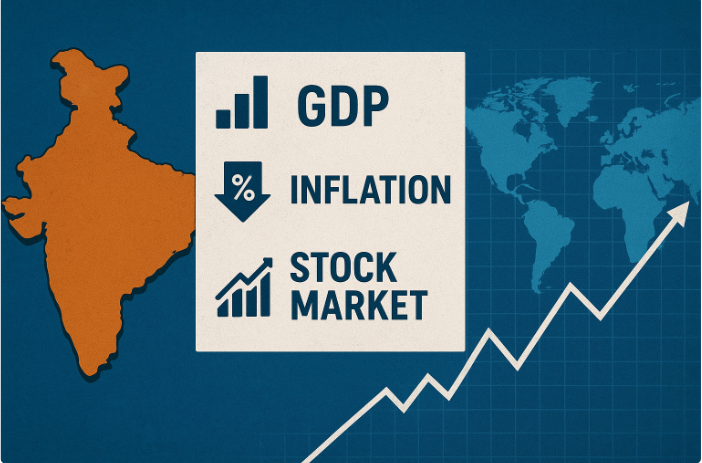
    • GDP Growth: ~6.3%, one of the fastest in the world.
    • Demographics: Median age 28, a young, growing consumer base.
    • Forex Reserves: $650B+, providing a cushion against shocks.
    • Digital Revolution: QR codes, fintech, and e-commerce booming.
    • Policy Push: Infrastructure, manufacturing incentives, and a pro-reform government, stable government.
    • FDI Inflows: India ranks among the top 5 global FDI destinations, reflecting strong investor confidence.
    • Startup Ecosystem: With 100+ unicorns, India is the world’s 3rd largest startup hub.
    • Energy Transition: Ambitious renewable energy target of 500 GW by 2030 is driving green and ESG-focused investments.
    • Urbanization: Rapid growth of smart cities and rising housing demand are boosting real estate and infrastructure sectors.
    • Banking & Credit Growth: Record-low NPAs and expanding credit penetration are powering the financial sector.
    • Global Supply Chain Shift: The “China+1” strategy is positioning India as a major manufacturing alternative.
    • Consumption Boom: Rising disposable incomes and demand from tier-2/3 cities are fueling FMCG, auto, and retail growth.
    • Stock Market Depth: NSE ranks among the largest by trading volume globally, ensuring liquidity and access for investors.

    Walking the streets of Mumbai on his last visit, Michael had felt the buzz firsthand — highways expanding, tech startups buzzing, and middle-class families upgrading their lifestyles. It wasn’t just numbers on a report. It was energy.

    India Growth - Middle Class Lifestyle & Shopping

    Additional Points: Sustainability & Climate Leadership

    • Paris Agreement Commitment: India has pledged to achieve net-zero emissions by 2070 and is actively working toward its Nationally Determined Contributions (NDCs). Unlike the US, which briefly exited the Paris Agreement under the Trump administration, India has consistently honored its commitments. This long-term policy stability boosts global investor trust.
    • Renewable Energy Leader: With a target of 500 GW of renewable capacity by 2030, India is one of the world’s largest green energy markets—attracting investments in solar, wind, and hydrogen.
    • Lower Per-Capita Emissions: Compared to the US, Europe, and China, India’s per-capita emissions are far lower, giving it more room to grow sustainably while still being compliant with global climate goals.
    • Green Finance Push: The Indian government and RBI are encouraging green bonds, ESG funds, and climate financing, creating new avenues for sustainable investing.
    • Corporate ESG Adoption: Leading Indian firms (like Infosys, Tata Group, Reliance) are actively integrating ESG frameworks, making them attractive to global institutional investors.
    • Resilient Growth with Sustainability: Unlike Europe (where growth is slowing under climate compliance costs) or China (where pollution control remains a struggle), India is positioning itself as a growth + sustainability hub, aligning profit with purpose.

    📈 India Surpassing the Old Titans – Japan & the UK

    India has quietly overtaken Japan and the UK in GDP (PPP), becoming the 3rd largest economy in the world, with a PPP GDP of around $17.65 trillion. Even in nominal terms, India (~$4.19T) is close to surpassing the UK (~$3.84T).

    • Services, IT, digital economy, and manufacturing drive this growth.
    • Domestic consumption and investment ensure robust demand.

    For investors, this means scale and opportunity: India is no longer a “small emerging market”; it is a global heavyweight in real economic activity.


    🔒 Inflation Under Control

    High growth often leads to price spikes. Yet India has managed:

    • Headline CPI around 2–3%, with rural and urban inflation stable.
    • RBI’s inflation-targeting framework (4% ±2%) ensures disciplined monetary policy.
    • Food and energy supply interventions, infrastructure improvements, and fiscal discipline help contain price pressures.

    The result? Strong growth without runaway inflation, rare in emerging markets.


    🌱 Sustainability & Climate Progress

    Save the Planet

    India is actively pursuing sustainability, aligning with the Paris Agreement, and presenting a new avenue for investment:

    • Net-zero target by 2070 – India’s long-term commitment to reducing emissions.
    • Renewable energy expansion: Added 25.1 GW in H1 2025, a 69% increase over the previous record.
    • Climate finance: India attracted US$5.1 billion in 2024, becoming the 2nd largest hub globally.
    • Emission reductions: CO₂ emissions in the power sector fell 1% year-on-year, the second such drop in 50 years.

    Investor opportunities: Renewable energy, green infrastructure, climate tech innovations, and government-backed green finance schemes.

    Challenges: Coal dependency, financing gaps (~US$10T needed for net-zero), and the need to accelerate emission intensity reduction.


    🇮🇳 India’s Economic Indicators Snapshot (2025)

    1. GDP & Growth Indicators

    • Nominal GDP: Approximately $4.19 trillion, placing India among the top economies globally.
    • GDP (PPP): Estimated at $17.65 trillion, ranking India 3rd globally, ahead of Japan and the UK.
    • Real GDP Growth Rate: Projected at 6.5% for FY2025, driven by robust domestic demand and structural reforms. The Times of India
    • Per Capita GDP: Approximately $2,878 (nominal), reflecting the nation’s growing economic output per individual.
    • Sectoral Contributions:
      • Services: Dominant sector, contributing significantly to GDP.
      • Industry: Includes manufacturing and construction, showing steady growth.
      • Agriculture: Remains a vital sector, though its share in GDP is gradually declining.

    2. Inflation & Prices

    • Consumer Price Index (CPI) Inflation: Recorded at 4.95% for 2024, indicating moderate inflation levels. Macrotrends
    • Wholesale Price Index (WPI) Inflation: Reflects trends in wholesale prices, impacting producer costs.
    • Food Inflation: Specific data varies; however, food prices have shown volatility, affecting rural consumption patterns.

    3. Monetary Policy & Banking

    • Repo Rate: Currently at 5.50%, following a 50 basis point cut in June 2025 to stimulate economic activity. The Times of India
    • Reverse Repo Rate: Aligned with the repo rate to manage liquidity in the banking system.
    • Liquidity Conditions: The banking system experienced a liquidity deficit in FY26, prompting RBI interventions to stabilize short-term interest rates. The Economic Times

    4. Fiscal Policy & Government Finances

    • Fiscal Deficit: Achieved a target of 4.8% of GDP for FY2024–25, indicating controlled government borrowing. Drishti IAS
    • Revenue Collections: Showed resilience, supported by improved tax compliance and reforms.
    • Expenditure: Focused on infrastructure development and social welfare programs.

    5. External Sector / Balance of Payments

    • Current Account Balance: Recorded a surplus of $13.5 billion (1.3% of GDP) in Q4 FY2024–25, driven by strong services exports and remittances. Reuters
    • Forex Reserves: Held at levels sufficient to cover several months of imports, providing a buffer against external shocks.
    • Exchange Rate: The Indian Rupee (INR) faced depreciation pressures, reaching an all-time low of ₹88.62 against the US Dollar in September 2025. Reuters

    6. Employment & Demographics

    • Unemployment Rate: Recorded at 4.20% in 2024, reflecting a stable labor market. Macrotrends
    • Labor Force Participation: Approximately 42.1%, indicating a significant portion of the working-age population is engaged in economic activities.
    • Demographics: India’s median age is rising, signaling a shift towards an aging population.

    7. Industrial & Business Indicators

    • Index of Industrial Production (IIP): Showed a growth rate of 5.2% in November 2024, indicating expansion in industrial activities. Press Information Bureau
    • Purchasing Managers’ Index (PMI): Manufacturing PMI remained above the neutral 50-point mark, suggesting expansion in the manufacturing sector.
    • Capacity Utilization: Indicates efficient use of industrial capacity, with levels improving over time.

    8. Consumer & Retail Indicators

    • Retail Sales: Showed positive growth, bolstered by festive seasons and increased consumer spending.
    • Auto Sales: Experienced a rebound, reflecting improved consumer confidence.
    • Digital Payments: Continued to rise, with UPI transactions reaching new milestones, indicating a shift towards digital financial inclusion.

    9. Real Estate & Infrastructure

    • Housing Starts: Showed an upward trend, supported by government initiatives and urbanization.
    • Infrastructure Investment: Increased focus on projects like highways, ports, and smart cities, aiming to boost economic growth.
    • Electricity Consumption: Growth in electricity demand aligns with industrial expansion and urban development.

    10. Trade & Commodity Prices

    • Oil Prices: India’s oil import bill remains a concern, with fluctuations in global oil prices impacting the trade balance.
    • Gold & Metal Prices: Influence consumer behavior, especially in rural areas where gold is a preferred investment.
    • Agricultural Commodities: Prices have shown volatility, affecting both producers and consumers.

    11. Stock Market & Sentiment Indicators

    • Nifty/Sensex Movements: Experienced volatility, influenced by global economic conditions and domestic factors.
    • Market Valuations: Remain elevated compared to historical averages, warranting cautious optimism.
    • Foreign Investment Flows: Showed signs of slowing down, impacted by global risk aversion and domestic policy uncertainties.

    📊 Summary: Key Economic Indicators to Watch

    IndicatorIndia’s Status (2025)Investor Implication
    GDP (Nominal)~$4.19TLarge market scale
    GDP (PPP)~$17.65T3rd largest globally
    Real GDP Growth6–6.5%Strong expansion potential
    CPI Inflation~4–5%Controlled price environment
    Fiscal Deficit4.8% of GDPSustainable government borrowing
    Current AccountSlight surplus ($13.5B)Stable external balance
    Forex Reserves$700BStrong buffer against shocks
    Unemployment4.2–5.1%Stable labor market
    IIP & PMI3.5–5% growth, PMI >50Industrial expansion
    Renewable Energy25.1 GW added H1 2025Green investment opportunities
    CO₂ Emissions-1% YoY in power sectorPositive climate progress

    ✅ Why Investors Are Watching India

    • Size: 3rd largest economy by PPP.
    • Growth: Sustained 6%+ GDP growth, outpacing many advanced economies.
    • Stability: Inflation under control, credible monetary policy, structural reforms, and strong domestic consumption.
    • Sustainability: Committed to renewable energy, emissions reduction, and green finance — a new growth frontier.

    Investor Takeaway: India presents a dynamic investment landscape, characterized by strong economic growth, demographic advantages, and ongoing reforms. However, investors should remain vigilant of external pressures, currency fluctuations, and policy shifts that may impact returns.


    ⚖️ The Catch: Valuations

    Of course, India wasn’t cheap. With the Nifty trading at 20–22x earnings, far above the 12–14x of other emerging markets, it gave Michael pause.

    But then he remembered something his mentor once told him: “The best stories rarely come at bargain prices.”


    ⚠️ Risks on the Radar

    Michael knew every market carried risks. For India, the list was longer than most:

    1. Oil Dependence: With over 80% of crude imported, global oil spikes could dent India’s current account and currency.
    2. Global Slowdown: A recession in the U.S. or Europe could hurt IT exports, outsourcing, and capital flows.
    3. Policy Execution: Infrastructure and reform projects need consistent delivery to keep momentum alive.
    4. Geopolitical Tensions: Border issues with China, Pakistan, and wider Asia could trigger volatility.
    5. Trade & Tariff Risks: A return of U.S. protectionist policies (e.g., Trump-style tariffs) could pressure Indian exports.
    6. Immigration & H-1B Visas: Stricter U.S. work visa policies could hurt Indian IT companies that rely on overseas talent deployment.
    7. Sanctions & Global Alliances: India’s balancing act between the West, Russia, and Middle East could become tricky — sanctions on oil or defense trade could spill over into markets.
    8. High Valuations: Global investors already price in optimism. Any earnings miss could spark sharp corrections.

    Michael weighed these risks carefully. But he also reminded himself: no growth story comes without challenges.


    ✅ Michael’s Decision

    After weeks of analysis, Michael made his call. He wouldn’t just “dip a toe” into India — he’d make it a core part of his portfolio.

    Why? Because in a world of uncertainty, India offered the rare mix of growth and resilience.

    India Growth - Young Working Population

    The U.S. had innovation. China had scale. Europe had maturity.
    But India had tomorrow — a young population, digital adoption, and an economy powering ahead even in a fragile global environment.

    As he finalized the allocation, Michael leaned back, satisfied. For him, the bet was clear: If the next decade belongs to any emerging market, it belongs to India.


    👉 Take Action Now

    India’s story is no longer just about potential — it’s about scale, growth, and resilience. For investors, this is a once-in-a-generation opportunity to position portfolios for the next decade of expansion.

    • Analyze the indicators: GDP growth, inflation, fiscal discipline, and foreign investment trends.
    • Identify sectors: Services, digital economy, infrastructure, and manufacturing are driving India’s growth engine.
    • Act with insight: Make India a core allocation in your investment strategy, balancing opportunities with macroeconomic and geopolitical risks.

    💡 Don’t wait on the sidelines — the numbers show that India is moving fast, and smart investors move faster.

    Read about investment & portfolio diversification here.

  • Why India’s Growth Story Outshines the U.S., China, and Europe for Investors

    Why India’s Growth Story Outshines the U.S., China, and Europe for Investors


    India’s Growth Story vs Rest of the World

    India Growth - Michael's Story

    Michael, a portfolio manager in London, had a decision to make.
    He sat in his office overlooking the Thames, spreadsheets glowing on his screen. Billions of dollars to allocate — but where?


    🇺🇸 First Stop: The U.S.

    Michael’s first instinct was home turf: the United States. It had always been the safe bet — the land of Silicon Valley, Wall Street, and endless innovation.

    But when he looked closer, doubts crept in. Growth was slowing to just 2%, interest rates were high, and valuations stretched. Buying more U.S. equities felt like buying into yesterday’s growth at tomorrow’s prices.


    🇨🇳 Then Came China

    Michael shifted his gaze eastward. China, the old favorite of emerging-market investors. Once it promised double-digit growth and endless opportunity.

    But the headlines worried him — a property sector in crisis, regulatory crackdowns, slowing demographics. Yes, stocks were cheap at 10–12x earnings, but cheap didn’t always mean safe. What if the story never turned around?


    🇪🇺 Europe: Stability Without Spark

    Europe was next on his screen. Political stability, solid infrastructure, and deep markets. But GDP growth crawling at 1%, an ageing population, and fragmented energy policies. It looked more like a bond market than an equity opportunity.


    🌍 Other Emerging Markets

    Michael skimmed through Brazil, South Africa, Turkey. Attractive on paper, but currencies swung like a pendulum, and political instability made him nervous. They felt more like gambles than investments.


    🇮🇳 Finally, India

    Then Michael clicked open the India report. His eyes widened.

    • GDP Growth: ~6.3%, one of the fastest in the world.
    • Demographics: Median age 28, a young, growing consumer base.
    • Forex Reserves: $650B+, providing a cushion against shocks.
    • Digital Revolution: QR codes, fintech, and e-commerce booming.
    • Policy Push: Infrastructure, manufacturing incentives, and a pro-reform government, stable government.
    • FDI Inflows: India ranks among the top 5 global FDI destinations, reflecting strong investor confidence.
    • Startup Ecosystem: With 100+ unicorns, India is the world’s 3rd largest startup hub.
    • Energy Transition: Ambitious renewable energy target of 500 GW by 2030 is driving green and ESG-focused investments.
    • Urbanization: Rapid growth of smart cities and rising housing demand are boosting real estate and infrastructure sectors.
    • Banking & Credit Growth: Record-low NPAs and expanding credit penetration are powering the financial sector.
    • Global Supply Chain Shift: The “China+1” strategy is positioning India as a major manufacturing alternative.
    • Consumption Boom: Rising disposable incomes and demand from tier-2/3 cities are fueling FMCG, auto, and retail growth.
    • Stock Market Depth: NSE ranks among the largest by trading volume globally, ensuring liquidity and access for investors.

    Walking the streets of Mumbai on his last visit, Michael had felt the buzz firsthand — highways expanding, tech startups buzzing, and middle-class families upgrading their lifestyles. It wasn’t just numbers on a report. It was energy.

    India Growth - Middle Class Lifestyle & Shopping

    Additional Points: Sustainability & Climate Leadership

    • Paris Agreement Commitment: India has pledged to achieve net-zero emissions by 2070 and is actively working toward its Nationally Determined Contributions (NDCs). Unlike the US, which briefly exited the Paris Agreement under the Trump administration, India has consistently honored its commitments. This long-term policy stability boosts global investor trust.
    • Renewable Energy Leader: With a target of 500 GW of renewable capacity by 2030, India is one of the world’s largest green energy markets—attracting investments in solar, wind, and hydrogen.
    • Lower Per-Capita Emissions: Compared to the US, Europe, and China, India’s per-capita emissions are far lower, giving it more room to grow sustainably while still being compliant with global climate goals.
    • Green Finance Push: The Indian government and RBI are encouraging green bonds, ESG funds, and climate financing, creating new avenues for sustainable investing.
    • Corporate ESG Adoption: Leading Indian firms (like Infosys, Tata Group, Reliance) are actively integrating ESG frameworks, making them attractive to global institutional investors.
    • Resilient Growth with Sustainability: Unlike Europe (where growth is slowing under climate compliance costs) or China (where pollution control remains a struggle), India is positioning itself as a growth + sustainability hub, aligning profit with purpose.

    📈 India Surpassing the Old Titans – Japan & the UK

    India has quietly overtaken Japan and the UK in GDP (PPP), becoming the 3rd largest economy in the world, with a PPP GDP of around $17.65 trillion. Even in nominal terms, India (~$4.19T) is close to surpassing the UK (~$3.84T).

    • Services, IT, digital economy, and manufacturing drive this growth.
    • Domestic consumption and investment ensure robust demand.

    For investors, this means scale and opportunity: India is no longer a “small emerging market”; it is a global heavyweight in real economic activity.


    🔒 Inflation Under Control

    High growth often leads to price spikes. Yet India has managed:

    • Headline CPI around 2–3%, with rural and urban inflation stable.
    • RBI’s inflation-targeting framework (4% ±2%) ensures disciplined monetary policy.
    • Food and energy supply interventions, infrastructure improvements, and fiscal discipline help contain price pressures.

    The result? Strong growth without runaway inflation, rare in emerging markets.


    🌱 Sustainability & Climate Progress

    Save the Planet

    India is actively pursuing sustainability, aligning with the Paris Agreement, and presenting a new avenue for investment:

    • Net-zero target by 2070 – India’s long-term commitment to reducing emissions.
    • Renewable energy expansion: Added 25.1 GW in H1 2025, a 69% increase over the previous record.
    • Climate finance: India attracted US$5.1 billion in 2024, becoming the 2nd largest hub globally.
    • Emission reductions: CO₂ emissions in the power sector fell 1% year-on-year, the second such drop in 50 years.

    Investor opportunities: Renewable energy, green infrastructure, climate tech innovations, and government-backed green finance schemes.

    Challenges: Coal dependency, financing gaps (~US$10T needed for net-zero), and the need to accelerate emission intensity reduction.


    🇮🇳 India’s Economic Indicators Snapshot (2025)

    1. GDP & Growth Indicators

    • Nominal GDP: Approximately $4.19 trillion, placing India among the top economies globally.
    • GDP (PPP): Estimated at $17.65 trillion, ranking India 3rd globally, ahead of Japan and the UK.
    • Real GDP Growth Rate: Projected at 6.5% for FY2025, driven by robust domestic demand and structural reforms. The Times of India
    • Per Capita GDP: Approximately $2,878 (nominal), reflecting the nation’s growing economic output per individual.
    • Sectoral Contributions:
      • Services: Dominant sector, contributing significantly to GDP.
      • Industry: Includes manufacturing and construction, showing steady growth.
      • Agriculture: Remains a vital sector, though its share in GDP is gradually declining.

    2. Inflation & Prices

    • Consumer Price Index (CPI) Inflation: Recorded at 4.95% for 2024, indicating moderate inflation levels. Macrotrends
    • Wholesale Price Index (WPI) Inflation: Reflects trends in wholesale prices, impacting producer costs.
    • Food Inflation: Specific data varies; however, food prices have shown volatility, affecting rural consumption patterns.

    3. Monetary Policy & Banking

    • Repo Rate: Currently at 5.50%, following a 50 basis point cut in June 2025 to stimulate economic activity. The Times of India
    • Reverse Repo Rate: Aligned with the repo rate to manage liquidity in the banking system.
    • Liquidity Conditions: The banking system experienced a liquidity deficit in FY26, prompting RBI interventions to stabilize short-term interest rates. The Economic Times

    4. Fiscal Policy & Government Finances

    • Fiscal Deficit: Achieved a target of 4.8% of GDP for FY2024–25, indicating controlled government borrowing. Drishti IAS
    • Revenue Collections: Showed resilience, supported by improved tax compliance and reforms.
    • Expenditure: Focused on infrastructure development and social welfare programs.

    5. External Sector / Balance of Payments

    • Current Account Balance: Recorded a surplus of $13.5 billion (1.3% of GDP) in Q4 FY2024–25, driven by strong services exports and remittances. Reuters
    • Forex Reserves: Held at levels sufficient to cover several months of imports, providing a buffer against external shocks.
    • Exchange Rate: The Indian Rupee (INR) faced depreciation pressures, reaching an all-time low of ₹88.62 against the US Dollar in September 2025. Reuters

    6. Employment & Demographics

    • Unemployment Rate: Recorded at 4.20% in 2024, reflecting a stable labor market. Macrotrends
    • Labor Force Participation: Approximately 42.1%, indicating a significant portion of the working-age population is engaged in economic activities.
    • Demographics: India’s median age is rising, signaling a shift towards an aging population.

    7. Industrial & Business Indicators

    • Index of Industrial Production (IIP): Showed a growth rate of 5.2% in November 2024, indicating expansion in industrial activities. Press Information Bureau
    • Purchasing Managers’ Index (PMI): Manufacturing PMI remained above the neutral 50-point mark, suggesting expansion in the manufacturing sector.
    • Capacity Utilization: Indicates efficient use of industrial capacity, with levels improving over time.

    8. Consumer & Retail Indicators

    • Retail Sales: Showed positive growth, bolstered by festive seasons and increased consumer spending.
    • Auto Sales: Experienced a rebound, reflecting improved consumer confidence.
    • Digital Payments: Continued to rise, with UPI transactions reaching new milestones, indicating a shift towards digital financial inclusion.

    9. Real Estate & Infrastructure

    • Housing Starts: Showed an upward trend, supported by government initiatives and urbanization.
    • Infrastructure Investment: Increased focus on projects like highways, ports, and smart cities, aiming to boost economic growth.
    • Electricity Consumption: Growth in electricity demand aligns with industrial expansion and urban development.

    10. Trade & Commodity Prices

    • Oil Prices: India’s oil import bill remains a concern, with fluctuations in global oil prices impacting the trade balance.
    • Gold & Metal Prices: Influence consumer behavior, especially in rural areas where gold is a preferred investment.
    • Agricultural Commodities: Prices have shown volatility, affecting both producers and consumers.

    11. Stock Market & Sentiment Indicators

    • Nifty/Sensex Movements: Experienced volatility, influenced by global economic conditions and domestic factors.
    • Market Valuations: Remain elevated compared to historical averages, warranting cautious optimism.
    • Foreign Investment Flows: Showed signs of slowing down, impacted by global risk aversion and domestic policy uncertainties.

    📊 Summary: Key Economic Indicators to Watch

    IndicatorIndia’s Status (2025)Investor Implication
    GDP (Nominal)~$4.19TLarge market scale
    GDP (PPP)~$17.65T3rd largest globally
    Real GDP Growth6–6.5%Strong expansion potential
    CPI Inflation~4–5%Controlled price environment
    Fiscal Deficit4.8% of GDPSustainable government borrowing
    Current AccountSlight surplus ($13.5B)Stable external balance
    Forex Reserves$700BStrong buffer against shocks
    Unemployment4.2–5.1%Stable labor market
    IIP & PMI3.5–5% growth, PMI >50Industrial expansion
    Renewable Energy25.1 GW added H1 2025Green investment opportunities
    CO₂ Emissions-1% YoY in power sectorPositive climate progress

    ✅ Why Investors Are Watching India

    • Size: 3rd largest economy by PPP.
    • Growth: Sustained 6%+ GDP growth, outpacing many advanced economies.
    • Stability: Inflation under control, credible monetary policy, structural reforms, and strong domestic consumption.
    • Sustainability: Committed to renewable energy, emissions reduction, and green finance — a new growth frontier.

    Investor Takeaway: India presents a dynamic investment landscape, characterized by strong economic growth, demographic advantages, and ongoing reforms. However, investors should remain vigilant of external pressures, currency fluctuations, and policy shifts that may impact returns.


    ⚖️ The Catch: Valuations

    Of course, India wasn’t cheap. With the Nifty trading at 20–22x earnings, far above the 12–14x of other emerging markets, it gave Michael pause.

    But then he remembered something his mentor once told him: “The best stories rarely come at bargain prices.”


    ⚠️ Risks on the Radar

    Michael knew every market carried risks. For India, the list was longer than most:

    1. Oil Dependence: With over 80% of crude imported, global oil spikes could dent India’s current account and currency.
    2. Global Slowdown: A recession in the U.S. or Europe could hurt IT exports, outsourcing, and capital flows.
    3. Policy Execution: Infrastructure and reform projects need consistent delivery to keep momentum alive.
    4. Geopolitical Tensions: Border issues with China, Pakistan, and wider Asia could trigger volatility.
    5. Trade & Tariff Risks: A return of U.S. protectionist policies (e.g., Trump-style tariffs) could pressure Indian exports.
    6. Immigration & H-1B Visas: Stricter U.S. work visa policies could hurt Indian IT companies that rely on overseas talent deployment.
    7. Sanctions & Global Alliances: India’s balancing act between the West, Russia, and Middle East could become tricky — sanctions on oil or defense trade could spill over into markets.
    8. High Valuations: Global investors already price in optimism. Any earnings miss could spark sharp corrections.

    Michael weighed these risks carefully. But he also reminded himself: no growth story comes without challenges.


    ✅ Michael’s Decision

    After weeks of analysis, Michael made his call. He wouldn’t just “dip a toe” into India — he’d make it a core part of his portfolio.

    Why? Because in a world of uncertainty, India offered the rare mix of growth and resilience.

    India Growth - Young Working Population

    The U.S. had innovation. China had scale. Europe had maturity.
    But India had tomorrow — a young population, digital adoption, and an economy powering ahead even in a fragile global environment.

    As he finalized the allocation, Michael leaned back, satisfied. For him, the bet was clear: If the next decade belongs to any emerging market, it belongs to India.


    👉 Take Action Now

    India’s story is no longer just about potential — it’s about scale, growth, and resilience. For investors, this is a once-in-a-generation opportunity to position portfolios for the next decade of expansion.

    • Analyze the indicators: GDP growth, inflation, fiscal discipline, and foreign investment trends.
    • Identify sectors: Services, digital economy, infrastructure, and manufacturing are driving India’s growth engine.
    • Act with insight: Make India a core allocation in your investment strategy, balancing opportunities with macroeconomic and geopolitical risks.

    💡 Don’t wait on the sidelines — the numbers show that India is moving fast, and smart investors move faster.

    Read about investment & portfolio diversification here.

  • Why India’s Growth Story Outshines the U.S., China, and Europe for Investors

    Why India’s Growth Story Outshines the U.S., China, and Europe for Investors


    India’s Growth Story vs Rest of the World

    India Growth - Michael's Story

    Michael, a portfolio manager in London, had a decision to make.
    He sat in his office overlooking the Thames, spreadsheets glowing on his screen. Billions of dollars to allocate — but where?


    🇺🇸 First Stop: The U.S.

    Michael’s first instinct was home turf: the United States. It had always been the safe bet — the land of Silicon Valley, Wall Street, and endless innovation.

    But when he looked closer, doubts crept in. Growth was slowing to just 2%, interest rates were high, and valuations stretched. Buying more U.S. equities felt like buying into yesterday’s growth at tomorrow’s prices.


    🇨🇳 Then Came China

    Michael shifted his gaze eastward. China, the old favorite of emerging-market investors. Once it promised double-digit growth and endless opportunity.

    But the headlines worried him — a property sector in crisis, regulatory crackdowns, slowing demographics. Yes, stocks were cheap at 10–12x earnings, but cheap didn’t always mean safe. What if the story never turned around?


    🇪🇺 Europe: Stability Without Spark

    Europe was next on his screen. Political stability, solid infrastructure, and deep markets. But GDP growth crawling at 1%, an ageing population, and fragmented energy policies. It looked more like a bond market than an equity opportunity.


    🌍 Other Emerging Markets

    Michael skimmed through Brazil, South Africa, Turkey. Attractive on paper, but currencies swung like a pendulum, and political instability made him nervous. They felt more like gambles than investments.


    🇮🇳 Finally, India

    Then Michael clicked open the India report. His eyes widened.

    • GDP Growth: ~6.3%, one of the fastest in the world.
    • Demographics: Median age 28, a young, growing consumer base.
    • Forex Reserves: $650B+, providing a cushion against shocks.
    • Digital Revolution: QR codes, fintech, and e-commerce booming.
    • Policy Push: Infrastructure, manufacturing incentives, and a pro-reform government, stable government.
    • FDI Inflows: India ranks among the top 5 global FDI destinations, reflecting strong investor confidence.
    • Startup Ecosystem: With 100+ unicorns, India is the world’s 3rd largest startup hub.
    • Energy Transition: Ambitious renewable energy target of 500 GW by 2030 is driving green and ESG-focused investments.
    • Urbanization: Rapid growth of smart cities and rising housing demand are boosting real estate and infrastructure sectors.
    • Banking & Credit Growth: Record-low NPAs and expanding credit penetration are powering the financial sector.
    • Global Supply Chain Shift: The “China+1” strategy is positioning India as a major manufacturing alternative.
    • Consumption Boom: Rising disposable incomes and demand from tier-2/3 cities are fueling FMCG, auto, and retail growth.
    • Stock Market Depth: NSE ranks among the largest by trading volume globally, ensuring liquidity and access for investors.

    Walking the streets of Mumbai on his last visit, Michael had felt the buzz firsthand — highways expanding, tech startups buzzing, and middle-class families upgrading their lifestyles. It wasn’t just numbers on a report. It was energy.

    India Growth - Middle Class Lifestyle & Shopping

    Additional Points: Sustainability & Climate Leadership

    • Paris Agreement Commitment: India has pledged to achieve net-zero emissions by 2070 and is actively working toward its Nationally Determined Contributions (NDCs). Unlike the US, which briefly exited the Paris Agreement under the Trump administration, India has consistently honored its commitments. This long-term policy stability boosts global investor trust.
    • Renewable Energy Leader: With a target of 500 GW of renewable capacity by 2030, India is one of the world’s largest green energy markets—attracting investments in solar, wind, and hydrogen.
    • Lower Per-Capita Emissions: Compared to the US, Europe, and China, India’s per-capita emissions are far lower, giving it more room to grow sustainably while still being compliant with global climate goals.
    • Green Finance Push: The Indian government and RBI are encouraging green bonds, ESG funds, and climate financing, creating new avenues for sustainable investing.
    • Corporate ESG Adoption: Leading Indian firms (like Infosys, Tata Group, Reliance) are actively integrating ESG frameworks, making them attractive to global institutional investors.
    • Resilient Growth with Sustainability: Unlike Europe (where growth is slowing under climate compliance costs) or China (where pollution control remains a struggle), India is positioning itself as a growth + sustainability hub, aligning profit with purpose.

    📈 India Surpassing the Old Titans – Japan & the UK

    India has quietly overtaken Japan and the UK in GDP (PPP), becoming the 3rd largest economy in the world, with a PPP GDP of around $17.65 trillion. Even in nominal terms, India (~$4.19T) is close to surpassing the UK (~$3.84T).

    • Services, IT, digital economy, and manufacturing drive this growth.
    • Domestic consumption and investment ensure robust demand.

    For investors, this means scale and opportunity: India is no longer a “small emerging market”; it is a global heavyweight in real economic activity.


    🔒 Inflation Under Control

    High growth often leads to price spikes. Yet India has managed:

    • Headline CPI around 2–3%, with rural and urban inflation stable.
    • RBI’s inflation-targeting framework (4% ±2%) ensures disciplined monetary policy.
    • Food and energy supply interventions, infrastructure improvements, and fiscal discipline help contain price pressures.

    The result? Strong growth without runaway inflation, rare in emerging markets.


    🌱 Sustainability & Climate Progress

    Save the Planet

    India is actively pursuing sustainability, aligning with the Paris Agreement, and presenting a new avenue for investment:

    • Net-zero target by 2070 – India’s long-term commitment to reducing emissions.
    • Renewable energy expansion: Added 25.1 GW in H1 2025, a 69% increase over the previous record.
    • Climate finance: India attracted US$5.1 billion in 2024, becoming the 2nd largest hub globally.
    • Emission reductions: CO₂ emissions in the power sector fell 1% year-on-year, the second such drop in 50 years.

    Investor opportunities: Renewable energy, green infrastructure, climate tech innovations, and government-backed green finance schemes.

    Challenges: Coal dependency, financing gaps (~US$10T needed for net-zero), and the need to accelerate emission intensity reduction.


    🇮🇳 India’s Economic Indicators Snapshot (2025)

    1. GDP & Growth Indicators

    • Nominal GDP: Approximately $4.19 trillion, placing India among the top economies globally.
    • GDP (PPP): Estimated at $17.65 trillion, ranking India 3rd globally, ahead of Japan and the UK.
    • Real GDP Growth Rate: Projected at 6.5% for FY2025, driven by robust domestic demand and structural reforms. The Times of India
    • Per Capita GDP: Approximately $2,878 (nominal), reflecting the nation’s growing economic output per individual.
    • Sectoral Contributions:
      • Services: Dominant sector, contributing significantly to GDP.
      • Industry: Includes manufacturing and construction, showing steady growth.
      • Agriculture: Remains a vital sector, though its share in GDP is gradually declining.

    2. Inflation & Prices

    • Consumer Price Index (CPI) Inflation: Recorded at 4.95% for 2024, indicating moderate inflation levels. Macrotrends
    • Wholesale Price Index (WPI) Inflation: Reflects trends in wholesale prices, impacting producer costs.
    • Food Inflation: Specific data varies; however, food prices have shown volatility, affecting rural consumption patterns.

    3. Monetary Policy & Banking

    • Repo Rate: Currently at 5.50%, following a 50 basis point cut in June 2025 to stimulate economic activity. The Times of India
    • Reverse Repo Rate: Aligned with the repo rate to manage liquidity in the banking system.
    • Liquidity Conditions: The banking system experienced a liquidity deficit in FY26, prompting RBI interventions to stabilize short-term interest rates. The Economic Times

    4. Fiscal Policy & Government Finances

    • Fiscal Deficit: Achieved a target of 4.8% of GDP for FY2024–25, indicating controlled government borrowing. Drishti IAS
    • Revenue Collections: Showed resilience, supported by improved tax compliance and reforms.
    • Expenditure: Focused on infrastructure development and social welfare programs.

    5. External Sector / Balance of Payments

    • Current Account Balance: Recorded a surplus of $13.5 billion (1.3% of GDP) in Q4 FY2024–25, driven by strong services exports and remittances. Reuters
    • Forex Reserves: Held at levels sufficient to cover several months of imports, providing a buffer against external shocks.
    • Exchange Rate: The Indian Rupee (INR) faced depreciation pressures, reaching an all-time low of ₹88.62 against the US Dollar in September 2025. Reuters

    6. Employment & Demographics

    • Unemployment Rate: Recorded at 4.20% in 2024, reflecting a stable labor market. Macrotrends
    • Labor Force Participation: Approximately 42.1%, indicating a significant portion of the working-age population is engaged in economic activities.
    • Demographics: India’s median age is rising, signaling a shift towards an aging population.

    7. Industrial & Business Indicators

    • Index of Industrial Production (IIP): Showed a growth rate of 5.2% in November 2024, indicating expansion in industrial activities. Press Information Bureau
    • Purchasing Managers’ Index (PMI): Manufacturing PMI remained above the neutral 50-point mark, suggesting expansion in the manufacturing sector.
    • Capacity Utilization: Indicates efficient use of industrial capacity, with levels improving over time.

    8. Consumer & Retail Indicators

    • Retail Sales: Showed positive growth, bolstered by festive seasons and increased consumer spending.
    • Auto Sales: Experienced a rebound, reflecting improved consumer confidence.
    • Digital Payments: Continued to rise, with UPI transactions reaching new milestones, indicating a shift towards digital financial inclusion.

    9. Real Estate & Infrastructure

    • Housing Starts: Showed an upward trend, supported by government initiatives and urbanization.
    • Infrastructure Investment: Increased focus on projects like highways, ports, and smart cities, aiming to boost economic growth.
    • Electricity Consumption: Growth in electricity demand aligns with industrial expansion and urban development.

    10. Trade & Commodity Prices

    • Oil Prices: India’s oil import bill remains a concern, with fluctuations in global oil prices impacting the trade balance.
    • Gold & Metal Prices: Influence consumer behavior, especially in rural areas where gold is a preferred investment.
    • Agricultural Commodities: Prices have shown volatility, affecting both producers and consumers.

    11. Stock Market & Sentiment Indicators

    • Nifty/Sensex Movements: Experienced volatility, influenced by global economic conditions and domestic factors.
    • Market Valuations: Remain elevated compared to historical averages, warranting cautious optimism.
    • Foreign Investment Flows: Showed signs of slowing down, impacted by global risk aversion and domestic policy uncertainties.

    📊 Summary: Key Economic Indicators to Watch

    IndicatorIndia’s Status (2025)Investor Implication
    GDP (Nominal)~$4.19TLarge market scale
    GDP (PPP)~$17.65T3rd largest globally
    Real GDP Growth6–6.5%Strong expansion potential
    CPI Inflation~4–5%Controlled price environment
    Fiscal Deficit4.8% of GDPSustainable government borrowing
    Current AccountSlight surplus ($13.5B)Stable external balance
    Forex Reserves$700BStrong buffer against shocks
    Unemployment4.2–5.1%Stable labor market
    IIP & PMI3.5–5% growth, PMI >50Industrial expansion
    Renewable Energy25.1 GW added H1 2025Green investment opportunities
    CO₂ Emissions-1% YoY in power sectorPositive climate progress

    ✅ Why Investors Are Watching India

    • Size: 3rd largest economy by PPP.
    • Growth: Sustained 6%+ GDP growth, outpacing many advanced economies.
    • Stability: Inflation under control, credible monetary policy, structural reforms, and strong domestic consumption.
    • Sustainability: Committed to renewable energy, emissions reduction, and green finance — a new growth frontier.

    Investor Takeaway: India presents a dynamic investment landscape, characterized by strong economic growth, demographic advantages, and ongoing reforms. However, investors should remain vigilant of external pressures, currency fluctuations, and policy shifts that may impact returns.


    ⚖️ The Catch: Valuations

    Of course, India wasn’t cheap. With the Nifty trading at 20–22x earnings, far above the 12–14x of other emerging markets, it gave Michael pause.

    But then he remembered something his mentor once told him: “The best stories rarely come at bargain prices.”


    ⚠️ Risks on the Radar

    Michael knew every market carried risks. For India, the list was longer than most:

    1. Oil Dependence: With over 80% of crude imported, global oil spikes could dent India’s current account and currency.
    2. Global Slowdown: A recession in the U.S. or Europe could hurt IT exports, outsourcing, and capital flows.
    3. Policy Execution: Infrastructure and reform projects need consistent delivery to keep momentum alive.
    4. Geopolitical Tensions: Border issues with China, Pakistan, and wider Asia could trigger volatility.
    5. Trade & Tariff Risks: A return of U.S. protectionist policies (e.g., Trump-style tariffs) could pressure Indian exports.
    6. Immigration & H-1B Visas: Stricter U.S. work visa policies could hurt Indian IT companies that rely on overseas talent deployment.
    7. Sanctions & Global Alliances: India’s balancing act between the West, Russia, and Middle East could become tricky — sanctions on oil or defense trade could spill over into markets.
    8. High Valuations: Global investors already price in optimism. Any earnings miss could spark sharp corrections.

    Michael weighed these risks carefully. But he also reminded himself: no growth story comes without challenges.


    ✅ Michael’s Decision

    After weeks of analysis, Michael made his call. He wouldn’t just “dip a toe” into India — he’d make it a core part of his portfolio.

    Why? Because in a world of uncertainty, India offered the rare mix of growth and resilience.

    India Growth - Young Working Population

    The U.S. had innovation. China had scale. Europe had maturity.
    But India had tomorrow — a young population, digital adoption, and an economy powering ahead even in a fragile global environment.

    As he finalized the allocation, Michael leaned back, satisfied. For him, the bet was clear: If the next decade belongs to any emerging market, it belongs to India.


    👉 Take Action Now

    India’s story is no longer just about potential — it’s about scale, growth, and resilience. For investors, this is a once-in-a-generation opportunity to position portfolios for the next decade of expansion.

    • Analyze the indicators: GDP growth, inflation, fiscal discipline, and foreign investment trends.
    • Identify sectors: Services, digital economy, infrastructure, and manufacturing are driving India’s growth engine.
    • Act with insight: Make India a core allocation in your investment strategy, balancing opportunities with macroeconomic and geopolitical risks.

    💡 Don’t wait on the sidelines — the numbers show that India is moving fast, and smart investors move faster.

    Read about investment & portfolio diversification here.

  • Why India’s Growth Story Outshines the U.S., China, and Europe for Investors

    Why India’s Growth Story Outshines the U.S., China, and Europe for Investors


    India’s Growth Story vs Rest of the World

    India Growth - Michael's Story

    Michael, a portfolio manager in London, had a decision to make.
    He sat in his office overlooking the Thames, spreadsheets glowing on his screen. Billions of dollars to allocate — but where?


    🇺🇸 First Stop: The U.S.

    Michael’s first instinct was home turf: the United States. It had always been the safe bet — the land of Silicon Valley, Wall Street, and endless innovation.

    But when he looked closer, doubts crept in. Growth was slowing to just 2%, interest rates were high, and valuations stretched. Buying more U.S. equities felt like buying into yesterday’s growth at tomorrow’s prices.


    🇨🇳 Then Came China

    Michael shifted his gaze eastward. China, the old favorite of emerging-market investors. Once it promised double-digit growth and endless opportunity.

    But the headlines worried him — a property sector in crisis, regulatory crackdowns, slowing demographics. Yes, stocks were cheap at 10–12x earnings, but cheap didn’t always mean safe. What if the story never turned around?


    🇪🇺 Europe: Stability Without Spark

    Europe was next on his screen. Political stability, solid infrastructure, and deep markets. But GDP growth crawling at 1%, an ageing population, and fragmented energy policies. It looked more like a bond market than an equity opportunity.


    🌍 Other Emerging Markets

    Michael skimmed through Brazil, South Africa, Turkey. Attractive on paper, but currencies swung like a pendulum, and political instability made him nervous. They felt more like gambles than investments.


    🇮🇳 Finally, India

    Then Michael clicked open the India report. His eyes widened.

    • GDP Growth: ~6.3%, one of the fastest in the world.
    • Demographics: Median age 28, a young, growing consumer base.
    • Forex Reserves: $650B+, providing a cushion against shocks.
    • Digital Revolution: QR codes, fintech, and e-commerce booming.
    • Policy Push: Infrastructure, manufacturing incentives, and a pro-reform government, stable government.
    • FDI Inflows: India ranks among the top 5 global FDI destinations, reflecting strong investor confidence.
    • Startup Ecosystem: With 100+ unicorns, India is the world’s 3rd largest startup hub.
    • Energy Transition: Ambitious renewable energy target of 500 GW by 2030 is driving green and ESG-focused investments.
    • Urbanization: Rapid growth of smart cities and rising housing demand are boosting real estate and infrastructure sectors.
    • Banking & Credit Growth: Record-low NPAs and expanding credit penetration are powering the financial sector.
    • Global Supply Chain Shift: The “China+1” strategy is positioning India as a major manufacturing alternative.
    • Consumption Boom: Rising disposable incomes and demand from tier-2/3 cities are fueling FMCG, auto, and retail growth.
    • Stock Market Depth: NSE ranks among the largest by trading volume globally, ensuring liquidity and access for investors.

    Walking the streets of Mumbai on his last visit, Michael had felt the buzz firsthand — highways expanding, tech startups buzzing, and middle-class families upgrading their lifestyles. It wasn’t just numbers on a report. It was energy.

    India Growth - Middle Class Lifestyle & Shopping

    Additional Points: Sustainability & Climate Leadership

    • Paris Agreement Commitment: India has pledged to achieve net-zero emissions by 2070 and is actively working toward its Nationally Determined Contributions (NDCs). Unlike the US, which briefly exited the Paris Agreement under the Trump administration, India has consistently honored its commitments. This long-term policy stability boosts global investor trust.
    • Renewable Energy Leader: With a target of 500 GW of renewable capacity by 2030, India is one of the world’s largest green energy markets—attracting investments in solar, wind, and hydrogen.
    • Lower Per-Capita Emissions: Compared to the US, Europe, and China, India’s per-capita emissions are far lower, giving it more room to grow sustainably while still being compliant with global climate goals.
    • Green Finance Push: The Indian government and RBI are encouraging green bonds, ESG funds, and climate financing, creating new avenues for sustainable investing.
    • Corporate ESG Adoption: Leading Indian firms (like Infosys, Tata Group, Reliance) are actively integrating ESG frameworks, making them attractive to global institutional investors.
    • Resilient Growth with Sustainability: Unlike Europe (where growth is slowing under climate compliance costs) or China (where pollution control remains a struggle), India is positioning itself as a growth + sustainability hub, aligning profit with purpose.

    📈 India Surpassing the Old Titans – Japan & the UK

    India has quietly overtaken Japan and the UK in GDP (PPP), becoming the 3rd largest economy in the world, with a PPP GDP of around $17.65 trillion. Even in nominal terms, India (~$4.19T) is close to surpassing the UK (~$3.84T).

    • Services, IT, digital economy, and manufacturing drive this growth.
    • Domestic consumption and investment ensure robust demand.

    For investors, this means scale and opportunity: India is no longer a “small emerging market”; it is a global heavyweight in real economic activity.


    🔒 Inflation Under Control

    High growth often leads to price spikes. Yet India has managed:

    • Headline CPI around 2–3%, with rural and urban inflation stable.
    • RBI’s inflation-targeting framework (4% ±2%) ensures disciplined monetary policy.
    • Food and energy supply interventions, infrastructure improvements, and fiscal discipline help contain price pressures.

    The result? Strong growth without runaway inflation, rare in emerging markets.


    🌱 Sustainability & Climate Progress

    Save the Planet

    India is actively pursuing sustainability, aligning with the Paris Agreement, and presenting a new avenue for investment:

    • Net-zero target by 2070 – India’s long-term commitment to reducing emissions.
    • Renewable energy expansion: Added 25.1 GW in H1 2025, a 69% increase over the previous record.
    • Climate finance: India attracted US$5.1 billion in 2024, becoming the 2nd largest hub globally.
    • Emission reductions: CO₂ emissions in the power sector fell 1% year-on-year, the second such drop in 50 years.

    Investor opportunities: Renewable energy, green infrastructure, climate tech innovations, and government-backed green finance schemes.

    Challenges: Coal dependency, financing gaps (~US$10T needed for net-zero), and the need to accelerate emission intensity reduction.


    🇮🇳 India’s Economic Indicators Snapshot (2025)

    1. GDP & Growth Indicators

    • Nominal GDP: Approximately $4.19 trillion, placing India among the top economies globally.
    • GDP (PPP): Estimated at $17.65 trillion, ranking India 3rd globally, ahead of Japan and the UK.
    • Real GDP Growth Rate: Projected at 6.5% for FY2025, driven by robust domestic demand and structural reforms. The Times of India
    • Per Capita GDP: Approximately $2,878 (nominal), reflecting the nation’s growing economic output per individual.
    • Sectoral Contributions:
      • Services: Dominant sector, contributing significantly to GDP.
      • Industry: Includes manufacturing and construction, showing steady growth.
      • Agriculture: Remains a vital sector, though its share in GDP is gradually declining.

    2. Inflation & Prices

    • Consumer Price Index (CPI) Inflation: Recorded at 4.95% for 2024, indicating moderate inflation levels. Macrotrends
    • Wholesale Price Index (WPI) Inflation: Reflects trends in wholesale prices, impacting producer costs.
    • Food Inflation: Specific data varies; however, food prices have shown volatility, affecting rural consumption patterns.

    3. Monetary Policy & Banking

    • Repo Rate: Currently at 5.50%, following a 50 basis point cut in June 2025 to stimulate economic activity. The Times of India
    • Reverse Repo Rate: Aligned with the repo rate to manage liquidity in the banking system.
    • Liquidity Conditions: The banking system experienced a liquidity deficit in FY26, prompting RBI interventions to stabilize short-term interest rates. The Economic Times

    4. Fiscal Policy & Government Finances

    • Fiscal Deficit: Achieved a target of 4.8% of GDP for FY2024–25, indicating controlled government borrowing. Drishti IAS
    • Revenue Collections: Showed resilience, supported by improved tax compliance and reforms.
    • Expenditure: Focused on infrastructure development and social welfare programs.

    5. External Sector / Balance of Payments

    • Current Account Balance: Recorded a surplus of $13.5 billion (1.3% of GDP) in Q4 FY2024–25, driven by strong services exports and remittances. Reuters
    • Forex Reserves: Held at levels sufficient to cover several months of imports, providing a buffer against external shocks.
    • Exchange Rate: The Indian Rupee (INR) faced depreciation pressures, reaching an all-time low of ₹88.62 against the US Dollar in September 2025. Reuters

    6. Employment & Demographics

    • Unemployment Rate: Recorded at 4.20% in 2024, reflecting a stable labor market. Macrotrends
    • Labor Force Participation: Approximately 42.1%, indicating a significant portion of the working-age population is engaged in economic activities.
    • Demographics: India’s median age is rising, signaling a shift towards an aging population.

    7. Industrial & Business Indicators

    • Index of Industrial Production (IIP): Showed a growth rate of 5.2% in November 2024, indicating expansion in industrial activities. Press Information Bureau
    • Purchasing Managers’ Index (PMI): Manufacturing PMI remained above the neutral 50-point mark, suggesting expansion in the manufacturing sector.
    • Capacity Utilization: Indicates efficient use of industrial capacity, with levels improving over time.

    8. Consumer & Retail Indicators

    • Retail Sales: Showed positive growth, bolstered by festive seasons and increased consumer spending.
    • Auto Sales: Experienced a rebound, reflecting improved consumer confidence.
    • Digital Payments: Continued to rise, with UPI transactions reaching new milestones, indicating a shift towards digital financial inclusion.

    9. Real Estate & Infrastructure

    • Housing Starts: Showed an upward trend, supported by government initiatives and urbanization.
    • Infrastructure Investment: Increased focus on projects like highways, ports, and smart cities, aiming to boost economic growth.
    • Electricity Consumption: Growth in electricity demand aligns with industrial expansion and urban development.

    10. Trade & Commodity Prices

    • Oil Prices: India’s oil import bill remains a concern, with fluctuations in global oil prices impacting the trade balance.
    • Gold & Metal Prices: Influence consumer behavior, especially in rural areas where gold is a preferred investment.
    • Agricultural Commodities: Prices have shown volatility, affecting both producers and consumers.

    11. Stock Market & Sentiment Indicators

    • Nifty/Sensex Movements: Experienced volatility, influenced by global economic conditions and domestic factors.
    • Market Valuations: Remain elevated compared to historical averages, warranting cautious optimism.
    • Foreign Investment Flows: Showed signs of slowing down, impacted by global risk aversion and domestic policy uncertainties.

    📊 Summary: Key Economic Indicators to Watch

    IndicatorIndia’s Status (2025)Investor Implication
    GDP (Nominal)~$4.19TLarge market scale
    GDP (PPP)~$17.65T3rd largest globally
    Real GDP Growth6–6.5%Strong expansion potential
    CPI Inflation~4–5%Controlled price environment
    Fiscal Deficit4.8% of GDPSustainable government borrowing
    Current AccountSlight surplus ($13.5B)Stable external balance
    Forex Reserves$700BStrong buffer against shocks
    Unemployment4.2–5.1%Stable labor market
    IIP & PMI3.5–5% growth, PMI >50Industrial expansion
    Renewable Energy25.1 GW added H1 2025Green investment opportunities
    CO₂ Emissions-1% YoY in power sectorPositive climate progress

    ✅ Why Investors Are Watching India

    • Size: 3rd largest economy by PPP.
    • Growth: Sustained 6%+ GDP growth, outpacing many advanced economies.
    • Stability: Inflation under control, credible monetary policy, structural reforms, and strong domestic consumption.
    • Sustainability: Committed to renewable energy, emissions reduction, and green finance — a new growth frontier.

    Investor Takeaway: India presents a dynamic investment landscape, characterized by strong economic growth, demographic advantages, and ongoing reforms. However, investors should remain vigilant of external pressures, currency fluctuations, and policy shifts that may impact returns.


    ⚖️ The Catch: Valuations

    Of course, India wasn’t cheap. With the Nifty trading at 20–22x earnings, far above the 12–14x of other emerging markets, it gave Michael pause.

    But then he remembered something his mentor once told him: “The best stories rarely come at bargain prices.”


    ⚠️ Risks on the Radar

    Michael knew every market carried risks. For India, the list was longer than most:

    1. Oil Dependence: With over 80% of crude imported, global oil spikes could dent India’s current account and currency.
    2. Global Slowdown: A recession in the U.S. or Europe could hurt IT exports, outsourcing, and capital flows.
    3. Policy Execution: Infrastructure and reform projects need consistent delivery to keep momentum alive.
    4. Geopolitical Tensions: Border issues with China, Pakistan, and wider Asia could trigger volatility.
    5. Trade & Tariff Risks: A return of U.S. protectionist policies (e.g., Trump-style tariffs) could pressure Indian exports.
    6. Immigration & H-1B Visas: Stricter U.S. work visa policies could hurt Indian IT companies that rely on overseas talent deployment.
    7. Sanctions & Global Alliances: India’s balancing act between the West, Russia, and Middle East could become tricky — sanctions on oil or defense trade could spill over into markets.
    8. High Valuations: Global investors already price in optimism. Any earnings miss could spark sharp corrections.

    Michael weighed these risks carefully. But he also reminded himself: no growth story comes without challenges.


    ✅ Michael’s Decision

    After weeks of analysis, Michael made his call. He wouldn’t just “dip a toe” into India — he’d make it a core part of his portfolio.

    Why? Because in a world of uncertainty, India offered the rare mix of growth and resilience.

    India Growth - Young Working Population

    The U.S. had innovation. China had scale. Europe had maturity.
    But India had tomorrow — a young population, digital adoption, and an economy powering ahead even in a fragile global environment.

    As he finalized the allocation, Michael leaned back, satisfied. For him, the bet was clear: If the next decade belongs to any emerging market, it belongs to India.


    👉 Take Action Now

    India’s story is no longer just about potential — it’s about scale, growth, and resilience. For investors, this is a once-in-a-generation opportunity to position portfolios for the next decade of expansion.

    • Analyze the indicators: GDP growth, inflation, fiscal discipline, and foreign investment trends.
    • Identify sectors: Services, digital economy, infrastructure, and manufacturing are driving India’s growth engine.
    • Act with insight: Make India a core allocation in your investment strategy, balancing opportunities with macroeconomic and geopolitical risks.

    💡 Don’t wait on the sidelines — the numbers show that India is moving fast, and smart investors move faster.

    Read about investment & portfolio diversification here.

  • Why India’s Growth Story Outshines the U.S., China, and Europe for Investors

    Why India’s Growth Story Outshines the U.S., China, and Europe for Investors


    India’s Growth Story vs Rest of the World

    India Growth - Michael's Story

    Michael, a portfolio manager in London, had a decision to make.
    He sat in his office overlooking the Thames, spreadsheets glowing on his screen. Billions of dollars to allocate — but where?


    🇺🇸 First Stop: The U.S.

    Michael’s first instinct was home turf: the United States. It had always been the safe bet — the land of Silicon Valley, Wall Street, and endless innovation.

    But when he looked closer, doubts crept in. Growth was slowing to just 2%, interest rates were high, and valuations stretched. Buying more U.S. equities felt like buying into yesterday’s growth at tomorrow’s prices.


    🇨🇳 Then Came China

    Michael shifted his gaze eastward. China, the old favorite of emerging-market investors. Once it promised double-digit growth and endless opportunity.

    But the headlines worried him — a property sector in crisis, regulatory crackdowns, slowing demographics. Yes, stocks were cheap at 10–12x earnings, but cheap didn’t always mean safe. What if the story never turned around?


    🇪🇺 Europe: Stability Without Spark

    Europe was next on his screen. Political stability, solid infrastructure, and deep markets. But GDP growth crawling at 1%, an ageing population, and fragmented energy policies. It looked more like a bond market than an equity opportunity.


    🌍 Other Emerging Markets

    Michael skimmed through Brazil, South Africa, Turkey. Attractive on paper, but currencies swung like a pendulum, and political instability made him nervous. They felt more like gambles than investments.


    🇮🇳 Finally, India

    Then Michael clicked open the India report. His eyes widened.

    • GDP Growth: ~6.3%, one of the fastest in the world.
    • Demographics: Median age 28, a young, growing consumer base.
    • Forex Reserves: $650B+, providing a cushion against shocks.
    • Digital Revolution: QR codes, fintech, and e-commerce booming.
    • Policy Push: Infrastructure, manufacturing incentives, and a pro-reform government, stable government.
    • FDI Inflows: India ranks among the top 5 global FDI destinations, reflecting strong investor confidence.
    • Startup Ecosystem: With 100+ unicorns, India is the world’s 3rd largest startup hub.
    • Energy Transition: Ambitious renewable energy target of 500 GW by 2030 is driving green and ESG-focused investments.
    • Urbanization: Rapid growth of smart cities and rising housing demand are boosting real estate and infrastructure sectors.
    • Banking & Credit Growth: Record-low NPAs and expanding credit penetration are powering the financial sector.
    • Global Supply Chain Shift: The “China+1” strategy is positioning India as a major manufacturing alternative.
    • Consumption Boom: Rising disposable incomes and demand from tier-2/3 cities are fueling FMCG, auto, and retail growth.
    • Stock Market Depth: NSE ranks among the largest by trading volume globally, ensuring liquidity and access for investors.

    Walking the streets of Mumbai on his last visit, Michael had felt the buzz firsthand — highways expanding, tech startups buzzing, and middle-class families upgrading their lifestyles. It wasn’t just numbers on a report. It was energy.

    India Growth - Middle Class Lifestyle & Shopping

    Additional Points: Sustainability & Climate Leadership

    • Paris Agreement Commitment: India has pledged to achieve net-zero emissions by 2070 and is actively working toward its Nationally Determined Contributions (NDCs). Unlike the US, which briefly exited the Paris Agreement under the Trump administration, India has consistently honored its commitments. This long-term policy stability boosts global investor trust.
    • Renewable Energy Leader: With a target of 500 GW of renewable capacity by 2030, India is one of the world’s largest green energy markets—attracting investments in solar, wind, and hydrogen.
    • Lower Per-Capita Emissions: Compared to the US, Europe, and China, India’s per-capita emissions are far lower, giving it more room to grow sustainably while still being compliant with global climate goals.
    • Green Finance Push: The Indian government and RBI are encouraging green bonds, ESG funds, and climate financing, creating new avenues for sustainable investing.
    • Corporate ESG Adoption: Leading Indian firms (like Infosys, Tata Group, Reliance) are actively integrating ESG frameworks, making them attractive to global institutional investors.
    • Resilient Growth with Sustainability: Unlike Europe (where growth is slowing under climate compliance costs) or China (where pollution control remains a struggle), India is positioning itself as a growth + sustainability hub, aligning profit with purpose.

    📈 India Surpassing the Old Titans – Japan & the UK

    India has quietly overtaken Japan and the UK in GDP (PPP), becoming the 3rd largest economy in the world, with a PPP GDP of around $17.65 trillion. Even in nominal terms, India (~$4.19T) is close to surpassing the UK (~$3.84T).

    • Services, IT, digital economy, and manufacturing drive this growth.
    • Domestic consumption and investment ensure robust demand.

    For investors, this means scale and opportunity: India is no longer a “small emerging market”; it is a global heavyweight in real economic activity.


    🔒 Inflation Under Control

    High growth often leads to price spikes. Yet India has managed:

    • Headline CPI around 2–3%, with rural and urban inflation stable.
    • RBI’s inflation-targeting framework (4% ±2%) ensures disciplined monetary policy.
    • Food and energy supply interventions, infrastructure improvements, and fiscal discipline help contain price pressures.

    The result? Strong growth without runaway inflation, rare in emerging markets.


    🌱 Sustainability & Climate Progress

    Save the Planet

    India is actively pursuing sustainability, aligning with the Paris Agreement, and presenting a new avenue for investment:

    • Net-zero target by 2070 – India’s long-term commitment to reducing emissions.
    • Renewable energy expansion: Added 25.1 GW in H1 2025, a 69% increase over the previous record.
    • Climate finance: India attracted US$5.1 billion in 2024, becoming the 2nd largest hub globally.
    • Emission reductions: CO₂ emissions in the power sector fell 1% year-on-year, the second such drop in 50 years.

    Investor opportunities: Renewable energy, green infrastructure, climate tech innovations, and government-backed green finance schemes.

    Challenges: Coal dependency, financing gaps (~US$10T needed for net-zero), and the need to accelerate emission intensity reduction.


    🇮🇳 India’s Economic Indicators Snapshot (2025)

    1. GDP & Growth Indicators

    • Nominal GDP: Approximately $4.19 trillion, placing India among the top economies globally.
    • GDP (PPP): Estimated at $17.65 trillion, ranking India 3rd globally, ahead of Japan and the UK.
    • Real GDP Growth Rate: Projected at 6.5% for FY2025, driven by robust domestic demand and structural reforms. The Times of India
    • Per Capita GDP: Approximately $2,878 (nominal), reflecting the nation’s growing economic output per individual.
    • Sectoral Contributions:
      • Services: Dominant sector, contributing significantly to GDP.
      • Industry: Includes manufacturing and construction, showing steady growth.
      • Agriculture: Remains a vital sector, though its share in GDP is gradually declining.

    2. Inflation & Prices

    • Consumer Price Index (CPI) Inflation: Recorded at 4.95% for 2024, indicating moderate inflation levels. Macrotrends
    • Wholesale Price Index (WPI) Inflation: Reflects trends in wholesale prices, impacting producer costs.
    • Food Inflation: Specific data varies; however, food prices have shown volatility, affecting rural consumption patterns.

    3. Monetary Policy & Banking

    • Repo Rate: Currently at 5.50%, following a 50 basis point cut in June 2025 to stimulate economic activity. The Times of India
    • Reverse Repo Rate: Aligned with the repo rate to manage liquidity in the banking system.
    • Liquidity Conditions: The banking system experienced a liquidity deficit in FY26, prompting RBI interventions to stabilize short-term interest rates. The Economic Times

    4. Fiscal Policy & Government Finances

    • Fiscal Deficit: Achieved a target of 4.8% of GDP for FY2024–25, indicating controlled government borrowing. Drishti IAS
    • Revenue Collections: Showed resilience, supported by improved tax compliance and reforms.
    • Expenditure: Focused on infrastructure development and social welfare programs.

    5. External Sector / Balance of Payments

    • Current Account Balance: Recorded a surplus of $13.5 billion (1.3% of GDP) in Q4 FY2024–25, driven by strong services exports and remittances. Reuters
    • Forex Reserves: Held at levels sufficient to cover several months of imports, providing a buffer against external shocks.
    • Exchange Rate: The Indian Rupee (INR) faced depreciation pressures, reaching an all-time low of ₹88.62 against the US Dollar in September 2025. Reuters

    6. Employment & Demographics

    • Unemployment Rate: Recorded at 4.20% in 2024, reflecting a stable labor market. Macrotrends
    • Labor Force Participation: Approximately 42.1%, indicating a significant portion of the working-age population is engaged in economic activities.
    • Demographics: India’s median age is rising, signaling a shift towards an aging population.

    7. Industrial & Business Indicators

    • Index of Industrial Production (IIP): Showed a growth rate of 5.2% in November 2024, indicating expansion in industrial activities. Press Information Bureau
    • Purchasing Managers’ Index (PMI): Manufacturing PMI remained above the neutral 50-point mark, suggesting expansion in the manufacturing sector.
    • Capacity Utilization: Indicates efficient use of industrial capacity, with levels improving over time.

    8. Consumer & Retail Indicators

    • Retail Sales: Showed positive growth, bolstered by festive seasons and increased consumer spending.
    • Auto Sales: Experienced a rebound, reflecting improved consumer confidence.
    • Digital Payments: Continued to rise, with UPI transactions reaching new milestones, indicating a shift towards digital financial inclusion.

    9. Real Estate & Infrastructure

    • Housing Starts: Showed an upward trend, supported by government initiatives and urbanization.
    • Infrastructure Investment: Increased focus on projects like highways, ports, and smart cities, aiming to boost economic growth.
    • Electricity Consumption: Growth in electricity demand aligns with industrial expansion and urban development.

    10. Trade & Commodity Prices

    • Oil Prices: India’s oil import bill remains a concern, with fluctuations in global oil prices impacting the trade balance.
    • Gold & Metal Prices: Influence consumer behavior, especially in rural areas where gold is a preferred investment.
    • Agricultural Commodities: Prices have shown volatility, affecting both producers and consumers.

    11. Stock Market & Sentiment Indicators

    • Nifty/Sensex Movements: Experienced volatility, influenced by global economic conditions and domestic factors.
    • Market Valuations: Remain elevated compared to historical averages, warranting cautious optimism.
    • Foreign Investment Flows: Showed signs of slowing down, impacted by global risk aversion and domestic policy uncertainties.

    📊 Summary: Key Economic Indicators to Watch

    IndicatorIndia’s Status (2025)Investor Implication
    GDP (Nominal)~$4.19TLarge market scale
    GDP (PPP)~$17.65T3rd largest globally
    Real GDP Growth6–6.5%Strong expansion potential
    CPI Inflation~4–5%Controlled price environment
    Fiscal Deficit4.8% of GDPSustainable government borrowing
    Current AccountSlight surplus ($13.5B)Stable external balance
    Forex Reserves$700BStrong buffer against shocks
    Unemployment4.2–5.1%Stable labor market
    IIP & PMI3.5–5% growth, PMI >50Industrial expansion
    Renewable Energy25.1 GW added H1 2025Green investment opportunities
    CO₂ Emissions-1% YoY in power sectorPositive climate progress

    ✅ Why Investors Are Watching India

    • Size: 3rd largest economy by PPP.
    • Growth: Sustained 6%+ GDP growth, outpacing many advanced economies.
    • Stability: Inflation under control, credible monetary policy, structural reforms, and strong domestic consumption.
    • Sustainability: Committed to renewable energy, emissions reduction, and green finance — a new growth frontier.

    Investor Takeaway: India presents a dynamic investment landscape, characterized by strong economic growth, demographic advantages, and ongoing reforms. However, investors should remain vigilant of external pressures, currency fluctuations, and policy shifts that may impact returns.


    ⚖️ The Catch: Valuations

    Of course, India wasn’t cheap. With the Nifty trading at 20–22x earnings, far above the 12–14x of other emerging markets, it gave Michael pause.

    But then he remembered something his mentor once told him: “The best stories rarely come at bargain prices.”


    ⚠️ Risks on the Radar

    Michael knew every market carried risks. For India, the list was longer than most:

    1. Oil Dependence: With over 80% of crude imported, global oil spikes could dent India’s current account and currency.
    2. Global Slowdown: A recession in the U.S. or Europe could hurt IT exports, outsourcing, and capital flows.
    3. Policy Execution: Infrastructure and reform projects need consistent delivery to keep momentum alive.
    4. Geopolitical Tensions: Border issues with China, Pakistan, and wider Asia could trigger volatility.
    5. Trade & Tariff Risks: A return of U.S. protectionist policies (e.g., Trump-style tariffs) could pressure Indian exports.
    6. Immigration & H-1B Visas: Stricter U.S. work visa policies could hurt Indian IT companies that rely on overseas talent deployment.
    7. Sanctions & Global Alliances: India’s balancing act between the West, Russia, and Middle East could become tricky — sanctions on oil or defense trade could spill over into markets.
    8. High Valuations: Global investors already price in optimism. Any earnings miss could spark sharp corrections.

    Michael weighed these risks carefully. But he also reminded himself: no growth story comes without challenges.


    ✅ Michael’s Decision

    After weeks of analysis, Michael made his call. He wouldn’t just “dip a toe” into India — he’d make it a core part of his portfolio.

    Why? Because in a world of uncertainty, India offered the rare mix of growth and resilience.

    India Growth - Young Working Population

    The U.S. had innovation. China had scale. Europe had maturity.
    But India had tomorrow — a young population, digital adoption, and an economy powering ahead even in a fragile global environment.

    As he finalized the allocation, Michael leaned back, satisfied. For him, the bet was clear: If the next decade belongs to any emerging market, it belongs to India.


    👉 Take Action Now

    India’s story is no longer just about potential — it’s about scale, growth, and resilience. For investors, this is a once-in-a-generation opportunity to position portfolios for the next decade of expansion.

    • Analyze the indicators: GDP growth, inflation, fiscal discipline, and foreign investment trends.
    • Identify sectors: Services, digital economy, infrastructure, and manufacturing are driving India’s growth engine.
    • Act with insight: Make India a core allocation in your investment strategy, balancing opportunities with macroeconomic and geopolitical risks.

    💡 Don’t wait on the sidelines — the numbers show that India is moving fast, and smart investors move faster.

    Read about investment & portfolio diversification here.

  • Why India’s Growth Story Outshines the U.S., China, and Europe for Investors

    Why India’s Growth Story Outshines the U.S., China, and Europe for Investors


    India’s Growth Story vs Rest of the World

    India Growth - Michael's Story

    Michael, a portfolio manager in London, had a decision to make.
    He sat in his office overlooking the Thames, spreadsheets glowing on his screen. Billions of dollars to allocate — but where?


    🇺🇸 First Stop: The U.S.

    Michael’s first instinct was home turf: the United States. It had always been the safe bet — the land of Silicon Valley, Wall Street, and endless innovation.

    But when he looked closer, doubts crept in. Growth was slowing to just 2%, interest rates were high, and valuations stretched. Buying more U.S. equities felt like buying into yesterday’s growth at tomorrow’s prices.


    🇨🇳 Then Came China

    Michael shifted his gaze eastward. China, the old favorite of emerging-market investors. Once it promised double-digit growth and endless opportunity.

    But the headlines worried him — a property sector in crisis, regulatory crackdowns, slowing demographics. Yes, stocks were cheap at 10–12x earnings, but cheap didn’t always mean safe. What if the story never turned around?


    🇪🇺 Europe: Stability Without Spark

    Europe was next on his screen. Political stability, solid infrastructure, and deep markets. But GDP growth crawling at 1%, an ageing population, and fragmented energy policies. It looked more like a bond market than an equity opportunity.


    🌍 Other Emerging Markets

    Michael skimmed through Brazil, South Africa, Turkey. Attractive on paper, but currencies swung like a pendulum, and political instability made him nervous. They felt more like gambles than investments.


    🇮🇳 Finally, India

    Then Michael clicked open the India report. His eyes widened.

    • GDP Growth: ~6.3%, one of the fastest in the world.
    • Demographics: Median age 28, a young, growing consumer base.
    • Forex Reserves: $650B+, providing a cushion against shocks.
    • Digital Revolution: QR codes, fintech, and e-commerce booming.
    • Policy Push: Infrastructure, manufacturing incentives, and a pro-reform government, stable government.
    • FDI Inflows: India ranks among the top 5 global FDI destinations, reflecting strong investor confidence.
    • Startup Ecosystem: With 100+ unicorns, India is the world’s 3rd largest startup hub.
    • Energy Transition: Ambitious renewable energy target of 500 GW by 2030 is driving green and ESG-focused investments.
    • Urbanization: Rapid growth of smart cities and rising housing demand are boosting real estate and infrastructure sectors.
    • Banking & Credit Growth: Record-low NPAs and expanding credit penetration are powering the financial sector.
    • Global Supply Chain Shift: The “China+1” strategy is positioning India as a major manufacturing alternative.
    • Consumption Boom: Rising disposable incomes and demand from tier-2/3 cities are fueling FMCG, auto, and retail growth.
    • Stock Market Depth: NSE ranks among the largest by trading volume globally, ensuring liquidity and access for investors.

    Walking the streets of Mumbai on his last visit, Michael had felt the buzz firsthand — highways expanding, tech startups buzzing, and middle-class families upgrading their lifestyles. It wasn’t just numbers on a report. It was energy.

    India Growth - Middle Class Lifestyle & Shopping

    Additional Points: Sustainability & Climate Leadership

    • Paris Agreement Commitment: India has pledged to achieve net-zero emissions by 2070 and is actively working toward its Nationally Determined Contributions (NDCs). Unlike the US, which briefly exited the Paris Agreement under the Trump administration, India has consistently honored its commitments. This long-term policy stability boosts global investor trust.
    • Renewable Energy Leader: With a target of 500 GW of renewable capacity by 2030, India is one of the world’s largest green energy markets—attracting investments in solar, wind, and hydrogen.
    • Lower Per-Capita Emissions: Compared to the US, Europe, and China, India’s per-capita emissions are far lower, giving it more room to grow sustainably while still being compliant with global climate goals.
    • Green Finance Push: The Indian government and RBI are encouraging green bonds, ESG funds, and climate financing, creating new avenues for sustainable investing.
    • Corporate ESG Adoption: Leading Indian firms (like Infosys, Tata Group, Reliance) are actively integrating ESG frameworks, making them attractive to global institutional investors.
    • Resilient Growth with Sustainability: Unlike Europe (where growth is slowing under climate compliance costs) or China (where pollution control remains a struggle), India is positioning itself as a growth + sustainability hub, aligning profit with purpose.

    📈 India Surpassing the Old Titans – Japan & the UK

    India has quietly overtaken Japan and the UK in GDP (PPP), becoming the 3rd largest economy in the world, with a PPP GDP of around $17.65 trillion. Even in nominal terms, India (~$4.19T) is close to surpassing the UK (~$3.84T).

    • Services, IT, digital economy, and manufacturing drive this growth.
    • Domestic consumption and investment ensure robust demand.

    For investors, this means scale and opportunity: India is no longer a “small emerging market”; it is a global heavyweight in real economic activity.


    🔒 Inflation Under Control

    High growth often leads to price spikes. Yet India has managed:

    • Headline CPI around 2–3%, with rural and urban inflation stable.
    • RBI’s inflation-targeting framework (4% ±2%) ensures disciplined monetary policy.
    • Food and energy supply interventions, infrastructure improvements, and fiscal discipline help contain price pressures.

    The result? Strong growth without runaway inflation, rare in emerging markets.


    🌱 Sustainability & Climate Progress

    Save the Planet

    India is actively pursuing sustainability, aligning with the Paris Agreement, and presenting a new avenue for investment:

    • Net-zero target by 2070 – India’s long-term commitment to reducing emissions.
    • Renewable energy expansion: Added 25.1 GW in H1 2025, a 69% increase over the previous record.
    • Climate finance: India attracted US$5.1 billion in 2024, becoming the 2nd largest hub globally.
    • Emission reductions: CO₂ emissions in the power sector fell 1% year-on-year, the second such drop in 50 years.

    Investor opportunities: Renewable energy, green infrastructure, climate tech innovations, and government-backed green finance schemes.

    Challenges: Coal dependency, financing gaps (~US$10T needed for net-zero), and the need to accelerate emission intensity reduction.


    🇮🇳 India’s Economic Indicators Snapshot (2025)

    1. GDP & Growth Indicators

    • Nominal GDP: Approximately $4.19 trillion, placing India among the top economies globally.
    • GDP (PPP): Estimated at $17.65 trillion, ranking India 3rd globally, ahead of Japan and the UK.
    • Real GDP Growth Rate: Projected at 6.5% for FY2025, driven by robust domestic demand and structural reforms. The Times of India
    • Per Capita GDP: Approximately $2,878 (nominal), reflecting the nation’s growing economic output per individual.
    • Sectoral Contributions:
      • Services: Dominant sector, contributing significantly to GDP.
      • Industry: Includes manufacturing and construction, showing steady growth.
      • Agriculture: Remains a vital sector, though its share in GDP is gradually declining.

    2. Inflation & Prices

    • Consumer Price Index (CPI) Inflation: Recorded at 4.95% for 2024, indicating moderate inflation levels. Macrotrends
    • Wholesale Price Index (WPI) Inflation: Reflects trends in wholesale prices, impacting producer costs.
    • Food Inflation: Specific data varies; however, food prices have shown volatility, affecting rural consumption patterns.

    3. Monetary Policy & Banking

    • Repo Rate: Currently at 5.50%, following a 50 basis point cut in June 2025 to stimulate economic activity. The Times of India
    • Reverse Repo Rate: Aligned with the repo rate to manage liquidity in the banking system.
    • Liquidity Conditions: The banking system experienced a liquidity deficit in FY26, prompting RBI interventions to stabilize short-term interest rates. The Economic Times

    4. Fiscal Policy & Government Finances

    • Fiscal Deficit: Achieved a target of 4.8% of GDP for FY2024–25, indicating controlled government borrowing. Drishti IAS
    • Revenue Collections: Showed resilience, supported by improved tax compliance and reforms.
    • Expenditure: Focused on infrastructure development and social welfare programs.

    5. External Sector / Balance of Payments

    • Current Account Balance: Recorded a surplus of $13.5 billion (1.3% of GDP) in Q4 FY2024–25, driven by strong services exports and remittances. Reuters
    • Forex Reserves: Held at levels sufficient to cover several months of imports, providing a buffer against external shocks.
    • Exchange Rate: The Indian Rupee (INR) faced depreciation pressures, reaching an all-time low of ₹88.62 against the US Dollar in September 2025. Reuters

    6. Employment & Demographics

    • Unemployment Rate: Recorded at 4.20% in 2024, reflecting a stable labor market. Macrotrends
    • Labor Force Participation: Approximately 42.1%, indicating a significant portion of the working-age population is engaged in economic activities.
    • Demographics: India’s median age is rising, signaling a shift towards an aging population.

    7. Industrial & Business Indicators

    • Index of Industrial Production (IIP): Showed a growth rate of 5.2% in November 2024, indicating expansion in industrial activities. Press Information Bureau
    • Purchasing Managers’ Index (PMI): Manufacturing PMI remained above the neutral 50-point mark, suggesting expansion in the manufacturing sector.
    • Capacity Utilization: Indicates efficient use of industrial capacity, with levels improving over time.

    8. Consumer & Retail Indicators

    • Retail Sales: Showed positive growth, bolstered by festive seasons and increased consumer spending.
    • Auto Sales: Experienced a rebound, reflecting improved consumer confidence.
    • Digital Payments: Continued to rise, with UPI transactions reaching new milestones, indicating a shift towards digital financial inclusion.

    9. Real Estate & Infrastructure

    • Housing Starts: Showed an upward trend, supported by government initiatives and urbanization.
    • Infrastructure Investment: Increased focus on projects like highways, ports, and smart cities, aiming to boost economic growth.
    • Electricity Consumption: Growth in electricity demand aligns with industrial expansion and urban development.

    10. Trade & Commodity Prices

    • Oil Prices: India’s oil import bill remains a concern, with fluctuations in global oil prices impacting the trade balance.
    • Gold & Metal Prices: Influence consumer behavior, especially in rural areas where gold is a preferred investment.
    • Agricultural Commodities: Prices have shown volatility, affecting both producers and consumers.

    11. Stock Market & Sentiment Indicators

    • Nifty/Sensex Movements: Experienced volatility, influenced by global economic conditions and domestic factors.
    • Market Valuations: Remain elevated compared to historical averages, warranting cautious optimism.
    • Foreign Investment Flows: Showed signs of slowing down, impacted by global risk aversion and domestic policy uncertainties.

    📊 Summary: Key Economic Indicators to Watch

    IndicatorIndia’s Status (2025)Investor Implication
    GDP (Nominal)~$4.19TLarge market scale
    GDP (PPP)~$17.65T3rd largest globally
    Real GDP Growth6–6.5%Strong expansion potential
    CPI Inflation~4–5%Controlled price environment
    Fiscal Deficit4.8% of GDPSustainable government borrowing
    Current AccountSlight surplus ($13.5B)Stable external balance
    Forex Reserves$700BStrong buffer against shocks
    Unemployment4.2–5.1%Stable labor market
    IIP & PMI3.5–5% growth, PMI >50Industrial expansion
    Renewable Energy25.1 GW added H1 2025Green investment opportunities
    CO₂ Emissions-1% YoY in power sectorPositive climate progress

    ✅ Why Investors Are Watching India

    • Size: 3rd largest economy by PPP.
    • Growth: Sustained 6%+ GDP growth, outpacing many advanced economies.
    • Stability: Inflation under control, credible monetary policy, structural reforms, and strong domestic consumption.
    • Sustainability: Committed to renewable energy, emissions reduction, and green finance — a new growth frontier.

    Investor Takeaway: India presents a dynamic investment landscape, characterized by strong economic growth, demographic advantages, and ongoing reforms. However, investors should remain vigilant of external pressures, currency fluctuations, and policy shifts that may impact returns.


    ⚖️ The Catch: Valuations

    Of course, India wasn’t cheap. With the Nifty trading at 20–22x earnings, far above the 12–14x of other emerging markets, it gave Michael pause.

    But then he remembered something his mentor once told him: “The best stories rarely come at bargain prices.”


    ⚠️ Risks on the Radar

    Michael knew every market carried risks. For India, the list was longer than most:

    1. Oil Dependence: With over 80% of crude imported, global oil spikes could dent India’s current account and currency.
    2. Global Slowdown: A recession in the U.S. or Europe could hurt IT exports, outsourcing, and capital flows.
    3. Policy Execution: Infrastructure and reform projects need consistent delivery to keep momentum alive.
    4. Geopolitical Tensions: Border issues with China, Pakistan, and wider Asia could trigger volatility.
    5. Trade & Tariff Risks: A return of U.S. protectionist policies (e.g., Trump-style tariffs) could pressure Indian exports.
    6. Immigration & H-1B Visas: Stricter U.S. work visa policies could hurt Indian IT companies that rely on overseas talent deployment.
    7. Sanctions & Global Alliances: India’s balancing act between the West, Russia, and Middle East could become tricky — sanctions on oil or defense trade could spill over into markets.
    8. High Valuations: Global investors already price in optimism. Any earnings miss could spark sharp corrections.

    Michael weighed these risks carefully. But he also reminded himself: no growth story comes without challenges.


    ✅ Michael’s Decision

    After weeks of analysis, Michael made his call. He wouldn’t just “dip a toe” into India — he’d make it a core part of his portfolio.

    Why? Because in a world of uncertainty, India offered the rare mix of growth and resilience.

    India Growth - Young Working Population

    The U.S. had innovation. China had scale. Europe had maturity.
    But India had tomorrow — a young population, digital adoption, and an economy powering ahead even in a fragile global environment.

    As he finalized the allocation, Michael leaned back, satisfied. For him, the bet was clear: If the next decade belongs to any emerging market, it belongs to India.


    👉 Take Action Now

    India’s story is no longer just about potential — it’s about scale, growth, and resilience. For investors, this is a once-in-a-generation opportunity to position portfolios for the next decade of expansion.

    • Analyze the indicators: GDP growth, inflation, fiscal discipline, and foreign investment trends.
    • Identify sectors: Services, digital economy, infrastructure, and manufacturing are driving India’s growth engine.
    • Act with insight: Make India a core allocation in your investment strategy, balancing opportunities with macroeconomic and geopolitical risks.

    💡 Don’t wait on the sidelines — the numbers show that India is moving fast, and smart investors move faster.

    Read about investment & portfolio diversification here.

  • Why India’s Growth Story Outshines the U.S., China, and Europe for Investors

    Why India’s Growth Story Outshines the U.S., China, and Europe for Investors


    India’s Growth Story vs Rest of the World

    India Growth - Michael's Story

    Michael, a portfolio manager in London, had a decision to make.
    He sat in his office overlooking the Thames, spreadsheets glowing on his screen. Billions of dollars to allocate — but where?


    🇺🇸 First Stop: The U.S.

    Michael’s first instinct was home turf: the United States. It had always been the safe bet — the land of Silicon Valley, Wall Street, and endless innovation.

    But when he looked closer, doubts crept in. Growth was slowing to just 2%, interest rates were high, and valuations stretched. Buying more U.S. equities felt like buying into yesterday’s growth at tomorrow’s prices.


    🇨🇳 Then Came China

    Michael shifted his gaze eastward. China, the old favorite of emerging-market investors. Once it promised double-digit growth and endless opportunity.

    But the headlines worried him — a property sector in crisis, regulatory crackdowns, slowing demographics. Yes, stocks were cheap at 10–12x earnings, but cheap didn’t always mean safe. What if the story never turned around?


    🇪🇺 Europe: Stability Without Spark

    Europe was next on his screen. Political stability, solid infrastructure, and deep markets. But GDP growth crawling at 1%, an ageing population, and fragmented energy policies. It looked more like a bond market than an equity opportunity.


    🌍 Other Emerging Markets

    Michael skimmed through Brazil, South Africa, Turkey. Attractive on paper, but currencies swung like a pendulum, and political instability made him nervous. They felt more like gambles than investments.


    🇮🇳 Finally, India

    Then Michael clicked open the India report. His eyes widened.

    • GDP Growth: ~6.3%, one of the fastest in the world.
    • Demographics: Median age 28, a young, growing consumer base.
    • Forex Reserves: $650B+, providing a cushion against shocks.
    • Digital Revolution: QR codes, fintech, and e-commerce booming.
    • Policy Push: Infrastructure, manufacturing incentives, and a pro-reform government, stable government.
    • FDI Inflows: India ranks among the top 5 global FDI destinations, reflecting strong investor confidence.
    • Startup Ecosystem: With 100+ unicorns, India is the world’s 3rd largest startup hub.
    • Energy Transition: Ambitious renewable energy target of 500 GW by 2030 is driving green and ESG-focused investments.
    • Urbanization: Rapid growth of smart cities and rising housing demand are boosting real estate and infrastructure sectors.
    • Banking & Credit Growth: Record-low NPAs and expanding credit penetration are powering the financial sector.
    • Global Supply Chain Shift: The “China+1” strategy is positioning India as a major manufacturing alternative.
    • Consumption Boom: Rising disposable incomes and demand from tier-2/3 cities are fueling FMCG, auto, and retail growth.
    • Stock Market Depth: NSE ranks among the largest by trading volume globally, ensuring liquidity and access for investors.

    Walking the streets of Mumbai on his last visit, Michael had felt the buzz firsthand — highways expanding, tech startups buzzing, and middle-class families upgrading their lifestyles. It wasn’t just numbers on a report. It was energy.

    India Growth - Middle Class Lifestyle & Shopping

    Additional Points: Sustainability & Climate Leadership

    • Paris Agreement Commitment: India has pledged to achieve net-zero emissions by 2070 and is actively working toward its Nationally Determined Contributions (NDCs). Unlike the US, which briefly exited the Paris Agreement under the Trump administration, India has consistently honored its commitments. This long-term policy stability boosts global investor trust.
    • Renewable Energy Leader: With a target of 500 GW of renewable capacity by 2030, India is one of the world’s largest green energy markets—attracting investments in solar, wind, and hydrogen.
    • Lower Per-Capita Emissions: Compared to the US, Europe, and China, India’s per-capita emissions are far lower, giving it more room to grow sustainably while still being compliant with global climate goals.
    • Green Finance Push: The Indian government and RBI are encouraging green bonds, ESG funds, and climate financing, creating new avenues for sustainable investing.
    • Corporate ESG Adoption: Leading Indian firms (like Infosys, Tata Group, Reliance) are actively integrating ESG frameworks, making them attractive to global institutional investors.
    • Resilient Growth with Sustainability: Unlike Europe (where growth is slowing under climate compliance costs) or China (where pollution control remains a struggle), India is positioning itself as a growth + sustainability hub, aligning profit with purpose.

    📈 India Surpassing the Old Titans – Japan & the UK

    India has quietly overtaken Japan and the UK in GDP (PPP), becoming the 3rd largest economy in the world, with a PPP GDP of around $17.65 trillion. Even in nominal terms, India (~$4.19T) is close to surpassing the UK (~$3.84T).

    • Services, IT, digital economy, and manufacturing drive this growth.
    • Domestic consumption and investment ensure robust demand.

    For investors, this means scale and opportunity: India is no longer a “small emerging market”; it is a global heavyweight in real economic activity.


    🔒 Inflation Under Control

    High growth often leads to price spikes. Yet India has managed:

    • Headline CPI around 2–3%, with rural and urban inflation stable.
    • RBI’s inflation-targeting framework (4% ±2%) ensures disciplined monetary policy.
    • Food and energy supply interventions, infrastructure improvements, and fiscal discipline help contain price pressures.

    The result? Strong growth without runaway inflation, rare in emerging markets.


    🌱 Sustainability & Climate Progress

    Save the Planet

    India is actively pursuing sustainability, aligning with the Paris Agreement, and presenting a new avenue for investment:

    • Net-zero target by 2070 – India’s long-term commitment to reducing emissions.
    • Renewable energy expansion: Added 25.1 GW in H1 2025, a 69% increase over the previous record.
    • Climate finance: India attracted US$5.1 billion in 2024, becoming the 2nd largest hub globally.
    • Emission reductions: CO₂ emissions in the power sector fell 1% year-on-year, the second such drop in 50 years.

    Investor opportunities: Renewable energy, green infrastructure, climate tech innovations, and government-backed green finance schemes.

    Challenges: Coal dependency, financing gaps (~US$10T needed for net-zero), and the need to accelerate emission intensity reduction.


    🇮🇳 India’s Economic Indicators Snapshot (2025)

    1. GDP & Growth Indicators

    • Nominal GDP: Approximately $4.19 trillion, placing India among the top economies globally.
    • GDP (PPP): Estimated at $17.65 trillion, ranking India 3rd globally, ahead of Japan and the UK.
    • Real GDP Growth Rate: Projected at 6.5% for FY2025, driven by robust domestic demand and structural reforms. The Times of India
    • Per Capita GDP: Approximately $2,878 (nominal), reflecting the nation’s growing economic output per individual.
    • Sectoral Contributions:
      • Services: Dominant sector, contributing significantly to GDP.
      • Industry: Includes manufacturing and construction, showing steady growth.
      • Agriculture: Remains a vital sector, though its share in GDP is gradually declining.

    2. Inflation & Prices

    • Consumer Price Index (CPI) Inflation: Recorded at 4.95% for 2024, indicating moderate inflation levels. Macrotrends
    • Wholesale Price Index (WPI) Inflation: Reflects trends in wholesale prices, impacting producer costs.
    • Food Inflation: Specific data varies; however, food prices have shown volatility, affecting rural consumption patterns.

    3. Monetary Policy & Banking

    • Repo Rate: Currently at 5.50%, following a 50 basis point cut in June 2025 to stimulate economic activity. The Times of India
    • Reverse Repo Rate: Aligned with the repo rate to manage liquidity in the banking system.
    • Liquidity Conditions: The banking system experienced a liquidity deficit in FY26, prompting RBI interventions to stabilize short-term interest rates. The Economic Times

    4. Fiscal Policy & Government Finances

    • Fiscal Deficit: Achieved a target of 4.8% of GDP for FY2024–25, indicating controlled government borrowing. Drishti IAS
    • Revenue Collections: Showed resilience, supported by improved tax compliance and reforms.
    • Expenditure: Focused on infrastructure development and social welfare programs.

    5. External Sector / Balance of Payments

    • Current Account Balance: Recorded a surplus of $13.5 billion (1.3% of GDP) in Q4 FY2024–25, driven by strong services exports and remittances. Reuters
    • Forex Reserves: Held at levels sufficient to cover several months of imports, providing a buffer against external shocks.
    • Exchange Rate: The Indian Rupee (INR) faced depreciation pressures, reaching an all-time low of ₹88.62 against the US Dollar in September 2025. Reuters

    6. Employment & Demographics

    • Unemployment Rate: Recorded at 4.20% in 2024, reflecting a stable labor market. Macrotrends
    • Labor Force Participation: Approximately 42.1%, indicating a significant portion of the working-age population is engaged in economic activities.
    • Demographics: India’s median age is rising, signaling a shift towards an aging population.

    7. Industrial & Business Indicators

    • Index of Industrial Production (IIP): Showed a growth rate of 5.2% in November 2024, indicating expansion in industrial activities. Press Information Bureau
    • Purchasing Managers’ Index (PMI): Manufacturing PMI remained above the neutral 50-point mark, suggesting expansion in the manufacturing sector.
    • Capacity Utilization: Indicates efficient use of industrial capacity, with levels improving over time.

    8. Consumer & Retail Indicators

    • Retail Sales: Showed positive growth, bolstered by festive seasons and increased consumer spending.
    • Auto Sales: Experienced a rebound, reflecting improved consumer confidence.
    • Digital Payments: Continued to rise, with UPI transactions reaching new milestones, indicating a shift towards digital financial inclusion.

    9. Real Estate & Infrastructure

    • Housing Starts: Showed an upward trend, supported by government initiatives and urbanization.
    • Infrastructure Investment: Increased focus on projects like highways, ports, and smart cities, aiming to boost economic growth.
    • Electricity Consumption: Growth in electricity demand aligns with industrial expansion and urban development.

    10. Trade & Commodity Prices

    • Oil Prices: India’s oil import bill remains a concern, with fluctuations in global oil prices impacting the trade balance.
    • Gold & Metal Prices: Influence consumer behavior, especially in rural areas where gold is a preferred investment.
    • Agricultural Commodities: Prices have shown volatility, affecting both producers and consumers.

    11. Stock Market & Sentiment Indicators

    • Nifty/Sensex Movements: Experienced volatility, influenced by global economic conditions and domestic factors.
    • Market Valuations: Remain elevated compared to historical averages, warranting cautious optimism.
    • Foreign Investment Flows: Showed signs of slowing down, impacted by global risk aversion and domestic policy uncertainties.

    📊 Summary: Key Economic Indicators to Watch

    IndicatorIndia’s Status (2025)Investor Implication
    GDP (Nominal)~$4.19TLarge market scale
    GDP (PPP)~$17.65T3rd largest globally
    Real GDP Growth6–6.5%Strong expansion potential
    CPI Inflation~4–5%Controlled price environment
    Fiscal Deficit4.8% of GDPSustainable government borrowing
    Current AccountSlight surplus ($13.5B)Stable external balance
    Forex Reserves$700BStrong buffer against shocks
    Unemployment4.2–5.1%Stable labor market
    IIP & PMI3.5–5% growth, PMI >50Industrial expansion
    Renewable Energy25.1 GW added H1 2025Green investment opportunities
    CO₂ Emissions-1% YoY in power sectorPositive climate progress

    ✅ Why Investors Are Watching India

    • Size: 3rd largest economy by PPP.
    • Growth: Sustained 6%+ GDP growth, outpacing many advanced economies.
    • Stability: Inflation under control, credible monetary policy, structural reforms, and strong domestic consumption.
    • Sustainability: Committed to renewable energy, emissions reduction, and green finance — a new growth frontier.

    Investor Takeaway: India presents a dynamic investment landscape, characterized by strong economic growth, demographic advantages, and ongoing reforms. However, investors should remain vigilant of external pressures, currency fluctuations, and policy shifts that may impact returns.


    ⚖️ The Catch: Valuations

    Of course, India wasn’t cheap. With the Nifty trading at 20–22x earnings, far above the 12–14x of other emerging markets, it gave Michael pause.

    But then he remembered something his mentor once told him: “The best stories rarely come at bargain prices.”


    ⚠️ Risks on the Radar

    Michael knew every market carried risks. For India, the list was longer than most:

    1. Oil Dependence: With over 80% of crude imported, global oil spikes could dent India’s current account and currency.
    2. Global Slowdown: A recession in the U.S. or Europe could hurt IT exports, outsourcing, and capital flows.
    3. Policy Execution: Infrastructure and reform projects need consistent delivery to keep momentum alive.
    4. Geopolitical Tensions: Border issues with China, Pakistan, and wider Asia could trigger volatility.
    5. Trade & Tariff Risks: A return of U.S. protectionist policies (e.g., Trump-style tariffs) could pressure Indian exports.
    6. Immigration & H-1B Visas: Stricter U.S. work visa policies could hurt Indian IT companies that rely on overseas talent deployment.
    7. Sanctions & Global Alliances: India’s balancing act between the West, Russia, and Middle East could become tricky — sanctions on oil or defense trade could spill over into markets.
    8. High Valuations: Global investors already price in optimism. Any earnings miss could spark sharp corrections.

    Michael weighed these risks carefully. But he also reminded himself: no growth story comes without challenges.


    ✅ Michael’s Decision

    After weeks of analysis, Michael made his call. He wouldn’t just “dip a toe” into India — he’d make it a core part of his portfolio.

    Why? Because in a world of uncertainty, India offered the rare mix of growth and resilience.

    India Growth - Young Working Population

    The U.S. had innovation. China had scale. Europe had maturity.
    But India had tomorrow — a young population, digital adoption, and an economy powering ahead even in a fragile global environment.

    As he finalized the allocation, Michael leaned back, satisfied. For him, the bet was clear: If the next decade belongs to any emerging market, it belongs to India.


    👉 Take Action Now

    India’s story is no longer just about potential — it’s about scale, growth, and resilience. For investors, this is a once-in-a-generation opportunity to position portfolios for the next decade of expansion.

    • Analyze the indicators: GDP growth, inflation, fiscal discipline, and foreign investment trends.
    • Identify sectors: Services, digital economy, infrastructure, and manufacturing are driving India’s growth engine.
    • Act with insight: Make India a core allocation in your investment strategy, balancing opportunities with macroeconomic and geopolitical risks.

    💡 Don’t wait on the sidelines — the numbers show that India is moving fast, and smart investors move faster.

    Read about investment & portfolio diversification here.