Author: swatibalani@gmail.com

  • Ganesh Chaturthi 2025 & Visarjan: A Festival of Love, Letting Go, and New Beginnings

    Ganesh Chaturthi 2025 & Visarjan: A Festival of Love, Letting Go, and New Beginnings

    Ganesh Chaturthi 2025 is being observed on Wednesday, August 27, marking the auspicious arrival day of Lord Ganesha.The 10-day celebration concludes with Ganesh Visarjan on Saturday, September 6—known as Anant Chaturdashi.


    Why is Ganesh Chaturthi Celebrated?

    An Emotional Beginning

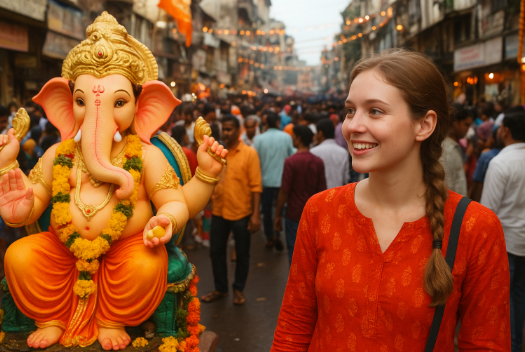
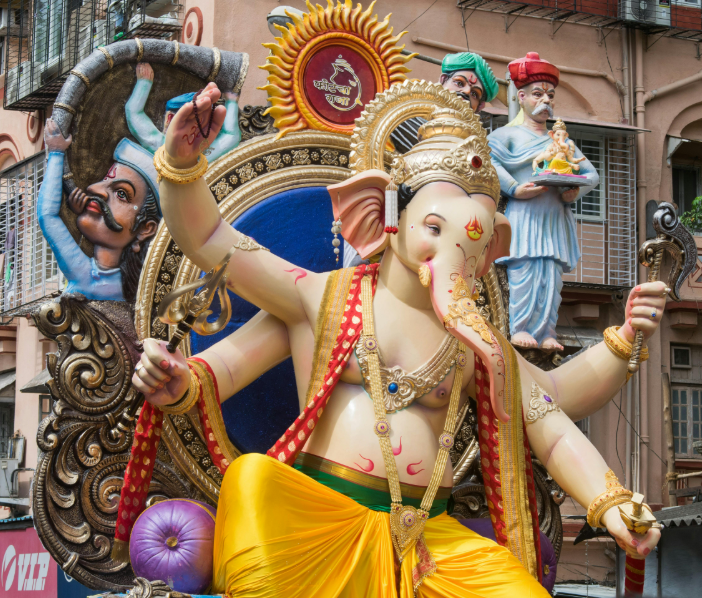
    When Emily, a traveler from London, visited Mumbai for the first time, she expected a bustling city full of energy—but not a spiritual experience that would stay with her forever. It was September, and the streets were alive with drums, chants, and endless colors. She paused at a street corner, wide-eyed, as hundreds of people danced joyfully, carrying a towering idol of a deity with an elephant head.
    Ganesh Chaturthi 2025

    Children chanted “Ganpati Bappa Morya!”, women offered sweets and flowers, and elders folded their hands in reverence. The air was thick with devotion and celebration.

    Ganesh Chaturthi 2025

    Curious, Emily leaned toward a local woman and whispered, “Who is this? Why do people welcome Him with such love?”

    The woman smiled warmly: “This is Lord Ganesha—the remover of obstacles, the giver of wisdom. We welcome Him like family, and after days of joy, we let Him return to nature. Visarjan isn’t a goodbye—it’s a promise of new beginnings.”

    For Emily, that moment unlocked a truth beyond rituals: life is about welcoming, celebrating, and then gracefully letting go.


    🪔 The Celebration

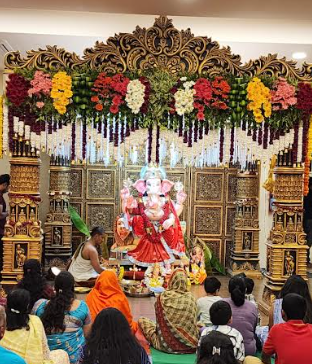
    As the days passed, Emily explored pandals across the city. Each had its own unique idol and story. She marveled at how neighbors, shopkeepers, students, and elders came together to decorate, sing, and pray.
    Ganesh Chaturthi 2025

    • She noticed how children offered modaks with innocent smiles, learning the value of devotion.
    • She saw artists sculpting eco-friendly clay idols, reminding her of the urgent global call for sustainability.
    • She joined in the aarti, realizing that the rhythm of prayers needed no translation—it was pure connection.

    For her, Ganesh Chaturthi wasn’t just an Indian festival anymore; it was a global lesson in community spirit and inclusivity.


    🌊 Witnessing Visarjan: The Moment of Truth
    Ganesh Visarjan

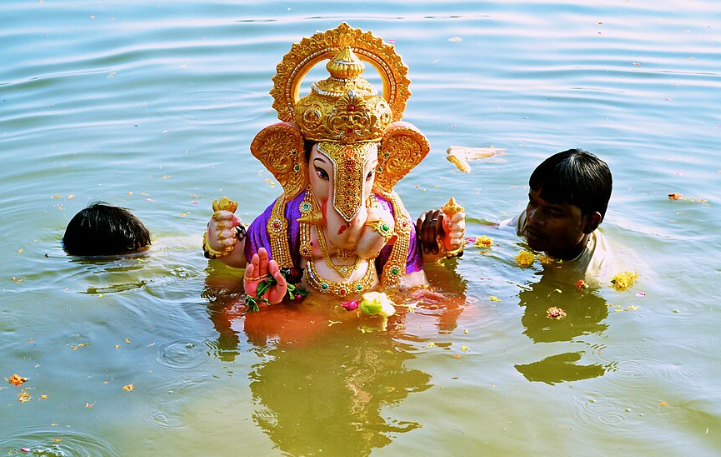
    On the tenth day, Emily followed the crowd to the sea. The atmosphere was both joyful and emotional—music, dance, and chants filled the air as devotees prepared for Visarjan.

    When the idol was gently lowered into the waves, Emily felt tears sting her eyes. She understood now:

    • The idol dissolving symbolized life’s impermanence.
    • The return to the ocean represented the eternal cycle of creation and dissolution.
    • The chants of joy amid farewell showed how faith transforms endings into new beginnings.

    Standing at the shore, Emily whispered to herself, “This isn’t about losing—it’s about letting go with love.”


    🌍 The Global Significance

    Through her journey, Emily realized that Ganesh Chaturthi spoke a language the whole world could understand:

    1. Spiritual Lesson – Just as the idol returns to water, everything in life is temporary; what remains is wisdom.
    2. Environmental Reminder – Eco-friendly celebrations echo the global need for sustainable living.
    3. Community Bonding – From Mumbai to London, Toronto to Sydney, the festival unites people across cultures.
    4. Universal Message – Whether you believe in Ganesha or not, the values of renewal, hope, and humility belong to everyone.

    🌸 A Holistic Healing Experience

    ✨ More Than a Festival

    When we think of Ganesh Chaturthi, we picture music, colors, sweets, and grand idols. But look deeper, and you’ll see something far more profound—this festival is actually a holistic healing journey. It heals not just the spirit, but also the mind, body, emotions, and even our social bonds.

    The final act—Visarjan, the immersion of Ganesha’s idol—becomes the climax of this healing, teaching us how to let go and embrace new beginnings.


    🕉 Spiritual Healing

    At its core, Ganesh Chaturthi is about connecting with the divine.

    • Daily rituals & aarti create a rhythm that quiets the mind, much like meditation.
    • Chanting mantras generates vibrations that reduce stress and bring inner peace.
    • Visarjan symbolizes surrender—returning everything to the source, reminding us that clinging only creates suffering, while letting go frees us.

    This spiritual dimension restores balance, grounding us in values of wisdom, humility, and faith.


    🧘 Holistic Mind–Body Balance

    The festival also nurtures the body and mind.

    • Many families eat sattvic food (pure, vegetarian, balanced), which detoxifies the system.
    • Fasting during certain days resets digestion and improves discipline.
    • Dancing in processions is not just joy—it’s movement therapy, releasing endorphins and improving physical vitality.

    Ganesh Chaturthi quietly reminds us that health is not only physical fitness but a union of body, mind, and spirit.


    💖 Emotional Healing

    Emotions flow freely during this celebration.

    • Joy when Ganesha arrives, symbolizing hope and fresh beginnings.
    • Togetherness when families and neighbors gather to pray, cook, and celebrate.
    • Bittersweet release during Visarjan—tears mix with chants of joy, teaching us to accept both happiness and loss.

    This emotional rhythm trains the heart to be resilient: to celebrate fully, to grieve gracefully, and to always look forward with faith.


    🤝 Social Healing & Relationships

    Ganesh Chaturthi is also a community healer.

    • People from all walks of life—rich and poor, young and old—come together in pandals.
    • Sharing food, singing together, and volunteering for community work breaks down social barriers.
    • In a world of increasing isolation, this festival builds connection, belonging, and harmony.

    No wonder it is one of India’s most inclusive and unifying celebrations.


    🌟 Positivity & Collective Energy

    Perhaps the greatest healing comes from the positive vibrations generated.

    • Drums, chants, music, and collective prayers lift the energy of entire neighborhoods.
    • The festival inspires people to start fresh projects or make new commitments, carried by Ganesha’s blessing as the remover of obstacles.
    • The collective joy spreads like ripples, turning even strangers into companions of celebration.

    This shared energy leaves people lighter, happier, and hopeful long after the festival ends.


    🌊 Visarjan: The Healing of Letting Go

    The immersion of Ganesha is not just ritual—it’s therapy for the soul.

    • It teaches impermanence: nothing lasts forever, and that’s beautiful.
    • It helps us release attachments—to idols, worries, or ego.
    • It reminds us of the cyclic nature of life: endings always lead to new beginnings.

    This is why people cry and smile at the same time during Visarjan. It’s the healing power of acceptance.


    🌍 A Universal Wellness Message

    In today’s world of stress, anxiety, and loneliness, Ganesh Chaturthi offers more than cultural tradition—it offers holistic healing practices:

    • Mindfulness through ritual.
    • Detox through sattvic food.
    • Therapy through music, dance, and community bonding.
    • Resilience through the wisdom of letting go.

    It’s not just about celebrating a deity—it’s about celebrating health, harmony, and humanity itself.


    🌸 Ganesh Chaturthi 2025 Celebration Across India & Abroad

    1. Maharashtra (Mumbai, Pune, Nagpur)

    • The cultural heart of Ganesh Chaturthi.Short Video.
    • Gigantic idols, decorated pandals, and processions with drums (dhol-tasha) and dances.
    • Famous pandals like Lalbaugcha Raja in Mumbai draw millions of devotees.Short Video
    • Immersion processions to the Arabian Sea are massive, with chants of “Ganpati Bappa Morya!”

    2. Goa & Karnataka

    • Families install idols at home and perform traditional poojas.
    • Special emphasis on eco-friendly idols made of clay.
    • In coastal areas, processions move towards rivers and beaches for Visarjan.

    3. Andhra Pradesh & Telangana

    • Known as Vinayaka Chavithi.
    • Idols range from small clay Ganeshas at home to huge community statues.
    • Special offerings include undrallu (steamed rice flour balls).
    • Hyderabad hosts massive processions, with the Khairatabad Ganesh idol being one of the tallest in India.

    4. Tamil Nadu & Kerala

    • Known as Pillaiyar Chaturthi.
    • Families perform poojas at home, temples host cultural events.
    • Eco-friendly idols are immersed in ponds, lakes, or rivers.

    5. West Bengal & Odisha

    • While Durga Puja dominates, Ganesh Chaturthi is celebrated in temples and homes.
    • In Odisha, Lord Ganesha is worshiped in schools as a patron of learning.

    6. North India (Delhi, Uttar Pradesh, Rajasthan)

    • Growing popularity with community pandals and processions.
    • Often merged with local cultural programs, theater, and devotional music.

    🌍 Celebrations Abroad

    Ganesh Chaturthi is no longer confined to India—it’s celebrated worldwide wherever Indian communities live.

    1. United States & Canada

    • Major celebrations in New Jersey, New York, California, Toronto, and Vancouver.
    • Hindu temples organize idol installations, cultural programs, and Visarjan in local rivers or artificial tanks.Video.
    • Many universities with Indian student associations celebrate with small clay idols.

    2. United Kingdom

    • London and Leicester see community pandals and processions.Short Video.
    • Idols are immersed in the River Thames or local water bodies (with eco-friendly practices).

    3. United Arab Emirates (Dubai, Abu Dhabi, Sharjah)

    • Huge Indian diaspora celebrates in temples and community halls.
    • Large idols are not allowed in public, so celebrations happen in private or temples with clay idols and cultural shows.

    4. Singapore & Malaysia

    • Temples organize poojas, cultural performances, and community feasts.
    • Visarjan is symbolic, done in tanks within temple premises.

    5. Australia & New Zealand

    • Growing Indian communities celebrate with enthusiasm in cities like Sydney, Melbourne, and Auckland.
    • Cultural events, dances, music, and community feasts are organized around Ganesha.

    6. Africa (South Africa, Mauritius, Kenya)

    • Indian-origin communities celebrate in temples and neighborhoods.
    • Processions, music, and community meals strengthen cultural identity.

    ✨ Common Thread

    Across India and abroad, Ganesh Chaturthi is celebrated with:

    • Idol installation (Pranapratishtha)
    • Daily pooja & aarti
    • Cultural events (music, dance, plays, competitions)
    • Community bonding & sharing food
    • Visarjan — in seas, rivers, ponds, or artificial tanks

    🌟 Global Significance

    The festival has become a global cultural ambassador of India. Whether in Mumbai or New York, Chennai or Singapore, Ganesh Chaturthi spreads the universal messages of:

    • Unity
    • Positivity
    • Renewal
    • Wisdom

    🙏 Closing Thought

    As the idol of Lord Ganesha dissolves into water, so too can our burdens, fears, and attachments dissolve—leaving us renewed, lighter, and filled with positivity.

    Ganpati Bappa Morya! 🌸✨


    Call to Action

    As Emily boarded her flight back to London, she carried no idol, no modak, no garland—only the message of Ganesh Chaturthi in her heart: celebrate life, embrace wisdom, and learn to let go.

    This year, whether you’re in India or anywhere else in the world, take a moment to reflect:

    • What obstacle do you want to release?
    • What new beginning will you welcome?

    When you see the waves take away Ganesha’s idol, let your fears and worries dissolve too.

    Ganpati Bappa Morya! 🌊✨

    Read more blogs on holistic health here.

    Indian Express News

  • Ganesh Chaturthi 2025 & Visarjan: A Festival of Love, Letting Go, and New Beginnings

    Ganesh Chaturthi 2025 & Visarjan: A Festival of Love, Letting Go, and New Beginnings

    Ganesh Chaturthi 2025 is being observed on Wednesday, August 27, marking the auspicious arrival day of Lord Ganesha.The 10-day celebration concludes with Ganesh Visarjan on Saturday, September 6—known as Anant Chaturdashi.


    Why is Ganesh Chaturthi Celebrated?

    An Emotional Beginning

    When Emily, a traveler from London, visited Mumbai for the first time, she expected a bustling city full of energy—but not a spiritual experience that would stay with her forever. It was September, and the streets were alive with drums, chants, and endless colors. She paused at a street corner, wide-eyed, as hundreds of people danced joyfully, carrying a towering idol of a deity with an elephant head.

    Ganesh Chaturthi 2025

    Children chanted “Ganpati Bappa Morya!”, women offered sweets and flowers, and elders folded their hands in reverence. The air was thick with devotion and celebration.

    Ganesh Chaturthi 2025

    Curious, Emily leaned toward a local woman and whispered, “Who is this? Why do people welcome Him with such love?”

    The woman smiled warmly: “This is Lord Ganesha—the remover of obstacles, the giver of wisdom. We welcome Him like family, and after days of joy, we let Him return to nature. Visarjan isn’t a goodbye—it’s a promise of new beginnings.”

    For Emily, that moment unlocked a truth beyond rituals: life is about welcoming, celebrating, and then gracefully letting go.


    🪔 The Celebration

    As the days passed, Emily explored pandals across the city. Each had its own unique idol and story. She marveled at how neighbors, shopkeepers, students, and elders came together to decorate, sing, and pray.

    Ganesh Chaturthi 2025

    • She noticed how children offered modaks with innocent smiles, learning the value of devotion.
    • She saw artists sculpting eco-friendly clay idols, reminding her of the urgent global call for sustainability.
    • She joined in the aarti, realizing that the rhythm of prayers needed no translation—it was pure connection.

    For her, Ganesh Chaturthi wasn’t just an Indian festival anymore; it was a global lesson in community spirit and inclusivity.


    🌊 Witnessing Visarjan: The Moment of Truth

    Ganesh Visarjan

    On the tenth day, Emily followed the crowd to the sea. The atmosphere was both joyful and emotional—music, dance, and chants filled the air as devotees prepared for Visarjan.

    When the idol was gently lowered into the waves, Emily felt tears sting her eyes. She understood now:

    • The idol dissolving symbolized life’s impermanence.
    • The return to the ocean represented the eternal cycle of creation and dissolution.
    • The chants of joy amid farewell showed how faith transforms endings into new beginnings.

    Standing at the shore, Emily whispered to herself, “This isn’t about losing—it’s about letting go with love.”


    🌍 The Global Significance

    Through her journey, Emily realized that Ganesh Chaturthi spoke a language the whole world could understand:

    1. Spiritual Lesson – Just as the idol returns to water, everything in life is temporary; what remains is wisdom.
    2. Environmental Reminder – Eco-friendly celebrations echo the global need for sustainable living.
    3. Community Bonding – From Mumbai to London, Toronto to Sydney, the festival unites people across cultures.
    4. Universal Message – Whether you believe in Ganesha or not, the values of renewal, hope, and humility belong to everyone.

    🌸 A Holistic Healing Experience

    ✨ More Than a Festival

    When we think of Ganesh Chaturthi, we picture music, colors, sweets, and grand idols. But look deeper, and you’ll see something far more profound—this festival is actually a holistic healing journey. It heals not just the spirit, but also the mind, body, emotions, and even our social bonds.

    The final act—Visarjan, the immersion of Ganesha’s idol—becomes the climax of this healing, teaching us how to let go and embrace new beginnings.


    🕉 Spiritual Healing

    At its core, Ganesh Chaturthi is about connecting with the divine.

    • Daily rituals & aarti create a rhythm that quiets the mind, much like meditation.
    • Chanting mantras generates vibrations that reduce stress and bring inner peace.
    • Visarjan symbolizes surrender—returning everything to the source, reminding us that clinging only creates suffering, while letting go frees us.

    This spiritual dimension restores balance, grounding us in values of wisdom, humility, and faith.


    🧘 Holistic Mind–Body Balance

    The festival also nurtures the body and mind.

    • Many families eat sattvic food (pure, vegetarian, balanced), which detoxifies the system.
    • Fasting during certain days resets digestion and improves discipline.
    • Dancing in processions is not just joy—it’s movement therapy, releasing endorphins and improving physical vitality.

    Ganesh Chaturthi quietly reminds us that health is not only physical fitness but a union of body, mind, and spirit.


    💖 Emotional Healing

    Emotions flow freely during this celebration.

    • Joy when Ganesha arrives, symbolizing hope and fresh beginnings.
    • Togetherness when families and neighbors gather to pray, cook, and celebrate.
    • Bittersweet release during Visarjan—tears mix with chants of joy, teaching us to accept both happiness and loss.

    This emotional rhythm trains the heart to be resilient: to celebrate fully, to grieve gracefully, and to always look forward with faith.


    🤝 Social Healing & Relationships

    Ganesh Chaturthi is also a community healer.

    • People from all walks of life—rich and poor, young and old—come together in pandals.
    • Sharing food, singing together, and volunteering for community work breaks down social barriers.
    • In a world of increasing isolation, this festival builds connection, belonging, and harmony.

    No wonder it is one of India’s most inclusive and unifying celebrations.


    🌟 Positivity & Collective Energy

    Perhaps the greatest healing comes from the positive vibrations generated.

    • Drums, chants, music, and collective prayers lift the energy of entire neighborhoods.
    • The festival inspires people to start fresh projects or make new commitments, carried by Ganesha’s blessing as the remover of obstacles.
    • The collective joy spreads like ripples, turning even strangers into companions of celebration.

    This shared energy leaves people lighter, happier, and hopeful long after the festival ends.


    🌊 Visarjan: The Healing of Letting Go

    The immersion of Ganesha is not just ritual—it’s therapy for the soul.

    • It teaches impermanence: nothing lasts forever, and that’s beautiful.
    • It helps us release attachments—to idols, worries, or ego.
    • It reminds us of the cyclic nature of life: endings always lead to new beginnings.

    This is why people cry and smile at the same time during Visarjan. It’s the healing power of acceptance.


    🌍 A Universal Wellness Message

    In today’s world of stress, anxiety, and loneliness, Ganesh Chaturthi offers more than cultural tradition—it offers holistic healing practices:

    • Mindfulness through ritual.
    • Detox through sattvic food.
    • Therapy through music, dance, and community bonding.
    • Resilience through the wisdom of letting go.

    It’s not just about celebrating a deity—it’s about celebrating health, harmony, and humanity itself.


    🌸 Ganesh Chaturthi 2025 Celebration Across India & Abroad

    1. Maharashtra (Mumbai, Pune, Nagpur)

    • The cultural heart of Ganesh Chaturthi.Short Video.
    • Gigantic idols, decorated pandals, and processions with drums (dhol-tasha) and dances.
    • Famous pandals like Lalbaugcha Raja in Mumbai draw millions of devotees.Short Video
    • Immersion processions to the Arabian Sea are massive, with chants of “Ganpati Bappa Morya!”

    2. Goa & Karnataka

    • Families install idols at home and perform traditional poojas.
    • Special emphasis on eco-friendly idols made of clay.
    • In coastal areas, processions move towards rivers and beaches for Visarjan.

    3. Andhra Pradesh & Telangana

    • Known as Vinayaka Chavithi.
    • Idols range from small clay Ganeshas at home to huge community statues.
    • Special offerings include undrallu (steamed rice flour balls).
    • Hyderabad hosts massive processions, with the Khairatabad Ganesh idol being one of the tallest in India.

    4. Tamil Nadu & Kerala

    • Known as Pillaiyar Chaturthi.
    • Families perform poojas at home, temples host cultural events.
    • Eco-friendly idols are immersed in ponds, lakes, or rivers.

    5. West Bengal & Odisha

    • While Durga Puja dominates, Ganesh Chaturthi is celebrated in temples and homes.
    • In Odisha, Lord Ganesha is worshiped in schools as a patron of learning.

    6. North India (Delhi, Uttar Pradesh, Rajasthan)

    • Growing popularity with community pandals and processions.
    • Often merged with local cultural programs, theater, and devotional music.

    🌍 Celebrations Abroad

    Ganesh Chaturthi is no longer confined to India—it’s celebrated worldwide wherever Indian communities live.

    1. United States & Canada

    • Major celebrations in New Jersey, New York, California, Toronto, and Vancouver.
    • Hindu temples organize idol installations, cultural programs, and Visarjan in local rivers or artificial tanks.Video.
    • Many universities with Indian student associations celebrate with small clay idols.

    2. United Kingdom

    • London and Leicester see community pandals and processions.Short Video.
    • Idols are immersed in the River Thames or local water bodies (with eco-friendly practices).

    3. United Arab Emirates (Dubai, Abu Dhabi, Sharjah)

    • Huge Indian diaspora celebrates in temples and community halls.
    • Large idols are not allowed in public, so celebrations happen in private or temples with clay idols and cultural shows.

    4. Singapore & Malaysia

    • Temples organize poojas, cultural performances, and community feasts.
    • Visarjan is symbolic, done in tanks within temple premises.

    5. Australia & New Zealand

    • Growing Indian communities celebrate with enthusiasm in cities like Sydney, Melbourne, and Auckland.
    • Cultural events, dances, music, and community feasts are organized around Ganesha.

    6. Africa (South Africa, Mauritius, Kenya)

    • Indian-origin communities celebrate in temples and neighborhoods.
    • Processions, music, and community meals strengthen cultural identity.

    ✨ Common Thread

    Across India and abroad, Ganesh Chaturthi is celebrated with:

    • Idol installation (Pranapratishtha)
    • Daily pooja & aarti
    • Cultural events (music, dance, plays, competitions)
    • Community bonding & sharing food
    • Visarjan — in seas, rivers, ponds, or artificial tanks

    🌟 Global Significance

    The festival has become a global cultural ambassador of India. Whether in Mumbai or New York, Chennai or Singapore, Ganesh Chaturthi spreads the universal messages of:

    • Unity
    • Positivity
    • Renewal
    • Wisdom

    🙏 Closing Thought

    As the idol of Lord Ganesha dissolves into water, so too can our burdens, fears, and attachments dissolve—leaving us renewed, lighter, and filled with positivity.

    Ganpati Bappa Morya! 🌸✨


    Call to Action

    As Emily boarded her flight back to London, she carried no idol, no modak, no garland—only the message of Ganesh Chaturthi in her heart: celebrate life, embrace wisdom, and learn to let go.

    This year, whether you’re in India or anywhere else in the world, take a moment to reflect:

    • What obstacle do you want to release?
    • What new beginning will you welcome?

    When you see the waves take away Ganesha’s idol, let your fears and worries dissolve too.

    Ganpati Bappa Morya! 🌊✨

    Read more blogs on holistic health here.
    Indian Express News

  • Yoga 30-Day Challenge: A Complete 4-Level Path to Transform Your Body, Mind & Soul

    Yoga 30-Day Challenge: A Complete 4-Level Path to Transform Your Body, Mind & Soul


    Introduction

    Yoga is more than a physical practice—it is a path to holistic health. By uniting the mind, body, and soul, yoga creates balance where modern life often creates stress. The body becomes stronger and more flexible, the mind grows calmer and clearer, and the spirit finds a deeper sense of peace.

    This harmony is what makes yoga timeless. Beyond reducing stress or improving posture, it transforms the way we live—helping us feel grounded, energized, and connected within. Practiced step by step, yoga opens the door to lasting well-being and inner growth. 🌿


    🌿 The 4 Levels of Yoga Practice

    Yoga is a journey, and like any journey, it unfolds step by step. To make the path clear, we can look at yoga asanas in four progressive levels:

    1. Beginner – Gentle foundations that build awareness of breath, posture, and balance.
    2. Intermediate – Stronger poses that increase flexibility, stamina, and focus.
    3. Advanced Prep – Transitional postures that challenge strength, balance, and mental resilience.
    4. Advanced – Master-level asanas that demand complete harmony of body, mind, and breath.

    Each level is designed to prepare you for the next—ensuring safety, growth, and deeper self-connection along the way. Whether you are taking your first step on the mat or aiming for advanced mastery, this structure helps you evolve with confidence and grace. ✨


    🌬️ Pranayama – The Power of Breath

    Yoga is not just about movement — it is equally about the breath. Pranayama, the ancient art of breath control, balances energy, calms the mind, and nourishes the body from within. Practicing these techniques daily enhances lung capacity, reduces stress, and deepens your yoga journey.

    ✅ List of Essential Pranayama Practices

    • Dirgha Pranayama (Three-Part Breath) – foundation breath for awareness and relaxation
    • Ujjayi Pranayama (Ocean Breath) – calming breath that improves focus
    • Anulom Vilom (Alternate Nostril Breathing) – balances both sides of the brain
    • Kapalabhati (Skull Shining Breath) – energizes and detoxifies the body
    • Bhastrika Pranayama (Bellows Breath) – builds heat, strength, and vitality
    • Bhramari (Humming Bee Breath) – soothes anxiety and promotes inner peace
    • Surya & Chandra Bhedana – channelizing energy (Sun) or calming the mind (Moon)
    • Murcha Pranayama – advanced practice for deep meditation and inner expansion

    🎥 For guided practice, here are helpful resources:

    🕔 Best Time for Pranayama

    • Early morning (Brahma Muhurta, around 4:30–6:00 am) is considered the most powerful time — the air is fresh, the mind is calm, and the stomach is empty.
    • If morning isn’t possible, late evening (sunset, after 2–3 hours of a light meal) is the next best option.

    🍃 Before or After Asanas?

    • Traditionally, start with asanas first → warm up the body, release stiffness.
    • Then move into Pranayama → once the body is open and steady, breathwork goes deeper.
    • Finish with meditation or savasana → so the effects of pranayama settle in body-mind-soul.

    ⚖️ With Levels (1–4)

    • Regardless of whether you are in Level 1 or Level 4, Pranayama can be included daily.
    • In early levels (1–2), keep it light: Dirgha, Ujjayi, Anulom Vilom.
    • As you progress to higher levels (3–4), add Kapalabhati, Bhastrika, Bhramari, Surya/Chandra Bhedana, Murcha.
    • Keep the practice 10–15 minutes for beginners, expanding to 20–30 minutes as you advance.

    ✨ Think of it like this: Asanas prepare the body, Pranayama prepares the mind, Meditation prepares the soul.


    🌱 Level 1 – Foundation (4–6 weeks)

    Goal: Build flexibility, body awareness, and breath connection.
    Practice 15–20 mins daily.

    • Tadasana (Mountain)
    • Sukhasana / Vajrasana (Easy Pose / Thunderbolt)
    • Balasana (Child’s Pose)
    • Marjariasana (Cat–Cow)
    • Bhujangasana (Cobra)
    • Setu Bandhasana (Bridge)
    • Adho Mukha Svanasana (Downward Dog)
    • Paschimottanasana (Seated Forward Bend)
    • Trikonasana (Triangle)
    • Virabhadrasana I & II (Warrior 1 & 2)


    🌿 Level 2 – Strength & Balance (6–12 weeks)

    Goal: Engage core, improve stamina, and explore twists & balances.
    Practice 20–30 mins daily, add Sun Salutations (Surya Namaskar).

    • Utkatasana (Chair Pose)
    • Ardha Chandrasana (Half Moon)
    • Parivrtta Trikonasana (Revolved Triangle)
    • Dhanurasana (Bow)
    • Navasana (Boat)
    • Ardha Matsyendrasana (Half Spinal Twist)
    • Salabhasana (Locust)
    • Ustrasana (Camel)
    • Sarvangasana (Shoulderstand)
    • Matsyasana (Fish)
    • Vasisthasana (Side Plank)
    • Chaturanga Dandasana (Low Plank)

    🔥 Level 3 – Intermediate-Advanced Prep (3–6 months)

    Goal: Deeper backbends, arm strength, hip opening, safe inversions.

    • Halasana (Plough Pose)
    • Eka Pada Rajakapotasana (basic pigeon)
    • Chakrasana (Wheel)
    • Bakasana (Crow Pose – intro arm balance)
    • Parsva Bakasana (Side Crow)
    • Hanumanasana (Front Splits – gradually)
    • Padmasana (Lotus variations)
    • Pincha Mayurasana Prep (Forearm Balance near wall)

    Why This Video Works for Level 3:

    • Comprehensive & Challenging: A 45-minute full-body flow crafted for intermediate to advanced practitioners. Expect more dynamic transitions, deeper engagement, and advanced variations.YouTube
    • Balanced Progression: It blends strength, flexibility, balance, and mental focus—ideal as you move from preparation into mastery.

    🌟 Level 4 – Advanced Mastery (long-term, 1+ year)

    Goal: Inversions, advanced arm balances, extreme flexibility.
    Attempt only under guidance.

    • Sirsasana (Headstand – multiple variations)
    • Pincha Mayurasana (Forearm Stand)
    • Adho Mukha Vrksasana (Handstand)
    • Eka Pada Sirsasana (Leg Behind Head)
    • Mayurasana (Peacock Pose)
    • Astavakrasana (Eight Angle)
    • Koundinyasana I & II
    • Visvamitrasana
    • Tittibhasana (Firefly)
    • Advanced King Pigeon (Kapotasana full)
    • Yoganidrasana (Sleeping Yogi Pose)

    Additional Recommended Advanced-Level Videos:

    • Balance + Inversion Options with Nicole Wild
      A shorter, focused practice that includes crow pose and inversion variations—great for honing upper-body control.YouTube
    • 2-Hour Advanced Full Practice – Patrick Beach
      A long-form, immersive yoga experience covering strength, alignment, and flow—excellent for dedicated deep-dive sessions.YouTube
    • Strong Full Body Yoga Practice with Patrick Beach
      A strength-building, full-body vinyasa that pushes your stamina and stability.YouTube

    ✨ Think of it like learning music or martial arts—you don’t rush into the “flashy” moves. Each stage builds the body, breath, and mind for the next.


    Daily Yoga Prep Time for Level 3–4

    Preparing for Level 3 & 4 yoga asanas is less about rushing into poses and more about building the right foundation, strength, and mindset.

    🔹 Minimum Effective Prep (20–30 minutes)

    If you’re short on time but want steady progress:

    • Warm-up & Mobility – 5 mins (cat-cow, shoulder rolls, gentle twists)
    • Strength Training – 8–10 mins (planks, boat pose, chair, chaturanga)
    • Flexibility Drills – 8–10 mins (hamstring stretch, pigeon, bridge, shoulder opener)
    • Breathing & Relaxation – 3–5 mins (Anulom Vilom / Savasana)

    👉 This keeps the body prepared without feeling overwhelming.


    🔹 Optimal Prep (40–60 minutes)

    For faster progress & deeper practice:

    • Warm-up & Joint Mobility – 10 mins
    • Strength Building – 15 mins
    • Flexibility & Backbends – 15 mins
    • Balance + Inversion Prep – 10–15 mins
    • Pranayama & Meditation – 5–10 mins

    👉 This is the ideal daily routine if you truly want to transition toward Level 3–4 poses in the coming months.


    🔹 Weekly Structure

    • 5 days/week → full practice (40–60 mins)
    • 2 days/week → light practice or just pranayama + stretching (20 mins)

    🌿 Key Tip: Consistency matters more than duration.
    Even 20 mins daily > 2 hours once a week.


    🧘 Meditation & Savasana – The Final Step of Yoga

    Yoga is more than movement and breath; it is about finding stillness within. After practicing Asanas and Pranayama, the body feels light and the mind is calm — this is the perfect state to enter meditation or savasana.

    🌿 Savasana (Corpse Pose)

    • Lie flat on your back, arms relaxed by the sides, palms facing upward.
    • Close your eyes and release all effort.
    • Breathe naturally and let the body sink into the ground.
    • Stay here for 5–10 minutes to absorb the benefits of your practice.

    🎥 Guided Savasana Practice: Yoga Nidra for Deep Relaxation


    🕊️ Meditation Practices

    • Mindfulness Meditation – focus on the breath, observing thoughts without judgment.
    • Mantra Meditation – repeat a sacred sound (like Om) to center the mind.
    • Loving-Kindness Meditation – cultivate compassion towards yourself and others.
    • Yoga Nidra (Yogic Sleep) – guided relaxation that takes you into deep rest while staying aware.

    🎥 Beginner’s Meditation: 10-Minute Guided Meditation


    Meditation and Savasana allow the body to rest, the mind to reset, and the soul to reconnect with its true nature. Without them, yoga remains incomplete.


    Weekly Plans

    🧘 Beginner Yoga – 7 Day Weekly Plan with Videos (Level 1)

    DayFocusAsanas with Video Links
    Day 1Foundation & BreathEasy Pose – Breathing · Mountain Pose · Tree Pose · Child’s Pose
    Day 2Stretch & RelaxCat-Cow · Cobra Pose · Rabbit Pose Variation · Savasana
    Day 3Gentle FlowSeated Breathing · Forward Fold · Bridge Pose · Child’s Pose
    Day 4Restorative & MindfulMeditation (Sukhasana) · Wind Relieving Pose · Reclined Bound Angle · Savasana
    Day 5Strength BasicsMountain Pose · Tree Pose · Downward Dog · Cobra Pose · Savasana
    Day 6Gentle BalanceSukhasana Breathing · Chair Pose · Bridge Pose · Legs Up the Wall
    Day 7Deep Relax & ResetMorning Stretch · Calm Meditation · Child’s Pose · Guided Savasana

    🧘 Intermediate Yoga – 7-Day Weekly Plan (Level 2)

    ✨ This plan blends strength, flexibility, balance, and restorative poses to deepen practice after Level 1.


    🧘 Advanced Prep Yoga – 7-Day Weekly Plan (Level 3)

    Let’s step into Level 3 (Advanced Yoga).
    Here the practice gets more intense, with arm balances, inversions, and deeper backbends—but always paired with grounding/restorative poses for balance.

    🔥 This Level 3 plan challenges the body while still offering restorative space to recover—perfect for practitioners who want to push their limits safely.


    🧘 Advanced – Mastery Yoga Weekly Plan (Level 4)

    This stage is all about peak poses, advanced transitions, deep meditative practices, and pranayama. It’s for those who already have strong body awareness and control.

    ✨ This Mastery plan balances physical challenge + inner stillness—pushing the body into peak postures while deepening the mind into meditation.


    🧘 30-Day Yoga Roadmap: From Beginner to Mastery

    WeekFocusHighlightsExample Practices (with links)
    Week 1 (Days 1–7)Level 1 – Beginner FoundationsBuild basics, breathing awareness, gentle stretchesMountain Pose · Cat-Cow · Beginner Yoga Flow
    Week 2 (Days 8–14)Level 2 – Intermediate GrowthSun salutations, balance, hip openers, longer holdsTriangle Pose · Warrior II · 30-Min Intermediate Yoga
    Week 3 (Days 15–21)Level 3 – Advanced Strength & FlexibilityArm balances, deeper twists, stronger flowsCrow Pose · Wheel Pose · 60-Min Advanced Flow
    Week 4 (Days 22–30)Level 4 – Mastery & StillnessPeak poses, transitions, pranayama & meditationFirefly Pose · King Pigeon · Yoga Nidra

    🌸 How to use this roadmap

    • Spend 1 week per level (don’t rush).
    • Repeat poses daily but add a new challenge every 2–3 days.
    • By Day 30, you’ll have touched the full spectrum—from your first mindful breath to advanced asanas & meditation.

    ⚡ Optional: After finishing, restart the cycle—each time the poses feel different and deeper.


    🌸 Conclusion

    Yoga is not a race to the perfect pose—it’s a journey of becoming whole. Each asana, whether simple or advanced, is a step toward balance, strength, and inner peace. By moving through the four levels of practice, you don’t just transform your body—you awaken clarity in your mind and harmony in your soul.

    ✨ The mat is always waiting for you. Start where you are, breathe deeply, and take the next step in your journey. Your body will thank you, your mind will calm, and your soul will glow. 🌿


    Call to Action:


    Ready to begin? Roll out your mat, choose your level, and take your first step today. And if this guide inspired you, share it with someone who’s searching for peace, balance, and renewal through yoga. 🙏💫

    Check more blogs on SoulsyncWellness here.

  • Yoga 30-Day Challenge: A Complete 4-Level Path to Transform Your Body, Mind & Soul

    Yoga 30-Day Challenge: A Complete 4-Level Path to Transform Your Body, Mind & Soul


    Introduction

    Yoga is more than a physical practice—it is a path to holistic health. By uniting the mind, body, and soul, yoga creates balance where modern life often creates stress. The body becomes stronger and more flexible, the mind grows calmer and clearer, and the spirit finds a deeper sense of peace.

    This harmony is what makes yoga timeless. Beyond reducing stress or improving posture, it transforms the way we live—helping us feel grounded, energized, and connected within. Practiced step by step, yoga opens the door to lasting well-being and inner growth. 🌿


    🌿 The 4 Levels of Yoga Practice

    Yoga is a journey, and like any journey, it unfolds step by step. To make the path clear, we can look at yoga asanas in four progressive levels:

    1. Beginner – Gentle foundations that build awareness of breath, posture, and balance.
    2. Intermediate – Stronger poses that increase flexibility, stamina, and focus.
    3. Advanced Prep – Transitional postures that challenge strength, balance, and mental resilience.
    4. Advanced – Master-level asanas that demand complete harmony of body, mind, and breath.

    Each level is designed to prepare you for the next—ensuring safety, growth, and deeper self-connection along the way. Whether you are taking your first step on the mat or aiming for advanced mastery, this structure helps you evolve with confidence and grace. ✨


    🌬️ Pranayama – The Power of Breath

    Yoga is not just about movement — it is equally about the breath. Pranayama, the ancient art of breath control, balances energy, calms the mind, and nourishes the body from within. Practicing these techniques daily enhances lung capacity, reduces stress, and deepens your yoga journey.

    ✅ List of Essential Pranayama Practices

    • Dirgha Pranayama (Three-Part Breath) – foundation breath for awareness and relaxation
    • Ujjayi Pranayama (Ocean Breath) – calming breath that improves focus
    • Anulom Vilom (Alternate Nostril Breathing) – balances both sides of the brain
    • Kapalabhati (Skull Shining Breath) – energizes and detoxifies the body
    • Bhastrika Pranayama (Bellows Breath) – builds heat, strength, and vitality
    • Bhramari (Humming Bee Breath) – soothes anxiety and promotes inner peace
    • Surya & Chandra Bhedana – channelizing energy (Sun) or calming the mind (Moon)
    • Murcha Pranayama – advanced practice for deep meditation and inner expansion

    🎥 For guided practice, here are helpful resources:

    🕔 Best Time for Pranayama

    • Early morning (Brahma Muhurta, around 4:30–6:00 am) is considered the most powerful time — the air is fresh, the mind is calm, and the stomach is empty.
    • If morning isn’t possible, late evening (sunset, after 2–3 hours of a light meal) is the next best option.

    🍃 Before or After Asanas?

    • Traditionally, start with asanas first → warm up the body, release stiffness.
    • Then move into Pranayama → once the body is open and steady, breathwork goes deeper.
    • Finish with meditation or savasana → so the effects of pranayama settle in body-mind-soul.

    ⚖️ With Levels (1–4)

    • Regardless of whether you are in Level 1 or Level 4, Pranayama can be included daily.
    • In early levels (1–2), keep it light: Dirgha, Ujjayi, Anulom Vilom.
    • As you progress to higher levels (3–4), add Kapalabhati, Bhastrika, Bhramari, Surya/Chandra Bhedana, Murcha.
    • Keep the practice 10–15 minutes for beginners, expanding to 20–30 minutes as you advance.

    ✨ Think of it like this: Asanas prepare the body, Pranayama prepares the mind, Meditation prepares the soul.


    🌱 Level 1 – Foundation (4–6 weeks)

    Goal: Build flexibility, body awareness, and breath connection.
    Practice 15–20 mins daily.

    • Tadasana (Mountain)
    • Sukhasana / Vajrasana (Easy Pose / Thunderbolt)
    • Balasana (Child’s Pose)
    • Marjariasana (Cat–Cow)
    • Bhujangasana (Cobra)
    • Setu Bandhasana (Bridge)
    • Adho Mukha Svanasana (Downward Dog)
    • Paschimottanasana (Seated Forward Bend)
    • Trikonasana (Triangle)
    • Virabhadrasana I & II (Warrior 1 & 2)


    🌿 Level 2 – Strength & Balance (6–12 weeks)

    Goal: Engage core, improve stamina, and explore twists & balances.
    Practice 20–30 mins daily, add Sun Salutations (Surya Namaskar).

    • Utkatasana (Chair Pose)
    • Ardha Chandrasana (Half Moon)
    • Parivrtta Trikonasana (Revolved Triangle)
    • Dhanurasana (Bow)
    • Navasana (Boat)
    • Ardha Matsyendrasana (Half Spinal Twist)
    • Salabhasana (Locust)
    • Ustrasana (Camel)
    • Sarvangasana (Shoulderstand)
    • Matsyasana (Fish)
    • Vasisthasana (Side Plank)
    • Chaturanga Dandasana (Low Plank)

    🔥 Level 3 – Intermediate-Advanced Prep (3–6 months)

    Goal: Deeper backbends, arm strength, hip opening, safe inversions.

    • Halasana (Plough Pose)
    • Eka Pada Rajakapotasana (basic pigeon)
    • Chakrasana (Wheel)
    • Bakasana (Crow Pose – intro arm balance)
    • Parsva Bakasana (Side Crow)
    • Hanumanasana (Front Splits – gradually)
    • Padmasana (Lotus variations)
    • Pincha Mayurasana Prep (Forearm Balance near wall)

    Why This Video Works for Level 3:

    • Comprehensive & Challenging: A 45-minute full-body flow crafted for intermediate to advanced practitioners. Expect more dynamic transitions, deeper engagement, and advanced variations.YouTube
    • Balanced Progression: It blends strength, flexibility, balance, and mental focus—ideal as you move from preparation into mastery.

    🌟 Level 4 – Advanced Mastery (long-term, 1+ year)

    Goal: Inversions, advanced arm balances, extreme flexibility.
    Attempt only under guidance.

    • Sirsasana (Headstand – multiple variations)
    • Pincha Mayurasana (Forearm Stand)
    • Adho Mukha Vrksasana (Handstand)
    • Eka Pada Sirsasana (Leg Behind Head)
    • Mayurasana (Peacock Pose)
    • Astavakrasana (Eight Angle)
    • Koundinyasana I & II
    • Visvamitrasana
    • Tittibhasana (Firefly)
    • Advanced King Pigeon (Kapotasana full)
    • Yoganidrasana (Sleeping Yogi Pose)

    Additional Recommended Advanced-Level Videos:

    • Balance + Inversion Options with Nicole Wild
      A shorter, focused practice that includes crow pose and inversion variations—great for honing upper-body control.YouTube
    • 2-Hour Advanced Full Practice – Patrick Beach
      A long-form, immersive yoga experience covering strength, alignment, and flow—excellent for dedicated deep-dive sessions.YouTube
    • Strong Full Body Yoga Practice with Patrick Beach
      A strength-building, full-body vinyasa that pushes your stamina and stability.YouTube

    ✨ Think of it like learning music or martial arts—you don’t rush into the “flashy” moves. Each stage builds the body, breath, and mind for the next.


    Daily Yoga Prep Time for Level 3–4

    Preparing for Level 3 & 4 yoga asanas is less about rushing into poses and more about building the right foundation, strength, and mindset.

    🔹 Minimum Effective Prep (20–30 minutes)

    If you’re short on time but want steady progress:

    • Warm-up & Mobility – 5 mins (cat-cow, shoulder rolls, gentle twists)
    • Strength Training – 8–10 mins (planks, boat pose, chair, chaturanga)
    • Flexibility Drills – 8–10 mins (hamstring stretch, pigeon, bridge, shoulder opener)
    • Breathing & Relaxation – 3–5 mins (Anulom Vilom / Savasana)

    👉 This keeps the body prepared without feeling overwhelming.


    🔹 Optimal Prep (40–60 minutes)

    For faster progress & deeper practice:

    • Warm-up & Joint Mobility – 10 mins
    • Strength Building – 15 mins
    • Flexibility & Backbends – 15 mins
    • Balance + Inversion Prep – 10–15 mins
    • Pranayama & Meditation – 5–10 mins

    👉 This is the ideal daily routine if you truly want to transition toward Level 3–4 poses in the coming months.


    🔹 Weekly Structure

    • 5 days/week → full practice (40–60 mins)
    • 2 days/week → light practice or just pranayama + stretching (20 mins)

    🌿 Key Tip: Consistency matters more than duration.
    Even 20 mins daily > 2 hours once a week.


    🧘 Meditation & Savasana – The Final Step of Yoga

    Yoga is more than movement and breath; it is about finding stillness within. After practicing Asanas and Pranayama, the body feels light and the mind is calm — this is the perfect state to enter meditation or savasana.

    🌿 Savasana (Corpse Pose)

    • Lie flat on your back, arms relaxed by the sides, palms facing upward.
    • Close your eyes and release all effort.
    • Breathe naturally and let the body sink into the ground.
    • Stay here for 5–10 minutes to absorb the benefits of your practice.

    🎥 Guided Savasana Practice: Yoga Nidra for Deep Relaxation


    🕊️ Meditation Practices

    • Mindfulness Meditation – focus on the breath, observing thoughts without judgment.
    • Mantra Meditation – repeat a sacred sound (like Om) to center the mind.
    • Loving-Kindness Meditation – cultivate compassion towards yourself and others.
    • Yoga Nidra (Yogic Sleep) – guided relaxation that takes you into deep rest while staying aware.

    🎥 Beginner’s Meditation: 10-Minute Guided Meditation


    Meditation and Savasana allow the body to rest, the mind to reset, and the soul to reconnect with its true nature. Without them, yoga remains incomplete.


    Weekly Plans

    🧘 Beginner Yoga – 7 Day Weekly Plan with Videos (Level 1)

    DayFocusAsanas with Video Links
    Day 1Foundation & BreathEasy Pose – Breathing · Mountain Pose · Tree Pose · Child’s Pose
    Day 2Stretch & RelaxCat-Cow · Cobra Pose · Rabbit Pose Variation · Savasana
    Day 3Gentle FlowSeated Breathing · Forward Fold · Bridge Pose · Child’s Pose
    Day 4Restorative & MindfulMeditation (Sukhasana) · Wind Relieving Pose · Reclined Bound Angle · Savasana
    Day 5Strength BasicsMountain Pose · Tree Pose · Downward Dog · Cobra Pose · Savasana
    Day 6Gentle BalanceSukhasana Breathing · Chair Pose · Bridge Pose · Legs Up the Wall
    Day 7Deep Relax & ResetMorning Stretch · Calm Meditation · Child’s Pose · Guided Savasana

    🧘 Intermediate Yoga – 7-Day Weekly Plan (Level 2)

    ✨ This plan blends strength, flexibility, balance, and restorative poses to deepen practice after Level 1.


    🧘 Advanced Prep Yoga – 7-Day Weekly Plan (Level 3)

    Let’s step into Level 3 (Advanced Yoga).
    Here the practice gets more intense, with arm balances, inversions, and deeper backbends—but always paired with grounding/restorative poses for balance.

    🔥 This Level 3 plan challenges the body while still offering restorative space to recover—perfect for practitioners who want to push their limits safely.


    🧘 Advanced – Mastery Yoga Weekly Plan (Level 4)

    This stage is all about peak poses, advanced transitions, deep meditative practices, and pranayama. It’s for those who already have strong body awareness and control.

    ✨ This Mastery plan balances physical challenge + inner stillness—pushing the body into peak postures while deepening the mind into meditation.


    🧘 30-Day Yoga Roadmap: From Beginner to Mastery

    WeekFocusHighlightsExample Practices (with links)
    Week 1 (Days 1–7)Level 1 – Beginner FoundationsBuild basics, breathing awareness, gentle stretchesMountain Pose · Cat-Cow · Beginner Yoga Flow
    Week 2 (Days 8–14)Level 2 – Intermediate GrowthSun salutations, balance, hip openers, longer holdsTriangle Pose · Warrior II · 30-Min Intermediate Yoga
    Week 3 (Days 15–21)Level 3 – Advanced Strength & FlexibilityArm balances, deeper twists, stronger flowsCrow Pose · Wheel Pose · 60-Min Advanced Flow
    Week 4 (Days 22–30)Level 4 – Mastery & StillnessPeak poses, transitions, pranayama & meditationFirefly Pose · King Pigeon · Yoga Nidra

    🌸 How to use this roadmap

    • Spend 1 week per level (don’t rush).
    • Repeat poses daily but add a new challenge every 2–3 days.
    • By Day 30, you’ll have touched the full spectrum—from your first mindful breath to advanced asanas & meditation.

    ⚡ Optional: After finishing, restart the cycle—each time the poses feel different and deeper.


    🌸 Conclusion

    Yoga is not a race to the perfect pose—it’s a journey of becoming whole. Each asana, whether simple or advanced, is a step toward balance, strength, and inner peace. By moving through the four levels of practice, you don’t just transform your body—you awaken clarity in your mind and harmony in your soul.

    ✨ The mat is always waiting for you. Start where you are, breathe deeply, and take the next step in your journey. Your body will thank you, your mind will calm, and your soul will glow. 🌿


    Call to Action:


    Ready to begin? Roll out your mat, choose your level, and take your first step today. And if this guide inspired you, share it with someone who’s searching for peace, balance, and renewal through yoga. 🙏💫

    Check more blogs on SoulsyncWellness here.

  • 🏙️ The Story of Brain-City: A Day in the Life

    🏙️ The Story of Brain-City: A Day in the Life

    Far away, inside every person, there exists a magical city—Brain-City. This city never sleeps, never shuts down, and never takes a holiday. Its citizens, buildings, and messengers work together every second to keep life going.


    🧠 The Human Brain: The City Within Us

    Hidden inside our skull lies the most fascinating organ in existence—the brain, a living universe of thoughts, emotions, and control. It is often called the “command center” of the body, but it’s much more than that. Imagine it as a bustling city—with mayors making decisions, post offices sorting messages, fire alarms sounding warnings, artists painting dreams, and power plants keeping everything alive.

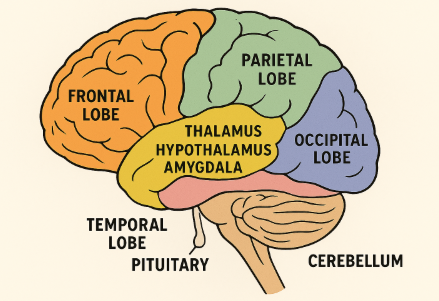
    Every feeling you experience, every decision you make, every memory you cherish, and even the way you breathe or sleep is orchestrated by this extraordinary city of neurons, hormones, and signals. From the frontal lobe that plans your future, to the amygdala that sparks your fears, to the hypothalamus that balances hunger, sleep, and hormones, each part plays its own unique role in keeping you alive and human.

    In this blog, we’ll step inside Brain-City, exploring its neighborhoods, messengers, and the daily drama that keeps life moving—told in a way that feels like a story rather than a science lecture.


    🌍 The Two Sides of the City: Left vs Right Brain

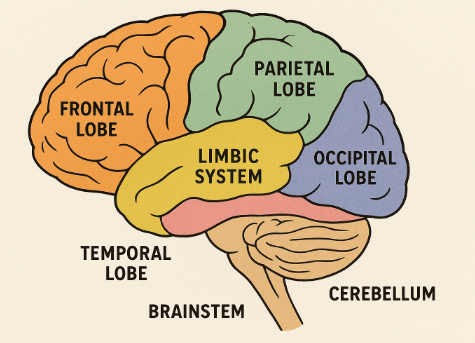
    The brain has two hemispheres, like two halves of a city divided by a river, but connected by a big bridge called the corpus callosum.

    • Left Brain City → logical side: accountants, planners, scientists, language experts. It loves numbers, analysis, words, order, and details.
    • Right Brain City → artistic side: painters, musicians, dreamers, storytellers. It handles creativity, imagination, music, art, emotions, and big-picture thinking.

    💡 They constantly send messages across the “bridge,” so logic and creativity work together.


    🏛️ The City Districts (Brain Parts)

    1. The Downtown (Frontal Lobe)
    This is where the “Mayor’s office” is. It makes decisions, plans the future, controls emotions, and manages speech. When you decide whether to study or scroll Instagram, this office is debating 🗣️.

    2. The Map District (Parietal Lobe)
    This area is like the city’s survey department—tracking touch, space, temperature, and pain. If you close your eyes and still touch your nose, thank this district.

    3. The Arts District (Temporal Lobe)
    This place is filled with music halls, libraries, and memory museums. It helps you recognize songs, remember your grandmother’s face, and understand language. 🎶📚

    4. The Cinema Hall (Occipital Lobe)
    All the movies of your life are projected here—it’s in charge of vision. Every time you see a flower or a rainbow, the occipital lobe lights up like a theater screen 🎥🌈.


    ⚙️ The Operations Hub

    5. Cerebellum (Quality Control Office)
    It makes sure movements are smooth and balanced. It’s like the city’s traffic controller—coordinating dance moves, cycling, or even walking without wobbling 🚲💃.

    6. Brainstem (Power Plant)
    Hidden underground, it powers basic life support: heartbeat, breathing, swallowing. It’s always working, like electricity running in the background ⚡.


    ❤️ The Emotional Center

    7. Limbic System (Heart of the City)
    This is where feelings live.

    • Amygdala → the fire alarm 🚨, triggering fear or anger.
    • Hippocampus → the historian 📜, storing memories and lessons.
    • Hypothalamus → the thermostat & hunger controller 🌡️🍔, balancing hormones, thirst, and sleep.
    • Thalamus → the post office 📮, routing all sensory messages to the right address.

    8. Basal Ganglia (Habit Street)
    The place of routines and habits—it decides if you bite your nails, go for a morning jog, or binge-watch Netflix 📺.


    📡 The City’s Communication System

    Imagine the brain-city has billions of citizens called neurons.

    • Each neuron is like a person with a phone 📞.
    • They don’t shout across the street; instead, they send tiny electrical sparks (like text messages) down their “wires” (axons).
    • At the end, the message hops across a tiny gap (synapse) using neurotransmitters—these are like WhatsApp emojis that carry the tone of the message.

    👉 Dopamine is like a “reward sticker” 🎁,
    👉 Serotonin is the “happy emoji” 😊,
    👉 Acetylcholine is a “memory note” 📝,
    👉 GABA is the “calm-down signal” 😌.

    This way, billions of conversations keep the city alive every second.


    💌 The Hormone Postal Service

    Now, hormones are like official letters sent by the city government. Instead of texting quickly like neurons, they send slower, longer-lasting memos through the bloodstream.

    The Hypothalamus (city’s Chief Minister) works with the Pituitary Gland (Postmaster General) to control the whole endocrine postal system:

    • Adrenaline (from adrenal glands) → emergency siren 🚨 when danger comes (fight, flight, freeze).
    • Cortisol → stress mail 📨, keeps energy ready in tough times.
    • Dopamine → reward coupon 🎟️, makes you repeat what feels good.
    • Serotonin → mood postcard 🌞, tells you if you feel calm or sad.
    • Melatonin → sleep invitation 🌙, sent out when night falls.
    • Oxytocin → love letter 💌, bonds you to friends, family, pets.
    • Insulin → food balance sheet 📊, manages sugar energy.

    👀 The City’s Senses (Incoming Signals)

    Imagine five busy city gates where messages keep pouring in:

    • Eyes (Occipital Cinema Hall) → visuals become movies in your head. 🎥
    • Ears (Temporal Music Hall) → sound waves become songs, voices. 🎶
    • Skin (Parietal Survey Office) → touch, pain, warmth are filed as reports. ✋🔥
    • Nose (Olfactory Station) → smells trigger memory letters directly to the limbic system (ever smelled food and remembered childhood? 🍲).
    • Tongue (Taste Bureau) → sweet, salty, bitter, spicy—food reviews delivered 🍭🍋.

    All these messages go to the Thalamus Post Office, which sorts and delivers them to the right districts.


    🌅 Morning in Brain-City

    Brain Parts

    The day begins when the Chief Minister Hypothalamus whispers to the Postmaster Pituitary:
    “Send out a Cortisol Letter! Wake everyone up!”
    The pituitary quickly dispatches hormones through the city’s bloodstream. As the letters arrive, workers across the city stretch, yawn, and prepare for the new day.

    The Mayor Frontal Lobe calls a meeting:
    “Today’s plan—finish that assignment, call a friend, maybe hit the gym.”
    The Right Brain Artists smile, sketching ideas and dreams, while the Left Brain Accountants double-check details and deadlines.


    ☕ The Coffee Break

    As you sip your morning coffee, the Reward Officer Dopamine rushes in with colorful stickers:
    “Good job! You earned this energy!”
    The city feels cheerful, thanks to a little help from Serotonin the Mood Manager, who keeps things bright and balanced.


    ⚡ The Sudden Alarm

    But suddenly—BANG! A loud noise echoes.
    The Amygdala Fire Alarm screams: “Danger!” 🚨
    At once, the Adrenaline Police flood the streets, making the heart beat faster, lungs breathe quicker, and muscles prepare to run.
    The Cerebellum Traffic Controller reroutes movement, keeping balance.
    The Brainstem Power Plant works overtime, ensuring heartbeat and breathing don’t fail under pressure.

    Fortunately, the sound was just a book falling. The Mayor Frontal Lobe sighs: “False alarm, back to work.”


    📮 The City Post Office

    Throughout the day, the Thalamus Post Office never rests.

    • Letters from the Eye Gates become movies in the Occipital Cinema Hall.
    • Sound messages from the Ear Gates play in the Temporal Music Hall.
    • Touch reports from the Skin Gate are filed in the Parietal Survey Office.
    • Delicious smells and tastes arrive at the Nose Station and Taste Bureau, often sparking childhood memories stored by the Hippocampus Historian.

    Every sense is carefully routed, sorted, and delivered—no letter ever gets lost.


    🤗 Evening Glow

    Later, you meet a friend. The Oxytocin Love Letters spread across Brain-City, warming every corner. The Right Brain Artists sing songs of joy, while the Left Brain Accountants write neat records of the memory.

    As the sun sets, the Hypothalamus Chief Minister sends out new orders:
    “Release Melatonin Invitations. Tell everyone it’s time for rest.”
    Slowly, the lights of Brain-City dim. Neurons whisper softly, signals slow, and the great city drifts into peaceful sleep. 🌙✨


    🌟 Moral of the Story

    Brain-City is alive within you. Its mayors, postmasters, alarms, historians, artists, and messengers never stop working—keeping you safe, balanced, creative, and alive. Every thought, hug, tear, laugh, and dream is the result of this bustling, wondrous city.


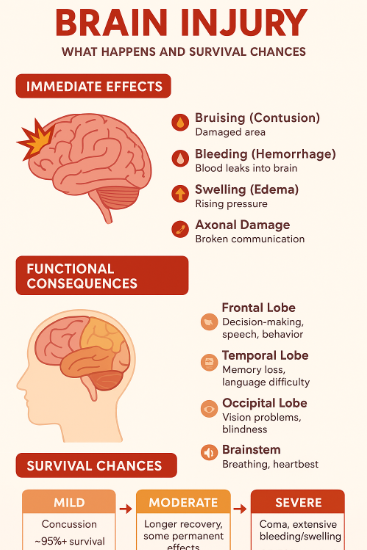
    🧠 What Happens in a Brain Injury?

    Think of the brain as Brain-City we talked about earlier. When injury strikes (from trauma, stroke, or lack of oxygen), some of the “districts” can’t do their jobs properly.

    Brain Injury

    Immediate Effects

    • Bruising (Contusion) → like a part of the city getting damaged; neurons in that area may die.
    • Bleeding (Hemorrhage) → blood leaks into areas where it doesn’t belong, pressing on tissues.
    • Swelling (Edema) → Brain swells inside the skull (which is a hard box), so pressure rises dangerously.
    • Axonal Damage → the “phone wires” between neurons snap, cutting communication.

    Functional Consequences

    • Frontal lobe hit → decision-making, speech, behavior issues.
    • Temporal lobe hit → memory loss, difficulty understanding language.
    • Occipital lobe hit → vision problems or blindness.
    • Cerebellum hit → loss of balance/coordination.
    • Brainstem hit → breathing, heartbeat, survival functions threatened.

    📊 General Stats (approximate, can vary by study)

    • Mild brain injury (concussion): ~95%+ survival, though some get post-concussion symptoms.
    • Moderate brain injury: survival 60–80%, but many face disabilities.
    • Severe brain injury: survival can be 25–50% depending on rapid care; often long-term dependence.
    • Coma > 6 months: very low chance of full recovery, though exceptions exist.

    ❤️ Survival Chances

    Survival isn’t one-size-fits-all—it depends on:

    1. Severity
      • Mild (Concussion) → Most people recover fully.
      • Moderate → Longer recovery, some permanent effects possible.
      • Severe (coma, extensive bleeding/swelling) → Higher risk of disability or death.
    2. Location
      • Injury to the brainstem is most dangerous (since it controls breathing, heartbeat).
      • Injury in “higher” brain areas (like frontal/temporal lobes) can be survived, but may cause long-term changes in personality, memory, or motor skills.
    3. Time to Treatment
      • The “Golden Hour” matters: faster surgery, oxygen supply, and pressure control = higher survival.
    4. Age & Health
      • Younger, healthier people generally heal better. Older age or pre-existing conditions can reduce survival chances.

    🌱 Recovery Possibilities

    The brain is amazingly plastic (it rewires itself). With rehab (physiotherapy, speech therapy, occupational therapy), people can regain skills—even if slowly. Sometimes other brain regions take over lost functions.


    👉 So in short: brain injury doesn’t always mean the end, but survival and recovery depend on how bad, where, and how quickly it’s treated.

    Read our blogs here.

    External reference link.

  • 🏙️ The Story of Brain-City: A Day in the Life

    🏙️ The Story of Brain-City: A Day in the Life

    Far away, inside every person, there exists a magical city—Brain-City. This city never sleeps, never shuts down, and never takes a holiday. Its citizens, buildings, and messengers work together every second to keep life going.


    🧠 The Human Brain: The City Within Us

    Hidden inside our skull lies the most fascinating organ in existence—the brain, a living universe of thoughts, emotions, and control. It is often called the “command center” of the body, but it’s much more than that. Imagine it as a bustling city—with mayors making decisions, post offices sorting messages, fire alarms sounding warnings, artists painting dreams, and power plants keeping everything alive.

    Every feeling you experience, every decision you make, every memory you cherish, and even the way you breathe or sleep is orchestrated by this extraordinary city of neurons, hormones, and signals. From the frontal lobe that plans your future, to the amygdala that sparks your fears, to the hypothalamus that balances hunger, sleep, and hormones, each part plays its own unique role in keeping you alive and human.

    In this blog, we’ll step inside Brain-City, exploring its neighborhoods, messengers, and the daily drama that keeps life moving—told in a way that feels like a story rather than a science lecture.


    🌍 The Two Sides of the City: Left vs Right Brain

    The brain has two hemispheres, like two halves of a city divided by a river, but connected by a big bridge called the corpus callosum.

    • Left Brain City → logical side: accountants, planners, scientists, language experts. It loves numbers, analysis, words, order, and details.
    • Right Brain City → artistic side: painters, musicians, dreamers, storytellers. It handles creativity, imagination, music, art, emotions, and big-picture thinking.

    💡 They constantly send messages across the “bridge,” so logic and creativity work together.


    🏛️ The City Districts (Brain Parts)

    1. The Downtown (Frontal Lobe)
    This is where the “Mayor’s office” is. It makes decisions, plans the future, controls emotions, and manages speech. When you decide whether to study or scroll Instagram, this office is debating 🗣️.

    2. The Map District (Parietal Lobe)
    This area is like the city’s survey department—tracking touch, space, temperature, and pain. If you close your eyes and still touch your nose, thank this district.

    3. The Arts District (Temporal Lobe)
    This place is filled with music halls, libraries, and memory museums. It helps you recognize songs, remember your grandmother’s face, and understand language. 🎶📚

    4. The Cinema Hall (Occipital Lobe)
    All the movies of your life are projected here—it’s in charge of vision. Every time you see a flower or a rainbow, the occipital lobe lights up like a theater screen 🎥🌈.


    ⚙️ The Operations Hub

    5. Cerebellum (Quality Control Office)
    It makes sure movements are smooth and balanced. It’s like the city’s traffic controller—coordinating dance moves, cycling, or even walking without wobbling 🚲💃.

    6. Brainstem (Power Plant)
    Hidden underground, it powers basic life support: heartbeat, breathing, swallowing. It’s always working, like electricity running in the background ⚡.


    ❤️ The Emotional Center

    7. Limbic System (Heart of the City)
    This is where feelings live.

    • Amygdala → the fire alarm 🚨, triggering fear or anger.
    • Hippocampus → the historian 📜, storing memories and lessons.
    • Hypothalamus → the thermostat & hunger controller 🌡️🍔, balancing hormones, thirst, and sleep.
    • Thalamus → the post office 📮, routing all sensory messages to the right address.

    8. Basal Ganglia (Habit Street)
    The place of routines and habits—it decides if you bite your nails, go for a morning jog, or binge-watch Netflix 📺.


    📡 The City’s Communication System

    Imagine the brain-city has billions of citizens called neurons.

    • Each neuron is like a person with a phone 📞.
    • They don’t shout across the street; instead, they send tiny electrical sparks (like text messages) down their “wires” (axons).
    • At the end, the message hops across a tiny gap (synapse) using neurotransmitters—these are like WhatsApp emojis that carry the tone of the message.

    👉 Dopamine is like a “reward sticker” 🎁,
    👉 Serotonin is the “happy emoji” 😊,
    👉 Acetylcholine is a “memory note” 📝,
    👉 GABA is the “calm-down signal” 😌.

    This way, billions of conversations keep the city alive every second.


    💌 The Hormone Postal Service

    Now, hormones are like official letters sent by the city government. Instead of texting quickly like neurons, they send slower, longer-lasting memos through the bloodstream.

    The Hypothalamus (city’s Chief Minister) works with the Pituitary Gland (Postmaster General) to control the whole endocrine postal system:

    • Adrenaline (from adrenal glands) → emergency siren 🚨 when danger comes (fight, flight, freeze).
    • Cortisol → stress mail 📨, keeps energy ready in tough times.
    • Dopamine → reward coupon 🎟️, makes you repeat what feels good.
    • Serotonin → mood postcard 🌞, tells you if you feel calm or sad.
    • Melatonin → sleep invitation 🌙, sent out when night falls.
    • Oxytocin → love letter 💌, bonds you to friends, family, pets.
    • Insulin → food balance sheet 📊, manages sugar energy.

    👀 The City’s Senses (Incoming Signals)

    Imagine five busy city gates where messages keep pouring in:

    • Eyes (Occipital Cinema Hall) → visuals become movies in your head. 🎥
    • Ears (Temporal Music Hall) → sound waves become songs, voices. 🎶
    • Skin (Parietal Survey Office) → touch, pain, warmth are filed as reports. ✋🔥
    • Nose (Olfactory Station) → smells trigger memory letters directly to the limbic system (ever smelled food and remembered childhood? 🍲).
    • Tongue (Taste Bureau) → sweet, salty, bitter, spicy—food reviews delivered 🍭🍋.

    All these messages go to the Thalamus Post Office, which sorts and delivers them to the right districts.


    🌅 Morning in Brain-City

    Brain Parts

    The day begins when the Chief Minister Hypothalamus whispers to the Postmaster Pituitary:
    “Send out a Cortisol Letter! Wake everyone up!”
    The pituitary quickly dispatches hormones through the city’s bloodstream. As the letters arrive, workers across the city stretch, yawn, and prepare for the new day.

    The Mayor Frontal Lobe calls a meeting:
    “Today’s plan—finish that assignment, call a friend, maybe hit the gym.”
    The Right Brain Artists smile, sketching ideas and dreams, while the Left Brain Accountants double-check details and deadlines.


    ☕ The Coffee Break

    As you sip your morning coffee, the Reward Officer Dopamine rushes in with colorful stickers:
    “Good job! You earned this energy!”
    The city feels cheerful, thanks to a little help from Serotonin the Mood Manager, who keeps things bright and balanced.


    ⚡ The Sudden Alarm

    But suddenly—BANG! A loud noise echoes.
    The Amygdala Fire Alarm screams: “Danger!” 🚨
    At once, the Adrenaline Police flood the streets, making the heart beat faster, lungs breathe quicker, and muscles prepare to run.
    The Cerebellum Traffic Controller reroutes movement, keeping balance.
    The Brainstem Power Plant works overtime, ensuring heartbeat and breathing don’t fail under pressure.

    Fortunately, the sound was just a book falling. The Mayor Frontal Lobe sighs: “False alarm, back to work.”


    📮 The City Post Office

    Throughout the day, the Thalamus Post Office never rests.

    • Letters from the Eye Gates become movies in the Occipital Cinema Hall.
    • Sound messages from the Ear Gates play in the Temporal Music Hall.
    • Touch reports from the Skin Gate are filed in the Parietal Survey Office.
    • Delicious smells and tastes arrive at the Nose Station and Taste Bureau, often sparking childhood memories stored by the Hippocampus Historian.

    Every sense is carefully routed, sorted, and delivered—no letter ever gets lost.


    🤗 Evening Glow

    Later, you meet a friend. The Oxytocin Love Letters spread across Brain-City, warming every corner. The Right Brain Artists sing songs of joy, while the Left Brain Accountants write neat records of the memory.

    As the sun sets, the Hypothalamus Chief Minister sends out new orders:
    “Release Melatonin Invitations. Tell everyone it’s time for rest.”
    Slowly, the lights of Brain-City dim. Neurons whisper softly, signals slow, and the great city drifts into peaceful sleep. 🌙✨


    🌟 Moral of the Story

    Brain-City is alive within you. Its mayors, postmasters, alarms, historians, artists, and messengers never stop working—keeping you safe, balanced, creative, and alive. Every thought, hug, tear, laugh, and dream is the result of this bustling, wondrous city.


    🧠 What Happens in a Brain Injury?

    Think of the brain as Brain-City we talked about earlier. When injury strikes (from trauma, stroke, or lack of oxygen), some of the “districts” can’t do their jobs properly.

    Brain Injury

    Immediate Effects

    • Bruising (Contusion) → like a part of the city getting damaged; neurons in that area may die.
    • Bleeding (Hemorrhage) → blood leaks into areas where it doesn’t belong, pressing on tissues.
    • Swelling (Edema) → Brain swells inside the skull (which is a hard box), so pressure rises dangerously.
    • Axonal Damage → the “phone wires” between neurons snap, cutting communication.

    Functional Consequences

    • Frontal lobe hit → decision-making, speech, behavior issues.
    • Temporal lobe hit → memory loss, difficulty understanding language.
    • Occipital lobe hit → vision problems or blindness.
    • Cerebellum hit → loss of balance/coordination.
    • Brainstem hit → breathing, heartbeat, survival functions threatened.

    📊 General Stats (approximate, can vary by study)

    • Mild brain injury (concussion): ~95%+ survival, though some get post-concussion symptoms.
    • Moderate brain injury: survival 60–80%, but many face disabilities.
    • Severe brain injury: survival can be 25–50% depending on rapid care; often long-term dependence.
    • Coma > 6 months: very low chance of full recovery, though exceptions exist.

    ❤️ Survival Chances

    Survival isn’t one-size-fits-all—it depends on:

    1. Severity
      • Mild (Concussion) → Most people recover fully.
      • Moderate → Longer recovery, some permanent effects possible.
      • Severe (coma, extensive bleeding/swelling) → Higher risk of disability or death.
    2. Location
      • Injury to the brainstem is most dangerous (since it controls breathing, heartbeat).
      • Injury in “higher” brain areas (like frontal/temporal lobes) can be survived, but may cause long-term changes in personality, memory, or motor skills.
    3. Time to Treatment
      • The “Golden Hour” matters: faster surgery, oxygen supply, and pressure control = higher survival.
    4. Age & Health
      • Younger, healthier people generally heal better. Older age or pre-existing conditions can reduce survival chances.

    🌱 Recovery Possibilities

    The brain is amazingly plastic (it rewires itself). With rehab (physiotherapy, speech therapy, occupational therapy), people can regain skills—even if slowly. Sometimes other brain regions take over lost functions.


    👉 So in short: brain injury doesn’t always mean the end, but survival and recovery depend on how bad, where, and how quickly it’s treated.

    Read our blogs here.

    External reference link.

  • The Dark Secrets of Shell Companies: How Money Gets Washed Clean

    The Dark Secrets of Shell Companies: How Money Gets Washed Clean


    1. What is Money Laundering?

    Money laundering is the process of disguising illegally obtained money (from fraud, corruption, trafficking, tax evasion, bribery, etc.) so it appears legitimate.

    It usually involves three stages:

    1. Placement – Introducing illicit funds into the financial system (e.g., cash deposits, buying assets).
    2. Layering – Creating complex layers of transactions to hide the source (e.g., transfers between accounts, across borders, investments).
    3. Integration – Reintroducing “cleaned” money into the economy (e.g., real estate, luxury goods, business investments).

    2. What are Shell Companies?

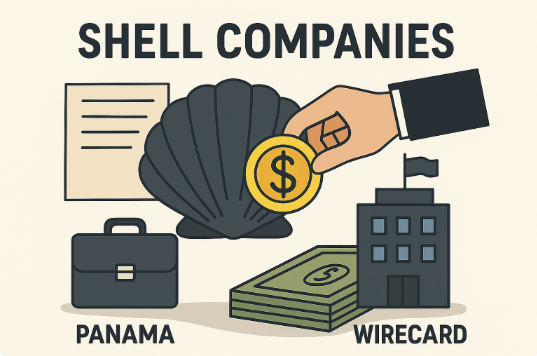
    A shell company is a legal entity that exists only on paper, with no significant assets or active operations.

    • Legitimate use: Sometimes used for tax planning, mergers, or holding assets.
    • Illicit use: Criminals exploit shell companies to hide ownership, move money across borders, and launder funds.

    3. How Shell Companies Help in Money Laundering

    • Anonymous Ownership: Criminals register companies in jurisdictions with weak disclosure rules (tax havens, secrecy jurisdictions).
    • Layering: Funds are transferred through multiple shell companies to make tracing difficult.
    • Trade-Based Laundering: Fake invoices, over/under invoicing via shell firms.
    • Round-Tripping: Illicit money sent abroad via shells and reinvested back into the home country as “foreign investment.”
    • Tax Evasion: Profits are shifted to shell companies in low-tax countries.

    The Story of Raj Malhotra: Shell Companies

    The Beginning: A Fortune Too Dirty to Spend

    Raj Malhotra was not born rich. He grew up in a small Indian town but, by his thirties, he had become a man of immense “hidden wealth.”
    Not from innovation, not from hard work—his fortune came from rigged government contracts, inflated bills, and under-the-table deals.

    By 2010, Raj had ₹500 crore in black money sitting in safes, warehouses, and secret lockers.
    It was useless.
    If he spent it directly, questions would come: Where did the money come from? Why wasn’t it declared?

    Raj’s problem was not making money.
    His problem was making it look clean.


    The Fixer’s Advice

    One evening in a Dubai hotel, Raj met an old acquaintance—Sameer, a corporate lawyer who specialized in “offshore structuring.”

    “Raj,” Sameer said, sipping his drink,
    “Why hold onto dirty cash? Let me introduce you to the world of shell companies. Paper firms. No offices. No employees. Just names. With them, your money can travel the world and come back cleaner than ever.”

    Raj leaned in. “And no one will know?”

    Sameer smiled. “That’s the beauty. On paper, these companies are separate from you. In reality, they’re your laundromats.”


    Act 1: The Birth of Paper Firms

    Within weeks, Raj had a dozen companies registered in British Virgin Islands, Panama, and Hong Kong.
    Each had a fancy name: Emerald Holdings Ltd., Blue Ocean Trading FZE, Sunrise Gems Inc.

    But behind the paperwork, they were empty shells.

    • No factories.
    • No employees.
    • Just a PO box address and nominee directors who had never met Raj.
    • On paper: Raj is not the direct owner.
      • He uses nominee directors/shareholders (often locals or professional agents who lend their names).
      • His name might not appear anywhere in official filings.
    • In reality: Raj is the beneficial owner—he controls the company’s decisions, its bank accounts, and the flow of funds.

    👉 That’s why regulators worldwide now push for Beneficial Ownership Registries—to unmask who actually controls a company.

    Raj wired his black money through hawala channels, and suddenly these shells had “capital.”


    Act 2: The Magic of Layering

    Now came the real trick—layering.

    • Blue Ocean Trading “sold” gemstones to Sunrise Gems.
    • Emerald Holdings “loaned” money to a Dubai-based shell.
    • The Dubai firm then “invested” in a Singapore subsidiary.

    On paper, these were international business deals.
    In reality, it was Raj’s money chasing its own tail—crossing borders, changing currencies, and leaving behind a smoke screen.

    Why Raj’s Name Disappears:

    Here’s the key trick: Hawala money doesn’t show up as “Raj’s money” when it lands in Singapore.

    • Raj gives cash to a hawala broker in India.
    • The broker’s partner in Dubai/Singapore transfers equivalent funds into Sunrise Gems’ bank account.
    • To the Singapore bank, it looks like:
      • A trade payment from another company, OR
      • A loan from another offshore entity, OR
      • Capital infusion by its shareholder (but the shareholder might be another shell, not Raj).

    So the books of Sunrise Gems don’t say: “Loan from Raj Malhotra.”
    Instead, they say: “Loan from Blue Ocean Trading FZE (Dubai)” or “Invoice payment from Emerald Holdings Ltd (BVI).”

    By the time money reached his Swiss bank account, it looked like legitimate business revenue.


    Act 3: Integration — Clean Money Returns

    Re-Entry into India (Round-Tripping)

    • Now, Sunrise Gems Pte Ltd “invests” in Raj’s Indian company as Foreign Direct Investment (FDI).
    • Since FDI is encouraged, Indian regulators (like RBI and SEBI) see this as legal foreign capital inflow.
    • Banks record it officially as an inbound investment from Singapore.

    Six months later, Raj proudly walked into an Indian bank branch.
    He wired in $50 million—not as black money, but as foreign investment from his Singapore company.

    The same dirty cash he once hid in lockers now wore a respectable suit.
    It was officially recorded as FDI (Foreign Direct Investment).
    Raj used it to buy luxury real estate in Mumbai, invest in startups, and even fund political campaigns.

    His dirty wealth was now indistinguishable from honest money.


    The Illusion of Legitimacy

    To the world, Raj became a success story:

    • A “self-made investor.”
    • A man whose companies had “global operations.”
    • A tycoon who appeared in glossy magazines.

    But those who looked closer saw the cracks:

    • His firms had no employees.
    • Their addresses led to empty offices.
    • Transactions didn’t match real trade volumes.

    It was a mirage built on shells.


    The Fall

    Raj’s empire might have lasted forever—if not for a whistleblower.

    A disgruntled employee leaked documents to investigative journalists.
    Raj’s name surfaced in a global leak alongside others who used offshore shells to move billions.

    Forensic auditors traced his maze of transactions.

    • Fake invoices.
    • Circular transfers.
    • Round-tripping disguised as FDI.

    The illusion collapsed. Raj’s assets were frozen. His luxury homes were raided. And overnight, the tycoon became a fugitive.


    The Lesson of Raj Malhotra

    Raj’s story isn’t unique.
    It mirrors the Panama Papers, Wirecard’s collapse, and Nirav Modi’s scam.

    Shell companies are not evil in themselves—many are used legally.
    But in the wrong hands, they become the world’s most dangerous laundromats.

    They allow criminals to:

    • Hide true ownership.
    • Layer transactions across borders.
    • Bring back dirty money as clean investments.

    And until regulators, auditors, and banks dig beneath the paper façade, more men like Raj will rise, shine, and fall.

    Final Thought

    So the next time you read about a sudden billionaire, ask:

    👉 Is he really a visionary? Or just another Raj Malhotra playing the shell game?


    4. Real-World Examples

    • Panama Papers (2016) – Revealed how Mossack Fonseca set up shell companies for politicians, criminals, and celebrities to hide assets.
    • Wirecard (2020) – Used a network of shell companies in Asia and the Middle East to fake revenues.
    • Nirav Modi Scam (India, 2018) – Multiple shell companies were used to move money abroad through fraudulent LoUs (letters of undertaking).

    5. Red Flags for Shell Companies

    • No physical office or employees.
    • Complex ownership structure (layered through multiple jurisdictions).
    • Registered in offshore tax havens.
    • Frequent, high-value cross-border transfers without clear business purpose.
    • Discrepancies between financial statements and actual business operations.

    6. How Regulators & Forensic Experts Detect This

    • Beneficial Ownership Registries – Identifying the real individuals behind companies.
    • KYC (Know Your Customer) & AML (Anti-Money Laundering) rules – Banks required to report suspicious activity.
    • Forensic Accounting & Data Analytics – Network analysis of transactions to find hidden links.
    • International Cooperation – FATF (Financial Action Task Force) sets global AML standards.

    🗂️ Case Study: The Panama Papers & Shell Companies


    1. Introduction

    The Panama Papers were one of the largest financial data leaks in history, exposing how the world’s elite used shell companies to hide assets, evade taxes, and launder money. In April 2016, the International Consortium of Investigative Journalists (ICIJ) published findings based on 11.5 million documents leaked from Mossack Fonseca, a Panama-based law firm specializing in offshore structures.

    This scandal revealed systemic misuse of offshore shell entities by politicians, billionaires, criminals, and corporations across 200+ countries.


    2. Background

    • Mossack Fonseca: A Panamanian law firm founded in 1977, specialized in creating and managing offshore companies.
    • Offshore shell companies: Entities with little or no real business activity, often used for asset protection, secrecy, and—at times—illegal activities.
    • The Leak: ~2.6 terabytes of data (emails, contracts, PDFs, images, and database records) covering nearly 40 years (1977–2015).

    3. How Shell Companies Were Used

    The leak showed multiple tactics, including:

    1. Asset concealment – Wealthy individuals created offshore shells to hide ownership of yachts, mansions, and bank accounts.
    2. Tax evasion – Profits were shifted to tax havens with little or no taxation (Panama, British Virgin Islands, Seychelles, etc.).
    3. Money laundering – Criminal groups funneled illicit funds through layered shell entities to make them appear legitimate.
    4. Sanctions evasion – Companies linked to sanctioned countries (e.g., Iran, North Korea) used shells to access global banking.

    4. Key Revelations

    • Heads of State Implicated:
      • Sigmundur Davíð Gunnlaugsson, Iceland’s Prime Minister, resigned after his offshore dealings were revealed.
      • Associates of Vladimir Putin moved ~$2 billion through offshore networks.
      • Family of Xi Jinping (China’s president) linked to offshore holdings.
      • Relatives of Nawaz Sharif (Pakistan PM) used offshore shells to buy London luxury properties.
    • Corporates and Banks:
      • Global banks (HSBC, UBS, Deutsche Bank) helped clients set up offshore shells.
      • FIFA officials linked to bribery and corruption through offshore structures.
    • Criminal Networks:
      • Drug cartels, arms dealers, and corrupt politicians used Mossack Fonseca’s shells to mask dirty money.

    5. Impact & Consequences

    1. Political Fallout
      • Resignation of Iceland’s PM.
      • Pressure on political figures worldwide (Pakistan’s PM Sharif was disqualified by the Supreme Court).
    2. Legal & Regulatory Action
      • Mossack Fonseca shut down in 2018.
      • Multiple investigations opened globally, leading to arrests and asset seizures.
    3. Public Pressure & Reforms
      • Greater demand for transparency in offshore finance.
      • Push for Beneficial Ownership Registers (UK, EU).
      • OECD and FATF strengthened compliance standards.

    6. Ethical & Governance Issues

    • Transparency vs. Privacy: Offshore structures aren’t always illegal—sometimes used for asset protection—but secrecy enables misuse.
    • Accountability Gaps: Weak regulations allowed intermediaries (law firms, banks) to operate with little oversight.
    • Global Inequality: The leak highlighted how the ultra-rich could legally exploit loopholes, while ordinary citizens faced stricter taxation.

    7. Lessons Learned

    • Due Diligence Matters: Financial institutions need robust KYC/AML frameworks.
    • Technology in Detection: AI and forensic accounting tools can help detect unusual shell-company networks.
    • International Cooperation: Money laundering is cross-border; regulators must coordinate globally.
    • Corporate Governance: Boards and auditors must ensure transparency in related-party dealings and offshore investments.

    8. Conclusion

    The Panama Papers were a turning point in exposing how shell companies are abused. They forced governments, regulators, and institutions to rethink financial secrecy and demand transparency. While not all offshore companies are illegal, the scandal proved that without oversight, shell structures can be powerful tools for corruption, tax evasion, and laundering.


    9. External References

    Read our blogs on Corporate Governance here.

    External reference 4 Money Laundering Cases link. Panama Papers link.


    A shell company is just a legal entity with little or no operations or assets. It becomes shady only when used for fraud or laundering. Many shells exist for perfectly legitimate reasons:

    1. Holding Assets

    • Companies often use shells to hold intellectual property, real estate, or trademarks separately from the operating business.
    • Example: Google shifted its patents into a separate entity for better management and licensing.

    2. Mergers & Acquisitions (M&A)

    • In corporate deals, shells can act as special-purpose vehicles (SPVs) to complete acquisitions or spin-offs without disturbing the parent company’s operations.
    • Example: A big company buying a startup may first create a shell SPV to handle the transaction.

    3. Raising Capital (SPACs)

    • Special Purpose Acquisition Companies (SPACs) are shells listed on stock markets with no operations. They exist only to raise money and later merge with a real business.
    • This is 100% legal, regulated, and often used in Wall Street deals.

    4. Joint Ventures

    • Two companies from different countries may form a shell in a neutral jurisdiction to share profits and risks fairly.

    5. Tax & Estate Planning

    • Some shells are created in low-tax jurisdictions for legitimate tax optimization (not evasion).
    • Wealthy families sometimes use shells for succession planning, making inheritance smoother.

    Legitimate Shells – Allowed ✅

    • If a company is registered properly under the Registrar of Companies (RoC), maintains books, pays taxes, and discloses ownership, it can legally exist—even if it has no operations.
    • Example: A startup founder may incorporate a company to hold IP or raise funds later. Until then, it’s a shell but still legal.

    ⚠️ When It Crosses the Line

    A legal shell becomes illegal when it’s used to:

    • Hide the true owner (beneficial ownership)
    • Move illicit money (hawala, fake invoices, round-tripping)
    • Evade taxes beyond what’s allowed under law
    • Create fake revenues or inflate valuations

    Illegitimate Shells – Illegal ❌

    • When shells are used for money laundering, round-tripping (sending Indian black money abroad and bringing it back as FDI), or tax evasion, they break several laws:
      • Prevention of Money Laundering Act (PMLA)
      • Benami Transactions Act
      • Foreign Exchange Management Act (FEMA)
      • Income Tax Act

    ✅ So, Is It Legal?

    • Yes, registering and owning a shell company is legal in India, as long as it’s transparent, compliant, and not used for illegal purposes.
    • No, if it’s just a dummy vehicle for laundering, tax evasion, or hiding black money.

    🚨 Call to Action

    Shell companies aren’t always villains—they can be legal tools. But when misused, they become weapons that rob the economy, cheat investors, and fuel corruption.

    💡 As an entrepreneur, keep your company records clean and transparent.
    💡 As an investor, always check for red flags—unusual related-party transactions, zero revenues, or offshore entities without clear purpose.
    💡 As a citizen, demand stronger disclosure norms and support governance reforms.

    👉 The future of Indian business depends on trust and transparency. Let’s build companies that create value in the open, not hide in the shadows.

  • The Dark Secrets of Shell Companies: How Money Gets Washed Clean

    The Dark Secrets of Shell Companies: How Money Gets Washed Clean


    1. What is Money Laundering?

    Money laundering is the process of disguising illegally obtained money (from fraud, corruption, trafficking, tax evasion, bribery, etc.) so it appears legitimate.

    It usually involves three stages:

    1. Placement – Introducing illicit funds into the financial system (e.g., cash deposits, buying assets).
    2. Layering – Creating complex layers of transactions to hide the source (e.g., transfers between accounts, across borders, investments).
    3. Integration – Reintroducing “cleaned” money into the economy (e.g., real estate, luxury goods, business investments).

    2. What are Shell Companies?

    A shell company is a legal entity that exists only on paper, with no significant assets or active operations.

    • Legitimate use: Sometimes used for tax planning, mergers, or holding assets.
    • Illicit use: Criminals exploit shell companies to hide ownership, move money across borders, and launder funds.

    3. How Shell Companies Help in Money Laundering

    • Anonymous Ownership: Criminals register companies in jurisdictions with weak disclosure rules (tax havens, secrecy jurisdictions).
    • Layering: Funds are transferred through multiple shell companies to make tracing difficult.
    • Trade-Based Laundering: Fake invoices, over/under invoicing via shell firms.
    • Round-Tripping: Illicit money sent abroad via shells and reinvested back into the home country as “foreign investment.”
    • Tax Evasion: Profits are shifted to shell companies in low-tax countries.

    The Story of Raj Malhotra: Shell Companies

    The Beginning: A Fortune Too Dirty to Spend

    Raj Malhotra was not born rich. He grew up in a small Indian town but, by his thirties, he had become a man of immense “hidden wealth.”
    Not from innovation, not from hard work—his fortune came from rigged government contracts, inflated bills, and under-the-table deals.

    By 2010, Raj had ₹500 crore in black money sitting in safes, warehouses, and secret lockers.
    It was useless.
    If he spent it directly, questions would come: Where did the money come from? Why wasn’t it declared?

    Raj’s problem was not making money.
    His problem was making it look clean.


    The Fixer’s Advice

    One evening in a Dubai hotel, Raj met an old acquaintance—Sameer, a corporate lawyer who specialized in “offshore structuring.”

    “Raj,” Sameer said, sipping his drink,
    “Why hold onto dirty cash? Let me introduce you to the world of shell companies. Paper firms. No offices. No employees. Just names. With them, your money can travel the world and come back cleaner than ever.”

    Raj leaned in. “And no one will know?”

    Sameer smiled. “That’s the beauty. On paper, these companies are separate from you. In reality, they’re your laundromats.”


    Act 1: The Birth of Paper Firms

    Within weeks, Raj had a dozen companies registered in British Virgin Islands, Panama, and Hong Kong.
    Each had a fancy name: Emerald Holdings Ltd., Blue Ocean Trading FZE, Sunrise Gems Inc.

    But behind the paperwork, they were empty shells.

    • No factories.
    • No employees.
    • Just a PO box address and nominee directors who had never met Raj.
    • On paper: Raj is not the direct owner.
      • He uses nominee directors/shareholders (often locals or professional agents who lend their names).
      • His name might not appear anywhere in official filings.
    • In reality: Raj is the beneficial owner—he controls the company’s decisions, its bank accounts, and the flow of funds.

    👉 That’s why regulators worldwide now push for Beneficial Ownership Registries—to unmask who actually controls a company.

    Raj wired his black money through hawala channels, and suddenly these shells had “capital.”


    Act 2: The Magic of Layering

    Now came the real trick—layering.

    • Blue Ocean Trading “sold” gemstones to Sunrise Gems.
    • Emerald Holdings “loaned” money to a Dubai-based shell.
    • The Dubai firm then “invested” in a Singapore subsidiary.

    On paper, these were international business deals.
    In reality, it was Raj’s money chasing its own tail—crossing borders, changing currencies, and leaving behind a smoke screen.

    Why Raj’s Name Disappears:

    Here’s the key trick: Hawala money doesn’t show up as “Raj’s money” when it lands in Singapore.

    • Raj gives cash to a hawala broker in India.
    • The broker’s partner in Dubai/Singapore transfers equivalent funds into Sunrise Gems’ bank account.
    • To the Singapore bank, it looks like:
      • A trade payment from another company, OR
      • A loan from another offshore entity, OR
      • Capital infusion by its shareholder (but the shareholder might be another shell, not Raj).

    So the books of Sunrise Gems don’t say: “Loan from Raj Malhotra.”
    Instead, they say: “Loan from Blue Ocean Trading FZE (Dubai)” or “Invoice payment from Emerald Holdings Ltd (BVI).”

    By the time money reached his Swiss bank account, it looked like legitimate business revenue.


    Act 3: Integration — Clean Money Returns

    Re-Entry into India (Round-Tripping)

    • Now, Sunrise Gems Pte Ltd “invests” in Raj’s Indian company as Foreign Direct Investment (FDI).
    • Since FDI is encouraged, Indian regulators (like RBI and SEBI) see this as legal foreign capital inflow.
    • Banks record it officially as an inbound investment from Singapore.

    Six months later, Raj proudly walked into an Indian bank branch.
    He wired in $50 million—not as black money, but as foreign investment from his Singapore company.

    The same dirty cash he once hid in lockers now wore a respectable suit.
    It was officially recorded as FDI (Foreign Direct Investment).
    Raj used it to buy luxury real estate in Mumbai, invest in startups, and even fund political campaigns.

    His dirty wealth was now indistinguishable from honest money.


    The Illusion of Legitimacy

    To the world, Raj became a success story:

    • A “self-made investor.”
    • A man whose companies had “global operations.”
    • A tycoon who appeared in glossy magazines.

    But those who looked closer saw the cracks:

    • His firms had no employees.
    • Their addresses led to empty offices.
    • Transactions didn’t match real trade volumes.

    It was a mirage built on shells.


    The Fall

    Raj’s empire might have lasted forever—if not for a whistleblower.

    A disgruntled employee leaked documents to investigative journalists.
    Raj’s name surfaced in a global leak alongside others who used offshore shells to move billions.

    Forensic auditors traced his maze of transactions.

    • Fake invoices.
    • Circular transfers.
    • Round-tripping disguised as FDI.

    The illusion collapsed. Raj’s assets were frozen. His luxury homes were raided. And overnight, the tycoon became a fugitive.


    The Lesson of Raj Malhotra

    Raj’s story isn’t unique.
    It mirrors the Panama Papers, Wirecard’s collapse, and Nirav Modi’s scam.

    Shell companies are not evil in themselves—many are used legally.
    But in the wrong hands, they become the world’s most dangerous laundromats.

    They allow criminals to:

    • Hide true ownership.
    • Layer transactions across borders.
    • Bring back dirty money as clean investments.

    And until regulators, auditors, and banks dig beneath the paper façade, more men like Raj will rise, shine, and fall.

    Final Thought

    So the next time you read about a sudden billionaire, ask:

    👉 Is he really a visionary? Or just another Raj Malhotra playing the shell game?


    4. Real-World Examples

    • Panama Papers (2016) – Revealed how Mossack Fonseca set up shell companies for politicians, criminals, and celebrities to hide assets.
    • Wirecard (2020) – Used a network of shell companies in Asia and the Middle East to fake revenues.
    • Nirav Modi Scam (India, 2018) – Multiple shell companies were used to move money abroad through fraudulent LoUs (letters of undertaking).

    5. Red Flags for Shell Companies

    • No physical office or employees.
    • Complex ownership structure (layered through multiple jurisdictions).
    • Registered in offshore tax havens.
    • Frequent, high-value cross-border transfers without clear business purpose.
    • Discrepancies between financial statements and actual business operations.

    6. How Regulators & Forensic Experts Detect This

    • Beneficial Ownership Registries – Identifying the real individuals behind companies.
    • KYC (Know Your Customer) & AML (Anti-Money Laundering) rules – Banks required to report suspicious activity.
    • Forensic Accounting & Data Analytics – Network analysis of transactions to find hidden links.
    • International Cooperation – FATF (Financial Action Task Force) sets global AML standards.

    🗂️ Case Study: The Panama Papers & Shell Companies


    1. Introduction

    The Panama Papers were one of the largest financial data leaks in history, exposing how the world’s elite used shell companies to hide assets, evade taxes, and launder money. In April 2016, the International Consortium of Investigative Journalists (ICIJ) published findings based on 11.5 million documents leaked from Mossack Fonseca, a Panama-based law firm specializing in offshore structures.

    This scandal revealed systemic misuse of offshore shell entities by politicians, billionaires, criminals, and corporations across 200+ countries.


    2. Background

    • Mossack Fonseca: A Panamanian law firm founded in 1977, specialized in creating and managing offshore companies.
    • Offshore shell companies: Entities with little or no real business activity, often used for asset protection, secrecy, and—at times—illegal activities.
    • The Leak: ~2.6 terabytes of data (emails, contracts, PDFs, images, and database records) covering nearly 40 years (1977–2015).

    3. How Shell Companies Were Used

    The leak showed multiple tactics, including:

    1. Asset concealment – Wealthy individuals created offshore shells to hide ownership of yachts, mansions, and bank accounts.
    2. Tax evasion – Profits were shifted to tax havens with little or no taxation (Panama, British Virgin Islands, Seychelles, etc.).
    3. Money laundering – Criminal groups funneled illicit funds through layered shell entities to make them appear legitimate.
    4. Sanctions evasion – Companies linked to sanctioned countries (e.g., Iran, North Korea) used shells to access global banking.

    4. Key Revelations

    • Heads of State Implicated:
      • Sigmundur Davíð Gunnlaugsson, Iceland’s Prime Minister, resigned after his offshore dealings were revealed.
      • Associates of Vladimir Putin moved ~$2 billion through offshore networks.
      • Family of Xi Jinping (China’s president) linked to offshore holdings.
      • Relatives of Nawaz Sharif (Pakistan PM) used offshore shells to buy London luxury properties.
    • Corporates and Banks:
      • Global banks (HSBC, UBS, Deutsche Bank) helped clients set up offshore shells.
      • FIFA officials linked to bribery and corruption through offshore structures.
    • Criminal Networks:
      • Drug cartels, arms dealers, and corrupt politicians used Mossack Fonseca’s shells to mask dirty money.

    5. Impact & Consequences

    1. Political Fallout
      • Resignation of Iceland’s PM.
      • Pressure on political figures worldwide (Pakistan’s PM Sharif was disqualified by the Supreme Court).
    2. Legal & Regulatory Action
      • Mossack Fonseca shut down in 2018.
      • Multiple investigations opened globally, leading to arrests and asset seizures.
    3. Public Pressure & Reforms
      • Greater demand for transparency in offshore finance.
      • Push for Beneficial Ownership Registers (UK, EU).
      • OECD and FATF strengthened compliance standards.

    6. Ethical & Governance Issues

    • Transparency vs. Privacy: Offshore structures aren’t always illegal—sometimes used for asset protection—but secrecy enables misuse.
    • Accountability Gaps: Weak regulations allowed intermediaries (law firms, banks) to operate with little oversight.
    • Global Inequality: The leak highlighted how the ultra-rich could legally exploit loopholes, while ordinary citizens faced stricter taxation.

    7. Lessons Learned

    • Due Diligence Matters: Financial institutions need robust KYC/AML frameworks.
    • Technology in Detection: AI and forensic accounting tools can help detect unusual shell-company networks.
    • International Cooperation: Money laundering is cross-border; regulators must coordinate globally.
    • Corporate Governance: Boards and auditors must ensure transparency in related-party dealings and offshore investments.

    8. Conclusion

    The Panama Papers were a turning point in exposing how shell companies are abused. They forced governments, regulators, and institutions to rethink financial secrecy and demand transparency. While not all offshore companies are illegal, the scandal proved that without oversight, shell structures can be powerful tools for corruption, tax evasion, and laundering.


    9. External References

    Read our blogs on Corporate Governance here.

    External reference 4 Money Laundering Cases link. Panama Papers link.


    A shell company is just a legal entity with little or no operations or assets. It becomes shady only when used for fraud or laundering. Many shells exist for perfectly legitimate reasons:

    1. Holding Assets

    • Companies often use shells to hold intellectual property, real estate, or trademarks separately from the operating business.
    • Example: Google shifted its patents into a separate entity for better management and licensing.

    2. Mergers & Acquisitions (M&A)

    • In corporate deals, shells can act as special-purpose vehicles (SPVs) to complete acquisitions or spin-offs without disturbing the parent company’s operations.
    • Example: A big company buying a startup may first create a shell SPV to handle the transaction.

    3. Raising Capital (SPACs)

    • Special Purpose Acquisition Companies (SPACs) are shells listed on stock markets with no operations. They exist only to raise money and later merge with a real business.
    • This is 100% legal, regulated, and often used in Wall Street deals.

    4. Joint Ventures

    • Two companies from different countries may form a shell in a neutral jurisdiction to share profits and risks fairly.

    5. Tax & Estate Planning

    • Some shells are created in low-tax jurisdictions for legitimate tax optimization (not evasion).
    • Wealthy families sometimes use shells for succession planning, making inheritance smoother.

    Legitimate Shells – Allowed ✅

    • If a company is registered properly under the Registrar of Companies (RoC), maintains books, pays taxes, and discloses ownership, it can legally exist—even if it has no operations.
    • Example: A startup founder may incorporate a company to hold IP or raise funds later. Until then, it’s a shell but still legal.

    ⚠️ When It Crosses the Line

    A legal shell becomes illegal when it’s used to:

    • Hide the true owner (beneficial ownership)
    • Move illicit money (hawala, fake invoices, round-tripping)
    • Evade taxes beyond what’s allowed under law
    • Create fake revenues or inflate valuations

    Illegitimate Shells – Illegal ❌

    • When shells are used for money laundering, round-tripping (sending Indian black money abroad and bringing it back as FDI), or tax evasion, they break several laws:
      • Prevention of Money Laundering Act (PMLA)
      • Benami Transactions Act
      • Foreign Exchange Management Act (FEMA)
      • Income Tax Act

    ✅ So, Is It Legal?

    • Yes, registering and owning a shell company is legal in India, as long as it’s transparent, compliant, and not used for illegal purposes.
    • No, if it’s just a dummy vehicle for laundering, tax evasion, or hiding black money.

    🚨 Call to Action

    Shell companies aren’t always villains—they can be legal tools. But when misused, they become weapons that rob the economy, cheat investors, and fuel corruption.

    💡 As an entrepreneur, keep your company records clean and transparent.
    💡 As an investor, always check for red flags—unusual related-party transactions, zero revenues, or offshore entities without clear purpose.
    💡 As a citizen, demand stronger disclosure norms and support governance reforms.

    👉 The future of Indian business depends on trust and transparency. Let’s build companies that create value in the open, not hide in the shadows.

  • The Dark Secrets of Shell Companies: How Money Gets Washed Clean

    The Dark Secrets of Shell Companies: How Money Gets Washed Clean


    1. What is Money Laundering?

    Money laundering is the process of disguising illegally obtained money (from fraud, corruption, trafficking, tax evasion, bribery, etc.) so it appears legitimate.

    It usually involves three stages:

    1. Placement – Introducing illicit funds into the financial system (e.g., cash deposits, buying assets).
    2. Layering – Creating complex layers of transactions to hide the source (e.g., transfers between accounts, across borders, investments).
    3. Integration – Reintroducing “cleaned” money into the economy (e.g., real estate, luxury goods, business investments).

    2. What are Shell Companies?

    A shell company is a legal entity that exists only on paper, with no significant assets or active operations.

    • Legitimate use: Sometimes used for tax planning, mergers, or holding assets.
    • Illicit use: Criminals exploit shell companies to hide ownership, move money across borders, and launder funds.

    3. How Shell Companies Help in Money Laundering

    • Anonymous Ownership: Criminals register companies in jurisdictions with weak disclosure rules (tax havens, secrecy jurisdictions).
    • Layering: Funds are transferred through multiple shell companies to make tracing difficult.
    • Trade-Based Laundering: Fake invoices, over/under invoicing via shell firms.
    • Round-Tripping: Illicit money sent abroad via shells and reinvested back into the home country as “foreign investment.”
    • Tax Evasion: Profits are shifted to shell companies in low-tax countries.

    The Story of Raj Malhotra: Shell Companies

    The Beginning: A Fortune Too Dirty to Spend

    Raj Malhotra was not born rich. He grew up in a small Indian town but, by his thirties, he had become a man of immense “hidden wealth.”
    Not from innovation, not from hard work—his fortune came from rigged government contracts, inflated bills, and under-the-table deals.

    By 2010, Raj had ₹500 crore in black money sitting in safes, warehouses, and secret lockers.
    It was useless.
    If he spent it directly, questions would come: Where did the money come from? Why wasn’t it declared?

    Raj’s problem was not making money.
    His problem was making it look clean.


    The Fixer’s Advice

    One evening in a Dubai hotel, Raj met an old acquaintance—Sameer, a corporate lawyer who specialized in “offshore structuring.”

    “Raj,” Sameer said, sipping his drink,
    “Why hold onto dirty cash? Let me introduce you to the world of shell companies. Paper firms. No offices. No employees. Just names. With them, your money can travel the world and come back cleaner than ever.”

    Raj leaned in. “And no one will know?”

    Sameer smiled. “That’s the beauty. On paper, these companies are separate from you. In reality, they’re your laundromats.”


    Act 1: The Birth of Paper Firms

    Within weeks, Raj had a dozen companies registered in British Virgin Islands, Panama, and Hong Kong.
    Each had a fancy name: Emerald Holdings Ltd., Blue Ocean Trading FZE, Sunrise Gems Inc.

    But behind the paperwork, they were empty shells.

    • No factories.
    • No employees.
    • Just a PO box address and nominee directors who had never met Raj.
    • On paper: Raj is not the direct owner.
      • He uses nominee directors/shareholders (often locals or professional agents who lend their names).
      • His name might not appear anywhere in official filings.
    • In reality: Raj is the beneficial owner—he controls the company’s decisions, its bank accounts, and the flow of funds.

    👉 That’s why regulators worldwide now push for Beneficial Ownership Registries—to unmask who actually controls a company.

    Raj wired his black money through hawala channels, and suddenly these shells had “capital.”


    Act 2: The Magic of Layering

    Now came the real trick—layering.

    • Blue Ocean Trading “sold” gemstones to Sunrise Gems.
    • Emerald Holdings “loaned” money to a Dubai-based shell.
    • The Dubai firm then “invested” in a Singapore subsidiary.

    On paper, these were international business deals.
    In reality, it was Raj’s money chasing its own tail—crossing borders, changing currencies, and leaving behind a smoke screen.

    Why Raj’s Name Disappears:

    Here’s the key trick: Hawala money doesn’t show up as “Raj’s money” when it lands in Singapore.

    • Raj gives cash to a hawala broker in India.
    • The broker’s partner in Dubai/Singapore transfers equivalent funds into Sunrise Gems’ bank account.
    • To the Singapore bank, it looks like:
      • A trade payment from another company, OR
      • A loan from another offshore entity, OR
      • Capital infusion by its shareholder (but the shareholder might be another shell, not Raj).

    So the books of Sunrise Gems don’t say: “Loan from Raj Malhotra.”
    Instead, they say: “Loan from Blue Ocean Trading FZE (Dubai)” or “Invoice payment from Emerald Holdings Ltd (BVI).”

    By the time money reached his Swiss bank account, it looked like legitimate business revenue.


    Act 3: Integration — Clean Money Returns

    Re-Entry into India (Round-Tripping)

    • Now, Sunrise Gems Pte Ltd “invests” in Raj’s Indian company as Foreign Direct Investment (FDI).
    • Since FDI is encouraged, Indian regulators (like RBI and SEBI) see this as legal foreign capital inflow.
    • Banks record it officially as an inbound investment from Singapore.

    Six months later, Raj proudly walked into an Indian bank branch.
    He wired in $50 million—not as black money, but as foreign investment from his Singapore company.

    The same dirty cash he once hid in lockers now wore a respectable suit.
    It was officially recorded as FDI (Foreign Direct Investment).
    Raj used it to buy luxury real estate in Mumbai, invest in startups, and even fund political campaigns.

    His dirty wealth was now indistinguishable from honest money.


    The Illusion of Legitimacy

    To the world, Raj became a success story:

    • A “self-made investor.”
    • A man whose companies had “global operations.”
    • A tycoon who appeared in glossy magazines.

    But those who looked closer saw the cracks:

    • His firms had no employees.
    • Their addresses led to empty offices.
    • Transactions didn’t match real trade volumes.

    It was a mirage built on shells.


    The Fall

    Raj’s empire might have lasted forever—if not for a whistleblower.

    A disgruntled employee leaked documents to investigative journalists.
    Raj’s name surfaced in a global leak alongside others who used offshore shells to move billions.

    Forensic auditors traced his maze of transactions.

    • Fake invoices.
    • Circular transfers.
    • Round-tripping disguised as FDI.

    The illusion collapsed. Raj’s assets were frozen. His luxury homes were raided. And overnight, the tycoon became a fugitive.


    The Lesson of Raj Malhotra

    Raj’s story isn’t unique.
    It mirrors the Panama Papers, Wirecard’s collapse, and Nirav Modi’s scam.

    Shell companies are not evil in themselves—many are used legally.
    But in the wrong hands, they become the world’s most dangerous laundromats.

    They allow criminals to:

    • Hide true ownership.
    • Layer transactions across borders.
    • Bring back dirty money as clean investments.

    And until regulators, auditors, and banks dig beneath the paper façade, more men like Raj will rise, shine, and fall.

    Final Thought

    So the next time you read about a sudden billionaire, ask:

    👉 Is he really a visionary? Or just another Raj Malhotra playing the shell game?


    4. Real-World Examples

    • Panama Papers (2016) – Revealed how Mossack Fonseca set up shell companies for politicians, criminals, and celebrities to hide assets.
    • Wirecard (2020) – Used a network of shell companies in Asia and the Middle East to fake revenues.
    • Nirav Modi Scam (India, 2018) – Multiple shell companies were used to move money abroad through fraudulent LoUs (letters of undertaking).

    5. Red Flags for Shell Companies

    • No physical office or employees.
    • Complex ownership structure (layered through multiple jurisdictions).
    • Registered in offshore tax havens.
    • Frequent, high-value cross-border transfers without clear business purpose.
    • Discrepancies between financial statements and actual business operations.

    6. How Regulators & Forensic Experts Detect This

    • Beneficial Ownership Registries – Identifying the real individuals behind companies.
    • KYC (Know Your Customer) & AML (Anti-Money Laundering) rules – Banks required to report suspicious activity.
    • Forensic Accounting & Data Analytics – Network analysis of transactions to find hidden links.
    • International Cooperation – FATF (Financial Action Task Force) sets global AML standards.

    🗂️ Case Study: The Panama Papers & Shell Companies


    1. Introduction

    The Panama Papers were one of the largest financial data leaks in history, exposing how the world’s elite used shell companies to hide assets, evade taxes, and launder money. In April 2016, the International Consortium of Investigative Journalists (ICIJ) published findings based on 11.5 million documents leaked from Mossack Fonseca, a Panama-based law firm specializing in offshore structures.

    This scandal revealed systemic misuse of offshore shell entities by politicians, billionaires, criminals, and corporations across 200+ countries.


    2. Background

    • Mossack Fonseca: A Panamanian law firm founded in 1977, specialized in creating and managing offshore companies.
    • Offshore shell companies: Entities with little or no real business activity, often used for asset protection, secrecy, and—at times—illegal activities.
    • The Leak: ~2.6 terabytes of data (emails, contracts, PDFs, images, and database records) covering nearly 40 years (1977–2015).

    3. How Shell Companies Were Used

    The leak showed multiple tactics, including:

    1. Asset concealment – Wealthy individuals created offshore shells to hide ownership of yachts, mansions, and bank accounts.
    2. Tax evasion – Profits were shifted to tax havens with little or no taxation (Panama, British Virgin Islands, Seychelles, etc.).
    3. Money laundering – Criminal groups funneled illicit funds through layered shell entities to make them appear legitimate.
    4. Sanctions evasion – Companies linked to sanctioned countries (e.g., Iran, North Korea) used shells to access global banking.

    4. Key Revelations

    • Heads of State Implicated:
      • Sigmundur Davíð Gunnlaugsson, Iceland’s Prime Minister, resigned after his offshore dealings were revealed.
      • Associates of Vladimir Putin moved ~$2 billion through offshore networks.
      • Family of Xi Jinping (China’s president) linked to offshore holdings.
      • Relatives of Nawaz Sharif (Pakistan PM) used offshore shells to buy London luxury properties.
    • Corporates and Banks:
      • Global banks (HSBC, UBS, Deutsche Bank) helped clients set up offshore shells.
      • FIFA officials linked to bribery and corruption through offshore structures.
    • Criminal Networks:
      • Drug cartels, arms dealers, and corrupt politicians used Mossack Fonseca’s shells to mask dirty money.

    5. Impact & Consequences

    1. Political Fallout
      • Resignation of Iceland’s PM.
      • Pressure on political figures worldwide (Pakistan’s PM Sharif was disqualified by the Supreme Court).
    2. Legal & Regulatory Action
      • Mossack Fonseca shut down in 2018.
      • Multiple investigations opened globally, leading to arrests and asset seizures.
    3. Public Pressure & Reforms
      • Greater demand for transparency in offshore finance.
      • Push for Beneficial Ownership Registers (UK, EU).
      • OECD and FATF strengthened compliance standards.

    6. Ethical & Governance Issues

    • Transparency vs. Privacy: Offshore structures aren’t always illegal—sometimes used for asset protection—but secrecy enables misuse.
    • Accountability Gaps: Weak regulations allowed intermediaries (law firms, banks) to operate with little oversight.
    • Global Inequality: The leak highlighted how the ultra-rich could legally exploit loopholes, while ordinary citizens faced stricter taxation.

    7. Lessons Learned

    • Due Diligence Matters: Financial institutions need robust KYC/AML frameworks.
    • Technology in Detection: AI and forensic accounting tools can help detect unusual shell-company networks.
    • International Cooperation: Money laundering is cross-border; regulators must coordinate globally.
    • Corporate Governance: Boards and auditors must ensure transparency in related-party dealings and offshore investments.

    8. Conclusion

    The Panama Papers were a turning point in exposing how shell companies are abused. They forced governments, regulators, and institutions to rethink financial secrecy and demand transparency. While not all offshore companies are illegal, the scandal proved that without oversight, shell structures can be powerful tools for corruption, tax evasion, and laundering.


    9. External References

    Read our blogs on Corporate Governance here.

    External reference 4 Money Laundering Cases link. Panama Papers link.


    A shell company is just a legal entity with little or no operations or assets. It becomes shady only when used for fraud or laundering. Many shells exist for perfectly legitimate reasons:

    1. Holding Assets

    • Companies often use shells to hold intellectual property, real estate, or trademarks separately from the operating business.
    • Example: Google shifted its patents into a separate entity for better management and licensing.

    2. Mergers & Acquisitions (M&A)

    • In corporate deals, shells can act as special-purpose vehicles (SPVs) to complete acquisitions or spin-offs without disturbing the parent company’s operations.
    • Example: A big company buying a startup may first create a shell SPV to handle the transaction.

    3. Raising Capital (SPACs)

    • Special Purpose Acquisition Companies (SPACs) are shells listed on stock markets with no operations. They exist only to raise money and later merge with a real business.
    • This is 100% legal, regulated, and often used in Wall Street deals.

    4. Joint Ventures

    • Two companies from different countries may form a shell in a neutral jurisdiction to share profits and risks fairly.

    5. Tax & Estate Planning

    • Some shells are created in low-tax jurisdictions for legitimate tax optimization (not evasion).
    • Wealthy families sometimes use shells for succession planning, making inheritance smoother.

    Legitimate Shells – Allowed ✅

    • If a company is registered properly under the Registrar of Companies (RoC), maintains books, pays taxes, and discloses ownership, it can legally exist—even if it has no operations.
    • Example: A startup founder may incorporate a company to hold IP or raise funds later. Until then, it’s a shell but still legal.

    ⚠️ When It Crosses the Line

    A legal shell becomes illegal when it’s used to:

    • Hide the true owner (beneficial ownership)
    • Move illicit money (hawala, fake invoices, round-tripping)
    • Evade taxes beyond what’s allowed under law
    • Create fake revenues or inflate valuations

    Illegitimate Shells – Illegal ❌

    • When shells are used for money laundering, round-tripping (sending Indian black money abroad and bringing it back as FDI), or tax evasion, they break several laws:
      • Prevention of Money Laundering Act (PMLA)
      • Benami Transactions Act
      • Foreign Exchange Management Act (FEMA)
      • Income Tax Act

    ✅ So, Is It Legal?

    • Yes, registering and owning a shell company is legal in India, as long as it’s transparent, compliant, and not used for illegal purposes.
    • No, if it’s just a dummy vehicle for laundering, tax evasion, or hiding black money.

    🚨 Call to Action

    Shell companies aren’t always villains—they can be legal tools. But when misused, they become weapons that rob the economy, cheat investors, and fuel corruption.

    💡 As an entrepreneur, keep your company records clean and transparent.
    💡 As an investor, always check for red flags—unusual related-party transactions, zero revenues, or offshore entities without clear purpose.
    💡 As a citizen, demand stronger disclosure norms and support governance reforms.

    👉 The future of Indian business depends on trust and transparency. Let’s build companies that create value in the open, not hide in the shadows.

  • The Dark Secrets of Shell Companies: How Money Gets Washed Clean

    The Dark Secrets of Shell Companies: How Money Gets Washed Clean


    1. What is Money Laundering?

    Money laundering is the process of disguising illegally obtained money (from fraud, corruption, trafficking, tax evasion, bribery, etc.) so it appears legitimate.

    It usually involves three stages:

    1. Placement – Introducing illicit funds into the financial system (e.g., cash deposits, buying assets).
    2. Layering – Creating complex layers of transactions to hide the source (e.g., transfers between accounts, across borders, investments).
    3. Integration – Reintroducing “cleaned” money into the economy (e.g., real estate, luxury goods, business investments).

    2. What are Shell Companies?

    A shell company is a legal entity that exists only on paper, with no significant assets or active operations.

    • Legitimate use: Sometimes used for tax planning, mergers, or holding assets.
    • Illicit use: Criminals exploit shell companies to hide ownership, move money across borders, and launder funds.

    3. How Shell Companies Help in Money Laundering

    • Anonymous Ownership: Criminals register companies in jurisdictions with weak disclosure rules (tax havens, secrecy jurisdictions).
    • Layering: Funds are transferred through multiple shell companies to make tracing difficult.
    • Trade-Based Laundering: Fake invoices, over/under invoicing via shell firms.
    • Round-Tripping: Illicit money sent abroad via shells and reinvested back into the home country as “foreign investment.”
    • Tax Evasion: Profits are shifted to shell companies in low-tax countries.

    The Story of Raj Malhotra: Shell Companies

    The Beginning: A Fortune Too Dirty to Spend

    Raj Malhotra was not born rich. He grew up in a small Indian town but, by his thirties, he had become a man of immense “hidden wealth.”
    Not from innovation, not from hard work—his fortune came from rigged government contracts, inflated bills, and under-the-table deals.

    By 2010, Raj had ₹500 crore in black money sitting in safes, warehouses, and secret lockers.
    It was useless.
    If he spent it directly, questions would come: Where did the money come from? Why wasn’t it declared?

    Raj’s problem was not making money.
    His problem was making it look clean.


    The Fixer’s Advice

    One evening in a Dubai hotel, Raj met an old acquaintance—Sameer, a corporate lawyer who specialized in “offshore structuring.”

    “Raj,” Sameer said, sipping his drink,
    “Why hold onto dirty cash? Let me introduce you to the world of shell companies. Paper firms. No offices. No employees. Just names. With them, your money can travel the world and come back cleaner than ever.”

    Raj leaned in. “And no one will know?”

    Sameer smiled. “That’s the beauty. On paper, these companies are separate from you. In reality, they’re your laundromats.”


    Act 1: The Birth of Paper Firms

    Within weeks, Raj had a dozen companies registered in British Virgin Islands, Panama, and Hong Kong.
    Each had a fancy name: Emerald Holdings Ltd., Blue Ocean Trading FZE, Sunrise Gems Inc.

    But behind the paperwork, they were empty shells.

    • No factories.
    • No employees.
    • Just a PO box address and nominee directors who had never met Raj.
    • On paper: Raj is not the direct owner.
      • He uses nominee directors/shareholders (often locals or professional agents who lend their names).
      • His name might not appear anywhere in official filings.
    • In reality: Raj is the beneficial owner—he controls the company’s decisions, its bank accounts, and the flow of funds.

    👉 That’s why regulators worldwide now push for Beneficial Ownership Registries—to unmask who actually controls a company.

    Raj wired his black money through hawala channels, and suddenly these shells had “capital.”


    Act 2: The Magic of Layering

    Now came the real trick—layering.

    • Blue Ocean Trading “sold” gemstones to Sunrise Gems.
    • Emerald Holdings “loaned” money to a Dubai-based shell.
    • The Dubai firm then “invested” in a Singapore subsidiary.

    On paper, these were international business deals.
    In reality, it was Raj’s money chasing its own tail—crossing borders, changing currencies, and leaving behind a smoke screen.

    Why Raj’s Name Disappears:

    Here’s the key trick: Hawala money doesn’t show up as “Raj’s money” when it lands in Singapore.

    • Raj gives cash to a hawala broker in India.
    • The broker’s partner in Dubai/Singapore transfers equivalent funds into Sunrise Gems’ bank account.
    • To the Singapore bank, it looks like:
      • A trade payment from another company, OR
      • A loan from another offshore entity, OR
      • Capital infusion by its shareholder (but the shareholder might be another shell, not Raj).

    So the books of Sunrise Gems don’t say: “Loan from Raj Malhotra.”
    Instead, they say: “Loan from Blue Ocean Trading FZE (Dubai)” or “Invoice payment from Emerald Holdings Ltd (BVI).”

    By the time money reached his Swiss bank account, it looked like legitimate business revenue.


    Act 3: Integration — Clean Money Returns

    Re-Entry into India (Round-Tripping)

    • Now, Sunrise Gems Pte Ltd “invests” in Raj’s Indian company as Foreign Direct Investment (FDI).
    • Since FDI is encouraged, Indian regulators (like RBI and SEBI) see this as legal foreign capital inflow.
    • Banks record it officially as an inbound investment from Singapore.

    Six months later, Raj proudly walked into an Indian bank branch.
    He wired in $50 million—not as black money, but as foreign investment from his Singapore company.

    The same dirty cash he once hid in lockers now wore a respectable suit.
    It was officially recorded as FDI (Foreign Direct Investment).
    Raj used it to buy luxury real estate in Mumbai, invest in startups, and even fund political campaigns.

    His dirty wealth was now indistinguishable from honest money.


    The Illusion of Legitimacy

    To the world, Raj became a success story:

    • A “self-made investor.”
    • A man whose companies had “global operations.”
    • A tycoon who appeared in glossy magazines.

    But those who looked closer saw the cracks:

    • His firms had no employees.
    • Their addresses led to empty offices.
    • Transactions didn’t match real trade volumes.

    It was a mirage built on shells.


    The Fall

    Raj’s empire might have lasted forever—if not for a whistleblower.

    A disgruntled employee leaked documents to investigative journalists.
    Raj’s name surfaced in a global leak alongside others who used offshore shells to move billions.

    Forensic auditors traced his maze of transactions.

    • Fake invoices.
    • Circular transfers.
    • Round-tripping disguised as FDI.

    The illusion collapsed. Raj’s assets were frozen. His luxury homes were raided. And overnight, the tycoon became a fugitive.


    The Lesson of Raj Malhotra

    Raj’s story isn’t unique.
    It mirrors the Panama Papers, Wirecard’s collapse, and Nirav Modi’s scam.

    Shell companies are not evil in themselves—many are used legally.
    But in the wrong hands, they become the world’s most dangerous laundromats.

    They allow criminals to:

    • Hide true ownership.
    • Layer transactions across borders.
    • Bring back dirty money as clean investments.

    And until regulators, auditors, and banks dig beneath the paper façade, more men like Raj will rise, shine, and fall.

    Final Thought

    So the next time you read about a sudden billionaire, ask:

    👉 Is he really a visionary? Or just another Raj Malhotra playing the shell game?


    4. Real-World Examples

    • Panama Papers (2016) – Revealed how Mossack Fonseca set up shell companies for politicians, criminals, and celebrities to hide assets.
    • Wirecard (2020) – Used a network of shell companies in Asia and the Middle East to fake revenues.
    • Nirav Modi Scam (India, 2018) – Multiple shell companies were used to move money abroad through fraudulent LoUs (letters of undertaking).

    5. Red Flags for Shell Companies

    • No physical office or employees.
    • Complex ownership structure (layered through multiple jurisdictions).
    • Registered in offshore tax havens.
    • Frequent, high-value cross-border transfers without clear business purpose.
    • Discrepancies between financial statements and actual business operations.

    6. How Regulators & Forensic Experts Detect This

    • Beneficial Ownership Registries – Identifying the real individuals behind companies.
    • KYC (Know Your Customer) & AML (Anti-Money Laundering) rules – Banks required to report suspicious activity.
    • Forensic Accounting & Data Analytics – Network analysis of transactions to find hidden links.
    • International Cooperation – FATF (Financial Action Task Force) sets global AML standards.

    🗂️ Case Study: The Panama Papers & Shell Companies


    1. Introduction

    The Panama Papers were one of the largest financial data leaks in history, exposing how the world’s elite used shell companies to hide assets, evade taxes, and launder money. In April 2016, the International Consortium of Investigative Journalists (ICIJ) published findings based on 11.5 million documents leaked from Mossack Fonseca, a Panama-based law firm specializing in offshore structures.

    This scandal revealed systemic misuse of offshore shell entities by politicians, billionaires, criminals, and corporations across 200+ countries.


    2. Background

    • Mossack Fonseca: A Panamanian law firm founded in 1977, specialized in creating and managing offshore companies.
    • Offshore shell companies: Entities with little or no real business activity, often used for asset protection, secrecy, and—at times—illegal activities.
    • The Leak: ~2.6 terabytes of data (emails, contracts, PDFs, images, and database records) covering nearly 40 years (1977–2015).

    3. How Shell Companies Were Used

    The leak showed multiple tactics, including:

    1. Asset concealment – Wealthy individuals created offshore shells to hide ownership of yachts, mansions, and bank accounts.
    2. Tax evasion – Profits were shifted to tax havens with little or no taxation (Panama, British Virgin Islands, Seychelles, etc.).
    3. Money laundering – Criminal groups funneled illicit funds through layered shell entities to make them appear legitimate.
    4. Sanctions evasion – Companies linked to sanctioned countries (e.g., Iran, North Korea) used shells to access global banking.

    4. Key Revelations

    • Heads of State Implicated:
      • Sigmundur Davíð Gunnlaugsson, Iceland’s Prime Minister, resigned after his offshore dealings were revealed.
      • Associates of Vladimir Putin moved ~$2 billion through offshore networks.
      • Family of Xi Jinping (China’s president) linked to offshore holdings.
      • Relatives of Nawaz Sharif (Pakistan PM) used offshore shells to buy London luxury properties.
    • Corporates and Banks:
      • Global banks (HSBC, UBS, Deutsche Bank) helped clients set up offshore shells.
      • FIFA officials linked to bribery and corruption through offshore structures.
    • Criminal Networks:
      • Drug cartels, arms dealers, and corrupt politicians used Mossack Fonseca’s shells to mask dirty money.

    5. Impact & Consequences

    1. Political Fallout
      • Resignation of Iceland’s PM.
      • Pressure on political figures worldwide (Pakistan’s PM Sharif was disqualified by the Supreme Court).
    2. Legal & Regulatory Action
      • Mossack Fonseca shut down in 2018.
      • Multiple investigations opened globally, leading to arrests and asset seizures.
    3. Public Pressure & Reforms
      • Greater demand for transparency in offshore finance.
      • Push for Beneficial Ownership Registers (UK, EU).
      • OECD and FATF strengthened compliance standards.

    6. Ethical & Governance Issues

    • Transparency vs. Privacy: Offshore structures aren’t always illegal—sometimes used for asset protection—but secrecy enables misuse.
    • Accountability Gaps: Weak regulations allowed intermediaries (law firms, banks) to operate with little oversight.
    • Global Inequality: The leak highlighted how the ultra-rich could legally exploit loopholes, while ordinary citizens faced stricter taxation.

    7. Lessons Learned

    • Due Diligence Matters: Financial institutions need robust KYC/AML frameworks.
    • Technology in Detection: AI and forensic accounting tools can help detect unusual shell-company networks.
    • International Cooperation: Money laundering is cross-border; regulators must coordinate globally.
    • Corporate Governance: Boards and auditors must ensure transparency in related-party dealings and offshore investments.

    8. Conclusion

    The Panama Papers were a turning point in exposing how shell companies are abused. They forced governments, regulators, and institutions to rethink financial secrecy and demand transparency. While not all offshore companies are illegal, the scandal proved that without oversight, shell structures can be powerful tools for corruption, tax evasion, and laundering.


    9. External References

    Read our blogs on Corporate Governance here.

    External reference 4 Money Laundering Cases link. Panama Papers link.


    A shell company is just a legal entity with little or no operations or assets. It becomes shady only when used for fraud or laundering. Many shells exist for perfectly legitimate reasons:

    1. Holding Assets

    • Companies often use shells to hold intellectual property, real estate, or trademarks separately from the operating business.
    • Example: Google shifted its patents into a separate entity for better management and licensing.

    2. Mergers & Acquisitions (M&A)

    • In corporate deals, shells can act as special-purpose vehicles (SPVs) to complete acquisitions or spin-offs without disturbing the parent company’s operations.
    • Example: A big company buying a startup may first create a shell SPV to handle the transaction.

    3. Raising Capital (SPACs)

    • Special Purpose Acquisition Companies (SPACs) are shells listed on stock markets with no operations. They exist only to raise money and later merge with a real business.
    • This is 100% legal, regulated, and often used in Wall Street deals.

    4. Joint Ventures

    • Two companies from different countries may form a shell in a neutral jurisdiction to share profits and risks fairly.

    5. Tax & Estate Planning

    • Some shells are created in low-tax jurisdictions for legitimate tax optimization (not evasion).
    • Wealthy families sometimes use shells for succession planning, making inheritance smoother.

    Legitimate Shells – Allowed ✅

    • If a company is registered properly under the Registrar of Companies (RoC), maintains books, pays taxes, and discloses ownership, it can legally exist—even if it has no operations.
    • Example: A startup founder may incorporate a company to hold IP or raise funds later. Until then, it’s a shell but still legal.

    ⚠️ When It Crosses the Line

    A legal shell becomes illegal when it’s used to:

    • Hide the true owner (beneficial ownership)
    • Move illicit money (hawala, fake invoices, round-tripping)
    • Evade taxes beyond what’s allowed under law
    • Create fake revenues or inflate valuations

    Illegitimate Shells – Illegal ❌

    • When shells are used for money laundering, round-tripping (sending Indian black money abroad and bringing it back as FDI), or tax evasion, they break several laws:
      • Prevention of Money Laundering Act (PMLA)
      • Benami Transactions Act
      • Foreign Exchange Management Act (FEMA)
      • Income Tax Act

    ✅ So, Is It Legal?

    • Yes, registering and owning a shell company is legal in India, as long as it’s transparent, compliant, and not used for illegal purposes.
    • No, if it’s just a dummy vehicle for laundering, tax evasion, or hiding black money.

    🚨 Call to Action

    Shell companies aren’t always villains—they can be legal tools. But when misused, they become weapons that rob the economy, cheat investors, and fuel corruption.

    💡 As an entrepreneur, keep your company records clean and transparent.
    💡 As an investor, always check for red flags—unusual related-party transactions, zero revenues, or offshore entities without clear purpose.
    💡 As a citizen, demand stronger disclosure norms and support governance reforms.

    👉 The future of Indian business depends on trust and transparency. Let’s build companies that create value in the open, not hide in the shadows.