Category: Sustainability

  • 🚨 National Emergency: Nearly 500 Daily Road Deaths in India – Call for Stricter Hit-and-Run Justice!

    🚨 National Emergency: Nearly 500 Daily Road Deaths in India – Call for Stricter Hit-and-Run Justice!


    Road Deaths: India

    It’s National Emergency -nearly 500 road deaths every day, Indian roads turn into graveyards for innocent lives. The tragedy is not just in the sheer numbers, but in the way perpetrators of hit-and-run cases escape with minimal punishment. Under the current framework, even when a life is lost, truck or car drivers who flee often face only five years imprisonment under Section 304A IPC. With the much-needed Section 106(2) of the Bharatiya Nyaya Sanhita (BNS) on hold after protests, victims and their families continue to be denied justice. Policymakers must act—five years is not enough for killing someone and running away.


    The Alarming Numbers

    • In 2022, India recorded 47,806 hit-and-run cases, resulting in 50,815 deaths—an average of six deaths every hour.
    • In 2023, in cities like Mumbai, hit-and-run crashes accounted for 38% of all road fatalities.
    • Preliminary data for 2025 already suggests a worrying upward trend, with thousands of cases being logged in the first half of the year across major cities.

    This is not just a statistic—it means hundreds of families are destroyed every single day.


    Who Are the Victims?

    The majority of hit-and-run deaths involve:

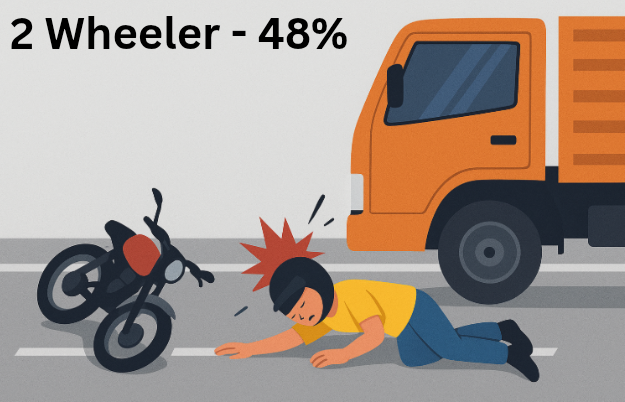
    • Two-wheeler riders: Nearly 44–48% of all victims.
    • Pedestrians: Ranging between 19–54% in various cities.
    • Others: Occupants of cars, buses, or cycles.

    Why so many two-wheelers?

    Two-wheelers dominate Indian roads, making up over 75% of registered vehicles. They are:

    • Most exposed and vulnerable: no airbags, no protective metal body.
    • Often hit by trucks and speeding cars, especially on highways and ring roads.
    • Victims of blind spots, over-speeding, and poor road design.
    • At night, poor visibility and lack of protective gear worsen the risks.

    When trucks or SUVs hit them, the result is usually fatal. And too often, the driver flees the scene, leaving a crushed bike and a lifeless rider behind. Many victims are delivery boys, daily wage earners, students, and office commuters—ordinary Indians carrying the nation’s backbone on their shoulders.


    Why Section 106(2) Was Put on Hold

    Section 106(2) of the BNS proposed stricter punishment—up to 10 years imprisonment and heavy fines for hit-and-run deaths. However, protests by truckers and transport unions forced the government to pause its implementation, citing livelihood concerns.

    But what about the livelihoods already destroyed by these deaths? A driver’s income cannot be valued higher than a victim’s life. Even 10 years is far too little compared to a life taken. If someone deliberately runs away after killing, the punishment should extend to the death penalty. Anything less sends the message that lives in India are cheap.

    The Bharatiya Nyaya Sanhita (BNS), 2023 is India’s new criminal law that came into effect on 1 July 2024, replacing the old Indian Penal Code (IPC), 1860. It was introduced by the Government of India to remove colonial-era laws and make the justice system more modern, clear, and people-friendly. The BNS has 358 sections (compared to 511 in IPC), uses simple and gender-neutral language, and adds new crimes like terrorism, organised crime, cyber fraud, mob lynching, and sexual exploitation by deceit.

    It also removes outdated provisions like sedition and introduces reforms such as community service for minor offences, higher punishments for serious crimes, and recognition of digital evidence—aiming to deliver faster and fairer justice. However, Section 106(2), which prescribes up to 10 years’ jail and fine for drivers who cause a fatal accident and then flee without reporting, has been kept on hold after protests by truckers and transport unions, who feared harassment and misuse.


    📌 Example 1 – Hit-and-run punished under 106(2)

    • A car hits a pedestrian at night.
    • The driver flees without calling an ambulance or reporting to police.
    • Under 106(2), this is treated as a serious offence with up to 10 years jail.

    📌 Example 2 – Driver stays and helps (not punished under 106(2))

    • A truck hits a motorcyclist.
    • The driver immediately calls an ambulance, informs police, and stays at the spot.
    • Even if the person dies, this driver will not face 106(2) punishment, because he took responsibility.

    Takeaway for Citizens:

    • 106(2) is meant to save lives by ensuring victims get immediate help.
    • It punishes only those who run away without reporting, not responsible drivers who try to help.

    🌍 Global Comparison – How India Lags Behind

    • United States: Hit-and-run resulting in death can lead to up to 20 years imprisonment (state laws vary, e.g., California up to 15 years, Florida up to 30 years).
    • United Kingdom: Causing death by dangerous driving (and fleeing) can bring life imprisonment.
    • Australia: Drivers who leave accident victims without help face up to 14 years imprisonment, with higher sentences if death occurs.
    • Singapore: Punishment includes up to life imprisonment and caning for fatal hit-and-run cases.

    Compared to this, India’s 5-year maximum punishment is shockingly lenient. Even with the proposed 10 years, we remain far behind global standards.


    Summary Table: Daily Road Fatalities by Country

    CountryYearAnnual DeathsEstimated Deaths Per Day
    India2024 est~180,000~493
    United States2023~40,990~112
    United Kingdom2023~1,695~5
    Germany2023~2,839~8
    Australia2024~1,300~3.6
    New Zealand2023~343~1

    Key Takeaways

    • India’s daily road fatalities (~493) far exceed those in higher-income countries—especially stark when compared to places like the US and UK.
    • This underscores the urgent need for stronger road safety measures, infrastructure improvements, and enforcement in India.

    What Must Be Done

    1. Implement Section 106(2) immediately with no dilution.
    2. Enhance punishment: Minimum 10 years imprisonment for fatal hit-and-runs—but for deliberate escape after death, capital punishment must be considered.
    3. Mandatory black-box/GPS tracking for heavy vehicles to prevent escape.
    4. Victim compensation fund, contributed by insurance + transport sector.
    5. Better road design: Dedicated two-wheeler and pedestrian safety lanes.
    6. Public awareness campaigns: To make drivers fear consequences and respect lives.

    Final Word to Policymakers

    Every day of delay costs nearing 500 Indian lives. Behind each number is a grieving family—parents who lost their child, children who lost their father, wives who lost their husbands. The pain is unbearable, and yet justice is denied.

    Five years is not justice. Ten years is not justice. Even ten years is an insult when a life has been stolen.

    Policymakers must rise above pressure from unions and vested interests. The message must be clear: if you kill and run, you cannot hide—your punishment will be as heavy as the life you took, even up to death penalty.


    🚨 Major Reasons for Road Deaths in India

    1. Over-Speeding (Top Killer)

    • Contributes to 65–70% of all road accident deaths in India.
    • High speed reduces reaction time and makes crashes far more fatal.

    2. Dangerous / Rash Driving

    • Wrong-side driving, sudden lane cuts, overtaking from left side.
    • Truck and bus drivers rushing deadlines often cause head-on crashes.

    3. Drunk Driving & Drug Influence

    • Even though enforcement has improved, alcohol- and substance-related crashes still account for 5–8% of fatalities.

    4. Distracted Driving (Mobile Phones, Earphones, GPS use)

    • Around 1 in 10 accidents now linked to phone usage.
    • Looking at WhatsApp or social media while riding/driving is becoming a silent killer.

    5. Not Wearing Helmets / Seatbelts

    • 43% of two-wheeler deaths in 2022 were due to lack of helmets.
    • Nearly 50% of car occupant deaths were due to not using seatbelts (especially rear passengers).

    6. Hit-and-Run Cases

    • Almost 30% of all road deaths in India are hit-and-run cases.
    • Trucks, buses, and speeding cars are the most common offenders.

    7. Poor Road Engineering

    • Sharp curves, potholes, unscientific speed breakers, poor signage, and badly lit junctions.
    • Many “black spots” (accident hot spots) remain unfixed for years.

    8. Heavy Vehicle Issues

    • Overloaded trucks, untrained drivers, mechanical failures (brakes, tyres).
    • Trucks running at night on highways are a major cause of two-wheeler fatalities.

    9. Pedestrian & Cyclist Neglect

    • India is not pedestrian-friendly. Lack of footpaths, zebra crossings, and underpasses leads to high pedestrian deaths.
    • Pedestrians account for ~15% of road deaths in India.

    10. Emergency Care Delay

    • Golden Hour (first 1 hour after crash) is often wasted.
    • Lack of ambulances, trauma centers, and bystander fear (police harassment) increases preventable deaths.

    📊 Snapshot (India – 2023 Data)

    • Over-speeding deaths: ~71% of fatalities
    • Driving on wrong side: ~6%
    • Use of mobile phones: ~2%
    • Drunken driving: ~3%
    • Other causes (fatigue, weather, etc.): remaining percentage

    👉 In short: speeding, lack of protective gear, poor enforcement, and bad road design are the biggest killers.


    🚓 Role of Traffic Police in Road Safety

    The traffic police play a central role in preventing accidents, saving lives, and ensuring smooth flow of vehicles. In the context of rising road accident deaths (like in 2025), their role becomes even more critical. Here’s a structured view:

    1. Enforcement of Laws

    • Enforce helmet, seatbelt, speed-limit, and drunk-driving laws.
    • Book offenders for rash driving, overloading, or dangerous overtaking.
    • Curb wrong-side driving and red-light jumping.

    2. Accident Prevention

    • Regular patrols at accident-prone spots (black spots).
    • Deployment of checkpoints on highways and ring roads.
    • Use of speed guns, CCTV, and ANPR cameras to deter violations.

    3. Emergency Response

    • First responders at accident sites.
    • Coordinate with ambulances and hospitals for the “Golden Hour” response to save lives.
    • Manage crowds and prevent mob violence against drivers.

    4. Data Collection & Analysis

    • Maintain accident data (location, time, cause, vehicle type).
    • Identify accident-prone stretches for corrective measures.
    • Share findings with city planners, NHAI, and municipal bodies.

    5. Public Awareness & Education

    • Conduct road safety campaigns in schools, colleges, and workplaces.
    • Encourage helmet use, reflective jackets, and child safety seats.
    • Promote “Don’t Drink and Drive” and “Respect Pedestrians” culture.

    6. Coordination with Other Agencies

    • Work with transport department for vehicle fitness & licensing.
    • Help city planners redesign junctions, signals, and crossings.
    • Collaborate with NGOs for safety workshops and victim support.

    7. Technology & Smart Policing

    • Use AI-based surveillance to detect violations.
    • E-challan systems for transparency.
    • GPS tracking for patrol vehicles to cover blind spots.

    ⚠️ Challenges Traffic Police Face

    • Shortage of manpower (India has ~1 traffic cop per 10,000 vehicles in many cities).
    • Lack of modern equipment in smaller towns.
    • Corruption and public perception issues.
    • Poor road infrastructure making enforcement difficult.

    ✅ Way Forward

    • Increase penalties and ensure strict enforcement without exceptions.
    • Better training and welfare for traffic personnel.
    • Adoption of smart traffic management systems.
    • Public cooperation—without citizen discipline, even the best traffic police cannot prevent accidents.

    ✅ Helmets Save Lives? How Much?
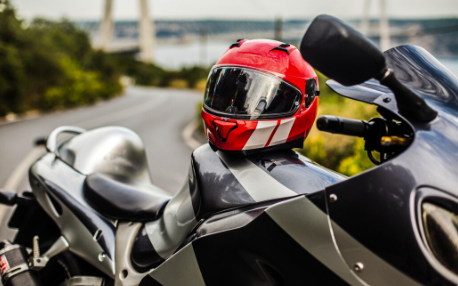
    National Emergency - Road Deaths - Helmet Protects

    A good ISI/DOT-certified helmet absorbs impact and reduces the force transmitted to the skull and brain.

    It prevents skull fractures, brain hemorrhage, and facial injuries in many crashes.

    According to WHO, wearing a helmet reduces the risk of head injury by 70% and death by 40%.


    ⚠️ Why Fatalities Can Still Occur

    1. Very High-Speed Impact
      • If a two-wheeler crashes at extreme speeds or is hit by a heavy vehicle (truck/bus), the force may exceed what a helmet can protect against.
    2. Multiple Collisions / Run-over Cases
      • In some accidents, even after the rider falls, they may get run over by another vehicle (common on highways and ring roads).
    3. Neck & Spine Injuries
      • A helmet protects the head, but not the cervical spine. Severe whiplash or neck fracture can still be fatal.
    4. Improper / Loose Strapping
      • Many riders wear helmets without fastening the chin strap. In a crash, it flies off, giving zero protection.
    5. Substandard Helmets
      • Cheap, non-ISI helmets or half-caps (so-called “designer helmets”) crack easily and don’t protect the skull properly.
    6. Side Impacts
      • A helmet mainly protects the top and front; a hard side hit (for example, against a truck bumper) can still cause brain injury.

    📊 India-Specific Data

    • About 47,000 two-wheeler riders died in India in 2022 (MoRTH data).
    • 43% of them were not wearing helmets.
    • But even among helmeted riders, fatalities occur—usually in truck/bus crashes, very high speeds, or run-over accidents.
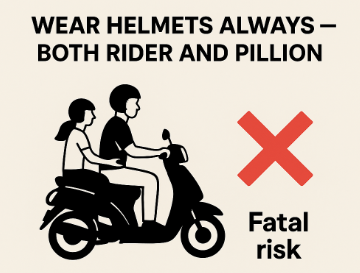
    National Emergency - Pillion - Not wearing helmet is risky

    Pillion (Back Seater) not wearing helmet is risky.

    Both Rider & Pillion should wear helmets!

    👉 Bottom line: Helmets are life-saving and must always be worn properly (full-face, ISI certified, strapped).
    But they aren’t foolproof—so speeding, drunk driving, and poor road design remain major risks even for helmeted riders.

    Read recent Sr Citizen fatal accident here. TOI references- Delhi data. 58% Sr Citizen hit-run-cases in Nagpur.


    🚛 Truck Design Risks That Cause Fatal Head Injuries

    Yes — in India, many trucks and lorries do have protruding parts or unsafe body structures that can cause fatal side-impact injuries, especially to two-wheelers and small cars:

    1. Protruding Iron Rods / Angle Irons
      • Often seen on illegally modified side walls of trucks.
      • These sharp edges act like blades when a bike or scooter brushes past → leading to severe head or chest injuries.
    2. Exposed Chassis & Axle Parts
      • Poorly maintained trucks sometimes have metal rods sticking out.
      • Even a small side swipe can throw a rider off balance into the truck’s rear tyres.
    3. Unprotected Side Underrun Areas
      • Unlike trucks in Europe/US, most Indian trucks lack side underrun protection bars (metal guards fitted to the sides to stop smaller vehicles from going underneath).
      • Without them, if a scooter or cycle hits the side, the rider can be dragged under the wheels → almost always fatal.
    4. Carrying Long Iron Rods / Pipes Without Rear Markings
      • Trucks carrying construction materials (iron rods, bamboo, poles) often have them sticking out several feet at the back or sides without red flags or lights.
      • At night, these are invisible and can pierce riders, causing instant death.
    5. Overloaded or Poorly Welded Side Panels
      • When overloaded, truck body sides sometimes bulge out, leaving sharp corners that can clip passing two-wheelers.

    🩸 Why Two-Wheeler Riders Are Most at Risk

    Head-level impact: The height of truck side panels often aligns with a biker’s head/shoulder, making head injuries common even if a helmet is worn.

    Close overtaking culture: On highways and ring roads (like Nagpur’s Ring Road), trucks unlawful overtaking from the left, brushing dangerously the bikers.

    Lack of side guards: In developed countries, side-guards are mandatory. In India, absence of these leads to “run-over” type fatalities.


    Policy Note:
    India does have a rule (CMVR 125C, Motor Vehicle Act) making side and rear underrun protection mandatory for trucks, but implementation is weak. Many older trucks and locally fabricated bodies skip it.


    🚨 Call to Action: Stopping India’s Silent Road Massacre

    1. Policymakers & Lawmakers

    • Enforce Section 106(2) of the Bharatiya Nyaya Sanhita (BNS): which mandates 7–10 years imprisonment for drivers who cause death in a hit-and-run without reporting the accident.
    • Question: Why is 106(2) currently on hold under industry pressure?human lives must come before truck lobby interests.
    • Amend 106(2) to make penalties harsher in fatal cases (life imprisonment or death penalty where gross negligence is proven).
    • Set up special road safety courts for fast-tracking hit-and-run cases.

    2. Traffic Police & Enforcement Agencies

    • Strictly implement Section 106(2) once activated — every hit-and-run must lead to a non-bailable offence.
    • Deploy checkpoints on highways and ring roads with instant accident-reporting protocols.
    • Strengthen AI-enabled CCTV and vehicle traceability systems so offenders cannot escape.

    3. Truck Owners & Transport Associations

    • Accept legal responsibility under 106(2) — companies must share liability, not just drivers.
    • Ensure no truck on the road has illegal protruding iron rods/angle irons that turn minor scrapes into instant deaths.
    • Train drivers that fleeing an accident only worsens punishment under 106(2).

    4. Media & Civil Society

    • Run campaigns explaining why Section 106(2) is critical to saving lives.
    • Ask hard questions: Why should victims’ families suffer lifelong pain while offenders walk free after just 5 years?
    • Keep spotlight on families devastated by hit-and-runs, linking their loss to weak enforcement of 106(2).

    5. Citizens & Road Users

    • Support full implementation of Section 106(2)—demand stricter justice for offenders.
    • Do not flee accident scenes — reporting is your duty and could save a life.
    • Pressure elected representatives: “Will you stand with grieving families or with the truck lobby blocking 106(2)?”
    • Ensure helmets are ISI-certified, properly strapped, not cosmetic half-caps.
    • Follow lane discipline, avoid speeding, and never drive against traffic — most two-wheeler crashes are with heavy vehicles like trucks and buses.
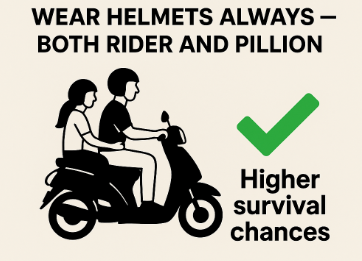
    National Emergency - Both Rider & Pillion wearing Helmets


    Wear helmets always — both rider and pillion.
    As per MoRTH data, over 70% of two-wheeler deaths in India are due to not wearing helmets.
    In 2022 alone, 46,000+ two-wheeler riders and pillion passengers died because of this negligence.


    👉 Final Appeal:
    India loses nearly 500 lives every single day in road crashes. Most are pedestrians, two-wheeler riders, and poor families who never get justice. Section 106(2) was designed to deter hit-and-runs—but it remains suspended.

    Every day of delay means dozens more families destroyed, children orphaned, women widowed, parents left alone.
    If the government is serious about valuing life, 106(2) must be enforced—and made even stricter.

    ⚖️ “A life lost cannot be replaced. Five years, ten years—even that feels less. If someone kills and flees, knowing they took a life—the law must weigh it as heavily as murder.”


  • 🚨 National Emergency: Nearly 500 Daily Road Deaths in India – Call for Stricter Hit-and-Run Justice!

    🚨 National Emergency: Nearly 500 Daily Road Deaths in India – Call for Stricter Hit-and-Run Justice!


    Road Deaths: India

    It’s National Emergency -nearly 500 road deaths every day, Indian roads turn into graveyards for innocent lives. The tragedy is not just in the sheer numbers, but in the way perpetrators of hit-and-run cases escape with minimal punishment. Under the current framework, even when a life is lost, truck or car drivers who flee often face only five years imprisonment under Section 304A IPC. With the much-needed Section 106(2) of the Bharatiya Nyaya Sanhita (BNS) on hold after protests, victims and their families continue to be denied justice. Policymakers must act—five years is not enough for killing someone and running away.


    The Alarming Numbers

    • In 2022, India recorded 47,806 hit-and-run cases, resulting in 50,815 deaths—an average of six deaths every hour.
    • In 2023, in cities like Mumbai, hit-and-run crashes accounted for 38% of all road fatalities.
    • Preliminary data for 2025 already suggests a worrying upward trend, with thousands of cases being logged in the first half of the year across major cities.

    This is not just a statistic—it means hundreds of families are destroyed every single day.


    Who Are the Victims?

    The majority of hit-and-run deaths involve:

    • Two-wheeler riders: Nearly 44–48% of all victims.
    • Pedestrians: Ranging between 19–54% in various cities.
    • Others: Occupants of cars, buses, or cycles.

    Why so many two-wheelers?

    Two-wheelers dominate Indian roads, making up over 75% of registered vehicles. They are:

    • Most exposed and vulnerable: no airbags, no protective metal body.
    • Often hit by trucks and speeding cars, especially on highways and ring roads.
    • Victims of blind spots, over-speeding, and poor road design.
    • At night, poor visibility and lack of protective gear worsen the risks.

    When trucks or SUVs hit them, the result is usually fatal. And too often, the driver flees the scene, leaving a crushed bike and a lifeless rider behind. Many victims are delivery boys, daily wage earners, students, and office commuters—ordinary Indians carrying the nation’s backbone on their shoulders.


    Why Section 106(2) Was Put on Hold

    Section 106(2) of the BNS proposed stricter punishment—up to 10 years imprisonment and heavy fines for hit-and-run deaths. However, protests by truckers and transport unions forced the government to pause its implementation, citing livelihood concerns.

    But what about the livelihoods already destroyed by these deaths? A driver’s income cannot be valued higher than a victim’s life. Even 10 years is far too little compared to a life taken. If someone deliberately runs away after killing, the punishment should extend to the death penalty. Anything less sends the message that lives in India are cheap.

    The Bharatiya Nyaya Sanhita (BNS), 2023 is India’s new criminal law that came into effect on 1 July 2024, replacing the old Indian Penal Code (IPC), 1860. It was introduced by the Government of India to remove colonial-era laws and make the justice system more modern, clear, and people-friendly. The BNS has 358 sections (compared to 511 in IPC), uses simple and gender-neutral language, and adds new crimes like terrorism, organised crime, cyber fraud, mob lynching, and sexual exploitation by deceit.

    It also removes outdated provisions like sedition and introduces reforms such as community service for minor offences, higher punishments for serious crimes, and recognition of digital evidence—aiming to deliver faster and fairer justice. However, Section 106(2), which prescribes up to 10 years’ jail and fine for drivers who cause a fatal accident and then flee without reporting, has been kept on hold after protests by truckers and transport unions, who feared harassment and misuse.


    📌 Example 1 – Hit-and-run punished under 106(2)

    • A car hits a pedestrian at night.
    • The driver flees without calling an ambulance or reporting to police.
    • Under 106(2), this is treated as a serious offence with up to 10 years jail.

    📌 Example 2 – Driver stays and helps (not punished under 106(2))

    • A truck hits a motorcyclist.
    • The driver immediately calls an ambulance, informs police, and stays at the spot.
    • Even if the person dies, this driver will not face 106(2) punishment, because he took responsibility.

    Takeaway for Citizens:

    • 106(2) is meant to save lives by ensuring victims get immediate help.
    • It punishes only those who run away without reporting, not responsible drivers who try to help.

    🌍 Global Comparison – How India Lags Behind

    • United States: Hit-and-run resulting in death can lead to up to 20 years imprisonment (state laws vary, e.g., California up to 15 years, Florida up to 30 years).
    • United Kingdom: Causing death by dangerous driving (and fleeing) can bring life imprisonment.
    • Australia: Drivers who leave accident victims without help face up to 14 years imprisonment, with higher sentences if death occurs.
    • Singapore: Punishment includes up to life imprisonment and caning for fatal hit-and-run cases.

    Compared to this, India’s 5-year maximum punishment is shockingly lenient. Even with the proposed 10 years, we remain far behind global standards.


    Summary Table: Daily Road Fatalities by Country

    CountryYearAnnual DeathsEstimated Deaths Per Day
    India2024 est~180,000~493
    United States2023~40,990~112
    United Kingdom2023~1,695~5
    Germany2023~2,839~8
    Australia2024~1,300~3.6
    New Zealand2023~343~1

    Key Takeaways

    • India’s daily road fatalities (~493) far exceed those in higher-income countries—especially stark when compared to places like the US and UK.
    • This underscores the urgent need for stronger road safety measures, infrastructure improvements, and enforcement in India.

    What Must Be Done

    1. Implement Section 106(2) immediately with no dilution.
    2. Enhance punishment: Minimum 10 years imprisonment for fatal hit-and-runs—but for deliberate escape after death, capital punishment must be considered.
    3. Mandatory black-box/GPS tracking for heavy vehicles to prevent escape.
    4. Victim compensation fund, contributed by insurance + transport sector.
    5. Better road design: Dedicated two-wheeler and pedestrian safety lanes.
    6. Public awareness campaigns: To make drivers fear consequences and respect lives.

    Final Word to Policymakers

    Every day of delay costs nearing 500 Indian lives. Behind each number is a grieving family—parents who lost their child, children who lost their father, wives who lost their husbands. The pain is unbearable, and yet justice is denied.

    Five years is not justice. Ten years is not justice. Even ten years is an insult when a life has been stolen.

    Policymakers must rise above pressure from unions and vested interests. The message must be clear: if you kill and run, you cannot hide—your punishment will be as heavy as the life you took, even up to death penalty.


    🚨 Major Reasons for Road Deaths in India

    1. Over-Speeding (Top Killer)

    • Contributes to 65–70% of all road accident deaths in India.
    • High speed reduces reaction time and makes crashes far more fatal.

    2. Dangerous / Rash Driving

    • Wrong-side driving, sudden lane cuts, overtaking from left side.
    • Truck and bus drivers rushing deadlines often cause head-on crashes.

    3. Drunk Driving & Drug Influence

    • Even though enforcement has improved, alcohol- and substance-related crashes still account for 5–8% of fatalities.

    4. Distracted Driving (Mobile Phones, Earphones, GPS use)

    • Around 1 in 10 accidents now linked to phone usage.
    • Looking at WhatsApp or social media while riding/driving is becoming a silent killer.

    5. Not Wearing Helmets / Seatbelts

    • 43% of two-wheeler deaths in 2022 were due to lack of helmets.
    • Nearly 50% of car occupant deaths were due to not using seatbelts (especially rear passengers).

    6. Hit-and-Run Cases

    • Almost 30% of all road deaths in India are hit-and-run cases.
    • Trucks, buses, and speeding cars are the most common offenders.

    7. Poor Road Engineering

    • Sharp curves, potholes, unscientific speed breakers, poor signage, and badly lit junctions.
    • Many “black spots” (accident hot spots) remain unfixed for years.

    8. Heavy Vehicle Issues

    • Overloaded trucks, untrained drivers, mechanical failures (brakes, tyres).
    • Trucks running at night on highways are a major cause of two-wheeler fatalities.

    9. Pedestrian & Cyclist Neglect

    • India is not pedestrian-friendly. Lack of footpaths, zebra crossings, and underpasses leads to high pedestrian deaths.
    • Pedestrians account for ~15% of road deaths in India.

    10. Emergency Care Delay

    • Golden Hour (first 1 hour after crash) is often wasted.
    • Lack of ambulances, trauma centers, and bystander fear (police harassment) increases preventable deaths.

    📊 Snapshot (India – 2023 Data)

    • Over-speeding deaths: ~71% of fatalities
    • Driving on wrong side: ~6%
    • Use of mobile phones: ~2%
    • Drunken driving: ~3%
    • Other causes (fatigue, weather, etc.): remaining percentage

    👉 In short: speeding, lack of protective gear, poor enforcement, and bad road design are the biggest killers.


    🚓 Role of Traffic Police in Road Safety

    The traffic police play a central role in preventing accidents, saving lives, and ensuring smooth flow of vehicles. In the context of rising road accident deaths (like in 2025), their role becomes even more critical. Here’s a structured view:

    1. Enforcement of Laws

    • Enforce helmet, seatbelt, speed-limit, and drunk-driving laws.
    • Book offenders for rash driving, overloading, or dangerous overtaking.
    • Curb wrong-side driving and red-light jumping.

    2. Accident Prevention

    • Regular patrols at accident-prone spots (black spots).
    • Deployment of checkpoints on highways and ring roads.
    • Use of speed guns, CCTV, and ANPR cameras to deter violations.

    3. Emergency Response

    • First responders at accident sites.
    • Coordinate with ambulances and hospitals for the “Golden Hour” response to save lives.
    • Manage crowds and prevent mob violence against drivers.

    4. Data Collection & Analysis

    • Maintain accident data (location, time, cause, vehicle type).
    • Identify accident-prone stretches for corrective measures.
    • Share findings with city planners, NHAI, and municipal bodies.

    5. Public Awareness & Education

    • Conduct road safety campaigns in schools, colleges, and workplaces.
    • Encourage helmet use, reflective jackets, and child safety seats.
    • Promote “Don’t Drink and Drive” and “Respect Pedestrians” culture.

    6. Coordination with Other Agencies

    • Work with transport department for vehicle fitness & licensing.
    • Help city planners redesign junctions, signals, and crossings.
    • Collaborate with NGOs for safety workshops and victim support.

    7. Technology & Smart Policing

    • Use AI-based surveillance to detect violations.
    • E-challan systems for transparency.
    • GPS tracking for patrol vehicles to cover blind spots.

    ⚠️ Challenges Traffic Police Face

    • Shortage of manpower (India has ~1 traffic cop per 10,000 vehicles in many cities).
    • Lack of modern equipment in smaller towns.
    • Corruption and public perception issues.
    • Poor road infrastructure making enforcement difficult.

    ✅ Way Forward

    • Increase penalties and ensure strict enforcement without exceptions.
    • Better training and welfare for traffic personnel.
    • Adoption of smart traffic management systems.
    • Public cooperation—without citizen discipline, even the best traffic police cannot prevent accidents.

    ✅ Helmets Save Lives? How Much?

    National Emergency - Road Deaths - Helmet Protects

    A good ISI/DOT-certified helmet absorbs impact and reduces the force transmitted to the skull and brain.

    It prevents skull fractures, brain hemorrhage, and facial injuries in many crashes.

    According to WHO, wearing a helmet reduces the risk of head injury by 70% and death by 40%.


    ⚠️ Why Fatalities Can Still Occur

    1. Very High-Speed Impact
      • If a two-wheeler crashes at extreme speeds or is hit by a heavy vehicle (truck/bus), the force may exceed what a helmet can protect against.
    2. Multiple Collisions / Run-over Cases
      • In some accidents, even after the rider falls, they may get run over by another vehicle (common on highways and ring roads).
    3. Neck & Spine Injuries
      • A helmet protects the head, but not the cervical spine. Severe whiplash or neck fracture can still be fatal.
    4. Improper / Loose Strapping
      • Many riders wear helmets without fastening the chin strap. In a crash, it flies off, giving zero protection.
    5. Substandard Helmets
      • Cheap, non-ISI helmets or half-caps (so-called “designer helmets”) crack easily and don’t protect the skull properly.
    6. Side Impacts
      • A helmet mainly protects the top and front; a hard side hit (for example, against a truck bumper) can still cause brain injury.

    📊 India-Specific Data

    • About 47,000 two-wheeler riders died in India in 2022 (MoRTH data).
    • 43% of them were not wearing helmets.
    • But even among helmeted riders, fatalities occur—usually in truck/bus crashes, very high speeds, or run-over accidents.

    National Emergency - Pillion - Not wearing helmet is risky

    Pillion (Back Seater) not wearing helmet is risky.

    Both Rider & Pillion should wear helmets!

    👉 Bottom line: Helmets are life-saving and must always be worn properly (full-face, ISI certified, strapped).
    But they aren’t foolproof—so speeding, drunk driving, and poor road design remain major risks even for helmeted riders.

    Read recent Sr Citizen fatal accident here. TOI references- Delhi data. 58% Sr Citizen hit-run-cases in Nagpur.


    🚛 Truck Design Risks That Cause Fatal Head Injuries

    Yes — in India, many trucks and lorries do have protruding parts or unsafe body structures that can cause fatal side-impact injuries, especially to two-wheelers and small cars:

    1. Protruding Iron Rods / Angle Irons
      • Often seen on illegally modified side walls of trucks.
      • These sharp edges act like blades when a bike or scooter brushes past → leading to severe head or chest injuries.
    2. Exposed Chassis & Axle Parts
      • Poorly maintained trucks sometimes have metal rods sticking out.
      • Even a small side swipe can throw a rider off balance into the truck’s rear tyres.
    3. Unprotected Side Underrun Areas
      • Unlike trucks in Europe/US, most Indian trucks lack side underrun protection bars (metal guards fitted to the sides to stop smaller vehicles from going underneath).
      • Without them, if a scooter or cycle hits the side, the rider can be dragged under the wheels → almost always fatal.
    4. Carrying Long Iron Rods / Pipes Without Rear Markings
      • Trucks carrying construction materials (iron rods, bamboo, poles) often have them sticking out several feet at the back or sides without red flags or lights.
      • At night, these are invisible and can pierce riders, causing instant death.
    5. Overloaded or Poorly Welded Side Panels
      • When overloaded, truck body sides sometimes bulge out, leaving sharp corners that can clip passing two-wheelers.

    🩸 Why Two-Wheeler Riders Are Most at Risk

    Head-level impact: The height of truck side panels often aligns with a biker’s head/shoulder, making head injuries common even if a helmet is worn.

    Close overtaking culture: On highways and ring roads (like Nagpur’s Ring Road), trucks unlawful overtaking from the left, brushing dangerously the bikers.

    Lack of side guards: In developed countries, side-guards are mandatory. In India, absence of these leads to “run-over” type fatalities.


    Policy Note:
    India does have a rule (CMVR 125C, Motor Vehicle Act) making side and rear underrun protection mandatory for trucks, but implementation is weak. Many older trucks and locally fabricated bodies skip it.


    🚨 Call to Action: Stopping India’s Silent Road Massacre

    1. Policymakers & Lawmakers

    • Enforce Section 106(2) of the Bharatiya Nyaya Sanhita (BNS): which mandates 7–10 years imprisonment for drivers who cause death in a hit-and-run without reporting the accident.
    • Question: Why is 106(2) currently on hold under industry pressure?human lives must come before truck lobby interests.
    • Amend 106(2) to make penalties harsher in fatal cases (life imprisonment or death penalty where gross negligence is proven).
    • Set up special road safety courts for fast-tracking hit-and-run cases.

    2. Traffic Police & Enforcement Agencies

    • Strictly implement Section 106(2) once activated — every hit-and-run must lead to a non-bailable offence.
    • Deploy checkpoints on highways and ring roads with instant accident-reporting protocols.
    • Strengthen AI-enabled CCTV and vehicle traceability systems so offenders cannot escape.

    3. Truck Owners & Transport Associations

    • Accept legal responsibility under 106(2) — companies must share liability, not just drivers.
    • Ensure no truck on the road has illegal protruding iron rods/angle irons that turn minor scrapes into instant deaths.
    • Train drivers that fleeing an accident only worsens punishment under 106(2).

    4. Media & Civil Society

    • Run campaigns explaining why Section 106(2) is critical to saving lives.
    • Ask hard questions: Why should victims’ families suffer lifelong pain while offenders walk free after just 5 years?
    • Keep spotlight on families devastated by hit-and-runs, linking their loss to weak enforcement of 106(2).

    5. Citizens & Road Users

    • Support full implementation of Section 106(2)—demand stricter justice for offenders.
    • Do not flee accident scenes — reporting is your duty and could save a life.
    • Pressure elected representatives: “Will you stand with grieving families or with the truck lobby blocking 106(2)?”
    • Ensure helmets are ISI-certified, properly strapped, not cosmetic half-caps.
    • Follow lane discipline, avoid speeding, and never drive against traffic — most two-wheeler crashes are with heavy vehicles like trucks and buses.
    National Emergency - Both Rider & Pillion wearing Helmets


    Wear helmets always — both rider and pillion.
    As per MoRTH data, over 70% of two-wheeler deaths in India are due to not wearing helmets.
    In 2022 alone, 46,000+ two-wheeler riders and pillion passengers died because of this negligence.


    👉 Final Appeal:
    India loses nearly 500 lives every single day in road crashes. Most are pedestrians, two-wheeler riders, and poor families who never get justice. Section 106(2) was designed to deter hit-and-runs—but it remains suspended.

    Every day of delay means dozens more families destroyed, children orphaned, women widowed, parents left alone.
    If the government is serious about valuing life, 106(2) must be enforced—and made even stricter.

    ⚖️ “A life lost cannot be replaced. Five years, ten years—even that feels less. If someone kills and flees, knowing they took a life—the law must weigh it as heavily as murder.”
  • 🚨 National Emergency: Nearly 500 Daily Road Deaths in India – Call for Stricter Hit-and-Run Justice!

    🚨 National Emergency: Nearly 500 Daily Road Deaths in India – Call for Stricter Hit-and-Run Justice!


    Road Deaths: India

    It’s National Emergency -nearly 500 road deaths every day, Indian roads turn into graveyards for innocent lives. The tragedy is not just in the sheer numbers, but in the way perpetrators of hit-and-run cases escape with minimal punishment. Under the current framework, even when a life is lost, truck or car drivers who flee often face only five years imprisonment under Section 304A IPC. With the much-needed Section 106(2) of the Bharatiya Nyaya Sanhita (BNS) on hold after protests, victims and their families continue to be denied justice. Policymakers must act—five years is not enough for killing someone and running away.


    The Alarming Numbers

    • In 2022, India recorded 47,806 hit-and-run cases, resulting in 50,815 deaths—an average of six deaths every hour.
    • In 2023, in cities like Mumbai, hit-and-run crashes accounted for 38% of all road fatalities.
    • Preliminary data for 2025 already suggests a worrying upward trend, with thousands of cases being logged in the first half of the year across major cities.

    This is not just a statistic—it means hundreds of families are destroyed every single day.


    Who Are the Victims?

    The majority of hit-and-run deaths involve:

    • Two-wheeler riders: Nearly 44–48% of all victims.
    • Pedestrians: Ranging between 19–54% in various cities.
    • Others: Occupants of cars, buses, or cycles.

    Why so many two-wheelers?

    Two-wheelers dominate Indian roads, making up over 75% of registered vehicles. They are:

    • Most exposed and vulnerable: no airbags, no protective metal body.
    • Often hit by trucks and speeding cars, especially on highways and ring roads.
    • Victims of blind spots, over-speeding, and poor road design.
    • At night, poor visibility and lack of protective gear worsen the risks.

    When trucks or SUVs hit them, the result is usually fatal. And too often, the driver flees the scene, leaving a crushed bike and a lifeless rider behind. Many victims are delivery boys, daily wage earners, students, and office commuters—ordinary Indians carrying the nation’s backbone on their shoulders.


    Why Section 106(2) Was Put on Hold

    Section 106(2) of the BNS proposed stricter punishment—up to 10 years imprisonment and heavy fines for hit-and-run deaths. However, protests by truckers and transport unions forced the government to pause its implementation, citing livelihood concerns.

    But what about the livelihoods already destroyed by these deaths? A driver’s income cannot be valued higher than a victim’s life. Even 10 years is far too little compared to a life taken. If someone deliberately runs away after killing, the punishment should extend to the death penalty. Anything less sends the message that lives in India are cheap.

    The Bharatiya Nyaya Sanhita (BNS), 2023 is India’s new criminal law that came into effect on 1 July 2024, replacing the old Indian Penal Code (IPC), 1860. It was introduced by the Government of India to remove colonial-era laws and make the justice system more modern, clear, and people-friendly. The BNS has 358 sections (compared to 511 in IPC), uses simple and gender-neutral language, and adds new crimes like terrorism, organised crime, cyber fraud, mob lynching, and sexual exploitation by deceit.

    It also removes outdated provisions like sedition and introduces reforms such as community service for minor offences, higher punishments for serious crimes, and recognition of digital evidence—aiming to deliver faster and fairer justice. However, Section 106(2), which prescribes up to 10 years’ jail and fine for drivers who cause a fatal accident and then flee without reporting, has been kept on hold after protests by truckers and transport unions, who feared harassment and misuse.


    📌 Example 1 – Hit-and-run punished under 106(2)

    • A car hits a pedestrian at night.
    • The driver flees without calling an ambulance or reporting to police.
    • Under 106(2), this is treated as a serious offence with up to 10 years jail.

    📌 Example 2 – Driver stays and helps (not punished under 106(2))

    • A truck hits a motorcyclist.
    • The driver immediately calls an ambulance, informs police, and stays at the spot.
    • Even if the person dies, this driver will not face 106(2) punishment, because he took responsibility.

    Takeaway for Citizens:

    • 106(2) is meant to save lives by ensuring victims get immediate help.
    • It punishes only those who run away without reporting, not responsible drivers who try to help.

    🌍 Global Comparison – How India Lags Behind

    • United States: Hit-and-run resulting in death can lead to up to 20 years imprisonment (state laws vary, e.g., California up to 15 years, Florida up to 30 years).
    • United Kingdom: Causing death by dangerous driving (and fleeing) can bring life imprisonment.
    • Australia: Drivers who leave accident victims without help face up to 14 years imprisonment, with higher sentences if death occurs.
    • Singapore: Punishment includes up to life imprisonment and caning for fatal hit-and-run cases.

    Compared to this, India’s 5-year maximum punishment is shockingly lenient. Even with the proposed 10 years, we remain far behind global standards.


    Summary Table: Daily Road Fatalities by Country

    CountryYearAnnual DeathsEstimated Deaths Per Day
    India2024 est~180,000~493
    United States2023~40,990~112
    United Kingdom2023~1,695~5
    Germany2023~2,839~8
    Australia2024~1,300~3.6
    New Zealand2023~343~1

    Key Takeaways

    • India’s daily road fatalities (~493) far exceed those in higher-income countries—especially stark when compared to places like the US and UK.
    • This underscores the urgent need for stronger road safety measures, infrastructure improvements, and enforcement in India.

    What Must Be Done

    1. Implement Section 106(2) immediately with no dilution.
    2. Enhance punishment: Minimum 10 years imprisonment for fatal hit-and-runs—but for deliberate escape after death, capital punishment must be considered.
    3. Mandatory black-box/GPS tracking for heavy vehicles to prevent escape.
    4. Victim compensation fund, contributed by insurance + transport sector.
    5. Better road design: Dedicated two-wheeler and pedestrian safety lanes.
    6. Public awareness campaigns: To make drivers fear consequences and respect lives.

    Final Word to Policymakers

    Every day of delay costs nearing 500 Indian lives. Behind each number is a grieving family—parents who lost their child, children who lost their father, wives who lost their husbands. The pain is unbearable, and yet justice is denied.

    Five years is not justice. Ten years is not justice. Even ten years is an insult when a life has been stolen.

    Policymakers must rise above pressure from unions and vested interests. The message must be clear: if you kill and run, you cannot hide—your punishment will be as heavy as the life you took, even up to death penalty.


    🚨 Major Reasons for Road Deaths in India

    1. Over-Speeding (Top Killer)

    • Contributes to 65–70% of all road accident deaths in India.
    • High speed reduces reaction time and makes crashes far more fatal.

    2. Dangerous / Rash Driving

    • Wrong-side driving, sudden lane cuts, overtaking from left side.
    • Truck and bus drivers rushing deadlines often cause head-on crashes.

    3. Drunk Driving & Drug Influence

    • Even though enforcement has improved, alcohol- and substance-related crashes still account for 5–8% of fatalities.

    4. Distracted Driving (Mobile Phones, Earphones, GPS use)

    • Around 1 in 10 accidents now linked to phone usage.
    • Looking at WhatsApp or social media while riding/driving is becoming a silent killer.

    5. Not Wearing Helmets / Seatbelts

    • 43% of two-wheeler deaths in 2022 were due to lack of helmets.
    • Nearly 50% of car occupant deaths were due to not using seatbelts (especially rear passengers).

    6. Hit-and-Run Cases

    • Almost 30% of all road deaths in India are hit-and-run cases.
    • Trucks, buses, and speeding cars are the most common offenders.

    7. Poor Road Engineering

    • Sharp curves, potholes, unscientific speed breakers, poor signage, and badly lit junctions.
    • Many “black spots” (accident hot spots) remain unfixed for years.

    8. Heavy Vehicle Issues

    • Overloaded trucks, untrained drivers, mechanical failures (brakes, tyres).
    • Trucks running at night on highways are a major cause of two-wheeler fatalities.

    9. Pedestrian & Cyclist Neglect

    • India is not pedestrian-friendly. Lack of footpaths, zebra crossings, and underpasses leads to high pedestrian deaths.
    • Pedestrians account for ~15% of road deaths in India.

    10. Emergency Care Delay

    • Golden Hour (first 1 hour after crash) is often wasted.
    • Lack of ambulances, trauma centers, and bystander fear (police harassment) increases preventable deaths.

    📊 Snapshot (India – 2023 Data)

    • Over-speeding deaths: ~71% of fatalities
    • Driving on wrong side: ~6%
    • Use of mobile phones: ~2%
    • Drunken driving: ~3%
    • Other causes (fatigue, weather, etc.): remaining percentage

    👉 In short: speeding, lack of protective gear, poor enforcement, and bad road design are the biggest killers.


    🚓 Role of Traffic Police in Road Safety

    The traffic police play a central role in preventing accidents, saving lives, and ensuring smooth flow of vehicles. In the context of rising road accident deaths (like in 2025), their role becomes even more critical. Here’s a structured view:

    1. Enforcement of Laws

    • Enforce helmet, seatbelt, speed-limit, and drunk-driving laws.
    • Book offenders for rash driving, overloading, or dangerous overtaking.
    • Curb wrong-side driving and red-light jumping.

    2. Accident Prevention

    • Regular patrols at accident-prone spots (black spots).
    • Deployment of checkpoints on highways and ring roads.
    • Use of speed guns, CCTV, and ANPR cameras to deter violations.

    3. Emergency Response

    • First responders at accident sites.
    • Coordinate with ambulances and hospitals for the “Golden Hour” response to save lives.
    • Manage crowds and prevent mob violence against drivers.

    4. Data Collection & Analysis

    • Maintain accident data (location, time, cause, vehicle type).
    • Identify accident-prone stretches for corrective measures.
    • Share findings with city planners, NHAI, and municipal bodies.

    5. Public Awareness & Education

    • Conduct road safety campaigns in schools, colleges, and workplaces.
    • Encourage helmet use, reflective jackets, and child safety seats.
    • Promote “Don’t Drink and Drive” and “Respect Pedestrians” culture.

    6. Coordination with Other Agencies

    • Work with transport department for vehicle fitness & licensing.
    • Help city planners redesign junctions, signals, and crossings.
    • Collaborate with NGOs for safety workshops and victim support.

    7. Technology & Smart Policing

    • Use AI-based surveillance to detect violations.
    • E-challan systems for transparency.
    • GPS tracking for patrol vehicles to cover blind spots.

    ⚠️ Challenges Traffic Police Face

    • Shortage of manpower (India has ~1 traffic cop per 10,000 vehicles in many cities).
    • Lack of modern equipment in smaller towns.
    • Corruption and public perception issues.
    • Poor road infrastructure making enforcement difficult.

    ✅ Way Forward

    • Increase penalties and ensure strict enforcement without exceptions.
    • Better training and welfare for traffic personnel.
    • Adoption of smart traffic management systems.
    • Public cooperation—without citizen discipline, even the best traffic police cannot prevent accidents.

    ✅ Helmets Save Lives? How Much?

    National Emergency - Road Deaths - Helmet Protects

    A good ISI/DOT-certified helmet absorbs impact and reduces the force transmitted to the skull and brain.

    It prevents skull fractures, brain hemorrhage, and facial injuries in many crashes.

    According to WHO, wearing a helmet reduces the risk of head injury by 70% and death by 40%.


    ⚠️ Why Fatalities Can Still Occur

    1. Very High-Speed Impact
      • If a two-wheeler crashes at extreme speeds or is hit by a heavy vehicle (truck/bus), the force may exceed what a helmet can protect against.
    2. Multiple Collisions / Run-over Cases
      • In some accidents, even after the rider falls, they may get run over by another vehicle (common on highways and ring roads).
    3. Neck & Spine Injuries
      • A helmet protects the head, but not the cervical spine. Severe whiplash or neck fracture can still be fatal.
    4. Improper / Loose Strapping
      • Many riders wear helmets without fastening the chin strap. In a crash, it flies off, giving zero protection.
    5. Substandard Helmets
      • Cheap, non-ISI helmets or half-caps (so-called “designer helmets”) crack easily and don’t protect the skull properly.
    6. Side Impacts
      • A helmet mainly protects the top and front; a hard side hit (for example, against a truck bumper) can still cause brain injury.

    📊 India-Specific Data

    • About 47,000 two-wheeler riders died in India in 2022 (MoRTH data).
    • 43% of them were not wearing helmets.
    • But even among helmeted riders, fatalities occur—usually in truck/bus crashes, very high speeds, or run-over accidents.

    National Emergency - Pillion - Not wearing helmet is risky

    Pillion (Back Seater) not wearing helmet is risky.

    Both Rider & Pillion should wear helmets!

    👉 Bottom line: Helmets are life-saving and must always be worn properly (full-face, ISI certified, strapped).
    But they aren’t foolproof—so speeding, drunk driving, and poor road design remain major risks even for helmeted riders.

    Read recent Sr Citizen fatal accident here. TOI references- Delhi data. 58% Sr Citizen hit-run-cases in Nagpur.


    🚛 Truck Design Risks That Cause Fatal Head Injuries

    Yes — in India, many trucks and lorries do have protruding parts or unsafe body structures that can cause fatal side-impact injuries, especially to two-wheelers and small cars:

    1. Protruding Iron Rods / Angle Irons
      • Often seen on illegally modified side walls of trucks.
      • These sharp edges act like blades when a bike or scooter brushes past → leading to severe head or chest injuries.
    2. Exposed Chassis & Axle Parts
      • Poorly maintained trucks sometimes have metal rods sticking out.
      • Even a small side swipe can throw a rider off balance into the truck’s rear tyres.
    3. Unprotected Side Underrun Areas
      • Unlike trucks in Europe/US, most Indian trucks lack side underrun protection bars (metal guards fitted to the sides to stop smaller vehicles from going underneath).
      • Without them, if a scooter or cycle hits the side, the rider can be dragged under the wheels → almost always fatal.
    4. Carrying Long Iron Rods / Pipes Without Rear Markings
      • Trucks carrying construction materials (iron rods, bamboo, poles) often have them sticking out several feet at the back or sides without red flags or lights.
      • At night, these are invisible and can pierce riders, causing instant death.
    5. Overloaded or Poorly Welded Side Panels
      • When overloaded, truck body sides sometimes bulge out, leaving sharp corners that can clip passing two-wheelers.

    🩸 Why Two-Wheeler Riders Are Most at Risk

    Head-level impact: The height of truck side panels often aligns with a biker’s head/shoulder, making head injuries common even if a helmet is worn.

    Close overtaking culture: On highways and ring roads (like Nagpur’s Ring Road), trucks unlawful overtaking from the left, brushing dangerously the bikers.

    Lack of side guards: In developed countries, side-guards are mandatory. In India, absence of these leads to “run-over” type fatalities.


    Policy Note:
    India does have a rule (CMVR 125C, Motor Vehicle Act) making side and rear underrun protection mandatory for trucks, but implementation is weak. Many older trucks and locally fabricated bodies skip it.


    🚨 Call to Action: Stopping India’s Silent Road Massacre

    1. Policymakers & Lawmakers

    • Enforce Section 106(2) of the Bharatiya Nyaya Sanhita (BNS): which mandates 7–10 years imprisonment for drivers who cause death in a hit-and-run without reporting the accident.
    • Question: Why is 106(2) currently on hold under industry pressure?human lives must come before truck lobby interests.
    • Amend 106(2) to make penalties harsher in fatal cases (life imprisonment or death penalty where gross negligence is proven).
    • Set up special road safety courts for fast-tracking hit-and-run cases.

    2. Traffic Police & Enforcement Agencies

    • Strictly implement Section 106(2) once activated — every hit-and-run must lead to a non-bailable offence.
    • Deploy checkpoints on highways and ring roads with instant accident-reporting protocols.
    • Strengthen AI-enabled CCTV and vehicle traceability systems so offenders cannot escape.

    3. Truck Owners & Transport Associations

    • Accept legal responsibility under 106(2) — companies must share liability, not just drivers.
    • Ensure no truck on the road has illegal protruding iron rods/angle irons that turn minor scrapes into instant deaths.
    • Train drivers that fleeing an accident only worsens punishment under 106(2).

    4. Media & Civil Society

    • Run campaigns explaining why Section 106(2) is critical to saving lives.
    • Ask hard questions: Why should victims’ families suffer lifelong pain while offenders walk free after just 5 years?
    • Keep spotlight on families devastated by hit-and-runs, linking their loss to weak enforcement of 106(2).

    5. Citizens & Road Users

    • Support full implementation of Section 106(2)—demand stricter justice for offenders.
    • Do not flee accident scenes — reporting is your duty and could save a life.
    • Pressure elected representatives: “Will you stand with grieving families or with the truck lobby blocking 106(2)?”
    • Ensure helmets are ISI-certified, properly strapped, not cosmetic half-caps.
    • Follow lane discipline, avoid speeding, and never drive against traffic — most two-wheeler crashes are with heavy vehicles like trucks and buses.
    National Emergency - Both Rider & Pillion wearing Helmets


    Wear helmets always — both rider and pillion.
    As per MoRTH data, over 70% of two-wheeler deaths in India are due to not wearing helmets.
    In 2022 alone, 46,000+ two-wheeler riders and pillion passengers died because of this negligence.


    👉 Final Appeal:
    India loses nearly 500 lives every single day in road crashes. Most are pedestrians, two-wheeler riders, and poor families who never get justice. Section 106(2) was designed to deter hit-and-runs—but it remains suspended.

    Every day of delay means dozens more families destroyed, children orphaned, women widowed, parents left alone.
    If the government is serious about valuing life, 106(2) must be enforced—and made even stricter.

    ⚖️ “A life lost cannot be replaced. Five years, ten years—even that feels less. If someone kills and flees, knowing they took a life—the law must weigh it as heavily as murder.”
  • 17 Sustainable Development Goals To Save Our Planet – Your Role Starts Now

    17 Sustainable Development Goals To Save Our Planet – Your Role Starts Now


    🌍A Story of Hope, Action & Change

    On a dusty morning in a remote village in India, a little girl named Khushboo walks 3 kilometers every day to fetch water, dreams of becoming a teacher, and still studies by candlelight. Across the ocean, in a crowded urban slum in Brazil, a young boy named Diego plants trees with his mother, hoping to bring back the birds that once sang in their streets. In a high-rise office in Germany, a woman CEO pledges to hire more equitably and reduce her company’s carbon footprint.

    These lives may seem worlds apart, but they are all connected—by hope, by action, and by a powerful global vision: the United Nations Sustainable Development Goals (SDGs).

    Adopted by 193 countries in 2015, the 17 SDGs form a universal blueprint to end poverty, protect our planet, and ensure dignity and prosperity for all—by 2030. This isn’t just a plan for governments. It’s a call for each of us—to act, to care, and to lead.


    🏛 Formation of the United Nations

    The United Nations (UN) was officially established on October 24, 1945, following the devastation of World War II. Its formation aimed to prevent future global conflicts, promote peace and security, and foster international cooperation. The charter was ratified by 51 countries, and today, the UN has 193 member states.


    ⛿ United Nations Flag

    The UN flag, adopted on October 20, 1947, features a map of the world centered on the North Pole, surrounded by two olive branches. These olive branches symbolize peace, while the global map represents the organization’s universal reach. The flag’s light blue background was chosen to contrast with the red and black of war.

    UN Flag

    United Nations Headquarters & Meetings

    The headquarters of the United Nations is located in New York City, USA, on international territory granted by the U.S. government. Designed by a team including architect Le Corbusier, the complex opened in 1952. It includes iconic structures such as the General Assembly Hall and the Secretariat Building.

    In addition to the main HQ, the UN also has major offices in Geneva (Switzerland), Vienna (Austria), and Nairobi (Kenya), each focusing on specialized roles and regional cooperation.

    The UN conducts numerous high-level meetings throughout the year:

    • General Assembly (GA): Annual meeting in September where all 193 member states participate.
    • Security Council Meetings: Ongoing sessions addressing international peace and security.
    • High-Level Political Forum (HLPF): Annual meeting reviewing SDG progress.
    • UN Climate Conferences (COP): Key global discussions on climate change.

    These meetings facilitate collaboration, negotiation, and policy-setting across nations to address global challenges.


    History of the UN Sustainable Development Goals

    The Sustainable Development Goals (SDGs) were adopted by all United Nations Member States in 2015 as part of the 2030 Agenda for Sustainable Development. They succeeded the Millennium Development Goals (MDGs), which had guided global development efforts from 2000 to 2015. The MDGs focused on issues like poverty, hunger, education, and health, but were seen as limited in scope and lacking inclusivity.

    To address broader and more interconnected challenges—ranging from inequality and climate change to peace and justice—the United Nations conducted a global consultation involving civil society, experts, and citizens. This inclusive process led to the creation of 17 SDGs and 169 associated targets, aiming to balance the economic, social, and environmental dimensions of sustainable development. The SDGs are a universal call to action to end poverty, protect the planet, and ensure that all people enjoy peace and prosperity by 2030.


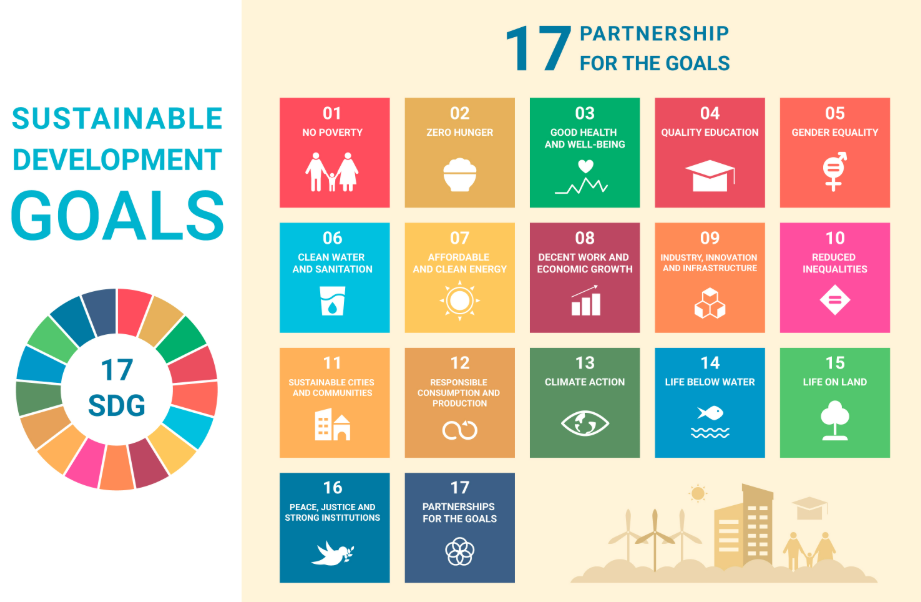
    UN’s 17 Sustainable Development Goals (SDGs)

    UN's SDG

    1. No Poverty

    • Goal: Eradicate extreme poverty for all people everywhere.
    • What You Can Do: Donate to credible charities. Support small local businesses and social enterprises. Volunteer in community upliftment projects. Raise awareness about poverty-related issues.

    2. Zero Hunger

    • Goal: End hunger, achieve food security, and promote sustainable agriculture.
    • What You Can Do: Reduce food waste. Support local farmers and organic produce. Volunteer at food banks. Donate to hunger relief programs.

    3. Good Health & Well-being

    • Goal: Ensure healthy lives and promote well-being for all at all ages.
    • What You Can Do: Promote physical activity and mental wellness. Share credible health information. Support accessible healthcare initiatives. Get vaccinated and help others do the same.

    4. Quality Education

    • Goal: Ensure inclusive and equitable quality education and promote lifelong learning.
    • What You Can Do: Sponsor education for underprivileged children. Volunteer to teach or mentor. Donate books and learning material. Advocate for education rights.

    5. Gender Equality

    • Goal: Achieve gender equality and empower all women and girls.
    • What You Can Do: Challenge gender stereotypes. Support women-led businesses. Speak out against gender-based violence. Educate others about equality and rights.

    6. Clean Water & Sanitation

    • Goal: Ensure availability and sustainable management of water and sanitation for all.
    • What You Can Do: Conserve water. Avoid polluting water bodies. Support clean water initiatives. Educate on hygiene and sanitation.

    7. Affordable & Clean Energy

    • Goal: Ensure access to affordable, reliable, sustainable, and modern energy for all.
    • What You Can Do: Use energy-efficient appliances. Support renewable energy sources like solar. Turn off unused electronics.

    8. Decent Work & Economic Growth

    • Goal: Promote inclusive and sustainable economic growth, employment, and decent work for all.
    • What You Can Do: Support ethical and fair-trade brands. Advocate for fair wages. Empower youth with skill development.

    9. Industry, Innovation & Infrastructure

    • Goal: Build resilient infrastructure, promote inclusive and sustainable industrialization.
    • What You Can Do: Promote eco-friendly and inclusive innovation. Support tech for good initiatives. Encourage STEM education.

    10. Reduced Inequalities

    • Goal: Reduce inequality within and among countries.
    • What You Can Do: Support diversity and inclusion in your community. Speak up for marginalized voices. Promote equal opportunity workplaces.

    11. Sustainable Cities & Communities

    • Goal: Make cities and human settlements inclusive, safe, resilient, and sustainable.
    • What You Can Do: Use public transport, carpool, or bike. Reduce plastic use. Participate in community clean-up drives.

    12. Responsible Consumption & Production

    • Goal: Ensure sustainable consumption and production patterns.
    • What You Can Do: Buy only what you need. Choose reusable over single-use. Recycle and compost. Support sustainable brands.

    13. Climate Action

    • Goal: Take urgent action to combat climate change and its impacts.
    • What You Can Do: Reduce your carbon footprint. Use eco-friendly transport. Join climate marches. Educate others about climate change.

    14. Life Below Water

    • Goal: Conserve and sustainably use the oceans, seas, and marine resources.
    • What You Can Do: Say no to single-use plastics. Avoid overfishing. Participate in beach cleanups. Support marine conservation groups.

    15. Life on Land

    • Goal: Sustainably manage forests, combat desertification, halt biodiversity loss.
    • What You Can Do: Plant trees. Protect wildlife habitats. Don’t buy products linked to deforestation or animal cruelty.

    16. Peace, Justice & Strong Institutions

    • Goal: Promote peaceful societies, provide access to justice, build accountable institutions.
    • What You Can Do: Advocate for justice and transparency. Report corruption. Support legal aid for the underprivileged.

    17. Partnerships for the Goals

    • Goal: Strengthen global partnerships to support and achieve the SDGs.
    • What You Can Do: Collaborate with NGOs, businesses, or governments. Share knowledge and resources. Promote collective action.

    Remember: Every small action counts. Be the change—locally and globally.


    Key Milestones & Timeline of UN SDG Meetings

    • 2012 – Rio+20 Conference (Rio de Janeiro, Brazil): Laid the groundwork for the SDGs, building upon the Millennium Development Goals (MDGs).
    • 2013-2014 – Open Working Group (New York, USA): Consultations on proposed goals and indicators.
    • 2015 – UN Sustainable Development Summit (New York, USA): Adoption of the 2030 Agenda for Sustainable Development and the 17 SDGs.
    • 2016 – First High-Level Political Forum (New York, USA): Focused on implementation strategies.
    • 2019 – SDG Summit during the UN General Assembly (New York, USA): Reviewed progress at the midpoint to 2030.
    • 2020-2022 – Virtual HLPFs: Adapted due to COVID-19, focusing on pandemic recovery aligned with SDGs.
    • 2023 – SDG Summit (New York, USA): Accelerated action for the Decade of Action.
    • 2024-2030 – Ongoing HLPFs and regional meetings (various global locations): Address climate action, gender equity, and inclusive development.
    • 2030 – Global milestone: Deadline for achieving all 17 SDGs.

    2030 SDG Target Highlights

    The following key targets are set for achievement by 2030:

    • Eradicate extreme poverty and hunger worldwide.
    • Achieve universal access to quality education and healthcare.
    • Eliminate gender-based violence and ensure gender equality.
    • Ensure availability of clean water and affordable, clean energy.
    • Promote inclusive economic growth, full and productive employment.
    • Reduce inequalities within and among countries.
    • Take urgent climate action to mitigate and adapt to climate change.
    • Protect biodiversity in oceans and on land.
    • Promote peace, justice, and inclusive societies.
    • Strengthen partnerships and mobilize global cooperation for sustainable development.

    These targets are supported by 169 specific indicators that guide action and progress tracking.

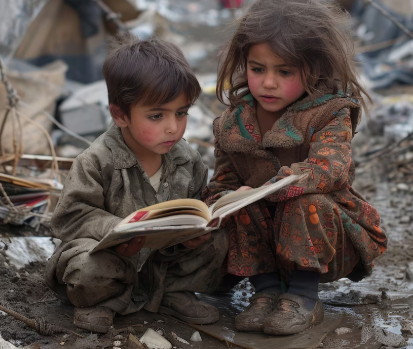
    Poverty & Education

    🎯 2030 Climate Action Targets

    Climate Action

    1. Cut Global Greenhouse Gas Emissions by 43% from 2019 levels (to limit warming to 1.5°C).
    2. Phase Out Fossil Fuel Subsidies and redirect them to renewables and climate resilience.
    3. Ensure Climate Resilient Infrastructure in at least 50% of vulnerable nations.
    4. Reach 70% Global Renewable Energy Share in electricity generation.
    5. Mobilize $100 Billion Annually from developed nations for climate finance to developing countries (originally promised by 2020, now reinforced through 2030).
    6. Implement Climate Education in All National Curriculums to improve awareness and adaptation strategies.

    Call to Action

    🌍 Join the Global Movement for a Better Tomorrow!
    Every action—big or small—matters. Start today by educating yourself, making sustainable choices, and inspiring others. Support local initiatives, reduce waste, fight inequality, and raise your voice for climate action.
    💪 Together, we can achieve the 17 Global Goals by 2030. The planet needs YOU.
    Act now. Share. Volunteer. Advocate. Be the change.


    Reference United Nations official site.

    Read inspiring stories on Women Empowerment here.