Category: Women Empowerment

Women Empowerment

  • Laxmi Agarwal: From Acid Attack At 15 to Torchbearer of Women’s Empowerment

    Laxmi Agarwal: From Acid Attack At 15 to Torchbearer of Women’s Empowerment

    “He threw acid on my face—not on my dreams.” — Laxmi Agarwal


    MIrror

    A woman’s face has long been treated as her first introduction to the world — her identity, her value, her pride. From the time she’s a girl, she’s told to look beautiful, to smile, to glow. Each morning begins with a glance in the mirror — and even a tiny pimple can trigger a storm of self-doubt. The mirror becomes more than glass; it becomes judgment. Society has built this silent prison where a woman’s worth is measured by her reflection.

    But what happens when that reflection is shattered — not by time, but by cruelty?

    This is where Laxmi Agarwal’s story begins — not with beauty lost, but with inner strength found. She did not hide. She rose. In her scars, the world saw not sorrow, but courage, power, and purpose.

    She turned her pain into purpose, and in doing so, began to heal others — empowering countless women to rise from silence, shame, and suffering.

    Surviving such unthinkable pain, and choosing compassion over bitterness, is not just bravery — it is a sign of deep spiritual and emotional health. Laxmi’s soul refused to be broken. Her strength wasn’t on her skin — it lived in her spirit.

    She is not just a survivor — she is a healer, a warrior, and a beacon of what it truly means to be whole.


    🌺 1. A Harrowing Beginning: Survival Against the Odds

    In 2005, at just 15 years old, Laxmi Agarwal was attacked with acid by a man whose romantic advances she had rejected. The assault left her with severe burns and emotional trauma. Over the next seven years, she endured nine reconstructive surgeries, costing nearly ₹20 lakh, while battling societal stigma and despair. amidst her pain, thoughts of suicide surfaced—but concern for her parents helped her persevere.
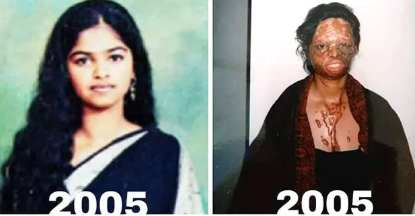
    Laxmi Agarwal - Before vs After Acid Attack

    2. Rekindling Hope: Redefining Beauty & Embracing Courage

    Laxmi Agarwal

    One pivotal moment came when Laxmi realized she no longer wanted to hide under a dupatta. She decided that her face wouldn’t define her worth and began to step out with dignity, teaching herself and others the value of inner beauty and resilience. This small act was a turning point in her journey toward hope and activism.


    In 2006, Laxmi filed a Public Interest Litigation (PIL)—known as Laxmi vs Union of India—seeking criminal penalties for acid attacks, regulation of acid sales, and compensation for survivors. In 2013, the Indian Supreme Court issued new laws, including age-based acid sale restrictions, ID requirements, and guaranteed rehabilitation protocols.
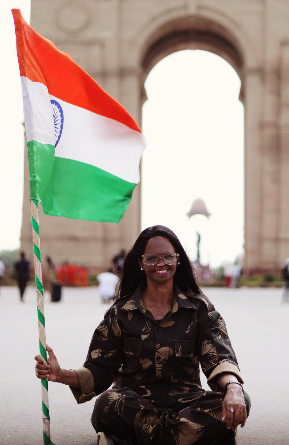
    Laxmi Agarwal

    4. The Chhanv Foundation & Stop Acid Sale Movement

    In response to her fight, Laxmi co-founded the Chhanv Foundation, an NGO that provides medical, legal, and emotional support to survivors. She also launched the Stop Acid Sale campaign, which garnered over 27,000 signatures and global support. Through vocational training, employment initiatives like Sheroes cafés, and counseling, the foundation has empowered survivors to reclaim their lives.


    5. Laxmi Agarwal: Awards & Recognition: Global Validation of Her Courage

    Her resilience gained international recognition:

    • 2014 International Women of Courage Award presented by Michelle Obama
    • International Women Empowerment Award from Women and Child Development Ministry, UNICEF (2019)
    • Honoured at I Am Woman Awards (2017) for her powerful activism

    6. Laxmi Agarwal: Advocacy in the Digital Age

    Laxmi is a powerful voice on social media: hosting Instagram Lives to counsel survivors during COVID-19, offering help to women facing domestic violence. She’s become a lifeline for many in times of silent suffering.


    7. Laxmi Agarwal: Legacy & Impact:

    Healing and Empowerment Through Action

    • Empowered hundreds of survivors with education, legal aid, and vocational training.
    • Shattered beauty stereotypes by walking proudly without hiding her scars.
    • Inspired Chhapaak (2020), a Bollywood film starring Deepika Padukone, bringing Laxmi’s story to millions.
    • Publicly raising awareness on mental health, resilience, and self-worth through motivational speaking and TED talks.

    🌱 Final Reflection: A Legacy That Blooms in Courage

    Laxmi Agarwal’s story is not just about survival—it’s a movement of resilience, activism, and compassion.
    Her life teaches us:

    True empowerment is found not in hiding scars, but in telling your truth—so others might find theirs.


    ✅ Call to Action: Be a Spark, Be the Change

    India continues to register 200–300 cases annually, equating to over a dozen acid attacks reported every month. In 2021 alone, approximately 14 acid attack cases per month were recorded CNBCTV18

    Compared to the pre‑2013 era, some decline is seen in recent years—but not enough to curb the trend The Times of India.

    The conviction rates remain dismally low—for instance, in 2021, only 20% of cases led to a conviction, despite 89% being chargesheeted. The persistence of acid attacks reflects gaps in law enforcement, acid sale regulations, and social stigma.

    • Share this story to inspire courage
    • Support acid attack survivors through Chhanv Foundation
    • Speak up—against acid violence, trauma stigma, or silencing of survivors
    • Mentor or support women who’ve suffered trauma

    Together, we can help more women rise—not in spite of their scars, but because of them.


    🌸 Personal Life: The Pillars Behind the Phoenix

    Laxmi Agarwal was born in 1990 in New Delhi, into a modest yet loving family that deeply valued dignity and courage. Her father worked as a domestic cook, and her mother was a homemaker — both deeply supportive of Laxmi’s dreams. From a young age, her parents instilled in her the strength to speak up and the value of education. She was a bright student, studying at Sarvodaya Kanya Vidyalaya, and like many teenage girls, she dreamt of becoming a singer.

    After the acid attack at the age of 15, it was her parents who stood as her unshakable pillars. Despite their own emotional devastation, they never let her feel alone or unloved — their silent sacrifices, tireless care, and unbreakable belief became the bedrock of Laxmi’s healing.

    Laxmi Agarwal with Husband

    Alok Dixit, a journalist and activist, became one of the earliest and strongest supporters of Laxmi’s cause. He co-founded the Stop Acid Attacks campaign and stood by Laxmi — emotionally and professionally — as they led protests, awareness drives, and supported fellow survivors. Their bond grew into a partnership, and they decided to live together and together had a daughter, Pihu — the light of Laxmi’s life. Though their relationship eventually ended, it was a part of her journey toward self-healing and rediscovery. Now, as a single mother, Laxmi pours her soul into raising her daughter with love and strength — passing on the very values that her parents once gave her.
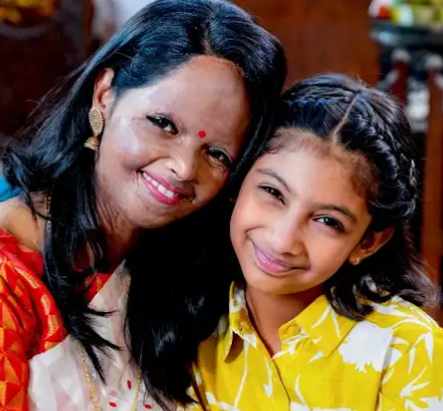
    Laxmi Agarwal with daughter Pihu

    Her life — marked by resilience, self-respect, and spiritual strength — continues to inspire millions. In every role she plays — a daughter, a mother, a survivor, a voice — Laxmi stands as a symbol of empowerment born out of pain.


    Read inspiring stories on Women Empowerment here.
  • Laxmi Agarwal: From Acid Attack At 15 to Torchbearer of Women’s Empowerment

    Laxmi Agarwal: From Acid Attack At 15 to Torchbearer of Women’s Empowerment

    “He threw acid on my face—not on my dreams.” — Laxmi Agarwal


    MIrror

    A woman’s face has long been treated as her first introduction to the world — her identity, her value, her pride. From the time she’s a girl, she’s told to look beautiful, to smile, to glow. Each morning begins with a glance in the mirror — and even a tiny pimple can trigger a storm of self-doubt. The mirror becomes more than glass; it becomes judgment. Society has built this silent prison where a woman’s worth is measured by her reflection.

    But what happens when that reflection is shattered — not by time, but by cruelty?

    This is where Laxmi Agarwal’s story begins — not with beauty lost, but with inner strength found. She did not hide. She rose. In her scars, the world saw not sorrow, but courage, power, and purpose.

    She turned her pain into purpose, and in doing so, began to heal others — empowering countless women to rise from silence, shame, and suffering.

    Surviving such unthinkable pain, and choosing compassion over bitterness, is not just bravery — it is a sign of deep spiritual and emotional health. Laxmi’s soul refused to be broken. Her strength wasn’t on her skin — it lived in her spirit.

    She is not just a survivor — she is a healer, a warrior, and a beacon of what it truly means to be whole.


    🌺 1. A Harrowing Beginning: Survival Against the Odds

    In 2005, at just 15 years old, Laxmi Agarwal was attacked with acid by a man whose romantic advances she had rejected. The assault left her with severe burns and emotional trauma. Over the next seven years, she endured nine reconstructive surgeries, costing nearly ₹20 lakh, while battling societal stigma and despair. amidst her pain, thoughts of suicide surfaced—but concern for her parents helped her persevere.

    Laxmi Agarwal - Before vs After Acid Attack

    2. Rekindling Hope: Redefining Beauty & Embracing Courage

    Laxmi Agarwal

    One pivotal moment came when Laxmi realized she no longer wanted to hide under a dupatta. She decided that her face wouldn’t define her worth and began to step out with dignity, teaching herself and others the value of inner beauty and resilience. This small act was a turning point in her journey toward hope and activism.


    In 2006, Laxmi filed a Public Interest Litigation (PIL)—known as Laxmi vs Union of India—seeking criminal penalties for acid attacks, regulation of acid sales, and compensation for survivors. In 2013, the Indian Supreme Court issued new laws, including age-based acid sale restrictions, ID requirements, and guaranteed rehabilitation protocols.

    Laxmi Agarwal

    4. The Chhanv Foundation & Stop Acid Sale Movement

    In response to her fight, Laxmi co-founded the Chhanv Foundation, an NGO that provides medical, legal, and emotional support to survivors. She also launched the Stop Acid Sale campaign, which garnered over 27,000 signatures and global support. Through vocational training, employment initiatives like Sheroes cafés, and counseling, the foundation has empowered survivors to reclaim their lives.


    5. Laxmi Agarwal: Awards & Recognition: Global Validation of Her Courage

    Her resilience gained international recognition:

    • 2014 International Women of Courage Award presented by Michelle Obama
    • International Women Empowerment Award from Women and Child Development Ministry, UNICEF (2019)
    • Honoured at I Am Woman Awards (2017) for her powerful activism

    6. Laxmi Agarwal: Advocacy in the Digital Age

    Laxmi is a powerful voice on social media: hosting Instagram Lives to counsel survivors during COVID-19, offering help to women facing domestic violence. She’s become a lifeline for many in times of silent suffering.


    7. Laxmi Agarwal: Legacy & Impact:

    Healing and Empowerment Through Action

    • Empowered hundreds of survivors with education, legal aid, and vocational training.
    • Shattered beauty stereotypes by walking proudly without hiding her scars.
    • Inspired Chhapaak (2020), a Bollywood film starring Deepika Padukone, bringing Laxmi’s story to millions.
    • Publicly raising awareness on mental health, resilience, and self-worth through motivational speaking and TED talks.

    🌱 Final Reflection: A Legacy That Blooms in Courage

    Laxmi Agarwal’s story is not just about survival—it’s a movement of resilience, activism, and compassion.
    Her life teaches us:

    True empowerment is found not in hiding scars, but in telling your truth—so others might find theirs.


    ✅ Call to Action: Be a Spark, Be the Change

    India continues to register 200–300 cases annually, equating to over a dozen acid attacks reported every month. In 2021 alone, approximately 14 acid attack cases per month were recorded CNBCTV18

    Compared to the pre‑2013 era, some decline is seen in recent years—but not enough to curb the trend The Times of India.

    The conviction rates remain dismally low—for instance, in 2021, only 20% of cases led to a conviction, despite 89% being chargesheeted. The persistence of acid attacks reflects gaps in law enforcement, acid sale regulations, and social stigma.

    • Share this story to inspire courage
    • Support acid attack survivors through Chhanv Foundation
    • Speak up—against acid violence, trauma stigma, or silencing of survivors
    • Mentor or support women who’ve suffered trauma

    Together, we can help more women rise—not in spite of their scars, but because of them.


    🌸 Personal Life: The Pillars Behind the Phoenix

    Laxmi Agarwal was born in 1990 in New Delhi, into a modest yet loving family that deeply valued dignity and courage. Her father worked as a domestic cook, and her mother was a homemaker — both deeply supportive of Laxmi’s dreams. From a young age, her parents instilled in her the strength to speak up and the value of education. She was a bright student, studying at Sarvodaya Kanya Vidyalaya, and like many teenage girls, she dreamt of becoming a singer.

    After the acid attack at the age of 15, it was her parents who stood as her unshakable pillars. Despite their own emotional devastation, they never let her feel alone or unloved — their silent sacrifices, tireless care, and unbreakable belief became the bedrock of Laxmi’s healing.

    Laxmi Agarwal with Husband

    Alok Dixit, a journalist and activist, became one of the earliest and strongest supporters of Laxmi’s cause. He co-founded the Stop Acid Attacks campaign and stood by Laxmi — emotionally and professionally — as they led protests, awareness drives, and supported fellow survivors. Their bond grew into a partnership, and they decided to live together and together had a daughter, Pihu — the light of Laxmi’s life. Though their relationship eventually ended, it was a part of her journey toward self-healing and rediscovery. Now, as a single mother, Laxmi pours her soul into raising her daughter with love and strength — passing on the very values that her parents once gave her.

    Laxmi Agarwal with daughter Pihu

    Her life — marked by resilience, self-respect, and spiritual strength — continues to inspire millions. In every role she plays — a daughter, a mother, a survivor, a voice — Laxmi stands as a symbol of empowerment born out of pain.


    Read inspiring stories on Women Empowerment here.
  • Laxmi Agarwal: From Acid Attack At 15 to Torchbearer of Women’s Empowerment

    Laxmi Agarwal: From Acid Attack At 15 to Torchbearer of Women’s Empowerment

    “He threw acid on my face—not on my dreams.” — Laxmi Agarwal


    MIrror

    A woman’s face has long been treated as her first introduction to the world — her identity, her value, her pride. From the time she’s a girl, she’s told to look beautiful, to smile, to glow. Each morning begins with a glance in the mirror — and even a tiny pimple can trigger a storm of self-doubt. The mirror becomes more than glass; it becomes judgment. Society has built this silent prison where a woman’s worth is measured by her reflection.

    But what happens when that reflection is shattered — not by time, but by cruelty?

    This is where Laxmi Agarwal’s story begins — not with beauty lost, but with inner strength found. She did not hide. She rose. In her scars, the world saw not sorrow, but courage, power, and purpose.

    She turned her pain into purpose, and in doing so, began to heal others — empowering countless women to rise from silence, shame, and suffering.

    Surviving such unthinkable pain, and choosing compassion over bitterness, is not just bravery — it is a sign of deep spiritual and emotional health. Laxmi’s soul refused to be broken. Her strength wasn’t on her skin — it lived in her spirit.

    She is not just a survivor — she is a healer, a warrior, and a beacon of what it truly means to be whole.


    🌺 1. A Harrowing Beginning: Survival Against the Odds

    In 2005, at just 15 years old, Laxmi Agarwal was attacked with acid by a man whose romantic advances she had rejected. The assault left her with severe burns and emotional trauma. Over the next seven years, she endured nine reconstructive surgeries, costing nearly ₹20 lakh, while battling societal stigma and despair. amidst her pain, thoughts of suicide surfaced—but concern for her parents helped her persevere.

    Laxmi Agarwal - Before vs After Acid Attack

    2. Rekindling Hope: Redefining Beauty & Embracing Courage

    Laxmi Agarwal

    One pivotal moment came when Laxmi realized she no longer wanted to hide under a dupatta. She decided that her face wouldn’t define her worth and began to step out with dignity, teaching herself and others the value of inner beauty and resilience. This small act was a turning point in her journey toward hope and activism.


    In 2006, Laxmi filed a Public Interest Litigation (PIL)—known as Laxmi vs Union of India—seeking criminal penalties for acid attacks, regulation of acid sales, and compensation for survivors. In 2013, the Indian Supreme Court issued new laws, including age-based acid sale restrictions, ID requirements, and guaranteed rehabilitation protocols.

    Laxmi Agarwal

    4. The Chhanv Foundation & Stop Acid Sale Movement

    In response to her fight, Laxmi co-founded the Chhanv Foundation, an NGO that provides medical, legal, and emotional support to survivors. She also launched the Stop Acid Sale campaign, which garnered over 27,000 signatures and global support. Through vocational training, employment initiatives like Sheroes cafés, and counseling, the foundation has empowered survivors to reclaim their lives.


    5. Laxmi Agarwal: Awards & Recognition: Global Validation of Her Courage

    Her resilience gained international recognition:

    • 2014 International Women of Courage Award presented by Michelle Obama
    • International Women Empowerment Award from Women and Child Development Ministry, UNICEF (2019)
    • Honoured at I Am Woman Awards (2017) for her powerful activism

    6. Laxmi Agarwal: Advocacy in the Digital Age

    Laxmi is a powerful voice on social media: hosting Instagram Lives to counsel survivors during COVID-19, offering help to women facing domestic violence. She’s become a lifeline for many in times of silent suffering.


    7. Laxmi Agarwal: Legacy & Impact:

    Healing and Empowerment Through Action

    • Empowered hundreds of survivors with education, legal aid, and vocational training.
    • Shattered beauty stereotypes by walking proudly without hiding her scars.
    • Inspired Chhapaak (2020), a Bollywood film starring Deepika Padukone, bringing Laxmi’s story to millions.
    • Publicly raising awareness on mental health, resilience, and self-worth through motivational speaking and TED talks.

    🌱 Final Reflection: A Legacy That Blooms in Courage

    Laxmi Agarwal’s story is not just about survival—it’s a movement of resilience, activism, and compassion.
    Her life teaches us:

    True empowerment is found not in hiding scars, but in telling your truth—so others might find theirs.


    ✅ Call to Action: Be a Spark, Be the Change

    India continues to register 200–300 cases annually, equating to over a dozen acid attacks reported every month. In 2021 alone, approximately 14 acid attack cases per month were recorded CNBCTV18

    Compared to the pre‑2013 era, some decline is seen in recent years—but not enough to curb the trend The Times of India.

    The conviction rates remain dismally low—for instance, in 2021, only 20% of cases led to a conviction, despite 89% being chargesheeted. The persistence of acid attacks reflects gaps in law enforcement, acid sale regulations, and social stigma.

    • Share this story to inspire courage
    • Support acid attack survivors through Chhanv Foundation
    • Speak up—against acid violence, trauma stigma, or silencing of survivors
    • Mentor or support women who’ve suffered trauma

    Together, we can help more women rise—not in spite of their scars, but because of them.


    🌸 Personal Life: The Pillars Behind the Phoenix

    Laxmi Agarwal was born in 1990 in New Delhi, into a modest yet loving family that deeply valued dignity and courage. Her father worked as a domestic cook, and her mother was a homemaker — both deeply supportive of Laxmi’s dreams. From a young age, her parents instilled in her the strength to speak up and the value of education. She was a bright student, studying at Sarvodaya Kanya Vidyalaya, and like many teenage girls, she dreamt of becoming a singer.

    After the acid attack at the age of 15, it was her parents who stood as her unshakable pillars. Despite their own emotional devastation, they never let her feel alone or unloved — their silent sacrifices, tireless care, and unbreakable belief became the bedrock of Laxmi’s healing.

    Laxmi Agarwal with Husband

    Alok Dixit, a journalist and activist, became one of the earliest and strongest supporters of Laxmi’s cause. He co-founded the Stop Acid Attacks campaign and stood by Laxmi — emotionally and professionally — as they led protests, awareness drives, and supported fellow survivors. Their bond grew into a partnership, and they decided to live together and together had a daughter, Pihu — the light of Laxmi’s life. Though their relationship eventually ended, it was a part of her journey toward self-healing and rediscovery. Now, as a single mother, Laxmi pours her soul into raising her daughter with love and strength — passing on the very values that her parents once gave her.

    Laxmi Agarwal with daughter Pihu

    Her life — marked by resilience, self-respect, and spiritual strength — continues to inspire millions. In every role she plays — a daughter, a mother, a survivor, a voice — Laxmi stands as a symbol of empowerment born out of pain.


    Read inspiring stories on Women Empowerment here.
  • 🚔Kiran Bedi: India’s 1st Women IPS Officer: The Fearless Torchbearer of Women Empowerment in India

    🚔Kiran Bedi: India’s 1st Women IPS Officer: The Fearless Torchbearer of Women Empowerment in India


    Introduction

    When the word “fearless” finds form in a woman, it often takes the shape of Kiran Bedi. For decades, she has stood as a symbol of justice, grit, and empathy, breaking barriers not just for herself but for countless women across the country. From being India’s first woman IPS officer to transforming one of the most dreaded prisons in Asia into a model correctional facility, her journey is a testament to the power of purpose-driven leadership.

    But beneath the khaki uniform and stern voice lies the heart of a woman who feels deeply, gives freely, and serves selflessly. This is her story — not just of policing and protocol, but of bold choices, quiet compassion, and unwavering empowerment.


    Early Life and Education

    Kiran Bedi’s upbringing played a pivotal role in shaping her fearless, disciplined, and purpose-driven personality.

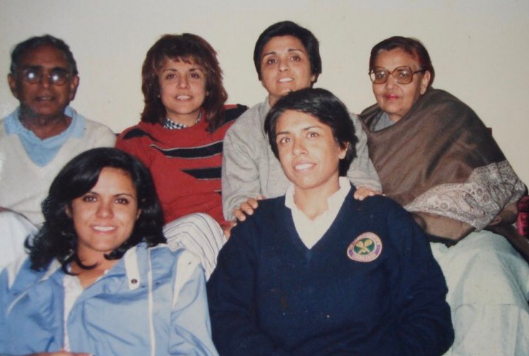
    Kiran Bedi Family

    🌸 Family Background & Early Life:

    • Born: 9 June 1949 in Amritsar, Punjab
    • Parents: Prakash Lal Peshawaria (father) and Prem Lata (mother)
    • Sisters: Kiran is the second of four daughters

    💪 Progressive & Supportive Parents:

    • Kiran’s parents were unusually progressive for their time, especially in a conservative Indian society that often prioritized sons.
    • Her father left a secure job in the textile industry to support his daughters’ education and ambitions.
    • Instead of restricting their daughters to traditional roles, they empowered them to dream big.

    🎾 Focus on Discipline & Sports:

    • Her father enrolled her in tennis coaching at an early age, despite social criticism.
    • Kiran went on to become national tennis champion, winning the Asian Lawn Tennis Championship.
    • Her mother emphasized moral values and self-respect, ensuring the girls were emotionally strong and independent.

    🎓 Education:

    • Her parents insisted on a strong academic foundation:
      • BA in English from Government College for Women, Amritsar
      • MA in Political Science from Punjab University, Chandigarh
      • LLB from Faculty of Law, Delhi University
      • PhD in Social Sciences from IIT Delhi

    🕊️ Summary:

    Kiran Bedi’s upbringing was a fusion of love, discipline, and forward-thinking parenting. Her parents gave her freedom, confidence, and the courage to challenge gender roles, which became the foundation of her life as India’s first woman IPS officer and a relentless reformer.

    Their belief:
    👉 “Betiyaan bojh nahi, roshni hoti hain.” (Daughters are not burdens, they are the light.)


    Trailblazing Journey as the First Woman IPS Officer

    In 1972, Kiran Bedi became the first woman to join the Indian Police Service. This wasn’t just a personal milestone; it was a historic leap for Indian women. But the journey was far from smooth.

    During her early IPS training, many male officers ridiculed her, telling her women were “too emotional” for the job. Yet she persisted, outperforming most of them in physical and mental evaluations.

    When a senior once said, “You’re too pretty for this job,” she retorted, “Justice doesn’t care for lipstick or biceps. It listens to courage.”

    Her calm defiance and dignified confidence became her hallmark.


    The Iconic Traffic Cop Who Towed the PM’s Car

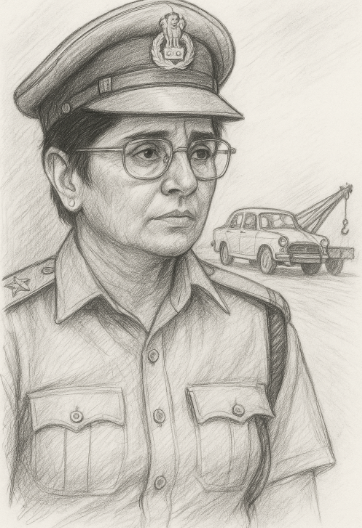
    In 1982, as DCP (Traffic) of Delhi, Bedi made headlines by towing away the illegally parked car of then Prime Minister Indira Gandhi. The bold move earned her both admiration and criticism.

    What the public didn’t see was the price she paid behind the scenes. That night, her home was stoned, and her family received threats. Yet she stood her ground and refused police protection.

    “If I can’t walk the street alone, I don’t deserve to wear this uniform.”

    Her unwavering commitment to the rule of law inspired many young women to consider careers in civil services.


    Tihar Jail Reforms: Healing Behind Bars

    Tihar Jail

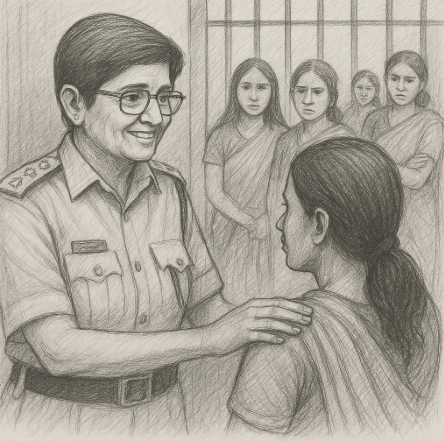
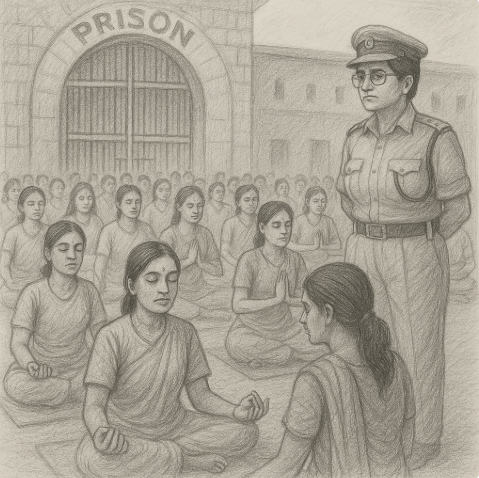
    Perhaps her most celebrated achievement was her tenure as Inspector General of Tihar Jail, one of Asia’s largest prisons. Instead of punishment, she introduced reformative justice.

    Under her leadership, Tihar saw:

    • Introduction of education and meditation programs
    • Vocational training for inmates
    • Special focus on female inmates and their children

    One emotional story stands out: A young mother, arrested for theft, was on the verge of suicide. Kiran Bedi held her hand for hours, offering no solution, just presence. That woman went on to become a counselor for fellow inmates.

    “She gave me my name back. Not a number, not a prisoner — but Meera.”

    Tihar Jail is located in New Delhi, India, specifically in the Tihar Village area of West Delhi. It is the largest prison complex in South Asia and is officially known as Tihar Central Jail.


    In 1987, she co-founded the Navjyoti India Foundation, focused on education, drug rehabilitation, and women’s empowerment. Through this platform, she:

    • Educated girls in slums
    • Offered vocational training to women
    • Rehabilitated street children

    A young girl who once walked 10 km to attend classes was offered a bicycle and solar lamp by Bedi herself. That girl now works as a teacher, mentoring dozens like her.

    “She reminded me of the girl I used to be — hungry to learn, afraid of nothing.”

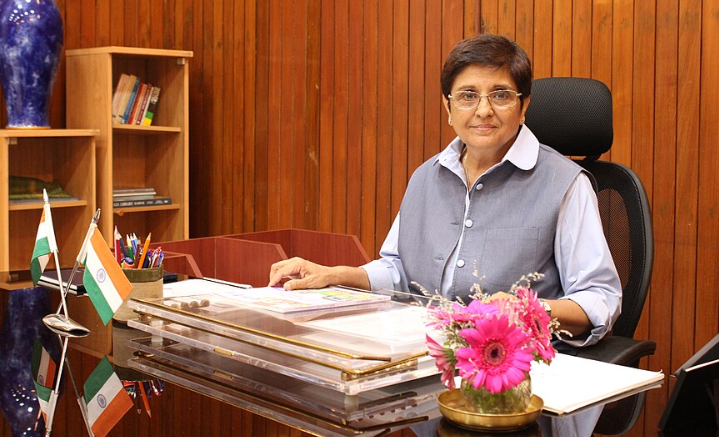
    Kiran Bedi

    Official Website.


    Emotional, Bold, Untold Stories

    1. The Slap That Made a Leader

    As a teen, Kiran once saw a boy harassing a girl. With no adult stepping in, she slapped him in public. That was her first taste of justice. A spark had been lit.

    2. The Girl Who Slept in Her Home

    On a stormy night, a 12-year-old girl from Navjyoti had no shelter. Bedi took her home, gave her food and dry clothes. The next day, she made arrangements for her future quietly.

    3. Facing Misogyny with Grace

    Mocked during IPS training, Bedi responded with silent excellence. She topped her batch in several areas, letting her work speak louder than prejudice.


    Challenges and Controversies

    Despite her brilliance, Bedi often faced institutional resistance. Her strict discipline ruffled feathers, and she was sometimes sidelined for key positions. But not once did she let bitterness enter her soul.

    “My duty is to serve. Whether or not the system rewards me is its karma, not mine.”


    Post-Retirement: A New Phase of Empowerment

    Kiran Bedi

    The Spirit of Compassion and Empowerment

    What makes Kiran Bedi exceptional is not just her courage but her compassion. She empowered women not just through words but through action, mentorship, and systems that helped others rise.

    She often said:

    “I don’t believe in empowering women just by giving speeches. I believe in creating roads, giving lights, ensuring toilets, and teaching them to speak up.”


    Call to Action: Rise Like Kiran

    To every girl who’s told “you can’t,” to every woman afraid to speak up, let Kiran Bedi’s life be your answer. Dare to lead, dare to rise, dare to change.

    Be bold like Bedi. Be kind like Bedi. Be unshakeable like Bedi.

    Empower one woman, and you empower generations.


    Personal Life

    Kiran Bedi is 75 years old (born June 9, 1949), married to Brij Bedi (late), and has one daughter named Saina Bedi.

    After retiring, Bedi turned to activism and politics. She joined Anna Hazare’s anti-corruption movement and later became the Lieutenant Governor of Puducherry. Even in politics, her focus remained clear: education, safety, and justice for women.

    Kiran Bedi’s late husband, Brij Bedi, was a social activist known for his work in Amritsar, especially in education and drug rehabilitation. Their daughter, Saina Bedi, is a professional artist and photographer, leading a creative life away from public and political spheres. Despite Kiran Bedi’s high-profile career, both Brij and Saina maintained low-key lives rooted in service and art.

    Kiran Bedi has openly acknowledged that she prioritized her duty and service to the nation above her personal and family life at times.

    In several interviews and writings, she admitted that:

    • Her demanding career, especially as an IPS officer and later as Director General of Tihar Jail and Lieutenant Governor of Puducherry, often took precedence over family time.
    • Her husband, Brij Bedi, once said publicly that they led largely separate lives, though they shared mutual respect for each other’s work.
    • Her daughter, Saina, was largely raised by Brij and his extended family, especially when Kiran was posted in demanding roles.

    Despite the personal cost, Kiran Bedi always maintained that her sense of purpose and discipline came from a deep-rooted commitment to public service. She has said that if she had to choose again, she would still serve the nation first — a choice that defined her legacy as India’s first woman IPS officer and a fearless reformer.

    It was a sacrifice, but one she made consciously — and with conviction.


    Conclusion

    Kiran Bedi’s life is a living testament to courage with compassion. She didn’t just wear the uniform — she honored it with integrity, fire, and love. Her legacy lives on in every girl she mentored, every system she changed, and every life she touched.

    Let her story stir something in you. The fight for justice and dignity doesn’t need a badge. It needs a burning heart and a fearless soul.


    Read our inspiring stories on women empowerment here.

  • 🚔Kiran Bedi: India’s 1st Women IPS Officer: The Fearless Torchbearer of Women Empowerment in India

    🚔Kiran Bedi: India’s 1st Women IPS Officer: The Fearless Torchbearer of Women Empowerment in India


    Introduction

    When the word “fearless” finds form in a woman, it often takes the shape of Kiran Bedi. For decades, she has stood as a symbol of justice, grit, and empathy, breaking barriers not just for herself but for countless women across the country. From being India’s first woman IPS officer to transforming one of the most dreaded prisons in Asia into a model correctional facility, her journey is a testament to the power of purpose-driven leadership.

    But beneath the khaki uniform and stern voice lies the heart of a woman who feels deeply, gives freely, and serves selflessly. This is her story — not just of policing and protocol, but of bold choices, quiet compassion, and unwavering empowerment.


    Early Life and Education

    Kiran Bedi’s upbringing played a pivotal role in shaping her fearless, disciplined, and purpose-driven personality.

    Kiran Bedi Family

    🌸 Family Background & Early Life:

    • Born: 9 June 1949 in Amritsar, Punjab
    • Parents: Prakash Lal Peshawaria (father) and Prem Lata (mother)
    • Sisters: Kiran is the second of four daughters

    💪 Progressive & Supportive Parents:

    • Kiran’s parents were unusually progressive for their time, especially in a conservative Indian society that often prioritized sons.
    • Her father left a secure job in the textile industry to support his daughters’ education and ambitions.
    • Instead of restricting their daughters to traditional roles, they empowered them to dream big.

    🎾 Focus on Discipline & Sports:

    • Her father enrolled her in tennis coaching at an early age, despite social criticism.
    • Kiran went on to become national tennis champion, winning the Asian Lawn Tennis Championship.
    • Her mother emphasized moral values and self-respect, ensuring the girls were emotionally strong and independent.

    🎓 Education:

    • Her parents insisted on a strong academic foundation:
      • BA in English from Government College for Women, Amritsar
      • MA in Political Science from Punjab University, Chandigarh
      • LLB from Faculty of Law, Delhi University
      • PhD in Social Sciences from IIT Delhi

    🕊️ Summary:

    Kiran Bedi’s upbringing was a fusion of love, discipline, and forward-thinking parenting. Her parents gave her freedom, confidence, and the courage to challenge gender roles, which became the foundation of her life as India’s first woman IPS officer and a relentless reformer.

    Their belief:
    👉 “Betiyaan bojh nahi, roshni hoti hain.” (Daughters are not burdens, they are the light.)


    Trailblazing Journey as the First Woman IPS Officer

    In 1972, Kiran Bedi became the first woman to join the Indian Police Service. This wasn’t just a personal milestone; it was a historic leap for Indian women. But the journey was far from smooth.

    During her early IPS training, many male officers ridiculed her, telling her women were “too emotional” for the job. Yet she persisted, outperforming most of them in physical and mental evaluations.

    When a senior once said, “You’re too pretty for this job,” she retorted, “Justice doesn’t care for lipstick or biceps. It listens to courage.”

    Her calm defiance and dignified confidence became her hallmark.


    The Iconic Traffic Cop Who Towed the PM’s Car

    In 1982, as DCP (Traffic) of Delhi, Bedi made headlines by towing away the illegally parked car of then Prime Minister Indira Gandhi. The bold move earned her both admiration and criticism.

    What the public didn’t see was the price she paid behind the scenes. That night, her home was stoned, and her family received threats. Yet she stood her ground and refused police protection.

    “If I can’t walk the street alone, I don’t deserve to wear this uniform.”

    Her unwavering commitment to the rule of law inspired many young women to consider careers in civil services.


    Tihar Jail Reforms: Healing Behind Bars

    Tihar Jail

    Perhaps her most celebrated achievement was her tenure as Inspector General of Tihar Jail, one of Asia’s largest prisons. Instead of punishment, she introduced reformative justice.

    Under her leadership, Tihar saw:

    • Introduction of education and meditation programs
    • Vocational training for inmates
    • Special focus on female inmates and their children

    One emotional story stands out: A young mother, arrested for theft, was on the verge of suicide. Kiran Bedi held her hand for hours, offering no solution, just presence. That woman went on to become a counselor for fellow inmates.

    “She gave me my name back. Not a number, not a prisoner — but Meera.”

    Tihar Jail is located in New Delhi, India, specifically in the Tihar Village area of West Delhi. It is the largest prison complex in South Asia and is officially known as Tihar Central Jail.


    In 1987, she co-founded the Navjyoti India Foundation, focused on education, drug rehabilitation, and women’s empowerment. Through this platform, she:

    • Educated girls in slums
    • Offered vocational training to women
    • Rehabilitated street children

    A young girl who once walked 10 km to attend classes was offered a bicycle and solar lamp by Bedi herself. That girl now works as a teacher, mentoring dozens like her.

    “She reminded me of the girl I used to be — hungry to learn, afraid of nothing.”

    Kiran Bedi

    Official Website.


    Emotional, Bold, Untold Stories

    1. The Slap That Made a Leader

    As a teen, Kiran once saw a boy harassing a girl. With no adult stepping in, she slapped him in public. That was her first taste of justice. A spark had been lit.

    2. The Girl Who Slept in Her Home

    On a stormy night, a 12-year-old girl from Navjyoti had no shelter. Bedi took her home, gave her food and dry clothes. The next day, she made arrangements for her future quietly.

    3. Facing Misogyny with Grace

    Mocked during IPS training, Bedi responded with silent excellence. She topped her batch in several areas, letting her work speak louder than prejudice.


    Challenges and Controversies

    Despite her brilliance, Bedi often faced institutional resistance. Her strict discipline ruffled feathers, and she was sometimes sidelined for key positions. But not once did she let bitterness enter her soul.

    “My duty is to serve. Whether or not the system rewards me is its karma, not mine.”


    Post-Retirement: A New Phase of Empowerment

    Kiran Bedi

    The Spirit of Compassion and Empowerment

    What makes Kiran Bedi exceptional is not just her courage but her compassion. She empowered women not just through words but through action, mentorship, and systems that helped others rise.

    She often said:

    “I don’t believe in empowering women just by giving speeches. I believe in creating roads, giving lights, ensuring toilets, and teaching them to speak up.”


    Call to Action: Rise Like Kiran

    To every girl who’s told “you can’t,” to every woman afraid to speak up, let Kiran Bedi’s life be your answer. Dare to lead, dare to rise, dare to change.

    Be bold like Bedi. Be kind like Bedi. Be unshakeable like Bedi.

    Empower one woman, and you empower generations.


    Personal Life

    Kiran Bedi is 75 years old (born June 9, 1949), married to Brij Bedi (late), and has one daughter named Saina Bedi.

    After retiring, Bedi turned to activism and politics. She joined Anna Hazare’s anti-corruption movement and later became the Lieutenant Governor of Puducherry. Even in politics, her focus remained clear: education, safety, and justice for women.

    Kiran Bedi’s late husband, Brij Bedi, was a social activist known for his work in Amritsar, especially in education and drug rehabilitation. Their daughter, Saina Bedi, is a professional artist and photographer, leading a creative life away from public and political spheres. Despite Kiran Bedi’s high-profile career, both Brij and Saina maintained low-key lives rooted in service and art.

    Kiran Bedi has openly acknowledged that she prioritized her duty and service to the nation above her personal and family life at times.

    In several interviews and writings, she admitted that:

    • Her demanding career, especially as an IPS officer and later as Director General of Tihar Jail and Lieutenant Governor of Puducherry, often took precedence over family time.
    • Her husband, Brij Bedi, once said publicly that they led largely separate lives, though they shared mutual respect for each other’s work.
    • Her daughter, Saina, was largely raised by Brij and his extended family, especially when Kiran was posted in demanding roles.

    Despite the personal cost, Kiran Bedi always maintained that her sense of purpose and discipline came from a deep-rooted commitment to public service. She has said that if she had to choose again, she would still serve the nation first — a choice that defined her legacy as India’s first woman IPS officer and a fearless reformer.

    It was a sacrifice, but one she made consciously — and with conviction.


    Conclusion

    Kiran Bedi’s life is a living testament to courage with compassion. She didn’t just wear the uniform — she honored it with integrity, fire, and love. Her legacy lives on in every girl she mentored, every system she changed, and every life she touched.

    Let her story stir something in you. The fight for justice and dignity doesn’t need a badge. It needs a burning heart and a fearless soul.


    Read our inspiring stories on women empowerment here.

  • 🚔Kiran Bedi: India’s 1st Women IPS Officer: The Fearless Torchbearer of Women Empowerment in India

    🚔Kiran Bedi: India’s 1st Women IPS Officer: The Fearless Torchbearer of Women Empowerment in India


    Introduction

    When the word “fearless” finds form in a woman, it often takes the shape of Kiran Bedi. For decades, she has stood as a symbol of justice, grit, and empathy, breaking barriers not just for herself but for countless women across the country. From being India’s first woman IPS officer to transforming one of the most dreaded prisons in Asia into a model correctional facility, her journey is a testament to the power of purpose-driven leadership.

    But beneath the khaki uniform and stern voice lies the heart of a woman who feels deeply, gives freely, and serves selflessly. This is her story — not just of policing and protocol, but of bold choices, quiet compassion, and unwavering empowerment.


    Early Life and Education

    Kiran Bedi’s upbringing played a pivotal role in shaping her fearless, disciplined, and purpose-driven personality.

    Kiran Bedi Family

    🌸 Family Background & Early Life:

    • Born: 9 June 1949 in Amritsar, Punjab
    • Parents: Prakash Lal Peshawaria (father) and Prem Lata (mother)
    • Sisters: Kiran is the second of four daughters

    💪 Progressive & Supportive Parents:

    • Kiran’s parents were unusually progressive for their time, especially in a conservative Indian society that often prioritized sons.
    • Her father left a secure job in the textile industry to support his daughters’ education and ambitions.
    • Instead of restricting their daughters to traditional roles, they empowered them to dream big.

    🎾 Focus on Discipline & Sports:

    • Her father enrolled her in tennis coaching at an early age, despite social criticism.
    • Kiran went on to become national tennis champion, winning the Asian Lawn Tennis Championship.
    • Her mother emphasized moral values and self-respect, ensuring the girls were emotionally strong and independent.

    🎓 Education:

    • Her parents insisted on a strong academic foundation:
      • BA in English from Government College for Women, Amritsar
      • MA in Political Science from Punjab University, Chandigarh
      • LLB from Faculty of Law, Delhi University
      • PhD in Social Sciences from IIT Delhi

    🕊️ Summary:

    Kiran Bedi’s upbringing was a fusion of love, discipline, and forward-thinking parenting. Her parents gave her freedom, confidence, and the courage to challenge gender roles, which became the foundation of her life as India’s first woman IPS officer and a relentless reformer.

    Their belief:
    👉 “Betiyaan bojh nahi, roshni hoti hain.” (Daughters are not burdens, they are the light.)


    Trailblazing Journey as the First Woman IPS Officer

    In 1972, Kiran Bedi became the first woman to join the Indian Police Service. This wasn’t just a personal milestone; it was a historic leap for Indian women. But the journey was far from smooth.

    During her early IPS training, many male officers ridiculed her, telling her women were “too emotional” for the job. Yet she persisted, outperforming most of them in physical and mental evaluations.

    When a senior once said, “You’re too pretty for this job,” she retorted, “Justice doesn’t care for lipstick or biceps. It listens to courage.”

    Her calm defiance and dignified confidence became her hallmark.


    The Iconic Traffic Cop Who Towed the PM’s Car

    In 1982, as DCP (Traffic) of Delhi, Bedi made headlines by towing away the illegally parked car of then Prime Minister Indira Gandhi. The bold move earned her both admiration and criticism.

    What the public didn’t see was the price she paid behind the scenes. That night, her home was stoned, and her family received threats. Yet she stood her ground and refused police protection.

    “If I can’t walk the street alone, I don’t deserve to wear this uniform.”

    Her unwavering commitment to the rule of law inspired many young women to consider careers in civil services.


    Tihar Jail Reforms: Healing Behind Bars

    Tihar Jail

    Perhaps her most celebrated achievement was her tenure as Inspector General of Tihar Jail, one of Asia’s largest prisons. Instead of punishment, she introduced reformative justice.

    Under her leadership, Tihar saw:

    • Introduction of education and meditation programs
    • Vocational training for inmates
    • Special focus on female inmates and their children

    One emotional story stands out: A young mother, arrested for theft, was on the verge of suicide. Kiran Bedi held her hand for hours, offering no solution, just presence. That woman went on to become a counselor for fellow inmates.

    “She gave me my name back. Not a number, not a prisoner — but Meera.”

    Tihar Jail is located in New Delhi, India, specifically in the Tihar Village area of West Delhi. It is the largest prison complex in South Asia and is officially known as Tihar Central Jail.


    In 1987, she co-founded the Navjyoti India Foundation, focused on education, drug rehabilitation, and women’s empowerment. Through this platform, she:

    • Educated girls in slums
    • Offered vocational training to women
    • Rehabilitated street children

    A young girl who once walked 10 km to attend classes was offered a bicycle and solar lamp by Bedi herself. That girl now works as a teacher, mentoring dozens like her.

    “She reminded me of the girl I used to be — hungry to learn, afraid of nothing.”

    Kiran Bedi

    Official Website.


    Emotional, Bold, Untold Stories

    1. The Slap That Made a Leader

    As a teen, Kiran once saw a boy harassing a girl. With no adult stepping in, she slapped him in public. That was her first taste of justice. A spark had been lit.

    2. The Girl Who Slept in Her Home

    On a stormy night, a 12-year-old girl from Navjyoti had no shelter. Bedi took her home, gave her food and dry clothes. The next day, she made arrangements for her future quietly.

    3. Facing Misogyny with Grace

    Mocked during IPS training, Bedi responded with silent excellence. She topped her batch in several areas, letting her work speak louder than prejudice.


    Challenges and Controversies

    Despite her brilliance, Bedi often faced institutional resistance. Her strict discipline ruffled feathers, and she was sometimes sidelined for key positions. But not once did she let bitterness enter her soul.

    “My duty is to serve. Whether or not the system rewards me is its karma, not mine.”


    Post-Retirement: A New Phase of Empowerment

    Kiran Bedi

    The Spirit of Compassion and Empowerment

    What makes Kiran Bedi exceptional is not just her courage but her compassion. She empowered women not just through words but through action, mentorship, and systems that helped others rise.

    She often said:

    “I don’t believe in empowering women just by giving speeches. I believe in creating roads, giving lights, ensuring toilets, and teaching them to speak up.”


    Call to Action: Rise Like Kiran

    To every girl who’s told “you can’t,” to every woman afraid to speak up, let Kiran Bedi’s life be your answer. Dare to lead, dare to rise, dare to change.

    Be bold like Bedi. Be kind like Bedi. Be unshakeable like Bedi.

    Empower one woman, and you empower generations.


    Personal Life

    Kiran Bedi is 75 years old (born June 9, 1949), married to Brij Bedi (late), and has one daughter named Saina Bedi.

    After retiring, Bedi turned to activism and politics. She joined Anna Hazare’s anti-corruption movement and later became the Lieutenant Governor of Puducherry. Even in politics, her focus remained clear: education, safety, and justice for women.

    Kiran Bedi’s late husband, Brij Bedi, was a social activist known for his work in Amritsar, especially in education and drug rehabilitation. Their daughter, Saina Bedi, is a professional artist and photographer, leading a creative life away from public and political spheres. Despite Kiran Bedi’s high-profile career, both Brij and Saina maintained low-key lives rooted in service and art.

    Kiran Bedi has openly acknowledged that she prioritized her duty and service to the nation above her personal and family life at times.

    In several interviews and writings, she admitted that:

    • Her demanding career, especially as an IPS officer and later as Director General of Tihar Jail and Lieutenant Governor of Puducherry, often took precedence over family time.
    • Her husband, Brij Bedi, once said publicly that they led largely separate lives, though they shared mutual respect for each other’s work.
    • Her daughter, Saina, was largely raised by Brij and his extended family, especially when Kiran was posted in demanding roles.

    Despite the personal cost, Kiran Bedi always maintained that her sense of purpose and discipline came from a deep-rooted commitment to public service. She has said that if she had to choose again, she would still serve the nation first — a choice that defined her legacy as India’s first woman IPS officer and a fearless reformer.

    It was a sacrifice, but one she made consciously — and with conviction.


    Conclusion

    Kiran Bedi’s life is a living testament to courage with compassion. She didn’t just wear the uniform — she honored it with integrity, fire, and love. Her legacy lives on in every girl she mentored, every system she changed, and every life she touched.

    Let her story stir something in you. The fight for justice and dignity doesn’t need a badge. It needs a burning heart and a fearless soul.


    Read our inspiring stories on women empowerment here.

  • 🌟 Sushma Swaraj: The Voice That Empowered Millions of Women

    🌟 Sushma Swaraj: The Voice That Empowered Millions of Women

    “I am a daughter, a mother, a leader — and above all, I am a woman who believes in change.”

    In the corridors of power, where voices often rise to dominate, hers was calm — yet it thundered. Sushma Swaraj wasn’t just a leader. She was a symbol — of dignity, resolve, compassion, and relentless commitment to the cause of women empowerment in India.


    In Memories, Always🙏

    I still remember my childhood days, coming back home from school, switching on Doordarshan, and seeing her — a bold, graceful woman in a saree, standing tall in Parliament, voice unwavering, confidently debating in Parliament in exceptionally fluent, powerful, and deeply rooted Hindi language showing cultural richness. The screen read “Sushma Swaraj.” Watching her on TV always stirred something deep within me — a sense of pride, strength, and silent inspiration that stayed long after the screen faded. For a young girl, it was powerful to witness a woman command the room with such strength and dignity. Sushma ji became more than a name — she became an inspiration, a role model for countless daughters of India.


    🕵️‍♀️ Birth and Early Life

    • Born: 14 February 1952, Ambala Cantt, Haryana, India
    • Father: Hardev Sharma, a prominent RSS member
    • Education:
      • Bachelor’s in Sanskrit and Political Science from Sanatan Dharma College, Ambala
      • LL.B. from Punjab University, Chandigarh
      • Best Hindi Speaker award, twice, from Haryana government

    From a young age, Sushma showed excellence in academics, debate, and social responsibility. Her oratory and clarity of thought made her stand out even before entering public life.


    A Trailblazer in Politics: Breaking Glass Ceilings

    Sushma Swaraj’s political journey began at a time when women in Indian politics were rare. At just 25, she became the youngest cabinet minister in the Haryana government. She didn’t stop there. From being the first woman spokesperson of a national political party to India’s second woman External Affairs Minister, her path was one of many firsts — shattering stereotypes every step of the way.

    Her leadership was not loud, but graceful and powerful — a proof that strength doesn’t always roar; sometimes, it simply stands tall with integrity.


    Making Women’s Voices Heard, Worldwide

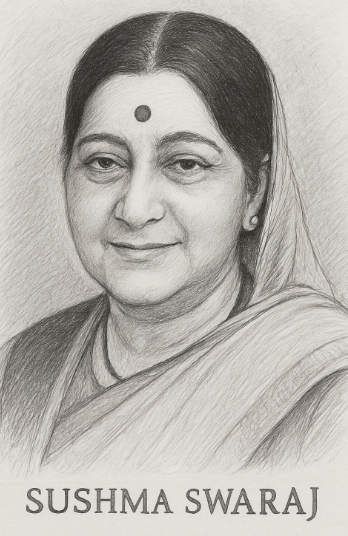
    Sushma Swaraj

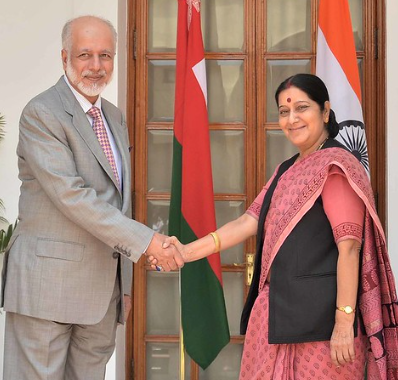
    As External Affairs Minister, Sushma Swaraj brought a human touch to diplomacy. Her presence on Twitter wasn’t just a political strategy — it was a lifeline for thousands of Indians abroad, especially women trapped in abusive marriages or stranded in foreign lands.

    She personally intervened in hundreds of such cases, making the Ministry of External Affairs a symbol of hope. Women knew — if no one else listened, Sushma Swaraj would.

    Here are two real and powerful stories showcasing Sushma Swaraj’s deep compassion & commitment to women empowerment:


    🌍 1. Saving Indian Women Abroad – The “Mother of NRI Distressed Women”

    Sushma Swaraj, during her tenure as External Affairs Minister, became a beacon of hope for countless Indian women trapped in abusive marriages abroad.
    One such case was of an Indian woman in Saudi Arabia, who had been locked up and beaten by her employer. When her desperate family tweeted to Sushma Swaraj, she personally intervened, directing the Indian embassy to act swiftly. The woman was rescued and flown back home.

    Sukhwant Kaur — Trafficked and Forced into Slavery

    Also in 2017, Sukhwant Kaur, a 55-year-old woman from Jalandhar, was similarly tricked by agents into going to Saudi Arabia. She ended up working as a slave laborer—denied wages, beaten, and locked away. Her husband sought help from the Indian government, and Sushma Swaraj personally intervened. In under days, Sukhwant was back home—safe and reunited with her family. She sent thanks message to Sushma Swaraj.

    🔸 Impact: She restored dignity and safety for women across borders, treating every call for help like a personal mission.
    Swaraj once said, “Even if you are stuck on Mars, the Indian Embassy will help you.”


    🛂 2. Fast-tracking Visa for a Pakistani Girl’s Medical Emergency

    In 2017, Sushma Swaraj approved a medical visa for a 7-year-old Pakistani girl, who needed urgent heart surgery in India.
    Despite rising tensions between India and Pakistan, she said,

    “The child should not suffer because of the political situation. We will issue the visa.”

    🔸 Message: Through this act of compassion, she showed how true empowerment transcends borders, politics, and prejudice. Her leadership taught women to lead with both strength and empathy.


    Her Fight for Equality and Dignity

    Sushma Swaraj wasn’t a loud feminist. She didn’t need to be. Her actions spoke louder. She championed:

    • Women’s education and representation
    • Safety and dignity for Indian women abroad
    • Stronger laws to support women in distress
    • Equal opportunity in public leadership

    She was a living example that women don’t need to prove they are equal — they already are. What they need is space, support, and opportunity — and she dedicated her career to creating that.

    Sushma Swaraj

    Sushma Swaraj

    A Woman of Grace, Grit & Compassion

    Even in heated political debates, Sushma Swaraj held herself with unmatched grace. She earned respect across party lines, a rare quality in today’s divisive political climate. She was not just a politician; she was a mentor, a mother figure, and a torchbearer for thousands of young Indian women who now dream bigger because of her.


    Her Legacy: Lighting the Way for Tomorrow’s Women

    Sushma Swaraj’s story tells us:

    • You can lead with compassion and still be strong.
    • You can be assertive without being aggressive.
    • And you can change the world not just by laws, but with empathy and courage.

    In her memory, countless women rise — not with anger, but with purpose. To speak, to serve, to lead.


    🎯 Achievements & Contributions

    🔹 External Affairs Minister (2014–2019)

    • Widely respected for her swift humanitarian response, especially through Twitter.
    • Rescued thousands of Indians abroad in crisis situations, including from:
      • Yemen during civil war
      • Middle East in domestic violence and job scams
      • Pakistan for cross-border humanitarian visas

    🔹 Women’s Empowerment

    • Promoted gender representation in governance
    • Mentored young women leaders
    • Stood up for victims of domestic violence, dowry harassment, and trafficking

    🔹 Media & Communication

    • Revamped Doordarshan, launched FM radio in India as I&B Minister
    • Advocated for freedom of the press and ethical journalism

    Challenges Faced

    • Bellary defeat (1999) against Sonia Gandhi, despite valiant campaign in just 12 days.
    • Health struggles in later years, including a kidney transplant in 2016
    • Navigated politics in a male-dominated environment, overcoming gender bias with dignity

    💕 Personal Life

    • Husband: Swaraj Kaushal, a prominent lawyer and former Governor of Mizoram
    • Daughter: Bansuri Swaraj, a lawyer

    🕊️ Awards & Honors

    • Outstanding Parliamentarian Award (2004)
    • Posthumously awarded Padma Vibhushan (2020) – India’s second-highest civilian award

    🌼 Final Tribute

    On 06 Augest, 2019, Sushma Swaraj breathed her last with the nation on her mind and duty in her heart. Even in her final hours, she stood as a pillar of service—her soul departing in silent dedication to the people she served all her life.

    Sushma Swaraj wasn’t just a politician — she was a symbol of what women in leadership can be: ethical, effective, and empathetic.

    She inspired millions of women to step forward, speak up, and lead with courage and compassion.

    🌸 “She Spoke, and the Nation Listened” 🌸

    — A Tribute to Sushma Swaraj

    She wore her saree like armor bright,
    With grace that calmed and strength so light.
    A voice of courage, calm and clear,
    She spoke — and millions rose to cheer.

    Not just a leader, but a guiding flame,
    In halls of power, she carved her name.
    Where silence fell, her words would rise,
    A daughter of Bharat, bold and wise.

    She held the truth like sacred art,
    With strength in soul and lion’s heart.
    For every girl who dared to dream,
    She became the light, the living stream.

    She walked with purpose, heart so wide,
    For every woman silenced or denied.
    She didn’t just rise — she reached behind,
    To lift the broken, the lost, the blind.

    Through trials faced and glass ceilings torn,
    A warrior of dignity, quietly born.
    Now stars above may claim her grace,
    But her fire still burns in every place.


    💬 A Quote to Remember

    “Empowering women is not a slogan. It’s a duty, a commitment to our future.”Sushma Swaraj


    Call to Action:

    Women Empowerment

    She rose… so can you.
    Every woman holds the fire to transform her pain into power, her silence into strength.
    Stand tall. Speak up. Lift another.
    Because when one woman rises, she takes a hundred more with her.
    Be the spark. Be the change. Empower one, empower all.


    Read our tribute to women warriors here.

    Reference – Biograpghy of Sushma Swaraj.

  • 🌟 Sushma Swaraj: The Voice That Empowered Millions of Women

    🌟 Sushma Swaraj: The Voice That Empowered Millions of Women

    “I am a daughter, a mother, a leader — and above all, I am a woman who believes in change.”

    In the corridors of power, where voices often rise to dominate, hers was calm — yet it thundered. Sushma Swaraj wasn’t just a leader. She was a symbol — of dignity, resolve, compassion, and relentless commitment to the cause of women empowerment in India.


    In Memories, Always🙏

    I still remember my childhood days, coming back home from school, switching on Doordarshan, and seeing her — a bold, graceful woman in a saree, standing tall in Parliament, voice unwavering, confidently debating in Parliament in exceptionally fluent, powerful, and deeply rooted Hindi language showing cultural richness. The screen read “Sushma Swaraj.” Watching her on TV always stirred something deep within me — a sense of pride, strength, and silent inspiration that stayed long after the screen faded. For a young girl, it was powerful to witness a woman command the room with such strength and dignity. Sushma ji became more than a name — she became an inspiration, a role model for countless daughters of India.


    🕵️‍♀️ Birth and Early Life

    • Born: 14 February 1952, Ambala Cantt, Haryana, India
    • Father: Hardev Sharma, a prominent RSS member
    • Education:
      • Bachelor’s in Sanskrit and Political Science from Sanatan Dharma College, Ambala
      • LL.B. from Punjab University, Chandigarh
      • Best Hindi Speaker award, twice, from Haryana government

    From a young age, Sushma showed excellence in academics, debate, and social responsibility. Her oratory and clarity of thought made her stand out even before entering public life.


    A Trailblazer in Politics: Breaking Glass Ceilings

    Sushma Swaraj’s political journey began at a time when women in Indian politics were rare. At just 25, she became the youngest cabinet minister in the Haryana government. She didn’t stop there. From being the first woman spokesperson of a national political party to India’s second woman External Affairs Minister, her path was one of many firsts — shattering stereotypes every step of the way.

    Her leadership was not loud, but graceful and powerful — a proof that strength doesn’t always roar; sometimes, it simply stands tall with integrity.


    Making Women’s Voices Heard, Worldwide

    Sushma Swaraj

    As External Affairs Minister, Sushma Swaraj brought a human touch to diplomacy. Her presence on Twitter wasn’t just a political strategy — it was a lifeline for thousands of Indians abroad, especially women trapped in abusive marriages or stranded in foreign lands.

    She personally intervened in hundreds of such cases, making the Ministry of External Affairs a symbol of hope. Women knew — if no one else listened, Sushma Swaraj would.

    Here are two real and powerful stories showcasing Sushma Swaraj’s deep compassion & commitment to women empowerment:


    🌍 1. Saving Indian Women Abroad – The “Mother of NRI Distressed Women”

    Sushma Swaraj, during her tenure as External Affairs Minister, became a beacon of hope for countless Indian women trapped in abusive marriages abroad.
    One such case was of an Indian woman in Saudi Arabia, who had been locked up and beaten by her employer. When her desperate family tweeted to Sushma Swaraj, she personally intervened, directing the Indian embassy to act swiftly. The woman was rescued and flown back home.

    Sukhwant Kaur — Trafficked and Forced into Slavery

    Also in 2017, Sukhwant Kaur, a 55-year-old woman from Jalandhar, was similarly tricked by agents into going to Saudi Arabia. She ended up working as a slave laborer—denied wages, beaten, and locked away. Her husband sought help from the Indian government, and Sushma Swaraj personally intervened. In under days, Sukhwant was back home—safe and reunited with her family. She sent thanks message to Sushma Swaraj.

    🔸 Impact: She restored dignity and safety for women across borders, treating every call for help like a personal mission.
    Swaraj once said, “Even if you are stuck on Mars, the Indian Embassy will help you.”


    🛂 2. Fast-tracking Visa for a Pakistani Girl’s Medical Emergency

    In 2017, Sushma Swaraj approved a medical visa for a 7-year-old Pakistani girl, who needed urgent heart surgery in India.
    Despite rising tensions between India and Pakistan, she said,

    “The child should not suffer because of the political situation. We will issue the visa.”

    🔸 Message: Through this act of compassion, she showed how true empowerment transcends borders, politics, and prejudice. Her leadership taught women to lead with both strength and empathy.


    Her Fight for Equality and Dignity

    Sushma Swaraj wasn’t a loud feminist. She didn’t need to be. Her actions spoke louder. She championed:

    • Women’s education and representation
    • Safety and dignity for Indian women abroad
    • Stronger laws to support women in distress
    • Equal opportunity in public leadership

    She was a living example that women don’t need to prove they are equal — they already are. What they need is space, support, and opportunity — and she dedicated her career to creating that.

    Sushma Swaraj

    Sushma Swaraj

    A Woman of Grace, Grit & Compassion

    Even in heated political debates, Sushma Swaraj held herself with unmatched grace. She earned respect across party lines, a rare quality in today’s divisive political climate. She was not just a politician; she was a mentor, a mother figure, and a torchbearer for thousands of young Indian women who now dream bigger because of her.


    Her Legacy: Lighting the Way for Tomorrow’s Women

    Sushma Swaraj’s story tells us:

    • You can lead with compassion and still be strong.
    • You can be assertive without being aggressive.
    • And you can change the world not just by laws, but with empathy and courage.

    In her memory, countless women rise — not with anger, but with purpose. To speak, to serve, to lead.


    🎯 Achievements & Contributions

    🔹 External Affairs Minister (2014–2019)

    • Widely respected for her swift humanitarian response, especially through Twitter.
    • Rescued thousands of Indians abroad in crisis situations, including from:
      • Yemen during civil war
      • Middle East in domestic violence and job scams
      • Pakistan for cross-border humanitarian visas

    🔹 Women’s Empowerment

    • Promoted gender representation in governance
    • Mentored young women leaders
    • Stood up for victims of domestic violence, dowry harassment, and trafficking

    🔹 Media & Communication

    • Revamped Doordarshan, launched FM radio in India as I&B Minister
    • Advocated for freedom of the press and ethical journalism

    Challenges Faced

    • Bellary defeat (1999) against Sonia Gandhi, despite valiant campaign in just 12 days.
    • Health struggles in later years, including a kidney transplant in 2016
    • Navigated politics in a male-dominated environment, overcoming gender bias with dignity

    💕 Personal Life

    • Husband: Swaraj Kaushal, a prominent lawyer and former Governor of Mizoram
    • Daughter: Bansuri Swaraj, a lawyer

    🕊️ Awards & Honors

    • Outstanding Parliamentarian Award (2004)
    • Posthumously awarded Padma Vibhushan (2020) – India’s second-highest civilian award

    🌼 Final Tribute

    On 06 Augest, 2019, Sushma Swaraj breathed her last with the nation on her mind and duty in her heart. Even in her final hours, she stood as a pillar of service—her soul departing in silent dedication to the people she served all her life.

    Sushma Swaraj wasn’t just a politician — she was a symbol of what women in leadership can be: ethical, effective, and empathetic.

    She inspired millions of women to step forward, speak up, and lead with courage and compassion.

    🌸 “She Spoke, and the Nation Listened” 🌸

    — A Tribute to Sushma Swaraj

    She wore her saree like armor bright,
    With grace that calmed and strength so light.
    A voice of courage, calm and clear,
    She spoke — and millions rose to cheer.

    Not just a leader, but a guiding flame,
    In halls of power, she carved her name.
    Where silence fell, her words would rise,
    A daughter of Bharat, bold and wise.

    She held the truth like sacred art,
    With strength in soul and lion’s heart.
    For every girl who dared to dream,
    She became the light, the living stream.

    She walked with purpose, heart so wide,
    For every woman silenced or denied.
    She didn’t just rise — she reached behind,
    To lift the broken, the lost, the blind.

    Through trials faced and glass ceilings torn,
    A warrior of dignity, quietly born.
    Now stars above may claim her grace,
    But her fire still burns in every place.


    💬 A Quote to Remember

    “Empowering women is not a slogan. It’s a duty, a commitment to our future.”Sushma Swaraj


    Call to Action:

    Women Empowerment

    She rose… so can you.
    Every woman holds the fire to transform her pain into power, her silence into strength.
    Stand tall. Speak up. Lift another.
    Because when one woman rises, she takes a hundred more with her.
    Be the spark. Be the change. Empower one, empower all.


    Read our tribute to women warriors here.

    Reference – Biograpghy of Sushma Swaraj.

  • 🌟 Sushma Swaraj: The Voice That Empowered Millions of Women

    🌟 Sushma Swaraj: The Voice That Empowered Millions of Women

    “I am a daughter, a mother, a leader — and above all, I am a woman who believes in change.”

    In the corridors of power, where voices often rise to dominate, hers was calm — yet it thundered. Sushma Swaraj wasn’t just a leader. She was a symbol — of dignity, resolve, compassion, and relentless commitment to the cause of women empowerment in India.


    In Memories, Always🙏

    I still remember my childhood days, coming back home from school, switching on Doordarshan, and seeing her — a bold, graceful woman in a saree, standing tall in Parliament, voice unwavering, confidently debating in Parliament in exceptionally fluent, powerful, and deeply rooted Hindi language showing cultural richness. The screen read “Sushma Swaraj.” Watching her on TV always stirred something deep within me — a sense of pride, strength, and silent inspiration that stayed long after the screen faded. For a young girl, it was powerful to witness a woman command the room with such strength and dignity. Sushma ji became more than a name — she became an inspiration, a role model for countless daughters of India.


    🕵️‍♀️ Birth and Early Life

    • Born: 14 February 1952, Ambala Cantt, Haryana, India
    • Father: Hardev Sharma, a prominent RSS member
    • Education:
      • Bachelor’s in Sanskrit and Political Science from Sanatan Dharma College, Ambala
      • LL.B. from Punjab University, Chandigarh
      • Best Hindi Speaker award, twice, from Haryana government

    From a young age, Sushma showed excellence in academics, debate, and social responsibility. Her oratory and clarity of thought made her stand out even before entering public life.


    A Trailblazer in Politics: Breaking Glass Ceilings

    Sushma Swaraj’s political journey began at a time when women in Indian politics were rare. At just 25, she became the youngest cabinet minister in the Haryana government. She didn’t stop there. From being the first woman spokesperson of a national political party to India’s second woman External Affairs Minister, her path was one of many firsts — shattering stereotypes every step of the way.

    Her leadership was not loud, but graceful and powerful — a proof that strength doesn’t always roar; sometimes, it simply stands tall with integrity.


    Making Women’s Voices Heard, Worldwide

    Sushma Swaraj

    As External Affairs Minister, Sushma Swaraj brought a human touch to diplomacy. Her presence on Twitter wasn’t just a political strategy — it was a lifeline for thousands of Indians abroad, especially women trapped in abusive marriages or stranded in foreign lands.

    She personally intervened in hundreds of such cases, making the Ministry of External Affairs a symbol of hope. Women knew — if no one else listened, Sushma Swaraj would.

    Here are two real and powerful stories showcasing Sushma Swaraj’s deep compassion & commitment to women empowerment:


    🌍 1. Saving Indian Women Abroad – The “Mother of NRI Distressed Women”

    Sushma Swaraj, during her tenure as External Affairs Minister, became a beacon of hope for countless Indian women trapped in abusive marriages abroad.
    One such case was of an Indian woman in Saudi Arabia, who had been locked up and beaten by her employer. When her desperate family tweeted to Sushma Swaraj, she personally intervened, directing the Indian embassy to act swiftly. The woman was rescued and flown back home.

    Sukhwant Kaur — Trafficked and Forced into Slavery

    Also in 2017, Sukhwant Kaur, a 55-year-old woman from Jalandhar, was similarly tricked by agents into going to Saudi Arabia. She ended up working as a slave laborer—denied wages, beaten, and locked away. Her husband sought help from the Indian government, and Sushma Swaraj personally intervened. In under days, Sukhwant was back home—safe and reunited with her family. She sent thanks message to Sushma Swaraj.

    🔸 Impact: She restored dignity and safety for women across borders, treating every call for help like a personal mission.
    Swaraj once said, “Even if you are stuck on Mars, the Indian Embassy will help you.”


    🛂 2. Fast-tracking Visa for a Pakistani Girl’s Medical Emergency

    In 2017, Sushma Swaraj approved a medical visa for a 7-year-old Pakistani girl, who needed urgent heart surgery in India.
    Despite rising tensions between India and Pakistan, she said,

    “The child should not suffer because of the political situation. We will issue the visa.”

    🔸 Message: Through this act of compassion, she showed how true empowerment transcends borders, politics, and prejudice. Her leadership taught women to lead with both strength and empathy.


    Her Fight for Equality and Dignity

    Sushma Swaraj wasn’t a loud feminist. She didn’t need to be. Her actions spoke louder. She championed:

    • Women’s education and representation
    • Safety and dignity for Indian women abroad
    • Stronger laws to support women in distress
    • Equal opportunity in public leadership

    She was a living example that women don’t need to prove they are equal — they already are. What they need is space, support, and opportunity — and she dedicated her career to creating that.

    Sushma Swaraj

    Sushma Swaraj

    A Woman of Grace, Grit & Compassion

    Even in heated political debates, Sushma Swaraj held herself with unmatched grace. She earned respect across party lines, a rare quality in today’s divisive political climate. She was not just a politician; she was a mentor, a mother figure, and a torchbearer for thousands of young Indian women who now dream bigger because of her.


    Her Legacy: Lighting the Way for Tomorrow’s Women

    Sushma Swaraj’s story tells us:

    • You can lead with compassion and still be strong.
    • You can be assertive without being aggressive.
    • And you can change the world not just by laws, but with empathy and courage.

    In her memory, countless women rise — not with anger, but with purpose. To speak, to serve, to lead.


    🎯 Achievements & Contributions

    🔹 External Affairs Minister (2014–2019)

    • Widely respected for her swift humanitarian response, especially through Twitter.
    • Rescued thousands of Indians abroad in crisis situations, including from:
      • Yemen during civil war
      • Middle East in domestic violence and job scams
      • Pakistan for cross-border humanitarian visas

    🔹 Women’s Empowerment

    • Promoted gender representation in governance
    • Mentored young women leaders
    • Stood up for victims of domestic violence, dowry harassment, and trafficking

    🔹 Media & Communication

    • Revamped Doordarshan, launched FM radio in India as I&B Minister
    • Advocated for freedom of the press and ethical journalism

    Challenges Faced

    • Bellary defeat (1999) against Sonia Gandhi, despite valiant campaign in just 12 days.
    • Health struggles in later years, including a kidney transplant in 2016
    • Navigated politics in a male-dominated environment, overcoming gender bias with dignity

    💕 Personal Life

    • Husband: Swaraj Kaushal, a prominent lawyer and former Governor of Mizoram
    • Daughter: Bansuri Swaraj, a lawyer

    🕊️ Awards & Honors

    • Outstanding Parliamentarian Award (2004)
    • Posthumously awarded Padma Vibhushan (2020) – India’s second-highest civilian award

    🌼 Final Tribute

    On 06 Augest, 2019, Sushma Swaraj breathed her last with the nation on her mind and duty in her heart. Even in her final hours, she stood as a pillar of service—her soul departing in silent dedication to the people she served all her life.

    Sushma Swaraj wasn’t just a politician — she was a symbol of what women in leadership can be: ethical, effective, and empathetic.

    She inspired millions of women to step forward, speak up, and lead with courage and compassion.

    🌸 “She Spoke, and the Nation Listened” 🌸

    — A Tribute to Sushma Swaraj

    She wore her saree like armor bright,
    With grace that calmed and strength so light.
    A voice of courage, calm and clear,
    She spoke — and millions rose to cheer.

    Not just a leader, but a guiding flame,
    In halls of power, she carved her name.
    Where silence fell, her words would rise,
    A daughter of Bharat, bold and wise.

    She held the truth like sacred art,
    With strength in soul and lion’s heart.
    For every girl who dared to dream,
    She became the light, the living stream.

    She walked with purpose, heart so wide,
    For every woman silenced or denied.
    She didn’t just rise — she reached behind,
    To lift the broken, the lost, the blind.

    Through trials faced and glass ceilings torn,
    A warrior of dignity, quietly born.
    Now stars above may claim her grace,
    But her fire still burns in every place.


    💬 A Quote to Remember

    “Empowering women is not a slogan. It’s a duty, a commitment to our future.”Sushma Swaraj


    Call to Action:

    Women Empowerment

    She rose… so can you.
    Every woman holds the fire to transform her pain into power, her silence into strength.
    Stand tall. Speak up. Lift another.
    Because when one woman rises, she takes a hundred more with her.
    Be the spark. Be the change. Empower one, empower all.


    Read our tribute to women warriors here.

    Reference – Biograpghy of Sushma Swaraj.

  • 2 Women 1 Bond: Sindhutai Sapkal & Her Daughter’s Spiritual Rise: From Hurt to Healing to Empowering

    2 Women 1 Bond: Sindhutai Sapkal & Her Daughter’s Spiritual Rise: From Hurt to Healing to Empowering

    “A mother is defined not just by child birth; sometimes, pain, rejection, and purpose makes her a mother.”

    How many times you must have crumbled over small setbacks—losing your temper, feeling stressed, or seeking revenge for petty hurts? But then, there are stories that will humble you. Stories of women who endured unbearable pain, silence, and injustice. They didn’t scream or strike back—they rose with the hurt. Today, we bring you a real-life journey of 2 such women – mother daughter duo—broken by life, yet unshaken in spirit. Their response to suffering is what truly raises them to the highest spiritual health with inner peace & contentment and earns them our deepest respect🙏.


    💫 The Story of Sindhutai Sapkal — From Rejection to Reverence

    Born into a poor cattle-grazing family in Wardha, Maharashtra in 1948, Sindhutai Sapkal was married off at the tender age of 12 to a man 20 years older. Her life quickly spiraled into abuse and betrayal. At 20, pregnant and beaten, she was thrown out of her home by her husband.

    Left on the streets with a newborn in her arms, she begged to survive—but never begged for sympathy. Instead, she found purpose in the cries of orphans around her.

    That’s where her spiritual journey began—not in temples, but in selfless motherhood.


    💔 The Untold Pain Behind Sindhutai Sapkal’s Marriage

    A Child Bride With Dreams, Silenced Too Soon

    Born as Sindhu Sathe in 1948 in a poor family in Wardha, Maharashtra, she was lovingly called “Chindhi”, meaning torn cloth, because her family believed she was unwanted.
    Her father, though financially weak, believed in education and secretly sent her to school by using cow dung leaves as paper and charcoal as ink.

    However, societal norms prevailed, and at the tender age of 12, Sindhu was married off to a man 20 years older—a 32-year-old cowherd named Shrihari Sapkal. Her dreams were buried under the burden of a household far too early.


    The Deep Wounds of Abuse and Distrust

    Sindhutai’s marriage was marked by emotional torment, beatings, and suppression. Her husband, insecure and manipulated by village politics, grew increasingly suspicious of her.

    At age 20, while nine months pregnant, Sindhutai stood up for the rights of Adivasi women who were being exploited by local authorities. She publicly questioned a forest officer for withholding wages from tribal workers—a bold move for a woman, let alone one from a backward village.

    This act of courage, however, invited wrath instead of respect.


    🩸 Betrayal That Left Her Bleeding—Literally

    The forest officer, enraged by her defiance, falsely accused her of being a prostitute. Rumors spread quickly, and her husband—without verification—believed the lie.

    One night, in a fit of rage and blind shame, he beat her brutally and threw her out of the house. Alone, bruised, and bleeding, she found herself abandoned by the very person she had dedicated her young life to.


    🌙 Alone Under the Sky—Giving Birth in a Cow Shelter

    Homeless, with no food, no family, and just days away from delivery, Sindhutai took refuge in a cow shelter (gau shala).
    Under the shelter of a broken roof and amid haystacks, she gave birth to her daughter—alone.

    That night, without a single soul to help her, she cut the umbilical cord with a sharp stone, wrapped her newborn in rags, and made a decision:

    “If I can survive this night, I will not let another child feel this pain.”

    That moment was her spiritual rebirth.


    🧘Spiritual Health Born Through Service

    Rather than surrender to trauma, Sindhutai transformed her suffering into seva (service). She adopted over 1,400 orphaned children and became “Mai” (Mother) to all of them.

    She lived in ashrams and train stations, sang bhajans for food, and used every rupee earned to feed and shelter abandoned kids. Her emotional wounds became her spiritual strength.

    She believed:

    “I have no one… That’s why I became mother to everyone.”

    Sindhutai Sapkal feeding the orphans

    🌼 Forgiveness That Stunned the World

    Sindhutai Sapkal with husband Hari Sapkal

    Years later, when her husband grew old and was left destitute, Sindhutai forgave him. She took him in—not as her husband—but as another orphan, one among the thousands she adopted.

    “I accepted him as one of my children,” she said. “Because he too had no one.”

    This profound act of forgiveness and spiritual transcendence touched millions. It reflected not weakness, but the deepest strength—the kind that comes only from the heart of a mother and the soul of a healer.

    Her ability to forgive her abusive husband, even allowing him to live in her shelter as an orphan, was perhaps her deepest act of spiritual transcendence.


    Why Indian Women Tend to Be Spiritually Healthier Than Men

    In India, women are often raised with values of compassion, devotion, and sacrifice. From praying daily to holding families together during crises, spirituality becomes not just a practice—but a way of life.

    🌸 Story of a Mother in India

    She entered her home with dreams in her eyes,
    But those dreams slowly turned into silent cries.
    Behind the veil, she hid her scars,
    Smiling by day, weeping under the stars.

    Words cut deeper than the wounds she bore,
    Yet she stayed strong, always wanting more—
    Not for herself, but for the ones she fed,
    With trembling hands and prayers silently said.

    She told herself each sleepless night,
    “My children will rise, they’ll touch the light.”
    She swallowed pain, served love on a plate,
    And waited for life to change her fate.

    She never spoke of the life she lost,
    For her children’s dreams, she bore every cost.
    She is every mother—quiet, unseen,
    The strength behind every child’s dream.

    Indian House - Mother-in-law & husband abusing

    🕉️ Key reasons why Indian women exhibit higher spiritual resilience

    Indian Mother in Temple

    • 1. Rooted in Rituals: Many women grow up participating in pujas, vrats, and spiritual stories that build emotional grounding.
    • 2. Emotional Strength through Adversity: From facing gender bias to handling family responsibilities, women often channel pain into prayer and surrender.
    • 3. Devotion over Ego: Culturally, women are taught humility and devotion, while men are often expected to lead externally rather than reflect internally.
    • 4. Nurturing Energy: The divine feminine or Shakti represents the ultimate creative and healing force — women embody that energy naturally.

    🌼 Legacy of Sindhutai Sapkal: A Spirit Beyond Her Time

    Sindhutai passed away in 2022, leaving behind not just children, but a living temple of love. Many of her adopted children became doctors, lawyers, social workers, and even caretakers of other orphans.

    Her life is a masterclass in spiritual health through selflessness.


    👩‍👧 The Silent Sacrifice: Sindhutai and Her Daughter Mamta

    The night Sindhutai gave birth alone in a cow shelter, clutching her belly under an open sky, she also gave birth to her destiny.
    That child—her only biological daughter—was named Mamta.

    But life would soon demand of her an even more profound sacrifice.

    Sindhutai Sapkal with Orphans

    Despite the deep love she held for Mamta, Sindhutai realized that if she were to dedicate her life to hundreds of orphaned children, she must not show any sign of personal attachment or bias. She feared that raising her own daughter alongside orphans might create a sense of inequality among them.


    💔 A Mother’s Painful Choice

    In an act of almost unimaginable spiritual strength, Sindhutai entrusted Mamta to a trust to be raised separately.
    It wasn’t abandonment—it was a conscious act of selflessness.
    She believed that by doing so, she could love every orphan she adopted as her own, without any distinction.

    I gave away my own daughter to serve thousands of children equally. That was not easy. But love is not ownership—it is surrender,” she once said.


    🧕 Mamta’s Understanding and Strength

    Sindhutai Sapkal Daughter - Mamta Sindhutai Sapkal

    Years later, Mamta reunited with her mother, not just emotionally but in her mission.
    Today, Mamta is actively involved in the work and social institutions her mother built, standing proudly beside her as a reflection of quiet strength and generational purpose.

    Mamta never resented her mother’s decision. Instead, she grew up understanding the enormity of Sindhutai’s path and has since embraced her role in continuing her mother’s legacy.


    🌟 A Legacy Passed On

    Sindhutai’s story is not only of her own spiritual power—it’s also a story of a daughter who inherited that strength, not through comfort, but through courage.

    Together, their journey tells us this:

    True healing & upliftment happens not when we take, but when we give.

    Mamta Sindhutai Sapkal

    💖 A Call to Reflect

    In a world chasing status and material success, Sindhutai reminds us that true power lies in giving.
    Her legacy is proof that a woman’s deepest strength isn’t in her status, but in her soul.

    Let us honor her by empowering women to turn pain into purpose, and hearts into homes of healing.


    🏆 Sindhutai Sapkal: Awards and Recognitions

    🥇 1. Padma Shri (2021)

    One of India’s highest civilian honors, awarded by the Government of India for her distinguished service in the field of Social Work.

    “For selfless service to over 1,500 orphaned children and creating 6+ institutions for their care.”


    🌿 2. Mother Teresa Award for Social Justice (2013)

    Awarded for her lifelong dedication to uplifting the poor, abandoned, and orphaned, especially children and women.


    🏅 3. Real Heroes Award by CNN-IBN and Reliance Foundation (2008)

    Celebrated as a true grassroots hero for changing lives through love, care, and perseverance.


    🥇 4. Ahilyabai Holkar Award by Government of Maharashtra (2010)

    For her work in women empowerment and child welfare in Maharashtra.


    💖 5. Jeevan Sadhana Gaurav Award

    By Pune University, recognizing her lifetime achievement in social service.


    🎓 6. Honorary Doctorate (D.Litt.) by DY Patil Institute of Technology, Pune

    In recognition of her extraordinary contributions to society, especially in education and rehabilitation.


    🕊️ 7. National Award for Iconic Mother (2016)

    Given for her role as a universal mother figure to thousands of orphaned and abandoned children.


    🧡 8. Nari Shakti Puraskar (2017 Nominee)

    India’s highest civilian award for women, she was widely recommended and celebrated for her empowering work with women and children.


    🏠 Legacy Beyond Awards

    • Over 1,500+ children lovingly raised
    • Many became doctors, lawyers, engineers—and some now run her orphanages
    • Founded 4 organizations including:
      • Savitribai Phule Girls’ Hostel
      • Mamta Bal Bhavan
      • Sanmati Bal Niketan
      • Abhiman Bal Bhavan

    If you wish to donate to above organizations, check Mamata Sindhutai Sapkal’s website here.

    Read about Women Empowerment & India’s ranking in gender gap here.