Category: Women Empowerment

Women Empowerment

  • 2 Women 1 Bond: Sindhutai Sapkal & Her Daughter’s Spiritual Rise: From Hurt to Healing to Empowering

    2 Women 1 Bond: Sindhutai Sapkal & Her Daughter’s Spiritual Rise: From Hurt to Healing to Empowering

    “A mother is defined not just by child birth; sometimes, pain, rejection, and purpose makes her a mother.”

    How many times you must have crumbled over small setbacks—losing your temper, feeling stressed, or seeking revenge for petty hurts? But then, there are stories that will humble you. Stories of women who endured unbearable pain, silence, and injustice. They didn’t scream or strike back—they rose with the hurt. Today, we bring you a real-life journey of 2 such women – mother daughter duo—broken by life, yet unshaken in spirit. Their response to suffering is what truly raises them to the highest spiritual health with inner peace & contentment and earns them our deepest respect🙏.


    💫 The Story of Sindhutai Sapkal — From Rejection to Reverence

    Born into a poor cattle-grazing family in Wardha, Maharashtra in 1948, Sindhutai Sapkal was married off at the tender age of 12 to a man 20 years older. Her life quickly spiraled into abuse and betrayal. At 20, pregnant and beaten, she was thrown out of her home by her husband.

    Left on the streets with a newborn in her arms, she begged to survive—but never begged for sympathy. Instead, she found purpose in the cries of orphans around her.

    That’s where her spiritual journey began—not in temples, but in selfless motherhood.


    💔 The Untold Pain Behind Sindhutai Sapkal’s Marriage

    A Child Bride With Dreams, Silenced Too Soon

    Born as Sindhu Sathe in 1948 in a poor family in Wardha, Maharashtra, she was lovingly called “Chindhi”, meaning torn cloth, because her family believed she was unwanted.
    Her father, though financially weak, believed in education and secretly sent her to school by using cow dung leaves as paper and charcoal as ink.

    However, societal norms prevailed, and at the tender age of 12, Sindhu was married off to a man 20 years older—a 32-year-old cowherd named Shrihari Sapkal. Her dreams were buried under the burden of a household far too early.


    The Deep Wounds of Abuse and Distrust

    Sindhutai’s marriage was marked by emotional torment, beatings, and suppression. Her husband, insecure and manipulated by village politics, grew increasingly suspicious of her.

    At age 20, while nine months pregnant, Sindhutai stood up for the rights of Adivasi women who were being exploited by local authorities. She publicly questioned a forest officer for withholding wages from tribal workers—a bold move for a woman, let alone one from a backward village.

    This act of courage, however, invited wrath instead of respect.


    🩸 Betrayal That Left Her Bleeding—Literally

    The forest officer, enraged by her defiance, falsely accused her of being a prostitute. Rumors spread quickly, and her husband—without verification—believed the lie.

    One night, in a fit of rage and blind shame, he beat her brutally and threw her out of the house. Alone, bruised, and bleeding, she found herself abandoned by the very person she had dedicated her young life to.


    🌙 Alone Under the Sky—Giving Birth in a Cow Shelter
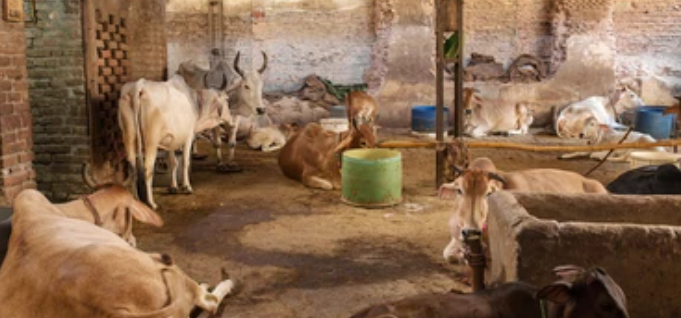
    Homeless, with no food, no family, and just days away from delivery, Sindhutai took refuge in a cow shelter (gau shala).
    Under the shelter of a broken roof and amid haystacks, she gave birth to her daughter—alone.

    That night, without a single soul to help her, she cut the umbilical cord with a sharp stone, wrapped her newborn in rags, and made a decision:

    “If I can survive this night, I will not let another child feel this pain.”

    That moment was her spiritual rebirth.


    🧘Spiritual Health Born Through Service

    Rather than surrender to trauma, Sindhutai transformed her suffering into seva (service). She adopted over 1,400 orphaned children and became “Mai” (Mother) to all of them.

    She lived in ashrams and train stations, sang bhajans for food, and used every rupee earned to feed and shelter abandoned kids. Her emotional wounds became her spiritual strength.

    She believed:

    “I have no one… That’s why I became mother to everyone.”
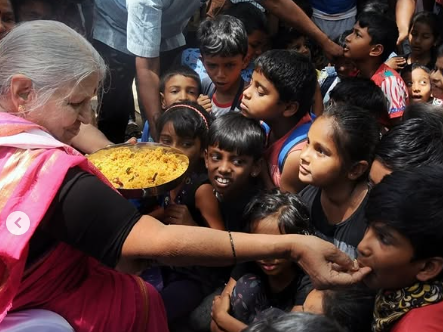
    Sindhutai Sapkal feeding the orphans

    🌼 Forgiveness That Stunned the World

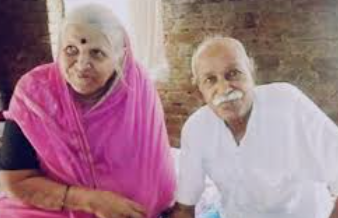
    Sindhutai Sapkal with husband Hari Sapkal

    Years later, when her husband grew old and was left destitute, Sindhutai forgave him. She took him in—not as her husband—but as another orphan, one among the thousands she adopted.

    “I accepted him as one of my children,” she said. “Because he too had no one.”

    This profound act of forgiveness and spiritual transcendence touched millions. It reflected not weakness, but the deepest strength—the kind that comes only from the heart of a mother and the soul of a healer.

    Her ability to forgive her abusive husband, even allowing him to live in her shelter as an orphan, was perhaps her deepest act of spiritual transcendence.


    Why Indian Women Tend to Be Spiritually Healthier Than Men

    In India, women are often raised with values of compassion, devotion, and sacrifice. From praying daily to holding families together during crises, spirituality becomes not just a practice—but a way of life.

    🌸 Story of a Mother in India

    She entered her home with dreams in her eyes,
    But those dreams slowly turned into silent cries.
    Behind the veil, she hid her scars,
    Smiling by day, weeping under the stars.

    Words cut deeper than the wounds she bore,
    Yet she stayed strong, always wanting more—
    Not for herself, but for the ones she fed,
    With trembling hands and prayers silently said.

    She told herself each sleepless night,
    “My children will rise, they’ll touch the light.”
    She swallowed pain, served love on a plate,
    And waited for life to change her fate.

    She never spoke of the life she lost,
    For her children’s dreams, she bore every cost.
    She is every mother—quiet, unseen,
    The strength behind every child’s dream.
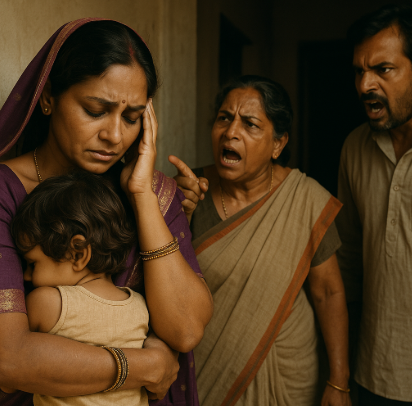
    Indian House - Mother-in-law & husband abusing

    🕉️ Key reasons why Indian women exhibit higher spiritual resilience
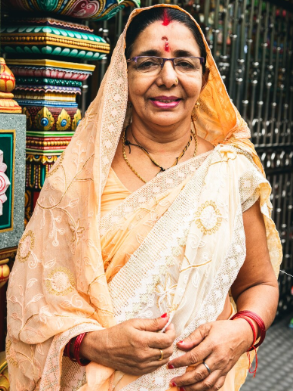
    Indian Mother in Temple

    • 1. Rooted in Rituals: Many women grow up participating in pujas, vrats, and spiritual stories that build emotional grounding.
    • 2. Emotional Strength through Adversity: From facing gender bias to handling family responsibilities, women often channel pain into prayer and surrender.
    • 3. Devotion over Ego: Culturally, women are taught humility and devotion, while men are often expected to lead externally rather than reflect internally.
    • 4. Nurturing Energy: The divine feminine or Shakti represents the ultimate creative and healing force — women embody that energy naturally.

    🌼 Legacy of Sindhutai Sapkal: A Spirit Beyond Her Time

    Sindhutai passed away in 2022, leaving behind not just children, but a living temple of love. Many of her adopted children became doctors, lawyers, social workers, and even caretakers of other orphans.

    Her life is a masterclass in spiritual health through selflessness.


    👩‍👧 The Silent Sacrifice: Sindhutai and Her Daughter Mamta

    The night Sindhutai gave birth alone in a cow shelter, clutching her belly under an open sky, she also gave birth to her destiny.
    That child—her only biological daughter—was named Mamta.

    But life would soon demand of her an even more profound sacrifice.
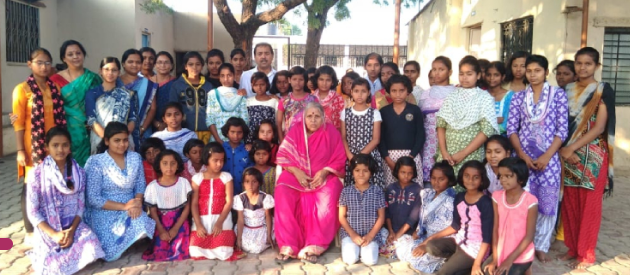
    Sindhutai Sapkal with Orphans

    Despite the deep love she held for Mamta, Sindhutai realized that if she were to dedicate her life to hundreds of orphaned children, she must not show any sign of personal attachment or bias. She feared that raising her own daughter alongside orphans might create a sense of inequality among them.


    💔 A Mother’s Painful Choice

    In an act of almost unimaginable spiritual strength, Sindhutai entrusted Mamta to a trust to be raised separately.
    It wasn’t abandonment—it was a conscious act of selflessness.
    She believed that by doing so, she could love every orphan she adopted as her own, without any distinction.

    I gave away my own daughter to serve thousands of children equally. That was not easy. But love is not ownership—it is surrender,” she once said.


    🧕 Mamta’s Understanding and Strength
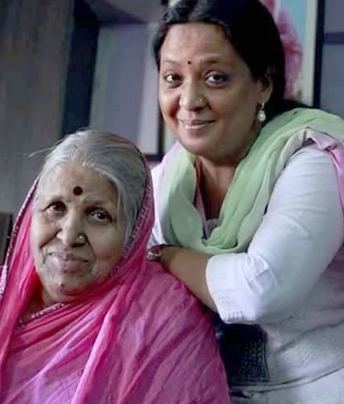
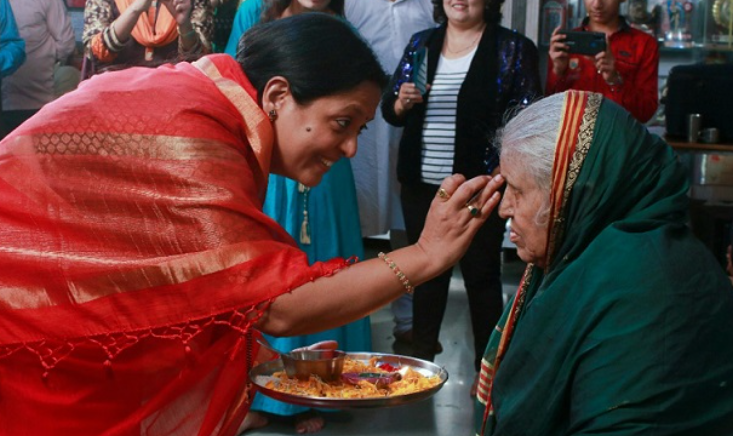
    Sindhutai Sapkal Daughter - Mamta Sindhutai Sapkal

    Years later, Mamta reunited with her mother, not just emotionally but in her mission.
    Today, Mamta is actively involved in the work and social institutions her mother built, standing proudly beside her as a reflection of quiet strength and generational purpose.

    Mamta never resented her mother’s decision. Instead, she grew up understanding the enormity of Sindhutai’s path and has since embraced her role in continuing her mother’s legacy.


    🌟 A Legacy Passed On

    Sindhutai’s story is not only of her own spiritual power—it’s also a story of a daughter who inherited that strength, not through comfort, but through courage.

    Together, their journey tells us this:

    True healing & upliftment happens not when we take, but when we give.
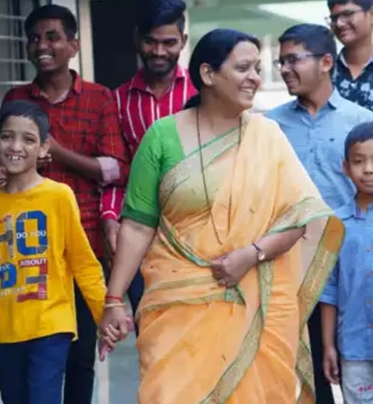
    Mamta Sindhutai Sapkal

    💖 A Call to Reflect

    In a world chasing status and material success, Sindhutai reminds us that true power lies in giving.
    Her legacy is proof that a woman’s deepest strength isn’t in her status, but in her soul.

    Let us honor her by empowering women to turn pain into purpose, and hearts into homes of healing.


    🏆 Sindhutai Sapkal: Awards and Recognitions

    🥇 1. Padma Shri (2021)

    One of India’s highest civilian honors, awarded by the Government of India for her distinguished service in the field of Social Work.

    “For selfless service to over 1,500 orphaned children and creating 6+ institutions for their care.”


    🌿 2. Mother Teresa Award for Social Justice (2013)

    Awarded for her lifelong dedication to uplifting the poor, abandoned, and orphaned, especially children and women.


    🏅 3. Real Heroes Award by CNN-IBN and Reliance Foundation (2008)

    Celebrated as a true grassroots hero for changing lives through love, care, and perseverance.


    🥇 4. Ahilyabai Holkar Award by Government of Maharashtra (2010)

    For her work in women empowerment and child welfare in Maharashtra.


    💖 5. Jeevan Sadhana Gaurav Award

    By Pune University, recognizing her lifetime achievement in social service.


    🎓 6. Honorary Doctorate (D.Litt.) by DY Patil Institute of Technology, Pune

    In recognition of her extraordinary contributions to society, especially in education and rehabilitation.


    🕊️ 7. National Award for Iconic Mother (2016)

    Given for her role as a universal mother figure to thousands of orphaned and abandoned children.


    🧡 8. Nari Shakti Puraskar (2017 Nominee)

    India’s highest civilian award for women, she was widely recommended and celebrated for her empowering work with women and children.


    🏠 Legacy Beyond Awards

    • Over 1,500+ children lovingly raised
    • Many became doctors, lawyers, engineers—and some now run her orphanages
    • Founded 4 organizations including:
      • Savitribai Phule Girls’ Hostel
      • Mamta Bal Bhavan
      • Sanmati Bal Niketan
      • Abhiman Bal Bhavan

    If you wish to donate to above organizations, check Mamata Sindhutai Sapkal’s website here.

    Read about Women Empowerment & India’s ranking in gender gap here.
  • 2 Women 1 Bond: Sindhutai Sapkal & Her Daughter’s Spiritual Rise: From Hurt to Healing to Empowering

    2 Women 1 Bond: Sindhutai Sapkal & Her Daughter’s Spiritual Rise: From Hurt to Healing to Empowering

    “A mother is defined not just by child birth; sometimes, pain, rejection, and purpose makes her a mother.”

    How many times you must have crumbled over small setbacks—losing your temper, feeling stressed, or seeking revenge for petty hurts? But then, there are stories that will humble you. Stories of women who endured unbearable pain, silence, and injustice. They didn’t scream or strike back—they rose with the hurt. Today, we bring you a real-life journey of 2 such women – mother daughter duo—broken by life, yet unshaken in spirit. Their response to suffering is what truly raises them to the highest spiritual health with inner peace & contentment and earns them our deepest respect🙏.


    💫 The Story of Sindhutai Sapkal — From Rejection to Reverence

    Born into a poor cattle-grazing family in Wardha, Maharashtra in 1948, Sindhutai Sapkal was married off at the tender age of 12 to a man 20 years older. Her life quickly spiraled into abuse and betrayal. At 20, pregnant and beaten, she was thrown out of her home by her husband.

    Left on the streets with a newborn in her arms, she begged to survive—but never begged for sympathy. Instead, she found purpose in the cries of orphans around her.

    That’s where her spiritual journey began—not in temples, but in selfless motherhood.


    💔 The Untold Pain Behind Sindhutai Sapkal’s Marriage

    A Child Bride With Dreams, Silenced Too Soon

    Born as Sindhu Sathe in 1948 in a poor family in Wardha, Maharashtra, she was lovingly called “Chindhi”, meaning torn cloth, because her family believed she was unwanted.
    Her father, though financially weak, believed in education and secretly sent her to school by using cow dung leaves as paper and charcoal as ink.

    However, societal norms prevailed, and at the tender age of 12, Sindhu was married off to a man 20 years older—a 32-year-old cowherd named Shrihari Sapkal. Her dreams were buried under the burden of a household far too early.


    The Deep Wounds of Abuse and Distrust

    Sindhutai’s marriage was marked by emotional torment, beatings, and suppression. Her husband, insecure and manipulated by village politics, grew increasingly suspicious of her.

    At age 20, while nine months pregnant, Sindhutai stood up for the rights of Adivasi women who were being exploited by local authorities. She publicly questioned a forest officer for withholding wages from tribal workers—a bold move for a woman, let alone one from a backward village.

    This act of courage, however, invited wrath instead of respect.


    🩸 Betrayal That Left Her Bleeding—Literally

    The forest officer, enraged by her defiance, falsely accused her of being a prostitute. Rumors spread quickly, and her husband—without verification—believed the lie.

    One night, in a fit of rage and blind shame, he beat her brutally and threw her out of the house. Alone, bruised, and bleeding, she found herself abandoned by the very person she had dedicated her young life to.


    🌙 Alone Under the Sky—Giving Birth in a Cow Shelter

    Homeless, with no food, no family, and just days away from delivery, Sindhutai took refuge in a cow shelter (gau shala).
    Under the shelter of a broken roof and amid haystacks, she gave birth to her daughter—alone.

    That night, without a single soul to help her, she cut the umbilical cord with a sharp stone, wrapped her newborn in rags, and made a decision:

    “If I can survive this night, I will not let another child feel this pain.”

    That moment was her spiritual rebirth.


    🧘Spiritual Health Born Through Service

    Rather than surrender to trauma, Sindhutai transformed her suffering into seva (service). She adopted over 1,400 orphaned children and became “Mai” (Mother) to all of them.

    She lived in ashrams and train stations, sang bhajans for food, and used every rupee earned to feed and shelter abandoned kids. Her emotional wounds became her spiritual strength.

    She believed:

    “I have no one… That’s why I became mother to everyone.”

    Sindhutai Sapkal feeding the orphans

    🌼 Forgiveness That Stunned the World

    Sindhutai Sapkal with husband Hari Sapkal

    Years later, when her husband grew old and was left destitute, Sindhutai forgave him. She took him in—not as her husband—but as another orphan, one among the thousands she adopted.

    “I accepted him as one of my children,” she said. “Because he too had no one.”

    This profound act of forgiveness and spiritual transcendence touched millions. It reflected not weakness, but the deepest strength—the kind that comes only from the heart of a mother and the soul of a healer.

    Her ability to forgive her abusive husband, even allowing him to live in her shelter as an orphan, was perhaps her deepest act of spiritual transcendence.


    Why Indian Women Tend to Be Spiritually Healthier Than Men

    In India, women are often raised with values of compassion, devotion, and sacrifice. From praying daily to holding families together during crises, spirituality becomes not just a practice—but a way of life.

    🌸 Story of a Mother in India

    She entered her home with dreams in her eyes,
    But those dreams slowly turned into silent cries.
    Behind the veil, she hid her scars,
    Smiling by day, weeping under the stars.

    Words cut deeper than the wounds she bore,
    Yet she stayed strong, always wanting more—
    Not for herself, but for the ones she fed,
    With trembling hands and prayers silently said.

    She told herself each sleepless night,
    “My children will rise, they’ll touch the light.”
    She swallowed pain, served love on a plate,
    And waited for life to change her fate.

    She never spoke of the life she lost,
    For her children’s dreams, she bore every cost.
    She is every mother—quiet, unseen,
    The strength behind every child’s dream.

    Indian House - Mother-in-law & husband abusing

    🕉️ Key reasons why Indian women exhibit higher spiritual resilience

    Indian Mother in Temple

    • 1. Rooted in Rituals: Many women grow up participating in pujas, vrats, and spiritual stories that build emotional grounding.
    • 2. Emotional Strength through Adversity: From facing gender bias to handling family responsibilities, women often channel pain into prayer and surrender.
    • 3. Devotion over Ego: Culturally, women are taught humility and devotion, while men are often expected to lead externally rather than reflect internally.
    • 4. Nurturing Energy: The divine feminine or Shakti represents the ultimate creative and healing force — women embody that energy naturally.

    🌼 Legacy of Sindhutai Sapkal: A Spirit Beyond Her Time

    Sindhutai passed away in 2022, leaving behind not just children, but a living temple of love. Many of her adopted children became doctors, lawyers, social workers, and even caretakers of other orphans.

    Her life is a masterclass in spiritual health through selflessness.


    👩‍👧 The Silent Sacrifice: Sindhutai and Her Daughter Mamta

    The night Sindhutai gave birth alone in a cow shelter, clutching her belly under an open sky, she also gave birth to her destiny.
    That child—her only biological daughter—was named Mamta.

    But life would soon demand of her an even more profound sacrifice.

    Sindhutai Sapkal with Orphans

    Despite the deep love she held for Mamta, Sindhutai realized that if she were to dedicate her life to hundreds of orphaned children, she must not show any sign of personal attachment or bias. She feared that raising her own daughter alongside orphans might create a sense of inequality among them.


    💔 A Mother’s Painful Choice

    In an act of almost unimaginable spiritual strength, Sindhutai entrusted Mamta to a trust to be raised separately.
    It wasn’t abandonment—it was a conscious act of selflessness.
    She believed that by doing so, she could love every orphan she adopted as her own, without any distinction.

    I gave away my own daughter to serve thousands of children equally. That was not easy. But love is not ownership—it is surrender,” she once said.


    🧕 Mamta’s Understanding and Strength

    Sindhutai Sapkal Daughter - Mamta Sindhutai Sapkal

    Years later, Mamta reunited with her mother, not just emotionally but in her mission.
    Today, Mamta is actively involved in the work and social institutions her mother built, standing proudly beside her as a reflection of quiet strength and generational purpose.

    Mamta never resented her mother’s decision. Instead, she grew up understanding the enormity of Sindhutai’s path and has since embraced her role in continuing her mother’s legacy.


    🌟 A Legacy Passed On

    Sindhutai’s story is not only of her own spiritual power—it’s also a story of a daughter who inherited that strength, not through comfort, but through courage.

    Together, their journey tells us this:

    True healing & upliftment happens not when we take, but when we give.

    Mamta Sindhutai Sapkal

    💖 A Call to Reflect

    In a world chasing status and material success, Sindhutai reminds us that true power lies in giving.
    Her legacy is proof that a woman’s deepest strength isn’t in her status, but in her soul.

    Let us honor her by empowering women to turn pain into purpose, and hearts into homes of healing.


    🏆 Sindhutai Sapkal: Awards and Recognitions

    🥇 1. Padma Shri (2021)

    One of India’s highest civilian honors, awarded by the Government of India for her distinguished service in the field of Social Work.

    “For selfless service to over 1,500 orphaned children and creating 6+ institutions for their care.”


    🌿 2. Mother Teresa Award for Social Justice (2013)

    Awarded for her lifelong dedication to uplifting the poor, abandoned, and orphaned, especially children and women.


    🏅 3. Real Heroes Award by CNN-IBN and Reliance Foundation (2008)

    Celebrated as a true grassroots hero for changing lives through love, care, and perseverance.


    🥇 4. Ahilyabai Holkar Award by Government of Maharashtra (2010)

    For her work in women empowerment and child welfare in Maharashtra.


    💖 5. Jeevan Sadhana Gaurav Award

    By Pune University, recognizing her lifetime achievement in social service.


    🎓 6. Honorary Doctorate (D.Litt.) by DY Patil Institute of Technology, Pune

    In recognition of her extraordinary contributions to society, especially in education and rehabilitation.


    🕊️ 7. National Award for Iconic Mother (2016)

    Given for her role as a universal mother figure to thousands of orphaned and abandoned children.


    🧡 8. Nari Shakti Puraskar (2017 Nominee)

    India’s highest civilian award for women, she was widely recommended and celebrated for her empowering work with women and children.


    🏠 Legacy Beyond Awards

    • Over 1,500+ children lovingly raised
    • Many became doctors, lawyers, engineers—and some now run her orphanages
    • Founded 4 organizations including:
      • Savitribai Phule Girls’ Hostel
      • Mamta Bal Bhavan
      • Sanmati Bal Niketan
      • Abhiman Bal Bhavan

    If you wish to donate to above organizations, check Mamata Sindhutai Sapkal’s website here.

    Read about Women Empowerment & India’s ranking in gender gap here.
  • 2 Women 1 Bond: Sindhutai Sapkal & Her Daughter’s Spiritual Rise: From Hurt to Healing to Empowering

    2 Women 1 Bond: Sindhutai Sapkal & Her Daughter’s Spiritual Rise: From Hurt to Healing to Empowering

    “A mother is defined not just by child birth; sometimes, pain, rejection, and purpose makes her a mother.”

    How many times you must have crumbled over small setbacks—losing your temper, feeling stressed, or seeking revenge for petty hurts? But then, there are stories that will humble you. Stories of women who endured unbearable pain, silence, and injustice. They didn’t scream or strike back—they rose with the hurt. Today, we bring you a real-life journey of 2 such women – mother daughter duo—broken by life, yet unshaken in spirit. Their response to suffering is what truly raises them to the highest spiritual health with inner peace & contentment and earns them our deepest respect🙏.


    💫 The Story of Sindhutai Sapkal — From Rejection to Reverence

    Born into a poor cattle-grazing family in Wardha, Maharashtra in 1948, Sindhutai Sapkal was married off at the tender age of 12 to a man 20 years older. Her life quickly spiraled into abuse and betrayal. At 20, pregnant and beaten, she was thrown out of her home by her husband.

    Left on the streets with a newborn in her arms, she begged to survive—but never begged for sympathy. Instead, she found purpose in the cries of orphans around her.

    That’s where her spiritual journey began—not in temples, but in selfless motherhood.


    💔 The Untold Pain Behind Sindhutai Sapkal’s Marriage

    A Child Bride With Dreams, Silenced Too Soon

    Born as Sindhu Sathe in 1948 in a poor family in Wardha, Maharashtra, she was lovingly called “Chindhi”, meaning torn cloth, because her family believed she was unwanted.
    Her father, though financially weak, believed in education and secretly sent her to school by using cow dung leaves as paper and charcoal as ink.

    However, societal norms prevailed, and at the tender age of 12, Sindhu was married off to a man 20 years older—a 32-year-old cowherd named Shrihari Sapkal. Her dreams were buried under the burden of a household far too early.


    The Deep Wounds of Abuse and Distrust

    Sindhutai’s marriage was marked by emotional torment, beatings, and suppression. Her husband, insecure and manipulated by village politics, grew increasingly suspicious of her.

    At age 20, while nine months pregnant, Sindhutai stood up for the rights of Adivasi women who were being exploited by local authorities. She publicly questioned a forest officer for withholding wages from tribal workers—a bold move for a woman, let alone one from a backward village.

    This act of courage, however, invited wrath instead of respect.


    🩸 Betrayal That Left Her Bleeding—Literally

    The forest officer, enraged by her defiance, falsely accused her of being a prostitute. Rumors spread quickly, and her husband—without verification—believed the lie.

    One night, in a fit of rage and blind shame, he beat her brutally and threw her out of the house. Alone, bruised, and bleeding, she found herself abandoned by the very person she had dedicated her young life to.


    🌙 Alone Under the Sky—Giving Birth in a Cow Shelter

    Homeless, with no food, no family, and just days away from delivery, Sindhutai took refuge in a cow shelter (gau shala).
    Under the shelter of a broken roof and amid haystacks, she gave birth to her daughter—alone.

    That night, without a single soul to help her, she cut the umbilical cord with a sharp stone, wrapped her newborn in rags, and made a decision:

    “If I can survive this night, I will not let another child feel this pain.”

    That moment was her spiritual rebirth.


    🧘Spiritual Health Born Through Service

    Rather than surrender to trauma, Sindhutai transformed her suffering into seva (service). She adopted over 1,400 orphaned children and became “Mai” (Mother) to all of them.

    She lived in ashrams and train stations, sang bhajans for food, and used every rupee earned to feed and shelter abandoned kids. Her emotional wounds became her spiritual strength.

    She believed:

    “I have no one… That’s why I became mother to everyone.”

    Sindhutai Sapkal feeding the orphans

    🌼 Forgiveness That Stunned the World

    Sindhutai Sapkal with husband Hari Sapkal

    Years later, when her husband grew old and was left destitute, Sindhutai forgave him. She took him in—not as her husband—but as another orphan, one among the thousands she adopted.

    “I accepted him as one of my children,” she said. “Because he too had no one.”

    This profound act of forgiveness and spiritual transcendence touched millions. It reflected not weakness, but the deepest strength—the kind that comes only from the heart of a mother and the soul of a healer.

    Her ability to forgive her abusive husband, even allowing him to live in her shelter as an orphan, was perhaps her deepest act of spiritual transcendence.


    Why Indian Women Tend to Be Spiritually Healthier Than Men

    In India, women are often raised with values of compassion, devotion, and sacrifice. From praying daily to holding families together during crises, spirituality becomes not just a practice—but a way of life.

    🌸 Story of a Mother in India

    She entered her home with dreams in her eyes,
    But those dreams slowly turned into silent cries.
    Behind the veil, she hid her scars,
    Smiling by day, weeping under the stars.

    Words cut deeper than the wounds she bore,
    Yet she stayed strong, always wanting more—
    Not for herself, but for the ones she fed,
    With trembling hands and prayers silently said.

    She told herself each sleepless night,
    “My children will rise, they’ll touch the light.”
    She swallowed pain, served love on a plate,
    And waited for life to change her fate.

    She never spoke of the life she lost,
    For her children’s dreams, she bore every cost.
    She is every mother—quiet, unseen,
    The strength behind every child’s dream.

    Indian House - Mother-in-law & husband abusing

    🕉️ Key reasons why Indian women exhibit higher spiritual resilience

    Indian Mother in Temple

    • 1. Rooted in Rituals: Many women grow up participating in pujas, vrats, and spiritual stories that build emotional grounding.
    • 2. Emotional Strength through Adversity: From facing gender bias to handling family responsibilities, women often channel pain into prayer and surrender.
    • 3. Devotion over Ego: Culturally, women are taught humility and devotion, while men are often expected to lead externally rather than reflect internally.
    • 4. Nurturing Energy: The divine feminine or Shakti represents the ultimate creative and healing force — women embody that energy naturally.

    🌼 Legacy of Sindhutai Sapkal: A Spirit Beyond Her Time

    Sindhutai passed away in 2022, leaving behind not just children, but a living temple of love. Many of her adopted children became doctors, lawyers, social workers, and even caretakers of other orphans.

    Her life is a masterclass in spiritual health through selflessness.


    👩‍👧 The Silent Sacrifice: Sindhutai and Her Daughter Mamta

    The night Sindhutai gave birth alone in a cow shelter, clutching her belly under an open sky, she also gave birth to her destiny.
    That child—her only biological daughter—was named Mamta.

    But life would soon demand of her an even more profound sacrifice.

    Sindhutai Sapkal with Orphans

    Despite the deep love she held for Mamta, Sindhutai realized that if she were to dedicate her life to hundreds of orphaned children, she must not show any sign of personal attachment or bias. She feared that raising her own daughter alongside orphans might create a sense of inequality among them.


    💔 A Mother’s Painful Choice

    In an act of almost unimaginable spiritual strength, Sindhutai entrusted Mamta to a trust to be raised separately.
    It wasn’t abandonment—it was a conscious act of selflessness.
    She believed that by doing so, she could love every orphan she adopted as her own, without any distinction.

    I gave away my own daughter to serve thousands of children equally. That was not easy. But love is not ownership—it is surrender,” she once said.


    🧕 Mamta’s Understanding and Strength

    Sindhutai Sapkal Daughter - Mamta Sindhutai Sapkal

    Years later, Mamta reunited with her mother, not just emotionally but in her mission.
    Today, Mamta is actively involved in the work and social institutions her mother built, standing proudly beside her as a reflection of quiet strength and generational purpose.

    Mamta never resented her mother’s decision. Instead, she grew up understanding the enormity of Sindhutai’s path and has since embraced her role in continuing her mother’s legacy.


    🌟 A Legacy Passed On

    Sindhutai’s story is not only of her own spiritual power—it’s also a story of a daughter who inherited that strength, not through comfort, but through courage.

    Together, their journey tells us this:

    True healing & upliftment happens not when we take, but when we give.

    Mamta Sindhutai Sapkal

    💖 A Call to Reflect

    In a world chasing status and material success, Sindhutai reminds us that true power lies in giving.
    Her legacy is proof that a woman’s deepest strength isn’t in her status, but in her soul.

    Let us honor her by empowering women to turn pain into purpose, and hearts into homes of healing.


    🏆 Sindhutai Sapkal: Awards and Recognitions

    🥇 1. Padma Shri (2021)

    One of India’s highest civilian honors, awarded by the Government of India for her distinguished service in the field of Social Work.

    “For selfless service to over 1,500 orphaned children and creating 6+ institutions for their care.”


    🌿 2. Mother Teresa Award for Social Justice (2013)

    Awarded for her lifelong dedication to uplifting the poor, abandoned, and orphaned, especially children and women.


    🏅 3. Real Heroes Award by CNN-IBN and Reliance Foundation (2008)

    Celebrated as a true grassroots hero for changing lives through love, care, and perseverance.


    🥇 4. Ahilyabai Holkar Award by Government of Maharashtra (2010)

    For her work in women empowerment and child welfare in Maharashtra.


    💖 5. Jeevan Sadhana Gaurav Award

    By Pune University, recognizing her lifetime achievement in social service.


    🎓 6. Honorary Doctorate (D.Litt.) by DY Patil Institute of Technology, Pune

    In recognition of her extraordinary contributions to society, especially in education and rehabilitation.


    🕊️ 7. National Award for Iconic Mother (2016)

    Given for her role as a universal mother figure to thousands of orphaned and abandoned children.


    🧡 8. Nari Shakti Puraskar (2017 Nominee)

    India’s highest civilian award for women, she was widely recommended and celebrated for her empowering work with women and children.


    🏠 Legacy Beyond Awards

    • Over 1,500+ children lovingly raised
    • Many became doctors, lawyers, engineers—and some now run her orphanages
    • Founded 4 organizations including:
      • Savitribai Phule Girls’ Hostel
      • Mamta Bal Bhavan
      • Sanmati Bal Niketan
      • Abhiman Bal Bhavan

    If you wish to donate to above organizations, check Mamata Sindhutai Sapkal’s website here.

    Read about Women Empowerment & India’s ranking in gender gap here.
  • 2 Women 1 Bond: Sindhutai Sapkal & Her Daughter’s Spiritual Rise: From Hurt to Healing to Empowering

    2 Women 1 Bond: Sindhutai Sapkal & Her Daughter’s Spiritual Rise: From Hurt to Healing to Empowering

    “A mother is defined not just by child birth; sometimes, pain, rejection, and purpose makes her a mother.”

    How many times you must have crumbled over small setbacks—losing your temper, feeling stressed, or seeking revenge for petty hurts? But then, there are stories that will humble you. Stories of women who endured unbearable pain, silence, and injustice. They didn’t scream or strike back—they rose with the hurt. Today, we bring you a real-life journey of 2 such women – mother daughter duo—broken by life, yet unshaken in spirit. Their response to suffering is what truly raises them to the highest spiritual health with inner peace & contentment and earns them our deepest respect🙏.


    💫 The Story of Sindhutai Sapkal — From Rejection to Reverence

    Born into a poor cattle-grazing family in Wardha, Maharashtra in 1948, Sindhutai Sapkal was married off at the tender age of 12 to a man 20 years older. Her life quickly spiraled into abuse and betrayal. At 20, pregnant and beaten, she was thrown out of her home by her husband.

    Left on the streets with a newborn in her arms, she begged to survive—but never begged for sympathy. Instead, she found purpose in the cries of orphans around her.

    That’s where her spiritual journey began—not in temples, but in selfless motherhood.


    💔 The Untold Pain Behind Sindhutai Sapkal’s Marriage

    A Child Bride With Dreams, Silenced Too Soon

    Born as Sindhu Sathe in 1948 in a poor family in Wardha, Maharashtra, she was lovingly called “Chindhi”, meaning torn cloth, because her family believed she was unwanted.
    Her father, though financially weak, believed in education and secretly sent her to school by using cow dung leaves as paper and charcoal as ink.

    However, societal norms prevailed, and at the tender age of 12, Sindhu was married off to a man 20 years older—a 32-year-old cowherd named Shrihari Sapkal. Her dreams were buried under the burden of a household far too early.


    The Deep Wounds of Abuse and Distrust

    Sindhutai’s marriage was marked by emotional torment, beatings, and suppression. Her husband, insecure and manipulated by village politics, grew increasingly suspicious of her.

    At age 20, while nine months pregnant, Sindhutai stood up for the rights of Adivasi women who were being exploited by local authorities. She publicly questioned a forest officer for withholding wages from tribal workers—a bold move for a woman, let alone one from a backward village.

    This act of courage, however, invited wrath instead of respect.


    🩸 Betrayal That Left Her Bleeding—Literally

    The forest officer, enraged by her defiance, falsely accused her of being a prostitute. Rumors spread quickly, and her husband—without verification—believed the lie.

    One night, in a fit of rage and blind shame, he beat her brutally and threw her out of the house. Alone, bruised, and bleeding, she found herself abandoned by the very person she had dedicated her young life to.


    🌙 Alone Under the Sky—Giving Birth in a Cow Shelter

    Homeless, with no food, no family, and just days away from delivery, Sindhutai took refuge in a cow shelter (gau shala).
    Under the shelter of a broken roof and amid haystacks, she gave birth to her daughter—alone.

    That night, without a single soul to help her, she cut the umbilical cord with a sharp stone, wrapped her newborn in rags, and made a decision:

    “If I can survive this night, I will not let another child feel this pain.”

    That moment was her spiritual rebirth.


    🧘Spiritual Health Born Through Service

    Rather than surrender to trauma, Sindhutai transformed her suffering into seva (service). She adopted over 1,400 orphaned children and became “Mai” (Mother) to all of them.

    She lived in ashrams and train stations, sang bhajans for food, and used every rupee earned to feed and shelter abandoned kids. Her emotional wounds became her spiritual strength.

    She believed:

    “I have no one… That’s why I became mother to everyone.”

    Sindhutai Sapkal feeding the orphans

    🌼 Forgiveness That Stunned the World

    Sindhutai Sapkal with husband Hari Sapkal

    Years later, when her husband grew old and was left destitute, Sindhutai forgave him. She took him in—not as her husband—but as another orphan, one among the thousands she adopted.

    “I accepted him as one of my children,” she said. “Because he too had no one.”

    This profound act of forgiveness and spiritual transcendence touched millions. It reflected not weakness, but the deepest strength—the kind that comes only from the heart of a mother and the soul of a healer.

    Her ability to forgive her abusive husband, even allowing him to live in her shelter as an orphan, was perhaps her deepest act of spiritual transcendence.


    Why Indian Women Tend to Be Spiritually Healthier Than Men

    In India, women are often raised with values of compassion, devotion, and sacrifice. From praying daily to holding families together during crises, spirituality becomes not just a practice—but a way of life.

    🌸 Story of a Mother in India

    She entered her home with dreams in her eyes,
    But those dreams slowly turned into silent cries.
    Behind the veil, she hid her scars,
    Smiling by day, weeping under the stars.

    Words cut deeper than the wounds she bore,
    Yet she stayed strong, always wanting more—
    Not for herself, but for the ones she fed,
    With trembling hands and prayers silently said.

    She told herself each sleepless night,
    “My children will rise, they’ll touch the light.”
    She swallowed pain, served love on a plate,
    And waited for life to change her fate.

    She never spoke of the life she lost,
    For her children’s dreams, she bore every cost.
    She is every mother—quiet, unseen,
    The strength behind every child’s dream.

    Indian House - Mother-in-law & husband abusing

    🕉️ Key reasons why Indian women exhibit higher spiritual resilience

    Indian Mother in Temple

    • 1. Rooted in Rituals: Many women grow up participating in pujas, vrats, and spiritual stories that build emotional grounding.
    • 2. Emotional Strength through Adversity: From facing gender bias to handling family responsibilities, women often channel pain into prayer and surrender.
    • 3. Devotion over Ego: Culturally, women are taught humility and devotion, while men are often expected to lead externally rather than reflect internally.
    • 4. Nurturing Energy: The divine feminine or Shakti represents the ultimate creative and healing force — women embody that energy naturally.

    🌼 Legacy of Sindhutai Sapkal: A Spirit Beyond Her Time

    Sindhutai passed away in 2022, leaving behind not just children, but a living temple of love. Many of her adopted children became doctors, lawyers, social workers, and even caretakers of other orphans.

    Her life is a masterclass in spiritual health through selflessness.


    👩‍👧 The Silent Sacrifice: Sindhutai and Her Daughter Mamta

    The night Sindhutai gave birth alone in a cow shelter, clutching her belly under an open sky, she also gave birth to her destiny.
    That child—her only biological daughter—was named Mamta.

    But life would soon demand of her an even more profound sacrifice.

    Sindhutai Sapkal with Orphans

    Despite the deep love she held for Mamta, Sindhutai realized that if she were to dedicate her life to hundreds of orphaned children, she must not show any sign of personal attachment or bias. She feared that raising her own daughter alongside orphans might create a sense of inequality among them.


    💔 A Mother’s Painful Choice

    In an act of almost unimaginable spiritual strength, Sindhutai entrusted Mamta to a trust to be raised separately.
    It wasn’t abandonment—it was a conscious act of selflessness.
    She believed that by doing so, she could love every orphan she adopted as her own, without any distinction.

    I gave away my own daughter to serve thousands of children equally. That was not easy. But love is not ownership—it is surrender,” she once said.


    🧕 Mamta’s Understanding and Strength

    Sindhutai Sapkal Daughter - Mamta Sindhutai Sapkal

    Years later, Mamta reunited with her mother, not just emotionally but in her mission.
    Today, Mamta is actively involved in the work and social institutions her mother built, standing proudly beside her as a reflection of quiet strength and generational purpose.

    Mamta never resented her mother’s decision. Instead, she grew up understanding the enormity of Sindhutai’s path and has since embraced her role in continuing her mother’s legacy.


    🌟 A Legacy Passed On

    Sindhutai’s story is not only of her own spiritual power—it’s also a story of a daughter who inherited that strength, not through comfort, but through courage.

    Together, their journey tells us this:

    True healing & upliftment happens not when we take, but when we give.

    Mamta Sindhutai Sapkal

    💖 A Call to Reflect

    In a world chasing status and material success, Sindhutai reminds us that true power lies in giving.
    Her legacy is proof that a woman’s deepest strength isn’t in her status, but in her soul.

    Let us honor her by empowering women to turn pain into purpose, and hearts into homes of healing.


    🏆 Sindhutai Sapkal: Awards and Recognitions

    🥇 1. Padma Shri (2021)

    One of India’s highest civilian honors, awarded by the Government of India for her distinguished service in the field of Social Work.

    “For selfless service to over 1,500 orphaned children and creating 6+ institutions for their care.”


    🌿 2. Mother Teresa Award for Social Justice (2013)

    Awarded for her lifelong dedication to uplifting the poor, abandoned, and orphaned, especially children and women.


    🏅 3. Real Heroes Award by CNN-IBN and Reliance Foundation (2008)

    Celebrated as a true grassroots hero for changing lives through love, care, and perseverance.


    🥇 4. Ahilyabai Holkar Award by Government of Maharashtra (2010)

    For her work in women empowerment and child welfare in Maharashtra.


    💖 5. Jeevan Sadhana Gaurav Award

    By Pune University, recognizing her lifetime achievement in social service.


    🎓 6. Honorary Doctorate (D.Litt.) by DY Patil Institute of Technology, Pune

    In recognition of her extraordinary contributions to society, especially in education and rehabilitation.


    🕊️ 7. National Award for Iconic Mother (2016)

    Given for her role as a universal mother figure to thousands of orphaned and abandoned children.


    🧡 8. Nari Shakti Puraskar (2017 Nominee)

    India’s highest civilian award for women, she was widely recommended and celebrated for her empowering work with women and children.


    🏠 Legacy Beyond Awards

    • Over 1,500+ children lovingly raised
    • Many became doctors, lawyers, engineers—and some now run her orphanages
    • Founded 4 organizations including:
      • Savitribai Phule Girls’ Hostel
      • Mamta Bal Bhavan
      • Sanmati Bal Niketan
      • Abhiman Bal Bhavan

    If you wish to donate to above organizations, check Mamata Sindhutai Sapkal’s website here.

    Read about Women Empowerment & India’s ranking in gender gap here.
  • What is Women Empowerment? India’s Gender Gap 2025 & Rise Of Women Like Kalpana Saroj

    What is Women Empowerment? India’s Gender Gap 2025 & Rise Of Women Like Kalpana Saroj


    Women Empowerment:

    Women empowerment refers to the process of increasing the social, economic, political, educational, and legal strength of women, enabling them to have equal rights, opportunities, and freedoms in all spheres of life.

    Key aspects:

    1. Economic Empowerment: Giving women the means to earn a livelihood, own property, access financial resources, and become financially independent.
    2. Educational Empowerment: Ensuring equal access to quality education so women can pursue careers, become leaders, and make informed decisions.
    3. Social Empowerment: Eliminating gender-based discrimination, violence, and stereotypes, and allowing women to live with dignity and respect.
    4. Political Empowerment: Increasing women’s participation in politics, governance, and decision-making at all levels.
    5. Legal Empowerment: Ensuring that women know their rights and have access to justice, protection under the law, and equal treatment.

    Why It Matters:

    • Empowers families and communities.
    • Reduces poverty and promotes development.
    • Leads to better education and health outcomes for future generations.
    • Builds a more just and equitable society.

    In Simple Words:

    Women empowerment means giving women the freedom to choose, the voice to speak, and the power to lead.


    🌏 Global Gender Gap Report 2025

    By World Economic Forum:

    • Overall Rank: India is placed 131st out of 148 countries, slipping two places from its 2024 position of 129th.
    • Gender Parity Score: 64.4% (an improvement of +0.3 percentage points over 2024).

    Regional Comparison (South Asia 2025):

    CountryGlobal Rank
    Bangladesh24
    Bhutan119
    Nepal125
    Sri Lanka130
    India131
    Maldives138
    Pakistan148

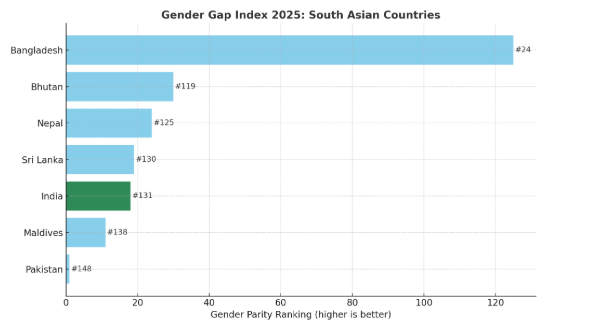
    Here’s a visual comparison of South Asian countries based on the Global Gender Gap Index 2025. As shown:

    Gender Gap - India vs South East Asian Countries

    • India ranks 131st, lagging behind countries like Bangladesh (24th) and even Nepal (125th).
    • Only Maldives and Pakistan rank lower in the region.

    This highlights the significant room for improvement in gender parity efforts in India, especially in political and economic empowerment.

    Key Takeaways

    • Despite marginal gains, India’s overall gender parity remains low, ranking among the bottom quarter globally.
    • Strong performance in education (near parity) and health.
    • Severe gaps persist in economic participation and particularly in political empowerment.
    • While the gender parity score improved slightly, many neighbouring countries outperform India in closing the gap.

    In summary:
    India is currently ranked 131st globally on the WEF’s Gender Gap Index (64.4% parity), alongside moderate gains in economic participation, education, and health, but declines in political empowerment Reference.

    Its position is among the lowest in South Asia. On the UN’s GII, India ranks 102nd, showing progress but still far from equality.


    📉 Key Facts: India’s Gender Gap in Employment (2025)

    India faces a significant gender gap in employment, with one of the lowest female labor force participation rates in the world. Despite improvements in education, women’s access to paid, secure, and dignified work remains limited and unequal.

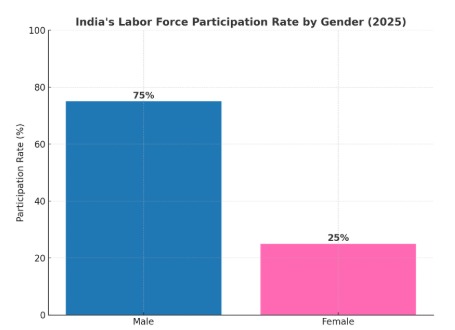
    India's Labor Force Participation

    🚺 Female Labor Force Participation Rate (FLFPR):

    • Only ~25% of Indian women (aged 15 and above) are part of the labor force.
    • In contrast, ~75% of Indian men are economically active.
    • Globally, India ranks among the bottom 10 countries in this metric.

    ⚙️ Employment Type:

    • Most working women are engaged in informal, low-paid, and unprotected jobs, such as:
      • Agricultural labor
      • Domestic work
      • Garment and textile industries
    • Very few women hold formal jobs or leadership roles in corporate or government sectors.

    🔍 Reasons Behind the Gender Gap:

    FactorImpact
    Cultural & Family NormsPressure to prioritize household duties, early marriage
    Safety ConcernsFear of harassment in workplaces and public transport
    Lack of ChildcareWomen leave jobs after childbirth due to poor family support
    Gender Pay GapWomen earn 20–30% less than men for the same work
    Education-Employment DisconnectEducated women still struggle to find suitable opportunities
    Limited Skill DevelopmentMany lack access to skill training or financial literacy

    • Women’s work in agriculture is declining.
    • Female unemployment among graduates is nearly 4x higher than male graduates.
    • Urban women’s participation (around 19%) is lower than in rural areas (around 27%), reflecting a lack of urban job inclusion.

    What Can Help Reduce the Gap?

    • Safe and inclusive workplaces
    • Maternity and childcare support
    • Skill development programs
    • Flexible and remote work policies
    • Awareness campaigns to change mindsets

    In Summary:

    India’s gender gap in employment is not just an economic issue—it’s a social, cultural, and structural challenge. Empowering women to participate equally in the workforce will unlock enormous potential for India’s growth and development. Reference.


    💰 Gender Pay Gap in India – A Persistent Inequality

    The gender pay gap refers to the difference in average earnings between men and women doing the same or similar work. In India, this gap remains wide and is a major barrier to gender equality and women’s economic empowerment.


    📊 Key Facts: Gender Pay Gap in India (2025)

    Sector/RoleWomen’s Earnings (as % of Men)
    Overall (all sectors)~77% (i.e., 23% pay gap)
    Formal private sector~80–85%
    Corporate C-suite~52–70%
    Agriculture & Informal sectors<70%
    Skilled professionals85–90%

    📌 On average, women earn ₹77 for every ₹100 earned by men for the same work.


    🧩 Why Does the Gender Pay Gap Exist?

    CauseExplanation
    Occupational segregationWomen are overrepresented in low-paying jobs (teaching, caregiving, etc.)
    Fewer women in leadershipLeadership roles with higher pay are mostly held by men
    Unpaid care workWomen take career breaks for childcare or elder care
    DiscriminationWomen are often offered lower starting salaries than men
    Lack of pay transparencySalary structures are rarely open, making it hard to detect bias

    📉 Impact of the Gender Pay Gap:

    • Reduces women’s lifetime earnings, savings, and retirement security.
    • Reinforces economic dependence and inequality.
    • Deters girls and women from entering high-value fields (STEM, business).
    • Limits the country’s GDP potential—studies show that equal pay could boost India’s GDP by over 27%.

    ⚖️ What Can Help Close the Gap?

    1. Equal Pay for Equal Work enforcement (as per Equal Remuneration Act).
    2. Pay transparency and salary audits in companies.
    3. Promotion of women in leadership roles and high-paying industries.
    4. Flexible work policies to retain mid-career women.
    5. Encouraging women in STEM, finance, and entrepreneurship.

    🛎️ In Summary:

    India’s gender pay gap is a systemic issue, not just about individual choices. Closing the gap isn’t just fair—it’s smart economics. A more equal pay system will benefit women, families, and the nation as a whole.


    🧨 Domestic Violence in India – A Deep Issue

    Domestic violence in India is a serious and widespread issue affecting women across all classes, religions, and regions. It includes physical abuse, emotional torture, sexual violence, economic control, and verbal harassment, often behind closed doors.


    Under the Protection of Women from Domestic Violence Act, 2005, domestic violence is:

    “Any act, omission or commission or conduct of the respondent that harms or threatens to harm the health, safety, life, limb or well-being of the woman.”

    This includes:

    • Physical abuse (hitting, slapping, pushing, etc.)
    • Emotional abuse (insults, threats, humiliation)
    • Sexual abuse
    • Economic abuse (withholding money, controlling finances)

    📊 Shocking Statistics (NCRB & NFHS-5 Data):

    • 1 in 3 Indian women (aged 18–49) has experienced physical or sexual violence.
    • Only ~14% of women who experience violence seek help, mostly from family, not police.
    • During the COVID-19 lockdown, reports of domestic violence surged by over 50%.

    🚨 Why It Continues:

    • Deep-rooted patriarchy and gender inequality.
    • Fear of social stigma and victim-blaming.
    • Financial dependence on the abuser.
    • Weak law enforcement or delayed justice.
    • Lack of awareness about rights and support systems.

    🛡️ Support & Helplines:

    • National Commission for Women (NCW) Helpline: 7827-170-170
    • Women’s Helpline Number (All India): 1091
    • Legal aid and shelter homes (Mahila Shakti Kendras, One Stop Centres) exist but are underused.

    🔔 What Needs to Change:

    • More awareness and education on gender rights.
    • Stronger implementation of laws and faster justice.
    • Economic empowerment of women to walk away from abuse.
    • Societal support—not silence.

    In Summary:

    Domestic violence in India isn’t just a personal issue—it’s a human rights violation. Real change will come when society stops tolerating silence and starts supporting survivors with empathy and action.


    The Inspiring Journey of Kalpana Saroj

    From Child Bride to Business Tycoon

    Background:
    Born in 1961 in a Dalit family in a small village in Maharashtra, Kalpana Saroj faced caste discrimination, poverty, and gender bias from an early age. At just 12, she was married off and sent to live in a slum in Mumbai with her abusive in-laws. She attempted suicide at 16 after enduring severe emotional and physical abuse.

    Turning Point:
    Rescued by her father, Kalpana returned home and decided to rebuild her life. She learned tailoring and started a small business with the help of a government loan of ₹5,000. She faced numerous challenges but never gave up.

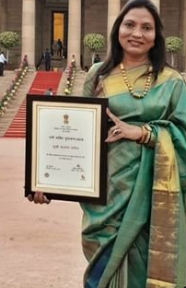
    Kalpana Saroj

    Rise to Power:
    Through sheer determination and entrepreneurial spirit, she eventually took over a struggling company—Kamani Tubes—a sick industrial unit. Everyone doubted her, but she revived the company, turned it profitable, and became one of India’s most successful entrepreneurs.

    Recognition:
    In 2013, she was awarded the Padma Shri, one of India’s highest civilian honors, for her contributions to trade and industry.


    Why This Story Matters:

    Kalpana Saroj’s story is a true example of women empowerment. She broke societal shackles, rose above poverty, fought against domestic violence, caste,gender discrimination, and proved that with courage and opportunity, women can lead with strength and purpose.


    🌍 Why Women’s Day is Celebrated:

    1. To Recognize Women’s Contributions:
      • It celebrates women’s achievements in various fields—science, business, politics, arts, education, and more.
      • It honors trailblazers like Kalpana Chawla, Indira Gandhi, Kiran Mazumdar-Shaw, and countless others.
    2. To Raise Awareness:
      • Highlights issues like gender pay gaps, domestic violence, lack of education, reproductive rights, and workplace discrimination.
      • Reminds the world that true equality is still a work in progress.
    3. To Inspire Change:
      • Encourages governments, organizations, and individuals to take action toward creating equal opportunities.
      • Promotes initiatives that empower women economically, socially, and politically.
    4. To Celebrate Unity and Solidarity:
      • Brings people of all genders together in support of a more inclusive, respectful, and fair world.
      • Supports women’s movements around the globe that are pushing for lasting change.

    🕊️ Historical Background:

    • Originated from labor movements in the early 1900s in Europe and the US.
    • Officially recognized by the United Nations in 1977.
    • Every year has a different theme, like “Gender equality today for a sustainable tomorrow” or “DigitALL: Innovation and technology for gender equality”.
    • Video link

    💬 In Simple Words:

    Women’s Day is not just a celebration—it’s a call for respect, equal rights, and opportunities for every woman, everywhere.


    Happy Women’s Day

    Women’s Day is more than a date on the calendar—it’s a reminder, a movement, and a mission. While we honor women on March 8th, true empowerment comes when we celebrate, support, and uplift women every single day.

    Let us not wait for a special occasion to recognize the strength of a mother, the determination of a daughter, or the leadership of a colleague. Every day is a chance to break stereotypes, fight inequality, and build a world where women rise without fear, without limits.


    💪 Strong Call to Action for Women Empowerment

    It’s time to move beyond words and take action. Women’s empowerment isn’t just a cause—it’s a responsibility, a movement, and a foundation for a just society.

    🔥 Stand Up. Speak Out. Step In.

    • Raise your voice against inequality and discrimination.
    • Support and mentor women in your workplace and community.
    • Vote for and elevate women leaders in politics, business, and society.
    • Educate the next generation to believe in equal rights and respect.
    • Invest in women—their dreams, their businesses, their ideas.
    • Challenge stereotypes, break glass ceilings, and create spaces where women thrive.

    Enough of silent competition and hidden envy. It’s time for women to rise by lifting one another.
    One woman supporting another is not weakness—it’s power in motion.

    🌟 Stand up for a sister. Speak up for the silenced. Share your knowledge. Celebrate her win.
    Because when one woman stands tall, others find the courage to rise too.

    Let’s stand side by side and build a world where every woman shines.
    Start today. Support one woman—and watch the ripple change everything.

    🌍 Because when one woman rises, she lifts an entire community.

    Let’s build a world where every woman is seen, heard, safe, and unstoppable.

    🚀 Don’t wait. Empower a woman today—because empowerment is the real revolution.


    🌸 Top 10 Women’s Day Quotes

    1. “Here’s to strong women: May we know them, may we be them, may we raise them.”
    2. “A woman is the full circle. Within her is the power to create, nurture, and transform.”
      Diane Mariechild
    3. “She believed she could, so she did.”
    4. “There is no limit to what we, as women, can accomplish.”
      Michelle Obama
    5. “You don’t have to play masculine to be a strong woman.”
      Mary Elizabeth Winstead
    6. “The future is female.”
    7. “A strong woman stands up for herself. A stronger woman stands up for everyone else.”
    8. “Empowered women empower the world.”
    9. “Women are the real architects of society.”
      Harriet Beecher Stowe
    10. “Celebrate her for her strength, honor her for her resilience, and respect her for her voice.”

    Read our post Tribute to Indian Women Warriors here.

  • 🇮🇳 From Jhansi to Sindoor: A Tribute to India’s Women Warriors

    🇮🇳 From Jhansi to Sindoor: A Tribute to India’s Women Warriors

    💫 She wasn’t born to be silent. She was born to be a storm in uniform.”

    In every chapter of India’s story, there’s a woman who dared to rise.

    She rode into battle with her child tied to her back.
    She walked through borders with boots, not bangles.
    She stood at podiums in camouflage, not cosmetics.

    From the valor of Rani Lakshmibai of Jhansi to the leadership of Colonel Sofiya Qureshi, and the defiant courage of BSF Assistant Commandant Neha Bhandari during Operation Sindoor, Indian women have proven one eternal truth:

    She is not behind the force. She is the force.


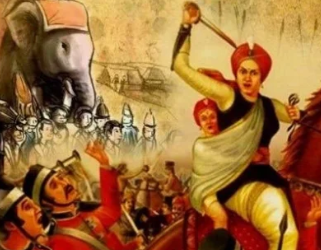
    👑 Rani Lakshmibai of Jhansi

    The Warrior Queen Who Lit the Flame:

    • ⚔️ Rode into the 1857 revolt as a young widow and queen.
    • 🛡️ Led from the front, with her child strapped to her back.
    • 🇮🇳 Became the first Indian woman symbol of resistance to colonial rule.

    Her legacy still echoes in the mountains of Ladakh and the bunkers of Akhnoor.

    Rani lakshmi bai

    🛡️ Women of Operation Sindoor

    Descendants in Courage

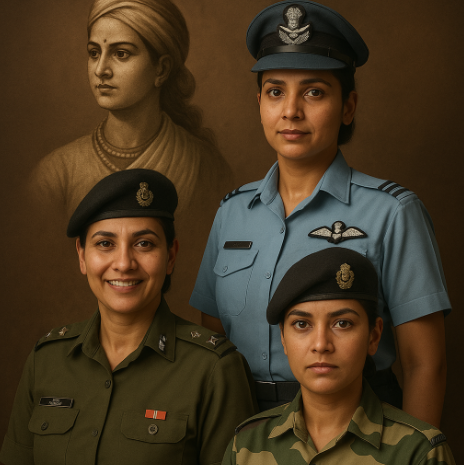
    Operation Sindoor - Women Warrior

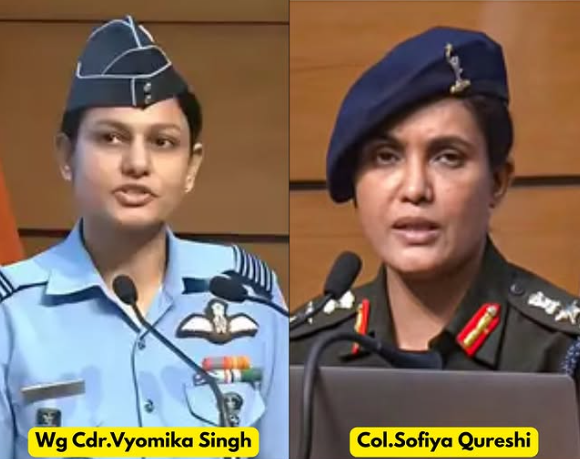
    ✈️ Wing Commander Vyomika Singh – Voice from the Skies

    • Explained Operation Sindoor to the world with precision and calm.
    • Flew daring missions with over 2,500 flight hours.
    • Symbol of aerial bravery and quiet strength.

    🪖 Colonel Sofiya Qureshi – A Strategist in Olive Green

    • The first Indian woman to lead a multinational military exercise.
    • Stood shoulder-to-shoulder with male generals during Sindoor briefings.
    • Her calm authority redefined leadership.

    🌾 Assistant Commandant Neha Bhandari – The Lioness at the Border

    • Refused evacuation under enemy shelling in Akhnoor.
    • Led her 6-woman BSF team in heavy retaliatory fire.
    • A living echo of Jhansi ki Rani—in uniform, not in robes.
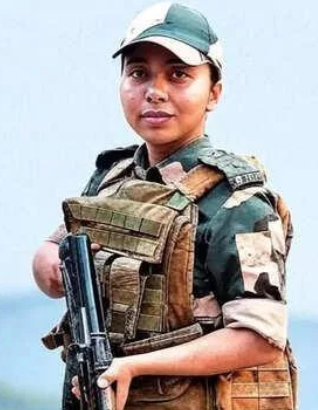
    Neha Bhandari

    🧬 Threading Generations: From Queen to Commander

    EraWoman WarriorSymbol of
    1857Rani LakshmibaiResistance & Rebellion
    1992Maj. Priya JhinganBreaking Barriers in the Army
    2025Women of Operation SindoorLeadership, Combat & Strategy

    The thread of courage runs unbroken—from sword to stethoscope, from horsebacks to helicopters.


    🪖 Major Priya Jhingan: India’s First Lady Cadet in the Army

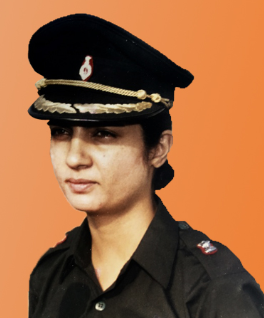
    Major Priya Jhingan

    ✉️ Breaking Barriers: The Letter That Changed History

    In 1989, Priya Jhingan, then a law graduate, wrote a bold letter to the Chief of Army Staff, General S. F. Rodrigues, requesting that women be allowed to serve in the Indian Army. At that time, no policy existed for women officers in the forces. Her letter wasn’t just an inquiry—it was a spark that ignited systemic change.

    In 1992, her dream came true. The Indian Army opened its doors to women, and Priya Jhingan became Lady Cadet No. 1 at the Officers Training Academy (OTA), Chennai, leading the first batch of 25 women cadets. Her courage and conviction paved the way for countless women to follow.


    Commissioned in 1993, Major Jhingan served in the Judge Advocate General (JAG) branch, where she took on legal responsibilities, conducted courts-martial, and trained troops on military law. Her leadership was marked by discipline, grace, and grit.

    After serving a full tenure of 10 years, she continued advocating for gender parity in the forces. Her relentless support and public voice contributed to the 2020 Supreme Court verdict that granted women officers equal command roles and permanent commission in the Indian Army.


    🌟 Legacy of Empowerment: More Than a Military Trailblazer

    Major Priya Jhingan didn’t just enter the forces—she rewrote its rules. She became a symbol of empowerment, showing the nation that gender should never be a barrier to leadership. Today, her name stands as a beacon for aspiring women officers and a reminder that change often begins with one bold voice.

    Her legacy continues through her work in education, youth leadership programs, and her active role in empowering young women to break through barriers—whether in uniform or not.


    📊 Why This Tribute Matters in Today’s India

    • Only 4% of Indian defence personnel are women—yet they command battalions, brief nations, and fight on frontlines.
    • The women of Operation Sindoor didn’t just serve—they led, represented, and inspired.

    🎖️ Women Empowerment = Nation Empowerment

    When women lead:

    • 👩‍✈️ Security gains courage and compassion.
    • 👩‍⚕️ Medicine meets resilience.
    • 👩‍⚖️ Law finds justice.
    • 👩‍🌾 Villages find their voice.

    From Rani Lakshmibai fighting colonialism to Col. Sofiya briefing a nation—empowered women shape empowered generations.


    🌍 Empowerment Is Not Given. It’s Earned With Every Salute.

    Let’s raise daughters who see more than fashion icons.
    Let’s teach sons to salute courage, regardless of gender.
    Let’s build a country where women in defence are not headlines, but habits.


    📣 Call to Action

    📝 Share this blog to honor India’s women in defence.
    🎓 Encourage girls to pursue careers in Armed Forces.
    📍 Demand policy that opens more command roles for women.
    🙏 Tell your children the stories of Rani Lakshmibai, Wing Cdr. Vyomika, and Neha Bhandari—not just to admire them, but to follow them.


    Conclusion: India’s Daughters, India’s Shield

    She fought in sarees and she fights in uniforms.
    She held swords and now she holds rifles.
    She protected palaces and now she defends our skies.

    From Jhansi to Sindoor, her courage is our crown.

    Let us not just salute her.
    Let us support her, stand by her, and stand because of her.

    References: Major Priya Jhingan

    Know about the Millet Man of India here.