Understanding the Sedentary Lifestyle, Its Health Impact, and the Path to Recovery for Men and Women
My Story

In the heart of the IT city, I spent my days chained to a chair, eyes lost in screens, breath stolen by deadlines. Evenings offered no escape — just the slow crawl of traffic, where I sat motionless, watching life blur past my window. Groceries came with a click, dinners with a screen, and nights with aching silence. My body whispered warnings I chose to ignore — until fatigue, pain,blur vision, weight gain and test reports cried louder. I wasn’t living — just sitting through life, one screen-lit hour at a time, watching helplessly as the monotony and diseases of a sedentary life crept in.
That chair didn’t just hold my body — it held my life hostage.
What Is a Sedentary Lifestyle?
A sedentary lifestyle is generally defined as one that involves sitting or lying down for most of the day with little to no physical activity. According to health guidelines:
- Sitting for more than 6 hours a day — with minimal physical activity— is considered sedentary.
- Even if someone exercises daily, prolonged sitting (e.g., at work, watching TV, or driving) can still pose health risks.
In today’s fast-paced digital age, many of us spend long hours sitting—whether it’s behind a desk, in a car, or in front of a screen. While technology has made life more convenient, it’s also made us more sedentary than ever before. A sedentary lifestyle might seem harmless, but it’s linked to numerous health issues, and the consequences can be far-reaching for both men and women.
It’s not just about skipping the gym.
A sedentary lifestyle means spending most of your day seated or inactive, with very little physical movement.Even if you exercise for an hour in the morning or evening, it doesn’t undo 10+ hours of sitting.
This is what health experts now call the “active couch potato” syndrome.
What is Active Couch Potato Syndrome?
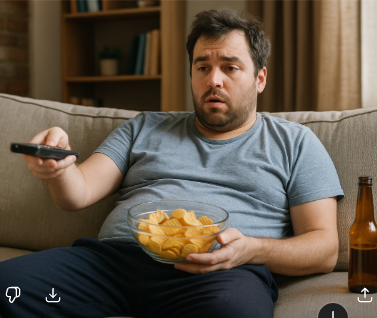
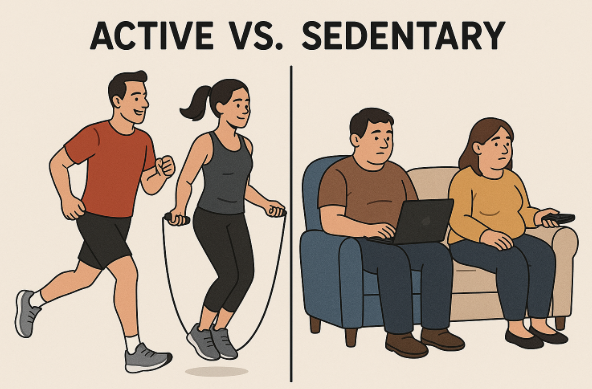
The “active couch potato” syndrome is when someone works out for an hour a day but still spends most of their time sitting — at a desk, in the car, on the couch.
Emotionally, it feels like doing your best but still falling short. You think you’re being healthy because you exercise, but your body is still suffering in silence from all the stillness. Movement isn’t just about workouts — it’s about how you live between them.
You don’t have to be inactive 24/7 to be “sedentary.” If you spend the majority of your day sitting—with little to no movement between—you are living a sedentary life, even if you hit the gym a couple of times a week.
The truth? Our bodies were never meant to sit still this much. We were built to move, to stretch, to breathe deeply, to live fully.
But somewhere along the way, we let convenience, technology, and routine dull that natural rhythm.
🩺 The Hidden Toll: Health Issues You Can’t See Right Away
You don’t feel it immediately. That’s the danger.
The damage creeps in quietly, until one day, you wake up and wonder:
“Why am I always so tired?”
Here’s what a sedentary lifestyle can lead to:
- Obesity & belly fat accumulation
- Type 2 Diabetes & insulin resistance
- Heart disease & poor circulation
- High blood pressure
- Depression, anxiety, and brain fog
- Weak muscles and joint pain
- Hormonal imbalances
- Premature aging
And perhaps the cruelest part?
Even young people — in their 20s and 30s — are showing symptoms that were once reserved for much older adults.
👨⚕️ For Men: What’s Happening to Your Body?
For men, long-term sitting can lower testosterone and reduce fertility.
Fat often settles in the belly — the dangerous visceral fat that clings to organs and increases heart attack risk.
The strength you once took pride in? It quietly fades when muscles aren’t used.
👩⚕️ For Women: Your Body Deserves More
For women, a sedentary lifestyle can disrupt hormones & increase the risk of PCOD, PCOS, infertility issues, obesity, depression, anxiety, breast and ovarian cancer, and accelerate bone density loss — leading to osteoporosis.
Leg circulation weakens, stress builds up, and mood swings become more frequent.
No, you’re not “just tired.”
Your body is begging to be cared for.
🥗 But Movement Alone Isn’t Enough — Let’s Talk Food
When you move less, your body needs better fuel, mindful eating.
🌿 General Guidelines
- Hydrate like your life depends on it — because it does.
- Eat fiber-rich foods: millets, whole grains, oats, fruits, vegetables, legumes.
- Say no to ultra-processed snacks. Your body knows the difference.
- Be mindful of portions, especially when you’re not moving much.
🧔♂️ For Men
- Focus on protein: fish, eggs, beans, tofu.
- Choose healthy fats (avocados, nuts, seeds) over saturated fats.
- Include foods rich in zinc and magnesium for hormone balance and muscle function.
👩🦰 For Women
- Boost your iron intake: spinach, lentils, pumpkin seeds.
- Eat calcium-rich foods: dairy, fortified plant milks, broccoli.
- Support hormonal health with flaxseeds, chickpeas, and leafy greens.
Food is not your enemy. It’s your ally — if you choose it wisely.
🍽️ The Right Balanced Diet Plate for a Sedentary Life
“When the body rests, the plate must respond with grace.”
A sedentary lifestyle means less physical movement — long hours at the desk, limited walking, and minimal active exertion. In such a life, what you eat matters more than ever. Because your food becomes your movement, your medicine, and your silent guardian against the stillness.
Here’s what a gentle, portion-conscious plate should look like for someone living a sedentary life:
🌿 Your Balanced Plate – With Portion Wisdom

🥗 1. Vegetables – Half the Plate (50%)
- Cooked or raw, colorful and fibrous.
- Go for seasonal veggies: lauki, tori, bhindi, carrots, beans, spinach.
- Lightly sautéed, steamed, or raw as salad.
Why: They’re rich in fiber, low in calories, and help digestion — the best companion for a still body.
🍚 2. Whole Grains / Millets – One-Fourth of the Plate (25%)
- Choose small portions of ragi roti, jowar roti, bajra khichdi, or foxtail millet.
- Limit to 1 millet roti or 1 cup cooked millet per meal.
Why: Millets keep you full longer, balance blood sugar, and reduce bloating — without spiking your energy needs.
🍲 3. Proteins – One-Fourth of the Plate (25%)
- Options: Moong dal, sprouts, tofu, paneer (in moderation), curd, or egg whites.
- Portion: 1 katori (bowl) or a palm-sized piece.
Why: Protein supports muscle maintenance even when you’re not moving much — and it keeps cravings away.
🌱 4. Healthy Fats – 1 to 2 teaspoons only
- Include seeds, nuts, or cold-pressed oils.
- Avoid fried foods, heavy gravies, and oily snacks.
Why: Your body needs fat — but in stillness, even good fat must be measured with love.
💧 5. Fluids – Throughout the Day
- 8–10 glasses of water.
- Add herbal teas, jeera or saunf water, or thin buttermilk.
Why: Hydration supports digestion, detox, and keeps energy levels up without unnecessary calories.
✨ Sample Meal Visual:
- 🥗 ½ plate: Bhindi sabzi + cucumber salad
- 🍚 ¼ plate: 1 ragi roti or ½ cup foxtail millet khichdi
- 🍲 ¼ plate: Moong dal + 1 tbsp curd
- 🥄 Side: 2 walnuts/avocado
💛 A Gentle Reminder:
A sedentary life isn’t a failure — it’s a phase, or sometimes a need. But your food can still move you — toward balance, toward healing, toward lightness.
So eat with awareness, not absence.
Eat to nourish, not to numb.
Eat with love, even if you sit in stillness — because your body deserves nothing less.
💙 Calorie & Nutrient Needs: Sedentary vs Active Men & Women
We all walk through life with different rhythms. Some of us are in motion, sweat on our skin, breath steady from movement. Others are in stillness—thinking, creating, existing in a quieter way. Both are valid. Both are human. But their bodies, oh, they speak in different languages. And they must be heard accordingly.
💚 Nutrient & Diet Needs: Sedentary vs Active Lives Comparison Table
(Per Day | For General Health Maintenance)
| Nutrient / Element | Sedentary Women | Active Women | Sedentary Men | Active Men |
|---|---|---|---|---|
| Calories | 1,600 – 2,000 kcal | 2,200 – 2,400 kcal | 2,000 – 2,400 kcal | 2,600 – 3,000 kcal |
| Protein | ~46g | 70 – 90g | ~56g | 90 – 110g |
| Carbohydrates | 130 – 180g (focus on fiber-rich carbs) | 225 – 325g (pre/post workout fuel) | 130 – 200g | 300 – 400g |
| Fats | 55 – 70g (healthy fats) | 70 – 90g (more for hormone balance) | 70 – 80g | 80 – 100g |
| Fiber | 25g | 25 – 30g | 30g | 30 – 38g |
| Water Intake | ~2.2L | ~2.7L (more with exercise) | ~3.0L | 3.5L or more (with sweat loss) |
| Meal Frequency | 2–3 balanced meals | 3 meals + 2–3 energy-dense snacks | 2–3 balanced meals | 3 meals + 2–3 performance snacks |
| Ideal Plate Focus | Veggies, whole grains, lean protein | Lean protein, complex carbs, healthy fat | Same as women | Higher portion sizes + extra protein |
| Diet Strategy | Portion control, nutrient density | Fueling performance & recovery | Balanced intake, lower total calories | Strategic fueling & muscle repair |
🥣 Balanced Diet Portion Sizes: Active vs. Sedentary Men & Women (With Millets)
| Food Group | Active Men & Women (Fueling Life in Motion) | Sedentary Men & Women (Nourishing with Care) |
|---|---|---|
| Whole Grains / Millets (ragi, bajra, jowar, foxtail, kodo) | 🧔 Men: 6–8 portions/day 👩 Women: 5–7 portions/day (e.g., 2 rotis + 1 cup millet rice/lunch + ½ cup breakfast millet porridge) | 🧔 Men: 4–5 portions/day 👩 Women: 3–4 portions/day (e.g., 1 roti + ½ cup millet khichdi or porridge) |
| Proteins (dal, sprouts, paneer, eggs, fish, curd) | 🧔 Men: 3 servings/day 👩 Women: 2–3 servings/day (1 bowl dal + eggs/paneer/lentils/meat) | 🧔 Men: 2 servings/day 👩 Women: 1–2 servings/day (smaller bowl of dal + low-fat paneer or egg whites) |
| Vegetables (especially greens & fibrous veggies) | 🧔👩 4–5 servings/day (½ plate lunch & dinner + in snacks/soups) | 🧔👩 3 servings/day (½ plate lunch & dinner) |
| Fruits (seasonal & low glycemic index) | 🧔 Men: 2–3 servings/day 👩 Women: 2 servings/day (1 banana + 1 apple or orange, etc.) | 🧔 Men: 1–2 servings/day 👩 Women: 1 serving/day (prefer papaya, guava, apple — avoid juices) |
| Dairy / Calcium-rich foods (milk, curd, ragi, sesame) | 🧔👩 2–3 servings/day (milk + curd or buttermilk + ragi dishes) | 🧔👩 1–2 servings/day (light curd or buttermilk + ragi in moderation) |
| Healthy Fats (nuts, seeds, cold-pressed oils) | 🧔 Men: 6 tsp oil/day + 1 handful nuts 👩 Women: 4–5 tsp oil/day + small handful of seeds | 🧔 Men: 4 tsp oil/day + 4–5 soaked almonds 👩 Women: 3 tsp oil/day + 3–4 soaked nuts |
| Water / Fluids (herbal teas, coconut water, ragi malt) | 🧔👩 10–12 glasses/day (include herbal teas, ragi ambli, lemon water) | 🧔👩 8–10 glasses/day (herbal teas, jeera or ajwain water) |
🌿 More Than Math
Yes, these are numbers. But they hold meaning. They speak to who you are, where you are, and what you’re asking your body to carry each day.
- A sedentary person needs balance—to eat just enough to keep the heart beating strong without excess.
- An active person needs abundance—not indulgence, but the kind of nourishment that sustains strength, speed, endurance, and joy.
“Watch Your Calories if You’re Living a Sedentary Lifestyle” – A Gentle Warning From Within
In a world where most of our days are spent sitting — at desks, in cars, on couches — our bodies move less, burn less, and ask for less… yet we often give them more. More food. More calories. More comfort through snacks and screens.
But here’s the truth whispered by your body:
When movement stops, but eating doesn’t adjust, imbalance creeps in silently.
🌾 Why Calories Matter More When You Move Less
Calories are not just numbers.
They’re energy.
When we walk, climb, stretch, or dance — we spend that energy.
But when we sit for long hours — that energy sits with us. It lingers, it stores, it builds… often as weight, fatigue, insulin resistance, and sometimes, even as silent inflammation.
In a sedentary lifestyle:
- Your metabolism slows down.
- Your caloric needs drop.
- But your cravings often rise — out of boredom, stress, or habit.
🍽️ The Emotional Consequence
What begins as comfort eating turns into bloating.
What was once an extra snack becomes a growing waistline.
You feel heavy, not just in your body — but in your heart.
You tell yourself, “I’m not even eating that much.”
But the reality is, you’re eating more than your still body can use.
🧘♂️ A Gentle Shift
You don’t need to starve.
You don’t need to punish.
You just need to align your food with your movement.
- Eat lighter, fresher meals.
- Focus on high-fiber, low-calorie dense foods like fruits, vegetables, and millets.
- Say no to mindless munching.
- Say yes to purposeful portions.
- Learn the beauty of feeling light, not just physically — but emotionally.
❤️ Final Whisper from Your Chair
The chair holds your body.
But don’t let it hold your health hostage.
Every bite you take is a choice — to either nourish or numb.
So if you sit more, eat less, eat wise, and eat with awareness.
Because even in stillness, you can choose movement — in your mind, your habits, and your plate.
🚶♀️ Simple Workarounds to Reclaim Your Energy
You don’t need a fancy gym. You need a little honesty and a lot of love for yourself.
- Set a timer: Stand up every 30 minutes.
- Take phone calls while walking.
- Park farther. Walk more.
- Do 10 squats before breakfast. Stretch before bed.
- Dance while cooking. Laugh more. Breathe deeper.
Even 15 minutes a day makes a difference. Your body doesn’t need perfect — it needs consistency.
Practical Solutions for Busy Corporate Employees
Here are practical, doable solutions to break a sedentary lifestyle—specially tailored for busy corporate employees who spend most of their day in front of a laptop:
🔁 Micro-Movement Breaks
Solution: Set a timer every 30–60 minutes to stand, stretch, or walk for 2–5 minutes.
Why: Even brief movement interrupts prolonged sitting, improves circulation, and reduces stiffness.
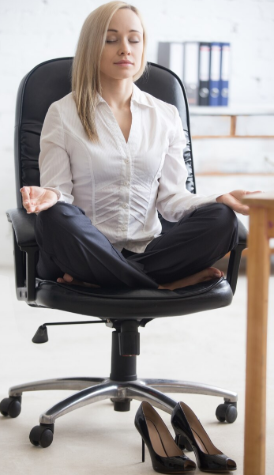
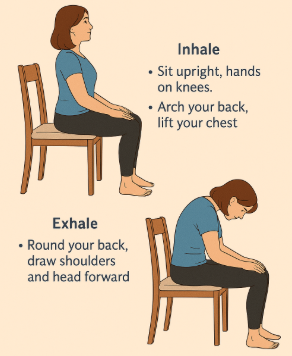
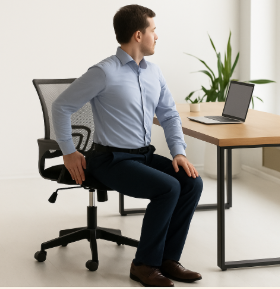
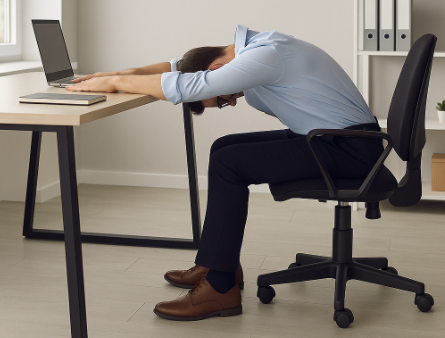
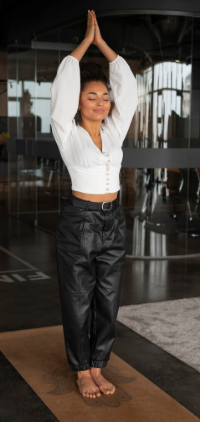
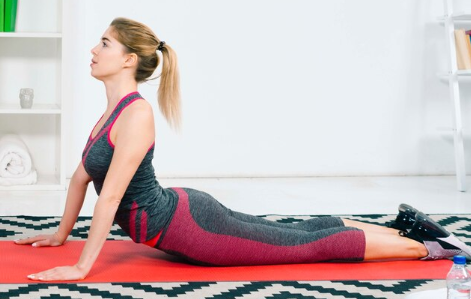
🧘♂️ Chair Yoga & Desk Exercises
Solution: Practice simple stretches like neck rolls, wrist rotations, shoulder shrugs, and seated spinal twists at your desk.
Why: Relieves tension, boosts blood flow, and can be done without leaving your chair.
Learn simple chair yoga poses here.
🪑 Switch to Active Sitting
Solution: Use a stability ball, footrest, or ergonomic chair that promotes better posture and core engagement.
Why: Encourages micro-movements and prevents slouching and spine strain.
🚶♂️ Walking Meetings or Calls
Solution: Walk during phone calls or suggest walking meetings when possible.
Why: Turns passive work into active time without sacrificing productivity.
⏫ Standing Desk or Adjustable Workstation
Solution: Alternate between sitting and standing with a sit-stand desk or a laptop riser.
Why: Reduces total sitting time and improves posture.
🏃♀️ Short Bursts of Exercise
Solution: Fit in 5–10 minutes of bodyweight exercises like squats, lunges, or jumping jacks during breaks.
Why: Boosts energy, metabolism, and mood quickly.
🚰 Hydration = Movement
Solution: Keep your water bottle at a distance so you have to get up to refill or sip.
Why: Encourages frequent movement and keeps you hydrated.
🧠 Mindful Breaks
Solution: Instead of doom-scrolling, take 2–3 minutes to breathe deeply or do eye exercises away from screens.
Why: Reduces stress, digital eye strain, and improves mental clarity.
📅 Schedule “Movement Meetings”
Solution: Block small calendar slots labeled “Move” or “Stretch” throughout your day.
Why: What gets scheduled, gets done—even movement.
🌇 Evening or Morning Walks
Solution: Begin or end your workday with a short walk, preferably outdoors.
Why: Complements your sedentary work hours and refreshes your mind.
❤️ A Call to Action: Start Small. Start Now.
We weren’t born to live life from a chair.
You deserve to wake up feeling alive.
To walk without aching. To breathe without heaviness.
To look in the mirror and recognize not just your reflection — but your spirit.
So today, I’m asking you to choose you.
- Drink a glass of water.
- Stand up and stretch.
- Take a walk after dinner.
- Prep a simple, nourishing meal.
- Set a reminder on your phone: “Move because I matter.”
Because you do.
Your body is your home. Treat it with the love and respect it’s been waiting for.
💬 Let’s Talk
Has the chair stolen too much of your life too?
You’re not alone — and it’s never too late.
Share this with someone who needs a nudge.
And if this spoke to you — even just a little — leave a comment, send a message, or take that first step.
Let’s move forward. Together.
References:
USDA Dietary Guidelines Breakdown link
Check our blog on men vs women nutrition differences here. Explore Balanced Diet here.
Here are some reliable sources that detail the health risks associated with a sedentary lifestyle:
- MedlinePlus – “Health Risks of an Inactive Lifestyle”
Highlights that a sedentary lifestyle—often called “sitting disease”—can lead to obesity, high blood pressure, high cholesterol, type 2 diabetes, cardiovascular disease, certain cancers (like colon, breast, and uterine), osteoporosis, poor circulation, inflammation, hormonal imbalance, and even premature death wgtn.ac.nz+14medlineplus.gov+14medicalnewstoday.com+14. - Johns Hopkins Medicine – “Sitting Disease”
Notes that prolonged sitting is linked to heart disease, type 2 diabetes, cancer, and increased mortality—even when regular exercise is performed. Experts recommend breaking up sitting every 20–30 minutes with brief movement . - NCBI / PubMed (PMC8394200)
Reviews studies showing that extended sedentariness causes or worsens at least 35 chronic conditions, including premature death, type 2 diabetes, cancer, cardiovascular disease, stroke, inflammation, muscle weakness, obesity, sleep disorders, immune and endocrine dysfunction, cognitive impairment, anxiety, depression, and musculoskeletal issues pmc.ncbi.nlm.nih.gov.