Table of Contents
Story: Ganesh vs Rajesh
Every morning at 6 a.m., Ganesh laces up his shoes and heads out for a brisk walk. Rain or shine, he spends just 30 minutes moving his body — sometimes walking, sometimes doing simple stretches and push-ups. Over the years, his friends noticed something remarkable: Ganesh rarely falls sick, he looks younger than his age, and his energy keeps him cheerful all day.
On the other hand, his childhood friend Rajesh chooses extra sleep over exercise. Rushing straight from bed to office, his days are filled with tiredness, back pain, and constant stress. By the time evening comes, he’s too exhausted to play with his kids. Slowly, weight gain, tummy out, high blood pressure, and poor sleep became part of his life.By 45, borderline diabetes knocked at his door. He brushed it aside.

Then one morning, without warning, Rajesh suffered his first stroke. Lying in the hospital bed, he realized how years of ignoring his body had caught up with him. That moment became an eye-opener — for Rajesh, his family, and everyone who loved him.
👉 Two friends, same age, same background — yet their lives look completely different. The only difference? One made exercise a daily habit, the other did not.
✅ If You Exercise Daily
Body Benefits
- Stronger heart & lungs → lowers risk of heart disease, high BP, stroke.
- Better weight management → burns calories, balances metabolism.
- Stronger muscles & bones → prevents weakness, osteoporosis, and improves posture.
- Better immunity → reduces risk of infections and chronic diseases (diabetes, cancer risk goes down).
- Improved digestion & circulation.
Mind Benefits
- Stress relief → exercise releases endorphins (happy hormones).
- Better sleep → deeper, more restful sleep cycles.
- Sharper brain → improves memory, focus, and creativity.
- Emotional balance → reduces anxiety and depression.
Lifestyle Benefits
- More energy throughout the day.
- Increases discipline and consistency.
- Slows down aging.
❌ If You Do NOT Exercise Daily
Body Consequences
- Weaker heart & lungs → higher risk of hypertension, obesity, diabetes.
- Low energy → fatigue, sluggishness.
- Poor posture & weaker bones → back pain, stiffness, higher injury risk.
- Weight gain → especially belly fat, which is linked to many diseases.
Mind Consequences
- More stress, irritability, anxiety.
- Poor sleep (difficulty falling or staying asleep).
- Reduced concentration and productivity.
Long-Term Risks
- Higher chances of lifestyle diseases (heart attack, diabetes, stroke, arthritis).
- Faster biological aging.
- Lower quality of life and reduced life expectancy.
📌 In short:
Daily exercise is like putting money in your “health savings account.” Skipping it daily is like withdrawing health bit by bit until you go into “debt.”
How It Works
🫀 Heart & Circulation (Cardiovascular Benefits)
- How it works: When you exercise, your heart rate increases → heart pumps more blood → blood vessels widen (vasodilation) → circulation improves.
- Benefit: The heart muscle gets stronger, blood pressure drops, cholesterol balance improves, and arteries stay flexible.
- Result: Lower risk of heart attack, stroke, and hypertension.
🫁 Lungs & Breathing (Respiratory Benefits)
- How it works: Exercise makes you breathe deeper and faster → lungs take in more oxygen → oxygen travels via blood to muscles and organs.
- Benefit: Increases lung capacity, strengthens diaphragm & chest muscles.
- Result: Less breathlessness, more stamina.
💪 Muscles & Bones (Musculoskeletal Benefits)
- How it works: Exercise puts stress on muscles & bones → they adapt by growing stronger.
- Benefit: Muscles get bigger and toned, bones build more density, joints stay flexible.
- Result: Better posture, reduced risk of fractures, less joint pain, stronger daily movement.
🧪 Metabolism & Hormones (Endocrine Benefits)
- How it works: Exercise uses glucose (sugar) for energy → reduces blood sugar → makes insulin work better. Hormones like endorphins (happiness), testosterone, and growth hormone increase.
- Benefit: Prevents diabetes, balances mood, builds lean mass, reduces fat storage.
- Result: Easier weight control, fewer mood swings, more energy.
🛡️ Immune System
- How it works: Movement increases circulation → white blood cells move faster through the body → immune system spots and kills germs quickly.
- Benefit: Stronger defense against infections, lower chronic inflammation.
- Result: Fewer colds, faster recovery, long-term protection against diseases.
🧠 Brain & Nerves
- How it works: Exercise boosts blood flow to the brain → delivers oxygen and nutrients → stimulates growth of new nerve connections (neuroplasticity).
- Benefit: Better memory, focus, creativity, and mental health.
- Result: Lower risk of depression, Alzheimer’s, anxiety.
⚡ Energy & Aging
- How it works: Exercise builds more mitochondria in cells (your body’s “power plants”) → more efficient energy production.
- Benefit: Less fatigue, more stamina for daily life.
- Result: Slows down aging, makes you look and feel younger.
📌 Simple Analogy:
Exercise is like charging your phone daily ⚡. If you don’t charge, it drains out. If you keep charging (exercise), your body runs at full power — heart pumps better, brain works sharper, muscles stay strong, and immunity stays active.
✅ How Much Exercise is Good Daily?
For General Health (WHO & American Heart Association guidelines):
- 150 minutes of moderate exercise per week → ~30 minutes per day, 5 days a week.
OR - 75 minutes of vigorous exercise per week → ~15–20 minutes per day, 5 days a week.
👉 Moderate = brisk walking, light cycling, yoga.
👉 Vigorous = running, HIIT, fast cycling, swimming.
For Weight Loss / Fitness Goals:
- 45–60 minutes per day (mix of cardio + strength).
For Longevity & Disease Prevention:
- Studies show 7,000–10,000 steps per day is ideal.
- Adding 2–3 sessions of strength training per week improves lifespan and health span.
🏃 Types of Exercises You Need
A balanced routine should cover all 4 pillars of fitness:
1. Cardio (Aerobic Exercise) 🫀
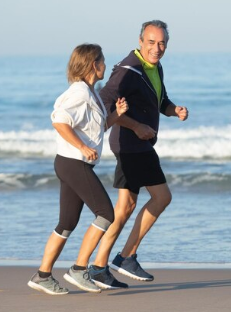
Purpose: Strengthens heart & lungs, improves stamina, burns calories.
Examples:
- Dancing / Zumba
- Brisk walking
- Jogging or running
- Cycling
- Swimming
👉 Do at least 30 min most days.
2. Strength Training (Resistance Exercise) 💪
Purpose: Builds muscle, strengthens bones, boosts metabolism.
Examples:
- Bodyweight: push-ups, squats, lunges, planks
- Dumbbells/resistance bands
- Yoga with strength focus (e.g., power yoga)
- Gym machines (if available)
👉 Do 2–3 days per week (non-consecutive).

3. Flexibility & Mobility 🤸
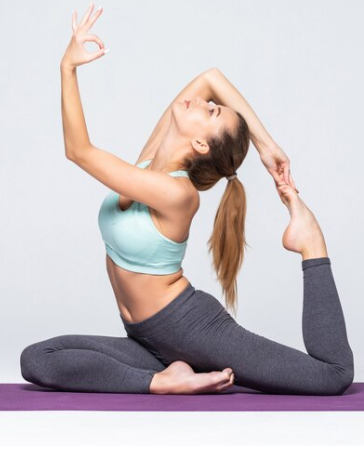
Purpose: Keeps joints healthy, prevents stiffness, improves posture.
Examples:
- Stretching
- Yoga
- Pilates
- Tai Chi
👉 Spend 5–10 min daily (warm-up & cool-down).
4. Balance & Core Stability ⚖️
Purpose: Prevents falls, supports spine, improves coordination.
Examples:
- Core work (planks, bridges, bird-dog)
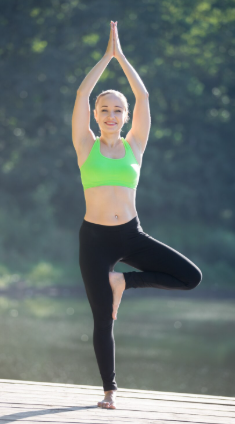
- Standing on one leg
- Heel-to-toe walk
- Yoga poses (Tree pose, Warrior)
👉 2–3 times per week.
🕒 Sample Daily Routine (30–40 min)
- Warm-up – 5 min (stretch, light jog).
- Cardio – 20 min (brisk walk / jog / cycle).
- Strength training – 10 min (bodyweight or weights).
- Cool-down & stretch – 5 min.
📌 Key Tip:
- If you’re just starting → even 10 minutes daily is better than nothing. Build gradually.
- Listen to your body: soreness is ok, pain is not.
- Consistency > intensity.
✅ Daily Exercise Checklist (15–30 Minutes)
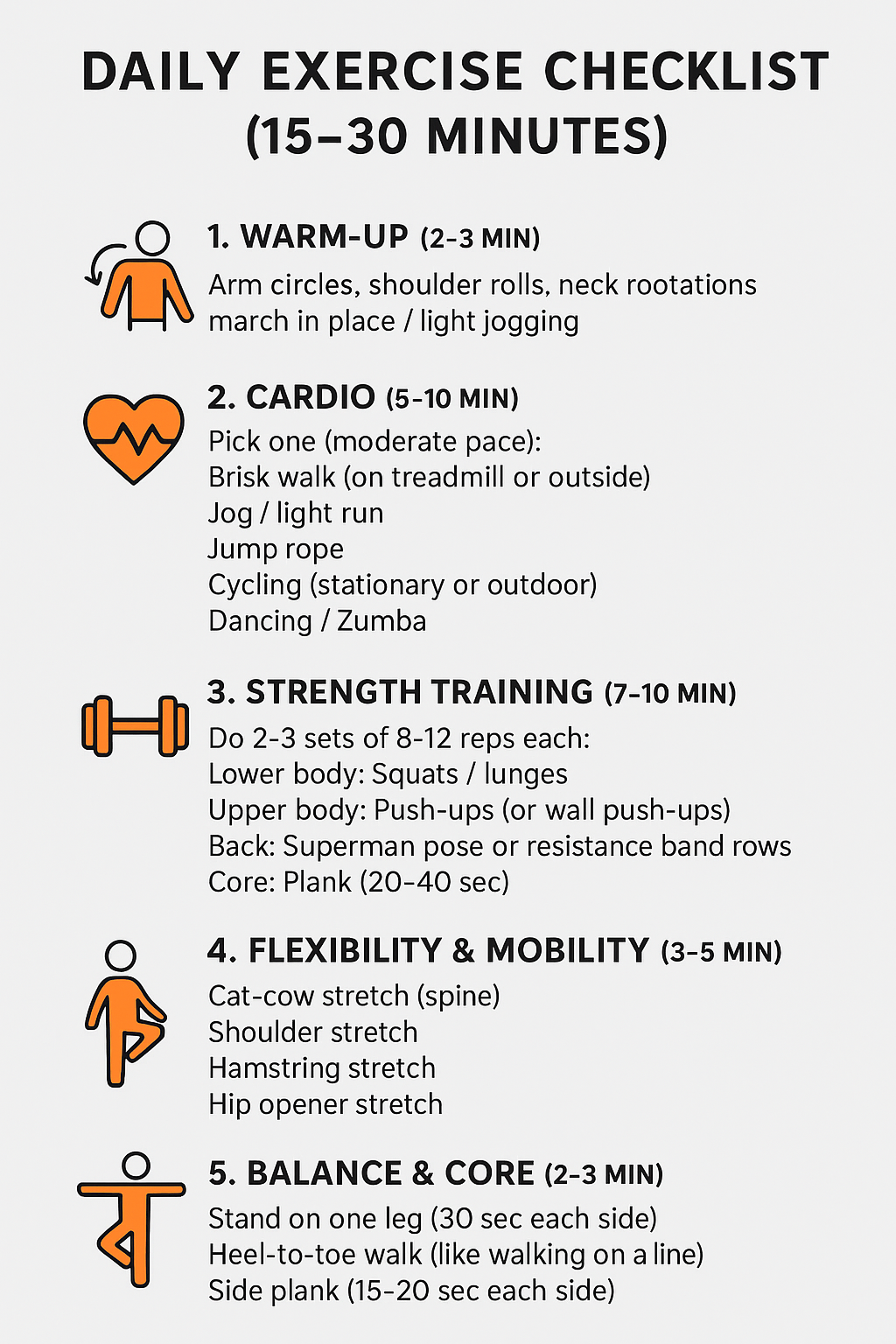
1. Warm-up (2–3 min)
- Arm circles, shoulder rolls
- Neck rotations
- March in place / light jogging
👉 Purpose: Prepares muscles, prevents injury.
2. Cardio (5–10 min) 🫀
Pick one (moderate pace):
- Brisk walk (on treadmill or outside)
- Jog / light run
- Jump rope
- Cycling (stationary or outdoor)
- Dancing / Zumba
👉 Benefits: Stronger heart, lungs, better stamina, calorie burn.
3. Strength Training (7–10 min) 💪
Do 2–3 sets of 8–12 reps each:
- Lower body: Squats / lunges
- Upper body: Push-ups (or wall push-ups)
- Back: Superman pose or resistance band rows
- Core: Plank (20–40 sec)
👉 Benefits: Stronger muscles, bones, better posture, faster metabolism.
4. Flexibility & Mobility (3–5 min) 🤸
- Cat-cow stretch (spine)
- Shoulder stretch
- Hamstring stretch
- Hip opener stretch
👉 Benefits: Keeps joints healthy, reduces stiffness.
5. Balance & Core (2–3 min) ⚖️
- Stand on one leg (30 sec each side)
- Heel-to-toe walk (like walking on a line)
- Side plank (15–20 sec each side)
👉 Benefits: Improves coordination, prevents falls, supports spine.
6. Cool-down (2 min) 🧘
- Deep breathing
- Gentle forward fold
- Relax in child’s pose
👉 Benefits: Relaxes muscles, lowers heart rate, improves recovery.
⏱️ Time Options:
- 15 min version: Warm-up → 5 min cardio → 5 min strength → 5 min stretch/cool-down.
- 30 min version: Do all sections fully for a balanced routine.
📌 Pro Tips:
- Aim for 5–6 days/week.
- Mix it up to avoid boredom (walk one day, cycle another, dance another).
- Add music or a podcast to make it fun.
Call to Action
💡 Your health is in your hands. Don’t wait for a warning sign like Rajesh — start today like Ganesh. Even 15–30 minutes of daily exercise can transform your heart, lungs, body, and mind, and gift you a longer, healthier life.
👉 Take the first step right now:
- Go for a brisk 10-minute walk.
- Do 10 squats or push-ups.
- Stretch your body and breathe deeply.
✨ Small steps today become a powerful routine tomorrow. Your future self will thank you.
Reference WHO guidelines. Read more blogs on Yoga & Exercises here.
Health Beyond Exercise
Exercise is powerful — but lasting wellness comes from a holistic balance.
✅ Move your body daily
✅ Eat nourishing fresh natural food, whole foods, read details in blogs here.
✅ Manage stress with calm practices
✅ Care for emotional health
✅ Cultivate spiritual well-being
🚫 Avoid smoking, alcohol, and junk “sin foods” that damage heart, lungs, and immunity
✨ Balance in body, mind, and lifestyle is the real medicine for a long, vibrant life.
✨ Together, these habits not only prevent disease but also create a vibrant, meaningful, and long life.
Leave a Reply