Category: Corporate Governance

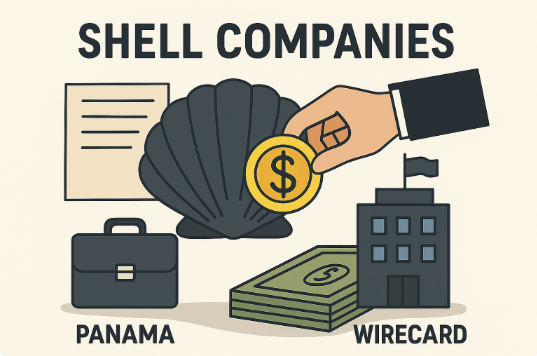
  • The Dark Secrets of Shell Companies: How Money Gets Washed Clean

    The Dark Secrets of Shell Companies: How Money Gets Washed Clean


    1. What is Money Laundering?

    Money laundering is the process of disguising illegally obtained money (from fraud, corruption, trafficking, tax evasion, bribery, etc.) so it appears legitimate.

    It usually involves three stages:

    1. Placement – Introducing illicit funds into the financial system (e.g., cash deposits, buying assets).
    2. Layering – Creating complex layers of transactions to hide the source (e.g., transfers between accounts, across borders, investments).
    3. Integration – Reintroducing “cleaned” money into the economy (e.g., real estate, luxury goods, business investments).

    2. What are Shell Companies?

    A shell company is a legal entity that exists only on paper, with no significant assets or active operations.

    • Legitimate use: Sometimes used for tax planning, mergers, or holding assets.
    • Illicit use: Criminals exploit shell companies to hide ownership, move money across borders, and launder funds.

    3. How Shell Companies Help in Money Laundering

    • Anonymous Ownership: Criminals register companies in jurisdictions with weak disclosure rules (tax havens, secrecy jurisdictions).
    • Layering: Funds are transferred through multiple shell companies to make tracing difficult.
    • Trade-Based Laundering: Fake invoices, over/under invoicing via shell firms.
    • Round-Tripping: Illicit money sent abroad via shells and reinvested back into the home country as “foreign investment.”
    • Tax Evasion: Profits are shifted to shell companies in low-tax countries.

    The Story of Raj Malhotra: Shell Companies

    The Beginning: A Fortune Too Dirty to Spend

    Raj Malhotra was not born rich. He grew up in a small Indian town but, by his thirties, he had become a man of immense “hidden wealth.”
    Not from innovation, not from hard work—his fortune came from rigged government contracts, inflated bills, and under-the-table deals.

    By 2010, Raj had ₹500 crore in black money sitting in safes, warehouses, and secret lockers.
    It was useless.
    If he spent it directly, questions would come: Where did the money come from? Why wasn’t it declared?

    Raj’s problem was not making money.
    His problem was making it look clean.


    The Fixer’s Advice

    One evening in a Dubai hotel, Raj met an old acquaintance—Sameer, a corporate lawyer who specialized in “offshore structuring.”

    “Raj,” Sameer said, sipping his drink,
    “Why hold onto dirty cash? Let me introduce you to the world of shell companies. Paper firms. No offices. No employees. Just names. With them, your money can travel the world and come back cleaner than ever.”

    Raj leaned in. “And no one will know?”

    Sameer smiled. “That’s the beauty. On paper, these companies are separate from you. In reality, they’re your laundromats.”


    Act 1: The Birth of Paper Firms

    Within weeks, Raj had a dozen companies registered in British Virgin Islands, Panama, and Hong Kong.
    Each had a fancy name: Emerald Holdings Ltd., Blue Ocean Trading FZE, Sunrise Gems Inc.

    But behind the paperwork, they were empty shells.

    • No factories.
    • No employees.
    • Just a PO box address and nominee directors who had never met Raj.
    • On paper: Raj is not the direct owner.
      • He uses nominee directors/shareholders (often locals or professional agents who lend their names).
      • His name might not appear anywhere in official filings.
    • In reality: Raj is the beneficial owner—he controls the company’s decisions, its bank accounts, and the flow of funds.

    👉 That’s why regulators worldwide now push for Beneficial Ownership Registries—to unmask who actually controls a company.

    Raj wired his black money through hawala channels, and suddenly these shells had “capital.”


    Act 2: The Magic of Layering

    Now came the real trick—layering.

    • Blue Ocean Trading “sold” gemstones to Sunrise Gems.
    • Emerald Holdings “loaned” money to a Dubai-based shell.
    • The Dubai firm then “invested” in a Singapore subsidiary.

    On paper, these were international business deals.
    In reality, it was Raj’s money chasing its own tail—crossing borders, changing currencies, and leaving behind a smoke screen.

    Why Raj’s Name Disappears:

    Here’s the key trick: Hawala money doesn’t show up as “Raj’s money” when it lands in Singapore.

    • Raj gives cash to a hawala broker in India.
    • The broker’s partner in Dubai/Singapore transfers equivalent funds into Sunrise Gems’ bank account.
    • To the Singapore bank, it looks like:
      • A trade payment from another company, OR
      • A loan from another offshore entity, OR
      • Capital infusion by its shareholder (but the shareholder might be another shell, not Raj).

    So the books of Sunrise Gems don’t say: “Loan from Raj Malhotra.”
    Instead, they say: “Loan from Blue Ocean Trading FZE (Dubai)” or “Invoice payment from Emerald Holdings Ltd (BVI).”

    By the time money reached his Swiss bank account, it looked like legitimate business revenue.


    Act 3: Integration — Clean Money Returns

    Re-Entry into India (Round-Tripping)

    • Now, Sunrise Gems Pte Ltd “invests” in Raj’s Indian company as Foreign Direct Investment (FDI).
    • Since FDI is encouraged, Indian regulators (like RBI and SEBI) see this as legal foreign capital inflow.
    • Banks record it officially as an inbound investment from Singapore.

    Six months later, Raj proudly walked into an Indian bank branch.
    He wired in $50 million—not as black money, but as foreign investment from his Singapore company.

    The same dirty cash he once hid in lockers now wore a respectable suit.
    It was officially recorded as FDI (Foreign Direct Investment).
    Raj used it to buy luxury real estate in Mumbai, invest in startups, and even fund political campaigns.

    His dirty wealth was now indistinguishable from honest money.


    The Illusion of Legitimacy

    To the world, Raj became a success story:

    • A “self-made investor.”
    • A man whose companies had “global operations.”
    • A tycoon who appeared in glossy magazines.

    But those who looked closer saw the cracks:

    • His firms had no employees.
    • Their addresses led to empty offices.
    • Transactions didn’t match real trade volumes.

    It was a mirage built on shells.


    The Fall

    Raj’s empire might have lasted forever—if not for a whistleblower.

    A disgruntled employee leaked documents to investigative journalists.
    Raj’s name surfaced in a global leak alongside others who used offshore shells to move billions.

    Forensic auditors traced his maze of transactions.

    • Fake invoices.
    • Circular transfers.
    • Round-tripping disguised as FDI.

    The illusion collapsed. Raj’s assets were frozen. His luxury homes were raided. And overnight, the tycoon became a fugitive.


    The Lesson of Raj Malhotra

    Raj’s story isn’t unique.
    It mirrors the Panama Papers, Wirecard’s collapse, and Nirav Modi’s scam.

    Shell companies are not evil in themselves—many are used legally.
    But in the wrong hands, they become the world’s most dangerous laundromats.

    They allow criminals to:

    • Hide true ownership.
    • Layer transactions across borders.
    • Bring back dirty money as clean investments.

    And until regulators, auditors, and banks dig beneath the paper façade, more men like Raj will rise, shine, and fall.

    Final Thought

    So the next time you read about a sudden billionaire, ask:

    👉 Is he really a visionary? Or just another Raj Malhotra playing the shell game?


    4. Real-World Examples

    • Panama Papers (2016) – Revealed how Mossack Fonseca set up shell companies for politicians, criminals, and celebrities to hide assets.
    • Wirecard (2020) – Used a network of shell companies in Asia and the Middle East to fake revenues.
    • Nirav Modi Scam (India, 2018) – Multiple shell companies were used to move money abroad through fraudulent LoUs (letters of undertaking).

    5. Red Flags for Shell Companies

    • No physical office or employees.
    • Complex ownership structure (layered through multiple jurisdictions).
    • Registered in offshore tax havens.
    • Frequent, high-value cross-border transfers without clear business purpose.
    • Discrepancies between financial statements and actual business operations.

    6. How Regulators & Forensic Experts Detect This

    • Beneficial Ownership Registries – Identifying the real individuals behind companies.
    • KYC (Know Your Customer) & AML (Anti-Money Laundering) rules – Banks required to report suspicious activity.
    • Forensic Accounting & Data Analytics – Network analysis of transactions to find hidden links.
    • International Cooperation – FATF (Financial Action Task Force) sets global AML standards.

    🗂️ Case Study: The Panama Papers & Shell Companies


    1. Introduction

    The Panama Papers were one of the largest financial data leaks in history, exposing how the world’s elite used shell companies to hide assets, evade taxes, and launder money. In April 2016, the International Consortium of Investigative Journalists (ICIJ) published findings based on 11.5 million documents leaked from Mossack Fonseca, a Panama-based law firm specializing in offshore structures.

    This scandal revealed systemic misuse of offshore shell entities by politicians, billionaires, criminals, and corporations across 200+ countries.


    2. Background

    • Mossack Fonseca: A Panamanian law firm founded in 1977, specialized in creating and managing offshore companies.
    • Offshore shell companies: Entities with little or no real business activity, often used for asset protection, secrecy, and—at times—illegal activities.
    • The Leak: ~2.6 terabytes of data (emails, contracts, PDFs, images, and database records) covering nearly 40 years (1977–2015).

    3. How Shell Companies Were Used

    The leak showed multiple tactics, including:

    1. Asset concealment – Wealthy individuals created offshore shells to hide ownership of yachts, mansions, and bank accounts.
    2. Tax evasion – Profits were shifted to tax havens with little or no taxation (Panama, British Virgin Islands, Seychelles, etc.).
    3. Money laundering – Criminal groups funneled illicit funds through layered shell entities to make them appear legitimate.
    4. Sanctions evasion – Companies linked to sanctioned countries (e.g., Iran, North Korea) used shells to access global banking.

    4. Key Revelations

    • Heads of State Implicated:
      • Sigmundur Davíð Gunnlaugsson, Iceland’s Prime Minister, resigned after his offshore dealings were revealed.
      • Associates of Vladimir Putin moved ~$2 billion through offshore networks.
      • Family of Xi Jinping (China’s president) linked to offshore holdings.
      • Relatives of Nawaz Sharif (Pakistan PM) used offshore shells to buy London luxury properties.
    • Corporates and Banks:
      • Global banks (HSBC, UBS, Deutsche Bank) helped clients set up offshore shells.
      • FIFA officials linked to bribery and corruption through offshore structures.
    • Criminal Networks:
      • Drug cartels, arms dealers, and corrupt politicians used Mossack Fonseca’s shells to mask dirty money.

    5. Impact & Consequences

    1. Political Fallout
      • Resignation of Iceland’s PM.
      • Pressure on political figures worldwide (Pakistan’s PM Sharif was disqualified by the Supreme Court).
    2. Legal & Regulatory Action
      • Mossack Fonseca shut down in 2018.
      • Multiple investigations opened globally, leading to arrests and asset seizures.
    3. Public Pressure & Reforms
      • Greater demand for transparency in offshore finance.
      • Push for Beneficial Ownership Registers (UK, EU).
      • OECD and FATF strengthened compliance standards.

    6. Ethical & Governance Issues

    • Transparency vs. Privacy: Offshore structures aren’t always illegal—sometimes used for asset protection—but secrecy enables misuse.
    • Accountability Gaps: Weak regulations allowed intermediaries (law firms, banks) to operate with little oversight.
    • Global Inequality: The leak highlighted how the ultra-rich could legally exploit loopholes, while ordinary citizens faced stricter taxation.

    7. Lessons Learned

    • Due Diligence Matters: Financial institutions need robust KYC/AML frameworks.
    • Technology in Detection: AI and forensic accounting tools can help detect unusual shell-company networks.
    • International Cooperation: Money laundering is cross-border; regulators must coordinate globally.
    • Corporate Governance: Boards and auditors must ensure transparency in related-party dealings and offshore investments.

    8. Conclusion

    The Panama Papers were a turning point in exposing how shell companies are abused. They forced governments, regulators, and institutions to rethink financial secrecy and demand transparency. While not all offshore companies are illegal, the scandal proved that without oversight, shell structures can be powerful tools for corruption, tax evasion, and laundering.


    9. External References

    Read our blogs on Corporate Governance here.

    External reference 4 Money Laundering Cases link. Panama Papers link.


    A shell company is just a legal entity with little or no operations or assets. It becomes shady only when used for fraud or laundering. Many shells exist for perfectly legitimate reasons:

    1. Holding Assets

    • Companies often use shells to hold intellectual property, real estate, or trademarks separately from the operating business.
    • Example: Google shifted its patents into a separate entity for better management and licensing.

    2. Mergers & Acquisitions (M&A)

    • In corporate deals, shells can act as special-purpose vehicles (SPVs) to complete acquisitions or spin-offs without disturbing the parent company’s operations.
    • Example: A big company buying a startup may first create a shell SPV to handle the transaction.

    3. Raising Capital (SPACs)

    • Special Purpose Acquisition Companies (SPACs) are shells listed on stock markets with no operations. They exist only to raise money and later merge with a real business.
    • This is 100% legal, regulated, and often used in Wall Street deals.

    4. Joint Ventures

    • Two companies from different countries may form a shell in a neutral jurisdiction to share profits and risks fairly.

    5. Tax & Estate Planning

    • Some shells are created in low-tax jurisdictions for legitimate tax optimization (not evasion).
    • Wealthy families sometimes use shells for succession planning, making inheritance smoother.

    Legitimate Shells – Allowed ✅

    • If a company is registered properly under the Registrar of Companies (RoC), maintains books, pays taxes, and discloses ownership, it can legally exist—even if it has no operations.
    • Example: A startup founder may incorporate a company to hold IP or raise funds later. Until then, it’s a shell but still legal.

    ⚠️ When It Crosses the Line

    A legal shell becomes illegal when it’s used to:

    • Hide the true owner (beneficial ownership)
    • Move illicit money (hawala, fake invoices, round-tripping)
    • Evade taxes beyond what’s allowed under law
    • Create fake revenues or inflate valuations

    Illegitimate Shells – Illegal ❌

    • When shells are used for money laundering, round-tripping (sending Indian black money abroad and bringing it back as FDI), or tax evasion, they break several laws:
      • Prevention of Money Laundering Act (PMLA)
      • Benami Transactions Act
      • Foreign Exchange Management Act (FEMA)
      • Income Tax Act

    ✅ So, Is It Legal?

    • Yes, registering and owning a shell company is legal in India, as long as it’s transparent, compliant, and not used for illegal purposes.
    • No, if it’s just a dummy vehicle for laundering, tax evasion, or hiding black money.

    🚨 Call to Action

    Shell companies aren’t always villains—they can be legal tools. But when misused, they become weapons that rob the economy, cheat investors, and fuel corruption.

    💡 As an entrepreneur, keep your company records clean and transparent.
    💡 As an investor, always check for red flags—unusual related-party transactions, zero revenues, or offshore entities without clear purpose.
    💡 As a citizen, demand stronger disclosure norms and support governance reforms.

    👉 The future of Indian business depends on trust and transparency. Let’s build companies that create value in the open, not hide in the shadows.


  • The Dark Secrets of Shell Companies: How Money Gets Washed Clean

    The Dark Secrets of Shell Companies: How Money Gets Washed Clean


    1. What is Money Laundering?

    Money laundering is the process of disguising illegally obtained money (from fraud, corruption, trafficking, tax evasion, bribery, etc.) so it appears legitimate.

    It usually involves three stages:

    1. Placement – Introducing illicit funds into the financial system (e.g., cash deposits, buying assets).
    2. Layering – Creating complex layers of transactions to hide the source (e.g., transfers between accounts, across borders, investments).
    3. Integration – Reintroducing “cleaned” money into the economy (e.g., real estate, luxury goods, business investments).

    2. What are Shell Companies?

    A shell company is a legal entity that exists only on paper, with no significant assets or active operations.

    • Legitimate use: Sometimes used for tax planning, mergers, or holding assets.
    • Illicit use: Criminals exploit shell companies to hide ownership, move money across borders, and launder funds.

    3. How Shell Companies Help in Money Laundering

    • Anonymous Ownership: Criminals register companies in jurisdictions with weak disclosure rules (tax havens, secrecy jurisdictions).
    • Layering: Funds are transferred through multiple shell companies to make tracing difficult.
    • Trade-Based Laundering: Fake invoices, over/under invoicing via shell firms.
    • Round-Tripping: Illicit money sent abroad via shells and reinvested back into the home country as “foreign investment.”
    • Tax Evasion: Profits are shifted to shell companies in low-tax countries.

    The Story of Raj Malhotra: Shell Companies

    The Beginning: A Fortune Too Dirty to Spend

    Raj Malhotra was not born rich. He grew up in a small Indian town but, by his thirties, he had become a man of immense “hidden wealth.”
    Not from innovation, not from hard work—his fortune came from rigged government contracts, inflated bills, and under-the-table deals.

    By 2010, Raj had ₹500 crore in black money sitting in safes, warehouses, and secret lockers.
    It was useless.
    If he spent it directly, questions would come: Where did the money come from? Why wasn’t it declared?

    Raj’s problem was not making money.
    His problem was making it look clean.


    The Fixer’s Advice

    One evening in a Dubai hotel, Raj met an old acquaintance—Sameer, a corporate lawyer who specialized in “offshore structuring.”

    “Raj,” Sameer said, sipping his drink,
    “Why hold onto dirty cash? Let me introduce you to the world of shell companies. Paper firms. No offices. No employees. Just names. With them, your money can travel the world and come back cleaner than ever.”

    Raj leaned in. “And no one will know?”

    Sameer smiled. “That’s the beauty. On paper, these companies are separate from you. In reality, they’re your laundromats.”


    Act 1: The Birth of Paper Firms

    Within weeks, Raj had a dozen companies registered in British Virgin Islands, Panama, and Hong Kong.
    Each had a fancy name: Emerald Holdings Ltd., Blue Ocean Trading FZE, Sunrise Gems Inc.

    But behind the paperwork, they were empty shells.

    • No factories.
    • No employees.
    • Just a PO box address and nominee directors who had never met Raj.
    • On paper: Raj is not the direct owner.
      • He uses nominee directors/shareholders (often locals or professional agents who lend their names).
      • His name might not appear anywhere in official filings.
    • In reality: Raj is the beneficial owner—he controls the company’s decisions, its bank accounts, and the flow of funds.

    👉 That’s why regulators worldwide now push for Beneficial Ownership Registries—to unmask who actually controls a company.

    Raj wired his black money through hawala channels, and suddenly these shells had “capital.”


    Act 2: The Magic of Layering

    Now came the real trick—layering.

    • Blue Ocean Trading “sold” gemstones to Sunrise Gems.
    • Emerald Holdings “loaned” money to a Dubai-based shell.
    • The Dubai firm then “invested” in a Singapore subsidiary.

    On paper, these were international business deals.
    In reality, it was Raj’s money chasing its own tail—crossing borders, changing currencies, and leaving behind a smoke screen.

    Why Raj’s Name Disappears:

    Here’s the key trick: Hawala money doesn’t show up as “Raj’s money” when it lands in Singapore.

    • Raj gives cash to a hawala broker in India.
    • The broker’s partner in Dubai/Singapore transfers equivalent funds into Sunrise Gems’ bank account.
    • To the Singapore bank, it looks like:
      • A trade payment from another company, OR
      • A loan from another offshore entity, OR
      • Capital infusion by its shareholder (but the shareholder might be another shell, not Raj).

    So the books of Sunrise Gems don’t say: “Loan from Raj Malhotra.”
    Instead, they say: “Loan from Blue Ocean Trading FZE (Dubai)” or “Invoice payment from Emerald Holdings Ltd (BVI).”

    By the time money reached his Swiss bank account, it looked like legitimate business revenue.


    Act 3: Integration — Clean Money Returns

    Re-Entry into India (Round-Tripping)

    • Now, Sunrise Gems Pte Ltd “invests” in Raj’s Indian company as Foreign Direct Investment (FDI).
    • Since FDI is encouraged, Indian regulators (like RBI and SEBI) see this as legal foreign capital inflow.
    • Banks record it officially as an inbound investment from Singapore.

    Six months later, Raj proudly walked into an Indian bank branch.
    He wired in $50 million—not as black money, but as foreign investment from his Singapore company.

    The same dirty cash he once hid in lockers now wore a respectable suit.
    It was officially recorded as FDI (Foreign Direct Investment).
    Raj used it to buy luxury real estate in Mumbai, invest in startups, and even fund political campaigns.

    His dirty wealth was now indistinguishable from honest money.


    The Illusion of Legitimacy

    To the world, Raj became a success story:

    • A “self-made investor.”
    • A man whose companies had “global operations.”
    • A tycoon who appeared in glossy magazines.

    But those who looked closer saw the cracks:

    • His firms had no employees.
    • Their addresses led to empty offices.
    • Transactions didn’t match real trade volumes.

    It was a mirage built on shells.


    The Fall

    Raj’s empire might have lasted forever—if not for a whistleblower.

    A disgruntled employee leaked documents to investigative journalists.
    Raj’s name surfaced in a global leak alongside others who used offshore shells to move billions.

    Forensic auditors traced his maze of transactions.

    • Fake invoices.
    • Circular transfers.
    • Round-tripping disguised as FDI.

    The illusion collapsed. Raj’s assets were frozen. His luxury homes were raided. And overnight, the tycoon became a fugitive.


    The Lesson of Raj Malhotra

    Raj’s story isn’t unique.
    It mirrors the Panama Papers, Wirecard’s collapse, and Nirav Modi’s scam.

    Shell companies are not evil in themselves—many are used legally.
    But in the wrong hands, they become the world’s most dangerous laundromats.

    They allow criminals to:

    • Hide true ownership.
    • Layer transactions across borders.
    • Bring back dirty money as clean investments.

    And until regulators, auditors, and banks dig beneath the paper façade, more men like Raj will rise, shine, and fall.

    Final Thought

    So the next time you read about a sudden billionaire, ask:

    👉 Is he really a visionary? Or just another Raj Malhotra playing the shell game?


    4. Real-World Examples

    • Panama Papers (2016) – Revealed how Mossack Fonseca set up shell companies for politicians, criminals, and celebrities to hide assets.
    • Wirecard (2020) – Used a network of shell companies in Asia and the Middle East to fake revenues.
    • Nirav Modi Scam (India, 2018) – Multiple shell companies were used to move money abroad through fraudulent LoUs (letters of undertaking).

    5. Red Flags for Shell Companies

    • No physical office or employees.
    • Complex ownership structure (layered through multiple jurisdictions).
    • Registered in offshore tax havens.
    • Frequent, high-value cross-border transfers without clear business purpose.
    • Discrepancies between financial statements and actual business operations.

    6. How Regulators & Forensic Experts Detect This

    • Beneficial Ownership Registries – Identifying the real individuals behind companies.
    • KYC (Know Your Customer) & AML (Anti-Money Laundering) rules – Banks required to report suspicious activity.
    • Forensic Accounting & Data Analytics – Network analysis of transactions to find hidden links.
    • International Cooperation – FATF (Financial Action Task Force) sets global AML standards.

    🗂️ Case Study: The Panama Papers & Shell Companies


    1. Introduction

    The Panama Papers were one of the largest financial data leaks in history, exposing how the world’s elite used shell companies to hide assets, evade taxes, and launder money. In April 2016, the International Consortium of Investigative Journalists (ICIJ) published findings based on 11.5 million documents leaked from Mossack Fonseca, a Panama-based law firm specializing in offshore structures.

    This scandal revealed systemic misuse of offshore shell entities by politicians, billionaires, criminals, and corporations across 200+ countries.


    2. Background

    • Mossack Fonseca: A Panamanian law firm founded in 1977, specialized in creating and managing offshore companies.
    • Offshore shell companies: Entities with little or no real business activity, often used for asset protection, secrecy, and—at times—illegal activities.
    • The Leak: ~2.6 terabytes of data (emails, contracts, PDFs, images, and database records) covering nearly 40 years (1977–2015).

    3. How Shell Companies Were Used

    The leak showed multiple tactics, including:

    1. Asset concealment – Wealthy individuals created offshore shells to hide ownership of yachts, mansions, and bank accounts.
    2. Tax evasion – Profits were shifted to tax havens with little or no taxation (Panama, British Virgin Islands, Seychelles, etc.).
    3. Money laundering – Criminal groups funneled illicit funds through layered shell entities to make them appear legitimate.
    4. Sanctions evasion – Companies linked to sanctioned countries (e.g., Iran, North Korea) used shells to access global banking.

    4. Key Revelations

    • Heads of State Implicated:
      • Sigmundur Davíð Gunnlaugsson, Iceland’s Prime Minister, resigned after his offshore dealings were revealed.
      • Associates of Vladimir Putin moved ~$2 billion through offshore networks.
      • Family of Xi Jinping (China’s president) linked to offshore holdings.
      • Relatives of Nawaz Sharif (Pakistan PM) used offshore shells to buy London luxury properties.
    • Corporates and Banks:
      • Global banks (HSBC, UBS, Deutsche Bank) helped clients set up offshore shells.
      • FIFA officials linked to bribery and corruption through offshore structures.
    • Criminal Networks:
      • Drug cartels, arms dealers, and corrupt politicians used Mossack Fonseca’s shells to mask dirty money.

    5. Impact & Consequences

    1. Political Fallout
      • Resignation of Iceland’s PM.
      • Pressure on political figures worldwide (Pakistan’s PM Sharif was disqualified by the Supreme Court).
    2. Legal & Regulatory Action
      • Mossack Fonseca shut down in 2018.
      • Multiple investigations opened globally, leading to arrests and asset seizures.
    3. Public Pressure & Reforms
      • Greater demand for transparency in offshore finance.
      • Push for Beneficial Ownership Registers (UK, EU).
      • OECD and FATF strengthened compliance standards.

    6. Ethical & Governance Issues

    • Transparency vs. Privacy: Offshore structures aren’t always illegal—sometimes used for asset protection—but secrecy enables misuse.
    • Accountability Gaps: Weak regulations allowed intermediaries (law firms, banks) to operate with little oversight.
    • Global Inequality: The leak highlighted how the ultra-rich could legally exploit loopholes, while ordinary citizens faced stricter taxation.

    7. Lessons Learned

    • Due Diligence Matters: Financial institutions need robust KYC/AML frameworks.
    • Technology in Detection: AI and forensic accounting tools can help detect unusual shell-company networks.
    • International Cooperation: Money laundering is cross-border; regulators must coordinate globally.
    • Corporate Governance: Boards and auditors must ensure transparency in related-party dealings and offshore investments.

    8. Conclusion

    The Panama Papers were a turning point in exposing how shell companies are abused. They forced governments, regulators, and institutions to rethink financial secrecy and demand transparency. While not all offshore companies are illegal, the scandal proved that without oversight, shell structures can be powerful tools for corruption, tax evasion, and laundering.


    9. External References

    Read our blogs on Corporate Governance here.

    External reference 4 Money Laundering Cases link. Panama Papers link.


    A shell company is just a legal entity with little or no operations or assets. It becomes shady only when used for fraud or laundering. Many shells exist for perfectly legitimate reasons:

    1. Holding Assets

    • Companies often use shells to hold intellectual property, real estate, or trademarks separately from the operating business.
    • Example: Google shifted its patents into a separate entity for better management and licensing.

    2. Mergers & Acquisitions (M&A)

    • In corporate deals, shells can act as special-purpose vehicles (SPVs) to complete acquisitions or spin-offs without disturbing the parent company’s operations.
    • Example: A big company buying a startup may first create a shell SPV to handle the transaction.

    3. Raising Capital (SPACs)

    • Special Purpose Acquisition Companies (SPACs) are shells listed on stock markets with no operations. They exist only to raise money and later merge with a real business.
    • This is 100% legal, regulated, and often used in Wall Street deals.

    4. Joint Ventures

    • Two companies from different countries may form a shell in a neutral jurisdiction to share profits and risks fairly.

    5. Tax & Estate Planning

    • Some shells are created in low-tax jurisdictions for legitimate tax optimization (not evasion).
    • Wealthy families sometimes use shells for succession planning, making inheritance smoother.

    Legitimate Shells – Allowed ✅

    • If a company is registered properly under the Registrar of Companies (RoC), maintains books, pays taxes, and discloses ownership, it can legally exist—even if it has no operations.
    • Example: A startup founder may incorporate a company to hold IP or raise funds later. Until then, it’s a shell but still legal.

    ⚠️ When It Crosses the Line

    A legal shell becomes illegal when it’s used to:

    • Hide the true owner (beneficial ownership)
    • Move illicit money (hawala, fake invoices, round-tripping)
    • Evade taxes beyond what’s allowed under law
    • Create fake revenues or inflate valuations

    Illegitimate Shells – Illegal ❌

    • When shells are used for money laundering, round-tripping (sending Indian black money abroad and bringing it back as FDI), or tax evasion, they break several laws:
      • Prevention of Money Laundering Act (PMLA)
      • Benami Transactions Act
      • Foreign Exchange Management Act (FEMA)
      • Income Tax Act

    ✅ So, Is It Legal?

    • Yes, registering and owning a shell company is legal in India, as long as it’s transparent, compliant, and not used for illegal purposes.
    • No, if it’s just a dummy vehicle for laundering, tax evasion, or hiding black money.

    🚨 Call to Action

    Shell companies aren’t always villains—they can be legal tools. But when misused, they become weapons that rob the economy, cheat investors, and fuel corruption.

    💡 As an entrepreneur, keep your company records clean and transparent.
    💡 As an investor, always check for red flags—unusual related-party transactions, zero revenues, or offshore entities without clear purpose.
    💡 As a citizen, demand stronger disclosure norms and support governance reforms.

    👉 The future of Indian business depends on trust and transparency. Let’s build companies that create value in the open, not hide in the shadows.
  • The Dark Secrets of Shell Companies: How Money Gets Washed Clean

    The Dark Secrets of Shell Companies: How Money Gets Washed Clean


    1. What is Money Laundering?

    Money laundering is the process of disguising illegally obtained money (from fraud, corruption, trafficking, tax evasion, bribery, etc.) so it appears legitimate.

    It usually involves three stages:

    1. Placement – Introducing illicit funds into the financial system (e.g., cash deposits, buying assets).
    2. Layering – Creating complex layers of transactions to hide the source (e.g., transfers between accounts, across borders, investments).
    3. Integration – Reintroducing “cleaned” money into the economy (e.g., real estate, luxury goods, business investments).

    2. What are Shell Companies?

    A shell company is a legal entity that exists only on paper, with no significant assets or active operations.

    • Legitimate use: Sometimes used for tax planning, mergers, or holding assets.
    • Illicit use: Criminals exploit shell companies to hide ownership, move money across borders, and launder funds.

    3. How Shell Companies Help in Money Laundering

    • Anonymous Ownership: Criminals register companies in jurisdictions with weak disclosure rules (tax havens, secrecy jurisdictions).
    • Layering: Funds are transferred through multiple shell companies to make tracing difficult.
    • Trade-Based Laundering: Fake invoices, over/under invoicing via shell firms.
    • Round-Tripping: Illicit money sent abroad via shells and reinvested back into the home country as “foreign investment.”
    • Tax Evasion: Profits are shifted to shell companies in low-tax countries.

    The Story of Raj Malhotra: Shell Companies

    The Beginning: A Fortune Too Dirty to Spend

    Raj Malhotra was not born rich. He grew up in a small Indian town but, by his thirties, he had become a man of immense “hidden wealth.”
    Not from innovation, not from hard work—his fortune came from rigged government contracts, inflated bills, and under-the-table deals.

    By 2010, Raj had ₹500 crore in black money sitting in safes, warehouses, and secret lockers.
    It was useless.
    If he spent it directly, questions would come: Where did the money come from? Why wasn’t it declared?

    Raj’s problem was not making money.
    His problem was making it look clean.


    The Fixer’s Advice

    One evening in a Dubai hotel, Raj met an old acquaintance—Sameer, a corporate lawyer who specialized in “offshore structuring.”

    “Raj,” Sameer said, sipping his drink,
    “Why hold onto dirty cash? Let me introduce you to the world of shell companies. Paper firms. No offices. No employees. Just names. With them, your money can travel the world and come back cleaner than ever.”

    Raj leaned in. “And no one will know?”

    Sameer smiled. “That’s the beauty. On paper, these companies are separate from you. In reality, they’re your laundromats.”


    Act 1: The Birth of Paper Firms

    Within weeks, Raj had a dozen companies registered in British Virgin Islands, Panama, and Hong Kong.
    Each had a fancy name: Emerald Holdings Ltd., Blue Ocean Trading FZE, Sunrise Gems Inc.

    But behind the paperwork, they were empty shells.

    • No factories.
    • No employees.
    • Just a PO box address and nominee directors who had never met Raj.
    • On paper: Raj is not the direct owner.
      • He uses nominee directors/shareholders (often locals or professional agents who lend their names).
      • His name might not appear anywhere in official filings.
    • In reality: Raj is the beneficial owner—he controls the company’s decisions, its bank accounts, and the flow of funds.

    👉 That’s why regulators worldwide now push for Beneficial Ownership Registries—to unmask who actually controls a company.

    Raj wired his black money through hawala channels, and suddenly these shells had “capital.”


    Act 2: The Magic of Layering

    Now came the real trick—layering.

    • Blue Ocean Trading “sold” gemstones to Sunrise Gems.
    • Emerald Holdings “loaned” money to a Dubai-based shell.
    • The Dubai firm then “invested” in a Singapore subsidiary.

    On paper, these were international business deals.
    In reality, it was Raj’s money chasing its own tail—crossing borders, changing currencies, and leaving behind a smoke screen.

    Why Raj’s Name Disappears:

    Here’s the key trick: Hawala money doesn’t show up as “Raj’s money” when it lands in Singapore.

    • Raj gives cash to a hawala broker in India.
    • The broker’s partner in Dubai/Singapore transfers equivalent funds into Sunrise Gems’ bank account.
    • To the Singapore bank, it looks like:
      • A trade payment from another company, OR
      • A loan from another offshore entity, OR
      • Capital infusion by its shareholder (but the shareholder might be another shell, not Raj).

    So the books of Sunrise Gems don’t say: “Loan from Raj Malhotra.”
    Instead, they say: “Loan from Blue Ocean Trading FZE (Dubai)” or “Invoice payment from Emerald Holdings Ltd (BVI).”

    By the time money reached his Swiss bank account, it looked like legitimate business revenue.


    Act 3: Integration — Clean Money Returns

    Re-Entry into India (Round-Tripping)

    • Now, Sunrise Gems Pte Ltd “invests” in Raj’s Indian company as Foreign Direct Investment (FDI).
    • Since FDI is encouraged, Indian regulators (like RBI and SEBI) see this as legal foreign capital inflow.
    • Banks record it officially as an inbound investment from Singapore.

    Six months later, Raj proudly walked into an Indian bank branch.
    He wired in $50 million—not as black money, but as foreign investment from his Singapore company.

    The same dirty cash he once hid in lockers now wore a respectable suit.
    It was officially recorded as FDI (Foreign Direct Investment).
    Raj used it to buy luxury real estate in Mumbai, invest in startups, and even fund political campaigns.

    His dirty wealth was now indistinguishable from honest money.


    The Illusion of Legitimacy

    To the world, Raj became a success story:

    • A “self-made investor.”
    • A man whose companies had “global operations.”
    • A tycoon who appeared in glossy magazines.

    But those who looked closer saw the cracks:

    • His firms had no employees.
    • Their addresses led to empty offices.
    • Transactions didn’t match real trade volumes.

    It was a mirage built on shells.


    The Fall

    Raj’s empire might have lasted forever—if not for a whistleblower.

    A disgruntled employee leaked documents to investigative journalists.
    Raj’s name surfaced in a global leak alongside others who used offshore shells to move billions.

    Forensic auditors traced his maze of transactions.

    • Fake invoices.
    • Circular transfers.
    • Round-tripping disguised as FDI.

    The illusion collapsed. Raj’s assets were frozen. His luxury homes were raided. And overnight, the tycoon became a fugitive.


    The Lesson of Raj Malhotra

    Raj’s story isn’t unique.
    It mirrors the Panama Papers, Wirecard’s collapse, and Nirav Modi’s scam.

    Shell companies are not evil in themselves—many are used legally.
    But in the wrong hands, they become the world’s most dangerous laundromats.

    They allow criminals to:

    • Hide true ownership.
    • Layer transactions across borders.
    • Bring back dirty money as clean investments.

    And until regulators, auditors, and banks dig beneath the paper façade, more men like Raj will rise, shine, and fall.

    Final Thought

    So the next time you read about a sudden billionaire, ask:

    👉 Is he really a visionary? Or just another Raj Malhotra playing the shell game?


    4. Real-World Examples

    • Panama Papers (2016) – Revealed how Mossack Fonseca set up shell companies for politicians, criminals, and celebrities to hide assets.
    • Wirecard (2020) – Used a network of shell companies in Asia and the Middle East to fake revenues.
    • Nirav Modi Scam (India, 2018) – Multiple shell companies were used to move money abroad through fraudulent LoUs (letters of undertaking).

    5. Red Flags for Shell Companies

    • No physical office or employees.
    • Complex ownership structure (layered through multiple jurisdictions).
    • Registered in offshore tax havens.
    • Frequent, high-value cross-border transfers without clear business purpose.
    • Discrepancies between financial statements and actual business operations.

    6. How Regulators & Forensic Experts Detect This

    • Beneficial Ownership Registries – Identifying the real individuals behind companies.
    • KYC (Know Your Customer) & AML (Anti-Money Laundering) rules – Banks required to report suspicious activity.
    • Forensic Accounting & Data Analytics – Network analysis of transactions to find hidden links.
    • International Cooperation – FATF (Financial Action Task Force) sets global AML standards.

    🗂️ Case Study: The Panama Papers & Shell Companies


    1. Introduction

    The Panama Papers were one of the largest financial data leaks in history, exposing how the world’s elite used shell companies to hide assets, evade taxes, and launder money. In April 2016, the International Consortium of Investigative Journalists (ICIJ) published findings based on 11.5 million documents leaked from Mossack Fonseca, a Panama-based law firm specializing in offshore structures.

    This scandal revealed systemic misuse of offshore shell entities by politicians, billionaires, criminals, and corporations across 200+ countries.


    2. Background

    • Mossack Fonseca: A Panamanian law firm founded in 1977, specialized in creating and managing offshore companies.
    • Offshore shell companies: Entities with little or no real business activity, often used for asset protection, secrecy, and—at times—illegal activities.
    • The Leak: ~2.6 terabytes of data (emails, contracts, PDFs, images, and database records) covering nearly 40 years (1977–2015).

    3. How Shell Companies Were Used

    The leak showed multiple tactics, including:

    1. Asset concealment – Wealthy individuals created offshore shells to hide ownership of yachts, mansions, and bank accounts.
    2. Tax evasion – Profits were shifted to tax havens with little or no taxation (Panama, British Virgin Islands, Seychelles, etc.).
    3. Money laundering – Criminal groups funneled illicit funds through layered shell entities to make them appear legitimate.
    4. Sanctions evasion – Companies linked to sanctioned countries (e.g., Iran, North Korea) used shells to access global banking.

    4. Key Revelations

    • Heads of State Implicated:
      • Sigmundur Davíð Gunnlaugsson, Iceland’s Prime Minister, resigned after his offshore dealings were revealed.
      • Associates of Vladimir Putin moved ~$2 billion through offshore networks.
      • Family of Xi Jinping (China’s president) linked to offshore holdings.
      • Relatives of Nawaz Sharif (Pakistan PM) used offshore shells to buy London luxury properties.
    • Corporates and Banks:
      • Global banks (HSBC, UBS, Deutsche Bank) helped clients set up offshore shells.
      • FIFA officials linked to bribery and corruption through offshore structures.
    • Criminal Networks:
      • Drug cartels, arms dealers, and corrupt politicians used Mossack Fonseca’s shells to mask dirty money.

    5. Impact & Consequences

    1. Political Fallout
      • Resignation of Iceland’s PM.
      • Pressure on political figures worldwide (Pakistan’s PM Sharif was disqualified by the Supreme Court).
    2. Legal & Regulatory Action
      • Mossack Fonseca shut down in 2018.
      • Multiple investigations opened globally, leading to arrests and asset seizures.
    3. Public Pressure & Reforms
      • Greater demand for transparency in offshore finance.
      • Push for Beneficial Ownership Registers (UK, EU).
      • OECD and FATF strengthened compliance standards.

    6. Ethical & Governance Issues

    • Transparency vs. Privacy: Offshore structures aren’t always illegal—sometimes used for asset protection—but secrecy enables misuse.
    • Accountability Gaps: Weak regulations allowed intermediaries (law firms, banks) to operate with little oversight.
    • Global Inequality: The leak highlighted how the ultra-rich could legally exploit loopholes, while ordinary citizens faced stricter taxation.

    7. Lessons Learned

    • Due Diligence Matters: Financial institutions need robust KYC/AML frameworks.
    • Technology in Detection: AI and forensic accounting tools can help detect unusual shell-company networks.
    • International Cooperation: Money laundering is cross-border; regulators must coordinate globally.
    • Corporate Governance: Boards and auditors must ensure transparency in related-party dealings and offshore investments.

    8. Conclusion

    The Panama Papers were a turning point in exposing how shell companies are abused. They forced governments, regulators, and institutions to rethink financial secrecy and demand transparency. While not all offshore companies are illegal, the scandal proved that without oversight, shell structures can be powerful tools for corruption, tax evasion, and laundering.


    9. External References

    Read our blogs on Corporate Governance here.

    External reference 4 Money Laundering Cases link. Panama Papers link.


    A shell company is just a legal entity with little or no operations or assets. It becomes shady only when used for fraud or laundering. Many shells exist for perfectly legitimate reasons:

    1. Holding Assets

    • Companies often use shells to hold intellectual property, real estate, or trademarks separately from the operating business.
    • Example: Google shifted its patents into a separate entity for better management and licensing.

    2. Mergers & Acquisitions (M&A)

    • In corporate deals, shells can act as special-purpose vehicles (SPVs) to complete acquisitions or spin-offs without disturbing the parent company’s operations.
    • Example: A big company buying a startup may first create a shell SPV to handle the transaction.

    3. Raising Capital (SPACs)

    • Special Purpose Acquisition Companies (SPACs) are shells listed on stock markets with no operations. They exist only to raise money and later merge with a real business.
    • This is 100% legal, regulated, and often used in Wall Street deals.

    4. Joint Ventures

    • Two companies from different countries may form a shell in a neutral jurisdiction to share profits and risks fairly.

    5. Tax & Estate Planning

    • Some shells are created in low-tax jurisdictions for legitimate tax optimization (not evasion).
    • Wealthy families sometimes use shells for succession planning, making inheritance smoother.

    Legitimate Shells – Allowed ✅

    • If a company is registered properly under the Registrar of Companies (RoC), maintains books, pays taxes, and discloses ownership, it can legally exist—even if it has no operations.
    • Example: A startup founder may incorporate a company to hold IP or raise funds later. Until then, it’s a shell but still legal.

    ⚠️ When It Crosses the Line

    A legal shell becomes illegal when it’s used to:

    • Hide the true owner (beneficial ownership)
    • Move illicit money (hawala, fake invoices, round-tripping)
    • Evade taxes beyond what’s allowed under law
    • Create fake revenues or inflate valuations

    Illegitimate Shells – Illegal ❌

    • When shells are used for money laundering, round-tripping (sending Indian black money abroad and bringing it back as FDI), or tax evasion, they break several laws:
      • Prevention of Money Laundering Act (PMLA)
      • Benami Transactions Act
      • Foreign Exchange Management Act (FEMA)
      • Income Tax Act

    ✅ So, Is It Legal?

    • Yes, registering and owning a shell company is legal in India, as long as it’s transparent, compliant, and not used for illegal purposes.
    • No, if it’s just a dummy vehicle for laundering, tax evasion, or hiding black money.

    🚨 Call to Action

    Shell companies aren’t always villains—they can be legal tools. But when misused, they become weapons that rob the economy, cheat investors, and fuel corruption.

    💡 As an entrepreneur, keep your company records clean and transparent.
    💡 As an investor, always check for red flags—unusual related-party transactions, zero revenues, or offshore entities without clear purpose.
    💡 As a citizen, demand stronger disclosure norms and support governance reforms.

    👉 The future of Indian business depends on trust and transparency. Let’s build companies that create value in the open, not hide in the shadows.
  • Dot-Com Bubble vs AI Burst: Hype Does Not Mean Value❗

    Dot-Com Bubble vs AI Burst: Hype Does Not Mean Value❗


    In 1999, a young graduate walked into his first job at a flashy dot-com startup. The office buzzed with energy—bean bags, stock tickers, and a CEO who promised they were “changing the world.” Within months, the company’s valuation soared into the hundreds of millions. Everyone felt unstoppable. But by 2001, the office was empty, the website offline, and dreams shattered. He had witnessed first-hand what it means when hype outpaces reality.

    Fast forward to 2025, and the same energy is in the air—only this time, it’s not about the internet, it’s about artificial intelligence. AI agents are promised as tireless employees, AI startups valued at billions before they even find customers, and companies rushing to rebrand themselves as “AI-powered.” But behind the glossy headlines, studies reveal a brutal truth: 95% of AI projects fail.

    The question now is—are we reliving the dot-com bubble all over again, or is this just the growing pain of a revolution destined to reshape our future?


    🌐 What Was the Dot-Com Bubble?

    The dot-com phase (1995–2000) was one of the most dramatic periods in tech history—a time when the internet exploded into mainstream awareness and investors rushed to fund any company with a “.com” at the end of its name.

    Fueled by optimism that the internet would transform every aspect of business and daily life, startups with little more than a website idea attracted millions in funding and soared to billion-dollar valuations overnight. Wall Street and venture capitalists believed the digital gold rush had begun, and growth mattered more than profit.

    • Hype: Investors poured billions into startups just because they had “.com” in their name, regardless of real profits or business models.
    • Easy money: Venture capital and IPOs fueled exponential valuations. Some firms with little more than a website raised hundreds of millions.
    • Crash (2000–2002): When it became clear many firms couldn’t generate sustainable revenue, the bubble burst. Tech stocks collapsed, wiping out $5 trillion in market value.
    • Survivors thrived: Despite the crash, companies like Amazon, Google, and eBay emerged stronger and eventually reshaped the digital economy.

    🤖 What Is the AI Burst?

    The AI burst refers to the explosive growth, hype, and investment wave that began after OpenAI released ChatGPT in November 2022.

    🚀 The Spark: ChatGPT’s Viral Moment

    • Within 5 days, ChatGPT crossed 1 million users, becoming the fastest-growing consumer app in history.
    • Suddenly, AI wasn’t just for researchers—it was in the hands of students, professionals, and businesses worldwide.

    🌍 The Chain Reaction

    1. Big Tech Frenzy
      • Microsoft invested $10B in OpenAI and embedded GPT into Office and Bing.
      • Google, caught off guard, launched Bard (later Gemini).
      • Meta, Anthropic, Amazon, and Apple all accelerated AI plans.
    2. Startup Explosion
      • Thousands of AI-first startups emerged, promising AI agents, copilots, and automation tools.
      • Valuations skyrocketed—even for companies without real revenue.
    3. Funding Tsunami
      • By 2025, global AI investment has already crossed hundreds of billions of dollars, mostly funneled into data centers, GPUs (Nvidia boom), and cloud infrastructure.
    4. Corporate Gold Rush
      • Enterprises rushed to “AI-wash” their strategy decks.
      • Surveys show 95% of executives claim to be “investing in AI”—but most projects fail to scale beyond pilots.

    5 Reasons Why 95% of AI Projects Fail

    🚨 The Shocking Reality:

    A recent MIT study found that 95% of generative AI projects fail to show measurable business impact.

    While AI looks revolutionary, despite billions in investment, most initiatives stall as most organizations don’t know how to implement it effectively.


    1. No Clear Business Need

    • Companies chase AI hype instead of solving a real problem.
    • 🚩 “Let’s add AI because competitors are doing it.”
    • Result: Expensive experiments with no measurable outcomes.

    2. Poor ROI Definition

    • Success isn’t defined in numbers (cost saved, revenue gained, risk reduced).
    • Without KPIs, projects lose funding fast.

    3. Lack of Integration

    • AI is built as a separate tool, not embedded in daily workflows.
    • Employees avoid using it → low adoption → wasted investment.

    4. Over-Automation Without Human Oversight

    • Companies expect AI to replace humans entirely.
    • When errors occur, no human guardrails → broken trust, compliance risks.

    5. No Governance or Scalability Plan

    • Bias, data privacy, security, or compliance ignored.
    • Even successful pilots can’t scale across departments → project dies.

    💡 The Lesson: AI projects fail when they are tech-first instead of business-first.
    The winners will be those that solve real needs, deliver ROI, integrate smoothly, keep humans in the loop, and scale responsibly.


    📉 How This Mirrors the Dot-Com Bubble

    1. Hype Over Substance

    • Dot-Com Era: Companies with just a website and no business model raised millions.
    • AI Era: Startups with little more than a demo or “agent” concept are valued at billions.

    2. Massive Failure Rates

    • Dot-Com: Nearly 80% of startups collapsed when profits failed to materialize.
    • AI: Today, 95% of AI projects fizzle out before creating real value.

    3. Infrastructure Overbuild

    • Dot-Com: Billions were poured into underutilized fiber optics and servers.
    • AI: Trillions are being spent on GPUs, data centers, and chips—without clear ROI beyond a few players.

    4. Winner-Takes-All Dynamics

    • Dot-Com Survivors: Amazon, Google, eBay rose from the ashes.
    • AI Survivors: Microsoft, Google, OpenAI, Nvidia are positioned to dominate while smaller startups vanish.

    Lessons From History

    1. Hype Doesn’t Equal Value — Technology revolutions always overpromise before reality sets in.
    2. Consolidation Is Inevitable — Just as only a few dot-coms survived, only a handful of AI leaders will thrive long-term.
    3. Focus on Real ROI — The winners won’t be those chasing headlines, but those delivering measurable business impact.

    🚀 5-Step Framework to Ensure AI Project Success (with Business Value)

    1. Start with Business Needs, Not Technology

    • ❌ Mistake: Adopting AI because “it’s the future.”
    • ✅ Solution: Every AI initiative must align with core business goals—growth, efficiency, customer experience, or risk management.
    • Business Value: Ensures relevance, adoption, and measurable outcomes.
    • Example: A retail chain uses AI to reduce inventory waste by 30%, directly boosting profits.

    2. Define ROI Before Deployment

    • ❌ Mistake: Fuzzy outcomes like “improving efficiency.”
    • ✅ Solution: Set clear success metrics (cost saved, revenue generated, time reduced).
    • Business Value: Focus on impact, not experiments.
    • Example: AI chatbot to handle 70% of Tier-1 queries → saves $2M annually in support costs.

    3. Integrate Into Workflows, Not as Add-Ons

    • ❌ Mistake: Isolated AI tools employees avoid.
    • ✅ Solution: Embed AI into day-to-day tools teams already use.
    • Business Value: Smooth adoption, higher productivity.
    • Example: AI sales coach inside CRM → improves win rates by 20%.

    4. Human + AI Collaboration (Not Replacement)

    • ❌ Mistake: Expecting AI to fully replace humans immediately.
    • ✅ Solution: Use AI as a copilot—AI assists, humans decide.
    • Business Value: Lower risk, higher trust, better outcomes.
    • Example: AI drafts contracts → legal team reviews → 40% faster deal closures.

    5. Governance & Scalability From Day 1

    • ❌ Mistake: Ignoring compliance, ethics, and long-term scalability.
    • ✅ Solution: Establish AI governance (bias checks, data rules, audit trails) and build for scale.
    • Business Value: Risk control, reputation protection, future growth.
    • Example: AI hiring tool audited for bias → ensures diversity + legal compliance.

    ⚡ Final Check: Will Your AI Project Succeed?

    If it…

    • Solves a real business need
    • Has clear ROI metrics
    • Fits into workflows
    • Works in human + AI partnership
    • Meets governance standards

    👉 Then it will survive the AI burst and deliver lasting value.


    ✅ Final Takeaway: The AI Burst and Beyond

    The AI burst feels a lot like the dot-com bubble—a frenzy of investment, inflated promises, and inevitable failures. History tells us that most projects will collapse, not because AI lacks potential, but because companies chase hype instead of value.

    The AI burst is not the end of AI—it’s the filter.
    Only the 5% of projects that deliver sustainable business value will survive and shape the future.e. If history repeats, we may see many AI startups vanish, while a handful of giants define the next era of technology.


    🚀 Call to Action: Navigating the AI Burst

    • For Investors 💰: Don’t chase hype. Back startups and enterprises that solve real business problems with measurable ROI, not just flashy demos.
    • For Business Leaders 🏢: Ask one question before any AI investment — “How does this serve my business need?” Build AI strategies that enhance customer value, cut costs, and drive growth.
    • For Startups 🚀: Survive the AI burst by focusing on niche, pain-killer solutions, not broad promises. The market doesn’t reward cool tech—it rewards results.
    • For Employees 👩‍💻👨‍💻: Treat AI as your copilot, not competitor. Learn how to work with it, not against it. Upskilling in AI-assisted workflows will make you future-proof.

    The AI burst will separate hype from value. Be on the side that builds lasting impact.

    Reference TOI news

    Check our blogs on Corporate Governance here.

  • Top 10 Office Culture Red Flags 🚩That Signals Corporate Governance Failure & Exit

    Top 10 Office Culture Red Flags 🚩That Signals Corporate Governance Failure & Exit


    Priya’s Story of a Toxic Office Culture

    When Silence Speaks Louder Than Words:

    Imagine walking into an office where the walls are painted with silence. People avoid eye contact in meetings, tough questions are swallowed, and promotions seem already decided—regardless of performance. The brightest voices leave quietly, while the long tenure enjoying complacency laugh the loudest. On the surface, it looks like “just another workplace,” but beneath it lies something far more dangerous: a culture that is quietly rotting, paving the way for governance failure.

    One Monday morning, Priya, a bright new product manager, walked into her dream job. She had ideas, energy, and a deep sense of integrity. But within weeks, she realized something was off. Her manager dismissed her suggestions in meetings, abused her in one on ones for speaking up on improvement suggestions on customer pain points. Colleagues whispered in corridors but never spoke up in front of leadership. There was a culture of fear and not of voice. Promotions seemed to go to the same “inner circle,” “yes men” regardless of performance.

    At first, Priya thought it was just “office politics.” But what she was really witnessing was the slow decay of governance values—the kind of culture that, left unchecked, topples even the biggest companies.

    History proves this: Enron wasn’t only about accounting tricks—it was about a culture where dissent was silenced. Wirecard wasn’t just about missing billions—it was about insiders protecting each other while shutting out truth-tellers.

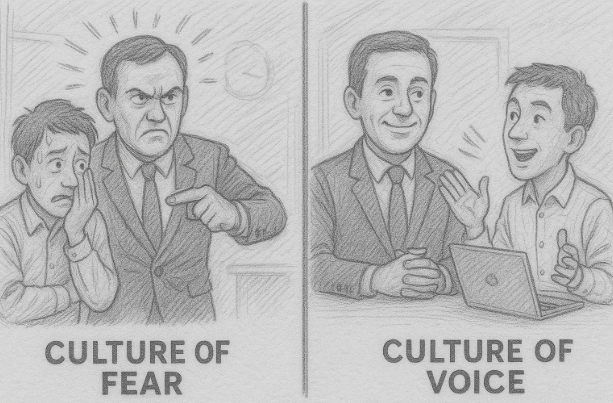
    Office Culture of Fear vs Culture of Voice

    Top 10 Office Culture Red Flags:

    The signs are always there. They show up first in the office hallways before they hit the boardroom or the stock exchange. Here are the Top 10 Office Culture Red Flags every leader, employee, and investor should watch for.

    🚩 1. Culture of Fear: Silence Over Truth

    Priya noticed colleagues whispering in hallways but staying quiet in meetings. Speaking up carried risks—silence was safer. A culture built on fear silences accountability before numbers are ever cooked.


    🚩 2. Punishing Dissent & Different Opinions

    When Priya offered alternative ideas, she was subtly mocked and excluded from key projects. Dissent was treated as disloyalty. Meanwhile, those who conformed were fast-tracked. This mirrored how boards that punish contrarian voices fail in governance oversight.


    🚩 3. Yes-Man Culture & Unchecked Power Dynamics

    Her manager dominated conversations, rewarding those who nodded in agreement. Her manager had unchecked power, his boss was far from reach for subordinates complain. Over time, fresh perspectives disappeared, replaced by robotic yes men. A company without challengers is a company without checks and balances.


    🚩 4. Favoritism, Bias & Long-Tenured Complacency

    Priya saw senior employees—though disengaged and underqualified—rewarded purely for loyalty. Bright newcomers left frustrated. Governance failure often begins where tenure and bias outweigh merit.


    🚩 5. Managers Putting Personal Gain Over Customers

    When a pulse survey came, Priya’s manager downplayed customer pain points and instead inflated his own ratings. Personal image mattered more than customer trust. This “self before service” attitude corrodes both culture and governance.


    🚩 6. Lack of Empathy in Leadership

    Colleagues under stress were met with cold responses. Deadlines mattered more than wellbeing. Without empathy, leadership erodes loyalty and fosters quiet quitting—red flags for deeper governance cracks.


    🚩 7. Hypocrisy: Values Preached, Not Practiced

    The company preached “integrity, transparency, collaboration,” yet leaders bent rules freely. This hypocrisy normalized double standards—inside culture and outside governance.


    🚩 8. Hero Worship & Untouchable Leaders

    Executives were glorified, their mistakes brushed aside. Priya quickly learned that criticizing them was career suicide. Hero worship creates blind spots that can hide fraud in plain sight.


    🚩 9. Lack of Diversity in Thought & People

    Decisions were made by people who all thought, looked, and acted the same. All male team leads, with team leads cut from the same mold—same gender, same mindset—decisions became echo chambers instead of balanced judgments. No new ideas entered the room. Diversity is not just moral—it’s a governance safeguard.


    🚩 10. Overemphasis on Optics Over Substance

    Reports were polished, presentations glossy, surveys inflated. But the reality? Customers were unhappy and employees disengaged. Obsession with appearances is often the first step in hiding inconvenient truths.


    ✅ Solutions: Building a Healthy Office Culture

    • Encourage psychological safety → Empower employees to speak up without fear.
    • Reward merit, not blind loyalty → Build fairness into promotions and pay.
    • Foster transparency → Share data, decisions, and rationales openly.
    • Independent oversight → Culture audits by HR, internal audit, or external bodies.
    • Lead by example → Culture follows leadership; governance follows culture.
    • Diverse leadership & accountability → Include varied perspectives and enforce ethical leadership at the top.

    🚨 Call to Action

    • Leaders: Don’t just measure profits—measure culture. Toxicity today is tomorrow’s governance scandal.
    • Employees: Don’t normalize silence. Use channels to escalate concerns.
    • Investors & Regulators: Look at employee surveys, attrition trends, and whistleblower activity as early-warning signs of corporate governance risks.

    Takeaway:
    Priya’s story is not unique. Offices across the world carry these cultural red flags, often dismissed as “just politics.” But when silence, favoritism, and hero worship thrive, governance is already failing. Spotting these signs early isn’t just about fixing workplaces—it’s about protecting companies from becoming the next Enron, Satyam, or Wirecard.
    Office culture is not “soft stuff.” It is the DNA of corporate governance. Spotting red flags—silence, favoritism, hero worship, or complacency—can save companies from the next Enron, Satyam, or Wirecard.


    Best Practice Suggestion for Priya

    Dealing with a Toxic Office Culture & Managerial Abuse

    Navigating a toxic work environment—especially when your manager becomes abusive for expressing dissent—requires a balance of professionalism, self-protection, and strategic action. Here’s a best practice guide for Priya, with a sample boundary-setting message included.


    1. 🔍 Recognize and Define the Toxicity

    • Identify exactly what’s happening: verbal abuse, public shaming, micromanagement, retaliation for differing opinions.
    • Keep detailed documentation: What was said, when, and by whom.

    2. 💬 Set Clear Boundaries – Calmly and Professionally

    When a manager reacts abusively to Priya’s dissent or differing views, she should stand up for herself in a respectful yet assertive way. Here’s how she can do that:


    📩 Sample Boundary-Setting Message to Manager

    Subject: Request for Respectful Communication

    Hi [Manager’s Name],

    I’d like to follow up on our recent conversation. I understand that we may not always agree on everything, and I fully respect your position and responsibilities. However, I felt that the way the discussion unfolded — particularly the tone and language used — was unproductive and personally distressing.

    I value open, respectful dialogue and am always willing to listen and align with the team’s direction, even if I raise a different perspective initially. Disagreements are natural in any workplace, and I believe they can be handled constructively.

    Moving forward, I’d appreciate it if we could maintain a more respectful tone in our conversations, even during moments of disagreement. I’m committed to contributing positively to the team, and I hope we can foster an environment where concerns can be raised without fear of personal repercussions.

    Thank you for taking this into consideration.

    Best regards,
    Priya


    Tip: Always send boundary-setting communication in writing to create a record. Avoid emotional or accusatory language—stick to facts, impact, and expectations.


    3. 🧘‍♀️ Protect Your Mental and Emotional Health

    • Prioritize wellness: take breaks, avoid over-committing, seek professional support if needed.
    • Limit unnecessary emotional investment in toxic dynamics.

    4. 🤝 Find or Build a Support System

    • Identify trustworthy colleagues or mentors inside or outside the company.
    • Don’t go through it alone — a support system builds perspective and resilience.

    5. 🛡️ Escalate When Necessary

    • If abuse continues despite setting boundaries, escalate to HR or Employee Relations with:
      • Your documentation
      • A copy of your boundary message
      • A calm summary of repeated behavior

    6. ✍️ Prepare Your Exit Strategy (Just in Case)

    • Begin updating your resume and LinkedIn quietly.
    • Start networking and exploring roles in healthier environments.
    • Interview future employers about company culture:
      “How does leadership handle disagreement?” or
      “How does your team handle conflict or differing viewpoints?”

    7. 🚪 Exit Sign: Know When to Leave

    If Priya has tried boundary-setting, escalation, and support-seeking — but the toxicity continues to harm her well-being or career growth — leaving is a strength, not a failure.

    🧾 Finances & Exit Readiness

    • Review your monthly budget and reduce non-essential expenses.
    • Start or grow an emergency fund (even small amounts help).
    • Avoid lifestyle inflation until you’ve transitioned to a healthier role.

    🚦 Know the Signs to Exit Immediately

    If Priya experiences:

    • Health decline (physical or mental)
    • Constant anxiety, burnout, or dread
    • Harassment, bullying, or threats
      Then: Pause job search and prioritize exiting — even if without a new role.

    In Summary: Priya’s Tactical Path

    StepAction
    Document abuseKeep dated records of inappropriate incidents
    Set boundariesUse respectful written communication (sample above)
    Care for selfMental health comes before job performance
    Seek supportConnect with allies and mentors
    Escalate if neededGo to HR with facts and evidence
    Prepare exit planQuietly look for healthier opportunities

    Read our blogs on Corporate Governance here.

    Some external reads.

  • 🔎 How SAP Detects RPT – Related-Party Transactions for Internal Audit Committees

    🔎 How SAP Detects RPT – Related-Party Transactions for Internal Audit Committees


    🌍 Intro – The Hidden Deal

    What are RPTs & how SAP Detects RPTs? The Internal Audit Committee of a global manufacturing giant was reviewing quarterly reports. On paper, everything looked fine — profits were steady, expenses in check, and intercompany accounts reconciled. But one forensic expert on the team noticed something odd: a small Asian subsidiary was consistently paying more for raw materials than its peers.

    At first glance, it seemed like a local supplier issue. But when the team dug deeper using SAP Financial Compliance Management (FCM) and Group Reporting tools, the truth unraveled. The vendor receiving these inflated payments wasn’t just any supplier — it was secretly owned by a close relative of the subsidiary’s CFO.

    This was a classic Related-Party Transaction (RPT) — hidden from disclosures, designed to move money out of the company through a shell entity.

    Without SAP’s automated checks, this scheme might have stayed buried for years. But with real-time monitoring, cross-entity variance analysis, and intercompany elimination reports, the Internal Audit Committee had the evidence it needed to step in, stop the fraud, and protect shareholders.


    📌 Are RPTs Illegal?

    Related-Party Transactions (RPTs) are not illegal by themselves—but when they are undisclosed, inflated, or hidden, they become a major fraud red flag. Regulators, investors, and boards have seen cases where RPT abuse led to corporate collapses—Enron, Satyam, and Luckin Coffee are stark reminders.

    For internal audit committees, the biggest challenge is visibility:

    • Are all RPTs being reported?
    • Are transfer prices close to fair market value?
    • Are intercompany eliminations matching during consolidation?
    • Could shell entities or employees be hiding behind related vendors?

    This is where SAP S/4HANA + SAP FCM (Financial Compliance Management) + SAP BIS (Business Integrity Screening) provide the fraud shield internal audit committees need.


    🛠 How SAP Applications Detect RPT Red Flags

    1. Master Data Linkage (SAP BIS)

    • Cross-checks vendor and customer master data with HR and related entities.
    • Flags if a “supplier” is owned by a director, or if a vendor’s bank account matches an employee’s.
    • Early alerts for ghost vendors and shell companies tied to insiders.

    👉 Example: A vendor created in Europe subsidiary had its bank account tied to a board member’s cousin. BIS flagged the overlap, stopping an undisclosed RPT.

    Case Example: Undisclosed RPT Caught by SAP BIS

    A European subsidiary onboarded a new vendor that seemed legitimate at first glance. But SAP Business Integrity Screening (BIS) quickly raised an alert:

    • Trigger: The vendor’s bank account matched one already flagged in the system. External compliance data (via an integrated risk database) showed the account holder was connected to a cousin of a board member.
    • Cross-check: Since this relationship was not declared in the related-party register, the system flagged it as a potential undisclosed RPT.
    • Outcome: Forensic experts halted payments, and the internal audit committee discovered a hidden conflict of interest.

    🔍 Why it matters: The system didn’t need to “know” family ties. By matching bank accounts, tax IDs, and enriched compliance data, BIS surfaced a red flag that manual checks would have easily missed.


    2. Intercompany Elimination Reports (SAP Group Reporting + FCM)

    • When consolidating accounts, SAP automatically eliminates intercompany transactions.
    • Unmatched items show up as exceptions—possible signs of unreported RPTs.

    👉 Example: Subsidiary A reports revenue from Subsidiary B, but B has no matching purchase entry. This signals inflated intercompany revenue to boost earnings.

    Inflated Intercompany Revenue

    Subsidiary A reports that it sold goods or services to Subsidiary B, booking revenue on its books. But when forensic experts check Subsidiary B, there’s no corresponding purchase recorded.

    👉 This mismatch is a red flag: it suggests that Subsidiary A may be inflating revenue by creating fake intercompany transactions. The goal is often to boost earnings and make financial results look stronger than they really are.

    SAP Group Reporting with Financial Compliance Management (FCM) automatically flags these inconsistencies through intercompany elimination reports. By comparing both sides of the transaction, auditors can quickly spot inflated revenue that doesn’t exist in reality.


    3. Variance Analysis Across Entities

    • SAP FCM dashboards compare subsidiary-level P&L trends.
    • Outliers—like one subsidiary reporting abnormal margins due to transfer pricing—get flagged.

    👉 Example: An Asian subsidiary showed 45% margins vs. group average of 12%. Investigation revealed transfer prices set to shift profits and reduce tax.

    Abnormal Margins from Transfer Pricing

    An Asian subsidiary reported 45% profit margins, far above the group average of 12%. At first glance, this looked like strong performance, but forensic review flagged it as an outlier.

    👉 Investigation revealed that the subsidiary was using manipulated transfer prices—charging unusually high prices for goods/services to related entities. This artificially shifted profits into the Asian subsidiary, where taxes were lower, and reduced taxable income elsewhere in the group.

    SAP’s Variance Analysis and Transfer Pricing Reports in FCM automatically highlight such anomalies. By comparing margins across entities and against benchmarks, auditors can detect when transfer pricing is abused to shift profits or disguise related-party transactions.


    4. Top-Side Adjustments Tracking (SAP FCM)

    • Manual journal entries made at group close are tracked.
    • Forensic experts can see who made adjustments, when, and why.
    • Sudden “plug” entries may indicate earnings manipulation through RPT adjustments.

    👉 Example: A CFO posted late-night adjustments moving expenses from one related subsidiary to another to window-dress results.

    Suspicious Late-Night Adjustments

    A CFO repeatedly posted manual journal entries late at night, shifting expenses from one subsidiary to another. This made one entity’s results look stronger while hiding losses in another—classic window dressing.

    👉 SAP Top-Side Adjustments Tracking in FCM flagged these after-hours postings and unusual manual overrides. Forensic experts reviewed the audit trail, confirming that the adjustments lacked supporting documents and were designed to mislead stakeholders.

    Outcome: The scheme was uncovered early, preventing manipulated results from reaching investors and the audit committee.


    5. Automated Controls for SOX & Compliance

    • SAP FCM comes with pre-delivered SOX controls, many designed for related-party detection.
    • These controls check for approval workflows, segregation of duties, and unusual manual overrides.

    👉 Example: A director attempted to approve transactions with a related vendor. Pre-configured controls stopped the posting until disclosed to the audit committee.

    Blocked Related-Party Transaction

    A director tried to approve payments to a vendor connected to his family business. Since this was an undisclosed related-party transaction (RPT), SAP Financial Compliance Management (FCM) flagged it using pre-configured SOX and RPT controls.

    👉 The system automatically blocked the posting and triggered a workflow requiring disclosure to the audit committee before any approval could proceed.

    Outcome: The hidden conflict of interest was caught early, ensuring transparency and protecting the company from reputational and regulatory risk.


    🏢 Group-Level Detection of RPT Abuse

    Internal audit committees often struggle with siloed ERP data across multiple subsidiaries.

    SAP solves this with:

    • Centralized monitoring (FCM on BTP) → connects multiple group entities.
    • Entity + Group fraud lens → one suspicious vendor across subsidiaries is quickly identified.
    • Automated consolidation analytics → highlights mismatches in intercompany balances.

    👉 Shell Company Example:

    • Vendor created in Asia subsidiary.
    • Same vendor paid by Europe and Middle East subsidiaries.
    • SAP FCM detected the common bank account during group reporting—flagging it as an undisclosed RPT collusion.

    🔎 How SAP FCM Detects Undisclosed Related-Party Transactions (RPT) at Group Level

    1. Disclosed RPT Repository
      • FCM maintains (or integrates with) the central registry of disclosed related parties & approved RPTs.
      • This is usually sourced from:
        • Statutory disclosures (annual reports, Form 3CD, SOX reports, etc.)
        • Master data governance (MDG) records
        • Declarations from directors & KMPs (uploaded periodically).
    2. Transaction Monitoring Across Entities
      • FCM monitors all transactions across subsidiaries and group companies (e.g., sales, purchases, loans, guarantees, expense transfers).
      • Each transaction counterparty is checked against the disclosed RPT repository.
    3. Undisclosed RPT Red-Flag
      • If a vendor, customer, or counterparty is not present in the disclosed RPT list, but:
        • has a relationship overlap (detected via BIS, HR data, director disclosures, or beneficial ownership screening), or
        • shows suspicious intercompany flows (revenue in one entity but no matching expense in another),
          → FCM flags it as potential undisclosed RPT.
    4. Audit Trail & Workflow
      • The flagged transaction is routed to internal audit or the audit committee for review.
      • This creates a traceable workflow ensuring management can’t quietly bury or bypass it.

    🎯 Why This Matters for Internal Audit Committees

    • Regulatory Pressure: Regulators (SEBI, SEC, PCAOB) demand transparency on RPTs.
    • Investor Confidence: Hidden RPTs erode shareholder trust.
    • Board Oversight: Audit committees are accountable for approving RPTs.

    With SAP’s applications, committees get:

    • Early Detection → catching RPT abuse before financial close.
    • Transparency → dashboards showing all related-party flows.
    • Audit Trail → automated logs for investigation & reporting.

    ✅ Conclusion

    RPTs are a double-edged sword: essential in global groups, but easily misused for fraud. Forensic experts and internal audit committees can’t rely only on manual reviews or disclosures.

    With SAP S/4HANA, FCM, and BIS, organizations gain a 3-layer fraud shield that:

    • Detects hidden connections,
    • Flags unusual transactions, and
    • Ensures group-level transparency.

    👉 The result: Audit committees can confidently certify compliance, strengthen governance, and prevent RPT abuse before it damages reputation.


    🕵️‍♂️ Case Example: Unreported RPT at a Global Subsidiary

    A multinational manufacturing company had subsidiaries across Asia, Europe, and the U.S.

    🔎 Trigger in SAP FCM (Financial Compliance Management):
    Variance analysis at the group level flagged one Asian subsidiary showing unusually high raw material purchase costs compared to benchmarks.

    🔗 Cross-Check via Intercompany Elimination Reports in Group Reporting:
    System detected repeated transactions with a vendor registered in Singapore. However, these transactions were not disclosed as RPTs in statutory filings.

    💡 Deep Dive with SAP BIS (Business Integrity Screening):
    BIS matched the vendor’s ultimate beneficial ownership to a family member of the subsidiary’s CFO — classic case of a shell company created to siphon profits.

    📊 Outcome for the Internal Audit Committee:
    The automated detection allowed the Audit Committee to:

    • Flag the transactions as unreported RPTs.
    • Prevent further payments.
    • Initiate disciplinary proceedings against the management of the subsidiary.
    • Strengthen compliance with SOX Section 402 and local corporate governance laws.

    Lesson:
    Without SAP’s automated RPT detection at group level, this would have slipped through manual audits. With FCM + BIS integration, the internal audit committee had clear evidence of collusion, enabling swift corrective action.

    Call to Action

    🔹 For Internal Audit Committees

    Your role is to safeguard transparency and protect shareholder trust. Undisclosed RPTs and group-level manipulations are among the biggest governance risks—manual reviews often miss them.
    ✅ With SAP FCM, you gain real-time monitoring of internal controls.
    ✅ With SAP BIS, you detect suspicious vendors, shell companies, and laundering attempts.
    ✅ With S/4HANA Group Reporting, you reconcile intercompany mismatches and spot anomalies across subsidiaries.

    👉 Act now: Strengthen your audit charter with an integrated fraud shield that combines BIS + FCM + Group Reporting, ensuring airtight compliance with SOX, SEBI, and global governance standards.


    🔹 For Forensic Experts

    Your mission is to uncover what others miss. But ghost vendors, shell companies, and inflated intercompany revenues often slip through in complex group structures.
    💡 SAP BIS scans patterns to surface high-risk vendors and abnormal payments.
    💡 SAP FCM enforces pre-delivered controls, automates risk checks, and blocks unauthorized postings.
    💡 Group Reporting in S/4HANA highlights unmatched transactions and margin outliers at the group level.

    👉 Act now: Go beyond reactive investigations—use BIS + FCM + Group Reporting to proactively prevent fraud before it touches the financial statements.

    Read our blogs on Corporate Governance here.

    Here’s an official SAP reference you can cite to support how related-party master data and integrated screening tools like BIS and FCM work to detect undisclosed RPTs:

    • SAP Business Integrity Screening (BIS) – A fraud detection and compliance solution designed to screen business partners and uncover anomalous patterns, including undisclosed related-party relationships through master data and external risk data integration SAP.

    This reference highlights BIS’s capabilities in real-time rule-based screening, which helps identify irregularities in vendor master data—such as shared bank accounts or identifiers—that can indicate potential undisclosed Related Party Transactions.

  • SAP FCM 3-Layer Fraud Shield – A Powerful Tool for Forensic Experts to Catch Red Flags

    SAP FCM 3-Layer Fraud Shield – A Powerful Tool for Forensic Experts to Catch Red Flags

    In an era where corporate fraud schemes are increasingly sophisticated, organizations need more than just annual audits to stay ahead. Fraudsters exploit silos between business units, subsidiaries, and even geographies. A transaction that looks harmless in one entity might reveal a red flag when seen in the context of the entire corporate group.

    This is where SAP Financial Compliance Management (FCM) on SAP Business Technology Platform (BTP) steps in — delivering real-time monitoring, cross-entity analytics, and AI-driven detection to catch fraud before it bleeds value.


    Fraud Happens in Layers — FCM Detects in 3-Layer Fraud Shield

    SAP FCM works across entity-level, group-level, and SOX compliance.

    • Entity-Level Detection – spotting irregularities within a single company/subsidiary.
    • Group-Level Detection – identifying patterns that emerge only when data across all subsidiaries is connected and compared.
    • SOX Layer: Provides audit-proof evidence and strengthens external compliance.

    FCM uniquely addresses both, thanks to its integration capabilities on SAP BTP and its rule-based + AI-driven approach.


    How FCM Detects Fraud at the Entity Level

    Within an individual subsidiary, FCM can integrate directly with SAP S/4HANA Finance (FI), Materials Management (MM), and Sales & Distribution (SD) modules to perform detailed checks:

    Entity-Level Red Flag Examples

    1. Ghost Vendor Payments
      • Trigger: Payments just below approval limits.
      • Check: Bank account matches employee record in HR.
      • Impact: Stops disbursement before loss occurs.
    2. Inflated Expense Claims
      • Detects repeated expense reimbursements for the same invoice number.
    3. Manual Journal Entry Abuse
      • Flags end-of-period manual postings with unusually high amounts.
    4. Vendor–Customer Collusion
      • Matches suspicious vendor invoices with unusual customer discounts in the same period.

    🔍 Detailed Example: Duplicate Vendor Payments Across Group

    This is where fraud usually starts small, within a single company.

    • Trigger:
      A vendor submits two invoices of $50,000 each to Subsidiary A within the same week. Both invoices have slightly different invoice numbers but the same amount and purchase order reference.
    • SAP FCM Pre-defined Control:
      The Duplicate Invoice Control in FCM immediately picks this up. It automatically compares:
      • Invoice number
      • Vendor ID
      • Payment amount
      • Date ranges
    • Automation:
      The system blocks the second invoice before payment execution and sends an alert to the Accounts Payable (AP) manager via workflow.
    • Forensic Expert Check:
      The AP manager reviews vendor master data and finds the vendor’s bank account number matches an employee in HR.
      Red Flag: This is a Ghost Vendor — a fake vendor created to siphon money.

    Impact: $500K fraudulent payment was stopped at the entity level.


    How FCM Detects Fraud at the Group Level

    The real power comes when all group entities are connected to FCM via SAP BTP’s integration services, creating a central compliance hub. This allows forensic experts to detect cross-company patterns invisible to local finance teams.

    SAP Financial Compliance Management (FCM) on SAP BTP helps forensic experts by consolidating internal controls, risk monitoring, and compliance checks at the group level.

    Instead of reviewing one entity at a time, forensic experts can:

    • Monitor intercompany transactions across subsidiaries.
    • Detect duplicate vendors or shared bank accounts across group entities.
    • Flag mismatched eliminations or manual top-side adjustments during group consolidation.
    • Spot hidden related-party transactions (RPTs) that subsidiaries fail to report.

    Group-Level Red Flag Examples

    1. Shell Company Collusion
      • Trigger: New vendor in Subsidiary A and Subsidiary B, based in a high-risk country.
      • Cross-check: SD billing to this vendor; AR balances reversed the next month.
      • Outcome: Early detection of possible laundering.
    2. Duplicate Bank Accounts Across Entities
      • The same bank account is linked to multiple “different” vendors in separate subsidiaries.
    3. Inflated Intercompany Revenue
      • One entity books large intercompany sales, but the buyer doesn’t record a matching payable.
    4. Unreported Related-Party Transactions (RPT)
      • Intercompany Elimination Reports show unmatched transactions between subsidiaries.

    🕵️ Example: Shell Company Detection with SAP FCM

    📌 Scenario:

    A global trading group with subsidiaries in Asia, Europe, and the Middle East is under review.

    1. Trigger (Entity Level):
      • Subsidiary X in Asia books repeated payments to a “new vendor” flagged by BIS as high-risk (registered in a tax haven).
      • Individually, the payments look small and just under the approval threshold.
    2. Group-Level Cross-Check (via SAP FCM):
      • During group-level consolidation, SAP FCM compares vendor master data across all entities.
      • It finds the same “vendor” receiving payments from 3 different subsidiaries—all routed to one offshore bank account.
      • Variance analysis shows no matching deliveries, invoices, or inventory receipts linked to these payments.
    3. Outcome:
      • Forensic experts identify the “vendor” as a shell company, created to siphon group funds.
      • The fraud is caught because FCM connects entity-level suspicious activity into a bigger group-wide pattern—something siloed ERP systems would have missed.

    Why Group-Level FCM Works Here:

    • Entity books alone: Each subsidiary’s payments looked “normal” and below thresholds.
    • Group-level detection: Consolidation revealed that the same fake vendor was draining funds across multiple subsidiaries—classic shell company collusion.

    Takeaway:
    SAP FCM provides forensic experts with a centralized fraud lens—catching shell companies by correlating payments, vendors, and risk signals across the entire group, not just one ledger.


    How FCM Works – Detection Workflow

    Step 1 – Data Integration

    • Connect SAP and non-SAP systems from all entities.
    • Pull master data, financial transactions, and compliance logs into a single view.

    Step 2 – Real-Time Rule Checks

    • Predefined and custom rules detect anomalies in AP, AR, GL, and master data.

    Step 3 – Cross-Entity Pattern Matching

    • AI models analyze trends across entities to find complex schemes (e.g., multi-step laundering).

    Step 4 – Alert & Case Management

    • Automatic alerts sent to forensic teams.
    • Integrated investigation tracking with audit trails for legal follow-up.

    Benefits for Forensic Experts

    • Faster Detection: Catch fraud within days instead of after annual audits.
    • Higher Accuracy: Combine transactional data with master data for richer context.
    • Cross-Border Insights: Uncover patterns spread across multiple subsidiaries.
    • Audit-Ready Trails: Every detection is logged for regulatory compliance.
    • Adaptable AI Models: Continuously learns from new fraud schemes.

    Real-World Scenario

    Imagine a global manufacturing group with 10 subsidiaries. Subsidiary A approves a new supplier for machinery parts. Weeks later, Subsidiary C also makes purchases from this supplier. FCM detects:

    • Supplier’s bank account is based in a sanctioned jurisdiction.
    • Invoices are followed by credit notes from Subsidiary A.
    • No actual goods were received by either entity.

    Without group-level monitoring, these red flags might have stayed invisible.


    🧾 What is SOX?

    The Sarbanes–Oxley Act (SOX) of 2002 is a U.S. federal law passed after corporate scandals like Enron, Tyco, and WorldCom, where financial fraud led to massive investor losses.

    The law’s goal is to:

    • Protect investors from fraudulent accounting.
    • Improve accuracy and reliability of corporate disclosures.
    • Make CEOs & CFOs personally accountable for financial reporting.

    🔑 Key SOX Sections Relevant to Forensic Experts & Finance

    • Section 302: Corporate Responsibility for Financial Reports
      • CEOs & CFOs must personally certify that reports are accurate.
      • They must confirm internal controls are in place and effective.
    • Section 404: Management Assessment of Internal Controls
      • Companies must document and test internal financial controls.
      • External auditors must verify effectiveness of controls.
    • Section 409: Real-Time Issuer Disclosures
      • Companies must disclose material changes in financial condition quickly.

    📌 For forensic experts, 302 & 404 are the most critical — because weak internal controls create room for fraud.


    🔍 How SAP FCM Helps with SOX Compliance

    SAP Financial Compliance Management (FCM) is designed to automate internal control management, risk monitoring, and compliance reporting. Here’s how it maps to SOX requirements:


    1. Automated Internal Controls

    • FCM comes with predefined control libraries (SOX-ready templates) such as:
      • Segregation of Duties (SoD)
      • Duplicate invoice checks
      • Vendor-bank account monitoring
      • Manual journal entry approval

    👉 These controls ensure no single person can manipulate both recording and approval steps — reducing fraud risk.


    2. Centralized Risk & Control Monitoring (Group + Entity)

    • SOX requires documented control evidence at both entity and consolidated levels.
    • SAP FCM provides dashboards where forensic experts can see:
      • Which entities passed or failed specific controls.
      • Exceptions flagged for deeper investigation.
      • Audit trails of every control execution.

    👉 Helps in real-time monitoring across group companies — not just one entity.


    3. Audit-Ready Evidence & Documentation

    • SOX auditors demand proof that controls are designed and effective.
    • SAP FCM automatically:
      • Stores test results.
      • Logs approvals, rejections, and overrides.
      • Provides workflows showing who did what and when.

    👉 Instead of forensic experts chasing evidence manually, SAP provides a digital audit trail.


    4. Continuous Compliance (No Surprises at Year-End)

    • Traditional SOX testing is periodic (quarterly/annual). Fraud can happen in between.
    • FCM enables continuous monitoring:
      • Every vendor payment, journal entry, or intercompany transaction can be checked in real-time.
      • Forensic experts get alerts instantly — not months later.

    👉 This reduces the “fraud window” where issues go unnoticed.


    5. SOX Certification Support

    • At year-end, CFO/CEO must sign off on Section 302/404 certifications.
    • SAP FCM generates certification packages showing:
      • Which controls ran successfully.
      • Which controls failed & corrective action taken.
      • Evidence trail for auditors/regulators.

    👉 Helps top management confidently sign SOX certifications without fear of penalties.


    💡 How FCM Helps in SOX Fraud Scenario

    Scenario: A fraudster tries to bypass controls by submitting manual journal entries late at quarter close to inflate revenue.

    • Without SAP FCM:
      • Manual JEs could slip through without proper approvals.
      • Later, auditors might catch it, but company faces SOX violation fines.
    • With SAP FCM:
      • Predefined control “Manual Journal Entry Approval” blocks the entry until a senior approver signs off.
      • The system logs approver’s ID, timestamp, and reason.
      • Forensic experts see this in the risk dashboard instantly.

    ✅ Fraud is blocked, and auditors get clear evidence that controls are working → SOX compliance maintained.


    🎯 Summary: Why SAP FCM is a SOX Game-Changer for Forensic Experts

    • Entity Level: Stops small fraud (ghost vendors, duplicate invoices).
    • Group Level: Identifies patterns across subsidiaries (shell companies, collusion).
    • SOX Layer: Provides the audit-proof evidence that regulators and auditors require.

    👉 Forensic experts not only catch fraud early but also ensure the company stays compliant with SOX, avoiding fines, penalties, and reputational damage.


    The Takeaway

    Fraud detection is no longer about “checking the books” at year-end.
    With SAP FCM on SAP BTP, forensic experts have a real-time radar — not just for each entity’s activity, but for the entire group’s financial heartbeat.

    It’s not just compliance.
    It’s corporate self-defense.


    SAP BIS vs SAP FCM — Key Differences & Uses

    AspectSAP BIS (Business Integrity Screening)SAP FCM (Financial Compliance Management)
    Primary PurposeDetect suspicious business partners, transactions, and patterns in real time to prevent fraud, money laundering, and compliance breaches.Enforce financial controls, monitor compliance with policies/regulations, and detect accounting-related irregularities.
    ScopeOperational + Transactional risk screening (e.g., vendor/customer fraud, sanctions screening, AML).Financial process compliance (e.g., AP, AR, GL, intercompany transactions, closing processes).
    Best AtScreening business partners, sanction/PEP checks, watchlist integration, transaction scoring, AML alerts.Continuous monitoring of financial processes, SOX compliance, fraud detection in accounting entries, related-party monitoring.
    Data SourcesPrimarily master data (vendors, customers, bank accounts) + transactional data for screening.Primarily financial/operational transactions from ERP (SAP S/4HANA or others) + compliance controls configuration.
    When to UseWhen you need to stop bad actors before onboarding or flag high-risk transactions in real time.When you need to ensure internal financial processes are clean, compliant, and manipulation-free.
    IntegrationOften runs during vendor/customer creation or transaction execution.Runs on scheduled checks or continuous monitoring in finance processes.
    Example Detection– New vendor in high-risk country (sanctions hit)Suspicious payment routing through layered bank accounts. | – Ghost vendor payments just below approval limit.
    Unreported related-party transactions via unmatched intercompany entries. |

      How They Work Together

      • BIS catches the “who” and “where” risk (e.g., is this vendor/customer sanctioned, risky, fraudulent?).
      • FCM catches the “what” and “how” risk (e.g., are transactions being manipulated, controls bypassed?).

      In fraud prevention, BIS is your border security, FCM is your internal audit radar.


      Best Practice:
      For forensic accounting and compliance teams, use BIS for partner/transaction risk screening + FCM for financial process monitoring. Together, they close gaps that either tool alone might miss.


      Decision Matrix: SAP BIS vs FCM vs Both for Fraud Detection

      #Fraud ScenarioBISFCMWhy
      1Ghost Vendor Payments (fictitious suppliers receiving payments)BIS flags unusual payment patterns & vendor anomalies; FCM cross-checks vendor bank accounts against HR records and approval limits.
      2Shell Company Collusion (vendor from high-risk country with circular transactions)BIS screens vendor against watchlists; FCM ties financial postings with master data to detect laundering loops.
      3Inflated Intercompany Revenue (fake sales between subsidiaries)FCM’s consolidation & intercompany elimination reports flag unmatched transactions and top-side adjustments.
      4Round-Tripping (fake sales returning as capital inflows)BIS detects unusual transaction loops; FCM’s consolidation analytics reveal mismatched reporting periods.
      5Procurement Kickbacks (collusion with suppliers)BIS identifies irregular bidding patterns, unusual vendor win ratios.
      6Unapproved Related-Party Transactions (RPT)FCM detects RPT via transfer pricing deviations, unmatched intercompany records, and consolidation review.
      7Split Payments to Avoid Approval ThresholdsBIS flags repeated sub-threshold payments; FCM checks payment approvals & workflow logs.
      8False Expense ClaimsBIS uses behavioral and pattern analytics to identify repetitive inflated claims.
      9Off-Book Liabilities (hidden obligations in subsidiaries)FCM consolidation reports reveal missing liabilities in one entity but present in counterparty books.
      10High-Risk Vendor OnboardingBIS screens vendors at onboarding against PEP/sanctions lists & adverse media feeds.

      Key Takeaways

      • BIS = Front-line screening & transactional anomaly detection (real-time, pattern-based, behavioral analytics).
      • FCM = Financial close, consolidation & compliance lens (group-level financial integrity, RPT detection, and reporting validation).
      • Both = Needed when fraud spans both transactional execution and financial reporting levels.

      Read our blogs on corporate governance here.

      Official SAP Reference

      SAP Risk and Assurance Management (part of the FCM solution):
      This SAP product enables the documentation and linkage of risks and internal controls, automates both preventive and detective controls, and supports testing and issue remediation across financial processes in both on-premise and cloud environments.
      SAP

    • Uncovering Fraud: How SAP Applications Help Forensic Experts to Catch Red Flags

      Uncovering Fraud: How SAP Applications Help Forensic Experts to Catch Red Flags


      Introduction: The Invisible Threats Within ERP Systems

      Fraud in enterprise systems doesn’t announce itself with bold headlines—it slips in through small anomalies, overlooked exceptions, and cleverly disguised red flags. In large organizations, forensic experts detect these signs early to prevent financial loss, regulatory fallout, and reputational damage.

      Forensic experts are increasingly turning to SAP, the world’s most widely used ERP system, to detect early warning signs of misconduct — from financial statement manipulation to procurement fraud.

      Since SAP holds almost every transactional detail in one place — finance, procurement, HR, logistics, manufacturing — it’s a goldmine for forensic investigation when used right.

      Today’s fraud prevention tools within SAP are sophisticated, proactive, and intelligent. Forensic investigators armed with SAP S/4HANA and SAP BTP can now shift from reactive audits to real-time, AI-driven fraud detection—closing gaps, surfacing hidden collusion, and dramatically reducing loss.


      Why SAP is a Forensic Expert’s Secret Weapon

      1. Centralized Data – SAP integrates multiple modules (FI, CO, MM, SD, HR, etc.) ensuring all activities are logged in one system.
      2. Timestamped, Immutable Logs – SAP’s change logs, audit trails, and user activity histories are difficult to tamper with without leaving traces.
      3. Granular Access Tracking – Every login, data change, or approval can be tied to a user ID and time.
      4. Built-in Reporting & Analytics – Tools like SAP Audit Information System (AIS), SAP GRC, and SAP HANA analytics can run exception reports and detect anomalies in real time.

      Common Red Flags Forensic Experts Look For in SAP

      CategoryRed FlagHow SAP Helps Detect It
      ProcurementVendor created & approved by same userUser activity logs, vendor master audit trail
      PaymentsDuplicate invoicesSAP duplicate invoice reports in FI module
      Access ControlSegregation of duties violationsSAP GRC Access Control
      InventoryUnusual stock adjustmentsMM module change logs
      RevenueSales recorded without deliverySD vs. MM data reconciliation
      PayrollGhost employeesHR master data vs. attendance records

      1. Real-Time Screening with SAP Business Integrity Screening (BIS)

      SAP Business Integrity Screening (BIS) is SAP’s flagship tool for real-time fraud detection within the S/4HANA ecosystem.

      AI-Powered Anomaly Detection & Rule-Based Screening: BIS can scan high volumes of transactions instantly, applying custom rules and machine learning to identify anomalies—even unknown patterns—without drowning users in false positives.
      Reference: SAP

      Alert & Case Management: Once anomalies are detected, BIS raises alerts, allowing analysts to investigate with built-in case management, audit trails, and suppression of false alerts via machine learning.
      SAP Community

      Fine-Tuned Calibration & What-If Scenarios: BIS includes simulation capabilities to optimize thresholds and reduce unnecessary noise in a controlled way.
      SAP Community

      Use Cases in Forensic Detection:

      • Duplicate vendor invoices
      • Round-dollar payments just below approval limits
      • Payments to sanctioned entities via integrated compliance lists

      SAP BIS enables continuous monitoring for anomalies—making it the frontline of fraud detection in modern SAP environments.


      2. Integrated Fraud Framework: SAP Fraud Management & GRC

      Before BIS, SAP’s Fraud Management component integrated into its Governance, Risk, and Compliance (GRC) suite offered similar functionality—rule-based screening, predictive analysis, and embedded fraud prevention.

      • Embedded in S/4HANA: Deployed as an add-on, this module analyzes data both from S/4HANA and external systems (via APIs), enabling fraud detection tied tightly to business processes.
        SAP Community
      • Calibration & Simulation on Live Data: Fraud strategies can be tested directly on productive data using what-if simulations to enhance detection accuracy.
        SAP Community+1
      • Network Analysis for Fraud Rings: Analysts can identify clusters of suspicious transactions tied to colluding parties through fraud management’s network mapping.
        SAP Community

      BIS is essentially the evolution and expansion of this foundational SAP Fraud Management capability.


      3. Module-Level Red Flags: FI, MM, SD & Beyond

      SAP S/4HANA’s finance and logistics modules each hold clues—if monitored—for early fraud detection. Here’s how forensic teams use them:

      a) FI-AP (Accounts Payable)

      • Vendor master changes and suspicious bank accounts can be flagged. Compare vendor bank details against employee accounts.
      • Invoice splitting and duplicate payments are detected via line-item analytics or Fiori apps.

      Common Fraud Risks:

      • Duplicate invoices
      • Payments to fake vendors
      • Bank account changes before payment runs

      Key Fiori Apps for Detection:

      Fiori App NameFraud Detection Use
      Display Supplier Invoices (F0859A)Identify duplicate or suspicious invoice patterns.
      Manage Supplier Master Data (F0842A)Review vendor changes, detect fake or incomplete data.
      Display Changes to Supplier Master Data (F0716)Catch unauthorized bank account updates before payments.
      Display Supplier Line Items (F0997)Spot unusual payment timings or split payments.
      Supplier Evaluation by Price Variance (F2335)Detect inflated purchase prices.

      b) FI-AR (Accounts Receivable)

      • Large discounts, unexplained write-offs, or unusual credit term changes raise red flags—especially when tied to related parties.

      Common Fraud Risks:

      • Unauthorized write-offs
      • Fake credits or rebates
      • Credit limit manipulation

      Key Fiori Apps for Detection:

      Fiori App NameFraud Detection Use
      Manage Customer Line Items (F0998)Spot large discounts or unusual adjustments.
      Display Changes to Customer Master Data (F0717)Detect sudden credit limit increases.
      Display Customer Balances (F0996)Identify accounts with unexplained write-offs.
      Manage Dispute Cases (F0857)Investigate disputes that could hide fraud.

      c) FI-GL (General Ledger)

      • Manual journal entries posted outside working hours or by unauthorized users can point to backdated fraud or earnings manipulation.

      Common Fraud Risks:

      • Manual journal entries to manipulate results
      • Suspense account misuse
      • Out-of-hours postings

      Key Fiori Apps for Detection:

      Fiori App NameFraud Detection Use
      Manage Journal Entries (F0718A)Identify unusual manual postings.
      Display Changes to Journal Entries (F0719)Track backdated or altered entries.
      Display G/L Account Balances (F0995)Spot suspicious activity in sensitive accounts.
      Trial Balance (F0994)Compare trends for anomalies.

      d) Controlling (CO)

      • Transfer prices between cost centers or related companies that deviate significantly from benchmarks may suggest RPT abuse.

      1) Why transfer prices should be close to market price
      Yes, two related entities can technically set any transfer price they want internally — but in most jurisdictions, tax laws and accounting standards require “arm’s length” pricing for related-party transactions.

      • Arm’s length principle: The price between related parties should be the same as if they were independent, unrelated companies.
      • This is to prevent companies from shifting profits to low-tax regions or hiding losses in one entity.
      • Regulators, auditors, and forensic experts compare these prices to market benchmarks; significant deviations raise suspicion of profit shifting or manipulation.

      If transfer prices deviate without documented justification, it can be a red flag for tax evasion, earnings management, or regulatory non-compliance.

      Read more about RPT here.

      2) Is transfer pricing a Related-Party Transaction (RPT)?
      Yes — by definition, any transaction between related entities (subsidiaries, sister companies, parent-subsidiary) is an RPT.

      • All transfer pricing deals are RPTs, but not all RPTs are transfer pricing (RPTs can also include loans, asset sales, management fees, etc.).

      e) Asset Accounting (FI-AA)

      Common Fraud Risks:

      • Fake asset purchases
      • Asset disposal without approval
      • Capitalizing expenses as assets

      Key Fiori Apps for Detection:

      Fiori App NameFraud Detection Use
      Display Asset Master Data (F0968)Verify ownership and details of assets.
      Display Changes to Asset Master Data (F0969)Detect suspicious changes before disposal or sale.
      Asset Balances (F0966)Monitor sudden changes in asset values.
      Asset History Sheet (F0965)Check lifecycle history for fake acquisitions.

      f) MM (Materials Management) & SD (Sales & Distribution)

      • Phantom receipts or fake shipments become evident when SD billing lacks MM goods movement or vice versa.
      • Use embedded analytics to cross-check orders and deliveries.

      Forensic power lies in cross-module analytics—detecting ghost vendors (AP ↔ HR), fake sales (SD ↔ AR), or collusive masters (MM ↔ CO).


      Fraud Detection Matrix – SAP S/4HANA FI + Cross-Module Analytics

      Fraud TypeFI Module & Fiori AppsCross-Module Data SourcesDetection Approach
      Duplicate Vendor InvoicesDisplay Supplier Invoices (F0859A), Supplier Line Items (F0997)FI-AP + MM (PO history)Match invoice data against purchase orders and goods receipts to find duplicates.
      Vendor Bank Account ManipulationDisplay Changes to Supplier Master Data (F0716)FI-AP + HCM (Employee Bank Details)Identify vendors whose bank accounts match employees’ accounts.
      Split Payments to Bypass Approval LimitsDisplay Supplier Line Items (F0997)FI-AP + MM (PO amounts)Detect multiple small payments to the same vendor on the same day.
      Sales Without DeliveryManage Customer Line Items (F0998)FI-AR + SD (Delivery & Billing Docs)Compare billed sales with actual deliveries to detect fictitious sales.
      Unauthorized Write-OffsManage Customer Line Items (F0998), Display Journal Entries (F0718A)FI-AR + SD (Customer disputes)Identify large write-offs that lack dispute documentation.
      Journal Entry ManipulationManage Journal Entries (F0718A), Display Changes to Journal Entries (F0719)FI-GL + Controlling (CO)Detect manual postings outside business hours or by non-finance users.
      Ghost Employees in PayrollDisplay Supplier Master Data (F0842A)FI-AP + HCM (Employee Master Data)Cross-check payroll and vendor data for overlaps.
      Fake Asset PurchasesDisplay Asset Master Data (F0968), Asset History Sheet (F0965)FI-AA + MM (PO Vendor List)Identify assets purchased from non-approved or high-risk vendors.
      Price Inflation in ProcurementSupplier Evaluation by Price Variance (F2335)FI-AP + MM (Historical PO prices)Compare current prices with historical trends.
      Unauthorized Credit Limit ChangesDisplay Changes to Customer Master Data (F0717)FI-AR + SD (Sales Orders)Detect credit limit changes followed by large orders.

      4. SAP BTP & AI: Lifting Fraud Detection to the Next Level

      SAP Business Technology Platform (BTP) complements SAP S/4HANA by embedding advanced analytics, AI, and compliance capabilities:

      • Financial Compliance Management (FCM) on BTP allows real-time control monitoring across modules, alerting on fraudulent patterns like vendor/employee overlap or split invoice payments.
      • Predictive Analytics & Anomaly Detection leverages AI/ML to establish normative transaction behavior and flag deviations in real-time.
      • External Screening Integration ensures vendor/customer entities are cross-checked against sanction lists, PEP registers, and global AML databases—vital for detecting shell companies or sanctioned partners.

      Through BTP, forensic teams gain a centralized, intelligent command center for fraud detection that spans modules and external data.


      5. Consolidation-Level Oversight: Group Reporting & Review Booklets

      Fraud can happen at subsidiary level before consolidation masks it. SAP S/4HANA’s Group Reporting and Financial Review Booklets act as forensic dashboards at that level:

      • Variance Analysis Across Entities flags unusual performance fluctuations—e.g., an outlier subsidiary with inflated profit margins.Compares performance across all subsidiaries to spot outliers, like one unit suddenly showing unusually high profit margins, which could signal manipulation or hidden deals.
      • Intercompany Elimination Reports reveal unmatched transactions indicating unreported RPT.It signals possible unreported related-party transactions because legitimate inter company deals should match in both entities’ books — same amount, date, and terms. When one side records it and the other doesn’t, it could mean the transaction is being hidden to avoid disclosure rules, misstate profits, or shift funds within the group, which are common tactics in related-party fraud.
      • Top-Side Adjustments Tracking shows manual tweaks made at close—frequently a venue for manipulation.It monitors manual journal entries made at the end of the reporting period. Since these adjustments bypass normal operational postings, they can be used to artificially inflate revenue, hide expenses, or smooth earnings, making them a common spot for financial manipulation.

      By embedding anomaly detection and drill-down ability, Group Reporting turns statutory consolidation into a fraud detection platform.


      6. Real-Life Forensic Scenarios

      Here are illustrative use cases demonstrating SAP’s combined power:

      Case 1: Ghost Vendor Payments

      • Trigger: BIS flags vendor payments just below approval threshold.
      • Cross-check: FCM reveals vendor bank account matches an employee in HR.
      • Outcome: Fraud investigation halts $500K in ghost payments.

      SAP flagged several vendor payments just under the approval limit. A cross-check showed the vendor’s bank account matched an employee in HR — revealing a fake supplier used to divert funds. The fraud was stopped, saving $500K.

      Case 2: Shell Company Collusion

      • Trigger: New vendor appears; BIS screens hit high-risk country.
      • Cross-check: SD shows billing to this entity; AR balances are reversed next period.
      • Outcome: Transaction chain indicates laundering attempt caught early.

      This is a shell company collusion example because the entity was set up to appear as a legitimate business partner but had no genuine commercial activity. It acted as both vendor and customer to create fake transactions, moving money in and out through billing and receivable reversals. The goal was to “wash” illicit funds by routing them through the company’s books, a classic laundering tactic. SAP’s cross-module checks exposed this circular flow, revealing that the transactions existed only to disguise the origin of money.

      Case 3: Inflated Intercompany Revenue

      • Trigger: Group Reporting variance shows 60% margin spike in small entity.
      • Cross-check: Finance dashboard links high intercompany sales with no cost of goods sold.
      • Outcome: Front-loaded revenue manipulation detected before consolidation.

      Two related companies within the same group record big sales to each other just before quarter-end to make revenues look higher. In SAP S/4HANA, forensic checks reveal large intercompany invoices in SD but no matching goods movement in MM, and payments in FI are later reversed or offset. This “round-tripping” creates fake revenue, which SAP’s group reporting and anomaly detection can quickly flag as suspicious.


      7. Why This Approach Works

      SAP’s layered fraud detection model is powerful because it combines:

      • Real-time monitoring via BIS (fast detection)
      • Embedded fraud management controls (tight integration)
      • Cross-module analytics (holistic view)
      • AI-powered risk scoring (predictive strength)
      • Consolidation-level oversight (entity-level visibility)

      This multifaceted approach gives forensic teams an enterprise-wide fraud immune system.


      SAP BIS vs SAP FCM — Key Differences & Uses

      Here’s a clear comparison so you can see where SAP BIS (Business Integrity Screening) and SAP FCM (Financial Compliance Management) fit — and why in many cases they work together, not as “either/or.”

      AspectSAP BIS (Business Integrity Screening)SAP FCM (Financial Compliance Management)
      Primary PurposeDetect suspicious business partners, transactions, and patterns in real time to prevent fraud, money laundering, and compliance breaches.Enforce financial controls, monitor compliance with policies/regulations, and detect accounting-related irregularities.
      ScopeOperational + Transactional risk screening (e.g., vendor/customer fraud, sanctions screening, AML).Financial process compliance (e.g., AP, AR, GL, intercompany transactions, closing processes).
      Best AtScreening business partners, sanction/PEP checks, watchlist integration, transaction scoring, AML alerts.Continuous monitoring of financial processes, SOX compliance, fraud detection in accounting entries, related-party monitoring.
      Data SourcesPrimarily master data (vendors, customers, bank accounts) + transactional data for screening.Primarily financial/operational transactions from ERP (SAP S/4HANA or others) + compliance controls configuration.
      When to UseWhen you need to stop bad actors before onboarding or flag high-risk transactions in real time.When you need to ensure internal financial processes are clean, compliant, and manipulation-free.
      IntegrationOften runs during vendor/customer creation or transaction execution.Runs on scheduled checks or continuous monitoring in finance processes.
      Example Detection– New vendor in high-risk country (sanctions hit)Suspicious payment routing through layered bank accounts. | – Ghost vendor payments just below approval limit.
      Unreported related-party transactions via unmatched intercompany entries. |

      How They Work Together

      • BIS catches the “who” and “where” risk (e.g., is this vendor/customer sanctioned, risky, fraudulent?).
      • FCM catches the “what” and “how” risk (e.g., are transactions being manipulated, controls bypassed?).

      In fraud prevention, BIS is your border security, FCM is your internal audit radar.


      Best Practice:
      For forensic accounting and compliance teams, use BIS for partner/transaction risk screening + FCM for financial process monitoring. Together, they close gaps that either tool alone might miss.


      8. Best Practices for Implementation

      To implement and scale this fraud detection strategy:

      1. Start with Risk Mapping—identify critical fraud areas (AP, AR, RPT, asset accounting).
      2. Enable BIS and Fraud Management with tailored rulebooks.
      3. Cross-connect modules via custom Fiori analytics and CDS views.
      4. Deploy FCM on BTP for AI-powered anomaly detection.
      5. Embed into consolidation workflows via Review Booklets in Group Reporting.
      6. Train investigators on alert handling and case workflows.
      7. Continuously refine rules using BIS simulation and calibration.

      9. Reference Summary

      • SAP Business Integrity Screening (BIS) enables real-time, AI-driven anomaly detection with rule-based and predictive capabilities. SAP Community
      • BIS integrates alerts with case management and supports simulation for precision. SAP Community
      • SAP Fraud Management (GRC integrated) offers similar capabilities with added network analysis and live calibration. SAP Community+1
      • SAP Fraud Management (GRC integrated) offers similar capabilities with added network analysis and live calibration. SAP Community
      • SAP S/4HANA modules (FI, MM, SD, AR, CO) hold localized fraud risk points that analytics can monitor.
      • SAP BTP’s AI & Compliance tools enable cross-module and external screening, elevating forensic detection.
      • Group Reporting and Review Booklets convert consolidation processes into fraud-detection dashboards.

      Conclusion

      Fraud often hides in plain sight—but modern SAP tools shine light on suspicious patterns across business functions. When forensic experts use the integration power of SAP S/4HANA and SAP BTP, they gain:

      • Real-time detection
      • Predictive insights
      • Cross-module visibility
      • Entity-level consolidation checks
      • Audit-ready alert workflows

      This is the future of enterprise fraud prevention: powerful, proactive, and precise.

    • Uncovering Fraud: How SAP Applications Help Forensic Experts to Catch Red Flags

      Uncovering Fraud: How SAP Applications Help Forensic Experts to Catch Red Flags


      Introduction: The Invisible Threats Within ERP Systems

      Fraud in enterprise systems doesn’t announce itself with bold headlines—it slips in through small anomalies, overlooked exceptions, and cleverly disguised red flags. In large organizations, forensic experts detect these signs early to prevent financial loss, regulatory fallout, and reputational damage.

      Forensic experts are increasingly turning to SAP, the world’s most widely used ERP system, to detect early warning signs of misconduct — from financial statement manipulation to procurement fraud.

      Since SAP holds almost every transactional detail in one place — finance, procurement, HR, logistics, manufacturing — it’s a goldmine for forensic investigation when used right.

      Today’s fraud prevention tools within SAP are sophisticated, proactive, and intelligent. Forensic investigators armed with SAP S/4HANA and SAP BTP can now shift from reactive audits to real-time, AI-driven fraud detection—closing gaps, surfacing hidden collusion, and dramatically reducing loss.


      Why SAP is a Forensic Expert’s Secret Weapon

      1. Centralized Data – SAP integrates multiple modules (FI, CO, MM, SD, HR, etc.) ensuring all activities are logged in one system.
      2. Timestamped, Immutable Logs – SAP’s change logs, audit trails, and user activity histories are difficult to tamper with without leaving traces.
      3. Granular Access Tracking – Every login, data change, or approval can be tied to a user ID and time.
      4. Built-in Reporting & Analytics – Tools like SAP Audit Information System (AIS), SAP GRC, and SAP HANA analytics can run exception reports and detect anomalies in real time.

      Common Red Flags Forensic Experts Look For in SAP

      CategoryRed FlagHow SAP Helps Detect It
      ProcurementVendor created & approved by same userUser activity logs, vendor master audit trail
      PaymentsDuplicate invoicesSAP duplicate invoice reports in FI module
      Access ControlSegregation of duties violationsSAP GRC Access Control
      InventoryUnusual stock adjustmentsMM module change logs
      RevenueSales recorded without deliverySD vs. MM data reconciliation
      PayrollGhost employeesHR master data vs. attendance records

      1. Real-Time Screening with SAP Business Integrity Screening (BIS)

      SAP Business Integrity Screening (BIS) is SAP’s flagship tool for real-time fraud detection within the S/4HANA ecosystem.

      AI-Powered Anomaly Detection & Rule-Based Screening: BIS can scan high volumes of transactions instantly, applying custom rules and machine learning to identify anomalies—even unknown patterns—without drowning users in false positives.
      Reference: SAP

      Alert & Case Management: Once anomalies are detected, BIS raises alerts, allowing analysts to investigate with built-in case management, audit trails, and suppression of false alerts via machine learning.
      SAP Community

      Fine-Tuned Calibration & What-If Scenarios: BIS includes simulation capabilities to optimize thresholds and reduce unnecessary noise in a controlled way.
      SAP Community

      Use Cases in Forensic Detection:

      • Duplicate vendor invoices
      • Round-dollar payments just below approval limits
      • Payments to sanctioned entities via integrated compliance lists

      SAP BIS enables continuous monitoring for anomalies—making it the frontline of fraud detection in modern SAP environments.


      2. Integrated Fraud Framework: SAP Fraud Management & GRC

      Before BIS, SAP’s Fraud Management component integrated into its Governance, Risk, and Compliance (GRC) suite offered similar functionality—rule-based screening, predictive analysis, and embedded fraud prevention.

      • Embedded in S/4HANA: Deployed as an add-on, this module analyzes data both from S/4HANA and external systems (via APIs), enabling fraud detection tied tightly to business processes.
        SAP Community
      • Calibration & Simulation on Live Data: Fraud strategies can be tested directly on productive data using what-if simulations to enhance detection accuracy.
        SAP Community+1
      • Network Analysis for Fraud Rings: Analysts can identify clusters of suspicious transactions tied to colluding parties through fraud management’s network mapping.
        SAP Community

      BIS is essentially the evolution and expansion of this foundational SAP Fraud Management capability.


      3. Module-Level Red Flags: FI, MM, SD & Beyond

      SAP S/4HANA’s finance and logistics modules each hold clues—if monitored—for early fraud detection. Here’s how forensic teams use them:

      a) FI-AP (Accounts Payable)

      • Vendor master changes and suspicious bank accounts can be flagged. Compare vendor bank details against employee accounts.
      • Invoice splitting and duplicate payments are detected via line-item analytics or Fiori apps.

      Common Fraud Risks:

      • Duplicate invoices
      • Payments to fake vendors
      • Bank account changes before payment runs

      Key Fiori Apps for Detection:

      Fiori App NameFraud Detection Use
      Display Supplier Invoices (F0859A)Identify duplicate or suspicious invoice patterns.
      Manage Supplier Master Data (F0842A)Review vendor changes, detect fake or incomplete data.
      Display Changes to Supplier Master Data (F0716)Catch unauthorized bank account updates before payments.
      Display Supplier Line Items (F0997)Spot unusual payment timings or split payments.
      Supplier Evaluation by Price Variance (F2335)Detect inflated purchase prices.

      b) FI-AR (Accounts Receivable)

      • Large discounts, unexplained write-offs, or unusual credit term changes raise red flags—especially when tied to related parties.

      Common Fraud Risks:

      • Unauthorized write-offs
      • Fake credits or rebates
      • Credit limit manipulation

      Key Fiori Apps for Detection:

      Fiori App NameFraud Detection Use
      Manage Customer Line Items (F0998)Spot large discounts or unusual adjustments.
      Display Changes to Customer Master Data (F0717)Detect sudden credit limit increases.
      Display Customer Balances (F0996)Identify accounts with unexplained write-offs.
      Manage Dispute Cases (F0857)Investigate disputes that could hide fraud.

      c) FI-GL (General Ledger)

      • Manual journal entries posted outside working hours or by unauthorized users can point to backdated fraud or earnings manipulation.

      Common Fraud Risks:

      • Manual journal entries to manipulate results
      • Suspense account misuse
      • Out-of-hours postings

      Key Fiori Apps for Detection:

      Fiori App NameFraud Detection Use
      Manage Journal Entries (F0718A)Identify unusual manual postings.
      Display Changes to Journal Entries (F0719)Track backdated or altered entries.
      Display G/L Account Balances (F0995)Spot suspicious activity in sensitive accounts.
      Trial Balance (F0994)Compare trends for anomalies.

      d) Controlling (CO)

      • Transfer prices between cost centers or related companies that deviate significantly from benchmarks may suggest RPT abuse.

      1) Why transfer prices should be close to market price
      Yes, two related entities can technically set any transfer price they want internally — but in most jurisdictions, tax laws and accounting standards require “arm’s length” pricing for related-party transactions.

      • Arm’s length principle: The price between related parties should be the same as if they were independent, unrelated companies.
      • This is to prevent companies from shifting profits to low-tax regions or hiding losses in one entity.
      • Regulators, auditors, and forensic experts compare these prices to market benchmarks; significant deviations raise suspicion of profit shifting or manipulation.

      If transfer prices deviate without documented justification, it can be a red flag for tax evasion, earnings management, or regulatory non-compliance.

      Read more about RPT here.

      2) Is transfer pricing a Related-Party Transaction (RPT)?
      Yes — by definition, any transaction between related entities (subsidiaries, sister companies, parent-subsidiary) is an RPT.

      • All transfer pricing deals are RPTs, but not all RPTs are transfer pricing (RPTs can also include loans, asset sales, management fees, etc.).

      e) Asset Accounting (FI-AA)

      Common Fraud Risks:

      • Fake asset purchases
      • Asset disposal without approval
      • Capitalizing expenses as assets

      Key Fiori Apps for Detection:

      Fiori App NameFraud Detection Use
      Display Asset Master Data (F0968)Verify ownership and details of assets.
      Display Changes to Asset Master Data (F0969)Detect suspicious changes before disposal or sale.
      Asset Balances (F0966)Monitor sudden changes in asset values.
      Asset History Sheet (F0965)Check lifecycle history for fake acquisitions.

      f) MM (Materials Management) & SD (Sales & Distribution)

      • Phantom receipts or fake shipments become evident when SD billing lacks MM goods movement or vice versa.
      • Use embedded analytics to cross-check orders and deliveries.

      Forensic power lies in cross-module analytics—detecting ghost vendors (AP ↔ HR), fake sales (SD ↔ AR), or collusive masters (MM ↔ CO).


      Fraud Detection Matrix – SAP S/4HANA FI + Cross-Module Analytics

      Fraud TypeFI Module & Fiori AppsCross-Module Data SourcesDetection Approach
      Duplicate Vendor InvoicesDisplay Supplier Invoices (F0859A), Supplier Line Items (F0997)FI-AP + MM (PO history)Match invoice data against purchase orders and goods receipts to find duplicates.
      Vendor Bank Account ManipulationDisplay Changes to Supplier Master Data (F0716)FI-AP + HCM (Employee Bank Details)Identify vendors whose bank accounts match employees’ accounts.
      Split Payments to Bypass Approval LimitsDisplay Supplier Line Items (F0997)FI-AP + MM (PO amounts)Detect multiple small payments to the same vendor on the same day.
      Sales Without DeliveryManage Customer Line Items (F0998)FI-AR + SD (Delivery & Billing Docs)Compare billed sales with actual deliveries to detect fictitious sales.
      Unauthorized Write-OffsManage Customer Line Items (F0998), Display Journal Entries (F0718A)FI-AR + SD (Customer disputes)Identify large write-offs that lack dispute documentation.
      Journal Entry ManipulationManage Journal Entries (F0718A), Display Changes to Journal Entries (F0719)FI-GL + Controlling (CO)Detect manual postings outside business hours or by non-finance users.
      Ghost Employees in PayrollDisplay Supplier Master Data (F0842A)FI-AP + HCM (Employee Master Data)Cross-check payroll and vendor data for overlaps.
      Fake Asset PurchasesDisplay Asset Master Data (F0968), Asset History Sheet (F0965)FI-AA + MM (PO Vendor List)Identify assets purchased from non-approved or high-risk vendors.
      Price Inflation in ProcurementSupplier Evaluation by Price Variance (F2335)FI-AP + MM (Historical PO prices)Compare current prices with historical trends.
      Unauthorized Credit Limit ChangesDisplay Changes to Customer Master Data (F0717)FI-AR + SD (Sales Orders)Detect credit limit changes followed by large orders.

      4. SAP BTP & AI: Lifting Fraud Detection to the Next Level

      SAP Business Technology Platform (BTP) complements SAP S/4HANA by embedding advanced analytics, AI, and compliance capabilities:

      • Financial Compliance Management (FCM) on BTP allows real-time control monitoring across modules, alerting on fraudulent patterns like vendor/employee overlap or split invoice payments.
      • Predictive Analytics & Anomaly Detection leverages AI/ML to establish normative transaction behavior and flag deviations in real-time.
      • External Screening Integration ensures vendor/customer entities are cross-checked against sanction lists, PEP registers, and global AML databases—vital for detecting shell companies or sanctioned partners.

      Through BTP, forensic teams gain a centralized, intelligent command center for fraud detection that spans modules and external data.


      5. Consolidation-Level Oversight: Group Reporting & Review Booklets

      Fraud can happen at subsidiary level before consolidation masks it. SAP S/4HANA’s Group Reporting and Financial Review Booklets act as forensic dashboards at that level:

      • Variance Analysis Across Entities flags unusual performance fluctuations—e.g., an outlier subsidiary with inflated profit margins.Compares performance across all subsidiaries to spot outliers, like one unit suddenly showing unusually high profit margins, which could signal manipulation or hidden deals.
      • Intercompany Elimination Reports reveal unmatched transactions indicating unreported RPT.It signals possible unreported related-party transactions because legitimate inter company deals should match in both entities’ books — same amount, date, and terms. When one side records it and the other doesn’t, it could mean the transaction is being hidden to avoid disclosure rules, misstate profits, or shift funds within the group, which are common tactics in related-party fraud.
      • Top-Side Adjustments Tracking shows manual tweaks made at close—frequently a venue for manipulation.It monitors manual journal entries made at the end of the reporting period. Since these adjustments bypass normal operational postings, they can be used to artificially inflate revenue, hide expenses, or smooth earnings, making them a common spot for financial manipulation.

      By embedding anomaly detection and drill-down ability, Group Reporting turns statutory consolidation into a fraud detection platform.


      6. Real-Life Forensic Scenarios

      Here are illustrative use cases demonstrating SAP’s combined power:

      Case 1: Ghost Vendor Payments

      • Trigger: BIS flags vendor payments just below approval threshold.
      • Cross-check: FCM reveals vendor bank account matches an employee in HR.
      • Outcome: Fraud investigation halts $500K in ghost payments.

      SAP flagged several vendor payments just under the approval limit. A cross-check showed the vendor’s bank account matched an employee in HR — revealing a fake supplier used to divert funds. The fraud was stopped, saving $500K.

      Case 2: Shell Company Collusion

      • Trigger: New vendor appears; BIS screens hit high-risk country.
      • Cross-check: SD shows billing to this entity; AR balances are reversed next period.
      • Outcome: Transaction chain indicates laundering attempt caught early.

      This is a shell company collusion example because the entity was set up to appear as a legitimate business partner but had no genuine commercial activity. It acted as both vendor and customer to create fake transactions, moving money in and out through billing and receivable reversals. The goal was to “wash” illicit funds by routing them through the company’s books, a classic laundering tactic. SAP’s cross-module checks exposed this circular flow, revealing that the transactions existed only to disguise the origin of money.

      Case 3: Inflated Intercompany Revenue

      • Trigger: Group Reporting variance shows 60% margin spike in small entity.
      • Cross-check: Finance dashboard links high intercompany sales with no cost of goods sold.
      • Outcome: Front-loaded revenue manipulation detected before consolidation.

      Two related companies within the same group record big sales to each other just before quarter-end to make revenues look higher. In SAP S/4HANA, forensic checks reveal large intercompany invoices in SD but no matching goods movement in MM, and payments in FI are later reversed or offset. This “round-tripping” creates fake revenue, which SAP’s group reporting and anomaly detection can quickly flag as suspicious.


      7. Why This Approach Works

      SAP’s layered fraud detection model is powerful because it combines:

      • Real-time monitoring via BIS (fast detection)
      • Embedded fraud management controls (tight integration)
      • Cross-module analytics (holistic view)
      • AI-powered risk scoring (predictive strength)
      • Consolidation-level oversight (entity-level visibility)

      This multifaceted approach gives forensic teams an enterprise-wide fraud immune system.


      SAP BIS vs SAP FCM — Key Differences & Uses

      Here’s a clear comparison so you can see where SAP BIS (Business Integrity Screening) and SAP FCM (Financial Compliance Management) fit — and why in many cases they work together, not as “either/or.”

      AspectSAP BIS (Business Integrity Screening)SAP FCM (Financial Compliance Management)
      Primary PurposeDetect suspicious business partners, transactions, and patterns in real time to prevent fraud, money laundering, and compliance breaches.Enforce financial controls, monitor compliance with policies/regulations, and detect accounting-related irregularities.
      ScopeOperational + Transactional risk screening (e.g., vendor/customer fraud, sanctions screening, AML).Financial process compliance (e.g., AP, AR, GL, intercompany transactions, closing processes).
      Best AtScreening business partners, sanction/PEP checks, watchlist integration, transaction scoring, AML alerts.Continuous monitoring of financial processes, SOX compliance, fraud detection in accounting entries, related-party monitoring.
      Data SourcesPrimarily master data (vendors, customers, bank accounts) + transactional data for screening.Primarily financial/operational transactions from ERP (SAP S/4HANA or others) + compliance controls configuration.
      When to UseWhen you need to stop bad actors before onboarding or flag high-risk transactions in real time.When you need to ensure internal financial processes are clean, compliant, and manipulation-free.
      IntegrationOften runs during vendor/customer creation or transaction execution.Runs on scheduled checks or continuous monitoring in finance processes.
      Example Detection– New vendor in high-risk country (sanctions hit)Suspicious payment routing through layered bank accounts. | – Ghost vendor payments just below approval limit.
      Unreported related-party transactions via unmatched intercompany entries. |

      How They Work Together

      • BIS catches the “who” and “where” risk (e.g., is this vendor/customer sanctioned, risky, fraudulent?).
      • FCM catches the “what” and “how” risk (e.g., are transactions being manipulated, controls bypassed?).

      In fraud prevention, BIS is your border security, FCM is your internal audit radar.


      Best Practice:
      For forensic accounting and compliance teams, use BIS for partner/transaction risk screening + FCM for financial process monitoring. Together, they close gaps that either tool alone might miss.


      8. Best Practices for Implementation

      To implement and scale this fraud detection strategy:

      1. Start with Risk Mapping—identify critical fraud areas (AP, AR, RPT, asset accounting).
      2. Enable BIS and Fraud Management with tailored rulebooks.
      3. Cross-connect modules via custom Fiori analytics and CDS views.
      4. Deploy FCM on BTP for AI-powered anomaly detection.
      5. Embed into consolidation workflows via Review Booklets in Group Reporting.
      6. Train investigators on alert handling and case workflows.
      7. Continuously refine rules using BIS simulation and calibration.

      9. Reference Summary

      • SAP Business Integrity Screening (BIS) enables real-time, AI-driven anomaly detection with rule-based and predictive capabilities. SAP Community
      • BIS integrates alerts with case management and supports simulation for precision. SAP Community
      • SAP Fraud Management (GRC integrated) offers similar capabilities with added network analysis and live calibration. SAP Community+1
      • SAP Fraud Management (GRC integrated) offers similar capabilities with added network analysis and live calibration. SAP Community
      • SAP S/4HANA modules (FI, MM, SD, AR, CO) hold localized fraud risk points that analytics can monitor.
      • SAP BTP’s AI & Compliance tools enable cross-module and external screening, elevating forensic detection.
      • Group Reporting and Review Booklets convert consolidation processes into fraud-detection dashboards.

      Conclusion

      Fraud often hides in plain sight—but modern SAP tools shine light on suspicious patterns across business functions. When forensic experts use the integration power of SAP S/4HANA and SAP BTP, they gain:

      • Real-time detection
      • Predictive insights
      • Cross-module visibility
      • Entity-level consolidation checks
      • Audit-ready alert workflows

      This is the future of enterprise fraud prevention: powerful, proactive, and precise.

    • Uncovering Fraud: How SAP Applications Help Forensic Experts to Catch Red Flags

      Uncovering Fraud: How SAP Applications Help Forensic Experts to Catch Red Flags


      Introduction: The Invisible Threats Within ERP Systems

      Fraud in enterprise systems doesn’t announce itself with bold headlines—it slips in through small anomalies, overlooked exceptions, and cleverly disguised red flags. In large organizations, forensic experts detect these signs early to prevent financial loss, regulatory fallout, and reputational damage.

      Forensic experts are increasingly turning to SAP, the world’s most widely used ERP system, to detect early warning signs of misconduct — from financial statement manipulation to procurement fraud.

      Since SAP holds almost every transactional detail in one place — finance, procurement, HR, logistics, manufacturing — it’s a goldmine for forensic investigation when used right.

      Today’s fraud prevention tools within SAP are sophisticated, proactive, and intelligent. Forensic investigators armed with SAP S/4HANA and SAP BTP can now shift from reactive audits to real-time, AI-driven fraud detection—closing gaps, surfacing hidden collusion, and dramatically reducing loss.


      Why SAP is a Forensic Expert’s Secret Weapon

      1. Centralized Data – SAP integrates multiple modules (FI, CO, MM, SD, HR, etc.) ensuring all activities are logged in one system.
      2. Timestamped, Immutable Logs – SAP’s change logs, audit trails, and user activity histories are difficult to tamper with without leaving traces.
      3. Granular Access Tracking – Every login, data change, or approval can be tied to a user ID and time.
      4. Built-in Reporting & Analytics – Tools like SAP Audit Information System (AIS), SAP GRC, and SAP HANA analytics can run exception reports and detect anomalies in real time.

      Common Red Flags Forensic Experts Look For in SAP

      CategoryRed FlagHow SAP Helps Detect It
      ProcurementVendor created & approved by same userUser activity logs, vendor master audit trail
      PaymentsDuplicate invoicesSAP duplicate invoice reports in FI module
      Access ControlSegregation of duties violationsSAP GRC Access Control
      InventoryUnusual stock adjustmentsMM module change logs
      RevenueSales recorded without deliverySD vs. MM data reconciliation
      PayrollGhost employeesHR master data vs. attendance records

      1. Real-Time Screening with SAP Business Integrity Screening (BIS)

      SAP Business Integrity Screening (BIS) is SAP’s flagship tool for real-time fraud detection within the S/4HANA ecosystem.

      AI-Powered Anomaly Detection & Rule-Based Screening: BIS can scan high volumes of transactions instantly, applying custom rules and machine learning to identify anomalies—even unknown patterns—without drowning users in false positives.
      Reference: SAP

      Alert & Case Management: Once anomalies are detected, BIS raises alerts, allowing analysts to investigate with built-in case management, audit trails, and suppression of false alerts via machine learning.
      SAP Community

      Fine-Tuned Calibration & What-If Scenarios: BIS includes simulation capabilities to optimize thresholds and reduce unnecessary noise in a controlled way.
      SAP Community

      Use Cases in Forensic Detection:

      • Duplicate vendor invoices
      • Round-dollar payments just below approval limits
      • Payments to sanctioned entities via integrated compliance lists

      SAP BIS enables continuous monitoring for anomalies—making it the frontline of fraud detection in modern SAP environments.


      2. Integrated Fraud Framework: SAP Fraud Management & GRC

      Before BIS, SAP’s Fraud Management component integrated into its Governance, Risk, and Compliance (GRC) suite offered similar functionality—rule-based screening, predictive analysis, and embedded fraud prevention.

      • Embedded in S/4HANA: Deployed as an add-on, this module analyzes data both from S/4HANA and external systems (via APIs), enabling fraud detection tied tightly to business processes.
        SAP Community
      • Calibration & Simulation on Live Data: Fraud strategies can be tested directly on productive data using what-if simulations to enhance detection accuracy.
        SAP Community+1
      • Network Analysis for Fraud Rings: Analysts can identify clusters of suspicious transactions tied to colluding parties through fraud management’s network mapping.
        SAP Community

      BIS is essentially the evolution and expansion of this foundational SAP Fraud Management capability.


      3. Module-Level Red Flags: FI, MM, SD & Beyond

      SAP S/4HANA’s finance and logistics modules each hold clues—if monitored—for early fraud detection. Here’s how forensic teams use them:

      a) FI-AP (Accounts Payable)

      • Vendor master changes and suspicious bank accounts can be flagged. Compare vendor bank details against employee accounts.
      • Invoice splitting and duplicate payments are detected via line-item analytics or Fiori apps.

      Common Fraud Risks:

      • Duplicate invoices
      • Payments to fake vendors
      • Bank account changes before payment runs

      Key Fiori Apps for Detection:

      Fiori App NameFraud Detection Use
      Display Supplier Invoices (F0859A)Identify duplicate or suspicious invoice patterns.
      Manage Supplier Master Data (F0842A)Review vendor changes, detect fake or incomplete data.
      Display Changes to Supplier Master Data (F0716)Catch unauthorized bank account updates before payments.
      Display Supplier Line Items (F0997)Spot unusual payment timings or split payments.
      Supplier Evaluation by Price Variance (F2335)Detect inflated purchase prices.

      b) FI-AR (Accounts Receivable)

      • Large discounts, unexplained write-offs, or unusual credit term changes raise red flags—especially when tied to related parties.

      Common Fraud Risks:

      • Unauthorized write-offs
      • Fake credits or rebates
      • Credit limit manipulation

      Key Fiori Apps for Detection:

      Fiori App NameFraud Detection Use
      Manage Customer Line Items (F0998)Spot large discounts or unusual adjustments.
      Display Changes to Customer Master Data (F0717)Detect sudden credit limit increases.
      Display Customer Balances (F0996)Identify accounts with unexplained write-offs.
      Manage Dispute Cases (F0857)Investigate disputes that could hide fraud.

      c) FI-GL (General Ledger)

      • Manual journal entries posted outside working hours or by unauthorized users can point to backdated fraud or earnings manipulation.

      Common Fraud Risks:

      • Manual journal entries to manipulate results
      • Suspense account misuse
      • Out-of-hours postings

      Key Fiori Apps for Detection:

      Fiori App NameFraud Detection Use
      Manage Journal Entries (F0718A)Identify unusual manual postings.
      Display Changes to Journal Entries (F0719)Track backdated or altered entries.
      Display G/L Account Balances (F0995)Spot suspicious activity in sensitive accounts.
      Trial Balance (F0994)Compare trends for anomalies.

      d) Controlling (CO)

      • Transfer prices between cost centers or related companies that deviate significantly from benchmarks may suggest RPT abuse.

      1) Why transfer prices should be close to market price
      Yes, two related entities can technically set any transfer price they want internally — but in most jurisdictions, tax laws and accounting standards require “arm’s length” pricing for related-party transactions.

      • Arm’s length principle: The price between related parties should be the same as if they were independent, unrelated companies.
      • This is to prevent companies from shifting profits to low-tax regions or hiding losses in one entity.
      • Regulators, auditors, and forensic experts compare these prices to market benchmarks; significant deviations raise suspicion of profit shifting or manipulation.

      If transfer prices deviate without documented justification, it can be a red flag for tax evasion, earnings management, or regulatory non-compliance.

      Read more about RPT here.

      2) Is transfer pricing a Related-Party Transaction (RPT)?
      Yes — by definition, any transaction between related entities (subsidiaries, sister companies, parent-subsidiary) is an RPT.

      • All transfer pricing deals are RPTs, but not all RPTs are transfer pricing (RPTs can also include loans, asset sales, management fees, etc.).

      e) Asset Accounting (FI-AA)

      Common Fraud Risks:

      • Fake asset purchases
      • Asset disposal without approval
      • Capitalizing expenses as assets

      Key Fiori Apps for Detection:

      Fiori App NameFraud Detection Use
      Display Asset Master Data (F0968)Verify ownership and details of assets.
      Display Changes to Asset Master Data (F0969)Detect suspicious changes before disposal or sale.
      Asset Balances (F0966)Monitor sudden changes in asset values.
      Asset History Sheet (F0965)Check lifecycle history for fake acquisitions.

      f) MM (Materials Management) & SD (Sales & Distribution)

      • Phantom receipts or fake shipments become evident when SD billing lacks MM goods movement or vice versa.
      • Use embedded analytics to cross-check orders and deliveries.

      Forensic power lies in cross-module analytics—detecting ghost vendors (AP ↔ HR), fake sales (SD ↔ AR), or collusive masters (MM ↔ CO).


      Fraud Detection Matrix – SAP S/4HANA FI + Cross-Module Analytics

      Fraud TypeFI Module & Fiori AppsCross-Module Data SourcesDetection Approach
      Duplicate Vendor InvoicesDisplay Supplier Invoices (F0859A), Supplier Line Items (F0997)FI-AP + MM (PO history)Match invoice data against purchase orders and goods receipts to find duplicates.
      Vendor Bank Account ManipulationDisplay Changes to Supplier Master Data (F0716)FI-AP + HCM (Employee Bank Details)Identify vendors whose bank accounts match employees’ accounts.
      Split Payments to Bypass Approval LimitsDisplay Supplier Line Items (F0997)FI-AP + MM (PO amounts)Detect multiple small payments to the same vendor on the same day.
      Sales Without DeliveryManage Customer Line Items (F0998)FI-AR + SD (Delivery & Billing Docs)Compare billed sales with actual deliveries to detect fictitious sales.
      Unauthorized Write-OffsManage Customer Line Items (F0998), Display Journal Entries (F0718A)FI-AR + SD (Customer disputes)Identify large write-offs that lack dispute documentation.
      Journal Entry ManipulationManage Journal Entries (F0718A), Display Changes to Journal Entries (F0719)FI-GL + Controlling (CO)Detect manual postings outside business hours or by non-finance users.
      Ghost Employees in PayrollDisplay Supplier Master Data (F0842A)FI-AP + HCM (Employee Master Data)Cross-check payroll and vendor data for overlaps.
      Fake Asset PurchasesDisplay Asset Master Data (F0968), Asset History Sheet (F0965)FI-AA + MM (PO Vendor List)Identify assets purchased from non-approved or high-risk vendors.
      Price Inflation in ProcurementSupplier Evaluation by Price Variance (F2335)FI-AP + MM (Historical PO prices)Compare current prices with historical trends.
      Unauthorized Credit Limit ChangesDisplay Changes to Customer Master Data (F0717)FI-AR + SD (Sales Orders)Detect credit limit changes followed by large orders.

      4. SAP BTP & AI: Lifting Fraud Detection to the Next Level

      SAP Business Technology Platform (BTP) complements SAP S/4HANA by embedding advanced analytics, AI, and compliance capabilities:

      • Financial Compliance Management (FCM) on BTP allows real-time control monitoring across modules, alerting on fraudulent patterns like vendor/employee overlap or split invoice payments.
      • Predictive Analytics & Anomaly Detection leverages AI/ML to establish normative transaction behavior and flag deviations in real-time.
      • External Screening Integration ensures vendor/customer entities are cross-checked against sanction lists, PEP registers, and global AML databases—vital for detecting shell companies or sanctioned partners.

      Through BTP, forensic teams gain a centralized, intelligent command center for fraud detection that spans modules and external data.


      5. Consolidation-Level Oversight: Group Reporting & Review Booklets

      Fraud can happen at subsidiary level before consolidation masks it. SAP S/4HANA’s Group Reporting and Financial Review Booklets act as forensic dashboards at that level:

      • Variance Analysis Across Entities flags unusual performance fluctuations—e.g., an outlier subsidiary with inflated profit margins.Compares performance across all subsidiaries to spot outliers, like one unit suddenly showing unusually high profit margins, which could signal manipulation or hidden deals.
      • Intercompany Elimination Reports reveal unmatched transactions indicating unreported RPT.It signals possible unreported related-party transactions because legitimate inter company deals should match in both entities’ books — same amount, date, and terms. When one side records it and the other doesn’t, it could mean the transaction is being hidden to avoid disclosure rules, misstate profits, or shift funds within the group, which are common tactics in related-party fraud.
      • Top-Side Adjustments Tracking shows manual tweaks made at close—frequently a venue for manipulation.It monitors manual journal entries made at the end of the reporting period. Since these adjustments bypass normal operational postings, they can be used to artificially inflate revenue, hide expenses, or smooth earnings, making them a common spot for financial manipulation.

      By embedding anomaly detection and drill-down ability, Group Reporting turns statutory consolidation into a fraud detection platform.


      6. Real-Life Forensic Scenarios

      Here are illustrative use cases demonstrating SAP’s combined power:

      Case 1: Ghost Vendor Payments

      • Trigger: BIS flags vendor payments just below approval threshold.
      • Cross-check: FCM reveals vendor bank account matches an employee in HR.
      • Outcome: Fraud investigation halts $500K in ghost payments.

      SAP flagged several vendor payments just under the approval limit. A cross-check showed the vendor’s bank account matched an employee in HR — revealing a fake supplier used to divert funds. The fraud was stopped, saving $500K.

      Case 2: Shell Company Collusion

      • Trigger: New vendor appears; BIS screens hit high-risk country.
      • Cross-check: SD shows billing to this entity; AR balances are reversed next period.
      • Outcome: Transaction chain indicates laundering attempt caught early.

      This is a shell company collusion example because the entity was set up to appear as a legitimate business partner but had no genuine commercial activity. It acted as both vendor and customer to create fake transactions, moving money in and out through billing and receivable reversals. The goal was to “wash” illicit funds by routing them through the company’s books, a classic laundering tactic. SAP’s cross-module checks exposed this circular flow, revealing that the transactions existed only to disguise the origin of money.

      Case 3: Inflated Intercompany Revenue

      • Trigger: Group Reporting variance shows 60% margin spike in small entity.
      • Cross-check: Finance dashboard links high intercompany sales with no cost of goods sold.
      • Outcome: Front-loaded revenue manipulation detected before consolidation.

      Two related companies within the same group record big sales to each other just before quarter-end to make revenues look higher. In SAP S/4HANA, forensic checks reveal large intercompany invoices in SD but no matching goods movement in MM, and payments in FI are later reversed or offset. This “round-tripping” creates fake revenue, which SAP’s group reporting and anomaly detection can quickly flag as suspicious.


      7. Why This Approach Works

      SAP’s layered fraud detection model is powerful because it combines:

      • Real-time monitoring via BIS (fast detection)
      • Embedded fraud management controls (tight integration)
      • Cross-module analytics (holistic view)
      • AI-powered risk scoring (predictive strength)
      • Consolidation-level oversight (entity-level visibility)

      This multifaceted approach gives forensic teams an enterprise-wide fraud immune system.


      SAP BIS vs SAP FCM — Key Differences & Uses

      Here’s a clear comparison so you can see where SAP BIS (Business Integrity Screening) and SAP FCM (Financial Compliance Management) fit — and why in many cases they work together, not as “either/or.”

      AspectSAP BIS (Business Integrity Screening)SAP FCM (Financial Compliance Management)
      Primary PurposeDetect suspicious business partners, transactions, and patterns in real time to prevent fraud, money laundering, and compliance breaches.Enforce financial controls, monitor compliance with policies/regulations, and detect accounting-related irregularities.
      ScopeOperational + Transactional risk screening (e.g., vendor/customer fraud, sanctions screening, AML).Financial process compliance (e.g., AP, AR, GL, intercompany transactions, closing processes).
      Best AtScreening business partners, sanction/PEP checks, watchlist integration, transaction scoring, AML alerts.Continuous monitoring of financial processes, SOX compliance, fraud detection in accounting entries, related-party monitoring.
      Data SourcesPrimarily master data (vendors, customers, bank accounts) + transactional data for screening.Primarily financial/operational transactions from ERP (SAP S/4HANA or others) + compliance controls configuration.
      When to UseWhen you need to stop bad actors before onboarding or flag high-risk transactions in real time.When you need to ensure internal financial processes are clean, compliant, and manipulation-free.
      IntegrationOften runs during vendor/customer creation or transaction execution.Runs on scheduled checks or continuous monitoring in finance processes.
      Example Detection– New vendor in high-risk country (sanctions hit)Suspicious payment routing through layered bank accounts. | – Ghost vendor payments just below approval limit.
      Unreported related-party transactions via unmatched intercompany entries. |

      How They Work Together

      • BIS catches the “who” and “where” risk (e.g., is this vendor/customer sanctioned, risky, fraudulent?).
      • FCM catches the “what” and “how” risk (e.g., are transactions being manipulated, controls bypassed?).

      In fraud prevention, BIS is your border security, FCM is your internal audit radar.


      Best Practice:
      For forensic accounting and compliance teams, use BIS for partner/transaction risk screening + FCM for financial process monitoring. Together, they close gaps that either tool alone might miss.


      8. Best Practices for Implementation

      To implement and scale this fraud detection strategy:

      1. Start with Risk Mapping—identify critical fraud areas (AP, AR, RPT, asset accounting).
      2. Enable BIS and Fraud Management with tailored rulebooks.
      3. Cross-connect modules via custom Fiori analytics and CDS views.
      4. Deploy FCM on BTP for AI-powered anomaly detection.
      5. Embed into consolidation workflows via Review Booklets in Group Reporting.
      6. Train investigators on alert handling and case workflows.
      7. Continuously refine rules using BIS simulation and calibration.

      9. Reference Summary

      • SAP Business Integrity Screening (BIS) enables real-time, AI-driven anomaly detection with rule-based and predictive capabilities. SAP Community
      • BIS integrates alerts with case management and supports simulation for precision. SAP Community
      • SAP Fraud Management (GRC integrated) offers similar capabilities with added network analysis and live calibration. SAP Community+1
      • SAP Fraud Management (GRC integrated) offers similar capabilities with added network analysis and live calibration. SAP Community
      • SAP S/4HANA modules (FI, MM, SD, AR, CO) hold localized fraud risk points that analytics can monitor.
      • SAP BTP’s AI & Compliance tools enable cross-module and external screening, elevating forensic detection.
      • Group Reporting and Review Booklets convert consolidation processes into fraud-detection dashboards.

      Conclusion

      Fraud often hides in plain sight—but modern SAP tools shine light on suspicious patterns across business functions. When forensic experts use the integration power of SAP S/4HANA and SAP BTP, they gain:

      • Real-time detection
      • Predictive insights
      • Cross-module visibility
      • Entity-level consolidation checks
      • Audit-ready alert workflows

      This is the future of enterprise fraud prevention: powerful, proactive, and precise.