Category: Corporate Governance

  • Why India’s Growth Story Outshines the U.S., China, and Europe for Investors

    Why India’s Growth Story Outshines the U.S., China, and Europe for Investors


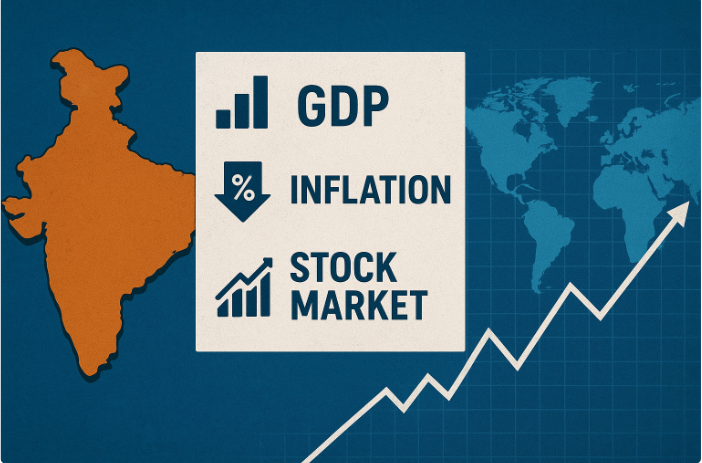
    India’s Growth Story vs Rest of the World

    India Growth - Michael's Story

    Michael, a portfolio manager in London, had a decision to make.
    He sat in his office overlooking the Thames, spreadsheets glowing on his screen. Billions of dollars to allocate — but where?


    🇺🇸 First Stop: The U.S.

    Michael’s first instinct was home turf: the United States. It had always been the safe bet — the land of Silicon Valley, Wall Street, and endless innovation.

    But when he looked closer, doubts crept in. Growth was slowing to just 2%, interest rates were high, and valuations stretched. Buying more U.S. equities felt like buying into yesterday’s growth at tomorrow’s prices.


    🇨🇳 Then Came China

    Michael shifted his gaze eastward. China, the old favorite of emerging-market investors. Once it promised double-digit growth and endless opportunity.

    But the headlines worried him — a property sector in crisis, regulatory crackdowns, slowing demographics. Yes, stocks were cheap at 10–12x earnings, but cheap didn’t always mean safe. What if the story never turned around?


    🇪🇺 Europe: Stability Without Spark

    Europe was next on his screen. Political stability, solid infrastructure, and deep markets. But GDP growth crawling at 1%, an ageing population, and fragmented energy policies. It looked more like a bond market than an equity opportunity.


    🌍 Other Emerging Markets

    Michael skimmed through Brazil, South Africa, Turkey. Attractive on paper, but currencies swung like a pendulum, and political instability made him nervous. They felt more like gambles than investments.


    🇮🇳 Finally, India

    Then Michael clicked open the India report. His eyes widened.

    • GDP Growth: ~6.3%, one of the fastest in the world.
    • Demographics: Median age 28, a young, growing consumer base.
    • Forex Reserves: $650B+, providing a cushion against shocks.
    • Digital Revolution: QR codes, fintech, and e-commerce booming.
    • Policy Push: Infrastructure, manufacturing incentives, and a pro-reform government, stable government.
    • FDI Inflows: India ranks among the top 5 global FDI destinations, reflecting strong investor confidence.
    • Startup Ecosystem: With 100+ unicorns, India is the world’s 3rd largest startup hub.
    • Energy Transition: Ambitious renewable energy target of 500 GW by 2030 is driving green and ESG-focused investments.
    • Urbanization: Rapid growth of smart cities and rising housing demand are boosting real estate and infrastructure sectors.
    • Banking & Credit Growth: Record-low NPAs and expanding credit penetration are powering the financial sector.
    • Global Supply Chain Shift: The “China+1” strategy is positioning India as a major manufacturing alternative.
    • Consumption Boom: Rising disposable incomes and demand from tier-2/3 cities are fueling FMCG, auto, and retail growth.
    • Stock Market Depth: NSE ranks among the largest by trading volume globally, ensuring liquidity and access for investors.

    Walking the streets of Mumbai on his last visit, Michael had felt the buzz firsthand — highways expanding, tech startups buzzing, and middle-class families upgrading their lifestyles. It wasn’t just numbers on a report. It was energy.

    India Growth - Middle Class Lifestyle & Shopping

    Additional Points: Sustainability & Climate Leadership

    • Paris Agreement Commitment: India has pledged to achieve net-zero emissions by 2070 and is actively working toward its Nationally Determined Contributions (NDCs). Unlike the US, which briefly exited the Paris Agreement under the Trump administration, India has consistently honored its commitments. This long-term policy stability boosts global investor trust.
    • Renewable Energy Leader: With a target of 500 GW of renewable capacity by 2030, India is one of the world’s largest green energy markets—attracting investments in solar, wind, and hydrogen.
    • Lower Per-Capita Emissions: Compared to the US, Europe, and China, India’s per-capita emissions are far lower, giving it more room to grow sustainably while still being compliant with global climate goals.
    • Green Finance Push: The Indian government and RBI are encouraging green bonds, ESG funds, and climate financing, creating new avenues for sustainable investing.
    • Corporate ESG Adoption: Leading Indian firms (like Infosys, Tata Group, Reliance) are actively integrating ESG frameworks, making them attractive to global institutional investors.
    • Resilient Growth with Sustainability: Unlike Europe (where growth is slowing under climate compliance costs) or China (where pollution control remains a struggle), India is positioning itself as a growth + sustainability hub, aligning profit with purpose.

    📈 India Surpassing the Old Titans – Japan & the UK

    India has quietly overtaken Japan and the UK in GDP (PPP), becoming the 3rd largest economy in the world, with a PPP GDP of around $17.65 trillion. Even in nominal terms, India (~$4.19T) is close to surpassing the UK (~$3.84T).

    • Services, IT, digital economy, and manufacturing drive this growth.
    • Domestic consumption and investment ensure robust demand.

    For investors, this means scale and opportunity: India is no longer a “small emerging market”; it is a global heavyweight in real economic activity.


    🔒 Inflation Under Control

    High growth often leads to price spikes. Yet India has managed:

    • Headline CPI around 2–3%, with rural and urban inflation stable.
    • RBI’s inflation-targeting framework (4% ±2%) ensures disciplined monetary policy.
    • Food and energy supply interventions, infrastructure improvements, and fiscal discipline help contain price pressures.

    The result? Strong growth without runaway inflation, rare in emerging markets.


    🌱 Sustainability & Climate Progress

    Save the Planet

    India is actively pursuing sustainability, aligning with the Paris Agreement, and presenting a new avenue for investment:

    • Net-zero target by 2070 – India’s long-term commitment to reducing emissions.
    • Renewable energy expansion: Added 25.1 GW in H1 2025, a 69% increase over the previous record.
    • Climate finance: India attracted US$5.1 billion in 2024, becoming the 2nd largest hub globally.
    • Emission reductions: CO₂ emissions in the power sector fell 1% year-on-year, the second such drop in 50 years.

    Investor opportunities: Renewable energy, green infrastructure, climate tech innovations, and government-backed green finance schemes.

    Challenges: Coal dependency, financing gaps (~US$10T needed for net-zero), and the need to accelerate emission intensity reduction.


    🇮🇳 India’s Economic Indicators Snapshot (2025)

    1. GDP & Growth Indicators

    • Nominal GDP: Approximately $4.19 trillion, placing India among the top economies globally.
    • GDP (PPP): Estimated at $17.65 trillion, ranking India 3rd globally, ahead of Japan and the UK.
    • Real GDP Growth Rate: Projected at 6.5% for FY2025, driven by robust domestic demand and structural reforms. The Times of India
    • Per Capita GDP: Approximately $2,878 (nominal), reflecting the nation’s growing economic output per individual.
    • Sectoral Contributions:
      • Services: Dominant sector, contributing significantly to GDP.
      • Industry: Includes manufacturing and construction, showing steady growth.
      • Agriculture: Remains a vital sector, though its share in GDP is gradually declining.

    2. Inflation & Prices

    • Consumer Price Index (CPI) Inflation: Recorded at 4.95% for 2024, indicating moderate inflation levels. Macrotrends
    • Wholesale Price Index (WPI) Inflation: Reflects trends in wholesale prices, impacting producer costs.
    • Food Inflation: Specific data varies; however, food prices have shown volatility, affecting rural consumption patterns.

    3. Monetary Policy & Banking

    • Repo Rate: Currently at 5.50%, following a 50 basis point cut in June 2025 to stimulate economic activity. The Times of India
    • Reverse Repo Rate: Aligned with the repo rate to manage liquidity in the banking system.
    • Liquidity Conditions: The banking system experienced a liquidity deficit in FY26, prompting RBI interventions to stabilize short-term interest rates. The Economic Times

    4. Fiscal Policy & Government Finances

    • Fiscal Deficit: Achieved a target of 4.8% of GDP for FY2024–25, indicating controlled government borrowing. Drishti IAS
    • Revenue Collections: Showed resilience, supported by improved tax compliance and reforms.
    • Expenditure: Focused on infrastructure development and social welfare programs.

    5. External Sector / Balance of Payments

    • Current Account Balance: Recorded a surplus of $13.5 billion (1.3% of GDP) in Q4 FY2024–25, driven by strong services exports and remittances. Reuters
    • Forex Reserves: Held at levels sufficient to cover several months of imports, providing a buffer against external shocks.
    • Exchange Rate: The Indian Rupee (INR) faced depreciation pressures, reaching an all-time low of ₹88.62 against the US Dollar in September 2025. Reuters

    6. Employment & Demographics

    • Unemployment Rate: Recorded at 4.20% in 2024, reflecting a stable labor market. Macrotrends
    • Labor Force Participation: Approximately 42.1%, indicating a significant portion of the working-age population is engaged in economic activities.
    • Demographics: India’s median age is rising, signaling a shift towards an aging population.

    7. Industrial & Business Indicators

    • Index of Industrial Production (IIP): Showed a growth rate of 5.2% in November 2024, indicating expansion in industrial activities. Press Information Bureau
    • Purchasing Managers’ Index (PMI): Manufacturing PMI remained above the neutral 50-point mark, suggesting expansion in the manufacturing sector.
    • Capacity Utilization: Indicates efficient use of industrial capacity, with levels improving over time.

    8. Consumer & Retail Indicators

    • Retail Sales: Showed positive growth, bolstered by festive seasons and increased consumer spending.
    • Auto Sales: Experienced a rebound, reflecting improved consumer confidence.
    • Digital Payments: Continued to rise, with UPI transactions reaching new milestones, indicating a shift towards digital financial inclusion.

    9. Real Estate & Infrastructure

    • Housing Starts: Showed an upward trend, supported by government initiatives and urbanization.
    • Infrastructure Investment: Increased focus on projects like highways, ports, and smart cities, aiming to boost economic growth.
    • Electricity Consumption: Growth in electricity demand aligns with industrial expansion and urban development.

    10. Trade & Commodity Prices

    • Oil Prices: India’s oil import bill remains a concern, with fluctuations in global oil prices impacting the trade balance.
    • Gold & Metal Prices: Influence consumer behavior, especially in rural areas where gold is a preferred investment.
    • Agricultural Commodities: Prices have shown volatility, affecting both producers and consumers.

    11. Stock Market & Sentiment Indicators

    • Nifty/Sensex Movements: Experienced volatility, influenced by global economic conditions and domestic factors.
    • Market Valuations: Remain elevated compared to historical averages, warranting cautious optimism.
    • Foreign Investment Flows: Showed signs of slowing down, impacted by global risk aversion and domestic policy uncertainties.

    📊 Summary: Key Economic Indicators to Watch

    IndicatorIndia’s Status (2025)Investor Implication
    GDP (Nominal)~$4.19TLarge market scale
    GDP (PPP)~$17.65T3rd largest globally
    Real GDP Growth6–6.5%Strong expansion potential
    CPI Inflation~4–5%Controlled price environment
    Fiscal Deficit4.8% of GDPSustainable government borrowing
    Current AccountSlight surplus ($13.5B)Stable external balance
    Forex Reserves$700BStrong buffer against shocks
    Unemployment4.2–5.1%Stable labor market
    IIP & PMI3.5–5% growth, PMI >50Industrial expansion
    Renewable Energy25.1 GW added H1 2025Green investment opportunities
    CO₂ Emissions-1% YoY in power sectorPositive climate progress

    ✅ Why Investors Are Watching India

    • Size: 3rd largest economy by PPP.
    • Growth: Sustained 6%+ GDP growth, outpacing many advanced economies.
    • Stability: Inflation under control, credible monetary policy, structural reforms, and strong domestic consumption.
    • Sustainability: Committed to renewable energy, emissions reduction, and green finance — a new growth frontier.

    Investor Takeaway: India presents a dynamic investment landscape, characterized by strong economic growth, demographic advantages, and ongoing reforms. However, investors should remain vigilant of external pressures, currency fluctuations, and policy shifts that may impact returns.


    ⚖️ The Catch: Valuations

    Of course, India wasn’t cheap. With the Nifty trading at 20–22x earnings, far above the 12–14x of other emerging markets, it gave Michael pause.

    But then he remembered something his mentor once told him: “The best stories rarely come at bargain prices.”


    ⚠️ Risks on the Radar

    Michael knew every market carried risks. For India, the list was longer than most:

    1. Oil Dependence: With over 80% of crude imported, global oil spikes could dent India’s current account and currency.
    2. Global Slowdown: A recession in the U.S. or Europe could hurt IT exports, outsourcing, and capital flows.
    3. Policy Execution: Infrastructure and reform projects need consistent delivery to keep momentum alive.
    4. Geopolitical Tensions: Border issues with China, Pakistan, and wider Asia could trigger volatility.
    5. Trade & Tariff Risks: A return of U.S. protectionist policies (e.g., Trump-style tariffs) could pressure Indian exports.
    6. Immigration & H-1B Visas: Stricter U.S. work visa policies could hurt Indian IT companies that rely on overseas talent deployment.
    7. Sanctions & Global Alliances: India’s balancing act between the West, Russia, and Middle East could become tricky — sanctions on oil or defense trade could spill over into markets.
    8. High Valuations: Global investors already price in optimism. Any earnings miss could spark sharp corrections.

    Michael weighed these risks carefully. But he also reminded himself: no growth story comes without challenges.


    ✅ Michael’s Decision

    After weeks of analysis, Michael made his call. He wouldn’t just “dip a toe” into India — he’d make it a core part of his portfolio.

    Why? Because in a world of uncertainty, India offered the rare mix of growth and resilience.

    India Growth - Young Working Population

    The U.S. had innovation. China had scale. Europe had maturity.
    But India had tomorrow — a young population, digital adoption, and an economy powering ahead even in a fragile global environment.

    As he finalized the allocation, Michael leaned back, satisfied. For him, the bet was clear: If the next decade belongs to any emerging market, it belongs to India.


    👉 Take Action Now

    India’s story is no longer just about potential — it’s about scale, growth, and resilience. For investors, this is a once-in-a-generation opportunity to position portfolios for the next decade of expansion.

    • Analyze the indicators: GDP growth, inflation, fiscal discipline, and foreign investment trends.
    • Identify sectors: Services, digital economy, infrastructure, and manufacturing are driving India’s growth engine.
    • Act with insight: Make India a core allocation in your investment strategy, balancing opportunities with macroeconomic and geopolitical risks.

    💡 Don’t wait on the sidelines — the numbers show that India is moving fast, and smart investors move faster.

    Read about investment & portfolio diversification here.

  • Why India’s Growth Story Outshines the U.S., China, and Europe for Investors

    Why India’s Growth Story Outshines the U.S., China, and Europe for Investors


    India’s Growth Story vs Rest of the World

    India Growth - Michael's Story

    Michael, a portfolio manager in London, had a decision to make.
    He sat in his office overlooking the Thames, spreadsheets glowing on his screen. Billions of dollars to allocate — but where?


    🇺🇸 First Stop: The U.S.

    Michael’s first instinct was home turf: the United States. It had always been the safe bet — the land of Silicon Valley, Wall Street, and endless innovation.

    But when he looked closer, doubts crept in. Growth was slowing to just 2%, interest rates were high, and valuations stretched. Buying more U.S. equities felt like buying into yesterday’s growth at tomorrow’s prices.


    🇨🇳 Then Came China

    Michael shifted his gaze eastward. China, the old favorite of emerging-market investors. Once it promised double-digit growth and endless opportunity.

    But the headlines worried him — a property sector in crisis, regulatory crackdowns, slowing demographics. Yes, stocks were cheap at 10–12x earnings, but cheap didn’t always mean safe. What if the story never turned around?


    🇪🇺 Europe: Stability Without Spark

    Europe was next on his screen. Political stability, solid infrastructure, and deep markets. But GDP growth crawling at 1%, an ageing population, and fragmented energy policies. It looked more like a bond market than an equity opportunity.


    🌍 Other Emerging Markets

    Michael skimmed through Brazil, South Africa, Turkey. Attractive on paper, but currencies swung like a pendulum, and political instability made him nervous. They felt more like gambles than investments.


    🇮🇳 Finally, India

    Then Michael clicked open the India report. His eyes widened.

    • GDP Growth: ~6.3%, one of the fastest in the world.
    • Demographics: Median age 28, a young, growing consumer base.
    • Forex Reserves: $650B+, providing a cushion against shocks.
    • Digital Revolution: QR codes, fintech, and e-commerce booming.
    • Policy Push: Infrastructure, manufacturing incentives, and a pro-reform government, stable government.
    • FDI Inflows: India ranks among the top 5 global FDI destinations, reflecting strong investor confidence.
    • Startup Ecosystem: With 100+ unicorns, India is the world’s 3rd largest startup hub.
    • Energy Transition: Ambitious renewable energy target of 500 GW by 2030 is driving green and ESG-focused investments.
    • Urbanization: Rapid growth of smart cities and rising housing demand are boosting real estate and infrastructure sectors.
    • Banking & Credit Growth: Record-low NPAs and expanding credit penetration are powering the financial sector.
    • Global Supply Chain Shift: The “China+1” strategy is positioning India as a major manufacturing alternative.
    • Consumption Boom: Rising disposable incomes and demand from tier-2/3 cities are fueling FMCG, auto, and retail growth.
    • Stock Market Depth: NSE ranks among the largest by trading volume globally, ensuring liquidity and access for investors.

    Walking the streets of Mumbai on his last visit, Michael had felt the buzz firsthand — highways expanding, tech startups buzzing, and middle-class families upgrading their lifestyles. It wasn’t just numbers on a report. It was energy.

    India Growth - Middle Class Lifestyle & Shopping

    Additional Points: Sustainability & Climate Leadership

    • Paris Agreement Commitment: India has pledged to achieve net-zero emissions by 2070 and is actively working toward its Nationally Determined Contributions (NDCs). Unlike the US, which briefly exited the Paris Agreement under the Trump administration, India has consistently honored its commitments. This long-term policy stability boosts global investor trust.
    • Renewable Energy Leader: With a target of 500 GW of renewable capacity by 2030, India is one of the world’s largest green energy markets—attracting investments in solar, wind, and hydrogen.
    • Lower Per-Capita Emissions: Compared to the US, Europe, and China, India’s per-capita emissions are far lower, giving it more room to grow sustainably while still being compliant with global climate goals.
    • Green Finance Push: The Indian government and RBI are encouraging green bonds, ESG funds, and climate financing, creating new avenues for sustainable investing.
    • Corporate ESG Adoption: Leading Indian firms (like Infosys, Tata Group, Reliance) are actively integrating ESG frameworks, making them attractive to global institutional investors.
    • Resilient Growth with Sustainability: Unlike Europe (where growth is slowing under climate compliance costs) or China (where pollution control remains a struggle), India is positioning itself as a growth + sustainability hub, aligning profit with purpose.

    📈 India Surpassing the Old Titans – Japan & the UK

    India has quietly overtaken Japan and the UK in GDP (PPP), becoming the 3rd largest economy in the world, with a PPP GDP of around $17.65 trillion. Even in nominal terms, India (~$4.19T) is close to surpassing the UK (~$3.84T).

    • Services, IT, digital economy, and manufacturing drive this growth.
    • Domestic consumption and investment ensure robust demand.

    For investors, this means scale and opportunity: India is no longer a “small emerging market”; it is a global heavyweight in real economic activity.


    🔒 Inflation Under Control

    High growth often leads to price spikes. Yet India has managed:

    • Headline CPI around 2–3%, with rural and urban inflation stable.
    • RBI’s inflation-targeting framework (4% ±2%) ensures disciplined monetary policy.
    • Food and energy supply interventions, infrastructure improvements, and fiscal discipline help contain price pressures.

    The result? Strong growth without runaway inflation, rare in emerging markets.


    🌱 Sustainability & Climate Progress

    Save the Planet

    India is actively pursuing sustainability, aligning with the Paris Agreement, and presenting a new avenue for investment:

    • Net-zero target by 2070 – India’s long-term commitment to reducing emissions.
    • Renewable energy expansion: Added 25.1 GW in H1 2025, a 69% increase over the previous record.
    • Climate finance: India attracted US$5.1 billion in 2024, becoming the 2nd largest hub globally.
    • Emission reductions: CO₂ emissions in the power sector fell 1% year-on-year, the second such drop in 50 years.

    Investor opportunities: Renewable energy, green infrastructure, climate tech innovations, and government-backed green finance schemes.

    Challenges: Coal dependency, financing gaps (~US$10T needed for net-zero), and the need to accelerate emission intensity reduction.


    🇮🇳 India’s Economic Indicators Snapshot (2025)

    1. GDP & Growth Indicators

    • Nominal GDP: Approximately $4.19 trillion, placing India among the top economies globally.
    • GDP (PPP): Estimated at $17.65 trillion, ranking India 3rd globally, ahead of Japan and the UK.
    • Real GDP Growth Rate: Projected at 6.5% for FY2025, driven by robust domestic demand and structural reforms. The Times of India
    • Per Capita GDP: Approximately $2,878 (nominal), reflecting the nation’s growing economic output per individual.
    • Sectoral Contributions:
      • Services: Dominant sector, contributing significantly to GDP.
      • Industry: Includes manufacturing and construction, showing steady growth.
      • Agriculture: Remains a vital sector, though its share in GDP is gradually declining.

    2. Inflation & Prices

    • Consumer Price Index (CPI) Inflation: Recorded at 4.95% for 2024, indicating moderate inflation levels. Macrotrends
    • Wholesale Price Index (WPI) Inflation: Reflects trends in wholesale prices, impacting producer costs.
    • Food Inflation: Specific data varies; however, food prices have shown volatility, affecting rural consumption patterns.

    3. Monetary Policy & Banking

    • Repo Rate: Currently at 5.50%, following a 50 basis point cut in June 2025 to stimulate economic activity. The Times of India
    • Reverse Repo Rate: Aligned with the repo rate to manage liquidity in the banking system.
    • Liquidity Conditions: The banking system experienced a liquidity deficit in FY26, prompting RBI interventions to stabilize short-term interest rates. The Economic Times

    4. Fiscal Policy & Government Finances

    • Fiscal Deficit: Achieved a target of 4.8% of GDP for FY2024–25, indicating controlled government borrowing. Drishti IAS
    • Revenue Collections: Showed resilience, supported by improved tax compliance and reforms.
    • Expenditure: Focused on infrastructure development and social welfare programs.

    5. External Sector / Balance of Payments

    • Current Account Balance: Recorded a surplus of $13.5 billion (1.3% of GDP) in Q4 FY2024–25, driven by strong services exports and remittances. Reuters
    • Forex Reserves: Held at levels sufficient to cover several months of imports, providing a buffer against external shocks.
    • Exchange Rate: The Indian Rupee (INR) faced depreciation pressures, reaching an all-time low of ₹88.62 against the US Dollar in September 2025. Reuters

    6. Employment & Demographics

    • Unemployment Rate: Recorded at 4.20% in 2024, reflecting a stable labor market. Macrotrends
    • Labor Force Participation: Approximately 42.1%, indicating a significant portion of the working-age population is engaged in economic activities.
    • Demographics: India’s median age is rising, signaling a shift towards an aging population.

    7. Industrial & Business Indicators

    • Index of Industrial Production (IIP): Showed a growth rate of 5.2% in November 2024, indicating expansion in industrial activities. Press Information Bureau
    • Purchasing Managers’ Index (PMI): Manufacturing PMI remained above the neutral 50-point mark, suggesting expansion in the manufacturing sector.
    • Capacity Utilization: Indicates efficient use of industrial capacity, with levels improving over time.

    8. Consumer & Retail Indicators

    • Retail Sales: Showed positive growth, bolstered by festive seasons and increased consumer spending.
    • Auto Sales: Experienced a rebound, reflecting improved consumer confidence.
    • Digital Payments: Continued to rise, with UPI transactions reaching new milestones, indicating a shift towards digital financial inclusion.

    9. Real Estate & Infrastructure

    • Housing Starts: Showed an upward trend, supported by government initiatives and urbanization.
    • Infrastructure Investment: Increased focus on projects like highways, ports, and smart cities, aiming to boost economic growth.
    • Electricity Consumption: Growth in electricity demand aligns with industrial expansion and urban development.

    10. Trade & Commodity Prices

    • Oil Prices: India’s oil import bill remains a concern, with fluctuations in global oil prices impacting the trade balance.
    • Gold & Metal Prices: Influence consumer behavior, especially in rural areas where gold is a preferred investment.
    • Agricultural Commodities: Prices have shown volatility, affecting both producers and consumers.

    11. Stock Market & Sentiment Indicators

    • Nifty/Sensex Movements: Experienced volatility, influenced by global economic conditions and domestic factors.
    • Market Valuations: Remain elevated compared to historical averages, warranting cautious optimism.
    • Foreign Investment Flows: Showed signs of slowing down, impacted by global risk aversion and domestic policy uncertainties.

    📊 Summary: Key Economic Indicators to Watch

    IndicatorIndia’s Status (2025)Investor Implication
    GDP (Nominal)~$4.19TLarge market scale
    GDP (PPP)~$17.65T3rd largest globally
    Real GDP Growth6–6.5%Strong expansion potential
    CPI Inflation~4–5%Controlled price environment
    Fiscal Deficit4.8% of GDPSustainable government borrowing
    Current AccountSlight surplus ($13.5B)Stable external balance
    Forex Reserves$700BStrong buffer against shocks
    Unemployment4.2–5.1%Stable labor market
    IIP & PMI3.5–5% growth, PMI >50Industrial expansion
    Renewable Energy25.1 GW added H1 2025Green investment opportunities
    CO₂ Emissions-1% YoY in power sectorPositive climate progress

    ✅ Why Investors Are Watching India

    • Size: 3rd largest economy by PPP.
    • Growth: Sustained 6%+ GDP growth, outpacing many advanced economies.
    • Stability: Inflation under control, credible monetary policy, structural reforms, and strong domestic consumption.
    • Sustainability: Committed to renewable energy, emissions reduction, and green finance — a new growth frontier.

    Investor Takeaway: India presents a dynamic investment landscape, characterized by strong economic growth, demographic advantages, and ongoing reforms. However, investors should remain vigilant of external pressures, currency fluctuations, and policy shifts that may impact returns.


    ⚖️ The Catch: Valuations

    Of course, India wasn’t cheap. With the Nifty trading at 20–22x earnings, far above the 12–14x of other emerging markets, it gave Michael pause.

    But then he remembered something his mentor once told him: “The best stories rarely come at bargain prices.”


    ⚠️ Risks on the Radar

    Michael knew every market carried risks. For India, the list was longer than most:

    1. Oil Dependence: With over 80% of crude imported, global oil spikes could dent India’s current account and currency.
    2. Global Slowdown: A recession in the U.S. or Europe could hurt IT exports, outsourcing, and capital flows.
    3. Policy Execution: Infrastructure and reform projects need consistent delivery to keep momentum alive.
    4. Geopolitical Tensions: Border issues with China, Pakistan, and wider Asia could trigger volatility.
    5. Trade & Tariff Risks: A return of U.S. protectionist policies (e.g., Trump-style tariffs) could pressure Indian exports.
    6. Immigration & H-1B Visas: Stricter U.S. work visa policies could hurt Indian IT companies that rely on overseas talent deployment.
    7. Sanctions & Global Alliances: India’s balancing act between the West, Russia, and Middle East could become tricky — sanctions on oil or defense trade could spill over into markets.
    8. High Valuations: Global investors already price in optimism. Any earnings miss could spark sharp corrections.

    Michael weighed these risks carefully. But he also reminded himself: no growth story comes without challenges.


    ✅ Michael’s Decision

    After weeks of analysis, Michael made his call. He wouldn’t just “dip a toe” into India — he’d make it a core part of his portfolio.

    Why? Because in a world of uncertainty, India offered the rare mix of growth and resilience.

    India Growth - Young Working Population

    The U.S. had innovation. China had scale. Europe had maturity.
    But India had tomorrow — a young population, digital adoption, and an economy powering ahead even in a fragile global environment.

    As he finalized the allocation, Michael leaned back, satisfied. For him, the bet was clear: If the next decade belongs to any emerging market, it belongs to India.


    👉 Take Action Now

    India’s story is no longer just about potential — it’s about scale, growth, and resilience. For investors, this is a once-in-a-generation opportunity to position portfolios for the next decade of expansion.

    • Analyze the indicators: GDP growth, inflation, fiscal discipline, and foreign investment trends.
    • Identify sectors: Services, digital economy, infrastructure, and manufacturing are driving India’s growth engine.
    • Act with insight: Make India a core allocation in your investment strategy, balancing opportunities with macroeconomic and geopolitical risks.

    💡 Don’t wait on the sidelines — the numbers show that India is moving fast, and smart investors move faster.

    Read about investment & portfolio diversification here.

  • Why India’s Growth Story Outshines the U.S., China, and Europe for Investors

    Why India’s Growth Story Outshines the U.S., China, and Europe for Investors


    India’s Growth Story vs Rest of the World

    India Growth - Michael's Story

    Michael, a portfolio manager in London, had a decision to make.
    He sat in his office overlooking the Thames, spreadsheets glowing on his screen. Billions of dollars to allocate — but where?


    🇺🇸 First Stop: The U.S.

    Michael’s first instinct was home turf: the United States. It had always been the safe bet — the land of Silicon Valley, Wall Street, and endless innovation.

    But when he looked closer, doubts crept in. Growth was slowing to just 2%, interest rates were high, and valuations stretched. Buying more U.S. equities felt like buying into yesterday’s growth at tomorrow’s prices.


    🇨🇳 Then Came China

    Michael shifted his gaze eastward. China, the old favorite of emerging-market investors. Once it promised double-digit growth and endless opportunity.

    But the headlines worried him — a property sector in crisis, regulatory crackdowns, slowing demographics. Yes, stocks were cheap at 10–12x earnings, but cheap didn’t always mean safe. What if the story never turned around?


    🇪🇺 Europe: Stability Without Spark

    Europe was next on his screen. Political stability, solid infrastructure, and deep markets. But GDP growth crawling at 1%, an ageing population, and fragmented energy policies. It looked more like a bond market than an equity opportunity.


    🌍 Other Emerging Markets

    Michael skimmed through Brazil, South Africa, Turkey. Attractive on paper, but currencies swung like a pendulum, and political instability made him nervous. They felt more like gambles than investments.


    🇮🇳 Finally, India

    Then Michael clicked open the India report. His eyes widened.

    • GDP Growth: ~6.3%, one of the fastest in the world.
    • Demographics: Median age 28, a young, growing consumer base.
    • Forex Reserves: $650B+, providing a cushion against shocks.
    • Digital Revolution: QR codes, fintech, and e-commerce booming.
    • Policy Push: Infrastructure, manufacturing incentives, and a pro-reform government, stable government.
    • FDI Inflows: India ranks among the top 5 global FDI destinations, reflecting strong investor confidence.
    • Startup Ecosystem: With 100+ unicorns, India is the world’s 3rd largest startup hub.
    • Energy Transition: Ambitious renewable energy target of 500 GW by 2030 is driving green and ESG-focused investments.
    • Urbanization: Rapid growth of smart cities and rising housing demand are boosting real estate and infrastructure sectors.
    • Banking & Credit Growth: Record-low NPAs and expanding credit penetration are powering the financial sector.
    • Global Supply Chain Shift: The “China+1” strategy is positioning India as a major manufacturing alternative.
    • Consumption Boom: Rising disposable incomes and demand from tier-2/3 cities are fueling FMCG, auto, and retail growth.
    • Stock Market Depth: NSE ranks among the largest by trading volume globally, ensuring liquidity and access for investors.

    Walking the streets of Mumbai on his last visit, Michael had felt the buzz firsthand — highways expanding, tech startups buzzing, and middle-class families upgrading their lifestyles. It wasn’t just numbers on a report. It was energy.

    India Growth - Middle Class Lifestyle & Shopping

    Additional Points: Sustainability & Climate Leadership

    • Paris Agreement Commitment: India has pledged to achieve net-zero emissions by 2070 and is actively working toward its Nationally Determined Contributions (NDCs). Unlike the US, which briefly exited the Paris Agreement under the Trump administration, India has consistently honored its commitments. This long-term policy stability boosts global investor trust.
    • Renewable Energy Leader: With a target of 500 GW of renewable capacity by 2030, India is one of the world’s largest green energy markets—attracting investments in solar, wind, and hydrogen.
    • Lower Per-Capita Emissions: Compared to the US, Europe, and China, India’s per-capita emissions are far lower, giving it more room to grow sustainably while still being compliant with global climate goals.
    • Green Finance Push: The Indian government and RBI are encouraging green bonds, ESG funds, and climate financing, creating new avenues for sustainable investing.
    • Corporate ESG Adoption: Leading Indian firms (like Infosys, Tata Group, Reliance) are actively integrating ESG frameworks, making them attractive to global institutional investors.
    • Resilient Growth with Sustainability: Unlike Europe (where growth is slowing under climate compliance costs) or China (where pollution control remains a struggle), India is positioning itself as a growth + sustainability hub, aligning profit with purpose.

    📈 India Surpassing the Old Titans – Japan & the UK

    India has quietly overtaken Japan and the UK in GDP (PPP), becoming the 3rd largest economy in the world, with a PPP GDP of around $17.65 trillion. Even in nominal terms, India (~$4.19T) is close to surpassing the UK (~$3.84T).

    • Services, IT, digital economy, and manufacturing drive this growth.
    • Domestic consumption and investment ensure robust demand.

    For investors, this means scale and opportunity: India is no longer a “small emerging market”; it is a global heavyweight in real economic activity.


    🔒 Inflation Under Control

    High growth often leads to price spikes. Yet India has managed:

    • Headline CPI around 2–3%, with rural and urban inflation stable.
    • RBI’s inflation-targeting framework (4% ±2%) ensures disciplined monetary policy.
    • Food and energy supply interventions, infrastructure improvements, and fiscal discipline help contain price pressures.

    The result? Strong growth without runaway inflation, rare in emerging markets.


    🌱 Sustainability & Climate Progress

    Save the Planet

    India is actively pursuing sustainability, aligning with the Paris Agreement, and presenting a new avenue for investment:

    • Net-zero target by 2070 – India’s long-term commitment to reducing emissions.
    • Renewable energy expansion: Added 25.1 GW in H1 2025, a 69% increase over the previous record.
    • Climate finance: India attracted US$5.1 billion in 2024, becoming the 2nd largest hub globally.
    • Emission reductions: CO₂ emissions in the power sector fell 1% year-on-year, the second such drop in 50 years.

    Investor opportunities: Renewable energy, green infrastructure, climate tech innovations, and government-backed green finance schemes.

    Challenges: Coal dependency, financing gaps (~US$10T needed for net-zero), and the need to accelerate emission intensity reduction.


    🇮🇳 India’s Economic Indicators Snapshot (2025)

    1. GDP & Growth Indicators

    • Nominal GDP: Approximately $4.19 trillion, placing India among the top economies globally.
    • GDP (PPP): Estimated at $17.65 trillion, ranking India 3rd globally, ahead of Japan and the UK.
    • Real GDP Growth Rate: Projected at 6.5% for FY2025, driven by robust domestic demand and structural reforms. The Times of India
    • Per Capita GDP: Approximately $2,878 (nominal), reflecting the nation’s growing economic output per individual.
    • Sectoral Contributions:
      • Services: Dominant sector, contributing significantly to GDP.
      • Industry: Includes manufacturing and construction, showing steady growth.
      • Agriculture: Remains a vital sector, though its share in GDP is gradually declining.

    2. Inflation & Prices

    • Consumer Price Index (CPI) Inflation: Recorded at 4.95% for 2024, indicating moderate inflation levels. Macrotrends
    • Wholesale Price Index (WPI) Inflation: Reflects trends in wholesale prices, impacting producer costs.
    • Food Inflation: Specific data varies; however, food prices have shown volatility, affecting rural consumption patterns.

    3. Monetary Policy & Banking

    • Repo Rate: Currently at 5.50%, following a 50 basis point cut in June 2025 to stimulate economic activity. The Times of India
    • Reverse Repo Rate: Aligned with the repo rate to manage liquidity in the banking system.
    • Liquidity Conditions: The banking system experienced a liquidity deficit in FY26, prompting RBI interventions to stabilize short-term interest rates. The Economic Times

    4. Fiscal Policy & Government Finances

    • Fiscal Deficit: Achieved a target of 4.8% of GDP for FY2024–25, indicating controlled government borrowing. Drishti IAS
    • Revenue Collections: Showed resilience, supported by improved tax compliance and reforms.
    • Expenditure: Focused on infrastructure development and social welfare programs.

    5. External Sector / Balance of Payments

    • Current Account Balance: Recorded a surplus of $13.5 billion (1.3% of GDP) in Q4 FY2024–25, driven by strong services exports and remittances. Reuters
    • Forex Reserves: Held at levels sufficient to cover several months of imports, providing a buffer against external shocks.
    • Exchange Rate: The Indian Rupee (INR) faced depreciation pressures, reaching an all-time low of ₹88.62 against the US Dollar in September 2025. Reuters

    6. Employment & Demographics

    • Unemployment Rate: Recorded at 4.20% in 2024, reflecting a stable labor market. Macrotrends
    • Labor Force Participation: Approximately 42.1%, indicating a significant portion of the working-age population is engaged in economic activities.
    • Demographics: India’s median age is rising, signaling a shift towards an aging population.

    7. Industrial & Business Indicators

    • Index of Industrial Production (IIP): Showed a growth rate of 5.2% in November 2024, indicating expansion in industrial activities. Press Information Bureau
    • Purchasing Managers’ Index (PMI): Manufacturing PMI remained above the neutral 50-point mark, suggesting expansion in the manufacturing sector.
    • Capacity Utilization: Indicates efficient use of industrial capacity, with levels improving over time.

    8. Consumer & Retail Indicators

    • Retail Sales: Showed positive growth, bolstered by festive seasons and increased consumer spending.
    • Auto Sales: Experienced a rebound, reflecting improved consumer confidence.
    • Digital Payments: Continued to rise, with UPI transactions reaching new milestones, indicating a shift towards digital financial inclusion.

    9. Real Estate & Infrastructure

    • Housing Starts: Showed an upward trend, supported by government initiatives and urbanization.
    • Infrastructure Investment: Increased focus on projects like highways, ports, and smart cities, aiming to boost economic growth.
    • Electricity Consumption: Growth in electricity demand aligns with industrial expansion and urban development.

    10. Trade & Commodity Prices

    • Oil Prices: India’s oil import bill remains a concern, with fluctuations in global oil prices impacting the trade balance.
    • Gold & Metal Prices: Influence consumer behavior, especially in rural areas where gold is a preferred investment.
    • Agricultural Commodities: Prices have shown volatility, affecting both producers and consumers.

    11. Stock Market & Sentiment Indicators

    • Nifty/Sensex Movements: Experienced volatility, influenced by global economic conditions and domestic factors.
    • Market Valuations: Remain elevated compared to historical averages, warranting cautious optimism.
    • Foreign Investment Flows: Showed signs of slowing down, impacted by global risk aversion and domestic policy uncertainties.

    📊 Summary: Key Economic Indicators to Watch

    IndicatorIndia’s Status (2025)Investor Implication
    GDP (Nominal)~$4.19TLarge market scale
    GDP (PPP)~$17.65T3rd largest globally
    Real GDP Growth6–6.5%Strong expansion potential
    CPI Inflation~4–5%Controlled price environment
    Fiscal Deficit4.8% of GDPSustainable government borrowing
    Current AccountSlight surplus ($13.5B)Stable external balance
    Forex Reserves$700BStrong buffer against shocks
    Unemployment4.2–5.1%Stable labor market
    IIP & PMI3.5–5% growth, PMI >50Industrial expansion
    Renewable Energy25.1 GW added H1 2025Green investment opportunities
    CO₂ Emissions-1% YoY in power sectorPositive climate progress

    ✅ Why Investors Are Watching India

    • Size: 3rd largest economy by PPP.
    • Growth: Sustained 6%+ GDP growth, outpacing many advanced economies.
    • Stability: Inflation under control, credible monetary policy, structural reforms, and strong domestic consumption.
    • Sustainability: Committed to renewable energy, emissions reduction, and green finance — a new growth frontier.

    Investor Takeaway: India presents a dynamic investment landscape, characterized by strong economic growth, demographic advantages, and ongoing reforms. However, investors should remain vigilant of external pressures, currency fluctuations, and policy shifts that may impact returns.


    ⚖️ The Catch: Valuations

    Of course, India wasn’t cheap. With the Nifty trading at 20–22x earnings, far above the 12–14x of other emerging markets, it gave Michael pause.

    But then he remembered something his mentor once told him: “The best stories rarely come at bargain prices.”


    ⚠️ Risks on the Radar

    Michael knew every market carried risks. For India, the list was longer than most:

    1. Oil Dependence: With over 80% of crude imported, global oil spikes could dent India’s current account and currency.
    2. Global Slowdown: A recession in the U.S. or Europe could hurt IT exports, outsourcing, and capital flows.
    3. Policy Execution: Infrastructure and reform projects need consistent delivery to keep momentum alive.
    4. Geopolitical Tensions: Border issues with China, Pakistan, and wider Asia could trigger volatility.
    5. Trade & Tariff Risks: A return of U.S. protectionist policies (e.g., Trump-style tariffs) could pressure Indian exports.
    6. Immigration & H-1B Visas: Stricter U.S. work visa policies could hurt Indian IT companies that rely on overseas talent deployment.
    7. Sanctions & Global Alliances: India’s balancing act between the West, Russia, and Middle East could become tricky — sanctions on oil or defense trade could spill over into markets.
    8. High Valuations: Global investors already price in optimism. Any earnings miss could spark sharp corrections.

    Michael weighed these risks carefully. But he also reminded himself: no growth story comes without challenges.


    ✅ Michael’s Decision

    After weeks of analysis, Michael made his call. He wouldn’t just “dip a toe” into India — he’d make it a core part of his portfolio.

    Why? Because in a world of uncertainty, India offered the rare mix of growth and resilience.

    India Growth - Young Working Population

    The U.S. had innovation. China had scale. Europe had maturity.
    But India had tomorrow — a young population, digital adoption, and an economy powering ahead even in a fragile global environment.

    As he finalized the allocation, Michael leaned back, satisfied. For him, the bet was clear: If the next decade belongs to any emerging market, it belongs to India.


    👉 Take Action Now

    India’s story is no longer just about potential — it’s about scale, growth, and resilience. For investors, this is a once-in-a-generation opportunity to position portfolios for the next decade of expansion.

    • Analyze the indicators: GDP growth, inflation, fiscal discipline, and foreign investment trends.
    • Identify sectors: Services, digital economy, infrastructure, and manufacturing are driving India’s growth engine.
    • Act with insight: Make India a core allocation in your investment strategy, balancing opportunities with macroeconomic and geopolitical risks.

    💡 Don’t wait on the sidelines — the numbers show that India is moving fast, and smart investors move faster.

    Read about investment & portfolio diversification here.

  • Why India’s Growth Story Outshines the U.S., China, and Europe for Investors

    Why India’s Growth Story Outshines the U.S., China, and Europe for Investors


    India’s Growth Story vs Rest of the World

    India Growth - Michael's Story

    Michael, a portfolio manager in London, had a decision to make.
    He sat in his office overlooking the Thames, spreadsheets glowing on his screen. Billions of dollars to allocate — but where?


    🇺🇸 First Stop: The U.S.

    Michael’s first instinct was home turf: the United States. It had always been the safe bet — the land of Silicon Valley, Wall Street, and endless innovation.

    But when he looked closer, doubts crept in. Growth was slowing to just 2%, interest rates were high, and valuations stretched. Buying more U.S. equities felt like buying into yesterday’s growth at tomorrow’s prices.


    🇨🇳 Then Came China

    Michael shifted his gaze eastward. China, the old favorite of emerging-market investors. Once it promised double-digit growth and endless opportunity.

    But the headlines worried him — a property sector in crisis, regulatory crackdowns, slowing demographics. Yes, stocks were cheap at 10–12x earnings, but cheap didn’t always mean safe. What if the story never turned around?


    🇪🇺 Europe: Stability Without Spark

    Europe was next on his screen. Political stability, solid infrastructure, and deep markets. But GDP growth crawling at 1%, an ageing population, and fragmented energy policies. It looked more like a bond market than an equity opportunity.


    🌍 Other Emerging Markets

    Michael skimmed through Brazil, South Africa, Turkey. Attractive on paper, but currencies swung like a pendulum, and political instability made him nervous. They felt more like gambles than investments.


    🇮🇳 Finally, India

    Then Michael clicked open the India report. His eyes widened.

    • GDP Growth: ~6.3%, one of the fastest in the world.
    • Demographics: Median age 28, a young, growing consumer base.
    • Forex Reserves: $650B+, providing a cushion against shocks.
    • Digital Revolution: QR codes, fintech, and e-commerce booming.
    • Policy Push: Infrastructure, manufacturing incentives, and a pro-reform government, stable government.
    • FDI Inflows: India ranks among the top 5 global FDI destinations, reflecting strong investor confidence.
    • Startup Ecosystem: With 100+ unicorns, India is the world’s 3rd largest startup hub.
    • Energy Transition: Ambitious renewable energy target of 500 GW by 2030 is driving green and ESG-focused investments.
    • Urbanization: Rapid growth of smart cities and rising housing demand are boosting real estate and infrastructure sectors.
    • Banking & Credit Growth: Record-low NPAs and expanding credit penetration are powering the financial sector.
    • Global Supply Chain Shift: The “China+1” strategy is positioning India as a major manufacturing alternative.
    • Consumption Boom: Rising disposable incomes and demand from tier-2/3 cities are fueling FMCG, auto, and retail growth.
    • Stock Market Depth: NSE ranks among the largest by trading volume globally, ensuring liquidity and access for investors.

    Walking the streets of Mumbai on his last visit, Michael had felt the buzz firsthand — highways expanding, tech startups buzzing, and middle-class families upgrading their lifestyles. It wasn’t just numbers on a report. It was energy.

    India Growth - Middle Class Lifestyle & Shopping

    Additional Points: Sustainability & Climate Leadership

    • Paris Agreement Commitment: India has pledged to achieve net-zero emissions by 2070 and is actively working toward its Nationally Determined Contributions (NDCs). Unlike the US, which briefly exited the Paris Agreement under the Trump administration, India has consistently honored its commitments. This long-term policy stability boosts global investor trust.
    • Renewable Energy Leader: With a target of 500 GW of renewable capacity by 2030, India is one of the world’s largest green energy markets—attracting investments in solar, wind, and hydrogen.
    • Lower Per-Capita Emissions: Compared to the US, Europe, and China, India’s per-capita emissions are far lower, giving it more room to grow sustainably while still being compliant with global climate goals.
    • Green Finance Push: The Indian government and RBI are encouraging green bonds, ESG funds, and climate financing, creating new avenues for sustainable investing.
    • Corporate ESG Adoption: Leading Indian firms (like Infosys, Tata Group, Reliance) are actively integrating ESG frameworks, making them attractive to global institutional investors.
    • Resilient Growth with Sustainability: Unlike Europe (where growth is slowing under climate compliance costs) or China (where pollution control remains a struggle), India is positioning itself as a growth + sustainability hub, aligning profit with purpose.

    📈 India Surpassing the Old Titans – Japan & the UK

    India has quietly overtaken Japan and the UK in GDP (PPP), becoming the 3rd largest economy in the world, with a PPP GDP of around $17.65 trillion. Even in nominal terms, India (~$4.19T) is close to surpassing the UK (~$3.84T).

    • Services, IT, digital economy, and manufacturing drive this growth.
    • Domestic consumption and investment ensure robust demand.

    For investors, this means scale and opportunity: India is no longer a “small emerging market”; it is a global heavyweight in real economic activity.


    🔒 Inflation Under Control

    High growth often leads to price spikes. Yet India has managed:

    • Headline CPI around 2–3%, with rural and urban inflation stable.
    • RBI’s inflation-targeting framework (4% ±2%) ensures disciplined monetary policy.
    • Food and energy supply interventions, infrastructure improvements, and fiscal discipline help contain price pressures.

    The result? Strong growth without runaway inflation, rare in emerging markets.


    🌱 Sustainability & Climate Progress

    Save the Planet

    India is actively pursuing sustainability, aligning with the Paris Agreement, and presenting a new avenue for investment:

    • Net-zero target by 2070 – India’s long-term commitment to reducing emissions.
    • Renewable energy expansion: Added 25.1 GW in H1 2025, a 69% increase over the previous record.
    • Climate finance: India attracted US$5.1 billion in 2024, becoming the 2nd largest hub globally.
    • Emission reductions: CO₂ emissions in the power sector fell 1% year-on-year, the second such drop in 50 years.

    Investor opportunities: Renewable energy, green infrastructure, climate tech innovations, and government-backed green finance schemes.

    Challenges: Coal dependency, financing gaps (~US$10T needed for net-zero), and the need to accelerate emission intensity reduction.


    🇮🇳 India’s Economic Indicators Snapshot (2025)

    1. GDP & Growth Indicators

    • Nominal GDP: Approximately $4.19 trillion, placing India among the top economies globally.
    • GDP (PPP): Estimated at $17.65 trillion, ranking India 3rd globally, ahead of Japan and the UK.
    • Real GDP Growth Rate: Projected at 6.5% for FY2025, driven by robust domestic demand and structural reforms. The Times of India
    • Per Capita GDP: Approximately $2,878 (nominal), reflecting the nation’s growing economic output per individual.
    • Sectoral Contributions:
      • Services: Dominant sector, contributing significantly to GDP.
      • Industry: Includes manufacturing and construction, showing steady growth.
      • Agriculture: Remains a vital sector, though its share in GDP is gradually declining.

    2. Inflation & Prices

    • Consumer Price Index (CPI) Inflation: Recorded at 4.95% for 2024, indicating moderate inflation levels. Macrotrends
    • Wholesale Price Index (WPI) Inflation: Reflects trends in wholesale prices, impacting producer costs.
    • Food Inflation: Specific data varies; however, food prices have shown volatility, affecting rural consumption patterns.

    3. Monetary Policy & Banking

    • Repo Rate: Currently at 5.50%, following a 50 basis point cut in June 2025 to stimulate economic activity. The Times of India
    • Reverse Repo Rate: Aligned with the repo rate to manage liquidity in the banking system.
    • Liquidity Conditions: The banking system experienced a liquidity deficit in FY26, prompting RBI interventions to stabilize short-term interest rates. The Economic Times

    4. Fiscal Policy & Government Finances

    • Fiscal Deficit: Achieved a target of 4.8% of GDP for FY2024–25, indicating controlled government borrowing. Drishti IAS
    • Revenue Collections: Showed resilience, supported by improved tax compliance and reforms.
    • Expenditure: Focused on infrastructure development and social welfare programs.

    5. External Sector / Balance of Payments

    • Current Account Balance: Recorded a surplus of $13.5 billion (1.3% of GDP) in Q4 FY2024–25, driven by strong services exports and remittances. Reuters
    • Forex Reserves: Held at levels sufficient to cover several months of imports, providing a buffer against external shocks.
    • Exchange Rate: The Indian Rupee (INR) faced depreciation pressures, reaching an all-time low of ₹88.62 against the US Dollar in September 2025. Reuters

    6. Employment & Demographics

    • Unemployment Rate: Recorded at 4.20% in 2024, reflecting a stable labor market. Macrotrends
    • Labor Force Participation: Approximately 42.1%, indicating a significant portion of the working-age population is engaged in economic activities.
    • Demographics: India’s median age is rising, signaling a shift towards an aging population.

    7. Industrial & Business Indicators

    • Index of Industrial Production (IIP): Showed a growth rate of 5.2% in November 2024, indicating expansion in industrial activities. Press Information Bureau
    • Purchasing Managers’ Index (PMI): Manufacturing PMI remained above the neutral 50-point mark, suggesting expansion in the manufacturing sector.
    • Capacity Utilization: Indicates efficient use of industrial capacity, with levels improving over time.

    8. Consumer & Retail Indicators

    • Retail Sales: Showed positive growth, bolstered by festive seasons and increased consumer spending.
    • Auto Sales: Experienced a rebound, reflecting improved consumer confidence.
    • Digital Payments: Continued to rise, with UPI transactions reaching new milestones, indicating a shift towards digital financial inclusion.

    9. Real Estate & Infrastructure

    • Housing Starts: Showed an upward trend, supported by government initiatives and urbanization.
    • Infrastructure Investment: Increased focus on projects like highways, ports, and smart cities, aiming to boost economic growth.
    • Electricity Consumption: Growth in electricity demand aligns with industrial expansion and urban development.

    10. Trade & Commodity Prices

    • Oil Prices: India’s oil import bill remains a concern, with fluctuations in global oil prices impacting the trade balance.
    • Gold & Metal Prices: Influence consumer behavior, especially in rural areas where gold is a preferred investment.
    • Agricultural Commodities: Prices have shown volatility, affecting both producers and consumers.

    11. Stock Market & Sentiment Indicators

    • Nifty/Sensex Movements: Experienced volatility, influenced by global economic conditions and domestic factors.
    • Market Valuations: Remain elevated compared to historical averages, warranting cautious optimism.
    • Foreign Investment Flows: Showed signs of slowing down, impacted by global risk aversion and domestic policy uncertainties.

    📊 Summary: Key Economic Indicators to Watch

    IndicatorIndia’s Status (2025)Investor Implication
    GDP (Nominal)~$4.19TLarge market scale
    GDP (PPP)~$17.65T3rd largest globally
    Real GDP Growth6–6.5%Strong expansion potential
    CPI Inflation~4–5%Controlled price environment
    Fiscal Deficit4.8% of GDPSustainable government borrowing
    Current AccountSlight surplus ($13.5B)Stable external balance
    Forex Reserves$700BStrong buffer against shocks
    Unemployment4.2–5.1%Stable labor market
    IIP & PMI3.5–5% growth, PMI >50Industrial expansion
    Renewable Energy25.1 GW added H1 2025Green investment opportunities
    CO₂ Emissions-1% YoY in power sectorPositive climate progress

    ✅ Why Investors Are Watching India

    • Size: 3rd largest economy by PPP.
    • Growth: Sustained 6%+ GDP growth, outpacing many advanced economies.
    • Stability: Inflation under control, credible monetary policy, structural reforms, and strong domestic consumption.
    • Sustainability: Committed to renewable energy, emissions reduction, and green finance — a new growth frontier.

    Investor Takeaway: India presents a dynamic investment landscape, characterized by strong economic growth, demographic advantages, and ongoing reforms. However, investors should remain vigilant of external pressures, currency fluctuations, and policy shifts that may impact returns.


    ⚖️ The Catch: Valuations

    Of course, India wasn’t cheap. With the Nifty trading at 20–22x earnings, far above the 12–14x of other emerging markets, it gave Michael pause.

    But then he remembered something his mentor once told him: “The best stories rarely come at bargain prices.”


    ⚠️ Risks on the Radar

    Michael knew every market carried risks. For India, the list was longer than most:

    1. Oil Dependence: With over 80% of crude imported, global oil spikes could dent India’s current account and currency.
    2. Global Slowdown: A recession in the U.S. or Europe could hurt IT exports, outsourcing, and capital flows.
    3. Policy Execution: Infrastructure and reform projects need consistent delivery to keep momentum alive.
    4. Geopolitical Tensions: Border issues with China, Pakistan, and wider Asia could trigger volatility.
    5. Trade & Tariff Risks: A return of U.S. protectionist policies (e.g., Trump-style tariffs) could pressure Indian exports.
    6. Immigration & H-1B Visas: Stricter U.S. work visa policies could hurt Indian IT companies that rely on overseas talent deployment.
    7. Sanctions & Global Alliances: India’s balancing act between the West, Russia, and Middle East could become tricky — sanctions on oil or defense trade could spill over into markets.
    8. High Valuations: Global investors already price in optimism. Any earnings miss could spark sharp corrections.

    Michael weighed these risks carefully. But he also reminded himself: no growth story comes without challenges.


    ✅ Michael’s Decision

    After weeks of analysis, Michael made his call. He wouldn’t just “dip a toe” into India — he’d make it a core part of his portfolio.

    Why? Because in a world of uncertainty, India offered the rare mix of growth and resilience.

    India Growth - Young Working Population

    The U.S. had innovation. China had scale. Europe had maturity.
    But India had tomorrow — a young population, digital adoption, and an economy powering ahead even in a fragile global environment.

    As he finalized the allocation, Michael leaned back, satisfied. For him, the bet was clear: If the next decade belongs to any emerging market, it belongs to India.


    👉 Take Action Now

    India’s story is no longer just about potential — it’s about scale, growth, and resilience. For investors, this is a once-in-a-generation opportunity to position portfolios for the next decade of expansion.

    • Analyze the indicators: GDP growth, inflation, fiscal discipline, and foreign investment trends.
    • Identify sectors: Services, digital economy, infrastructure, and manufacturing are driving India’s growth engine.
    • Act with insight: Make India a core allocation in your investment strategy, balancing opportunities with macroeconomic and geopolitical risks.

    💡 Don’t wait on the sidelines — the numbers show that India is moving fast, and smart investors move faster.

    Read about investment & portfolio diversification here.

  • 📝 Equity Research – Investor’s Checklist: The Story of Raj Before Buying a Stock

    📝 Equity Research – Investor’s Checklist: The Story of Raj Before Buying a Stock

    Raj was an enthusiastic retail investor. One evening, while scrolling through the latest market buzz, he spotted a stock being hyped everywhere. Twitter threads, WhatsApp groups, even his colleagues at work — everyone said it was the “next multibagger.”

    Tempted, Raj hovered over the Buy button on his trading app. But then he remembered something his mentor once told him:

    “Never invest with excitement. Invest with a checklist.”

    That night, Raj pulled out his notebook and started ticking off questions.


    📝 Investor Checklist:

    ✅ Step 1: Business Understanding

    Raj asked himself: Do I really understand this company’s business model?

    • What does the company sell?
    • Who are its customers?
    • Does it have a competitive advantage (brand, technology, cost leadership)?

    Red Flag: If you can’t explain the business in simple terms, don’t invest.


    ✅ Step 2: Management Quality

    Raj flipped through the annual report. He checked the promoters’ track record, corporate governance, and whether auditors had raised concerns.

    • Is management honest and shareholder-friendly?
    • Any history of fraud or regulatory issues?
    • Are promoters pledging their shares heavily?

    Red Flag: Frequent auditor resignations, related-party transactions, or excessive pledging.


    ✅ Step 3: Financial Health (Ratios)

    Raj knew numbers tell stories too. He checked key ratios:

    • Liquidity: Current Ratio > 1, Quick Ratio stable.
    • Leverage: Debt-to-Equity not ballooning.
    • Profitability: Consistent ROE and margins.
    • Cash Flow: Net profit ≈ Operating cash flow.

    Red Flag: High profits but weak cash flow → accounting trickery.


    ✅ Step 4: Growth Sustainability

    Raj compared revenue and profit growth over 5–10 years. He avoided companies that showed sudden spikes only in the last year.

    • Are revenues and earnings growing steadily?
    • Or is it a one-hit wonder due to a temporary boom?

    Red Flag: Growth dependent on one-time events or subsidies.


    ✅ Step 5: Valuation Check

    Finally, Raj compared valuation ratios with peers.

    • P/E too high? → Hype.
    • P/B very low? → Market distrust.
    • EV/EBITDA far above industry? → Overvaluation risk.

    Red Flag: Buying “popular” stocks at bubble valuations.

    Learn more about equity valuation here.


    📌 Raj’s Realization

    After running through his checklist, Raj realized the hyped stock failed on multiple counts — high debt, weak cash flow, and overpriced. Instead of chasing noise, he shortlisted two other companies that passed most of his tests.

    The next morning, while the crowd rushed into the hot stock, Raj calmly bought his chosen picks. Months later, when the hyped stock crashed 40%, Raj’s disciplined approach saved him.


    📝 Investor’s Checklist Before Buying Any Stock

    1. Understand the business (simple, durable, competitive).
    2. Evaluate management (honest, transparent, low pledging).
    3. Check financial health (ratios + cash flow).
    4. Look for sustainable growth (not one-time boosts).
    5. Do valuation sanity check (compare with peers).
    6. Cross-verify income vs cash flow (profits must equal cash over time).

    📊 How to Check Financial Health

    Before buying any stock, smart investors always ask: Is this company financially healthy?

    Financial health ratios act like a blood test for a company. They reveal if a business can survive short-term shocks, manage debt, generate profits, and convert those profits into real cash.

    Let’s break down the key financial health ratios, the red flags, and where you can find them easily.


    🔹 1. Liquidity Ratios – Can the company pay its bills?

    Current Ratio

    Formula:

    Current Assets÷Current Liabilities

    • Healthy: > 1.5 (enough assets to cover liabilities).)
    • Red Flag: < 1 → company may struggle to meet short-term dues.

    Quick Ratio (Acid-Test)

    Formula:

    (Current Assets – Inventory​) / Current Liabilities

    • Healthy: > 1.
    • Red Flag: Sharp fall → relying on selling inventory to pay debts, risky in downturns.

    👉 Source: Balance sheet (current assets, liabilities, inventory).


    🔹 2. Leverage Ratios – Is debt a ticking time bomb?

    Debt-to-Equity (D/E)

    Formula:

    Total Debt÷Shareholders’ Equity

    • Healthy: < 1 for most industries (banks/utilities can be higher).
    • Red Flag: Rising D/E → too much borrowing.

    Interest Coverage Ratio

    Formula: EBIT÷Interest Expense

    • Healthy: > 3.
    • Red Flag: < 2 → company may default on loans if profits dip.

    👉 Source: Income statement (EBIT, interest expense).


    🔹 3. Profitability Ratios – Is the company really making money?

    Gross Margin

    Gross Profit÷Revenue

    • Red Flag: Declining margin → rising costs or pricing pressure.

    Net Profit Margin

    Net Income÷Revenue

    • Red Flag: Falling despite revenue growth → costs eating profits.

    Return on Equity (ROE)

    Net Income÷Shareholders’ Equity

    • Healthy: 15–20% for good companies.
    • Red Flag: Very high ROE driven by debt (not efficiency).

    👉 Source: Income statement + balance sheet.

    When ROE is Good

    • Consistent, sustainable ROE above industry average = strong profitability.
    • 10–20% range is considered healthy for most industries.
    • High ROE backed by growing revenues and cash flows = competitive advantage.

    🚨 ROE Red Flags

    1. Very High ROE (>40–50%)
      • Could be due to low equity (not genuine profitability).
      • Often happens if the company has taken on excessive debt (tiny equity base).
      • Example: A debt-heavy company may show inflated ROE but is actually risky.
    2. Declining ROE Trend
      • Falling ROE over 3–5 years may signal deteriorating business fundamentals, shrinking margins, or inefficient capital use.
    3. ROE Much Higher Than Cash Flow Growth
      • If net income is rising but operating cash flow is weak, profits may not be real.
    4. Inconsistent ROE vs. Peers
      • If industry average is ~15% and one company shows 60%, check why. It might be due to accounting adjustments, asset sales, or unsustainable leverage.
    5. Negative ROE
      • Occurs when net income is negative → company is loss-making.

    ⚖️ Bottom Line:
    A healthy ROE signals good capital efficiency, but an unusually high or falling ROE should make you dig deeper — especially into debt levels and cash flows.

    🔎 What is DuPont Analysis?

    Instead of looking at ROE as a single number, DuPont splits it into 3 parts: ROE=NetProfitMargin×AssetTurnover×EquityMultiplierROE = Net Profit Margin \times Asset Turnover \times Equity MultiplierROE=NetProfitMargin×AssetTurnover×EquityMultiplier

    Where:

    • Net Profit Margin = Net Income ÷ Sales (profitability)
    • Asset Turnover = Sales ÷ Assets (efficiency)
    • Equity Multiplier = Assets ÷ Equity (financial leverage)

    Why It Helps Investors

    By decomposing ROE, you can see what’s driving returns:

    • Is ROE high because the company is genuinely profitable?
    • Or is it high only because of heavy debt?
    • Or is it shrinking because sales are weak despite high margins?

    🚨 Red Flags DuPont Can Reveal

    1. High ROE due to High Leverage (Equity Multiplier)
      • If margins and efficiency are weak, but leverage is high, ROE may look “good” — but the business is riskier.
      • Example: A company taking on lots of debt will have low equity → inflated ROE.
    2. Falling Asset Turnover
      • Means the company is using assets inefficiently (poor sales relative to asset size).
      • Could suggest bloated balance sheet, poor management, or slowing demand.
    3. Weak Profit Margins but Stable ROE
      • Sometimes, a company boosts ROE by taking on debt or selling assets, hiding the fact that core profitability is weak.
    4. Year-to-Year Volatility
      • A stable business shows consistent DuPont components. Big swings may signal accounting tricks, cyclical risk, or one-off gains/losses.

    🧩 Investor Use-Case

    • If Net Profit Margin drives ROE → business has pricing power, brand strength.
    • If Asset Turnover drives ROE → business is efficient in using resources.
    • If only Leverage drives ROE → 🚨 red flag → avoid or investigate further.

    ⚖️ Bottom Line:
    DuPont Analysis is like an X-ray of ROE. It helps investors avoid the trap of thinking “high ROE = good business” when in reality, the company may just be piling on debt or underperforming in core operations.


    🔹 4. Efficiency Ratios – Is the company using resources well?

    Inventory Turnover

    COGS÷Average Inventory

    • Red Flag: Decline → unsold or obsolete stock.

    Receivables Turnover

    Net Credit Sales÷Average Accounts Receivable

    • Red Flag: Decline → customers not paying.

    Asset Turnover

    Revenue÷Total Assets

    • Red Flag: Falling → underutilized assets.

    👉 Source: Income statement + balance sheet (sales, COGS, receivables, assets).


    🔹 5. Cash Flow Ratios – Profits vs Reality

    Operating Cash Flow to Net Income

    CFO÷Net Income

    • Healthy: Around 1 over long term.
    • Red Flag: < 1 → profits not backed by cash.

    Free Cash Flow (FCF)

    CFO – Capital Expenditure

    • Red Flag: Consistently negative while net income is positive → poor earnings quality.

    👉 Source: Cash flow statement (CFO, capex).


    🧭 Where Can an Investor Find These Ratios?

    You don’t need to calculate all ratios manually unless you want to dig deeper.

    Investor Checklist - Equity Valuation

    1. Company Annual Reports → Primary, most authentic source.
      • Balance Sheet, Income Statement, Cash Flow Statement.
      • Notes to accounts explain unusual changes.
    2. Stock Market Websites & Data Platforms
      • India: Screener.in, Moneycontrol, NSE/BSE websites.
      • Global: Yahoo Finance, Morningstar, Investing.com.
      • These sites provide pre-calculated ratios + historical trends.
    3. Brokerage Reports
      • ICICI Direct, HDFC Securities, Motilal Oswal, etc. publish research reports with ratio analysis.
    4. Financial Databases (Pro level)
      • Bloomberg, Capital IQ, Refinitiv, TradingView.

    👉 Tip for beginners: Start with free tools like Screener.in (India) or Yahoo Finance (Global) — they display all major ratios with history.


    ✅ Key Takeaway

    • Liquidity ratios → survival in the short term.
    • Leverage ratios → risk from debt.
    • Profitability ratios → efficiency of making profits.
    • Efficiency ratios → asset utilization.
    • Cash flow ratios → whether profits are real.

    Golden Rule: Always look for trends (3–5 years), not just one year. And compare ratios with industry peers to spot hidden red flags.


    📌 Investor Action Step

    ✅ Next time you look at a stock, don’t just glance at the price chart.

    • Download the company’s financials (annual reports, Screener.in, Moneycontrol, Yahoo Finance).
    • Pull up the checklist.
    • Tick off each item honestly.

    👉 If the company passes most boxes → consider buying.
    👉 If it fails too many → walk away.

    Remember: Great investments are found in discipline, not hype.

    Investing isn’t about following the noise — it’s about asking the right questions. Raj’s story is every investor’s lesson:

    👉 “Buy discipline, not hype.”

    Read blogs on corporate governance here.

  • 📝 Equity Research – Investor’s Checklist: The Story of Raj Before Buying a Stock

    📝 Equity Research – Investor’s Checklist: The Story of Raj Before Buying a Stock

    Raj was an enthusiastic retail investor. One evening, while scrolling through the latest market buzz, he spotted a stock being hyped everywhere. Twitter threads, WhatsApp groups, even his colleagues at work — everyone said it was the “next multibagger.”

    Tempted, Raj hovered over the Buy button on his trading app. But then he remembered something his mentor once told him:

    “Never invest with excitement. Invest with a checklist.”

    That night, Raj pulled out his notebook and started ticking off questions.


    📝 Investor Checklist:

    ✅ Step 1: Business Understanding

    Raj asked himself: Do I really understand this company’s business model?

    • What does the company sell?
    • Who are its customers?
    • Does it have a competitive advantage (brand, technology, cost leadership)?

    Red Flag: If you can’t explain the business in simple terms, don’t invest.


    ✅ Step 2: Management Quality

    Raj flipped through the annual report. He checked the promoters’ track record, corporate governance, and whether auditors had raised concerns.

    • Is management honest and shareholder-friendly?
    • Any history of fraud or regulatory issues?
    • Are promoters pledging their shares heavily?

    Red Flag: Frequent auditor resignations, related-party transactions, or excessive pledging.


    ✅ Step 3: Financial Health (Ratios)

    Raj knew numbers tell stories too. He checked key ratios:

    • Liquidity: Current Ratio > 1, Quick Ratio stable.
    • Leverage: Debt-to-Equity not ballooning.
    • Profitability: Consistent ROE and margins.
    • Cash Flow: Net profit ≈ Operating cash flow.

    Red Flag: High profits but weak cash flow → accounting trickery.


    ✅ Step 4: Growth Sustainability

    Raj compared revenue and profit growth over 5–10 years. He avoided companies that showed sudden spikes only in the last year.

    • Are revenues and earnings growing steadily?
    • Or is it a one-hit wonder due to a temporary boom?

    Red Flag: Growth dependent on one-time events or subsidies.


    ✅ Step 5: Valuation Check

    Finally, Raj compared valuation ratios with peers.

    • P/E too high? → Hype.
    • P/B very low? → Market distrust.
    • EV/EBITDA far above industry? → Overvaluation risk.

    Red Flag: Buying “popular” stocks at bubble valuations.

    Learn more about equity valuation here.


    📌 Raj’s Realization

    After running through his checklist, Raj realized the hyped stock failed on multiple counts — high debt, weak cash flow, and overpriced. Instead of chasing noise, he shortlisted two other companies that passed most of his tests.

    The next morning, while the crowd rushed into the hot stock, Raj calmly bought his chosen picks. Months later, when the hyped stock crashed 40%, Raj’s disciplined approach saved him.


    📝 Investor’s Checklist Before Buying Any Stock

    1. Understand the business (simple, durable, competitive).
    2. Evaluate management (honest, transparent, low pledging).
    3. Check financial health (ratios + cash flow).
    4. Look for sustainable growth (not one-time boosts).
    5. Do valuation sanity check (compare with peers).
    6. Cross-verify income vs cash flow (profits must equal cash over time).

    📊 How to Check Financial Health

    Before buying any stock, smart investors always ask: Is this company financially healthy?

    Financial health ratios act like a blood test for a company. They reveal if a business can survive short-term shocks, manage debt, generate profits, and convert those profits into real cash.

    Let’s break down the key financial health ratios, the red flags, and where you can find them easily.


    🔹 1. Liquidity Ratios – Can the company pay its bills?

    Current Ratio

    Formula:

    Current Assets÷Current Liabilities

    • Healthy: > 1.5 (enough assets to cover liabilities).)
    • Red Flag: < 1 → company may struggle to meet short-term dues.

    Quick Ratio (Acid-Test)

    Formula:

    (Current Assets – Inventory​) / Current Liabilities

    • Healthy: > 1.
    • Red Flag: Sharp fall → relying on selling inventory to pay debts, risky in downturns.

    👉 Source: Balance sheet (current assets, liabilities, inventory).


    🔹 2. Leverage Ratios – Is debt a ticking time bomb?

    Debt-to-Equity (D/E)

    Formula:

    Total Debt÷Shareholders’ Equity

    • Healthy: < 1 for most industries (banks/utilities can be higher).
    • Red Flag: Rising D/E → too much borrowing.

    Interest Coverage Ratio

    Formula: EBIT÷Interest Expense

    • Healthy: > 3.
    • Red Flag: < 2 → company may default on loans if profits dip.

    👉 Source: Income statement (EBIT, interest expense).


    🔹 3. Profitability Ratios – Is the company really making money?

    Gross Margin

    Gross Profit÷Revenue

    • Red Flag: Declining margin → rising costs or pricing pressure.

    Net Profit Margin

    Net Income÷Revenue

    • Red Flag: Falling despite revenue growth → costs eating profits.

    Return on Equity (ROE)

    Net Income÷Shareholders’ Equity

    • Healthy: 15–20% for good companies.
    • Red Flag: Very high ROE driven by debt (not efficiency).

    👉 Source: Income statement + balance sheet.

    When ROE is Good

    • Consistent, sustainable ROE above industry average = strong profitability.
    • 10–20% range is considered healthy for most industries.
    • High ROE backed by growing revenues and cash flows = competitive advantage.

    🚨 ROE Red Flags

    1. Very High ROE (>40–50%)
      • Could be due to low equity (not genuine profitability).
      • Often happens if the company has taken on excessive debt (tiny equity base).
      • Example: A debt-heavy company may show inflated ROE but is actually risky.
    2. Declining ROE Trend
      • Falling ROE over 3–5 years may signal deteriorating business fundamentals, shrinking margins, or inefficient capital use.
    3. ROE Much Higher Than Cash Flow Growth
      • If net income is rising but operating cash flow is weak, profits may not be real.
    4. Inconsistent ROE vs. Peers
      • If industry average is ~15% and one company shows 60%, check why. It might be due to accounting adjustments, asset sales, or unsustainable leverage.
    5. Negative ROE
      • Occurs when net income is negative → company is loss-making.

    ⚖️ Bottom Line:
    A healthy ROE signals good capital efficiency, but an unusually high or falling ROE should make you dig deeper — especially into debt levels and cash flows.

    🔎 What is DuPont Analysis?

    Instead of looking at ROE as a single number, DuPont splits it into 3 parts: ROE=NetProfitMargin×AssetTurnover×EquityMultiplierROE = Net Profit Margin \times Asset Turnover \times Equity MultiplierROE=NetProfitMargin×AssetTurnover×EquityMultiplier

    Where:

    • Net Profit Margin = Net Income ÷ Sales (profitability)
    • Asset Turnover = Sales ÷ Assets (efficiency)
    • Equity Multiplier = Assets ÷ Equity (financial leverage)

    Why It Helps Investors

    By decomposing ROE, you can see what’s driving returns:

    • Is ROE high because the company is genuinely profitable?
    • Or is it high only because of heavy debt?
    • Or is it shrinking because sales are weak despite high margins?

    🚨 Red Flags DuPont Can Reveal

    1. High ROE due to High Leverage (Equity Multiplier)
      • If margins and efficiency are weak, but leverage is high, ROE may look “good” — but the business is riskier.
      • Example: A company taking on lots of debt will have low equity → inflated ROE.
    2. Falling Asset Turnover
      • Means the company is using assets inefficiently (poor sales relative to asset size).
      • Could suggest bloated balance sheet, poor management, or slowing demand.
    3. Weak Profit Margins but Stable ROE
      • Sometimes, a company boosts ROE by taking on debt or selling assets, hiding the fact that core profitability is weak.
    4. Year-to-Year Volatility
      • A stable business shows consistent DuPont components. Big swings may signal accounting tricks, cyclical risk, or one-off gains/losses.

    🧩 Investor Use-Case

    • If Net Profit Margin drives ROE → business has pricing power, brand strength.
    • If Asset Turnover drives ROE → business is efficient in using resources.
    • If only Leverage drives ROE → 🚨 red flag → avoid or investigate further.

    ⚖️ Bottom Line:
    DuPont Analysis is like an X-ray of ROE. It helps investors avoid the trap of thinking “high ROE = good business” when in reality, the company may just be piling on debt or underperforming in core operations.


    🔹 4. Efficiency Ratios – Is the company using resources well?

    Inventory Turnover

    COGS÷Average Inventory

    • Red Flag: Decline → unsold or obsolete stock.

    Receivables Turnover

    Net Credit Sales÷Average Accounts Receivable

    • Red Flag: Decline → customers not paying.

    Asset Turnover

    Revenue÷Total Assets

    • Red Flag: Falling → underutilized assets.

    👉 Source: Income statement + balance sheet (sales, COGS, receivables, assets).


    🔹 5. Cash Flow Ratios – Profits vs Reality

    Operating Cash Flow to Net Income

    CFO÷Net Income

    • Healthy: Around 1 over long term.
    • Red Flag: < 1 → profits not backed by cash.

    Free Cash Flow (FCF)

    CFO – Capital Expenditure

    • Red Flag: Consistently negative while net income is positive → poor earnings quality.

    👉 Source: Cash flow statement (CFO, capex).


    🧭 Where Can an Investor Find These Ratios?

    You don’t need to calculate all ratios manually unless you want to dig deeper.

    Investor Checklist - Equity Valuation

    1. Company Annual Reports → Primary, most authentic source.
      • Balance Sheet, Income Statement, Cash Flow Statement.
      • Notes to accounts explain unusual changes.
    2. Stock Market Websites & Data Platforms
      • India: Screener.in, Moneycontrol, NSE/BSE websites.
      • Global: Yahoo Finance, Morningstar, Investing.com.
      • These sites provide pre-calculated ratios + historical trends.
    3. Brokerage Reports
      • ICICI Direct, HDFC Securities, Motilal Oswal, etc. publish research reports with ratio analysis.
    4. Financial Databases (Pro level)
      • Bloomberg, Capital IQ, Refinitiv, TradingView.

    👉 Tip for beginners: Start with free tools like Screener.in (India) or Yahoo Finance (Global) — they display all major ratios with history.


    ✅ Key Takeaway

    • Liquidity ratios → survival in the short term.
    • Leverage ratios → risk from debt.
    • Profitability ratios → efficiency of making profits.
    • Efficiency ratios → asset utilization.
    • Cash flow ratios → whether profits are real.

    Golden Rule: Always look for trends (3–5 years), not just one year. And compare ratios with industry peers to spot hidden red flags.


    📌 Investor Action Step

    ✅ Next time you look at a stock, don’t just glance at the price chart.

    • Download the company’s financials (annual reports, Screener.in, Moneycontrol, Yahoo Finance).
    • Pull up the checklist.
    • Tick off each item honestly.

    👉 If the company passes most boxes → consider buying.
    👉 If it fails too many → walk away.

    Remember: Great investments are found in discipline, not hype.

    Investing isn’t about following the noise — it’s about asking the right questions. Raj’s story is every investor’s lesson:

    👉 “Buy discipline, not hype.”

    Read blogs on corporate governance here.

  • Equity Valuation Secrets: 3 Powerful Methods Every Investor Must Know

    Equity Valuation Secrets: 3 Powerful Methods Every Investor Must Know


    📖 The Story Behind Valuing a Company

    Equity Valuation

    In 2008, when global markets were crumbling, a small-town investor named Rajesh watched his entire savings vanish in a matter of weeks. He had invested in a “hot stock tip” from friends without ever asking a simple question: “What is this company’s real worth?”

    Years later, Rajesh reflected on that painful mistake. It wasn’t that the company was bad — it was that he had no framework to judge whether the stock price made sense. If he had known how analysts use tools like the Dividend Discount Model (DDM), Discounted Cash Flow (DCF), or Relative Valuation (Multiples), he could have avoided being swept away by market hype.

    That’s the essence of equity valuation. Behind every stock price is a story — of dividends, cash flows, growth, and market perception. And as investors, our job is to separate the noise from reality.

    In this blog, we’ll explore the three most powerful methods of valuing a stock, see how they work with an example, and learn how analysts triangulate between them to arrive at a fair value.

    Because at the end of the day, valuation is not just numbers on a sheet — it’s the difference between making informed decisions or repeating Rajesh’s mistake.

    Equity Valuation

    📊 Understanding Equity Valuation: DDM vs DCF vs Relative Models

    Valuing a company’s stock is at the heart of investing. But with multiple valuation models available, which one should you rely on? The answer often depends on the type of company and the purpose of your analysis. Let’s break down the three most widely used approaches: the Dividend Discount Model (DDM), the Discounted Cash Flow Model (DCF), and Relative Valuation Models.


    🔹 1. Dividend Discount Model (DDM)

    The Dividend Discount Model is one of the oldest valuation methods. It assumes that a stock’s value is simply the present value of all future dividends it will pay.

    • Formula (Gordon Growth Model): P0=D1r−gP_0 = \frac{D_1}{r – g}P0​=r−gD1​​ where D1D_1D1​ is the expected dividend, rrr is the cost of equity, and ggg is the dividend growth rate.
    • When to Use:
      • Mature companies with consistent dividend payouts (banks, utilities, FMCG).
    • Strength: Simple, dividend-focused.
    • Weakness: Doesn’t work for companies that don’t pay dividends or have erratic payout policies.

    🔹 2. Discounted Cash Flow Model (DCF)

    The DCF model looks beyond dividends. It values a company based on the free cash flows it can generate in the future, discounted back at the appropriate cost of capital.

    • Steps:
      1. Forecast revenues, margins, capex, and working capital.
      2. Estimate free cash flows (FCF).
      3. Discount FCF at the cost of capital.
      4. Add terminal value to capture long-term growth.
    • When to Use:
      • Growth firms, startups, or companies reinvesting heavily rather than paying dividends.
    • Strength: Comprehensive, captures firm fundamentals.
    • Weakness: Highly sensitive to assumptions on growth, discount rate, and terminal value.

    🔹 3. Relative Valuation (Multiples Approach)

    Sometimes, the best way to value a company is to compare it with its peers. This is where relative valuation comes in.

    • Common Multiples:
      • Price-to-Earnings (P/E)
      • Enterprise Value / EBITDA
      • Price-to-Book (P/B)
      • Price-to-Sales (P/S)
    • When to Use:
      • Benchmarking against competitors.
      • Quick checks against market sentiment.
    • Strength: Market-driven, easy to apply.
    • Weakness: Peer group choice can distort results; ignores unique fundamentals.

    🔹 Putting It All Together

    No single model is perfect. Analysts typically use a combination of methods:

    • DDM for stable dividend-paying firms,
    • DCF as the core valuation for most businesses,
    • Relative Valuation as a cross-check against market pricing.

    By triangulating between these models, investors gain a more balanced and reliable view of a company’s true worth.


    💡 Final Thought

    Equity valuation is as much an art as it is a science. Models provide the framework, but judgment, market context, and sector knowledge make the difference. The key is not to rely on just one method—but to use them together for better decision-making.

    Let’s walk through each model (DDM, DCF, Relative Valuation) with a simple example so you can see the actual calculation step by step.


    📊 Example: Valuing XYZ Ltd.

    Suppose we are trying to value XYZ Ltd., a listed company. Here are some assumptions:

    • Current dividend per share: ₹5
    • Expected dividend growth rate (g): 6% per year
    • Cost of equity (r): 10%
    • Projected Free Cash Flow to Firm (FCFF): grows at 8% for the next 5 years, then stabilizes at 4%
    • Peer group average P/E multiple: 18x
    • XYZ Ltd.’s expected EPS next year: ₹100

    1️⃣ Dividend Discount Model (DDM)

    We use the Gordon Growth Model (assuming dividends grow forever at constant rate g): P0=D1r−gP_0 = \frac{D_1}{r – g}P0​=r−gD1​​

    • Next year’s dividend = D1=5×(1+0.06)=₹5.30D_1 = 5 \times (1+0.06) = ₹5.30D1​=5×(1+0.06)=₹5.30
    • r=10%=0.10r = 10\% = 0.10r=10%=0.10
    • g=6%=0.06g = 6\% = 0.06g=6%=0.06

    P0=5.300.10−0.06=5.300.04=₹132.5P_0 = \frac{5.30}{0.10 – 0.06} = \frac{5.30}{0.04} = ₹132.5P0​=0.10−0.065.30​=0.045.30​=₹132.5

    👉 According to DDM, the stock is worth ₹132.5 per share.


    2️⃣ Discounted Cash Flow (DCF) Model

    Let’s assume projected Free Cash Flow to Firm (FCFF):

    • Year 1: ₹200 Cr
    • Year 2: ₹216 Cr (grows 8%)
    • Year 3: ₹233 Cr
    • Year 4: ₹252 Cr
    • Year 5: ₹272 Cr

    After Year 5, growth slows to 4% (terminal growth rate).
    Discount rate (WACC) = 10%.

    Step 1: Discount projected cash flows

    PV=FCFt(1+r)tPV = \frac{FCF_t}{(1+r)^t}PV=(1+r)tFCFt​​

    • Year 1: 200/1.1=182200 / 1.1 = 182200/1.1=182
    • Year 2: 216/(1.1)2=179216 / (1.1)^2 = 179216/(1.1)2=179
    • Year 3: 233/(1.1)3=175233 / (1.1)^3 = 175233/(1.1)3=175
    • Year 4: 252/(1.1)4=172252 / (1.1)^4 = 172252/(1.1)4=172
    • Year 5: 272/(1.1)5=169272 / (1.1)^5 = 169272/(1.1)5=169

    Sum (Years 1–5) = ₹877 Cr

    Step 2: Terminal Value (TV) at Year 5

    TV=FCF6r−g=272×1.040.10−0.04=282.90.06=₹4715CrTV = \frac{FCF_6}{r – g} = \frac{272 \times 1.04}{0.10 – 0.04} = \frac{282.9}{0.06} = ₹4715 CrTV=r−gFCF6​​=0.10−0.04272×1.04​=0.06282.9​=₹4715Cr

    Discounted back: PVTV=4715(1.1)5=₹2928CrPV_{TV} = \frac{4715}{(1.1)^5} = ₹2928 CrPVTV​=(1.1)54715​=₹2928Cr

    Step 3: Total Firm Value

    EV=877+2928=₹3805CrEV = 877 + 2928 = ₹3805 CrEV=877+2928=₹3805Cr

    👉 According to DCF, the firm’s value = ₹3805 Cr. Divide by number of shares outstanding (say 25 Cr shares): Value per share=380525=₹152Value \ per \ share = \frac{3805}{25} = ₹152Value per share=253805​=₹152


    3️⃣ Relative Valuation (Multiples)

    Given:

    • Peer group average P/E = 18x
    • XYZ Ltd.’s expected EPS = ₹100

    Value per share=EPS×P/E=100×18=₹1800Value \ per \ share = EPS \times P/E = 100 \times 18 = ₹1800Value per share=EPS×P/E=100×18=₹1800

    👉 According to relative valuation, the stock is worth ₹1800 per share.


    ✅ Comparison of Results

    MethodValue per share
    DDM₹132.5
    DCF₹152
    Relative (P/E)₹1800

    🔎 Interpretation

    • DDM gives a low value, since dividends are relatively small compared to earnings.
    • DCF provides a more balanced view, reflecting future cash flows.
    • Relative valuation shows a much higher number — suggesting the market pays a premium for peers (maybe due to growth expectations, brand, or sector hype).

    👉 In real-world practice, an analyst would triangulate between these models to arrive at a fair valuation range.


    🔎 Triangulating Equity Valuation Methods

    When analysts value a stock, they rarely rely on a single model. Each method captures a different perspective:

    • DDM → Focuses only on dividends (income for shareholders).
    • DCF → Captures the company’s true cash-generating ability.
    • Relative Valuation → Reflects how the market is pricing peers.

    By combining all three, analysts balance fundamentals, income, and market sentiment.

    🧭 Step 1: Assess Reliability of Each Model

    • DDM (₹132.5)
      • XYZ pays low dividends compared to earnings.
      • DDM undervalues companies that retain profits for growth.
      • Analyst conclusion → Low weight (not very reliable here).
    • DCF (₹152)
      • Based on fundamentals: free cash flow, growth, terminal value.
      • Best reflection of intrinsic value if assumptions are reasonable.
      • Analyst conclusion → High weight (most reliable).
    • Relative Valuation (₹1800)
      • Shows the market is paying very high multiples for peers.
      • Could be due to sector hype or investor optimism.
      • Analyst conclusion → Cross-check only (market-driven, but can be inflated).

    🧭 Step 2: Assign Weights

    Analysts often assign weights to each method based on relevance:

    • DDM → 10% (since dividends aren’t the main driver)
    • DCF → 60% (captures fundamentals best)
    • Relative → 30% (reflects market perception)

    🧭 Step 3: Weighted Average

    Fair Value=(132.5×0.10)+(152×0.60)+(1800×0.30)Fair\ Value = (132.5 \times 0.10) + (152 \times 0.60) + (1800 \times 0.30)Fair Value=(132.5×0.10)+(152×0.60)+(1800×0.30) =13.25+91.2+540=₹644.5= 13.25 + 91.2 + 540 = ₹644.5=13.25+91.2+540=₹644.5

    👉 Fair Value Estimate ≈ ₹650 per share


    🎯 Analyst’s Final View

    • Intrinsic value (DCF) suggests the business fundamentals justify ~₹150 per share.
    • Market sentiment (Relative) pushes the number much higher (~₹1800).
    • By triangulating, the analyst finds a middle ground (~₹650).

    This tells us:

    • Market may be overpricing peers (bubble risk).
    • The stock might be undervalued if growth justifies higher multiples.
    • Final recommendation → “Fair Value Range: ₹600–₹700 per share” (but watch sector sentiment).

    🔎 Investment Thesis

    • Strong Fundamentals (DCF Value ~₹152):
      XYZ Ltd. generates consistent free cash flows and has healthy growth prospects. However, intrinsic cash flow value alone suggests a modest per-share valuation.
    • Low Dividend Yield (DDM Value ~₹132.5):
      Dividend payouts are relatively small compared to earnings, making DDM less relevant for this stock.
    • High Market Multiples (Relative Value ~₹1800):
      Peer group trades at elevated valuations (avg. P/E ~18x), significantly above fundamental value. This reflects sector optimism and investor sentiment, not necessarily underlying cash flows.

    🎯 Analyst Conclusion

    Triangulating the three methods, we estimate a fair value of ~₹650 per share.

    • At current levels (~₹620), the stock trades close to fair value.
    • Upside is limited unless earnings growth accelerates to justify higher multiples.
    • Downside risk exists if sector multiples de-rate closer to intrinsic fundamentals.

    ✅ Recommendation

    • Rating: HOLD
    • Fair Value Range: ₹600 – ₹700
    • Catalysts: Faster revenue growth, margin expansion, or higher dividend payout.
    • Risks: Market de-rating, lower cash flow generation, or over-dependence on sector hype.

    🔎 Why Not a SELL Rating?

    Although intrinsic value (DCF ~₹152) is far below the market multiples, analysts usually consider three factors before giving a SELL:

    1. Current Price vs Fair Value Range

    • Our triangulated fair value = ~₹650.
    • If current price is ~₹620, the stock is within the fair value band (₹600–₹700).
    • Analysts usually issue SELL only if price is well above fair value, say >20–30% overvaluation.

    👉 Since the stock is trading fairly valued, SELL may be too harsh.


    2. Market Sentiment and Relative Valuation

    • Peers are trading at very high multiples (P/E ~18x).
    • If XYZ trades significantly below peers, issuing SELL could ignore the market’s willingness to pay a premium for the sector.
    • A HOLD signals: “It’s not cheap, but not overvalued relative to the market either.”

    👉 SELL might not align with how the sector is priced.


    3. Analyst Communication

    • A HOLD rating often communicates: “No strong reason to buy, but also no urgency to sell.”
    • SELL ratings are relatively rare because they imply clear overvaluation and strong downside risk.
    • Since our fair value (~₹650) is close to market price (~₹620), HOLD is the neutral and professional stance.

    🆚 What Would Justify a SELL?

    XYZ Ltd. would deserve a SELL if:

    • The stock was trading significantly above fair value (e.g., at ₹900 or ₹1,200 when fair value is ₹650).
    • There was clear downside risk not priced in (weakening cash flows, regulatory threats, competitive losses).
    • Sector multiples were normalizing, and relative valuation no longer supported high premiums.

    ✅ Revised View (if stricter fundamental lens is used)

    If the analyst gives more weight to DCF (since intrinsic value is much lower at ₹152), the case for a SELL strengthens. But in practice, because investors benchmark against peers and the stock trades in line with the triangulated fair value, most equity research desks would keep it at HOLD.


    Key Takeaway:
    Triangulation isn’t about averaging numbers blindly. It’s about understanding what each model captures, assigning importance, and arriving at a valuation range that balances fundamentals with market reality.


    🌟 Closing Thoughts

    Rajesh’s story could have ended differently. If back then he had paused, run the numbers, and asked “What is this stock truly worth?” he might have protected his savings and invested with confidence.

    That’s the power of equity valuation. Whether through the Dividend Discount Model (DDM), the Discounted Cash Flow Model (DCF), or Relative Valuation, these tools give you a lens to see beyond market noise and hype.

    The next time you face a stock tip or a tempting rally, remember: prices move fast, but value is steady. Just like Rajesh, you’ll have a choice — to follow the crowd blindly, or to use valuation models to make decisions grounded in clarity and conviction.

    Your investments deserve more than guesswork. They deserve the discipline of valuation.

    Read more blogs on Finance & Corporate Governance here. External reference Investopedia.

  • Equity Valuation Secrets: 3 Powerful Methods Every Investor Must Know

    Equity Valuation Secrets: 3 Powerful Methods Every Investor Must Know


    📖 The Story Behind Valuing a Company

    Equity Valuation

    In 2008, when global markets were crumbling, a small-town investor named Rajesh watched his entire savings vanish in a matter of weeks. He had invested in a “hot stock tip” from friends without ever asking a simple question: “What is this company’s real worth?”

    Years later, Rajesh reflected on that painful mistake. It wasn’t that the company was bad — it was that he had no framework to judge whether the stock price made sense. If he had known how analysts use tools like the Dividend Discount Model (DDM), Discounted Cash Flow (DCF), or Relative Valuation (Multiples), he could have avoided being swept away by market hype.

    That’s the essence of equity valuation. Behind every stock price is a story — of dividends, cash flows, growth, and market perception. And as investors, our job is to separate the noise from reality.

    In this blog, we’ll explore the three most powerful methods of valuing a stock, see how they work with an example, and learn how analysts triangulate between them to arrive at a fair value.

    Because at the end of the day, valuation is not just numbers on a sheet — it’s the difference between making informed decisions or repeating Rajesh’s mistake.

    Equity Valuation

    📊 Understanding Equity Valuation: DDM vs DCF vs Relative Models

    Valuing a company’s stock is at the heart of investing. But with multiple valuation models available, which one should you rely on? The answer often depends on the type of company and the purpose of your analysis. Let’s break down the three most widely used approaches: the Dividend Discount Model (DDM), the Discounted Cash Flow Model (DCF), and Relative Valuation Models.


    🔹 1. Dividend Discount Model (DDM)

    The Dividend Discount Model is one of the oldest valuation methods. It assumes that a stock’s value is simply the present value of all future dividends it will pay.

    • Formula (Gordon Growth Model): P0=D1r−gP_0 = \frac{D_1}{r – g}P0​=r−gD1​​ where D1D_1D1​ is the expected dividend, rrr is the cost of equity, and ggg is the dividend growth rate.
    • When to Use:
      • Mature companies with consistent dividend payouts (banks, utilities, FMCG).
    • Strength: Simple, dividend-focused.
    • Weakness: Doesn’t work for companies that don’t pay dividends or have erratic payout policies.

    🔹 2. Discounted Cash Flow Model (DCF)

    The DCF model looks beyond dividends. It values a company based on the free cash flows it can generate in the future, discounted back at the appropriate cost of capital.

    • Steps:
      1. Forecast revenues, margins, capex, and working capital.
      2. Estimate free cash flows (FCF).
      3. Discount FCF at the cost of capital.
      4. Add terminal value to capture long-term growth.
    • When to Use:
      • Growth firms, startups, or companies reinvesting heavily rather than paying dividends.
    • Strength: Comprehensive, captures firm fundamentals.
    • Weakness: Highly sensitive to assumptions on growth, discount rate, and terminal value.

    🔹 3. Relative Valuation (Multiples Approach)

    Sometimes, the best way to value a company is to compare it with its peers. This is where relative valuation comes in.

    • Common Multiples:
      • Price-to-Earnings (P/E)
      • Enterprise Value / EBITDA
      • Price-to-Book (P/B)
      • Price-to-Sales (P/S)
    • When to Use:
      • Benchmarking against competitors.
      • Quick checks against market sentiment.
    • Strength: Market-driven, easy to apply.
    • Weakness: Peer group choice can distort results; ignores unique fundamentals.

    🔹 Putting It All Together

    No single model is perfect. Analysts typically use a combination of methods:

    • DDM for stable dividend-paying firms,
    • DCF as the core valuation for most businesses,
    • Relative Valuation as a cross-check against market pricing.

    By triangulating between these models, investors gain a more balanced and reliable view of a company’s true worth.


    💡 Final Thought

    Equity valuation is as much an art as it is a science. Models provide the framework, but judgment, market context, and sector knowledge make the difference. The key is not to rely on just one method—but to use them together for better decision-making.

    Let’s walk through each model (DDM, DCF, Relative Valuation) with a simple example so you can see the actual calculation step by step.


    📊 Example: Valuing XYZ Ltd.

    Suppose we are trying to value XYZ Ltd., a listed company. Here are some assumptions:

    • Current dividend per share: ₹5
    • Expected dividend growth rate (g): 6% per year
    • Cost of equity (r): 10%
    • Projected Free Cash Flow to Firm (FCFF): grows at 8% for the next 5 years, then stabilizes at 4%
    • Peer group average P/E multiple: 18x
    • XYZ Ltd.’s expected EPS next year: ₹100

    1️⃣ Dividend Discount Model (DDM)

    We use the Gordon Growth Model (assuming dividends grow forever at constant rate g): P0=D1r−gP_0 = \frac{D_1}{r – g}P0​=r−gD1​​

    • Next year’s dividend = D1=5×(1+0.06)=₹5.30D_1 = 5 \times (1+0.06) = ₹5.30D1​=5×(1+0.06)=₹5.30
    • r=10%=0.10r = 10\% = 0.10r=10%=0.10
    • g=6%=0.06g = 6\% = 0.06g=6%=0.06

    P0=5.300.10−0.06=5.300.04=₹132.5P_0 = \frac{5.30}{0.10 – 0.06} = \frac{5.30}{0.04} = ₹132.5P0​=0.10−0.065.30​=0.045.30​=₹132.5

    👉 According to DDM, the stock is worth ₹132.5 per share.


    2️⃣ Discounted Cash Flow (DCF) Model

    Let’s assume projected Free Cash Flow to Firm (FCFF):

    • Year 1: ₹200 Cr
    • Year 2: ₹216 Cr (grows 8%)
    • Year 3: ₹233 Cr
    • Year 4: ₹252 Cr
    • Year 5: ₹272 Cr

    After Year 5, growth slows to 4% (terminal growth rate).
    Discount rate (WACC) = 10%.

    Step 1: Discount projected cash flows

    PV=FCFt(1+r)tPV = \frac{FCF_t}{(1+r)^t}PV=(1+r)tFCFt​​

    • Year 1: 200/1.1=182200 / 1.1 = 182200/1.1=182
    • Year 2: 216/(1.1)2=179216 / (1.1)^2 = 179216/(1.1)2=179
    • Year 3: 233/(1.1)3=175233 / (1.1)^3 = 175233/(1.1)3=175
    • Year 4: 252/(1.1)4=172252 / (1.1)^4 = 172252/(1.1)4=172
    • Year 5: 272/(1.1)5=169272 / (1.1)^5 = 169272/(1.1)5=169

    Sum (Years 1–5) = ₹877 Cr

    Step 2: Terminal Value (TV) at Year 5

    TV=FCF6r−g=272×1.040.10−0.04=282.90.06=₹4715CrTV = \frac{FCF_6}{r – g} = \frac{272 \times 1.04}{0.10 – 0.04} = \frac{282.9}{0.06} = ₹4715 CrTV=r−gFCF6​​=0.10−0.04272×1.04​=0.06282.9​=₹4715Cr

    Discounted back: PVTV=4715(1.1)5=₹2928CrPV_{TV} = \frac{4715}{(1.1)^5} = ₹2928 CrPVTV​=(1.1)54715​=₹2928Cr

    Step 3: Total Firm Value

    EV=877+2928=₹3805CrEV = 877 + 2928 = ₹3805 CrEV=877+2928=₹3805Cr

    👉 According to DCF, the firm’s value = ₹3805 Cr. Divide by number of shares outstanding (say 25 Cr shares): Value per share=380525=₹152Value \ per \ share = \frac{3805}{25} = ₹152Value per share=253805​=₹152


    3️⃣ Relative Valuation (Multiples)

    Given:

    • Peer group average P/E = 18x
    • XYZ Ltd.’s expected EPS = ₹100

    Value per share=EPS×P/E=100×18=₹1800Value \ per \ share = EPS \times P/E = 100 \times 18 = ₹1800Value per share=EPS×P/E=100×18=₹1800

    👉 According to relative valuation, the stock is worth ₹1800 per share.


    ✅ Comparison of Results

    MethodValue per share
    DDM₹132.5
    DCF₹152
    Relative (P/E)₹1800

    🔎 Interpretation

    • DDM gives a low value, since dividends are relatively small compared to earnings.
    • DCF provides a more balanced view, reflecting future cash flows.
    • Relative valuation shows a much higher number — suggesting the market pays a premium for peers (maybe due to growth expectations, brand, or sector hype).

    👉 In real-world practice, an analyst would triangulate between these models to arrive at a fair valuation range.


    🔎 Triangulating Equity Valuation Methods

    When analysts value a stock, they rarely rely on a single model. Each method captures a different perspective:

    • DDM → Focuses only on dividends (income for shareholders).
    • DCF → Captures the company’s true cash-generating ability.
    • Relative Valuation → Reflects how the market is pricing peers.

    By combining all three, analysts balance fundamentals, income, and market sentiment.

    🧭 Step 1: Assess Reliability of Each Model

    • DDM (₹132.5)
      • XYZ pays low dividends compared to earnings.
      • DDM undervalues companies that retain profits for growth.
      • Analyst conclusion → Low weight (not very reliable here).
    • DCF (₹152)
      • Based on fundamentals: free cash flow, growth, terminal value.
      • Best reflection of intrinsic value if assumptions are reasonable.
      • Analyst conclusion → High weight (most reliable).
    • Relative Valuation (₹1800)
      • Shows the market is paying very high multiples for peers.
      • Could be due to sector hype or investor optimism.
      • Analyst conclusion → Cross-check only (market-driven, but can be inflated).

    🧭 Step 2: Assign Weights

    Analysts often assign weights to each method based on relevance:

    • DDM → 10% (since dividends aren’t the main driver)
    • DCF → 60% (captures fundamentals best)
    • Relative → 30% (reflects market perception)

    🧭 Step 3: Weighted Average

    Fair Value=(132.5×0.10)+(152×0.60)+(1800×0.30)Fair\ Value = (132.5 \times 0.10) + (152 \times 0.60) + (1800 \times 0.30)Fair Value=(132.5×0.10)+(152×0.60)+(1800×0.30) =13.25+91.2+540=₹644.5= 13.25 + 91.2 + 540 = ₹644.5=13.25+91.2+540=₹644.5

    👉 Fair Value Estimate ≈ ₹650 per share


    🎯 Analyst’s Final View

    • Intrinsic value (DCF) suggests the business fundamentals justify ~₹150 per share.
    • Market sentiment (Relative) pushes the number much higher (~₹1800).
    • By triangulating, the analyst finds a middle ground (~₹650).

    This tells us:

    • Market may be overpricing peers (bubble risk).
    • The stock might be undervalued if growth justifies higher multiples.
    • Final recommendation → “Fair Value Range: ₹600–₹700 per share” (but watch sector sentiment).

    🔎 Investment Thesis

    • Strong Fundamentals (DCF Value ~₹152):
      XYZ Ltd. generates consistent free cash flows and has healthy growth prospects. However, intrinsic cash flow value alone suggests a modest per-share valuation.
    • Low Dividend Yield (DDM Value ~₹132.5):
      Dividend payouts are relatively small compared to earnings, making DDM less relevant for this stock.
    • High Market Multiples (Relative Value ~₹1800):
      Peer group trades at elevated valuations (avg. P/E ~18x), significantly above fundamental value. This reflects sector optimism and investor sentiment, not necessarily underlying cash flows.

    🎯 Analyst Conclusion

    Triangulating the three methods, we estimate a fair value of ~₹650 per share.

    • At current levels (~₹620), the stock trades close to fair value.
    • Upside is limited unless earnings growth accelerates to justify higher multiples.
    • Downside risk exists if sector multiples de-rate closer to intrinsic fundamentals.

    ✅ Recommendation

    • Rating: HOLD
    • Fair Value Range: ₹600 – ₹700
    • Catalysts: Faster revenue growth, margin expansion, or higher dividend payout.
    • Risks: Market de-rating, lower cash flow generation, or over-dependence on sector hype.

    🔎 Why Not a SELL Rating?

    Although intrinsic value (DCF ~₹152) is far below the market multiples, analysts usually consider three factors before giving a SELL:

    1. Current Price vs Fair Value Range

    • Our triangulated fair value = ~₹650.
    • If current price is ~₹620, the stock is within the fair value band (₹600–₹700).
    • Analysts usually issue SELL only if price is well above fair value, say >20–30% overvaluation.

    👉 Since the stock is trading fairly valued, SELL may be too harsh.


    2. Market Sentiment and Relative Valuation

    • Peers are trading at very high multiples (P/E ~18x).
    • If XYZ trades significantly below peers, issuing SELL could ignore the market’s willingness to pay a premium for the sector.
    • A HOLD signals: “It’s not cheap, but not overvalued relative to the market either.”

    👉 SELL might not align with how the sector is priced.


    3. Analyst Communication

    • A HOLD rating often communicates: “No strong reason to buy, but also no urgency to sell.”
    • SELL ratings are relatively rare because they imply clear overvaluation and strong downside risk.
    • Since our fair value (~₹650) is close to market price (~₹620), HOLD is the neutral and professional stance.

    🆚 What Would Justify a SELL?

    XYZ Ltd. would deserve a SELL if:

    • The stock was trading significantly above fair value (e.g., at ₹900 or ₹1,200 when fair value is ₹650).
    • There was clear downside risk not priced in (weakening cash flows, regulatory threats, competitive losses).
    • Sector multiples were normalizing, and relative valuation no longer supported high premiums.

    ✅ Revised View (if stricter fundamental lens is used)

    If the analyst gives more weight to DCF (since intrinsic value is much lower at ₹152), the case for a SELL strengthens. But in practice, because investors benchmark against peers and the stock trades in line with the triangulated fair value, most equity research desks would keep it at HOLD.


    Key Takeaway:
    Triangulation isn’t about averaging numbers blindly. It’s about understanding what each model captures, assigning importance, and arriving at a valuation range that balances fundamentals with market reality.


    🌟 Closing Thoughts

    Rajesh’s story could have ended differently. If back then he had paused, run the numbers, and asked “What is this stock truly worth?” he might have protected his savings and invested with confidence.

    That’s the power of equity valuation. Whether through the Dividend Discount Model (DDM), the Discounted Cash Flow Model (DCF), or Relative Valuation, these tools give you a lens to see beyond market noise and hype.

    The next time you face a stock tip or a tempting rally, remember: prices move fast, but value is steady. Just like Rajesh, you’ll have a choice — to follow the crowd blindly, or to use valuation models to make decisions grounded in clarity and conviction.

    Your investments deserve more than guesswork. They deserve the discipline of valuation.

    Read more blogs on Finance & Corporate Governance here. External reference Investopedia.

  • Equity Valuation Secrets: 3 Powerful Methods Every Investor Must Know

    Equity Valuation Secrets: 3 Powerful Methods Every Investor Must Know


    📖 The Story Behind Valuing a Company

    Equity Valuation

    In 2008, when global markets were crumbling, a small-town investor named Rajesh watched his entire savings vanish in a matter of weeks. He had invested in a “hot stock tip” from friends without ever asking a simple question: “What is this company’s real worth?”

    Years later, Rajesh reflected on that painful mistake. It wasn’t that the company was bad — it was that he had no framework to judge whether the stock price made sense. If he had known how analysts use tools like the Dividend Discount Model (DDM), Discounted Cash Flow (DCF), or Relative Valuation (Multiples), he could have avoided being swept away by market hype.

    That’s the essence of equity valuation. Behind every stock price is a story — of dividends, cash flows, growth, and market perception. And as investors, our job is to separate the noise from reality.

    In this blog, we’ll explore the three most powerful methods of valuing a stock, see how they work with an example, and learn how analysts triangulate between them to arrive at a fair value.

    Because at the end of the day, valuation is not just numbers on a sheet — it’s the difference between making informed decisions or repeating Rajesh’s mistake.

    Equity Valuation

    📊 Understanding Equity Valuation: DDM vs DCF vs Relative Models

    Valuing a company’s stock is at the heart of investing. But with multiple valuation models available, which one should you rely on? The answer often depends on the type of company and the purpose of your analysis. Let’s break down the three most widely used approaches: the Dividend Discount Model (DDM), the Discounted Cash Flow Model (DCF), and Relative Valuation Models.


    🔹 1. Dividend Discount Model (DDM)

    The Dividend Discount Model is one of the oldest valuation methods. It assumes that a stock’s value is simply the present value of all future dividends it will pay.

    • Formula (Gordon Growth Model): P0=D1r−gP_0 = \frac{D_1}{r – g}P0​=r−gD1​​ where D1D_1D1​ is the expected dividend, rrr is the cost of equity, and ggg is the dividend growth rate.
    • When to Use:
      • Mature companies with consistent dividend payouts (banks, utilities, FMCG).
    • Strength: Simple, dividend-focused.
    • Weakness: Doesn’t work for companies that don’t pay dividends or have erratic payout policies.

    🔹 2. Discounted Cash Flow Model (DCF)

    The DCF model looks beyond dividends. It values a company based on the free cash flows it can generate in the future, discounted back at the appropriate cost of capital.

    • Steps:
      1. Forecast revenues, margins, capex, and working capital.
      2. Estimate free cash flows (FCF).
      3. Discount FCF at the cost of capital.
      4. Add terminal value to capture long-term growth.
    • When to Use:
      • Growth firms, startups, or companies reinvesting heavily rather than paying dividends.
    • Strength: Comprehensive, captures firm fundamentals.
    • Weakness: Highly sensitive to assumptions on growth, discount rate, and terminal value.

    🔹 3. Relative Valuation (Multiples Approach)

    Sometimes, the best way to value a company is to compare it with its peers. This is where relative valuation comes in.

    • Common Multiples:
      • Price-to-Earnings (P/E)
      • Enterprise Value / EBITDA
      • Price-to-Book (P/B)
      • Price-to-Sales (P/S)
    • When to Use:
      • Benchmarking against competitors.
      • Quick checks against market sentiment.
    • Strength: Market-driven, easy to apply.
    • Weakness: Peer group choice can distort results; ignores unique fundamentals.

    🔹 Putting It All Together

    No single model is perfect. Analysts typically use a combination of methods:

    • DDM for stable dividend-paying firms,
    • DCF as the core valuation for most businesses,
    • Relative Valuation as a cross-check against market pricing.

    By triangulating between these models, investors gain a more balanced and reliable view of a company’s true worth.


    💡 Final Thought

    Equity valuation is as much an art as it is a science. Models provide the framework, but judgment, market context, and sector knowledge make the difference. The key is not to rely on just one method—but to use them together for better decision-making.

    Let’s walk through each model (DDM, DCF, Relative Valuation) with a simple example so you can see the actual calculation step by step.


    📊 Example: Valuing XYZ Ltd.

    Suppose we are trying to value XYZ Ltd., a listed company. Here are some assumptions:

    • Current dividend per share: ₹5
    • Expected dividend growth rate (g): 6% per year
    • Cost of equity (r): 10%
    • Projected Free Cash Flow to Firm (FCFF): grows at 8% for the next 5 years, then stabilizes at 4%
    • Peer group average P/E multiple: 18x
    • XYZ Ltd.’s expected EPS next year: ₹100

    1️⃣ Dividend Discount Model (DDM)

    We use the Gordon Growth Model (assuming dividends grow forever at constant rate g): P0=D1r−gP_0 = \frac{D_1}{r – g}P0​=r−gD1​​

    • Next year’s dividend = D1=5×(1+0.06)=₹5.30D_1 = 5 \times (1+0.06) = ₹5.30D1​=5×(1+0.06)=₹5.30
    • r=10%=0.10r = 10\% = 0.10r=10%=0.10
    • g=6%=0.06g = 6\% = 0.06g=6%=0.06

    P0=5.300.10−0.06=5.300.04=₹132.5P_0 = \frac{5.30}{0.10 – 0.06} = \frac{5.30}{0.04} = ₹132.5P0​=0.10−0.065.30​=0.045.30​=₹132.5

    👉 According to DDM, the stock is worth ₹132.5 per share.


    2️⃣ Discounted Cash Flow (DCF) Model

    Let’s assume projected Free Cash Flow to Firm (FCFF):

    • Year 1: ₹200 Cr
    • Year 2: ₹216 Cr (grows 8%)
    • Year 3: ₹233 Cr
    • Year 4: ₹252 Cr
    • Year 5: ₹272 Cr

    After Year 5, growth slows to 4% (terminal growth rate).
    Discount rate (WACC) = 10%.

    Step 1: Discount projected cash flows

    PV=FCFt(1+r)tPV = \frac{FCF_t}{(1+r)^t}PV=(1+r)tFCFt​​

    • Year 1: 200/1.1=182200 / 1.1 = 182200/1.1=182
    • Year 2: 216/(1.1)2=179216 / (1.1)^2 = 179216/(1.1)2=179
    • Year 3: 233/(1.1)3=175233 / (1.1)^3 = 175233/(1.1)3=175
    • Year 4: 252/(1.1)4=172252 / (1.1)^4 = 172252/(1.1)4=172
    • Year 5: 272/(1.1)5=169272 / (1.1)^5 = 169272/(1.1)5=169

    Sum (Years 1–5) = ₹877 Cr

    Step 2: Terminal Value (TV) at Year 5

    TV=FCF6r−g=272×1.040.10−0.04=282.90.06=₹4715CrTV = \frac{FCF_6}{r – g} = \frac{272 \times 1.04}{0.10 – 0.04} = \frac{282.9}{0.06} = ₹4715 CrTV=r−gFCF6​​=0.10−0.04272×1.04​=0.06282.9​=₹4715Cr

    Discounted back: PVTV=4715(1.1)5=₹2928CrPV_{TV} = \frac{4715}{(1.1)^5} = ₹2928 CrPVTV​=(1.1)54715​=₹2928Cr

    Step 3: Total Firm Value

    EV=877+2928=₹3805CrEV = 877 + 2928 = ₹3805 CrEV=877+2928=₹3805Cr

    👉 According to DCF, the firm’s value = ₹3805 Cr. Divide by number of shares outstanding (say 25 Cr shares): Value per share=380525=₹152Value \ per \ share = \frac{3805}{25} = ₹152Value per share=253805​=₹152


    3️⃣ Relative Valuation (Multiples)

    Given:

    • Peer group average P/E = 18x
    • XYZ Ltd.’s expected EPS = ₹100

    Value per share=EPS×P/E=100×18=₹1800Value \ per \ share = EPS \times P/E = 100 \times 18 = ₹1800Value per share=EPS×P/E=100×18=₹1800

    👉 According to relative valuation, the stock is worth ₹1800 per share.


    ✅ Comparison of Results

    MethodValue per share
    DDM₹132.5
    DCF₹152
    Relative (P/E)₹1800

    🔎 Interpretation

    • DDM gives a low value, since dividends are relatively small compared to earnings.
    • DCF provides a more balanced view, reflecting future cash flows.
    • Relative valuation shows a much higher number — suggesting the market pays a premium for peers (maybe due to growth expectations, brand, or sector hype).

    👉 In real-world practice, an analyst would triangulate between these models to arrive at a fair valuation range.


    🔎 Triangulating Equity Valuation Methods

    When analysts value a stock, they rarely rely on a single model. Each method captures a different perspective:

    • DDM → Focuses only on dividends (income for shareholders).
    • DCF → Captures the company’s true cash-generating ability.
    • Relative Valuation → Reflects how the market is pricing peers.

    By combining all three, analysts balance fundamentals, income, and market sentiment.

    🧭 Step 1: Assess Reliability of Each Model

    • DDM (₹132.5)
      • XYZ pays low dividends compared to earnings.
      • DDM undervalues companies that retain profits for growth.
      • Analyst conclusion → Low weight (not very reliable here).
    • DCF (₹152)
      • Based on fundamentals: free cash flow, growth, terminal value.
      • Best reflection of intrinsic value if assumptions are reasonable.
      • Analyst conclusion → High weight (most reliable).
    • Relative Valuation (₹1800)
      • Shows the market is paying very high multiples for peers.
      • Could be due to sector hype or investor optimism.
      • Analyst conclusion → Cross-check only (market-driven, but can be inflated).

    🧭 Step 2: Assign Weights

    Analysts often assign weights to each method based on relevance:

    • DDM → 10% (since dividends aren’t the main driver)
    • DCF → 60% (captures fundamentals best)
    • Relative → 30% (reflects market perception)

    🧭 Step 3: Weighted Average

    Fair Value=(132.5×0.10)+(152×0.60)+(1800×0.30)Fair\ Value = (132.5 \times 0.10) + (152 \times 0.60) + (1800 \times 0.30)Fair Value=(132.5×0.10)+(152×0.60)+(1800×0.30) =13.25+91.2+540=₹644.5= 13.25 + 91.2 + 540 = ₹644.5=13.25+91.2+540=₹644.5

    👉 Fair Value Estimate ≈ ₹650 per share


    🎯 Analyst’s Final View

    • Intrinsic value (DCF) suggests the business fundamentals justify ~₹150 per share.
    • Market sentiment (Relative) pushes the number much higher (~₹1800).
    • By triangulating, the analyst finds a middle ground (~₹650).

    This tells us:

    • Market may be overpricing peers (bubble risk).
    • The stock might be undervalued if growth justifies higher multiples.
    • Final recommendation → “Fair Value Range: ₹600–₹700 per share” (but watch sector sentiment).

    🔎 Investment Thesis

    • Strong Fundamentals (DCF Value ~₹152):
      XYZ Ltd. generates consistent free cash flows and has healthy growth prospects. However, intrinsic cash flow value alone suggests a modest per-share valuation.
    • Low Dividend Yield (DDM Value ~₹132.5):
      Dividend payouts are relatively small compared to earnings, making DDM less relevant for this stock.
    • High Market Multiples (Relative Value ~₹1800):
      Peer group trades at elevated valuations (avg. P/E ~18x), significantly above fundamental value. This reflects sector optimism and investor sentiment, not necessarily underlying cash flows.

    🎯 Analyst Conclusion

    Triangulating the three methods, we estimate a fair value of ~₹650 per share.

    • At current levels (~₹620), the stock trades close to fair value.
    • Upside is limited unless earnings growth accelerates to justify higher multiples.
    • Downside risk exists if sector multiples de-rate closer to intrinsic fundamentals.

    ✅ Recommendation

    • Rating: HOLD
    • Fair Value Range: ₹600 – ₹700
    • Catalysts: Faster revenue growth, margin expansion, or higher dividend payout.
    • Risks: Market de-rating, lower cash flow generation, or over-dependence on sector hype.

    🔎 Why Not a SELL Rating?

    Although intrinsic value (DCF ~₹152) is far below the market multiples, analysts usually consider three factors before giving a SELL:

    1. Current Price vs Fair Value Range

    • Our triangulated fair value = ~₹650.
    • If current price is ~₹620, the stock is within the fair value band (₹600–₹700).
    • Analysts usually issue SELL only if price is well above fair value, say >20–30% overvaluation.

    👉 Since the stock is trading fairly valued, SELL may be too harsh.


    2. Market Sentiment and Relative Valuation

    • Peers are trading at very high multiples (P/E ~18x).
    • If XYZ trades significantly below peers, issuing SELL could ignore the market’s willingness to pay a premium for the sector.
    • A HOLD signals: “It’s not cheap, but not overvalued relative to the market either.”

    👉 SELL might not align with how the sector is priced.


    3. Analyst Communication

    • A HOLD rating often communicates: “No strong reason to buy, but also no urgency to sell.”
    • SELL ratings are relatively rare because they imply clear overvaluation and strong downside risk.
    • Since our fair value (~₹650) is close to market price (~₹620), HOLD is the neutral and professional stance.

    🆚 What Would Justify a SELL?

    XYZ Ltd. would deserve a SELL if:

    • The stock was trading significantly above fair value (e.g., at ₹900 or ₹1,200 when fair value is ₹650).
    • There was clear downside risk not priced in (weakening cash flows, regulatory threats, competitive losses).
    • Sector multiples were normalizing, and relative valuation no longer supported high premiums.

    ✅ Revised View (if stricter fundamental lens is used)

    If the analyst gives more weight to DCF (since intrinsic value is much lower at ₹152), the case for a SELL strengthens. But in practice, because investors benchmark against peers and the stock trades in line with the triangulated fair value, most equity research desks would keep it at HOLD.


    Key Takeaway:
    Triangulation isn’t about averaging numbers blindly. It’s about understanding what each model captures, assigning importance, and arriving at a valuation range that balances fundamentals with market reality.


    🌟 Closing Thoughts

    Rajesh’s story could have ended differently. If back then he had paused, run the numbers, and asked “What is this stock truly worth?” he might have protected his savings and invested with confidence.

    That’s the power of equity valuation. Whether through the Dividend Discount Model (DDM), the Discounted Cash Flow Model (DCF), or Relative Valuation, these tools give you a lens to see beyond market noise and hype.

    The next time you face a stock tip or a tempting rally, remember: prices move fast, but value is steady. Just like Rajesh, you’ll have a choice — to follow the crowd blindly, or to use valuation models to make decisions grounded in clarity and conviction.

    Your investments deserve more than guesswork. They deserve the discipline of valuation.

    Read more blogs on Finance & Corporate Governance here. External reference Investopedia.

  • Equity Valuation Secrets: 3 Powerful Methods Every Investor Must Know

    Equity Valuation Secrets: 3 Powerful Methods Every Investor Must Know


    📖 The Story Behind Valuing a Company

    Equity Valuation

    In 2008, when global markets were crumbling, a small-town investor named Rajesh watched his entire savings vanish in a matter of weeks. He had invested in a “hot stock tip” from friends without ever asking a simple question: “What is this company’s real worth?”

    Years later, Rajesh reflected on that painful mistake. It wasn’t that the company was bad — it was that he had no framework to judge whether the stock price made sense. If he had known how analysts use tools like the Dividend Discount Model (DDM), Discounted Cash Flow (DCF), or Relative Valuation (Multiples), he could have avoided being swept away by market hype.

    That’s the essence of equity valuation. Behind every stock price is a story — of dividends, cash flows, growth, and market perception. And as investors, our job is to separate the noise from reality.

    In this blog, we’ll explore the three most powerful methods of valuing a stock, see how they work with an example, and learn how analysts triangulate between them to arrive at a fair value.

    Because at the end of the day, valuation is not just numbers on a sheet — it’s the difference between making informed decisions or repeating Rajesh’s mistake.

    Equity Valuation

    📊 Understanding Equity Valuation: DDM vs DCF vs Relative Models

    Valuing a company’s stock is at the heart of investing. But with multiple valuation models available, which one should you rely on? The answer often depends on the type of company and the purpose of your analysis. Let’s break down the three most widely used approaches: the Dividend Discount Model (DDM), the Discounted Cash Flow Model (DCF), and Relative Valuation Models.


    🔹 1. Dividend Discount Model (DDM)

    The Dividend Discount Model is one of the oldest valuation methods. It assumes that a stock’s value is simply the present value of all future dividends it will pay.

    • Formula (Gordon Growth Model): P0=D1r−gP_0 = \frac{D_1}{r – g}P0​=r−gD1​​ where D1D_1D1​ is the expected dividend, rrr is the cost of equity, and ggg is the dividend growth rate.
    • When to Use:
      • Mature companies with consistent dividend payouts (banks, utilities, FMCG).
    • Strength: Simple, dividend-focused.
    • Weakness: Doesn’t work for companies that don’t pay dividends or have erratic payout policies.

    🔹 2. Discounted Cash Flow Model (DCF)

    The DCF model looks beyond dividends. It values a company based on the free cash flows it can generate in the future, discounted back at the appropriate cost of capital.

    • Steps:
      1. Forecast revenues, margins, capex, and working capital.
      2. Estimate free cash flows (FCF).
      3. Discount FCF at the cost of capital.
      4. Add terminal value to capture long-term growth.
    • When to Use:
      • Growth firms, startups, or companies reinvesting heavily rather than paying dividends.
    • Strength: Comprehensive, captures firm fundamentals.
    • Weakness: Highly sensitive to assumptions on growth, discount rate, and terminal value.

    🔹 3. Relative Valuation (Multiples Approach)

    Sometimes, the best way to value a company is to compare it with its peers. This is where relative valuation comes in.

    • Common Multiples:
      • Price-to-Earnings (P/E)
      • Enterprise Value / EBITDA
      • Price-to-Book (P/B)
      • Price-to-Sales (P/S)
    • When to Use:
      • Benchmarking against competitors.
      • Quick checks against market sentiment.
    • Strength: Market-driven, easy to apply.
    • Weakness: Peer group choice can distort results; ignores unique fundamentals.

    🔹 Putting It All Together

    No single model is perfect. Analysts typically use a combination of methods:

    • DDM for stable dividend-paying firms,
    • DCF as the core valuation for most businesses,
    • Relative Valuation as a cross-check against market pricing.

    By triangulating between these models, investors gain a more balanced and reliable view of a company’s true worth.


    💡 Final Thought

    Equity valuation is as much an art as it is a science. Models provide the framework, but judgment, market context, and sector knowledge make the difference. The key is not to rely on just one method—but to use them together for better decision-making.

    Let’s walk through each model (DDM, DCF, Relative Valuation) with a simple example so you can see the actual calculation step by step.


    📊 Example: Valuing XYZ Ltd.

    Suppose we are trying to value XYZ Ltd., a listed company. Here are some assumptions:

    • Current dividend per share: ₹5
    • Expected dividend growth rate (g): 6% per year
    • Cost of equity (r): 10%
    • Projected Free Cash Flow to Firm (FCFF): grows at 8% for the next 5 years, then stabilizes at 4%
    • Peer group average P/E multiple: 18x
    • XYZ Ltd.’s expected EPS next year: ₹100

    1️⃣ Dividend Discount Model (DDM)

    We use the Gordon Growth Model (assuming dividends grow forever at constant rate g): P0=D1r−gP_0 = \frac{D_1}{r – g}P0​=r−gD1​​

    • Next year’s dividend = D1=5×(1+0.06)=₹5.30D_1 = 5 \times (1+0.06) = ₹5.30D1​=5×(1+0.06)=₹5.30
    • r=10%=0.10r = 10\% = 0.10r=10%=0.10
    • g=6%=0.06g = 6\% = 0.06g=6%=0.06

    P0=5.300.10−0.06=5.300.04=₹132.5P_0 = \frac{5.30}{0.10 – 0.06} = \frac{5.30}{0.04} = ₹132.5P0​=0.10−0.065.30​=0.045.30​=₹132.5

    👉 According to DDM, the stock is worth ₹132.5 per share.


    2️⃣ Discounted Cash Flow (DCF) Model

    Let’s assume projected Free Cash Flow to Firm (FCFF):

    • Year 1: ₹200 Cr
    • Year 2: ₹216 Cr (grows 8%)
    • Year 3: ₹233 Cr
    • Year 4: ₹252 Cr
    • Year 5: ₹272 Cr

    After Year 5, growth slows to 4% (terminal growth rate).
    Discount rate (WACC) = 10%.

    Step 1: Discount projected cash flows

    PV=FCFt(1+r)tPV = \frac{FCF_t}{(1+r)^t}PV=(1+r)tFCFt​​

    • Year 1: 200/1.1=182200 / 1.1 = 182200/1.1=182
    • Year 2: 216/(1.1)2=179216 / (1.1)^2 = 179216/(1.1)2=179
    • Year 3: 233/(1.1)3=175233 / (1.1)^3 = 175233/(1.1)3=175
    • Year 4: 252/(1.1)4=172252 / (1.1)^4 = 172252/(1.1)4=172
    • Year 5: 272/(1.1)5=169272 / (1.1)^5 = 169272/(1.1)5=169

    Sum (Years 1–5) = ₹877 Cr

    Step 2: Terminal Value (TV) at Year 5

    TV=FCF6r−g=272×1.040.10−0.04=282.90.06=₹4715CrTV = \frac{FCF_6}{r – g} = \frac{272 \times 1.04}{0.10 – 0.04} = \frac{282.9}{0.06} = ₹4715 CrTV=r−gFCF6​​=0.10−0.04272×1.04​=0.06282.9​=₹4715Cr

    Discounted back: PVTV=4715(1.1)5=₹2928CrPV_{TV} = \frac{4715}{(1.1)^5} = ₹2928 CrPVTV​=(1.1)54715​=₹2928Cr

    Step 3: Total Firm Value

    EV=877+2928=₹3805CrEV = 877 + 2928 = ₹3805 CrEV=877+2928=₹3805Cr

    👉 According to DCF, the firm’s value = ₹3805 Cr. Divide by number of shares outstanding (say 25 Cr shares): Value per share=380525=₹152Value \ per \ share = \frac{3805}{25} = ₹152Value per share=253805​=₹152


    3️⃣ Relative Valuation (Multiples)

    Given:

    • Peer group average P/E = 18x
    • XYZ Ltd.’s expected EPS = ₹100

    Value per share=EPS×P/E=100×18=₹1800Value \ per \ share = EPS \times P/E = 100 \times 18 = ₹1800Value per share=EPS×P/E=100×18=₹1800

    👉 According to relative valuation, the stock is worth ₹1800 per share.


    ✅ Comparison of Results

    MethodValue per share
    DDM₹132.5
    DCF₹152
    Relative (P/E)₹1800

    🔎 Interpretation

    • DDM gives a low value, since dividends are relatively small compared to earnings.
    • DCF provides a more balanced view, reflecting future cash flows.
    • Relative valuation shows a much higher number — suggesting the market pays a premium for peers (maybe due to growth expectations, brand, or sector hype).

    👉 In real-world practice, an analyst would triangulate between these models to arrive at a fair valuation range.


    🔎 Triangulating Equity Valuation Methods

    When analysts value a stock, they rarely rely on a single model. Each method captures a different perspective:

    • DDM → Focuses only on dividends (income for shareholders).
    • DCF → Captures the company’s true cash-generating ability.
    • Relative Valuation → Reflects how the market is pricing peers.

    By combining all three, analysts balance fundamentals, income, and market sentiment.

    🧭 Step 1: Assess Reliability of Each Model

    • DDM (₹132.5)
      • XYZ pays low dividends compared to earnings.
      • DDM undervalues companies that retain profits for growth.
      • Analyst conclusion → Low weight (not very reliable here).
    • DCF (₹152)
      • Based on fundamentals: free cash flow, growth, terminal value.
      • Best reflection of intrinsic value if assumptions are reasonable.
      • Analyst conclusion → High weight (most reliable).
    • Relative Valuation (₹1800)
      • Shows the market is paying very high multiples for peers.
      • Could be due to sector hype or investor optimism.
      • Analyst conclusion → Cross-check only (market-driven, but can be inflated).

    🧭 Step 2: Assign Weights

    Analysts often assign weights to each method based on relevance:

    • DDM → 10% (since dividends aren’t the main driver)
    • DCF → 60% (captures fundamentals best)
    • Relative → 30% (reflects market perception)

    🧭 Step 3: Weighted Average

    Fair Value=(132.5×0.10)+(152×0.60)+(1800×0.30)Fair\ Value = (132.5 \times 0.10) + (152 \times 0.60) + (1800 \times 0.30)Fair Value=(132.5×0.10)+(152×0.60)+(1800×0.30) =13.25+91.2+540=₹644.5= 13.25 + 91.2 + 540 = ₹644.5=13.25+91.2+540=₹644.5

    👉 Fair Value Estimate ≈ ₹650 per share


    🎯 Analyst’s Final View

    • Intrinsic value (DCF) suggests the business fundamentals justify ~₹150 per share.
    • Market sentiment (Relative) pushes the number much higher (~₹1800).
    • By triangulating, the analyst finds a middle ground (~₹650).

    This tells us:

    • Market may be overpricing peers (bubble risk).
    • The stock might be undervalued if growth justifies higher multiples.
    • Final recommendation → “Fair Value Range: ₹600–₹700 per share” (but watch sector sentiment).

    🔎 Investment Thesis

    • Strong Fundamentals (DCF Value ~₹152):
      XYZ Ltd. generates consistent free cash flows and has healthy growth prospects. However, intrinsic cash flow value alone suggests a modest per-share valuation.
    • Low Dividend Yield (DDM Value ~₹132.5):
      Dividend payouts are relatively small compared to earnings, making DDM less relevant for this stock.
    • High Market Multiples (Relative Value ~₹1800):
      Peer group trades at elevated valuations (avg. P/E ~18x), significantly above fundamental value. This reflects sector optimism and investor sentiment, not necessarily underlying cash flows.

    🎯 Analyst Conclusion

    Triangulating the three methods, we estimate a fair value of ~₹650 per share.

    • At current levels (~₹620), the stock trades close to fair value.
    • Upside is limited unless earnings growth accelerates to justify higher multiples.
    • Downside risk exists if sector multiples de-rate closer to intrinsic fundamentals.

    ✅ Recommendation

    • Rating: HOLD
    • Fair Value Range: ₹600 – ₹700
    • Catalysts: Faster revenue growth, margin expansion, or higher dividend payout.
    • Risks: Market de-rating, lower cash flow generation, or over-dependence on sector hype.

    🔎 Why Not a SELL Rating?

    Although intrinsic value (DCF ~₹152) is far below the market multiples, analysts usually consider three factors before giving a SELL:

    1. Current Price vs Fair Value Range

    • Our triangulated fair value = ~₹650.
    • If current price is ~₹620, the stock is within the fair value band (₹600–₹700).
    • Analysts usually issue SELL only if price is well above fair value, say >20–30% overvaluation.

    👉 Since the stock is trading fairly valued, SELL may be too harsh.


    2. Market Sentiment and Relative Valuation

    • Peers are trading at very high multiples (P/E ~18x).
    • If XYZ trades significantly below peers, issuing SELL could ignore the market’s willingness to pay a premium for the sector.
    • A HOLD signals: “It’s not cheap, but not overvalued relative to the market either.”

    👉 SELL might not align with how the sector is priced.


    3. Analyst Communication

    • A HOLD rating often communicates: “No strong reason to buy, but also no urgency to sell.”
    • SELL ratings are relatively rare because they imply clear overvaluation and strong downside risk.
    • Since our fair value (~₹650) is close to market price (~₹620), HOLD is the neutral and professional stance.

    🆚 What Would Justify a SELL?

    XYZ Ltd. would deserve a SELL if:

    • The stock was trading significantly above fair value (e.g., at ₹900 or ₹1,200 when fair value is ₹650).
    • There was clear downside risk not priced in (weakening cash flows, regulatory threats, competitive losses).
    • Sector multiples were normalizing, and relative valuation no longer supported high premiums.

    ✅ Revised View (if stricter fundamental lens is used)

    If the analyst gives more weight to DCF (since intrinsic value is much lower at ₹152), the case for a SELL strengthens. But in practice, because investors benchmark against peers and the stock trades in line with the triangulated fair value, most equity research desks would keep it at HOLD.


    Key Takeaway:
    Triangulation isn’t about averaging numbers blindly. It’s about understanding what each model captures, assigning importance, and arriving at a valuation range that balances fundamentals with market reality.


    🌟 Closing Thoughts

    Rajesh’s story could have ended differently. If back then he had paused, run the numbers, and asked “What is this stock truly worth?” he might have protected his savings and invested with confidence.

    That’s the power of equity valuation. Whether through the Dividend Discount Model (DDM), the Discounted Cash Flow Model (DCF), or Relative Valuation, these tools give you a lens to see beyond market noise and hype.

    The next time you face a stock tip or a tempting rally, remember: prices move fast, but value is steady. Just like Rajesh, you’ll have a choice — to follow the crowd blindly, or to use valuation models to make decisions grounded in clarity and conviction.

    Your investments deserve more than guesswork. They deserve the discipline of valuation.

    Read more blogs on Finance & Corporate Governance here. External reference Investopedia.