Category: Corporate Governance

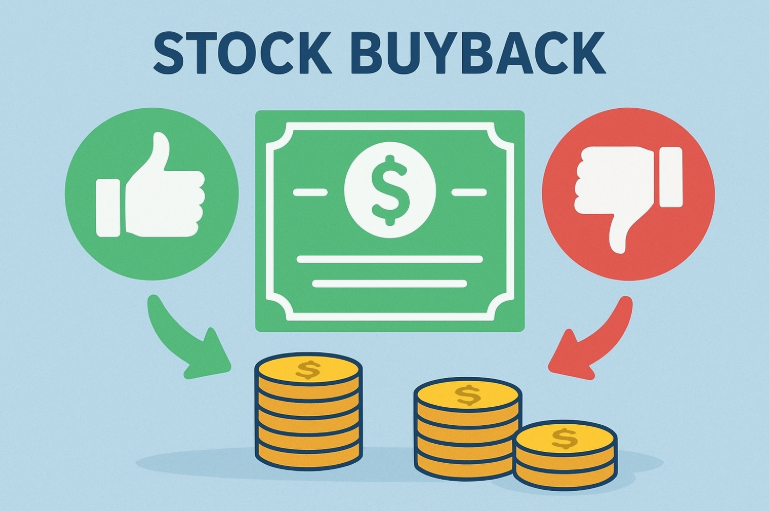
  • 💼 Stock Buybacks: Good or Bad? The Complete Truth Behind the Corporate Move That Everyone Talks About — But Few Truly Understand

    💼 Stock Buybacks: Good or Bad? The Complete Truth Behind the Corporate Move That Everyone Talks About — But Few Truly Understand

    Stock buybacks have become one of the most debated financial strategies across global markets. Every few months, a headline sparks excitement:
    “Company announces ₹10,000 crore buyback!”
    “Premium offered at 20% above market price!”
    “Record-breaking repurchase program!”

    Shareholders celebrate. Analysts comment. Stock prices jump.

    But behind every buyback lies a deeper story — of confidence, caution, strategy, optics, emotion, and sometimes, corporate insecurity.

    Let’s begin the journey.


    1. What Exactly Is a Stock Buyback?

    A stock buyback — or share repurchase — happens when a company uses its own cash to buy its shares from the open market or through a tender offer.

    Think of it like a cake:
    If fewer people share the same cake, each person gets a bigger slice.

    Similarly, when shares reduce:

    • Earnings Per Share (EPS) rises
    • Return on Equity (ROE) improves
    • Existing shareholders own a larger percentage of the company

    Mechanically simple. Strategically complex. Emotionally powerful.


    2. Why Do Companies Do Stock Buybacks? The Real Reasons (With Global + Indian Examples)

    Companies don’t do buybacks randomly. Each buyback has a motive — financial, strategic, psychological, sometimes even political.

    Let’s break down the top reasons.


    Reason #1: Excess Cash + Limited Growth Opportunities

    One of the most common reasons companies do buybacks is because they generate more cash than they can productively reinvest.

    Example: TCS (India)

    TCS does frequent buybacks — ₹16,000 crore in 2017, ₹18,000 crore in 2022, and more later.
    Reason?
    TCS is a cash machine. It doesn’t need all that cash for aggressive expansion.

    The buyback signals:
    “We’re stable and mature. Instead of letting cash sit idle, we reward shareholders.”

    Example: Apple (Global)

    Apple has spent over $500 billion on buybacks — the largest in corporate history.
    Apple’s ecosystem is so strong that even after innovation, R&D, and expansion, it still has massive surplus cash.

    Buybacks help distribute value back to shareholders.


    Reason #2: Management Believes the Stock Is Undervalued

    Perhaps the most “emotional” reason behind buybacks.

    A buyback at a premium sends a bold message:
    “Our stock is worth more than the market thinks.”

    Example: Infosys Buyback (India, 2025)

    Infosys announced a ₹18,000 crore buyback at ₹1,800 — nearly 19% above market price.
    The signal was clear:

    “We trust our future. We believe the market is underestimating us.”

    Example: Meta (Facebook) — 2022 Crash

    After massive losses in the metaverse project, Meta stock fell 70%.
    Instead of panicking, Meta initiated buybacks.

    Outcome?
    Confidence restored → stock recovered massively.

    Buybacks can be a psychological booster in the market.


    Reason #3: To Boost EPS Without Improving Real Profits

    This is where buybacks become controversial.

    EPS = Profit / Number of Shares

    If profits stay the same but shares reduce → EPS increases.
    A neat trick.

    Example: IBM (2010–2020)

    IBM spent billions on buybacks to maintain EPS growth.
    But the underlying business was weakening.

    Eventually, the market punished IBM for “financial engineering” instead of “innovation”.


    Reason #4: To Reduce Dilution From ESOPs & Maintain Promoter Control

    Employee stock options dilute shares.
    Buybacks help offset that dilution.

    Example: Reliance Industries

    Reliance has strategically used buybacks to maintain promoter shareholding while rewarding investors.


    Reason #5: To Support the Stock Price in Volatile Times

    When stocks fall sharply, a buyback acts like a safety net.

    Example: Adani Group (Post-Hindenburg)

    Following the crisis, discussions of buybacks emerged as a tool to restore sentiment.

    Even the thought of buyback can stabilize investor emotions.


    Reason #6: When Debt Is Cheap → Borrow to Buy Back Stock

    This is financially risky but attractive to companies.

    Example: Boeing (Before 737 MAX Crisis)

    Boeing borrowed heavily to buy back $43 billion worth of shares.
    Then crisis struck… and they needed liquidity desperately.

    A painful lesson:
    Debt-funded buybacks can destroy long-term stability.


    3. Are Stock Buybacks Good or Bad? A Stakeholder-by-Stakeholder Truth

    Buybacks are neither angels nor villains.
    Their impact depends on who you are.

    Let’s break it down.


    A. For Shareholders: Usually Good (Short-Term), Mixed (Long-Term)

    Benefits

    • Higher EPS
    • Higher share price due to premium
    • Better ROE & valuation multiples
    • Increased ownership percentage

    Risks

    • Tax (treated as income in India now)
    • Low acceptance ratio in tender offers (5–15% for retail)
    • If company overpays, long-term investors suffer

    Conclusion for Shareholders:

    Short-term gift, long-term depends on why buyback happened.


    B. For Management: Mostly Good

    Why management loves buybacks:

    • Stock-based compensation becomes more valuable
    • EPS increases without real growth
    • Surface-level financials look better
    • Sends a message of confidence
    • Helps in hostile-takeover defense

    But if misused, it signals:
    “We don’t have enough growth ideas.”


    C. For Employees: Mostly Neutral, Sometimes Negative

    Employees often feel little immediate benefit.
    Buybacks rarely translate into raises, career growth, or job security.

    Upsides

    • ESOP holders benefit
    • Stock optimism can boost morale

    Downsides

    • Funds diverted away from hiring, training, R&D
    • Could signal stagnation

    D. For Lenders & Creditors: Mostly Negative

    Debt holders prefer cash-rich companies.

    Buybacks → less liquidity → higher financial risk.

    Credit rating agencies closely track large buyback announcements.


    E. For Regulators & Policymakers: Mixed

    Regulators worry that buybacks encourage short-termism.

    India introduced a special buyback tax and later changed rules to classify buyback payout as income, reducing attractiveness.

    Governments want companies to reinvest in:

    • Innovation
    • Jobs
    • Sustainability projects
    • Infrastructure
    • Future technologies

    —not only in boosting stock prices.


    F. For Society & Long-Term Economy: Often Negative

    This is the least discussed — but most important.

    When mature companies like Apple do buybacks → Good

    (They’ve already spent enough on innovation.)

    When growing companies do buybacks → Bad

    (It signals lack of vision.)

    Huge buybacks drain money away from:

    • R&D
    • New jobs
    • Future technologies
    • Capital expansion
    • Social impact

    Society pays the price when companies choose financial engineering over innovation.


    4. Misconceptions About Buybacks — Debunked

    Myth 1: Buybacks always increase stock price

    Truth: Only when business fundamentals are strong.

    ❌ Myth 2: Buybacks are a sign of weakness

    Truth: Can be a sign of maturity and confidence too (Apple, TCS).

    ❌ Myth 3: Large buybacks always benefit retail shareholders

    Truth: Retail acceptance is often low; promoters benefit more.

    ❌ Myth 4: Buybacks mean higher dividends in the future

    Truth: Not necessarily. Buybacks and dividends are different signals.


    5. Buybacks vs Dividends: Which Is Better?

    FeatureBuybackDividend
    Tax impactCan be highLower for many investors
    PredictabilityOccasionalRegular
    SignalingUndervaluationStable cash flow
    Long-term effectReduces sharesNo share change
    FlexibilityHighLow

    Buybacks = flexibility
    Dividends = loyalty & stability

    Both have their place.


    6. Hidden Risks of Buybacks That Investors Ignore

    1. Overpaying for shares destroys long-term value

    A buyback at a peak price becomes a long-term burden.

    2. Buybacks reduce company resilience

    Less cash → less buffer during downturns.

    3. Financial engineering masks deeper issues

    EPS rise looks good, but real profits stay stagnant.

    4. Reduces future strategic options

    No cash left for acquisitions or innovation.

    5. Protects insiders more than small shareholders

    Insiders often time their stock options before buybacks.


    7. So… Are Buybacks Good or Bad? The Honest Verdict

    Buybacks are “good” when:

    • Company generates excess cash
    • Shares are undervalued
    • Debt is low
    • Business is mature
    • Management is disciplined
    • R&D and innovation budgets are strong

    Buybacks are “bad” when:

    • They mask weak fundamentals
    • Company borrows for buybacks
    • Leadership prioritizes optics over growth
    • Employees are under-invested
    • Market is overheated
    • Promoters use buybacks to push up stock price temporarily

    Buybacks are neither heroes nor villains — they’re tools.
    And tools can build — or they can destroy.


    8. Call To Action – A Shared Responsibility for All Stakeholders

    To Investors:

    Don’t celebrate a buyback blindly. Ask why it’s happening. Look deeper than the premium.

    To Boards:

    Approve buybacks only when they strengthen future resilience and innovation — not vanity metrics.

    To Executives:

    Use buybacks responsibly. Your legacy depends on how you allocate capital.

    To Employees:

    Understand what buybacks mean for ESOPs, culture, and company direction. Stay informed.

    To Regulators:

    Build guardrails that balance market efficiency with long-term societal impact.

    To Society:

    Value companies that innovate, not just manipulate financial optics.


    “Capital is powerful — but only when it fuels progress.
    Let’s demand buybacks that build stronger companies, empower employees, reward investors fairly, and create an economy that lasts.”

    Read more blogs here.

    Reference link.

  • 💼 Stock Buybacks: Good or Bad? The Complete Truth Behind the Corporate Move That Everyone Talks About — But Few Truly Understand

    💼 Stock Buybacks: Good or Bad? The Complete Truth Behind the Corporate Move That Everyone Talks About — But Few Truly Understand

    Stock buybacks have become one of the most debated financial strategies across global markets. Every few months, a headline sparks excitement:

    “Company announces ₹10,000 crore buyback!”
    “Premium offered at 20% above market price!”
    “Record-breaking repurchase program!”

    Shareholders celebrate. Analysts comment. Stock prices jump.

    But behind every buyback lies a deeper story — of confidence, caution, strategy, optics, emotion, and sometimes, corporate insecurity.

    Let’s begin the journey.


    1. What Exactly Is a Stock Buyback?

    A stock buyback — or share repurchase — happens when a company uses its own cash to buy its shares from the open market or through a tender offer.

    Think of it like a cake:
    If fewer people share the same cake, each person gets a bigger slice.

    Similarly, when shares reduce:

    • Earnings Per Share (EPS) rises
    • Return on Equity (ROE) improves
    • Existing shareholders own a larger percentage of the company

    Mechanically simple. Strategically complex. Emotionally powerful.


    2. Why Do Companies Do Stock Buybacks? The Real Reasons (With Global + Indian Examples)

    Companies don’t do buybacks randomly. Each buyback has a motive — financial, strategic, psychological, sometimes even political.

    Let’s break down the top reasons.


    Reason #1: Excess Cash + Limited Growth Opportunities

    One of the most common reasons companies do buybacks is because they generate more cash than they can productively reinvest.

    Example: TCS (India)

    TCS does frequent buybacks — ₹16,000 crore in 2017, ₹18,000 crore in 2022, and more later.
    Reason?
    TCS is a cash machine. It doesn’t need all that cash for aggressive expansion.

    The buyback signals:
    “We’re stable and mature. Instead of letting cash sit idle, we reward shareholders.”

    Example: Apple (Global)

    Apple has spent over $500 billion on buybacks — the largest in corporate history.
    Apple’s ecosystem is so strong that even after innovation, R&D, and expansion, it still has massive surplus cash.

    Buybacks help distribute value back to shareholders.


    Reason #2: Management Believes the Stock Is Undervalued

    Perhaps the most “emotional” reason behind buybacks.

    A buyback at a premium sends a bold message:
    “Our stock is worth more than the market thinks.”

    Example: Infosys Buyback (India, 2025)

    Infosys announced a ₹18,000 crore buyback at ₹1,800 — nearly 19% above market price.
    The signal was clear:

    “We trust our future. We believe the market is underestimating us.”

    Example: Meta (Facebook) — 2022 Crash

    After massive losses in the metaverse project, Meta stock fell 70%.
    Instead of panicking, Meta initiated buybacks.

    Outcome?
    Confidence restored → stock recovered massively.

    Buybacks can be a psychological booster in the market.


    Reason #3: To Boost EPS Without Improving Real Profits

    This is where buybacks become controversial.

    EPS = Profit / Number of Shares

    If profits stay the same but shares reduce → EPS increases.
    A neat trick.

    Example: IBM (2010–2020)

    IBM spent billions on buybacks to maintain EPS growth.
    But the underlying business was weakening.

    Eventually, the market punished IBM for “financial engineering” instead of “innovation”.


    Reason #4: To Reduce Dilution From ESOPs & Maintain Promoter Control

    Employee stock options dilute shares.
    Buybacks help offset that dilution.

    Example: Reliance Industries

    Reliance has strategically used buybacks to maintain promoter shareholding while rewarding investors.


    Reason #5: To Support the Stock Price in Volatile Times

    When stocks fall sharply, a buyback acts like a safety net.

    Example: Adani Group (Post-Hindenburg)

    Following the crisis, discussions of buybacks emerged as a tool to restore sentiment.

    Even the thought of buyback can stabilize investor emotions.


    Reason #6: When Debt Is Cheap → Borrow to Buy Back Stock

    This is financially risky but attractive to companies.

    Example: Boeing (Before 737 MAX Crisis)

    Boeing borrowed heavily to buy back $43 billion worth of shares.
    Then crisis struck… and they needed liquidity desperately.

    A painful lesson:
    Debt-funded buybacks can destroy long-term stability.


    3. Are Stock Buybacks Good or Bad? A Stakeholder-by-Stakeholder Truth

    Buybacks are neither angels nor villains.
    Their impact depends on who you are.

    Let’s break it down.


    A. For Shareholders: Usually Good (Short-Term), Mixed (Long-Term)

    Benefits

    • Higher EPS
    • Higher share price due to premium
    • Better ROE & valuation multiples
    • Increased ownership percentage

    Risks

    • Tax (treated as income in India now)
    • Low acceptance ratio in tender offers (5–15% for retail)
    • If company overpays, long-term investors suffer

    Conclusion for Shareholders:

    Short-term gift, long-term depends on why buyback happened.


    B. For Management: Mostly Good

    Why management loves buybacks:

    • Stock-based compensation becomes more valuable
    • EPS increases without real growth
    • Surface-level financials look better
    • Sends a message of confidence
    • Helps in hostile-takeover defense

    But if misused, it signals:
    “We don’t have enough growth ideas.”


    C. For Employees: Mostly Neutral, Sometimes Negative

    Employees often feel little immediate benefit.
    Buybacks rarely translate into raises, career growth, or job security.

    Upsides

    • ESOP holders benefit
    • Stock optimism can boost morale

    Downsides

    • Funds diverted away from hiring, training, R&D
    • Could signal stagnation

    D. For Lenders & Creditors: Mostly Negative

    Debt holders prefer cash-rich companies.

    Buybacks → less liquidity → higher financial risk.

    Credit rating agencies closely track large buyback announcements.


    E. For Regulators & Policymakers: Mixed

    Regulators worry that buybacks encourage short-termism.

    India introduced a special buyback tax and later changed rules to classify buyback payout as income, reducing attractiveness.

    Governments want companies to reinvest in:

    • Innovation
    • Jobs
    • Sustainability projects
    • Infrastructure
    • Future technologies

    —not only in boosting stock prices.


    F. For Society & Long-Term Economy: Often Negative

    This is the least discussed — but most important.

    When mature companies like Apple do buybacks → Good

    (They’ve already spent enough on innovation.)

    When growing companies do buybacks → Bad

    (It signals lack of vision.)

    Huge buybacks drain money away from:

    • R&D
    • New jobs
    • Future technologies
    • Capital expansion
    • Social impact

    Society pays the price when companies choose financial engineering over innovation.


    4. Misconceptions About Buybacks — Debunked

    Myth 1: Buybacks always increase stock price

    Truth: Only when business fundamentals are strong.

    ❌ Myth 2: Buybacks are a sign of weakness

    Truth: Can be a sign of maturity and confidence too (Apple, TCS).

    ❌ Myth 3: Large buybacks always benefit retail shareholders

    Truth: Retail acceptance is often low; promoters benefit more.

    ❌ Myth 4: Buybacks mean higher dividends in the future

    Truth: Not necessarily. Buybacks and dividends are different signals.


    5. Buybacks vs Dividends: Which Is Better?

    FeatureBuybackDividend
    Tax impactCan be highLower for many investors
    PredictabilityOccasionalRegular
    SignalingUndervaluationStable cash flow
    Long-term effectReduces sharesNo share change
    FlexibilityHighLow

    Buybacks = flexibility
    Dividends = loyalty & stability

    Both have their place.


    6. Hidden Risks of Buybacks That Investors Ignore

    1. Overpaying for shares destroys long-term value

    A buyback at a peak price becomes a long-term burden.

    2. Buybacks reduce company resilience

    Less cash → less buffer during downturns.

    3. Financial engineering masks deeper issues

    EPS rise looks good, but real profits stay stagnant.

    4. Reduces future strategic options

    No cash left for acquisitions or innovation.

    5. Protects insiders more than small shareholders

    Insiders often time their stock options before buybacks.


    7. So… Are Buybacks Good or Bad? The Honest Verdict

    Buybacks are “good” when:

    • Company generates excess cash
    • Shares are undervalued
    • Debt is low
    • Business is mature
    • Management is disciplined
    • R&D and innovation budgets are strong

    Buybacks are “bad” when:

    • They mask weak fundamentals
    • Company borrows for buybacks
    • Leadership prioritizes optics over growth
    • Employees are under-invested
    • Market is overheated
    • Promoters use buybacks to push up stock price temporarily

    Buybacks are neither heroes nor villains — they’re tools.
    And tools can build — or they can destroy.


    8. Call To Action – A Shared Responsibility for All Stakeholders

    To Investors:

    Don’t celebrate a buyback blindly. Ask why it’s happening. Look deeper than the premium.

    To Boards:

    Approve buybacks only when they strengthen future resilience and innovation — not vanity metrics.

    To Executives:

    Use buybacks responsibly. Your legacy depends on how you allocate capital.

    To Employees:

    Understand what buybacks mean for ESOPs, culture, and company direction. Stay informed.

    To Regulators:

    Build guardrails that balance market efficiency with long-term societal impact.

    To Society:

    Value companies that innovate, not just manipulate financial optics.


    “Capital is powerful — but only when it fuels progress.
    Let’s demand buybacks that build stronger companies, empower employees, reward investors fairly, and create an economy that lasts.”

    Read more blogs here.

    Reference link.

  • 🧭 When Boards Spoke Up: Real Stories of Directors Who Saved Companies

    🧭 When Boards Spoke Up: Real Stories of Directors Who Saved Companies


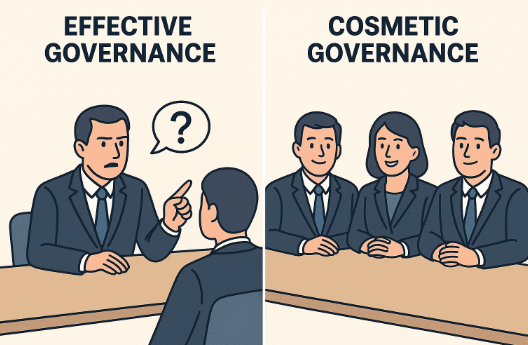
    💔 Effective Governance vs Cosmetic

    Some companies hang glossy values on their walls — “Integrity. Transparency. Accountability.”
    But when crisis strikes, those words fade into wallpaper.

    Real governance isn’t about fancy committees or famous board members.
    It’s about the quiet courage to ask hard questions — even when the answers cost power, comfort, or careers.

    Effective governance protects truth.
    Cosmetic governance protects image.

    One builds trust that lasts decades.
    The other builds empires that collapse overnight.


    💥 Silence Is Not Governance

    Corporate boards are supposed to be the conscience of companies — the gatekeepers of integrity.
    But too often, they act like spectators, not sentinels.

    History has shown that fraud rarely happens overnight — it happens when directors stop asking questions.
    And yet, there are times when boards did speak up — challenged powerful CEOs, questioned questionable decisions, and changed the course of corporate history.

    These are the rare but powerful stories of effective governance in action.


    ⚖️ 1. Infosys: The Board That Chose Integrity Over Image

    In 2017, whispers of impropriety in Infosys’s $200 million Panaya acquisition grew louder. The CEO, Vishal Sikka, was seen as the visionary bringing Silicon Valley flair — but questions around governance and executive pay wouldn’t die down.

    Instead of dismissing whistleblower complaints as noise, Infosys’s board investigated, commissioned external audits, and engaged with founder N.R. Narayana Murthy’s concerns.

    When trust became fragile, Sikka resigned — and the board invited Nandan Nilekani back to rebuild confidence.

    👉 Result: The company regained investor faith and reinforced its position as a governance icon.
    Lesson: Real boards choose transparency over convenience.


    🏛️ 2. Tata Sons: The Boardroom Earthquake That Protected Legacy

    In 2016, the Tata Group — a 150-year-old symbol of Indian integrity — witnessed a boardroom storm.
    The board of Tata Sons voted to remove its own Chairman, Cyrus Mistry, citing misalignment with Tata values and strategy.

    It was unprecedented — an Indian board removing its top leader.
    While controversial, the move sent a message: even at the highest level, no one is above accountability.

    Subsequently, under N. Chandrasekaran, Tata Sons formalized governance charters and strengthened oversight committees.

    👉 Result: The Tata Group stabilized and grew stronger post-crisis.
    Lesson: Governance isn’t comfort — it’s courage.


    🏦 3. Axis Bank: The Board That Acted Before a Crisis

    When the Reserve Bank of India raised concerns about rising NPAs and loan disclosures in 2018, the Axis Bank board didn’t wait for headlines.

    They chose not to renew the term of then-CEO Shikha Sharma, despite her long tenure and reputation.
    Instead, they brought in Amitabh Chaudhry from HDFC Life, known for conservative risk management and transparent leadership.

    👉 Result: Axis Bank avoided a potential governance storm and rebuilt market confidence.
    Lesson: Good boards prevent crises before they explode.


    🚗 4. Uber: When Investors and Board Took on the Founder

    In 2017, Uber’s aggressive culture had turned toxic — sexual harassment scandals, data breaches, and legal violations piled up.
    The board and major investors faced a hard choice: protect the powerful founder Travis Kalanick, or protect the company’s soul.

    They chose the latter.

    Kalanick was forced to resign, and Dara Khosrowshahi was brought in to rebuild Uber’s ethics and culture from scratch.

    👉 Result: The company went public two years later, with a renewed brand and culture.
    Lesson: True governance means ending founder worship when ethics are at stake.


    🌍 5. Credit Suisse: Action Came, But Too Late

    Credit Suisse’s series of missteps — Archegos, Greensill, data leaks — exposed repeated governance lapses.
    The board did intervene, removing CEO Thomas Gottstein and restructuring oversight committees.

    But the reforms came too late. By 2023, Credit Suisse was absorbed by UBS after a loss of market trust.

    👉 Lesson: Governance delayed is governance denied.


    🔍 The Common Thread: When Boards Found Their Voice

    Across all these stories, one pattern stands out:
    Boards that acted early, independently, and transparently protected value.
    Boards that waited or stayed silent — lost everything.

    TraitEffective Boards
    Courage to QuestionAsked uncomfortable questions, even to founders or CEOs
    Timely ActionActed before regulators or crises forced them
    TransparencyDisclosed findings openly
    Leadership ChangeDidn’t hesitate to remove top management
    Long-Term ViewPrioritized integrity over quarterly optics

    💬 Conclusion: Governance Is a Verb, Not a Noun

    It’s easy to write policies.
    It’s hard to speak truth to power.

    Effective governance lives in the moments of resistance — when directors say, “No, this isn’t right.”
    The companies that survive crises are not the ones with the biggest profits —
    but the ones whose boards have the backbone to act before it’s too late.


    🔔 Call to Action

    If you’re on a board, investor, or policymaker — ask yourself:

    “Is my governance real, or just cosmetic?”

    Because when boards stay silent, markets eventually speak.


    Read more blogs on corporate governance here.

    🌐 External Reference

    Here are some good public links for the governance examples we discussed:

    ExampleLink(s) with details / coverage
    Infosys (CEO resigned after board / founder conflict)• “Infosys CEO resigns after long-running feud with founders” — Reuters.Reuters
    • “The backstory to Infosys CEO Vishal Sikka’s resignation”
    Tata Sons (board removed chairman Cyrus Mistry)• “Tata Sons seeks to oust ex-chairman from boards of Tata group companies” — Reuters.Reuters
    • “Revisiting feud between Ratan Tata, Cyrus Mistry: Why it happened” — NDTV.www.ndtv.com
    Axis Bank (board / management change)• “India’s Axis Bank re-appoints Amitabh Chaudhry MD, CEO” — Reuters.Reuters
    • “Axis Bank MD & CEO Amitabh Chaudhry: AI is the next frontier” — Business Standard.Business Standard
    Uber (board / investors forced CEO Travis Kalanick out)• “Uber CEO Travis Kalanick resigns following months of chaos” — The Guardian.The Guardian
    • “Why Uber investors revolted against Travis Kalanick” — CBS News.CBS News

  • 🧭 When Boards Spoke Up: Real Stories of Directors Who Saved Companies

    🧭 When Boards Spoke Up: Real Stories of Directors Who Saved Companies


    💔 Effective Governance vs Cosmetic

    Some companies hang glossy values on their walls — “Integrity. Transparency. Accountability.”
    But when crisis strikes, those words fade into wallpaper.

    Real governance isn’t about fancy committees or famous board members.
    It’s about the quiet courage to ask hard questions — even when the answers cost power, comfort, or careers.

    Effective governance protects truth.
    Cosmetic governance protects image.

    One builds trust that lasts decades.
    The other builds empires that collapse overnight.


    💥 Silence Is Not Governance

    Corporate boards are supposed to be the conscience of companies — the gatekeepers of integrity.
    But too often, they act like spectators, not sentinels.

    History has shown that fraud rarely happens overnight — it happens when directors stop asking questions.
    And yet, there are times when boards did speak up — challenged powerful CEOs, questioned questionable decisions, and changed the course of corporate history.

    These are the rare but powerful stories of effective governance in action.


    ⚖️ 1. Infosys: The Board That Chose Integrity Over Image

    In 2017, whispers of impropriety in Infosys’s $200 million Panaya acquisition grew louder. The CEO, Vishal Sikka, was seen as the visionary bringing Silicon Valley flair — but questions around governance and executive pay wouldn’t die down.

    Instead of dismissing whistleblower complaints as noise, Infosys’s board investigated, commissioned external audits, and engaged with founder N.R. Narayana Murthy’s concerns.

    When trust became fragile, Sikka resigned — and the board invited Nandan Nilekani back to rebuild confidence.

    👉 Result: The company regained investor faith and reinforced its position as a governance icon.
    Lesson: Real boards choose transparency over convenience.


    🏛️ 2. Tata Sons: The Boardroom Earthquake That Protected Legacy

    In 2016, the Tata Group — a 150-year-old symbol of Indian integrity — witnessed a boardroom storm.
    The board of Tata Sons voted to remove its own Chairman, Cyrus Mistry, citing misalignment with Tata values and strategy.

    It was unprecedented — an Indian board removing its top leader.
    While controversial, the move sent a message: even at the highest level, no one is above accountability.

    Subsequently, under N. Chandrasekaran, Tata Sons formalized governance charters and strengthened oversight committees.

    👉 Result: The Tata Group stabilized and grew stronger post-crisis.
    Lesson: Governance isn’t comfort — it’s courage.


    🏦 3. Axis Bank: The Board That Acted Before a Crisis

    When the Reserve Bank of India raised concerns about rising NPAs and loan disclosures in 2018, the Axis Bank board didn’t wait for headlines.

    They chose not to renew the term of then-CEO Shikha Sharma, despite her long tenure and reputation.
    Instead, they brought in Amitabh Chaudhry from HDFC Life, known for conservative risk management and transparent leadership.

    👉 Result: Axis Bank avoided a potential governance storm and rebuilt market confidence.
    Lesson: Good boards prevent crises before they explode.


    🚗 4. Uber: When Investors and Board Took on the Founder

    In 2017, Uber’s aggressive culture had turned toxic — sexual harassment scandals, data breaches, and legal violations piled up.
    The board and major investors faced a hard choice: protect the powerful founder Travis Kalanick, or protect the company’s soul.

    They chose the latter.

    Kalanick was forced to resign, and Dara Khosrowshahi was brought in to rebuild Uber’s ethics and culture from scratch.

    👉 Result: The company went public two years later, with a renewed brand and culture.
    Lesson: True governance means ending founder worship when ethics are at stake.


    🌍 5. Credit Suisse: Action Came, But Too Late

    Credit Suisse’s series of missteps — Archegos, Greensill, data leaks — exposed repeated governance lapses.
    The board did intervene, removing CEO Thomas Gottstein and restructuring oversight committees.

    But the reforms came too late. By 2023, Credit Suisse was absorbed by UBS after a loss of market trust.

    👉 Lesson: Governance delayed is governance denied.


    🔍 The Common Thread: When Boards Found Their Voice

    Across all these stories, one pattern stands out:
    Boards that acted early, independently, and transparently protected value.
    Boards that waited or stayed silent — lost everything.

    TraitEffective Boards
    Courage to QuestionAsked uncomfortable questions, even to founders or CEOs
    Timely ActionActed before regulators or crises forced them
    TransparencyDisclosed findings openly
    Leadership ChangeDidn’t hesitate to remove top management
    Long-Term ViewPrioritized integrity over quarterly optics

    💬 Conclusion: Governance Is a Verb, Not a Noun

    It’s easy to write policies.
    It’s hard to speak truth to power.

    Effective governance lives in the moments of resistance — when directors say, “No, this isn’t right.”
    The companies that survive crises are not the ones with the biggest profits —
    but the ones whose boards have the backbone to act before it’s too late.


    🔔 Call to Action

    If you’re on a board, investor, or policymaker — ask yourself:

    “Is my governance real, or just cosmetic?”

    Because when boards stay silent, markets eventually speak.


    Read more blogs on corporate governance here.

    🌐 External Reference

    Here are some good public links for the governance examples we discussed:

    ExampleLink(s) with details / coverage
    Infosys (CEO resigned after board / founder conflict)• “Infosys CEO resigns after long-running feud with founders” — Reuters.Reuters
    • “The backstory to Infosys CEO Vishal Sikka’s resignation”
    Tata Sons (board removed chairman Cyrus Mistry)• “Tata Sons seeks to oust ex-chairman from boards of Tata group companies” — Reuters.Reuters
    • “Revisiting feud between Ratan Tata, Cyrus Mistry: Why it happened” — NDTV.www.ndtv.com
    Axis Bank (board / management change)• “India’s Axis Bank re-appoints Amitabh Chaudhry MD, CEO” — Reuters.Reuters
    • “Axis Bank MD & CEO Amitabh Chaudhry: AI is the next frontier” — Business Standard.Business Standard
    Uber (board / investors forced CEO Travis Kalanick out)• “Uber CEO Travis Kalanick resigns following months of chaos” — The Guardian.The Guardian
    • “Why Uber investors revolted against Travis Kalanick” — CBS News.CBS News

  • 🧭 When Boards Spoke Up: Real Stories of Directors Who Saved Companies

    🧭 When Boards Spoke Up: Real Stories of Directors Who Saved Companies


    💔 Effective Governance vs Cosmetic

    Some companies hang glossy values on their walls — “Integrity. Transparency. Accountability.”
    But when crisis strikes, those words fade into wallpaper.

    Real governance isn’t about fancy committees or famous board members.
    It’s about the quiet courage to ask hard questions — even when the answers cost power, comfort, or careers.

    Effective governance protects truth.
    Cosmetic governance protects image.

    One builds trust that lasts decades.
    The other builds empires that collapse overnight.


    💥 Silence Is Not Governance

    Corporate boards are supposed to be the conscience of companies — the gatekeepers of integrity.
    But too often, they act like spectators, not sentinels.

    History has shown that fraud rarely happens overnight — it happens when directors stop asking questions.
    And yet, there are times when boards did speak up — challenged powerful CEOs, questioned questionable decisions, and changed the course of corporate history.

    These are the rare but powerful stories of effective governance in action.


    ⚖️ 1. Infosys: The Board That Chose Integrity Over Image

    In 2017, whispers of impropriety in Infosys’s $200 million Panaya acquisition grew louder. The CEO, Vishal Sikka, was seen as the visionary bringing Silicon Valley flair — but questions around governance and executive pay wouldn’t die down.

    Instead of dismissing whistleblower complaints as noise, Infosys’s board investigated, commissioned external audits, and engaged with founder N.R. Narayana Murthy’s concerns.

    When trust became fragile, Sikka resigned — and the board invited Nandan Nilekani back to rebuild confidence.

    👉 Result: The company regained investor faith and reinforced its position as a governance icon.
    Lesson: Real boards choose transparency over convenience.


    🏛️ 2. Tata Sons: The Boardroom Earthquake That Protected Legacy

    In 2016, the Tata Group — a 150-year-old symbol of Indian integrity — witnessed a boardroom storm.
    The board of Tata Sons voted to remove its own Chairman, Cyrus Mistry, citing misalignment with Tata values and strategy.

    It was unprecedented — an Indian board removing its top leader.
    While controversial, the move sent a message: even at the highest level, no one is above accountability.

    Subsequently, under N. Chandrasekaran, Tata Sons formalized governance charters and strengthened oversight committees.

    👉 Result: The Tata Group stabilized and grew stronger post-crisis.
    Lesson: Governance isn’t comfort — it’s courage.


    🏦 3. Axis Bank: The Board That Acted Before a Crisis

    When the Reserve Bank of India raised concerns about rising NPAs and loan disclosures in 2018, the Axis Bank board didn’t wait for headlines.

    They chose not to renew the term of then-CEO Shikha Sharma, despite her long tenure and reputation.
    Instead, they brought in Amitabh Chaudhry from HDFC Life, known for conservative risk management and transparent leadership.

    👉 Result: Axis Bank avoided a potential governance storm and rebuilt market confidence.
    Lesson: Good boards prevent crises before they explode.


    🚗 4. Uber: When Investors and Board Took on the Founder

    In 2017, Uber’s aggressive culture had turned toxic — sexual harassment scandals, data breaches, and legal violations piled up.
    The board and major investors faced a hard choice: protect the powerful founder Travis Kalanick, or protect the company’s soul.

    They chose the latter.

    Kalanick was forced to resign, and Dara Khosrowshahi was brought in to rebuild Uber’s ethics and culture from scratch.

    👉 Result: The company went public two years later, with a renewed brand and culture.
    Lesson: True governance means ending founder worship when ethics are at stake.


    🌍 5. Credit Suisse: Action Came, But Too Late

    Credit Suisse’s series of missteps — Archegos, Greensill, data leaks — exposed repeated governance lapses.
    The board did intervene, removing CEO Thomas Gottstein and restructuring oversight committees.

    But the reforms came too late. By 2023, Credit Suisse was absorbed by UBS after a loss of market trust.

    👉 Lesson: Governance delayed is governance denied.


    🔍 The Common Thread: When Boards Found Their Voice

    Across all these stories, one pattern stands out:
    Boards that acted early, independently, and transparently protected value.
    Boards that waited or stayed silent — lost everything.

    TraitEffective Boards
    Courage to QuestionAsked uncomfortable questions, even to founders or CEOs
    Timely ActionActed before regulators or crises forced them
    TransparencyDisclosed findings openly
    Leadership ChangeDidn’t hesitate to remove top management
    Long-Term ViewPrioritized integrity over quarterly optics

    💬 Conclusion: Governance Is a Verb, Not a Noun

    It’s easy to write policies.
    It’s hard to speak truth to power.

    Effective governance lives in the moments of resistance — when directors say, “No, this isn’t right.”
    The companies that survive crises are not the ones with the biggest profits —
    but the ones whose boards have the backbone to act before it’s too late.


    🔔 Call to Action

    If you’re on a board, investor, or policymaker — ask yourself:

    “Is my governance real, or just cosmetic?”

    Because when boards stay silent, markets eventually speak.


    Read more blogs on corporate governance here.

    🌐 External Reference

    Here are some good public links for the governance examples we discussed:

    ExampleLink(s) with details / coverage
    Infosys (CEO resigned after board / founder conflict)• “Infosys CEO resigns after long-running feud with founders” — Reuters.Reuters
    • “The backstory to Infosys CEO Vishal Sikka’s resignation”
    Tata Sons (board removed chairman Cyrus Mistry)• “Tata Sons seeks to oust ex-chairman from boards of Tata group companies” — Reuters.Reuters
    • “Revisiting feud between Ratan Tata, Cyrus Mistry: Why it happened” — NDTV.www.ndtv.com
    Axis Bank (board / management change)• “India’s Axis Bank re-appoints Amitabh Chaudhry MD, CEO” — Reuters.Reuters
    • “Axis Bank MD & CEO Amitabh Chaudhry: AI is the next frontier” — Business Standard.Business Standard
    Uber (board / investors forced CEO Travis Kalanick out)• “Uber CEO Travis Kalanick resigns following months of chaos” — The Guardian.The Guardian
    • “Why Uber investors revolted against Travis Kalanick” — CBS News.CBS News

  • 🧭 When Boards Spoke Up: Real Stories of Directors Who Saved Companies

    🧭 When Boards Spoke Up: Real Stories of Directors Who Saved Companies


    💔 Effective Governance vs Cosmetic

    Some companies hang glossy values on their walls — “Integrity. Transparency. Accountability.”
    But when crisis strikes, those words fade into wallpaper.

    Real governance isn’t about fancy committees or famous board members.
    It’s about the quiet courage to ask hard questions — even when the answers cost power, comfort, or careers.

    Effective governance protects truth.
    Cosmetic governance protects image.

    One builds trust that lasts decades.
    The other builds empires that collapse overnight.


    💥 Silence Is Not Governance

    Corporate boards are supposed to be the conscience of companies — the gatekeepers of integrity.
    But too often, they act like spectators, not sentinels.

    History has shown that fraud rarely happens overnight — it happens when directors stop asking questions.
    And yet, there are times when boards did speak up — challenged powerful CEOs, questioned questionable decisions, and changed the course of corporate history.

    These are the rare but powerful stories of effective governance in action.


    ⚖️ 1. Infosys: The Board That Chose Integrity Over Image

    In 2017, whispers of impropriety in Infosys’s $200 million Panaya acquisition grew louder. The CEO, Vishal Sikka, was seen as the visionary bringing Silicon Valley flair — but questions around governance and executive pay wouldn’t die down.

    Instead of dismissing whistleblower complaints as noise, Infosys’s board investigated, commissioned external audits, and engaged with founder N.R. Narayana Murthy’s concerns.

    When trust became fragile, Sikka resigned — and the board invited Nandan Nilekani back to rebuild confidence.

    👉 Result: The company regained investor faith and reinforced its position as a governance icon.
    Lesson: Real boards choose transparency over convenience.


    🏛️ 2. Tata Sons: The Boardroom Earthquake That Protected Legacy

    In 2016, the Tata Group — a 150-year-old symbol of Indian integrity — witnessed a boardroom storm.
    The board of Tata Sons voted to remove its own Chairman, Cyrus Mistry, citing misalignment with Tata values and strategy.

    It was unprecedented — an Indian board removing its top leader.
    While controversial, the move sent a message: even at the highest level, no one is above accountability.

    Subsequently, under N. Chandrasekaran, Tata Sons formalized governance charters and strengthened oversight committees.

    👉 Result: The Tata Group stabilized and grew stronger post-crisis.
    Lesson: Governance isn’t comfort — it’s courage.


    🏦 3. Axis Bank: The Board That Acted Before a Crisis

    When the Reserve Bank of India raised concerns about rising NPAs and loan disclosures in 2018, the Axis Bank board didn’t wait for headlines.

    They chose not to renew the term of then-CEO Shikha Sharma, despite her long tenure and reputation.
    Instead, they brought in Amitabh Chaudhry from HDFC Life, known for conservative risk management and transparent leadership.

    👉 Result: Axis Bank avoided a potential governance storm and rebuilt market confidence.
    Lesson: Good boards prevent crises before they explode.


    🚗 4. Uber: When Investors and Board Took on the Founder

    In 2017, Uber’s aggressive culture had turned toxic — sexual harassment scandals, data breaches, and legal violations piled up.
    The board and major investors faced a hard choice: protect the powerful founder Travis Kalanick, or protect the company’s soul.

    They chose the latter.

    Kalanick was forced to resign, and Dara Khosrowshahi was brought in to rebuild Uber’s ethics and culture from scratch.

    👉 Result: The company went public two years later, with a renewed brand and culture.
    Lesson: True governance means ending founder worship when ethics are at stake.


    🌍 5. Credit Suisse: Action Came, But Too Late

    Credit Suisse’s series of missteps — Archegos, Greensill, data leaks — exposed repeated governance lapses.
    The board did intervene, removing CEO Thomas Gottstein and restructuring oversight committees.

    But the reforms came too late. By 2023, Credit Suisse was absorbed by UBS after a loss of market trust.

    👉 Lesson: Governance delayed is governance denied.


    🔍 The Common Thread: When Boards Found Their Voice

    Across all these stories, one pattern stands out:
    Boards that acted early, independently, and transparently protected value.
    Boards that waited or stayed silent — lost everything.

    TraitEffective Boards
    Courage to QuestionAsked uncomfortable questions, even to founders or CEOs
    Timely ActionActed before regulators or crises forced them
    TransparencyDisclosed findings openly
    Leadership ChangeDidn’t hesitate to remove top management
    Long-Term ViewPrioritized integrity over quarterly optics

    💬 Conclusion: Governance Is a Verb, Not a Noun

    It’s easy to write policies.
    It’s hard to speak truth to power.

    Effective governance lives in the moments of resistance — when directors say, “No, this isn’t right.”
    The companies that survive crises are not the ones with the biggest profits —
    but the ones whose boards have the backbone to act before it’s too late.


    🔔 Call to Action

    If you’re on a board, investor, or policymaker — ask yourself:

    “Is my governance real, or just cosmetic?”

    Because when boards stay silent, markets eventually speak.


    Read more blogs on corporate governance here.

    🌐 External Reference

    Here are some good public links for the governance examples we discussed:

    ExampleLink(s) with details / coverage
    Infosys (CEO resigned after board / founder conflict)• “Infosys CEO resigns after long-running feud with founders” — Reuters.Reuters
    • “The backstory to Infosys CEO Vishal Sikka’s resignation”
    Tata Sons (board removed chairman Cyrus Mistry)• “Tata Sons seeks to oust ex-chairman from boards of Tata group companies” — Reuters.Reuters
    • “Revisiting feud between Ratan Tata, Cyrus Mistry: Why it happened” — NDTV.www.ndtv.com
    Axis Bank (board / management change)• “India’s Axis Bank re-appoints Amitabh Chaudhry MD, CEO” — Reuters.Reuters
    • “Axis Bank MD & CEO Amitabh Chaudhry: AI is the next frontier” — Business Standard.Business Standard
    Uber (board / investors forced CEO Travis Kalanick out)• “Uber CEO Travis Kalanick resigns following months of chaos” — The Guardian.The Guardian
    • “Why Uber investors revolted against Travis Kalanick” — CBS News.CBS News

  • 🧭 When Boards Spoke Up: Real Stories of Directors Who Saved Companies

    🧭 When Boards Spoke Up: Real Stories of Directors Who Saved Companies


    💔 Effective Governance vs Cosmetic

    Some companies hang glossy values on their walls — “Integrity. Transparency. Accountability.”
    But when crisis strikes, those words fade into wallpaper.

    Real governance isn’t about fancy committees or famous board members.
    It’s about the quiet courage to ask hard questions — even when the answers cost power, comfort, or careers.

    Effective governance protects truth.
    Cosmetic governance protects image.

    One builds trust that lasts decades.
    The other builds empires that collapse overnight.


    💥 Silence Is Not Governance

    Corporate boards are supposed to be the conscience of companies — the gatekeepers of integrity.
    But too often, they act like spectators, not sentinels.

    History has shown that fraud rarely happens overnight — it happens when directors stop asking questions.
    And yet, there are times when boards did speak up — challenged powerful CEOs, questioned questionable decisions, and changed the course of corporate history.

    These are the rare but powerful stories of effective governance in action.


    ⚖️ 1. Infosys: The Board That Chose Integrity Over Image

    In 2017, whispers of impropriety in Infosys’s $200 million Panaya acquisition grew louder. The CEO, Vishal Sikka, was seen as the visionary bringing Silicon Valley flair — but questions around governance and executive pay wouldn’t die down.

    Instead of dismissing whistleblower complaints as noise, Infosys’s board investigated, commissioned external audits, and engaged with founder N.R. Narayana Murthy’s concerns.

    When trust became fragile, Sikka resigned — and the board invited Nandan Nilekani back to rebuild confidence.

    👉 Result: The company regained investor faith and reinforced its position as a governance icon.
    Lesson: Real boards choose transparency over convenience.


    🏛️ 2. Tata Sons: The Boardroom Earthquake That Protected Legacy

    In 2016, the Tata Group — a 150-year-old symbol of Indian integrity — witnessed a boardroom storm.
    The board of Tata Sons voted to remove its own Chairman, Cyrus Mistry, citing misalignment with Tata values and strategy.

    It was unprecedented — an Indian board removing its top leader.
    While controversial, the move sent a message: even at the highest level, no one is above accountability.

    Subsequently, under N. Chandrasekaran, Tata Sons formalized governance charters and strengthened oversight committees.

    👉 Result: The Tata Group stabilized and grew stronger post-crisis.
    Lesson: Governance isn’t comfort — it’s courage.


    🏦 3. Axis Bank: The Board That Acted Before a Crisis

    When the Reserve Bank of India raised concerns about rising NPAs and loan disclosures in 2018, the Axis Bank board didn’t wait for headlines.

    They chose not to renew the term of then-CEO Shikha Sharma, despite her long tenure and reputation.
    Instead, they brought in Amitabh Chaudhry from HDFC Life, known for conservative risk management and transparent leadership.

    👉 Result: Axis Bank avoided a potential governance storm and rebuilt market confidence.
    Lesson: Good boards prevent crises before they explode.


    🚗 4. Uber: When Investors and Board Took on the Founder

    In 2017, Uber’s aggressive culture had turned toxic — sexual harassment scandals, data breaches, and legal violations piled up.
    The board and major investors faced a hard choice: protect the powerful founder Travis Kalanick, or protect the company’s soul.

    They chose the latter.

    Kalanick was forced to resign, and Dara Khosrowshahi was brought in to rebuild Uber’s ethics and culture from scratch.

    👉 Result: The company went public two years later, with a renewed brand and culture.
    Lesson: True governance means ending founder worship when ethics are at stake.


    🌍 5. Credit Suisse: Action Came, But Too Late

    Credit Suisse’s series of missteps — Archegos, Greensill, data leaks — exposed repeated governance lapses.
    The board did intervene, removing CEO Thomas Gottstein and restructuring oversight committees.

    But the reforms came too late. By 2023, Credit Suisse was absorbed by UBS after a loss of market trust.

    👉 Lesson: Governance delayed is governance denied.


    🔍 The Common Thread: When Boards Found Their Voice

    Across all these stories, one pattern stands out:
    Boards that acted early, independently, and transparently protected value.
    Boards that waited or stayed silent — lost everything.

    TraitEffective Boards
    Courage to QuestionAsked uncomfortable questions, even to founders or CEOs
    Timely ActionActed before regulators or crises forced them
    TransparencyDisclosed findings openly
    Leadership ChangeDidn’t hesitate to remove top management
    Long-Term ViewPrioritized integrity over quarterly optics

    💬 Conclusion: Governance Is a Verb, Not a Noun

    It’s easy to write policies.
    It’s hard to speak truth to power.

    Effective governance lives in the moments of resistance — when directors say, “No, this isn’t right.”
    The companies that survive crises are not the ones with the biggest profits —
    but the ones whose boards have the backbone to act before it’s too late.


    🔔 Call to Action

    If you’re on a board, investor, or policymaker — ask yourself:

    “Is my governance real, or just cosmetic?”

    Because when boards stay silent, markets eventually speak.


    Read more blogs on corporate governance here.

    🌐 External Reference

    Here are some good public links for the governance examples we discussed:

    ExampleLink(s) with details / coverage
    Infosys (CEO resigned after board / founder conflict)• “Infosys CEO resigns after long-running feud with founders” — Reuters.Reuters
    • “The backstory to Infosys CEO Vishal Sikka’s resignation”
    Tata Sons (board removed chairman Cyrus Mistry)• “Tata Sons seeks to oust ex-chairman from boards of Tata group companies” — Reuters.Reuters
    • “Revisiting feud between Ratan Tata, Cyrus Mistry: Why it happened” — NDTV.www.ndtv.com
    Axis Bank (board / management change)• “India’s Axis Bank re-appoints Amitabh Chaudhry MD, CEO” — Reuters.Reuters
    • “Axis Bank MD & CEO Amitabh Chaudhry: AI is the next frontier” — Business Standard.Business Standard
    Uber (board / investors forced CEO Travis Kalanick out)• “Uber CEO Travis Kalanick resigns following months of chaos” — The Guardian.The Guardian
    • “Why Uber investors revolted against Travis Kalanick” — CBS News.CBS News

  • 🧭 When Boards Spoke Up: Real Stories of Directors Who Saved Companies

    🧭 When Boards Spoke Up: Real Stories of Directors Who Saved Companies


    💔 Effective Governance vs Cosmetic

    Some companies hang glossy values on their walls — “Integrity. Transparency. Accountability.”
    But when crisis strikes, those words fade into wallpaper.

    Real governance isn’t about fancy committees or famous board members.
    It’s about the quiet courage to ask hard questions — even when the answers cost power, comfort, or careers.

    Effective governance protects truth.
    Cosmetic governance protects image.

    One builds trust that lasts decades.
    The other builds empires that collapse overnight.


    💥 Silence Is Not Governance

    Corporate boards are supposed to be the conscience of companies — the gatekeepers of integrity.
    But too often, they act like spectators, not sentinels.

    History has shown that fraud rarely happens overnight — it happens when directors stop asking questions.
    And yet, there are times when boards did speak up — challenged powerful CEOs, questioned questionable decisions, and changed the course of corporate history.

    These are the rare but powerful stories of effective governance in action.


    ⚖️ 1. Infosys: The Board That Chose Integrity Over Image

    In 2017, whispers of impropriety in Infosys’s $200 million Panaya acquisition grew louder. The CEO, Vishal Sikka, was seen as the visionary bringing Silicon Valley flair — but questions around governance and executive pay wouldn’t die down.

    Instead of dismissing whistleblower complaints as noise, Infosys’s board investigated, commissioned external audits, and engaged with founder N.R. Narayana Murthy’s concerns.

    When trust became fragile, Sikka resigned — and the board invited Nandan Nilekani back to rebuild confidence.

    👉 Result: The company regained investor faith and reinforced its position as a governance icon.
    Lesson: Real boards choose transparency over convenience.


    🏛️ 2. Tata Sons: The Boardroom Earthquake That Protected Legacy

    In 2016, the Tata Group — a 150-year-old symbol of Indian integrity — witnessed a boardroom storm.
    The board of Tata Sons voted to remove its own Chairman, Cyrus Mistry, citing misalignment with Tata values and strategy.

    It was unprecedented — an Indian board removing its top leader.
    While controversial, the move sent a message: even at the highest level, no one is above accountability.

    Subsequently, under N. Chandrasekaran, Tata Sons formalized governance charters and strengthened oversight committees.

    👉 Result: The Tata Group stabilized and grew stronger post-crisis.
    Lesson: Governance isn’t comfort — it’s courage.


    🏦 3. Axis Bank: The Board That Acted Before a Crisis

    When the Reserve Bank of India raised concerns about rising NPAs and loan disclosures in 2018, the Axis Bank board didn’t wait for headlines.

    They chose not to renew the term of then-CEO Shikha Sharma, despite her long tenure and reputation.
    Instead, they brought in Amitabh Chaudhry from HDFC Life, known for conservative risk management and transparent leadership.

    👉 Result: Axis Bank avoided a potential governance storm and rebuilt market confidence.
    Lesson: Good boards prevent crises before they explode.


    🚗 4. Uber: When Investors and Board Took on the Founder

    In 2017, Uber’s aggressive culture had turned toxic — sexual harassment scandals, data breaches, and legal violations piled up.
    The board and major investors faced a hard choice: protect the powerful founder Travis Kalanick, or protect the company’s soul.

    They chose the latter.

    Kalanick was forced to resign, and Dara Khosrowshahi was brought in to rebuild Uber’s ethics and culture from scratch.

    👉 Result: The company went public two years later, with a renewed brand and culture.
    Lesson: True governance means ending founder worship when ethics are at stake.


    🌍 5. Credit Suisse: Action Came, But Too Late

    Credit Suisse’s series of missteps — Archegos, Greensill, data leaks — exposed repeated governance lapses.
    The board did intervene, removing CEO Thomas Gottstein and restructuring oversight committees.

    But the reforms came too late. By 2023, Credit Suisse was absorbed by UBS after a loss of market trust.

    👉 Lesson: Governance delayed is governance denied.


    🔍 The Common Thread: When Boards Found Their Voice

    Across all these stories, one pattern stands out:
    Boards that acted early, independently, and transparently protected value.
    Boards that waited or stayed silent — lost everything.

    TraitEffective Boards
    Courage to QuestionAsked uncomfortable questions, even to founders or CEOs
    Timely ActionActed before regulators or crises forced them
    TransparencyDisclosed findings openly
    Leadership ChangeDidn’t hesitate to remove top management
    Long-Term ViewPrioritized integrity over quarterly optics

    💬 Conclusion: Governance Is a Verb, Not a Noun

    It’s easy to write policies.
    It’s hard to speak truth to power.

    Effective governance lives in the moments of resistance — when directors say, “No, this isn’t right.”
    The companies that survive crises are not the ones with the biggest profits —
    but the ones whose boards have the backbone to act before it’s too late.


    🔔 Call to Action

    If you’re on a board, investor, or policymaker — ask yourself:

    “Is my governance real, or just cosmetic?”

    Because when boards stay silent, markets eventually speak.


    Read more blogs on corporate governance here.

    🌐 External Reference

    Here are some good public links for the governance examples we discussed:

    ExampleLink(s) with details / coverage
    Infosys (CEO resigned after board / founder conflict)• “Infosys CEO resigns after long-running feud with founders” — Reuters.Reuters
    • “The backstory to Infosys CEO Vishal Sikka’s resignation”
    Tata Sons (board removed chairman Cyrus Mistry)• “Tata Sons seeks to oust ex-chairman from boards of Tata group companies” — Reuters.Reuters
    • “Revisiting feud between Ratan Tata, Cyrus Mistry: Why it happened” — NDTV.www.ndtv.com
    Axis Bank (board / management change)• “India’s Axis Bank re-appoints Amitabh Chaudhry MD, CEO” — Reuters.Reuters
    • “Axis Bank MD & CEO Amitabh Chaudhry: AI is the next frontier” — Business Standard.Business Standard
    Uber (board / investors forced CEO Travis Kalanick out)• “Uber CEO Travis Kalanick resigns following months of chaos” — The Guardian.The Guardian
    • “Why Uber investors revolted against Travis Kalanick” — CBS News.CBS News

  • IL&FS Collapse – Governance Failure at Scale: When the Watchdogs Slept

    IL&FS Collapse – Governance Failure at Scale: When the Watchdogs Slept


    A Dream Gone Sour

    Once upon a time, IL&FS was India’s pride.
    A company that promised to build roads, bridges, ports — the arteries of a new India. Founded in 1987, Infrastructure Leasing & Financial Services Ltd (IL&FS) became synonymous with infrastructure dreams and innovation in finance. It was the institution everyone trusted — a quasi-government entity backed by powerful shareholders like LIC, SBI, HDFC, and Orix.

    But in 2018, the unthinkable happened.
    The company that once fueled India’s development suddenly ran out of cash.
    Creditors were not paid.
    Employees were in shock.
    The markets panicked.
    And the question echoed across boardrooms and Parliament alike —
    “How could a company this big, this reputed, just… collapse?”


    The Mirage of Success

    IL&FS had built an empire of over 300 subsidiaries and associate companies.
    Each of them working on projects that seemed noble — highways, ports, renewable energy, and smart cities. But behind this façade was a tangled web of debt, cross-loans, and creative accounting.

    On paper, IL&FS looked healthy. Rating agencies showered it with AAA ratings, auditors signed off on clean reports, and the board appeared illustrious.
    But the truth was rotting inside.

    The company was borrowing short-term money to fund long-term projects — a classic asset-liability mismatch. Infrastructure projects often take 10–15 years to generate cash flows, but IL&FS had to repay its borrowings in 6–12 months.

    When new borrowing stopped, the cash dried up.
    When the cash dried up, the façade cracked.
    And when the façade cracked, India witnessed one of its worst financial governance failures ever.


    The Moment the Music Stopped

    The first tremors appeared in June 2018, when IL&FS Transportation defaulted on ₹450 crore worth of inter-corporate deposits.
    Then came another default. And another.

    By September 2018, the group had defaulted on over ₹1,000 crore of short-term loans. Panic spread in financial markets. Mutual funds, banks, and NBFCs that had lent to IL&FS realized their exposure could turn toxic.

    Rating agencies — which had called IL&FS a “safe bet” just weeks earlier — suddenly downgraded it from AAA to junk.
    Auditors were silent.
    Directors were clueless.
    And investors were furious.

    By October, the Indian government had no choice but to step in.
    The entire board was sacked, and a new team led by Uday Kotak took over to clean up the ruins.


    A House of Cards Built on Weak Governance

    Let’s dissect what really went wrong — because IL&FS wasn’t just a liquidity problem. It was a governance problem at scale.

    🧩 1. A Board That Looked Prestigious but Acted Powerless

    The IL&FS board included celebrated bureaucrats, ex-CEOs, and eminent names — but most had little experience in infrastructure finance or risk management.
    Meetings were formalities; oversight was missing. The risk management committee hadn’t met for nearly three years before the collapse.

    The directors trusted management blindly, even when red flags were visible.
    Their failure wasn’t ignorance — it was complacency wrapped in reputation.


    💰 2. Evergreening and Creative Accounting

    Instead of fixing problems, IL&FS often lent more money to struggling subsidiaries to make their books look better.
    This circular funding created an illusion of stability — profits on one side, losses buried on another.

    In reality, cash was hemorrhaging.
    The group borrowed from one arm to pay another — much like moving money from one pocket to another while pretending to be rich.

    Forensic audits later revealed round-tripping of funds, fake project advances, and related-party loans that violated every principle of prudence.


    ⚖️ 3. Auditor and Rating Agency Blindness

    The external auditors, instead of being the watchdogs, turned into sleeping partners in silence.
    Despite negative cash flows, ballooning debt, and opaque structures, audit reports painted a rosy picture.

    Rating agencies too failed spectacularly.
    Even a month before default, IL&FS and its key arms were rated AAA — the safest rating possible. Only after the default did they scramble to downgrade — a classic case of too little, too late.


    🏛️ 4. Regulator Oversight and Systemic Complacency

    IL&FS wasn’t a small firm — it was a systemically important NBFC, which means it was supposed to be under the RBI and SEBI’s radar.
    But in practice, no regulator truly had a complete view of the group.
    Different arms of IL&FS operated under different regulators, and no one saw the full picture.

    By the time concerns reached the top, the group had accumulated over ₹91,000 crore of debt.
    It was, quite literally, too big to ignore and too late to fix.


    The Emotional Fallout: The Cost of Broken Trust

    For thousands of employees, this collapse wasn’t just a financial loss — it was heartbreak.
    Many had built their careers, reputations, and futures on the IL&FS brand.
    For investors, it shattered faith in India’s financial oversight system.
    For regulators, it was a rude awakening.
    And for ordinary citizens, it raised haunting questions:

    “If a company backed by the government, rated AAA, and audited by top firms can fall — who can we really trust?”


    Forensic Red Flags That Were Missed

    In hindsight, the IL&FS story reads like a textbook in missed red flags — signs that any forensic accountant or risk analyst should have caught earlier:

    1. Cash Flow vs. Profit Mismatch – Reported profits but negative operating cash flows for multiple years.
    2. Frequent Related-Party Loans – Funds flowing between group entities without clear commercial purpose.
    3. Rapid Debt Expansion – Debt ballooning without proportional increase in asset productivity.
    4. Inactive Committees – Audit and risk management committees not meeting regularly or not minuted properly.
    5. Too Many Subsidiaries – Over 300 entities — an ideal breeding ground for obfuscation.
    6. Management Compensation Rising Amid Stress – Top executives rewarded even during financial strain.
    7. Delayed Audit Reports and Disclosures – Gaps in financial reporting timelines.
    8. Lack of Consolidated Transparency – Investors and regulators focused on individual entities, not the whole group risk.

    Investor Cautions: What We Can Learn

    For investors and analysts, IL&FS is not just a scandal from the past — it’s a mirror for the future.
    Here are lessons every investor should internalize:

    🔍 1. Don’t Trust Ratings Blindly

    Ratings agencies work with the information they get — often from the company itself. Treat them as opinions, not guarantees.

    🧾 2. Follow the Cash

    Profits can be manipulated; cash flows rarely lie.
    If a company shows profits but consistently negative operating cash flow — that’s a red flag.

    Loans or advances between group companies may be hiding real problems. Always look at disclosures in annual reports or forensic filings.

    🧠 4. Diversify Exposure

    Never have concentrated exposure to one corporate group or sector, however “reputed” it looks. IL&FS was backed by marquee names, yet failed.

    🧭 5. Demand Accountability

    Boards and independent directors must be held accountable. Corporate governance isn’t a checkbox — it’s a moral duty to protect stakeholders.


    The Aftermath: Reforms Born from Ruins

    Post-collapse, IL&FS became a turning point for India’s financial governance:

    • Government Interventions: The Ministry of Corporate Affairs replaced the board and initiated forensic investigations by Grant Thornton.
    • Auditor Accountability: The role of Deloitte and BSR was examined for lapses; the National Financial Reporting Authority (NFRA) pushed for stronger auditor accountability.
    • Rating Reforms: SEBI introduced stricter norms for credit rating agencies to disclose methodologies and respond faster to distress signals.
    • NBFC Regulation: RBI strengthened liquidity coverage requirements and stress testing for large NBFCs.

    In other words, IL&FS became India’s wake-up call — the costliest lesson in governance complacency.


    🧩 Post-Mortem Insight — When One Default Becomes a Domino

    In most cases, a single default doesn’t kill a company.
    There’s time to refinance, restructure, rebuild trust.
    But IL&FS was different — its first default was a spark in a room full of dry paper.

    It wasn’t one bad loan — it was a fragile system built on inter-company debt, hidden guarantees, and blind faith.
    When one entity defaulted, 340 subsidiaries shook together.

    Banks froze exposure.
    Rating agencies slashed grades from “AAA” to “junk” in days.
    Liquidity dried up overnight.
    And when trust evaporated, so did every chance of revival.

    IL&FS didn’t collapse because it couldn’t pay.
    It collapsed because no one believed it ever could again.

    The system didn’t fail in 2018 — it had been quietly cracking for years.
    That one default only exposed the truth governance had been hiding.

    💬 “Default doesn’t destroy companies. Denial does.”

    💡 Investor & Boardroom Lesson

    • A default is a signal, not the end — if acted upon early and transparently.
    • Trust, once lost, can’t be refinanced.
    • Governance is the first line of credit — not the last.

    The Broader Message: Trust but Verify

    The IL&FS saga is more than a story of financial mismanagement — it’s a story of human failure:
    of pride, blindness, and misplaced trust.

    It shows that corruption doesn’t always come with theft — sometimes, it’s the slow erosion of accountability that kills an institution.

    For every investor, auditor, and policymaker, IL&FS stands as a reminder that good governance is not about compliance checklists, but about courage to question.


    🔍 The Emotional Aftermath: IL&FS as a Symbol

    IL&FS is no longer a company — it’s a case study.
    A name that makes investors shiver and governance students take notes.

    It symbolizes how:

    • Reputation can hide rot.
    • Complexity can kill oversight.
    • Silence from auditors and directors can be deadly.

    Today, IL&FS is being slowly dismantled — not buried, but studied.
    Every asset sale, every recovery, every investigation is a lesson in slow, forensic repair.

    And while no one bought IL&FS as a whole, the Indian financial system bought time — time to fix its own governance DNA.


    💬 In Summary

    StageActionOutcome
    Oct 2018Govt takeover, new boardPrevented systemic panic
    2019–2022Forensic audit, restructuringIdentified fraud, viable assets
    2020–2024Asset sales, debt recovery~60% recovery achieved
    2021 onwardLegal & regulatory reformsStronger auditor & NBFC oversight
    2024–2025Final resolution nearingIL&FS slowly being wound up

    ⚠️ A Call to Action: Learning from IL&FS Before It’s Too Late

    The IL&FS collapse was not just a corporate failure —
    it was a mirror reflecting our collective negligence.
    It showed that when everyone assumes “someone else is watching,” no one really is.

    🏛️ For Regulators

    You are the custodians of systemic trust.
    Oversight cannot be reactive — it must be continuous, data-driven, and fearless.
    Strengthen early-warning frameworks. Demand transparency beyond compliance.
    Because silence today becomes a crisis tomorrow.

    “Regulation is not about paperwork — it’s about protecting public faith.”


    📊 For Auditors and Rating Agencies

    You are the sentinels of truth.
    Numbers lie when questions aren’t asked.
    Don’t hide behind checklists — dig deeper.
    If something feels wrong, say it loudly and early.
    Remember: one clean audit can save an economy; one blind eye can sink it.

    “Independence is not a word on a letterhead — it’s a moral stance.”


    🧑‍💼 For Independent Directors and Boards

    You are not ornaments; you are guardians.
    Read the fine print, ask the uncomfortable questions, and challenge management.
    A boardroom without dissent is a boardroom heading for disaster.
    Governance is not about prestige — it’s about courage to confront power.

    “Your silence can be more expensive than your salary.”


    💰 For Investors and Analysts

    Don’t fall for glossy annual reports or celebrity boards.
    Look at cash flows, debt ratios, and governance disclosures.
    Remember — ratings can mislead, reputations can deceive, but numbers rarely lie.
    Do your own due diligence, diversify, and never invest in opacity.

    “In finance, curiosity is your best defense.”


    🧍‍♀️ For Employees and Citizens

    Ask where your money goes — your pension fund, your insurance, your taxes.
    Corporate governance is not an elite concept; it decides your future too.
    When companies collapse, it’s not just shareholders — it’s society that pays.

    “Every citizen has the right to demand accountability — and the duty to stay aware.”


    🌱 For Policymakers

    Turn lessons into laws.
    The IL&FS crisis should never repeat — not because we fear it,
    but because we built a system strong enough to prevent it.
    Encourage transparent reporting, strengthen NFRA, empower whistleblowers,
    and build a culture where ethical business is rewarded, not punished.


    Epilogue: The Broken Bridge

    In the heart of Mumbai, the IL&FS tower still stands tall — its glass façade reflecting the skyline it helped shape.
    But for those who know its story, that building is no longer a symbol of progress.
    It’s a monument to arrogance, a reminder that governance without conscience is a ticking time bomb.

    When the watchmen sleep, even the strongest walls crumble.
    And IL&FS — once the builder of India’s roads — became the roadblock that taught us how fragile trust can be.


    💡 “Governance is not just about preventing fraud; it’s about preserving faith.”

    Let’s remember IL&FS — not as a failure, but as a warning that even the largest empires fall when accountability disappears.

    💡 Final Word

    The fall of IL&FS was a tragedy of trust —
    a warning carved in stone that governance isn’t optional, it’s existential.

    We can mourn the loss,
    or we can learn, rebuild, and rise stronger — together.

    Governance is everyone’s business — because when trust collapses, everyone pays.

    Read our blogs on corporate governance here.

    Here is an academic paper reference for more reading:

    Corporate governance failure at IL&FS: The role of internal and external mechanisms

  • IL&FS Collapse – Governance Failure at Scale: When the Watchdogs Slept

    IL&FS Collapse – Governance Failure at Scale: When the Watchdogs Slept


    A Dream Gone Sour

    Once upon a time, IL&FS was India’s pride.
    A company that promised to build roads, bridges, ports — the arteries of a new India. Founded in 1987, Infrastructure Leasing & Financial Services Ltd (IL&FS) became synonymous with infrastructure dreams and innovation in finance. It was the institution everyone trusted — a quasi-government entity backed by powerful shareholders like LIC, SBI, HDFC, and Orix.

    But in 2018, the unthinkable happened.
    The company that once fueled India’s development suddenly ran out of cash.
    Creditors were not paid.
    Employees were in shock.
    The markets panicked.
    And the question echoed across boardrooms and Parliament alike —
    “How could a company this big, this reputed, just… collapse?”


    The Mirage of Success

    IL&FS had built an empire of over 300 subsidiaries and associate companies.
    Each of them working on projects that seemed noble — highways, ports, renewable energy, and smart cities. But behind this façade was a tangled web of debt, cross-loans, and creative accounting.

    On paper, IL&FS looked healthy. Rating agencies showered it with AAA ratings, auditors signed off on clean reports, and the board appeared illustrious.
    But the truth was rotting inside.

    The company was borrowing short-term money to fund long-term projects — a classic asset-liability mismatch. Infrastructure projects often take 10–15 years to generate cash flows, but IL&FS had to repay its borrowings in 6–12 months.

    When new borrowing stopped, the cash dried up.
    When the cash dried up, the façade cracked.
    And when the façade cracked, India witnessed one of its worst financial governance failures ever.


    The Moment the Music Stopped

    The first tremors appeared in June 2018, when IL&FS Transportation defaulted on ₹450 crore worth of inter-corporate deposits.
    Then came another default. And another.

    By September 2018, the group had defaulted on over ₹1,000 crore of short-term loans. Panic spread in financial markets. Mutual funds, banks, and NBFCs that had lent to IL&FS realized their exposure could turn toxic.

    Rating agencies — which had called IL&FS a “safe bet” just weeks earlier — suddenly downgraded it from AAA to junk.
    Auditors were silent.
    Directors were clueless.
    And investors were furious.

    By October, the Indian government had no choice but to step in.
    The entire board was sacked, and a new team led by Uday Kotak took over to clean up the ruins.


    A House of Cards Built on Weak Governance

    Let’s dissect what really went wrong — because IL&FS wasn’t just a liquidity problem. It was a governance problem at scale.

    🧩 1. A Board That Looked Prestigious but Acted Powerless

    The IL&FS board included celebrated bureaucrats, ex-CEOs, and eminent names — but most had little experience in infrastructure finance or risk management.
    Meetings were formalities; oversight was missing. The risk management committee hadn’t met for nearly three years before the collapse.

    The directors trusted management blindly, even when red flags were visible.
    Their failure wasn’t ignorance — it was complacency wrapped in reputation.


    💰 2. Evergreening and Creative Accounting

    Instead of fixing problems, IL&FS often lent more money to struggling subsidiaries to make their books look better.
    This circular funding created an illusion of stability — profits on one side, losses buried on another.

    In reality, cash was hemorrhaging.
    The group borrowed from one arm to pay another — much like moving money from one pocket to another while pretending to be rich.

    Forensic audits later revealed round-tripping of funds, fake project advances, and related-party loans that violated every principle of prudence.


    ⚖️ 3. Auditor and Rating Agency Blindness

    The external auditors, instead of being the watchdogs, turned into sleeping partners in silence.
    Despite negative cash flows, ballooning debt, and opaque structures, audit reports painted a rosy picture.

    Rating agencies too failed spectacularly.
    Even a month before default, IL&FS and its key arms were rated AAA — the safest rating possible. Only after the default did they scramble to downgrade — a classic case of too little, too late.


    🏛️ 4. Regulator Oversight and Systemic Complacency

    IL&FS wasn’t a small firm — it was a systemically important NBFC, which means it was supposed to be under the RBI and SEBI’s radar.
    But in practice, no regulator truly had a complete view of the group.
    Different arms of IL&FS operated under different regulators, and no one saw the full picture.

    By the time concerns reached the top, the group had accumulated over ₹91,000 crore of debt.
    It was, quite literally, too big to ignore and too late to fix.


    The Emotional Fallout: The Cost of Broken Trust

    For thousands of employees, this collapse wasn’t just a financial loss — it was heartbreak.
    Many had built their careers, reputations, and futures on the IL&FS brand.
    For investors, it shattered faith in India’s financial oversight system.
    For regulators, it was a rude awakening.
    And for ordinary citizens, it raised haunting questions:

    “If a company backed by the government, rated AAA, and audited by top firms can fall — who can we really trust?”


    Forensic Red Flags That Were Missed

    In hindsight, the IL&FS story reads like a textbook in missed red flags — signs that any forensic accountant or risk analyst should have caught earlier:

    1. Cash Flow vs. Profit Mismatch – Reported profits but negative operating cash flows for multiple years.
    2. Frequent Related-Party Loans – Funds flowing between group entities without clear commercial purpose.
    3. Rapid Debt Expansion – Debt ballooning without proportional increase in asset productivity.
    4. Inactive Committees – Audit and risk management committees not meeting regularly or not minuted properly.
    5. Too Many Subsidiaries – Over 300 entities — an ideal breeding ground for obfuscation.
    6. Management Compensation Rising Amid Stress – Top executives rewarded even during financial strain.
    7. Delayed Audit Reports and Disclosures – Gaps in financial reporting timelines.
    8. Lack of Consolidated Transparency – Investors and regulators focused on individual entities, not the whole group risk.

    Investor Cautions: What We Can Learn

    For investors and analysts, IL&FS is not just a scandal from the past — it’s a mirror for the future.
    Here are lessons every investor should internalize:

    🔍 1. Don’t Trust Ratings Blindly

    Ratings agencies work with the information they get — often from the company itself. Treat them as opinions, not guarantees.

    🧾 2. Follow the Cash

    Profits can be manipulated; cash flows rarely lie.
    If a company shows profits but consistently negative operating cash flow — that’s a red flag.

    Loans or advances between group companies may be hiding real problems. Always look at disclosures in annual reports or forensic filings.

    🧠 4. Diversify Exposure

    Never have concentrated exposure to one corporate group or sector, however “reputed” it looks. IL&FS was backed by marquee names, yet failed.

    🧭 5. Demand Accountability

    Boards and independent directors must be held accountable. Corporate governance isn’t a checkbox — it’s a moral duty to protect stakeholders.


    The Aftermath: Reforms Born from Ruins

    Post-collapse, IL&FS became a turning point for India’s financial governance:

    • Government Interventions: The Ministry of Corporate Affairs replaced the board and initiated forensic investigations by Grant Thornton.
    • Auditor Accountability: The role of Deloitte and BSR was examined for lapses; the National Financial Reporting Authority (NFRA) pushed for stronger auditor accountability.
    • Rating Reforms: SEBI introduced stricter norms for credit rating agencies to disclose methodologies and respond faster to distress signals.
    • NBFC Regulation: RBI strengthened liquidity coverage requirements and stress testing for large NBFCs.

    In other words, IL&FS became India’s wake-up call — the costliest lesson in governance complacency.


    🧩 Post-Mortem Insight — When One Default Becomes a Domino

    In most cases, a single default doesn’t kill a company.
    There’s time to refinance, restructure, rebuild trust.
    But IL&FS was different — its first default was a spark in a room full of dry paper.

    It wasn’t one bad loan — it was a fragile system built on inter-company debt, hidden guarantees, and blind faith.
    When one entity defaulted, 340 subsidiaries shook together.

    Banks froze exposure.
    Rating agencies slashed grades from “AAA” to “junk” in days.
    Liquidity dried up overnight.
    And when trust evaporated, so did every chance of revival.

    IL&FS didn’t collapse because it couldn’t pay.
    It collapsed because no one believed it ever could again.

    The system didn’t fail in 2018 — it had been quietly cracking for years.
    That one default only exposed the truth governance had been hiding.

    💬 “Default doesn’t destroy companies. Denial does.”

    💡 Investor & Boardroom Lesson

    • A default is a signal, not the end — if acted upon early and transparently.
    • Trust, once lost, can’t be refinanced.
    • Governance is the first line of credit — not the last.

    The Broader Message: Trust but Verify

    The IL&FS saga is more than a story of financial mismanagement — it’s a story of human failure:
    of pride, blindness, and misplaced trust.

    It shows that corruption doesn’t always come with theft — sometimes, it’s the slow erosion of accountability that kills an institution.

    For every investor, auditor, and policymaker, IL&FS stands as a reminder that good governance is not about compliance checklists, but about courage to question.


    🔍 The Emotional Aftermath: IL&FS as a Symbol

    IL&FS is no longer a company — it’s a case study.
    A name that makes investors shiver and governance students take notes.

    It symbolizes how:

    • Reputation can hide rot.
    • Complexity can kill oversight.
    • Silence from auditors and directors can be deadly.

    Today, IL&FS is being slowly dismantled — not buried, but studied.
    Every asset sale, every recovery, every investigation is a lesson in slow, forensic repair.

    And while no one bought IL&FS as a whole, the Indian financial system bought time — time to fix its own governance DNA.


    💬 In Summary

    StageActionOutcome
    Oct 2018Govt takeover, new boardPrevented systemic panic
    2019–2022Forensic audit, restructuringIdentified fraud, viable assets
    2020–2024Asset sales, debt recovery~60% recovery achieved
    2021 onwardLegal & regulatory reformsStronger auditor & NBFC oversight
    2024–2025Final resolution nearingIL&FS slowly being wound up

    ⚠️ A Call to Action: Learning from IL&FS Before It’s Too Late

    The IL&FS collapse was not just a corporate failure —
    it was a mirror reflecting our collective negligence.
    It showed that when everyone assumes “someone else is watching,” no one really is.

    🏛️ For Regulators

    You are the custodians of systemic trust.
    Oversight cannot be reactive — it must be continuous, data-driven, and fearless.
    Strengthen early-warning frameworks. Demand transparency beyond compliance.
    Because silence today becomes a crisis tomorrow.

    “Regulation is not about paperwork — it’s about protecting public faith.”


    📊 For Auditors and Rating Agencies

    You are the sentinels of truth.
    Numbers lie when questions aren’t asked.
    Don’t hide behind checklists — dig deeper.
    If something feels wrong, say it loudly and early.
    Remember: one clean audit can save an economy; one blind eye can sink it.

    “Independence is not a word on a letterhead — it’s a moral stance.”


    🧑‍💼 For Independent Directors and Boards

    You are not ornaments; you are guardians.
    Read the fine print, ask the uncomfortable questions, and challenge management.
    A boardroom without dissent is a boardroom heading for disaster.
    Governance is not about prestige — it’s about courage to confront power.

    “Your silence can be more expensive than your salary.”


    💰 For Investors and Analysts

    Don’t fall for glossy annual reports or celebrity boards.
    Look at cash flows, debt ratios, and governance disclosures.
    Remember — ratings can mislead, reputations can deceive, but numbers rarely lie.
    Do your own due diligence, diversify, and never invest in opacity.

    “In finance, curiosity is your best defense.”


    🧍‍♀️ For Employees and Citizens

    Ask where your money goes — your pension fund, your insurance, your taxes.
    Corporate governance is not an elite concept; it decides your future too.
    When companies collapse, it’s not just shareholders — it’s society that pays.

    “Every citizen has the right to demand accountability — and the duty to stay aware.”


    🌱 For Policymakers

    Turn lessons into laws.
    The IL&FS crisis should never repeat — not because we fear it,
    but because we built a system strong enough to prevent it.
    Encourage transparent reporting, strengthen NFRA, empower whistleblowers,
    and build a culture where ethical business is rewarded, not punished.


    Epilogue: The Broken Bridge

    In the heart of Mumbai, the IL&FS tower still stands tall — its glass façade reflecting the skyline it helped shape.
    But for those who know its story, that building is no longer a symbol of progress.
    It’s a monument to arrogance, a reminder that governance without conscience is a ticking time bomb.

    When the watchmen sleep, even the strongest walls crumble.
    And IL&FS — once the builder of India’s roads — became the roadblock that taught us how fragile trust can be.


    💡 “Governance is not just about preventing fraud; it’s about preserving faith.”

    Let’s remember IL&FS — not as a failure, but as a warning that even the largest empires fall when accountability disappears.

    💡 Final Word

    The fall of IL&FS was a tragedy of trust —
    a warning carved in stone that governance isn’t optional, it’s existential.

    We can mourn the loss,
    or we can learn, rebuild, and rise stronger — together.

    Governance is everyone’s business — because when trust collapses, everyone pays.

    Read our blogs on corporate governance here.

    Here is an academic paper reference for more reading:

    Corporate governance failure at IL&FS: The role of internal and external mechanisms