Category: Healthy Recipes

  • Full Body Detox: The Right Way – Do’s & Dont’s with 3 Days Detox Diet Plan

    Full Body Detox: The Right Way – Do’s & Dont’s with 3 Days Detox Diet Plan


    Table of Contents


    🌿 The Day My Body Whispered, “Enough.”

    I still remember the morning I woke up feeling heavy—not just in my body, but in my mind and soul. My face looked puffy, my energy was gone, and my gut felt like it was constantly at war with itself. I wasn’t sick… but I wasn’t well either. Something inside me was tired. Worn out from all the late nights, the sugar highs, the stress, the screens, and the silent pressure to keep going.

    And then it hit me: my body wasn’t angry—it was exhausted. It wasn’t breaking down, it was begging to be heard.

    That was the day I decided to pause. To listen. To strip everything back and let my body reset. Not with extreme fasts or harsh diets—but with gentle, healing foods, fresh juices, warm herbal waters, deep breaths, and sleep that felt like surrender.
    In just a few days, I began to feel it: the fog lifted, my skin glowed, my gut softened, and most of all—I felt lighter inside.

    This isn’t just a detox plan.
    It’s an invitation to return to yourself.


    🌿 What is a Full Body Detox?

    A full body detox is a process where you give your body a break from processed foods, toxins, and stressors—while nourishing it with natural, healing foods and habits that support the liver, kidneys, digestive system, skin, and lymphatic system.

    In simple terms: it’s like pressing the reset button on your health.

    Detox doesn’t mean starvation or drinking only juices. A proper detox uses wholesome foods, herbs, hydration, breathwork, and rest to gently remove toxic buildup and rejuvenate your organs from within.


    🌟 Why is Detox Important?

    Modern life brings an overload of toxins—from pesticides in food to chemicals in water, pollutants in air, and even stress-induced toxins in our own body.

    If not eliminated properly, these toxins can lead to:

    • Fatigue
    • Skin issues
    • Digestive troubles
    • Weight gain
    • Brain fog
    • Hormonal imbalance
    • Low immunity

    Your body wants to heal — but it needs space and support. A detox helps clear that space so your organs can do their job efficiently.


    🌿 The Right Way to Detox: A Gentle, Natural Approach to Whole-Body Cleansing

    Detoxing isn’t about harsh fasts, skipping meals, or drinking only juices. The right way to detox is all about supporting your body’s natural detoxification systems—mainly the liver, kidneys, gut, lungs, skin, and lymphatic system—with the right foods, habits, and rest.

    Here’s a clear guide:


    1. Begin With Purpose, Not Pressure

    • Start your detox with a clear intention: “I want to feel lighter, improve digestion, or reset my energy.”
    • Avoid forcing your body through extreme measures.

    2. Eat Whole, Natural Foods

    • Focus on fresh fruits, vegetables, sprouts, millets, and light soups.
    • Avoid processed food, deep-fried items, packaged snacks, white sugar, and refined flours.
    • Eat light and seasonal. Food should be easy to digest.

    3. Hydrate Deeply

    • Drink 2.5 to 3 litres of water daily. Add:
      • Lemon-cumin water in the morning
      • Herbal teas like tulsi, ginger, fennel, or turmeric
      • Coconut water or warm jeera-ajwain water

    4. Support Liver & Gut with Herbs

    • Use natural detox herbs like:
      • Triphala – for colon cleansing
      • Milk thistle or dandelion – liver support
      • Turmeric, coriander, cumin – daily cooking aids
    • Light ghee in khichdi also helps heal the gut lining.

    5. Practice Gentle Movement

    • Light yoga, walking, or stretching helps circulation and lymph flow.
    • Avoid heavy workouts during detox. Your body needs energy to heal.

    6. Rest and Sleep Well

    • Sleep by 10 PM to allow your liver to detox overnight (10 PM to 2 AM is prime liver time).
    • Don’t overwork your mind—cut screen time, avoid overstimulation.

    7. Add Breathwork & Emotional Detox

    • Daily deep breathing (Anulom-Vilom, Bhramari) calms stress and improves oxygenation.
    • Journaling, meditation, or even crying (emotional release) is part of detox too.

    8. Respect Your Body’s Pace

    • Start with 1-Day Detox, then try 3 or 7 days if comfortable.
    • Watch how your body responds—don’t push if tired or dizzy.
    • Listen to your hunger: Eat when you’re hungry, not when the clock says so.

    What NOT To Do:

    • Skip meals or starve
    • Rely only on fruit juices or smoothies
    • Use laxatives or harsh powders
    • Ignore signs of fatigue or dizziness
    • Follow crash diets from the internet without guidance

    🧡 In Essence:

    The right detox is rooted in nourishment, mindfulness, and simplicity.
    It’s not about punishment — it’s about pausing, listening, and loving your body back into balance.


    ⏳ When Should You Detox?

    Listen to the Seasons and the Signs

    Nature already tells us when to reset — and so does your body.

    Ideal times to detox:

    • At the turn of seasons (especially from winter to spring, and summer to autumn)
    • After festivals or heavy eating weeks
    • When you feel unusually heavy, tired, or moody
    • After antibiotics or medications
    • After high stress or emotional burnout

    🌿 “Nature Already Tells Us When to Reset — and So Does Your Body”

    There is a quiet wisdom in nature — a rhythm we’ve forgotten but still feel in our bones.

    The trees don’t bloom all year. The rivers don’t rush without pause. Even the moon takes time to rest in darkness. And just like them, you, too, are meant to ebb and flow. To let go. To begin again.

    Detoxing isn’t just a physical process. It’s a sacred act of alignment — with the earth, with the seasons, and with the silent signals your body sends you every day.


    🔁 How Often Should You Detox?

    You don’t need extreme cleanses. What you need is gentle, regular resets.

    • Mini detox: 1 day a week — with fruits, herbal teas, and clean eating
    • Seasonal detox: 3–5 days every 3–4 months
    • Deep detox: 7–10 days once a year under guidance (especially if you have chronic conditions)

    🕐 1-Day vs 3-Day vs 7-Day Detox: What’s the Difference?

    1-Day Detox PlanGentle Reset

    Ideal for: Beginners, after a junk food binge, or post-party recovery.
    Goal: Reduce inflammation, support digestion, and feel lighter by evening.

    Typical Day Includes:

    • Warm water with lemon or cumin in the morning
    • Fruit-only breakfast (papaya, pomegranate, or watermelon)
    • Light steamed veggies/soup for lunch
    • Herbal teas and coconut water
    • Salads or broth or light millet khichdi/Ambali for dinner
    • Gentle yoga & early sleep

    💡 Think of it like giving your system a breather.


    3-Day Detox PlanDeeper Cleanse

    Ideal for: Fatigue, mild bloating, skin dullness, or sluggish digestion.
    Goal: Support liver, kidneys, and colon to flush out stored toxins.

    Includes:

    • Morning detox drinks (jeera, ajwain, or fenugreek water)
    • Raw fruits & veggies, green smoothies, light cooked meals
    • No caffeine, sugar, dairy, or gluten
    • Oil-free food
    • Gentle stretching or pranayama
    • Herbal teas (turmeric, tulsi, ginger)

    💡 Your body begins to feel cleaner, lighter, and more energized.


    7-Day Detox PlanTransformational Detox

    Ideal for: Chronic fatigue, weight gain, gut issues, poor skin/hair health, or after medication.
    Goal: Reset digestion, balance metabolism, reduce inflammation, and rejuvenate organs.

    Plan Highlights:

    • Anti-inflammatory, whole-food based diet
    • Millet-based meals (as per Dr. Khader Vali or Ayurveda)
    • Detox teas & liver-supporting herbs (dandelion, milk thistle)
    • Intermittent fasting or fruit-only mornings
    • Dry brushing, warm oil massages, tongue scraping
    • Meditation & journaling to support emotional detox

    💡 Expect clearer skin, improved energy, better sleep, and mental clarity.


    ⚠️ Note Before You Begin

    • Always listen to your body—detox isn’t about punishment.
    • If you’re pregnant, breastfeeding, diabetic, or on medication, consult a health expert first.
    • Stay hydrated, rest well, and keep meals home-cooked and simple.

    💖 In Summary

    Detox DurationBest ForOutcome
    1 DayQuick resetLightness, clarity, reduced bloat
    3 DaysMild cleansingDigestive relief, glowing skin
    7 DaysDeep healingRejuvenated organs, better immunity, emotional clarity

    Your body is whispering — slow down, nourish, and heal.
    Even one day of intentional detox can remind your body how powerful it really is.


    💧 What is Detox Water?

    Detox water is simply water infused with natural ingredients like fruits, herbs, or vegetables that help flush out toxins, hydrate the body, and support digestion and metabolism.

    Detox Water

    It’s also called infused water or flavored water, and it’s a gentle, tasty way to improve your daily hydration while giving your body a mini wellness boost.


    🌟 Why Use Detox Water?

    Your body already has natural detox systems (liver, kidneys, skin, etc.), but detox water:

    • Encourages you to drink more water
    • Helps reduce bloating and constipation
    • Provides vitamins, antioxidants, and enzymes from fresh ingredients
    • May support weight loss and clearer skin
    • Can help with cravings and low energy during detox periods

    🥒 Common Detox Water Ingredients & Their Benefits:

    IngredientBenefit
    LemonBoosts liver detox, rich in vitamin C, aids digestion
    CucumberHydrating, anti-inflammatory, cooling
    Mint leavesRefreshing, eases bloating and gas
    Ginger slicesAids digestion, reduces nausea, warms the body
    Cinnamon sticksRegulates blood sugar, improves metabolism
    Apple slicesRich in antioxidants and fiber
    Basil or TulsiSupports immunity and detox, anti-stress

    🍹 Simple Detox Water Recipes:

    1. Lemon + Mint + Cucumber Water
      Soothing and hydrating for hot days
    2. Apple + Cinnamon Detox Water
      Great for metabolism and fat-burning
    3. Ginger + Lemon Water
      Ideal for morning digestion and immunity
    4. Tulsi + Fennel Water
      Cools the body, supports gut health

    How to Make Detox Water:

    1. Add sliced fruits/herbs to a glass or copper jar
    2. Fill with filtered water (preferably warm or room temp)
    3. Let it infuse for 2–4 hours, or overnight in the fridge
    4. Sip it throughout the day

    ⚠️ Tips:

    • Always use fresh, organic ingredients
    • Drink within 24 hours
    • Don’t skip meals — detox water is a support, not a substitute
    • Rotate ingredients daily to avoid sensitivity

    💬 In Summary:

    Detox water is a simple, natural way to upgrade your water intake with flavor, nutrients, and wellness benefits.
    It’s not a magic solution—but it’s a beautiful companion to a healthy, mindful lifestyle.


    🥤 What is Detox Juice?

    Detox juice is a fresh, nutrient-rich drink made from raw vegetables, fruits, and herbs that helps your body gently flush out toxins, reduce inflammation, and nourish your cells.

    Unlike sugary packaged juices, real detox juice is alive—vibrant with enzymes, fiber (if not strained), antioxidants, and hydration.

    It’s not just a drink. It’s liquid healing.


    Detox Juice

    🌟 Why Choose Detox Juices?

    • Boosts energy and focus
    • Aids digestion and gut cleansing
    • Supports skin glow and immunity
    • Fights bloat and sugar cravings
    • Gives your organs a break from heavy digestion


    🍹 3 Powerful & Healing Detox Juice Recipes


    🥬 1. Green Goddess Juice

    Perfect for Liver Cleanse & Energy Reset

    Ingredients:

    • 1 cup spinach or kale leaves
    • 1 cucumber
    • 1 green apple
    • ½ lemon (with peel if organic)
    • ½ inch fresh ginger
    • 4-5 mint leaves
    • 1 glass water or coconut water

    How to make:
    Blend or juice everything together. Drink slowly on an empty stomach.

    💚 Feel the lightness flow through you.


    🍍 2. Tropical Gut Cleanser Juice

    Anti-bloat, Digestion-boosting, Soothing for the tummy

    Ingredients:

    • 2 slices pineapple
    • ½ cucumber
    • 1 inch aloe vera gel (fresh from leaf)
    • A few basil or tulsi leaves
    • ½ tsp fennel seeds (soaked overnight)
    • 1 glass cold water

    How to make:
    Blend all and strain if needed. Serve chilled.

    🌿 It feels like a tropical spa inside your body.


    🧡 3. Glowing Skin Citrus Juice

    Rich in vitamin C, purifies blood, and brightens complexion

    Ingredients:

    • 1 orange
    • 1 carrot
    • ½ beetroot
    • ½ inch turmeric root or ½ tsp turmeric powder
    • A pinch of black pepper
    • 1 glass water

    How to make:
    Juice or blend and enjoy first thing in the morning or mid-afternoon.

    It’s like sunshine in a glass—for your skin and soul.


    💡 Pro Tips for Detox Juices:

    • Use organic produce if possible
    • Drink fresh, within 30 minutes
    • Don’t mix with heavy meals — best on an empty stomach or as a meal substitute
    • Add chia seeds or flax for fiber if not juicing

    💬 In Essence:

    Detox juices are nature’s elixirs—vibrant, healing, and deeply nourishing.
    When your body is overwhelmed, just one glass can be a whisper of wellness saying, “I’ve got you.”


    🌿 3-Day Full Body Detox Diet Plan

    Let go of the toxic weight — in your body, mind, and heart.


    What You’ll Experience:

    • Reduced bloating and fatigue
    • Improved digestion
    • Glowing skin and lightness
    • Mental clarity and emotional calm
    • A feeling of coming back to yourself 💫

    🗓️ DAY 1: Cleanse Gently – Flush & Hydrate

    🌞 Morning Ritual

    • Warm Detox Water: Jeera (cumin) + lemon + pinch of pink salt
    • 5–10 mins of deep breathing (Anulom Vilom or belly breathing)

    🥤 Breakfast Juice

    • Green Glow Juice: Cucumber + spinach + green apple + lemon + mint

    💧 Mid-Morning Detox Water

    • Mint + cucumber + lemon in copper or glass bottle
    • Sip throughout the morning

    🍲 Lunch

    • Moong dal khichdi millet (no oil, with cumin, ginger, turmeric)
    • Steamed bottle gourd or carrots on the side

    🍹 Afternoon Juice

    • Pineapple + Ginger + Fennel Juice – cools and soothes the gut

    🌙 Dinner

    • Light veggie soup (carrot, lauki, beetroot)
    • Herbal tea (tulsi or ginger)

    🗓️ DAY 2: Deep Detox – Inner Cleanse

    🌞 Morning

    • Warm ajwain (carom seed) water
    • Gentle stretching or yoga for 15 mins

    🥤 Breakfast Juice

    • Beetroot + Apple + Lemon + Mint – liver-friendly and energizing

    💧 Mid-Morning Detox Water

    • Tulsi leaves + fennel seeds + cucumber in water bottle

    🍲 Lunch

    • Steamed vegetables (carrot, zucchini, spinach)
    • 1 small bowl millet khichdi or vegetable daliya

    🍹 Afternoon Juice

    • Orange + Carrot + Turmeric – anti-inflammatory and immune-boosting

    🌙 Dinner

    • Bottle gourd soup with crushed cumin and coriander
    • Warm water or cinnamon tea

    🗓️ DAY 3: Rejuvenate – Mind & Body Reset

    🌞 Morning

    • Warm water with lemon + a pinch of turmeric
    • 5 mins gratitude journaling

    🥤 Breakfast Juice

    • Ash gourd + Mint + Lemon Juice – clears gut and brain fog

    💧 Mid-Morning Detox Water

    • Cinnamon stick + apple slice + clove water infusion

    🍲 Lunch

    • Quinoa or little millet with sautéed veggies
    • Moong dal soup (optional)

    🍹 Afternoon Juice

    • Pomegranate + Tulsi + Ginger Juice – blood purifier and refreshing

    🌙 Dinner

    • Steamed vegetable broth
    • Herbal tea (chamomile or lemongrass) before sleep

    💡 Important Detox Tips:

    • No caffeine, sugar, dairy, or processed foods
    • Chew mindfully, eat slowly
    • Take short walks, avoid overexertion
    • Keep your phone away during meals
    • Sleep by 10 PM — let the liver detox overnight

    💬 A gentle reminder:

    “This isn’t just a food plan. It’s a ritual of self-love.
    A time to breathe. A time to let go.
    A time to come back home — to your body, your breath, and your light.”

    Call to Action

    🌿 Are you ready to reset, not just your body—but your life?
    Your body is whispering… asking for a break, a breath, a chance to heal. Whether you choose a 1-day refresh or a 7-day deep cleanse, every sip of detox water, every nourishing juice, is a step toward clarity, lightness, and vibrant health.

    ✨ Don’t wait for the “perfect time.” Start now.
    Begin with one gentle choice today—and feel the shift from within.

    Your healing starts with one decision.
    Say yes to your body. Say yes to yourself. 💚

    Learn – How to detox your liver in 3 days here. Some external reference link.

  • Coffee vs Tea: 20 Soulful Herbal Tea Recipes-Heal Naturally,Feel Lighter & Healthier Every Day!

    Coffee vs Tea: 20 Soulful Herbal Tea Recipes-Heal Naturally,Feel Lighter & Healthier Every Day!


    Coffee vs. Herbal Tea🍵: A Tale of Two Cups

    It started like most mornings — I reached for that familiar, comforting cup of coffee. The aroma wrapped around me like a warm hug. But soon after the last sip, the race began — heart pounding, hands jittery, thoughts rushing like a storm. I felt awake, yes… but not at peace. I was chasing the day, not embracing it.

    Over time, my body began to whisper louder — the burning acidity, the irritable stomach, the restless nights. My mind was wired, but my body was tired. I needed more caffeine to function, but I was slowly losing the natural rhythm of energy and calm. That sacred balance was slipping through my fingers, one cup at a time.

    One evening, tired of the highs and crashes, I turned to something different — a humble cup of herbal tea. No strong kick, no immediate buzz. Just warmth, silence, and a kind of calm I hadn’t felt in a while. My breath slowed. My thoughts softened. It didn’t push me — it held me.

    And that’s when I realized — both cups carry stories, but only one truly listens to your body.

    This blog is for you if you’ve ever wondered whether your daily caffeine fix is lifting you up… or slowly wearing you down. Let’s explore the soulful difference between coffee and herbal tea — and why choosing the gentler cup might just transform the way you feel, think, and live. 💚


    🌿 Origin of Herbal Tea

    Herbal teas (also known as tisanes) date back thousands of years and are deeply rooted in ancient healing systems like:

    • Ayurveda (India): Using herbs like tulsi, ginger, ashwagandha, mulethi, fennel.
    • Traditional Chinese Medicine (China): Using ginseng, chrysanthemum, licorice.
    • Native American Traditions: Herbal infusions for healing and ceremony.
    • Egyptian Culture: Chamomile was widely used for calming and digestion.

    Herbal teas were originally therapeutic infusions, consumed more for healing and balancing the body than for refreshment.


    🌼 Benefits of Herbal Tea

    🌿 Benefit💧 Herbal Tea Effects
    🌱 Boosts immunityTulsi, ginger, cinnamon, turmeric fight infections
    ⚖️ Aids weight lossCumin, fennel, coriander support fat metabolism
    💨 Improves digestionAjwain, ginger, peppermint relieve gas and bloating
    💆‍♀️ Reduces stress & anxietyChamomile, ashwagandha, Brahmi calm the nervous system
    💤 Promotes sleepLemongrass, chamomile, nutmeg help with insomnia
    🔥 Fights inflammationTurmeric, cinnamon, licorice soothe internal heat
    🩺 Helps detoxify the bodyDandelion root, coriander seeds aid liver/kidney detox
    🩹 Supports respiratory healthTulsi, mulethi, black pepper help with cough, cold

    ☕️ Does Herbal Tea Have Caffeine?

    No, herbal tea is naturally caffeine-free. Unlike black tea, green tea, or coffee, which come from the Camellia sinensis plant and contain caffeine, herbal teas are made from dried flowers, leaves, roots, spices, or seeds of various medicinal plants — none of which have caffeine unless mixed intentionally.


    🆚 Comparison: Herbal Tea vs. Normal Tea vs. Coffee

    FeatureHerbal Tea 🌿Normal Tea ☕️Coffee ☕️
    CaffeineNoneModerate (20–50 mg/cup)High (80–120 mg/cup)
    Base IngredientHerbs, spices, flowersCamellia sinensis leavesRoasted coffee beans
    Best ForHealing, hydration, calmingAlertness, mild energyEnergy, mental focus
    AcidityLowModerateHigh (can cause acidity)
    Addiction RiskNoneMildHigh
    Detox BenefitYes (many blends)LimitedNo
    Sleep DisruptionNoSometimesOften
    Traditional UseMedicine & balanceColonial & cultural drinkStimulant beverage

    💡 Summary:

    • Herbal tea is a safe, gentle, healing drink that supports various body systems.
    • Ideal for those with stress, poor sleep, digestion issues, or caffeine sensitivity.
    • Unlike regular tea or coffee, it can be taken multiple times daily, even before bed.

    Herbal Tea Recipes

    Here are 15 powerful herbal tea recipes based on Ayurveda and traditional Indian herbs — each one designed for a specific health concern like immunity, weight loss, cold, cough, sore throat, indigestion, acidity, fever, constipation, and loose motion, blood sugar, blood pressure & skin health.


    🍵 1. Immunity Booster Herbal Tea

    Herbal Tea

    Use for: Daily immune support, especially during seasonal changes.

    Ingredients:

    • 5 Tulsi leaves (or 1 tsp dried)
    • 1-inch Ginger (grated)
    • ½ tsp Turmeric
    • ¼ tsp Black pepper
    • 1 Cinnamon stick
    • 2 cups water
    • Optional: ½ tsp raw honey (only after it cools a bit)

    Method:
    Boil everything in water for 10 minutes. Strain and sip warm.


    🌿 2. Weight Loss Tea (Metabolism Activator)

    Use for: Reducing fat, improving digestion & energy.

    Ingredients:

    • 1 tsp Cumin seeds
    • 1 tsp Fennel seeds
    • ½ tsp Ajwain (carom seeds)
    • 1 slice Lemon
    • 2 cups water

    Method:
    Boil seeds in water for 5–7 minutes. Squeeze lemon before drinking.


    🤧 3. Cold Relief Herbal Tea

    Herbal Tea - Cold Relief

    Use for: Runny nose, sneezing, chills

    Ingredients:

    • 1 tsp Dry ginger powder or fresh ginger
    • ½ tsp Black pepper
    • 1 tsp Tulsi leaves
    • 1 Cardamom pod
    • 2 cups water

    Method:
    Boil and steep for 10 mins. Drink hot twice a day.


    😮‍💨 4. Cough & Sore Throat Tea

    Herbal Tea - Sore Throat

    Use for: Dry or wet cough, throat pain, hoarseness

    Ingredients:

    • 1-inch Ginger (crushed)
    • 4 Black peppercorns (crushed)
    • 1 tsp Licorice root (Mulethi)
    • 1 pinch Clove powder
    • 2 cups water
    • Optional: ½ tsp honey

    Method:
    Simmer all for 10 mins. Strain and drink warm slowly.

    Watch the video in Hindi on sore throat & remedies here.


    🍽️ 5. Indigestion Tea

    Use for: Bloating, gas, heavy stomach

    Ingredients:

    • 1 tsp Ajwain
    • ½ tsp Fennel seeds
    • ½ tsp grated Ginger
    • Pinch of Hing (asafoetida)
    • 2 cups water

    Method:
    Boil for 7 mins. Sip warm after meals.


    🔥 6. Acidity Relief Tea

    Use for: Burning sensation, reflux, hyperacidity

    Ingredients:

    • 1 tsp Fennel seeds
    • ½ tsp Coriander seeds
    • Few mint leaves or dry mint
    • 1-inch Licorice root (Mulethi)
    • 2 cups water

    Method:
    Boil for 8 mins. Cool slightly before sipping.


    🌡️ 7. Fever Support Tea

    Use for: Mild fever, body ache, viral infections

    Ingredients:

    • 1 tsp Giloy (Guduchi) stem pieces or powder
    • 4 Tulsi leaves
    • 1-inch Ginger
    • ½ tsp Turmeric
    • 2 cups water

    Method:
    Boil for 10–12 minutes. Strain and sip warm 2–3 times daily.


    🚽 8. Constipation Relief Tea

    Use for: Slow bowels, hard stool

    Ingredients:

    • 1 tsp Triphala powder OR
    • 1 tsp Flaxseeds
    • 1 pinch Dry ginger
    • 2 cups water

    Method:
    Boil for 5 mins, cool, and drink before bedtime.


    💧 9. Loose Motion (Diarrhea) Tea

    Use for: Diarrhea, IBS, watery stools

    Ingredients:

    • 1 tsp Dry pomegranate peel (or 1 tsp fresh)
    • 1 tsp Nutmeg powder (Jaiphal)
    • 1 tsp Coriander seeds
    • 2 cups water

    Method:
    Boil for 10 mins. Cool slightly and sip slowly.


    📝 Usage Tips:

    • Drink freshly made, always warm, not hot.
    • Use earthen or steel pans, avoid aluminum.
    • Do not add milk.
    • Prefer morning & evening timings.
    • If adding honey, wait till tea cools to lukewarm (never boil honey).

    Nature has blessed us with healing herbs that gently balance blood sugar, regulate blood pressure, and support thyroid health — all without side effects. These herbal tea recipes, rooted in ancient Ayurvedic wisdom, offer not just physical support but a sense of calm, control, and renewal from within.

    🩸10. Herbal Tea for Blood Sugar Control (Diabetes Support Tea)

    🌿 Brings back balance to your body and peace to your plate.

    Ingredients:

    • 1 tsp Fenugreek seeds (methi)
    • 1 tsp Cinnamon bark (dalchini)
    • ½ tsp Ginger powder or fresh grated
    • 4–5 Neem leaves or ¼ tsp neem powder
    • 2 cups water

    Method:

    Boil all ingredients for 10–12 minutes. Strain and sip warm on an empty stomach in the morning.

    Benefits:

    • Fenugreek reduces insulin resistance
    • Cinnamon helps in lowering fasting blood sugar
    • Neem purifies blood and detoxifies the pancreas

    ❤️ 11. Herbal Tea for Blood Pressure Control (Heart-Calming Tea)

    🌿 Let your heart slow down and your breath soften.

    Ingredients:

    • 1 tsp Rama Tulsi or any tulsi variety
    • 1 tsp Arjuna bark powder (or crushed bark)
    • ½ tsp Hibiscus petals (optional – lowers BP)
    • 1 tsp Dry rose petals (calming)
    • 2 cups water

    Method:

    Simmer for 10 minutes. Strain and drink in the evening or post-lunch when blood pressure spikes.

    Benefits:

    • Arjuna strengthens the heart and arteries
    • Hibiscus and rose calm the nervous system
    • Tulsi regulates stress-induced pressure surges

    🦋 12. Herbal Tea for Thyroid Support (Metabolism Regulator Tea)

    🌿 Reignite your inner fire and reclaim your energy.

    Ingredients:

    • 1 tsp Ashwagandha powder (or root)
    • ½ tsp Dry ginger
    • 1 tsp Coriander seeds
    • 2 cups water
    • Optional: 1 tsp Licorice root if you have low thyroid (hypothyroid)

    Method:

    Boil for 8–10 minutes, strain and sip in the morning or evening. Avoid licorice in high BP or hyperthyroid cases.

    Benefits:

    • Ashwagandha supports thyroid hormone regulation
    • Ginger and coriander improve metabolism
    • Licorice supports adrenal and thyroid function

    💡 Tips:

    • Avoid sugar. Use stevia leaves if needed.
    • Drink consistently for 4–6 weeks to notice gentle shifts.
    • Always check with your doctor if you’re on medications — herbs are powerful too.

    13. Glowing Skin Herbal Tea (Radiance Elixir)

    🌿 Because you deserve to shine — not just outside, but from deep within.

    Your skin is a mirror of your inner health — and when your digestion, hormones, and liver are happy, your face glows naturally. These herbal tea recipes are crafted to help reduce pimples, clear toxins, and restore that radiant, confident glow from within.


    Ingredients:

    • 1 tsp Dry rose petals (or 1 fresh rose, organic only)
    • ½ tsp Fennel seeds
    • 1-inch Licorice root (Mulethi)
    • A few Mint leaves
    • 2 cups water

    Method:

    Simmer all for 8–10 minutes. Strain and sip mid-morning or evening.

    Benefits:

    • Rose cools and hydrates the skin
    • Fennel detoxifies the blood
    • Licorice promotes skin healing
    • Mint reduces inflammation and acne

    🌿 14. Anti-Acne Herbal Tea (Pimple Cleanser Tea)

    🌿 Let your skin breathe, heal, and glow with gentle herbal power.

    Ingredients:

    • 5 Neem leaves (or ¼ tsp neem powder)
    • 1 tsp Manjistha root (powder or whole)
    • ½ tsp Turmeric powder (wild turmeric is best)
    • 1 tsp Coriander seeds
    • 2 cups water

    Method:

    Boil all ingredients in water for 10–12 minutes. Strain and drink on empty stomach or before bed.

    Benefits:

    • Neem purifies the blood and reduces acne-causing bacteria
    • Manjistha is a powerful skin detox herb in Ayurveda
    • Turmeric reduces internal inflammation
    • Coriander cools the liver and clears excess heat

    🌼 15. Skin Detox Tea (Liver-Loving Glow Tea)

    🌿 Flush out what’s holding back your glow — gently and deeply.

    Ingredients:

    • 1 tsp Dandelion root (or dried leaves)
    • 1 tsp Coriander seeds
    • ½ tsp Ginger (for better absorption)
    • A few Lemongrass strands
    • 2 cups water

    Method:

    Simmer for 10 minutes, strain, and drink warm after lunch or evening.

    Benefits:

    • Dandelion and coriander cleanse the liver
    • Ginger boosts metabolism
    • Lemongrass clears toxins and improves digestion

    💧 Usage Tips for Skin Herbal Teas:

    • Drink 1–2 cups daily for at least 3–4 weeks
    • Avoid sugar; use raw honey or stevia (add only when lukewarm)
    • Combine with hydrating foods, fresh fruits, and 7–8 glasses of water/day
    • Avoid spicy, oily, and processed food for faster skin healing

    🌟 Bonus: Herbal Ice Cubes for Skin

    Use leftover tea (rose, neem, or manjistha) to make herbal ice cubes. Rub gently on face in the morning for:

    • Reduced pores
    • Cooling acne
    • Instant glow

    Herbal Tea Recipes for Female Cycle

    Here are 5 soulful herbal tea recipes designed to support females through the five sacred phases of your feminine journey — from PMS to PCOD, to menopause. Sip them as rituals of self-love, not just remedies.


    🌸 1. PMS Soothe & Calm Tea (Before Period)

    🌿 When emotions rise and your body begins to ache, this tea softens the edges.

    Ingredients:

    • 1 tsp Chamomile flowers (calms nerves, reduces irritability)
    • 1 tsp Fennel seeds (eases bloating and breast tenderness)
    • ½ tsp Cinnamon (balances hormones)
    • 1–2 Rose petals (emotional relief)
    • 2 cups water

    Use:

    Drink 1–2 cups daily, 5–7 days before your period begins.


    🌹 2. Period Cramp Relief Tea (During Menstruation)

    🌿 A warm cup of comfort when your womb needs love and rest.

    Ingredients:

    • 1 tsp Ajwain (carom seeds) (relieves pain and spasms)
    • 1-inch Ginger (reduces inflammation and nausea)
    • 1 tsp Fenugreek seeds (balances flow and hormones)
    • 2 cups water

    Use:

    Drink twice a day during the first 2–3 days of menstruation.


    🍃 3. Menstrual Cleanse & Reset Tea (Post Period)

    🌿 To gently detox and restore energy after your flow.

    Ingredients:

    • 1 tsp Coriander seeds (cleanses liver and balances Pitta)
    • ½ tsp Manjistha (purifies blood, supports skin)
    • A pinch of Turmeric (anti-inflammatory)
    • 2 cups water

    Use:

    Drink once a day for 3 days after your period ends.


    💛 4. PCOD Balancing Tea (For Hormone & Cycle Reset)

    🌿 For the woman seeking her rhythm again, gently and patiently.

    Ingredients:

    • 1 tsp Shatavari powder (natural hormone balancer)
    • 1 tsp Spearmint leaves (reduces androgens/testosterone)
    • ½ tsp Licorice root (supports adrenals and mood)
    • 2 cups water

    Use:

    Drink once daily, ideally mid-morning, for 6+ weeks with lifestyle changes.


    🌼 5. Menopause Cooling & Grounding Tea

    🌿 For the wise woman stepping into her power, with grace and calm.

    Ingredients:

    • 1 tsp Shatavari (soothes hot flashes, balances hormones)
    • 1 tsp Licorice root (reduces fatigue and mood swings)
    • ½ tsp Ashwagandha (supports emotional strength & restful sleep)
    • 1 tsp Dried rose petals (cools the heart and body)
    • 2 cups water

    Use:

    Drink once daily — morning or evening — as part of your self-care ritual.


    ✨ A Note for You, Beautiful Soul:

    You are not just managing symptoms —
    You are remembering your rhythm.
    You are honoring the sacred seasons of your body.
    You are healing gently, with love, one sip at a time. 💚


    🌿 Ministry of AYUSH – “Ayurveda’s Immunity Boosting Measures”

    A beautifully crafted advisory recommending a simple herbal tea/decoction (kadha) made from:

    • Tulsi (Basil), Dalchini (Cinnamon), Shunthi (Dry Ginger), Kalimirch (Black Pepper), and Munakka (Raisin),
    • To be taken once or twice daily for immune support, especially during respiratory illnesses.
      This beautifully highlights ancestral wisdom nourished by science and compassion.
    • Reference link.

    🍋 AYUSH Kwath Kadha – Preventive Self‑Care Guide

    Outlined during the COVID‑19 pandemic, this document encourages the use of kadha crafted from Tulsi, Cinnamon, Ginger, and Pepper—designed to strengthen your inner defenses and provide warmth, comfort, and balance.


    These resources illustrate how traditional herbal teas, embraced by the Indian government, serve as everyday allies—supporting immunity, soothing common ailments, and rekindling a gentle sense of self-care and resilience.


    Call to Action

    ☕️ When Caffeine Becomes a Cage ☕️
    What starts as a quick boost — a morning coffee, a strong cup of chai — can slowly become a silent chain. Too much caffeine strains the heart, disturbs sleep, spikes anxiety, and worsens acidity. It makes the body jittery, the mind restless, and the soul weary. You crave more, but feel less alive.

    🌿 Enter Herbal Tea: A Gentle Healer 🌿
    Unlike caffeine, herbal teas don’t push — they nurture. With every sip, they calm the nerves, support digestion, cleanse the liver, ease inflammation, and strengthen immunity. No crashes, no addiction — just balance. Herbal teas are a gift from nature, helping your body heal, your skin glow, and your spirit breathe again.

    In a world that runs on rush, it’s time to slow down — to sip something that heals, not hypes. Unlike coffee or regular tea that jolts your nerves and leaves you craving more, herbal teas offer something deeper:
    ✨ Gentle energy without the crash
    ✨ Natural detox without dehydration
    ✨ Healing herbs that balance your body, calm your mind, and nourish your skin from within

    The choice is simple: fuel your fatigue or nourish your peace.

    Whether you’re struggling with stress, digestion, sleep, or simply seeking that inner glow — a warm cup of herbal tea holds the answer.

    So take a mindful pause. Breathe. Sip slowly. Let nature do its quiet magic.
    Because your body deserves more than caffeine — it deserves care. 💚

    🌿 Choose Calm. Choose Clarity. Choose Herbal Tea. 🌿

    👉 Swap your next cup for a herbal infusion… and feel the difference flow through you.

    Learn about Indian kitchen spices and their healing properties here. Learn 5 easy steps to reverse diabetes here.

  • 🌿 Ayurvedic Healing with Indian Spices

    🌿 Ayurvedic Healing with Indian Spices

    “Let food be thy medicine, and the kitchen your clinic.”


    Indian Spices: Introduction

    Indian Spices – In the quiet warmth of every Indian kitchen lies a sacred wisdom — not written in textbooks, but passed through generations in whispers, aromas, and love-stained hands. Hidden in every jar of turmeric, every pinch of cumin, every crackle of mustard seeds is an ancient rhythm — the rhythm of Ayurveda.

    Ayurveda doesn’t just see food as fuel — it sees it as medicine, memory, and energy. And spices are its soul. These tiny, unassuming granules and seeds do more than flavor your meals. They calm your stomach, awaken your mind, purify your blood, and whisper healing into every cell of your being.

    This blog is not just a guide — it is an invitation.
    To slow down.
    To listen to your body.
    And to return — to the earth, to balance, to the ancestral roots of healing.

    Let us walk into the heart of your spice box — and discover how it holds more than taste…
    It holds life, light, and quiet medicine for your modern-day storms.


    Indian Spices & Diseases

    🫁 1. For Cold, Cough & Congestion

    Let warmth rise and breath return.

    • Black Pepper (Kali Mirch): Crush and mix with honey for dry cough.
    • Clove (Laung): Soothe sore throats; chew or make tea.
    • Ginger Powder + Turmeric + Honey: For clearing sinuses and inflammation.
    • Cinnamon (Dalchini): Boil in water to soothe the throat and warm the lungs.

    💛 These are not just spices — they are your breath, gently returning.


    🩺 2. For Indigestion, Gas & Bloating

    Let your stomach sigh in relief.

    • Ajwain (Carom Seeds): Chew or boil with water to ease gas and cramps.
    • Hing (Asafoetida): Add to dals and veggies to prevent bloating.
    • Fennel Seeds (Saunf): Post-meal aid for digestion and sweet freshness.
    • Cumin (Jeera): Roasted and boiled in water — calm for the gut.

    💛 When your belly rests, your soul rests.


    🫀 3. For High Blood Pressure & Heart Health

    Let the heart beat steady and safe.

    • Cinnamon (Dalchini): Regulates blood sugar and pressure.
    • Garlic: Raw or lightly sautéed — nature’s heart protector.
    • Cardamom (Elaichi): A gentle natural diuretic and heart soother.

    💛 Healing the heart isn’t only about emotion — it’s in every spoon of care.


    🧬 4. For Diabetes & Blood Sugar Control

    Let balance return to your inner rhythm.

    • Fenugreek Seeds (Methi): Soaked overnight or in powder form.
    • Turmeric: Regulates insulin response when combined with amla or black pepper.
    • Cinnamon: Lowers fasting sugar levels.
    • Neem Powder (with turmeric): Used traditionally to purify blood.

    💛 Ayurveda teaches: Sugar isn’t always sweet, but healing can be.


    ⚖️ 5. For Weight Loss & Metabolism Boost

    Let your body feel light and alive.

    • Trikatu (Black Pepper + Ginger + Long Pepper): Enhances metabolism.
    • Jeera Water (Cumin): Morning ritual for fat burning.
    • Lemon + Turmeric + Honey in Warm Water: Detoxes liver and energizes.

    💛 Weight loss is not punishment — it is returning home to your natural state.


    🧠 6. For Stress, Sleep & Mind Calmness

    Let silence return to the overthinking mind.

    • Nutmeg (Jaiphal): Pinch in warm milk for restful sleep.
    • Ashwagandha with warm water or milk: Adaptogen for anxiety and energy.
    • Cardamom & Fennel: Infused in tea to calm the nerves.

    💛 In Ayurveda, peace begins in the gut, travels to the breath, and settles in the mind.


    🩹 7. For Skin Issues (Acne, Rashes, Pigmentation)

    Let the glow of health return.

    • Turmeric: Used in ubtan (face masks) and taken internally for glowing skin.
    • Neem + Manjistha Powder: For detox and skin purification.
    • Coriander Water (soaked overnight): Cooling for pimples and rashes.

    💛 Skin is not vanity — it is a canvas of your internal health.


    🧘‍♀️ 8. For Women’s Health (PCOS, Menstrual Pain)

    Let harmony rise in the sacred cycle.

    • Fenugreek Seeds: Support hormonal balance and reduce cramps.
    • Fennel & Ajwain Tea: Calms period bloating and pain.
    • Ashoka Bark + Turmeric: In traditional formulations for PCOS.
    • Sesame Seeds: Boost estrogen naturally in the second half of the cycle.

    💛 A woman’s body holds the moon — Ayurveda teaches her how to align with it.


    🌺 Final Thought

    These spices were not born in laboratories.
    They were born in soil, sunshine, and stories — and passed on with love, not prescriptions.

    Every Indian kitchen is a sacred pharmacy.
    Every masala box, a quiet healer.
    Let’s remember to not just eat for taste…
    …but to cook, eat, and live — for healing, energy, and soul-deep balance.


    Healing Recipes from Indian Spices

    here are some deeply nurturing, Ayurvedic recipes made with Indian kitchen spices, designed to treat common ailments gently, naturally, and soulfully. These recipes are more than remedies — they are rituals of healing passed down through love.

    Indian Spices Recipe for Healing - Turmeric Milk

    🌿 1. For Cold & Cough – Turmeric Pepper Milk (“Golden Elixir”)

    When breath is heavy and the chest feels clouded…

    Ingredients:

    • 1 cup warm milk (or plant-based milk)
    • ½ tsp turmeric
    • A pinch of black pepper
    • ½ tsp dry ginger powder (optional)
    • 1 tsp raw honey (add when warm, not hot)

    How to Use:
    Sip at night before bed to soothe throat, fight infection, and improve sleep.

    💛 It’s warmth for the lungs and a lullaby for the soul.


    🌿 2. For Bloating & Indigestion – Ajwain-Jeera Tea

    When the belly feels tight, heavy, or uneasy…

    Ingredients:

    • ½ tsp ajwain (carom seeds)
    • ½ tsp jeera (cumin seeds)
    • 1.5 cups water
    • A pinch of hing (asafoetida)

    Boil for 5 minutes, strain, and sip warm after meals.

    💛 A gentle fire kindled in the gut — to digest food and emotions alike.


    🌿 3. For PCOS & Hormonal Balance – Fenugreek & Cinnamon Water

    To restore rhythm to the woman within…

    Ingredients:

    • 1 tsp fenugreek (methi) seeds
    • 1 small cinnamon stick
    • 2 cups water

    Soak overnight. Boil and reduce to 1 cup. Drink warm on empty stomach.

    💛 It awakens balance, softly — as nature intended.


    🌿 4. For High Blood Pressure – Garlic & Tulsi Herbal Drink

    To ease the pressure inside…

    Ingredients:

    • 2 garlic cloves (crushed)
    • 4–5 tulsi (holy basil) leaves
    • 1.5 cups water
    • A pinch of cinnamon

    Boil together, strain, and drink on an empty stomach.

    💛 This is the body’s prayer for calm — answered in a cup.


    🌿 5. For Weight Loss & Metabolism – Trikatu Infused Water

    To awaken the fire within, gently…

    Ingredients:

    • 1 pinch of Trikatu powder (blend of black pepper, ginger, long pepper)
    • 1 tsp lemon juice
    • 1 tsp honey
    • 1 glass warm water

    Drink 30 mins before breakfast.

    💛 A simple morning act — to shed what no longer serves you.


    🌿 6. For Skin Glow & Detox – Turmeric-Coriander Detox Water

    Let the skin speak your inner peace…

    Ingredients:

    • ½ tsp turmeric
    • 1 tsp coriander seeds (soaked overnight)
    • A slice of fresh ginger
    • 1.5 cups warm water

    Boil, strain, and drink first thing in the morning.

    💛 The golden path to glow begins in your gut.


    🌿 7. For Sleeplessness – Nutmeg Warm Milk (“Sleep Elixir”)

    For the mind that won’t rest, and dreams that feel far away…

    Ingredients:

    • 1 cup warm milk
    • A pinch of nutmeg (jaiphal)
    • ½ tsp poppy seed powder (optional)
    • 1 tsp honey (optional)

    Drink before bedtime.

    💛 It soothes the nerves and rocks your mind to sleep — just like a lullaby.


    Final Whisper from Ayurveda:

    These are not just recipes.
    They are acts of devotion to your body.
    They remind you — healing doesn’t have to be harsh.
    Sometimes, it begins in a spice box, with the clink of a spoon… and a moment of intention.


    🌿 Ayurvedic Spice Uses & Web References

    1. Black Pepper
      • Celebrated as the “King of Spices,” black pepper supports digestion, respiratory health, and immune function. Studies show it protects against cold, cough, obesity, and diarrhea link
    2. Fenugreek (Methi)
      • High in soluble fiber, fenugreek slows carbohydrate absorption, helps control blood glucose levels, and improves insulin function link
    3. Cinnamon (Dalchini)
      • Known to enhance insulin sensitivity, regulate blood sugar, reduce fasting glucose, improve lipids, and support blood pressure control link
    4. Turmeric (Haldi)
      • With its active compound curcumin, turmeric provides anti-inflammatory, antioxidant, and metabolism-supporting benefits. It aids in weight regulation and blood sugar control link
    5. Fennel Seeds (Saunf)
    6. Cloves (Laung)
    7. Ajwain (Carom Seeds)
      • Traditionally used in Ayurveda to ease gas and digestive cramps
    8. Cardamom (Elaichi)
      • Acts as a gentle diuretic, supports digestion, freshens breath, and soothes the heart .

    💛 Emotional Reflection

    These are not just spices—they are generations of wisdom, nourishment wrapped in aroma. Used mindfully, they don’t just season meals—they heal bodies, calm minds, and nourish souls.


    🌿 Call to Action (Emotional & Inspiring):

    Don’t just season your meals — start healing with every bite.
    Open your spice box, and you open a world of ancient wisdom.
    Let your kitchen become your pharmacy, your plate your remedy.
    Begin your journey of natural healing today — one spice, one step, one breath at a time.

    💛 Ready to listen to your body and heal the Ayurvedic way?
    👉 Dive into the healing magic of Indian spices — your soul will thank you.


  • 7 Delicious Foxtail Millet Recipes You’ll Love

    7 Delicious Foxtail Millet Recipes You’ll Love

    Recap

    If you’re new to foxtail millet and wondering what makes this humble grain so special, let these blog post be your gentle guide. It’s more than just food—it’s a step toward mindful, nourishing living.

    1. Foxtail MilletHealth Benefits & Nutritional Value
    2. What is Millet?

    How to Eat Millet?

    Let’s explore the joyful journey of eating millet!
    We’ll explore a range of simple, tasty, and nutritious recipes with foxtail millet. Dr. Khadar Valli, widely known as the “Millet Man of India,” recommends consuming 80% positive millet and 20% neutral millet for maintaining good health. He emphasizes the importance of rotating all five types of positive millet—ideally by eating one variety for two days before switching to the next.

    For those dealing with health conditions, Dr. Valli suggests including fermented millet porridge, known as Ambali, in their diet. You can find the recipe of Ambali in the blog posts listed in the recap section.

    Before we dive into the variety of millet recipes, remember this: every millet recipe begins with one essential first step that sets the foundation right. Let’s look at this first step.

    Mandatory First Step

    Dr. Khadar Valli, widely known as the “Millet Man of India,” emphasizes that this step is absolutely essential when preparing any millet-based dishes—particularly when using the five positive millet, as they contain a high fiber content ranging from 8 to 12%.

    Rinse and Soak

    • Rinse the millet 2–3 times to remove dirt and excess starch.
    • Soak in water for 6–8 hours or overnight.

    Soaking millet in water for 6-8 hours before cooking is essential for several health and cooking benefits. Here’s why:

    Improves Nutrient Absorption
    • Millets contain phytates (anti-nutrients) that bind to minerals like iron, zinc, and calcium, making them harder to absorb.
    • Soaking helps reduce phytate levels, improving bioavailability of nutrients.
    Aids Digestion
    • Soaking helps break down complex starches and proteins, making millet easier to digest.
    • It can also reduce bloating and gas, especially for people with sensitive stomachs.
    Reduces Cooking Time
    • Pre-soaked millet cooks faster and more evenly.
    • This saves fuel or energy and ensures a better texture.
    Lowers Glycemic Impact
    • Soaking can slightly reduce the glycemic index by activating enzymes that pre-digest some of the starches, helping in better blood sugar control.
    Enhances Flavor and Texture
    • Soaked millet often has a softer texture and milder flavor, making it more palatable and versatile in recipes.

    Foxtail Millet Recipes

    Here are some popular and delicious Indian dishes redesigned with millet & all healthy ingredients & cooking methods showcasing the versatility and health benefits of millet:

    🍚1. Foxtail Millet Rice – Cook It Like Rice (Basic Method)

    Foxtail Millet as Rice

    Ingredients:

    • 1 cup foxtail millet
    • 2½ cups water or broth
    • Salt to taste

    Instructions:

    1. Wash under running water
    2. Soak millet for 6-8 hrs
    3. Bring water/broth to a boil, add millet and salt.
    4. Add soaked millet to water & let it cook on medium flame for 5 mins.
    5. Cover and simmer on low for 20–25 minutes until the liquid is absorbed.
    6. Let it sit for 5 minutes, then fluff with a fork.

    Serving Recommendations:

    Serve it with Pulses(Dal) & Vegetables (Sabji) or with curd to make it a balanced diet plate.


    🍛 2. Foxtail Millet Upma

    Foxtail Millet Upma

    Instructions:

    1. Soak millet for 6-8 hrs.
    2. In a pan, heat oil. Add mustard, dals, peanuts, curry leaves.
    3. Sauté onions, chilies, then add chopped veggies. Cook for 3–4 mins.
    4. In another pan or cooker, add water and salt. Bring to boil.Add soaked millet, cover, and cook for 12–15 mins until soft.
    5. Add cooked millet to sauted vegetables & peanuts.
    6. Fluff and serve hot with chutney or curd.

    Millet Used: Foxtail Millet
    How: Cooked with mustard seeds, curry leaves, vegetables, and green chilies.
    Similar to: Semolina (rava) upma.

    Ingredients:

    • 1 cup millet
    • 2½ cups water
    • 1 onion (chopped)
    • 1 green chili (chopped)
    • ½ tsp mustard seeds
    • ½ tsp urad dal
    • ½ tsp chana dal
    • 1 tsp peanuts
    • 1 sprig curry leaves
    • 1 carrot, 1/2 Capsicum (chopped)
    • Salt to taste
    • 1 tbsp oil or ghee

    🫓 3. Methi Paratha

    Foxtail Millet Methi Paratha

    Ingredients:

    • Foxtail millet flour – 1 cup
    • Bengal Gram flour (besan) – ¼ cup
    • Whole wheat flour – ¼ cup (optional, for better binding)
    • Fresh fenugreek leaves (methi) – 1 cup, finely chopped
    • Green chili – 1, finely chopped
    • Carom (Ajwain) seeds – 1 tsp
    • Asafoetida (Hing) – ¼ tsp
    • Turmeric powder – ¼ tsp
    • Red chili powder – ½ tsp
    • Cumin seeds – ½ tsp
    • Salt – to taste
    • Curd or water – as needed (for kneading dough)
    • Ghee or oil – for cooking

    Instructions:

    1. Wash & Soak – Wash & soak foxtail millet in water for 6-8 hours
    2. Dry & Grind – Dry it & grind it to make flour
    3. Mix the Dough:
      • In a mixing bowl, add the millet flour and salt.
      • Add Bengal Gram flour, fresh fenugreek leaves, green chili, red chili powder, turmeric powder, carom seeds, asafoetida, cumin seeds
      • Gradually add warm water and knead into a soft, pliable dough.
      • Cover with a damp cloth and let it rest for 15-30 minutes.
    4. Divide and Roll:
      • Divide the dough into equal-sized balls.
      • Dust a clean surface or a rolling board with some millet flour.
      • Gently roll out one dough ball into a flat circle, about 5–6 inches in diameter. Millet flour is gluten-free, so it may crack at the edges—press gently while rolling.
    5. Cook the Roti:
      • Heat a tawa or non-stick skillet over medium heat.
      • Place the rolled roti on the hot tawa.
      • Cook for 30–40 seconds until bubbles start to appear, then flip.
      • Cook the second side for another 30–40 seconds.
      • Flip again and gently press the edges with a spatula to help it puff up.
      • Remove from the tawa and brush with ghee or oil (optional).
    6. Serve:
      • Serve hot with curd/pickle.

    Tips:

    • Millet dough tends to dry out quickly. Keep unused dough covered.
    • You can mix flours (e.g., half millet and half whole wheat) if you’re not strictly gluten-free else can add 1/4th cup besan or urad dal soaked grinded to make it easy to roll the roti. Optional.
    • Rolling between parchment sheets can help if the dough is too delicate.Else can press it on hand or on tawa directly.
    • Watch video illustration.

    🥞 4. Foxtail Millet Dosa

    Millet Dosa

    Ingredients:

    • 1 cup foxtail millet
    • 1/4 cup urad dal (split black gram)
    • 2 tbsp poha (flattened rice) – optional, for softness
    • Salt to taste
    • Water as needed
    • Oil or ghee for cooking

    Instructions:

    1. Soak:
      • Rinse millet, urad dal, and poha (if using) separately.
      • Soak millet and dal for 6-8 hours or overnight in water.
      • Poha needs only 30 minutes soaking before grinding.
    2. Grind the Batter:
      • Drain the water from the soaked ingredients.
      • Grind everything together to a smooth batter using fresh water. The consistency should be like regular dosa batter—pourable but not too thin.
    3. Ferment the Batter:
      • Cover and let the batter ferment in a warm place for 8–12 hours or overnight. It should rise and turn slightly bubbly.
    4. Make the Dosa:
      • Heat a non-stick or cast iron dosa tawa (griddle).
      • Add salt and mix batter.Pour a ladleful of batter in the center and spread it in a circular motion to make a thin dosa.
      • Drizzle a few drops of oil or ghee around the edges.
      • Cook until golden and crisp. No need to flip unless you prefer it that way.
    5. Serve:
      • Serve hot with coconut chutney, sambar, or any side dish of your choice.

    Tips:

    • The batter can be stored in the refrigerator for 2–3 days.
    • For a quicker version, you can skip fermentation and make instant millet dosas by adding yogurt and a pinch of baking soda.
    • You can mix millet with some rice for a more traditional texture (e.g., 1/2 cup millet + 1/2 cup rice).

    🫓 5. SnacksMathri

    Millet Snacks - Mathri

    Ingredients:

    • 1 cup foxtail millet flour
    • 1 cup whole wheat flour or 1/2 cup urad dal (optional, for better binding)
    • 1 tsp ajwain (carom seeds)
    • 1/2 tsp crushed black pepper
    • Salt to taste
    • 2 tbsp ghee or oil (for moyan)
    • 1–2 tsp oil – for brushing
    • Warm water – as needed for kneading

    Instructions:

    1. Make the dough:
      • Mix millet flour, wheat flour, ajwain(carom seeds), black pepper and salt.
      • Add ghee/oil and mix with your fingers until crumbly.
      • Gradually add warm water and knead into a firm dough. Rest covered for 15 minutes.
    2. Shape the mathris:
      • Divide dough into small balls and flatten into discs (about 1.5–2 inches wide).
      • Use a fork to prick holes on each disc to avoid puffing.
    3. For Air Fryer:
      • Preheat air fryer to 160°C (320°F).
      • Lightly brush mathris with oil on both sides.
      • Arrange in a single layer in the basket (avoid overlapping).
      • Air fry for 12–15 minutes, flipping once halfway. Keep an eye in the last few minutes for desired crispness.
      • Watch Video illustration for steps.
    4. For Baking:
      • Preheat oven to 170°C (340°F).
      • Line a baking tray with parchment paper.
      • Place mathris, brush with oil, and bake for 18–22 minutes, flipping midway.
      • Bake until golden and crisp.

    Tips:

    • Let them cool completely before storing – they crisp up more as they cool.
    • Store in an airtight container for 2–3 weeks.
    • Add dried fenugreek leaves (kasuri methi) or spinach puree for variations.

    🌯6. Snacks – Coriander Filling WrapPatodi

    When the humble patodi meets the fresh green kiss of coriander,
    It transforms into something more than food—
    It becomes nostalgia wrapped in spice, a poem served warm with kadhi.

    Ingredients

    🌾 For Patodi (with coriander filling):

    • Foxtail Millet Flour – 1 cup
    • Besan (gram flour) – 1 cup
    • Water – ½ cup
    • Salt – to taste
    • Oil – 1 tbsp

    🌿 For Filling:

    • Fresh coriander leaves – 200 gm finely chopped
    • Green chilies – 1, finely chopped
    • Grated coconut – 50 gm
    • Peanuts – 50 gm
    • Cumin – ½ tbs
    • Sesame seeds– 1 tbs
    • Mustard Seeds – 1 tbs
    • Asafoetida – ¼ tsp
    • Green chili paste – 1 tbs
    • Ginger paste – 1 tbs
    • Salt – to taste
    • Coriander powder – 1 tsp
    • Turmeric powder – ¼ tsp
    • Red chili powder – ½ tsp
    • Garam masala powder – ½ tsp

    Method

    🌟 Step 1: Prepare the Coriander Filling

    • In a deep nonstick pan, heat 2 tbsp oil.
    • Add mustard seeds when oil is hot, let it tamper.
    • Add peanuts (crushed),sesame seeds, carom seeds,green chili, ginger paste, grated coconut, asafoetida, salt, turmeric, red chili & corriander powder, garam masala powder & mix them well.
    • Switch off the flame & add freshly chopped Corriander. Mix everything, toss up & down.
    • Set aside—this is your herb soul center.

    🌟 Step 2: Make the Patodi Base

    1. Take a flour kneading utensil. Put foxtail millet flour, add besan, and salt to taste. Knead it with oil first & then knead with little water.
    2. Prepare the dough & keep it to settle for 15-30 minutes.

    🌟 Step 3: Layer and Fill

    1. Take the dough & roll it with a roller like roti.
    2. Grease with oil on rolled dough & add the prepared Coriander mixture.
    3. Fold it in a rectangular shape.
    4. Prepare multiple rectangular shape pieces and keep it for next step of cooking

    🌟 Step 4: Air-fry/Bake vs Deep fry

    While traditionally its cooked by deep frying process, we prefer healthier version of cooking by air-fry.


    For Air Fryer:
    Preheat air fryer to 160°C (320°F).
    Lightly brush mathri with oil on both sides.
    Arrange in a single layer in the basket (avoid overlapping).
    Air fry for 12–15 minutes, flipping once halfway. Keep an eye in the last few minutes for desired crispness.

    Watch the video illustration.

    Serving Suggestion

    Pairs beautifully with tomato sauce on the side or with curd / kadhi /chutni.


    🍮 7. Sweet Desert – Kheer

    Millet Used: Foxtail Millet

    How: Cooked in milk with cardamom, jaggery/sugar, and dry fruits.

    Festive Dish: Common during Navratri, Pongal, etc.

    Ingredients:

    • 3 cups milk
    • ¼ cup jaggery or dates
    • 1 tbsp ghee
    • 5-6 cashews, raisins
    • Cardamom powder

    Instructions:

    1. Soak millet in water 6-8 hrs
    2. Cook millet in milk until soft (15–20 mins).
    3. Add jaggery, stir until dissolved.
    4. Add cardamom.
    5. In ghee, fry cashews and raisins. Add to kheer.
    6. Serve warm or chilled. Watch Video illustration.

    Find even more mouthwatering millet recipes waiting for you, subscribe for free to “Good Health” YouTube channel.


    Conclusion: The Kitchen Song

    From the golden warmth of a Paratha kissed by fire,
    To the delicate lace of a Dosa spun light with desire,
    Foxtail millet weaves its humble grace—
    A grain of old, with a healing embrace.

    In crunchy snacks, it whispers cheer,
    A crisp companion we hold so dear.
    And in the gentle simmer of sweet Kheer’s embrace,
    It sings of comfort, of love, of grace.

    This ancient grain, once tucked away,
    Now dances proud in dishes each day.
    Rooted in earth, yet light on soul,
    It nourishes hearts, it makes us whole.

    So let it rise in your kitchen’s song,
    Where traditions echo and health grows strong.
    For in every bite, a story is spun—
    Of care, of culture, of hearts made one.

    Call to Action

    “Start your millet journey today—your body will thank you. Have a favorite millet recipe? Share it in the comments!”

  • 10 Healthy Millet Recipes to Nourish Your Body & Your Soul

    10 Healthy Millet Recipes to Nourish Your Body & Your Soul

    Recap

    If you’ve missed my earlier notes, where millets found their voice —
    Revealing what they are and why they’re a nourishing, wise choice —
    Worry not, dear reader, just take a moment to rewind,
    A gentle recap awaits, with insights you’ll surely find.

    1. Types of Millet – Positive & Neutral
    2. Foxtail Millet
    3. Kodo Millet
    4. Barnyard Millet
    5. Little Millet
    6. Browntop Millet
    7. Finger Millet
    8. Pearl Millet
    9. Sorghum Millet

    How to Eat Millet?

    Let’s explore the joyful journey of eating millet!
    We’ll explore a range of simple, tasty, and nutritious recipes using both positive and neutral millet. Dr. Khadar Valli, widely known as the “Millet Man of India,” recommends consuming 80% positive millet and 20% neutral millet for maintaining good health. He emphasizes the importance of rotating all five types of positive millet—ideally by eating one variety for two days before switching to the next.

    For those dealing with health conditions, Dr. Valli suggests including fermented millet porridge, known as Ambali, in their diet. You can find the recipe of Ambali in the blog posts listed in the recap section.

    Before we dive into the variety of millet recipes, remember this: every millet recipe begins with one essential first step that sets the foundation right. Let’s look at this first step.

    Mandatory First Step

    Dr. Khadar Valli, widely known as the “Millet Man of India,” emphasizes that this step is absolutely essential when preparing any millet-based dishes—particularly when using the five positive millet, as they contain a high fiber content ranging from 8 to 12%.

    Rinse and Soak

    • Rinse the millet 2–3 times to remove dirt and excess starch.
    • Soak in water for 6–8 hours or overnight.

    Soaking millet in water for 6-8 hours before cooking is essential for several health and cooking benefits. Here’s why:

    Improves Nutrient Absorption
    • Millets contain phytates (anti-nutrients) that bind to minerals like iron, zinc, and calcium, making them harder to absorb.
    • Soaking helps reduce phytate levels, improving bioavailability of nutrients.
    Aids Digestion
    • Soaking helps break down complex starches and proteins, making millet easier to digest.
    • It can also reduce bloating and gas, especially for people with sensitive stomachs.
    Reduces Cooking Time
    • Pre-soaked millet cooks faster and more evenly.
    • This saves fuel or energy and ensures a better texture.
    Lowers Glycemic Impact
    • Soaking can slightly reduce the glycemic index by activating enzymes that pre-digest some of the starches, helping in better blood sugar control.
    Enhances Flavor and Texture
    • Soaked millet often has a softer texture and milder flavor, making it more palatable and versatile in recipes.

    Millet Recipes

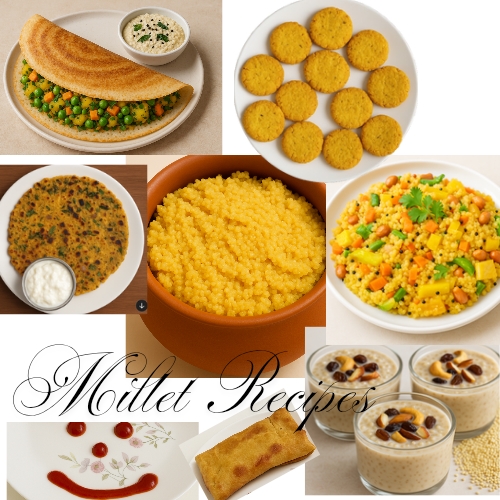
    Here are some popular and delicious Indian dishes redesigned with millet & all healthy ingredients & cooking methods showcasing the versatility and health benefits of millet:

    🍚1.Millet Rice – Cook It Like Rice

    Millet cooked like Rice

    Ingredients:

    • 1 cup millet
    • 2½ cups water or broth
    • Salt to taste

    Instructions:

    1. Wash under running water
    2. Soak millet for 6-8 hrs
    3. Bring water/broth to a boil, add millet and salt.
    4. Add soaked millet to water & let it cook on medium flame for 5 mins.
    5. Cover and simmer on low for 20–25 minutes until the liquid is absorbed.
    6. Let it sit for 5 minutes, then fluff with a fork.

    🥣 2. Millet Khichdi

    Millet Used: Little millet or Barnyard Millet gives the best consistency.
    How: Cooked like traditional khichdi with moong dal, spices, ginger, and vegetables.
    Served with: Curd or pickle.

    Ingredients:

    • ½ cup millet
    • ¼ cup moong dal (yellow split lentils)
    • ½ tsp cumin seeds
    • 1 pinch asafoetida (hing)
    • ½ tsp turmeric powder
    • ½ tsp grated ginger
    • 1–2 green chilies (slit)
    • 1 sprig curry leaves (optional)
    • 2½ – 3 cups water (adjust for consistency)
    • Salt to taste
    • 1 tbsp ghee or oil
    • Vegetables – Carrot, tomatoes, potatoes, raw mango, as per availability & taste preference
    • Fresh coriander leaves for garnish
    • For extra nutrition, add spinach or moringa leaves
    Millet Khichdi

    Instructions:

    1. Rinse millet and moong dal thoroughly. Soak moong dal for 15–20 minutes and millet for 6-8 hrs.
    2. Heat ghee in a pressure cooker or pan. Add cumin seeds, hing, and curry leaves. Let them splutter.
    3. Add ginger, green chilies, and onions (if using). Sauté until onions turn soft.
    4. Add chopped vegetables. Sauté for 2–3 minutes.
    5. Add soaked millet and moong dal. Mix well.
    6. Pour in 2½–3 cups of water. Adjust salt.
    7. Pressure cook for 2–3 whistles (or simmer in a covered pot for 20–25 mins until soft and mushy).
    8. Once done, mix gently. Add more water if needed to adjust consistency.
    9. Garnish with coriander leaves. Serve hot with curd, pickle, or papad.

    🍛 3. Millet Upma

    Foxtail Millet Upma

    Instructions:

    1. Soak millet for 6-8 hrs.
    2. In a pan, heat oil. Add mustard, dals, peanuts, curry leaves.
    3. Sauté onions, chilies, then add chopped veggies. Cook for 3–4 mins.
    4. In another pan or cooker, add water and salt. Bring to boil.Add soaked millet, cover, and cook for 12–15 mins until soft.
    5. Add cooked millet to sauted vegetables & peanuts.
    6. Fluff and serve hot with chutney or curd.

    Millet Used: Little, Foxtail, or Kodo Millet
    How: Cooked with mustard seeds, curry leaves, vegetables, and green chilies.
    Similar to: Semolina (rava) upma.

    Ingredients:

    • 1 cup millet
    • 2½ cups water
    • 1 onion (chopped)
    • 1 green chili (chopped)
    • ½ tsp mustard seeds
    • ½ tsp urad dal
    • ½ tsp chana dal
    • 1 tsp peanuts
    • 1 sprig curry leaves
    • 1 carrot, 1/2 Capsicum (chopped)
    • Salt to taste
    • 1 tbsp oil or ghee

    🍚 4. Millet Pongal

    Millet Used: Little Millet or Barnyard or Foxtail
    How: Cooked with moong dal, black pepper, ginger, and ghee.
    Popular in: South India, especially as a healthy breakfast or temple-style meal.

    Ingredients:

    • ½ cup millet
    • ¼ cup split yellow moong dal
    • 2½ to 3 cups water
    • 1 tbsp ghee (or more, as preferred)
    • 1 tsp black pepper (crushed or whole)
    • 1 tsp cumin seeds
    • 1-inch piece ginger (grated or finely chopped)
    • 8–10 curry leaves
    • 1 pinch asafoetida (hing)
    • 8–10 cashew nuts
    • Salt to taste
    Millet Pongal

    Instructions:

    1. Rinse millet and moong dal separately. Soak them together for 15–20 minutes (optional, for quicker cooking).
    2. Dry roast moong dal lightly until aromatic (optional). Combine millet and dal in a pressure cooker or pan with water.
    3. Add salt and cook until soft and mushy (2–3 whistles in a pressure cooker or about 25 minutes in a pot).
    4. Once cooked, mash slightly for creamy consistency.
    5. In a separate pan, heat ghee. Fry cashews until golden. Remove and set aside.
    6. In the same ghee, add pepper, cumin, ginger, curry leaves, and a pinch of hing. Let them splutter.
    7. Pour the tempering over the cooked millet-dal mixture. Mix well.
    8. Add fried cashews on top. Stir gently.
    9. Serve hot with coconut chutney or sambar.

    Tips:

    • Adjust ghee quantity to enhance richness.
    • Add a little milk or hot water if the pongal thickens too much after cooling.
    • For extra flavor, add a few crushed black peppercorns while cooking the millet.

    🍛5. Millet Pulav or Biryani

    Millet Biryani

    Ingredients:

    • 1 cup millet (soaked)
    • 2 cups water
    • 1 onion, 1 tomato
    • 1 cup mixed vegetables
    • 1 cup mixed vegetables like broccoli, carrot, beans, cabbage or cauliflower.
    • 1 tsp biryani masala
    • ½ tsp red chili powder
    • 1 tsp ginger-garlic paste
    • Whole spices (bay leaf, cinnamon, cloves)
    • Oil/ghee, coriander/mint leaves

    Instructions:

    1. In oil, sauté whole spices, then onions.
    2. Add ginger-garlic paste, tomato, masala powders, salt.
    3. Add vegetables and cook for 5 mins.
    4. Add vegetable to cooked millet. Mix well.
    5. Cook covered 15–20 mins.
    6. Garnish with mint/coriander. Serve with raita.

    🥗 6. Millet Salad (Desi Style)

    Millet Used: Any cooked millet
    How: Tossed with boiled chana or beans or peas with salad & vegetables like chopped onions, tomatoes, coriander, lemon juice, and Indian spices.

    Instructions:

    1. Soak the millet: Soak for at least 6-8 hrs in water.
    2. Cook the millet:
      Wash and cook the millet in 2 cups of water until soft but non-mushy. Let it cool completely and fluff with a fork.
    3. Prepare the tempering:
      Heat oil in a small pan. Add mustard seeds, let them splutter. Add cumin seeds, green chilies, ginger, hing, and curry leaves. Sauté for a few seconds until aromatic.
    4. Assemble the salad:
      In a large mixing bowl, add the cooked and cooled millet, chopped vegetables, and herbs.
    5. Add tempering & seasoning:
      Pour the tempering over the millet and veggies. Add salt, pepper, chaat masala (if using), and lemon juice. Mix well.

    🫓 7. Millet Roti / Bhakri

    Millet Roti

    Ingredients:

    • 1 cup millet flour (such as jowar, bajra, or ragi)
    • 1/4 tsp salt (optional)
    • Warm water (as needed, approx. 1/2 to 3/4 cup)
    • Ghee or oil (optional, for brushing)

    Instructions:

    1. Mix the Dough:
      • In a mixing bowl, add the millet flour and salt.
      • Gradually add warm water and knead into a soft, pliable dough.
      • Cover with a damp cloth and let it rest for 5-10 minutes.
    2. Divide and Roll:
      • Divide the dough into equal-sized balls.
      • Dust a clean surface or a rolling board with some millet flour.
      • Gently roll out one dough ball into a flat circle, about 5–6 inches in diameter. Millet flour is gluten-free, so it may crack at the edges—press gently while rolling.
    3. Cook the Roti:
      • Heat a tawa or non-stick skillet over medium heat.
      • Place the rolled roti on the hot tawa.
      • Cook for 30–40 seconds until bubbles start to appear, then flip.
      • Cook the second side for another 30–40 seconds.
      • Flip again and gently press the edges with a spatula to help it puff up.
      • Remove from the tawa and brush with ghee or oil (optional).
    4. Serve:
      • Serve hot with curry, dal, or vegetables.

    Tips:

    • Millet dough tends to dry out quickly. Keep unused dough covered.
    • You can mix flours (e.g., half millet and half whole wheat) if you’re not strictly gluten-free else can add 1/4th cup besan or urad dal soaked grinded to make it easy to roll the roti. Optional.
    • Rolling between parchment sheets can help if the dough is too delicate.Else can press it on hand or on tawa directly.
    • Watch video illustration.

    🥞 8. Dosa / Uttapam / Idli

    Millet Dosa

    Ingredients:

    • 1 cup millet (any variety like little millet, foxtail millet, kodo millet, etc.)
    • 1/4 cup urad dal (split black gram)
    • 2 tbsp poha (flattened rice) – optional, for softness
    • Salt to taste
    • Water as needed
    • Oil or ghee for cooking

    Instructions:

    1. Soak:
      • Rinse millet, urad dal, and poha (if using) separately.
      • Soak millet and dal for 6-8 hours or overnight in water.
      • Poha needs only 30 minutes soaking before grinding.
    2. Grind the Batter:
      • Drain the water from the soaked ingredients.
      • Grind everything together to a smooth batter using fresh water. The consistency should be like regular dosa batter—pourable but not too thin.
    3. Ferment the Batter:
      • Cover and let the batter ferment in a warm place for 8–12 hours or overnight. It should rise and turn slightly bubbly.
    4. Make the Dosa:
      • Heat a non-stick or cast iron dosa tawa (griddle).
      • Add salt and mix batter.Pour a ladleful of batter in the center and spread it in a circular motion to make a thin dosa.
      • Drizzle a few drops of oil or ghee around the edges.
      • Cook until golden and crisp. No need to flip unless you prefer it that way.
    5. Serve:
      • Serve hot with coconut chutney, sambar, or any side dish of your choice.

    Tips:

    • The batter can be stored in the refrigerator for 2–3 days.
    • For a quicker version, you can skip fermentation and make instant millet dosas by adding yogurt and a pinch of baking soda.
    • You can mix millet with some rice for a more traditional texture (e.g., 1/2 cup millet + 1/2 cup rice).

    🫓 9. Millet Snacks

    Millet Mathri Recipe (Healthy & Crunchy)

    Millet Snacks - Mathri

    Ingredients:

    • 1 cup millet flour (e.g.,foxtail millet, bajra (pearl millet), jowar (sorghum), or ragi (finger millet))
    • 1/4 cup whole wheat flour or urad dal (optional, for better binding)
    • 1 tsp ajwain (carom seeds)
    • 1/2 tsp crushed black pepper
    • Salt to taste
    • 2 tbsp ghee or oil (for moyan)
    • 1–2 tsp oil – for brushing
    • Warm water – as needed for kneading

    Instructions:

    1. Make the dough:
      • Mix millet flour, wheat flour, ajwain, black pepper and salt.
      • Add ghee/oil and mix with your fingers until crumbly.
      • Gradually add warm water and knead into a firm dough. Rest covered for 15 minutes.
    2. Shape the mathris:
      • Divide dough into small balls and flatten into discs (about 1.5–2 inches wide).
      • Use a fork to prick holes on each disc to avoid puffing.
    3. For Air Fryer:
      • Preheat air fryer to 160°C (320°F).
      • Lightly brush mathris with oil on both sides.
      • Arrange in a single layer in the basket (avoid overlapping).
      • Air fry for 12–15 minutes, flipping once halfway. Keep an eye in the last few minutes for desired crispness.
    4. For Baking:
      • Preheat oven to 170°C (340°F).
      • Line a baking tray with parchment paper.
      • Place mathris, brush with oil, and bake for 18–22 minutes, flipping midway.
      • Bake until golden and crisp.
      • Watch Video illustration.

    Tips:

    • Let them cool completely before storing – they crisp up more as they cool.
    • Store in an airtight container for 2–3 weeks.
    • Add dried fenugreek leaves (kasuri methi) or spinach puree for variations.

    🍮 10. Millet Sweet Dishes

    Millet Kheer

    Millet Kheer

    Millet Used: Barnyard, Foxtail, or Little Millet

    How: Cooked in milk with cardamom, jaggery/sugar, and dry fruits.

    Festive Dish: Common during Navratri, Pongal, etc.

    Ingredients:

    • 3 cups milk
    • ¼ cup jaggery or dates
    • 1 tbsp ghee
    • 5-6 cashews, raisins
    • Cardamom powder

    Instructions:

    1. Soak millet in water 6-8 hrs
    2. Cook millet in milk until soft (15–20 mins).
    3. Add jaggery, stir until dissolved.
    4. Add cardamom.
    5. In ghee, fry cashews and raisins. Add to kheer.
    6. Serve warm or chilled. Watch Video illustration.

    Millet Choorma / Fudge

    Ingredients:

    • Ragi or Bajra or Jowar millet roti (flatbread)
    • ¼ cup ghee (clarified butter)
    • ½ cup jaggery (grated or powdered)
    • 2 tbsp chopped nuts (cashews, almonds, walnuts)
    • ½ tsp cardamom powder

    Watch Video Illustration here.

    Millet Fudge

    Instructions:

    1. Make fresh roti (flatbread) of Ragi or Jowar or Bajra millet
    2. Break it into pieces and grind it coarse in mixer grinder
    3. Take a pan and add ghee, let it melt.
    4. Lower the flame, add Jaggery and quickly stir it till it melts, keep stirring to make sure it does not stick at the bottom
    5. Add grinded roti mixture and keep stirring it & put off the gas once its completely mixed with the jaggery
    6. Add dry fruits, you can roast in ghee slightly or add direct

    Find even more mouthwatering millet recipes waiting for you, subscribe for free to “Good Health” YouTube channel.

    Conclusion:

    Dosa to Kheer: A Soulful Journey Through Millet Delights

    In millet’s heart, a secret stays,
    Of ancient lands and mindful ways.
    Where dosa crisps on warming pan,
    And khichdi soothes like love began.

    Pongal stirs in sacred steam,
    A comfort wrapped in morning’s dream.
    Biryani bold, with spices deep,
    Awakens joy from restful sleep.

    Sweet kheer whispers soft delight,
    Like moonlit songs on quiet night.
    And choorma, rich with rustic grace,
    Brings childhood smiles to every face.

    Roti, warm with earthy soul,
    Wraps our hunger, makes us whole.
    Each dish a verse, each bite a rhyme,
    Of healing food, of ancient time.

    So let these plates your heart inspire,
    With wholesome grain and gentle fire.
    For in each millet recipe’s art,
    Lies love, and health, and a grateful heart. 🌾❤️

    Call to Action

    “Start your millet journey today—your body will thank you. Have a favorite millet recipe? Share it in the comments!”